Category: Mobile

  • What Will Mobile Bring to Consumers and Marketers in 2013?

    The mobile landscape is set to change in a big way in 2013, and though some of the coming changes can be predicted, others will provide big (and perhaps unwelcome) surprises for both consumers and advertisers.

    As seen at this year’s Consumer Electronics Show (CES) and Mobile World Congress, tech companies are focusing more than ever on smartphone and tablet devices. Companies such as Sony, LG, Asus, and even HP unveiled new devices that will enter a market already largely controlled by the likes of Apple, Samsung, and Amazon.

    What mobile devices do you intend to acquire this year? Let us know in the comments.

    What is somewhat surprising is that many of these companies might actually have a chance, considering how quickly the mobile industry is growing. On March 4, ABI research estimated that mobile users will download 14 billion tablet apps during 2013. Almost three-quarters of those apps will be running on a iPad device, but Android devices are now set to lead in the number of smartphone app downloads, which ABI predicts will reach 56 billion in 2013.

    For consumers the proliferation of more devices with a wider variety of features could mean confusion and burnout. It also means that consumers have never had more choice, and more power, than they do now. The choices they make this year about the devices they purchase and the technologies they adopt will shape the technology landscape for years to come.

    Apple stock has had a rough winter, in no small part to the Apple Maps debacle and the fact that the iPhone 5 failed to iterate significantly on the device’s past models. While Android devices are introducing larger smartphones, NFC technology, wireless charging, and features such as water resistance, Apple’s credibility as a innovator in the market segment it created is shrinking.

    As Apple now begins to follow industry trends with the iPad mini and a less expensive version of the iPhone, Samsung is poised to become a market leader. The Korean company will unveil its latest flagship smartphone, the Galaxy S IV at an Apple-like announcement in New York on March 14. Samsung’s hefty manufacturing capabilities and willingness to mimic Apple have propelled it to the forefront of Android smartphones, but the company’s new marketing (another thing it has taken directly from Apple’s playbook) is also beginning to become part of the cultural zeitgeist.

    The mobile market right now might be considered tablets and smartphones, but later this year Google will introduce a completely new type of mobile product with Google Glass. Though the device’s success is far from certain, it could introduce an entirely new mobile category, propelling the industry forward with even more constant connectivity. Glass’ ability to record on the fly also brings privacy concerns, meaning laws and social norms will be further tested by advancing technology.

    With all of these changes coming to the mobile space, it’s worth considering how advertisers will adapt. While having consumers constantly connected and consuming content may seem preferable for advertisers, the abundance of that content can make it difficult for ad campaigns to target their audience. At the same time, the abundance of content and metrics can put consumers in control of much of the advertising they see.

    As Susan Wojcicki, senior VP of advertising at Google, recently put it in a Google Plus post, “We are living in uncharted territory.”

    Wojcicki argues that as always-connected devices continue to proliferate, advertising will quickly move into a “choice-based economy” where users will be able to control the content and ads that they see. She writes that “ads views will effectively become voluntary.”

    It’s not hard to imagine how advertisers will have to adapt in that type of ad economy. Choice-based ad models will have to cater to consumers at an individual level with adaptability and engage customers in nearly the same way that content itself does. Wojcicki suggests that future technologies will provide more “interactive and beautiful” ads, but that’s only the beginning of how mobile advertising will change in the coming years.

    Accepting that consumers are no longer a captive audience for ads may be a terrifying prospect for both advertisers and content creators, but consumer choice is only continuing to increase. This could make solid advertising opportunities more expensive, but also means that brands will have to adapt their ad techniques to grow a fan base or to provide upfront value to consumers.

    How do you think advertising should adapt to consumer choice? Tell us your ideas in the comments.

    As the nature of mobile advertising changes, how advertisers measure the impact of their campaigns will have to change as well. Wojcicki puts it bluntly by stating advertisers will have to develop “standards beyond the click.” However, it’s hard to predict just how those measurements will be made in the future, particularly in light of the growing backlash from privacy advocates.

    Wojcicki stated that Google is beginning to to roll out surveys to provide advertisers with a way to measure the performance of their display and video campaigns. Google’s skippable “TrueView” ads are also now integrated into mobile AdMob apps, allowing consumers to decide for themselves what ads they will view.

    As the future of the mobile industry finally begins to take shape this year, consumers have never had more choices with regards to hardware, software, and services. However, the plethora of choices thrown at consumers can also create confusion, and will inevitably lead to a few trusted brands leading the way. While advertisers attempt to pare down consumers’ choices for them, future technologies, such as Google Glass, will continue to continue to change the way people interact with technology and their environment.

  • The big question for Samsung: Will the Galaxy S IV press event top last year’s epic bombast?

    Samsung Galaxy S IV Marketing
    One of the most fascinating things about Samsung’s (005930) product launches is how remarkably they contrast with its television marketing campaigns. Samsung’s TV ads, as I’m sure you’ve seen by now, like to portray the company as a scrappy, funny underdog trying to make a name for himself while fighting the humorless, tired old behemoth known as Apple (AAPL). Samsung on television is all about zombie unicorn games, sharing sex videos and making fun of iPhone fans. In other words, it’s clever, irreverent and guaranteed to make you smile.

    Continue reading…

  • Specs purportedly leak for HTC’s upcoming ‘Facebook Phone,’ the HTC Myst

    HTC Myst Facebook Phone
    Does the world really want a “Facebook (FB) Phone?” Probably not, but that apparently isn’t going to stop HTC (2498) from delivering one. UnwiredView’s evleaks has posted a set of specifications that are purportedly for the HTC Myst, a yet-to-be-announced smartphone that is centered around Facebook. In case you don’t remember, HTC has tried something like this back in 2011 with the ill-fated HTC Status smartphone that had a dedicated Facebook button and that looked like a rejected BlackBerry (BBRY) design concept from around 2006. The HTC Myst will reportedly be somewhat more like a modern smartphone, however, with a 4.3-inch touch display with a resolution of 320 pixels per inch, a MSM8960 dual-core 1.5GHz processor, 1GB of RAM and a 5 megapixel rear-facing camera. While these aren’t exactly high-end specs, it’s unlikely that HTC is going to push the Myst as a premium device, especially since it sold the HTC Status for a mere $50 with a two-year agreement from AT&T (T).

  • BlackBerry CEO confirms no bargain bin smartphones

    BlackBerry CEO No Cheap Smartphones
    A large part of why BlackBerry (BBRY) has survived over the past two years is because of the success it has achieved in emerging markets such as India and Indonesia. Chief executive Thorsten Heins confirmed that the company is readying less expensive devices for those markets and will look to continue to build its market share, however it has no plans of competing with any bargain-bin Asian rivals.

    Continue reading…

  • How the industry shift from miniaturization to display quality blindsided Motorola

    Motorola History Analysis
    Now that another major lay-off wave is about to hit Motorola, it’s perhaps time to contemplate how the dominant company in a major industry sometimes misreads the most important consumer trends. This typically happens when a long and well-established trend suddenly reverses. People inside companies like Motorola build their entire careers around one decade-long design goal — and when the wind shifts, the company culture is often impossible to change. The handset industry spent the years 1992-2002 in a race to cut the weight of mobile phones from about 500 grams to 80 grams. After that trend crested and reversed in 2002, miniaturization leaders like Motorola were simply never able to fully adjust. The power inside the company belonged to people who specialized in shaving off another millimeter from the phone thickness.

    Continue reading…

  • Galaxy S IV’s new AMOLED technology could give 25% boost to battery life

    Galaxy S IV Specs Battery Life
    Earlier reports have suggested that Samsung’s (005930) upcoming Galaxy S IV smartphone may support futuristic non-touch gesture technology. SamMobile, which has provided us with accurate Samsung-related rumors in the past, confirmed on Friday that the company will indeed be using the technology in its latest flagship device. It also claims that Samsung will be using a new kind of AMOLED display, called “green PHOLED,” that will be 25% more efficient than older Super AMOLED technologies and will help the Galaxy S IV deliver better battery life despite the use of a full HD resolution.

    Continue reading…

  • HTC Facebook Phone Specs Leak, Outlining A Solid Mid-Range Device With FB And Instagram Pre-Loaded

    Facebook Phone

    Question: How do you attract a key youth, mobile-first demographic to your social network and get them to increase engagement? Answer: Partner with an OEM handset manufacturer to create a powerful yet reasonably priced branded device with all your software already on board. Facebook looks to be readying a follow-up to the HTC Status, a mid-market smartphone it released with a dedicated Facebook button in 2011, and a new leak shows off its specs.

    Over at Unwired View, noted leakster Evleaks claims to have obtained a recent list of HTC Facebook phone specs (from a source with a proven track record, unlike another recent Evleaks discovery), and they confirm earlier leaks on the same, with some improvements for the better. The HTC Facebook phone, codenamed the “Myst,” will reportedly have a 1.5GHz dual-core MSM8960 SoC processor from Qualcomm, along with 1GB of RAM and 16GB of internal storage, which isn’t expandable. It’ll have a 5 megapixel rear camera, and a 1.6 megapixel front-facing shooter, if the stats are correct, and will run Jelly Bean 4.1.2.

    The screen won’t be overly massive at 4.3 inches, with 720p resolution and 320PPI pixel density, but it should be a good-looking device regardless, with near-Retina resolution. That’s good for showing off Facebook’s upcoming News Feed redesign, which is hitting mobile platforms as well as the desktop over the course of the coming months.

    The HTC/Facebook collab should ship in the U.S. by sometime this spring, according to Unwired View, complete with Facebook software onboard, including the app for the network itself, Facebook Messenger, and Instagram. It’s not like the apps aren’t popular enough already, but a relatively inexpensive device with the software already onboard is a way for Facebook to target directly the market where it needs to start seeing more growth. The handset doesn’t seem to be too far below top-tier devices based on these specs (with the exception of that camera, which could use HTC’s Ultrapixel tech to still deliver solid photos), so if it’s priced right it could be a boon for both Facebook and HTC.

  • While It Mulls Global Pricing, BlackBerry May Also Be Prepping Its Z10 For A March 22 AT&T Launch

    thorsten2

    BlackBerry’s top brass eagerly danced around the issue of a U.S. launch date for its new Z10 smartphone during its grand BlackBerry 10 unveiling, but the folks at Bloomberg may have shed some new light on the Canadian company’s plans. Bloomberg reports that AT&T is preparing to release the BlackBerry Z10 on March 22, though AT&T has been unsurprisingly quiet on the matter.

    If other recent reports hold true, AT&T’s Z10 won’t be by itself for long — it’s been said that T-Mobile is gearing up for a mid-March Z10 launch of its own (though a leaked carrier roadmap has the launch pegged for later in the month), and Verizon Wireless is expected to push its version out the door sometime in April. On the other hand, Sprint has chosen to skip the all-touch Z10 entirely, opting to carry only the QWERTY keyboard-packing Q10 later this year.

    With general interest in BlackBerry waning over the past few years thanks to some ambitious competitors, RIM has its work cut out for it if it wants to make another splash in the United States. If comScore’s most recent mobile market share report is to be believed, BlackBerry devices only account for 5.9% of the U.S. smartphones in use (down from roughly 7.8% in October 2012). Granted, RIM still seems to have a better handle on things than Microsoft and its Windows Phones, but a solid domestic launch could see the company solidify its position as the third major mobile OS.

    Of course, part of BlackBerry’s continued resilience has to do with its performance in developing markets, and CEO Thorsten Heins recently shed some light on the company’s plans for shoring up its positions there.

    According to a recent Q&A with Bloomberg, Heins and the rest of the company don’t intend to take on low-cost handset manufacturers like ZTE and Huawei, which have made significant inroads not only in China but India and parts of Africa as well. Their major draw is their ability to churn out reasonably robust, sub-$100 Android smartphones, and that’s the sort of game BlackBerry doesn’t seem eager to play.

    “This is not BlackBerry,” Heins said, adding that this year would see the release of multiple LTE-enabled BlackBerry 10 devices “geared towards those price bands where people need to be.”

    While the company could surely pick up some points for churning out low-cost, no-frills hardware in the right markets, its current approach seems to be doing well for now. The company has already released the Z10 in India, and despite the fact that the device costs Rs 43490 (roughly $794) Heins says the Z10 was sold out within two days.

  • BlackBerry Z10 coming to AT&T on March 22nd

    BlackBerry Z10 AT&T
    It’s been an annoyingly long wait for American BlackBerry (BBRY) fans, but it looks like they’ll soon be able to upgrade to the BlackBerry Z10. Unnamed sources have told Bloomberg that AT&T (T) will start selling the newest BlackBerry flagship phone on March 22nd, or one week later than earlier rumors had indicated. It’s unclear whether AT&T will be the first American carrier to offer the Z10 since T-Mobile has said that it would start offering the device sometime in mid-March and we haven’t yet heard when Verizon (VZ) will start selling it. Sprint (S) is the only major American carrier to announce that it won’t be selling the Z10 and will instead only sell the QWERTY keyboard-enabled Q10.

  • iPhone 5S ‘unlikely’ to have wireless charging

    iPhone 5S Wireless Charging
    Anyone who wants their next iPhone to have wireless charging capabilities may be out of luck. 9to5Mac on Friday shot down a Digitimes report claiming that Apple (AAPL) is looking to bring wireless charging to its next-generation iPhone 5S. The reason that this rumor is unlikely, 9to5Mac says, is that “we’ve been hearing 2013 is an ‘S’ year for the iPhone which implies minor design changes” and “the design changes to the aluminum shell to make wireless charging possible would need to be significant,” thus making it unlikely that Apple would pursue them during this particular product cycle. Needless to say, if Samsung’s (005930) upcoming Galaxy S IV has wireless charging and the iPhone 5S does not, we expect them to make fun of Apple yet again for allegedly being behind the times.

  • Ambify, A Music App For The Philips Hue Lighting System, Shows The Potential Of The Connected Home

    large_intro


    The Philips Hue lighting system is pretty neat on its own – it lets you control lighting in your house from your iPhone or iPad, adjusting bulb color and brightness remotely via your Wi-Fi network. Ambify is a new app from Stuttgart, Germany-based developer Kai Aras that makes the connected lighting system even cooler, by plugging it into a media player app on the iPhone to automatically generate real-life light shows from your own iTunes library.

    Ambify connects to a Hue bridge, and applies algorithms to the audio played back from your library via your own iTunes playlists in order to create real-time visualizations using Hue bulbs, altering color, brightness and the rate of change in time with the beat to create a club-like display without any complicated programming or control systems involved.

    The system works with both Philips Hue lightbulbs, and with Living Colors and Living White lamps, when those are connected to the Philips bridge. As you can see in the demo video, depending on how extensive your setup is, the effect can be pretty stunning.

    The app is $2.99, which is way cheaper than any other kind of complicated professional sound and light management apps you might get to pull off this kind of display. The Philips Hue isn’t cheap in terms of the cost of getting the base system ($200), but Ambify goes to show that you can do much more with the connected lighting kit than initially meets the eye. A Mac version of Ambify is also planned for release soon.

    Just yesterday, Romain covered a Minecraft hack that uses the Hue to mimic the in-game cycle of day and night, in order to provide a more immersive experience. Developers have clearly only begun to scratch the surface of what you can do with Hue, and there’s likely lots more exciting stuff on the horizon.

  • Nokia still on the hook for $650 million in Windows Phone license fees

    Nokia Windows Phone Licensing
    Even though Windows Phone has shown little signs of momentum in recent months, that doesn’t mean Nokia (NOK) isn’t still obligated to pay Microsoft (MSFT) hundreds of millions of dollars in licensing fees. Per ZDNet, Nokia disclosed on Thursday that the fees it pays to Microsoft over the remainder of its licensing agreement will be €500 million — or roughly $650 million — more than the platform support payments that it’s slated to receive from Microsoft. The good news for Nokia is that the total platform support fees that it has either already received or is due to receive from Microsoft are still projected to exceed the licensing fees over the course of the entire deal, so Windows Phone won’t likely be a net money loser for the company.

  • Thermodo Smartphone Thermometer Doubles Its Kickstarter Goal In 24 Hours, Now Offers Stretch Rewards

    stretchgoals

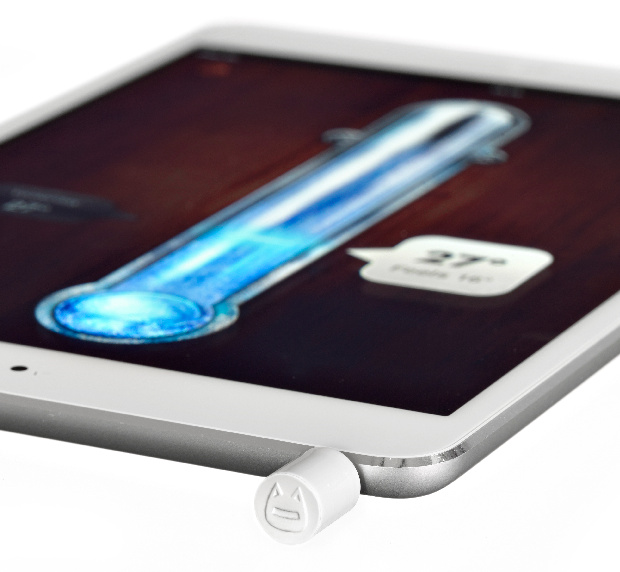
    For a company making a difficult switch from creating software to building hardware, Robocat is making very good early progress. The Danish startup’s Thermodo smartphone thermometer accessory hit its original Kickstarter goal of $35,000 in just seven hours yesterday, and is now at over twice that amount, with pledges still flowing in. Robocat accordingly announced some stretch goals this AM, in a manner that makes me think this is one of the best-engineered Kickstarter projects ever.

    The stretch goals for the Thermodo include a $125,000 level, where Robocat will turn their affection more squarely to Android. The thermometer was always going to be compatible with Android devices through third-party developers, but the team will make the official Thermodo companion app Android-compatible if funding hits that level, and will ensure that Thermo, the startup’s existing app, will also work with Thermodo on Android.

    At $250,000, a new colorway comes into the mix, with a red option available for all backers who pledged $25 or above. And finally, should the project exceed $500,000 in funding, everyone will get an aluminum Thermodo. Robocat is currently offering an anodized aluminum level, but that will remain special as the other levels will have only black, white and red as color options.

    The stretch goals look artfully planned to have been ready to go based on Thermodo’s early success, and that’s why I applaud the project’s design. Robocat went into it knowing exactly how much they needed to get the production line rolling, and asked for only that, but then were ready with upgrades designed to capitalize on the fact that it might be a hit with backers. Individual pledge levels are low, and the overall target looks very achievable, so backers are naturally less skittish about putting down their money since there appears to be little risk.

    Expect Thermodo to reach most, if not all of those tiers in its stretch goals. Which will add up to a huge amount of actual devices to ship when it comes time to deliver. That may be the most interesting part of the whole project: watching how a software company handles mass production of a hardware accessory.

  • Original Angry Birds now free for iPhone, iPad and iPod touch

    Angry Birds iPhone iPad
    Rovio has made one its classic mobile games available on the iPhone, iPad and iPod touch available for free by slashing the prices of Angry Birds and Angry Birds HD to nothing for iOS users in both the United States and United Kingdom. It is unclear if this is a permanent move or just a limited-time offer, however Rovio also removed the free demo versions of the apps, which were limited to only a few levels. Since debuting in 2009, the Angry Birds franchise has found great success and the games have been downloaded more than 1 billion times.

  • Google’s DROID RAZR Jelly Bean update kills Motoblur bloat

    DROID RAZR Jelly Bean Update
    Motorola on Thursday began rolling out an update for the DROID RAZR and DROID RAZR MAXX that brings both devices up to Android 4.1.2. Along with standard Jelly Bean features such as Google Now and Project Butter, the company has also begun to remove some of the traditional Motoblur apps and replace them with stock Android ones. In what is most certainly Google’s (GOOG) doing, the move marks the beginning of the end for Motorola’s user interface. The company has removed the Social Location app, MotoCast, MotoActv, MotoPrint, Alarm and Timer, My Gallery, My Music and Verizon Video on Demand apps from both devices. The Gallery, Music and Alarm and Timer apps have all be replaced with stock Android alternatives, while the default Web browser has been changed to Chrome.

  • T-Mobile reportedly plans to launch BlackBerry Q10 in May

    BlackBerry Q10 Release Date T-Mobile
    T-Mobile is slated to launch BlackBerry’s (BBRY) latest flagship smartphone later this month. Recent reports have suggested that the BlackBerry Z10 will be released on March 27th, or perhaps even earlier. It was unclear, however, if the carrier would offer the QWERTY-equipped BlackBerry Q10. A BlackBerry representative reportedly confirmed to N4BB that T-Mobile plans to release the Q10 “sometime in May.” The smartphone features a 3.1-inch Super AMOLED display, 1.5GHz dual-core Snapdragon S4 Plus processor and an 8-megapixel rear camera. The device also includes 2GB of RAM, 16GB of internal storage, LTE connectivity, NFC, a microSD slot and a 2100 mAh battery.

  • Android accounted for 79% of all mobile malware In 2012

    Android Malware
    A new study has found that Google’s (GOOG) mobile operating system is targeted by hackers far more than any other mobile platform. Security firm F-Secure found that Android accounted for 79% of all mobile malware in 2012, an increase from 66.7% in 2011 and 11.25% in 2010. Apple’s (AAPL) iOS platform on the other hand has remained nearly untouched throughout the years. Malware on the operating system, which is the second most popular among smartphone buyers, was found to account for only 0.7% in 2012. The firm also found that Android saw a significant increase in malware at the end of the year, accounting for 94% of all threats in the fourth quarter. Most malware, however, is found in emerging markets. A majority of mobile users in Europe and the United States will never be affected but should still be cautious of suspicious text messages, links and emails. F-Secure’s graph outlining mobile malware threats is posted below.

    Continue reading…

  • More Data Showing iOS, Especially The iPhone, Still Killing It In The Enterprise, At Android’s Expense

    iphoneapple

    Apple’s iOS is consolidating its grip on the enterprise market and taking share from Android, according to customer data from enterprise file sharing and hybrid cloud storage company Egnyte, which offers cloud back-up and storage services for a mix of customers, from large corporates with thousands of seats to SMEs with just a handful.

    Of course different enterprises have very different needs and requirements when it comes to mobile devices. Take a look at governments, for instance, and you’d be convinced BlackBerry is still killing it. But as a snapshot of the mobile OSes being favoured by different sized companies, mostly U.S.-based (80 percent of the data, with the other 20 percent pertaining to European businesses), this data is an interesting subset to add to the pile.

    The data, shared directly with TechCrunch, covers 100,000 of Egnyte’s paying customers over the last year-and-a-half+, tracking which OS they are using to access its services on mobile devices and also splitting out iPhone and iPad use. The numbers look strong for Apple, with the iPhone especially growing its proportion of users since the second half of 2011 to-date — perhaps helped by the halo effect of iPads arriving in the enterprise and persuading business folk to trade their BlackBerrys for iPhones. Egnyte’s data doesn’t specifically refer to BlackBerrys but does show Apple taking share away from Android.

    “Apple seems to have at least temporarily won the hearts and minds of business users with its products accounting for about 70 percent of our traffic,” Egnyte told TechCrunch.

    In Q3/Q4 2011, Egnyte’s data shows the following device breakdown — giving iOS a 68 percent majority of Egnyte’s enterprise user-base:

    • iPhone 28%
    • iPad 40%
    • Android 30%  (phones and tablets)
    • other 2%

    In 2012, the iPhone grew its proportion, while the iPad’s very sizeable share shrank to below a third — suggesting iPhone usage cannibalised iPad usage to an extent. Overall, though, Apple’s percentage rose to 69 percent:

    • iPhone 42%
    • iPad 27%
    • Android 30% (phones and tablets)
    • other 1%

    Egnyte has also scraped some early data for Q1 2013, which shows both iPhone and iPad usage rising — this time apparently at the expense of Android phones and tablets, which had previously held a steady share of 30 percent. There is also no sign as yet of a Microsoft enterprise mobile resurgence with its Windows Phone OS (the ‘other’ catch-all category doesn’t yet figure in the 2013 data). Apple holds a whopping, ‘Pacman-shaped’ 78 percent share of the user base as of Q1 2013:

    • iPhone 48%
    • iPad 30%
    • Android 22% (phones and tablets)

    Egnyte’s data on enterprise users’ preference for iPhones tallies broadly with data from mobile device management company Good Technology, covered recently by CITEworld. Good reported even higher percentages for iOS — with nearly 77 percent of devices activated by its corporate customers in Q4 2012 powered by iOS, up from 71 percent in the fourth quarter of 2011. Good also found Android’s enterprise mobile shared declining, dropping to 22.7 percent in Q4 2012, down from 29 percent in Q4 2011. (It also tracked a 0.5 percent rise for Windows Phone.)

    Returning to Egnyte’s data for 2012, almost a fifth (19 percent) of the Android traffic was generated using a Nook tablet — so despite the iPad’s popularity with business users, some enterprises are evidently not immune to the lure of using cheaper tablet hardware.

    The company also breaks out Wi-Fi access by device for 2012. It found that 40 percent of iPad sessions occurred over Wi-Fi, while just 31 percent of iPhone sessions did — suggesting the iPhone still prevails as the device of choice in the most mobile situations, ie when users are moving around a lot or aren’t in range of a Wi-Fi network (perhaps because businesses have purchased Wi-Fi only iPads to keep ongoing costs down).

    Egnyte speculates that smartphones are fractionally quicker to begin using than tablets, typically sitting within easy reach, so tend to be the device of choice for viewing files on the fly, with users waiting for a more comfortable environment before getting out the tablet to do some editing.  ”Overall, tablet use in the corporate marketplace hasn’t been as high as we would expect, but… we think this may be more due to people’s love affairs with their phones, than for any lack in the capabilities of a tablet,” the company said.

    Commenting generally on the data, Egnyte told TechCrunch:

    While initially iPads dominated our use, iPhones have taken over.  2011 use showed the iPad accounting for 40 percent of our usage, in 2012 iPhones are now 42 percent of usage, and Android has remained constant at about 30 percent of use. There are two interesting points here, first, Apple seems to have at least temporarily won the hearts and minds of business users with its products accounting for about 70 percent of our traffic. This is important because it’s a flip-flop from the days of old, where Apple products were rarely seen in the corporate landscape.   It’s also an indication that when BYOD wrested control over what devices consumers used from IT, they overwhelmingly chose an easy to use product that focused on UI and usability, perhaps even at times over depth.

    The second interesting point is that while tablets are certainly hot, iPhones are driving most of the traffic. This may be due to the fact that the iPad doesn’t replace a laptop yet as the corporate device of choice, but try and take a business person’s smartphone away from them, and you may not have a hand left.  Smartphones are a must have, and we suspect that since people are already checking email on such a phone while they are working remotely, it’s an extra step to get out and bootup your tablet, so if you have a great phone app that does the same thing, just use it to view your files. Most editing we think still happens on the laptop/desktop.  This ‘on the go’ access is further confirmed by the fact that only 31 percent of iPhone sessions occurred over Wi-Fi, that means over three-quarters of access happens via cellular services.

  • Sony’s surprising smartphone comeback

    Sony Smartphone Market Gains
    Over the past few months, much ink has been spilled over whether Nokia (NOK) or BlackBerry (BBRY) have a chance to stage a strong recovery. After a dismal two years, Sony’s (SNE) chances in the smartphone market have largely been written off. However, over the past month the new Sony Xperia Z has shown remarkable strength in Europe and some Asian markets. In the second half of February, the Xperia Z sold out in Japan and France during its launch. And this wasn’t a small volume sell out — the phone shifted 140,000 units at Japanese carrier NTT DoCoMo in one week.

    Continue reading…

  • Learning to live with a phablet

    Samsung Galaxy Note II Review
    I was not shy when I first reviewed Samsung’s (005930) Galaxy Note “phablet” early last year. In a piece titled “The smartphone that ‘Samsunged’ Samsung,” I said the Note had taken things way too far and I called for the death of the smartphone-tablet hybrid category. It did not die. Later in 2012, I reviewed the Galaxy Note II and even though it was a top performer, I still had no idea who would want to buy such a massive cell phone. Then Samsung sold 5 million of them in 60 days. Apparently, it’s time for me to get on board.

    Continue reading…