Category: Mobile
-
NVIDIA unveils new Tegra 4i processor with built-in LTE
-
iOS 6.1.2 jailbreak set to be released later today

-
Analyst Estimates Peg Total Nexus 7 Sales In 2012 At Around 4.6M, Compared To Roughly 10M iPad Minis
Mobile industry analyst Benedict Evans has crunched the numbers on newly-released tablet sales figures from Asus and arrived at an approximate estimate of total Nexus 7 tablet sales for 2012, which clock in at between 4.5 and 4.8 million units per his math. Google doesn’t release sales figures for its Nexus devices, so this is likely the closest we’ll get to a solid number on the 2012 totals, and how they might compare to the continued success of Apple’s iPad.
Evans estimates that based on Asus’s reported sales of 6.3 million tablets in 2012, and verbal statements from the CEO which gave a rough estimate of sales to date of the Nexus 7 as of October, the Nexus 7 likely sold around 2.2 million units between the end of Q2 2012 and during Q3, as well as around 2.4 million during Q4. He compares that to around 10 million in iPad mini sales during its first and only availability through Q4 of 2012, despite a launch halfway through the quarter. That estimate is based on the average selling price of the iPad mini, combined with Apple’s revenue figures and tablet sales numbers, since Apple doesn’t break out iPad sales by model.
The upshot is that what we’re seeing from engagement numbers and browser share is likely still a good representation of how the actual tablet market is shaking out: Apple is dominating, and its decision to enter the smaller-screened market is either helping it stall the progress of others, or doing nothing to jeopardize its position at the top.
Consider that Apple sold 22.9 million iPads during just its first fiscal quarter of 2013, which is the last calendar quarter of 2012. That’s five times the amount of Nexus 7 tablets Evans estimates were sold during the entire year in 2012, which indicates we’re still very far away from a situation where the tablet market begins to look anything like the smartphone space in terms of Android share.
Google looks to be set to try to kickstart its tablet sales efforts with physical retail locations, a rumor that started this past weekend and was backed up by the Wall Street Journal today. I’ve already noted that I think this is a play to help the company try to replicate some of Apple’s success with selling and evangelizing the iPad through its physical retail locations, but these sales estimates underline exactly why the company needs to do that.
-
Samsung’s recent string of hits ‘begs for an answer from Apple’

-
Hands On With HTC’s Would-Be Savior, The HTC One

So, after months of leaks and speculation, HTC has finally revealed the HTC One. To say it’s an important device for HTC is an understatement given the rough seas the company spent nearly all of last year navigating, but the people here seem confident that they’ve worked up a winner. Just after the event wrapped I managed to get some extended hands-on time with the One, and the thing left some strong first impressions (not all of them good).
I’ve already alluded to just how nice the One feels in my hand, but I feel that it’s worth repeating — HTC has done a bang-up job in terms of industrial design. It feels remarkably solid without being unwieldy thanks to its tapered unibody aluminum frame and its relatively modest 4.7-inch display. What’s more, the near-total absence of gaps in the body helps solidify the One’s position as a premium smartphone. Giving HTC points for design prowess is nothing new though. The company has proven time and again that it knows how to make handsome hardware. Anything less at this point would be a step backward, and one that HTC can ill afford.
Sadly, for a device that puts a lot of emphasis on the camera, there’s no physical shutter button. A minor omission sure, and one that HTC has justified by saying that it had done away with excess design flourishes, but one I strongly disagree with. Speaking of omissions, the One only sports two softkeys — a home button and a back button. HTC’s Jeff Gordon told TechCrunch that people just didn’t use the other recent apps button very often (for the record, you can now bring up a grid of running apps by double-tapping the home key).
The 4.7-inch 1080p Super LCD3 panel was impressive in terms of clarity and color reproduction, and as you’d expect it’s damned near impossible to pick out any individual pixels. Brightness seemed more than adequate in this dark warehouse on the west side, but the Droid DNA’s display couldn’t crank up as high as those seen on other devices — I’m waiting to spend some time with the One in daylight before I pass judgment.
As far as the camera goes, it’s difficult to discern just how good the images captured by HTC’s Ultrapixel sensor without dumping them onto a computer for further inspection, but early results seemed promising. The lighting around here (as you could probably tell by some of the stills I took) is downright atrocious, but the One was able to capture some pretty sharp images without much grain getting in the way. I’m looking forward to getting my hands on a review unit and really putting this camera through its paces.
Perhaps one of the weirdest things seen on the One is the camera’s Zoe feature — the idea is that users will take three-second video clips and share them with friends and family. Sound familiar? HTC’s Gordon told TechCrunch that Zoe was in development long before Twitter’s Vine hit the scene, but it’s hard not to draw parallels between the two. Switching into Zoe mode took a single tap, and recording was a snap (neat touch:it actually starts recording 0.6 seconds before you press the button) but I’m just not sure why HTC needed this to exist. Couple that with the fact that HTC will only store Zoes online for 180 days and you’ve got all the makings for a non-starter of a feature.
And then there’s the software. Sense 5 is a drastic departure from HTC’s older UIs, and in some ways it’s awfully spartan in comparison. There’s lots of space to be found here (the app launcher only had three columns on these demo units), and the components under the hood help ensure that swiping through apps, scrolling down webpages, and bouncing in and out of BlinkFeed is seamless.
Ah, BlinkFeed — its inclusion is one of those curious decisions that seems like it could go either way. HTC’s rationale was that people use their smartphones primarily to devour content, and BlinkFeed was designed to keep as few hurdles between the two as possible. After swiping though the activity stream, I could see the value in having this customizable firehose (especially after taking the time to customize those content sources), but I wonder how many people walking through a big-box store mulling over another two-year contract will see what I did. Hiding the more standard Android homescreens is a gutsy move, but we’ll soon see how it all plays out.
What remains to be seen is simply whether or not the One can effectively put up a fight against devices like the iPhone 5 and Samsung’s fast-approaching Galaxy S IV. Goodness knows that HTC could really use a big win, and the HTC One certainly pushes plenty of the right buttons. It’s too early to say if it manages to push enough of those buttons, but from what I’ve seen, One seems like a device that’s poised to make a real splash come March.
-
The HTC One looks great, but it will likely get swept away by the Galaxy S IV in three weeks

-
Do or die: Hands on with the HTC One

-
With The HTC One Launch, HTC Tries Apple Tactics To Challenge Samsung’s Android Dominance
HTC unveiled its newest flagship phone, the HTC One at a special press event in NYC and London today, and the drastically different design marks a departure from a strategy of trying to beat other Android OEMs (read: Samsung) at their own game. Instead, HTC looks to be taking cues from Apple to better compete, in more ways than one.
HTC’s newest Android smartphone has a physical design that can’t help but be compared to the iPhone 5. There’s aluminum all over the place (it’s a unibody chassis with chamfered edges), it comes in both white and black, and a rounded rectangle look that’s sure to remind iPhone 5 owners of their own hardware. It even has the iPhone 4′s external wireless, edge-running antenna. And the emphasis this time around wasn’t on specs, speeds and technical details, but on features and software: HTC’s tacit acknowledgement that a fight over who can build the best Android hardware isn’t one it can win against Samsung. Consumers have to perceive these devices as operating in different categories, with HTC doing something Samsung can’t or won’t.
The central piece of the HTC event today was all about what the One is that all other Android phones aren’t. That’s why HTC put its “BoomSound” front-facing speaker system on display, highlighted the Ultrapixel camera with its low-light capabilities, and showed off the Sense 5 UI with its BlinkFeed automatic, live-updating content feeds. That’s why it emphasized content partners, another page out of Apple’s book. In many ways, HTC’s event was more like the introduction of a new mobile OS than an iteration on an Android smartphone design. The company has put a strong focus on software at previous device launches, but here it seemed even more concerned with making this about OS skin updates.
HTC also downplayed the internals, which surprisingly aren’t as leading-edge as they could be. The screen was a big tentpole of the presentation, but that’s another Apple tactic, since it impacts user experience in a much more direct manner than internals. And the quad-core Snapdragon 600 chipset is new, but not the top-of-the-line model. 2GB of RAM is essentially table stakes, and 32 or 64GB of internal flash storage is nothing to write home about. It did bring up design directors, however, to discuss what went into the creation of its software and hardware, and showed videos highlighting technical innovations like the UltraPixel camera sensor and body design, all Apple-style moves.
This isn’t about competing against Apple or Samsung, it’s about fielding a great phone.
It’s pretty clear that HTC’s strategy here isn’t to build a better Android smartphone than Samsung and beat it that way. That’s arguably what the entire HTC One line has been until now: essentially a different but similar approach to the Galaxy strategy. Now, we get a back-to-basics simplified naming scheme, a physical case that better approximates Apple’s high-market industrial design, and an emphasis on user experience and software, instead of crowing loud and long about the spec race that has been popular among Android OEMs int the past.
This is a pivotal launch for HTC: It needs to be seen by consumers in non-relative terms to Samsung in order to stand out, since it hasn’t been able to succeed when lumped in with the general mass of Android OEM device-makers. To accomplish that it has to stand apart, and there’s no better example of a smartphone-maker that’s been able to do that than Apple. But carving out a niche in the face of the ascendant Samsung will prove difficult without Apple’s first-mover advantage, so while HTC’s strategy is arguably bold, by no means does it guarantee success.
-
HTC One preview

-
HTC unveils flagship HTC One smartphone, global launch set for March

-
After A Rough 2012, HTC Fires Back At Smartphone Rivals With The HTC One
There’s little question that HTC wishes 2012 had gone just a little better — the beleaguered smartphone company posted awfully disappointing results quarter after quarter, while rivals like Samsung and Apple continued to hit milestone after milestone.
CEO Peter Chou firmly believes that the worst is over though, and that the company he helms can truly turn its fortunes around. Now, here in New York (as well as at a parallel event in London), HTC has just introduced the device it hopes will help do all that — the HTC One.
Frankly, there’s not a lot here that hasn’t already been spoiled by an insane number of leaks over the past few weeks, but the Jelly Bean-powered One is still a terribly pretty handset. The One sports a 4.7-inch 1080p display (pixel density: 468ppi) flanked on either side by white or black trim not entirely unlike the BlackBerry Z10. Naturally, the internals are nothing to scoff at either — inside its sleek, gently curved aluminum unibody chassis, are one of Qualcomm’s new quad-core Snapdragon 600 chipsets clocked at 1.6GHz, 2GB of RAM, and 32 or 64 GB of internal flash storage.
Here’s the thing about the One hardware though — it almost seems like an exercise in restraint. Its 4.7-inch 1080p display isn’t the largest they’ve put out (that distinction goes to the Droid DNA and its ilk), nor is the chipset powering the show the fastest that Qualcomm has to offer. These days companies like HTC and Samsung are downplaying the perceived strength of their devices’ spec sheets in favor of pushing differentiating features, and the One has no shortage of those.
The company’s focus on improving mobile sound quality has led it to add a pair of front-facing speakers complete with their own amplifiers and obnoxious name (really? “BoomSound”?). As you’d expect, HTC has also gone to town with the One’s camera — with its so-called “Ultrapixel” sensor HTC is trying to transcend the megapixel race entirely. An f/2.0 lens helps the cause here, but the company insists that its newfangled sensor collects “300 percent more light” than those of its rivals. Through in a living room play in the form of an IR blaster and a HTC-branded remote control/guide app powered by Peel and you’ve got yourself a neat little package.
Of course, the hardware is but part of HTC’s vision for the One
Of course, the hardware is but part of HTC’s vision for the One — just as those leaked screenshots indicated, the new and improved Sense 5 UI is Sense 5 is easily the cleanest, least obtrusive version of HTC’s custom UI to date. It’s a drastic step away from the sorts of overly gaudy, overwrought interfaces the company used to be so fond of.
Google’s Roboto typeface is featured prominently throughout and Sense’s icons and widgets are flatter and more in line with Jelly Bean’s cold digital aesthetic. The biggest addition though is a new feature called BlinkFeed, which pulls in content from thousands of sources (think ESPN, AOL’s media properties, The Verge, Reuters, and more), and dumps them into an activity stream that acts as the device’s homescreen.
Meanwhile, a series of four (that’s a hard limit) more standard homescreens can be accessed by swiping to the left from BlinkFeed. For better or worse, there’s no way to turn the feature off — rather, users can pop into the settings and trim down the list of sources that BlinkFeed pulls its content from.
HTC has said that the One will ultimately be available from 185+ wireless carriers the world over starting in March, but here in the States, AT&T, Sprint, and T-Mobile will be the ones to carry HTC’s latest flagship. Sorry, Verizon fans — there’s no official word on why Verizon turned down the One, but it’s not a huge shock considering that the Droid DNA is still relatively new to their lineup.
The big launch event is still underway here, so stay tuned — we’ll be hustling to get our hands on a One in short order for more detailed impressions of HTC’s would-be savior.
-
Live from HTC’s One announcement

UPDATE: Be sure to check out our HTC One preview!
-
Nvidia Debuts Tegra 4i With Integrated LTE, Brings Tegra 4 Mass-Market With Phoenix Reference Design

Nvidia today announced its latest Tegra 4 processor, the Tegra 4i, which ships with an integrated LTE modem, which also offers the highest performance rating of any single-chip mobile processor according to the company and weighs in at half the size of the competing Snapdragon 800. Why does that matter? Because it brings Tegra 4 performance to a whole range of new, mid-market devices, whereas before it was pretty much exclusively available for top-end super phones.
The Tegra 4i boasts 60 custom Nvidia GPU cores, a quad-caore CPU based on ARM reference designs and a fifth, battery saving core in addition to the Nvidia i500 LTE modem. That makes for a small, energy-efficient processor with a 2.3GHz CPU that offers five times the GPU cores of the Tegra 3. The integrated LTE modem is also software-defined, which means that it can be reprogrammed over-the-air to handle different frequencies for different networks. The Tegra 4i also offers camera tech that allows it to do always-on HDR photography, as well as panoramic photos with HDR, too.
In addition to the Tegra 4i, Nvidia is also announcing a reference smartphone design called the Phoenix, which acts as a blueprint for smartphone OEMs to use freely in creating their own shipping handsets to bring to market more quickly. the development of the Tegra 4i and the i500 LTE modem are the result of Nvidia’s acquisition of Icera last year.
This is a major development for Nvidia, because it means they can finally compete on equal footing with the chips with integrated modems being offered by resident big dog on the mobile processor block Qualcomm, with power consumption that should hopefully help the company finally address complaints of low battery life, which have plagued its previous Tegra designs.
These processors will be on the show floor at MWC this month, so hopefully we’ll get to see them in action powering actual devices by then, at which point we’ll be better able to determine whether the Tegra 4i does indeed provide Nvidia the means to truly shake up the Qualcomm-dominated mobile processor industry.
-
Apple Patents Extremely Accurate, Localized Haptic Feedback For Multitouch Devices

When haptic feedback first became a buzzword of the mobile phone industry nearly half a decade ago, many imagined keyboards that would rise up out of the glass on smartphones to meet our fingertips. What we got instead were devices that faintly shook in a general sort of way whenever you tapped their software keys, but a new patent secured by Apple today (and spotted by AppleInsider) looks to improve on those crude designs.
For the sake of improved haptic feedback accuracy, Apple’s patented system uses a minimum of two actuators to provide vibration feedback, with one originating a pulse and one create a second vibration to essentially knock out the first at a specific location, thereby localizing it. This could make sure that a multitouch device could provide localized haptic feedback for any virtual button on its display, instead of just with a few actuators placed under pre-defined, commonly used spots like beneath a home button, as it is currently handled.
Apple doesn’t use haptics on its iPhone, even though the trick has been picked up by nearly every major Android manufacturer out there at some point or another. In fact, at this point I think it’s fair to say that haptic response from keys might strike many consumers as a characteristically Android feature, were they forced to stop and think about it. But Apple’s method could make it seem like vibration response is coming from as fine a point as a specific software key on a keyboard, meaning it would in theory come far closer to the sci-fi interpretation of what haptics are mentioned above than any existing system.
This patent adds to a number of others held by Apple for haptic feedback, and was first filed in 2009. The company continues to play coy about actually using its tech in devices, but likely for good reason: there’s a battery cost and as-is, implementations are sloppy and don’t add much to the overall experience. But as with other tech that Apple has adopted “late” compared to the competition, I still think there’s a chance we’ll see in this used in future shipping iPhones and iPads once the Mac maker can guarantee a worthwhile user experience.
-
HTC One Final Press Images Leak Ahead Of Today’s Launch Event
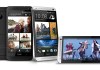
HTC is holding a special event in NYC today at 10 AM, and it’s all but guaranteed that the company will be showing off its latest flagship smartphone, the HTC One. But we managed to get in one last spoiler, thanks to the release of this final press shot found by French site NowhereElse.fr. The image is a much more polished version of previous leaks we’ve seen, showing the HTC One (formerly known as the M7) in all its glory, in both white and black.
The images, which look like something plucked from an HTC official splash page, confirm a lot of what we’ve seen earlier about the device. It’ll have just a home and back hardware button, for instance, and Sense is getting a makeover with what looks like a focus on a live tile style interface that grabs content from your social networks, apps and media libraries. The image also shows we’ll be seeing HTC’s now familiar Beats audio integration on the new handset, reinforces the strongly iPhone 5-like appearance of the case design with its rear top and bottom “windows” and chamfered edges, and gives us a glimpse at how a phone’s camera library might be organized around events. Finally, there appears to be some kind of music player that pulls in photos related to what you’re playing, maybe for docked playback.
The hardware looks attractive, and likely won’t have a removable back battery cover judging by the apparent SIM slot visible on the right-hand edge of the white vertical HTC One. I think we’ll see something much more in the metal and glass style that Apple has popularized, which will be interesting both from the perspective of how using those high-end materials changes an Android device’s appeal, and in terms of what kind of a response, if any, it might provoke from Apple’s legal team.
Here’s a recap of what else we already know about the HTC One from previous leaks: It’ll likely have a 4.7-inch screen capable of 1080p output, making for a massive 468ppi display density, should have a quad-core Snapdragon S4 1.7GHz processor with 2GB of RAM, and a 13 megapixel camera with a 2,300 mAh battery and either 32 or 64GB storage options.
Of course, we won’t have to wait long to find out exactly what is on tap: the event kicks off in just a few hours, and we’ll have coverage of what HTC is unveiling when it goes down. Whatever HTC is showing off, it needs to be a home run to give the company a boost coming out of a disappointing fiscal 2012.
-
Fujitsu Finally Enters Europe’s Smartphone Market With A Senior-Focused Android Device With France Telecom, Starting In June

It was exactly a year ago that news began to surface of Fujitsu’s intention to come to Europe with its Android-based smartphones. Now the Japanese company is finally coming good on those reports: on Tuesday, Fujitsu is launching its first device in Europe, marking its first “extensive foray into the smartphone market outside Japan.”
But it’s not the company’s high-end Arrow Android phones that will be leading the charge. Instead, it is the Stylistic S-01, a senior-focused, Android 4.0 device with big icons, enhanced audio and a de-sensitized touchscreen aimed at elderly users. The device will sell first in France, starting in June and in partnership with France Telecom/Orange. The first devices will be shown at the Mobile World Congress event in Barcelona next week.
While targeting elderly users first may seem like a strange tactic for a smartphone market debut, it actually makes sense for a number of reasons.
According to WPP’s Kantar Worldpanel, there are already countries in Europe where smartphone penetration has passed the 50 percent mark (the UK is 61 percent). France is not quite one of them yet, but it is close at 46 percent.
That means that in a world where Samsung and Apple are dominating smartphone sales, competition is getting tight to sell to mass market, younger demographics and some more specific targeting is needed.
Smartphone penetration among seniors in France is only around 20 percent, but some 75 percent of mobile users in the senior age bracket plan to buy a smartphone in the next year, according to one survey. France Telecom tells me that it has more phones in the pipeline for seniors. “We’d like to see what the appetite for this device is but we recognise the senior user segment as a new market for us to target, so we will be considering other devices for these users in the future,” a spokesperson says.
Indeed, Orange is also bucking the ageist trend that assumes smartphone technology is only for young people. “The senior customers within our customer base are just as hungry for smartphone technology and mobile internet services as anyone else,” noted Yves Maitre, SVP of device and mobile multimedia, France Telecom-Orange.
Fujitsu says that it has sold some 20 million phones in its Raku-Raku senior phone line since its launch in 2001 in Japan, where it is sold exclusively by NTT Docomo. Fujitsu’s only other foray outside of Japan has been for a trial of smartphones in China.
The Stylistic S-01 has several features that make it more friendly to the older user. Among them, the homepage icons that appear on the four-inch screen have been simplified and cast in a larger typeface to make them easier to see. The touchscreen, meanwhile, has been made less sensitive, with users required to push extra hard, as they would on a keypad, in order to tap through a command or number. While this might be annoying to the average smartphone user, Fujitsu says this reduces the amount of accidental touches that an older person might make on the device.
Other features include a personal security alarm and audio technology that slows down fast talkers, and adjusts the frequency of voice callers relative to a person’s age, and water resistance.
A France Telecom spokesperson says that for now there are no plans announced for further country rollouts, nor has it specified how it will be priced. It will depend on what Orange France decides to roll into the tariff and what services it ultimately bundles with the device.
But it looks like Fujitsu, at least, has plans for this to be the first stage in a wider international plan.
“As Fujitsu’s first extensive entry into the smartphone market outside Japan, we are delighted that Orange – a company that holds a strong position in the European market – will be offering our phone, which features Fujitsu-exclusive human-centric technologies,” said Nobuo Otani, Corporate SVP, Fujitsu Limited, in a statement. “We are committed to the success of this partnership as we strive to expand our smartphone business overseas, while advancing the promotion of Japanese technology worldwide.”
Full release with more device specs below.
Fujitsu and Orange Partner to Deliver Smartphones to the Rapidly Growing Senior Market in Europe
Intuitive, feature-rich STYLISTIC S01 smartphone to debut June 2013 in France
Tokyo and Paris, February 19, 2013 – Fujitsu Limited and France Telecom-Orange today announced a new partnership to offer mobile phones and services in Europe. The partnership marks Fujitsu’s first extensive foray into the smartphone market outside Japan. The initial offering will be the STYLISTIC S01, a smartphone designed especially for senior users, and will be available through Orange in France in June 2013.
As the senior population in Europe continues to grow rapidly, smartphone usage in this demographic is expected to rise. With the release of the STYLISTIC S01, Fujitsu and Orange plan on offering users in this market segment an innovative smartphone that provides outstanding usability. The STYLISTIC S01 will include services like Orange Cineday (*1) and Orange et Moi (*2), which are unique to Orange. Based around the human-centric technologies that Fujitsu has cultivated for over a decade, the STYLISTIC S01 also offers a variety of original, convenient functions designed to reduce barriers to smartphone adoption by maximizing ease of use.
One of these barriers is conventional touchscreens, which do not offer the tactile sensation of pressing a physical button. The STYLISTIC S01, however, employs a unique screen technology that requires users to apply the same level of pressure to on-screen icons as they would to buttons on a keypad. This helps users avoid inadvertent touches, preventing unintended operations and improving input accuracy. Furthermore, the intuitive graphic user interface features extra-large icons and a simplified layout to ensure straightforward navigation for easier operation. The STYLISTIC S01 is also equipped with a loud personal security alarm that can be used to alert people in the surrounding area in emergency situations.
The handset incorporates audio technology that optimizes the frequency range based on a user’s age, making it easier to hear the voice of the person on the other end of the call. Another user-friendly audio function slows down the speech of callers who speak rapidly without lowering the pitch of their voice or changing the length of the conversation. These and other innovative features are currently in use in the Fujitsu Raku-Raku Phone series for seniors, which has been offered by NTT DOCOMO since 2001 in Japan where it has sold over 20 million units.
“The senior customers within our customer base are just as hungry for smartphone technology and mobile internet services as anyone else. We are thrilled to be working together with Fujitsu to leverage our combined strengths to provide products for an emerging smartphone market segment in Europe,” said Yves Maitre, Senior Vice President of Device & Mobile Multimedia, France Telecom-Orange.
“As Fujitsu’s first extensive entry into the smartphone market outside Japan, we are delighted that Orange – a company that holds a strong position in the European market – will be offering our phone, which features Fujitsu-exclusive human-centric technologies,” said Nobuo Otani, Corporate Senior Vice President, Fujitsu Limited. “We are committed to the success of this partnership as we strive to expand our smartphone business overseas, while advancing the promotion of Japanese technology worldwide.”
The STYLISTIC S01 will be on display at the Fujitsu stand (Hall 5 Stand 5E120) and can also be viewed upon request at the Orange stand (Hall 5 Stand 5H110) during Mobile World Congress 2013, to be held in Barcelona, Spain starting February 25, 2013.
STYLISTIC S01 Product Specifications
· 130 x 64 x 10.9 mm
· 4-inch WVGA (800×480) touchscreen with unique tactile feedback technology
· Camera: back 8.1 MP; front: 0.3 MP
· Connectivity: GSM/GPRS/EDGE/UMTS/HSPA, Wi-Fi/Bluetooth, GPS
· Memory: 4 GB + microSD
· OS version: Android Ice Cream Sandwich 4.0
· Chipset: Qualcomm MSM8255 1.4 GHz
· Battery: 1800 mAh
· Water- and dust-resistant (IPX5/8, IP5X)Glossary and Notes
1. Orange Cineday
Allows Orange customers to take a friend to see a movie every Tuesday for free.2. Orange et Moi
A free application enabling Orange customers to understand and manage all their account details directly from their mobile in an efficient and easy manner. Customers can track their consumption, top up their account, take out options, find out about special offers, access Orange help, and also discover all the applications published by Orange with just one click. -
How To Sell A Car To The Mobile-First Generation
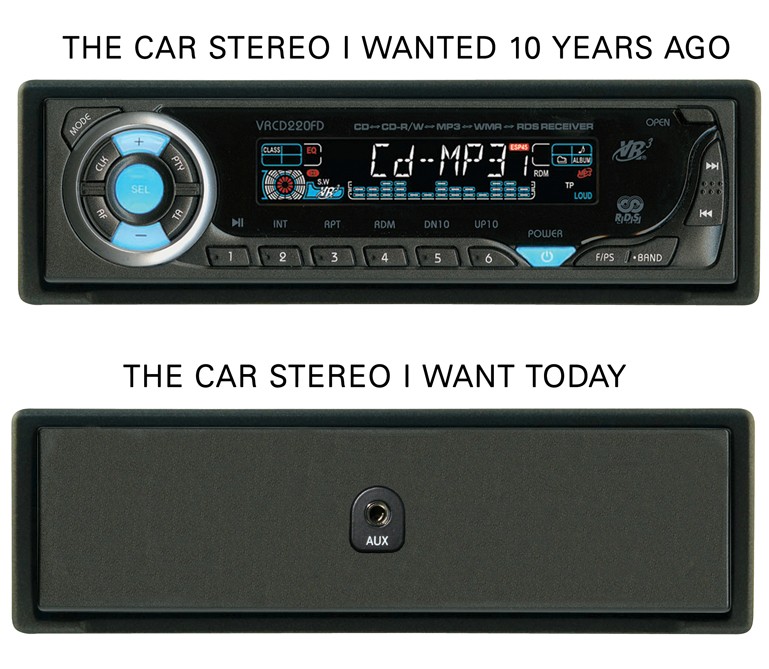
I’m shopping for a car right now. Just something that can handle a little city driving and frequent trips to the cottage in the warmer months, with the ability to haul a decent amount of cargo. I’m weighing factors like size, fuel economy, engine power, cargo space and FWD vs. AWD, but for my purposes most of those points are relatively moot; I really just need something to get me from A to B. But I find myself more concerned with the in-car entertainment system, and how it works with my mobile device of choice.
I’m far from a car buff, so my priorities might not line up with those of actual automotive enthusiasts, but my smartphone is no less important to me on the road as off. In fact, in many ways it’s more important in a vehicle I’ll be using mostly for long highway drives and the occasional commute caught in traffic. From experience with Zipcar and rentals, I know that the difference between a car that plays nice with my iPhone versus one that doesn’t can mean the difference between a pleasant trip that leaves me feeling rested and relaxed, and a frustrating journey that just ends up fraying my nerves.
Here’s what I want from an in-car entertainment system in terms of how it handles a smartphone connection, in both an incarnation that should be fully possible given today’s technology, and one that’s maybe less realistic but more ideal:
- Option 1: A Bluetooth or hardwired connection that recognizes that at this stage in the game, there are many more ways to get audio on an Android or iOS-based device than via a locally stored library, and is prepared to handle that. So no confusion when my iPhone is using iTunes Match, Rdio or Spotify instead of a local library; retain the ability to change tracks, recognize metadata for all content, and handle functions like skipping tracks without erratic behavior. I’m fine with an in-car system leaving the heavy lifting to my smartphone of choice and acting mostly as a dumb pipe, but at this stage in the game, we don’t have to be more-frustrating-than-a-simple-aux-connection dumb.
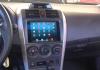
- Option 2: Custom, target-OS based systems that aren’t car manufacturers-specific, but cater instead to the two dominant mobile operating systems, Android and iOS. This would essentially involve Apple and Google coming in and saying, forget SYNC, forget QNX, forget whatever else you’re doing, let’s put iOS or Android in cars for a perfectly seamless experience with a user’s existing device, apps and services. As far as I’m concerned SYNC and other manufacturer-proprietary systems are little better than heavy-handed, often confusing chromes layered on top of functionality that mobile OSes already do perfectly well on their own. Just throw an iPad mini in the dash.
(via Reddit)
Car makers are taking steps in the latter direction, with Siri integration coming to cars from a number of manufacturers including GM, Honda, Audi and more. But this is still taking the form of integrations with existing systems like Chevy’s MyLink, which in my opinion are about as friendly and necessary as overwrought manufacturer skins plopped unceremoniously on top of stock Android.
Cars that run Android were among the trends spotted at CES this year, but companies have been demoing in-vehicle Android for a while now. The problem is that you often won’t recognize it. What car manufacturers need to realize is that mobile tech has answered a lot of the same problems they have when it comes to navigation apps, in-car entertainments and utility software in ways that don’t require much rethinking or translation. Taking steps to minimize driver distraction is obviously one thing, but from my experience with SYNC and the rest, that hardly ends up being a core focus on most car-focused interface-design choices, so it’s a thin argument for sticking with the existing direction most are headed in.
A user’s mobile device affects more and more of their lifestyle choices, resulting in the rich ecosystems we see out there today for accessories and appliances that are compatible with iOS and Android. Car makers need to realize this isn’t just a nice-to-have for consumers going forward, but an actual top-tier priority. In other words, the first person to build me a car that replaces the dash entertainment system outright with an iPad (as a standard, factory-installed option) wins.
-
How switching to Android helped me deal with my addiction to connectedness
I’ve written before about how I recently switched from using an iPhone to an Android, and the reasons for that shift, which mostly had to do with my perception of the Android ecosystem as being more open and diverse than Apple’s (something many readers took issue with). But there was an additional benefit to using an Android that I hadn’t really expected, and it didn’t really dawn on me until I had been using it for awhile: it has actually been helping me disconnect more from the maelstrom of real-time notifications, and that’s a good thing.
One of the things that made my iPhone into an extension of my arm for the three years that I used one was the ability to see at a glance anything that required my attention, whether it was email or Twitter, or Instagram, or Path, or one of a dozen other social networks and services that I have signed up for. At first I thought this was a great feature — but I’ve changed my mind. (Note: I know that you can turn these off on the iPhone, as some commenters have pointed out. I am just describing my experience of the default settings, not making a blanket statement about the value of the iPhone as a whole).
A profusion of bubbles, banners and popups
Not only did certain apps (like Twitter) wake up the iPhone screen even when the device was sleeping to flash a message, but every icon for every app also had mini-notifications built in, so that I could see at a glance how many emails had come in since the last time I had checked, or how many Facebook messages, etc. Each icon had a little number next to it that wouldn’t go away until I opened the app and dealt with the messages or updates (there are also banner updates that can be individually configured for different apps).

If you need to stay on top of things like email, this is a really great feature. If you are somewhat obsessive or have something approaching attention-deficit disorder, however, it’s like a never-ending game of whack-a-mole that you play with your phone: open the app and click through the emails so that the number next to the icon goes away, and five minutes later there are a hundred more waiting. Twitter is the same, and so is Facebook.
To me, those numbers became a nagging indicator of my failure to stay on top of everything I was supposed to be paying attention to. Which is why I noticed when I switched to Android that there weren’t any notification bubbles next to the icons, and nothing woke up my phone. There was a small LED at the top of the phone — a Motorola Razr HD — that changed color based on certain input, but that was it. And when you wake the phone up, there are some small icons at the top that indicate new emails, etc. All very easy to ignore.
How can something that’s missing be positive?
Many iPhone fans are probably going to see what I’m describing as a negative rather than a positive. After all, I’m talking about how the Android actually *lacks* certain features that the iPhone has — how could that be seen as a good thing? And that’s what I wondered when I started using the Android.
In fact, I spent a fair bit of time looking for ways to reproduce the same kind of notification experience I got with the iPhone. I tweaked the settings — which don’t really give you the same kind of granularity that you get with the iPhone (or at least not in my experience) — and I even downloaded a bunch of apps that were designed to replicate the iPhone notifications somehow, right down to the noises they made, which were programmed into my subconscious.

Nothing I tried seemed to reproduce the kind of notifications I got on the iPhone, however, or at least not in a way that seemed to fit my needs. So I basically stopped trying. Now the light on my phone blinks from time to time, but it’s really easy to ignore — and it chirps sometimes, but there’s no flashing on-screen message to tell me what it is. I have different rings for texts and phone calls from important people and that’s about it.
It’s not you, iPhone — it’s me
When I open my Android phone up from sleep mode, there are no tiny numbers beside any of the icons. There’s a widget that shows the first few subject lines of emails, so I can see whether there’s something hugely important, and another widget with a small calendar view. And when I want to see notifications from all the various apps and services, I can swipe down on the screen (a feature Apple borrowed from Android, I believe) and see a list.
Not having better notifications may be a downside for some, but I guess for me it has been a blessing in disguise — I was trying to be more disciplined about my real-time updates, the way some others like Om have described, and turn off all the notifications one by one, but I am weak. Maybe it took a switch to a different platform and an unfamiliar user interface for me to make the decisions I should have made before to make my life a little less hectic.
Believe me, I’m not trying to say that the Android phone is better than the iPhone in every circumstance or for every person, or that Google is better than Apple. I’m just trying to describe my usage of both and how I came to the conclusion that for me, fewer notifications (or more subtle ones) is actually a good thing.
Thumbnail image courtesy of Brosix

Related research and analysis from GigaOM Pro:
Subscriber content. Sign up for a free trial.- Connected world: the consumer technology revolution
- What the Google-Motorola deal means for Android, Microsoft and the mobile industry
- Mobile Q2: Smartphone growth surges; iPad’s rule continues


-
Source Claims To Have Leaked ‘iPhone 5S’ Motherboard Images
Every so often, we see sources indicating that they have leaked images of Apple’s new devices, and the iPhone 5S (or iPhone 6, or whatever you want to call it at this point) is no different. Obviously, they’re not always legit, so a grain of salt is always required.
Recently, some assembly line photos showed an alleged look at the device, but were later reported to be “likely an iPhone 5 clone”.
Now, iOSDoc claims to have received some new photos from a “very reliable source,” showing an A7 quad-core CPU and GPU, and 2GB of RAM.

iOSDoc says:
The iPhone 5S will come with a new quad-core Apple A7 processor, clocked at 1.2Ghz and iOS 7. The phone’s design will probably be very much similar to the iPhone 5, getting only hardware and software improvements. iOS 7 will also come with a highly improved Siri, able to “do a lot of new cool stuff.” Unfortunately our source didn’t want to speak very much about this aspect.
The new A7 SoC was to be expected, but we didn’t anything until now about the amount of cores or clock rate. It should be much faster than Apple’s dual-core A6, which is clocked at 1.3Ghz. A7 will also feature the PowerVR quad-core SGX554MP4 graphics processor, also featured in the 4th generation iPad. This amount of power will definitely be able to widen the possibilities of gaming, but should get us worried about battery life.
Obviously we can can’t confirm the legitimacy of the image, so take it as you will.
-
Mobile Twitter Users Use Twitter More [Infographic]
Twitter has released an infographic based on a Compete study, looking at mobile users in the U.K.
Last week, the company shared some findings from Compete about mobile users in the U.S. The companies found that primary mobile users are on Twitter more than average users, they tend to be younger, they engage with Twitter throughout the day, they engage more with content, and they engage more with brands. You can take a look at the findings here.
Here’s what they found out about mobile users in the U.K.