Category: Mobile

  • AOptix Lands DoD Contract To Turn Smartphones Into Biometric Data-Gathering Tools

    aoptix

    Smartphones may be invading pockets and purses across the world, but AOptix may soon bring those mobile devices to some far-flung war zones. The Campbell, Calif.-based company announced earlier today that it (along with government-centric IT partner CACI) nabbed a $3 million research contract from the U.S. Department of Defense to bring its “Smart Mobile Identity” concept to fruition.

    The company kept coy about what that actually means in its release, but Wired has the full story — the big goal is o create an accessory of sorts capable of attaching to a commercially-available smartphone that can capture high-quality biometric data— think a subject’s thumb prints, face/eye scans, and voice recordings.

    At first glance, it really doesn’t sound like that tall an order — smartphones are substantially more powerful than they were just a few years ago, and that’s the sort of trend that isn’t going to be bucked anytime soon. That continual improvement in terms of horsepower certainly can’t hurt considering how much data the smartphone+sensor combo is going to have to continually collect and transmit, and the company confirmed to Wired that the end product will feature an “intuitive interface” that should ensure that any soldier who’s owned a modern phone should be able to pick it up very quickly.

    AOptix hasn’t publicly committed to one mobile platform over another just yet, but building a sensor device to interface with an Android device seems to be likely option at this point. After all, the U.S. Department of Defense is no stranger to Google’s mobile OS — it gave Dell’s rather awful Streak 5 tablet the go-ahead for governmental use back in late 2011. More recent reports have shown that the DoD is has also responded favorably to the notion of iPhones being used around the Pentagon, but I suspect that acquiring a fleet of Android devices for use in the field wouldn’t be quite as expensive as buying iDevices en masse. Couple the cost-argument with the highly open nature of Android development (something that could come in handy when crafting the sort of software necessary to power this whole thing).

    If the notion of the DoD moving to embrace consumer tech is a little surprising though, you may just have to get used to it. Deputy CIO Major General Robert Wheeler noted in an address at this year’s CTIA MobileCon that the Defense Department’s mobile strategy involves sourcing innovative, mass-market solutions to existing issues so expect to hear more of these sorts of deals in the months and years to come.

  • Microsoft Surface Pro Teardown Reveals It’s Less Repairable Than Apple’s iPad

    surfacepro

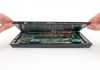
    The Microsoft Surface Pro is just getting into its first week of consumer availability, and gadget repair blog iFixit has already cracked the case for a closer look at what makes the tablet/PC hybrid thing tick. The teardown reveals that Microsoft has essentially glued down anything that could be glued, making it incredibly difficult for a user to repair on their own – more difficult than Apple’s iPad, by iFixit’s standards.

    The Surface Pro scored a 1 out of 10 for repairability, since just opening the tablet offers a high probability of completely cutting one of the four cables that surrounds the display, there’s adhesive on the battery and display keeping it stuck in, and the display assembly is incredibly hard to replace. There are also 90 screws scattered through the device’s interior, which iFixit says is exceptionally high for this kind of device.

    By comparison, Apple’s latest fourth-generation iPad scored a 2 out of 10 in repairability when iFixit tore it to pieces back in November. That may not be much of an advantage, but it does show that while Apple gets a lot of slack for changing its designs to be less friendly to user-initiated aftermarket changes, the company isn’t alone in moving to designs that focus more on fitting as much as possible into as small a case as possible, rather than providing something users can fiddle with. The Surface RT, on the other hand, was more repairable than Apple’s iPad, so it’s a little disappointing to see the more expensive Pro version fail on that score.

    It should be no surprise, given how much of an emphasis Microsoft put on the Surface Pro’s design and attention to fitting as much power as they could inside such a small space. But iFixit still takes away marks from Microsoft for doing things they feel are unnecessary to the space-saving nature of the design, including gluing the battery in, which they call “planned obsolescence” which is “completely unnecessary.”

    A lot of people wondered what might be the role of OEMs once Microsoft started building its own PC hardware, but there’s clearly still room for them as producers of devices that appeal to hobbyists and tinkerers, who aren’t content to buy what’s essentially a sealed hardware platform only to upgrade again in two years’ time. The Surface Pro, with its fairly limited storage options and 4GB of RAM, would likely be a ripe candidate for aftermarket upgrades, so buyer beware if your plan was to crack the case and perform some at-home surgery down the road.

  • HTC Teases The New One Flagship Phone Ahead Of February 19 Event

    htc-one

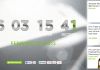
    If I was a betting man, I’d bet that HTC was carefully trying to engineer some buzz around its new flagship Android smartphone for the U.S. market, the HTC One we’ve seen leaked plenty of times before. And now, the company has put together a promo page with a countdown timer for its February 19 event in NYC, which all but gives up the goose ahead of an official unveiling.

    The page offers a special bonus whenever the timer ends in a “1″, flashing the number in green, which is itself a pretty solid indication that we’ll see a phone called simply the “HTC One” when it’s unveiled next week, but it also offers glimpses of an actual device every time it hits that count, too. These are ultra-zoomed in looks with a blurred filter effect, but it’s still fairly easy to get an idea of what parts of the phone, including the side edge, rear and front case might look like. It’s not surprise that in general, what HTC is showing off resembles very closely what we’ve seen in the latest leaks, including the rendering of an HTC One with the screen published this week.

    So why is HTC showing off so much ahead of time? Basically, because that’s what you do when you need to generate a lot of early hype, and that’s exactly what HTC needs right now. The company has always been among the top Android OEMs in terms of quality, in my opinion, but as its recent financial results prove, that has failed to help it really catch fire in the U.S. market. The HTC corporate slogan of “quietly brilliant” is sadly all too appropriate, but its promotional efforts with this device seem to indicate the company is aware it needs to make a more vocal splash.

    Of note in the new, it looks like we might see a handset with more metal involved in its construction than most Android devices, possibly with some chamfered edges like on the iPhone, and there’s also one segment that focuses on what’s clearly a camera lens. If HTC’s rumored “Ultrapixel” camera is also real, the company could be using that as one of its key differentiators. I’d love to see a company deliver something truly exciting on the mobile camera front, because while a lot of OEMs including Nokia and BlackBerry have been talking up cameras as key components of their hardware, I’ve yet to see a recent development that really merits the pre-launch buzz.

  • Mobile, Social Media Becoming Increasingly Important To Moviegoers

    Are you the kind of person who uses their mobile device during a movie? If so, shame on you. That being said, you’re not alone as new research has found that most moviegoers use some kind of mobile device to augment the experience.

    In Nielsen’s 2012 American Moviegoing report, the group found that mobile moviegoers “spend more, consume more content and are more actively engaged in the moviegoing process.” The report found that the moviegoers are increasingly moving to mobile with 69 percent of moviegoers owning a smartphone and 29 percent owning a tablet. It also found that mobile device owners see more movies with smartphone owners seeing nine percent more movies, and tablet owners seeing 20 percent more movies last year compared to their non-mobile device owning contemporaries.

    Outside of the theater, tablet owners are the biggest film consumers. The report says that they watched 47 movies on average last year, 10 more than the average moviegoer. Tablet owners are also more likely to spend more, and buy their tickets online.

    Movie Consumers Are Increasingly Going Mobile

    Being closely tied to mobile, social media’s impact on the moviegoer experience can not be ignored either. Nielsen’s report found that that the 18 to 24 and 25 to 34 age ranges used social media the most to discuss films. The overall moviegoer population is seeing increases in social media use as well.

    Mobile Device Owners Watch More Movies, Spend More Too

    From a certain point of view, this is great news for marketers who can take advantage of new advertising venues on mobile to reach a larger audience. I just ask that you turn off your phone during the movie. The annoying warning before the movie starts is there for a reason.

  • Yahoo Acquires Alike, Team To Join Yahoo Mobile Group

    Yahoo has acquired Alike, makers of an iPhone app, which helps users find nearby places of interest, for an undisclosed price. The Alike team will will join Yahoo’s mobile group.

    A Yahoo spokesperson gave us the following statement: “Yahoo! has acquired mobile startup Alike. The Alike team created an app that focuses on personalization — using the restaurants and places you like to find the ones you’ll love. We were very impressed by the team and their approach to building personalized experiences. The entire Alike team will join Yahoo!’s mobile organization in San Francisco and Sunnyvale.”

    Alike has posted a message about the acquisition on its website. “At Alike, we’ve spent the last couple of years working hard to build amazing mobile experiences to delight our customers, which is why we’re thrilled to announce some big news: we’re joining Yahoo! Mobile,” the company writes. “We’ve always been passionate about the growing power of intelligent mobile experiences. We believe that distilled information, deeply personalized and made accessible anytime and anywhere, is what makes mobile experiences a part of our customers’ daily lives.”

    “In Yahoo! we’ve found a team as excited about this vision as we are, and who are serious about making it real,” the Alike team adds. “We’re super excited to join Yahoo!’s mobile team, where we can march toward that vision faster than ever.”

    The Alike Nearby iPhone and web apps will no longer be supported, effective today.

  • Russia’s consumers — a promise for the stock market

    As we wrote here last week, Russian bond markets are bracing for a flood of foreign capital. But there appears to be a surprising lack of interest in Russian equities.

    Russia’s stock market trades on average at 5 times forward earnings, less than half the valuation for broader emerging markets. That’s cheaper than unstable countries such as Pakistan or those in dire economic straits such as Greece. But here’s the rub. Look within the market and here are some of the most expensive companies in emerging markets — mostly consumer-facing names. Retailers such as Dixy and Magnit and internet provider Yandex trade at up to 25 times forward earnings. These compare to some of the turbo-charged valuations in typically expensive markets such as India.

    A recent note from Russia’s Sberbank has some interesting numbers on Russia’s consumer potential. Sberbank tracks a hypothetical Russian middle class family, the Ivanovs, to see how consumer confidence is shaping up (According to SB their data are broader in scope than the government’s official consumer confidence survey).

    The survey found the Ivanovs to be surprisingly upbeat — almost half of those surveyed expected an improvement in their personal wealth in 2013 compared with 2012. More than 40 percent of people plan to change their car within the next two years, 92 percent own their own homes and half of those said they planned to upgrade to a newer flat in the near term.

    Companies that should benefit, according to Sberbank, include Dixy and Magnit; homebuilders Pik and Etalon; Yandex andanother internet firm Mail.ru; mobile providers MTS and Megafon; and banks VTB and Vozrozhdenie.  Carmakers should do well too — Russia is tipped to overtake Germany as Europe’s biggest car market by mid-decade and sales grew last year by 22 percent in value to $77 billion, a recent study from Ernst & Young finds.

    So do these stocks justify their valuation premiums? Sberbank’s chief strategist Chris Weafer thinks so. He says consumer-focused companies can expect higher revenue growth in Russia than other emerging markets. Here are some numbers:

    Based on an annual median income of $15,000, more than half Russia’s households would be considered middle class, versus a third in Brazil, 21 percent in China and 11 percent in India.

    Wealthy households are also more prevalent in Russia, with 15 percent of households having income above $50,000 versus 5 percent in Brazil, 2 percent in China and 1 percent in India. (However, in absolute terms, wealthy Russians are likely to be fewer in number than in the other BRICs due to the country’s smaller population).

    All this is good news and not just for Russian retailers, of course. With Russia now a fully-fledged member of the World Trade Organisation, foreign manufacturers of cars to cosmetics can also grab a slice of this market. But for the broader Russian stock market, the reality is less exuberant. Consumer and banking stocks account for less than 30 percent of the index. The rest is made up of energy and commodity companies, many of them state-controlled, and those are the companies trading at heavy discounts.

  • The secret to tackling mobile, cloud and big data? Treat them as one.

    There is widespread agreement—across the globe and in every industry—that mobile, big data, and cloud computing are the three cornerstone issues of tomorrow’s business environment. In fact, a strong organizational response to each of these issues is already critical to competitive survival.

    As a result, CIOs, business strategists and IT leaders are working furiously to make sure their businesses have plans in place to stay ahead of these challenges. But there is one subtlety that is frequently overlooked: When it comes to mobile computing, big data and the cloud, what we have is not three problems but one.

    Rising in unison

    It’s not a coincidence that the profile of these three business challenges rose in parallel. Mobile, big data, and cloud are not siloed concerns easily addressed in isolation. They exist in an overlapping matrix, where the importance of each issue increases because it leverages (or helps solve) an issue raised by one of the others.

    For example, in the days before mobile computing, business users typically did all their work using just a handful of applications. Today, the average smartphone has 41 apps installed on it. And each of those applications sparks a need to consider security, since it generates data each and every time it is used. And because these devices are often connected to service provider networks – rather than directly with corporate servers – a great deal of that business app data requires secure cloud storage.

    Thus the proliferation of mobile devices exacerbates the big data problem, which in turn precipitates the demand for cloud.

    In short, they are all part of a single, converged and symbiotic trend. And to address them optimally requires a holistic perspective on all three.

    No bottom in sight

    With global demand for mobile computing at the heart of this escalation, it makes sense that IT strategists would be keenly interested in the trend lines for mobile adoption. Today, 87 percent of the world’s population owns a mobile phone; 60 million Android devices were sold in the second quarter of 2012, and now 1 million new Android devices are provisioned daily, according to Google. As of last month, there were likely more smartphones on the planet than humans, according to Cisco.

    So the question is whether there is a saturation point on the horizon that could help curb this cloud/mobile/data demand? Surprisingly, no. The average number of mobile devices per employee worldwide has already reached three to five, and adoption rates continue to grow as consumers add tablets and ever-more capable smartphones to their mobile arsenals.

    But consumers’ ceaseless enthusiasm for new form factors and functionality is not the whole story behind the world’s bottomless demand for mobility. Today, businesses themselves – rather than consumers – are adding fuel to the fire.

    Not just a BYOD issue

    As industries finally crest the hump of transforming their workflows to leverage mobile device availability, they drive new demand – not only for mobile devices, but for new scalable infrastructures that deliver more actionable intelligence from their big data.

    Finance Consumer banks, operators and retailers are widely deploying mobile commerce capabilities, which, in addition to automating traditional transactions, must include on-demand access to unstructured data, such as check images.

    Manufacturing  Mobile devices on the factory floor automate manual processes, thereby feeding more rapid information into the system. This makes it possible to detect and respond early to issues that take a toll on quality or productivity, such as supplier errors.

    Retail  Retailers are giving regional store managers mobile app access to daily and even real-time sales performance data on the floor, allowing them to optimize displays and customer service to sell more of the most popular items.

    Health care Thanks to new mobile apps and devices, the details of every patient interaction is now entered into the system nearly instantaneously. This provides a basis for a more efficient and orchestrated care response, and in some cases leading to more rapid or accurate diagnoses.

    The internet of things

    As mobile technology embeds itself into more and more objects, vehicles, buildings, sensors and machines, the heterogeneity of actionable business information will only grow. “Annual global IP traffic will surpass the zettabyte threshold by the end of 2016,” reports Cisco. “In 2016, global IP traffic will reach 1.3 zettabytes per year or 109.5 exabytes per month.”

    Smart equipment and vehicles will upload data to service provider networks as well as private networks, and organizations will need a plan to normalize data in many forms and from many sources. The scalable infrastructures we design today to store and structure such varied data are critical to the enablement of the business innovations we will need in the future.

    The effect of this convergence is already apparent, especially in the area of business intelligence. Mobile business intelligence makes it possible for organizations to provide analytics on key performance metrics to a wider variety of employees – not just for executives. Once employees get a taste for how mobile apps fuel greater effectiveness in their job duties, they will push for more dashboards and more data. And these big data stores can’t be undertaken without cloud, to facilitate real-time performance, nor mobile devices and apps, to deliver data into the field where it’s put to good use.

    Embracing the Entanglement

    The interdependence of mobile, big data and cloud is undeniable, and will only multiply as data growth and mobile use continue. Yet our strategic thinking lags behind the evidence. As we have learned from IT revolutions of the past, a partial strategy is worse than no strategy at all, as you can end up with an inflexible, tactical implementation that requires a ‘rip and replace’ approach.

    Organizations that manage to avoid a false start with a siloed strategy will create a network design better aligned with where IT will be in five years. In short, the most successful organizations recognize the secret alliance of mobile, big data and cloud early, and develop a holistic strategy considering all three in concert.

    Sanjay Poonen is president and head of SAP’s mobile division. Read more of his work here, and follow him on Twitter @spoonen.

    Photo courtesy of Herbert Kratky / Shutterstock.com.


    Related research and analysis from GigaOM Pro:
    Subscriber content. Sign up for a free trial.

  • Microsoft’s 128GB Surface Pro Sells Out At MS Online Store Just Hours After Launch

    surfaceproleft

    Microsoft’s $999 128GB Surface Pro has sold out in the online Microsoft Store in the U.S. (via WinBeta), just a few hours after going on sale today, February 9. The 64GB version is still available as of this writing, and the Surface Pro is still likely in stock at physical retail locations like Best Buy, where it also went on sale today, although checking the stock levels via their online tool reports the Surface Pro as “Unavailable” across the board.

    The Surface Pro is Microsoft’s more powerful, Intel-powered Windows 8 tablet, which runs the full version of Windows 8 unlike the Surface RT and can handle full-fledged Windows desktop applications. In the TC review, John Biggs said that the Pro was a much more compelling device than the RT, in part because of its ability to run software that enterprise IT departments depend upon from legacy windows installations.

    The Surface RT sold out of the $500 32GB model within one day, but the Pro’s more expensive model has sold out even faster. That could indicate that users are placing a higher value on storage with the Pro, which is marketed as a device much more suited to getting serious work done than the Surface RT. The 64GB model remains in stock for now, and given that there’s only $100 price difference to trade up to double the storage capacity with the 128GB version, that’s not surprising.

    Storage was recently the subject of a number of back-and-forth reports regarding the Surface, with some claiming Microsoft left little room on-device for personal files once you accounted for the Windows 8 OS install. Ed Bott reported earlier todays on the actual storage numbers, which beat the original estimates by a fair amount, but the free space on the 64GB version still represents a 200 percent increase from the actual usable space on the base Surface Pro model.

    The 128GB Surface Pro is still available to order from the Microsoft Store online in Canada as of this publication date, and you may still be able to grab one by visiting a physical retail location.

  • Verizon takes the crown for best customer care for fourth year straight

    Verizon Customer Care J.D. Power
    J.D. Power and Associates announced that for the fourth consecutive year Verizon (VZ) is the top national wireless provider when it comes to customer care. Verizon took the lead from T-Mobile in 2010 and hasn’t looked back since. The firm found that the carrier’s automated phone service and representatives are superior to its competitors. Verizon scored 766 points out of a possible 1,000, ahead of AT&T (T), Sprint (S), and T-Mobile who scored 759, 746, and 715 points, respectively. The study also found that MetroPCS (PCS) had the highest overall wireless customer care satisfaction among non-contract carriers, with an overall score of 733. J.D. Power and Associates’ report is based on a survey of 7,332 wireless customers during a period from July through December 2012.

  • Skype ‘closely collaborating with BlackBerry’ to make sure ported Android app runs well on BB10

    Skype BlackBerry 10 Android
    The bad news for BlackBerry (BBRY) fans: The BlackBerry 10 Skype app is an Android port and not a native app. The good news: Skype has told CrackBerry that it is “closely collaborating with BlackBerry” to make sure that the ported app runs smoothly on the new platform. Among other things, Skype says it plans to “open up some of the integration points available to native apps in the OS so that they can also be used by the Skype application” and thus “allow Skype users to see notifications, to start the app from the Hub, and to see their Skype contacts in the native phone book.” Although BlackBerry’s first BlackBerry 10 device is reportedly off to a hot start so far in terms of sales, the company is still finding it hard to get some key apps natively onto its platformCrackBerry’s Bla1ze, for one, comments that he’d “just rather see Skype go native” since “Skype isn’t hurting for any development money and creating a native BlackBerry 10 app isn’t hard.”

  • The Logitech Ultrathin Keyboard Case For iPad Mini Successfully Balances Size And Performance

    logitech-ultrathin-mini-8

    Logitech had a definite winner on its hands with the Ultrathin Keyboard Case for iPad, a Bluetooth keyboard that attaches via magnets built into the iPad, protecting the screen and adding only minimal thickness. Now, there’s a successor designed for the iPad mini that comes in an appropriately shrunken down package. Of course, making a keyboard smaller doesn’t always produce the best results, but in this case, Logitech strikes a good balance.

    • MSRP: $79
    • Three months of battery life (based on two hours daily usage)
    • Availability: Preorder now, with availability sometime later this month
    • 7.33mm thin, weighs 220 grams
    • Available in black and white (and red in select markets)


    The Logitech Ultrathin is a good-looking device that matches up really well with the iPad mini’s design. My review unit is black, and the case’s matte finish pretty much perfectly mirrors that of the iPad’s rear case. Side-by-side and face down, the symmetry is such that you could easily pick up one thinking it was the other if you aren’t paying close enough attention. The two surfaces also feel the same, which speaks volumes about Logitech’s attention to quality with the Ultrathin’s construction.

    The magnet spine that attaches to the iPad itself snaps into place with a satisfying click, and lines up well when closed. The face of the keyboard features a shiny black plastic, which, while not as classy as the iPad’s glass surface, does a good job of mimicking its black bezel visually, to keep the whole design symmetry experience consistent.

    The Ultrathin’s keyboard is the part upon which everything hinges, and Logitech has pulled out all the stops to try to provide a typing experience that doesn’t feel compromised, despite the extremely limited real estate available given the iPad mini’s small footprint. To make it work, Logitech has combined a number of function buttons, reduced key size and cut down on the space between them.


    The keys themselves feel great, and offer a nice response when typing despite how thin the cover is. But the experience isn’t without compromises. Typing on the keyboard will prove a frustrating experience at first for anyone used to using a full-sized keyboard. But the good news is that the number of errors you make starts to taper off pretty quickly, and in very little time, you can even feel mostly at home on the Ultrathin keyboard, though placement of some elements like the Shift keys never quite feels perfectly natural.

    While the typing experience isn’t perfect on the Logitech Ultrathin Keyboard, it’s about as close as you can get without adding a lot more bulk to a Bluetooth keyboard for the iPad mini. It still dramatically increases your ability to enter text, and beats using the software keyboard by a very wide margin. If you’re looking for an iPad mini keyboard that maintains the smaller tablet’s considerable size advantage over its big brother and still greatly improves the experience of typing anything longer than a tweet.

  • HTC’s Flagship M7 Smartphone May Just Be Called The HTC One

    m7

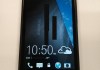
    Let’s face it: HTC may have its hopes pinned on its not-so-secretive M7 smartphone, but sooner or later the company is going to have to drop the codename and let it fly under another banner. As it turns out, that new name may be more familiar than expected — prolific leaker EvLeaks noted on Twitter just a little while ago that it would debut simply as the HTC One later this month.

    I say “may,” of course, because ersatz leaks are just par for the course this close to an HTC unveiling. Then again, the Taiwanese company isn’t exactly great at keeping these sorts of things under wraps. If you’ll recall, the revelation of the original One series devices was spoiled just about this time last year, well ahead of HTC’s big Barcelona press conference at Mobile World Congress. HTC never puts much effort into debunking these sorts of claims (unlike, say, Samsung) so you can expect the company to remain stoic on the matter, but EvLeaks’ generally strong track record lends this rumor a fair amount of credence.

    Granted, the move is a pretty clever one if true — HTC has spent the last year establishing the One series moniker as one worth paying attention to, and giving it up after making as much headway as it has would just be silly. Plus, simply calling its new flagship The One lends the device a certain cachet — it would be the culmination of the all the prowess expertise that went into crafting the already-impressive One series.

    Oh, and in case you needed a little more to chew on, AndroidCentral points out that HTC CEO Peter Chou attempted to whip his employees into a frenzy at a recent year-end party by having them repeatedly chant “HTC,” “M7,” and yes, “HTC One.” Was it an awkwardly enthusiastic bonding exercise, or something more telling? Either way, the answer should be revealed very shortly.

  • Why the Lumia 620 is so important to Nokia: Windows Phone is hammering the iPhone in India

    Nokia Lumia 620
    The latest Nielsen survey confirms one of the major smartphone trends of 2012: That the Windows Phone operating system showed remarkable strength in India even before the new wave of Nokia (NOK) and HTC (2498) models launched in January. According to Nielsen, Windows Phone grabbed 8% of India’s smartphone market last autumn, far ahead of BlackBerry (BBRY) at 3% and iPhone at 1%.

    Continue reading…

  • HTC’s new M7 flagship phone may just be called the ‘HTC One’

    HTC M7 Name Rumor
    Despite past lackluster sales, HTC (2498) apparently just can’t quit its “One” branding. Twitter user Evleaks, who has a very solid history of providing information on yet-to-be-released smartphones, writes today that HTC’s newest flagship smartphone will not be named the M7 but will instead simply be called the HTC One. This seems like a pretty questionable decision on HTC’s part since the company already has several phones with the “One” branding, including the One X and the One S, and the company risks creating confusion by adding yet another One to the mix. What’s more, none of HTC’s One devices have been top sellers and HTC is hoping that its newest flagship smartphone will be a breakout device that will put the company back in competition with rivals Samsung (005930) and LG (066570). Needless to say, simply recycling the “One” brand again may make HTC’s efforts to make its new device stand out more difficult.

  • Apple’s iPhone Sales Grow By As Much As 400% In 3 Months In India, But There’s A Huge Gap To Close

    Apple-Logo-MacBook

    Apple’s next big growth market could be India – a country where it has failed to find significant purchase with consumers up until this point. The Economic Times (via @ScepticGeek) is reporting that sales of Apple devices, with iPhones leading the way, rose by between 300 and 400 percent in the past quarter. That growth, identified by research firm IDC, is likely being propelled by Apple’s distribution partnerships with Redington and Ingram Micro.

    According to Convergence Catalyst founder Jayanth Kolla in conversation with the Economic Times, Apple’s strategy in India mirrors the route it took to success in China; the company spent time studying the market, learned what it needed to do to sell handsets in India and then got aggressive about executing its sales strategy. Apple’s India team grew by 500 percent in six months to help make that happen, going from 30 to 150 people, Kolla says.

    Apple’s strategy in India hasn’t involved fielding a lower cost device, but it has included making its iPhone more attainable for cost-conscious buyers. That’s being done through installment-based payment schemes operated through its resale partners, including one with TheMobileStore, a national Indian retail chain, which that company’s CEO says has helped increase sales of Apple gadgets three-fold in the past year.

    Three- or four-fold growth in a single quarter is definitely impressive, but Apple has to make up a considerable gulf in India. According to recent figures from IDC, Samsung had a 46 percent market share in India between July and September 2012, and Apple didn’t even show up in the top five, with HTC rounding out that crowd with a relatively small 6.6 percent. Browsing stats show that Apple has only a tiny percentage of current mobile web traffic in the country, and the most recent IDC numbers for mobile operating systems show a meager 1.4 percent share of sales in the July through September 2012 quarter.

    Last year, during an Apple quarterly conference call, CEO Tim Cook said that while he “love[s]” India, he said they didn’t see much opportunity there in the short-term and would be focusing on other market where there was more growth potential for the time being. Part of the reason for his hesitation was the distribution system in that country, he said at the time. But a fresh injection of local Apple staff, and a distribution model that is beginning to find its legs could signal that Cook and Apple are finally willing to put in the time and effort to grow their presence in India, where there is reportedly currently less than 10 percent smartphone penetration.

  • Freshly Funded ChaCha Thinks It Has Q&A Right This Time

    Last week, Q&A vet ChaCha closed a new $14 million round of funding showing that there are still believers in the Q&A space. We had the opportunity to speak with founder and CEO Scott Jones about what ChaCha has in store, and what it intends to do with that money.

    Q&A is, in some ways, very similar to search. It’s all about seeking answers, and this is something Google and the rest of its search peers continue to try to improve upon. Yet some of the biggest names on the Internet, including Google have only stumbled when trying to take on Q&A. Jones thinks it has to go beyond the algorithm and include a human touch. He says that for Q&A, ChaCha is doing a much better job than Apple’s Siri, which he says will “basically punt,” and search the web (though he acknowledges that the product is good for device-internal purposes).

    Google, as you may recall, bought Aardvark a few years ago to get pretty much into ChaCha’s space. It didn’t work, and Google shut it down. Facebook has tried the Q&A space to no avail. LinkedIn just killed its answers service as recently as last week. These other companies just “aren’t built for realtime Q&A,” says Jones. “They try to bolt something on, and it just doesn’t work that way.”

    ChaCha certainly isn’t the last man standing (Ask, for example, is still grinding it out, and has even been doing some TV advertising lately). Quora has been getting a lot of attention, but Jones says he doesn’t really view it as a competitor, in that it’s more about long form answers (a point validated by Quora’s recent launch of a blogging feature) as opposed to ChaCha’s realtime quick answer style.

    But ChaCha thinks it has the Q&A formula down, or at least closer than anyone else. According to Jones, while you may not have seen that from ChaCha yet, you will soon.

    The new funding is all about growth, and a significant part of that is a new upcoming mobile experience, which will inevitably take over ChaCha’s web presence. They’ve been cooking up a new mobile app, which is codenamed “Go Big,” but is essentially a complete overhaul of the ChaCha apps that are out there today. It will first come to iPhone, then Android and others. It is a much more social media-oriented experience, and utilizes the Social Reactor feature the company unveiled not long ago. More on that here.

    The biggest change ChaCha users will see is that the Q&A experience is moving from a faceless/nameless experience to a social one, so you know who’s answering the question.

    “None of us are good enough for consumers,” Jones says of Q&A services, in reference to delivering useful answers consistently. He says people need these answers to come at least nine out of ten times, and the new app gets ChaCha “darn close”. He’s been using an early beta version.

    Look for the new app to hit the iPhone in March, then Android and the web later. Jones says he isn’t all that proud of the current ChaCha web experience, going so far as to call it “kind of crappy”. But the experience that comes with the new app will hopefully change all of that once it hits the web.

    It’s going to be interesting to see if ChaCha can make a bigger mark. The service is already getting two to three million questions on an average day.

  • T-Mobile Aiming To Be First With BlackBerry Z10 Launch In The U.S. With Mid-March Release

    z10-13

    T-Mobile says that BlackBerry’s new Z10 smartphone is “more stable than … anticipated,” and could potentially get a faster-than-expected launch on the network. As it stands, the new BB10-based smartphone looks to be on track for a mid-March release, according to statements made by T-Mobile USA Head of Business Sales Frank Sickinger speaking to Bloomberg today. The company anticipates it could be the first U.S. carrier “out of the gate” with BB10 as a result, according to the report.

    Anticipated launch dates for the BlackBerry Z10 in the U.S. had pointed to a March 27 launch on T-Mobile, according to a leaked roadmap published by TmoNews earlier this week. While that date may have originally been accurate based on the carrier’s assumption of how long the Z10 would take to clear testing, Sickinger’s words today suggest that the timeframe has been pushed up.

    The Z10 is already out and available in the Canadian and U.K. markets, and BlackBerry has been issuing reports of early sales success in both countries. The launch in Canada on Rogers is reported to have seen initial sales numbering in the “thousands,” making for a record launch day for a single BlackBerry device, and in the U.K. many outlets report being sold out. That said, BlackBerry still isn’t releasing any specific sales numbers, which casts some doubt on how successful sales have actually been, in relative terms compared to the larger smartphone industry.

    The Z10 will retail on T-Mobile for $199 with a new two-year agreement, and will be offered to business customers ahead of its consumer launch, with about a week’s worth of lead time. If T-Mobile can get the Z10 in customer hands a bit faster than its competition,  that might help it win over some more business customers to its cause. But this could just spur other carriers to try to speed up their own testing processes, which should please the eager U.S.-based BB-heads out there.

  • Apple Patents Image Identification Unlocking Method For iPhones And Macs

    Apple buys AuthenTec

    Apple had a new patent application published by the USPTO today, describing an unlocking method for digital devices that uses image identification to properly recognize an authorized user. The system would present a user with photographs from their iPhoto or iCloud collections, and then ask them to identify who or what the subject is in order to unlock the device. The item in question could also be an object or series of images.

    The authentication process would work by displaying at least one image to be identified from the user’s library, though it could also display a number in succession if users are looking for more security. It’s highly likely that someone close to you will recognize another individual depicted in photos on your phone, for instance, but if you’re worried about granting access even to that inner circle of acquaintances, it becomes increasingly unlikely they’ll be able to identify each of a series of more than one picture.

    Different means of input are also described in the patent, from a multiple selection list of choices for one-tap entry, to using an on-screen (on an iOS device) or physical keyboard (on a Mac) to type in the exact answer, to just speaking the name of the person or object aloud. Combined with voice recognition, you can see how the third option would provide yet another layer of added, personalized security, which would be very hard to beat via conventional machine-based security workaround tools.

    If the system uses objects instead of people, the patent describes a process by which users would offer up unique, alternative nicknames for recognizable monuments and landmarks. So, for example, a picture of the Eiffel Tower could actually be linked to the phrase “The Big Stick.” Since no one else is likely to use quite the same idiosyncratic alternate names for highly recognizable objects, the system should remain fairly secure.

    In most cases, Apple’s current passcode unlock system is probably sufficient for the needs of users, but should the company want to meet the needs of privacy sensitive users, a method like this that’s highly personal and hard to hack could be of considerable benefit.

  • Facebook’s Friendship Pages Hit Mobile, Coming to Apps Soon

    Facebook has begun to roll out their “Friendship Pages” on the mobile web, and they should be appearing on Facebook’s native apps soon.

    Friendship pages allow you to view your history with any other user, including your mutual likes, photos you’re tagged in together, posts you’ve exchanged, mutual friends, and more. Facebook debuted Friendship Pages back in 2010, but gave them a major update in November 2012 that brought them firmly into the Timeline era.

    Starting now, users will begin to see the option to access Friendship Pages roll out on m.facebook.com.

    Facebook confirmed that the new Timeline-inspired Friendship Pages will be rolling out to the iOS and Android apps “in the coming months.”

    On the mobile site there are a handful of places where you’ll see a link to Friendship Pages. Those include news feed stories about Timeline posts and Gifts, any Timeline posts between you and the friend, and life events. You can also access a Friendship Page via a menu on the specific friend’s Timeline.

    As of now, the mobile Friendship Pages do not allow for customization of live events or cover photos.

    [via Inside Facebook]

  • The First Ubuntu Smartphones Will Debut In October

    ubuntu-phone

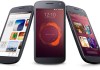
    Ubuntu’s recently announced mobile operating system certainly has some panache, which has prompted more than a few nerds (myself included) to become enamored with it. Thankfully, Canonical founder Mark Shuttleworth has just recently given us a clearer idea of when to expect it — he told the Wall Street Journal that the first Ubuntu-powered smartphone would see the light of day this October.

    That is, of course, if everything pans out the way that the Ubuntu team hopes. It’s not unheard of for mobile platform launches to miss their intended launch windows after all — BlackBerry 10 was famously slated for a 2012 launch before being delayed until last week.

    Sad to say, the rest of Shuttleworth’s chat with the Journal wasn’t nearly as revealing. Though we’ve seen the nascent mobile OS running on a Samsung Galaxy Nexus both in the initial announcement video as well as at CES, Shuttleworth declined to offer names of any confirmed or potential hardware manufacturers Canonical may be working with. Even so, Canonical’s fondness of the one-time flagship device doesn’t end there. Developers will be able to tinker with Ubuntu on the Galaxy Nexus starting sometime this month (though the fact that it was originally supposed to be released last month may not bode well for Canonical’s launch window).

    Shuttleworth also mentioned that the mobile OS would make its official debut in two major markets this fall, but you guessed it — there’s no hard word on which markets he’s actually talking about. But he did concede that North America is a “key market” for Ubuntu. That said, Canonical may do well by tackling some less-developed markets right out of the gate.

    Canonical’s Jane Silber noted that when Ubuntu for phones was first revealed that the appeal of Ubuntu phones extends far beyond the enterprise, adding that Ubuntu’s native apps and stylish UI could make it a popular choice for more basic smartphones. Some of the other upstart players are looking to expand the reach of their mobile operating systems by taking a similar tack. Carriers like Telefonica are planning to use Mozilla’s Firefox OS as a means of getting more low-cost, feature-rich devices into the hands of consumers in markets like Brazil. Attempting to make a splash where mobile OS allegiances have not quite had a chance to settle yet could give Canonical an edge, as those regions become more digitally developed.