Category: Mobile

  • Twitter tweaks its mobile search product, hopes more actually use it

    Twitter announced a few minor updates to its search product on mobile Wednesday, highlighting a few changes intended to get users taking greater advantage of search and using the different tabs to find new content through the app.

    The changes apply to Android and iOS versions of Twitter as well as the mobile browser version. The updates include a change to the discover tab, which will now include suggestions for both users and tweets all at once; search results that show all content in one stream rather than dividing up by users and tweets; and a tweaked connect tab that now defaults to all interactions rather than just mentions.

    The full explanation of the changes are available in Twitter’s blog post updated on Wednesday morning.

    Getting users to take advantage of the discover tab has been an ongoing goal for Twitter, as is improving its search function, which has undergone significant changes to become what it is today. The content created by Twitter users is ideal for building a useful search engine, much as Facebook wants to do, and the company has been moving in that direction this year.

    Thumbnail image courtesy of Shutterstock user maminez

    Twitter search updates mobile

    Related research and analysis from GigaOM Pro:
    Subscriber content. Sign up for a free trial.

  • Report Looks At Performance Of Location Targeting In Mobile Ads

    Verve Mobile recently released its annual State of the Market review, looking at location-powered mobile advertising (via MarketingCharts).

    According to the report, mobile campaigns leveraging location targeting outperformed non-location targeted campaigns by factor fo 2x. Of 2,500 mobile campaigns analyzed, most of them utilized location targeting (which is a focus of the firm’s offerings), but here’s a look at location targeting by vertical:

    Location Targeted campaigns

    “For the history of digital advertising we’ve basically been targeting on a few things, like content and cookie data,” says Verve Mobile CEO Tom MacIsaac. “The big new data set mobile brings to the table is location—a data set that can be as important at inferring intent, demographics, audience segments and other attributes as any we have seen to date in digitl advertising. And it brings genuine value to end users—helping them find products and services where and when they want them—a key attribute of the most valuable advertising mediums.”

    According to the firm, restaurants and retail led all advertisers in use of geo-aware and geo-fenced campaigns. Here’s a look at performance of CTR by targeting tactic:

    CTR by Targeting

    Of course, one major point the report makes is that users are engaging with brands on mobile devices in different ways. It’s not always about the click. They saw a 9% interaction rate for calls, for example.

    Check out the full report here (pdf).

  • Pebble Addresses Early iOS Bluetooth, Android Fragmentation Issues, And Battery Issues

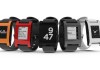
    Family of 5 Pebbles

    Pebble, the smart watch that set the world on fire with its Kickstarter project, is already encountering a few growing pains as its device begins to trickle out to the earliest backers. Chief among those issues is a problem that sees iOS notifications for email turn off whenever an iPhone or iPod touch has its Bluetooth connection interrupted. Problems are also cropping up around different Android OEMs and the stock email apps they use not necessarily being compatible with Pebble, iOS caller ID issues and differing support for various Android ROMs, among others.

    Pebble itself acknowledged these and other issues in an email to Kickstarter project supporters today, identifying which issues they’re working on and what their top priorities are. The iOS email problem, which can be fixed somewhat with an awkward workaround. Pebble says that they’ve talked about this problem with Apple’s developer support department, but doesn’t think that that’s necessarily a route they can expect a solution from anytime soon. Instead, they say finding a solution is their “#1 priority iOS task,” and they’re currently looking to gather feedback from the iOS user pool to help them address it.

    Other issues highlighted in the email include problems like HTC and Samsung devices not delivering email notifications to the Pebble properly from the default email apps used by those OEMs, Pebble interfering with proper Siri functionality on iOS and more. Here’s a complete list, as quoted from the email sent by the Pebble team.

    • Email notifications from the default email app on HTC and some other Android devices are not being delivered to Pebble yet. On other default email apps (Samsung in particular) do not transmit email contents. Working on it.
    • Some Pebbles are rebooting after receiving some notifications. If this happens to you regularly, use the Contact or Email support button inside the app to send us debug logs.
    • iOS Caller ID. We’ve identified a bug that prevents a caller’s name from appearing on Pebble. Will have a fix in the next iOS Pebble App version.
    • Android two factor authentication – click here for instructions
    • Watchfaces not loading on iOS. Fixed in the next version of the iOS app.
    • Battery indicator: we’re seeing reports of Pebble battery lasting from 2-7 days. It seems to be related to the variety of different Bluetooth connections on different phones. The first thing we’re working on is improving the battery logging and how Pebble alerts you when the battery is almost empty. Then we’ll move to improving battery life across the board.
    • Android ROMs: we’ll do our best, but unfortunately we cannot promise support for the entire wide world of Andriod ROMs out there. We’re testing with stock devices from HTC, Samsung, Nexus (among others) and always on the stock OS.- Pebble seems to interfere with Siri on iOS devices. Working on this problem.

    Issues are to be expected with a device that’s so new to market, and essentially just reaching its first users now. But many of these involve basic Pebble functionality, including the ability to transmit information from your phone to your watch about basic things like incoming calls and email. And the battery issues are another core element of the watch’s appeal, and one which users are likely to find fairly disappointing.

    More worrying than these are issues that don’t seem to have an imminent solution. Pebble says it will fix some of these issues in the next update for iOS, including the caller ID problem and the issue around being able to change watch faces, but other things like the Siri interference and Bluetooth connection problems don’t have any kind of projected timeline for a solution. And the Android fragmentation problem is one even Pebble admits is too big to ever completely tackle.

    My Pebble is still in the mail, so I’m reserving judgement on the device until I can actually get to try it out, but these early problems aren’t that encouraging. At least the team seems intent on addressing the issues to the best of their ability early, which could help get things ironed out before the Pebble is in the hands of more actual users.

  • Apple Will Reportedly Lose The iPhone Trademark In Brazil

    brasil-flag-cjr

    Apple is set to lose its iPhone trademark in Brazil, according to a report from Reuters which cites a source familiar with a forthcoming decision from that country’s copyright regulator. The trademark was challenged by Brazilian electronics firm IGB Electronics SA, which launched a new line of Android phones bearing the name late last year.

    The decision will be announced officially on February 13, Reuters reports, at which time Apple is open to challenging it. The Brazilian company has had the trademark since 2000, giving it a lengthy head start over Apple’s own use of the term, but the Android line with the name “iphone” was only launched in December 2012, which could indicate it was an explicit attempt to give its copyright claims more force.

    IGB Electronics SA has said in the past that it is willing to discuss selling the trademark rights to Apple, in an interview with Bloomberg from just before news of this decision was reported by Reuters. IGB may be looking for a similar outcome to the case in China last year which saw Proview, a Chinese electronics company, eventually sell its own ownership of the iPhone trademark to Apple for a $60 million payday.

    IGB is playing its cards wisely, targeting Apple in one of its key growth demographics. Last year, Tim Cook said that Apple sees “huge opportunity” in Brazil, and the country in many ways mirrors the economic climate in China, which is increasingly important to Apple’s bottom line.

    Will Apple have to stop selling iPhones in Brazil? It’s unlikely the company will let it come to that. Either they’ll appeal any decision that comes down, or arrange to purchase the mark from IGB in the interest of expediency. But it does make you wonder if we’ll see more trademark claims pop out of the woodwork in other key international markets.

  • The U.S. Likely Won’t Get Its Thumbs On The Hardware QWERTY-Sporting BlackBerry Q10 Until May Or June

    nseries_black_front-1

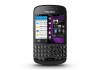
    When BlackBerry unveiled its new BB10 line of devices and mobile OS, the company showed off both the Z10 and Q10 smartphones. The Z10 was released shortly after the announcement in many markets (the next day in the U.K., this week in Canada) and will hit the U.S. in March, but the Q10 with its hardware QWERTY keyboard was said to be hitting markets beginning in April. The key word there was “beginning,” however, as in a follow-up interview BlackBerry CEO Thorsten Heins reveals Americans likely won’t get the device until May or June.

    Heins told the Associated Press in an interview (via AllThingsD) that the Q10 is likely to arrive in the U.S. some eight to ten weeks after the Z10 hits the U.S., which is supposed to happen around mid-March. That means it will be until May or even June before U.S. customers are able to buy the Q10, some simple math tells us.

    The delay isn’t all that surprising. The Z10 is also arriving stateside later than it is coming to other markets, something Heins attributed to the extensive carrier testing required to get it approved for use on major networks in the U.S. from AT&T, Verizon, T-Mobile and Sprint. The same thing is to be expected for the Q10, with perhaps a bit of a shorter testing period required since it’s running BB10, which the carriers are seeing in final shipping form for the first time with the Z10′s round of testing.

    The delay isn’t great for BlackBerry, which would no doubt like to have the QWERTY handset out as soon as possible, after giving the Z10 a chance to find a foothold with consumers. The Q10 remains among the last real hardware keyboard smartphones, and it’ll be interesting to see how BlackBerry blends that control mechanism with BB10′s largely gesture based navigation interface, and how that combination works for consumers.

  • LG Teases New Smartphone Line Unveiling On Facebook

    lg-teaser

    LG Mobile today posted an image to its Facebook page feed that strongly suggests we’ll soon see the company officially reveal its next generation of smartphone devices. The teaser graphic promises that LG’s “New series will be unveiled,” depicting a wrapped gift box. The curious tagline “See what surprise LG has in store for you this time, with an unexpected distinction” accompanies the images.

    LG may be eager to let people know that something new is coming, but the company isn’t giving anything away in terms of what will be announced or when. In all likelihood, however, given the timing of this announcement, we’ll probably see whatever LG has to show at Mobile World Congress this year in Barcelona. That event is taking place starting later in February, so we don’t have long to wait.

    We can also speculate about what LG will be unveiling at that show. While many of the commenters on the company’s Facebook post seem interested in getting updates to their devices to Android Ice Cream Sandwich or Jelly Bean, it’s much more likely we’ll see LG’s Optimus G successor, the G Pro, which boasts  a 5-inch, 1080p display shown off, and it seems a number of other devices designed to appeal to a range of budgets. The Optimus G Pro has already been confirmed by NTT DoCoMo, and should launch in April, but other LG smartphones likely remain to be seen.

    The question remains whether LG can deliver anything truly surprising now that the Optimus Pro has been outed. Then again, this is the company that delivered the excellent Nexus 4, so don’t underestimate what they can do outside of a flagship phone.

  • Mophie’s iPhone 5 Battery Case, The Juice Pack Helium, Now Available For $79.95

    helium-mophie

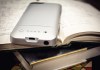
    Mophie is one of the most trusted names in iPhone and mobile backup batteries, and the company has finally debuted its battery case for iPhone 5. The Mophie Juice Pack Helium is around 13 percent thinner than the Air version released for iPhone 4S and iPhone 4 (get it? Helium is lighter than air), and retails for $79.95 right now direct from the Mophie store. The cases should ship in time for Valentine’s Day, the company says.

    The new Mophie boasts a 1500 mAh battery, which keen readers will notice is technically enough to double the 1,440 mAh power station inside the iPhone 5. That’s enough to boost your device’s talk time life by up to 6 hours on 3G, or provide another 6 hours of cellular browsing, 7 hours of WiFi browsing, 30 hours of audio playback or 7 hours of movie watching, according to Mophie.

    The new slim down design is offered in both dark metallic and metallic silver colors, with the dark scheme shipping first, and it has the same LED power indicator and forward-facing speaker ports that have made the Mophie line a winner for the past few years. Of course the things can also stand to shed some weight and girth, so this new thinner design is very welcome, but the fact is that when you need juice and you’re without any kind of outlet, having one of these on hand can really save the day, and they take up less space than something like an external charger.

    One final advantage of the Juice Pack Helium is that it has a micro USB port to take the place of the Lightning connector, which handles pass-through charging and data syncing just fine. That’s good news if you’ve already got a ton of micro USB cables (one is also included) lying around from other devices and don’t want to invest heavily in replacing all those 3o-pin Apple chargers from your past iOS devices. This may be one of those cases where a blogger’s needs may not reflect the larger community’s, but I’m definitely a believer given Mophie’s track record, and for sure picking one of these up.

  • Flurry courts mobile developers with free crash reporting tool

    As a way to sweeten its mobile analytics product, Flurry Analytics is adding two more services to help mobile developers gauge how they’re attracting new users and how often their app crashes — and it’s adding those features for free.

    Both iOS and Android developers can use the Flurry SDK and will have access to new User Acquisition analytics and Crash Reporting analytics. The User Acquisition feature is available starting Friday, the crash reporting tool will be available for Android developers on Friday (in beta form) and for iOS users sometime later this month. Currently there are 95,000 SDK users.

    Measuring the effectiveness of in-app ad campaigns will be useful for developers who want to understand user behavior. The crash reporting tool was added because developers want and need it: It was the No. 1 most requested feature when Flurry polled its users at the end of 2012.

    By giving away this feature, Flurry can hope to attract more developers away from other services, like Bugsense (which also works with Windows Phone 7 and HTML5 apps) and Crittercism (which also does HTML 5 apps) which offer basic free service, but charge for premium services. Another potential competitor, Crashlytics, was just scooped up in an acquisition by Twitter this week, to help that service work on improving Twitter’s mobile app performance.

    Flurry has been slowly building out its SDK offering. In June the company bought mobile backend provider Trestle and turn it into its AppCloud service.

    Thumbnail image courtesy Chris Harvey via Shutterstock. Below image courtesy Flurry.

    Flurry user analytic tools

    Related research and analysis from GigaOM Pro:
    Subscriber content. Sign up for a free trial.

  • Apple Takes 3 Of Top 5 Spots In U.S. Mobile Phone Sales For Q4 2012, Says NPD

    iphone-family

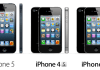
    Apple has managed to nab three of the top 5 spots for the top-selling mobile phones in the U.S. during Q4 2012 according to the NPD Group, with the iPhone 5, iPhone 4S and iPhone 4 ranking first, third and fourth, respectively. Apple also retained the crown for best-selling overall smartphone maker, accounting for 39 percent of smartphone sales in Q4 2012, compared to Samsung’s 30 percent.

    iPhone 4 sales rose 79 percent compared to Q3 2012, and iPhone 4S sales grew 43 percent sequentially, while the iPhone 5 accounted for 43 percent of all iPhone sales in Q4 2012, which is roughly in line with the numbers we’re seeing out of carrier data as well. It also made up nearly two-thirds of all smartphone sales on post-paid plans with a value over $200, NPD says. Samsung made considerable gains on the year, going up to 30 percent of all U.S. smartphone sales in Q4 2012 from 21 percent in the year ago quarter, but the gains were mostly at the expense of other Android OEMs, including HTC, while Apple’s overall share remained constant.

    Net Applications also released its monthly report on mobile OS share, which found that Apple’s iOS increased slightly in terms of traffic, accounting for 60.56 percent of all mobile operating systems, while Android actually took a bit of a dip to 24.51 percent, continuing a decline that has occurred over the past two months from a peak high in November of 28.02 percent. It looks like Apple’s release of the iPhone 5 might have essentially begun to erase earlier gains made by the longer availability of the Samsung Galaxy S III, but Apple still has some ground to make up if it wants to climb back to its 2012 high of nearly 66 percent web traffic share among mobile devices.

    Apple’s holiday quarter, which included 47.8 million iPhone sales and 22.9 million iPads, looks to have helped it in terms of remaining the leader in both smartphone and mobile device sales in the U.S., and in keeping the hold it has on mobile browsing. The strong quarter also accounts for Apple’s regaining the role of largest mobile phone maker by volume in the U.S., an honor it reclaimed according to the latest data from Strategy Analytics released earlier today.

  • Super Bowl Should Highlight Growing Significance Of Mobile Ads

    The Super Bowl, for many, is as much about advertising as it is football. As smartphone and tablet use continue to climb, television-watching in general is becoming a much more interactive experience for consumers, and obviously advertisers want to take advantage of the phenomenon.

    “CBS is once again set to live-stream the game, and was almost completely sold-out of mobile inventory space in December, with prices ranging from high six to low seven figures,” Sephi Shapira, CEO of mobile marketing firm MassiveImpact tells WebProNews. “But, marketers aren’t just thinking about people live-streaming the game, they’re thinking about how to engage with traditional TV viewers via mobile.”

    “Prior to the start of the game, many brands are looking for viewers to interact with traditional television ads on their mobile devices,” Shapira adds. “That interaction is about more than increasing traffic to an app or mobile site; it’s about specific end-user targeting. Based on how the viewer reacts to the television ad on their mobile device, the content they receive for the rest of the game via mobile will be tailored to the individual’s initial mobile interaction.”

    “This individualized content should mean large returns for advertisers, and will continue as a trend for interaction through the upcoming year,” Shapira notes.

    “Mobile ad personalization is a focus for the industry moving into 2013,” Shapira says. “Some firms have already instituted the use of real-time performance analytics to increase end-user ad relevancy. These firms leverage past mobile purchases, past mobile browsing history, and geo-location to ensure that end-users only receive timely and relevant ads.”

    A lot of Super Bowl viewers just got new tablets and smartphones for Christmas, and will no doubt be holding them through the game. Meanwhile, mobile apps are becoming as popular as TV itself.

    According to recent data from Gartner, mobile ads are expected to rake in $11.4 billion in 2013.

    Hulu’s AdZone is here if you want to check out the Super Bowl ads.

  • Leaks Reportedly Detail More Of HTC’s 2013 Android Line, Peg M7 For Release Soon After Unveiling

    htc-logo

    HTC is set to show off something at a special press event in NYC on February 19 (the day before Sony’s, it turns out), and it’s quite likely that the company will debut its rumored new flagship phone, the M7. And now new leaks from the generally dependable Evleaks suggest the company has a multi-device lineup planned to follow the M7 with retail availability in Spring.

    The two phones detailed by Evleaks on UnwiredView suggest that HTC will follow-up the M7 with a device with slightly more moderate specs, akin to how the One S was designed to complement the One X last year. And there will also be a down-market device, called the G2, that will be 2013′s equivalent to the HTC Desire C.

    The M4 will reportedly pack a 1.2GHz dual-core Snapdragon processor, with a 4.3-inch 720 p display, 2GB of RAM, 16GB of onboard storage and a 13 megapixel rear camera. It’ll have a fairly limited 1500 mAh battery (but fewer pixels to push compared to the M7), and should run Android 4.2 Jelly Bean.

    The HTC G2 (which is unrelated to the previous HTC phone of the same name) will have a 1.0GHz ARM Cortex processor with 512MB of RAM, a 3.5-inch HVGA (480 x 320) display, with a 5 megapixel rear camera and no front shooter, a 1400 mAh battery and Android Ice Cream Sandwich as its operating system.

    Once again, HTC looks set to deliver a trio of solid Android handsets designed for various consumer budgets, but I am a little concerned that this won’t be different enough from the status quo to really excite consumers and propel sales to higher than HTC’s rather disappointing performance overall in 2012. That said, it’s still very early to be judging these phones considering they haven’t even been made official yet, so maybe there’s more to HTC’s 2013 lineup than what’s apparent from the spec sheets.

  • Temple Run 2 Downloads Break Mobile Game Records

    Imangi Studios, the developer behind the popular Temple Run games, this week announced that Temple Run 2 has broken mobile download records. The title, released on January 17, has been downloaded over 50 million times in only 13 days on iOS, Android, and Kindle devices. The previous record holder was Angry Birds Space, which reached 50 million downloads in 35 days.

    Imangi claims that Temple Run 2 saw over six million downloads in just its first 24 hours on Apple’s App Store. The original Temple Run has seen over 170 million downloads.

    Temple Run has evolved into something so much bigger than us,” said Keith Shepherd, co-founder of Imangi. “The game has performed beyond our wildest dreams, and we are thrilled that gamers and fans have embraced Temple Run 2 in such a short period of time.”

    Much like Angry Birds before it, Imangi is capitalizing on the success of the Temple Run series with merchandise. Temple Run apparel, comics, and board games can be bought in addition to the mobile games.

  • Google Gets Its Act Together: New Nexus 4 Orders Reaching Customers In As Little As 48 Hours

    n4-product-hero

    Google is apparently doing a good job of improving its supply stream issues and making good on promised delivery times for customers for new Nexus 4 orders – better than good, in fact. UK customers are reporting this morning (via CNET) that the Nexus 4 devices they ordered when Google released its latest crop of phones this past Wednesday are already arriving at their doorsteps, less than 48 hours later.

    Google had predicted that phones would take 1 to 2 weeks to arrive at the homes of those placing new orders when the phones went on sale, but it clearly seems to have done something right, either on its end or in terms of getting LG to deliver more consistently. A 48 hour turnaround not only blows that out of the water, but also represents a 180-degree change in direction from the lengthy six-, seven- and eight-hour waits customers were running into just before the new year.

    U.S. orders also went live again earlier this week, but no word on whether or not those devices are being shipped out yet. Let us know if you’re receiving or have received your new Nexus, but from the looks of what’s happening in Britain, Google has learned a few lessons about being the purveyor of an in-demand piece of hardware, and looks to actually be able to manage supply. Which isn’t to say it’s able to meet demand yet; in fact, we’re probably still fairly far off from that, given how quickly the Nexus 4 sold out and how stock continues to be a bit of a mixed bag internationally, I doubt that Google has reached supply equilibrium quite yet.

  • Best Buy Closing 15 Big Box Locations In Canada, To Be Replaced By Smartphone And Tablet-Focused Micro Stores

    best-buy

    Best Buy Canada announced today that it will be closing 15 locations across the country, including seven Best Buy-branded locations, and eight stores bearing the Future Shop moniker (a Canadian electronics reseller Best Buy acquired in 2001). The store closures will result in 900 layoffs, but those employees will have first dibs on jobs at smaller outlets focused on mobile device sales the retailer plans to open in place of the closing stores.

    While the closures only affect 15 of the 228 locations operated by Best Buy under the Future Shop and Best Buy brands, that still makes up around 10 percent of their total sales floor surface volume, according to the National Post. Sales for Best Buy fell 6.4 percent internationally over the course of 2012, the company reported during its most recent quarterly earnings report. Sales also dropped 8.2 percent in the quarter ending in November of last year in Canada and China, so there appears to be a continuing decline overall in those markets.

    The closure and launch of smaller stores reflects a preference to target the growing mobile phone and tablet market, over legacy products like TVs and computers that carry smaller margins and have higher carrying costs. Best Buy locations have massive sales floors, but also huge warehouses and stock rooms to house the goods that populate those floors since shelves can only hold so many TVs at once. Best Buy Mobile locations, by comparison, have far smaller physical footprints and drastically reduced requirements for storing in-stock items.

    The retailer has been beefing up its online store at the same time as it is trimming back brick-and-mortar, adding entirely new categories of goods to its web-based selection, including sporting goods, outdoor items and various lotions, most of which are available online only, so it’s no surprise to see them shed costly real estate.

  • Twelve South’s New SurfacePad Gives Your iPhone A Smart Cover

    SPiPhone_stand_gallerymain_1

    Twelve South announced a new iPhone accessory today, one that probably looks familiar if you’re aware of Apple’s Smart Cover and Smart Case products. The SurfacePad for iPhone is a sheath of Napa leather that wraps around your phone and provides basic level protection while adding a minimum amount of weight and thickness.

    The company is clearly selling this as a fashion accessory, given the way they’re marketing it. It’s a nice looking addition anyway, and the thin cover should protect both front and back from scratches and scrapes, something that the iPhone 5 could use. It adds only 1.77 mm to your device’s thickness, and sticks onto the iPhone with a residue-free adhesive to make sure it isn’t going anywhere once applied. The front cover also folds back and doubles as a stand, hence its resemblance to Apple’s Smart covers and cases for iPad.


    The SurfacePad comes in black, white and red, and is available for both iPhone 4/4s and iPhone 5 form factors. It’s less bulky than most folio type cases, if that’s your thing, and it retails for $34.99, which hardly breaks the bank, especially for a genuine leather case. It’s available to order now from TwelveSouth.com.

  • With Hundreds Of Thousands Of Phones Collected, Device Recycler ecoATM Adds Tablets

    ecoatmmachine_01

    According to Strategy Analytics, about 1.6 billion mobile phones were shipped in 2012, with 700 million of those being smartphones. That doesn’t even take tablets into account. Compass Intelligence estimates that 18 million new tablets were sold during the fourth quarter of 2012. Naturally, as waves upon waves of new smartphones and tablets hit stores, people need a way of disposing of their old, used devices.

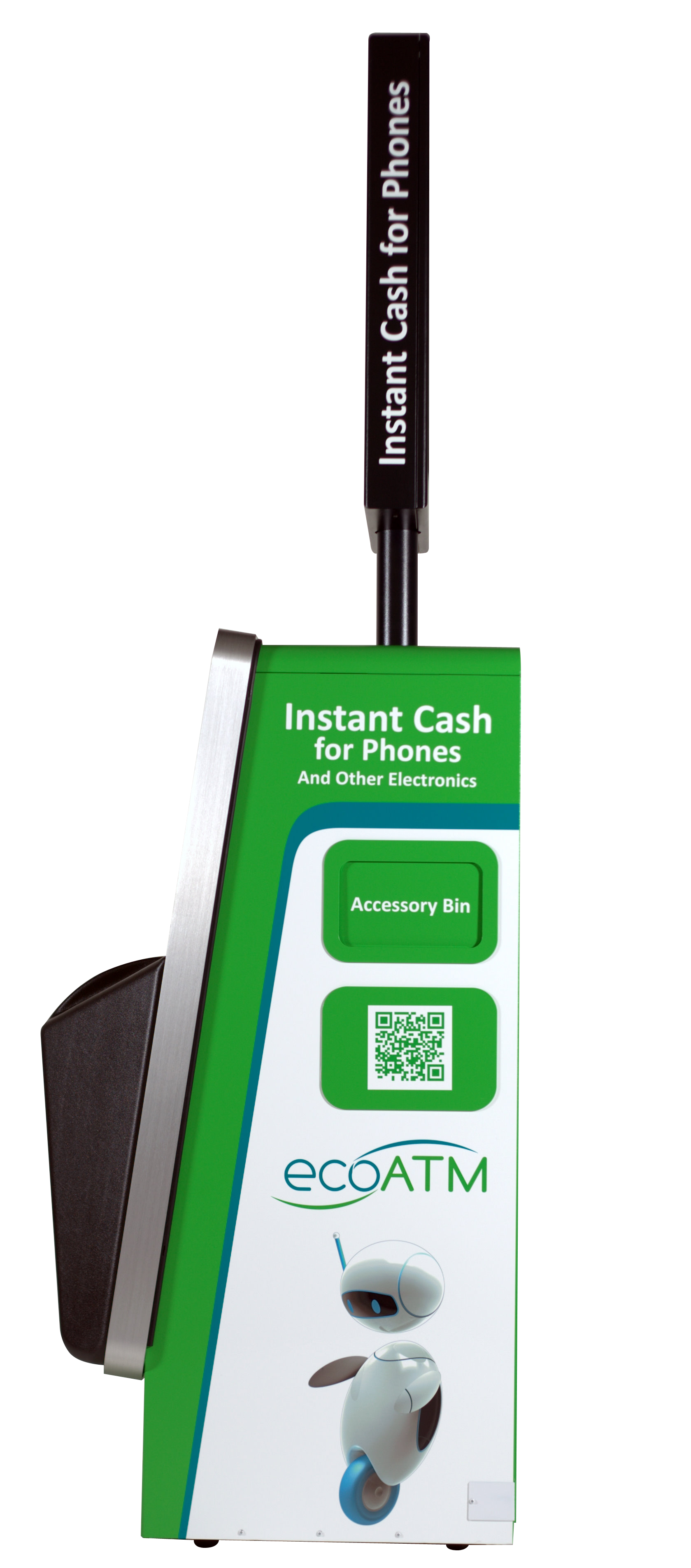
    Enter ecoATM, the Coinstar for your has-been mobile devices. For those unfamiliar, the San Diego-based startup is the maker of nifty ATM-like kiosks that fully automate the buy-back of used consumer electronics, giving you cash for your old iPod. We first caught wind of this innovative concept when it debuted at DEMO Spring 2011, promising to bring its self-serve recycling kiosks to a mall near you.

    Since then, the startup has found plenty of eager adopters at retail outlets and has paid out “millions of dollars to hundreds of thousands of customers.” And, in the process, ecoATM Chairman and CEO Tom Tullie says it has saved landfills from hundreds of thousands of potentially toxic devices. To date, the startup has been able to “find a second life” for 60 percent of the devices it has collected, recycling the rest.

    However, until now, ecoATM has only addressed a portion of the used device market, as its kiosks have been limited to accepting your cell phones, smartphones and MP3 players. But, today, with the tablet market in full bloom, the startup has expanded its support in kind, announcing that its kiosks will now be accepting used tablets of all stripes. Cash for clunky tablets. [Want to find the location of the nearest ecoATM, GPS yo self here.]

    Now that a year has passed since ecoATM took home the Best Clean Tech Startup award at the Crunchies, we decided to check in with Ryan Kuder, the company’s marketing director, to hear more about the progress the startup has made over the last 12 months. Not surprisingly, Kuder tells us that 2012 was a year of dramatic growth for ecoATM and its kiosks, and the validation of winning a Crunchie “right at the beginning of that” definitely helped. (Wink.)

    Since winning the award, ecoATM has gone from 50 kiosks to about 300 in 20 states. This year, he’s hoping to add another 600 or 700 kiosks, bringing the total to 1,000. And although ecoATM has focused on placing machines in malls, Kuder said, “Eventually, we’re going to run out of malls.” That’s why it’s also testing kiosks in supermarkets and other locations. (To fund that growth, ecoATM raised a $17 million round in the spring.)

    But are people actually using the machines? Well, Kuder said people used ecoATM to recycle “hundreds of thousands of phones” last year, and with the company’s expansion plans, that number should go into the millions this year.

    As the tablet announcement suggests, ecoATM is also expanding beyond phones into other categories of portable electronics, but Kuder said the company will be proceeding carefully: “You know, it’s important to do the things we do well.”

    By the way, the Crunchies are tomorrow night at the Louise M. Davies Symphony Hall in San Francisco. You can buy tickets here.

  • iOS 6.1 Adoption On Track To Be Fastest Yet Says Onswipe, With 22% Of Users On Board In 36 Hours

    ios6-users1

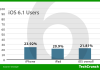
    iOS 6.1 arrived just a couple of days ago, bringing little beyond support for new international LTE carriers and movie ticket purchasing via Siri in the U.S., but it’s already been installed on a significant percentage of active iPhones, iPads and iPod touches out there. Onswipe, creators of touch templates for web-based content, have seen adoption of iOS 6.1 rise quickly, from 11.35 percent within the first 24 hours, to 16.92 percent this morning, and up to an impressive 21.81 percent as of 3 PM ET today.

    Onswipe is gathering data from over 13 million monthly active users on iOS, which itself represents considerable growth, a 3 million user climb from last month’s 10 million total active users. That means its numbers represent a pretty significant statistical pool to draw from to gather these results. Onswipe CEO Jason Baptiste explained in an interview that his company’s expanded reach is giving the company an even better idea of what’s happening with iOS adoption curves, and that this time around, people are upgrading faster than ever.

    Consider that when Apple released its iOS 6 update, it took a week for 44.58 percent of users to get on board. iOS 6.1 is growing at a faster rate, and looks to be on track to top that should its momentum continue. Why? According to Baptiste, it’s likely due to the fact that Apple’s over-the-air update mechanism has been out in the wild for a while now (it’s been built-in to iOS since iOS 5 arrived in October, 2011), meaning users have had time to get comfortable with it and know more or less how the process works.

    The fact that users are comfortable enough with the OTA update mechanism to upgrade almost immediately is great news for developers, both of native apps and of web-based mobile-friendly platforms like Onswipe’s since it means that they can create experiences that will be the same for a larger number of customers at once, without having to take into account different software versions with idiosyncratic quirks. Android, by comparison, has just 10 percent of users on Jelly Bean, which was released in July 2012, so it’s clear that Apple’s still way out ahead of the competition in terms of making sure developers don’t face a fragmentation issue.

  • Nokia Starts Rolling Out Windows Phone 7.8 To Lumia Owners, Will Continue Over The Coming Weeks

    lumia900_465

    Nokia has announced via its Conversations blog that the long-awaited Windows Phone 7.8 update, which brings a few of the features from Windows Phone 8 to older hardware, has begun rolling out as promised to owners of Nokia 510, 610, 710, 800 and 900 owners and will continue to do so over the next few weeks through February, pending operator approval.

    Features included in the update include the ability to resize Live (and inert) tiles on the home screen, new options for configuring the lock screen like fetching a changing daily background image from Bing and child lock features, and additional theme colors, as well as new languages. It’s not a huge step up, but it is a way to breathe new life into older devices left out in the cold in the wake of Windows Phone 8′s arrival, and that might bring some comfort to buyers of devices who were looking for something new.

    Owners of one of the devices listed above should get notified via their smartphones once their carrier has approved the update and it’s available to install. Notifications must be on for this to happen, Nokia points out, which is managed via “Settings > Phone Update > Notify me when updates are found.”

    Nokia is the first confirmed manufacturer to announce the rollout, but other OEM partners including HTC are said to be getting the update by month’s end as well, so keep an eye out if you’re running these older devices.

  • Yesterday Alicia Keys Was An iPhone Addict, Today She’s BlackBerry’s Global Creative Director

    lolol

    It wouldn’t be a BlackBerry press event without something totally unexpected and semi-weird thrown in the mix. Today, at BlackBerry’s media conference revealing BlackBerry 10, the company appointed Alicia Keys as the new Global Creative Director.

    Her first act as GCD was to talk about how much she loves BlackBerry 10 at today’s media conference. Her other responsibilities are somewhat unclear — just like will.i.am’s role at Intel.

    According to Keys, she’ll be working with app creators, designers, carriers, and more to make sure BlackBerry is the most efficient, cool and simple platform to be on. She proved just how “BlackBerry” she can be by wearing a tuxedo-type outfit, complete with black pants, black jacket, and white button down.

    Keys was a long time BlackBerry user in the past, but jumped ship for “something sexier.” The way she explains it, she was carrying two phones for a while, “playing the field,” but now she’s exclusive in her relationship with BlackBerry.

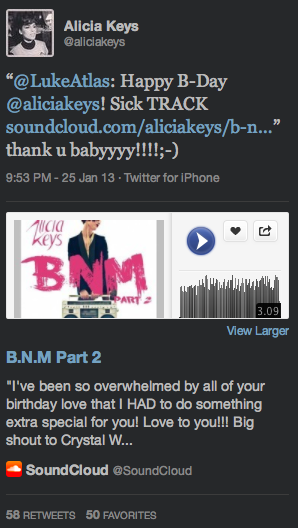
    If so, that exclusivity began today, as she was Instagramming photos from either an Android device or iPhone just yesterday. And she has been tweeting from Twitter for iPhone in the past week as well.

    TechCrunch asked Alicia Keys directly which phone she used during her rough patch with BlackBerry and she declined to answer. “I don’t think it’s necessary to disclose which phone I used,” she said. “It was another phone.” It was clearly an iPhone.

    For now, she seems pretty focused on combining your work phone with your play phone, which is something BB10 does very well. However, it’s unclear just how much Keys will bring to the company other than celeb status.

    Hopefully, she’ll be able to refrain from Instagramming until the Facebook-owned app makes its way to BlackBerry. We’ll be keeping an eye on it in case she falters.


  • The BlackBerry Q10 Is A Curious Blend Of Old And New

    bbq10-1

    You know, for a company that made its mark thanks to devices with physical QWERTY keyboards, BlackBerry really didn’t spend much time chatting about the Q10. It’s going to hit the street well after the all-touch Z10 does so it’s an understandable move, but I’ve heard many a person begrudgingly stick with an ailing BlackBerry because of its top-notch keyboard. Thankfully, I managed to corner a Q10 for a little hands-on time, and its keyboard is just as good as ever — the big question is, how’s the rest of it?

    Looking at the Q10 is much like a catching a glimpse at familiar-looking stranger walking down the street — the broad strokes are similar, but many of the smaller touches are different and surprising. Take BlackBerry’s legendary keyboard, for instance. It doesn’t look entirely unlike the ones seen on recent BlackBerry 7 devices like the Bold 9900, and it retains the spacious layout and highly-satisfying click of the BlackBerrys of days past, but the familiar row of navigation and menu buttons have finally been put to rest. The volume rocker also looks like its been plucked off of a PlayBook too, which isn’t much of a surprise — the same could be said of the company’s Dev Alpha units.

    The Q10 is actually quite a looker despite those borrowed bits. Its rear-end is buttery soft thanks to its glass-weave construction, and the end result is a carbon fiber-esque pattern that looks awfully familiar to the sort of things Motorola has been doing with its recent smartphones. And don’t worry you special little flower you, because the initially cagey BlackBerry rep on hand said that no two Q10 backs would look the same. It’s not the thinnest device I’ve ever seen at 10.3mm thick, but it’s surprisingly light and felt like it could take a few hits before giving up the ghost.


    Sadly, the BlackBerry representatives on hand didn’t allow for much fiddling with the software (an effort to prevent people from monopolizing demo units for too long), but what I did see was very promising. Checking the hub, peeking at apps, and generally just zipping around the OS was smooth and unfettered, thanks in part to the Q10′s 1.5GHz dual-core processor and its 2GB of RAM. Darrell did a fine job deconstructing all of BlackBerry 10′s particulars in his Z10 review so I won’t rehash it all, but there was a distinct difference in feel between how gestures and navigation work on the two devices. Things are generally a bit more intuitive on the Z10′s expansive display, and having to reach over the keyboard to swipe around is a bit curious at first, but folks coming from touch-enabled devices like the Bold 9900 will already be used to that.

    Overall, the Q10 is a surprisingly handsome device that seems well-equipped to handle the needs of existing BlackBerry fans who need more than just a touchscreen in their lives. Whether or not it’ll cause Android or iOS devotees to jump ship remains to be seen (though I highly doubt it), but that’s more of a quandary for BlackBerry 10 as a whole rather than the device on its own. Sadly, there’s no hard word on when you’ll be able to get a hold of one yourself: CEO Heins mentioned in a post-presser Q&A session that the device will likely hit store shelves in the U.S. and beyond some time in April.