Does it come as a surprise to anyone that Tareq and Michaele Salahi — the notorious White House party poopers who feigned their way into The Obamas’ first State Dinner– were nabbed near 1600 Pennsylvania Ave. during Wednesday night’s star-studded dinner redux?
A Secret Service spokesman tells CNN.com that a limo with the future reality stars inside was stopped just a couple of blocks from The White House last night after the driver ran a red light. Shortly thereafter, The Salahis were spotted at a restaurant a few blocks from The White House with a group of friends, photographers, and cameramen in tow.
Michaele and Tareq caused an embarrassing security flap at the White House when they finessed their way into the State Dinner for India’s president last November.
Google announced today the Android Market has more then 50,000 Android Apps. About a month ago in a profit report Google announced more than 38,000 Android Apps and we’re seeing the rapid growth rate. AndroLib.com, third party Android Market viewer website, has the Android app count at over 60,000. Either way we’ll see well more than 100,000 Android Apps before years end!
Environmental News Network: The same thing occurred again this past April, albeit on a larger scale, involving 22 people in the United Kingdom (13 in England, eight in Scotland, and one detained on an E.U. arrest warrant) as well as an unreported number so far in Germany. The investigation also overflowed into other E.U. countries, namely Belgium, the Czech Republic, Cyprus, Denmark, Finland, Norway, Portugal, Spain and the Netherlands.
In Germany, officials and tax investigators swept 230 offices and residences, including Deutsche Bank AG, Munich-based HVB Group (the second largest private German financial institution
and retail bank), and RWE AG, a German electric and natural gas public utility headquartered in Essen.
All detentions and raids across the European Union occurred on April 28 in an aggressive attempt to round up carbon emissions trading cheaters at every level. In this particular sweep, Germany is looking at 180 million euros ($239 million) in tax evasions by 150 individuals at 50 companies. In the United Kingdom, the Revenue & Customs office, or HMRC, targeted 81 sites.
The VAT tax varies according to the E.U. country levying it, and the product or the nature of the service delivered. Thus it is possible to buy carbon credits without the tax (or at a lower tax rate, i.e., Poland), and resell them in high-VAT countries.
The E.U. carbon emissions trading fraud is huge, but perhaps nothing compared to the potential for cheating that will become available in the United States once Waxman-Markey, or some similar scheme for reducing carbon emissions, emerges from the Senate to become law.
Google TV is going to be very interesting. It is far from a certainty that it will be more than Apple TV in terms of consumer sales. From a first glance the Marketplace is the most important and interesting element of the announcement. As a development platform, Android creates the potential for untold unique and interesting applications that could capture users imagination. Early on, I don’t think TV oriented apps will have the most impact. If I understood the announcement, in the beginning of 2011, there will be an Android Marketplace. The money and the opportunity won’t be in TV apps. It will be in gaming and social apps. The low hanging fruit will be in taking apps that work on facebook and Iphone/Pad and moving them (if they haven’t already) to the Android platform and upsizing them to take advantage of working on a big screen.
The Google TV box could be a very cool and hopefully inexpensive gaming console. That is where the money will be.
What about TV ?
The success of Google TV will come down to one thing….PageRank. Can you imagine the white hat and black hat SEO battles that will take place as video content providers try to get to the top of the TV Search Listings on Google TV ? Like Google said, there are 4 billion TVs and growing and the US TV Ad market is $70 BILLION. There is a lot at stake if Google TV takes off. How Google does its PageRank for this product will have a bigger impact on the success of the product in the TV market than anything else it does.
If you search for “House” on your Google TV and it returns a Youtube Video of some kid doing a parody of the Fox tv show House, you can bet the shit is going to hit the fan. Not that Fox or any big media company will sue Google. I don’t think they will. What will happen is that they will “turn off” the Google TV Chrome Browser, just as they did to Boxee. They will fight and possibly sue over what meta data is used to determine search results. It will be a mess. That would kill the product because if it doesn’t work with the TV shows you want to watch, why buy it ?
On the flipside if the best Google offers users is what they showed in today’s demo, returning 5 or fewer results from a search with content from the cable/sat provider showing first and possibly consuming all 5 results, every internet content creator is going to scream loud and long at Google for putting them at a disadvantage. No one is going to be able to find your video if you show traditional TV shows first and dont show more than 5 results. They aren’t going to be satisfied with referrals or Google Suggestions as their only access to Google TV users. They are going to claim that this is all just a ruse to get them to advertise and that Google sold out to big media.
Even if Google lets the user decide how to rank results, it creates too much risk for TV content providers and their distributors. More mess.
On the other other side, if traditional TV makes it to the top, Google TV is the best thing to ever happen to Cable , Satellite and Telco TV providers. Why ? Google just solved their biggest problems, their user interface and programming guide. Not only that, if Google TV is what big content providers and distributors consider to be a good partner, they just off loaded much of the future R&D for the set top box to Google and its partners and developers. Should cable and companies adopt Android on their set top boxes ? They will watch and decide. Even better for the TV Providers, maximum utility from the Google TV comes from having a TV subscription. They may actually gain subscribers as a result of this product. Which is exactly why Charlie Ergen had Dish Network participate. Its win win win for Dish Network
Google TV isn’t the answer. It’s the question. I’m sure Apple, Microsoft and even Facebook have an opinion on the announcement. Their response will be even more interesting.
The Future of TV is….. TV. But Google sure sped up the timeline today.
Minority- and women-owned businesses were paid $19 million less than they were supposed to get under city contracts two years ago because of widespread fraud, abuse and mismanagement of the city’s affirmative action program, according to a report released today by the city inspector general’s office.
That represented a 15 percent shortfall during 2008, the report stated. If that kind of shortfall were extended over 15 years, starting in 1995, minority- and women-owned businesses would have lost $400 million, it concluded.
Widespread fraud, abuse and mismanagement of the city’s affirmative action contract program caused minority- and women-owned businesses to be paid 15 percent less than they were supposed to get in a recent analysis of construction contracts by the city Inspector General’s Office, a shortfall that could reach $400 million over the past 15 years.
Inspector General Joseph Ferguson criticized the city in a report released today for not tracking actual payments to the firms that have won city contracts as part of a program started in the 1980s to diversify the companies getting public work.
"The city’s failure to collect all relevant data, its inconsistent application of the program’s rules and regulations, and a lack of cooperation between the user departments and the Department of Procurement Services have all contributed to the program’s poor administration," Ferguson writes.
City officials should consider directly paying subcontractors to prevent firms from using minority-owned "fronts" to get city work, then cutting them out of the actual projects, Ferguson writes.
This headbanging event will be held in Los Angeles (home to the Van Halen, Motley Crue, Ratt, and other well-known accordion-influenced bands) on Saturday, September 18. Aspiring accordion artists can submit application videos until July 15.
If that dusty old thing you found in Grandpa Hertzel’s attic isn’t cutting it anymore, you can pick up a snazzy new Roland V-Accordion. The company features 14 models, ranging in price from about $1,300 to $3,600. You can even rock a threatening instrument like the white-with-tribal-accents Fr-1b accordion pictured here.
Don’t forget, guitar virtuoso Steve Vai started his musical career as an accordion player. So add some waltz machines into your gadget arsenal.
Having examined the finances of all 43 presidents (yes, 43; remember, Cleveland was president twice), we calculated the net worth figures for each in 2010 dollars. Because a number of presidents, particularly in the early 19th Century, made and lost huge fortunes in a matter of a few years, the number for each man is based on his net worth at its peak.
We have taken into account hard assets like land, estimated lifetime savings based on work history, inheritance, homes, and money paid for services, which include things as diverse as their salary as Collector of Customs at the Port of New York to membership on Fortune 500 boards. Royalties on books have also been taken into account, along with ownership of companies and yields from family estates.
The net worth of the presidents varies widely. George Washington was worth more than half a billion in today’s dollars. Several presidents went bankrupt.
The fortunes of American presidents are tied to the economy in the eras in which they lived. For the first 75 years after Washington’s election, presidents generally made money on land, crops, and commodity speculation. A president who owned hundreds or thousands of acres could lose most or all of his property after a few years of poor crop yields. Wealthy Americans occasionally lost all of their money through land speculation–leveraging the value of one piece of land to buy additional property. Since there was no reliable national banking system and almost no liquidity in the value of private companies, land was the asset likely to provide the greatest yield, if the property yielded enough to support the costs of operating the farm or plantation.
Because there was no central banking system and no commodities regulatory framework, markets were subject to panics.
The panic of 1819 was caused by the deep indebtedness of the federal government and a rapid drop in the price of cotton. The immature banking system was forced to foreclose on many farms. The value of the properties foreclosed upon was often low, because land without a landowner meant land without a crop yield.
The panic of 1837 caused a depression that lasted six years. It was triggered by a weak wheat crop, a drop in cotton prices, and a leverage bubble in the value of land created by speculation. These factors caused the U.S. economy to go through a multi-year period of deflation.
The sharp fluctuations in the fortunes of the first 14 presidents were a result of the economic times.
Beginning with Millard Fillmore in 1850, the financial history of the presidency entered a new era. Most presidents were lawyers who spent years in public service. They rarely amassed large fortunes and their incomes were often almost entirely from their salaries. From Fillmore to Garfield, these American presidents were distinctly middle class. These men often retired without the money to support themselves in a fashion anywhere close to the one that they had as president. Buchanan, Lincoln, Johnson, Grant, Hayes, and Garfield had almost no net worth at all.
The rise of inherited wealth in the early 20th Century contributed to the fortunes of many presidents, including Theodore Roosevelt, Franklin D. Roosevelt, John F. Kennedy, and both of the Bushes. The other significant change to the economy was the advent of large professionally organized corporations. These corporations produced much of the oil, mining, financial, and railroad fortunes amassed at the end of the 19th Century and the beginning of the 20th. The Kennedys were wealthy because of the financial empire built by Joseph Kennedy. Herbert Hoover made millions of dollars as the owner of mining companies.
The stigma of making money from being a retired president also began to disappear. Calvin Coolidge made a large income from his newspaper column. Gerald Ford, who had almost no money when he was a Congressman made a small fortune from serving on the boards of large companies. Clinton made millions of dollars from writing his autobiography.
We analyzed presidential finances based on historical sources. Most media evaluations of the net worth of presidents have come up with a very wide range, a spread in which the highest figure was often several times the lowest estimate. Most sources provided no hard figures at all. Most of these efforts have focused largely on the analysis of recent chief executives. That is because it is much easier to calculate figures in a world where assets and incomes are a matter of public record.
One of the most important conclusions of this analysis is that the presidency has little to do with wealth. Several brought huge net worths to the job. Many lost most of their fortunes after leaving office. Some never had any money at all.
President and Term
Estimated Net Worth
1st George Washington (1789-1797)
$525 million
His Virginia plantation, “Mount Vernon,” consisted of five separate farms on 8,000 acres of prime farmland, run by over 300 slaves. His wife, Martha Washington, inherited significant property from her father. Washington made significantly more than subsequent presidents: his salary was two percent of the total U.S. budget in 1789.
2nd John Adams (1797-1801)
$19 million
Adams received a modest inheritance from his father. His wife, Abigail Adams, was a member of the Quincys, a prestigious Massachusetts family. Adams owned a handsome estate in Quincy, Massachusetts, known as “Peacefield,” a working farm, covering approximately 40 acres. He also had a thriving law practice.
3rd Thomas Jefferson (1801-1809)
$212 million
Jefferson was left 3,000 acres and several dozen slaves by his father. “Monticello,”
his home on a 5,000 acre plantation in Virginia, was one of the architectural wonders of its time. He made significant money in various political positions before becoming president, but was mired in debt towards the end of his life.
4th James Madison (1809-1817)
$101 million
Madison was the largest landowner in Orange County, Virginia, with land holding consisting of 5,000 acres and the “Montpelier” estate. He made significant money as secretary of state and president. Madison lost money at the end of his life due to the steady financial collapse of his plantation.
5th James Monroe (1817-1825)
$27 million
Monroe’s wife, Elizabeth, was the daughter of wealthy British officer. He made significant money during eight years as president, but entered retirement severely in debt and was forced to sell Highland plantation, which included 3500 acres.
6th John Quincy Adams (1825-1829)
$21 million
Adams inherited most of his father’s land. His wife was the daughter of a wealthy merchant. He devoted most of his adult life to public service, notably after leaving office.
7th Andrew Jackson (1829-1837)
$119 million
While he was considered to be in touch with the average middle class American, Jackson quietly became one of the wealthiest presidents of the 1800’s. “Old Hickory” married into wealth and made money in the military. His homestead “The Hermitage” included 1,050 acres of prime real estate. Over the course of his life, he owned as many as 300 slaves. Jackson entered significant debt later in life.
8th Martin Van Buren (1837-1841)
$26 million
Van Buren made substantial income as an attorney. He was one of only two men to serve as secretary of state, vice president, and president. He owned the 225-acre “Lindenwald” estate in upstate New York.
9th William Henry Harrison (1841)
$5 million
Harrison married into money – wife’s father was prominent judge and landowner. When Harrison’s mother died, he inherited 3,000 acres near Charles City, Virginia, which he later sold to his brother. He also owned “Grouseland” mansion and property, in Vincennes, Indiana. Despite his assets, Harrison died penniless, causing Congress to create a special pension for his widow.
10th John Tyler (1841-1845)
$51 million
Tyler Inherited 1,000-acre tobacco plantation. His first wife, Letitia, was wealthy. Tyler bought “Sherwood Manor,” a 1,600 acre estate, previously owned by William Henry Harrison. He became indebted during the Civil War and died poor.
11th James Knox Polk (1845-1849)
$10 million
Like his wife, Sarah Childress, Polk’s father was a wealthy plantation owner and speculator. Polk made significant sums as speaker of the house and governor of Tennessee, and owned 920 acres in Coffeeville, Mississippi, as well as 25 slaves.
President and Term
Estimated Net Worth
12th Zachary Taylor (1849-1850)
$6 million
Taylor inherited significant amounts of land from his family, which at one point included property in Mississippi, Kentucky, and Louisiana. He made substantial money in land speculation, the leasing of warehouses, and investments in bank and utility stocks. Taylor owned a sizeable plantation in Mississippi and a home in Baton Rouge.
13th Millard Fillmore (1850-1853)
$4 million
Neither Fillmore nor his wife had significant inheritance. He founded a college that is the current State University of New York at Buffalo, and his primary holding was a house in nearby East Aurora, NY.
14th Franklin Pierce (1853-1857)
$2 million
Pierce’s father was frontier farmer, and his wife was well-to-do aristocrat. He served as attorney for 16 years and held property in concord, NH.
15th James Buchanan (1857-1861)
less than $1 million
Born in log cabin in Pennsylvania, Buchanan was one of 11 children. He was the only president never to marry. He worked for nine years as attorney, and spent 16 years in public office, including four years as secretary of state.
16th Abraham Lincoln (1861-1865)
less than $1 million
To the log cabin born. Lincoln served as an attorney for 17 years before his presidency. He owned a single-family home in Springfield, Illinois.
17th Andrew Johnson (1865-1869)
less than $1 million
Johnson’s father was a tailor, and his wife was a shoemaker. He served the public for 20 years, including as Governor of Tennessee and U.S. Senator. Johnson owned a small house in Greenville, TN.
18th Ulysses Simpson Grant (1869-1877)
less than $1 million
Grant’s father was a tanner, and his wife was the daughter of a wealthy merchant. He lost his entire fortune when swindled by his investing partner. Grant owned a modest home in Galena, Illinois. Although he died with little money, his autobiography kept family afloat.
19th Rutherford Birchard Hayes, (1877-1881)
$3 million
Hayes’ father was a shopkeeper. He was an attorney for 15 years and owned “Spiegel Grove,” a 10,000 square foot home that sat on 25 acres in Fremont, Ohio. Hayes also served as Governor of Ohio and was a member of the House.
20th James Abram Garfield (1881)
less than $1 million
Garfield was born in a log cabin in Ohio. He spent 18 years in the House of Representatives. Garfield owned “Lawnfield,” a home and small property in Mentor, Ohio. He died penniless.
21st Chester Alan Arthur (1881-1885)
less than $1 million
The son of an Irish preacher, Arthur’s wife came a from military family. He made substantial sums as Collector for the Port of New York. His townhouse in New York was well-appointed with furniture commission from Tiffany.
22nd and 24th Grover Cleveland (1885-1889, 1893-1897)
$25 million
Cleveland’s father was a bookseller and preacher, and his wife was the daughter of wealthy lawyer. Cleveland served as an attorney for twelve years, and also made significant sums on sale of his estate outside of Washington, D.C. He bought “Westland Mansion” near Princeton, New Jersey.
President and Term
Estimated Net Worth
23rd Benjamin Harrison (1889-1893)
$5 million
Harrison had no significant inheritance of his own or from his wife’s family. He was a highly paid attorney for 18 years, and served as attorney for Republic of Venezuela. Harrison owned large Victorian home in Indianapolis, Indiana.
25th William McKinley (1897-1901)
$1 million
Mckinley had no significant inheritance. Served 30 years in public office, including local prosecutor and member of the House of Representatives. Went bankrupt during depression of 1893 while he was Governor of Ohio.
26th Theodore Roosevelt (1901-1909)
$125 million
Born to a prominent and wealthy family, Roosevelt received a significant trust fund. He lost most of his money on a ranching venture in the Dakotas and had to work as an author to pay bills. Roosevelt spent most of his adult years in public service. His 235-acre estate, “Sagamore Hill,” sits on some of the most valuable real estate on Long Island.
27th William Howard Taft (1909-1913)
$3 million
Taft’s wife’s father was a law partner of former president, Rutherford B. Hayes. Taft was president of the American Bar Association, an active attorney for nearly two decades, and only president to serve on the U.S. Supreme Court.
28th Woodrow Wilson (1913-1921)
less than $1 million
Wilson received modest compensation as head of Princeton and Governor of New Jersey. He never served in any position that provided him with a reasonable income. Wilson had a stroke in office and died five years later.
29th Warren Gamaliel Harding (1921-1923)
$1 million
Harding obtained wealth through marriage to his wife Mabel, daughter of a prominent banker. He owned the Marion Daily Star and a small home in Marion, Ohio. Most of Harding’s net worth came from his newspaper ownership.
30th Calvin Coolidge (1923-1929)
less than $1 million
Coolidge’s father was prosperous farmer and storekeeper. “Silent Cal” Spent five years as an attorney, and almost two decades in public office, which included time as Governor of Massachusetts. His net worth derived primarily from his home, “The Beeches,” in Northampton, Massachusetts, the advance from his autobiography, and the money he made from his newspaper column.
31st Herbert Clark Hoover (1929-1933)
$75 million
An orphan, Hoover was raised by his uncle, a doctor. He made a fortune as a mining company executive, had a very large salary for 17 years and had extensive holdings in mining companies. Hoover donated his presidential salary to charity. He also owned “Hoover House” in Monterey, California.
32nd Franklin Delano Roosevelt (1933-1945)
$60 million
Roosevelt had wealth through inheritance and marriage. He owned the 800-acre “Springwood” estate as well as properties in Georgia, Maine, and New York. In 1919, his mother had to bail him out of financial difficulty. He spent most of his adult life in public service. Before he was president, Roosevelt was appointed assistant secretary of the navy by Wilson.
33rd Harry S. Truman (1945-1953)
less than $1 million
Truman was a haberdasher in Missouri and nearly went bankrupt. He served 18 years in Washington, D.C. Despite his modest income, he was able to save some of his presidential salary.
President and Term
Estimated Net Worth
34th Dwight David Eisenhower (1953-1961)
$ 8 million
Eisenhower had no inherited wealth. He served the majority of his career in the military and five years as president of Columbia. Ike owned a large farm near Gettysburg, Pennsylvania.
35th John Fitzgerald Kennedy (1961-1963)
Although he never inherited his father’s fortune, the Kennedy family estate was worth nearly $1 billion dollars.
Born into great wealth, Kennedy’s wife was oil heiress. His Father was one of the wealthiest men in America, and was the first chairman of the SEC. Almost all of JFK’s income and property came from trust shared with other family members.
36th Lyndon Baines Johnson (1963-1969)
$98 Million
Johnson’s father lost all of the family’s money when LBJ was a boy. Over time, he accumulated 1,500 acres in Blanco County, Texas, which included his home, called the “Texas White House.” He and his wife owned a radio and television station in Austin, TX, and had a variety of other moderate holdings, including livestock and private aircraft.
37th Richard Milhous Nixon (1969-1974)
$15 million
Nixon was born without any inheritance, and was a public servant for most of his life including a term as a Senator from California. “Tricky Dick” made significant sums from series of interviews with David Frost and book advances. He sold his New York townhouse to the Syrian ambassador to the U.S. and purchased a large home in Saddle River, NJ. At various times, Nixon also owned real estate in California and Florida.
38th Gerald Rudolph Ford Jr. (1974-1977)
$7 million
Ford had no inheritance, and he spent virtually his entire adult life in public service. Over the course of his lifetime, he owned properties in Michigan, Rancho Mirage, and Beaver Creek, Colorado. After he left the White House in 1976, he made nearly $1 million a year from book advances and from serving on the boards of several prominent American companies.
39th James Earl Carter, 1977-1981
$7 million
Carter was the son of a prominent Georgia businessman. He was a peanut farmer for almost two decades. Carter left office deeply in debt, but made substantial sums from writing 14 books. Part of a family partnership that owns 2,500 acres in Georgia.
40th Ronald Wilson Reagan, 1981-89 (Republican)
$13 million
Reagan had no inheritance, but his first wife, an actress, had her own money. He was a movie and television actor for over two decades. “The Gipper” owned several pieces of real estate over his lifetime, including 688-acre property near Santa Barbara, California. Reagan was highly paid for his autobiography and as a GE spokesman.
41st George Herbert Walker Bush (1989-1993)
$23 million
Bush was the son of Prescott Bush, a Connecticut Senator and successful businessman. Aided by his friends in the financial community, he made a number of successful investments. One of his major assets is his home and 100+ acre estate in Kennebunkport, Maine.
42nd William Jefferson Clinton (1993- 2001)
$38 million
Clinton was born with no inheritance, and he made little significant money during 20 plus years of public service. After his time in White House, however, he made a substantial income as an author and public speaker. Clinton received large advance from autobiography. His wife, the secretary of state, has also made money as author.
43rd George W. Bush (2001-2008)
$20 million
Bush was born into a wealthy family. Over ten years, he made substantial sums of money in the oil business. The largest contribution to his net worth was the profitable sale of the Texas Rangers.
44th Barack Hussein Obama (2008-present)
$5 million
Obama is the grandson of a goat herder. He is a former constitutional law professor and civil rights attorney. Book royalties constitute most of Obama’s net worth.
Michael B. Sauter, Ashley C. Allen, and Douglas A. McIntyre are editors of 24/7 Wall St.
This Sunday, May 23, was to have been the final day for grease and salt lovers everywhere to get their hands on the KFC Double Down, which for the two of you just waking from comas is a bacon and cheese sandwich that uses fried chicken as the bread. But before you go and unclog your arteries, KFC has just announced that the Double Down ain’t going anywhere anytime soon.
Says some guy who works for the Colonel:
This truly an example of ‘popular demand’…Our plans were to feature the product only through May 23, but millions of Double Down fans have spoken and we won’t disappoint them. You’ll continue to be able to get the Double Down at KFC this summer.
KFC says it expects to sell its 10 millionth Double Down later this month.
After months of test-marketing in pockets around the country, the much-discussed sandwich hit the streets on April 12. It has spawned several imitators and spin-offs, including:
Google is done playing catch-up. Today they’re setting the agenda: With Android Froyo, Google TV, mobile ads and streaming media, Google isn’t just matching Apple—they’re taking the lead. More »
The Senate just agreed to end debate on the financial regulatory reform bill, 60 to 40. Sens. Olympia Snowe (R-Maine), Scott Brown (R-Mass.) and Susan Collins (R-Maine) joined the Democrats in voting for the measure; Sens. Maria Cantwell (D-Wash.) and Russ Feingold (D-Mich.) chose to vote against the measure. (Sen. Arlen Specter (D-Pa.) returned from his home state to vote with the yeas.)
Sen. Harry Reid (D-Nev.) has promised votes on “germane” amendments this afternoon — including Sen. Sam Brownback’s (R-Ky.) amendment exempting auto dealers from Consumer Financial Protection Agency rulings, and Sens. Jeff Merkley (D-Ore.) and Carl Levin’s (D-Mich.) secondary amendment to it, imposing the Volcker Rule banning proprietary trading at federally insured banks.
Reid said on the floor that “in the best of all worlds” the final vote on Sen. Chris Dodd’s (D-Conn.) bill would come today. A number of major amendments remain in flux, and it is not clear what changes will be made in conference committee, where the House and Senate regulatory reform bills will be merged.
While it has been known for some time that cruciferous vegetables are cancer fighters, scientists have been working to find which compound actually does the work. This has lead to the discovery of several different compounds and their effects on cancer cells.
In the current study, published in the journal Clinical Cancer Research, the compound investigated is one called sulforaphane, extracted from broccoli and broccoli sprouts. The researchers found that, in both cell cultures and rodents, sulforaphane targeted and killed cancer stem cells and prevented new tumours from starting. They believe this may be an effective means of treating or preventing breast cancer.
These researchers believe that working on the cancer stem cells is the key when it comes to controlling cancer. The authors report that recent studies have built evidence toward the theory that many cancers are actually driven and sustained by a relatively small proportion of cancer stem cells.
“This research suggests a potential new treatment that could be combined with other compounds to target breast cancer stem cells. Developing treatments that effectively target the cancer stem cell population is essential for improving outcomes,” said Dr Max Wicha, lead researcher for the study.
Think electric cars are great? Well, they’ve been great for the better part of a century now — a fact that most people seem to be unaware of. Before Big Oil got its greasy paws in a death-lock stranglehold around our puny little necks, electric cars were the way of the future. Everyone from Ferdinand Porsche to your garden variety backyard inventor saw the simple beauty of the electric drivetrain.
Witness the above 1920 Milburn as a great example of this. While doing a bit of lazy Internet surfing last weekend, I stumbled upon a post over at Plugin Recharge! highlighting this beauty of an antique car with features that would be considered modern even by today’s standards.
Climatewire: The nuclear industry has found some environmental allies to sell it to utilities.
At the Nuclear Energy Institute conference in San Francisco on Tuesday, environmentalists and progressives pitched in to dismiss lingering fears about safety. The industry, on the verge of building its first new plants in the country in 30 years thanks to federal support, also fared well in the new bill by Sens. John Kerry (D-Mass.) and Joe Lieberman (I-Conn.), which includes tax incentives, expanded regulatory risk insurance, a $54 billion loan guarantee fund and an expedited licensing process (E&E Daily, May 13).
There’s no more Three Mile Island; no one’s lost their life to nuclear,” said Progressive Policy Institute President Will Marshall. “Nuclear energy’s been decoupled from the nuclear arms race. And now we have climate change.”
“There’s a cognitive dissonance in the progressive and environmental community around people’s desire to see action to slow global warming and the reality that renewable fuels are pretty far off in the future in terms of their ability to displace baseload generation now,” Marshall added.
Stewart Brand, author of the 1968 counterculture classic “Whole Earth Catalog” and the new “Whole Earth Discipline: An Ecopragmatist Manifesto,” explained his conversion in a worldwide context.
Environmentalists would much rather see China resorting to nuclear instead of coal-fired power to fill its exploding demand, he said. “Poverty is green,” he said. “The five-sixths of us who are getting out of poverty are getting out of a low-material lifestyle and using more material. Any person who wants to hold them back will be sorely disappointed.”
Brand also prophesied that mainstream environmental groups would soon follow his lead. While groups like the Sierra Club and Environmental Defense Fund “cannot suddenly say they are for nuclear because they’ll lose two-thirds of their membership, there is movement.”
Brand claimed that since former Greenpeace leader Patrick Moore began working with NEI in 2007, Greenpeace itself has toned down its anti-nuclear rhetoric.
“It’s not pro-nuclear, but it’s backing off of being anti-nuclear,” he said.
No new nuclear possible in Calif., PG&E responds
At least one utility official urged restraint. Peter Darbee, CEO of Pacific Gas & Electric, pointed out that California has two strikes against nuclear: a law prohibiting any new plants until the construction of a permanent waste repository, and a loading order for utilities that prioritizes energy efficiency and renewables over conventional energy resources.
“California is a very heterogenous environment,” he said. “Let’s move ahead with nuclear in those areas where there’s uniform support for it. Let’s begin in areas where there’s the least resistance and have a successful experience.”
“If the legislation changed and we had a good track record, we’d look at nuclear, but I think that’s some years down the road,” he added. “Given the order they’ve laid out and the companies that have jumped out to take a look at nuclear, let them move ahead and demonstrate that we in America can do this and do this well.”
Brand responded with a call for optimism. “Jerry Brown’s probably going to be governor again,” he said of the California Democratic gubernatorial candidate, currently the state’s attorney general. “He’s got an open mind about nuclear. Pretty soon we should be able to go to governors and say, ‘Let’s do it all. Nuclear, hydrogen, plug-ins, small and barge-mounted reactors.’”
He dismissed concerns of nuclear weapons proliferation and radioactive waste disposal.
Dry cask storage is “a pretty good place to keep the stuff for 50 to 100 years while we think about it, whether to reprocess it or use it in fourth-generation plants,” he said, referring to on-site, cement-encased storage. As for permanent storage, he advocated a deep-underground repository like the Waste Isolation Pilot Plant, the site 2,150 feet underneath the New Mexico desert that has been storing medium-level radioactive waste since 2004.
“When you’re done, you pour some concrete on top of the whole mess and walk away,” he said. “Any idiot who wants to dig down 3 miles in the future is welcome to any messes they might encounter.”
Ford Mondeo facelift spy shots – Click above for high-res image gallery
Earlier this year, we reported that Ford will be giving its European-market Mondeo a slight facelift in order to keep things fresh until the all-new global Fusion/Mondeo replacement arrives around 2014. The next-generation car, reportedly being developed in America as you read this, will be practically the same in all markets, building on the automaker’s “One Ford” global product strategy. We’ve already seen the first implementations of this in the 2011 Fiesta and 2012 Focus, so we have relatively high hopes about what the next-gen Fusion/Mondeo will have in store.
In the meantime, our spies have caught a mostly uncovered Mondeo prototype hanging out near Der Nürburgring, sporting revised headlamps and a trapezoidal lower grille, much like what we’ve already seen on the new Focus. Out back, revised taillamps (possibly with LEDs) are on hand, showing that Ford’s new C-segment stunner has had a lot of influence on the sedan’s rear, as well. Our spies indicate that the revised Mondeo will share many of its powertrains with the new Focus, including new EcoBoost offerings. Expect the production model to make its official debut later this year at the Paris Motor Show.
One of the plagues of using Google’s Android platform was the inability to install Android apps and games to the SD Card versus internal memory storage; with the official announcement of Android 2.2 this feature will come standard. By default, apps will continue to be installed on internal memory storage, however a quick visit to the list of applications in the Settings menu offers one touch to move the app to SD Card. Thus they are playable just fine from the SD Card. Now user storage for apps and games will only be limited to the storage of the SD Card purchased.
Having debuted in Japan in 1997 and introduced to the rest of the world in 2001, the Toyota Prius came to dominate the segment, even though it wasn’t the first hybrid to be mass-produced. Available for sale in 40 countries and regions with the largest markets being Japan and North America, total units moved stands in excess of 1.6 million units, with the 1 million unit mark having been surpassed in May of 2008.
Given the massive success of its predecessor, the 2010 (and most noted) Prius, came to market amidst the high expectations of consumers, critics, and the media. In lieu of incorporating new technologies such as a lithium-ion battery pack or plug-in capability however, Toyota decided to focus on more subtle changes in design, and increases in power and fuel-efficiency.
Make the jump to read more and to view our high-res image gallery (at the bottom of the post).
Review: 2010 Toyota Prius:
2010 Toyota Prius Specifications:
Base Price: $22,800.
Price as Tested: $31,360.
Engine: 1.8L 4-cylinder – 98-hp / 105lb-ft of torque. Total output with hybrid system – 134- hp.
Our main gripe with the exterior design is that it still strikes an uncanny resemblance to a cheese-wedge, as was the case with the previous generation model. Though it may seem that automakers love awkward and unattractive designs when it comes to hybrid and electric vehicles, they serve primarily to maximize efficiency and fuel-economy through enhanced aerodynamics. This is especially evident in the new design; it is more aerodynamic than its predecessors, reducing the drag coefficient to 0.25 Cd. An underbody rear fin also serves to stabilize the car when traveling at higher speeds.
The new vehicle is bigger in all dimensions and lacks the horizontal bar across the rear window that had posed visibility issues in the previous generation’s design.
Although the car sits at the same overall height as the previous Prius, the roof profile has been altered by way of an adjustment which moves the roof-top back 3.9 inches. This further emphasizes the cheese-wedge-like design, but is tremendous for aerodynamics. While the wheelbase retains its dimensions, the overall length of the car is increased by 0.6 inches, largely in part due to the front cowl being moved forward.
The most notable changes however, come in the form of the new grille and headlamps that are included in the augmented front fascia.
While the Prius is certainly not the best looking hybrid on the road, in keeping its distinctive shape, it still seems to attract tree-huggers and those who wish to garner the tree-hugger image. Oh and it still stands popular with those Hollywood actors that want to portray the “I care about mother nature” image.
Review: 2010 Toyota Prius
Interior:
Powertrain aside, the most significant changes to the 2010 Prius are on the vehicle’s interior. The new design provides for a much more quiet, roomy, and better equipped interior featuring advanced standard and optional features such as a solar-paneled moonroof, four driving modes, Intelligent Parking Assist (IPA) and steering wheel touch controls with instrument panel display.
One of the most blatant design changes you will notice is the relocation of the hybrid energy display and fuel-economy bar graph to the top of the dash. The smaller and less-colorful display makes it somewhat cumbersome to view information; even more so when you factor in the fact that your eyes must be diverted from the road and to the center of the dash to view your driving statistics.
We tested out the Prius IV (available in II, III, IV and V), which included leather seats, navigation, JBL audio system, Bluetooth connectivity, back-up camera, and the really interesting solar-roof option. The system employs the use of an electric fan to draw air from the outside, into, through, and back out of the cabin as the cabin temperature reaches 68 degrees Fahrenheit. The cabin temperature is lowered to be consistent with the exterior, so that reentering the vehicle is more comfortable.
All in all, the 2010 Prius offers a much more refined, comfortable, and ergonomic design than that of generations past. The available features and higher quality of materials contribute to an overall feeling of great comfort. Our only real bone to pick with the interior is with the driver-seat; it is impossible to find a comfortable driving position in this car, and while the tilt/telescoping steering wheel contribute to diver comfort, it’s still not perfect.
Notable interior features on the 2010 Prius include; remote keyless entry system with Push Button Start, 60/40 split rear bench seat with adjustable headrests, and Lane Keep Assist; a feature which detects lane markers of certain roads and tightens torque on the steering wheel to keep the car centered, and emits a warning tone to alert the driver.
Review: 2010 Toyota Prius
Performance:
Toyota says that the patented Hybrid Synergy Drive system employed in the current generation Prius is 90% newly developed, offering significant improvement over previous models. The lighter transaxle reduces torque losses by as much as 20% over previous models, and the inverter has a new direct cooling system that not only reduces size, but also weight. When taken together, the transaxle, inverter, and motor are 20% lighter than before.
The ’10 Toyota Prius derives its power from a 1.8 liter 4-cylinder engine with VVT-i that produces 98-hp and a maximum torque of 105lb-ft. That engine comes mated to two electric-motors which when working together, combine for a net output of 134- hp, a 24 hp improvement over last year.
Despite this added power, fuel-economy has improved. With the outgoing model garnering an EPA-certified rating of 46 mpg, the incoming model is rated at 50 mpg. During our test drive, we averaged 49 mpg.
Review: 2010 Toyota Prius
One major feature of the Prius is EV-Drive mode, which allows you to drive solely on battery power during lower speeds for approximately 1 mile. However, that means you’ll have to accelerate really slow and drive even slower, which might end up bothering drivers behind you.
Sooner or later, you’ll find yourself late to work or a date and that’s where the Prius’s Power Button comes in handy; One press of the Power Mode button will increase sensitivity to the throttle input to provide for sportier drive. 0-60 mph in the Prius comes in 9.8 seconds with a top speed of 112 mph; compared to 103 mph on the previous version.
The last mode, Eco Mode (a mode we never recommend using unless you want to be completely bored with life), is designed to help you achieve the best fuel-economy during your trip.
Though nothing is a substitute for a standard gasoline powered car, the new engine and hybrid system is much quieter and much more refined than in the past. The car also feels more stable and more secure than previous generations and its current rival, the 2010 Honda Insight.
Review: 2010 Toyota Prius
Overall:
Does the 2010 Prius still deserve to hold the crown? Absolutely. MSRP starts at $22,800 for the Prius II and ranges all the way up to $28,070 for the Prius V. While this may be a slight premium over the price of the Honda Insight (starting MSRP $19,800) the Prius leads in fuel-economy (the Insight gets an EPA rated 40/43 mpg), performance, and general bang-for-the-buck. The car has many positives, except the cheese-wedge design.
Though Google TV was cool (when it worked), the big news of the day was the official announcement of Android 2.2, also known as “Froyo.” Featuring some cool changes across the platform, the Android 2.2 SDK is available now, with retail availability sometime in the future.
Among the improvements:
External storage for applications. Finally, Google announced the upcoming availability of external storage for applications. Barring the Incredible and its built-in 8 GB of storage, app storage has always been an Achilles’ heel in the Android platform.
OTA application installation. This is just cool. Instead of perusing through the Android Market on the phone, you can do so from your computer, and click a button to initiate an OTA download to your phone.
iTunes streaming. Google purchased Simplify Media, a company that pushes iTunes content to your phone. If the demo was any indication, the application is quite nice – simply open and click “all” to stream the songs to your device.
“Cloud to device messaging.” If you’re using Chrome on your computer, and you need a map, you can send it to your phone and it will automatically pop up in Google Maps. No text message directions – it’s the real deal.
Changes in updating of apps. Android 2.2 adds the option of updating all apps in one swoop versus individually. Additionally, Froyo adds the ability to have your apps update automatically.
Just-in-time compiler. Makes the device much faster – two to five times faster, to be exact.
Check out the official Google video below for a great rundown of the new features in Android 2.2!
Greenwire: A large rotating cyclone of cold water is pushing into the southern body of the Gulf of Mexico’s Loop Current and now appears likely to destabilize or even sever the current and the oil it contains from its connection to Florida, scientists said today.
While the BP PLC oil spill has begun to enter the current, a powerful stream that could transport a small part of the slick to the Florida Keys in about a week, there are also signs that less oil — at least on the surface — has taken the turn south that was feared.
Over the past weeks, small ocean flows spinning off the body of the Loop Current, known as cyclones or eddies, have pushed and prodded the Gulf slick. In particular, one counterclockwise eddy east of the oil’s main body has determinedly dragged the crude toward the main current, resulting in its current entrainment (Greenwire, May 18).
However, imagery today has shown that, while filaments of oil have escaped into the current, “the main pool of oil is remaining up there in the eddy” and not progressing south, said Mitch Roffer, an oceanographer at the scientific consulting firm ROFFS.
More importantly, Roffer said, satellite shots this morning showed that an eddy farther south along the Florida coast is expanding in size and strength. That cyclone appears likely to destabilize or even sever the Loop Current, greatly reducing the oil threat to the Florida Keys and beyond, he said.
“If it forms, it’s going to pull a lot of the oil away from Florida,” Roffer said. There are no guarantees, he added, “but it looks very likely that this is forming.”
Such a beheading is common to the current, which becomes more unstable as it pushes deeper into the Gulf of Mexico. Typically, a forceful counterclockwise cyclone near southwest Florida “punches through the Loop Current,” severing the flow from its connection to the Atlantic, said Nan Walker, the director of the Earth Scan Lab at Louisiana State University’s School of the Coast and Environment.
“It looks like that kind of scenario is imminent,” Walker said.
After a severing, the warm rotating water of the Loop Current’s head — called a “ring” — begins to flow west toward Texas. But the ring can dawdle, too, and sometimes reattaches with the main current. Such fluctuations defy forecasting and remain an active area of research (Greenwire, May 5).
“At this stage, it’s a watch and waiting game,” Walker said.
Loop rings tend to survive for about six months as they drift toward Texas, said Frank Muller-Karger, a professor of biological oceanography at the University of South Florida. Scientists have little idea how much oil could be captured by such a ring and pulled westward.
Even if the large southeastern eddy does not sever the current, it could capture oil that would have otherwise made its way to the Florida Keys, said Villy Kourafalou, a Gulf of Mexico modeler at the University of Miami’s Rosenstiel School of Marine and Atmospheric Science.
‘Impossible to predict’
It is too soon for East Coast residents to breathe a sigh of relief, however. Oil is still bobbing 120 miles off Tampa’s coast, captured in the northern eddy, and before the Loop Current expires — if it does — it could still surge north and entrain more of the oil, Walker said. Or it could be caught in a ring and flow westward.
The oil tendrils — which federal officials have called a “sheen” — are extremely visible on satellite imagery, suggesting to Walker that there is heavier oil present in the northern eddy than has been suggested. The government may be employing some “wishful thinking” when they call it a sheen, she said.
Also, there is little certainty about how much oil has been captured by the Loop Current in deeper waters. Since much of the oil has been broken up by dispersants and is unlikely to reach the surface, it will tend to spread sideways through the Gulf, Muller-Karger said.
“Just the same we see at the surface, where the oil is being entrained into the Loop Current, I can imagine that the same thing is happening at depth, that oil is being entrained and moving around and spreading with these currents,” he said. “Now what the impact is? It’s impossible to predict.”
“Based on the size of the plume and the estimates that we’re hearing of what is being injected at the bottom, this is a very large problem,” Muller-Karger added.
The deep ocean is not a complete unknown, and oceanographers are working with the government to model how the oil may be spreading, Kourafalou said.
“We know that there are counterflows and counter-rotating eddies … and we know that circulation is much slower,” she said. “Some data sets exist and have allowed the study of basic underlying dynamics. What does not exist is a comprehensive, sustained, observational system.”
While the Loop Current may be headed toward a severing, that will not stop oil from slowly spreading across the Gulf, especially when the hurricanes begin to hit, Walker said. Some of the oil is almost certain to affect countries like Cuba and Mexico, Muller-Karger added.
“This is a problem,” he said, “that we’ll have to deal with for years, as opposed to months.”


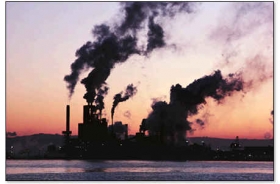 In Germany, officials and tax investigators swept 230 offices and residences, including Deutsche Bank AG, Munich-based HVB Group (the second largest private German financial institution


 While it has been known for some time that
 There’s no more Three Mile Island; no one’s lost their life to nuclear,” said Progressive Policy Institute President Will Marshall. “Nuclear energy’s been decoupled from the nuclear arms race. And now we have climate change.”


