Category: News

  • World first: Diamond Laser

    With the world’s first combination of a CO2 laser engraving system and diamond engraving the eurolaser XS-300 diamondPLUS offers unprecedented possibilities for various materials:

    – plastic
    – metal
    – wood
    – and many, many more

    Further benefits at a glance:

    – high quality Synrad laser source
    – laser class 1 protective housing
    – high engraving speed
    – autofocus function
    – ergonomic color touch screen
    – compact desktop system

    This combination opens up a world of unlimited possibilities for flexible material processing for you. On top of the excellent properties of the CO2 laser for engraving, marking, stripping and cutting, the diamond engraver offers e.g. first class engraving results on metal objects.

    With very low investment and operating costs this is also a technology which quickly pays for itself. Naturally, alongside the innovative technology and the high lifetime, also our worldwide service and many years of experience are included.

  • 10.4 analogue capacitive touchscreen

    Whoever is looking for a solid touch screen has come to the right place. For we have a new gem available: the analogue projected capacitive touch screen. It corresponds to our CTS (Charge Transfer Sensing) technology.

    This capacitive touch screen can be described as elegant, slim and smooth, as well as robust. It is very suitable for a great number of applications, from navigation systems, touch phones, public applications (kiosks), domotics, white goods, to applications for the medical sector, …
    As regards hygiene it also offers a solution: on account of the touch screen not having any edges, the screen surface can be cleaned easily and dirt cannot stick to it. This is important for medical and kitchen applications, among others.

    In addition, the touch screen is described as the most versatile that can be found in the industry: “a growing, promising trend towards touch screen technology, from mobile handsets to white goods”. All kinds of drawings can be made on the screen. It is suitable for use with gloves and it is easy in design. Also, it is supplied in a wide variety of screen sizes and types, currently till 10.4″, and it ensures an accurate touch screen performance for ‘small screen portable’ devices like handsets, smartphones and portable media players, as well as for bigger screens for games, POS terminals and white goods.

    For designers, this analogue projected capacitive touch screen is also future-proof: it provides them with the possibility to change things afterwards with regard to design: the hardware should not be modified, new control possibilities solely occur by changing the software. The forms can vary enormously and have much less limitations than other touch screens; curved surfaces are possible, for example. The capacitive technology also allows to work with various overlays and supports multi-touch detection.

  • New for power plant operators:

    Safe plant extension in the original plan

    The database-driven software system Engineering Base Instrumentation for process control technology offers a high degree of safety for power plant suppliers and operators. At the Hanover Fair, Aucotec AG now for the first time presents a special variant of its tool. It enables plant manufacturers to safely hand over the original planning data together with the finished plant for later extensions by the operator.

    Thus the Hanover-based company meets the increasing demand of the companies concerned: these want to enable integrating engineering features not only into their own system environments but most of all into those of the end users. The particular openness of the platform Engineering Base (EB) makes this flexible integration into the supply chain possible. The protection of the original data is ensured.

    The new method quasi freezes the data of a completely projected plant at the time of delivery yet enables any kind of supplementation. Operators do no longer have to work with rigid, unintelligent PDF files and can skip time-consuming coordination with the plant construction company or its subcontractors. Instead they dispose of the comfort of a complete E-CAE tool without however endangering the original data. Aucotec has developed this solution together with one of the largest control system suppliers worldwide for power plants.

  • Video: BMW Concept Gran Coupé unveiled live in Beijing to strange music

    Filed under: , , , , ,

    BMW Gran Coupé concept reveal – click above to watch the video

    At last week’s Beijing Motor Show, BMW unveiled its new four-door Gran Coupé concept. To be more precise, they revealed the car in the Chinese city, but not at the show itself. At the time, we scoured the BMW stand and the only new vehicle we found there was the 535Li extended-wheelbase, with no sign of the new concept.

    It turns out that BMW held a private reception the night before the media day at the show, and there the concept stayed. In a ‘better late than never’ move, one of the attendees has posted a video of the reveal, and we’re sharing that with you now. Designer Adrian van Hooydonk and Chairman Dr. Norbert Reithofer opened the doors on the Gran Coupé in an extended (albeit not particularly awe inspiring) manner, but the concept still looks pretty great regardless, and it also looks very nearly production-ready. Hopefully we’ll get a chance to check out the Gran Coupé live somewhere soon, but in the meantime, check out the video after the jump.

    [Source: YouTube]

    Continue reading Video: BMW Concept Gran Coupé unveiled live in Beijing to strange music

    Video: BMW Concept Gran Coupé unveiled live in Beijing to strange music originally appeared on Autoblog on Tue, 27 Apr 2010 09:59:00 EST. Please see our terms for use of feeds.

    Permalink | Email this | Comments

  • Jesus and climate change: The journey of evangelical leader Rich Cizik

    by Paul Rogat Loeb

    Rich Cizik

    Photo: National Association of Evangelicals

    As vice president for governmental affairs at
    the National Association of Evangelicals (NAE), Rich Cizik represented 4,500
    congregations serving 30 million members. Considering himself a “Reagan
    conservative” and a strong initial supporter of George W. Bush, Cizik had
    been with the organization since 1980, serving as its key advocate before
    Congress, the Office of the President, and the Supreme Court on issues like opposition
    to abortion and gay marriage. During the Clinton era, he had begun to expand
    the organization’s agenda by tackling such issues as human trafficking and
    global poverty, working with groups across the political aisle. Later he
    convinced the organization to take a stand against torture.

    But he thought little about climate change until 2002, when he attended a
    conference on the subject and heard a leading British climate scientist, Sir
    James Houghton, who was also a prominent evangelical. “You could only call
    the process a conversion,” Cizik said. “I reluctantly went to the
    conference, saying, ‘I’ll go, but don’t
    expect me to be signing on to any statements.’ Then, for three days in Oxford,
    England, Houghton walked us through the science and our biblical responsibility.
    He talked about droughts, shrinking ice caps, increasing hurricane intensity,
    temperatures tracked for millennia through ice-core data. He made clear that
    you could believe in the science and remain a faithful biblical Christian. All
    I can say is that my heart was changed. For years I’d thought, ‘Well, one side
    says this, the other side says that. There’s no reason to get involved.’ But
    the science has become too compelling. I could no longer sit on the sidelines.
    I didn’t want to be like the evangelicals who avoided getting involved during
    the civil rights movement and in the process discredited the gospel and
    themselves.”

    One day during the conference, Houghton took Cizik on a walk in the gardens
    of Blenheim Palace, Winston Churchill’s ancestral home. It was a lovely day,
    sunny and bright. Houghton said, “Richard, if God has convinced you of the
    reality of the science and the Scriptures on the subject, then you must speak out.”

    “Let me think about it,” Cizik responded. He knew he’d meet
    resistance from his colleagues and board. But Houghton convinced him that the
    world couldn’t solve the issue without serious American participation, and that
    the Republican Party was the major political force blocking action in the
    United States (in contrast to Europe, where conservative parties had helped
    take the lead on the issue). “As evangelicals, we’re 40 percent of the
    Republican base, so if we could convince the evangelical community to speak
    out, it could make the key difference,” Cizik said. American evangelicals,
    Houghton told him, might literally hold the fate of the planet in their hands.

    After leaving the conference, Cizik began reading and learning. Flying over
    the Sahara, he got a sense of the “tens of thousands of acres that are
    lost to climate-related desertification each year,” which in turn leads to
    major refugee migrations and potential wars over water. He coordinated a
    retreat with key evangelical leaders, like Rick Warren, and major scientists,
    like Houghton and Harvard’s E.O. Wilson. Then he took a similar group to Alaska
    to witness the melting glaciers and permafrost, the disruption of native
    communities, the spruce trees dying because the bark beetles now survived the
    warmer winters. They visited Shishmaref, a native village that is being forced to
    relocate because the permafrost has crumbled beneath it and the sea ice that
    once served as a storm buffer is gone. “Our first night there, we saw a
    lunar eclipse, shooting stars, and the Northern Lights.” It reminded him
    of the phrase in the psalm, “Creation pours forth its praise to its
    creator … The heavens give witness to
    God’s glory.”

    His Alaska group, said Cizik, “included those who believe life on earth
    was created by God, and those who believe it evolved over three and a half
    billion years. What became obvious to both groups is that this earth is sacred
    and that we ought to protect it. God isn’t going to ask you how he created the
    earth. He already knows. He’s going to ask, ‘What did you do with what I
    created?’ If we’re leaving a footprint that destroys the earth, we’ve failed to
    be good stewards.”

    The more Cizik learned, the more it challenged him to “treat caring for
    God’s creation as a moral principle,” and to continue enlisting others. In
    2004, Cizik convinced the NAE to release a paper called “For the Health of
    the Nation,” which urged its members to live in conformity with
    sustainable principles, talked of “creation care,” and stated,
    “Because clean air, pure water and adequate resources are crucial to
    public health and civic order, government has an obligation to protect its
    citizens from the effects of environmental degradation.” Two years later,
    he helped organize the Evangelical Climate Initiative,
    a major statement from 86 key evangelical leaders, including major megachurch
    pastors like Warren, the presidents of 39 Christian colleges, and the national
    commander of the Salvation Army. The statement described climate change as an
    urgent moral issue for Christians and called for the government to act on it.

    Cizik also joined James Ball of the Evangelical Environmental Network in
    carrying a placard to a pro-life rally that said, “Stop Mercury Poisoning
    of the Unborn,” and handing out fliers
    explaining that most of the birth-defect-producing
    mercury comes from coal-burning power plants. “If you care about the
    sanctity of human life,” he said, “then care about whether people
    live desperate lives and care about the mercury from power plants.”

    As Cizik expected, not everyone was happy with his taking environmental
    stands. “I had people on my board who said, ‘Don’t touch the issue. If you
    do, we’ll make your life very difficult.’” Twenty-two evangelical leaders
    signed a letter urging the NAE not to take a position on global climate change.
    James Dobson, founder of Focus on the Family, and major conservative activists
    like Heritage Foundation founder Paul Weyrich and the Family Research Council’s
    Gary Bauer called for Cizik’s firing.

    Some of this Cizik attributed to “simple ignorance of the science”
    and some to “bad theology—people who believe the earth is going to be
    destroyed anyway, so why bother.” But he also wondered how much came from
    people “afraid they’ll lose their power, influence, capacity to raise
    money, what they perceive to be their priorities. They’re afraid they’ll offend
    political allies.”

    But Cizik and the others persisted. “As a biblical Christian,” he
    said, “I agree with St. Francis that every square inch on Earth belongs to
    Christ. If we don’t pay attention to global climate change, it’s pretty obvious
    that tens and or even hundreds of millions of people are going to die. If you
    have a major sea-level rise, then Bangladesh
    becomes uninhabitable. Where do you put its 100 million people? Do you put them
    in India? In China? They’d have no place to go. Britain’s Christian Aid talks
    of climate change impacting one billion people by mid-century, with drought,
    floods, disease, and malnutrition. I’ve
    asked African-American leaders whether, as a
    white man, I can call climate change ‘the civil rights issue of the 21st
    century.’ Unanimously they say, ‘You not
    only can, but you must.’”

    Cizik believed he could still preach the gospel while also talking about
    these kinds of issues. “You need both. To go to bed at night and say that over
    a billion people live on a dollar a day and can’t go to bed themselves with a
    full stomach, can you live as a Christian happily in your suburban home,
    driving your SUV? Of course you can’t. Not as a real Christian. And if you
    happen to be a liberal, conservative, or
    centrist, I don’t care. The gospel has priority over politics.”

    Although Cizik and his allies never quite convinced the NAE to take an
    official stand on climate change, and he
    eventually got forced out
    after telling radio interviewer Terry
    Gross that he was beginning to rethink his opposition to gay civil unions, the
    organization reaffirmed the moral importance of “creation care,” a
    core perspective that encouraged further dialogue. And Cizik has gone on to
    start an organization, The New Evangelicals,
    devoted to issues like poverty and environmental engagement. He called his
    fellow evangelicals “a slow-moving earthquake. They don’t quite understand
    themselves how they’re changing, but they are.”

    “The issue shook my theology to its core,” Cizik told me. “It
    changed me as much as my being born again 30
    years before. This threatens the whole planet, so it raises a basic issue of who
    we are as people. Climate change isn’t just a scientific question. It’s a
    moral, a religious, a cosmological question. It involves everything we are and
    what we have a right to do.”

    This
    piece is adapted from the wholly updated new edition of Soul of a Citizen: Living with Conviction in
    Challenging Times
    by Paul Rogat Loeb. Copyright
    © 2010 by the author and reprinted by permission of St. Martin’s Griffin.

    Related Links:

    Have Jesus’ disciples been overeating?

    PETA on one side, FOX on the other … now that’s a conundrum

    Top 25 reasons to give a damn about climate change


  • Analysts weigh in on RIM’s new software after capital markets day at WES

    BlackBerry is cool again.

    Festivities at Research In Motion
    Ltd.'s annual Wireless Enterprise Symposium trade show in Orlando,
    Florida get officially underway today with co-chief executive Mike
    Lazaridis' keynote address, however, the BlackBerry-maker offered up
    plenty of new details about its strategy during its capital markets day
    with analysts on Monday.

    On Monday, RIM took the wraps off two
    new BlackBerry devies — a CDMA version of the business-focused Bold
    device and a 3G version of its Pearl flip phone — debuted its new
    operating system software (BlackBerry 6), a new Web browser and a new
    version of its mobile voice system technology, which enables users to
    combine their BlackBerry and business landlines and will allow users to
    make phone calls over a WiFi connection. 

    Earlier this month,
    BlackBerry rival Apple Inc. unveiled a new version of its iPhone OS at
    an event in San Francisco, which added new features including the
    ability to run multiple applications at the same time and a new in-app
    advertising technology, signalling the computer giant was planning to
    launch a new version of its popular touchscreen smart phone later this
    summer.

    As RIM continues its push to expand beyond its core
    base of business users, an easier-to-use software interface and
    superior Web browser are seen as integral pieces of the company's
    battle plan if it hopes to keep pace with the iPhone and devices
    running Google Inc.'s Android software.

    According to RBC
    Dominion Securities' Mike Abramsky, the new OS and browser has a more
    consumer-oriented interace that "may rival iPhone Android but appears
    uniquely BlackBerry."

    BlackBerry 6 may offer "RIM the
    opportunity to narrow competitive gaps and sustain leadership," he
    wrote in a note to clients on Tuesday.

    RIM says it plans to
    launch BlackBerry six in the third quarter of 2010 and analysts expect
    the software to be loaded onto new BlackBerry touchscreen and QWERTY
    devices. 

    Although analysts were generally encouraged by RIM's new software and
    browser — both of which were perceived to be lagging significantly behind
    Apple's iPhone — there still remains some concern about how RIM plans
    to roll out the new BlackBerry OS, which is seen as a complex
    technology.

    "Furthermore, we do not believe competition is
    standing idle & new innovations (video conferencing, etc) as well
    as the strong carrier promotions which RIM has enjoyed for many years
    are becoming shared by other OEMs (Android, iPhone) and we see carrier
    promotion commotion resulting in RIMM likely to spend more of its own
    money on promotion & subsidy efforts," Citigroup analyst Jim Suva
    wrote in a note to clients Tuesday.

    While RIM remains the
    market leader for so-called enterprise devices (read: business users)
    in North America, Mr. Suva says that many companies are beginning to
    life the ban on non-BlackBerry devices on corporate networks, which is
    bad news for the BlackBerry maker. 

    "While we recognize RIM’s low global market share we see its
    core North America and enterprise market under attack and the consumer
    space innovation has increasingly become more intense and we believe
    this sets up for margin pressure as the future unfolds," he said.

    On
    the application front, RIM reiterated its strategy of not trying to
    compete with Apple on volume — Apple's App Store has nearly 200,000
    applications — but rather by working with developers to create "super
    applications" that weave their way into the BlackBerry's ecosystem. In
    the past, RIM has used apps from companies like Facebook and LinkedIn
    — whose applications are integrated into BlackBerry's email contacts
    and calendar applications — to illustrate this strategy, according to
    Deepak Chopra from Genuity Capital Markets.

    RIM expects much of its future growth to come from international markets outside North America, Mr. Chopra said. 

    "Driven by the massive expansion of smartphones globally, RIM indicated
    that International expansion was the biggest driver of its growth, with
    BlackBerry Messenger being a key theme," he wrote in a note to clients on Tuesday.

    "North America is more
    competitive, however, RIM believes that it can maintain its market
    share in the competitive context of the market."

    RIM's WES conference continues until Thursday. 

    – Matt Hartley 


  • Samsung Galaxy S reportedly may ship in UK in early June

    Samsung Galaxy S

    Those of you waiting to get your hands on the world’s first smartphone with a Super AMOLED may only have to wait another month or so. UK retailer Expansys says it expects the Samsung Galaxy S right around the end of May, which can’t come too soon for a goodly number of you. If you’re looking to bring it to the U.S, it’s gonna cost you about $850, which is quite a chunk of change. (In the meantime, you can make do with our hardware and software hands-ons from CTIA.) It’s coming, folks. [EuroDroid via Unwired View]

  • Burbank California Getting Two Hydrogen Fuel Cell Buses

    Retired comedian and the former King of Late Night TV, Johnny Carson used to make non-stop jokes about the city of Burbank, California. Before Jay Leno took over the Tonight Show, gave it to Conan and took it back, there was Johnny Carson cracking jokes from the studio located in “beautiful downtown Burbank.”

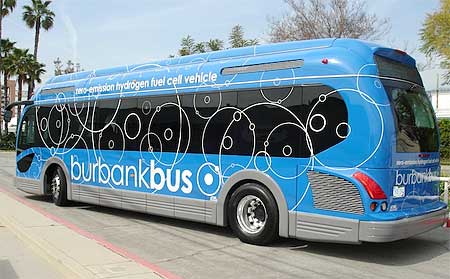
    But, now many years later, Burbank is cleaning up its image by enlisting the help of two hydrogen fuel cell zero emissions transit buses. The buses are made by Proterra and contain both a fuel cell and a bank of lithium titanate batteries, making them hybrid buses.

    Each fuel cell bus has a range of over 250 miles which is double the range of what the other diesel powered buses can achieve. The ultra-quiet buses were designed with light weight materials and paid for using state grants.

    So, beautiful downtown Burbank which was spoken of sarcastically decades ago by the King of Late Night TV is making its move to shed the sarcasm in favor of realism and clean air for all who travel there.

  • A Military Commissions Primer From David Iglesias (Video)

    GUANTANAMO BAY — David Iglesias, who in a previous professional incarnation was a U.S. attorney fired by the Bush administration for insufficient loyalty to the Republican Party, began his career as a defense counsel in the Navy JAG corps. Now he’s a prosecutor again, this time for the much-criticized and much-revised military commissions at Guantanamo Bay. In an impromptu Monday afternoon press briefing, Iglesias explained some of the new procedures in place after Congress and the Obama administration passed the Military Commissions Act of 2009, especially as they apply to hearsay evidence — as well as how some rules for the commissions haven’t really been established yet.

    Video after the jump:

  • Dairy Farmer Gets Raw Deal

    By Tim Shoemaker

    From The Daily Caller:

    “They came in the dark, shining bright flashlights while my family was asleep, keeping me from milking my cows, from my family, from breakfast with my family and from our morning devotions, and alarming my children enough so that the first question they asked my wife was, ‘Is Daddy going to jail?’”

    That’s how Amish farmer Dan Allgyer described an early morning visit last week from two FDA agents, two U.S. Marshals, and a Pennsylvania state trooper. Apparently, investigating a single farmer for possibly trafficking raw milk across state lines requires a show of force.

    Without telling him what is was, one of the agents handed Allgyer an FDA warrant that allowed the agents to inspect Allgyer’s farm. The warrant read: “You are authorized to take all necessary actions, including, but not limited to, the use of reasonable force, to effectuate entry to the above-named premises, the land and buildings located there, at reasonable times during ordinary business hours and to remain thereon to inspect within reasonable limits and in a reasonable manner all portions” of Allgyer’s farm.

    When Allgyer asked why the agents wanted to inspect his farm, FDA investigator Joshua C. Shafer said, “We have credible evidence that you are involved in interstate commerce.”

    Read the rest of Allgyer’s story.

    As Ron Paul has said countless times, if we believe in personal liberty, then we must defend one’s right to eat, drink, or put into one’s own body whatever they choose.  Raw Milk is an example of government regulations not keeping up with the times.

    Like other prohibitions, this is one that turns everyday, ordinary, law-abiding citizens into criminals for no reason other than our nanny state says it’s bad for you..

  • Louise Arbour can finally speak out against world’s worst regimes

    Excerpt from an interesting TorStar article “Louise Arbour can finally talk about world’s worst regimes – Controversial jurist’s new role allows her to finally speak out against world’s worst regime“,

    But she spares no criticism for benign governments that fail in their responsibility to protect vulnerable people worldwide.

    The “ouch” factor is high — and that includes Canada.

    “Is Canada punching below its weight?” she says. “Is it punching at all?”

    Ottawa, Arbour argues, is “largely absent on the international scene. It’s very difficult to capture any kind of message, position or form of engagement these days.”

    And she adds, “when I was prosecutor in 1996, it mattered what Canada thought. On issues of justice and ethics, it mattered what the Canadian position was. There was a sense that you would get an honest, well-thought-out approach. Not just a raw pursuit of ideological or national interest.”

    Filed under: Canada, Law, people, politics, World, World Affairs

  • GM to invest $890 million in five plants to build cleaner, fuel-efficent engines

    GM Chairman and CEO Ed Whitacre

    After announcing that it has paid back its U.S. and Canadian Government loans and that it will invest $257 million at its Fairfax Kansas and Detroit Hamtramck assembly plants to build the next-generation Malibu – the General is back with some more good news.

    GM announced today that it will invest $890 million to build cleaner, more fuel-efficient engines across five plants including: Tonawanda, N.Y.; Defiance, Ohio; Bedford, Ind.; Bay City, Mich. and St. Catharines, Ontario, Canada.

    The investment is expected to create or retain about 1,600 jobs.

    “GM is investing in our plants, restoring and creating jobs and making progress toward our vision of designing, building and selling the world’s best vehicles,” said Mark Reuss, president of GM North America. “These latest investments show our commitment to improving fuel economy for buyers of every GM car, truck and crossover and giving them the best possible driving and ownership experience.”

    So how much cleaner and fuel-efficient will these new engines be? GM said that specifics about the engine capabilities as well as product applications will be shared at a later date – so we don’t know yet.

    Hit the jump to learn more from the press release.

    Press Release:

    GM To Invest $890 Million To Build Cleaner, More Fuel-Efficient Engines

    – Five plants receive work: Tonawanda, N.Y.; Defiance, Ohio; Bedford, Ind.; Bay City, Mich. and St. Catharines, Ontario, Canada
    – Investment creates or retains about 1,600 jobs
    – New engines to save more fuel through direct injection technology and advanced combustion system design

    DETROIT – General Motors will invest more than $890 million which will create or retain more than 1,600 jobs in five North American plants to produce a new generation of fuel efficient small block truck and car engines. The investment consists of the following:

    – Two plants will support the engine production:
    o Tonawanda, N.Y. – an investment of $400 million resulting in more than 710 jobs
    o St. Catharines, Ontario – an investment of $235 million resulting in approximately 400 jobs (click here for Canada release)

    – Three plants will support engine casting and component production:
    o Defiance, Ohio – an investment of $115 million resulting in up to 189 jobs
    o Bedford, Ind. – an investment of $111 million resulting in about 245 jobs
    o Bay City, Mich. – an investment of $32 million resulting in over 80 jobs

    The investments include facility renovation and installation of new, highly flexible engine machining and assembly equipment and special tooling designed for manufacturing efficiency and engine quality. At the casting facilities, investments include expansion of semi-permanent mold and precision sand casting technologies that result in a high degree of dimensional accuracy and material strength properties needed to support the newer, more efficient engines in GM’s product portfolio.

    The next generation small block engine family will have unprecedented fuel efficiency through direct injection and an all-new advanced combustion system design. The new engine family will rely exclusively on aluminum engine blocks, which are lighter and contribute to the improved fuel efficiency. In addition to being E85 ethanol capable, these engines are being designed with the capability to meet increasingly stringent criteria emissions standards expected throughout this decade.

    Specifics about the engine capabilities as well as product applications will be shared at a later date.

    Since the launch of the new GM last July, the company has announced investments of more than $2.3 billion at 22 facilities in the U.S. and Canada. These investments restored or created more than 9,100 jobs, and they demonstrate a strong commitment to GM’s future and to the United States and Canada.

    – By: Omar Rana


  • CN Rail gets mixed reviews

    Canadian National Railway Co. beat expectations when it reported first quarter earnings results Monday after market close, but while many analysts applauded, it didn't save the country's largest railway from at least one downgrade of its shares.  

    Tasneem Azim, an analyst at UBS AG, cut his rating on CN to Neutral from Buy, telling clients that tougher comparables in the second half of 2010 and first half of 2011 combined with a premium valuation will hinder future upside.

    "We would be inclined to be more constructive on the shares with a pullback in valuation," he said. 

    The analyst did raise his price target to $67 from $65 to reflect a
    higher target multiple of 14.5x from 14x. Mr. Azim said the increased target is better aligned with historical mid-cycle multiples and also highlight's CN's improved
    guidance.

    Benoit Poirier, an analyst at Desjardins Securities, is far more bullish in the wake of yesterday earnings beat, raising his recommendation to Buy from Hold and increasing his price target to $71 to $62.

    "It's not too late to hop on the train," he said in a note to clients. 

    David Pett

  • Earth, Viewed From Another Planet [Space]

    I can only imagine the feeling of standing on Mars and seeing this exact view of home…the CO2 atmosphere and “You are here” arrow ruining an otherwise stellar make-out spot. [flickr via boingboing] More »


  • Google Picks Up Israeli Widget Developer LabPixies


    Flood-it

    Google has acq-hired another small company—LabPixies, one of the first developers to create gadgets for iGoogle (NSDQ: GOOG).  The Israeli startup’s widgets/gadgets/app are also on Yahoo (NSDQ: YHOO), Android, MySpace (NYSE: NWS), iPhone., and Hi5 but Google is taking it in house. Among its mini-games, the popular Flood-It. According to the iGoogle team’s Don Loeb on the Google Code blog, the LabPixies team will be based Google’s “ever-growing Tel Aviv office” and “will anchor the company’s iGoogle efforts across Europe, the Middle East, and Africa.” LabPixies is led by CEO Ran Ben-Yair.

    No financial terms were disclosed but the acquisition fits a pattern Google has been running for months, mixing larger tuck-ins with developer pickups. This marks the thirteenth acquisition in nine months, if my count is right, and the third this month. The other two April purchases were UK Android app developer Plink and online video platform startup Episodic, which had raised at least $2.5 million.

    Related


  • Goldman Banker Tourre’s Testimony Lays Out Defense to SEC Case

    The young banker at the center of Securities and Exchange Commission’s case against Goldman Sachs, Fabrice Tourre will be in the hot seat today on Capitol Hill. The Senate Subcommittee on Homeland Security and Govermental Affairs has just begun its hearing titled, “Wall Street and the Financial Crisis: The Role of Investment Banks.” It should instead be subtitled, “The Role of Goldman Sachs,” as all seven witnesses are current or former Goldman employees. Tourre is on the first panel to be questioned by Senators. His prepared testimony (.pdf) makes crystal clear the defense Goldman intends to take in response to the SEC’s allegations of fraud.

    If you are unfamiliar with the Goldman-SEC case, a brief synopsis can be found at the top of this post.

    IKB and ACA Were Sophisticated Investors

    This serves as the buyer-beware defense. Tourre says that the two investors who lost a great deal of money on the transaction — collateral manager ACA and German bank IKB — were sophisticated investors who should have understood the risks of purchasing the securities at the heart of the SEC case. This point is important because it casts doubt on two questions. First, could ACA have reasonably been misled about hedge fund manager John Paulson’s role as a short investor? Second, could IKB have been reasonably misled that the role of an independent collateral manager meant that no one else would have any influence on what might have went in the portfolio? If the answer to both of these questions is “no,” then the SEC will have a very difficult time winning its case.

    ACA Was Never Mislead

    One of the key disputes of fact in the case is whether Goldman Sachs, through Tourre, intentionally misled collateral manager ACA. The SEC alleges that Toure told ACA that Paulson would be a long equity investor. Tourre denies that categorically. In fact, he essentially says that ACA would have had to be crazy to think that. This will have to be hashed out in court.

    Security Not Designed To Fail

    Next, Tourre explains that the security in question was not designed to fail. It did poorly because the subprime mortgage market collapsed. Whether or not the security would perform depended on future events, and Goldman could not have known that the housing market would collapse. Had the housing market continued to flourish, so would have the security. Tourre adds that the bonds referenced by the security did not perform any worse than similar subprime mortgage-backed securities. The entire sector did poorly.

    ACA Ultimately Selected Portfolio

    Finally, Tourre says that ACA was ultimately responsible for selecting the portfolio. Possibly the strongest claim in the SEC’s case is that Goldman misled investors by representing the portfolio as having an independent collateral manager. That was ACA. But it received some suggestions from Paulson, who shorted the security it created. Whether investors should have known about that is pivotal to the SEC’s case. Tourre argues that it’s immaterial, because ACA was ultimately responsible for choosing the securities, so the disclosure was accurate. This question will also need to be decided by a court.

    Things should get interesting when Tourre is grilled. His prepared testimony makes utterly clear that he denies all of the SEC’s charges, but the Senate may get more into questions of ethics. It is pretty clear that, even if Tourre didn’t break the law, there are certainly things he did to make his role in the deal look worse than it should have.


    Email this Article
    Add to digg
    Add to Reddit
    Add to Twitter
    Add to del.icio.us
    Add to StumbleUpon
    Add to Facebook


  • Off the California Coast, Giant Volcanoes Made of Asphalt | 80beats

    asphaltvolcanochart
    If you thought the toxic bubbling lakes of asphalt DISCOVER covered on Friday were impressive, you ought to see what’s under the sea just off the California coast: giant volcanoes made from the same stuff we use to pave our roads.

    Lead author David Valentine and his colleagues first found these asphalt volcanoes in 2007 when they sent submersible robots to explore peculiar formations 700 feet below the surface. Now, in a study in Nature Geoscience, the team has published its findings and its images of the extinct volcanoes. Valentine says the formations are six stories high, and spread out farther than a football field. “If I could convert all the asphalt in the largest volcano to gasoline, it would be enough to fuel my Honda Civic for about half a billion miles” [National Geographic], he says.

    Valentine first used the aquatic robot Alvin to explore the volcanoes and take samples; the robot’s operators describe the experience as like driving a flat road and suddenly seeing an enormous mountain rise up in front of you. The researchers then deployed the autonomous bot Sentry. “When you ‘fly’ Sentry over the seafloor, you can see all of the cracking of the asphalt and flow features,” Valentine said. “All the textures are visible of a once-flowing liquid that has solidified in place” [LiveScience].

    asphaltvolcanosampleThese huge mounds formed 31,000 to 44,000 years ago as petroleum oozed out from the seafloor, the team’s chemical analysis suggests. Over time, the petroleum mixed with sand and debris and hardened into domes. There are also depressions around the largest volcanoes that used to be massive vents of methane, the scientists say. They argue that those vents could have contributed to a spike in the level of methane in the ocean about 35,000 years ago, which researchers knew about before this find.

    If indeed the volcanoes once blasted huge amounts of methane into the sea, then the plethora of methane-eating bacteria, combined with the oil reaching the surface and creating slicks, could have created a dead zone for most life. But that was then. Now, with the methane emissions reduced to a few tiny vents, oceanographer Ian MacDonald says that could be turned on its head: These unusual formations could present an opportunity for marine organisms to thrive. “I think it’s really cool that there’s this other process that we didn’t really know about before that, at least in some places, is making pretty extensive hard bottoms for animals to colonize” [National Geographic].

    And while the nation’s oil and ocean focus is set on the Deepwater Horizon disaster in the Gulf of Mexico, coauthor Chris Reddy said in a statement that the asphalt volcanoes are a reminder not to forget the natural part of the equation. “The volcanoes underscore a little-known fact: Half the oil that enters the coastal environment is from natural oil seeps like the ones off the coast of California.”

    Related Content:
    80beats: Do Asphalt-Loving Microbes Point the Way to Life on Titan?
    80beats: Sunken Oil Rig Now Leaking Crude; Robots Head to the Rescue
    80beats: Obama Proposes Oil & Gas Drilling in Vast Swaths of U.S. Waters
    80beats: 21 Years After Spill, Exxon Valdez Oil Is *Still* Stuck in Alaska’s Beaches

    Images: Jack Cook, WHOI; George Foulsham, UCSB


  • Nokia’s Smartphone Reinvention Begins With N8 Phone

    Nokia today unveiled the N8, the first handset from the Finnish company to use both the Symbian 3 operating system and the Qt cross-platform application framework. Although the physical hardware of the N8 is attractive, the Symbian 3 software is more important to Nokia’s future. The company’s falling status as a market leader is largely due to its reliance on an old interface not fully optimized for touch, so Symbian 3 represents Nokia’s best chance to prove that it can still reign atop the smartphone world.

    The N8 touchscreen supports multitouch navigation and gestures, the ability to run multiple programs simultaneously and social network status updates directly from the home screen. With a 12-megapixel camera and Carl Zeiss optics, consumers can use the N8 to create and edit HD-quality video recordings, which can be shared or viewed on a television by connecting the N8 with a cable. Nokia plans to launch the N8 in the third quarter for 370 euros ($492) in select markets.

    The N8 marks Nokia’s largest undertaking to recapture lost smartphone market share — which has dropped to 39 percent from over 50 percent just two years ago . Some of that loss has come at the hands of newer mobile operating systems, such as those from Apple (a aapl) and Google. As competitors created new platforms and user interfaces, Nokia relied heavily on its aging Symbian S60 system. The lone smartphone exception is Nokia’s N900, which runs on the Maemo platform — a derivative of Linux.

    While the hardware looks stellar on paper — the first images captured with the N8′s camera rival those of a high-quality dedicated digital camera, for example – Nokia is pinning its hope on the software that will power the N8 as well as future Nokia phones. Using the new Symbian 3 platform, Nokia hopes to reverse its market share losses and prove to consumers that it can still reign atop the smartphone world. And by leveraging the Qt environment that it owns, Nokia is also attempting to woo developers to write software for new Symbian 3 devices.

    Related research on GigaOM Pro (sub req’d):

    Mobile OSes Are No Longer Just About Mobile

  • AdMob Report Breaks Down Where Android Traffic Comes From

    The latest AdMob metrics report is out and it gives some insight into how the composition of Android phones. Did you know that as of March, there 12 manufacturers with 34 different Android devices? Yup. Further, 96 percent of Android’s traffic comes from 11 handsets. That’s a heck of a jump from the two phones back in September.

    Android traffic primarily came from three flavors 1.5 (38 percent), Android 2.0/2.1 (35 percent) and Android 1.6 (26 percent). Motorola and HTC were the top handset makers, accounting for 44 percent and 43 percent of traffic, respectively. The number one device with Android traffic was still the Droid (32 percent) whereas the Nexus One was down near the bottom at two percent.

    Might We Suggest…

    • Flash for “Most” Android Devices in 2010?
      Flash has been perhaps the most eagerly anticipated feature just outside the grasp of Android users since the release of the G1.  There have been many rumors, conjectures or speculations as to when F…


  • Justice Dept. Boosts Number Of FBI Agents, Attorneys Focusing On Copyright Infringement

    As noted, yesterday was officially “World Intellectual Property Day,” and it looks like the US Justice Department decided to contribute. It announced the appointment of 15 new assistant US attorneys and 20 FBI special agents, who will focus on intellectual property issues. Funny timing on this one. We had just noted that the Justice Department had moved the very real problem of identify fraud off the priority list of things to work on — and, just weeks later, the GAO put out its report noting that the supposed “harm” done by intellectual property infringement appears to be based on nothing. So why is the Justice Department beefing up efforts to fight intellectual property issues? It couldn’t possibly have anything to do with the fact that some of the top folks at the Justice Department previously worked for the RIAA, MPAA, and the BSA — three of the groups who were most responsible for pushing out those bogus claims about the “impact” of piracy. Nah… that couldn’t possibly be related, could it?

    Permalink | Comments | Email This Story