A federal judge in Chicago on Wednesday nixed a request from indicted former Illinois Gov. Rod Blagojevich to play all 500 hours of wiretaps at his corruption trial. The Chicago Sun-Times Natasha Korecki has the latest Blagojevich story.
Category: News
-
New Bayh-Dole style IP law to take effect in South Africa this summer
A South African law regulating IP from the country’s publicly funded research is expected to take effect in June or July. The legislation is designed to protect research and ensure that its commercialization benefits the people of South Africa, according to McLean Sibanda, a senior patent attorney at the department of science and technology’s National Research Foundation. The final regulations are expected to be posted on the department of science and technology’s website and distributed to stakeholders by May 1 so that the public has a few months to become familiar with the law before it takes effect.
In comments on the draft regulations, Rory Moore, director of the Intellectual Property and Technology Transfer Office at the University of KwaZulu-Natal, said, “The Act seeks to address the situation where intellectual property, developed by researchers, lies idle at universities or is sold off to private companies, often overseas, with no benefit accruing to the university, the government, or the South African people.” Moore said that legislation passed in the U.S. and U.K. during the 1980s returned ownership of IP — which had previously vested in government — to the universities. The intent of the South African legislation appears to move ownership from individual researchers up to the institutional level and to the government level, in some instances.
Under the Act, each institution (universities, science councils, etc.) will have access to a TTO, which will determine whether identified IP, developed using public funds, is worth protecting and commercializing. If so, the institution can elect to assume responsibility for the costs and benefits of this protection, with some financial benefit passing to the researchers. Should the institution elect to forego the patenting and commercialization function, the National Intellectual Property Management Office (NIMPO) can elect to protect and/or commercialize the IP on behalf of the state. Should NIMPO pass up the opportunity to do this, the IP is then first assigned to any private entity co-funders of the IP and then to the creators of the IP. The Act rewards ingenuity and creativity by entitling inventors in an institution to a minimum of 20% of the gross revenues accruing to the institution for the first ZAR 1mn and a minimum of 30% of net revenues thereafter, according to Sibanda.
Cristina Pinto, business development and commercialization manager at Wits Enterprise — the IP commercialization organization for the University of Witwatersrand — says the Act develops a greater awareness of the value of IP and the need to exploit technology to improve society. “It is anticipated that the development of such awareness within the South African research community will permeate the greater African research community,” she says. The Act also provides a legislative environment in which institutions can negotiate IP rights with private industry when the research has been partially publicly funded. Previously, a “take it or leave it” attitude by industry forced universities to sponsor research for private companies, Pinto says. Other pluses include the provision of an IP fund to assist institutions in obtaining statutory IP protections and the creation of opportunities for local companies — especially small firms — to commercialize IP.
Source: Digital Journal
-
Fisheye Tin Camera Mounts To Canon DSLR For 180º Photos [Cameras]

We’ve seen all manner of SLR trickery in the past, but Bhautik Josh has cobbled together a fisheye camera from a soda can. Sounds totally MacGyver, but he’s put the steps up on his blog for you to try out. More »
-
On-demand Web Seminar:Automating Semiconductor Package Thermal Characterization and Design
Drastically reduce time spent on characterization and customer-specific applications in IC design with FloTHERM IC.
-
Palm Updates Facebook for webOS to v1.2

Palm Inc. has released a free update to its Facebook application for webOS devices. The highlight of this release is webOS notification support, so now your device can unobtrusively inform you when you need to refuel your tractor in FarmVille.Facebook v1.2 is a free download from Palm’s app catalog. The app is built and maintained by Palm’s own developer relations team. The version also includes some other updates such as support for Facebook videos, keyboard shortcuts and more. In addition, Palm says they have “polished” up the user experience.
-
HTC Droid Incredible Video Walkthrough
Found under: HTC, Droid, Incredible, Android, Video, Google, Sense UI,

Read more in mobile format
-
India to establish IP facilitation centers for small, medium businesses
The Federation of Indian Chambers of Commerce and Industry (FICCI), in association with the Union ministry of micro small and medium enterprises (MSMEs), is establishing a string of IP Facilitation Centers to assist MSMEs across India in protecting their IP. The IP Facilitation Centers will offer services covering all aspects of IP rights. In addition to providing general advice about patents, trademarks, designs, and copyrights, the Center’s technical and legal experts will offer patent searches, patent drafting, patent and trademark prosecution, and facilitation in commercialization of inventions. During its first phase, FICCI will open the IP Facilitation Center head office in Delhi. As work progresses, FICCI expects to link the head office to state offices in Kolkata, Jaipur, Mumbai, Ahmadabad, Hyderabad, Chennai, and Bangalore. Foreign firms file 80% of India’s patent applications. Though the country’s small industries produce various innovations, they often fail to protect their IP due to lack of funding and lack of awareness about the need to protect their IP.
Source: PharmaBiz
-
Civil Liberties Board? Or Bored of Civil Liberties?
By Anthony Gregory
In the Bush era, civil liberties were all the rage. The Democrats pushed back, if only very slightly, against Bush’s powergrabs on surveillance and detention policy. In 2004 a “Privacy and Civil Liberties Oversight Board” was created to help oversee the threats of the war on terror against our constitutional rights. Although this was a hollow shell of real oversight, just another government trick to make us think that “checks and balances” were keeping our freedoms secure, it’s all the more hollow now: Under Obama, the entire board has been vacant this whole time. Thanks to Tom Mullen for the link.
-
Solar CPV Developer Announces 9-Digit Funding Round


Another day another huge cleantech venture capital funding round, today Amonix, a Seal Beach, Calif.-based maker of concentrated photovoltaic (CPV) solar power systems, has closed a $129.4 million Series B funding.
Kleiner, Perkins, Caufield & Byers led the round. Other participants included Adams Street Partners, Angeleno Group, PCG Clean Energy & Technology Fund, Vedanta Capital, New Silk Route, and The Westly Group. MissionPoint Capital was a returning investor.
The company says it will use proceeds to scale production of its panel (last year the company bought San Francisco startup Sunworks Solar, a developer of thin-film solar panel factories).
The amounts raised by early-stage greentech companies in a single raise is far larger than what straight technology companies ever raised. Kleiner, Perkins-backed Bloom Energy, the energy storage company has so far raised $400 million; Electric car company Tesla Motors is backed by $100 million in venture capital; Thin-film photovoltaic cell maker Solyndra racked up $200 million in venture capital cash in 2009.
Recent data shows that while a growing amount of cash is being invested in cleantech by early and later stage investors, overall PE and VC funds are having a harder time raising capital. If the trend continues green energy companies could find it hard to raise money.
-
Win Phil’s Nexus One: Third batch of entries [contest]

I’ve said it before and I’ll say it again: We have the coolest readers on the Internet. Better than PreCentral, better than TiPB, better than CrackBerry, even, and them’s big words.
Anyhoo, after the break we bring you the third installment of entries in the quest to win my Nexus One, and they keep getting better and better. Can’t wait to see what we get over the coming days. And there’s still time to enter. Details here. Good luck, everybody!
-
Energy and Global Warming News for April 21st, 2010: White House says climate bill ‘doable’ this year; Military leads march to shrink US carbon ‘boot print’; Solar power sales to double this year; Senate GOP move to bar analysis of climate change impacts
White House: Climate bill ‘doable’ this year
White House energy adviser Carol Browner said Tuesday she thinks Congress still has time to approve a climate and energy bill this year.
Browner called action on the long-delayed legislation “doable,” because members of Congress increasingly understand the need to develop clean energy that does not emit carbon dioxide and other pollutants blamed for global warming.
Sens. John Kerry, D-Mass., Lindsey Graham, R-S.C., and Joe Lieberman, I-Conn., are expected to introduce a bill on Monday that would apply different carbon controls to different sectors of the economy, without a broad cap-and-trade approach. It aims to cut emissions of pollution-causing greenhouse gases 17 percent below 2005 levels by 2020. It also likely will expand domestic production of oil, natural gas and nuclear power.
Browner said the Obama administration supports the bill and is flexible on how it achieves emissions reductions.
“If they want to use different tools for one sector or another, then that’s fine,” she said during an event hosted by National Journal.
Military leads march to shrink US carbon ‘boot print’: study
From solar-powered water purification systems in Afghanistan to a Navy jet fueled in part by biofuel, the US military is taking a lead role in shrinking the US carbon “boot print,” an independent report said Tuesday.
The US Department of Defense accounts for 80 percent of the US government’s total energy consumption energy needs, and most of the energy it uses currently comes from fossil fuels, the report by the Pew Research think tank’s Project on National Security, Energy and Climate says.
But moves are afoot in all branches of the military to change that.
The army and air force have several bases that are partially powered by solar energy, one of which — Fort Irwin in California — is expected to be able to stop taking energy from the public electricity grid within a decade.
The navy has set itself a key goal of getting 50 percent of fuel used ashore and afloat from non-fossil sources by 2020, Navy Secretary Ray Mabus told a telephone news conference after the report was issued.
The navy will also test-fly this week its “Green Hornet” F-18 fighter jet, which runs on a mix of biofuel made from camelina, a plant in the mustard family, and aviation fuel, he said.
“Unlike first-generation corn ethanol, camelina is a plant that can be used in rotation with things like wheat instead of letting the land lie fallow. So it doesn’t take food out of the supply chain, but it does provide American farmers with another crop they can grow,” Mabus said.
And the US Marine Corps, working with the army, has applied energy-efficiency foams to temporary structures in Iraq that reduce energy consumption by up to 75 percent.
With its history giving the world transformational technology like the Internet and GPS systems that help car drivers to navigate, the report predicts that the steps the US military is taking now to beat back climate change will lead to a raft of innovations that enhance energy-efficiency for both the military and the general public.
Those could include new alternative fuels, advanced energy storage and more efficient vehicles on land, in the air and at sea, it said.
But one of the primary reasons for the greening of the US military was to achieve energy independence, which the report said is closely tied to national security.
“We have to break away from sources of foreign energy and particularly fossil sources of foreign energy, first from a strategic standpoint, second from a tactical standpoint,” said Mabus.
Senate Republicans Move to Bar NEPA Analysis of Climate Change Impacts
Republican senators introduced legislation today that would block White House efforts to require federal agencies to consider climate change in environmental analyses of proposed projects.
The bill says the National Environmental Policy Act should not be used to document, predict or mitigate the climate effects of specific federal actions. Under the measure, NEPA reviews could not consider the greenhouse gas emissions of a proposed federal project nor climate change effects as related to the proposal’s design, environmental impacts, or mitigation or adaptation measures.
The measure comes after the White House in February issued draft guidance (pdf) that will require federal agencies to consider greenhouse gas emissions and climate change when carrying out NEPA reviews. The White House Council on Environmental Quality, or CEQ, is accepting public comment on the proposal through May 24.
The senators say assessing the climate change impacts of individual projects would provide no meaningful information for the public but instead would encourage more bureaucratic delays and litigation “designed to change NEPA into a global warming prevention statute.” They claim the guidance could block road construction, delay domestic energy production and hurt job creation, while their bill would ensure federal agencies won’t engage in “costly, and ultimately useless” reviews.
The bill was written by Environment and Public Works Committee ranking member James Inhofe (R-Okla.) along with Sens. John Barrasso (R-Wyo.) and David Vitter (R-La.). Co-sponsors include Sens. Mike Enzi (R-Wyo.), James Risch (R-Idaho), Bob Bennett (R-Utah), and Pat Roberts (R-Kan.).
“Requiring federal agencies to assess the global climate change impacts from building a road will only block construction of the road and the jobs and economic activity that go with it, with no discernible impact on global climate,” Inhofe said in a statement. “The NEPA Certainty Act will put a stop to this and give employers, including small businesses, greater certainty in their hiring and economic planning.”
In an interview in February, CEQ Chairwoman Nancy Sutley defended the draft proposal as “straightforward, common-sense guidance” (Greenwire, Feb. 19). “I think there was really no question that there are environmental effects associated with climate change, and how could we not have that as part of agencies’ thinking as they look at their NEPA obligations and looking at environmental impacts?” Sutley said.
Sutley insisted that the draft guidance is neither a way to regulate greenhouse gases nor a substitute for comprehensive climate and energy legislation. She also said she does not expect the draft guidance to slow down the NEPA process, saying that agencies over the years have incorporated other environmental issues that were not at the forefront when NEPA regulations were established decades ago.
More challenges for compromise on climate change
Senators trying to write a sweeping energy and climate change bill faced new obstacles Tuesday from offshore drilling foes, gas tax critics and supporters of tougher state environmental laws.
The challenges came as Sens. John Kerry, D-Mass., Lindsey Graham, R-S.C., and Joseph Lieberman, I-Conn., enter the final stretch of months of negotiations aimed at producing a broad compromise bill to cap greenhouse gas emissions, expand domestic oil and natural gas production, and boost nuclear power.
The trio is expected to circulate a draft of their proposal on Capitol Hill later this week before unveiling it next Monday.
The measure is expected to put a new emissions cap on electric power utilities beginning in 2012, with similar limits hitting manufacturers as early as 2016.
It remains unclear how the group ultimately might decide to limit emissions from the transportation sector, amid some opposition to a proposed carbon fee that would be imposed on gasoline and diesel fuels before they are delivered to fueling stations.
That fee could be linked to the cost of carbon pollution permits borne by utilities, with revenue possibly helping to fund research into more efficient vehicles.
The linked fee was originally advanced by refiners as a more transparent alternative to a complex House-passed plan that would make the industry pay for tailpipe emissions released when consumers burn their transportation fuels in cars and trucks.
‘Gas tax’ talk
But in recent days, critics have said it is tantamount to a new “gas tax” that could hamper the nation’s economic recovery.
Seven out of 10 Americans oppose higher gasoline taxes in order to limit emissions, according to the results of a survey released Tuesday and commissioned by American Solutions, the conservative group headed by former House Speaker Newt Gingrich.
Kerry tried to tamp down the gas tax talk and distinguished any transportation fuel plan from the unrelated, existing federal gasoline tax of 18.4 cents per gallon that helps pay for interstate highways and other roads.
“There is no gas tax, never was a gas tax, will not be a gas tax,” Kerry said.
“The gas tax is 18.4 cents today, and it’ll be that when this bill is passed,” he added.
Bolivian Government Outlines Strategy for International Climate Negotiations
The Bolivian government detailed today a broad plan for future international climate change negotiations and how governments and social movements might work together to push for climate justice internationally.
Bolivian President Evo Morales opened the People’s World Conference on Climate Change this morning, strongly condemning capitalism and calling for a “communitarian socialism” that will provide for the material wants and needs of the world’s populations and promote a more sustainable relationship between humans and the natural world.
He said:
The main cause of our planet’s destruction is capitalism. As people who inhabit Mother Earth, we have the right to say that the cause is capitalism and to protest endless growth. Capitalism is the source of the problem: more than 800 million people live on less than two dollars a day. Until we change the capitalist system, our measures to address climate change are limited.
Speaking before an estimated 15,000 people, including several Latin American heads of state; government representatives from Africa, Asia, and Europe; and indigenous delegations, Morales detailed his government’s proposal for establishing an international climate justice court, passage of a U.N. Declaration of the Rights of Mother Earth, reparations from rich countries to assist poor and low-lying nations that will be impacted by the effects of climate change, and financing of clean energy technologies. He also urged countries to open their borders to future waves of climate refugees.
Morales set the tone for the conference by reiterating throughout his speech that in order to address climate change, social movements and governments must cooperate. If he referenced government, he also mentioned social movements.
During the climate conference, occurring a few kilometers outside of Cochabamba in the small town of Tiquipaya, environmental justice activists are convening in over a dozen working groups to discuss issues ranging from long-term movement strategy to combating particular issues such as deforestation. The work of these groups, the Bolivian government promises, will be presented to the 192 nations involved in the UNFCCC process. The social movements, the theory goes, will be given greater voice and legitimacy through partnership with allied governments such as Bolivia, while these governments will hold greater legitimacy within the negotiations due to the backing of international organizations and their millions of rank and file.
Adding to this collaboration between nation-state and environmental justice movements is the presence of the Bolivian military in conference working groups – a strange event in a region that has been gripped by military coup after military coup during the past half century. The Bolivian Chief of Staff has ordered cadets from the country’s military academy to attend working groups. Several participants I spoke to today and yesterday found the soldiers to be a welcome, if odd, addition to discussions – seemingly less interested in surveying, and potentially repressing, oppositional movements than becoming part of Bolivia’s efforts at projecting a national strategy based upon leading a new, international environmental movement.
During an afternoon panel discussion on the state of international climate negotiations, Angelica Navarro, lead climate negotiator for Bolivia, rehashed why talks in Copenhagen failed to deliver a comprehensive agreement, arguing that several countries, primarily the U.S., sidestepped the consensus-based U.N. process and negotiated the Copenhagen Accord during small group discussions.
Solar Power Sales Will Almost Double This Year, Isuppli Says
Global sales of solar power panels will jump 94 percent this year as developers rush to install systems before cuts in government incentives, according to industry publisher Isuppli.
Solar installations may climb to 13,600 megawatts this year, up from 7,000 megawatts in 2009, with Germany remaining the world’s largest market, said Henning Wicht, an analyst at El Segundo, California-based Isuppli.
“The second quarter is likely to be a blockbuster for the global PV industry,” Wicht said today in an e-mailed statement, referring to photovoltaic cells. A surge in German installations before a July cut in the price that power producers receive will be followed by increasing demand in Italy and the U.S. as lower costs attract new customers, he said.
For 2011, global demand for solar may rise to 20,300 megawatts, he said. One megawatt is enough to supply about 800 average U.S. homes, according to U.S. Energy Department data.
Vice President Biden will award $452 million in “Retrofit Ramp-up” grants to 25 communities across the country on Wednesday to kick off five days of events surrounding the 40th anniversary of Earth Day. In addition to the retrofit awards, every federal agency will commemorate Earth Day with an event or new policy announcement.
“For forty years, Earth Day has focused on transforming the way we use energy and reducing our dependence on fossil fuel – but this year, because of the historic clean energy investments in the Recovery Act, we’re poised to make greater strides than ever in building a nationwide clean energy economy,” Biden said in a statement. This “investment in some of the most innovative energy-efficiency projects across the country will not only help homeowners and businesses make cost-cutting retrofit improvements, but also create jobs right here in America.”
The Obama administration received eight times the number of applications it could fund, spurring proposals for more than $3.5 billion in federal spending. The stimulus grants will support large-scale retrofits and improve the energy efficiency of thousands of buildings nationwide, ranging from individual dwellings to large institutions.
Matt Golden, a northern California contractor and member of the contractor coalition Efficiency First, said the federal funding could help revive the nation’s building industry. The administration estimates that the 25 projects announced Wednesday will leverage about $2.8 billion of investment from the private sector over the next 3 years to retrofit homes and businesses.
“The construction industry is in the middle of a toolbelt recession, with a workforce that wants to work and contractors who want to hire,” Golden said. “This type of federal leadership is the low-bureaucracy way to send the market signal we need to put people back to work, save energy and give taxpayers a real return on investment.”
The administration spread the awards to different geographic regions. The Maryland Department of Housing and Community Development’s “Investment in Main Street: Energy Efficiency for Economic Growth” won $20 million, which it will spend on statewide bulk purchasing program for supplies and equipment to support multi-family and small business retrofits.
In Seattle, the Neighborhood Weatherize Every Building Initiative to Power Change also won $20 million. More 40 public, private and nonprofit organizations will concentrate on upgrading neighborhoods in downtown Seattle, starting with single-family homes but also retrofitting grocery stores, restaurants and large commercial, hospital and government buildings.
And if nearly half a billion dollars wasn’t enough green, you can catch a cabinet secretary visiting a neighborhood near you over the next five days to celebrate the environment.
Polluting Nations Downplay Goals for Cancun Climate Conference
The biggest polluting nations are downplaying goals for climate-change talks in December after failing last year to agree on a global treaty, the top U.S. climate negotiator said.
Representatives from countries emitting the most greenhouse gases agree it’s important not to let “expectations far outstrip what can be done” at UN-led talks in Cancun, Mexico, Todd Stern, President Barack Obama’s climate negotiator, said yesterday.
Negotiators completed two days of meetings in Washington at which they discussed short-term financing to help developing nations cope with climate change, one of the issues that thwarted agreement on a treaty. Countries failed to reach a binding agreement at a meeting last year in Copenhagen.
There’s “no question” expectations for a treaty at Copenhagen exceeded what could be achieved, Stern told reporters today on a conference call. Support exists for a legal agreement to control emissions, though officials are aware this “might not happen,” he said.
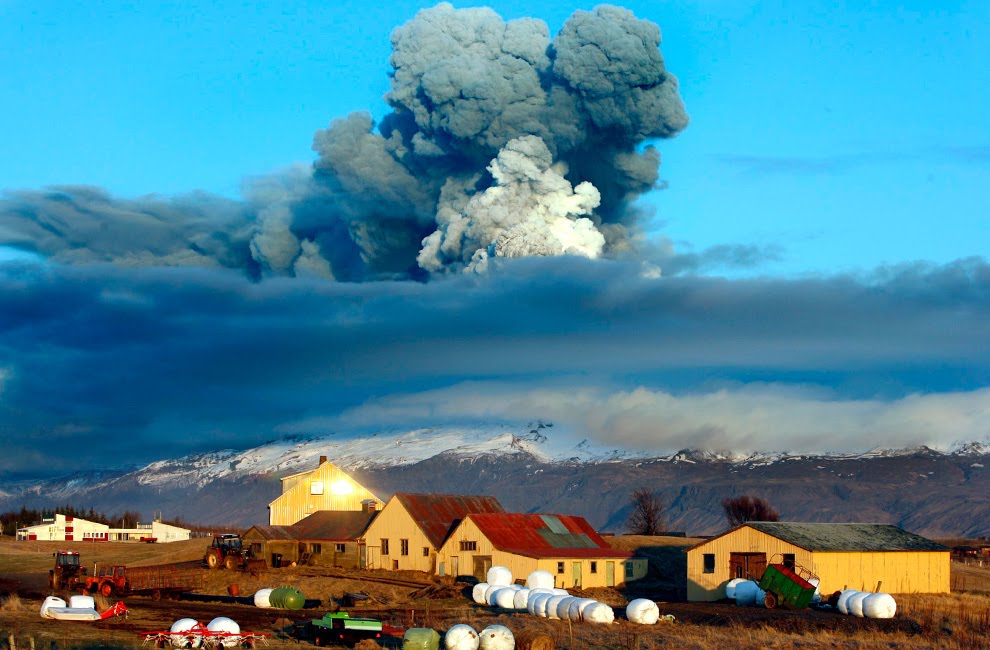
Some participants took part in the Washington meeting by video conference because the ash cloud from the Iceland volcano canceled flights from European capitals, Stern said.
Energy-intensive Pentagon making effort to go green
The Navy plans to test-fly its main attack aircraft, the F/A-18 Super Hornet, on a biofuel blend this Earth Day, part of an ambitious push by the Pentagon to increase U.S. security by using less fossil fuel.
While deliberations grind on in Congress about how to shift the nation’s energy away from fossil fuels, the Defense Department is putting plans into action with such things as electric-drive ships that save fuel costs, solar-based water purification in Afghanistan that reduces the need for dangerous convoys, and solar and geothermal power at U.S. bases.
The changes eventually could spread to civilian life. The size of the military’s investment will create economies of scale that help bring down the costs of renewable energy, and military innovations in energy technologies could spread to civilian uses, just as the Internet did. In addition, military innovations could help reduce the nation’s overall emissions of heat-trapping gases from fossil fuel use.
Navy Secretary Ray Mabus said the Defense Department looks at energy changes as “one of America’s big strategic imperatives – to reduce our reliance on foreign sources of fossil energy, to make us better war fighters and to get us more down the road to energy independence. We also feel the military can lead in this regard.”
He said there also were added benefits – “making us better stewards of the environment and helping our country move toward a different economy, which we cannot afford to fall behind in.”
The Navy has changed energy sources before – from sailing to coal in the 1850s, from coal to oil in the early 20th century and to nuclear power in the 1950s. Some people always warned against abandoning proven technologies for more costly ones, Mabus said. “Every single time they were wrong, and every single time it made our Navy and Marine Corps more efficient and better fighters. We’re absolutely confident that will be the case again this time.”
A report released Tuesday from a team of energy and security experts assembled by the Pew Charitable Trusts takes a broad look at what the military has done so far to move off fossil fuels. Some examples:
-The Army plans to have 4,000 electric vehicles in the next three years, one of the biggest electric fleets in the world.
-The Air Force plans to provide 25 percent of the energy at its bases with renewable energy by 2025 and use biofuels blends for half its aviation fuel by 2016.
-The Navy plans to launch a strike group by 2016 that runs entirely on non-fossil-fuel energy, including nuclear ships, combat ships that run on hybrid electric power systems using biofuels, and aircraft that fly only on biofuels.
The Navy’s first amphibious assault ship with a hybrid gas-electric drive was the USS Makin Island. On its first voyage last year from Pascagoula, Miss., around South America to San Diego, its home port, it saved nearly $2 million in fuel costs.
The Super Hornet is Navy aviation’s largest energy user. It’s being put through a series of tests, including the one planned on Thursday at Naval Air Station Patuxent River in southern Maryland. The Navy is using an aviation biofuel made from the camelina sativa plant, a non-food plant in the mustard family. The plant can be grown in rotation with crops such as wheat instead of letting fields lie fallow, so it provides farmers with another crop without taking land away from food production.
In Afghanistan, the Navy is moving toward more solar and wind energy so that it can reduce reliance on the fuel convoys, Mabus said. The solar-powered water purification units are reducing the need for fossil fuel to clean water and for purified water brought in by truck.
The biggest obstacles in general for the use of cleaner energy are the lack of infrastructure and the high price of alternative fuels, Mabus said. Both hurdles will fall as the Navy helps build demand, he predicted.
“If you’ll flip the line from ‘Field of Dreams,’ ‘If the Navy comes, they will build it,’ ” he said, a reference to the Kevin Costner baseball movie with the line, “If you build it, they will come.”
The Navy aims to have half its bases generate all their own energy by 2020.
-
U-Houston inks agreements for high temperature superconducting wire
The University of Houston (UH) has executed two license agreements with SuperPower, a wholly owned subsidiary of Royal Philips Electronics based in Schenectady, NY. The first covers the IP on second generation high temperature superconductor wire developed under a sponsored research agreement previously executed between the two organizations. Venkat Selvamanickam, PhD, professor of mechanical engineering and director of the Applied Research Hub of the Texas Center for Superconductivity at the University of Houston (TCSUH), leads the sponsored research program. The second agreement covers a fundamental composition of matter patent for a high-temperature superconductor that was discovered by Paul Chu, PhD, professor of physics at UH. Additional terms were not disclosed.
UH and SuperPower are partners in a $3.5-million Emerging Technology Fund award from the State of Texas to create the Applied Research Hub at TCSUH. In addition, the two organizations are partners in a $10.6-million Smart Grid Fault Current Limiting Superconducting Transformer Demonstration program funded by the U.S. Department of Energy.
Source: EurekAlert!
-
Launch apps within a safe environment with Sandboxie
 More often than not, most of the data stored on the average home PC will be
fairly harmless, however, theres almost certainly be some
personal and/or private information you may want to keep secure.
Unfortunately, though, clearing your computer of private data
every time you finish using your it is not something that everybody remembers to do. Another option would
be to run
an application within a self-contained environment, then you could
simply log off without having to manually clear any data.Sandboxie
3.442 enables users to run applications, including games, in a ‘sandboxed’
environment. This is very useful for anyone using a shared computer. All data
remains within this secure environment, preventing the storage of information on your drive,
which may also help to protect your system from malicious infection.Sandboxie
3.442 link. -
Are Electric Cars Really a Risky Business Strategy? The Big Picture Says Otherwise

As we get closer to the impending launch of the next generation of electric cars from manufacturers like Nissan, Mitsubishi, Ford, GM, Tesla and Fisker, the chorus of commentators claiming they will be a flop and are likely to never pay back their investment for the automakers that choose to build them is getting larger.
In the past couple months alone I’ve seen two rather high profile “parade rainers” — from Forbes and Ward’s Auto — come right out and say they think electric cars are an overly risky business bet which the overwhelming odds favor losing. But I don’t think these folks are looking at the big picture and they haven’t gotten their minds around the reality of our situation.
Once you take these things into consideration, EV manufacturers have nothing to worry about. (more…)
-
Egypt court to try Muslim Brotherhood members for money laundering
[JURIST] Five international Muslim Brotherhood (MB) members will be tried in an Egyptian criminal court on charges of money laundering, Attorney General Abdul Magid Mahmoud announced Wednesday. The members, including Muslim Brotherhood International Secretary General Ibrahim Munir, were referred to the Supreme State Security Emergency Court for trial. The five members have been accused of laundering money through a British-based Islamic charity in order to fund the MB movement, which has been banned in Egypt. In a statement, MB media spokesman Mohamed Morsy said the charges are a move by the Egyptian government to escalate the tense relationship between the two: At a time when all opposition factors in Egypt including the MB are uniting in the call for the elimination of the oppressive ‘Emergency Law’, the ruling regime has once again demonstrated its inability to interact with its people and practice democracy. We, the MB, will continue the path of promoting peace and will continue calling for reform through the regulatory and legitimate constitutional channels in which we have always adhered to. None of the ruling regime’s measures will deter us. The Egyptian government has often used the country’s emergency laws to arrest and indefinitely detain individuals it considered a threat to state security.
Earlier this month, an Egyptian criminal court ordered 16 members of the Muslim Brotherhood, who were arrested in February and charged with plotting to overthrow the Egyptian government, released on bail. In the past, Egypt has also used the emergency laws extensively against other opposition parties. In July, the trial of 26 individuals with alleged ties to Hezbollah was transferred to a court established under the emergency laws. In February 2009, a military court utilized the laws during a trial in which it sentenced opposition leader Magdy Ahmed Hussein to two years in prison. The emergency laws have been in effect continuously since the 1981 assassination of Egyptian president Anwar Sadat and were renewed most recently in May 2008. -
Let’s set the record straight
by Senator Bernie Sanders
As we celebrate the 40th anniversary of Earth Day the most serious environmental problem that we face is not global warming or the pollution of our air, water, land and food. It is whether or not our country moves forward in developing public policy based on science or whether we make decisions based on politics and fear mongering.
When Americans walk into a doctor’s office to get treated, they usually don’t worry whether the physician’s politics is progressive or conservative, Democrat or Republican. They want to know that the doctor they are seeing has been well trained in a scientifically-accredited institution. They want to know that their treatment is based on the latest and most effective peer-reviewed methodology.
When our highly-trained NASA scientists and engineers work on the exploration of Mars, nobody I know in Congress challenges their credibility or honesty as they study and draw conclusions about that planet’s surface and origin. That is also true with the work of our scientists at the National Institutes of Health, the Centers for Disease Control and Prevention, the National Oceanic and Atmospheric Administration and other governmental research agencies.
Yet when it comes to global warming the situation is very different. Here, radio and TV entertainers such as Rush Limbaugh, Glenn Beck and a host of others in the right-wing echo chamber, with no scientific training in climate science, are spouting off to tens of millions of people every day about a subject they know little about.
Let’s set the record straight. There is no serious dispute within the scientific community and in peer-reviewed journals that global warming is real and that it is significantly caused by anthropogenic greenhouse gas emissions. Virtually the only people who disagree with this conclusion are representatives of the oil and coal companies, their apologists in the media and those on Capitol Hill who are stubborn defenders of their big polluter patrons.
As Congress debates global warming, it reminds me of those congressional hearings where tobacco company executives swore under oath that the nicotine they put in cigarettes was not addictive. Some people in Congress believed them. Despite overwhelming scientific evidence, the wealthy and powerful tobacco lobby had many allies in Congress toeing the company line.
Like the evidence that tobacco kills, the science on global warming is overwhelming. NASA just reported that the decade from 2000-2009 was the warmest on record. Carbon dioxide levels are increasing because we are burning fossil fuels and cutting down forests at a rate that is unsustainable. How do we know that carbon dioxide pollution causes global warming? Among the researchers who reached that conclusion are scientists at NASA, EPA, The National Science Foundation, and the departments of Energy, Commerce, Defense, Interior, State, Health, Transportation, and Agriculture. They say, through the U.S. Global Change Research Program, that “global warming is unequivocal and primarily human-induced.” The CIA and many military leaders have warned that climate change threatens our national security and international stability.
If anything, we have underestimated the problem. Our own National Academies of Science released findings last year that “climate change is happening even faster than previously estimated” and “the need for urgent action to address climate change is now indisputable.” U.S. average temperatures have already increased by 2 degrees Fahrenheit in the last 50 years, and a Massachusetts Institute of Technology report found a very high probability that unless we act now temperatures could rise by 9 degrees Fahrenheit by the end of this century. That would be catastrophic.
We already have seen sea levels rise by as much as nine inches in some areas. As ice sheets and glaciers continue to melt, rising sea levels will put coastal cities at risk of increased flooding and island nations in danger of being submerged. Our top U.S. scientists tell us that unchecked global warming also means increased risks of regional flooding and drought, increased risk to human health and more extreme weather events.
Despite the scientific evidence, some of my colleagues in Congress still tell the public that global warming is a “hoax.” They recently grasped onto a series of stolen e-mails from a few climate scientists, which they say undermines the science. Well, according to exhaustive reviews throughout the world, the e-mails do no such thing.
The truth is that there is a real global warming scandal, but it has nothing to do with the e-mails of a few scientists. The real scandal is that the oil companies and the coal industry and others with an economic stake in the status quo are using the tobacco-industry playbook to confuse the public and prevent Congress from taking strong action. Exxon-Mobil, for example, has spent more than $24 million since 1998 to fund organizations that are willing to dispute the consensus on global warming. Oil and gas companies spent $154 million lobbying Congress in 2009 alone trying to block legislation to move our county away from fossil fuels and toward sustainable energy.
As we celebrate this Earth Day, we can make this the year when we stop arguing about the science, and start doing something truly significant about global warming. That would make 2010 a year to celebrate for generations to come.
U.S. Sen. Bernie Sanders, independent of Vermont, is chairman on the Senate Green Jobs and the New Economy Subcommittee. He is the only member of the Senate majority caucus to sit on both the energy and environment committees.
Related Links:
Go green this Earth Day: Quit smoking
Labor and environmentalists have been teaming up since the first Earth Day
Ask Umbra’s pearls of wisdom on Earth Day parties
-
McAfee Update Shutting Down Windows XP Computers [Security]

Confirmed: a bad McAfee update for Windows XP has shut down thousands, possibly millions, of computers around the world. That’s big trouble. UPDATED: More »
-
Consumer goods can’t buy you happiness – experiences can

They say money can’t buy you happiness, but if your money is spent on ‘experiential purchases’ and not consumer goods, then perhaps it can. Research from Cornell University has found that spending money on material goods only brings short term happiness, while experiences provide greater satisfaction long term. ..
Continue Reading Consumer goods can’t buy you happiness – experiences canTags: Consumers,
psychology,
ShoppingRelated Articles:
- Experiences, not possessions, lead to greater happiness
- Cities with MLB baseball teams have a lower divorce rate!
- Evidence based happiness advice: a special issue of the Journal of Happiness Studies
- Intel Point-of-Sale by Frog Design: How shopping should be
- New research reveals the effects of ecstasy on memory function
- Industry project outlines vision for CO2-neutral transport
-
Adm. Mullen on Local Buy-In for Possible Kandahar Offensive
Noah Shachtman got an interview with Adm. Michael Mullen, the chairman of the Joint Chiefs of Staff, and asked about the likely prospective NATO-Afghan offensive in Kandahar. Specifically, Shachtman wanted to know how a U.S. military that’s emphasized the need for local buy-in from Kandaharis for the attack is handling the fact that so far, the locals appear to be saying no. I recently got Gen. Stanley McChrystal’s spokesman to describe some of the commanding general’s efforts in that regard, and here Mullen basically seconds McChrystal:
Danger Room: So do you need have the elders or the people’s buy-in before an operation starts?
Mullen: I think you’ll see the same kind of approach that General McChrystal used in Marja [before the offensive there began]. They are going to meet with a lot of leaders before the operation. That approach worked there, and I think you’ll see it again.
The question then becomes whether NATO truly solicits local buy-in or simply declares that it’s got what it needs to attack. Mullen sounded pretty sure that no matter what, the offensive is on: “I think the operation in Kandahar, which have commenced, will go a long way towards doing that. So that’s sort of the next big step for me, is Kandahar.” (McChrystal has said that the “shaping” operations to secure the areas on the city’s periphery have begun.) That doesn’t sound like a man who’s prepared to take no for an answer.