 |
It’s odd that studies are being done to “prove” certain medical arts have positive effects even after they’ve proven beneficial over centuries. This seems to be the case with Traditional Chinese Medicine’s (TCM) and its most widely practiced methodology, acupuncture… |
Category: News
-
Acupuncture stimulates multiple brain regions, affecting a wide scope of pain dimensions
-
Join the Perpetual Patient Program

It starts so innocently, so easily, you hardly noticed. You’ve been stressed lately and getting to bed later than normal with all the things on your “To-Do” list. You tell yourself: “It’s only temporary”, but with your recent reliance on pre-prepared and fast foods,… -
Heart rejuvenation – two simple practices

Cardiovascular diseases kill more Americans than cancer and motor vehicle accidents combined. Most of our aging baby-boomer population will be brought down by problems located in the heart and cardiovascular system. Even so, we can significantly increase heart longevity… -
Mushrooms may be another great way to get your vitamin D

New research recently presented at a joint meeting of the American Society for Biochemistry and Molecular Biology and Experimental Biology confirms a little-known benefit of eating mushrooms – higher vitamin D levels. As relayed by MedPageToday.com, researchers from… -
Brian Williams, Scott Pelley, and Diane Sawyer: the three stooges
(NaturalNews)I think, at the very least, YouTube should censor them. Well, wait a minute. Not censor, but put up a notice on all their videos: ”It’s come to our attention that these three characters are as annoying as a bad case of fleas. Caution: watch and listen at your own…
-
Why nightly snacks are unhealthy

It might seem harmless if you grab a bowl of cereal at night, but the fact is that it is better off if you eat that in the morning. New studies have shown that the human body is inclined to convert food consumed at night into fat and then converting it into energy during… -
TalkAndroid Daily Dose for April 26, 2013

With hectic schedules, it can be hard to keep track of everything in your news feed. That’s why we created the TalkAndroid Daily Dose. This is where we recap the day’s hottest stories so you can get yourself up to speed in quick fashion. Happy reading!!
Contests
Contest: Win 1 of 10 tickets to Lookout’s Annual Kickoff party at Google I/O
Guides
How to set up and use WatchON along with the IR blaster on the Samsung Galaxy S 4
How to create and share a Story Album on the Galaxy S 4
Google Glass
Google Glass easter egg aleady exposed
NY Times rolls out app for Google Glass users
Hardware
Qualcomm Snapdragon 800 to hit mass production stage in late May
Phones
Samsung Galaxy S 4 Duos launches in China with dual-SIM support, Exynos 5 Octa cpu
Mid-range Samsung Galaxy Core for Asian, European markets leaks
Sony Xperia ZR (Dogo) leaks with 4.6-inch 720p display
Tablets
ASUS ME302C tablet with Intel Atom Z2560 Clover Trail+ spotted in benchmark
Miscellaneous
Samsung smartphone market share hits new record for 1st quarter 2013
Intel to power Android Notebooks, says they’ll be priced as low as $200
Come comment on this article: TalkAndroid Daily Dose for April 26, 2013
Visit TalkAndroid for Android news, Android guides, and much more! -
Study finds Galaxy S4 screen to be huge improvement over Galaxy S III

-
Predicting Twitter popularity is all about probability
Tweets have the power to decimate markets, but they also have users and companies seeing dollar signs. With huge marketing, political, and social mobilization potential, how can you predict which tweets will get more views, and which retweets will go viral? A new study developed a statistical model that attempts to estimate the popularity of tweets, and thus how memes spread.
Starting with 52 “root” tweets from users both famous and obscure, the researchers first analyzed the dynamics of retweeting, like the speed and spread of a tweet from a user to followers and then their followers. The researchers, from the University of Washington, MIT, and Penn, used the Twitter API to collect all the retweet information and found that most retweets occurred within one hour of the original tweet. Not surprisingly, they also found that root tweets are retweeted more than the retweets themselves.
They then plugged the important variables –- number of followers, retweet speed, retweets of other tweets –- into a Bayesian model, a statistical approach that uses prior evidence (the root tweets) to calculate how the retweet graph evolves. They experimented with feeding the model different amounts of prior evidence to see how much was needed to make an accurate prediction. Using only 10 percent of the retweets to guide the model, they were able to reasonably accurately predict retweet time and volume, and the error decreased the more retweet data they included. The average retweet time was only 4.4 minutes.

Throwing more information into the prediction engine (like whether a particular follower has a large numbers of followers of his or her own) could improve the accuracy. Their model was thrown off, it seems, by a few anomalous tweets with a very rapid onset and termination of retweets that didn’t follow the same pattern as the other tweets. (Though they don’t identify who sent those tweets, my bet is on @KimKardashian, whose followers’ actual and predicted retweet timecourse is pictured above.) The researchers didn’t even consider the time of day a tweet was posted, nor its content; there is likely huge potential to mine in those domains for what, and when, leads to trending.
With the abundance of the Twitterverse open to developers via API, this study represents just the tip of the iceberg in predicting tweeting behavior, something that startups like Blab are busily pursuing. It also shows that robust methods like Bayesian statistics can predict if a tweet has any retweet life left, and thus whether it can gather more eyeballs and clicks, something that is sure to prove very lucrative.

Related research and analysis from GigaOM Pro:
Subscriber content. Sign up for a free trial.- NewNet Q4: Platform mania and social commerce shakeout
- NewNet Q4: Platform mania and social commerce shakeout
- NewNet Q3: Facebook remakes headlines in social media


-
American diplomat begs Australians to halt Game of Thrones piracy

-
Sony to post its first annual profit in five years

-
Amazon, Facebook want to hire software-defined networking engineers
While software-defined networking (SDN) seems to be still stuck in the hype cycle, use cases from service providers and a few enterprises were on display at the Open Networking Summit last week. And now more could be on the way, this time from businesses operating at webscale: Facebook and Amazon.
According to a job description posted on the careers section of Facebook, the social-networking company looks like it wants to deploy software-defined networks at production scale. The right person for the open software-engineer job will head up efforts around “designing and implementing control plane systems for our network.” The job “may involve evaluating third party and open source software,” among other possible tasks. That could mean Facebook wants to explore existing proprietary controllers and other software components from vendors such as Big Switch, alongside the code that will emerge from the OpenDaylight Project vendor-led consortium.
The Facebook SDN hire suggests that Facebook is now ready to go beyond early-stage work that Facebook was doing at the beginning of the year and apparently was engaged in as early as March 2011.
As for Amazon, the retailer and Amazon Web Services operator posted earlier this month openings for an “SDN Software Development Engineer” and a “Systems Engineer” focused on “EC2 High Performance Network Virtualization.”
Amazon has a couple of ideas up its sleeve, judging by the job descriptions. First, it wants to improve the performance of its virtualized networks, to make them perform as well as networks running on bare metal. Then, Amazon wants to make multiple SDN features available to AWS customers. And because AWS is so popular and continues to grow, that could have some neat implications for customers interested in making their bandwidth as scalable as their compute and storage resources.
Amazon did not respond to a request for comment, and a Facebook spokesman was not able to provide any additional detail. But Jay Parikh, Facebook’s vice president of infrastructure engineering, will be talking at GigaOM’s Structure conference in San Francisco on June 19, and maybe then we’ll hear more information.
If the new Facebook and Amazon SDN hires move quickly, next year’s Open Networking Summit could be filled with some of the biggest use cases yet. Even so, wide-scale use of SDN among enterprises might come later next year, if not in 2015.

Related research and analysis from GigaOM Pro:
Subscriber content. Sign up for a free trial.- The promise of SDNs in the enterprise
- A near-term outlook for big data
- NewNet Q2: Google closes the quarter with a bang

-
Will you buy HTC One?
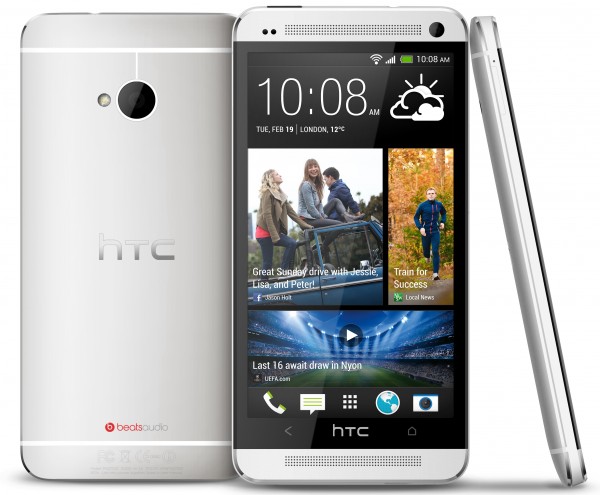
The question is long overdue, particularly since I asked about Samsung Galaxy S4, the other major 1080p smartphone freshly released. After some delays, the One can now be purchased — well, if you can find the thing — and HTC is advertising rather aggressively. I’ve seen commercials in prime time, sometimes two in a row, throughout the week.
This afternoon, I hauled off to one of the two San Diego T-Mobile stores selling HTC One. Both are stocked out, but there was a live phone I could play around with. I toyed with ordering the smartphone from T-Mobile online late last night. Opportunity lost. The One is “out of stock” today. AT&T and Sprint also sell the One. Supplies are limited.
Up close, I’m less impressed by HTC One than expected, because of software. Sense UI is still too obtrusive for my taste, and T-Mobile loads up lots of crapware, including the Lookout security app, which at first blush can be disabled but not removed. Yet there are some aspects of Sense, such as news and social feeds up close and personal on the homescreen, that conceptually appeal. I’d like to use them though to see if they’re worth the trouble, something not easily done in the store.
Build quality and design really distinguish the One from every other phone I’ve handled, including iPhone 5, which is a beaut. The aluminum body begs to be touched, caressed and seen. If eye-pleasing is a priority, HTC’s baby won’t disappoint.
Regarding the display, I can only say wow. After spending just a few minutes with the One, I have to say Apple CEO Tim Cook’s excuse for 3.5- or 4-inch iPhones is even more lame-ass than my first impression. During this week’s earnings conference call, in response to an analyst question about smartphones with 5-inch displays (think Galaxy S4), Cook answers: “iPhone 5 has the absolute best display in the industry”, which audacious claim. “Our competitors had made some significant trade-offs in many of these areas in order to ship a larger display, we would not ship a larger display iPhone while these trade-offs exist”.
Well, hell, I sure am impressed by HTC’s trade-offs. Apple should make some. The 4.7-inch One display is scary crisp. Oh, yeah, my Nexus 4, which has same-size screen, seems sooo much less now. But, hey.
The Right One
For anyone considering the phone, the major competitor is Galaxy S4, based on features and screen resolution, for starters. But you should consider all the major contenders. Spec-fest for your consideration:
HTC One: 4.7-inch Super LCD3 display with 1920 x 1080 resolution and 468 ppi; 1.7GHz Qualcomm Snapdragon 600 quad-core processor; 2GB RAM; 32GB or 64GB storage; 4MP front-facing and 2.1MP rear-facing cameras; 1080p video recording; 4G: LTE (Asia 1800/2600 Mhz), EU (800/1800/2600 MHz), AT&T (700/850/AWS/1900 MHz), Sprint (1900 Mhz), T-mobile USA (1900 Mhz); HSPA/WCDMA (850/900/1900/2100 MHz); GSM/GPRS/EDGE (850/900/1800/1900 MHz); WiFi N; GPS + GLONASS; Bluetooth 4; NFC (carrier chooses); DLNA; ambient-light and proximity sensors; accelerometer; digital compass; gyroscope; 2300 mAh battery; Android 4.1.2 with HTC Sense. Measures 137.4 x 68.2 x 9.3 mm and weighs 143 grams. In the United States, AT&T and Sprint: $199.99 for the 32GB model, with 2-year contract. AT&T sells the 64GB One for $299.99. T-Mobile: $99.99 upfront and 24 $20 monthly payments for 32 gigger.
Samsung Galaxy S4: 5-inch Super AMOLED with 1920 x 1080 resolution and 441 pixels per inch; 1.9GHz quad-core or 1.6GHz dual quad-core processor; 2GB of RAM; 16GB, 32GB or 64GB storage (expandable up to 64GB with microSD card); 13-megapixel auto-focus rear-facing and 2MP front-facing cameras; 1080p video recording; 4G: LTE (Cat 3 100/50Mbps), HSPA+ 42Mbps (850/900/1900/2100 MHz); 2.5G GSM/ GPRS/EDGE (850/900/1800/1900 MHz);WiFi N/AC; GPS + GLONASS; NFC; Bluetooth 4; IR LED; MHL 2; accelerometer; barometer; gyroscope; geomagnetic, gesture, proximity, RGB light and temperature & humidity sensors; 2600 mAh removable battery; and Android 4.2.2 with TouchWiz UI. Measures 136.6 x 69.8 x 7.9 mm and weighs 130 grams. Prices and configurations vary by carrier. In the United States, AT&T: $199.99 and $249.99 for 16GB and 32GB, respectively — locked with 2-year commitment. T-Mobile: $99.99 upfront and $20/month for 24 months.
Apple iPhone 5: 4-inch display with 1136 x 640 resolution, 326 ppi; Apple A6 dual-core processor; 1GB RAM; 16GB, 32GB or 64GB storage (depending on model); 8MP rear-facing and 1.2MP front-facing cameras; UMTS/HSDPA/HSUPA (850, 900, 1900, 2100 MHz), GSM/EDGE (850, 900, 1800, 1900 MHz), LTE (bands vary by carrier model and region); accelerometer; ambient-light sensor; gyroscope; GPS; proximity sensor; digital compass; Bluetooth; WiFi N; 1440 mAh fixed battery; carrier locked; iOS 6. Measures 123.8 x 58.6 x 7.6 mm and weighs 112 grams. With 2-year contract sells for: $199 (16GB), $299 (32GB), $399 (64GB). Carrier locked, but in United States not Verizon model. T-Mobile: $99.99 upfront and $24 $20 monthly payments.
Nokia Lumia 920: 4.5-inch display with 1280 by 768 resolution with 332 pixels per inch; 1.5GHz Qualcomm Snapdragon 4 dual-core processor; HSPA+ and LTE (no T-Mobile USA HSPA support); 1GB RAM; 32GB storage (and 7GB SkyDrive free); 8.7MP rear-facing camera (F/2 aperture, 26mm focal length and Carl Zeiss Tessar lens) with LED flash; front-facing camera; 1080p video at 30fps (back camera), 720p (front); NFC; Bluetooth 3.1; Assisted-GPS; WiFi N; WiFi Direct; WiFi Channel bonding; DLNA compatible; magnetometer; ambient-light, proximity and orientation sensors; 2,000 mAh fixed battery; and Windows Phone 8. Dimensions: 130.3 mm high by 70.8 mm wide by 10.7 mm thick; weighs 185 grams. Sells locked for $99.99 with 2-year contract from AT&T.
Early Reviews
If I ever get my hands on HTC One, expect a review. To help you better answer the question, here are some reviews from other tech sites:
- “HTC One review“, BGR
- “The gorgeous HTC One is a winner“, CNET
- “HTC One Review: The Beauty Is a Beast“, Gizmodo
- “HTC One review: an amazing screen but a baffling interface“, The Guardian
- “HTC One Is a Winner“, Mashable
- “HTC One review: Heating up the race for the perfect Android phone“, The Verge
- “The HTC One is the best smartphone I have ever used“, ZDNet
So there remains one question. Will you buy HTC One? Please answer the poll above and explain in comments below.
-
Scioderm Closes $16 Million in Series A Financing
Scioderm, a Durham, North Carolina-based company developing dermatology therapeutics, has raised $16 million in Series A funding led by Morgenthaler Ventures, with Technology Partners filling out the rest of the round.
PRESS RELEASE:
Scioderm, a company developing novel dermatology therapeutics, today announced the completion of a Series A financing commitment totaling $16 million. Morgenthaler Ventures led the Series A financing, with Technology Partners as the second investor participating in the round.
With the proceeds from the Series A investment, Scioderm intends to advance SD-101, a topical cream with a unique mechanism of action, into clinical development through registration for the treatment of the severe skin effects seen in patients across all EB subtypes. EB is a rare genetic condition that in all of its forms, share the prominent manifestation of extremely fragile skin that blisters or tears with the slightest friction or trauma. This particular manifestation has led to EB patients being known as “Butterfly children” due to the analogous nature of the fragility of the skin to the wings of a butterfly. As of today there is no cure or effective treatment. Wound care, pain management and preventative bandaging are the only options available for caregivers, who are usually the parents or other family members. The more severe forms of the disease lead to scarring, disfigurement, disability and early death, usually before the age of 30.
“I am very pleased to have Morgenthaler Ventures and Technology Partners as investors as we continue the development of SD-101 in this serious medical condition. We are fortunate to have Dr. Chris Christoffersen and Dr. Roger Quy , who are seasoned industry professionals with track records of successful investments, join as members of Scioderm’s Board of Directors,” said Robert Ryan , Ph.D., Chief Executive Officer and Co-Founder of Scioderm. “Treatment of the debilitating skin effects seen in EB patients is a significant unmet need, and we believe that SD-101 has the potential to change the course of treatment in this disease. In order to expedite the development program of SD-101, we are planning over the next few months to identify investigators and potential patients interested in participating in our upcoming clinical study, which we anticipate to begin in the fall of 2013.”
“While there are no effective treatments for EB currently, the early clinical results that have been recently observed by Scioderm collaborators give us confidence that an effective treatment is possible, and we are pleased to be investing along with Technology Partners and a very experienced management team hopefully to make such a treatment available for patient use in the near future” said Ralph (Chris) Christoffersen , Ph.D. Partner of Morgenthaler Ventures and Head of the Life Sciences Team.
“We are pleased to be able to contribute to a treatment for such a devastating disease in children,” said Roger Quy , Ph.D., General Partner of Technology Partners. “Our investment in Scioderm is supported by our confidence in the experience of the founding team and early clinical results.”
About SD-101
SD-101 is a topical cream that has previously demonstrated potential to provide improvement in treating the severe skin effects seen in patients across all EB subtypes. An open- label Phase II study was conducted previously in children with either Simplex, Recessive Dystrophic (RDEB), or Junctional EB. The primary outcome measurements were assessment of target wound reduction and closure, and reduction in body surface area (BSA) coverage of lesions and erosions. In the clinical trial, SD-101 application resulted in complete closure of 88% of target chronic lesions within one month, in addition to a 57% reduction in BSA coverage of lesions and erosions after 3 months of daily treatment. SD-101 was well tolerated by the children, with daily administration up to 3 months.
About Scioderm
Scioderm is a privately held, clinical-stage pharmaceutical company focused on developing topical products to address critical medical needs in the treatment of chronic skin diseases. Additional information about Scioderm can be found at www.sderm.com.
About Morgenthaler Ventures
Morgenthaler Ventures is a premier venture capital firm, dedicated to helping entrepreneurs build valuable companies for more than 40 years. They have invested in approximately 300 companies in the life science and information technology sectors. Their passion for supporting entrepreneurship and innovation has earned them the respect of entrepreneurs and investors alike.
Most life science investments are in early stage companies, and representative companies include: Ardian, Avidia, Calithera, CardioThoracic Systems, CareMedic, Elcelyx, Ensure, FoldRx, ForSight VISION2, Galleon Pharmaceuticals, GlobeImmune, Innovative Pulmonary Solutions, Integrated Vascular Systems, IPC – The Hospitalist Company, Miramar Labs , Morphotek, Moximed, Nexis, OncoMed, Optiscan, Orexigen, Principia, Promedior, Perclose, Ra Pharma, Relievant, Ribozyme Pharmaceuticals, Second Genome, SetPoint Medical, Solta Medical, Spinewave, Stemgent, Tragara, Transcend Medical, Threshold Pharmaceuticals and Twelve, Inc..
Morgenthaler Ventures has offices in Menlo Park, CA, Boston, MA and Boulder, CO.
About Technology Partners
Founded more than 25 years ago and based in Palo Alto, California, Technology Partners is a venture capital firm with an investment focus in the life science and cleantech industries. The firm manages approximately $700 million in investment capital. Technology Partners’ strategy is to team with visionary entrepreneurs to build successful companies, serving principally as a lead investor and business advisor. For more information, please visit www.technologypartners.com.
Company Contact:
Forward-Looking Statements
Except for the historical information contained herein, the matters discussed in this press release are forward-looking statements that involve risks and uncertainties, including: our dependence on third parties for the development, regulatory approval and successful commercialization of our products, the inherent risk of failure in developing product candidates based on new technologies, risks associated with the costs of clinical development efforts, as well as other risks. Actual results may differ materially from those projected. These forward-looking statements represent our judgment as of the date of the release. Scioderm disclaims any intent or obligation to update these forward-looking statements.The post Scioderm Closes $16 Million in Series A Financing appeared first on peHUB.
-
Topera Raises $25 Million in Series C Financing Led by NEA
Topera, a San Diego-based medical device company with a mapping and targeting system to identify the sources of complex cardiac arrhythmias, has completed a $25 million Series C financing round led by new investor New Enterprise Associates. The round also included an unnamed new strategic industry partner, along with existing (undisclosed) investors and the company’s management team.
PRESS RELEASE:
Topera, Inc., a medical device company that has developed a novel mapping and targeting system for the identification of the sources that sustain complex cardiac arrhythmias, including atrial fibrillation, today announced it has completed a $25 million Series C financing round. The round was led by new investor New Enterprise Associates (NEA) with the participation of a new strategic industry partner along with existing investors and the company’s management team. Proceeds will be primarily used to support the planned 2013 commercial launch of the company’s RhythmViewTM WorkStation and FIRMapTM Catheter in Europe and the U.S., and to further advance the company’s R&D pipeline and clinical development program. In conjunction with the financing, NEA partner Justin Klein, M.D., has joined the Topera Board of Directors.
“We are pleased to partner with this experienced group of investors as we continue our mission to help clinicians obtain information about the sources sustaining complex arrhythmias to significantly improve long-term patient outcomes while reducing costs to providers and the healthcare system,” said Edward Kerslake, CEO of Topera.
Commenting on NEA’s participation in the financing, Dr. Klein stated, “We have closely followed the rapidly changing field of atrial fibrillation, including the understanding of the mechanisms that sustain cardiac arrhythmias and especially the opportunity to improve clinical outcomes and health economics through next generation 3D mapping. With its game-changing technology, extensive intellectual property, and commitment to rigorous clinical science, we believe Topera’s leadership in this field positions them well to build a valuable new franchise in electrophysiology.”
“With NEA’s long track record of building great companies around transformative innovations, we believe this financing will support an exciting next chapter in Topera’s growth,” said Art Taylor, Chairman of the Topera Board of Directors.
About Atrial Fibrillation
According to the Heart Rhythm Society, atrial fibrillation is the most common sustained heart rhythm disorder in the United States. An estimated 6-7 million people worldwide suffer from atrial fibrillation, and the prevalence of disease in the United States is projected to increase from about 3.4 million to 8-12 million over the next 30 to 40 years. In atrial fibrillation, the electrical signals that coordinate contractions of the heart become rapid and disorganized, resulting in an irregular heartbeat that can increase the risk of stroke by fivefold. It is estimated that the global market for medical devices used in atrial fibrillation ablation, including diagnostic and ablation catheters as well as mapping and navigation systems, was approximately $2.5 billion in 2012.
About Topera, Inc.
Topera Medical (Topera, Inc.), a venture-backed medical device company, has developed a novel 3D analysis and mapping system to assist electrophysiologists in the identification of the electrical source of complex cardiac arrhythmias. The Topera System, which consists of the RhythmView Workstation and the FIRMap diagnostic catheter, is designed to improve patient outcomes by enabling electrophysiologists to view a dynamic representation of the electrical activity of the heart, supporting the diagnosis of and treatment planning for a variety of arrhythmias including atrial fibrillation, atrial flutter, atrial tachycardia, and ventricular tachycardia. For additional information, visit www.toperamedical.com.
* The RhythmView Workstation is 510(k) cleared by the FDA.
* The FIRMap Catheter is pending 510(k) clearance and is not available for sale.
* CE Marks for both the RhythmView Workstation and the FIRMap Catheter are currently pending.
About NEA
NEA is a leading venture capital firm focused on helping entrepreneurs build transformational businesses across multiple stages, sectors and geographies. With about $13 billion in committed capital, the firm invests in information technology, healthcare and energy technology companies at all stages in a company’s lifecycle, from seed stage through IPO. NEA’s long track record of successful investing includes more than 170 portfolio company IPOs and more than 290 acquisitions. For additional information, visit www.nea.com
The post Topera Raises $25 Million in Series C Financing Led by NEA appeared first on peHUB.
-
Advantage Capital Partners Awarded $75 Million Allocation in New Markets Tax Credits
New Orleans-based investment firm Advantage Capital Partners has been awarded $75 million by the New Markets Tax Credit program, bringing the total awards received by the firm since 2002 to roughly $600 million. The New Markets Tax Credit program was established by Congress 13 years ago to increase investing in low-income communities; it allows individuals and companies to get tax credit against federal income taxes in exchange for equity investments in community development entities.
PRESS RELEASE:
Leading venture capital and small business finance firm Advantage Capital Partners has been awarded a $75 million allocation in the highly competitive federal New Markets Tax Credit (NMTC) program. This latest allocation brings the firm’s total awards since the program began in 2002 to $599 million, and maintains the investment firm’s leadership role as a top program participant nationwide.
Through prior state and federal New Markets program allocations, Advantage Capital has invested more than $850 million in private capital into 175 businesses, which, in the aggregate, employ 11,550 people and have attracted $1.4 billion in follow-on capital to support their growth.
The NMTC program is administered by the U.S. Department of Treasury. It is designed to stimulate economic growth and job creation in low-income communities by providing much-needed investment capital, financial counseling and other services. Awardees are selected after a highly competitive and rigorous government review process. Advantage Capital was one of 85 organizations selected out of a total of 282 that submitted applications for the tenth round of allocations in September 2012.
“For more than two decades, our firm has identified and fostered promising entrepreneurs and created a significant positive impact in the communities where we invest. Over the ten years that we have been associated with the New Markets program, we have pioneered innovative ways to deploy private capital into underserved communities, enabling small businesses to create and retain jobs, revitalizing neighborhoods, and driving economic recovery. We are honored to have once again been selected as an NMTC participant based on our track record, our capacity, and our vision for the future,” said Steven T. Stull, president of Advantage Capital Partners.
The Advantage Capital Community Development Fund will use its NMTC allocation to make investments in operating businesses located in geographic areas in which the firm has previously invested, including both urban and rural communities, and will also focus on opportunities in distressed communities located in underserved states.
About Advantage Capital Partners
Advantage Capital Partners is a leading venture capital and small business finance firm focused on providing growth capital and other investments supporting state and local economic development efforts. The firm’s typical forms of investment include venture, expansion equity, mezzanine financing, senior and subordinated loans and government-guaranteed lending. With offices and partners in New Orleans, St. Louis, Chicago and other U.S. cities, Advantage Capital has invested more than $1.4 billion since 1992. The firm invests in small businesses located in geographic areas underserved by traditional capital and in companies in a wide range of industries.
About the federal New Markets Tax Credit program
The federal New Markets Tax Credit program, administered by the U.S. Department of the Treasury, encourages private-sector investment in economically distressed communities through tax incentives. In a highly competitive allocation procedure, the Treasury Department awards the tax credits based on applications submitted each round. Applications are evaluated based on the submitting organization’s experience investing capital; experience in and strategy for raising capital; strength and depth of management team; and expected community impact of the business plan. Since the program’s inception, the Treasury has awarded more than $36.5 billion in allocations.
The post Advantage Capital Partners Awarded $75 Million Allocation in New Markets Tax Credits appeared first on peHUB.
-
North Korea asked for Android — Google chairman on good tech and bad governments
When Google chairman Eric Schmidt visited North Korea, party officials asked him to describe future updates to the company’s Android phone system. Schmidt refused but said this incident and others — including Iran’s plans for a “Halal internet” with no Israel — show how despotic leaders want to embrace technology even as they try to deny it to their citizens.
Speaking on Friday at the Google Big Tent, free speech event in Washington, Schmidt said he is “worried” about a “balkanized” internet as governments try to chop up the web just as people in places like Burma are discovering it for the first time.
Schmidt also offered examples, drawn from his just-published book The New Digital Age, of how the internet is helping in some of the world’s most benighted places. He cited women in Pakistan with faces and eyes burned by acid, who could nonetheless have lives as “virtual people,” earning a living and connecting with the world online. He also described smuggling systems for micro SD cards in South Sudan to show how people will go to desperate lengths to get information.
Schmidt’s anecdotes come partly from his extensive tours of scary countries, which included a stop in North Korea that brought criticism from the State Department.
For Schmidt, his travels reinforced how sinister governments are casting a growing shadow over the mobile phone revolution.
“We’ll hear the distinct voices of the citizens of these countries that we haven’t heard before,” he said. “These people are just like us but their governments are not like ours.”
The situation creates moral dilemmas for companies that make technology that connect people but that can also be co-opted as tools for oppression. As Google’s head lawyer, David Drummond, explained at the outset of the event, the most important battles over free speech have shifted from books and newspapers to technology. Drummond warned that bad governments are now turning to the United Nations and international treaties in an effort to exercise control over the world’s telecommunications infrastructure.
The event, which was hosted by Google and Bloomberg and included media executives discussing Chinese censorship, took place a day after the company’s latest update to its Transparency Report on global censorship.

Related research and analysis from GigaOM Pro:
Subscriber content. Sign up for a free trial.- The 2013 task management tools market
- How consumer media will change in 2013
- Social 2013: The enterprise strikes back

-
LivingSocial reports hack that could affect data of 50 million customers
LivingSocial, the Washington D.C.-based daily deals company, has been suffered from a hack that could have affected the data of more than 50 million customers, AllThingsD first reported Friday based on an email obtained from CEO Tim O’Shaughnessy to employees. The email said that LivingSocial had experienced “cyber-attack on our computer systems that resulted in unauthorized access to some customer data.”
A LivingSocial representative confirmed the hack with us, and said that the company would be contacting the more than 50 million users who might have been affected, sending them emails explaining what happened and encouraging them to reset their passwords. The hack affected all of the company’s users except those in South Korea, Thailand, Indonesia, and the Philippines, since data for those users is stored on different servers.
The hack comes as large consumer web companies are increasingly facing scrutiny regarding their security measures. In February Twitter reported that hackers may have accessed data on 250,000 user accounts, and LinkedIn was sued over a hacking incident last summer that exposed more than six million consumer passwords.
In a statement, O’Shaughnessy explains how the company was hacked and how that will affect customers:
“We recently experienced a cyber-attack on our computer systems that resulted in unauthorized access to some customer data from our servers. We are actively working with law enforcement to investigate this issue.
The information accessed includes names, email addresses, date of birth for some users, and encrypted passwords — technically ‘hashed’ and ‘salted’ passwords. We never store passwords in plain text.”
Currently, visitors to LivingSocial’s website will notice a large red bar telling them to reset their passwords:


Related research and analysis from GigaOM Pro:
Subscriber content. Sign up for a free trial.- Facebook’s IPO filing: ideas and implications
- NewNet Q4: Platform mania and social commerce shakeout
- NewNet 2012: companies and technologies set to disrupt

-
RightScale sees uptick in cloud adoption and multi-cloud use
Companies larger than 1,000 employees appear to be a bit further ahead of smaller companies when it comes to adopting cloud computing. Of those larger companies, 77 percent have adopted clouds in some way, compared with 73 percent for companies with fewer than 1,000 employees, according to a recent survey of 625 business, development and IT staffers from cloud-management provider RightScale.
The interesting area is the rise in the provisioning of resources on multiple clouds, which includes private-public combinations as well as multiple public clouds. Of the more than three quarters of larger companies that are adopting clouds, 77 percent of those are deploying across multiple clouds. Last year’s survey, which did not break out companies by size, found that 68 percent had deployments spanning more than one cloud.
It’s great news for RightScale, which helps Zynga and other companies keep track of all their clouds from a single pane of glass. It also bodes well for competitors, such as Enstratius (formerly named enStratus) and Server Density.

Michael Crandell, CEO of RightScale, speaks at the RightScale Compute conference in San Francisco on April 26
At a meeting with reporters and representatives of RightScale customers, RightScale CEO Michael Crandell said that although he doesn’t have survey data to back up the assertion, he believes the use of multiple clouds has been steadily rising. “I think it (multi-cloud use) was lower (before the first survey),” Crandell said. “That’s my gut instinct.” Whether it’s to save money, to have different applications running on different hardware or to focus on core competencies, companies have a variety of motivations to try running their operations on clouds.
Still, compliance with regulations and concerns about security keep some companies from trying out the public clouds or, in some cases, even private clouds. Crandell said it can come down to legal issues. Businesses might not want to risk putting their own customers at risk of data breaches. “It’s their attorneys who are dealing with that as well as ours,” Crandell said, describing the thinking of some businesses.
Even with those conditions, it does seem that cloud and multi-cloud adoption will keep going up, and that means full speed ahead for management companies such as RightScale.
Feature image courtesy of Shutterstock user Rechitan Sorin.

Related research and analysis from GigaOM Pro:
Subscriber content. Sign up for a free trial.- Cloud computing 2013: how to navigate without a map
- Understanding and managing the cost of the cloud
- Migrating media applications to the private cloud: best practices for businesses

-
Android developers now banned from bypassing Google’s Play Store app updates

