Category: News

  • Monaco: What's Yours Is Mine Review (PC)

    Quite a lot of stealth games have been launched in the last year or so, ranging from full-fledged experiences like Dishonored to more independent efforts like Mark of the Ninja.

    Now, a new title has appeared that combines stealth with an old-school top-down mechanic, in the form of Monaco: What’s Yours Is Mine, an indie project coming from stu… (read more)

  • FreedomPop goes national with a Sprint-powered mobile hotspot

    FreedomPop has made national headlines for its “freemium” take on mobile broadband service, but it’s never been able to offer a nationwide service. The reason is it’s always been dependent on Clearwire’s WiMAX network to connect its customers, and Clearwire only offers that connectivity to about a third of the country’s population.

    But starting Wednesday FreedomPop is selling a new hotspot modem that connects to Sprint’s nationwide CDMA EV-DO network. The modem will likely clock sub-megabit 3G speeds when on Sprint’s network, but it will connect to any Clearwire tower when available. That allows FreedomPop to give its current customers nationwide coverage as well as market the service to customers outside of Clearwire’s 80-city footprint.

    As we’ve reported, FreedomPop eventually plans to tap into Sprint’s new LTE network, allowing it to wean itself off Clearwire’s WiMAX systems (it will keep its home broadband service with Clearwire though). According to CEO Stephen Stokols, FreedomPop will start selling an LTE-CDMA hotspot in about six months. He added that the mobile virtual network operator (MVNO) wants to wait until Sprint builds up its LTE footprint before making the leap. Right now Sprint has 88 cities and towns under its LTE umbrella, but plans to make a big expansion push this summer.

    FreedomPop iPhone sleeveFreedomPop is only selling a hotspot, the Overdrive Pro, on the new network. It’s signature device, a sleeve modem designed to fit around the iPhone 4 and 4S is still AWOL, caught up in the Federal Communications Commission’s testing process. Stokols said he still holds out hope that the device will clear those tests soon. That’s probably of little consolation to the customers who pre-ordered the device last May, but Stokols said he’s hoping that a belated approval will clear the path for an iPhone 5 sleeve later this year.

    Even without the Sleeve, FreedomPop has been growing rapidly as consumers latch onto its free 500 MB of monthly data and its bandwidth sharing and earning features, as well as its hotspots and iPod Touch sleeve, Stokols said. He wouldn’t reveal exact subscriber numbers saying only the virtual carrier has “hundreds of thousands” of customers. FreedomPop also plans to launch a voice service in the next few months via a partnership with VoIP and IP messaging provider textPlus.

    Related research and analysis from GigaOM Pro:
    Subscriber content. Sign up for a free trial.


  • Txtr’s e-reader now on sale in Europe for €59; company says it’s close to a subsidized deal

    When Berlin-based Txtr announced its tiny e-reader, the Beagle, at the Frankfurt Book Fair last fall, the plan was that it would cost under €10 (USD $13) because it would be subsidized by mobile carriers. “We believe e-reading is a great tool for mobile operators to strengthen their relationship with consumers,” Txtr CEO Christopher Maire said at the time.

    So far, though, those deals with mobile providers haven’t been made public. Txtr announced Wednesday that it is selling the Beagle directly online in Europe for €59 (USD $76). “We are in talks with mobile operators and will announce details of the packages offered soon,” the company says on its website (via Google Translate). “For those who do not want to wait any longer, we offer an exclusive and unique opportunity to acquire the txtr beagle.” The Beagle will also eventually be sold in the United States for $69.

    However, deals with mobile providers appear to be on the way. Txtr’s COO, Thomas Leliveld, told me that Txtr is “in contract phase with a leading EU operator” that will offer a subsidized device under €20. “We are also in closing stage with five more major EU operators,” he said. “I hope to be able to announce the lead customer in the next few weeks.”

    At €59, the Beagle isn’t a great deal: It’s a barebones, Wi-Fi-less e-reader that runs on two AAA batteries. Users transfer ebooks to it from their Android smartphones via Bluetooth; iOS is not yet supported. The €59 purchase price includes a €10 credit for ebooks. By comparison, Amazon sells its cheapest Kindle (which includes Wi-Fi) in Europe for €79 (USD $102).

    Via The Digital Reader

    Related research and analysis from GigaOM Pro:
    Subscriber content. Sign up for a free trial.


  • Ubuntu Server 13.04 targets carriers and the big data crowd

    It’s Ubuntu release time again. On Thursday, version 13.04 of the venerable Linux distribution will come out, with the server version touting several new tricks for those using it in cloud deployments. It’s not a long-term support (LTS) release – you’ll have to wait another year for that, if you’re being cautious — but this “Raring Ringtail” version provides an opportunity to test out new features beforehand.

    New features

    First off, the default installation is for a virtualized environment. As Mark Baker, Ubuntu Server product manager at sponsor company Canonical, told me, this is because users are increasingly deploying the OS on hypervisors and Canonical wants to show off the OS’s capabilities there.

    “While KVM has been big on Ubuntu since 2008, it’s not the only game in town,” Baker said. “We’re seeing customers wanting to understand integration or compatibility between ESX and Ubuntu, or even Hyper-V and Ubuntu, and we’re ensuring testing on these – and of course KVM and Xen — so when we are engaged with customers or users we can say we know Ubuntu provides a robust experience on the prevalent hypervisors.”

    The other major aspect of this release is its integration with the new Grizzly release of OpenStack. Canonical has been involved with OpenStack since the start, and the release cycles for the two products are aligned (Grizzly came out a few weeks ago).

    Ubuntu 13.04′s Juju orchestration “charms” have been updated to deploy OpenStack for high availability – for example, when the user deploys MySQL, the charm will set up 3 nodes in a failover configuration, and a similar approach applies to the deployment of the Rabbit messaging server. Of course, those deploying in a test environment won’t be too keen on running 2 or 3 of everything, so it will still be possible to install in a “less highly available way”, as Baker put it. The Juju GUI has also seen a lot of work this cycle “to improve usability”, he added.

    Meanwhile, the Ceph storage subsystem is now fully integrated with Ubuntu and OpenStack, in order to please Canonical’s telco and service provider clients, and Ubuntu’s Floodlight OpenFlow controller has also been updated. Although Canonical and VMware are working closely on Nicira, “having an open-source alternative to Nicira is also important,” Baker pointed out.

    Carrier adoption

    Speaking of carriers and service providers, this is the market segment where Canonical appears to be thriving.

    “OpenStack certainly has been the biggest growth areas for us in the last 12 months,” Baker said. “We have got engaged with the types of customers that we could only have dreamed of, looking back a few years. OpenStack is gaining adoption with carriers, and most people doing that to scale are doing that with OpenStack on Ubuntu. Most of the major telcos, the global names that you’ll see, are deploying their OpenStack on Ubuntu.”

    Baker also claimed that OpenStack is seeing traction in the big data space, with users deploying Hadoop and Cassandra on Ubuntu – he suggested this may be out of “developer affinity” with the Linux distro.

    “It’s fair to say the bread and butter of our user base is running web infrastructure,” Baker said. “A lot of that user base is moving that web infrastructure into the cloud. We’ve gained significant popularity on Azure – there is a fair proportion of that running Linux. While you wouldn’t think it a natural fit to provide Ubuntu on a Microsoft cloud, we actually think it’s quite exciting.”

    Related research and analysis from GigaOM Pro:
    Subscriber content. Sign up for a free trial.


  • Preventing Rejection at Work

    You walk into a meeting late and people are already in huddles. Colleagues glance over ever so briefly then turn back to their conversations. You sit down in a corner and use your smartphone to check email. Once the group discussion starts, you want to offer an opinion but can’t seem to get a word in. Eventually, you give up, take a few notes, check more email and wait for the meeting to end. You stay at your desk the rest of the day but don’t get much done.

    Rejection, or the fear of it, is a powerful social trigger — and, at work, it can be a debilitating one. When people feel left out of or excluded from important circles of influence at the office, they can’t be productive, innovative, or collaborative because their brains’ neurochemistry has changed. They feel threatened. Cortisol flows in. Their executive centers shut down. Behavior shifts from trust to distrust. And the effects can last for hours. I like to say that rejection alters reality: we Reveal less, Expect more, Assume the worst, Look at the situation with caution, Interpret the context through fear, Think others are taking advantage of us and Yearn to be included.

    But managers who understand this vicious pattern can break it — in themselves and their employees. Here are some conversational rituals designed to help the people on your team regroup, and become part of the group — to alter their inner, mental spaces by changing the outer, social environment.

    1. Prime the room for trust. While long, rectangular conference tables promote hierarchy and give those at the head an advantage, round tables do the opposite, fostering inclusion. Meeting leaders can also explicitly point out that all colleagues at the table are equal. This should spur the production of oxytocin in everyone’s brains, ease fear of rejection and put people into a more collaborative state of mind.
    2. Start with a shared reality. Whenever possible, send agenda items out before a meeting and ask people for their input. This signals “I care about what you think”, rather than “I control this”. Another way to encourage a common mindset is to give team members an article to read and ask them to find something inspiring in it; have them share these thoughts at a meeting and encourage the group to listen for common themes. This will trigger everyone’s prefrontal cortex mirror neurons, which enable us to connect with others’ emotions and opinions, enhancing empathy and our understanding of different perspectives.
    3. Encourage candor and caring. Use open, non-judgmental language and listen with respect and appreciation in all conversations. Imagine that the words people use are like suitcases; you need “unpack” them to understand what colleagues are really thinking. Thank people for sharing, and make sure that there are no negative repercussions for doing so. Tell everyone you’re committed to a welcoming, collaborative environment, and that you don’t want anyone to feel rejected.

    Remember, we all thrive on being connected to others. Don’t let your office become a place where people feel threatened by rejection. Instead, bring your conversational intelligence to work.

  • Here’s A Meat-And-Olive Ndamukong Suh (And A BBQ Chicken Jarvis Jones)

    You know those Subway commercials with all the athletes? Did you know that when you’re one of Subway’s athletes, you get a sandwich bust in your likeness?

    Georgia linebacker Jarvis Jones is the latest to enter into this tradition. Detroit Lions DT Ndamukong Suh shares this, along with a memory of his old bust, on Facebook, saying, “Welcome to the Subway fam Jarvis Jones! I remember mine like it was yesterday!!!!”

    The img.ly post comes with the caption:

    Welcome to the family @sacmanjones_29 ! I remember mine like it was yesterday! #FamousFan @subway #smokehousebbqchicken sculpture

    Jones is also showing his sandwich pride, tweeting out some different angles as captured with Instagram:

    Smokenhouse Jones

    Why don’t they put these in the commercials? These are much better than this actual Smokehouse BBQ Chicken ad from Subway:

    At least they’re actively promoting the sandwich art on social media (and in interviews):

  • Sharon Osbourne ‘Devastated’ by Ozzy’s Drinking, Drug Use

    Earlier this month, Ozzy Osbourne took to his Facebook page to clear up a myriad of rumors that had begun circulating about his family.

    Osbourne admitted that for the last year and a half he has relapsed, drinking and doing drugs. He stated that he “was in a dark place” and “was an asshole to the people” he loves most. Though Osbourne did not deny that rumors that he and his wife, Sharon, were living in separate places, he did emphasize that they are not divorcing.

    This week, it was Sharon’s turn to speak about her recent family troubles. The reality TV star used her place on the daytime talk show The Talk to address the topic.

    Sharon stated that she knew Ozzy was drinking “occasionally,” but didn’t know he was abusing prescription drugs. She also emphasized, as Ozzy did, that the couple is not getting divorced.

    “Am I happy? No,” said Sharon. “Am I upset? Yes I am. I’m devastated right now. It’s a disease that not only hurts the person that has the disease, but it hurts the family.”

  • Lenovo Ideaphone K900 available May 6th in China

    Lenovo_K900_Advertisement

    Do you remember back in March when we told you of the leaked launch date and pricing for Lenovo’s new Intel powered Ideaphone K900? What about when it showed up in benchmarks barely beating the Samsung Galaxy S 4? It looks like China is going to start selling it on May 6th, however we don’t have any pricing for the device, nor do we know if it will ever make it out of China as of yet.

    The Lenovo Ideaphone runs on Intel’s  Atom Clover Trail+ processor clocked at 2 GHz, has a full HD 5.5 inch screen, 16 GB of storage and a 2500 mAh battery that charges in just 90 minutes. The device runs Android 4.2 Jelly Bean, and has Wireless Display which is a feature that allows the user to play media on the TV without, you guessed it, wires. The specs just keep coming, it is 6.9 mm thick, and has the same 13 megapixel camera that can be found in the Sony Xperia Z.

    I don’t know about you, but I would really like to see this phone in my region some time soon. Would you buy this if it came to your area?

    Source: GSM insider

    Come comment on this article: Lenovo Ideaphone K900 available May 6th in China

  • Google’s Infrastructure Boom Continues: Expansion Ahead in Oregon

    google-thedalles

    Google is not done with its extraordinary data center building boom. The company is preparing for an expansion of its data center campus in Oregon and will likely file permits to build additional data centers on its property in The Dalles.

    “We’re getting our ducks in a row so that, should we decide to expand, we can move quickly,” wrote Kate Hurowitz, a Google spokeswoman in California, in an e-mail to The Oregonian. Google’s expansion plans were first reported by The Dalles Chronicle. Google has three data center buildings at The Dalles, which was the first company-built data center campus. Last year Google did a “rip and replace” upgrade of the electrical infrastructure to boost its server capacity. But that’s clearly not enough, as the company now indicates it may seek permits to build two more data centers on the property it owns in The Dalles, where the company has access to cheap land and power on the banks of the Columbia River.

    The news comes on the heels of a string of data center expansion announcements in 2013, in which Google has committed to pump $2 billion into expansions of existing data center campuses. The expansion announcements include:

    The scope and acceleration of Google’s data center construction program makes it clear that the company sees massive growth ahead in its Internet businesses. Google is fanatical about data, and closely tracks the growth and utilization of its infrastructure. As this construction spending begins to enter the pipeline, Google’s capital expenses on servers and data centers has soared past $1 billion per quarter. The three expansion announcements in April suggest this spending will increase in coming months.

    Google’s 2013 building boom represents the largest investment in data center infrastructure in the history of the Internet, eclipsing the company’s initial burst of projects in 2007. Google is not alone. With yesterday’s announcement of a new project in Iowa, Facebook is now building new data centers in four markets, while Apple is commencing build-outs of massive server farms in Nevada and Oregon, and Microsoft has announced new facilities in Virginia and Wyoming.

    What do these huge expansions tell us about the future of Internet infrastructure? Big data means big data centers. All the data we generate each day  – as we write and receive emails, watch videos, upload photos and create PowerPoint presentations – must live somewhere. Much of it will reside in the massive server farms of the cloud builders. Much more of it will live in smaller data centers around the nation and the world, within reach of “server huggers” in enterprises and small businesses.

    How much is the Internet growing? For Google, the answer is clearly “more.”

  • Sprint customer losses mount as Nextel sunset date nears

    Sprint posted another quarter of big subscriber losses thanks to the continued flight of customers from Nextel’s sinking ship.

    In the first quarter,  the country’s No. 3 carrier managed to sell 5 million smartphones — including 1.5 million iPhone activations — add half a million new CDMA prepaid subscribers and even boost its average revenue per customer. But the impending shutdown of Nextel’s iDEN network continues to weigh on Sprint’s performance, and the company acknowledged it would continue to do so until the final Nextel cell site is turned off on June 30.

    Sprint’s Q1 revenues remained flat year over year at $8.8 billion, but the company’s losses narrowed from $863 million to $643 million.

    Nextel shed 771,000 customers, but Sprint managed to recapture 46 percent of them bringing them over to a CDMA service. That leaves 1.3 million remaining iDEN subscribers, which will have to go in the next few months.

    That means Sprint is in for an even more painful quarter of subscriber losses in the second quarter, and according to CFO Joseph Euteneuer those holdouts will be the most difficult to recapture. He said Sprint is predicting a recapture rate from 30 to 40 percent in Q2.

    Once that final Nextel transmitter goes dark, though, Sprint won’t waste any time putting Nextel’s old 800 MHz spectrum back to work. President of Network Operations Steve Elfman said Sprint has already begun replacing shutdown iDEN sites with CDMA, and in the fourth quarter Sprint will expand its LTE network into 800 MHz. That will considerable capacity to its 4G network, and 800 MHz’s low frequencies will give it better range.

    Sprint’s saw its biggest gains were across its numerous brands. It added 568,000 prepaid CDMA subscribers, but its contract customer gains were marginal and it lost 224,000 wholesale and affiliate connections. When you add all of the loss and gain numbers up Sprint posted an overall net subscriber loss of 415,000 for the quarter. It not has a total of 55.2 million customers.


    Related research and analysis from GigaOM Pro:
    Subscriber content. Sign up for a free trial.


  • Google X device running Android 5.0.1 shows up in AnTuTu Benchmarks

    Google_Motorola_X_AnTuTu_Benchmark

    Well here’s something interesting for a Wednesday morning. A Google X device has appeared in the AnTuTu Benchmark database. Since this phone is made by Motorola, we have been referring to it as the Motorola X. Could Google brand the phone themselves? Seems unlikely to me, but it’s anyone’s guess at this point. Just like any screenshot, we don’t have any proof that it’s real, so take it with a grain of salt.

    Other notables on the screenshot is that it’s running Android 5.0.1, which is expected to be Key Lime Pie. There is also a score of 15,479, which doesn’t scream flagship or high-end, but the emphasis is supposed to be on the camera from what we gather.

    Whether the screenshot is real or fake, you be the judge, but the phone definitely exists. We just hope to see it at Google I/O, but the latest news is that we won’t. Stay tuned because this freight train is just getting started.

    source: GSMInsider

    Come comment on this article: Google X device running Android 5.0.1 shows up in AnTuTu Benchmarks

  • Apple’s WWDC starts June 10, will showcase new versions of iOS, OS X

    Apple’s annual developers conference is set, and there will definitely be new software products on tap. On Wednesday morning the company said that its Worldwide Developers Conference will take place in San Francisco between June 10 and June 14. The main focus will be for developers learning about “the future of iOS and OS X,” according to the company’s press release.

    “Our developers have had the most prolific and profitable year ever, and we’re excited to show them the latest advances in software technologies and developer tools to help them create innovative new apps,” SVP of Worldwide Marketing Phil Schiller is quoted saying in the release. “We can’t wait to get new versions of iOS and OS X into their hands at WWDC.”

    That is a good indication that iOS 7 and OS X 10.9 will be introduced. What’s not as good a bet is that we’ll see new hardware introduced at the show: on Wednesday during Apple’s quarterly earnings call CEO Tim Cook referenced the company’s future products coming “this fall and throughout 2014.”

    Tickets go on sale Thursday at 10 a.m. PT for $1,599.

    Apple said its developers have created 850,000 apps for its iOS App Store and have been paid $9 billion since the App Store opened in 2008.

    Related research and analysis from GigaOM Pro:
    Subscriber content. Sign up for a free trial.


  • Facebook Tests Green Dot Chat Indicator Directly In News Feed

    Facebook is testing a new way to let users know which of their friends are online and available for chat.

    We’ve seen some version of this indicator all over the place for years, but the newest home for Facebook’s green dot indicator seems to be directly in the news feed. Appearing right next to the users’ name inside a news feed story, Facebook’s green dot lets users know that the person is online and ready for messaging. Here’s what it looks like:

    We spotted this test on an account that has the new news feed, and were unable to find a similar icon inside the mobile news feed. I’ve reached out to Facebook for comment and will update when I hear back.

    You may recognize that little green dot from Facebook’s chat sidebar on both desktop and mobile. There, the green dot for availability is accompanied by a mobile device icon that signifies that the user has Facebook for iOS or Android downloaded, so they have the ability to see messages on their phones.

    Way back in 2011, Facebook added the chat indicator next to users’ names on their profiles (the old profiles, way before Timeline).

  • 6.4 Earthquake Rocks Papua New Guinea

    An earthquake measuring 6.4 on the Richter scale has hit Papua New Guinea, but officials say it didn’t trigger a tsunami.

    Residents of Hawaii were tense after the quake, as the threat of tsunami affects them as well; however, no reports of strong waves have come in. The earthquake occurred just after one p.m. on Tuesday.

    “Damage would be more likely in coastal areas of New Ireland,” Seismologist John Bathgate from Geoscience Australia said. “It would certainly have given the area a good shake but Rabaul is on the edge of our damage radius.”

    A slightly larger quake hit Papua New Guinea just last week, but no major damage or injuries were reported.

  • Here comes iOS 7: WWDC 2013 to kick off on June 10th, tickets go on sale Thursday

    WWDC 2013 announced for June 10th-14th, tickets go on sale Thursday
    We now have a good idea when Apple’s iOS 7 will launch, as the company announced that its annual Worldwide Developers Conference will kick off on June 10th in San Francisco and will run through until June 14th. Tickets for the event will go on sale Thursday at 10 a.m. PDT and will be available through Apple’s official WWDC page. Apple is widely expected to announce its next version of the iOS platform at this year’s WWDC, which will mark the first version of iOS to be released with design guru Jonathan Ive at the helm. Earlier reports have indicated that Ive has been pushing for a “starker and simpler” design for the popular operating system. Apple’s full press release announcing the event is posted below.

    Continue reading…

  • Forget QWERTY it’s time for KALQ

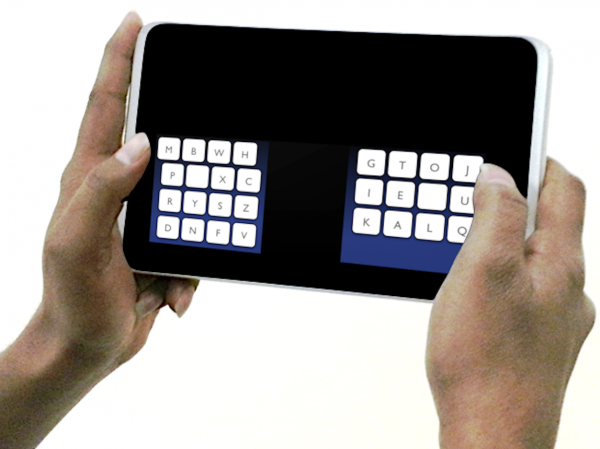
    Typing on touchscreen devices is very different from using a conventional keyboard and the traditional layout doesn’t help much. Researchers at the University of St Andrews, the Max Planck Institute for Informatics and Montana Tech have come up with a new layout that claims to allow tablet users to thumb type 34 percent faster.

    Named KALQ  after the order that the characters appear, it’s been developed to provide optimal character positions when typing on a tablet. By spreading the characters used in commonly typed words such as “on”, “see”, “you” and “read” which on a QWERTY keyboard would all need to be typed with one thumb, KALQ speeds up typing and minimizes strain.

    Dr Antti Oulasvirta, Senior Researcher at the Max Planck Institute for Informatics in Germany, says:

    The key to optimizing a keyboard for two thumbs is to minimize long typing sequences that only involve a single thumb. It is also important to place frequently used letter keys centrally close to each other.

    Experienced typists move their thumbs simultaneously: while one thumb is selecting a particular key, the other thumb is approaching its next target. From these insights we derived a predictive behavioral model we could use to optimize the keyboard.

    KALQ also has built in error correction that takes into account thumb movements and a statistical analysis of the text being typed. This enables uses to reach a speed of 37 words per minute as opposed to 20 on a QWERTY layout.

    The researchers will present their work at the CHI 2013 conference in Paris on 1st May and KALQ will be available as a free download for Android-based devices.

  • GigaOm Chrome Show: WebP v. JPG and Google Now in Chrome

    Our second weekly Chrome podcast kicks off with recent reports of extremely low Chrome OS world wide market share; there’s certainly evidence pointing to the contrary! We also answer a few Chrome OS questions, share our Chrome “extension of the week” and talk about WebP images: Why is Google messing with images on the web?

    Show notes

    Hosts: Chris Albrecht and Kevin C. Tofel

    Got questions, tips or tricks for an upcoming GigaOm Chrome Show? Find Kevin on Google+, Twitter (@kevinctofel) or via e-mail ([email protected])

    (download this episode)

    Subscribe to RSS

    iTunes

    Stitcher Radio

    Related research and analysis from GigaOM Pro:
    Subscriber content. Sign up for a free trial.


  • Overeager T-Mobile forced to delay Galaxy S4 launch [updated]

    Overeager T-Mobile forced to delay Galaxy S4 launch
    T-Mobile tried as hard as it could to get a leg up on the competition and launch Samsung’s new Galaxy S4 a few days before any of its rivals, but the nation’s No.4 carrier was apparently a bit overeager. In a short note to the media on Tuesday night, T-Mobile said that it will delay its Galaxy S4 launch due to an “unexpected delay with inventory deliveries.” Rather than releasing the phone on Wednesday as planned, the S4 will now become available on Monday, April 29th — two days after rivals AT&T and Sprint launch the phone on April 27th. BGR reviewed the Samsung Galaxy S4 on Wednesday and said that it is better than its predecessor in every way. T-Mobile’s full note follows below.

    Continue reading…

  • Sprint’s Q1 2013 iPhone Sales Show Flat Growth, Off The Pace Worldwide And At Home

    iphone5(2)

    Sprint’s Q1 2013 financial results came out this morning, and the news wasn’t great overall. Losses continue to accumulate, and total smartphone sales aren’t faring very well, either, with just 5 million units sold in total. The iPhone, after achieving a record high of 2.2 million handsets sold on Sprint’s network last quarter, dropped back down to 1.5 million, the same number Sprint saw in the three quarters preceding Q4 2012.

    This is the first time Sprint has reported specific total smartphone sales in an earnings release, and it said it achieved 5 million handset sales in total. that means that the iPhone accounted for 30 percent of total device sales at the carrier. iPhone sales for all of 2012 totaled 6.6 million, on total smartphone sales for the year of 20 million, which means Apple’s devices accounted for just about one-third of the total. That puts this quarter pretty close to on pace, but compared to the rest of the field, iPhone growth was flat at Sprint.

    Horace Dediu of Asymco notes that iPhone sales grew 25 percent at Verizon, and by around 12 percent at AT&T. Worldwide, the pace was a 7 percent increase, with 14 percent improvement at home. It might be tempting to put some of the blame for Sprint’s flagging fortunes on a big bet on iPhone, but the numbers indicate the carrier isn’t being hurt so much by flagging iPhone sales, but by a general inability to match its competitors, in terms of device sales aside.

    Sprint is still quick to note that the iPhone is driving new customers to its business, pointing out that the rate of new subscribers signing up via iPhone purchases is once again at over 40 percent, the same as over the past several quarters. The iPhone has been consistent for it, but the company was likely hoping it would be more of a breakout hit.

  • Toyota Tundra Locking Differential and Auburn LSD Aftermarket Options – Just Differentials

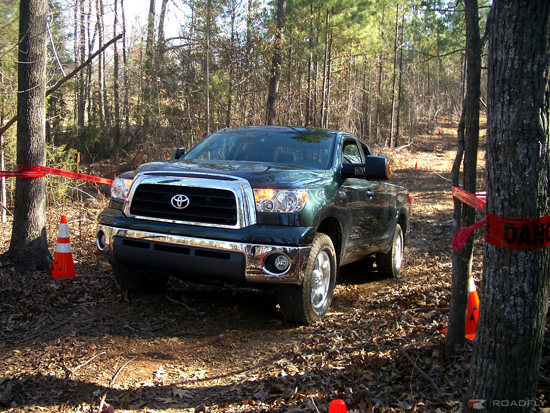
    It is a fairly well-known knock on the Toyota Tundra that it doesn’t come with a locking differential option. Many, many owners also knock the stock locking slip differential as being not so great. What can you do about it? We asked Carl Montoya with Just Differentials. Here is what we found out.

    Toyota Tundra Locking Differential and LSD Auburn Aftermarket Options

    What is the deal with after-market differentials and LSD options for the Toyota Tundra? We asked Just Differentials.

    Just Differentials is one of the leading places to buy after-market locking differentials and LSD. He says they get asked so OFTEN about options for the Toyota Tundra, they came up with this standard reply:

    As for traction, none of the 07+ Tundras come with an LSD (Posi), The factory “Electronic LSD” is just traction control, and is more “P.O.S.” than “POSI”. All Tundras can benefit from the increased traction that an aftermarket LSD or Locker will provide. Another benefit is strength. The Tundra uses a huge 10.5” diff that is much larger than any other ½ ton pickup produced. The problem is the factory Standard Open (non-posi) carrier is very weak by design, and has already failed in many stock pickups, this is all the more reason to add An Auburn Pro LSD ($545) or an ARB Air Locker ($1075) to the rear.

    Editor’s Note: Without disputing Carl’s expertise, I have yet to hear of one single factory differential failure in 6+ years of running TundraHeadquarters.com. I’m not saying that the Tundra’s factory differential never fails (I’m sure it does), but I’d argue that characterizing it as “very weak” is incorrect. Methinks this standard reply is designed to generate sales, not necessarily reflect the pros and cons of the Tundra’s factory rear differential.

    One of the big questions that comes up with these after-market systems is how new truck features like the Trailer Sway Controller would work.  Montoya says: “The installation of a real mechanical LSD or Locking differential has no effect on the factory VSC, traction control (aka “Electronic LSD”).  In fact it simply allows for real traction, thus making the interference of these systems much less often.  Basically, there is no downside other than cost. ”

    Montoya offered this additional information on differentials and their products.

    Why Do You Want a Differential?

    OEM differential is a standard “open” differential.  This allows for smooth cornering as the outside tire must spin faster on corners as it travels a larger arc.  The downside to this system is that when traction is lost, all of the power goes to the wheel with the least traction.  This is a really big downside on a pickup truck since there is much less weight on the rear axle.  With “creative” naming of the electronic traction control, the Tundra features what they call “Electronic LSD”.  Utilizing the ABS braking system and wheel speed sensors, the brake is applied to the tire that is spinning faster, thus allowing the other tire to spin.   Sounds great, but real world experience will tell otherwise.

    What is the Auburn LSD?

    The Auburn LSD is the most popular upgrade for the 2007 & Newer Toyota Tundra as it is inexpensive, very strong, easy to install and provides very good traction with no adverse on road handling characteristics or noises.   Since the Auburn is a Limited Slip Differential, not a  “locking” differential, it is much more suited for the average pickup truck owner.  Traction is increased significantly, however it is not locked 100%, so may not provide adequate traction for heavy offroad use.  LSD units are often referred to as “Positraction”.  These are suitable for daily driving, even if you never leave the pavement.  Also very helpful at boat ramps, snowy, wet, muddy conditions, etc.  On the “Justdifferentials” 2007 Tundra I was unable to pull my boat out in 2wd with the oe “electronic LSD”.  After installing the Auburn Pro LSD 2wd is no problem at the very same ramp.  The Auburn also offers a much needed improvement in strength over the OEM open differential which we’ve seen many failures.

    What is the ARB Air Locker?

    The ARB Air Locker is a selectable locker that is actuated by compressed air.  In unlocked mode the vehicle functions as it did before with an open differential.  With the flip of the switch the rear differential can be locked 100%.  This means that there will be power to both tires, no matter the situation.  These are especially popular for off roaders, contractors, hunters, etc that drive on the road, but have more demanding off road needs than the average mostly highway driver.  The downside to this system is added cost, as the unit is more expensive, but also that it requires an on board compressor.  That said, they offer unmatched traction and strength.  The ARB Air Lockers have been proven themselves in all conditions worldwide.

    Sounds like a good after-market option for those wanting to have more control when driving their truck over different terrains. What do you think? Is an after-market ARB Air Locker or Auburn LSD on your wish list? 

    Related Posts:

    The post Toyota Tundra Locking Differential and Auburn LSD Aftermarket Options – Just Differentials appeared first on Tundra Headquarters Blog.