Category: News

  • TSO Logic Targets Power Management at the Application

    A screen shot from the TSO Logic energy management software, which launches today.

    A screen shot from the TSO Logic energy management software, which launches today.

    The first wave of innovation in data center efficiency focused on energy management between the grid and the rack. The next wave is focusing on managing power usage on the server, and optimizing for specific applications. That’s the goal of TSO Logic, which has launched its new energy efficiency software for data centers.

    TSO Logic is advancing ”Application Aware Power Management,” with software that analyzes activity at the application level and manages power usage at the server level, throttling idle servers or turning them off completely.

    “Most data centers leave all of their servers on all of the time, regardless of the actual demand,” said Aaron Rallo, CEO and founder of TSO Logic. ”We think that’s like leaving your car running all day just in case you have to drive somewhere. I started TSO Logic after first-hand experience running businesses that relied on large-scale server farms. Server demand would go up and down, but our huge power bill was always the same. The lack of data, insights, and viable solutions was frustrating.”

    Recognition from Uptime

    The company says the software can cut server power costs by more than 50 percent, and gives visibility into how data center power dollars are spent. TSO Logic’s claims got early validation from the Uptime Institute, which awarded the company a Green Enterprise IT Award for a pre-release deployment of its solution with Toronto-based digital media studio Arc Productions. The TSO Logic product suite identified 56 percent potential server energy savings at the studio’s data center, which houses more than 600 servers. Now Arc Productions is using TSO Power Control to realize those savings.

    Server power capping isn’t new, and has been available for years vendors including Intel and HP. There are other software players in this space, including Emerson Network Power, whose Trellis DCIM software is being used by Joyent to track app-level power usage.

    The history on power capping and management has been that it offers great potential to improve efficiency, but some companies have been apprehensive about turning servers off or down to take advantage of the savings. TSO’s approach seeks to create a comfort level for customers with very granular management functions, allowing fine-tuned control over which servers are monitored, what days and times those servers are managed, and how aggressively they want to save energy. Relevant data is displayed on a dashboard that allows graphing of the data over longer periods of time.

    “It makes a great tool for an IT guy to hand the data to the CFO and say ‘here’s what’s trending, here’s what going on,” said Rallo.

    Targeting Variable Workloads

    TSO Logic says it is already managing 2,165 enterprise servers, and helping these pre-release customers save on server power costs while reducing their environmental footprints. The company believes it can bring significant cost savings to anyone with variable workloads such as content providers, digital animation, retailers, as just a few examples.

    The majority of data centers experience what is known as variable load, which simply means that the demand on servers varies from hour to hour. The problem is that in order to stay prepared for periodic surges – “peak demand” or “peak load” – these data centers must keep running at full capacity all of the time. This means that energy is wasted on idle servers, which TSO aims to address.

    The product suite consists of TSO Metrics and TSO Power Control. The company’s two software toolsets are deployed together in one install, typically on a single server. It has no negative impact on server performance and requires no significant changes to data center infrastructure. The software uses application-level inspection to determine how much of a data center’s power draw is going toward revenue-generating activities versus idle servers. The insight is supposed to drive electricity savings without sacrificing performance, through automatically controlling the power state of servers based on application demand.

  • Bring Serenity to Google TV

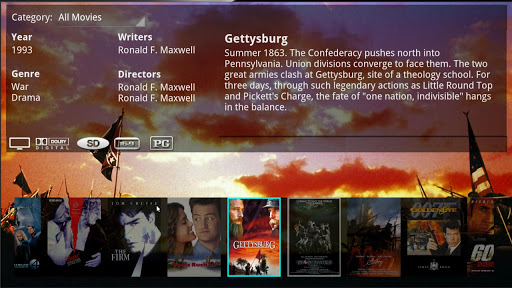
    No, I am not talking of the nerdtastic movie from Joss Whedon, but of an app. I have written twice now of my move from an HTPC to Google TV in the living room, with my most recent post surrounding ways to get both live TV and home media to the tiny set top box. For serving up home media I opted for Plex, which seemed the best solution.

    Plex is both a server and app and both are free. Simply install the server software on an always-on computer and control it from a web browser dashboard. From there you can direct it to all of your media — movies, TV shows, music and photos. It is dead simple to set up and maintain.

    After publishing that last article I received a message from a developer who wished to alert me that Plex had alternative Google TV interfaces, one of which was named Serenity.

    Beauty Pagent

    There is no delicate way to say this — if the Plex app is Windows Media Center then Serenity is XBMC with its beautiful skin. The difference here is night and day. Plex is functional and you will have no problem using it, but it has the basic look of the Windows software I was replacing.

    Serenity is the XBMC in this horse race, with skin that is soft and smooth. The menu glides across the screen with new images for each media type. While it still runs (pulls its data) off of the Plex media server you set up, it adds a new, and much improved interface to the whole thing. Everything is still there, you lose none of your media capability, you just get a much nicer view of all of those files.

    Serenity is not a skin for the Plex app, but a standalone app that simply is based on the Plex server, so you will need to scroll to it in your app drawer on Google TV.

    Behind the Scenes

    When Serenity is first launched it may throw you a bit, as it did me. Despite the fact that you have your Plex server up and running, it will still tell you that no server was found — do not panic. Just hit the “OK” button to enter “Settings”. From here, you can click “discover servers”, though it may remain grayed out for a bit. If you are in a rush, then simply choose the option to enter the IP address of the server, which is the route I chose.

    Once that IP is entered then everything populates very quickly. If you have any problems you can consult the Wiki or head over to Google Plus to get community help.

    The Verdict

    While Plex for Google TV is free, Serenity is not, though $1.99 is not a steep price for a good app. The code is also available over at GitHub.

    The app is also available for tablets, though the developer warns that “on a tablet it is recommended to use an external player like MX Player to provide support for codecs that aren’t native to the device”. No external player is required on Google TV, though you can use one — just enable it from the Settings page.

    Don’t get me wrong, Plex will work just fine on your set top box, but Serenity makes it look much nicer, which, on a big screen in your living room, can make all of the difference in the world.

  • IKEA Pillow Google Translates to ‘Cuddle Rape’

    What happens when you type the name of a certain style of pillow from IKEA into Google Translate?

    Well, something interesting, that’s what.

    Redditor 3rxx noticed that the Google translation for the IKEA pillow collection “Gosa Raps” is “Cuddle Rape.” Yes, cuddle rape.

    You can try it for yourself, it checks out.

    Before you start to think that IKEA is attempting to imply something with their pillow names, this can all be explained quite easily. Really, it’s just a problem with Google Translate. “Gosa Raps” actually translates to “Cuddle Rapeseed.” Rapeseed, as you know, is a yellow flower of the mustard or cabbage family that is cultivated for its oils, what you and I know as Canola oil.

    Turns out, IKEA’s Gosa line utilizes various flower names like the Gosa Hassel (Hazel) and Gosa Tulpan (Tulip).

    So, we’ve learned that yes, IKEA product names are a bit odd. But they’re not promoting cuddle rape.

  • Check Out This Google Street View Hyperlapse Video

    Teehan+Lax Labs has put together a Google Street View “hyperlapse” video. It’s pretty cool:

    Google Street View Hyperlapse from Teehan+Lax Labs on Vimeo.

    Luckily there are no dead bodies or people having sex featured (though it does go through the imagery pretty fast, so we might just be overlooking them).

    All imagery in the video was captured using hyperlapse.tllabs.io. Source code for this can be found here.

    [via PictureCorrect]

  • Go Ahead, Take a Failure Bow

    You’ve heard the mantra: Learn from failure. But no one likes to screw up and you can’t learn when you’re beating your chest in frustration or pointing fingers at each other. Some smart organizations are helping their people make failure not only productive, but also fun.

    One of my favorite techniques for making the most of a gaffe is called the failure bow. Developed by Seattle-based improvisation teacher, Matt Smith, it works like this: Instead of cringing when you make a mistake, you raise your hands in the air, announce, “I failed”, grin like a submissive dog, and then move on. The failure bow can be transformative because it alters our physiological response to failure by removing the demons of self-doubt and self-judgment. Without those holding us back, we can be more flexible and improve results and learning.

    Trapeze artists, acrobats, and other athletes are trained to take a failure bow after a stumble because it releases them from the fear of making a mistake. Even Olympic snowboarder Gretchen Bleiler — who took a nasty fall while competing — got up, raised her hands in the failure bow, and smiled.

    Many of the organizations that I’ve worked with or written about have developed their own version of the failure bow that allows employees to publicly admit mistakes and learn from them. Here are some of the best methods I’ve seen:

    The DoSomething.org Pink Boa FailFest
    DoSomething.Org, a nonprofit that helps young people take action on social change initiatives, has a “FailFest” once a quarter (some people call this a FailFaire). It’s an off-the-record session open to all staff, interns, and board members and it’s designed to send a message: Failure isn’t something to be ashamed of. CEO Nancy Lublin presented during the first-ever event, demonstrating that admitting mistakes was OK and would be rewarded.

    The two or three presenters at each FailFest follow specific rules:

    1. They wear a hot-pink feather boa (provided).
    2. They present for no longer than 10 minutes, and then take two minutes of Q&A from the group.
    3. They cover the goal, history, and timing of the failure; what went right and what went wrong; three things he or she personally learned; three things DoSomething.org learned.
    4. They present lessons using a fun metaphor. For example, they might show a photo of a celebrity or sing a song lyric that summarizes what they took away from their gaffe. This makes the presentations less speech-like and more, well, silly.

    By making failure silly and fun, DoSomething.org takes the sting out of what might otherwise feel embarrassing.

    MomsRising Joyful Funeral
    MomsRising, a grassroots organization that runs online campaigns to promote family-friendly policies, holds “joyful funerals” for campaigns that fail. Here’s how it works. At their “Monday Metrics” meeting, a campaign director might say, “This campaign didn’t work, is it time to give it a joyful funeral?” Another staff person will ask, “Shall we order the flowers?” Then they all give the unsuccessful technique a formal burial and eulogy during which they surface new ideas to improve future campaigns.

    For example, one campaign asked their million-plus members to create advocacy videos and post them on YouTube. It failed miserably — only two people submitted videos. So they gave it a joyful funeral, but not until after they’d asked their members why they didn’t participate. They discovered that if they wanted their members to create videos around a campaign theme, it had to be easy and compelling.

    This lead them to create the Nominate Your Mother for Mother of the Year campaign that allowed their members to easily customize a video by adding their mother’s name and then share it with others. The stock video also included information about their work to improve sick pay for moms. This time, their members shared over a million videos and more than 250,000 people signed an online petition.

    MomsRising executive director Kristin Rowe-Finkbeiner says that by removing the stigma from failed campaigns, they encourage people to take risks and try new things. That’s the only way, she acknowledges, that they’ll get the big success stories.

    Global Giving’s Honest Loser Award
    Staff at Global Giving, a website that gives social entrepreneurs and nonprofits from anywhere in the world a chance to raise money to improve their communities, look at both successful and flopped fundraisers to figure out how to improve their services. Since its founding a decade ago, the organizations leaders have cultivated a culture where failure is a teacher. A few times a year, the they give out the “Honest Loser Award” to a person who tried something new and it didn’t work. The honoree tells the story and explains why it didn’t work and what he or she learned from it.

    Donna Callejon, the organization’s Chief Business Officer, says, “We do this to encourage innovation and take the shame out of failure. One example was an affiliate marketing program. We discovered that the program required more operational attention than we had anticipated, triggered brand concerns, and did not generate any significant donation activity.” So they killed it and gave the manager in charge of the program the award.

    People won’t try out new ideas or approaches if failure is seen as a career-killer. But when it’s treated like what it is — an opportunity to learn — it can be a fun and rewarding process.

    How does your organization remove the shame and pain of failure and turn it into an experience that leads to better results?

  • Chromebooks are being used even less than Windows RT

    Chromebooks are being used even less than Windows RT
    If Windows RT is a “lemon” as some have suggested, then what does that make the Chromebook? ZDNet’s Ed Bott took a look at the latest numbers from NetMarketShare and found that there’s absolutely no mention of Google’s Chrome OS anywhere in its statistics for the most-used desktop operating systems. When Bott asked NetMarketShare why Chrome hadn’t made an appearance in the rankings, the firm replied that Chromebooks accounted for “0.023 percent weighted worldwide usage,” which put them below the minimum 0.1% threshold required to make an appearance on the charts. To put this into perspective, Bott notes that “in nearly two years on the market, all of those Chromebooks have achieved a smaller percentage of usage than Windows RT earned as of January 2013, after only three months on the market.”

  • Can Nvidia create a connected car system that never becomes obsolete?

    If you go to a Best Buy and buy a high-end smartphone, you’re likely getting the most cutting edge hardware and software the mobile industry has to offer. But if you were to go to your local car dealership and buy the newest model luxury vehicle, chances are the infotainment and connectivity technologies embedded within are already several years old.

    Welcome to the curse of the automotive industry: the lead time on new car designs and manufacturing schedules mean that the technology you’re buying today was developed years earlier. What’s more, that technology effectively becomes locked down in your vehicle. As soon as your drive off the lot the connected car system you have is the one you’re stuck with for years. (For more details on the connected car technology check out our infographic.)

    connected car logoMobile processor maker Nvidia, however, is proposing a solution to that problem: why not make an upgradable connected car system. We “upgrade” our smartphones and tablets every year or two by buying completely new devices, but that’s not really an option for an automobile.

    However, with processors based on its Tegra designs, Nvidia wants to empower automakers to build cars that not only have top-of-the-line computing components when they roll off the lot but also can be upgraded periodically during their long lives.

    In short, Nvidia wants to help automakers make connected cars that never become obsolete.

    Meet Jetson

    According to Nvidia Director of Automotive Danny Shapiro, the company designed its automotive processors, called Visual Computing Modules, around a flexible framework that allows automakers to work future processor technology into what are typically three-year long development cycles. Rather than design a connected car system years away from production using today’s chips, engineers can design tomorrow’s cars using tomorrow’s chips, Shapiro said.

    Green Overdrive: We ride a Tesla Model S Beta! thumbnail

    Tesla Model S

    That program is already seeing some pretty significant results, Shapiro said. Within a month of shipping in Google’s flagship tablet, the Nexus 7, the Tegra 3 debuted in the Tesla Model S, powering its impressive infotainment system (along with a separate Tegra 2 processor to handle the instrument cluster).

    That solves the first problem – making an infotainment system that’s not obsolete before it hits the show floor. Solving the next problem — making a connected car system that keeps up with the pace of consumer electronics innovation — is much trickier.

    To tackle it, Nvidia recently launched a new automotive architecture called Jetson, which tries to solve more than just the problem of obsolescence. First, Jetson is powerful, incorporating Nvidia’s pixel-crunching graphics processing units alongside its Tegra VCM chips. Nvidia is hoping that its silicon won’t just be the brains of your infotainment system but an extra set of eyes on the road.

    Danny Shapiro

    Danny Shapiro

    Nvidia wants to power the advanced driver assistance systems (ADAS) emerging in the next-generation of cars, Shapiro said. Moving beyond adaptive cruise control and proximity detection, cars will eventually sport omnidirectional cameras that will “see” the road in all directions and possibly even scanning lasers that can model a vehicle’s surrounding in 3D. The art of processing image and spatial data just happens to be Nvidia’s sweet spot.

    In addition, Nvidia has crafted Jetson to be a development platform that builds on its earlier work with its VCM chips. “Automakers can simulate future designs,” Shapiro said. “They can get their development done now, preparing for the next-generation chips and next-generation car apps.”

    Finally, Jetson is modular. The core processing unit is designed to be swappable. That means an automaker can easily incorporate the latest and greatest version of Jetson into their existing connected car and infotainment systems each successive years. It also means, Shapiro said, that one day we could upgrade our car’s dashboard computers much like we’d upgrade an old PC.

    Pimp my ride’s CPU

    Unless you’re one of those folks that can afford to buy a new car every time the ashtrays get full, chances are any new vehicle purchase is going to be a long-term investment. Six years is not an unreasonable time to spend driving the same car, but that’s an eternity in the world of consumer electronics. Six years ago, what we now think of as a smartphone didn’t exist, and no one had yet developed many technologies we now take for granted such as speech-powered virtual assistants, 3D mapping and location-based social networks.

    Connected Car Mouse Many automakers have decided that trying to keeping up with the day-to-day advances of that technology is an exercise in futility and have built their connected car strategies around the smartphone itself. Ford and Chevy, for instance have designed their connected infotainment systems as extensions of the driver’s handset. So as the smartphone becomes more powerful, so do their cars’ dashboards.

    An upgradable CPU would solve part of that problem, but not the whole problem. It doesn’t matter if your new car dash computer can process hi-rez images in real time if it doesn’t have the sensors to collect those images.

    But the auto industry is trying to solve that problem as well. Ford has launched an open-source hardware program called OpenXC, which could let us upgrade components like heads up displays and sensor arrays in our future cars.

    I’m not saying you’ll be able to turn your old jalopy into KITT from Knight Rider, but who knows? One day maybe we could customize our cars so they behave like new even if they don’t look like new.

    Mouse car image courtesy of Shutterstock user Mopic

    Related research and analysis from GigaOM Pro:
    Subscriber content. Sign up for a free trial.


  • Nintendo Announces New Nintendo 3DS Games

    Nintendo held a Nintendo 3DS Direct this morning. It was assumed that it would focus primarily on already announced titles, but the developer did announce some new games that are sure to excite casual and core 3DS players.

    As part of the Year of Luigi announcements, Nintendo CEO Satoru Iwata announced that the 3DS will be getting a new entry in the classic Mario Party franchise. The game will feature all new mini-games and each game board will have its own unique rules. Mario Party will launch this winter.

    Another new title announced is a new entry in the Yoshi’s Island series. The game looks to be similar to the past titles on the SNES and DS, but this new version will include new abilities for Yoshi. One ability shown is a large egg that can be destroy large structures.

    As for third party titles, Nintendo announced that Square Enix’ Bravely Default will finally be launching in North America. The RPG is widely celebrated as one of the best that Square Enix has made in recent years.

    Level 5 and NIntendo are partnering up again as well to release the latest entry in the Professor Layton series, as well as three new titles that were part of the Guild-02 release in Japan.

    Finally, Reggie Fils-Aime announced a new Zelda game for the 3DS. The game is said to be set in the world of A Link to the Past, but it remains to be seen if it will be a sequel or prequel. The game will be utilizing the early 90s design of Link in a top-down world that captures the look and feel of the SNES classic.

  • iOS vs. Android: All the numbers in one place

    iOS vs. Android: All the numbers in one place
    It’s the biggest battle in mobile — Apple’s iOS vs. Google’s Android. The two platforms are opposites in a number of key areas, but they do have one thing in common: they’re both hugely popular right now. Market research firms constantly pit one mobile platform against the other in an effort to identify trends for their clients, but different data from different firms tends to paint different pictures. In an effort to provide a more comprehensive analysis of the iOS vs. Android battle, TIME’s Harry McCracken compiled recent data from a wide range of key sources. In the end, Android clearly controls more of the market while iOS pulls in more money, but that’s hardly the whole story. For the rest of McCracken’s conclusions, check out his full analysis.

  • Jada Pinkett Smith: Open Marriage Rumors Addressed

    Rumors have been swirling about Jada Pinkett Smith’s marriage to Will Smith since the actress made cryptic comments in a recent interview. More specifically, fans and gawkers wondered whether the couple have an open marriage.

    Now, Jada has directly responded to the rumors, in a way. The actress may actually have complicated the rumors a bit, since she has still not directly stated that her marriage isn’t open. That was her point, though, as she mused about what a marriage should be, and how trust and knowledge of a person are better than threats and controlling behavior.

    From the Facebook post:

    Open marriage?

    Let me first say this, there are far more important things to talk about in regards to what is happening in the world than whether I have an open marriage or not. I am addressing this issue because a very important subject has been born from discussions about my statement that may be worthy of addressing.

    The statement I made in regard to, “Will can do whatever he wants,” has illuminated the need to discuss the relationship between trust and love and how they co-exist.

    Do we believe loving someone means owning them? Do we believe that ownership is the reason someone should “behave”? Do we believe that all the expectations, conditions, and underlying threats of “you better act right or else” keep one honest and true? Do we believe that we can have meaningful relationships with people who have not defined nor live by the integrity of his or her higher self? What of unconditional love? Or does love look like, feel like, and operate as enslavement? Do we believe that the more control we put on someone the safer we are? What of TRUST and LOVE?

    Should we be married to individuals who can not be responsible for themselves and their families within their freedom? Should we be in relationships with individuals who we can not entrust to their own values, integrity, and LOVE…for us???

    Here is how I will change my statement…Will and I BOTH can do WHATEVER we want, because we TRUST each other to do so. This does NOT mean we have an open relationship…this means we have a GROWN one.

    Siempre,

    J

  • HP Slate 7 tablet confirmed for arrival in the UK on May 1st

    hp-slate-7


    HP’s reinvention of its mobile unit brand is nearly complete thanks to the now imminent release of its newest tablet, the Slate 7. Previously introduced at MWC earlier this year, the device is designed to go toe-to-toe with other 7-inch tablets in the market and will be targeted directly at consumers looking to get the most bang out of their money. As a refresher, the device will feature a 1.6GHz dual-core chip built-in, a 7-inch display with 1,024 x 600 resolution, Beats Audio and Jelly Bean running the show. Sure the device features items we may have already seen before, but HP is hoping to sway potential buyers, thanks to its attractive £129 price in the UK ($169 USD in other markets).

    The device will ship to buyers on May 1st in the UK, though there’s no word yet on when other markets can expect to see the device just yet.

    source: HP

    Come comment on this article: HP Slate 7 tablet confirmed for arrival in the UK on May 1st

  • Spain’s Siri-challenger Sherpa learns English, arrives in the U.S.

    A new voice digital assistant is on the scene in the U.S., but unlike other Siri-challenger’s Sherpa comes with some overseas work experience. Sherpa launched its Spanish-language Android app in October and since risen up the Google Play charts in Spain and Latin America. Sherpa has since learned English, and on Wednesday it launched in the U.S. in the Play store.

    Most virtual assistants powered by natural language processing are taught to do specific tasks very well but tend to come up short when given unfamiliar assignments. For instance, Siri excels at jobs like making calendar appointments and dictating text messages but can be confounded by more general requests for information, usually resorting to simple web searches.

    Sherpa Screenshot 2Sherpa CEO Xabi Uribe-Etxebarria said he set out to create a natural language platform that had a much greater scope of understanding, which could easily be applied to new tasks without “training” the app to perform them. He also wanted to create a language-independent platform, one that understood meaning and intent independent of a language’s vocabulary or syntax.

    To that end, Uribe-Etxebarria and his machine-learning team developed a sort of meta-language, encompassing 250,000 semantic concepts accompanied by 5,000 rules used to order those concepts. Sherpa uses off-the-shelf speech recognition services (right now it uses Google’s speech API) to translate commands into its meta-language, and then it parses meaning and intent from the resulting string of concepts.

    The result is a flexible virtual assistant platform that can easily be applied to new tasks, Uribe-Etxebarria said. Sherpa’s repertoire is constantly growing as it hooks into new apps and information sources. For instance, Sherpa has struck a deal with PayPal, allowing the app to make payments via voice command. It taps into Twitter’s API, letting users navigate their twitter feeds – toggling between mentions, direct messages and home stream views – through voice prompts. For general information requests, Sherpa has developed a nifty information card format, which aggregates information from a variety sources ranging from LinkedIn profiles to Wikipedia entries.

    “We’ve gone beyond Siri in many cases,” Uribe-Etxebarria said. And given the flexibility of its technology, he added, Sherpa can continue to add new services and functions at a much quicker space than its competitors.

    Still, Sherpa is entering an increasingly crowded space. New virtual assistants are popping up left and right, some very focused on specific tasks like Incredible Labs’ Donna, while some like Nuance’s Dragon technologies are spanning devices, trying to create a single virtual assistant for all things. And of course, Google and Apple are building their speech technologies directly into their phone operating systems – it’s hard to argue with the convenience of that big fat Siri button.

    Sherpa got off the ground in Bilbao, Spain, but it now has offices Redwood City, Calif. It has raised $1.6 million in angel funding.

    Related research and analysis from GigaOM Pro:
    Subscriber content. Sign up for a free trial.


  • One-third of the Guardian’s readers are American, with US traffic growing 37% last year

    The Guardian’s expansion into the United States is on track, editor-in-chief Alan Rusbridger (see disclosure) said at the paidContent Live conference Wednesday. Rusbridger said that the Guardian’s global audience is about 40 million readers, according to comScore data, with one-third of them in the U.S., one-third in the U.K. and one-third in the rest of the world.

    “It wasn’t us waking up one morning saying, ‘let’s impose The Guardian on these Americans,’” Rusbridger told GigaOM/paidContent senior writer Mathew Ingram. The Guardian’s U.S. traffic grew at around 37 percent last year, Rusbridger noted, while the site’s traffic as a whole grew by 25 percent. But before the decision to expand to the U.S., “we spent no money marketing to America at all.”

    Now the monetization has begun, but Rusbridger says that probably won’t include a paywall, though the paper is “open-minded” on the idea. “I think it’s great that people are trying,” he said. “It would be even greater if people would share all the data so we could tell whether they’re working or not…it would be a big statement, in the U.K., to go and charge for what the BBC is giving away for free.”

    Check out the rest of our paidContent Live 2013 coverage here, and a video embed of the session follows below.

    Disclosure: Guardian News & Media is an investor in the parent company of GigaOM/paidContent.

    Related research and analysis from GigaOM Pro:
    Subscriber content. Sign up for a free trial.


  • Deploying Intelligent Storage Solutions with HP Converged Storage

    With more users, devices and connection points to the Internet – data is being generated at very rapid speeds. In fact, a recent Digital Archive Market Forecast showed that by 2015, the total worldwide cumulative digital archive capacity is projected to be at 300,000 petabytes. As the reliance on the data center continues to grow and more organizations move towards a cloud computing model – the storage components will still sit at the heart of the infrastructure. There is a growing need for storage solutions which are intelligent and are capable of scale. One effective way to deliver these platforms is through HP’s Converged Infrastructure – specifically, Converged Storage. In this white paper, you will learn about HP’s strategy for delivering Converged Storage that improves the ability of your business to capitalize on information.

    hpconvergedstorage

    [Image source: HP Converged Storage]

    In being innovative while delivering standard platforms which provide the foundation for server and storage products, HP is not only able to supply outstanding storage products, but also unique advantages that no other storage vendor can offer. In this white paper, you will learn about these specialized advantages which include:

    • Flexible deployment options including a range of form factors (rack, tower, blade, hybrid) as both physical disk systems and as software-defined storage
    • Easier administration through common management interfaces for remote support and service
    • Simplified hardware maintenance via common component leverage with servers
    • Greater visibility into operational metrics (like power and cooling) with a “sea of sensors” for the data center
    • Converged networking to reduce cable sprawl and lower costs
    • Enhanced performance through standards-based storage hardware innovation

    Download HP’s white paper to see how they are extending Converged Storage into new solutions and segments with a new initiative that introduces the next evolution of the HP Converged Storage strategy and vision. Remember, resources are always going to be finite – This is why working with HP’s intelligent Converged Storage infrastructure will help your organization gain more control over your data center and storage requirements.

  • Content personalization still has a long way to go

    Two companies who are leading the way on personalized digital magazines agree that we haven’t yet come close to unlocking the power of true personalized content yet.

    At paidContent Live 2013 Wednesday, Prismatic co-founder and CTO Aria Haghighi said those in the business of helping readers discover new content can’t even agree on a definition yet. “We don’t all agree on what personalization means. I agree (that it means pointing you to) stuff you care about … some people think it’s only getting signal from noise,” he said. “I think we’re really early. I don’t think we’ve matured to point where we (the industry) have philosophical differences yet.”

    Mark Johnson, who is CEO of competing product Zite, agreed that there’s so much more to do. “We’re good at finding stuff, but we can be so much better. We haven’t had that Google moment yet that’s, ‘Aha! That’s what personalization is.’” He compared it to when AltaVista users turned to early Google search and said, “So that’s what search is!”

    That point of personalizing reading content for users is also the challenge: everyone’s feed will always be different because no one likes the same stuff. Improving that capability will depend on big factors that haven’t quite been figured out yet either: the social aspect and helping people understand why content is recommended to them.

    Both Prismatic and Zite agree that helping users understand why you’re showing them content is key: “Even if you do world’s best job recommending an article or content to people, if they don’t have an explanation of why, people feel uneasy,” said Haghighi. “You have surface parts of the system to give information to people. That’s where user response intersects with AI.”

    Part of recommendation is social — what your friends or people with your same interests liked — but no one has done a good job of that in their industry yet, Johnson thinks. Social “sharing is the tip of the iceberg,” he said. “There’s something deeper you can do in these applications that no one has nailed yet.”

    Check out the rest of our paidContent Live 2013 coverage here, and a video embed of the session follows below:


    Related research and analysis from GigaOM Pro:
    Subscriber content. Sign up for a free trial.


    • Redditors Wonder If This Is A Dead Body On Google Street View

      Someone submitted a Google Maps link to reddit, which shows a person face down on the ground on the side of the road. The image is from Table Bay Boulevard, Cape Town in South Africa.

      Here’s the link.

      Dead body on street view?

      The reddit submission comes under the title “a dead body on Google street view (Cape Town)“. It has not been confirmed that it’s a dead body.

      One redditor coments, “Probably just drunk and sleeping, not dead.”

      Another suggests, “Or a homeless person?”

      One, who claims to be a South African, who has lived in Cape Town, says, “People sleeping on the side of the road is a common sight in S.A.”

      Another adds, “This is Table Bay Boulevard, a pretty busy road, no ways a dead body is going to be laying there for very long, especially not on a nice sunny day.”

      Others in the thread still think it might be a dead body.

      You wouldn’t immediately think Google would include an image of a dead body in its Street View imagery, but it actually wouldn’t be the first time it has happened. Here’s an article from 2010 reporting that Google was showing dead bodies on Street View in Brazil. On the other hand, another image thought to be a dead body turned out to just be a girl playing a prank.

      Blogger Greta Franzini shared a Street View image last may that may or may not have been another body.

      It’s not as though Street View does not capture questionable images. See last week’s story about the imagery of a couple having sex on the side of the road.

    • Would You Ever Want a Twitter Phone?

      Last week Facebook unveiled Facebook Home, their “app family” Android takeover that turns your device into a full-fledged Facebook-first hub. It takes over the homescreen, turning it into a stream for Facebook news feed content and works Facebook messaging and notifications directly into the Android UI. Although they may be hesitant to say that they’ve created a “Facebook Phone,” what they have done is given plenty of Android users the ability to turn their phones into Facebook Phones.

      Is Twitter thinking about doing the same?

      Speaking at All Things D’s Dive Into Mobile, Twitter VP of Product Michael Sippey left the door open for such a product.

      “There are a lot of things we’re looking at on Android,” he said. “I think [Facebook Home] is an interesting product. I’d like to see tweets there. So we’ll see.”

      So, what would a “Twitter Home” product look like? And would you want it?

      Well, we can imagine an Android launcher that displays your tweet stream on the homepage in the same way that Facebook displays the news feed. Although Twitter can also be media-rich, the fact that Twitter users typically follow hundreds and even thousands of users, all of which appear in the stream unfiltered (unlike Facebook) makes it seem like there would need to be some tweaking to make sure the user isn’t flooded with too much content. It would be pretty easy to integrate Twitter notifications and messaging into the base Android experience, though.

      Of course, there’s no telling what a Twitter-based Android OS-lite interface would look like. And Twitter hasn’t said that they are working on or even seriously thinking about something like this. But Sippey makes it clear that Twitter is curious about users being able to turn their devices into “Twitter Phones.”

      What do you think? Sound like something you might want to play around with?

    • Facebook reportedly hires former Apple Maps boss

      Facebook reportedly hires former Apple Maps boss
      iOS Maps was obviously not one of Apple’s better efforts but that doesn’t mean the executive who oversaw its implementation has nothing to contribute to the tech world. Bloomberg reports that Facebook has hired Richard Williamson, the former Apple executive who headed the development of the ill-fated iOS Maps, to work as part of its mobile software team. Although iOS Maps was certainly a disaster for Apple, it doesn’t tell the full story of Williamson’s career — as Bloomberg notes, he worked at Apple for more than 10 years and was “one of the engineers assigned by Apple co-founder Steve Jobs to build software for the iPhone.” So unless Facebook hired Williamson to oversee the creation of its own mapping application, it seems safe to say the company has found itself an experienced executive who can help improve its mobile offerings.

    • We are all bandwidth hogs now

      Demand for international bandwidth grew 39 percent last year, and at a compounded annual rate of 53 percent between 2007 and 2012, according to Telegeography. The interesting bit here is that the growth is coming not just from developed regions, but all regions of the world.

      Cheaper mobile phones with access to the web are certainly a part of that demand growth in developing nations, while in more traditional technology markets, hotspots, larger applications and cloud computing are to blame. Whatever the reason for demand, carriers are responding accordingly, with new submarine cables connecting more countries than ever before.

      news20130417-1

      Telegeography tracks bandwidth supply, pricing and data on submarine cables, and the latest data shows how carriers that range from traditional players like Level 3 and Tata to newer investors such as Google are connecting all areas of the world. The firm estimates all regions are getting about 10 to 12 new terabits per second of capacity each year. All in all in the last five years the world has gained 54 Tbps of new capacity.

      This is great, because additional cables means more redundancy, so when accidents happen or cables get cut — as happened late last month off the coast of Egypt – traffic can route around the nicks in the system. That redundancy also allows new players into the market and can result in lower bandwidth costs, which is good for businesses buying bandwidth and indirectly for consumers.

      Related research and analysis from GigaOM Pro:
      Subscriber content. Sign up for a free trial.


    • LeAnn Rimes Denies Rumors of Anorexia

      When LeAnn Rimes entered rehab last year, rumors swirled that the actress was suffering from an eating disorder, as pictures of the country singer looking very skinny had surfaced in tabloids. Rimes denied the rumors, stating that the rehab was needed to “develop coping mechanisms” for the bullying the star says she was a victim of.

      Now, Rimes has addressed the eating disorder rumors and much more in an interview with the Daily Mail. The singer stated that she never had a problem with eating, and that her weight loss was stress-related.

      My mind wouldn’t shut off and my heart was breaking,” said Rimes. “Now I’m secure about my body, although I’m like any other woman and have my moments of self-doubt.”

      Rimes’ stress stems from an affair she had with actor Eddie Cibrian in 2009 after the pair met on the set of the TV movie Northern Lights. Rimes at the time was married to her first husband, Dean Sheremet, and Cibrian was married to Brandi Glanville, who is now a reality TV star. Their affair became public, and Rimes endured years of criticism from both tabloids and Glanville.