Category: News

  • Generation Mooch? Why 20-somethings have a hard time paying for content

    I distinctly remember learning how to read, and it wasn’t from a book or in a kindergarten classroom.

    It was sitting at the breakfast table with my Dad every morning, when we would read the weather section of the Washington Post. We checked to see if it was hot in Arizona (it usually was) and cold in Canada (it always was). For this reason I’ve always felt an affection for the DC-area newspaper, and I continue to read some of its blogs and politics coverage to this day. But when the newspaper rolls out a paywall this summer, it’s doubtful I’ll start paying for access. I can still log in using my parents’ subscription, but if they stop paying? I might owe that newspaper my literacy, but with the rest of the internet at my fingertips, it’s still not enough to get me to pay.

    There was an excellent post on Buzzfeed earlier this week about HBO Go passwords, in which John Herrman surveyed everyone in his office and asked how most of them access HBO, a content provider that only gives digital access to cable subscribers. The responses evoked a trend I see among my own 20-something friends, which is that hardly anyone actually subscribes to HBO.

    The anecdote struck me as one that perfectly illustrates how much of my generation is building habits around digital content and what exactly we’re willing to pay for. We’ve grown up with a wealth of news and video available for free on the internet, and for many of us, we also have access to high-quality content through parents or friends with subscriptions to services like Netflix or the New York Times. We built media habits around this content from an early age, but we were never forced to actually pay for content.

    And there are a lot of us. Will those companies be able to convince my generation that their content is special or unique — and that one day, we should pay for it ourselves?

    Content for free, at our fingertips

    Online video - streaming video - people looking at computer - teens on laptopIn some ways, it’s pretty obvious why my generation is reluctant to pay for content — it’s because we’ve never had to.

    I’m 22, and I took typing lessons in fourth grade, had computer classes on how to do Google searches and make Powerpoints in middle school, and joined Facebook when it launched in my early days of high school. Until I left for college, my family’s desktop computer was set to open to the New York Times homepage. (At the time, it was free for everyone.) My peers and I learned how to write research papers in high school by citing sources online and by not copying things from Wikipedia, and most of us read Hamlet with the assistance of Sparknotes.com. We discovered music on YouTube, and a few lucky kids got smartphones in high school, which were ubiquitous by the time we hit college.

    My generation has grown up connected to the internet, and we’ve never been at a loss for finding news and information on the web — for free.

    Families have been sharing physical newspapers and televisions for years, of course, but when my parents’ generation left home for college and then grad school or jobs, they had to call up their local newspaper or cable or phone providers if they wanted any of these services. Now, there’s less incentive than ever to leave Mom and Dad’s family cell phone plan, and it seems that for many of my peers, the same applies to digital subscriptions to newspapers, magazines, and cable subscriptions.

    Out of curiosity, I asked about 15 of my friends (most of whom are recent college graduates in varying levels of employment) what content they personally pay to consume. The answer from most of them — minus a few New Yorker-subscriber outliers — was not much. But when I asked everyone what they read or watch using a parent’s (or a friend’s parent’s) subscriptions, the answers went way up. Almost everyone had access to Netflix, and a good number read the news on paywalled websites like the New York Times, and soon, The Washington Post.

    But when I asked if anyone would pay for this content themselves if their parents stopped paying, hardly anyone said they would. The only media that most people said they would pay for was Netflix, and a few said they would subscribe to avoid paywalls on their local newspapers.

    My friends of course aren’t representative of the population at large, but as mainly upper-middle class college graduates, they’re the demographic combination that’s currently most likely to pay for news online, according to a 2010 Pew study. While most of my friends said they read the news and watch video on a regular basis through their parent’s subscriptions, most said if they lost free access, they’d probably go somewhere else rather than pay. That might not be to a place that offers the same quality, but at least it would be free.

    As one friend told me, “If it’s online, it feels like it should be free.”

    Finding solutions to get us to pay — one day

    Girls Lena DunhamNow, it’s not necessarily surprising that 22-year olds aren’t clamoring for financial advice on retirement from the Wall Street Journal or picking up the tab on multiple subscriptions when the youth unemployment rate remains at 13.1 percent. Many people don’t have parents who subscribe to anything, and are perfectly content with the free content on the web and videos on YouTube. And for those who do, mooching a Netflix subscription still pales in comparison to the cost of cell phone plans 20-something share with families. Plus, my age group has always made up a fairly low percentage of newspaper readers anyway. Presumably the value we place on news will rise when we have kids and own houses and spend a few more years paying taxes.

    It’s also possible that we’ll have to look more broadly at the media services my generation will pay for than just newspapers and magazines. While I personally pay for a variety of news subscriptions, Twitter remains my most valuable source of information and I would probably pay more for access to that feed than anything else. Instagram might not be the future of news and information, but it’s fair to say a lot of people would probably pay for that.

    HBO has clearly decided that letting us mooch off subscriptions to access Girls is worth it, since one day some of us wil grow up, get jobs, and subscribe. But hoping and praying, while perhaps the defining media business strategy of this age, is not a particularly compelling long-term bet. Perhaps it should consider low-cost subscriptions meant for recent graduates, that would get us used to paying something but at rates more in line with our typical income levels. Maybe it means creating or structuring content specifically for younger readers and their digital tastes, or adopting micro-payments that remind us more of purchasing an iTunes song than a year-long subscription.

    But even if the content providers move in this direction, will my generation ever pay for quality media? We have grown up with the world at our fingertips on the web, mainly for free. And we’re taking those habits and assumptions with us into adulthood.

    Related research and analysis from GigaOM Pro:
    Subscriber content. Sign up for a free trial.

  • Updated Facebook and Twitter apps come to BlackBerry 10

    BlackBerry Z10 social butterflies rejoice! Updated Facebook and Twitter apps are now available for BB10 sporting new features and enhancements over previous iterations. Users should find it easier to “stay connected and do more with social media”, according to the Canadian smartphone maker which detailed the changes.

    Twitter was previously updated three weeks ago alongside LinkedIn, and the latest iteration only contains more modest improvements by comparison. Twitter 10.0.2 features a Connect tab where users can view all interactions, similar to the Android, iOS or Windows Phone counterparts, a counter which displays the number of favorites for a tweet and the ability to display photos, summaries and other items straight within tweets.

    By contrast Facebook 10.0.1 now comes with more significant improvements. The app can list the time when friends have checked-in on Facebook in a nearby location, display events, and allow users to respond, invite friends to attend and create and view posts on the event’s wall, post pictures and tag guests. Nothing groundbreaking compared to counterparts on other major platforms, more of a catch-up in terms of features.

    Facebook 10.0.1 now also allows users to tag friends on photos when the files are uploaded onto the interwebs, save pictures onto the device, and share links from the news feed to BBM, email and Twitter, among others.

    Facebook and Twitter are available to download from the BlackBerry World store.

    Photo Credit: ra2 studio/Shutterstock

  • ‘Facebook Phone’ rumors again flare up after Facebook sends out event invitation

    Facebook Mobile Event
    Facebook (FB) on Thursday sent out invitations for a press event that promised to show off the company’s “new home on Android,” which naturally led to fresh speculation about the company’s intention to produce its own Facebook-centric smartphone. Unnamed sources have told 9t5Google that Facebook plans to show off its own modified version of the Android operating system, a move that’s similar to the way Amazon (AMZN) has heavily modified Android for its own Kindle Fire HD tablets. 9to5Google’s sources also indicate that Facebook is working with HTC (2498) to produce a smartphone based on Facebook’s modified Android that will be sold “as a lifestyle brand, not specifically for its hardware or software.”

    Continue reading…

  • Ouya begins disrupting the gaming console market

    The 2012 Kickstarter darling Ouya has been anticipated ever since it skyrocketed past its fund-raising goal and began pre-production. While Sony has released information on its next-generation PlayStation and many people have been talking up the new Xbox, Ouya may have outdone both larger companies in terms of publicity and expectation.

    CEO Julie Uhrman announces that “Today we start shipping our early backers their OUYAs. And at our unveiling event this evening, the first of you will get to see OUYA in the flesh (or, metal, as it were)”.

    Following the big announcement some details were revealed. For one, customers will be prompted to install an update upon first boot up, though the company promises that these updates will be done in the background in the future. You will also need to enter in your credit or debit card information to grab games, but every game will be free to try before you buy — “Your card will only be charged if you buy content you love”, Uhrman promises.

    The device supports up to four controllers and also Bluetooth pairing with other devices — a list of those compatible hardware is being prepared.

    For now, the box is shipping to early backers from Kickstarter. Early pre-orders will follow and then the console will debut at retail on June 4. Ouya promises it will continue to add features, refine the user interface, and keep building the software. I am awaiting my box, or at least confirmation it has shipped — stay tuned for a review.

  • Podcast: T-Mo’s no plan, SummlYahoo and everyone’s a paparazzi

    This week’s podcast is PACKED full of GigaOM-y goodness. Eliza Kern sits in as co-host and talks about Y Combinator’s Winter Demo Day. Then Kevin’s Tofel and Fitchard explain how T-Mobile wants to liberate us from phone service contracts. After that, Mathew Ingram stops by to talk about Yahoo’s purchase of Summly, and if that wasn’t enough, Derrick Harris explains how Instagram is making us all paparazzi.

    (Download this episode)

    Subscribe to the Podcast RSS feed

    iTunes

    Stitcher Radio

    SHOW NOTES:
    Hosts: Chris Albrecht and Eliza Kern
    Guests: Kevin Tofel, Kevin Fitchard, Mathew Ingram, Derrick Harris

    This episode of GigaOM is brought to you by Squarespace – the best way create a modern and professional website, with all the features you need integrated into one platform.Every Squarespace website is mobile ready, and includes e-commerce, 24/7 customer support, and a free domain name.Start your free trial today, at squarsepace.com/gigaom.

    A more diminutive Y Combinator Demo Day

    T-Mobile aims to end the tyranny of the cell phone contract

    Can Summly help make Yahoo greater than its parts?

    Smile (and don’t say or do anything embarrassing), you’re on camera!

    Special thanks to Stitcher Smart Radio for letting us use their studio!

    SELECT PREVIOUS EPISODES:
    IoT: Why the Hue internet lightbulb is a bright idea

    Call in podcast: T-Mobile iPhone and the best Android keyboard

    Podcast: How IBM uses chaos theory, data and the internet of things to fix traffic

    Podcast: How Indie Game stayed “indie” and became a hit

    Call in podcast: T-Mobile iPhone and the best Android keyboard

    Samsung Galaxy S 4 blasts off, RIP Google Reader

    Electric Imp aims to make the Internet of Things devilishly simple

    Call-In: Galaxy S 4 predictions, Chromebook Pixel cloud storage

    Podcast: Facebook’s feedin’; Lean In’s meanin’; and everyone’s Hadoop-in

    IoT podcast: When devices can talk, will they conspire against you?

    Related research and analysis from GigaOM Pro:
    Subscriber content. Sign up for a free trial.

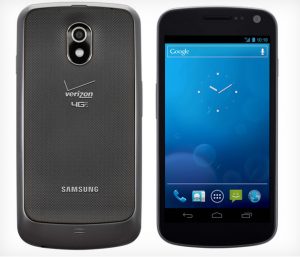
  • Android 4.2.2 factory images available for Verizon Samsung Galaxy Nexus

    One month after Android 4.2.2 started to roll out into the wild for Nexus devices, the latest treat in the candy jar has also arrived on the Verizon-branded Samsung Galaxy Nexus. To complete the cycle, Google also updated the factory images for the handset to the latest green droid iteration.

    The factory images can be used by Galaxy Nexus users to update their handsets to Android 4.2.2 Jelly Bean, restore the software to the factory default settings, return to the stock green droid flavor after running a custom distribution, or update the radios, among other purposes.

    For the Verizon-branded Galaxy Nexus, the Android 4.2.2 Jelly Bean factory images come with seven img files, three of which have a March 19 time-stamp — the bootloader and the two radios (GSM and CDMA). The other four come with older time-stamps.

    Using the “How to install Jelly Bean on Galaxy Nexus” guide, the Verizon-branded model can be upgraded to Android 4.2.2 Jelly Bean by replacing the filenames from the guide with currently applicable ones found in the corresponding factory image.

    The search giant also released updated binary files for the handset, namely for Wi-Fi and Bluetooth, graphics, orientation sensor, NFC, CDMA and LTE and DRM. The aforementioned files can be used by third-party developers in custom distributions.

  • ESET Mobile Security 2.0 Preview: Improved Security for Android

    Having an anti-virus solution installed on a PC is almost common sense these days, yet not all mobile phone users are accustomed to ensuring the security of their devices in a similar manner, even if the number of threats in this segment has spiked lately.



    When it comes to Android, for example, a continuously increasing… (read more)

  • Morning Advantage: Walmart Wants You to Deliver Packages

    If you shop at Walmart, you may soon be able to add “courier” to your resume. In an effort to compete with Amazon, Walmart is considering a plan to have store customers deliver packages to online customers. While the company currently uses carriers such as FedEx for online deliveries, Joel Andersen, chief executive of Walmart.com, told Reuters that he sees “a path to where this is crowd-sourced.” How would it work? Walmart shoppers could sign up to drop off packages to online customers who live along their route back home, in exchange for “a discount on the customers’ shopping bill, effectively covering the cost of their gas in return for the delivery of packages” (which Katie J.M. Baker over at Jezebel points out is “a lot cheaper than paying workers a livable wage (plus benefits) for the same job”).

    Reuters reporters Alistair Barr and Jessica Wohl touch on several obstacles that Walmart would have to overcome to implement the plan, such as theft, fraud, and licensing and insurance hurdles, to name a few. Matt Nemer, a retail analyst at Wells Fargo Securities, told them that the likelihood of this plan being adopted across Walmart’s 4,000 U.S. stores is low. But, Jeff McAllister, senior vice president of Walmart U.S. innovations, says that “it’s possible in a year or two.”

    SHERYL SANDBERG’S CRUSADE AGAINST NOT-WORK

    Feminism’s Tipping Point: Who Wins from Leaning in? (Dissent Magazine)

    Yes, yes, we’ve all seen enough responses already to Sheryl Sandberg’s Lean In. But this one from Dissent, by Facebook veteran Kate Losse, whose final job at the company was as Mark Zuckerberg’s speechwriter, is different. Losse writes that the overriding theme of the book is that “work will save us.” But from what? “By taking note of the forms of human activity that do not appear in Lean In, we see that what work will save us from is not-work: pleasure and other nonproductive pastimes.” The debate the book should be unleashing is less about feminism, Losse argues, than whether work truly should be as all-consuming as Sandberg apparently thinks it should be. “The loser in the Lean In vision of work isn’t one version of feminism or another … but uncapitalized, unmonetized life itself.” Notably, when Losse published her critical review of Lean In, she received a nastygram from Sandberg spokeswoman and former Facebook executive Brandee Barker, who told her: “There’s a special place in hell for you.” — Justin Fox

    BACK TO THE LAB AGAIN

    Present at the Creation: Putting Creativity Tips to the Test (Boston Magazine)

    Beth Altringer, a lecturer at Harvard, wrote this delightful feature for Boston Magazine in which she attempts to be creative by following the advice of a plethora of studies on how to be creative. She tries drinking beer in the shower and working in a blue room (she coins the term “bluetiful” in the process but doesn’t actually get anything done), among other tactics. It’s a fun romp through the creativity industry, and is actually more inspiring than it is disparaging. Enjoy. — Gretchen Gavett

    BONUS BITS:

    A Penny Saved…

    Your 401K Is Out to Get You (The Atlantic)
    Bitcoin May Be the Global Economy’s Last Safe Haven (Bloomberg Businessweek)
    The (86,000) Budget-Cutting Ideas That Got Away (The Washington Post)

  • Obama’s signing of Monsanto Protection Act proves he will betray progressives, too

    The internet has erupted into a fury over Obama’s signing of the so-called “Monsanto Protection Act,” a rider to a federal appropriations bill that hands Monsanto the power to nullify the decisions of federal courts. If the courts decide that a genetically engineered…
  • Researchers discover natural protein in fish that inhibits prostate cancer cell spread

    University of Maryland School of Medicine scientists have identified a peptide, or protein, derived from Pacific cod which appears to inhibit prostate cancer and possibly other cancers from spreading — a process known as metastasis. This is extremely important because…
  • Four steps to banishing inflammation naturally

    Inflammation is a necessary temporary immune reaction to help heal a wound or fight off infectious pathogens that have collected in any physiological area. The key word is “temporary.” If inflammation becomes chronic, it generates a multitude of autoimmune diseases…
  • Texas State Troopers who conducted roadside body cavity searches indicted on criminal charges

    Increasingly, Texas is one of a handful of states that are becoming known as bastions of liberty in a nation increasingly dominated by Federalists and authoritarians – men and women appointed in positions of bureaucratic power who operate without fear of reprisal from…
  • The dangerous truth about grains

    While it is becoming universally understood that white flour lacks essential nutrients that the human body needs and even promotes disease, the public does not have an adequate understanding of whole grains. We are led to believe that whole grains are a perfectly healthy…
  • Dangers of high blood sugar can be alleviated with cinnamon, chromium and bitter melon

    Blood sugar causes degenerative disease. Not only diabetes is a concern, but also high blood sugar affects the eyes, kidneys, brain, the heart, and also speeds the aging process. Sugar creates inflammation in the body, and burns the cells by inflammatory oxidation. This…
  • Ever wonder why the world is so screwed up? Research proves people find pleasure in physical and emotional pain

    Have you ever watched people ruin their own lives and wondered why anyone would simply self-destruct and then revel in misery? Do you throw your hands up in frustration at self-sabotaging behavior? My father used to rant about his horrible eating habits. “It’s what…
  • Jim Carrey insults all Americans with funny-or-die assault on the Bill of Rights

    Another Hollywood figure has come out in opposition of the very constitutional right that protects his ability to make a living, as oblivious to the hypocrisy of his position as he is out of place on his phony pedestal. Canadian comedian Jim Carrey, as many readers…
  • How to prevent kidney stones with everyday foods

    Passing them is described by those who have experienced their terror as one of the worst pains known to man, exceeding even the pain of childbirth. But kidney stones do not have to be a constant worry on your mind, especially if you are taking proactive nutritional steps…
  • Use these six amazing spices to burn fat fast

    Spices can turn mundane bland foods into culinary delights, and that’s there primary use in our modern world. Some “foodies” recognize how they support health as well, sometimes as an antioxidant, an anti-inflammatory, anti-fungal, antimicrobial, or a combination of…
  • Sunshine vitamin – A potent defense against deadly new tuberculosis strains

    With antibiotic resistant tuberculosis superbugs on the rise around the world, natural remedies are increasingly important to combat the spread of this serious disease. Consuming adequate levels of vitamin D is crucial not only for a healthy immune system, but also to…
  • When the whole world has drones, U.S. political leaders are likely to be targeted and assassinated

    Today, U.S. political and military leaders may have the technological upper hand, as they say, in terms of emerging unmanned aerial vehicle (UAV) technology, but what happens when other nations around the world – and especially “competitor” nations – get them as well…