Category: News

  • Texas Instruments Develops New Chips That Cut Battery Recharge Time In Half

    Texas Instruments

    Texas Instruments has developed seven new chips in total that cut battery recharging time in half. Part of a new BQ2419x line of chipsets, they utilize a “battery path impedance compensation system” and be can be used in more than just smartphones or tablets. Portable medical equipment, mobile hotspots, and battery packs are just some of the devices that could utilize these new chips. They’re 92 percent efficient at 2A output or 90 percent efficient at 4A of output and measuring just 4mm x 4mm, manufacturers can purchase in bulk for just $2.50 per chip. Back in February, Qualcomm announced Quick Charge 2.0 which is reported to help charge enabled devices up to 75% faster than its previous technology.

    Source: TechWeekEurope

    Come comment on this article: Texas Instruments Develops New Chips That Cut Battery Recharge Time In Half

  • Use OpenElec 3.0.0 to build your own XBMC media center PC

    Got a lot of media stored digitally? Want access from a range of devices, including your computer, mobile and smart TV? One of the best tools for the job is the wonderful, and open-source, XBMC 12.1. It’s capable of so much, acting as a media center, DLNA-compatible server an, from version 12, PVR for live TV on your computer.

    Next to XBMC, just about every so-called smart media box out there pales under its radiance. If only you could build your own XBMC-based smart box, eh? Actually you can: all you need is a spare PC and the wonderful OpenELEC 3.0.0.

    OpenELEC 3.0.0 is a complete Linux-based distribution based around XBMC. Boot up a PC running OpenELEC, and within seconds you’re at the familiar XBMC desktop, with all your media within arm’s reach. The concept isn’t new — there are plenty of Linux-based XBMC distros out there, including XBMC’s own XBMCbuntu, based around Ubuntu.

    What makes OpenELEC stand apart from the competition is its size — or lack of it. By focussing solely on providing a platform for running XBMC and nothing more, OpenELEC weighs in at a maximum 125MB when installed. That’s megabytes, not gigabytes, which is why it’s optimized for smaller removable media like SD cards and USB thumb drives, leaving your hard drive free to store all that media on.

    Installation is refreshingly simple — all you need is a PC that supports USB booting, and a spare USB thumb drive (256MB or greater) to place the installation files on. Then it’s a case of picking the right version to download — you’ll find customised builds for ION/ION2, Intel and Fusion GPU chipsets, the Raspberry Pi and two “generic” builds to cover just about any laptop or desktop out there.

    The file you download will be in .tar.bz2 format. Extracting your installation files from here may be a bit fiddly — Windows users will need a third-party tool such as IZArc to do so. Once done, Windows users can simply double-click the create_livestick file and follow the prompts to create the USB boot drive; Mac and Linux users should follow the instructions at theOpenELEC wiki.

    Now switch to your media center-to-be, insert the USB stick and boot from it to install OpenElec itself, again following the simple prompts. You can install to the internal hard drive or any removable drive – as we said earlier, picking a SD card or second USB thumb drive allows you to separate your media from OpenELEC itself.

    Once the installation process is complete, you can boot OpenELEC proper. You’ll see it’s incredibly fast — another benefit of such a small footprint — and delivers you direct to the familiar XBMC desktop. The new version, OpenELEC 3.0.0, is actually the first official stable release, and based on the very latest version of XBMC: Frodo, v12.1. That means if it works in XBMC, it’ll work in OpenELEC too. Your media experience will never be the same again.

    OpenELEC 3.0.0 is available as a free, open-source download for use on a secondary PC. The installer can be run on Windows, Mac and Linux to create the required USB thumb drive installer. XBMC 12.1is also available as a free, open-source download for running on a primary Windows, Mac or Linux computer.

    Photo Credit: Baranova Alona/Shutterstock

  • SEC ruling gives boost to online funding tool for startups

    The prospects of a new era of crowd-funded startups took another jump forward today as the Securities and Exchange Commission told FundersClub, a website that lists new companies seeking funding, that its business model doesn’t violate federal securities rules.

    FundersClub, which promises “insider access to pre-vetted startups,” faced legal uncertainty because it lets investors make investments as low as $1,000 in exchange for equity, even though it’s not a registered broker. Instead, the company, which is itself a start-up that grew out of the Y-Combinator incubator, holds itself out as a venture-capital adviser that does not take transaction-based commissions but instead takes management fees from accredited investors.

    To verify its legal status, FundersClub wrote the SEC to request formal validation of its business model. In a letter, reported by TechCrunch, the SEC stated that it would not pursue enforcement action against the company.

    In a significant footnote in the SEC letter, the Commission notes that FundersClub’s model is consistent with the Jobs Act, a recent law intended to make it easier for start-ups to raise money without regulatory headaches:

    The Staff notes that FundersClub’s and FC Management’s current activities appear to comply with Section 201 of the Jumpstart Our Businesses Act of2012 (“JOBS Act”) in part because they and each person associated with them receive no compensation (or the promise of future compensation) in connection with the purchase or sale of securities.

    The Jobs Act, passed a year ago, is only partially in effect as the SEC is still devising rules to facilite “crowd funding” from hundreds of small investors. FundersClub participants must still meet the definition of an “institutional investor,” which means they have an annual income of over $200,000 or a net worth of $1 million.

    Related research and analysis from GigaOM Pro:
    Subscriber content. Sign up for a free trial.

  • Hanging Out with “Makers” at the White House

    Earlier today, the White House invited innovators from around the country to join a Google+ Hangout to discuss the Maker Movement, a growing community of young people and adults who are designing and building things on their own time.

    White House innovation advisor Tom Kalil moderated the conversation with participants including: 11-year-old Super Awesome Sylvia, creator of the Super Awesome Maker Show; Dale Dougherty, founder of MAKE Magazine and creator of Maker Faire; Tara Tiger Brown, co-founder and executive director at LA Makerspace; Saul Griffith, co-founder of Otherlab; and Venkatesh Prasad, Ford technical leader. And in a first for White House Hangouts, a robot joined too.

    During the Hangout, participants discussed the elements of an "all hands on deck" effort to elevate Making and also share their ideas on how we can get more young people interested in STEM education (science, technology, engineering and math). Here's what you missed:

    We'll continue to host hangouts with key members of the Administration on a range of issues. Follow the White House on Google+ for updates from the Administration and opportunities to participate in upcoming Hangouts.


  • Do digital tools help with diabetes? New report casts doubt

    Given the number of people with diabetes – 26 million in the U.S., with another third estimated to have prediabetes – it’s little wonder that more companies and startups are trying use technology to address the problem.

    But a new report on computer-based support for people with diabetes finds that while digital tools can lead to some positive outcomes, the effects appear to be short-lived.

    The report, published in the Cochrane Library, an independent evaluator of medical research, was based on a review of 16 trials involving nearly 3,600 people with type 2 diabetes. In each of the trials, the patients used computers or mobile phones as part of a diabetes intervention program that lasted between one and 12 months.

    The interventions in the trials included online peer support and education, digitally delivered tailored advice, goal setting features and mobile-based glucose data transmissions.

    The study found that the digitally supported programs led to small positive effects on blood sugar levels, with the mobile-based interventions leading to slightly more improvement, but that those effects started decreasing after six months. It also found that there didn’t appear to be significant improvements on depression, blood pressure, weight or quality of life.

    “Our review shows that although popular, computer-based diabetes self-management interventions currently have limited evidence supporting their use,” lead researcher Kingshuk Pal, of the London-based University College London said in a statement. “There are also few studies looking at cost-effectiveness or long-term impact on patient health.”

    Skeptics of broad studies like this one point out that because they look at a range of products of differing qualities, that can create more middle-of-the-road outcomes. Indeed, some of the more innovative digital diabetes programs, like Omada Health, Ginger.io, and Glooko, have shown some promise — for example, in a recent 230-person pilot of Omada’s diabetes prevention program, the average participant lost 13.7 pounds after 16 weeks.

    But as more digital applications emerge to help patients fight and prevent diabetes and other conditions, it’s important to scrutinize their effectiveness. As this study emphasizes, real behavior change is incredibly complex, and the tools that ultimately work will be the ones that help patients figure out how their specific health changes can sustainably fit into the rest of their lives.

    Related research and analysis from GigaOM Pro:
    Subscriber content. Sign up for a free trial.

  • HHS Releases Medicare Data on Spending and Chronic Conditions

    The Centers for Medicare & Medicaid Services today released a new, easy-to-use interactive tool that gives anybody – researchers, physicians, public health professionals, policymakers, consumer advocates, tech innovators, and the public – the ability to find and examine data on multiple chronic conditions among Medicare beneficiaries. The Centers for Medicare & Medicaid Services Chronic Conditions Dashboard furthers the Affordable Care Act’s (ACA) goals for health promotion and the prevention and management of multiple chronic conditions and is an integral part of the Administration’s Health Data Initiative that seeks to release more health-related data in more usable formats to the public in order to promote innovation and improvement in health and care.

    The Dashboard includes data for 2011 and presents summarized information on the prevalence of chronic conditions, as well as aggregate Medicare costs and utilization measures for beneficiaries with multiple chronic conditions at various geographic levels – national, state, and hospital referral region. Examples of what you can find in the Dashboard include:

    read more

  • MetroPCS shareholders advised to strike down T-Mobile merger

    T-Mobile MetroPCS Merger
    T-Mobile CEO John Legere may come to regret publicly slamming the “greedy hedge funds” opposed to his company’s merger with MetroPCS (PCS). The Wall Street Journal reports that the influential Institutional Shareholder Services (ISS) is advising MetroPCS shareholders to vote down the proposed T-Mobile merger at their meeting on April 12th. ISS, which the Journal says “advises big shareholders how to vote in corporate elections,” claims that MetroPCS shareholders will not get fair value in the proposed merger and believes that MetroPCS still has the potential “to continue to thrive as a stand-alone company.” T-Mobile and MetroPCS received full regulatory approval from the United States government for their merger earlier this month and now must only gain approval of MetroPCS shareholders to make the deal official.

  • Setting the record straight: Own an AT&T iPhone 5? It will work on T-Mobile’s LTE network

    There have been a lot of conflicting and confusing – and several plain wrong – reports on whether the current version of the iPhone 5 will work on T-Mobile’s new LTE network. I’m sorry to say I even helped spread some of that misinformation by talking about those reports on GigaOM’s mobile call-in podcast on Wednesday. But I’ve since had a chance to talk Apple, and got the details about what exactly the iPhone 5 can do and what it can’t.

    Bottom line: if you have a North American GSM version of the iPhone 5 — whether you bought it from AT&T or Apple or got it in from Canada – it can connect to T-Mobile’s new LTE network. It just has to be unlocked. So for AT&T customers looking to switch sides, that means you have to finish your contract, and ask your carrier to unlock the device.

    iPhone 5 Lightning dock connectorThe device will also work on T-Mobile’s 3G HSPA+ network (which T-Mobile calls 4G), just not in every city today. T-Mobile is in the process of a big network overhaul that will align all of its networks with the radios in the iPhone and most other AT&T devices. It’s completed the upgrade in about 50 cities covering 142 million people, but other cities are getting converted quickly.

    The source of the confusion is over frequencies, which is why we’ve been seeing all of these references to the Advanced Wireless Services (AWS) band. T-Mobile runs two technologies in the AWS band, it’s LTE network and a portion of its HSPA+ network. The iPhone 5 will support LTE in the AWS band, but it won’t support HSPA+ over AWS. The iPhone 5, and all previous versions of the iPhone, will work on its new upgraded HSPA+ systems in the PCS band.

    Apple will release a new version of the iPhone 5 next month that will make all of the band differences completely moot. The updated version will support HSPA+ on both AWS and PCS band. It will even be able to access T-Mobile’s dual-carrier 42 Mbps HSPA+ network, which current and older versions of the iPhone cannot.

    All of this is probably still extremely confusing so I’ve broken it down into a Q&A, which hopefully will answer any lingering questions.

    How do I know if my iPhone will work on T-Mobile’s networks?

    For the iPhone 5, check your model number. It must be the A1428, sold by AT&T, the Canadian operators or Apple. Older iPhone models will also work on T-Mobile’s 2G and 3G networks. All of these devices must be unlocked, though, or they’ll be blocked.

    How can I be sure I’ll have access to T-Mobile’s LTE and HSPA+ networks?

    For LTE, it’s simple. T-Mobile launched LTE in seven markets this week: Baltimore, Houston, Kansas City, Las Vegas, Phoenix, San Jose, and Washington, D.C. New York City is scheduled to come online this summer along with a bunch of other yet unnamed cities.

    For HSPA+, it’s a bit more difficult to tell since T-Mobile doesn’t have any kind of map that tracks which markets have HSPA+ running on the PCS band. They make regular updates on their blog and to the media. PCMag has the most the recent list of T-Mo’s 49 iPhone-optimized cities.

    As a general rule of thumb, though, if T-Mobile has LTE in your city, then HSPA+ will be in all the right places, too. And if you get a new version of the iPhone 5 next month, it will work on all of T-Mobile’s network.

    When will I be able to bring my old iPhone over to T-Mobile? 

    You can do it right now if you like. T-Mobile already has millions of iPhones on its network, running over its 2G and 3G services. In order to access LTE though, you’ll have to wait until Apple updates iOS, authorizing the iPhone 5 to use T-Mobile’s network. Apple hasn’t given a date for when this will happen, saying it will come as an over-the-air update.

    Will I be able to access dual-carrier HSPA+?

    On a current iPhone, the fastest 3G network you’ll have access to is its 21 Mbps single-carrier system, since all of T-Mo’s dual-carriers are in the AWS band. T-Mobile will eventually launch dual-carrier in the PCS band, but that will take some time. It has to close its acquisition of MetroPCS and convert a lot of old GSM networks to 3G first. If you’re set on accessing the dual-carrier network in the near future, then you’ll need to get one of new versions of the iPhone 5.

    Related research and analysis from GigaOM Pro:
    Subscriber content. Sign up for a free trial.

  • Did Google and LG quietly update the Nexus 4 design? It sure appears to be the case

    nexus_4_nipples


    It looks like Google & LG may have pulled a fast one on the Android world by recently giving the Nexus 4 a couple of subtle design changes. As pointed out by our pals at MobiFlip, we can now see that the device features two notable uhhhh… “nipples” on the back of the device. Many of you are wondering what they are there for, right? Well it’s quite simple actually: since the Nexus had a flat back previously, the speaker was essentially muted, meaning owners could miss some important notifications. The nipples essentially act as a sort of stand which would help to elevate the phone just slightly in order for sound to pass through easily. Additionally, the ring found on the camera lens has been reduced to appear a bit smaller. Of course there’s no specific reasoning for this change, but the guess is that the camera lens reduction is probably aesthetics-related.

    new_nexus_4_camera_lens

    “New” lens on the left; “old” lens on the right

    Now if we can get just one more feature added in, the Nexus 4 will be gold.

    via: MobiFlip
    source: Android Police

    Come comment on this article: Did Google and LG quietly update the Nexus 4 design? It sure appears to be the case

  • Content for cord cutters is going to get harder to find, industry executive predicts

    While millions of cord cutters are eagerly awaiting their chance to subscribe to HBOGo, the CEO of the company that helps ensure that HBO’s over the top content looks good is skeptical about when that might happen. Darren Feher, the CEO of Conviva, thinks things will get worse for cord cutters before they get better.

    Instead of watching Game of Thrones via an a la carte HBOGo subscription, they’ll face higher fees for content aggregators like Netflix and Hulu and will find more content inaccessible unless they have a pay TV subscription, he thinks. Even Hulu’s backers have toyed with making the site accessible only to those who have a pay TV subscription.

    “The whole industry is doing a lot of experimentation in places and markets where they are trying to figure out what will work for the U.S. market,” said Feher, who prior to the top job at Conviva was the CTO of NBC-Universal responsible for activities such as streaming the Beijing Olympics. “But before that, in the next 12 months there will increasing pressure against cord cutters. The whole authentication thing, where you can’t watch content unless you have a cable sub, will be a mess for consumers.”

    In short, while Nordic viewers get their HBOGo a la carte, those of us in the U.S. may have to wait, no matter how many webcomics and industry insiders demand it. Even vague suggestions from HBO executives are compromises that limit the experience to an app.

    However, there’s a light at the end of the tunnel according to Feher. “Inevitability consumers will tell content creators what they want and the content guys will have to respond. There’s a whole upcoming generation of ‘cord nevers’ that the industry has to consider.”

    For example he notes that while many in the industry expected online viewers of The Super Bowl to be lower that it was, given that it was a weekend, and people tend to have parties where they cluster around the big screen TV to watch it. Thus he, and others were surprised at how many online watchers there were and how many came from sites with an .edu address.

    “No one brings a TV to college anymore, and so it’s logical to ask if they will ever want to watch outside of this way they’ve gotten used to,” said Feher. “But in the short term there will be a lot more pressure on aggregators like Netflix and Hulu, and the consumer will feel that in less content or higher prices.”

    The challenge for the industry is complex, and is one where technology is pressuring business models designed for the old way of delivering television — multicast from one to many over a guaranteed and pay-TV-provider-controlled connection. The internet has made viewing content more of a one-to-one proposition and the rise in over the top services and multiple devices on which to watch the content has made the entire experience disjointed.

    Conviva has stepped in to ensure video quality in this brave new world with software that parses a lot of data in the cloud and has software agents that make decisions about how to adapt the video in response to problems. If the internet is congested for example, it may route content via different route. If the video is buffering in your home because your Wi-Fi is wonky it may drop down to a lower bit rate.

    But outside of technical solutions, Feher also thinks there’s a business model that will help content companies and broadcasters make money so they can avoid “trading analog dollars for digital pennies,” as NBC-Universal’s Jeff Zucker (and Feher’s former boss) has said. It may be a matter of charging people more money for HD streams or even more for 4K streams that require a whopping 25 Mbps connection. ISPs are trying to build this level of granularity into their billing systems and networks.

    It might also be as simple as using the targeting abilities available in the digital world to better monetize a viewer by showing him or her more relevant advertising or charging different prices for a la carte content. Essentially he’s proposing that the data driven model we’re seeing drive success in other industries takes a stab at changing television. I hope the results are worth watching.

    Related research and analysis from GigaOM Pro:
    Subscriber content. Sign up for a free trial.

  • Can You "Manage" Your Family?

    An interview with Bruce Feiler, New York Times columnist and author of The Secrets of Happy Families.


    Download this podcast

    A written transcript will be available by April 4.

  • T-Mobile iPhone 5 prices revealed for 32GB and 64GB models

    T-Mobile iPhone 5 Prices
    T-Mobile announced earlier this week that it will offer the iPhone 5 for the first time ever next month. The company revealed that the 16GB model will cost $99 down and $20 a month for 24 months for a grand total of $579, compared to Apple’s (AAPL) price of $649. T-Mobile said that it would offer a full line up of iPhone devices, however the company did not disclose additional pricing information at its press event on Tuesday.

    Continue reading…

  • Google brings new compose message box to all Gmail users, like it or not

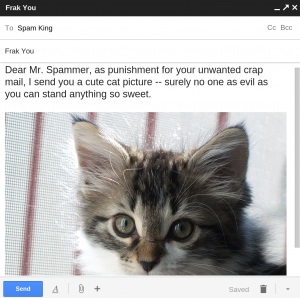
    Say, you know that new pop-up compose message box Google introduced last autumn. You don’t? Well, get ready. Gmail is giving the ditty to everyone, whether or not wanted. That’s what it looks like, in photo right.

    “The new compose will be rolling out to everyone over the next few days”, Phil Sharp, Gmail product manager, says. I’ve used the thing since October, in a sort of love-hate thing. On a laptop working in Chrome — even better, on Chromebook Pixel — the new compose box is great. On Surface Pro, using Internet Explorer 10 from Modern UI, the thing is unusable. The box flicks up and down from the bottom of the screen.

    We’re all guinea pigs in the Google lab, and Sharp praises our rodent brains: “In addition to telling us what you love about the new compose experience (like how much easier it is to multitask!) you’ve also been sending us helpful suggestions for what features you’d like to see added. As a result of your input, we’re now ready to introduce the new compose experience as the default for everyone. We’re looking forward to hearing what you think!”

    I do appreciate the ability to compose a message and work in the inbox at the same time. It’s good to see Google catch up with email features I first used in the 1990s.

  • “First do no harm”: My interview with Amazon and Goodreads on the future of Goodreads

    Amazon announced Thursday afternoon that it has acquired the popular book-related social networking site Goodreads for an undisclosed sum. I spoke with Goodreads CEO Otis Chandler and Amazon’s VP of Kindle content Russ Grandinetti on what’s next for Goodreads and its 16 million members.

    Questions and answers have been edited slightly for clarity.

    Goodreads CEO Otis Chandler

    Goodreads CEO Otis Chandler

    What does the acquisition mean for Goodreads’ reputation as a neutral hub for readers, authors and publishers?

    Otis Chandler [OC]: “One of the extremely important things to us is for readers to share what they’re reading, no matter how they’re reading. We have no plans to change that. We want Goodreads to be a place for readers of all types to share their favorite books. You can expect to see customizations and better integrations for people who do use Kindle. For everyone else, Goodreads will remain largely as it is.”

    Will Goodreads remain a standalone site, and is its entire team staying on? Is the site getting a redesign?

    Grandinetti says Goodreads will be an independent subsidiary of Amazon, like Zappos or IMDB. The site will remain based in San Francisco. Chandler remains CEO, reporting to Grandinetti. Chandler said that Goodreads’ entire team is staying on (and that the company is hiring). To the question of a redesign, he said there is “nothing specific to mention in relation to the acquisition.”

    Will Amazon have access to all of the Goodreads users’ data?

    OC: “Goodreads is or will be a wholly owned subsidiary of Amazon, so on one level, yes. Are things going to happen in the background without customers understanding it? I think the answer to that is no….We’ll make it very easy for someone to say, ‘Yeah, I’d love it if you could import all of my Amazon or Kindle purchases into my Goodreads shelf.’ We’ll make it very easy for people to do, but they’ll be aware of what’s happening.”

    Users already have the ability to export their data from Goodreads, and they’ll continue to be able to do so.

    Will Amazon use Goodreads reviews on its own retail site, or will Amazon reader reviews migrate over to Goodreads? In general, how much content will cross between the sites?

    OC:We’re going to think about this in terms of what’s best for our members. Maybe if we find books that don’t have any Goodreads reviews we might consider that, but I don’t think there’s any specific plans to do that at this time.”

    Russ Grandinetti [RG]: “Our mentality here is to first do no harm, and make sure that if we’re going to do integrations, users genuinely find it to be a big benefit.”

    Right now, Goodreads includes links to many retailers (like Barnes & Noble and Indiebound) on its book pages. Will that practice continue?

    OC: ”It’s incredibly important to us that Goodreads remain a platform for all kinds of readers to use, whether they’re reading paper or on their Nook or Kindle or whatever. We always want Goodreads to be a place for people to share and talk about books…As for specific design of [the links], we’ll see, but we really think about it from the user perspective. If users really want those links [to other retailers], then those links will probably still be there.”

    Will Goodreads now include a retail component — for instance, selling print or Kindle books from its site?

    RG: “The design they have works incredibly well for users. You see that in the number of users who join that service.”

    OC: “I think, short-term, the thing we’re most excited about is actually bringing the book into Goodreads and enabling people to just start reading right there from the Kindle Cloud Reader. We’ve never had a good book preview feature.”

    Will Goodreads expand internationally?

    RG: ”As you’ve seen in the last couple of years, one thing we’ve been working hard on at Kindle is [globalizing] the business…Goodreads has many users around the world. In terms of new languages and other countries, I think that’s an area of opportunity for both of us to work on.”

    OC: ”Amazon has done a fabulous job of curating databases of international metadata.”

    Speaking of metadata, Goodreads stopped sourcing its metadata from Amazon in early 2012, switching to Ingram’s metadata instead. What happens now?

    OC: ”We’re going to determine what makes the most sense, but we’ll have access to Amazon’s metadata and certainly will probably be using it.”

    Are the Kindle and Goodreads apps combining?

    RG: ”Our goal would be…[for] the Kindle experience as it exists both on devices and apps, [to put] putting the connection [users] have on Goodreads as close to their fingertips as possible. When and how we do that, I’ll ask you to stay tuned.”

    Will Goodreads retain its public API? Does Kobo get to keep its Goodreads review feed?

    OC: “Yes [on the API],” and “we’re not going to shut [the Kobo feed] off.”

    Why did Amazon buy Shelfari? Was that a failed acquisition?

    RG: ”We’ve used [Shelfari] to generate quite a bit of incremental data about books. It’s powered features we’ve launched over time, such as book extras and X-Ray. But, of course, Goodreads has been much more of a social connection site and a larger social network. So when it comes to the graph we’ll use to connect people on Kindle, Goodreads will power that.”

    Will Goodreads keep sharing data about its readers at conferences and so on?

    OC: “Yeah, as far as I know, I think we’re still excited to share readers’ behavior…and create lots more 50 Shades of Grey infographics.”

    Disclosure: Goodreads is backed by True Ventures, a venture capital firm that is an investor in the parent company of GigaOM/paidContent.

    Photo courtesy of Shutterstock / Thomas Bethge

    Related research and analysis from GigaOM Pro:
    Subscriber content. Sign up for a free trial.

  • Watch out, internet: Dave Winer is back in the business of making blogging tools

    He may not have the same kind of public profile as the teenaged founder who sold his company to Yahoo for $30 million, or the founders of hot apps like SnapChat or Instagram, but Dave Winer has done a lot more for the world of online media and publishing than many people realize, including pioneering both blogging and podcasting, as well as the development of RSS. So it’s worth paying attention when he comes up with something new, even if it’s not immediately obvious how that service fits into our lives — because it probably will.

    So when he announced earlier this week that he was launching a new company called Small Picture and had a new product called Little Outliner, I was interested, even though I didn’t really understand what it was. So I called Winer up and asked him to describe what Little Outliner is and what it is designed to do — and there is a clear thread that connects this new service to the other things he has championed: namely, the idea of having control over one’s content, and of being fully open.

    A browser-based notepad, but also much more

    In a nutshell, Little Outliner is a kind of notepad, and it runs in a browser window so no software has to be installed, and it allows a user to keep notes or text content of any kind — but also allows them to structure that content in a number of ways, so that it becomes a kind of brainstorming tool. Says Winer:

    “It’s basically a note-taking tool that becomes a writing tool. So if you’re a reporter, as you’re putting together a story, you might talk to a few people and take notes while you’re doing that, and maybe you do a little research and gather some quotes and put that in your outline — but the structure is malleable, it’s fluid, things just flow into it and you don’t have to worry about where you put them because where they are is easily changed.”

    This kind of thing comes naturally to Winer, because he said he has been using some form of outliner ever since he first became a programmer. “People think, ‘Oh he’s the guy who started RSS, podcasting or blogging,’ but that’s not really what I do,” Winer said. “What I really do is outlining. It was my entry into the tech industry — I wasn’t even a programmer until I realized computers could be used for these things, and it’s still what I do to this day.”

    Little Outliner

    In addition to being used as an organizational tool while programming (which Winer says he does with his new partner, Small Picture co-founder Kyle Shank), one potential use for Little Outliner is as a blogging tool, the former Weblogs.com founder says. The product as it currently exists is just an entry-level thing, Winer said — with more features to be added later, as users discover new uses for it. And one of those features will likely be integration with blogging platforms like WordPress (please see the disclosure statement below).

    “I have a really incredible blogging system, far in advance of what anybody else uses, I’m pretty sure of that, and this gives me a way to deliver that to people on the terms that they want it. They want it in the browser, so now it’s in the browser — and now it’s about hooking it up in very simple ways to things that can take advantage of it, like WordPress. I want to integrate — that’s my religion: interoperability.”

    Open standards and interoperability

    While Little Outliner may seem competitive with other tools such as Evernote or Google’s new Keep service, Winer said it differs from these in two specific ways — the first being that it incorporates structure into the notes or content being saved. The second is that Winer is dedicated to keeping it as open as possible, in part so that users don’t suffer the same fate they did when Google shut down Google Reader. That’s why the content is stored locally on a user’s computer (although web sharing is coming) and it is based on OPML, an open standard.

    “For some people, Keep will probably be a wonderful tool to use. If it were my type of tool, the questions I would ask would be the obvious ones in light of the Google Reader thing — what does the future look like, how open is it — if things were open, if you could replace them and their data was accessible to other pieces of software, then it wouldn’t matter if they withdrew. But if you have to worry about them dropping the product and they don’t make the data accessible to other pieces of software, you really don’t have any upside.”

    Whether Little Outliner becomes a must-use product for millions or not, Winer’s dedication to open standards — which has included promoting the idea of a distributed version of Twitter, rather than relying on a proprietary platform owned by a single company — means that those who prefer open and interoperable web tools will always have an alternative.

    Disclosure: Automattic, maker of WordPress.com, is backed by True Ventures, a venture capital firm that is an investor in the parent company of this blog, GigaOm. Om Malik, founder of GigaOm, is also a venture partner at True.

    Post and thumbnail image courtesy of Flickr user Joi Ito

    Related research and analysis from GigaOM Pro:
    Subscriber content. Sign up for a free trial.

  • The $99 OUYA Console Will Make Its Retail Debut In The US, UK And Canada On June 4

    ouya

    Didn’t get a chance to back the ambitious OUYA Android game console to lock in your pre-order? Considering how much press the thing has gotten, you don’t have much excuse for missing that particular window, but never fear — OUYA intends to sell the $99 pint-sized gaming gadget through retail partners like Amazon, Gamestop, and Best Buy starting on June 4.

    The folks at Engadget obtained the full press release, which goes on to note that Android gamers in the U.K. and Canada would be able to pick up an OUYA that same day. Of course by then most (if not all) of the people who shelled out money when the project was in its early stages will have already received their devices. The Verge points out that OUYA began passing shipping notifications to its users earlier today.

    While the hardware inches ever closer to its mass-market release, there’s still a question of content to contend with. OUYA hasn’t provided much insight on how many game submissions it’s received since it began accepting them a few weeks back, though quite a few developers have already thrown their weight behind the little console that could.

    Of course, there’s a tendency for some gamers to cling to proven hits from years gone by, which is why it comes as no surprise to see some developers taking up the task of making the OUYA a first-rate emulation device. It was revealed earlier this week that NES, SNES, and Nintendo 64 emulators would be available in OUYA’s storefront at launch. And emulator developer Robert Broglia confirmed yesterday that he plans to bring his existing Android emulators for consoles like the TurboGrafx-16 and Sega Saturn (!) to the OUYA before too long.

    The OUYA’s journey from kooky idea to full-fledged product has been a long one, and it’s not over yet. Getting the device onto store shelves is certainly a milestone for the young company, but the true test lays in how run-of-the-mill consumers will react to it. Granted, its price point may give it a leg up on more prominent rivals like the Xbox 360, Wii U, or PlayStation 3, but we’ll soon see if the gamers of the world wind up warming to it.

  • Apple reportedly dropping Samsung for iPad mini displays

    Apple iPad Mini Display Samsung
    Apple (AAPL) has continued to move away from its dependence on Samsung’s manufactured components in new products. David Hsieh of NPD Group’s DisplaySearch said on Thursday that the company will rely on Taiwanese firm Innolux and China’s Century Display for touch panels in its next-generation iPad mini, the Taipei Times reported. Innolux revealed earlier this week that it plans to ship its first touch panels for smartphones and tablets with its touch-on-display technology by the end of this year. Digitimes also reported that Apple will move away from Samsung (005930) and instead rely on components from LG Display (LPL), Sharp (SHCAY), Japan Display and AU Optronics (AUO) for the iPad mini.

  • In ShangPharma’s Going-Private Transaction, Ropes & Gray Represented Buyer Consortium

    Ropes & Gray, the global law firm, represented TPG Growth and Michael Xin Hui in their effort to take private ShangPharma, a China-based contract research organization. Hui is ShangPharma’s CEO. The deal closed on Wednesday.

    PRESS RELEASE:

    Ropes & Gray represented the buyer group consortium of TPG Growth and ShangPharma’s CEO, Michael Xin Hui, ShangPharma’s going private transaction, which closed March 27.

    ShangPharma is a leading, China-based contract research organization.

    The transaction is just the second private equity sponsor-backed going-private transaction of a China-based, NYSE or NASDAQ listed company to sign and close since the beginning of 2012.

    The Ropes & Gray team advising the buyer group and TPG is led by Asia-based partners Scott Jalowayski and Paul Boltz.

    The post In ShangPharma’s Going-Private Transaction, Ropes & Gray Represented Buyer Consortium appeared first on peHUB.

  • Samsung Stores find their way into Best Buy, just in time for Samsung Galaxy S 4 launch

    samsung_best_buy_store

    Samsung, which is making a strong case for having the top phone for 2013 with the Samsung Galaxy S 4 even though the year is still young, is preparing to ramp up the sales channel just a bit more with the help of Best Buy. According to reports, several Best Buy locations throughout the country have been instructed to make some modifications to their sales floor so they can fit in a new Samsung “store” within a store. Coincidentally or not, this is a similar concept to what Apple and Best Buy already do for the Apple sales channel.

    If you have been to a Best Buy with an Apple “store” you should be familiar with the concept. For the Apple stores, Best Buy carves out an area that is unique for Apple products only. The shelving, signage and other accoutrements are different from the rest of the Best Buy store and closely mimic what you would find in a standalone Apple store. There is more space for potential buyers to look at product and the sales associates have some special training to help recreate a dedicated Apple store experience.

    Samsung is employing a similar strategy for the mobile device area with a section that is visually separated from the rest of the Best Buy store and provides demonstration space just for Samsung products. Samsung is also working on a specific training course for Best Buy sales associates assigned to the Samsung “store” so they can better show off some of Samsung’s unique features and capabilities.

    The new Samsung Stores are scheduled to start opening next month, just in time for the shelves to be packed full of Galaxy S 4 devices and accessories. If the early interest in the Galaxy S 4 is any indication, this should be a boon to Best buy as well. Although struggling in the retail market, mobile phone and tablet sales have been a bright spot and Best Buy continues to be more aggressive in the mobile device market.

    source: Geek.com

    Come comment on this article: Samsung Stores find their way into Best Buy, just in time for Samsung Galaxy S 4 launch