Category: News

  • New benchmark for Snapdragon 800 discovered for Pantech device

    snapdragon_800_benchmark

    With the frenzy of new devices released this spring, smartphone buyers are looking forward now to the fall season to see what manufacturers will be bringing to market. One new bit of hardware garnering lots of attention is Qualcomm’s Snapdragon 800 processor which is expected to become the new top end. A new benchmark was spotted that seems to show a Qualcomm 800 running on Android 4.2.2.

    Japanese site Ringer’s Blue Men has published what purports to be an AnTuTu benchmark for the unannounced Pantech IM-A880 smartphone. The results show a device running at 1958 – 2150 MHz, which seems to be consistent with Snapdragon 800 speeds. The top score of 30133 surpasses both the Exynos Octa 5 and the Snapdragon 600. It is not much of an improvement, about a 10% gain compared to the Exynos chip, but that should still be noticeable for users.

    source: Ringer’s Blue Men
    via: Android Authority

    Come comment on this article: New benchmark for Snapdragon 800 discovered for Pantech device

  • How a 13-year-old’s trip to the doctor led to a startup driving innovation in women’s health

    Adolescence is tough enough without the threat of cancer or the fear of being unable to have children. But for Surbhi Sarna, high school was an extra trying time thanks to a series of cysts that wouldn’t leave her ovaries alone.

    Starting at age 13, she said, she experienced multiple episodes of abdominal pain caused by recurring complex ovarian cysts. Each time, Sarna would go to the doctor and undergo blood tests and ultrasounds to determine the severity of the problem, hoping to learn whether the cysts were cancerous. But each time, even though her blood tests came back normal, the doctors could never tell her with certainty that she was in the clear. It’s very difficult to determine whether a cyst is cancerous without invasive surgery and the surgery to remove a cyst can threaten fertility, she said.

    “For a 13-year-old, that’s really a big deal,” Sarna, who is now 27, told me. “I realized then that there is a big unmeet need.”

    Ultimately, the cysts dissolved on their own and, by the time she started her freshman year at UC Berkeley, Sarna said, they stopped developing entirely. But at that point she’d already decided that she would study bioengineering, with the goal of someday working to improve women’s health.

    So many questions in women’s health

    As Sarna learned, there are so many unknowns when it comes to ovarian cancer — the exact cause of the disease is a mystery, it’s symptoms are vague and it’s difficult to diagnose with certainty until it’s already in the later stages. Many other areas of women’s health, including fertility, are equally overflowing with questions.

    Founded in 2010, nVision grew out of Sarna’s personal experience and work at Berkeley, as well as conversations with her father and husband, both of whom work in Silicon Valley.  The company is still just beginning to get off the ground — it just closed the second tranche of a $4.4 million Series A round last week after many talks with less sympathetic venture capitalists — but intends to develop a range of medical devices for women’s health diagnostics and treatment.

    Its first products include devices for detecting fallopian tube blockage — a leading cause of infertility — and grabbing cells from a woman’s reproductive track to determine whether cancer has developed in the ovaries. Both devices will need to through the Food & Drug Administration’s approval process, and Sarna expects to make the first sale in a couple of years..

    Introducing less expensive, simpler procedures

    Now, the typical procedure for determining whether a woman’s fallopian tubes are clear is the hysterosalpingogram, a special X-ray test that causes discomfort for some and requires an extra expense and trip to the doctor. But Sarna said her catheter-based device that sends a tiny camera into the fallopian tube to gather images could be used by a typical OB/GYN (not a specialist) at a lower cost and with less inconvenience.

    The other diagnostic device, which also uses a catheter, takes cells from a woman’s ovaries. It’s intended to give women a more accurate and less risky way to screen for ovarian cancer, and it’s also simple enough for use in an OB/GYN’s office. At the moment, current options are an inconclusive blood test or invasive and expensive surgery.

    The devices challenge the traditional system of women’s health, in which women are referred to more expensive specialists and procedures for fertility and more serious issues. But Sarna said that by making the devices simple and the procedures less expensive, she hopes OB/GYNs will be able to offer the services to more women – and engage women at a deeper level.

    At present, images from diagnostic procedures are saved by hospitals and doctors offices and can be a headache for patients to get their hands on. But Sarna said her longer-term goal is to introduce apps that complement each device so that women can immediately receive the data and images from their procedures.

    “The unique challenge around women’s health, historically, is that women don’t talk about their conditions and they suffer silently,” said Sarna. “What I’d love to do is take data and empower the patient.”

    Related research and analysis from GigaOM Pro:
    Subscriber content. Sign up for a free trial.

  • Connecting with Your Foreign-Born Employees

    Ron Bradley was pacing back and forth in his office. He knew it was time to schedule quarterly feedback sessions with his team members. This was something he did on a regular basis. But this time was different. He was more uncomfortable than ever before, and he knew exactly why. Ron felt disconnected from his employees — especially his foreign-born employees — and that put him in a very uncomfortable and awkward position as a mentor. And it certainly wasn’t from a lack of trying.

    As a senior partner at a prestigious global consulting firm, Ron knew he could be intimidating to his junior colleagues, so he made it a priority to break down barriers. He asked everyone to call him Ron instead of “Dr. Bradley.” He had an open-door policy: Instead of making an official appointment to see him, he encouraged the team to just knock on his door. In fact, he always took the opportunity to make casual, relaxed small talk with his employees — about the weather, people’s families, last night’s sports event, or whatever topic seemed relevant. Finally, he implored everyone to “speak their minds” at team meetings and brainstorming discussions — to debate, discuss, and question ideas, no matter whose ideas they were (even his!).

    But none of this worked with his foreign-born employees. They were polite and hardworking; there was no denying that. But in terms of building a relationship and connecting on any personal level, they appeared aloof and completely disinterested. This was particularly frustrating and disappointing to Ron, given all his efforts, and it was something he planned on discussing at each of their performance evaluation meetings.

    Ron’s story is not unique; in fact, in my work over the past decade or so studying the challenges of cultural adaptation, I have met with many executives like Ron who have spoken about their frustrations connecting with their foreign employees. I have also spoken with foreign-born employees frustrated about the very same issue.

    Take, for example, the case of Charles, an engaging, young consultant from Cameroon working in the U.S. for a major international firm. In Cameroon, relationships with elders, including your boss, were very hierarchical. When Charles was a child, he was taught to “speak when spoken to” and “be seen but not heard.” This was true at home, at school, and at work. In Cameroon, you would never make small talk with your boss, casually knock on his door to have a chat, or, heaven forbid, challenge anything he said during a group discussion. Yet these were the very same things that Charles had to do in order to be successful at his firm — just like Ron’s subordinates.

    I have seen and heard about many cases like this: managers like Ron failing to make connections with their foreign employees, and employees like Charles failing to connect with their bosses. It can be confusing, anxiety-provoking, and frustrating for all parties involved. And for the firm, it’s a missed opportunity to leverage the benefits of a multicultural workplace. So, what can you do as a manager to connect better with your foreign-born employees?

    The first thing you can do is to empathize. Having empathy for your foreign-born employees’ experiences can go a long way toward connecting with them. For example, in Ron’s case, it would mean appreciating how well-intentioned efforts at “breaking down barriers” will not work as easily or quickly with employees like Charles who come from cultures where connecting with a boss on a personal level is simply unheard of.

    Then, if you have never lived or worked abroad, read up on cultural differences and about the challenges of cultural adaptation. Talk with anyone you might know in your list of contacts who is from that culture but perhaps may be more acculturated than your employee. Your contact could be a wealth of information for you and could even become a possible mentor for your employee as well.

    Although it may take time, you can develop relationships with your foreign-born employees. Search for shared areas of interest — like a hobby, sport, or other activity that transcends culture and cultural differences. For example, I know an American executive who has made great connections with his Canadian employees through a shared interest in hockey, a sport he knew little about initially but has come to enjoy. Be patient in your efforts to connect and expect a learning curve. Also, don’t misattribute a lack of connection — especially at first — to a lack of interest. It takes time and effort to adapt your behavior, especially when communicating with people more powerful than you are. Imagine how uncomfortable it would be for you to completely change the way that you communicate with authority figures, especially if that style were ingrained in you from an early age.

    Have patience when developing relationships with your foreign-born employees, and that patience will pay off. It may not always be easy, but there can be great benefits of establishing relationships with your employees. So stay the course, and in no time you will be reaping the benefits of a multicultural workplace.

  • Skydiver Falls to Death, Parachute Gets Entangled During Dive

    Ken Oka was a well renowned formation skydiver; the 62 year old veteran had taken part in formation skydiving for years. However, a complication during a dive lead Ken Oka to getting his chute wrapped around himself, and he wasn’t able to get untangled before plummeting to his death.

    The maneuver involved multiple divers, two of which landed safely in a Riverside County, California residential neighborhood. The two men landed in the yard of Alma Lopez, who said they were beside themselves and were immediately looking for Oka. They called 911, and began searching for their friend in the neighborhood. He was eventually found and taken to a hospital, where he later passed away.

    Oka was featured in the LA-Times years ago for his formation diving, where he explained what it’s all about, “You literally wrap your foot in your teammate’s parachute line and you try to fly this [formation] very uniformly together”

    Sgt. David Cardoza of the Riverside County Sheriff’s Department stated that the FAA would open an investigation, finding out what caused the incident.

    Oka was the second person to die in formation skydiving in the area this year, and the 18th person from the past 20 years.

    Below you can see how big skydiving formations can get, and just how precise you have to be to make sure it all goes safely.

  • Watch This Adorable Kid Fall Asleep While Driving

    Falling asleep at the wheel is dangerous for an adult. For a kid driving a toy car, it’s kind of adorable. With the added music, it becomes adorable and hilarious.

    Let’s just hope he learns to not fall asleep at the wheel when he gets older.

    [SoilyOily via Reddit]

  • Schmidt: If governments want Google to pay more taxes, they should change tax laws

    Google Chairman Schmidt Interview Tax Dodging
    Google chairman Eric Schmidt and Apple CEO Tim Cook may be rivals but they both agree that government officials need to look at themselves in the mirror more when they decry the low tax rates paid by major tech companies. Per BBC News, Schmidt this week said that Google paid all the taxes it was legally required to pay in the United Kingdom and said that governments should change the laws if they want companies to pay more.

    Continue reading…

  • 3 Tickets Split $50M In Latest Powerball Winnings

    A much smaller Powerball worth $50M has been split between 3 winning tickets.

    The AP reports that a Florida resident is the third winner of the latest $50M Powerball award. The other two winners were from Louisiana and Delaware. The three winners will split $50 million over 20 years, of a lump sum of $31.1 million.

    This is the second time this month that somebody from Florida has won the lottery. An unnamed winner on May 20 won the Powerball jackpot worth $590.5 million. The state said at the time that Florida is the state with the most Powerball winners of any state. This latest win only further cements Florida as being full of lottery winners.

    Speaking of records, the three-way split of the latest Powerball is not the highest split. A 2001 $295 million Powerball was split four ways.

    The next Powerball jackpot will only be worth $40 million. For most, that’s still quite enough money.

  • Samsung releases informational video about HomeSync 1TB media streamer

    Samsung_HomeSync

    Samsung recently released a video to go over the features of the brand new HomeSync 1TB media streamer. It’s pretty much a lock to be a hit on the market, as the device houses a terabyte of HDD storage, and can hook up to your TV for internet connectivity.

    The HomeSync also allows you to wirelessly stream content from your Galaxy devices. The included Jelly Bean media player brings the familiar Android experience to the TV, and gives users access to the Play Store and all their apps. Check out the video after the break.

    Click here to view the embedded video.


    Come comment on this article: Samsung releases informational video about HomeSync 1TB media streamer

  • Bill Cowher’s Daughter Is Engaged To Duke Basketball Player Ryan Kelly

    Ryan Kelly is well known by Duke fans as being a hard working 6-10 forward who can shoot the three, and play some intense defense. To the rest of the world, he’ll be known as the man who is going to marry Bill Cowher’s daughter. Yes, the Bill Cowher who’s renowned for wearing one of the all time greatest scowls in NFL sideline history, for the hard-nosed Pittsburgh Steelers.

    Kelly made the announcement on Twitter, posting the picture below.

    The NBA Draft will be in June, and it’s unknown exactly where Kelly would fall in the draft. Likely in the 2nd round, but even getting a spot in the NBA would be a great way to start off a long relationship with a new fiancee.

  • Microsoft has a huge Windows 8 app problem

    A few days ago, cloud-based PC management service Soluto released a study into the habits of 10,848 Windows 8 users, and found that consumers really aren’t running apps all that regularly on the new operating system.

    According to Soluto, “on average, a Windows 8 user will launch a Metro app 1.52 times a day. Tablet users launch the most Metro apps at 2.71 times per day”.

    Soluto also found that among desktop and laptop users, 60 percent of people launch an app less than once a day. Presumably the only tile they click on the Modern UI is the one that takes them through to the desktop. Or maybe they have a third-party Start button installed and don’t ever see the new UI.

    I use Windows 8 for at least eight hours a day, five or six days a week, but I’ll admit I can often go for very long stretches without launching a single app. Although I have the free Adobe Photoshop Express installed in the Modern UI, I’ve only ever used it once. Even for simple tasks I prefer to launch the actual Photoshop from the desktop. I might not need anywhere the power it offers, but it’s good to have it on hand.

    And once I’m working on the desktop, I have no real need to go back to the Start screen because I have a browser window with likes of Outlook.com, Facebook, and Google Reader permanently open in tabs, on my second monitor.

    The Windows 8 app experience often isn’t a great one truth be told. Lots of apps are just websites presented differently or cut down versions of better programs. The few occasions I’ve used the Modern UI version of Internet Explorer I’ve felt as if it’s designed for people who don’t really use the web much.

    Low app usage, coupled with the lack of big name apps, is clearly a problem for Microsoft. And it’s a vicious circle. Lack of official apps, leads to lack of app use, leads to the lack of official app creation. Certainly, in the case of Windows 8 on the PC, there isn’t a great need for apps based on websites, when you can fire up the actual website and get the full experience. And not all apps need clicking on anyway — sometimes the information that appears on a live tile is all you need at that moment.

    Soluto’s survey also found that most of the apps people were using were the ones supplied with the operating system. Out of the top 12 the most tried and used apps, all bar one (Netflix, at number 8) were from Microsoft. (Just as an interesting aside, Soluto found the most engaging app was Yahoo Mail — the company’s reasoning for this is Yahoo mailers find it easier to use the app than work out how to set up their mail in Windows 8).

    So we’ve got a lack of official apps, people mostly using the ones baked into Windows 8, and a vast proportion of users just not bothering with apps at all. Which clearly isn’t good news for Microsoft — if Soluto’s findings are reflected across the entire Windows 8 user base, that is.

    Many of the BetaNews audience are Windows 8 users, so I’d find it interesting to hear your views on the app situation. Do you use apps regularly (and if so, how often and which ones) or do you tend to bypass them altogether? Comments below please.

  • PlayBook Tablets are Changing the Way First Year Dalhousie Engineering Students Learn

    playbook

    First year engineering students at Dalhousie University received something extra when they started last year – a BlackBerry PlayBook. Professors took advantage of the new teaching opportunities created when every student is connected.

    “Given its ultra portability and power, the PlayBook has given the students the ability to interact with professors at an unprecedented level,” explains Dalhousie Professor George Jarjoura.

    Having every student using a PlayBook opened up new ways to teach. Students could follow along with course presentations on their PlayBooks, annotating slides with their own notes. Equally as important, given the size of first-year lectures, was the ability to ask questions and take quizzes electronically, in real time.

    “For some first year students, participation during the question period is very intimidating, especially in large classes with hundreds of students,” says Professor Jarjoura. “With the PlayBooks, students could ask questions, submit answers and interact with me in real time, as I lecture.”

    Read more at the Inside BlackBerry Biz blog »

  • Xbox One rumored to include remote play; Siri-like features coming to Kinect

    Xbox One Remote Play
    A new report suggests that the next-generation Xbox One video game console will introduce a new way to play games with friends. According to Polygon, the system will include a function that allows a gamer to have a friend remotely take over their console to help them get through a difficult part of a game. The feature is said to rely on Skype, however it is unclear how long remote play sessions will last or if users will need to own a game in order to play it remotely on a friend’s console.

    Continue reading…

  • Samsung “Premiere 2013″ event announced for June 20, Galaxy S 4 Activ, Mini, and Zoom expected to launch

    Samsung_Premiere_2013

    Samsung recently announced its “Premiere 2013″ event which is set to be held on June 20 at 7pm GMT— that’s 2pm EST and 11am PST. The entire presentation will be live-streamed over Samsung’s official YouTube channel.

    We’re expecting the company to focus on its Galaxy brand, especially on the S 4 series, including the Activ, Mini and Zoom. Samsung will also likely talk about their Windows ATIV line. There’s always the possibility of a Galaxy Note 3 announcement as well, but that’s far less likely.


    Come comment on this article: Samsung “Premiere 2013″ event announced for June 20, Galaxy S 4 Activ, Mini, and Zoom expected to launch

  • Idea Entrepreneur: The New 21st Century Career

    There is a new player emerging on the cultural and business scene today: the idea entrepreneur. Perhaps you are one yourself — or would like to be. The idea entrepreneur is an individual, usually a content expert and often a maverick, whose main goal is to influence how other people think and behave in relation to their cherished topic. These people don’t seek power over others and they’re not motivated by the prospect of achieving great wealth. Their goal is to make a difference, to change the world in some way.

    Idea entrepreneurs are popping up everywhere. They’re people like Sheryl Sandberg (Facebook COO and author of Lean In), who is advocating a big new idea from within an organization. And like Atul Gawande (the checklist doctor), who is working to transform a professional discipline. Or like Blake Mycoskie (founder of TOMS shoes), who has created an unconventional business model.

    In my research into this phenomenon (which forms the basis of my book, Breaking Out), I have been amazed at how many different kinds of people aspire to be idea entrepreneurs. I have met with, interviewed, emailed or tweeted with librarians, salespeople, educators, thirteen-year-old kids, marketers, technologists, consultants, business leaders, social entrepreneurs — from countries all over the world — who have an idea, want to go public with it, and, in some cases, build a sustainable enterprise around it.

    The ones who succeed — whether it’s disrupting an established way of doing business as Vineet Nayar has done with his company or bringing a mindset change to a small community like Maria Madison has done in Concord, Massachusetts — share the following methods:

  • They play many roles. They are manager, teacher, motivator, entertainer, coach, thought leader, and guru all rolled into one. Think Reid Hoffman (founder of LinkedIn and author of The Start-Up of You), Daniel Pink (author of Drive) or, in India, Kiran Bedi, leader of a worldwide movement to transform prisons and root out corruption.
  • They create a platform of expressions and generate revenue to support their social activities. Idea entrepreneurs have to be exceptionally good at expressing their idea, and usually do so in many forms. They give private talks and major speeches, write books and blogs and articles, participate in panels and events, engage in social media — activities that can generate revenue (sometimes in considerable amounts), through a combination of fees, sales of their expressions, and related merchandise. Jim Collins has created a long-lasting enterprise supported by the sale of books and media, as well as fees for consulting, speaking engagements, and workshops.
  • They offer a practical way to understand and implement their idea. Because people have a hard time responding to an abstract idea, the idea entrepreneur develops practices (and personally models them, too) that lead people to the idea through action. Bryant Terry, an “eco-chef” who argues that good nutrition is the best path to social justice, embeds his ideas in cooking methods and suggestions for social interaction around good food.
  • They draw other people into their idea. The idea entrepreneur gathers people into the development, expression, and application of their idea. They form affiliations, build networks, and form groups. Al Gore created the Climate Reality Project Leadership Corps to bring his ideas about environmental sustainability to people around the world. Eckhart Tolle, a spiritual leader and author of The Power of Now, has established the online Eckhart Teachings Community with members in 130 countries. This inclusion of many people in many ways creates a phenomenon I call respiration — it’s as if the idea starts to breathe, and takes on a life of its own.
  • They drive the quest for change. It is all too common that people with an idea for an improvement or a change to the world are satisfied to point out a problem, propose a solution, and then expect others to execute. The idea entrepreneur, however, sees the expression of the idea as the beginning of the effort — and it can be a lifelong one — in which they will continue to build the idea, reach new audiences, and offer practices that lead to change. Dr. Bindeshwar Pathak, based in Delhi, believes that world-class sanitation is necessary for India to realize its full potential. In forty years of idea entrepreneurship — spent in writing, speaking, travelling, network building, and technology development — he has influenced the way millions of people think and act.
  • People who have shaped our thinking and our society over the decades, even centuries, and continue to do so today — from Benjamin Franklin to Mohandas Gandhi to Hannah Salwen, an American teenager who modeled a disruptive approach to philanthropy — have followed the path of the idea entrepreneur.

    These days, the model is well-defined and, thanks to the amazing range of activities we have for creating and sharing ideas, is within reach for just about anyone. If you have an idea, and want to go public with it, idea entrepreneurship can be one of the most powerful forces for change and improvement in the world today.

  • Hitting The Intergenerational Sweet Spot

    There’s no hotter topic in human resource management at present than how to manage Millennials (aka Generation Y), the age 30-and-under members of the workforce. Millennials are the “kids nowadays!” that managers from previous generations fret about. Typical challenges older people experience in working with Millennials surfaced during a conversation I recently had with a group of executives. For example: “I used to be able to give an order to a young employee and expect it to be carried out at once. Now I have to spend 20 minutes explaining why it’s important.”

    The stereotype Millennials get tagged with goes like this: they are a generation of smartphone addicts who live for feedback and praise, lack appropriate deference, feel entitled to rapid advancement but are unwilling to “pay their dues,” prioritize personal life and work-life balance over employers’ needs, and think they should be able to work wherever, whenever, and however they want. Although this portrait drives a robust market for multigenerational workforce training, it misconstrues the qualities of employees born in the last two decades of the 20th century — while over-hyping the differences between them and older employees.

    There is an intergenerational sweet spot we should aim for, a point of maximum engagement for all employees. But we miss it by fixating on minor differences and taking them out of context, and by failing to appreciate the similarities among employees of different ages. If you find it challenging to relate to and motivate your youngest employees, it’s likely that you attribute this at least in part to differences between your generation and theirs. After all, what generation hasn’t been baffled by the behaviors of the succeeding one or questioned its values? A recent Time magazine article on the Millennials offered this quote from a forty-something writer: “Veteran teachers are saying that never in their experience were young people so thirstily avid of pleasure as now…so selfish.” The source of the quote? A letter published in The Atlantic in 1911.

    What have we learned from comparative research on generations? Large-scale studies using random samples and validated measures have found only slight differences in the job attitudes and values of Millennials and members of older generations. Furthermore, the differences are most often due to factors other than generational membership. For instance, take the common perception that Millennials are much more likely to hop from one employer to another. It turns out that tenure is a much more important predictor of intention to quit; i.e., people who have worked longer for an employer are less likely to leave. Millennials have shorter tenure than older employees on average simply because they have worked for fewer years. On this and other observed differences, mistaking correlation for causation contributes heavily to the Millennial stereotype. Understanding what’s behind the behavioral and attitudinal differences managers perceive among members of different generations is an important step towards reaching an intergenerational sweet spot.

    One significant way in which Millennials are different from older generations is their relationship to and facility with technology. Using computers and social technology extensively since birth has shaped the ways in which they search for information, solve problems, relate to others, and communicate. They are adept at finding information and expect it to be readily available. They are comfortable reaching out directly to people in a way that can be disconcerting to older employees whose workplace relationships have traditionally been constrained by the organization’s hierarchy. As Nilofer Merchant has observed, social technology is changing the nature of power in organizations. When you are accustomed to and skilled at finding and freely sharing information, it makes no sense to have information locked up in various parts of an organizational structure. In fact, it feels frustratingly antiquated. What this means for older managers: they must shift from being controllers of information to facilitators of its sharing and collaborative use towards achieving organizational goals.

    A second change that bears mentioning is the relative weakness of the psychological contract between Millennials and organizations. Contrary to the stereotype, this is not because people in this age range lack commitment or the capacity for loyalty. Rather, it’s a logical and predictable social evolution in response to the general weakening of the employment contract in our society, driven by management practices that have reduced job and employment security for most people in the workforce. Since individuals bear the ultimate responsibility for the management of their own careers, it is unrealistic to expect total devotion to an employer. On the other hand, if your organization wants to strengthen the psychological contract, it’s crucial to understand what motivates Millennials. The most powerful tool to build Millennials’ commitment to the organization is this: offering regular opportunities to learn and develop — not just through training, but through a variety of challenging tasks, the opportunity to work with people who impart valuable knowledge, and regular developmental feedback. As it turns out, this is how you build commitment in employees of all ages.

    This brings me to my most important point: it’s essential for managers to understand and respond to the similarities among the generations currently in the workforce. Research from the University of North Carolina shows that Millennials want the same things from their employers that Generation X and Baby Boomers do: challenging, meaningful work; opportunities for learning, development and advancement; support to successfully integrate work and personal life; fair treatment and competitive compensation. What’s more, all three generations agree on the characteristics of an ideal leader: a person who leads by example, is accessible, acts as a coach and mentor, helps employees see how their roles contribute to the organization, and challenges others and holds them accountable.

    So remember to ask yourself the following two questions when you start to feel frustrated by a Millennial employee: 1) What factors in the employee’s experience might be causing this behavior? and 2) Is this person really so different from older employees? Here’s a final example: the much-discussed desire of Millennials for flexible work options. First, consider things from the millennial perspective. One of the reasons why Millennials place so much value on flexible work is that they have been using technology to work flexibly all their lives. In some cases, they have a better understanding of how to work flexibly than do their managers. Second, are they unique in wanting flexibility? No. It turns out that Generation X and Baby Boomers value workplace flexibility just as much. Now consider why this similarity exists: at its basis, flexibility is fundamentally about having control over the conditions of one’s work and having the trust and respect of one’s manager and employer. Research established these as key factors in motivation and commitment long before the invention of the smartphone.

    Regardless of what generation you represent, being self-aware and learning to understand others’ perspectives will make you more effective at work. If you are a Millennial, overcoming the negative stereotype requires that you convey the following core message through your behavior, day in and day out: I’m here to work hard, contribute to the organization, learn from you, and develop my skills. If you manage Millennials, your daily behavior should transmit this message: I value and trust you, am committed to helping you perform at your best, and care about the quality of your experience in this organization.

    Improving your ability to relate to Millennials will make you a better manager of all your employees. Because despite what the stereotype might suggest, effectively engaging Millennials is not about letting employees wear jeans and bring their dogs to work, dude. The key is providing challenging, meaningful work, communicating, helping employees to see their contribution, and making sure they have opportunities to learn and grow. The best manager for Millennials, GenXers, and Baby Boomers is a person who has a coaching orientation, who is aware of employees’ talents and interests, who both supports them and pushes them to perform at higher levels than they believed they could, and who cares about the quality of their experience. Work towards that, and you’ll hit the intergenerational sweet spot.

  • Boyfriend Wrecks Danica Patrick At Coca-Cola 600

    Danica Patrick’s boyfriend, Ricky Stenhouse Jr., was the cause of a wreck that took out Patrick and Brad Keselowski during this weekend’s Coca-Cola 600.

    Fox Sports reports that Stenhouse wrecked Patrick on lap 319 of this weekend’s race. He bumped into Patrick’s back end and her car then hit Keselowski’s car. By the end, there was a three-car wide wreck.

    The wreck wasn’t Keselowski’s fault, but he still took responsibility when speaking to the press:

    “I was three-wide with Danica and didn’t know it and I cut her off and wrecked her and myself. I feel bad for her and I send my apologies to her. It’s just a long night for the Miller Lite Ford.”

    Keselowski retired at the 32nd position after starting in the 20th position. Patrick retired at 29th place. Stenhouse was able to finish the race.

  • Oppo launches the Find 5 in Europe

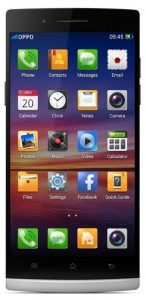
    With a low price-tag and high-end hardware, the Oppo Find 5 has managed to make a name for itself as an affordable premium smartphone. The handset, which runs runs Android 4.1 Jelly Bean, is available in a number of major markets including the US but, until today, eluded the old continent.

    On Monday, little over five months after its unveiling, the Find 5 is finally available in Europe. The Chinese maker sells the smartphone for EUR 399 in the 16 GB storage trim and EUR 429 for the 32 GB version. Available color choices include Midnight and White (the more expensive model can only be purchased in the former shade). Let’s take a look at the specs.

    The Find 5 packs a 5-inch IPS display with a resolution of 1080 by 1920 and a 441 ppi (pixels per inch) density. The smartphone ships with a 1.5 GHz quad-core Qualcomm Snapdragon S4 Pro processor (similar to the LG Optimus G and HTC DROID DNA), an Adreno 320 GPU (Graphics Processing Unit), 2 GB of RAM and a 2,500 mAh battery.

    The Find 5 also features a 13 MP back-facing camera and a 1.9 MP shooter on the front. Other specifications include: HSPA+ cellular connectivity; Wi-Fi 802.11 a/b/g/n; Bluetooth; NFC (Near Field Communication); GPS; DLNA and the usual array of sensors. The package also contains two NFC tags.

    The attractive price may steer some buyers towards the Find 5, however those looking for the best hardware currently available may want to look elsewhere. Smartphones like the HTC One and Samsung Galaxy S4, albeit more costly, pack newer and faster chipsets and, more importantly, are available in most carrier stores across Europe.

  • HTC One with larger screen pending announcement, multiple carrier versions exist

    HTC_One_Phablet_Leak

    @Evleaks tweeted today that the HTC One phablet is moving around internally under the name T6. The screen size is rumored to be about 6-inches, and should have some pretty nice specs otherwise. According to the graphic above, it should have a few versions for different carrier networks:

    T6_UL: cassiopeia Communication system: GSM / WCDMA / LTE

    T6_U: columba Communication system: GSM / WCDMA

    T6_ULA: delphinus Communication system: GSM / WCDMA / LTE

    T6_WL: crater Communication method: GSM/WCDMA/CDMA2000/LTE

    T6_WHL: eridanus Communication method: GSM/WCDMA/CDMA2000/LTE

    More details to come.

    Sources: HTC Soku and @evleaks 

    Come comment on this article: HTC One with larger screen pending announcement, multiple carrier versions exist

    Visit TalkAndroid for Android news, Android guides, and much more!

  • Texas Shooting Spree Leaves Two Dead

    A Texas shooting spree over the weekend has left two people, including the shooter, dead.

    NBC News reports that a 23-year-old North Carolina resident went on a two-county shooting spree through Texas over the weekend. Authorities chased the man, who was driving a pickup truck, for two hours.

    Police are just starting to piece together the events that led to the two hour chase that left five injured and two dead. The gunman first shot a woman in her car at 4:30 a.m. She is still at the hospital. He then shot and injured two people at a gas station, but both were quickly treated and released. He shot and injured another when he headed back to where he came from. Responding to reports of shots fired, police found Alicia Torres, the only person to have died, in her car.

    The police soon caught up with the shooter and engaged him in a firefight. During the shootout, the shooter was shot and killed. It was later found that the shooter had an assault rifle, a handgun and hundreds of rounds of ammunition.

    No concrete details have been released just yet, but police are investigating all the events to find a cause behind the violence.

    In other news, Chicago was also the center of multiple shootings over the weekend that left six people dead.

  • eBay Deal of the Week: 1970 VW Beetle “The Kiss Bug”

    kiss01

    If there was ever a time to purchase a car based solely on emotion, then this would be it. Up for sale on eBay is this 1970 VW Beetle aptly dubbed, “The Kiss Bug”. From the Gene Simmons tongue, to the black flowing locks that actually blow in the wind, this little Beetle is much more than your average art car. Power comes from a strong running 1600cc single port engine with 12 volt electronics that make for an excellent runner and driver. Sure, it may be over the top for some, but if you’re a KISS fan, then there is no better ride for you to be parking in your driveway. Check out some pics after the jump or go directly to the eBay link below.

    Source: eBayMotors.com

    kiss12

    kiss14

    kiss25

    kiss11

    kiss04