Category: News

  • How You Can Benefit from All Your Stress

    You are stressed — by your deadlines, your responsibilities, your ever-increasing workload, and your life in general. If you are like me, you even stress about how much stress you’re feeling — worrying that it is interfering with your performance and possibly taking years off of your life.

    This might sound a little crazy, but what if it’s the very fact that we assume stress is bad that’s actually making it so bad for us? And what if there were another way to think about stress — a way that might actually make it a force for good in our lives? Well there is, according to new research from Yale’s Alia Crum and Peter Salovey, and Shawn Achor, author of The Happiness Advantage.

    Let’s take a step back, and begin with a different question: What is stress?

    Generally speaking, it’s the experience — or anticipation — of difficulty or adversity. We humans, along with other animals, have an instinctive physical response to stressors. It includes activation of the sympathetic nervous system (“fight or flight”), inhibition of the parasympathetic nervous system (“rest and digest”), and the release of adrenaline and cortisol. But what does all of that do? In short, it primes the pump — we become more aroused and more focused, more ready to respond physically and mentally to whatever is coming our way.

    Kind of sounds like a good thing, doesn’t it?

    But wait, you say, can’t chronic stress make us sick? Can’t it take a toll on our immune functioning?

    Yes…but there is plenty of evidence that stress can also enhance immunity.

    Well then, you point out, can’t it leave us feeling depressed and lethargic?

    Yes… but studies show that it can also create mental toughness, increase clarity, result in greater appreciation for one’s circumstances, and contribute to a sense of confidence built on a history of overcoming of obstacles (which is the best, most long-lasting kind of confidence you can have). So stress is bad, and somehow also good. How can we make sense of the paradoxical nature of stress?

    I’ll bet right now you are saying to yourself, it’s the amount of stress that matters. Low levels may be good, but high levels are still definitely bad. (i.e., What doesn’t kill you might make you stronger….but too much stress is probably going kill you.)

    The problem with this theory — which was once the dominant theory among psychologists, too — is that by and large, it doesn’t appear to be true. The amount of stress you encounter is a surprisingly poor predictor of whether it will leave you worse (or better) off.

    As it turns out, your mindset about stress may be the most important predictor of how it affects you. As Crum, Salovey, and Achor discovered, people have different beliefs about stress. Some people — arguably most people — believe that stress is a bad thing. They agreed with statements like “The effects of stress are negative and should be avoided,” and the researchers called this the stress-is-debilitating mindset. Those who instead agreed that “Experiencing stress facilitates my learning and growth” had what they called a stress-is-enhancing mindset.

    In their studies, Crum and colleagues began by identifying stress mindsets among a group of nearly 400 employees of an international financial institution. They found that those employees who had stress-is-enhancing mindsets (compared to stress-is-debilitating) reported having better health, greater life satisfaction, and superior work performance.

    That’s already rather amazing, but here’s the best part — your mindset can also change! If you have been living with a stress-is-debilitating mindset (like most of us), you don’t have to be stuck with it. A subset of the 400 employees in the aforementioned study were shown a series of three-minute videos over the course of the following week, illustrating either the enhancing or debilitating effects of stress on health, performance, and personal growth. Those in the stress-is-enhancing group (i.e., the lucky ones) reported significant increases in both well-being and work performance.

    Yet another study showed that stress-is-enhancing believers were more likely to use productive strategies, like seeking out feedback on a stress-inducing task. They were also more likely to show “optimal” levels of cortisol activity. (It turns out that both too much and too little cortisol release in response to a stressor can have negative physiological consequences. But with the stress-is-enhancing mindset, cortisol release is — like Baby Bear’s porridge — just right.)

    Taken together, all this research paints a very clear picture: stress is killing you because you believe that it is. Of course, that doesn’t mean you aren’t juggling too many projects at once — each of us has limited time and energy, and people can and do get overworked.

    But if you can come to see the difficulties and challenges you face as opportunities to learn and grow, rather than as your “daily grind,” then you really can be happier, healthier, and more effective. Maybe you don’t need less stress — you just need to think about your stress a little differently.

  • What would the perfect news application designed for Google Glass look like?

    To say there’s a lot of debate about the “wearable technology” known as Google Glass would be an understatement. Some enthusiasts see it as the future of mobile man-machine interfaces, while others say it is more likely to be the new Apple Newton — in other words, a widely-hyped product that will ultimately fail. But let’s assume some form of head-mounted display becomes commonplace: how will it change the way we consume content, and how will news outlets of all kinds have to change the way they think about what they do?

    Google showed off some prototype apps at the South by Southwest interactive festival that it came up with for its virtual display, including interfaces for photo-sharing and other services that either used voice commands or touch menus that rely on the device’s touch panel (which sits on the side of the headset). One of the apps it demonstrated was a New York Times app — designed by a developer at the newspaper — which mostly just pulled up headlines, but also allowed the user to ask for the story to be read aloud.

    Voice interface, real-time, location aware

    The voice interface for Glass is one of the obvious differences between it and other devices, although both the iPhone and Android phones support similar features for specific tasks via services like Siri and voice search. The need for audio input with Glass is driven in part by the size of the display, which is probably one of the most significant limiting factors when it comes to content: since it projects only a small virtual screen, there isn’t a lot of real estate for images or large chunks of text.

    So what would the perfect news app designed for Glass look like? What follows are a few ideas I came up with — feel free to add your own in the comments:

    • Short excerpts: If you have limited real estate, then you need to be concise, so a headline and a short snippet of text would be ideal — at least as a starting point. In addition to Google News, there are already a number of services that are focusing on this approach for mobile devices, including Circa and Summly (Circa will be part of our startup showcase at paidContent Live on April 17). Theoretically at least, news-wire services would be best equipped for this kind of content.
    • Real-time updates: In addition to concise summaries of news stories, Circa also offers another interesting feature that would be very useful for a device like Glass, which is the ability to “follow” a story and get real-time updates as they arrive. In a sense, this would be like a news-specific version of Twitter — very short, real-time and likely curated or filtered by an editor, whether a human being or an algorithm or both.
    • Designed for voice and touch: As the Google prototype shows, voice is going to be an obvious interface for Glass, and using the touch panel will also be important way of interacting with the content. That means a news app that can be navigated via spoken keywords (next, more, etc.) as well as one that is segmented in some way so that chunks can be chosen quickly and easily with a tap. This would require news outlets to do a fair amount of work with metadata and tagging of their content.
    • Location aware: To me at least, one of the most interesting aspects of a mobile device like Glass is that it knows where you are, and thanks to Google’s image-recognition technology, in many cases it even knows what you are looking at. The potential for adding useful information is huge, and Google has provided a glimpse of what that might be like with its Field Trip app, which adds “augmented reality”-style data. News updates and archives could be a significant source of useful information about specific locations, events and objects.
    • Prescriptive data: In addition to Glass, one of Google’s more interesting pieces of technology is Google Now, the dashboard it provides on some Android platforms (and may be bringing to iOS) that pulls together information from a variety of sources — calendar, email, photos, traffic — to tell a user what they need to know. Robin Sloan and Matt Thompson envisioned this kind of content in 2011 as part of a future in which heads-up displays appear on objects like mirrors, photo frames and eyeglasses.

    Not just news, but useful information

    The migration of content to mobile platforms like Glass — which in many ways is just part of the ongoing evolution begun by mobile phones and tablets — poses a number of challenges for traditional and even new-media outlets. The technological know-how to take advantage of Google’s APIs, and to structure and tag content with metadata that will make it useful, is one challenge.

    Another challenge is the ability to think of information in different ways: not necessarily just as “news” but specific kinds and formats of news, or even more broadly as simply “useful information” for someone wearing a mobile device. This isn’t something that most traditional media outlets are used to thinking of as important, but they are going to have to start doing so.

    That’s not to say every news organization has to suddenly divert resources to the creation of content for Google Glass or other heads-up displays — but it does mean they need to start thinking about what it would involve now, and transforming some of the ways they produce content to take advantage of it. Not only will those skills will be useful for all kinds of mobile devices, but if they don’t start the evolution soon, Google will fill the data gap itself and they will be left on the outside looking in.

    Images courtesy of Flickr users Thomas Hawk and Arvind Grover

    Related research and analysis from GigaOM Pro:
    Subscriber content. Sign up for a free trial.

    • Twitter Finally Launches Native Windows 8 App

      After promising Windows 8 users that a native app was on the way, Twitter has finally delivered. Twitter for Windows 8 has just hit the Windows Store.

      Twitter first announced that they were working on an app for Windows 8 back in October 2012, saying that Windows 8 “needs a great Twitter app.” Twitter, who is all about user consistency and uniform experience, simply couldn’t let the Windows 8 experience on Twitter be controlled by a handful of third-party apps.

      Twitter for Windows 8 features many of the things that will make it familiar to Twitter users (of any kind), like the home, connect, discover, and me tabs. But it also sports some app-specific features that makes it a truly Windows 8 experience. For instance, the app has a snap view, which lets users adjust the size of the app and run other apps beside it.

      The app also has landscape view for photos and two new charms, share and search, which let users tweet and search from any app, respectively.

      And as you might expect, there are also Twitter live tiles and notifications which will display no matter which app is running at the time.

      “Twitter for Windows 8 brings you all the design, features and functionality of Twitter combined with the fast and fluid technology of Windows 8,” says Twitter.

      Twitter for Windows 8 is now available in 22 languages.

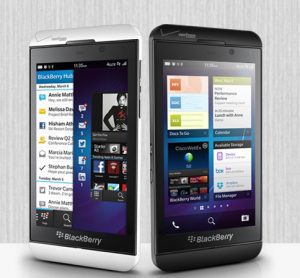
    • The BlackBerry Z10 is NOW available for pre-order on Verizon

      Two days ago, US carrier AT&T introduced the BlackBerry Z10 into its portfolio, allowing users to pre-order the new smartphone for $199.99 on a two-year contract. And on Thursday, following AT&T’s lead, rival mobile operator Verizon also made the BlackBerry Z10 available for pre-order.

      The big red has chosen to offer the BlackBerry Z10 for the same price as AT&T — $199.99 on a two-year contract. The smartphone will be available in two color options — black and white — and will hit the online and bricks and mortar Verizon stores starting from March 28, a mere two weeks from today.

      Prospective BlackBerry Z10 users hunting the white version have only one carrier option — the big red — as it is a Verizon-exclusive model. On the other hand, for users looking into a one-year contract AT&T is currently the only option, with the carrier offering the BlackBerry Z10 for $449.99.

      Off-contract, on Verizon, the BlackBerry Z10 runs for $599.99 while on AT&T it goes for $50 less at $549.99.

    • Jeff Gordon Prank Ad Isn’t Real, But it is Fun

      This week, Pepsi released an ad designed for viral marketing online. It features Nascar driver Jeff Gordon dressing up with a fake beard and moustache, which is ridiculous enough on its own. He then proceeds to supposedly prank a used car salesman by taking a car for a very intense test drive while recording the man’s reactions using a camera hidden in a Pepsi can.

      Of course, the entire thing has been staged. Pepsi hasn’t come out and said so, but the used car salesman’s dialogue is cringeworthy. Saying the name Mike over and over to reinforce the notion he doesn’t suspect the driver is Gordon is particularly bad. Also, shots from some sort of dashboard camera can be seen during the video, and the fine print “CLOSED COURSE. PROFESSIONAL DRIVER. DO NOT ATTEMPT.” is a pretty big give away.

      Still, it’s a fun ad, and imagining that scenario in real life is even more fun. Except for the shouting and screaming that would no doubt take place.

    • JAlbum 11 adds support for video clips alongside photos

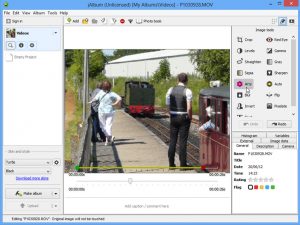
      Web gallery creation tool JAlbum 11.0 has been released for Windows, Mac and Linux. Version 11.0 allows users to combine video with photos for the first time using the program. Features include support for over 160 video formats, tools for rotating and trimming clips, and preview image generation.

      Version 11.0 also improves existing photo-editing tools, updates existing skins and includes a number of developer-friendly improvements, bug fixes and general tweaks.

      The key new feature in JAlbum 11.0 is support for video clips in addition to existing support for photo. Clips can be imported from a wide variety of formats via drag-and-drop, and JAlbum is capable of automatically detecting and adjusting video orientation on import. Users can then double-click individual clips to edit them — in addition to using the existing image tools on offer, videos can also be edited by trimming the start and end points. Users can also choose a preview image by using the slider beneath the video itself.

      Video support can be enabled or disabled under Preferences, and users can configure which video formats are supported by the program via the Advanced tab. All videos are converted to MP4 format prior to uploading to the web for maximum compatibility, and all published albums containing movies are automatically tagged with “video”.

      Other changes to version 11.0 include the bundling of the Arty and AutoCorrection image tools with JAlbum itself. All images — not just those imported directly from digital cameras — can now be rotated too. There are also minor updates to the Turtle, Base, Mr.Burns and Lumen skins.

      Developers gain a new API for unzipping and downloading, plus closeupPath for supported videos has been set to slide page, which enables embedded video. Also added are videoWidth and videoHeight variables, available when video support is enabled. A fileCategory variable introduces file category support, and the blur filter now accepts defined radius and strength.

      Version 11.0 is rounded off by a number of bug fixes, new program icons and a new 128×128 web icon set. JAlbum 11.0 is a free-for-personal-use download for Windows, Mac and Linux. Published web albums are ad-supported — users can purchase a license or JAlbum hosting account to remove these. Licenses start from €27 for non-commercial use — a current saving of 30 per cent on the MSRP.

    • iOnRoad Wins Qualcomm Ventures Prize

      iOnRoad, an Israeli maker of a driving app for smartphones, has won the third annual Qualcomm Ventures QPrize. The company previously won QPrize’s Israel regional competition, and with it, $100,000 in venture financing. With the new prize, iOnRoad will receive an additional US$150,000 in convertible note funding from Qualcomm.


      PRESS RELEASE

      Qualcomm Incorporated QCOM +0.44% , through its venture capital arm Qualcomm Ventures, today announced the winner of the third annual Qualcomm Ventures QPrize(TM), an international venture investment competition, at an event hosted in Napa. iOnRoad, an Israeli company, took top honors against tough competition from seven other regional winners representing North America, Eastern Europe, Western Europe, Brazil, China, Korea, and India.

      The company previously won QPrize’s Israel regional competition and was awarded US$100,000 in venture financing to cultivate their business. As the QPrize Grand Prize winner, iOnRoad will receive an additional US$150,000 in convertible note funding from Qualcomm.

      iOnRoad improves driving in real-time using the power of advanced smartphones. The app uses the smartphone’s native camera and sensors to detect vehicles ahead of their own, alerting drivers when they are in danger. iOnRoad’s VisualRadar maps objects in front of the driver in real time, calculating the user’s current speed using native sensors. As the vehicle approaches danger, an audio-visual warning pops up to warn the driver of a possible collision, allowing them to brake in time.

      “We had an enormous amount of interest in this year’s QPrize competition and it’s clear that entrepreneurs have fully embraced the mobile platform and are on their way to building some great companies,” said Nagraj Kashyap, senior vice president of Qualcomm Ventures. “We congratulate iOnRoad on their exceptional achievement and look forward to helping them expand their business opportunities and market presence. We also want to congratulate the seven other regional winners — Might Text, Everplaces, Pult, Touchair, Deck App Technologies, Easyworks and Zoop — who have each received US$100,000 (EUR 100,000 in Europe) in venture financing from Qualcomm.”

      More information on iOnRoad is available at the company’s website: http://www.ionroad.com/. The third annual Qualcomm Ventures QPrize competition provides over $1 million in total seed funding for the entrepreneurs of today as they work to bring their ideas to market. Additional details on regional finalists and the Grand Prize event are available at www.qprize.com.

      About Qualcomm IncorporatedQualcomm Incorporated QCOM +0.44% is the world leader in 3G, 4G and next-generation wireless technologies. Qualcomm Incorporated includes Qualcomm’s licensing business, QTL, and the vast majority of its patent portfolio. Qualcomm Technologies, Inc., a wholly-owned subsidiary of Qualcomm Incorporated, operates, along with its subsidiaries, substantially all of Qualcomm’s engineering, research and development functions, and substantially all of its products and services businesses, including its semiconductor business, QCT. For more than 25 years, Qualcomm ideas and inventions have driven the evolution of digital communications, linking people everywhere more closely to information, entertainment and each other. For more information, visit Qualcomm’s website, OnQ blog, Twitter and Facebook pages.

      Qualcomm is a registered trademark of Qualcomm Incorporated. CDMA2000 is a registered trademark of the Telecommunications Industry Association (TIA USA). All other trademarks are the property of their respective owners.

      The post iOnRoad Wins Qualcomm Ventures Prize appeared first on peHUB.

    • Galaxy S IV videos leak, showcasing SmartPause and floating touch control [video]

      Galaxy S IV Specs Leaked Video
      A number of videos allegedly showcasing new features on the Galaxy S IV have leaked just hours before Samsung’s (005930) press conference at Radio City Music Hall in New York City. In what could be considered the biggest leak yet, four new videos demonstrate various upcoming features such as SmartPause eye tracking, floating touch control and a new lock screen.

      Continue reading…

    • Scoop: Deutsche Telekom dives into multi-cloud management with NetOptimize

      Deutsche Telekom (DT) hasn’t announced this one yet, but the German communications giant is getting into the cloud multi-sourcing business. The website for two new services is already live: they’re called NetAnalyze and NetOptimize, and the focus seems to be on content delivery.

      While public cloud services, including content delivery networks (CDNs), are usually very reliable, no one is perfect. Outages happen, and as a result some companies find themselves looking into multi-cloud strategies to ensure redundancy (and to optimize performance and cost). The issue is that cloud costs and resource allocation are complex — hence the emergence of a new breed of cloud mediation services such as Rightscale and Cedexis.

      DT is preparing two complementary services in this space. The first is NetAnalyze, which draws on the billion network measurements that DT’s “community” takes every day, spanning 32,000 networks in 230 countries. Webmasters can put the NetAnalyze tag on their site and visiting customers will then automatically generate anonymized measurement for metrics like throughput and response time.

      Then NetOptimize kicks in. When a customer requests the website from wherever they are located, NetOptimize will use the NetAnalyze metrics to determine which provider will deliver the content most quickly, and automatically route the content accordingly. Pricing for this load-balancing service is pay-per-use. The result, in theory, is better performance and lower risk of outages, and also better price-to-performance ratios, given the ability to hop between different providers according to needs.

      DT’s website also touts the fact that such multi-sourcing approaches make it easier to avoid vendor lock-in. The company says NetAnalyze and NetOptimize make it possible to “form a unified strategy across multiple platforms (cloud, data center or CDN)”.

      A glance at the NetOptimize portal (which appears to default to Japanese, at least from my end) shows that the service covers numerous clouds and CDNs. On the cloud side, we have locations for Amazon EC2, Google App Engine, GoGrid, InstaCompute, Internap AgileCLOUD, Joyent, PhoenixNAP, Profitbricks, Rackspace Cloud, Softlayer and Windows Azure. For CDN, there’s Akamai, Azure, BitGravity, CacheFly, CDN77, CDNetworks, CDNVideo, ChinaCache, ChinaNetCenter, CloudFlare, Cloudfront, Edgecast, Fastly, Fastweb, Highwinds, Internap AgileCAST, Internode, Level3, Limelight, NetDNA, Ngenix, OnApp, Pacnet, UPX CloudCache and Yacast.

      I’ve asked DT for further details of the service, such as when they intend to officially take the wraps off it, and will add their response when I get it.

      Related research and analysis from GigaOM Pro:
      Subscriber content. Sign up for a free trial.

    • Google’s Spring Cleaning Shutters More Than Just Google Reader

      Google is continuing its habit of announcing product closures in bulk with another round of “spring cleaning.” The first “spring cleaning” actually happened in the Fall of 2011, when Google axed things that you probably don’t even remember at this point – things like Google Desktop, Google Notebook, Sidewiki, and Aardvark.

      The point is, Google has been doing this sort of thing for a while now. But this time around, one of Google’s decisions to shutter a specific product has people more riled up than we’ve seen in the past.

      As you may have heard, Google is shutting down Google Reader, the RSS feed reader first launched in 2005. Google cites a decline in usage, but some fo the reaction on Twitter and blogs would lead you to believe that there is a sizable contingent that cares deeply about the future of the web’s best RSS reader.

      Like any other product that Google spring cleans, Reader is being cut so that Google can “focus, otherwise spread themselves too thin and lack impact.”

      But Google Reader isn’t the only product or service getting the ax at this round of cuts.

      Google is retiring Building Maker. The app, which let people make 3D models of buildings for Google Earth and Maps, will go dark on June 1st. The company is also shutting down Google Cloud Connect, stating that Google Drive on your desktop “achieves the same thing more effectively.”

      More closures include Google Voice app for BlackBerry, after which Google suggests users take to their HTML5 app. Google Search API for Shopping is also on the chopping block and will be shut down completely on September 16th.

      More closures:

      Apps Script will be deprecating the GUI Builder and five UiApp widgets in order to focus efforts on Html Service. The rest of the Ui Service will not be affected. The GUI Builder will continue to be available until September 16, 2013. For more information see our post on the Google Apps Developer Blog.

      CalDAV API will become available for whitelisted developers, and will be shut down for other developers on September 16, 2013. Most developers’ use cases are handled well by Google Calendar API, which we recommend using instead. If you’re a developer and the Calendar API won’t work for you, please fill out this form to tell us about your use case and request access to whitelisted-only CalDAV API.

      Beginning today we’ll no longer sell or provide updates for Snapseed Desktop for Macintosh and Windows. Existing customers will continue to be able to download the software and can contact us for support. We’ll continue to offer the Snapseed mobile app on iOS and Android for free.

      Since spring cleaning began in 2011, Google says that they have shut down 70 features or services.

    • Google Reader, please don’t go — I need you to do my job

      When I learned Wednesday night that Google Reader is shutting down, I literally broke into a sweat. Like many journalists, I’ve come to rely on the 242 RSS subscriptions I manage through Google Reader. It’s the first thing I check every morning — second only to making a cup of coffee — and, along with Twitter and email, one of the top three resources I use to do my job. And honestly, if I had to get rid of one of those, it would be the email.

      Instead, Google’s making the choice for me: As of July 1, Google Reader will be no more. “While the product has a loyal following, over the years usage has declined,” the company wrote on its blog. I’d bet that journalists are among the most loyal followers of all, and this morning we are a very unhappy bunch. “Google Reader” is the number-one trending topic on Twitter right now.

      The loss of Google Reader could change the way a lot of web journalists, like me, do our jobs. Here are some of the reasons we love the service — and why there’s an opportunity for other companies to step up and serve us (assuming we’re not somehow able to convince Google to keep Reader alivewe’ll even pay for it!).

      Twitter isn’t a substitute for RSS…

      The best thing about Google Reader, from my point of view, is that it allows me to scan a lot of information quickly, with the assurance that I’m not missing anything. That’s why, for me, it fills a completely different role than the (equally useful) Twitter does. Twitter provides a snapshot of a moment in time, and you’re likely to miss tweets as they whiz by; Google Reader stores everything. The search on Google Reader is also vastly better than the search on Twitter, and it goes back indefinitely.

      …and neither is Flipboard

      Services like Flipboard are great if you want to see the most popular stories on a given topic. But as someone who really geeks out digital book publishing, I don’t just want to see the stories that an aggregator recommends for me because they’ve reached a critical mass. I want to keep up with the little blogs, the niche blogs that rarely surface but that do occasionally pick up on some story or emerging trend that I would simply have never learned about otherwise. Google Reader helps me keep track of what’s going on at the roots of my beat. I choose the sources I’ll follow there, and I know that I won’t miss out on one of their stories. I trust Flipboard (kind of) to link me to some big political or tech story, but I don’t trust it to “discover” the nitty-gritty stuff for me, and for good reason: It doesn’t.

      In addition, Flipboard is a lean-back kind of service. I use it when I want to curl up and read. In the mornings when I’m looking for stories, I don’t want to tap through a pretty magazine-like interface on my iPad. I just want to scan headlines and text fast, and I want to do it on my laptop.

      So what’s next?

      Now that the panic’s subsiding a little bit, it looks as if viable alternatives to Google Reader are going to emerge. In fact, Instapaper’s Marco Arment actually thinks the closure of Reader could be a good thing for people who rely on RSS: “We’ll be forced to fill the hole that Reader will leave behind…We’re finally likely to see substantial innovation and competition in RSS desktop apps and sync platforms for the first time in almost a decade.”

      Alternatives are sure to pop up in coming days. Search Engine Marketing Land has a big list here. Digg is apparently working on a Reader-like service. Feedly and Reeder, two apps that integrate with Google Reader, have already promised that they won’t die off just because the service does. “A lot of Google Reader users use their reader as a research/curation tool and need to be able to crunch through a lot of articles very fast,” Feedly wrote on its blog Thursday morning — and explained how customers can use Feedly to do just that. Reeder also tweeted that it’s staying in business, though it hasn’t explained how yet.

      “I think that there is still a lot of value a service like Reader could provide — particularly in a world with increasing information overload coming us from many different sources,” Brian Shih, a former Google Reader product manager, writes on Quora. “But Reader at Google was pigeonholed as an RSS-reader explicitly, and didn’t have a chance to grow beyond that to explore that space.” Similarly, Chris Wetherell, an early creator of Google Reader, told Om that the service missed early monetization opportunities that other companies still might be able to tap into.

      The good news for journalists and others who rely on Google Reader is that, while Google clearly doesn’t see a business opportunity in the legions of Reader fans, other companies do. And over the next couple of months, they’re going to be competing for our business.

      Related research and analysis from GigaOM Pro:
      Subscriber content. Sign up for a free trial.

    • Medieval Knight Found Underneath Car Park

      Knights today are romanticized in pop culture as noble warriors and defenders of chivalry, but the real thing has been found this week in Scotland.

      A medieval knight has been found buried underneath a car park in Edinburgh this week. The car park was reportedly being demolished when a decorated sandstone slab covered in the Calvary Cross and a sword was found. The knight’s skeleton is that of an adult and the markings on the slab indicate the remains could be that of a noble.

      The knight’s skeleton will now be taken for study, which should be able to determine significant facts about the person’s life, including the time period in which he lived.

      “We hope to find out more about the person buried in the tomb once we remove the headstone and get to the remains underneath but our archaeologists have already dated the gravestone to the thirteenth century,” said Richard Lewis, culture convener for the Edinburgh City Council.
      “This find has the potential to be one of the most significant and exciting archaeological discoveries in the city for many years, providing us with yet more clues as to what life was like in Medieval Edinburgh.”

      The site of the burial was reportedly also the site of several historical buildings, such as the 13th century Blackfriars Monastery. The car park was being demolished to build a rainwater-harvesting tank for the Edinburgh Centre for Carbon Innovation (ECCI).

    • We Need Open Data To Change The World

      Social sector organizations are in the business of changing the world, and the information they collect and use should be the catalyst for making that happen. Courtesy of broadband Internet and mobile wifi we now have global, low-cost ways to share data that every social-purpose organization can plug into. From it, they should be able to draw what they need about previous experiments, effective practices, and achieved outcomes, as well as what has failed and why. That way, local social entrepreneurs can mimic what works elsewhere and share their ideas, successes, and failures.

      Here are two organizations doing just that. The Awesome Foundation enables funders on four continents to find great ideas to support. CrisisCommons relies on open data to let others quickly learn from each other to reach people in immediate need.

      In 2010, Tim Hwang and a few friends in Cambridge found themselves questioning the costs associated with raising a few thousand dollars to launch an online project. Their colleagues at Harvard and MIT regularly devoted hundreds of hours to proposals for million dollar investments, but they only needed a few thousand bucks to test some software. Several pub conversations and a few Facebook posts later, the Awesome Foundation was born — a small group of friends, each committing $100 a month, would accept proposals online for “awesome projects.” Each month the group would put $1,000 to the best idea from artists, community organizers, and techies. The core principles of the group: Make it awesome. Share the ideas. Let folks know.

      Fast forward three years. There are now Awesome Foundation chapters in 55 cities in eleven countries. They’ve funded art projects, wi-fi routers, and community events. Many of their projects go on to raise a next level of funding from Kickstarter or institutional investors. In 2011 the John S and James L Knight Foundation invested $500,000 to expand the Awesome Foundation’s model to Detroit.

      Open data — the idea that certain data should be freely available to everyone to use as they wish — was the key to scaling Awesome Foundation’s core idea. Proposals are open, the process is easily copied, and local adaptation is encouraged. When you apply to one Awesome Foundation you do so knowing that other chapters may take an interest in your proposal, and that what you produce in Toronto will be shared with peers in Melbourne.

      CrisisCommons is another example. For years, a small group of crisis responders from nonprofits and the federal government had been meeting for coffee in Washington, DC and talking about how technology could facilitate disaster response. When the devastating earthquake hit Haiti in 2010 they had a ready-made network of project managers and techies in cities all over the world. Within days the network organized to develop lightweight mobile apps for crisis responders.

      The tools were built in weekend shifts by coders who worked locally and then shared their code globally for similar groups in other countries. Responders in Haiti could test it, use it, and share their feedback with the dispersed network. Whoever was available to fix the bug or add the features could do it. The effort, called CrisisCommons, focused on building a network of peers and a system for sharing data.

      The level of information-sharing that Awesome Foundation and CrisisCommons do is key to the organizations’ ability to make a difference. But this is not the norm. Instead most social good organizations adopt an institutional replication model, where an organization focuses on reproducing the institution, not reusing the data.

      This needs to change in two ways:

      First, nonprofits should be using their data for social purposes only. We already distinguish nonprofit corporations from their commercial counterparts by the “non-distribution” clause that determines how they use excess revenue. A nonprofit must reinvest any “profits” in the work of the organization rather than benefitting private individuals. That’s the little trick of corporate code that maintains public trust in the enterprises and keeps resources focused on the social mission.

      Nonprofits should take similar heed when it comes to using the personal data of their donors and beneficiaries. To ensure the ongoing support and trust of their supporters, nonprofits should rely on an “opt in” choice for the use of their data. They need to treat data “donation” the same way they protect financial ones. By allowing donors an “opt in” choice, nonprofits will get better, more useful data and maintain public trust.

      However, when it comes to enterprise level data, the default should be to share all the data you can. This is the second change that needs to happen. With regard to outcomes data or project insights, the default should be an “opt out” choice. Most of the information that organizations collect on their work never gets shared outside of their own staff meetings. Not because it’s proprietary or scandalous, but because that’s the way it was done in the pre-Internet, publish-it-once world. Nonprofits don’t live in that world anymore, none of us do. If we’re going to scale any of our efforts to solve social problems we’ve got to make much better use of the fastest scaling tool humans have ever built: open data.

      Shifting these two defaults will help nonprofits become trusted and purposeful users of data. Have you seen other examples of nonprofits using open data for social impact? What made those examples work?

      Please join the conversation and check back for regular updates. Follow the Scaling Social Impact insight center on Twitter @ScalingSocial and give us feedback.

    • Vagrant gets busy with VMware Fusion, Rackspace support

      Vagrant, a popular open source tool that automates the setup of virtual workspaces for software developers, is getting promised support for VMware Mitchell HashimotoFusion and for Rackspace Open Cloud with the Vagrant 1.1. release, due on Thursday.

      Initially, Vagrant ran only on Oracle’s VirtualBox, but in November, Vagrant creator Mitchell Hashimoto said he planned to add support for more platforms including VMware Fusion. He launched a company, Hashicorp, to do this and to offer ancillary services for Vagrant.

      In February, Hashicorp started testing a plugin for Amazon Web Services so that developers using Vagrant for local configuration can also hook right into Amazon’s public cloud. The new Rackspace support gives them a choice of clouds as well.

      For companies with many developers, configuring each machine for their work can take days or even weeks. Vagrant automates that workflow. As Hashimoto told me last fall, Vagrant makes it much easier to create isolated virtualized sandboxes for each project. Vagrant hooks both into VirtualBox (and now Fusion) and uses CFEngine, Chef or Puppet to set up the workspaces.

      Vagrant was initially a labor of love — or maybe of necessity — for Hashimoto, who built it for his own projects as a student at the University of Washington. But it took off beyond his expectations. Users include DISQUS, BBC News, Mozilla, Yammer, Expedia, LivingSocial, Nokia, and the New York Times.

      Related research and analysis from GigaOM Pro:
      Subscriber content. Sign up for a free trial.

    • Reuters – Judge Narrows PE Collusion Lawsuit

      A federal judge narrowed a closely watched lawsuit accusing some of the world’s largest private equity firms of colluding to drive down prices on companies they sought to buy, costing shareholders of the acquired businesses billions of dollars, Reuters reported. Despite letting part of the main claim go forward, U.S. District Judge Edward Harrington in Boston dealt the plaintiffs a significant setback in finding they fell short of showing an “overarching” conspiracy to drive down prices on takeovers valued at roughly a quarter trillion dollars. The civil antitrust lawsuit was brought in 2007 against 11 defendants, including prominent private equity firms such as Bain Capital Partners LLC, Blackstone Group LP, Carlyle Group LP, Goldman Sachs Group Inc‘s private equity arm, KKR & Co and TPG Capital Management LP.

      (Reuters) – A federal judge narrowed a closely watched lawsuit accusing some of the world’s largest private equity firms of colluding to drive down prices on companies they sought to buy, costing shareholders of the acquired businesses billions of dollars.

      Despite letting part of the main claim go forward, U.S. District Judge Edward Harrington in Boston dealt the plaintiffs a significant setback in finding they fell short of showing an “overarching” conspiracy to drive down prices on takeovers valued at roughly a quarter trillion dollars.

      “The evidence of each specific transaction, including defendants’ communications with each other, for the most part, fails to connect to a ‘larger picture’ of an overarching conspiracy,” Harrington wrote.

      “While some groups of transactions and defendants can be connected by ‘quid pro quo’ arrangements, correspondence, or prior working relationships, there is little evidence in the record suggesting that any single interaction was the result of a larger scheme,” he added.

      The civil antitrust lawsuit was brought in 2007 against 11 defendants, including prominent private equity firms such as Bain Capital Partners LLC, Blackstone Group LP, Carlyle Group LP, Goldman Sachs Group Inc’s private equity arm, KKR & Co and TPG Capital Management LP.

      JPMorgan Chase & Co, which provided financing and advice on some transactions, was also a defendant, but Harrington dismissed the largest U.S. bank from the case.

      “This makes what left of the plaintiffs’ case more of a steep, uphill climb,” Darren Bush, an antitrust law professor at the University of Houston, told Reuters.

      “JUMPING” CLAIM ALLOWED

      The plaintiffs were shareholders in the once publicly traded companies that were bought by the private equity firms between 2003 and 2007.

      They claimed to lose money because the firms allegedly conspired to deflate takeover prices, sometimes by 10 percent. Twenty-seven transactions were challenged, including 19 leveraged buyouts, six non-leveraged buyouts and two that were not completed.

      Much of the case was built on emails between principals at the private equity firms that the shareholders said reflected an implicit understanding to keep prices low, or else cost the firms, as one email put it, “a lot of money.”

      The transactions in the lawsuit concerned a wide variety of companies, such as Harrah’s, hospital chain HCA, pipeline operator Kinder Morgan, arts and crafts retailer Michaels Stores, toy store chain Toys ‘R’ Us, power company TXU and Spanish language network Univision.

      Harrington said the investors’ resistance to narrowing their lawsuit made the case “unnecessarily complex and nearly warranted its dismissal.”

      But he said the investors may pursue a claim that the firms agreed not to outbid each other after transactions were announced, a practice known as “jumping.” The judge also gave the defendants a fresh chance to seek dismissal of this claim.

      Harrington also allowed the investors to pursue a claim alleging a conspiracy to rig bids and not compete for HCA, the target of a $32.1 billion leveraged buyout in 2006 by Bain, KKR and others. Blackstone, Carlyle, Goldman and TPG are the remaining defendants against that claim, he said.

      Claims against JPMorgan were dismissed because the evidence did not show that the bank bid on target companies or took part in a “narrowed overarching conspiracy,” Harrington wrote.

      “It’s not a terrible defeat for the plaintiffs, but the judge wants them to provide something more concrete,” said Maurice Stucke, a University of Tennessee at Knoxville law professor and former U.S. Department of Justice antitrust lawyer.

      “Now that the case is more narrowly defined, it might increase the likelihood that the parties try to negotiate a settlement,” he added.

      “WE CAN BE UNSTOPPABLE”

      Christopher Burke, a partner at Scott & Scott representing the plaintiffs, said the shareholders plan to pursue their remaining claims.

      “From the plaintiffs’ perspective, this was a good day,” Burke said in a telephone interview. “This remains a multibillion dollar case, and that is going forward. What was written by some defendants in their papers, and by some of the press, that what we had was ‘thin gruel’ has been dispelled.”

      Joseph Tringali, a partner at Simpson, Thacher & Bartlett who argued on behalf of the defendants, declined to comment.

      In one example of the alleged collusion, after Blackstone topped KKR with an $18 billion bid for technology company Freescale Semiconductor, Blackstone President Hamilton “Tony” James emailed KKR co-founder George Roberts.

      “We would much rather work with you guys than against you,” James wrote. “Together we can be unstoppable, but in opposition we can cost each other a lot of money.”

      Mitt Romney, the 2012 Republican presidential candidate and a Bain founder, left that firm in 1999 before the transactions in question and was not a defendant.

      The case is Dahl et al v. Bain Capital Partners LLC et al, U.S. District Court, District of Massachusetts, No. 07-12388. (Reporting by Jonathan Stempel in New York; Editing by Grant McCool, Andrew Hay, Bernard Orr and Dan Grebler)

      The post Reuters – Judge Narrows PE Collusion Lawsuit appeared first on peHUB.

    • Google Reader Is Shutting Down July 1st

      One of the most popular feed readers around is shutting down this year – due to declining usage.

      Google Reader, the platform Google first launched in 2005, is simply one of the many Google services on the chopping block this week. Google has just put out their annual list of spring cleaning, which consists of features and products that Google is canning in 2013 in order to “focus, otherwise they spread themselves too thin.”

      Here’s what Google had to say about Reader in a blog post:

      We launched Google Reader in 2005 in an effort to make it easy for people to discover and keep tabs on their favorite websites. While the product has a loyal following, over the years usage has declined. So, on July 1, 2013, we will retire Google Reader. Users and developers interested in RSS alternatives can export their data, including their subscriptions, with Google Takeout over the course of the next four months.

      “If you’d like to download a copy of all your Reader data before then, you can do so through Google Takeout. You’ll receive your subscription data in an XML file, and the following information will be downloaded as JSON files,” says Google.

      You can go here to start downloading your Reader data from Takeout. Google assures users that the data will be easily transferrable to another similar product.

      “These changes are never easy. But by focusing our efforts, we can concentrate on building great products that really help in their lives,” says Google.

      But from the immediate backlash seen on Twitter and other social media, it’s clear that this decision is not going over well with longtime Google Reader users. There’s already a petition on change.org asking Google to reconsider.

      Other Google products to get the axe alongside Reader include Google Building Maker, Google Cloud Connect, and Google Voice for BlackBerry.

    • Leaked high-quality Galaxy S IV photos dispel any remaining mystery

      Samsung Galaxy S IV Photos
      With Samsung’s (005930) Galaxy S IV set to debut Thursday evening, the dam has finally broken. The slow trickle of leaked photos is now a river, and the highest quality images we’ve seen so far have been published by Chinese gadget blog IT168. While we likely already know nearly everything there is to know about the Galaxy S IV, these new photos show the handset’s sleek design in sharp detail, leaving nothing to the imagination. Samsung’s Galaxy S IV is expected to feature a 5-inch Super AMOLED HD display, an eight-core Exynos processor or a quad-core Snapdragon chipset depending on region, up to 64GB of storage, 2GB or RAM and Android 4.2 Jelly Bean. BGR will be on hand reporting live when Samsung unveils the Galaxy S IV Thursday night at 7:00 p.m. EDT, but in the meantime, several additional high-quality photos of the new smartphone follow below.

      Continue reading…

    • Galaxy S IV Now Leakiest Launch Ever, As Videos Of SmartPause And Floating Touch Features Surface

      galaxy s iv leak video

      Samsung will unveil the Galaxy S IV today at its event this evening at 7 PM ET in New York, but the cat is pretty much out of the bag at this point, and new videos have surfaced (via SammyHub) to try to spoil any remaining surprise. The Galaxy S IV videos depicts Floating Touch, SmartPause, the new unlock screen and the GSIV’s new web browsing experience.

      Floating Touch works essentially like its name would suggest, allowing a user to get tooltips and other information by hovering a finger over the surface of the screen, rather than with direct touch input. In the video, it’s shown being used to bring up image previews, for example, without opening the image completely. Looks like it’ll take some getting used to, but we’ll wait until hands-on time to pass judgement.

      With the Internet browsing experience, Samsung looks to have incorporated not head tracking features, but full hand gestures. The person using the phone in the video is seen using his hand to scroll the page he’s viewing up and down, and also to navigate back and forward in the browser. It looks pretty cool, but again there’s some question about how useful it’ll be in everyday applications.

      The SmartPause feature looks like it could be all of what actually launches with the Galaxy S IV that constitutes so-called “eye tracking,” according to a Bloomberg report yesterday. Still, it looks impressive. Essentially, it can pause a video when a user turns away, which is useful if you’re watching something on your mobile device and get interrupted by a pesky coworker asking you to actually do something related to your “job.”

      Finally, there’s the new unlock screen. Not much to say about this one, except that it appears to have Tinkerbell-style sparkle effects for tapping, and it unlocks with a swipe gesture.

      Samsung had better have some things it kept extra close to the chest at this upcoming event tonight, or else it’ll face the wrath of a thousand tech bloggers who feel ‘disappointed’ because they weren’t surprised by anything. Still, some of these features could go over very big with developers, depending on whether third-parties can access and use these features: hand gestures and Floating Touch in particular might be very useful for game and app makers looking to add some secret sauce to their Google mobile software  offerings for Samsung device owners.

    • Users rally against Google’s plans to shut down Reader

      Expressing his disappointment towards Google killing Reader from July 1, my colleague  said in our newsroom, “I swear I am switching to Firefox, Bing and Outlook.com in protest!”. Other users, however, have resorted to less extreme measures and instead chosen to show their non-acceptance through petitions.

      Less than 24 hours since Google gave us the sad news, there are at least three petitions on change.org with more than 37,000 signatures combined demanding the search giant “Keep Google Reader Running” and “Do not remove Google Reader on July 1, 2013“. One petitioner tried to appeal to Google’s good side with “Please do not shut down Google Reader“. The number of signatures may not appear to be high enough at the moment to reach the goal, but that will undoubtedly change in a matter of days, if not hours.

      On change.org, users like Bob Cagle portray the cloud-based service as the foundation for how they use the InterWebs. Cagle says: “Google Reader is the backbone of my daily web experience” and Kevin Timmerman further supports him: “I use Reader more frequently than ‘The Rest of the Internet’. I use it on PC, tablet and smartphone. Reader is the most important website in the world”.

      Others share a similar point of view as well, while some agree with my colleague’s, Alan Buckingham, assertion. Ryan Lee says: “Google reader is what kept me a loyal droid and Google+ user. Without the reader, I might as well jump ship to other devices and services”.

      On Twitter, for instance, Google Reader is the top trending topic, with related subjects including “google reader feedly”, “google reader petition”, “google reader alternative” and so on. Same goes for Google+ where #reader is the top trending topic yet again.

      As I am writing this article the Keep Google Reader Running petition has reached over 33,000 signatures alone, which suggests — alongside the number of strong responses from users on various social networks — that Google Reader still has a very loyal fan base that is not willing to let go that easily.

      Your move, Google.

      Photo Credit: diez artwork/shutterstock

    • eVOLVE™ Hybrid Wheels – Another Futuristic Gas Saving Wheel

      When the Ford F-150 Atlas concept showed off its electronically controlled active wheel shutters, we knew it wasn’t going to be cheap or durable. However, there is a new alternative that shows just as much fuel saving promise – eVOLVE™ Hybrid Wheels.

      eVOLVE™ Hybrid Wheels

      Will these futuristic wheels replace all stock manufacture wheels?

      The wheel from Lacks Wheel Trim Systems (LWTS) is “designed to be a lower-cost alternative to the eVOLVE™ Hybrid Wheels – Another Futuristic Gas Saving Technology,” according to SAE.org. They have already made a debut at both the Los Angeles and Detroit auto shows on a 2012 Ford Focus. Track and EPA five-cycle testing have showed a highway fuel-economy improvement of 1.1 mpg and .04 city.

      In a nut shell, there’s a very basic aluminum wheel with a composite cover attached. The basic wheel is light, and the cover is aerodynamic, so the system boost fuel economy about 3% on the highway, 1% in the city. That’s not much, but on a Tundra averaging 16mpg, that’s almost a 1mpg improvement.

      LWTS is billing these tires as an “attractive, highly engineered composite wheels that decrease weight and optimize aerodynamics for increased vehicle MPGs.” This statement has a couple of interesting points: 1. As stated in the SAE article, engineers can build a tire that maximizes MPG, however, they are, well, ugly. 2. The statement comes with the standard disclaimer that MPGs are based on personal driving habits and other factors. This shouldn’t be news to anybody. 3. LWTS says that when you upgrade to their wheels you immediately upgrade BOTH your vehicle’s style and MPGs. Quite a sales pitch.

      eVOLVE™ Hybrid Wheels - Ford Focus Side

      The eVolve wheels mounted on tires.

      The truth is that the wheels weigh 19.20 lbs and a typical production wheel weighs 23.7 lbs. This savings of about 4 lbs per tire adds up. Plus, the composite cover is designed to be more aerodynamic. It has been tested at the AeroDyn wind tunnel in Moorsetown, NC where NASCAR cars are tested. It was also tested by Roush Engineering at FT Techno’s Fowlerville, MI proving grounds. Lastly, it was tested and meet both SAE J328 for radial and rotary fatigue using the GAWR (gross axle weight rating) for North America, also to SAE J175 (curb impact), according to SAE.org. All the testing concluded, it works.

      The best part? These wheels are less costly than regular old aluminum rims. This might be one of the many ways that Toyota reduces fuel use on new trucks. LWTS told SAE that they expect “the aero wheel is intended to be an OE product, perhaps used on specific trim levels, not a retrofit,” said James Ardern, LWTS Director of Business Development.

      Plus, it’s far better than Ford’s complex louver system on the Atlas Concept.

      What do you think of these wheels?

      Related Posts:

      Search terms people used to find this page:

      • 2012 tundra dash sagging tsb
      • 2013 ram production delays
      • ram truck production scheduled to delivery time
      • tires
      • warren truck assembly plant backlog

      The post eVOLVE™ Hybrid Wheels – Another Futuristic Gas Saving Wheel appeared first on Tundra Headquarters Blog.