Category: News

  • Planetary Speed Reducers – AW Series

    High Torsional Stiffness
    Contact of three planetary gears in the steel crown gear along with a large diameter utput, provide outstanding rigidity.

    Cool Operation
    Unique fins dissipate heat from servo motor and helps to lighten gearbox. Universal Servo InterfaceFlexible slotted bolt circle and oversized pilot equals easy motor installation and no adapters.

    Modular High Tech Design
    Modularity and flexible design offer an advanced technology reducer that can be universally mounted. Low Backlash
    AP precision gearbox stage provides high ratio and extremely
    low backlash
    High Capacity Output Bearings
    Two output bearings, located forward in the gearbox result in higher bearing capacity and longer bearing life

  • A powerful family

    WALPRESTA compressed air couplings for better performance and safety

    In the past, WALTHER-PRÄZISION systematically expanded its product range of compressed air quick couplings. The WALPRESTA LS series is now available in nominal sizes of 6, 9, 11, 12, 23 and 38 mm and convinces with its safety concept.
    A residual pressure control prevents the dangerous whip-effect when disconnecting compressed air hoses and protects the users from accidents. The WALPRESTA LS series can only be completely disconnected if the pressure on the adaptor side has fallen below a safety-relevant signal threshold. All nominal sizes feature excellent Cv-rates.

    The likewise successful LT compressed air coupling programme, which is used on the tool side, distinguishes itself through its light and compact design and can be connected to different adaptor profiles. In order to protect the connection against contact damage, a rubber cover, a so-called scratch protection, is available.

    Pressure losses are minimal with the entire WALPRESTA coupling family and the users benefit from lower costs for compressed air.

    Spiral hoses, made of polyurethane, complete the WALPRESTA programme. They are available in nominal sizes of 6.5 to 11 mm with working lengths ranging from 3,000 to 8,000 mm.

  • LUXEON Power LEDs shine brightly

    LUXEON Power LEDs shine brightly in Gas Station and Convenience Market now fitted with 100% LED lighting.

    The promised energy efficiency and savings as a result of LED based lighting solutions is proving a reality at Morrisons’ Illingworth gasoline station and convenience market in the United Kingdom. The solution, created by Philips Lighting, demonstrates the benefits and appropriateness of LUXEON Rebel based luminaires for both internal and external applications. Most importantly, the LUXEON based solutions from Philips have enabled Morrisons to make substantial energy efficient gains without compromising performance.
    The entire site at Illingworth from the canopy and the carwash to the signage and refrigeration cabinets utilizes high power, high efficacy LUXEON Rebel LEDs and Morrisons now enjoys
    impressive energy savings of approximately 45% across the installation.
    The signage requirements on site were realized using the revolutionary new Philips Poster Box Module 300 Series (patent pending) in all of the site’s illuminated signs. Aluminium profiles wash light across the sign and make optimal use of the light by recycling it in the box. LUXEON Rebel LEDs are used here as well and the result is a uniform light without the stripes usually associated with fluorescent tubes. Not only is energy consumption reduced by over 75%, the long service life of the product contributes to significantly reduced ongoing maintenance costs.

    For further information, please contact:
    Steve Landau, [email protected]
    Director of Marketing Communications, Philips Lumileds
    Tel: +1 408 964 2695 Mob: +1 408 582 2891

  • Netgear’s New Routers Turn 3G and WiMax Into Wireless-N Goodness [Wireless]

    Here’s a peek into the not-too-distant future, when you can stop paying the cable companies for both TV and internet: a new router that lets you set up a wireless network that pulls data from a 4G cellular data connection.

    Netgear’s got two new routers that connect to 3G or 4G: one that also has a built-in DSL modem (DGN2200M) that the cellular connection will act as a backup for and one that doesn’t (MBRN3000). The former drops in April for $179, while the latter arrives in March for $149. Now all you need is a 4G wireless account through a provider that will be able to handle your entire household’s bandwidth. Yeah, not quite, but it’s nice to know this is here. At least, in the meantime, there’s the adequate-for-some-stuff 3G.

    NETGEAR Introduces New Wireless Routers to Connect to High-Speed 3G/4G/WiMAX Cellular Networks, with Unparalleled Features and Proven Worldwide Performance
    CES Innovations Award-Winning Router is First to Integrate 802.11n Wireless, ADSL2+ and 3G/4G/WiMAX for Dual WAN Capability with Failover Protection

    LAS VEGAS – January 6, 2010 – NETGEAR®, Inc. (NASDAQGM: NTGR), a worldwide provider of technologically innovative, branded networking solutions, today announced two full-featured new routers for connecting to 3G/4G/WiMAX cellular networks. The 3G/4G Mobile Broadband Wireless-N Router (MBRN3000) combines 802.11n wireless with connectivity to a high-speed cellular network via an external 3G/4G/WiMAX™ modem. The second router is the Wireless-N 300 Router with DSL Modem – Mobile Broadband Edition (DGN2200M), which not only combines 802.11n wireless and support for 3G/4G/WiMAX cellular connectivity, but includes a built-in ADSL2+ modem as well, making it the industry’s first Wireless-N router to enable a DSL connection along with a 3G/4G/WiMAX failover option.

    As evidence of its industry-leading features, the NETGEAR Wireless-N 300 Router with DSL Modem – Mobile Broadband Edition (DGN2200M) is an honoree in the Home Networking category of the Consumer Electronics Show Innovations 2010 Design and Engineering Awards, the industry’s highest accolade. NETGEAR will introduce its new products at two press events today in conjunction with the opening of the Consumer Electronics Show in Las Vegas. See today’s press release, “NETGEAR Introduces New Solutions at Consumer Electronics Show To Enable Any Media on Any Screen, Anywhere at Anytime” at http://www.netgear.com/About/PressReleases/en-US/2010/20100105a.aspx.

    The award-winning Wireless-N 300 Router with DSL Modem – Mobile Broadband Edition (DGN2200M) is the first wireless-N router in the retail market to offer a dual Wide Area Network (WAN) option for a failover 3G/4G/WiMAX Internet connection in case of DSL outage – ideal for small businesses that need a reliable backup Internet connection with zero downtime. Competing routers do not offer failover; are regionally focused with limited mobile operators; have shorter wireless range; are limited by how many wireless devices can connect simultaneously; or are without the capabilities of a full-featured router. The Wireless-N 300 Router with DSL Modem – Mobile Broadband Edition addresses all of these issues, and sets a new bar for features and performance combined in a single router.

    Both new NETGEAR mobile broadband routers can be used as a primary Internet connection in situations where no connection to a DSL, cable, fiber, or satellite network exists. By plugging an external 3G/4G/WiMAX modem into the new NETGEAR routers, customers can quickly set up a fixed or mobile Wi-Fi® hotspot virtually anytime, anywhere, with the ability to share a single high-speed cellular subscription with multiple Wi-Fi enabled devices such as a PC, iPhone™, iPod Touch®, PSP®, etc. The routers are ideal for mobile professionals, emergency response teams, construction crews, satellite offices and rural locations – wherever the group needs to quickly set up an Internet connection with both wireless and cellular connectivity options, and avoid expensive access charges or searching for Wi-Fi hotpots.

    “At NETGEAR, we listen to our customers to determine what new features and technologies we should integrate into our products to address their individual lifestyles and business needs. And while connecting via DSL, cable, fiber and satellite broadband are always viable options, high-speed cellular networks are growing at a phenomenal rate,” said Som Pal Choudhury, NETGEAR’s senior product line manager for advanced wireless products. “Our new routers offer customers the performance of Wireless-N with the flexibility of connections via DSL or cellular networks, along with a lengthy set of features unique to NETGEAR products catering to the home and small businesses. At NETGEAR, we strive to offer our customers more networking choices, with more differentiated features, to support their increasingly connected lifestyles and business needs.”

    Proven Compatibility

    Cellular network connections for routers are becoming increasing popular in many countries as backup for DSL, as the cellular networks already offer speeds close to, or even exceeding, wired options. Cellular networks also offer an alternative option in locations where there are no high-speed wired Internet connections available, or satellite connections and wired options are too expensive.

    The new NETGEAR mobile broadband routers are compatible, scalable and rigorously tested with top cellular carrier networks worldwide. Because mobile networks are unique to every country, both new NETGEAR routers have been proven with over 50 3G/4G/WiMAX USB modems from different manufacturers, across a number of top tier cellular networks worldwide. This gives flexibility to end customers to switch from one cellular provider to another at any time.

    A Unique Combination of Features

    The new NETGEAR mobile broadband routers share many unique features not previously bundled into a single device, including:

    •Auto-detection capabilities for customers to select their country and the cellular service provider name for a hassle-free, plug-and-play setup.
    •Live Parental Controls and content filtering for homes and small businesses, to make the network safer, more reliable and productive. Powered by OpenDNS®, this centralized rich web filtering solution protects any device on the network, including smartphones, PCs, gaming consoles or any Internet-enabled device from a single web-based interface – and absolutely free to NETGEAR customers.
    •Stateful Packet Inspection (SPI), VPN (Virtual Private Network) pass-through and Denial of Service protection.
    •Guest networks (multiple SSID) capability to enable customers to set up multiple wireless networks within a home or small business. This is especially useful for setting up a dedicated network for guests to give them access to the Internet, but not other resources and files on the network.
    •Automatic Quality of Service (QoS) for reliable video, voice and gaming.
    •A broadband usage meter to ensure accurate measurement of download Internet traffic (via DSL and/or cellular networks) with customized alerts when close to the monthly bandwidth threshold, to help avoid excess usage charges.
    •Push ‘N’ Connect with industry standard Wi-Fi Protected Setup (WPS) for securely connecting devices at the touch of a button.
    •On/off switches for both power and Wi-Fi to help customers conserve energy.
    •A compact sleek casing with LED indicators that can be viewed at any 180-degree angle, which can be positioned horizontally, vertically or even wall-mounted.
    •Optional car power charger and a battery pack for complete mobile usage.

    Wireless-N 300 Router with DSL Modem – Mobile Broadband Edition (DGN2200M)

    The CES Innovations Award-winning Wireless-N 300 Router with DSL Modem (DGN2200M) is an 802.11n wireless router with dual Internet access options: to a DSL network via a built-in ADSL2+ modem and to a high-speed cellular network via an external 3G/4G/WiMAX USB modem. It is the first wireless-N router in the retail market to offer customers an automatic DSL-to-3G/4G/WiMAX cellular failover feature in case of a DSL outage, critical for businesses. During an outage, its integrated DSL modem temporarily routes Internet traffic to the secondary cellular broadband network via the external 3G/4G/WiMAX modem. When the backup cellular option is not in use, the router can be used to share a USB storage device thanks to the integration of NETGEAR ReadyShare®, which provides fast and easy access for any computer in the network to access a single external USB storage device. The Wireless-N 300 Router with DSL Modem – Mobile Broadband Edition has been rigorously tested and proven for compatibility with top DSL and cellular carrier networks worldwide.

    The Wireless-N 300 Router with DSL Modem – Mobile Broadband Edition (DGN2200M) will be available worldwide in April 2010 at an MSRP in the U.S. of $179. Photos and other information are at http://www.netgear.com/Products/RoutersandGateways/WirelessNRoutersandGateways/DGN2200M.asp

    3G/4G Mobile Broadband Wireless-N Router (MBRN3000)

    The 3G/4G Mobile Broadband Wireless-N Router (MBRN3000) for consumers and small businesses unites 802.11n wireless and access to cellular networks via an external 3G/4G/WiMAX USB modem. It offers features that are nearly identical to those of the award-winning Wireless-N Router with DSL Modem (DGN2200M), but does not have an integrated DSL modem. It is designed for those customers who need only a WAN connection to a high-speed cellular network. It has been proven for compatibility with a broad range of cellular carrier networks worldwide. The 3G/4G Mobile Broadband Wireless-N Router (MBRN3000) will be available worldwide in March 2010 at an MSRP in the U.S. of $149. Photos and other information are at http://www.netgear.com/Products/RoutersandGateways/3GMobileBroadband/MBRN3000.aspx

    Backed by a one-year warranty and 24/7 technical support, the new NETGEAR routers will be available worldwide via leading retailers, direct marketers, e-commerce sites, and value-added resellers. A universal car power adapter is available separately. A list of compatible 3G/4G/WiMAX USB modems and mobile service providers is found at http://www.NETGEAR.com/3G.


  • Netgear Digital Entertainer Express Streams 1080p Video to Your TV [Netgear]

    While we weren’t all that impressed with Netgear’s Digital Entertainer Live, they look to be fixing some of the mistakes their last media extender made, with this one offering full HD video streamed over your network.

    It’s also enormous, as you can see by the above pic. Furthermore, there’s no mention of DivX/MKV support in the following press release, which could render the whole thing relatively useless, but we’ll have to wait to fiddle with it ourselves to test that out. It’s available immediately for $229.

    NETGEAR Expands Family of Award-Winning Digital Media Players with
    Introduction of Digital Entertainer Express
    Advanced Digital Media Player Optimized for full 1080p Playback of Personal Media Collections and Internet Content; Powerful Media Scanning and Search Feature Enables Easy Access to Digital, Internet and RSS Videos, Photos and MP3s on HDTVs

    LAS VEGAS – January 6, 2010 – NETGEAR®, Inc. (NASDAQGM: NTGR), a worldwide provider of technologically innovative, branded networking solutions, today announced the worldwide launch of the Digital Entertainer Express (EVA9100), a powerful and flexible digital media player that enables consumers to easily enjoy and seamlessly stream personal digital media collections and Internet content over home networks to high-definition televisions. Providing all of the playback performance and video reliability of the Digital Entertainer Elite (EVA9150), the Digital Entertainer Express is an ideal solution for the serious media enthusiast. It incorporates the latest video and audio technologies to deliver an unparalleled home theater entertainment experience.

    The Digital Entertainer Express adds to the NETGEAR family of Internet-connected set-top boxes, which also includes the Digital Entertainer Elite (EVA9150) and Digital Entertainer Live (EVA2000). NETGEAR will highlight its family of Digital Entertainers along with its home media storage server, Stora, at two press events today in conjunction with the opening of the Consumer Electronics Show (CES) in Las Vegas. “See today’s press release, “NETGEAR Introduces New Solutions at Consumer Electronics Show To Enable Any Media on Any Screen, Anywhere at Anytime” at http://www.netgear.com/About/PressReleases/en-US/2010/20100105a.aspx.

    “Consumers’ digital media collections are growing every year. And, more and more, they have digital content stored on their computers, USB hard drives, network storage devices, iPods®, digital cameras, etc.,” said Lionel Paris, product line manager for NETGEAR entertainment products. “The Digital Entertainer Express scans all the content connected to the player either directly via USB port or over the home network so that it is easily accessible for immediate playback – all with the latest video and audio decoding. When combined with NETGEAR Stora™ and one of our routers, the Digital Entertainer Express completes the ultimate connected home entertainment solution for our customers.”

    The Digital Entertainer Express’ unique technology enables consumers to seamlessly stream M2TS via pre-buffering and play Blu-ray™ quality digital video up to 1080p. They can also play MP3, multichannel WAV and FLAC files and high-resolution digital photos from PCs, Macs® or Network Attached Storage (NAS) devices, such as NETGEAR Stora. Consumers can also enjoy Internet content, such as Internet radio (over 250 stations), Flickr™, RSS feeds and videos from popular websites.

    Furthermore, with an included free trial and subsequent special discount of PlayOn™ software, consumers can view hit TV shows and movies on their TVs from a wide variety of Internet sources, such as Hulu™, Netflix®, Amazon Video On Demand, BBC iPlayer and CBS™. Additionally, the Digital Entertainer Express supports an extensive selection of digital media file formats and codecs. For a full list, visit http://www.netgear.com/Products/Entertainment/DigitalMediaPlayers/EVA9100.aspx.

    The Digital Entertainer Express incorporates two USB ports for instant access to content on USB flash drives, digital cameras, iPods or other USB storage devices. It can also search and index files directly on the device, enabling users to navigate content across multiple networked PCs and devices at the same time. In fact, the Digital Entertainer Express automatically finds all digital media files on the home network and organizes them into an easily accessible library.

    As one of the most flexible digital media players on the market, the Digital Entertainer Express can easily be connected to the Internet and home network in a variety of ways. Its integrated network port makes an Ethernet wired connection extremely simple. However, if consumers do not have an Ethernet connection available near their TV, they can use the optional Wireless USB Adapter (EVAW111) that connects the Digital Entertainer Express to the Internet and the home network via Wi-Fi®. Alternatively, they can also use existing electrical power outlets and a powerline device to connect the Digital Entertainer Express to the Internet and the home network, such as the NETGEAR Home Theater Internet Connection Kit (XAVB1004), or either of the new powerline devices announced by NETGEAR at CES today, including the new Powerline 200 AV Adapter Kit (XAVB2001) and Powerline 200 AV+ Adapter Kit (XAVB2501) with a filtered “pass-through” power socket (http://www.netgear.com/Products/PowerlineNetworking/PowerlineEthernetAdapters.aspx).

    Like many NETGEAR consumer devices, the Digital Entertainer Express features a simple “push button” way to connect to wireless routers called Push ‘N’ Connect. When it is used with the Wireless USB Adapter, consumers can easily and securely connect the Digital Entertainer Express to wireless networks without having to remember or input a password. The NETGEAR Digital Entertainer Express also includes environmentally friendly features, such as an energy-efficient power supply and automatic power-saving mode, which consume as little as .01 watts.

    With two or more NETGEAR Digital Entertainer Express units, the “Follow Me” feature lets consumers
    pause a video in one room and resume it in another. “Exceptional growth in the availability of high quality, long tail content online is driving the growth for new media players and connected set-top boxes,” said Jayant Dasari, broadband and television infrastructure and services research analyst at Parks Associates. “However, since the way consumers like to acquire and enjoy their media collections varies from consumer to consumer, it’s important for vendors to offer new options that bring online content directly to HDTVs. By increasing its family of Internet-connected set-top boxes to include a feature-rich yet affordable solution, NETGEAR is poised to increase its market share in the segment and become a primary player in the Internet-connected set-top box Backed by full 24/7 technical support, the NETGEAR Digital Entertainer Express (EVA9100) is now available worldwide through leading retailers, e-commerce sites and value-added resellers. The Digital Entertainer Express (EVA9100) has an MSRP in the U.S. of $229, a lower entry price than its sister product, the Digital Entertainer Elite (EVA9150), to reflect its streamlined capabilities and features.

    Photos and other product information can be found at http://www.netgear.com/Products/Entertainment/DigitalMediaPlayers/EVA9100.aspx.


  • Game developer of the millenium: Satan

    Publishers and game developers can slug it out and go at it all they want, but apparently, video games have one source and one source alone: Satan! *Gasp* One staff writer for the Orange County Register

  • CES 2010: Continental to Demonstrate First Automotive-Grade Android-Based Head Unit

    Automotive supplier Continental has announced that they will be demonstrating AutoLinQ, the world’s first automotive-grade head unit capable of downloading Android apps.  Further, they’re announcing plans to release an AutoLinQ Software Development Kit (SDK) to the Android Developers this first quarter of 2010.  As if that wasn’t enough, there will be an application store in the second half of the year!

    “Integrating Android into the vehicle with a product such as AutoLinQ will help automakers further tie their vehicle platforms into the fast-paced world of consumer electronics.  With AutoLinQ, automakers will be able to offer vehicle owners an array of new features and functions, through downloadable applications, months after the car has left the dealership lot.” – Kieran O’Sullivan, executive vice president of Continental’s Infotainment & Connectivity Business Unit

    AutoLinQ is billed as a flexible automotive-grade hardware and software platform designed to arm vehicle owners with information relevant to their location.  For example, owners can pull up real-time vehicle status or run remote diagnostics a laptop or presumably, an Android phone.

    For more information, check out the official press release.


  • Top 20 Best-Selling Vehicles of 2009

    Filed under: , , , , , , , , , , , , , ,

    Click above to view list after the jump

    Mouse over the clock in the lower right-hand corner of your PC. Alternatively, if you’re a Mac user, look at the little iCal widget down at the bottom of your screen. Whoa, look at that! It’s 2010. January 6th, to be exact. And that means the final sales tallies of all automakers for the year-that-was are in. As you may have noticed yesterday, none but Subaru, Kia and Hyundai are likely to be entirely pleased with their YTD performances, falling as they did compared to sales in 2008.

    Wouldn’t you know, though, that not one of those three upwardly trending automakers earned a single spot on the Top 10 Best Selling Vehicles chart? To see a Korean automobile on the list, you need to expand the search to the Top 17. This fact reminds us yet again that by and large the American population tends to be a rather predictable bunch.

    Think you can guess what the best-selling vehicle of 2009 was? We won’t lie… you probably can. In fact, it’s been the same vehicle for the past 28 years straight. Want to know what it is? Find out, along with the rest of the Top 20, after the jump.

    [Source: Examiner.com]

    Continue reading Top 20 Best-Selling Vehicles of 2009

    Top 20 Best-Selling Vehicles of 2009 originally appeared on Autoblog on Wed, 06 Jan 2010 11:58:00 EST. Please see our terms for use of feeds.

    Read | Permalink | Email this | Comments

  • In the news with Brian Kelly

    bkelly.jpg

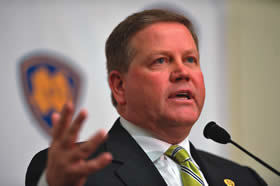
    Brian Kelly was introduced Dec. 11, 2009, as Notre Dame’s new head football coach after leading his Cincinnati Bearcats to an undefeated regular season and second consecutive Big East championship. The 2009 Home Depot Coach of the Year is 171-57-2 in his 19 years as a head coach at Cincy, Central Michigan and Division II Grand Valley State, where he won two national championships.

    The staff of Notre Dame Magazine tracked the media response to the search for a new coach and the hiring and introduction of Brian Kelly. Here we offer a digest of links to the hiring of the University’s 29th football coach, in chronological order. Scroll down to see the most up-to-date link.

    Who will replace Coach Charlie Weis? The ND campus plays the guessing game.

    The Bleacher Report’s Marc Halstead recommends ND hire a guy named Brian Kelly.

    The Onion’s take on the Coach who rejected ND.

    Cincinnati Enquirer, Kelly talks to UC players about ND

    Dec. 11, 2009, news conference: Brian Kelly named 29th head football coach at Notre Dame.

    The Cincinnati Enquirer on Kelly’s leaving UC.

    Cincinnati columnist Paul Daugherty responds to Kelly’s leaving U.C..

    Notre Dame Magazine editor Kerry Temple comments on another new era at ND.

    Eric Hansen of the South Bend Tribune, Brian Kelly living the Notre Dame football dream

    Chicago Sun-Times columnist Rick Morrissey, ND gig no longer a plum job.

    ESPN’s Ivan Maisel, Kelly brings wins, enthusiasm to ND.

    Brian Bennett blog on College Football Nation, Notre Dame hires the right guy.

    In USC’s Conquest Chronicles, USC fan Paragon SC, offers some initial thoughts on Notre Dame’s hiring of Brian Kelly

    Neil Hayes of the Chicago Sun-Times, Kelly bringing what Weis couldn’t, enthusiasm, fun.

    Dennis Dodd of CBSSports.com, Notre Dame gets right man for an immense job.

    Peter Thamel of The New York Times, Kelly is ready for Notre Dame politics.

    SI.com’s Stewart Mandell, Kelly could make major splash in first year as Notre Dame coach.

    Vandals egg Brian Kellys house in Cincinnati.

    WNDU.com, The Kelly family at Notre Dame.

    Kelly outlines plans for the ND team at his introductory press conference.

    Chicago Tribune columnist David Haugh, He assures the faithful, now all he has to do is win.

    Pat of the Blue-Gray Sky (A Notre Dame Scrapbook) comments on Kelly’s plans.

    Chicago Tribune interview with Brian Kelly’s former boss

    Brian Kelly’s pep talk at the Dec. 19 ND basketball game

    Chicago Tribune, Brian Kelly fleshes out plans at Notre Dame.

    Follow Coach Kelly on Twitter

    Bill Simson of the Huge Show, It’s hard not to root for Brian Kelly at Notre Dame.

    Bleacher Report, Cincinnati defection or Notre Dame selection? The root of the debate.


  • Avoid these eight types of angel investors

    In his blog (Startup Professionals Musings), Martin Zwilling, CEO and founder of Startup Professionals, Inc., and board member and executive in residence at Callaman Ventures, warns entrepreneurs to validate the character and reputation of prospective angel investors. “The entrepreneur’s tendency to be in a huge hurry to obtain funding can end up being disastrous, and play into the hands of less scrupulous investors,” he writes. “In fact, most angels are pure, but there are some exceptions that may cost you more than an investment.” He cites these as angels to avoid:

    • Shark angels. The ultimate bad guy gets involved in early-stage investing only to take advantage of an entrepreneur’s lack of financial and deal-making experience. “If the term sheet process turns to pure torture, it may be time to respectfully bow out,” Zwilling says.
    • Litigious angels. These investors look for almost any excuse to take entrepreneurs to court, seeking to make money by intimidation, threats, and lawsuits. They know start-ups won’t have the resources to fight and count on them “caving.” Keep your attorney close by your side, Zwilling advises.
    • Superior angels. A number of successful business people believe they possess clear superiority over others, and some of these become angels. Usually, they are overbearing, negative people who are hypercritical of an entrepreneur’s every decision. Don’t be intimidated into bad decisions.
    • Control freak angels. These angels start out looking like a start-up’s new best friend. Once the venture is funded, however, they wait until it hits the first pothole and then point out “gotcha” clauses in the agreement that give them more control — ultimately seeking to step in and run the company. Only a board can save a start-up in this situation.
    • Tutorial angels. This type of investor is not after control but wants to hold your hand on every issue. The mentoring offer sounds good up front. But once they write the check, the desire to be helpful 24 hours a day becomes a nuisance that eventually wears you down. “Keeping your distance is the best solution,” Zwilling writes.
    • Has-been angels. These high-flyers have a liquidity problem. They’re still at the country club every day but running up a tab. They’ll meet with you and ask a thousand questions but never get around to closing the deal. Avoid them by learning to ask the closing questions.
    • Dumb angels. Wealth is not synonymous with business savvy, Zwilling points out. When angels ask superficial questions or don’t understand business, a successful long-term relationship is not likely. But don’t forget that people with wealth usually have some savvy friends.
    • Brokers posing as angels. Some individuals, often posing as lawyers and accountants, have no intent to invest in your company but eventually solicit you to sign a fee agreement to pay them to introduce you to actual investors. Brokers are often worth the fee, but don’t be misled into thinking they are actually angels.

    Source: Startup Professionals Musings

  • Question of the Day: As a family vehicle… Minivan, SUV or Crossover?

    Audi Q7 - Buick Enclave

    As long as I can remember, I’ve never liked minivans. Something about them always made me look the other way. Then one day my father showed up at the door with a 2004 Honda Odyssey and right then and there, I promised myself that I would never ever be like him (in terms of his taste in cars at least) and purchase a minivan – no matter how big my family gets.

    Of course, you can imagine the excitement I felt when automakers stared introducing crossovers with 7 seats. It was like a minivan on the inside, but an attractive SUV on the outside.

    I realized that I’m not the only one who despises minivans, when I met others who shared the same sentiment.

    With that in mind, we would like to know what type of vehicle you would purchase given you have a large family or one day plan on having a large family. You may get model specific – and no, no matter what Mercedes-Benz tells you, the R-Class is a minivan.

    Let us know in the comments section below.

    – By: Omar Rana


  • Shovels ready

    nyctrip.jpg

    Here’s a thought that’ll freak me out the next time I cross the Verrazano-Narrows Bridge linking Brooklyn and Staten Island: The span sits as much as 12 feet lower in summer than in winter because of the seasonal expansion and contraction of its steel suspension cables.

    Not 12 inches, a variation I could comfortably assimilate into my simpleton’s comprehension of bridges. Twelve feet.

    Here’s another arresting fact that also comes courtesy of the bridge’s owner, New York City’s Metropolitan Transit Authority (MTA). When placing the towers eight-tenths of a mile apart and dealing with the mind-numbing variables relating to structural weight, cable strength, anticipated vehicular loads and the geology of the Narrows’ floor — to name but a few considerations — the engineers who designed and built the bridge had to account for the curvature of the earth.

    It was the longest suspension bridge in the world for 17 years and is still long by any standard. Yet this massive structure, visible from the distant boroughs of Queens and the Bronx, can shimmy uncomfortably when runners pound across it during the New York City Marathon. It’s a function of the flexibility designed into long-span bridges to accommodate motion and stress.

    Now consider this tale of two bridges. New York’s monumental oceanic gateway opened to traffic in 1964, the same year as the steel truss arch bridge that faithfully carried Interstate 35 West’s traffic across the Mississippi River at Minneapolis until it collapsed under the evening rush on August 1, 2007. Thirteen people died, more than 100 others were injured.

    MTA is preparing to spend $300 million to replace the New York double-decker’s concrete upper level with an orthotropic steel deck, an expensive retrofit that will make it thousands of tons lighter and extend the bridge’s expected life 100 years.

    Inspectors had twice declared the Minnesota bridge — like thousands of others across the country — “structurally deficient,” a federal designation that doesn’t foretell imminent doom so much as it urges serious repairs. The day after the collapse, Governor Tim Pawlenty said the bridge had been tentatively scheduled for replacement in 2020. Instead, Minnesotans spent nearly $300 million to replace it in one year, pay out an early completion bonus and compensate families for their incalculable loss. The result, the award-winning I-35W St. Anthony Falls Bridge, is also expected to last a century.

    The Minnesota disaster happened a few weeks before some 40 young men and women thinking about a future as civil engineers arrived for their freshman year at Notre Dame. Now these students are juniors immersed in what one professor calls the “real, hardcore concepts” of civil engineering. The ominous boom above their heads one sunny Sunday morning this past autumn wasn’t the nation’s infrastructure problems crashing down upon them. It was an experiment-in-progress at Lehigh University, the last stop on their class field trip to New York City, testing the next upper deck of the Verrazano-Narrows Bridge to make sure it really will serve 100 years without cracking.

    ‘One big pothole’
    nyccorrosion.jpg

    We all might want to think seriously about civil engineering and infrastructure because our report card is ugly. At a time when the nation is fighting two wars, has flunked capitalism for the first time in 70 years and is aggressively negotiating its grades in healthcare and education, the American Society of Civil Engineers (ASCE) says we’re pulling a D in infrastructure. Their 2009 report card awarded one of the best marks in any category, a C, to our bridges.

    The secretary of transportation has called the United States “one big pothole.” A study released last May by the American Association of State Highway and Transportation Officials declared a third of our interstates, highways and major roads “mediocre” or worse.

    Oliver Wendell Holmes Jr. famously said that taxes are the price we pay for civilization. Today we can add that sensational auto repair bills are the price we pay when civilization crumbles. Bad roads cost car owners $400 yearly. Double that if you live in a metro area of more than a quarter million people, the transportation officials say.

    What about the rest of our infrastructure? The civil engineers say we daily lose about 7 billion gallons of water to bad pipes and face an $11 billion backlog to replace obsolete water works and meet federal safe drinking water standards. ’Tis but a drop compared to what comes out the other end, an estimated $390 billion to overhaul our wastewater treatment systems and meet new demand over the next 20 years.

    Suburban development has crept up on our dams and levees, which are getting old and dangerous much quicker than we’re fixing them. Mass transit, the fastest growing transportation sector for 15 years, isn’t keeping pace with demand. The bottom line, according to ASCE, is $2.2 trillion to catch up with ourselves over the next five years.

    That doesn’t count the persistent threat of terrorism and everything else we know is coming: rapid population growth; natural disasters like the massive earthquake the Pacific Northwest anticipates within the next 200 years; the high-stakes coastal clash already pitting the oceans against those of us who insist on living next to them.

    Cue every cliché you’ve heard about opportunity in adversity, but today’s civil engineering students are going to spend much of their careers fixing or replacing this stuff. Demand for their services far exceeds supply. “This is a fantastic time to be an engineer,” says Michael Sweeney, the vice president of engineering superfirm AECOM’s Transit Rail East division and the emcee for the Notre Dame field-trip stop at the company’s offices in downtown Manhattan.

    A show of hands reveals this is a first visit to America’s largest and most complex, confounding and fascinating city for more than half the students. Sweeney welcomes them with internship applications, enticing them to come back next summer.

    Building to last

    You don’t go into civil engineering if your goal in life is to make a lot of money, student Kimberly Duffy says.

    That’s not to say it never happens. Notre Dame sends just a few dozen graduates into the field each year, and for a small program it’s well represented in the senior leadership of firms with national and global reach like AECOM, Skanska, Granite and Kiewit. But civil engineers draw the lowest starting salaries among their peers. Money comes easier in petroleum and nuclear.

    Instead, civil engineering is about service to society, says Professor Tracy Kijewski-Correa, a tall-buildings expert who teaches structural engineering. Students learn to provide basic public services. “There’s no consumer for what we do,” she says.

    “That’s one thing that sometimes attracts students into civil engineering,” agrees Professor Yahya Kurama. “The fact that you’re going to make something that will last for a long time.”

    Some years ago it wasn’t clear the attraction was holding. So in 2003, the department tapped a travel fund created by Dennis Murphy ’71 and worked with his firm, Kiewit, to create a field trip that would introduce ND civil engineering students to the challenges of large-scale projects. Kijewski-Correa led a group up the Pacific Coast to examine bridges. They wound up at the Tacoma Narrows Bridge in Washington, where Kiewit had begun construction on a second span the year before.

    “It isn’t always possible to force yourself in the middle of the night to remember why you’re studying differential equations or thermal dynamics,” notes Murphy, who got hooked on construction as an undergrad and valued the trips he’d taken with classmates to Chicago and Lake Michigan’s dunes.

    “Get them dreaming,” is how the current trip leader, Professor Joannes Westerink, distills the purpose. In 2006, Westerink and his colleagues took students to the Mississippi Delta and New Orleans to study the hell wrought by Hurricane Katrina. They couldn’t have bought a better guide. Westerink, affable and courteous, builds weather models for the ocean that predict with incredible precision how fast water flows, how it carries sediments and pollutants, how it forces itself inland when propelled by severe storms.

    The Advanced Circulation Model he has developed with his colleagues, many of them former students, is the vehicle for collective work on storm surge shared by the Army Corps of Engineers, the Federal Emergency Management Agency, the Navy and a host of other agencies, consultants and universities. It’s the kind of knowledge engineers need to build better levees, create all-important digital flood insurance rate maps for threatened states and think critically about the future of coastal cities like New Orleans.

    Now teams of ND faculty will apply their wide expertise to a pair of hurricane preparedness projects. One will model flood risk for Pacific islands. The other will create a comprehensive model for Hawaii, detailing the impact that rushing, piling water and high winds would have on roads, buildings, bridges and people. “It combines everything related to infrastructure,” Westerink says.

    On the New York field trip, the students learn that storm surge and rising seas are no less a concern for Manhattan than New Orleans. Subway entrances in some places are only a few feet above sea level; a devastating 1893 hurricane took out elevated tracks in Brooklyn and obliterated an island near what became JFK Airport. Even under normal conditions, “New York is in need of retrofitting for a significant part of its infrastructure,” Professor Alexandros Taflanidis says. The catalog of challenges in a metropolis of 19 million people is exhaustive.

    This year, after 12 hours on a bus barreling east from South Bend on I-80, Westerink, Taflanidis and their students begin with an after-dinner walk across an old challenge gloriously met: one of the city’s first world-class engineering achievements, the Brooklyn Bridge.

    Faster, safer, greener, smarter

    The following morning, after Michael Sweeney’s introduction at AECOM, the students learn about the company’s work on the Second Avenue Subway (SAS) line and the World Trade Center Transportation Hub.

    The long overdue 8.5 mile SAS and its 16 new stations will relieve the Lexington Avenue Line, the sole north-south subway option up Manhattan’s East Side that carries 1.3 million riders daily. The project has been kicking around since 1929, only to hit the vagaries of finance and local politics. It stalled out in the 1940s and again in the ’70s.

    The project’s final design is expected later this year, but the brutal-yet-delicate job of excavating station sites and tunneling through the undulating bedrock and sediments beneath Second Avenue’s six lanes and 20-foot sidewalks has begun. Public relations are sensitive. Whole blocks have become worksites. “The big challenge in New York is finding space while minimizing impact on the public,” explains senior tunnel engineer Jaidev Sankar. Things don’t get easier underground. “We found utilities even the utility companies didn’t know were there.”

    The WTC’s Transportation Hub will glamorously reconnect the surface city with the PATH commuter rail station that served lower Manhattan before 9/11 — and has again since its 2003 reactivation. Riders will arrive and depart through an underground structure similar in size to Grand Central Station, designed by Spanish engineer and architect Santiago Calatrava. It will emerge above grade in a white monument of steel ribs and glass that Calatrava envisions as a child’s hands releasing a dove.

    Project managers say one goal is a more versatile facility linking riders with Manhattan’s throng of transit options. Another is to restore what was once the highest grossing retail space in North America — engaging a “small city” of commuters and shoppers each day — under the natural light filtering down through Calatrava’s design.

    The design challenges are both practical and spectacular. Sixty escalators, 40 elevators. Steel platforms cantilevered out 75 feet. “One of the joys of Mr. Calatrava’s architecture is holding stuff up with no visible means of support,” project architect Joe Hand notes with an exasperated mixture of professional appreciation and irony. “What he does is challenge your mind to say, that thing shouldn’t be hanging out there, but it is.”

    Some 200 designers worked five years to ensure redundancies in structural, mechanical and electrical systems, Hand says, “so that this building doesn’t suffer the same fate as its predecessor.” Terrorism, a leading concern, will be a fact of professional life for engineers working on prominent projects. Meanwhile, transit through the hub must function continuously.

    Later that afternoon, the focus shifts to sustainability when the students visit the headquarters of Skanska USA on the 32nd floor of the Empire State Building, the first office in its class to receive “platinum” certification under the Leadership in Energy and Environmental Design criteria set by the U.S. Green Building Council. About 80 percent of New York’s carbon footprint today comes from the energy used to construct and maintain buildings, city data shows. It’s a compelling statistic, given projections that the square footage of our built environment will more than double globally over the next 20 years.

    Skanska officials lead students through an on-site review of the company’s work in progress on the United Nations’ Capital Master Plan, a sweeping modernization that will yank the epicenter of global diplomacy out of 1954 in everything from its electrical wiring to its audio translation systems while preserving the five-building complex’s historically spacey look and feel.

    By evening it’s back to bridges at Columbia University’s Carleton Laboratory, a major locus for bridge monitoring and research. One eye-catching experiment lives in a transparent chamber the length of a charter fishing boat. It contains a segment of 20-inch bridge cable undergoing a corrosion simulation while sensors measure humidity, pH levels, temperature shifts and other enemies of structural integrity.

    Designing long-span bridges is part of the curriculum for Patrick Brewick ’09, who is getting acquainted with it all as a Columbia grad student. Nearly three in 10 ND civil engineers pursue graduate study. Brewick traveled to New Orleans as a junior and caughtWesterink’s passion. “I saw that same enthusiasm in all the engineers there. They really had a love for what they were doing,” he says. “It actually led me to start getting interested in graduate school.”

    Fluid development

    Professor Stephen Silliman, who has spent a lot of time working on water quality in such countries as Benin and Haiti, says we have civil engineers as much as doctors to thank for the sharp decline in U.S. infant mortality rates since the mid-19th century.

    Today, “We have no fear — or maybe just a tiny bit of fear — but we have no real fear of turning on a water faucet and drinking out of it,” Silliman says. Should we get complacent or stingy about maintaining our high standards though, we’re fools.

    New Yorkers boast that they have the best drinking water in the world. Ten percent of their supply comes from the Hudson Valley’s Croton watershed. Since the city started drawing there in 1842, the water has flowed unfiltered some 125 miles to customers’ taps. Now development in the watershed threatens quality and the water no longer meets federal standards.

    The $1.3 billion Croton Water Filtration Plant is the largest single construction contract in city history, and the largest project Skanska has ever undertaken. Today it’s a nine-acre square cut 95 feet into the earth and run through with pipes large enough for people to stand in. Think of it as a giant packing box that could store about 1,500 single family homes underground.

    When it’s done, the filtration plant will lurk quietly beneath a golf course in the Bronx’s Van Cortlandt Park. Gravity will pull the water in and pumps will force it through mixers, filters, chemical processes and UV treatments, nine minutes in and out, up to 13 million gallons per hour.

    “On a construction site, you don’t want to multitask,” project safety director Michael Caterina warns. Walking through the plant’s unfinished maze of pipes, rebar and concrete wall, student Megan Smith strains to talk above the staccato drumming of air compressors and jackhammers and the unnerving air horn blasts that remind workers of the murderous, crane-borne loads passing over their heads.

    Smith says her generation’s biggest challenge will be matching its ideals and desire to tackle big problems like global poverty to the long-term commitments required to really help poor communities. One hurdle is the absence in developing nations of the kind of regulatory environment that keeps workers at the Croton plant safe and healthy. So Smith has added classes in political science and economics to her heavy engineering courseload to prepare for the human and cultural dimensions she expects will shape her career. She may work a few years and pursue graduate study in international development.

    “You need to have some expertise and know how to do this,” she says, motioning at the activity around her, “before you can think about how to change it, make it cheaper, make it efficient and then take it somewhere else.”

    Pardon our progress

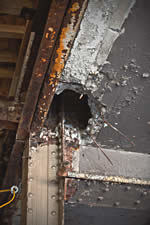
    “Without water and the subways, New York City wouldn’t exist,” Granite Construction project manager Jim Steers posits later that afternoon. The students are standing on a temporary footbridge at the Avenue J subway station on Brooklyn’s Brighton Line. Miles away, the Empire State Building looms above the trees and a bend in the tracks, a scenic view that draws attention from the gaps in the corroded steel posts big enough to put your arm through, or the concrete missing from the station’s beams and platforms.

    Steers’ team is rehabilitating five stations. Thirty years ago, he tells the students, New Yorkers endured several minor derailments a day. It’s down to two or three per year now, thanks to the city’s persistent reinvestment.

    For the most part, life and business go on around the work, slowing it down. Granite can’t shut down three stations in a row and must keep Avenue J open to allow “backriding” — riders travel past their stop, switch trains and return from the other direction. Complex scheduling, Steers says, accounts for much of the relatively high cost of these projects.

    So it’s ironic when the lead stories on local news broadcasts that night report some of the worst rider headaches in memory. MTA said 18 of the city’s 20 lines were affected and 400 buses were employed in order to expedite maintenance work around the city before winter.

    Not to fear. The sun rises on New York the next day. The students forge once more into the quiet city for Mass at Saint Patrick’s Cathedral before the long trip home.

    Take nothing for granted

    If you have a child obsessed with Lincoln Logs, Legos or K’nex, you may be raising part of tomorrow’s infrastructure solutions. That child playing on your living room floor may one day, as Professor Westerink says, make the world stronger, greener, safer and more efficient.

    Olga Beltsar was one such child about 12 years ago, she explains before a presentation about graduate programs at Pennsylvania’s Lehigh University, the trip’s final stop. Girls liked to build things, she confides with mock superiority. The boys she knew liked to break them. Fortunately, for work that marshals both creative and destructive impulses, ND’s juniors are split about 50-50 down the gender line. But her classmate Brian O’Connor says engineering began for him with the suspension bridge he fashioned out of drinking straws in the 5th grade. That structure didn’t survive the trip home, but the foundations of his future were poured.

    Brian Wysocki rode the train every day from Long Island to high school on Manhattan’s 84th Street. “He tried to take a different route each time,” his mother had said over pizza at Brooklyn’s L&B Spumoni Gardens, explaining her son’s fascination with transit. Beltsar’s path was even more circuitous. In high school, the father of a young girl she tutored helped her find an office job in an engineering firm. She’s since interned in both construction and design, and expects to pursue the latter in her career.

    Engineering often matches youth with responsibility. Ken Burns’ 1981 documentary about the Brooklyn Bridge notes that the average age of the engineers was 34. Most of the engineers leading the Croton plant tour were a few years out of school. At lunch that afternoon, Eric Harvan, one of the ND students, had mentioned an internship documenting progress on the construction of a factory and helping with bids and contracts. One day two superintendents handed him drawings for a shipping office the client wanted inside the warehouse and said, “Get it built.”

    Not to be grim, but all those young engineers will be dead by the time the Verrazano-Narrows needs another deck in the 22nd century, which brings us back to that apocalyptic thrum above our heads in Lehigh’s Advanced Technology for Large Structural Systems lab. The sound, explains senior research scientist Sougata Roy, is actuators simulating the passage of highway truck traffic, one tandem axle lumbering by every two seconds. “The idea,” Roy says, “is to ensure that even the heaviest truck will not cause any cracking to the structure.” Keep things going for eight months without stopping, and you’ve simulated 100 years of constant, reliable service.

    Lehigh professors brief the students on several current experiments. Across the room, actuators apply earthquake forces to a four-story “self-centering” steel frame, testing a system that will essentially allow buildings to rock their way through overpowering winds or a seismic event and restore themselves, undamaged, to their original shape. The computers driving the actuators also simulate the behavior of the rest of the building — a hybrid test that extends the research beyond the physical space of the laboratory. Understanding how large structures fail is a lesson as valuable now to the funding entities as it will be to students throughout their careers.

    Therein lies our hope, says Westerink — given adequate finances, planning, determination and the right people, of course. As our grasp of the physics of the world around us has shot forward over centuries, our computational capacity has grown exponentially in just a few years. It’s possible now to imagine hurricanes in Hawaii and earthquakes in Southern California in all their random ferocity, or forces and stresses of any kind, really, across the thousands of sprawling, fragmented jurisdictions and markets that together support our national infrastructure.

    As all knowledge does, this holds the power to make us stronger. Or at least a little less freaked out.


    John Nagy is an associate editor of Notre Dame Magazine.

    Photos by Brian Bloom.


  • Latinoamérica se alista para otra Cumbre

    SAN SALVADOR, EFE
    El ministro salvadoreño de Medio Ambiente y Recursos Naturales, Herman Rosa Chávez, calificó de “decepcionantes” los resultados de la Cumbre de la ONU sobre el Cambio Climático celebrada en Copenhague (Dinamarca) y consideró que la próxima reunión en México es importante para países latinos.

    “El hecho de que la próxima Cumbre sea en México (a finales de 2010) abre una oportunidad interesante para América Latina”, declaró el funcionario en una entrevista que publica La Prensa Gráfica.

    ¿Cómo avanzar?
    La conferencia de las Naciones Unidas sobre cambio climático, celebrada entre el 7 y el 18 de diciembre pasado en Copenhague, se cerró con un acuerdo de mínimos, que tuvo la oposición abierta y dura crítica de varios países como Venezuela, Nicaragua, Cuba o Bolivia.

    La presidencia de la conferencia anunció que había “tomado nota del acuerdo de Copenhague del 18 de diciembre de 2009”.

    “Parte de la pugna que se refleja que no es un tema inofensivo y que si los países adoptan posiciones tan duras es porque es un tema que les afecta a sus intereses”, añadió Rosa Chávez.

    Estimó que Centroamérica “tiene que tratar de encontrar sus espacios” en estas negociaciones sobre cambio climático, aunque admitió que es “un poco difícil”.

    Con relación a El Salvador, señaló que a la nación le toca “asumir esos hechos y la posibilidad de que la problemática se vaya agravando”.

    Anticipó que se deberá avanzar en una agenda de cambio climático “con mucho énfasis en adaptación” y la restauración de ecosistemas.

    “Tenemos que prepararnos para un escenario de riesgos más alto”, sostuvo.

    Lo que consiguieron
    El acuerdo climático, de carácter no vinculante, no fija objetivos de reducción de gases, aunque sí limita la subida de temperaturas a dos grados centígrados para evitar una catástrofe.

    También establece un fondo total de 30 mil millones de dólares entre 2010 y 2012 para los territorios más vulnerables, de forma que puedan hacer frente a los efectos de la transformación climática, y 100 mil millones anuales a partir de 2020 para mitigación y adaptación.

    Fuente Bibliográfica

  • Sony Relents After 11 Years, Launches First SD Card Line-up [Memory Cards]

    Big news from the Sony camp today—they’re embracing 1999’s flash-in-the-pan fad and have launched their first line-up of SD cards. Hopefully that spells the death of the evil Memory Stick and sliding disinterest in their propriety formats.

    There’s five SD/SDHC cards and three microSD/microSDHC cards on offer, all class-4-speed. The 2GB SD is $14.99, and for SDHCs the 4GB is $29.99, 8GB is $44.99, 16GB is $79.99, 32GB $159.99.

    The 2GB microSD is $14.99, 4GB is $29.99 and 8GB is $44.99. All come with adapters and the possibility of a heart-attack being brought on as Sony losing a little more of its stubbornness. [Sony]


  • Ex-employee says Seagate pilfered MIT spinout’s IP

    A decade-long lawsuit pitting the tiny company Convolve and the Massachusetts Institute of Technology against giant Seagate Technology has taken an unexpected turn after a whistle-blower claimed that Seagate appropriated Convolve technology and later destroyed evidence in the case. The whistle-blower, a former Seagate employee named Paul A. Galloway, has provided what is described as “an eyewitness account” accusing Seagate of taking hard-drive technology from Convolve and incorporating it into its own products, according to documents filed recently with a federal court in Manhattan. The court filings include claims by Galloway that Scotts Valley, CA-based Seagate, the world’s largest producer of computer hard drives, tampered with evidence tied to Convolve’s nearly 10-year-old patent infringement case against the company. The allegations are detailed in an affidavit filed by one of Convolve’s lawyers as part of an effort to reopen the voluminous court record to include testimony from Galloway. A conference on the case has been scheduled for Jan. 20, though it’s not clear whether Convolve’s motion will be considered at that session.

    The patent infringement case between Convolve and Seagate dates to 2000, when Convolve and MIT sued Seagate and Compaq Computer seeking $800 million over technology that reduced the noise and vibration generated by hard-disk drives. MIT researchers had developed techniques to reduce the noise of a hard drive without significantly impairing its performance. Convolve was formed to help market and sell this and related technology. According to court and regulatory filings, representatives from Convolve and Seagate met in 1998 and 1999 to discuss some of Convolve’s work, subject to an agreement that Seagate would not make improper use of what it learned in those discussions. In 2000, Convolve sued Seagate and one of its customers, Compaq, claiming that the “sound barrier” technology Seagate introduced in 2000 relied on Convolve’s sound reduction innovations. In the nine ensuing years, Convolve and Seagate have exchanged hundreds of documents under court-ordered discovery and filed myriad legal motions against each other.

    The affidavit detailing Galloway’s allegations was quietly filed last month. The motion, filed by an attorney representing MIT and Convolve, says Galloway disclosed that Seagate’s engineers zeroed in on improving the company’s sound reduction features only after seeing Convolve’s technology. However, these engineers were not aware that Seagate had a nondisclosure agreement in place that should have protected Convolve’s innovations. “I was deceived by my management’s failure to tell me that the Convolve technology discussed within Seagate was NDA protected,” Galloway states in one section of the affidavit. According to the filing, Galloway also alleges that Seagate appears to have intentionally destroyed some software blueprints linked to products using the sound reduction technology. According to court documents, Galloway previously was a witness for Seagate in the protracted litigation. Convolve has also sued Dell, Hitachi, and Western Digital in regard to similar technology. That case is pending in a federal district court in Marshall, TX.

    Source: The New York Times


  • Alaska Guardsmen save 48 lives in 2009

    Army and Air National Guardsmen saved 48 lives here in Alaska in 2009 and assisted
    12 others to safety during another busy year for the Alaska National
    Guard….

  • Arkansas Guardsmen set goals at Gitmo

    Airmen with the Base Emergency Engineer Force assigned to the 474th Expeditionary
    Civil Engineering Squadron recently finished installing new soccer goals inside the
    recreation yard of Camp 6…

  • Air Force issues notice of intent for F-35 basing

    Air Force officials here published the notice of intent in the Federal Register Dec.
    30 to prepare an environmental impact statement to assess the potential
    environmental impacts of a proposal to establish operational F-35 Lightning II
    aircraft at one or more existing Air Force and Air National Guard installations
    within the continental United States…

  • New Iraq post office honors four Illinois Guardsmen

    Four fallen Illinois Soldiers from the 1544th Transportation Company based in Paris,
    Ill., were honored for their support of postal operations in Iraq during the
    dedication of a new post office Dec. 17 here at Joint Base Balad (JBB),
    Iraq…

  • Stop-loss payments continue, but some no longer eligible

    The fiscal 2010 defense budget extends payments to servicemembers involuntarily
    extended on active duty under the so-called “Stop Loss” program, but those who
    received a bonus for voluntarily re-enlisting or extending their service no longer
    qualify for retroactive Stop Loss pay…