
Category: News
-
Jude Law To Meet Love Child
It took a few months, but Jude Law has finally reached out to the mother of his love child in hopes of setting up a first meeting with his infant daughter.

The British actor became a father for the fourth time when Florida-born model Samantha Burke gave birth to daughter Sophia last September. The pair enjoyed a steamy fling in December 2008, after Jude met the catwalk maven outside a nightclub in New York City after leaving the set of Sherlock Holmes.
“Law plans to visit her within a few weeks. She’s (Burke) over the moon. She was hurt he had not seen Sophia,” a source has revealed to British tabloid The Express.
Law has three children with ex-wife Sadie Frost.
-
Curitiba (PR) | Expansão do Parkshopping Barigui
InformaçõesO melhor shopping de Curitiba vai ficar ainda mais completo. Em 2010, o ParkShoppingBarigüi terá a inauguração de sua expansão. O shopping vai trazer ainda mais opções de compras, entretenimento, lazer, serviços e gastronomia para toda a cidade com 88 novas lojas.
Expansão do ParkShoppingBarigüi:
8.014 m² de ABL
88 novas lojas
1 loja-âncora
6 elevadores
12 novas operações na Praça de Alimentação
2 escadas rolantesInício das obras: agosto de 2009
Inauguração: outubro de 2010Informações:
Multiplan Comercialização
ParkShoppingBarigüi, loja 135, 1º Piso (ao lado da Officina da Costura).
Telefone: (41) 3317-6632—————————————————————————————————————————————————-
Imagens da futura expansão


—————————————————————————————————————————————————-
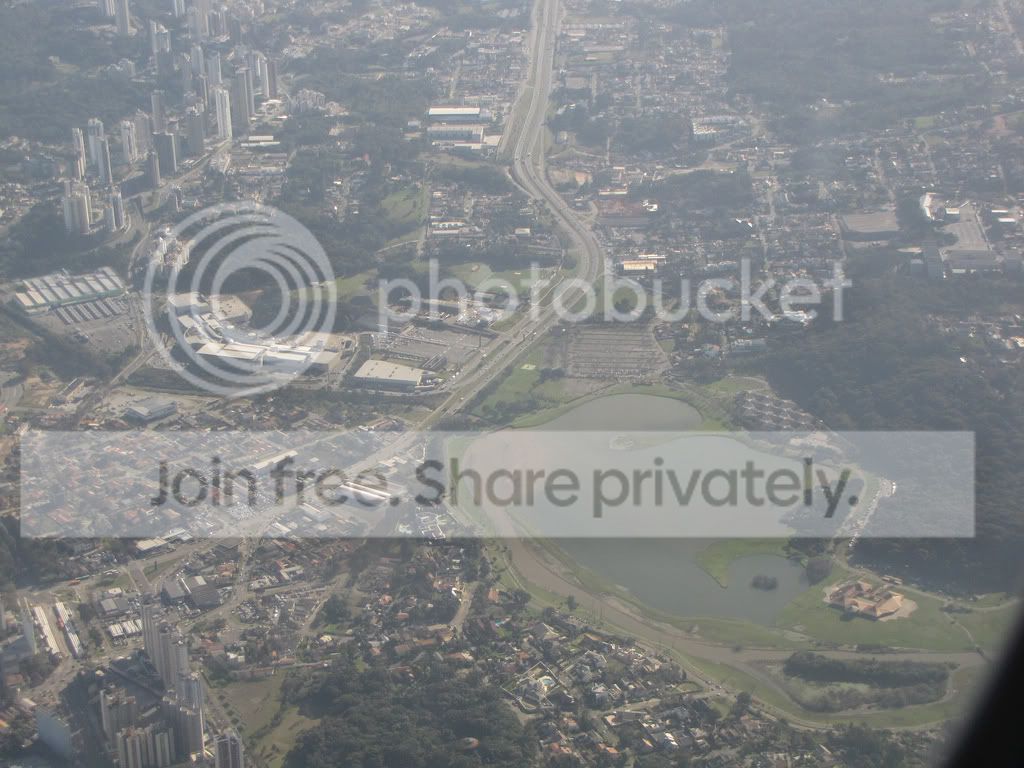
Localização do shopping
Região de alto padrão em Curitiba, perto do Ecoville e Parque Barigui

—————————————————————————————————————————————————-
-
Kubica Confirms Renault Stay
 Polish driver Robert Kubica denied rumors that he is considering to leave the Renault F1 organization following the team’s sellout to Luxembourg company Genii Capital. His manager confirmed the stay himself, after admitting that both him and his client were trying to buy some time and find out what the new owner’s plans for the future are and where exactly they fit into it.
We are going in the right direction. There were no doubts, really, but it was very important we understood w… (read more)
-
Server problems are finally sorted out
Like our regular visitors already have noticed, we had unplanned 5 day downtime, in which we had to use Facebook as publishing platform… *shudder* Server problems are finally thing of the past, and regular newscasting will resume shortly, as soon as some minor problems still haunting us are solved.
Have good year 2010!
NW0.eu staff
Book Mark it-> del.icio.us | Reddit | Slashdot | Digg | Facebook | Technorati | Google | StumbleUpon | Window Live | Tailrank | Furl | Netscape | Yahoo | BlinkList
-
Report: MG X-Power revivalist arrested
Filed under: China, Government/Legal, UK

Just when there was beginning to be good news associated with MG, tales of woe return. This time it has to do with British entrepreneur Will Riley, who somehow established himself as the force behind the MG X-Power even though MG branding rights had been purchased by China’s Nanjing.
Riley is in boiling water on three counts: Nanjing is suing to prevent him from using the MG name, employees are suing him for non-payment, and a Canadian man is suing him for theft. Riley bought a subsidiary division, MG Sports and Racing, from the failed company’s administrators, PriceWaterhouse Coopers. Nanjing contends that the subsidiary never had the right to use the logo and image of the parent company.
The employees say that they haven’t been paid for their time, with Riley’s second-in-command claiming that he nearly lost his house for having not been paid and that the company never produced even one car beyond the prototype. The Canadian, who was working to raise investment for Riley, was given that one prototype in exchange for his assistance. When he sent it back to the factory to have work done on it, he later discovered the car was put up for auction and sold to someone else who crashed it. The court proceedings have only just begun in all cases, meanwhile Riley claims he is still committed to bringing back the brand.
[Source: Birmingham Post via China Car Times]
Report: MG X-Power revivalist arrested originally appeared on Autoblog on Mon, 04 Jan 2010 08:31:00 EST. Please see our terms for use of feeds.
Read | Permalink | Email this | Comments
-
Secondary Sources: Stat of the Decade, Blips, Pessimism
A roundup of economic news from around the Web.
- Stat of the Decade: Mike Mandel offers four candidates for statistic of the decade. ” 1) The boom and bust in housing prices clearly epitomizes the decade. Whats more, in 2000 nobody in their right mind would have predicted that the boom lasted as long as it did. Downside: The gyrations in the housing market may be a symptom of deeper problems, much like a fever is a symptom rather than a disease in its own right. 2) Globalization has been one of the main themes of this decadeand nothing illustrates globalization more than the rise in exports as a share of global GDP. In 1999, global exports were about 22.7% of global GDP, as measured by the International Monetary Fund. By 2008, that number was 32. 3% before plummeting in 2009. Downside: There may be systematic double-counting, as companies break up production into smaller and smaller pieces. 3) Chinese economic growth would have been one of the runner-ups for the Economic Statistics of the Decade for the 1990s. Chinese economy growth averaged an astounding 10% peryear in that decade, and looks like its going to get to the same level again in this decade. Downside: No one is really sure whether to trust the Chinese economic statistics or not. 4) Finally, we come to U.S. household borrowing, which probably is the clearest reflection of the financial crisis. In this decade the U.S. household sector amped up its borrowing from $500 billion in 1999 to $1.2 trillion in 2006, before dramatically cutting debt in 2009. Downside: This number from the Federal Reserve includes domestic hedge funds and nonprofit organizations, making it a bit tough to interpret.”
- Beware of Blips: Writing for the New York Times, Paul Krugman worries that signs of life in the economy may be fleeting. “As you read the economic news, it will be important to remember, first of all, that blips — occasional good numbers, signifying nothing — are common even when the economy is, in fact, mired in a prolonged slump. In early 2002, for example, initial reports showed the economy growing at a 5.8 percent annual rate. But the unemployment rate kept rising for another year. And in early 1996 preliminary reports showed the Japanese economy growing at an annual rate of more than 12 percent, leading to triumphant proclamations that the economy has finally entered a phase of self-propelled recovery. In fact, Japan was only halfway through its lost decade. Such blips are often, in part, statistical illusions.”
- Pessimism Dangers: On Slate, Dan Gross says people need to embrace an economic upturn.”There’s a large population of non-ideologues who may not fully embrace the narrative of economic recovery because they don’t feel it yet in their paychecks, portfolios, or home values. Try telling a laid-off autoworker in Michigan or a laid-off magazine editor in Brooklyn that things are better. But they may soon be in for pleasant surprises, too. For all the advances of information technology, big economic turns always take us unawares. In 2007, all indicators flashed greenuntil the bottom suddenly fell out. In this environment, things can look awful, until a new order unexpectedly comes in or a few deals break in your firm’s favor. All of a sudden, things seem much better. We’re in a Missouri economy now, one in which recovery has to be shown, not told. Economic conditions may be improving, but it still may take more than a few quarters of growth before people fully commit to recovery, both financially and psychologically. If credit means belief, since the credit crisis began two years ago, belief has been in short supply. Maybe it’s time for a little blind faith.”
Compiled by Phil Izzo
-
Grooveshark is the latest streaming music BlackBerry app
No matter how many albums in your personal music library, no matter how many Pandora channels you set up, there’s going to be a time when you want to listen to just one track and have no way of accessing it. Sure, you could pay the 99 cents to iTunes, but what if you just want to listen to it once? Happens to me all the time, especially when I want to play along with the song on guitar. Two excellent services for me have been Imeem, which recently became part of MySpace Music, and Grooveshark. Just type the song name and grooveshark.com into Google, and you can probably find the track you’re seeking. They now have a BlackBerry app which can do just that and more.
-
Google Nexus One Impresses, But I’m Still Hoping for More

Image Credit: Nexus One Blog
Although tomorrow is the expected official launch of Google’s Nexus One handset, a few lucky folks already have the product. Both Engadget and the Nexus One Blog shared hands-on video and review impressions over the weekend, but initial thoughts actually seem varied. Engadget doesn’t seem to think that the experience is all that much faster than that of a Motorola Droid. I also noticed a few crashes with the new “Live Wallpaper” feature. On the other hand, you’re hard pressed to see any negative bits in the Nexus One Blog review, although that piece also mentions the same crashes.
At this point, given all that we know and have seen so far, I’m 90-percent sure that I’ll be adding a Nexus One to my gear bag this week. The growth, momentum and maturity of Android makes it appealing as a good tool for my tasks. I’m going to hedge my bets and buy it unlocked without a two-year commitment, however. I really don’t want yet another long term contract, for starters. I’m also giving my Palm Pre a bit of breathing room in case there are major developments coming from Palm at CES. Ideally, I’d like a no-commitment data-only plan with the Nexus One because I use data far more than voice these days. And that gets me into what I hope to hear from Google at tomorrow’s press event — something other than the cellular status quo.
The whole idea of the Nexus One working with just a single phone plan as many have reported just doesn’t seem… Google-ish to me, for lack of a better term. It could well turn out that way tomorrow, and if it does, it won’t change my mind. But Google has the potential to do so much more to change the carrier landscape. I’m really hoping they announce an upcoming firmware update that ties a Google Voice number to Gizmo for true VoIP calling without a voice plan.
Those are my plans and thoughts on the Nexus One — which are subject to change tomorrow, of course.
 What about you? Is this a must-have bit of hardware or are you put off by the anticipated $530 unlocked price and/or $180 cost with commitment?
-
Harvard-Affiliated Hospitals Limit Top Docs’ Industry Ties
 Sorry, one more New Year’s story to get out of the way: Top doctors at Mass. General and Brigham & Women’s — two of the most prestigious hospitals in the country — have to limit their financial ties to the drug and device industries under rules that kicked in on the first of the year.
When senior physicians at the hospitals serve as directors on corporate boards, they will no longer be allowed to accept payment in the form of stock or stock options. But they may be paid up to $5,000 per day ($500 per hour) for the work they do as corporate directors. The Boston Globe and New York Times detailed the rules in stories this weekend.
As we noted back in April, when the hospitals announced many of the new rules, doctors at the facilities will no longer be allowed to serve as paid speakers for companies — often a lucrative gig for high-profile docs.
Both hospitals are part of Partners HealthCare, a Boston-based health system, and both are affiliated with Harvard Med School.
Lots of big-name health-care institutions are trying to limit docs’ industry ties — or at least to be more transparent about the relationships that do exist. Johns Hopkins tightened its conflict-of-interest policy last year, and Stanford, Northwestern and the Cleveland Clinic all said they’d start disclosing which of their docs had financial ties to drug and device companies.
Industry has been moving in the same direction, with Pfizer, Eli Lilly, Merck and Medtronic, among others, beginning to disclose some payments to docs. And in Congress, Chuck Grassley and a few other lawmakers have been pushing for a federal law requiring this kind of reporting; the latest version is on p. 1542 of the Senate health-care bill.
Photo: iStockphoto
-
Brasília: a maior contribuição brasileira à arte do século 20
Imprudência que decolou
Discutida, atacada, Brasília chega aos 50 anos como a maior contribuição brasileira à arte do século 20André Aranha Corrêa do Lago – O Estado de S.Paulo
Não se pode negar: Brasília é a maior contribuição brasileira à arte do século 20. Apesar de um século de considerável produção cultural – com grandes momentos na nossa arte contemporânea, o Cinema Novo e, sobretudo, a Bossa Nova – acredito que em nenhuma outra expressão artística o Brasil terá atingido internacionalmente o patamar de respeito, aceitação e influência que conseguiu nossa arquitetura, principalmente graças a Brasília.
Nossa capital já foi amplamente discutida e continua a provocar, com 50 anos, os mais variados debates e opiniões; por isso procurarei concentrar-me no que me parece mais relevante: o fato de Brasília ser a realização mais completa de uma utopia que ocupou algumas das mentes mais favorecidas do século passado e, também, o de ser o símbolo mais inequívoco de que somos capazes de inserir-nos no main stream da arte ocidental.
O reconhecimento do Brasil como ator na arquitetura do século 20 veio pela construção (entre 1937 e 1942), no Rio de Janeiro, do Ministério da Educação e Saúde (hoje Palácio Gustavo Capanema). Logo depois, veio a repercussão internacional do conjunto da Igreja, do Iate Clube, da Casa de Baile e do Cassino da Pampulha (1943), que definiu Oscar Niemeyer como o grande nome da geração. Essas obras revelaram ser possível, em um país de mínima influência cultural em termos mundiais, a existência de um grupo de jovens arquitetos capazes de interpretar com talento as teorias e os princípios mais avançados do momento e até de dar novos rumos à arquitetura moderna.
No final dos anos 40 e início dos 50, a arquitetura moderna já tinha conquistado muitos novos adeptos em todo o mundo, tanto entre os profissionais como na academia. Isso foi possível, em parte, por ter sido um movimento rejeitado por Hitler e Stalin, mas também por diversos outros motivos, como o aperfeiçoamento e a diminuição dos custos das novas técnicas de construção e a divulgação das novas ideias com a participação de arquitetos de todo o mundo nas reuniões periódicas do Ciam (Congrès International d"Architecture Moderne).
O Ciam havia publicado em 1933 a Carta de Atenas, um manifesto que preconizava a adoção de um novo urbanismo com clara divisão entre os espaços de moradia, trabalho e entretenimento. A influência do Ciam permitiu que a reconstrução de novos bairros e cidades na Europa do segundo pós-guerra respeitasse, de maneira geral, os princípios da Carta de Atenas. Só foi possível, contudo, a execução de versões muito modestas dos projetos urbanísticos revolucionários desenvolvidos naquele continente em décadas anteriores.
As diferenças entre a visão norte-americana e europeia eram ainda mais marcantes na área de urbanismo: a falta de espaço físico para a expansão das cidades – um dado primordial na Europa – nunca preocupou os urbanistas norte-americanos, que favoreceram as propostas que incluíam solucionar o crescimento das cidades com a descentralização e a criação de núcleos autossuficientes.
Com o final da Segunda Guerra, os países da América Latina e as novas nações que se formavam na Ásia acabaram tornando-se o melhor terreno de prova para uma arquitetura que muitos viam como símbolo de confiança no futuro. Le Corbusier consegue, na Índia, transformar em realidade parte de suas teorias urbanísticas com a criação de Chandigarh (1951-1956), a nova capital da Província de Punjab.
Paradoxalmente, ao mesmo tempo em que se erguia Chandigarh, o desânimo dos arquitetos com a dificuldade de realização de grandes projetos urbanos, principalmente na Europa, o continente que havia visto nascer a arquitetura moderna – provoca o questionamento da Carta de Atenas até mesmo no seio do Ciam, e leva uma nova geração a desenvolver planos menos radicais e megalomaníacos. O planejamento utópico "tabula rasa" foi substituído pela busca de um relacionamento mais complexo e favorável entre o casco urbano antigo e as novas funções.
Quando o governo de Juscelino Kubitschek lança o concurso nacional para o Plano Piloto de Brasília, em 1956, a vanguarda da arquitetura internacional já não sonhava com a realização da cidade revolucionária. Mas não porque a ideia havia falhado e sim porque sua realização, pelo menos na Europa e nos EUA, se havia revelado impossível. Chandigarh, o que havia de mais próximo do sonho de uma geração de arquitetos até aquele momento, era criticada em todas as frentes: para alguns, era a imposição de conceitos ocidentais discutíveis a uma sociedade não ocidental; para outros, eram conceitos extraordinários executados por uma sociedade discutível. No Brasil, no entanto, estávamos no auge da confiança no futuro, e a nova capital tinha de refletir uma sociedade disposta a realizar utopias.
A vitória de Lúcio Costa no concurso nacional para o projeto urbanístico de Brasília esteve longe de ser unanimidade. Mas a grande força do Plano Piloto era não ser apenas mais uma cidade, e sim uma capital. Lúcio Costa, em seu texto explicativo, afirmava que a ideia lhe parecia tão boa que "os dados, embora aparentemente sumários, seriam suficientes"; com isso, se o projeto não agradasse, ele não teria perdido seu tempo "nem o dos outros".A aceitação de Brasília pelo público não especializado foi imensa, e não apenas no Brasil. Não é exagero, basta ver as revistas e os jornais da época na França, na Itália, nos EUA, etc. A divulgação de magníficas fotos – sobretudo as de Marcel Gautherot – de seu urbanismo radical e de seus principais monumentos, projetados por Oscar Niemeyer, cativou uma geração e provou que era possível fazer arquitetura governamental, monumental e moderna.
Brasília, segundo o crítico Paul Goldberger, simboliza, "com mais força do que qualquer coisa construída nos Estados Unidos, a fé inquebrantável dos anos 50 de que o design moderno podia criar um mundo melhor".
A crítica especializada, no entanto, procurou derrubar rapidamente o ícone popular. A chegada do regime militar, em 1964, facilitou a operação, e a cidade criada em um dos mais dinâmicos períodos democráticos do Brasil acabou sendo associada mundo afora ao totalitarismo. A crise econômica brasileira, apesar da redemocratização, dissociou Brasília do otimismo e do futuro e a cidade passou a ser estudada por antropólogos e sociólogos mais do que por críticos de arquitetura. A construção de um número considerável de edifícios monstruosos não ajudou.
Peter Blake, em seu livro Form Follows Fiasco, de 1977, refere-se a Brasília como a "solução final". Edmund Bacon, no entanto, em Design of Cities, um dos livros sobre urbanismo mais influentes até hoje, afirma que só é possível apreciar a cidade depois de visitá-la: "Muito maltratada pelos críticos, cuja maioria não conhece pessoalmente a cidade, Brasília representa para a arquitetura contemporânea o mais significativo exemplo de cidade planejada como um todo".
Segundo a revista The Economist, "Brasília é ao mesmo tempo a glória e a tumba do ideal modernista". É a glória porque dentro de cem anos a imagem de cidade planejada do século 20 será Brasília. E é a tumba porque, como diz Goldberger, Brasília "prova melhor do que qualquer outro lugar (…) que a arquitetura moderna não sabe fazer cidades, apesar de fazer edifícios maravilhosos".
Brasília é o primeiro conjunto arquitetônico moderno a ser colocado na lista do Patrimônio da Humanidade da Unesco. Isso deve nos recordar que nossa capital é uma cidade de concepção moderna, mas não contemporânea. É um conjunto arquitetônico do passado – apesar de recente – e deve ser tratado como tal. Brasília, se forem respeitados os princípios que orientaram sua criação, deverá ser, cada vez mais, para o Brasil e para o mundo, o símbolo de uma época. Como disse Mário Pedrosa, "se Brasília foi uma imprudência, viva a imprudência".
Todas as grandes cidades têm defeitos e não se deve negá-los, mas o fato de, por exemplo, os setores comerciais norte e sul não conseguirem agradar a ninguém, não justifica condenar o plano piloto como um todo. Há muitos políticos e arquitetos – atraídos por espaços "vazios" ou "subutilizados" – que se sentem tentados a "corrigir" os erros da cidade, mas o maior erro seria desviar-se dos planos originais. Se não preservarmos Brasília da maneira como foi concebida por Lúcio Costa teremos talvez uma cidade mais "normal", mas certamente teremos uma cidade feia e sem personalidade, como a maioria das cidades brasileiras.
Toda alteração em setores previstos no plano de Lúcio Costa deve ser feita sem afetar os princípios basilares do urbanismo da cidade. Por exemplo, a alteração da circulação nos setores comerciais sul e norte ou nos setores hoteleiros pode ser feita segundo o princípio de "acupuntura urbana", defendido por especialistas como Jaime Lerner: ou seja, corrigem-se problemas pontuais, sem questionar a lógica geral da cidade. Temos que evitar mais erros, pois muitos já foram cometidos.
Devemos, a todo custo, preservar de maneira muito atenta o espírito modernista de Brasília, pois é a maior contribuição brasileira à arte do século 20.
André Aranha Corrêa do Lago, Diplomata, crítico de arquitetura e autor de diversas publicações sobre o tema. Uma versão ampliada deste texto, baseado em artigo para o site no.com, fará parte do livro Brasília: Cinquenta Anos, a ser publicado pela Imprensa Oficial do Estado de São Paulo em 2010
-
2010 Dodge Journey Available in the UK
 Following the release of pricing information for the 2010 Chrysler 300C, the American manufacturer announced the availability of the 2010 Dodge Journey models on the UK market. The seven seater will be available in three versions, SE, SXT and R/T and two engine choices, a 2.4l petrol and a 2.0l diesel, with prices starting at £16,990.
The Dodge Journey is the perfect ‘right-sized’ vehicle for families who don’t want the look of a traditional people carrier but need the funct… (read more)
-
Tioga Energy and SunDurance Energy Awarded Renewable Energy Pilot … – PR Inside
Tioga Energy and SunDurance Energy today announced they have been selected as a team by the Morris County Improvement Authority (MCIA) to develop, install, own, and operate 3.2 MW of solar power systems on 19 Morris County school buildings and county …
-
Import Your Facebook Contacts to Windows Mobile Tutorial
Found under: Tips, Tutorial, Guide, Windows Mobile, Facebook, Contacts, Sync,

Read more in mobile format
-
“24″ Season 8 Preview [VIDEO]
Bauer’s Back: Preview the new season of 24, which kicks off Jan. 17 on FOX.
-
New Research Says Mating Is A Disastrous Financial Decision For Men
Fact: One of the best financial decisions of your life is to stop mating.New Scientist: The results were dramatic: men in the mating condition said they would spend much more money than men in the non-mating condition - for example, they might take the European vacation rather than saving that money - but there was no mating effect on women's consumption decisions. On the other hand, women in the mating condition said they would spend much more time volunteering than women in the non-mating condition. There was no mating effect on men's volunteering. This study confirmed that conspicuous consumption (for men) and conspicuous charity (for women) can be increased by thinking about mating opportunities, and so can function strategically as a form of mating display.
...
Because costly signalling theory suggests that signals must be conspicuous and publicly observable in order to attract friends or mates, we wanted to see whether this mating effect applied especially to conspicuous rather than inconspicuous consumption and volunteering. So in a second experiment, another set of college students were randomly assigned to similar mating or non-mating conditions. Then, subjects indicated how much money they would want to spend on the same conspicuous consumption luxuries from study 1, or on some new "inconspicuous" necessities such as basic toiletries and household cleaning products. Finally, subjects indicated how much time they would want to spend on the same conspicuous volunteering from study 1, or on some inconspicuous but socially helpful activities such as picking up trash alone in a park or taking shorter showers to conserve water.
(Via Abnormal Returns)
Join the conversation about this story »
See Also:
- Research Firms Predict Sad Christmas
- Harvard Research Confirms: People On Twitter And Facebook Are Just Like Us!
- China And US Spending $15 Million On A Joint Research Project
-
O que falta na sua cidade para o turismo “bombar”???
Caros foristas,Nem todas as cidades tem grandes atrações turísticas, mas muitas delas tem grande potencial que nem sempre é explorado pelos turistas devido aos péssimos governantes.
Na sua opinião, o que falta na sua cidade para o turismo "bombar" de verdade ???
:banana: -
Michael Jackson Lenny Kravitz Duet “Another Day” Leaks To The ‘Net
A unreleased song, alleged to be a duet between the late King of Pop Michael Jackson and singer Lenny Kravitz, is making rounds on the Interwebs this first Monday of 2010.
The song, called “Another Day”, features a versus performed by the “Thriller” crooner and seems to be inspired by an older Kravitz song called “Storm.”
In an interview with Spinner shortly after MJ’s death last June, Lenny mentioned working with him on a song that was never released.
“It is the most amazing experience I’ve had in the studio…..”
Rock It or Drop It?
-
iSlate specs “revealed.” We also have a bridge to sell you.
Filed under: Rumors

We are publishing this purely for the sake of community interest. PhoneArena.com has published photos of “internal Apple documents” that claim to list the specifications of the impending Apple iSlate. The two-page document “reveals” that the iSlate will run “Mac OS X Clouded Leopard” on a 7.1-inch multitouch display with fingerprint-resistant coating, 2.26GHz Core 2 Duo processor, 2GB DDR3 RAM, 120GB hard drive, and… a built-in projector.PhoneArena admits they don’t know if the document is real or not, but I’ll tell you the top two reasons why it’s a fake:
- The document is still up. If it were real, Apple legal would be on them like a bear on honey.
- After just refining OS X 10.5 “Leopard” with 10.6 “Snow Leopard”, Apple is not going to confuse customers with another OS X called “Clouded Leopard”
Read over the document yourself. What do you guys and gals think of the specs? Are the documents fake, really fake, or really really fake? Tell us in the comments!

TUAWiSlate specs “revealed.” We also have a bridge to sell you. originally appeared on The Unofficial Apple Weblog (TUAW) on Mon, 04 Jan 2010 07:30:00 EST. Please see our terms for use of feeds.
Read | Permalink | Email this | Comments
Buy This Item: [Click here to buy this item]