Category: News

  • This week on Thrive: Dec. 14 – 18

    Here’s a quick look at what Thrive was up to last week.

    The Boston Globe Magazine quotes a Children’s psychologist in an article on how to raise kids with allergies. Do you know how to keep holiday ornaments from being hazardous to kids? The CDC recalled 800,000 children’s H1N1 vaccine doses. In our first Kids Giving Back to Kids post, we learn about children in medical research. Children’s nutrition specialist gives tips on healthy holiday eating. Claire McCarthy, MD emphasizes downtime for your kids this holiday season. Boston moves to ban texting while driving. Former Children’s patient, Glen Martin, is giving back to kids. WBZ-TV shares the story of a Children’s patient who is battling stage IV neuroblastoma. Children’s patient, Minnie, shares her story about how having Type 2 diabetes has changed her life.

    Related posts:

    1. This week on Thrive: Nov. 16 – 20
    2. Boston moves to ban texting while driving
    3. Texting and driving

  • Say No to Cancer! – 3 Approaches to Prevent Cancer

    Cancer prevention is a popular topic that people wish me to write more in my Cytogenetics and Cancer Research blog. Cancer prevention is the best possible way to reduce the death rate of cancer worldwide. According to Fundamentals of Cancer Prevention, written by David S. A. and Lisa M. H., cancer prevention research can be divided to 3 approaches to target different aspects in order to reduce cancer morbidity and mortality: Primary, Secondary and Tertiary prevention.
     

    Primary Cancer Prevention

    Primary cancer prevention is an approach to reduce the impact of carcinogens. We can do this through administration of a chemopreventive agent or remove the environmental carcinogens. The main aim of primary prevention is to prevent a cancer from the very beginning to the developing by reducing individual risk.

    Cancer prevention
     
    There are many primary cancer prevention methods which include the lifestyle modification or interventions that modify risk. These methods will become more effective if those cancers in which causes are known.
     
    Below are some of the factors that can help to reduce overall cancer incidence:

    i. Minimize the exposure to carcinogens. For example, we should avoid from consuming tobacco which contains carcinogen.
     
    ii. Dietary modification. For example, we should take balanced meal and reduce the consuming of salt, sugar and high cholesterol foods.
     
    iii. Increasing physical activity. For example, we should do some exercises during our daily life like jogging, swimming and so on to keep our body fit.
     
    As we all know, unhealthy diet and tobacco use are the leading risk factors for cancer. Smoking cessation is the best way to avoid ourselves from cancer developing. Benefis of quitting smoking begin within the first year of stopping and continue to increase. If you wish to know more about the benefits of smoking cessation, you may read the 15 Benefits of Smoking Cessation. In addition, the role of diet, nutrition and maintaining a healthy body weight is critical to lessen the cancer risk.
     

    Secondary Cancer Prevention

    Secondary cancer prevention is an approach to detect the abnormal changes at the beginning of the development of malignancy. It involves screening and early detection methods like mammogram, pap test and so on. This can help us to identify any abnormal changes of our body before they become cancerous. Therefore, it is effective to prevent cancer from fully developing. Sometimes, secondary cancer prevention can involve the treatment of precancerous lesions in an attempt to reverse carcinogenesis so that the lesion can regress.
     

    Tertiary Cancer Prevention

    Tertiary cancer prevention is an approach to control the cancer and prevention of disease-related complications. It involves a variety of aspects of patient care such as quality of life, adjuvant therapies, surgical intervention and palliative care.
     
    In conclusion, we can see that the primary cancer prevention is the main role of cancer prevention. Unfortunately, the primary prevention research and efforts are largely underfunded. This lack of prioritization cause the delays in improving and delivering early detection and prevention methods that can save millions of lives.
     

    Do you know any methods of cancer prevention? Come and share with us! Prevention is always better than cure!

    Say No to Cancer! – 3 Approaches to Prevent Cancer is a post from: Cytogenetics and Cancer Research

    Related Posts

  • Questions over business deals of UN climate change guru Dr Rajendra Pachauri by Christopher Booker and Richard North, UK Telegraph

    Article Tags: Christopher Booker

    No one in the world exercised more influence on the events leading up to the Copenhagen conference on global warming than Dr Rajendra Pachauri, chairman of the UN?s Intergovernmental Panel on Climate Change (IPCC) and mastermind of its latest report in 2007.

    Although Dr Pachauri is often presented as a scientist (he was even once described by the BBC as “the world?s top climate scientist”), as a former railway engineer with a PhD in economics he has no qualifications in climate science at all.

    What has also almost entirely escaped attention, however, is how Dr Pachauri has established an astonishing worldwide portfolio of business interests with bodies which have been investing billions of dollars in organisations dependent on the IPCC’s policy recommendations.

    These outfits include banks, oil and energy companies and investment funds heavily involved in ‘carbon trading’ and ‘sustainable technologies’, which together make up the fastest-growing commodity market in the world, estimated soon to be worth trillions of dollars a year.

    Source: telegraph.co.uk

    Read in full with comments »   


  • HTC Hero and Samsung Moment to Get Android 2.1 Update

    Found under: HTC, Hero, Samsung, Moment, ,

    In case you are one of Sprints customers thats currently playing with an Android device like the HTC Hero or the Samsung Moment then we have so great news for you. Well actually Sprint has some great news and were only delivering them. Both Android phones will receive Android 2.1 in the near future. The smartphones were supposed to get Android 2.0 but it looks like Sprint has changed its mind all of a sudden. Sprint announced everything through its Twitter account so theres h

    Read More

    Read more in mobile format

  • Climategate: how the cabal controlled Wikipedia by Andrew Bolt

    Article Tags: Andrew Bolt, Wikipedia

    As we now know from the Climategate Emails, this band [of Climategate scientists] saw the Medieval Warm Period as an enormous obstacle in their mission of spreading the word about global warming. If temperatures were warmer 1,000 years ago than today, the Climategate Emails explain in detail, their message that we now live in the warmest of all possible times would be undermined.

    With the help of the United Nations Intergovernmental Panel on Climate Change, the highest climate change authority of all, they published what became the icon of their movement – the hockey stick graph. This icon showed temperatures in the last 1,000 years to have been stable – no Medieval Warm Period, not even the Little Ice Age of a few centuries ago.

    But the UN’s official verdict that the Medieval Warm Period had not existed did not erase the countless schoolbooks, encyclopedias, and other scholarly sources that claimed it had. Rewriting those would take decades, time that the band members didn?t have if they were to save the globe from warming.

    Source: blogs.news.com.au/heraldsun/andrewbolt

    Read in full with comments »   


  • What Scientists Really Think About Global Warming by S. Robert Lichter, Forbes.com

    Article Tags: Public Polls

    The answers won’t entirely please either side.

    These are hard times for climate scientists who want government action on global warming. Not only has the Copenhagen summit largely produced discord, but an embarrassing public release of private e-mails exposed attempts by a group of climate scientists to hide scientific evidence that didn’t conform to their beliefs or pronouncements.

    As CBS News put it, the scandal, called “Climategate,” is “casting doubts on the very science on which this summit is based.” In a widely noted Washington Post column, former vice presidential candidate Sarah Palin argued, “the documents show that there was no real consensus” among climate scientists. And a new ABC News poll finds that only 29% of the public now place “a lot” of trust in what scientists say about the environment.

    The question of whether there is a scientific consensus on human-induced global warming has long inspired heated debate among both scientists and politicians. The most recent assessment by the Intergovernmental Panel on Climate Change describes global warming as “unequivocal” and “very likely” caused by human activity. But skeptics have argued that the IPCC, which is tasked by the United Nations with evaluating the risks of climate change, is itself influenced by political considerations and “pre-conceived agendas.”

    Source: forbes.com

    Read in full with comments »   


  • Weekly Links: December 20, 2009

    Each Sunday I highlight the Carnivals I participated in over the past week, along with any notable articles that I came across. For those readers not familiar with carnivals, it’s where personal finance bloggers submit their best articles of the week with one blog serving as the host. The entries are separated into various categories such as Investing, Credit, Debt, Budgeting, Frugality, Wealth Building, Money Management, Financial Planning, Insurance, Taxes, The Economy, Real Estate, et. al.

    Below are the carnivals that I participated in this week, along with a link to my article:

    Articles I enjoyed reading included (in no particular order):

    The DIV-Net Featured Articles

    Articles From DIV-Net Members

    Other Articles

    There are some really good articles here, please take time and read a few of them.

    (Photo: Sachin Ghodke)

    Four Employees Fired For Playing Fantasy Football

    Related Posts:

    • No Related Posts

    Have future posts delivered to you for free! If you enjoyed this post, please bookmark or share it here:

    Print
    email
    Yahoo! Buzz
    Tipd
    Propeller
    StumbleUpon
    del.icio.us
    Digg
    Technorati
    Facebook
    Twitter
    LinkedIn
    NewsVine
    Google Bookmarks
    Reddit
    Live
    Yahoo! Bookmarks

  • hello everyone!

    im a 25 year old hispanic graphic designer from southern california. i have recently been diagnosed with type 2 diabetes on december 9th of this year. both of my parents have it and one of my older brothers has it as well. the day that i got diagnosed i was frozen, not with fear but shock.

    when i got home i listened to nothing but johnny cash songs and came across a song called ‘drive on’ that gave me a new outlook in life. after thinking about everything i took diabetes from the horn and decided that it was not going to over take my life so i started to chang my life right away along with my girlfriend’s support.

  • HP Pavilion DV9000 Battery: 12 cell 7800mAh

    12cell 7800mAh HP PAVILION DV9000 Battery

    When most people think of HP pavilion Battery, what comes to mind is usually basic information that’s not particularly interesting or beneficial. But there’s a lot more to HP pavilion Battery than just the basics.

    If you base what you do on inaccurate information, you might be unpleasantly surprised by the consequences. Make sure you get the whole HP pavilion Battery story from informed sources.

    12cell 7800mAh HP PAVILION DV9000 Battery

    12 cell Li-ion HP PAVILION DV9000 Battery (7800mAh/ 4400mAh high capacity) is specially designed for the original Hp Pavilion dv9000 battery. This PAVILION DV9000 battery fits HP Pavilion dv9000 Series, Pavilion dv9000EA, Pavilion dv9000T, Pavilion dv9000Z, Pavilion dv9001EA, Pavilion dv9001TX, Pavilion dv9001XX … Laptops.

    shop: http://www.battery-center.net/hp…
    Compatible Part No:
    HP 416996-131 , HP 434674-001 , HP 448007-001 , HP EV087AA …

    HP battery Pavilion dv9000 Life Tips

    Does “limited charge cycles” have you worrying about replacing batteries often? Lithium Ion batteries have anywhere from 300-600 charge cycles which is 2-4 years of use for the average user.

    To get maximum use out of your lithium ion laptop battery there are a few things to keep in mind.

    Make sure the power saving features are enabled when using the laptop on battery power. These features may be disabled manually for many laptops if you absolutely need the maximum speed setting for a task, don’t forget to turn power saving back on.

    If you are not going to use the HP Pavilion dv9000 battery pack for a long period of time then try to store it in a cool dry place at about a 40% charge level. Do not freeze!

    When using the battery, try to charge it as often as possible as soon as you can.

    Don’t forget your battery in your vehicle on a hot summer day.
    You should consider buying a spare pack only if you find yourself running out of laptop battery power often, don’t buy one to have “just in case”. Lithium Ion packs start to age as soon as they’re produced and can irreversibly lose around 20% capacity per year even when unused. (note storage tip above to minimize this)

    As your knowledge about HP pavilion Battery continues to grow, you will begin to see how HP pavilion Battery fits into the overall scheme of HP Pavilion Laptop. Knowing how something relates to the rest of the world is important too.

    Source


  • What is Depression: Some New Light on the Old Blues?

    Right now, 20 million Americans are in the midst of an episode of depression.

    Some have the incapacitating symptoms of what doctors call a major depression. These symptoms usually require professional attention because they are very severe and demoralizing. Feeling hopeless and worthless, a person with major depression may sleep and eat irregularly.

    In the throes of severe depression, it is hard to concentrate, make decisions, or find the energy to do much of anything. Thoughts of suicide are common.

    Depression primarily refers to a state of mind that is purely negative, with an inclination to insufficiency and a hopeless lack of interest to do things.

    If someone has a minor depression, however, the problem is more manageable. Experts say that people who have some minor depression will feel lousy about themselves and lousy about their lives, but they are managing to function at a high level.

    In fact, some of the newfound ways of battling the blues are related to what you do as well as what you feel. Here are some ways that you can prepare your body to help prevent minor depression:

    1. Put some spring in your step.

    Regular exercise may be the most powerful natural antidepressant available. It is advisable that you take a brisk walk. Exercise helps generate the release of brain chemicals called endorphins. When endorphin levels are low, depression occurs. Exercise also oxygenates the brain, keeping it healthy.

    How much should you exercise? Thirty minutes, five or six days a week, at moderate intensity, is a nice level to aim for to help prevent the brain imbalances that can make you vulnerable to depression.

    2. Nourish your brain.

    Virtually any nutrient deficiency can result in impaired mental function, including depression. To help prevent depression, health experts recommend that people should take high-potency multivitamins or mineral supplement. This will supply the brain with enough nutrients in order to keep it properly functioning and, thus, avoid some mental disorders such as depression.

    3. Get enough sleep.

    Getting less than eight hours of sleep, night after night, may lower levels of the brain chemical known as “serotonin,” which can make you more prone to depression. To sleep well, health practitioners recommend going to bed and waking up at the same time every day, including weekends.

    Relax before bedtime, perhaps with a hot bath. And for the soundest sleep, keep your bedroom quiet and dark.

    4. Consider some alternate explanations.

    Your emotions, positive or negative, are created not by situations themselves, but by the way you interpret those situations. A very common situation can turn into a reason for hand wringing unless you take mental steps to prevent it.

    Suppose a friend is going to pick you up so that the two of you can go somewhere and do something fun together. Now, suppose that time passes, and your friend does not arrive to get you. Your feelings change, quite literally, from moment to moment. If at first you think of your friend as being insensitive and irresponsible, you will find yourself feeling angry at him. If you think that perhaps something bad has happened to him, you will naturally become concerned. If you think that this person does not care much about you and that is why he is late, you feel rejected, lonely, even depressed.

    Although the situation does not change, and that your friend is still delayed, you can have a whole range of feelings depending on how you interpret that event.

    For this reason, experts contend that situations are usually ambiguous, open to any interpretation. Hence, your interpretation helps create your feelings about the situation. Positive interpretations lead to good feelings and enjoyment; negative interpretations lead to bad feelings and depression. To stay on the positive side, try to look for the positive interpretations.

    Indeed, depressions can be very destructive if neglected. Hence, the best way to stop the development of depression is to always put a bright light on the blues and create a positive outlook in life.


  • Cincinnati Bengals versus San Diego Chargers Odds NFL Pro Football Free Pick

    With our free pick on Sunday for our forum visitors we will select the San Diego Chargers –7 against the Cincinnati Bengals. The Chargers offense led by Phillip Rivers has been very explosive at home averaging 28 points per game. The weather is going to be very good on Sunday in San Diego. Carson Palmer has struggled to put points on the for Bengals offense. The Chargers are difficult to defend in the passing game with so many weapons Phillip Rivers can throw too. Chargers put up points and the Bengals continue their struggles getting into the end zone. Take the Chargers.

    Bet San Diego Chargers -7

    Current Line at Bodog Sportsbook

    Courtesy of Tonys Picks

  • Data.gov Captchas Get Political

    Spotted this evening on the U.S. government’s public data web site, Data.gov. A Republican programmer at captcha provider reCAPTCHA having some fun?

    Hat-tip ReadWriteWeb’s Marketing manager Elyssa Pallai, who stumbled upon this humor gem today.

    Sponsor

    Discuss


  • Making the Most of Animals: Part 2 – Glorious Fat

    In part 1 I talked about the importance of eating the meat from animals that have been well treated. Quite apart from any ethical consideration, the fact is it’s better for you.

    I also mentioned the cost benefits of including offal in your carnivorous repertoire – first, because bought separately it’s very cheap, and second because if you bought the whole animal in the first place, you are getting more food for your money.

    The same arguments apply to another part of the animal people routinely squander – the fat.

    For example, when you buy a lamb chop, very often there is a fairly thick rind of fat on it. This probably contains more calories than the meat (as most of you know, fat has 9 cals/g whereas carbs and protein has 4) – but how healthy that fat is depends very much on how the animal was reared.

    Quality Matters

    As I wrote in part 1, it’s not wise to compromise to eat the fat from industrially farmed animals: they are fed with food like corn and wheat, and kept in unnatural conditions, as a result of which their fat contains more omega 6 and less omega 3 than wild or free-range animals. Eating the fat from such meat is probably not very good for you, though ironically this is not for the reasons the sat-fat-heart brigade claim.

    Some Photos of My Fatty Meals

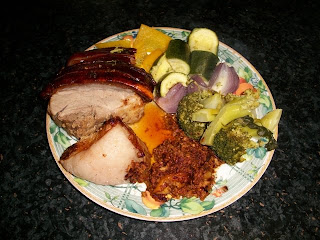
    Pork scratchings

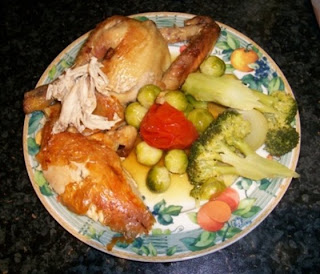
    Chicken skin

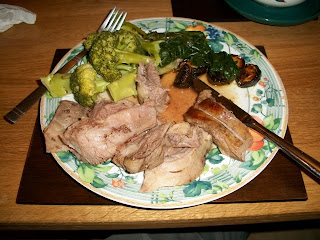
    Lamb fat

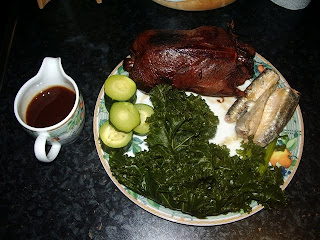
    Duck skin

    They key point: fat from free range, organic, or pastured animals is actually good for you.

    Eating the Fat Makes the Meat Cheap

    Another irony lies in people’s tendency to avoid buying organic, pastured or free-range meat because of the cost. Very often these same people can be seen scraping the fatty offcuts into the bin after a meal or carefully separating the skin from a duck or chicken leg.

    The point is that if they bought high quality food, and therefore were able to eat all of the serving, they would need less to be satisfied because of the additional calories from the fat – and it would taste nicer too.

    When Mrs M and I buy a small organic chicken, it makes up to four meals. There are all kinds of fatty parts to the animal, many of which become crispy if cooked properly. Personally, I am happy to guzzle the fatty parts whether crispy or not, so I can be satisfied by a much less meat than I would otherwise need.

    A £10 organic bird therefore means £2.50 per meal. If we bought a crappy, industrially farmed bird for £5 we’d have no choice to but to avoid the fat, so the cost would be the same because we’d only get two meals out of it.

    As an aside, I do appreciate some people may be getting their meals for £1.25 because they eat all of the chicken, in spite of the conditions it was raised in, and that for some this is the only way they can afford to live.

    Conditioned Avoidance

    We have been conditioned to cut the fat off our meat.

    The diet-heart hypothesis – the idea that eating saturated fat leads to heart disease – is so thoroughly entrenched in the psyche of most people that there is an instinctive urge to avoid conspicuous animal fat.

    I won’t bore you with the science here, but regular readers of the blogs in my blog roll will know this is a notion that’s being quietly and systematically demolished by authors, commentators and researchers, leaving an ever-dwindling group of establishment die-hards holding aloft a tattered flag.

    Even Mrs M, now a fully paid up Paleo queen, cuts the fat off meat when it’s not crispy or when there is what she perceives to be ‘just too much of it.’ As for my Mum and Dad, who themselves have been Paleo for some time, it took them quite a while to get used to the idea that fat is good.

    The Power of Indoctrination

    What gets me is that nobody wants to leave the crispy skin from a chicken breast. I don’t know many people who’d pass up a pork scratching (albeit accompanied by ooh, I shouldn’t) and the crispy fat from a lamb or beef steak is surely divine.

    Yet the same people who seem unable to exercise the willpower necessary to stop eating sugar, cakes or chocolate, appear suddenly to have this iron resolve when it comes to animal fat. As I recall, I was just the same some years ago. I guess this is testament to the power of indoctrination. No one wants to die. You die of heart attacks. We are told fat gives you a heart attack. I don’t remember anyone ever saying that about sugar, albeit that it may turn out to be true.

    Paleo Subtleties

    It would be remiss of me not to mention that there are differing opinions among advocates of Paleo/Primal eating about how much animal fat we should eat. Some say that wild animals are relatively lean and that our liking for fat was naturally regulated when we were evolving by its relative scarcity. Others say we should freely consume it.

    I just wing it. For me, variety is the watchword. On some days I eat white fish or offal, which contain relatively little fat anyway – on these days I get most of my fat from olive or coconut oil. On days when I do eat fatty animals I eat the fat freely.

    In part 3 – soups and bones. Yes I said bones – you can eat them. Really.

    See Also:
    Making the Most of Animals: Part 1 – Wonderful Offal
    Making the Most of Animals: Part 3 – Beautiful Bones

  • Mount Roraima

    Venezuela, South America | Natural Wonders

    It might look like it’s straight out of a sci-fi movie, but this natural wonder is completely real, and fully awe inspiring. Mount Roraima, bordered by three different countries (Venezuela, Brazil and Guyana) whose border lines intersect of the massive shelf, is surrounded on all four sides by sheer 400-meter high cliffs. While its cliff walls are only scalable by the most experienced of climbers, there is a hiking path up the mountain’s natural ramp-like path (usually a two-day hike).

    However, the mountain is worth a visit for more reasons than its impressive cliffs. Mount Roraima, part of Venezuela’s 30000-square-kilometer Canaima National Park, is the site of the highest peak of the country of Guyana’s Highland Range. The mountains of this range, including Roraima, are considered to be some of the oldest geological formations known, some dating back to two-billion years ago. Its near daily rains have also created a unique ecosystem which includes several endemic species, including a unique carnivorous pitcher plant, and some of the highest waterfalls in the world.

    Culturally, the mountain has long held significance to the indigenous people of the area and features prominently in their myths and folklore. It was also the inspiration for the Sir Arthur Conan Doyle’s novel, The Lost World as well as for Paradise Falls in the 2009 Pixar film, Up.

  • COP15 Sound Bites

    I’ve been looking over the final COP15 decision (here, for now). So far it all looks nonbinding. I was curious how some of the players are reacting.

    EDF

    “Today’s agreement leaves the U.S. in control of its own destiny. … As President Obama said today, strong action on climate change is in America’s national interest.” — EDF’s Fred Krupp, Dec. 18, 2009

    Sierra Club

    “The world’s nations have come together and concluded a historic–if incomplete–agreement to begin tackling global warming.  Tonight’s announcement is but a first step and much work remains to be done in the days and months ahead in order to seal a final international climate deal that is fair, binding, and ambitious.  It is imperative that negotiations resume as soon as possible.

    “The agreement reached here has all the ingredients necessary to construct a final treaty–a mitigation target of 2 degrees Celsius, nationally appropriate action plans, a mechanism for international climate finance, and transparency with regard to national commitments.  President Obama has made much progress in past 11 months and it now appears that the U.S.–and the world–is ready to do the hard work necessary to finish what was started here in Copenhagen.

    Greenpeace

    Copenhagen a cop-out
    Two years have passed since world leaders promised all of us a deal to stop climate change. After two weeks of UN negotiations, politicians breezed in, had dinner with the Queen, a three hour lunch, took some photos, and then delivered what could only be described as the 24-hour Head of State tourist brochure of Copenhagen instead of a climate treaty.

    League of Conservation Voters (via email)

    I’m in Copenhagen and President Obama has just wrapped up a press conference here announcing that a meaningful climate deal has been reached. While there is still much work to be done, the deal reached is a breakthrough for international climate cooperation and provides a path forward towards a binding global treaty in 2010.

    Significantly, the United States and China will – for the first time – both be at the table, working to tackle the historic challenge of global climate change. Additionally, the deal allows for more transparency, as developed and developing countries have now agreed to list their national actions and commitments regarding greenhouse gas reductions.

    API

    “We agree with President Obama on the importance of addressing global climate change. However, Congress’s leading proposals could destroy millions of jobs, drive up fuel prices, and, by shifting much of our refining capacity abroad (along with refinery greenhouse gas emissions), substantially increase our reliance on foreign supplies of gasoline, diesel and other petroleum fuels. Worse, the president’s own EPA is poised to issue an expansive regimen of climate regulations that could cripple business growth and job creation, dimming employment hopes for 15 million now out-of-work Americans.

    “Public support for government climate change proposals has waned. It’s time for all stakeholders to come together to craft a fair, efficient, market-based climate change strategy that minimizes the burden on consumers and jobs.”

    Can’t find a final reaction yet: USCAP, WWF, ECF, and many others. Seems like the press releases haven’t all hit yet.

    Update 12/22: a nice summary at Roger Peilke’s blog.

  • The Wonderful World of Gingerbread Houses

    Gingerbread houses fascinate youngsters, whether the cookie type with frosting and candy decorations or nonedible, made from other materials.  Yesterday, when I substute taught in second grade, we made gingerbread houses from brown paper bags. 

    Gingerbread house image: sxc.hu

    Gingerbread house image: sxc.hu

    What fun the youngsters had!

    They colored decorative motifs the teacher had copied for them.  Then I stuffed brown paper bags with crumpled newspaper, folded down the top (after cutting off a strip so it wouldn’t be so bulky), and stapling it shut.  The youngsters glued on their decorations (doors, windows, snowflakes, border strips, etc.).  Some cut the doors so they would open and decorated inside, too, after pushing some of the crumpled paper aside.  Others added decorations to the bags with colored markers.

    For making cookie type gingerbread houses, you can purchase kits, as my daughter often has for her children.  What fun they had putting these together and decorating them, creating Christmas memories in the process.

    To make gingerbread houses “from scratch,” you may want to see if you can find a copy of Gingerbread Houses for Kids by Jennifer Ericsson , a wonderful how-to book for making these creations, with easy instructions for youngsters.

    What are your gingerbread house memories?

    Post from: Blisstree

    The Wonderful World of Gingerbread Houses

  • Chocolate not that bad a person tells me

    Talking to a person sends me this about Chocolate saying it does not have that much sugar like candy and sweets that have lots of sugar.

    Saying candy and sweets have lots of sugar and one that has diabetes should not have it but Chocolate not that bat.


    Chocolate contains antioxidants known as flavonoids which help protect against free radicals that cause cell and tissue damage.

    Chocolate contains beneficial vitamins and minerals, including copper, potassium, magnesium and phosphorus. Contrary to popular belief, chocolate contains minimal caffeine – a fraction of that in a cup of coffee.

    70% cocoa or higher dark chocolate has a low glycemic index, meaning a smaller fluctuation in blood glucose and insulin levels than with other sweet foods. Be sure to read labels for other added sugars.

    Endangered Species Chocolate is all-natural, meaning it contains no additives like chemical preservatives or artificial coloring and flavoring. Our organic-certified products are made using ingredients with no pesticides, growth hormones or other chemicals, maximizing the benefits of antioxidants, vitamins, minerals and essential fatty acids.

    Heart…

    Stearic acid found in cocoa butter has a neutral affect on cholesterol. A portion of chocolate’s fat also comes from oleic acid, a heart-healthy, monounsaturated fat. The antioxidants found in dark chocolate can inhibit plaque formation in the arteries and improve the flexibility of blood vessels.

    The darker and purer the chocolate, the more powerful the antioxidants. 70% cocoa or higher dark chocolate contains more antioxidant power than green tea, red wine or blueberries. Endangered Species Chocolate has many dark chocolate selections with 70-88% cocoa content, some containing other heart-friendly foods like berries and nuts.

    And soul…

    Eating chocolate releases endorphins, the body’s natural “feel-good” chemical.

    Chocolate is known as an antidepressant and an aphrodisiac. It contains a phenylethylamine, which can cause feelings similar to being “in love.”

    Our own health can be connected to our compassion and generosity toward others. Feel good about indulging in Endangered Species Chocolate knowing that it helps support sustainable forest farming practices and gives back to conservation organizations.

    ADDITIONAL CONSIDERATIONS:

    Dairy can interfere with the absorption of antioxidants found in chocolate.

    While chocolate has many health benefits, it should be consumed in moderation. Chocolate consumption that causes weight gain negates many of the health values.

    This information is in no way intended to be medical advice. If you intend to medicate with chocolate, please consult a doctor first. NOTE: At Endangered Species Chocolate we provide gourmet chocolate made with the finest all-natural ingredients. Cacao, the essence of chocolate, is actually a fruit that, when harvested naturally or organically, supports human health (see reverse) as well as the environment. Chocolate products made from natural and organic ingredients with minimal processing have the greatest health benefit, richest flavor and a positive impact
    on the earth. Just as important, we see chocolate as a medium to help save species, conserve habitat and honor human life. Our 100% ethically traded cacao beans are shade grown on small, family-owned properties, ensuring the workers and farmers a fair wage and humane working conditions. Choosing Endangered Species Chocolate is one way to support sustainable forest farmland and the species that flourish there. We add to the impact of each bar by contributing 10% of our net profits to organizations whose mission is to help support species, habitat and humanity.

    Researchers are discovering more and more attributes of chocolate in addition to its savored taste. In 1993, researchers at The Pennsylvania State University ¹ concluded that stearic acid, the main saturated fatty acid in chocolate, does not raise blood cholesterol levels. These researchers also reported ² that a 1.4 ounce chocolate bar eaten in place of a high carbohydrate snack does not raise LDL-cholesterol (the bad cholesterol) levels and increases HDL-cholesterol (the good cholesterol) levels.

    In addition to its neutral affect on blood cholesterol levels, recent research has indicated a possible antioxidant benefit in chocolate similar to that found in red wine. Not only is chocolate and red wine a tantalizing combination for its sensational taste, but research shows these foods also contain antioxidants which may be good for health. In September, 1996, The Lancet ³ reported cocoa powder and chocolate contain a relatively high amount of phenolic compounds, which possess antioxidant properties. Further, they found the compounds possess properties that may be beneficial in reducing the risk for coronary heart disease.

  • Max on the Island of Misfit Monsters

    I had misgivings about a movie-length interpretation of Where the Wild Things Are, even in the hands of a capable director. The movie surpassed my expectations — it was far more of a disaster than I even imagined.

    In this version of the story, Max (a far more troubled boy than the one in the book) escapes inside his imagination, but even his imagination is fraught with dysfunction. The wild rumpus ends in finger-pointing and shouting, and the next 90 minutes is more of the same, making it feel like nine hours. The monsters spend more time grousing over petty jealousies than capering. The ostensibly fun scenes are brutal. An ostensibly affectionate dog pile of monsters is shown to be suffocating. One of the monsters knocks sad-looking owls — supposedly her new best friends — out of the sky with rocks. Another monster gets an arm ripped off. Love is expressed through violence, anger through more violence. Everything anyone builds is destroyed. Max leaves the place even more miserable and damaged than it was when he found it.

    It is common enough to say that this or that movie didn’t do justice to a book, but I’ve rarely felt that a movie did more injustice to its source material.

    We do not know if Max’s supper is still hot, when he gets home, and I guess that’s all that needs to be said. Max is a miserable little boy, has a miserable time with miserable monsters, and comes home late to a meal that has (we are sure) become cold.

  • Ghost Recon Future Soldier trademarked by Ubisoft

    Looks like Ubisoft is off to making one “Ghost Recon Future Soldier”, if the filed trademark on the USPTO is any indication. No other information is available, save for the fact that it is classified as a

  • Just Cause 2: An Island in Chaos trailer

    Square Enix is giving you another cause to catch Just Cause 2 when it releases next year with this new trailer. Off they go to Southeast Asia’s “best kept secret”, and from there, the island of Panau