Category: News

  • Collaboration & Copyright & a New Way to Work

    If you provide or create content online, you should know about Creative Commons. The short explanation, from their blog is, “The Creative Commons licenses enable people to easily change their copyright terms from the default of “all rights reserved” to “some rights reserved.” It’s a good way to share info – whether you’re the creator, borrower or buyer.

    Bernadine Joselyn sent me an article that highlights the need for and application of Creative Commons and talks about how the Creative Commons opens a door to innovation. It’s a good example of how the Internet (and broadband) have changed traditional business models. Before the Internet, everyone seemed to work in silos; since the advent of the Internet, most successful businesses work more collaboratively. Google is the prime example. Google creates tools that are intended to work in most environments for free, such as Gmail, Google Maps or Google Analytics for web statistics. They have gone so far as it open up some of their code to developers around the world, making it possible for developers to make improvements to Google tools as well as create entirely new tools.

    Before the Internet, businesses seemed to think that such openness would devalue their products or services; in a post Internet world, openness adds value. Businesses that have understood and acted on that shift in openness have flourished; those who are still playing according to the old rules are dying on the vine. The Creative Commons has been able to step in to help some businesses take advantage of the openness.

    I thought about that transition into openness last weekend when I was at the TMCA Fall Conference. We heard from several traditional media resources that are creating intriguing media web sites that encourage reader interaction. That focus on interaction is great and a nod at the changes brought about by the Internet – but most of the sites we saw stopped short of being truly open. They will not be opening up their code at this point and they are not creating ways to interact with other web site. I contrast this with the new media tools – Facebook, Twitter, LinkedIn, blogs – which seem to be finding more and more ways to work seamlessly together – or at least allow users to work seamless with multiple tools.

    If you think about broadband a lot, it’s tough not to make the connection between this story and net neutrality. What we need is a new business model that makes sense for broadband providers and users. To quote the article on Creative Commons, “while the technology is frictionless, the collaboration faces another hurdle”.

  • Microsoft launches Office 2010 technical beta a few days early

    By Scott M. Fulton, III, Betanews

    New Office 2010 logoParticipants in the first Technical Preview for Microsoft Office 2010 received invitations this morning to join the Office 2010 technical beta build 4536.1000. Not long afterward, the link to the technical beta went live on MSDN and TechNet.

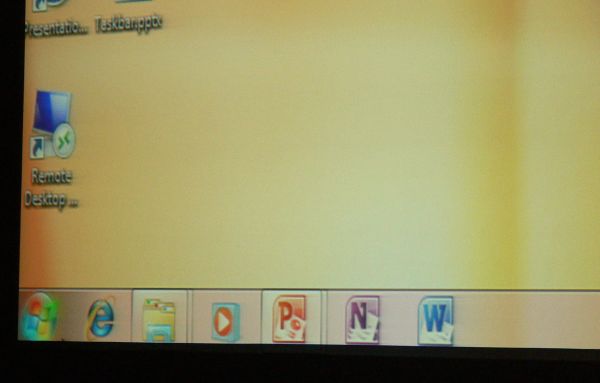
    Ironically, once again, attendees at Microsoft’s own PDC 2009 conference were the last to know about it, unless they were checking their own e-mail. The first hint that something was up came up during an unrelated demo during Day 0 of the conference. At the bottom of a screen where taskbar demos were being shown, the new icons for the Office 2010 apps showed up. Now, it appears all Office apps will be represented by their initials, not just Word.

    In the new artwork package this year, we’re noticing that the Office logo not only gets a tweak (arrows pointing to the center of the various boxes) but a color scheme change. As Google commandeers more of Microsoft’s four-color product logos, Microsoft itself has been signaling shape and design over color, especially with Exchange Server and SQL Server. Now Office gets an all-gold scheme — gold used to be Outlook’s color.

    The icons for Office 2010 showed up for the first time at an otherwise unrelated demo, at PDC 2009.

    Technical Preview participants were not necessarily MSDN or TechNet members, so in actuality, the Technical Beta is being extended to two groups, the second of which are comprised of active contributors to the Preview program. Today’s release may impact the anticipated schedule of the keynotes somewhat, which originally had been spread out over two days. We had anticipated the Office beta launch Wednesday.

    We’ll dive into the download tonight and let you know what we find.

    Copyright Betanews, Inc. 2009


    Add to digg
    Add to Google
    Add to Slashdot
    Add to Twitter
    Add to del.icio.us
    Add to Facebook
    Add to Technorati


  • FourSquare Opens API, Invites Developers to Play

    FourSquare, the hot location-based services startup, is hoping to increase its momentum by opening its API to the public. Developers can use the API to visualize data generated by its community or create new ways to check into its service, the company said in a post today on its site. The company had already shared its API with a handful of developers, but opening it up to the public could entice a host of developers to build offerings on its service — and that would help set FourSquare apart from other players in a big way.

    FourSquare launched at SXSW earlier this year along with three other LBS startups, making an already crowded space even more crammed. The service allows iPhone and Android users to check in and notify friends when they arrive at certain locations, like a bar or restaurant, and earn “badges” as they use the service.

    There is no shortage of players in the LBS space, but FourSquare appears to have gained an impressive following. The New York-based startup was founded by Dennis Crowley — the guy behind Dodgeball – and two months ago pocketed $1.35 million in a first round of funding led by Twitter backer Union Square Ventures. Spurring the development of a variety of FourSquare apps could be a key advantage in an increasingly packed field.


  • Magellan Gets Into The iPhone GPS Game, Car Cradle Incoming

    Screen shot 2009-11-16 at [ November 16 ] 2.06.07 PM

    Google might be in the middle of turning the navigation market on its head with hints that their free turn-by-turn service might make its way to the iPhone, but that’s not scaring the big players away. TomTom and Telenav have both been on the platform for months and show no sign of turning tail, and now another big-name has jumped into the mix: Magellan.

    Just minutes ago, Magellan announced that their first application, Roadmate, has hit the App Store at an “introductory price” (which, more often than not, tends to be the final price drummed up for the sake of pumping launch sales) of $79.99.

    Read the rest of this post >>


  • VLAB Event — SSDs: Technology for Bigger, Better, Faster Apps

    Solid-state drive (SSD) is a disruptive technology that has arrived and is creating new opportunities for startups. 

An SSD-enabled, networked world promises near real-time access and blazing performance for ultra-fast games and massively scalable databases, and will enable a range of new consumer and enterprise applications. On Nov. 17, come to the MIT/Stanford Venture Lab to find out more about startup opportunities that are tapping into SSDs: What’s the impact of SSDs on enterprise and consumer applications? Given the widespread emergence of SSD, what are the new opportunities for startups in hardware and software? What do developers need to know to seize the opportunities unfolding here? To register, click here. For more information, please click here.


  • Why are we so attracted to disaster movies like 2012

    garbage

    Here’s another topic I’m stealing from Ron and Fez: disaster movies. We sorta discussed this a few times already, but the movie 2012 broke all sorts of records at the weekend. I’d make a big stink about Americans having zero taste, but if I could make $80 zillion per movie sleeping through my lines like the cast of 2012 presumably did, you can guarantee I’d be right there alongside them. That aside, the topic on the radio show was this: what is it about disaster movies that make people so excited?

    There’s a few theories. The one I found most interesting is that since nobody wants to die in real life, people enjoy seeing movies where the entire planet is threatened. “I don’t want to die and know that you guys are still having fun without me,” that type of thing. So watching a movie where everyone is in danger, well, count us in. (And it really does need to be that everyone is in danger, and none of this I Am Legend action-adventure nonsense, otherwise you alienate people who aren’t into Indiana Jones-style movies. One man versus crazy odds.)

    Which brings us to 2012: why did so many of y’all watch it this weekend? Were you attracted by the special effects? Do you like the director or the actors? Just needed to kill some time with your friends at the mall? The movie is bloody awful, so I’m just curious.

    Then again, I used to watch WWF/WWE all day long, so who am I to question people’s judgement vis-à-vis entertainment?


  • Google Earth For iPhone 2.0 Arrives

    iPhone users with an interest in geography have a reason to cheer today: a certain search giant has released version 2.0 of Google Earth for iPhone, and the software has been improved in just about every way.

    A post on the LatLong Blog announced, "We’ve added some exciting new features, including the ability to view maps that you create on your desktop computer right from your iPhone, explore the app in new languages, and improved icon selection and performance."

    Then the other big difference is that this release of Google Earth for iPhone is available in 13 new languages (for a total of 31).  Impressive.

    Still, this development raises an interesting question: Where’s Google Earth for Android?  Google Earth for iPhone was first released over a year ago, and for Google to upgrade it prior to acknowledging its own mobile operating system seems odd.  Especially since there is (and has been) a demand.

    Ah, well.  The official Google post concluded, "We hope you enjoy our latest release.  Please note that the app will be rolling out around the world over the next twenty-four hours – if you don’t see it immediately, be sure to check back soon.  You can download Google Earth for iPhone here."

    Related Articles:

    > Google Street View Hits Hawaii, Mexico

    > Google Earth Users Get A Way To Build Architecture

    > A Year Of Google’s Big Eye In The Sky

  • And the winner of the HP MediaSmart server is…

    hp-ex495-7

    Big props goes out to Joe W. for almost correctly guessing the total storage capacity of the CrunchGear staff. His guess of 38.5TB nets him a brand new HP MediaSmart EX495 server. Congrats. Click through to see the total capacity broken down by writer.

    In no particular order,

    • >Devin: 4.2
    • Doug: 3
    • Dave: 8.4
    • Matt: 8
    • Nicholas: 5
    • John: 2
    • Greg: 8

    For a grand total of 38.6TB, which isn’t that much actually. It will probably be double next year at this time


  • Is There Economic Consensus on Climate Bills?

    The Institute for Policy Integrity (IPI) recently released a survey [.pdf] of 144 leading economists who have published peer-reviewed articles on climate change. In the media blitz accompanying the release of the study, IPI spokespeople sold its results as a “consensus” among expert economists comparable to that of the climate scientists. They gave the average person the impression that only a fool or a tool of big business could possibly oppose the Waxman-Markey or Kerry-Boxer bills.

    This is completely misleading. It is true that the vast majority of the surveyed economists believe that climate change poses a threat to the economy. However, this alone doesn’t mean that their work endorses the pending legislation. In fact, we will show that many of the responses in the survey underscore that Congress’ proposed “solutions” to climate change violate the recommendations of even those economists who are very concerned about climate change.

    The Existence of a Threat Alone Doesn’t Justify Any Government “Solution”

    The most-hyped result from the survey was the fact that 84 percent of the surveyed economists agreed with this statement: “The environmental effects of greenhouse-gas emissions, as described by leading scientific experts, create significant risks to important sectors of the United States and global economy.”

    Already we see that the question is loaded; a more neutral question would have been, “Do you think greenhouse-gas emissions create significant risks to the economy?” There are many economists who have expressed skepticism about the computer models and techniques used to generate some of the scarier projections. But with the phrasing of the question, they were technically being asked to take the climate models at face value, and assess what the impact of their projections would be on the economy.

    But that’s a minor quibble. The real problem with the hype placed on this particular result, is that it does not follow that the Waxman-Markey or Kerry-Boxer bills are appropriate to dealing with this potential risk. For an analogy, if we surveyed doctors and asked, “Is there a significant risk to the public from H1N1?” presumably a large percentage would say, “Yes.” If the Obama Administration then proposed vaccinating every American three times a month for the next 20 years, that would clearly be a waste of resources and detrimental to public health.

    The same is true with the threat of climate change. As we will show, the pending Congressional legislation actually violates many of the recommendations of the economists in the survey. Yet one would never get that impression from reading the NYT coverage, or story in USA Today.

    Surveyed Economists Favor “Market-Based” Approach and Auctioned Allowances

    Another completely misleading result from the survey shows that an overwhelming 91.6 percent of the respondents favored a “market-based” approach to curbing greenhouse gas emissions. In the news stories linked above, as well as the Executive Summary of the survey itself, this statistic is offered as apparent endorsement of the cap-and-trade legislation currently being debated in Congress.

    On the contrary, the economists endorsement of “market-based” approaches really shows how inefficient the pending legislation is. By “market-based” approach, the economists mean that the government should place a price penalty on carbon dioxide emissions, either through a cap-and-trade system or a straightforward carbon tax. And then…the government should mind its own business. In particular, policymakers should not try to micromanage the particular ways that business and consumers scale back their emissions, but rather the (augmented) profit and loss system will lead to the most efficient response to the new incentives. As the study itself explains:

    Nearly all respondents—92%—also agreed or strongly agreed that market-based mechanisms, as opposed to command-and-control approaches, are the preferred way to cut greenhouse gas emissions and place a price on carbon. As such, most economists would support the cap-and-trade structure proposed by the main legislative options now pending before Congress. [Emphasis added]

    Yet contrary to the non sequitur in the quote above, if a straightforward “market-based” approach is what the expert economists favor—by an overwhelming majority—then the economists would likely reject the monstrous hunks of legislation that passed the House and are being debated in the Senate. We at IER have already shown the tremendous thicket of new regulations contained in the House-passed Waxman-Markey bill, besides its cap-and-trade system. At best, only one half of Waxman-Markey could even be called cap-and-trade, leaving an additional 700 pages of inefficient regulations. The 91.6 percent of economists who favored a “market-based” approach were rejecting the top-down central planning contained in Waxman-Markey and Kerry-Boxer.

    Speaking of cap-and-trade, the IPI survey also found that 80.6 percent of respondents favored auctioning emission allowances rather than handing them to favored groups for free. Presumably then these economists would join with IER in condemning this thinly veiled transfer of an enormous amount of wealth from low- and middle-class energy consumers into the pockets of politically-connected shareholders.

    What the Media Hype Didn’t Report

    We have seen that the two most-hyped results of the survey actually do not support the pending legislation, and if anything actually undercut it. What’s interesting is that if one looks at pages 18-19 of the actual survey [.pdf], one learns:

    The survey asked what percentage of benefits from emissions reduction would accrue to the United States. The average response was 7.7%, and the median was 4%….Given the global extent of the problem, each individual country has an incentive to “free ride” on the efforts of others—it is important for all countries to act to overcome this incentive or else appropriate controls will not be put in place.

    The lay person who simply reads the news coverage or Executive Summary would be stunned by the above concession. Many economists support a reduction in greenhouse gas emissions because they calculate that the global benefits will outweigh the global costs. But as the above quotation makes crystal clear, if the U.S. restrains its own emissions while other major governments do not, then the impact on the U.S. economy—which the CBO estimates could be as high as 3.4 percent of GDP by 2050—will result in benefits that will accrue largely to foreigners.

    Of course, there is nothing wrong with foreign aid per se; Americans are quite generous with their wealth. Furthermore, many people believe that the Western countries ought to bear the lion’s share of the pain from emissions cuts, because they historically benefited from plentiful energy supplies in the form of fossil fuels. Even so, average Americans are being misled when they believe the pending legislation will benefit the U.S. economy on net. Even according to the “consensus” models, it will not benefit if the U.S. acts unilaterally.

    Conclusion

    The media blitz surrounding the new IPI survey tells Americans that economists as well as climate scientists support government intervention into the energy sector. Yet a little digging shows that if anything, the economic consensus rejects the particular legislation pending in Congress. Just because many experts agree there is a problem doesn’t automatically mean Congress has the solution.

  • Apple’s Black Friday deals leaked?

    apple-black-friday

    One of our connects just hit us up with some intriguing Apple information. According to them, what you see detailed above is a shot of Apple’s yearly Black Friday deals. It’s reported to be something Apple will email out shortly. This time around, it looks as if Apple will be offering up to 30% off on all iPods (Update: excluding iPhone and iPod shuffle, sorry), up to 25% off Macs, and up to 15% off all accessories as well as Apple software and hardware. The deal is only good for the day of November 27th and if that’s not good enough, “select” Apple stores will open at 6AM. This is unconfirmed but it doesn’t seem too unrealistic. Thoughts?

  • Thanksgiving made easy, thanks to Trader Joe’s

    Trader Joe’s is your one stop shop for Thanksgiving.  It’s easy to get overwhelmed when making a big meal, but a Thanksgiving feast really can be a stress-free and low fuss event with a little bit of planning and a few easy shortcuts from Trader Joe’s.   Here are our favorite Thanksgiving buys —  it was tough to keep this list short! 

    Turkeys!  Turkeys have landed at Trader Joe’s!  Last year, we tried the brined turkeys and they were juicy and delicious, receiving raves from all our guests. We like to rub the turkey with olive oil, season with salt and black pepper, and then stuff the turkey with 2 lemons cut in half, a a bulb of garlic with cloves cut in half and a few sprigs of fresh rosemary.  Roast at 325˚ F until turkey reaches temperature (varies depending on size).  Vegetarian? Look no further for Tofurky, also available at TJ’s.

    Turkey Gravy: Trader Joe’s all-natural boxed turkey gravy is thick, rich and savory, and so convenient.  Perfect for pouring over juicy turkey or using in our Shepherd’s Pie (recipe below)! Good news for those who have wheat sensitivity – no wheat ingredients used in this gravy. 

    Cornbread Stuffing Mix: Hearty croutons bursting with savory flavor.  Serve as prepared, or add your own selections of cranberries, nuts, mushrooms, or diced sausage. We like to sauté one chopped trimmed leek (about a cup’s worth) and one container sliced crimini mushrooms in 1 Tbsp olive oil and add it to the prepared stuffing.

    Spiced Apple Cider:  For the best smelling kitchen in the neighborhood, simmer cider in a pot with cinnamon sticks or your favorite mulling spices.  Serve warm.

    In the mashed potato department, you’re minutes away from fluffy white peaks of  buttery potatoes.  Try frozen Mashed Potatoes or boxed instant Garlic Mashed Potatoes.

    Fried Onion Pieces:  Perk up that boring green bean casserole or vegetable gratin with these crispy toppings.  If you make a green salad or a soup, top with some fried onion pieces.

    Pumpkin Pancake & Waffle Mix:  Don’t forget breakfast! This delicious mix, perfect for Thanksgiving day, has been getting cheers across the country.  Serve with maple syrup and pumpkin butter.

    Pumpkin Butter:  Use this sweet pumpkin blend to fill little tarts, stir into soups, serve on scones, add to ice cream or yogurt, fold into puff pastry turnovers, or spread on pumpkin pancakes.  Try a dollop on top of Pumpkin Oatmeal.  For an easy side dish, use in Harvest Glazed Carrots.

    Adorable Vegetables:  Who can resist Teeny Tiny Potatoes, Tri-Color Pearl Onions, or Organic Baby Sweet Potatoes.  Almost too cute to eat. 


    Pie Crust:  These convenient frozen gourmet crusts bake up flakey and delicious.  Each package contains 2 crusts and this year they are boxed so that there is no unfolding involved.  Fill with your own pumpkin filling using Organic Canned Pumpkin for an Old Fashioned Pumpkin Pie. For a zero-fuss ready-made dessert, try Trader Joe’s Pumpkin Tart, Honey Pecan Tart, or Baked Apple Pie.  Top with some whipped cream or vanilla ice cream.

    Fill out your recipes with Free Range Chicken Broth, TJ’s Whole Kernel Corn in the famous yellow can, Cornbread Mix, Pumpkin Bread and Muffin Mix, Organic Sweetened Condensed Milk, ready-to-use Wild Rice, and fresh whole cranberries for making your own homemade cranberry sauce.

  • Facebook And Twitter Land New Words In Dictionary

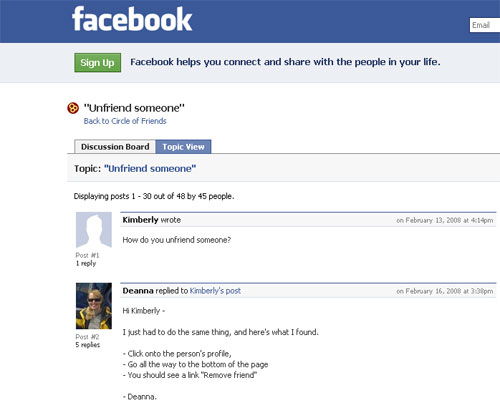
    Facebook users will be familiar with the New Oxford American Dictionary’s 2009 Word of the Year, "unfriend."

    Oxford says the term unfriend is a verb. Its definition of the word is "To remove someone as a friend on a social networking site such as Facebook."

    "It has both currency and potential longevity," said Christine Lindberg, Senior Lexicographer for Oxford’s US dictionary program. "In the online social networking context, its meaning is understood, so its adoption as a modern verb form makes this an interesting choice for Word of the Year.

    Unfriend

    "Most ‘un-‘ prefixed words are adjectives (unacceptable, unpleasant), and there are certainly some familiar ‘un-‘ verbs (uncap, unpack), but ‘unfriend’ is different from the norm. It assumes a verb sense of ‘friend’ that is really not used (at least not since maybe the 17th century!). Unfriend has real lex-appeal."

    Other Words of the Year finalists include:

      hashtag – a # [hash] sign added to a word or phrase that enables Twitter users to search for tweets (postings on the Twitter site) that contain similarly tagged items and view thematic sets
      intexticated – distracted because texting on a cellphone while driving a vehicle
      netbook – a small, very portable laptop computer with limited memory
      paywall – a way of blocking access to a part of a website which is only available to paying subscribers
      sexting – the sending of sexually explicit texts and pictures by cellphone
    freemium – a business model in which some basic services are provided for free, with the aim of enticing users to pay for additional, premium features or content

    Twitter releated word clusters for 2009 include:

    Tweeps
    Tweetup
    Twitt
    Twitterati
    Twitterature
    Twitterverse/sphere
    Retweet
    Twibe
    Sweeple
    Tweepish
    Tweetaholic
    Twittermob
    Twitterhea

    To determine the Word of the Year, Oxford says its lexicographers track the vocabulary of the English language to see how it changes from year to year. The word is then debated and chosen  with the selection made to reflect the mindset of the year and its lasting potential for cultural significance and use.


    Related Articles:

    > Thinking Beyond Facebook And Twitter For Social Relevance

    > Facebook,Foo Fighters To Pair Up Tonight

    >Twitter Expands Into More Than Just 2 Languages


  • Twitter to abandon ‘politically biased’ suggested user list

    By Tim Conneally, Betanews

    Twitter reportedly will be abandoning its suggested user list following some unfavorable attention it received last month.

    When a new user signs up on Twitter, the site offers him a long list of suggested users he may be interested in following. The list consists of about 500 prominent users in various fields, including politics.

    But the Center for Governmental Studies noticed the suggested users did not equally represent both Republican and Democratic political interests. One of the main points brought up was that prospective Democratic candidates in the California gubernatorial race were listed, but prospective Republican candidates were not.

    At the Web 2.0 summit last month, Chief Twitter exec Evan Williams said “‘The suggested user list has been controversial for a while…I desperately want to kill it or evolve it.”

    Today, co-founder Biz Stone followed up with the Associated Press, telling reporters, “That list will be going away…In its stead will be something that is more programmatically chosen, something that actually delivers more relevant suggestions.”

    Neither Stone nor Williams has presented a date for when the feature will be changed.

    Copyright Betanews, Inc. 2009


    Add to digg
    Add to Google
    Add to Slashdot
    Add to Twitter
    Add to del.icio.us
    Add to Facebook
    Add to Technorati


  • Call Of Duty: Modern Warfare 2 Crashing On Your PS3? Here’s How To Fix It [Updated]


    3821127750_0c51ae4b3d_b

    I purchased Call of Duty: Modern Warfare 2 on launch day because I the hype behind this game was simply outstanding. The hype was well deserved because its the most phoenominal multiplayer fps experience I’ve encountered. The level of customization (different custom setups, killstreak unlocks, etc) and awesome little rewards like titles and callsigns have you constantly evolving your character. The game looks great on the PS3, although I wish the textures were a little more defined. Nonetheless, a strange issue started happening to me recently where the game would freeze or start freezing up during multiplayer gameplay. This would usually happen at the beginning, or even a few moments into a match. It was occuring over and over and I was getting quite concerned.

    UPDATE: As of today, Activision released a 1.04 update to Modern Warfare 2 for the PS3 that fixed this issue for me. Up to this point, I had to delete my game utility data every time before I played to ensure a crash-free experience. This seems to be resolved now. If downloading 1.04 doesn’t help you, try these steps:

    After Googling around, I didn’t find much until I actually went to Activision’s support site. I highlighted below in bold what fixed the issue for me.

    Here is the fix they list for this issue:

    This may be caused by a faulty game disc, or problems with the PlayStation 3. Check the disc for abrasions, scratches, and dust.

    • Ensure the PlayStation 3 is in a cool, well ventilated place.
    • Try deleting the game data. Go into the XMB menu. This is the menu that you see when you turn on your PS3. Select Game / Game Data Utility. Select the game and press the triangle button. Select Delete and then press the X button to confirm. Once this is done, reinsert the game disc in the drive. You will need to install the game data to the PS3 again. This should not affect your saved game as it is stored in a different folder.
    • Try the game on another PlayStation 3.
    • If none of the above resolves the issue then this may indicate a problem with your Playstation 3 and you will need to contact Playstation Consumer/Technical support at (1-800-345-SONY).
    • Additional PS3 troubleshooting suggestions can be found at Sony’s support site.

    I hope this helps!

  • Wherein we discuss: No Russian, the controversial Modern Warfare 2 level (and the game’s subsequent banning in Russia)

    mw2norussian

    SPOILERS BEGIN HERE~!

    You probably already know this, but Modern Warfare 2 has been banned in Russia because of that controversial level, No Russian. In the mission, you, an American soldier in the employ of the CIA, team up with a Russian terrorist who shoots up a fictional Russian airport. At the end of the mission, the Russian terrorist double-crosses you, shooting you and leaving you at the scene of the terrorist attack. This serves as a springboard for the rest of the game, wherein Russia uses the (what they think is) American attack as a pretext for war.

    SPOILERS ARE PRETTY MUCH OVER~!

    As a response to the level, Russia has recalled all copies all the game. (Here’s the original Russian source.) Infinity Ward has responded by editing the game, the edited version being expected to go on sale within the month (provided the Russian authorities even allow this version).

    We’ve talked about the game a little, but I wanted to share my thoughts on the level in question.

    It’s very hard to defend the level. In fact, I do wonder who at Infinity Ward thought it’d be a good idea to include such a level. And that Activision gave the level the OK! Did no one anticipate the controversy that would erupt?

    I understand people will want to defend the level, and the game, and Infinity Ward (no one’s defending Activision~!), because it’s “your team” that’s being attacked. “Leave video games alone!” And for the record (get it?), I really don’t think any of us here at CrunchGear believe there’s a link between video game violence and real life violence. All of us have played violent video games, from Doom all the way on up, and we’re a bunch of harmless nerds. I wouldn’t know how to fire a gun, or carjack a minivan, or punch someone in the chest and rip out their heart if my life depended on it. Gaming is just a fun thing done to pass the time. No more, no less.

    But to hide behind those excuses when it comes to examining No Russian is absurd. You realize that you’re running around an airport in a simulated terror attack, right? That’s different than you playing the role of, say, the Allied forces in WWII, shooting conscripted Wehrmacht soldiers. That’s two armies going at it; a terror attack isn’t even in the same ballpark.

    Let’s put it this way: if an Iranian video game developer released a game that put you in the role of a suicide bomber, and had you roll into a mall in the middle of suburban New Jersey, shoot it up, then blow yourself up in the middle of the food court, you don’t think there’d be people in the media freaking out? I can guarantee that Drudge, Hannity, Rush, Beck & Co. would be up in arms over that. And once they’re up in arms, other news outlets would pick it up (because that’s how news works in the country), then we’d be dealing with a truly national story: should we ban the video game that glorifies terrorism, and shows America at its most vulnerable?

    So why is Russia any different? Why can’t Russian gamers (and, more importantly, Russian politicians) be angry over the level? They have every right to.

    Again, I’m not saying that by playing the level, all of a sudden America’s youth is going to be training how to attack a Russian airport, it’s just the the depiction of of violence is so over-the-top and so unnecessary that you wonder why it was approved in the first place.

    So I officially don’t care for the level. I did enjoy the game—it’s a well-done FPS, yes—but don’t think I don’t recognize that I’m getting my kicks playing virtual soldier.

    There’s a larger point you can make here, too: what does it say about our society and culture that one of the highest grossing entertainment releases of the year amounts to virtually shooting up airports filled with helpless victims, or where we entertain ourselves by virtually shooting our friends in the face with AK-47s? I’m guilty of this, too, of course, but it’s something to think about.


  • 2007-2008 Assessment of the Army Research Laboratory

    Cover imageThis volume is the latest in a series of biennial assessments of the scientific and technical quality of the Army Research Laboratory (ARL). The current report summarizes findings for the 2007-2008 period, during which 95 volunteer experts in fields of science and engineering participated in the following activities: visiting ARL annually, receiving formal presentations of technical work, examining facilities, engaging in technical discussions with ARL staff, and reviewing ARL technical materials.

    The overall quality of ARL’s technical staff and their work continues to be impressive, as well as the relevance of their work to Army needs. ARL continues to exhibit a clear, passionate concern for the end user of its technology–the soldier in the field. While two directorates have large program-support missions, there is considerable customer-support work across the directorates, which universally demonstrate mindfulness of the importance of transitioning technology to support immediate and near-term Army needs. ARL staff also continue to expand their involvement with the wider scientific and engineering community.

    This involvement includes monitoring relevant developments elsewhere, engaging in significant collaborative work (including the Collaborative Technology Alliances), and sharing work through peer reviews. In general, ARL is working very well within an appropriate research and development niche and has been demonstrating significant accomplishments.

  • Britney Spears, Justin Timberlake, Others Sued For Patent Infringement For Appearing Larger Than Life

    Every time you think you’ve seen the most ridiculous patent infringement lawsuit out there, you only need to wait a day or two before another, more ridiculous, one shows up. The latest is that Britney Spears, Justin Timberlake, the Los Angeles Lakers and the band the Pussycat Dolls have all been sued for patent infringement. Seriously. The patent in question (6669346) is for a very large display system for a performance. Basically, it’s for the sort of massive screens used at various concerts (and apparently, some sporting events). Seeing as I doubt that Spears, Timberlake or the Pussycat Dolls built these screens themselves, shouldn’t there be some sort of patent exhaustion issue here, where (if there’s any actual infringement, which seems questionable enough) the liable parties should be whoever made these giant screesn?

    Of course the lawsuit was filed in East Texas, and it’s amusing to see the reasoning for this: according to the lawsuit, all of the performers likely had residents from East Texas who attended some of their concerts, and thus it makes sense. As for the Lakers, well, their games are broadcast in East Texas (even if the screen in question is in LA and probably not of much use or concern to those watching at home in East Texas). So, apparently, these days you don’t just have to be an innovative company to get sued for patent infringement. You can just be a rockstar or a sports team…

    Permalink | Comments | Email This Story


  • 5 Less Obvious Online Reputation Management Issues

    There are a lot of elements to online reputation management. Really, depending on how far you want to take it, the elements are basically limitless. Any web property out there that gives people a voice caters to potential reputation smearing.

    There have been entire books written about online reputation management, and countless articles, but I just wanted to take the time to point out five things to keep track of that you may not have considered (or maybe you have…if so, good thinking).

    What do you watch when monitoring your online reputation? Tell WPN readers.

    1. Google Sidewiki

    There is a chance that people are talking about you right on your site, and you don’t have any clue. A while back Google launched SideWiki, a feature for the Google Toolbar (and also available as a bookmarklet for web browsers), which lets people comment on any page on the web. Anyone who is using Sidewiki can see the comments that have been posted or leave their own. Granted, not all comments left will necessarily show up (Google controls this), but you should do yourself a favor and check to see what kind of comments are being left on your site. If you have a lot of pages, it may be hard to get to them all, but you can focus on the ones that you feel are the most important (or bring in the most traffic).

    2. Blog Comments

    You may be on the look out for blog posts being written about your brand. People are going online more and more to research businesses before they buy. They’re looking for reviews and what people have to say about businesses and products.

    It doesn’t stop at the blog post, however. Often times, some of the most passionate and/or nasty comments will come in the comments sections of these blog posts. If you need to defend your brand or product out there, don’t overlook what people are saying in the comments themselves.

    That’s assuming that the comments are negative, but it can also pay to acknowledge the good comments. Engage with people and show that you care and appreciate the kind words. As Connie Bensen of Techrigy recently told WebProNews in an interview, "You’re never done building you brand." You should always be listening, work with those who are being negative (when possible), and thank the ones who are being positive.

    noted in a SmallBusinessNewz article, firings don’t often lead to warm, fuzzy feelings. Some people can just get plain malicious, and these people will do what they can to ruin you. You can set up alerts for ex-employees, and this will often help you encounter any negative words they are putting out there. This can be difficult to manage depending on the privacy settings of any social networks they may be sounding off on, but Google Alerts, Twitter search feeds, etc. can potentially catch a great deal of smack talk.

    4. Watching What You Tweet

    Twitterers say the darndest things. When you see all of the ridiculous stuff people are saying on Twitter, it’s easy to dismiss any discretion (particularly if you like to tie on a buzz and speak your mind as plenty in the industry clearly do). Just think before you tweet. Tweets are automatically set to public unless you change your settings. Once you say something, it’s out there for the world to see, and how close attention do you really pay to your list of followers? Anyone can follow you if you haven’t changed your settings.

    Bad Tweeting

    Sure, if you slip up and wish to take back something you said, you can always delete your tweet. However, Twitter is largely about real-time communication and what is happening right now. So once it’s been said, there is no telling how many people may have seen it.

    Being yourself is one thing. There’s nothing wrong with speaking your mind (even if you do have a buzz). People often put their foot in their mouths in the offline world. The same goes for Twitter. That’s all I’m saying.

    5. Photos Posted by Others

    Luckily things like photo tagging on Facebook and other sites lets people upload photos of you with your name attached to them. If you’re not ashamed of anything you’ve ever done, than maybe you have nothing to worry about. I would guess that most people cannot say that, however. And it’s funny how cameras are often present at those times that lead to any shame. What may be funny to your college roommate (and perhaps even you still), may not be so appropriate for potential customers and business contacts.

    Keep an eye on your Facebook photos (and anywhere else, where they may be popping up). Tell your friends to cut you some slack. Tell them it’s funny, but they may be losing you business. If they’re really your friend, they’ll understand.

    Wrapping Up

    Clearly, there are many more things to consider within the practice of managing one’s online reputation. A lot of it comes down to how comfortable you are with your professional persona – your brand’s image (in the eyes of the public). Can you think of some potential reputation hazards that may not occur to everybody? Please share in the comments.

    Related Articles: 

    > Picking Your Online Reputation Battles

    > Baby Food Recall Shows Reputation Management Done Right

    > Killing Bad Search Results with Reputation Management

    > Fighting a Bad Online Reputation & Keeping a Good One

  • Word from the White House: Talking Points: Reform Opponents' Pre-Determined "Study"

    It’s no secret that institutions of all stripes focus their communications on certain messages day to day. We thought it would all be a little more open and transparent if we went ahead and published what our focus will be for the day, along with any related articles, documents, or reports.

    Supporting article: "Health bill foes solicit funds for economic study," Washington Post, 11/16/09

    Supporting report: "Health Care Reform: Creating a Sustainable Health Care Marketplace," Business Roundtable, November 2009 (pdf)

    Talking Points: Reform Opponents’ Pre-Determined "Study"

    Today’s article unmasking their plan to pay a "respected economist" handsomely to produce a "study" with predetermined outcomes is just the latest proof that reform’s opponents will not let the facts get in the way of their efforts to defend to a status quo that has been so profitable for the insurance companies.
    This so-called study would be at least the third intentionally skewed report as part of the last-ditch effort to safeguard the insurance companies’ bottom line at the expense of the American people.

    You may recall that last month, the insurance lobby offered an "analysis" that even the company who produced it said was skewed because that’s what the insurance companies paid for.
    And just days after that report, another insurance company produced a similarly flawed study.

    The only difference this time is that the insurance industry’s defenders were caught red-handed before producing their intentionally misleading "study".
    So whenever we finally see this supposed analysis, we should all take it with a huge grain of salt.
    The reality is that health insurance reform will save jobs and lower costs for American businesses, families, and the country as a whole.
    MIT Economist Jon Gruber reports that reform will save about 80,000 jobs in the small business sector over the next decade and could save a typical family thousands of dollars on health care costs.
    And a recent study from the Business Roundtable confirms that the health care status quo is unsustainable and that reform legislation in Congress is moving in the right direction on cost containment and could reduce premiums by $3,000 over the next decade.

    Talking Points: Controlling Costs for Families, Small Businesses, and the Government

    From the beginning of this process, President Obama has been clear that health insurance reform must not only provide security and stability for Americans with insurance and affordable options for uninsured Americans, but also slow the unsustainable cost growth that is burdening families, threatening businesses’ viability, and exploding our national deficit.
    Fortunately, the House and Senate versions of reform share a variety of measures that will reduce the rapid growth in health care costs while also providing Americans with higher quality care including:

    Changing the way we handle hospitalizations, to prevent mistakes and to prevent unnecessary readmissions.
    Creating incentives in the payment system to reward quality of care rather than just the quantity of procedures.
    Giving physicians incentives to collaborate in the coordination of patient care.
    Investing in research into what works and what doesn’t in health care.
    Reducing hospital-acquired infections and other avoidable health-center acquired conditions through rigorous reporting and transparency.
    Putting prevention first, rewarding care that focuses on wellness and treating the whole patient in an integrated and coordinated delivery system.
    Tackling the insurance bureaucracy, streamlining the payment system to save time and money that is now spent processing claims and navigating through the byzantine insurance system.
    Establishing a health insurance exchange with a public insurance option, where individuals and small businesses can buy lower-cost insurance that will spur competition and put downward pressure on costs.

    These measures build upon the significant down payment we already made in the American Reinvestment and Recovery Act to begin switching from paper records to computerized records; to strengthen preventive care; to invest in patient-centered health research; and to build up the workforce of primary care providers.
    And there are also ideas that will further control cost growth that have been proposed and are being looked at as the legislative process continues, such as:

    A fee on insurance companies offering high-premium plans — which would create a strong incentive for more efficient plans that would help reduce the growth of premiums.
    Establishing a Medicare commission — which would develop and submit proposals to Congress aimed at extending the solvency of Medicare, slowing Medicare cost growth, and improving the quality of care delivered to Medicare beneficiaries.

  • Effectology: No Quarter on git-fiddle

    Are you ready to watch Bill Ruppert’s honey drip? Don’t answer that. Bill recreated the sound of a Fender Rhodes electric piano with a guitar and some EHX pedals.

    The piano is famous for adding a bit of class to jazz in the 1970s and 1980s and is instantly recognizable if you’ve listened to much of anything from that era. The fascinating thing is that it’s analog all the way down to the Doppler producing rotating speaker.