Category: News

  • Rappin for Jesus with Pastor & Mrs. Jim Colerick Is Your Clearly Phony But Who Cares Viral Hit of the Day

    There is absolutely no chance that this is legit. But that should in no way affect your decision to enjoy every second of it.

    “I helped my pastor make this music video when I was in high school. Thought you guys might get a kick out of it! May the Lord bless and keep you,” says YouTube uploader Brian Spinney.

    What follows is…well…is something. JC means a lot of Pastor Jim Colerick and he knows that if he wants to reach the “urban” crowd, he has to speak the language (Warning: NSFW language):

    The video has flown to the front page of reddit, where the skeptics have been hard at work figuring out what’s going on here. On January 15th, 2013, two things happened. First, the YouTube account that uploaded this video was created. Second, this page was registered. It’s supposedly the official website of West Dubuque Church of Christ, led by “Pastor Jim.” In the “news” section, we learn that the church was apparently shuttered in June of 2004.

    As amazing as it would be if this was simply one youth pastor’s misguided attempt to connect with the kids, we’re just looking at a very well-made comedy video. Emphasis on very well-made.

  • Where Both Parents Can "Have It All"

    I was taken aback when I saw the Vigeland sculpture park in Oslo, one of Norway’s most popular tourist destinations. Then I was shocked by my shock. I realized it was the first time in my life that I had ever seen depictions of fatherhood in art. Here, all around me, were depictions of masculine men tenderly embracing tiny babies, teaching toddlers their paces, or tossing teens in laughing play.

    Thank God for the Nordics. The Economist has just written a hymn of a Special Report, full of rapt wonder at “probably the best governed countries in the world.” But they hardly mention that it’s also the region that boasts the most gender-balanced governments in the world, as though that’s not really a critical factor in the success of its ‘pragmatic’ approach to governing.

    “[T]he new Nordic model is proving strikingly successful,” says Adrian Wooldridge. “The Nordics dominate indices of competitiveness as well as of well-being.” It’s no accident that these countries have legislated gender balance deep into their political and economic fabric, using quotas if other means weren’t effective. Pragmatic indeed.

    Nordic countries’ progressive gender policies have deep cultural roots. Cross-cultural analysts like Geert Hofstede have said that the biggest difference between the Nordics and other countries are their highly ‘feminine’ vs ‘masculine’ values. Masculinity in this analysis is defined as “a preference for achievement, heroism, assertiveness and material reward for success. Society at large is more competitive. Its opposite, femininity, stands for a preference for cooperation, modesty, caring for the weak and quality of life. Society at large is more consensus-oriented.”

    It is hard to imagine The Economist arguing that “cooperation and modesty” may be an effective engine for competitiveness and growth. Yet it is inconceivable that one of the most distinctive features of the Nordic countries — their highly progressive approach to gender balance in all things social, political and economic — has not significantly contributed to countries that are now, at the dawn of the 21st century, healthy, wealthy and wise. For a skeptical world hungry for data-driven proof of everything (see David Brooks on “The Philosophy of Data“), the Nordic model should also be proof that approaches driven, defined and underpinned by the complementarity values and perspectives of men and women deliver huge benefits — as can be seen nowhere else (yet) in the world.

    The Nordic executive team (mostly men) I worked with this week were fascinated by the Hofstede research. They suddenly understood why their own leadership styles may have been less impactful with their Anglo-Saxon headquarter colleagues. They were behaving in a more “feminine” way than their peers would be comfortable with, and my comments on the difference between male and female communication and leadership styles suddenly took on an entirely new significance.

    They all had wives who worked, and they all knew that in the Nordic operations they ran, fathers were just as avid to bond with their new babies as mothers. In all other developed countries (with the notable exception of the United States), it is now more or less acceptable for women to take paid maternity leave, but in many countries and companies, men are still harshly judged as unambitious if they take more than the parsimonious amount of paternity leave a few governments have timidly allotted them. But in the Nordics, the governments’ enlightened policy-making has forced employers to make parental leave as equally (and gender-neutrally) available to men as to women. For instance, in Sweden, new parents can take up to 13 months of leave (at 80% pay) and divide the time up however they like between them.

    Women will only become leaders in greater numbers when men become fathers. As the Nordics have so beautifully shown, happy families are the rock on which healthy — and sustainable — economies are built. Gustav Vigeland knew that, and carved it in stone, back in 1940s Oslo.

  • Newly identified natural protein blocks HIV, other deadly viruses

    A team of UCLA-led researchers has identified a protein with broad virus-fighting properties that potentially could be used as a weapon against deadly human pathogenic viruses such as HIV, Ebola, Rift Valley Fever, Nipah and others designated “priority pathogens” for national biosecurity purposes by the National Institute of Allergy and Infectious Disease.
     
    In a study published in the January issue of the journal Immunity, the researchers describe the novel antiviral property of the protein, cholesterol-25-hydroxylase (CH25H), an enzyme that converts cholesterol to an oxysterol called 25-hydroxycholesterol (25HC), which can permeate a cell’s wall and block a virus from getting in.
     
    Interestingly, the CH25H enzyme is activated by interferon, an essential antiviral cell-signaling protein produced in the body, said lead author Su-Yang Liu, a student in the department of microbiology, immunology and molecular genetics at the David Geffen School of Medicine at UCLA.
     
    “Antiviral genes have been hard to apply for therapeutic purposes because it is difficult to express genes in cells,” said Liu, who performed the study with principal investigator Genhong Cheng, a professor of microbiology, immunology and molecular genetics. “CH25H, however, produces a natural, soluble oxysterol that can be synthesized and administered.
     
    “Also, our initial studies showing that 25HC can inhibit HIV growth in vivo should prompt further study into membrane-modifying cholesterols that inhibit viruses,” he added.
     
    The discovery is particularly relevant to efforts to develop broad-spectrum antivirals against an increasing number of emerging viral pathogens, Liu said.
     
    Working with Jerome Zack, a professor of microbiology, immunology and molecular genetics and an associate director of the UCLA AIDS Institute, the researchers initially found that 25HC dramatically inhibited HIV in cell cultures. Next, they administered 25HC in mice implanted with human tissues and found that it significantly reduced their HIV load within seven days. The 25HC also reversed the T-cell depletion caused by HIV.
     
    By contrast, mice that had the CH25H gene knocked out were more susceptible to a mouse gammaherpes virus, the researchers found.
     
    In collaboration with Dr. Benhur Lee, a professor of pathology and laboratory medicine and a member of the UCLA AIDS Institute, they discovered that 25HC inhibited HIV entry into the cell. Furthermore, in cell cultures, it was found to inhibit the growth of other deadly viruses, such as Ebola, Nipah and the Rift Valley Fever virus.
     
    Intriguingly, CH25H expression in cells requires interferon. While interferon has been known for more than 60 years to be a critical part of the body’s natural defense mechanism against viruses, the protein itself does not have any antiviral properties. Rather, it triggers the expression of many antiviral genes. While other studies have identified some antiviral genes that are activated by interferon, this research gives the first description of an interferon-induced antiviral oxysterol through the activation of the enzyme CH25H. It provides a link to how interferon can cause inhibition of viral membrane fusion, Liu said.
     
    He noted some weaknesses in the research. For instance, 25HC is difficult to deliver in large doses, and its antiviral effect against Ebola, Nipah and other highly pathogenic viruses have yet to be tested in vivo. Also, the researchers still need to compare 25HC’s antiviral effect against other HIV antivirals.
     
    Additional study co-authors were Roghiyh Aliyari, Kelechi Chikere, Matthew D. Marsden and Olivier Pernet, of UCLA; Jennifer K. Smith, Rebecca Nusbaum and Alexander N. Frieberg, of the University of Texas–Galveston; and Guangming Li, Haitao Guo and Lishan Su, of the University of North Carolina–Chapel Hill.
     
    The National Institutes of Health (grants R01 AI078389, AI069120, AI080432, AI095097, AI077454, AI070010 and AI028697), the Warsaw Fellowship, the UCLA Center for AIDS Research (CFAR), the UCLA AIDS Institute, the UCLA Clinical and Translational Science Institute (CTSI), and the Pacific Southwest Regional Center of Excellence (PSWRCE) for Biodefense and Emerging Infectious Diseases funded this study.
     
    The UCLA AIDS Institute, established in 1992, is a multidisciplinary think tank drawing on the skills of top-flight researchers in the worldwide fight against HIV and AIDS, the first cases of which were reported in 1981 by UCLA physicians. Institute members include researchers in virology and immunology, genetics, cancer, neurology, ophthalmology, epidemiology, social sciences, public health, nursing and disease prevention. Their findings have led to advances in treating HIV, as well as other diseases, such as hepatitis B and C, influenza and cancer.
     
    For more news, visit the UCLA Newsroom and follow us on Twitter

  • Developing Social Strategies For Clients: Thinking Beyond Facebook

    Developing a solid social media strategy for a client of your firm isn’t easy. Unfortunately, when the term “social media” comes up in a meeting with a prospect, the reaction is all too often “yes – we tried Facebook, spent a lot of money, built a pretty page, got 1,000 likes, and now we’re done.”

    I’ve found that it’s valuable to think about social media in a more holistic, integrated way. Yes, FB is important but thinking in this way is more about looking at the big picture, which includes a firm’s entire portfolio of online presences, including existing promotional web properties, outbound marketing efforts (both paid and unpaid), and trying to fit the pieces together. “Social Media” in this context doesn’t signify a single activity on a single platform, but a business mindset that seeks to make a company “social” using whatever mechanisms make the most sense.

    Many business successes have resulted from this kind of social-mindedness. Years ago, before the Web, Apple distinguished its products by providing the best technical documentation. In the 1990s Dell crawled out of the mail-order PC gutter by being the first to offer a 24/7 tech support line backed up by a guarantee of free onsite tech support, and became a global PC powerhouse. Providing this kind of service-based outreach was expensive for each company, providing no short term ROI, but was an essential step required to become a favored brand.

    A service-based social media strategy is based on the simple idea that your users, customers, and prospects have moment to moment informational needs that will, in most cases, only be frustrated, not satisfied, by being served sales collateral. These people need help – not a pitch.

    There’s nothing wrong with using your social media properties to serve up games, contests, coupons, and other fun, but the core of your effort should be based on the value of serious, unglamorous service.

    The components of such an effort are:

    1. An online document repository containing online tutorials, help files, and a Wiki. Such a repository may contain other long-form content such as whitepapers, technical specification sheets, and monographs. This body of long-form content is what you will be referencing from Facebook, Twitter, LinkedIn, Google Plus, et al.

    2. A forum area in which users may converse with your representatives publicly. Many businesses choose to do this on Facebook but there is nothing that Facebook does in terms of conversational management that cannot be replicated on one’s own site.

    3. A publishing and monitoring mechanism to post updates to all relevant social media platforms and monitor conversational streams in which ones products, services, or brand are mentioned. Hootsuite is a popular tool for doing this.

    In my experience, the battle to convince firms to become more “social” is often easily won. Every business wants to be more “social.” But the far tougher fight is to convince these people that it will be worth their while to build out their libraries of user-centric data. Doing so isn’t cheap because good writers aren’t cheap, and it’s sometimes cheaper for an agency to step in to handle the document production chores and/or social media management. Nor are all the benefits of being “more social” immediately realizable.

    But they’re certainly real. Just ask Apple and Dell.

  • Dragon’s Dogma: Dark Arisen Trailer Reveals New Enemy Types

    Capcom announced last month that the expansion to Dragon’s Dogma – Dark Arisen – would be hitting our shores in April. The expansion includes a new area to explore alongside a host of new enemies, equipment and class skills.

    The newest trailer released today walks us through all the new enemies players will face as they explore the new lands in Dark Arisen. The most prominent new enemy is Death and his delivers one hit kills with his scythe. Other notable enemies include Pyresaurians, Maneaters, Sirens and Gore Cyclops.

    Being my favorite game from last year, this latest expansion is already on the right track of offering the same variety of enemies that made the original Dragon’s Dogma so exciting. The new enemy types also appear far more deadly than any that were in the original game – including the post game content.

    Dragon’s Dogma: Dark Arisen will launch on April 26 for PS3 and Xbox 360. The game comes with the original Dragon’s Dogma alongside the expansion for $40.

  • Here’s A Quick Look At The Next Episode Of The Walking Dead

    The Walking Dead returned to television on Sunday night, and while reaction to the episode itself has been mixed, many fans are just glad it’s back.

    AMC has uploaded a preview of next week’s episode to YouTube, so in case last night’s wasn’t enough to get you ready, here you go:

    For a behind the scenes look at last night’s episode (actually a couple of looks), check this out (beware of spoilers).

    More The Walking Dead fun here.

  • Mountain Dew Breakfast: Extreme, But Not Too Extreme

    Mountain Dew is looking to expand their customer base a bit–or at least make more sales to the fanbase they already have–by bringing breakfast into the mix.

    It may not be a vitamin-packed smoothie, but the company says their new drink, Kickstart, does contain vitamins B and C and has a burst of caffeine to get you going when you have a severe case of the Mondays. It also contains 5% fruit juice and comes in different flavors, like fruit punch and orange citrus. But it won’t pack on the calories like some “energy drinks” do; instead, it includes artificial sweeteners to bring that number down to about half those found in a can of soda.

    But the company doesn’t want to rely too much on the “energy” premise, as many super-charged energy drinks have garnered negative attention in recent months due to alleged deaths and health issues. Instead, Kickstart falls somewhere between a regular can of soda and an energy drink with 92 milligrams of caffeine for a 16-ounce can. A similar amount of Mountain Dew has 72 milligrams, and Amp Energy Drink contains 142 milligrams.

    The company wants to draw in a core audience of 18-24 year olds with the drink in an effort to win them over despite a growing love of coffee in that age group.

    Image: PepsiCO

  • Apple Smart Watch On The Way, Say Reports

    Apple is working on a “smart watch” according to various reports. There have been rumors in the past that the company was doing so, but now we’re seeing it reported by the likes of The New York Times and The Wall Street Journal. The former reports:

    In its headquarters in Cupertino, Calif., Apple is experimenting with wristwatch-like devices made of curved glass, according to people familiar with the company’s explorations, who spoke on the condition that they not be named because they are not allowed to publicly discuss unreleased products. Such a watch would operate on Apple’s iOS platform, two people said, and stand apart from competitors based on the company’s understanding of how such glass can curve around the human body.

    The latter says:

    The company has discussed such a device with its major manufacturing partner Hon Hai Precision Industry Co., one of these people said, as part of explorations of potentially large product categories beyond the smartphone and tablet.

    TechCrunch speculates that the device will use glass from Conrning, makers of the Gorilla Glass used in the iPhone.

    The smart watch space might be the next one where we see the big players in smartphones and tablets extend their rivalry. Google is reportedly already thinking about marketing its own smart watch, and has already secured a related patent.

  • New YouTube App Comes to PlayStation 3 in Europe

    Sony today announced that PlayStation 3 owners in Europe will finally be getting the newly redesigned YouTube app. The redesign emphasizes subscriptions and search. From the PlayStation blog post:

    You might have watched YouTube on PS3 before, but get ready for a completely new experience that’s designed for the big screen and PS3 controls. The new app brings you more content, like your subscribed channels, and more ways to find videos, with better search tools, more ways to watch YouTube by pairing your smartphone, and more language options.

    The smartphone-as-a-remote feature only requires “a quick pairing process.” After that users will be able to browse video on their phone, then play it on a TV and control the video using the phone. The expanded YouTube app languages now include English, Swedish, Italian, German, Spanish, French, Dutch, and Russian.

    The redesigned app on the PS3 can be found under “TV & Video Services” and “My Channels.” The new rolls out today for the U.K., France, Germany, Australia, New Zealand, Belgium, Czech Republic, Greece, Hungary, Israel, Ireland, Italy, Netherlands, Poland, South Africa, Spain, Sweden, Russia, and India.

  • The Case For Faster, Cheaper Internet

    The United States has a problem – our Internet costs far too much for speeds that barely amount to anything. The FCC engineered a plan to get us on the right track with the National Broadband Plan, but not a lot has come of it yet. Now one Internet fairness proponent has come out swinging in favor of cheaper Internet for all.

    Susan Crawford, former special assistant to President Obama for science, technology and innovation, recently went on air with veteran journalist Bill Moyers to talk about the current state of the Internet in the U.S. Here’s what you can expect to hear about:

    “Government has allowed a few powerful media conglomerates to put profit ahead of the public interest – rigging the rules, raising prices, and stifling competition. As a result, Crawford says, all of us are at the mercy of the biggest business monopoly since Standard Oil in the first Gilded Age a hundred years ago.”

    Susan Crawford on Why U.S. Internet Access is Slow, Costly, and Unfair from BillMoyers.com on Vimeo.

    If you want to learn more about Internet monopolies and how it affects our economy, Crawford has written a book about in called Captive Audience: The Telecom Industry and Monopoly Power in the New Gilded Age.

    [h/t: Gizmodo]

  • When education is not a given: 8 inspiring talks

    ShabanaBasijRasikhFrom age 6 through age 11, Shabana Basij-Rasikh risked her life to go to school. The Taliban had banned girls in Afghanistan from studying at universities and other educational institutions and, thus, Basij-Rasikh dressed as a boy, posing as an escort for her older sister. Together, the two would place their books in grocery bags and sneak off to a secret school.

    Shabana Basij-Rasikh: Dare to educate Afghan girlsShabana Basij-Rasikh: Dare to educate Afghan girls

    “Each day, we took a different route so that no one would suspect where we were going,” says Basij-Rasikh in today’s powerful talk. “The school was in a house, more than 100 of us packed into one living room … We all knew we were risking our lives — the students, the parents, the teachers.”

    When the Taliban fell in 2001, Basij-Rasikh’s father was thrilled that his daughters would be able to return to a traditional school. Still, says Basij-Rasikh, her family’s commitment to education for its daughters was not the norm. In Afghanistan, only 6 percent of women 25 or older received any formal education.

    “I was very lucky to grow up in a family where education was prized and daughters were treasured,” says Basij-Rasikh, a recent graduate of Middlebury College in the United States. “During the Taliban years, I remember there were times I would get so frustrated by our life and always being scared. I would want to quit. But my father would say, ‘Listen, my daughter. You can lose everything you own in your life. Your money can be stolen. You can be forced to leave your home in a war. The one thing that will always remain with you is what is up here. If we have to sell our blood to pay your school fees, we will.’”

    After college, Basij-Rasikh returned home and co-founded SOLA, the School of Leadership Afghanistan, the first boarding school for girls in Afghanistan. And yet sadly, getting an education is still a risk in the country. To hear a shocking story of one of Basij-Rasikh’s students whose family was targeted by terrorists — simply for sending their daughter to SOLA — watch today’s talk.

    Here, more talks from people who went to great lengths to get, or give, an education.

    Kakenya Ntaiya: The first school for Maasai girls
    For Maasai girls, childhood is focused on preparing them for marriage, which will happen for many as early as age 12 or 13. With great reverence for her culture, Kakenya Ntaiya shares how she agreed to participate in a genital mutilation ceremony … in exchange for permission to continue her education. In this talk from TEDxMidAtlantic, she reveals why it was so important to her to go to college, become a teacher and start the first all-girls school in her village — all with the support of her elders.

    Shukla Bose on educating poor children
    Activist Shukla Bose admits that she and her compatriates with the Parikrma Humanity Foundation were mind-boggled when they first set out to educate the children of India’s slums — 200 million of whom should be in school but simply aren’t. In this talk from TEDIndia 2009, Bose explains how they put the statistics out of mind and went about their mission in the only way they could — by going one child at a time.

    Sheryl WuDunn: Our century’s greatest injustice
    At TEDGlobal 2010, journalist Sheryl WuDunn takes us to rural China — where a star pupil was pulled out of school because her family couldn’t justify paying the $13 annual fee when she’d be working a rice paddy for the rest of her life. WuDunn shows how the donations for the education of this one student changed not only her life but her family’s and her entire village’s. A stirring talk about how education for the world’s women can lead to all of our advancement.

    Sugata Mitra shares how kids teach themselves
    Why should educational technology be focused in schools that already have good teachers and resources? In this talk from LIFT 2007, Sugata Mitra shares why it is important to focus technology in schools in rural areas, slums and shanty towns — because that’s where it can have the most impact. Here, Mitra narrates his Hole in the Wall experiment in New Delhi in 1999, where a computer was embedded into a wall, and local children flocked to it — learning and teaching each other.

    Neil Turok makes his TED Prize wish
    Neil Turok grew up in South Africa, where his parents were imprisoned for resisting racism. He spent his formative years as a refugee in Kenya and Tanzania. As Turok accepted the TED Prize in 2008, he shared the story of how he became interested in theoretical physics. The keys: being inspired by the wisdom of village children around him, many of whom didn’t have a formal education, and by a school teacher who posed the question: “What banged during the Big Bang?”

    Charles Leadbeater on education innovation in the slums
    In the favelas of Rio or the slums of Kibera, traditional schools simply will not work because they depend on professionals and high-cost infrastructure — not to mention that their curriculums do not connect to the lives of students. At the TEDSalon London 2010, Charles Leadbeater looks at different approaches — like putting computers in community centers and serving up lessons through mobile phones. It’s education plus technology that is the key, Leadbeater shows.

    Leymah Gbowee: Unlock the intelligence, passion, greatness of girls
    Nobel Peace Prize winner Leymah Gbowee is haunted by the untapped potential of the girls she’s met on her travels across Liberia. In this talk, she tells some of these girls’ stories and calls on us all to foster the educational growth of girls — and to encourage the great inventions, innovations and breakthroughs they may be able to fuel if nurtured.

  • Amazon teams up with CBS and Stephen King for new TV series

    Amazon works hard to position Prime streaming against Netflix and the new Redbox Instant. Uh-oh, the retail giant muscles Hulu, too. Amazon has struck a deal with TV network CBS for exclusive rights to the upcoming Stephen King TV show, based on his novel “Under the Dome”.

    The show, produced by Steven Spielberg’s Amblin Television, will debut this summer — June 24th to be precise. Amazon Prime will be “establishing an in-season, online subscription-video-on-demand (SVOD) window for the show on Amazon’s Prime Instant Video service. Prime Instant Video will be the exclusive online subscription home for “Under the Dome”, according to the company.

    Amazon Prime video service is not only available via your computer, but also on Kindle Fire HD, iPad, iPhone, iPod touch, Roku, Xbox 360, PlayStation 3 and the Wii U, among other devices.

    Episodes will be available to Prime customers free-of-charge four days after each airs on network TV. Those who are not Prime customers can still get in on the action by purchasing individual episodes, although the price was not mentioned in Amazon’s announcement.

    If you are not an avid King reader the company offers a brief synopsis of what to expect — “Under the Dome tells the story of a small New England town that is suddenly and inexplicably sealed off from the rest of the world by an enormous transparent dome”. Amazon also boasts its Prime library now sports more than 36,000 choices.

    Photo Credit: Mikael Damkier/Shutterstock

  • Twitter Pays Homage To Whitney Houston On The Anniversary Of Her Death

    It’s hard to believe it’s been a whole year already, but today marks the anniversary of the death of Whitney Houston, arguably one of the most shocking celebrity deaths of 2012. The Twitterverse is making sure everyone remembers the singer, as many of its patrons pay homage to her, and celebrate her memory in various ways.

    As the Grammy Awards are once again a big topic of discussion today, here’s a look back at what Twitter was saying about last year’s ceremony, which included a famous performance of Jennifer Hudson singing Houston’s version of “I Will Always Love You”.

    And here’s a look back at the Twitter discussion that took place during Houston’s televised funeral.

  • Joy at Work: It’s Your Right

    As a professional, you have a responsibility to use your talents wisely — and a right to enjoy yourself while doing so. But many people fail to meet that responsibility, and they don’t claim their right to take pleasure in their work.

    Consider a CEO I’ll call Michael. His life isn’t much different from the lives of many CEOs. From the outside, it looks busy but rewarding. From the inside, as I learned when I was hired to help him, his life included a string of disappointments.

    He’s an enormously talented and accomplished manager: Just before he landed this coveted position, he had successfully overseen the construction of a $100 million building project and masterminded the relocation of nearly a thousand employees into the new space. But when I first got to know Michael, there were so many demands coming at him he could barely get through the day in one piece.

    New to his role, he felt he needed to be personally involved in everything under his purview — which was everything. He was consistently overbooked, even though his assistant tried to convince him not to accept every meeting request. He was always running late, and he began to develop a reputation for being unfocused and unreliable. The day he failed to attend a meeting with a trustee subcommittee, the chairman of the board insisted he get control of this problem. That’s when we started working together.

    In our first meeting, I asked Michael why he had pursued the CEO position and how it compared with what he’d hoped it would be. He confided that while he was in the trenches, he’d often believed he had a better handle than the former CEO on what the company needed, and he relished the chance to be the chief decision maker. But he wasn’t comfortable letting go of the details, so now, as chief executive, he showed up at meetings where he wasn’t needed and missed meetings where his input was required.

    When he disappointed his colleagues, he disappointed himself. Where he once felt the pleasure of daily victories, he now lived under a cloud of dissatisfaction with his work and home life.

    The last thing he needed was to be reminded of yet another responsibility, but the truth was that he wasn’t fulfilling his key obligation to use his talents wisely. What’s more, he was standing in the way of his staff’s ability to fully utilize their own gifts. He needed to trust his people and let go of trying to control everything.

    He needed a strategic framework for setting priorities, and he needed to assure himself that he had the right people on his team so he could stop micromanaging and concentrate on his own work. We first performed what I call a Time and Emotion Study, reviewing how he’d spent his hours and assessing how well this aligned with his objectives (not well at all). We then created a task map of what needed to be done and matched his team members’ skills to the required work, reassigning some tasks and filling skills gaps.

    Finally he agreed to back off and let his VPs lead their initiatives independently. That allowed him to reclaim dozens of hours for tasks that were clearly in his domain — one of which was making it home for family dinners at least twice a week.

    This simple framework helped him get his priorities straight, and in the process, claim his right to joy on the job.

    Joy? Does any busy executive really have a shot at finding joy on the job? We usually think of high-level professionals as attaining a certain level of achievement-related satisfaction and getting external rewards such as raises and promotions. Rarely, if ever, is their happiness given serious consideration. Joy certainly isn’t in the core curriculum for most MBA programs.

    But achieving joy at work is not only possible; it’s a necessity. I’ve come to appreciate that happiness on the job is a leading indicator of an individual’s ability to sustain high levels of passion, performance, and productivity over the long run. If we can uncover our true gifts and find work that makes regular use of them, we’ve fulfilled our responsibility to use them wisely and we’ve optimized our chances for claiming our right to enjoy the process.

    When I work with people, I track their joy quotient, which is a measure of their joy-to-hassle ratio during any given situation. In fact, I keep a joy meter in my office. When I worked in the executive suite at Massachusetts General Hospital, countless people — even world-famous doctors — would come into my office, close the door, and move the dial toward hassle or joy, depending on what had happened to them recently.

    We can’t always control what assignments we accept at work. But regardless of our position, the choice we make about how we approach our work is up to us. Consider examining your business priorities — the goals you’ve promised to meet — then conducting a Time and Emotion Study to see how you’ve spent your time over the past few months. How well has your use of time fit with your objectives? Follow that up by making a task map and examining how well your responsibilities are aligned with your talents.

    If the fit isn’t as close as you would like, try talking to your colleagues to see what you can do as a team to reassign some responsibilities. The goal is to move the dial on your meter closer to joy. It’s your right.

  • Touching people’s lives – with SPAD…

    Local governance in Afghanistan is full of acronyms – PDP, DCC, DDA, PGO to name just a few – and SPAD is the latest addition. Admittedly, UK civil servants when they hear “SPAD” will not think of a programme that helps local government work more effectively, but of special advisers to ministers. However, the name encapsulates exactly what the programme stands for: Strengthening Provincial Administration and Delivery. It delivers services such as health and education to local people and does this in a way that strengthens government systems, so that, when donors leave, the government can deliver these services itself.

    SPAD is the first donor programme that uses the government’s “normal” budget procedures. Whilst we make sure that our funds are safe, this gives the government and local people much more of a say on what the money should be spent on. In Helmand where the programme has been running for a while now, every year the authorities and local people get together to plan how best to spend their budget from SPAD.

    For example, in Nehr E Seraj district, the district authorities and the elected district councillors decided to prioritise the refurbishment of Abo Al Fathi Bosti School. The reasons for this being that the school is considered one of the best boys high schools in Gereshk, has a large number of students (434), sufficient teachers and is in a secure area. Before, the school building was in very poor condition with broken windows and doors, but with the SPAD funds, the education authorities were able to contract a local firm to undertake the repairs. The procurement process was televised and transparency was ensured with public signing of the contracts. The building is now in good condition and open.

    The refurbished Abo Al Fathi Bosti School in Nehr E Seraj district.

    Students at the Abo Al Fathi Bosti School in Nehr E Seraj district.

    Other projects that SPAD has paid for included building a major health clinic, setting up a blood bank and improving the main irrigation canal in the province. For this year, 26 ministries in Helmand have been allocated funding to improve service delivery, including some initiatives to improve women’s rights.

    As the programme has been so successful in Helmand, we wanted to expand the programme in order to reach more people. I therefore travelled to Uruzgan and Bamyan to see for myself what the needs are in these provinces and whether SPAD could make an impact there.

    More about that in my next blog post!

    Darvishan Canal in Garmsir – the main irrigation canal in the province that was maintained by the Ministry of Power and Water with SPAD funds.

  • Marino Baby’s Mother Hiding Behind Bushes

    After the news broke last month that football star Dan Marino has a “love-child” with former CBS employee Donna Savattere, she has been understandably keeping out of the spotlight. However, she was spotted in London recently, where she shares a home with her husband and the child in question, Chloe. The couple recently planted tall bushes in front of their house, which afford them a bit more privacy. They declined to comment when reporters stopped them on the street.

    “We thought it was odd,” a neighbor reportedly said of the new landscaping. “They are very secretive and don’t talk to anyone.”

    Marino has reportedly been taking care of Chloe since her birth in 2005 and released a statement recently regarding the matter, insisting that his own marriage is solid.

    “This is a personal and private matter. I take full responsibility both personally and financially for my actions now as I did then. We mutually agreed to keep our arrangement private to protect all parties involved. My wife and I have been married for almost 30 years and have six children together. And we continue to be a strong and loving family,” he said in a statement.

  • iPod’s end draws near

    Debate is fierce about whether smartphones and tablets cannibalize PC sales. Surely, we can all agree that these device subsume dedicated MP3 players. Top-selling iPod is product in declining demand, while today NPD puts hard numbers behind changing music-listening habits. Which reminds me, I promised to set up my wife’s Rdio account over the weekend. We got a family plan a few days back. She’ll stream on Google Nexus 4 or 10 and download some tracks for offline ear-banging.

    She’s not alone. Fifty-six of U.S. smartphone users listen to music on the device — 40 percent for tablets, according to NPD. I’m in the latter category on Nexus 7. Consumption is up, with 54 percent of smartphone music listeners doing more than a year ago and 39 percent tuning in at least once a day.

    Again, on smartphones, Internet Radio is most popular among music listeners (65 percent) — about the same as tablets. Sixty-percent of smartphone listeners, and 49 percent of tablets owners, use their own music (presumably ripped from CDs rather than ripped off from file-sharing sites). Subscription services like Spotify: 30 percent on smartphones.

    “With both local music storage and the ability to connect to any number of online music services, tablets and smartphones are actually contributing to a net increase in their owner’s use of internet radio and personal music collections”, Ben Arnold, NPD’s director of industry analysis, says.

    When Apple cofounder Steve Jobs introduced iPhone in January 2007, he pitched a combo device, with music playback being one benefit. As iPhone, and now iPad, sales rise, iPod falls. During fiscal first quarter 2007, iPod accounted for 48 percent of Apple revenue. Six years later: 5 percent compared to 71 percent for iPhone and iPad combined. That said, sequential sales grew in the triple digits in fiscal Q1 2013. iPod is by no means dead, but NPD’s data shows just how dramatically music habits are changing.

    Change doesn’t stop there. “We are seeing sales growth in products that compliment playback on mobile devices, particularly those that feature wireless local streaming”, Arnold says. It’s the big trend. Wireless headphone sales grew 34 percent year over year in 2012, while wireless speaker sales tripled. Bluetooth models accounted for 28 percent of soundbar sales — jump from 6 percent a year earlier.

    “Products that enhance listening like streaming speakers and soundbars with Bluetooth and even premium headphones have experienced tremendous growth over the past year is evidence that consumers aren’t only satisfied with music on-the-go, they increasingly want to use these devices for a better in-home music experience”, Arnold says.

    I don’t use a soundbar, but likely will buy wireless speakers this year to put in different rooms in our apartment. And you?

  • On musical creativity: A talk to watch as you discuss the Grammy winners

    Mumford-&-SonsThe 2013 Grammy Awards, which aired last night, offered up many a surprise with indie-tinged acts grabbing major awards over more established contenders.  British folk-rockers Mumford & Sons (above) won the award for Album of the Year for Babel while electronic master Charles Limb: Your brain on improvCharles Limb: Your brain on improvGotye took home Record of the Year for his infectious song “Somebody That I Used To Know.” Meanwhile, the Black Keys will have the most trophies to add to their award shelf after winning four awards.
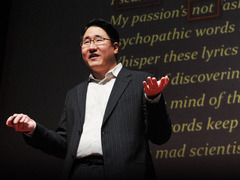
    With such creativity represented on the stage, it made us think: “What goes on in the mind of a musician?” Here, a talk from music lover and surgeon Charles Limb, where he reveals what he found from putting jazz musicians and rappers in an fMRI as they improvised »

  • Don’t Expect Google To Fund Publishers All Over The World

    Earlier this month, Google announced an agreement with publishers in France, which involves Google creating a €60 million fund called the DIgital Publishing Innovation Fund to “help support transformative digital publishing initiatives for French readers.” The agreement came after a lengthy battle with publishers who wish to be paid for the privilege of search engines to link (with snippets) to their content. It’s a similar mindset to that of publishers all over the world.

    Reuters called the agreement “a deal on payment of media links”. That’s certainly what it feels like. Google Executive Chairman Eric Schmidt explained the deal:

    First, Google has agreed to create a €60 million Digital Publishing Innovation Fund to help support transformative digital publishing initiatives for French readers. Second, Google will deepen our partnership with French publishers to help increase their online revenues using our advertising technology.

    This exciting announcement builds on the commitments we made in 2011 to increase our investment in France—including our Cultural Institute in Paris to help preserve amazing cultural treasures such as the Dead Sea Scrolls. These agreements show that through business and technology partnerships we can help stimulate digital innovation for the benefit of consumers, our partners and the wider web.

    From the sound of it, however, we shouldn’t expect this to set a precedent for how we’re going to see Google operate around the globe. For one, in Germany (where Google has been facing a simliar battle), publishers aren’t all that interested in a deal like the one in France, as it would be a Google-specific “solution” to their problem, and wouldn’t apply to other search engines.

    For that matter, Google is not looking to enter similar agreements with publishers in other countries. TechCrunch reports that Google has no plans to create “digital innovation” funds for publishers outside of France. The publication shares this statement from a Google spokesperson:

    “While we are always happy to talk to publishers about additional ideas for driving traffic, engagement, and monetization, we are not currently looking to create a fund outside France.”

    Google did reach an agreement with publishers in Belgium in December, following six years of litigation, but it did not involve one of these funds. Rather, as part of that agreement, Google said it would advertise its services on publishers’ media, and publishers would optimize their use of AdWords. Google would also work with Belgian French-language publishers to “help increase publishers’ revenue,” collaborating on ways to make money with Paywalls and subscriptions, and with AdSense and the Ad Exchange. Google would also work with Belgian publishers to implement Google+ social tools and launch YouTube channels.

    When Google announced that deal, it said it would like to come to similar terms with publishers around the world, so we may be seeing more of this type of “solution,” rather than Google just funding publishers. As we’re seeing, each country’s publishers has a unique view of the situation, and it doesn’t look like we’re going to see a worldwide standard.

    In Brazil, publishers have gone so far as to simply pull out of Google News.

  • Minecraft Pi Edition Is Ready To Teach You Coding

    One of Mojang’s more interesting projects of the last few months has been Minecraft Pi Edition. It’s a free version of Notch’s smash indie hit developed specifically for the Raspberry Pi. It’s been a few months in the making, and now it’s ready to start teaching kids (and adults) how to program.

    Mojang announced today that Minecraft Pi Edition is now available for download. It’s pretty basic at this point, but the team at Mojang says they will be adding new content in the future. Here’s how to get started:

  • Minecraft – Pi Edition runs on Raspbian “wheezy” with XWindows. If you need to set that up, visit http://www.raspberrypi.org/downloads and follow the detailed instructions within.
  • Boot up your Raspberry Pi with Raspbian. If you haven’t set XWindows to start automatically upon boot, type in “startx”.
  • Next click the icon for LXTerminal to open a new terminal window. Use the following commands to download and launch:
  • To download it: click here or visit https://s3.amazonaws.com/assets.minecraft.net/pi/minecraft-pi-0.1.1.tar.gz
  • To decompress it: tar -zxvf minecraft-pi-0.1..1.tar.gz
  • To run it: cd mcpi
  • Followed by minecraft-pi
  • If you’re able to follow all of that, you’re well on your way to learning the basics of programming. Once in game, you can fully hack away at the title to learn more about how code comes together to make games work.