Category: News

  • App-lifying and Enhancing USGS Earth Science Data

    Calling all app developers, the USGS wants you

    USGS scientists are looking for your help in addressing some of today’s most perplexing scientific challenges, such as climate change and biodiversity loss. To do so requires a partnership between the best and the brightest in Government and the public to guide research and identify solutions.

    The vehicle to achieve this is Challenge.gov, the contest platform administered by the General Services Administration. Challenge.gov is aimed at facilitating creative applications for government agencies to address a range of societal issues more effectively.

    The USGS is seeking help via this platform from many of the Nation’s premier application developers and data visualization specialists in developing new visualizations and applications for datasets.

    “The USGS has produced several key biogeography datasets that are integral to understanding the natural world. We need to maximize their impact by combining them with other national datasets. By accessing and visualizing these datasets in new ways, the public can help USGS scientists tackle many of our Nation’s scientific challenges,” said Kevin Gallagher, USGS Associate Director of Core Science Systems.

    “We know there are extremely talented people out there who will be able to devise new ways to expand the reach and/or capabilities of our data,” said Cheryl Morris, Director of USGS Core Science Analytics and Synthesis. “We’re eager to see what folks come up with.”

    USGS datasets for the contest consist of a range of earth science data types, including:

    • several million biological occurrence records (terrestrial and marine);
    • thousands of metadata records related to research studies, ecosystems, and species;
    • vegetation and land cover data for the United States, including detailed vegetation maps for the National Parks; and
    • authoritative taxonomic nomenclature for plants and animals of North America and the world.

    Collectively, these datasets are key to a better understanding of many scientific challenges we face globally. Identifying new, innovative ways to represent, apply, and make these data available is a high priority.

    Submissions will be judged on their relevance to today’s scientific challenges, innovative use of the datasets, and overall ease of use of the application. Prizes will be awarded to the best overall app, the best student app, and the people’s choice.

    Submissions will be accepted from January 9, 2013, to April 1, 2013. Winners will be announced on April 26, 2013 and will be invited to present at the USGS The National Map Users Conference/Community for Data Integration Workshop (May 21-24, 2013, in Denver, Colo.), where their applications will be demonstrated to USGS scientists and program managers.

    To learn more, visit:  http://applifyingusgsdata.challenge.gov

    The USGS Core Science Analytics and Synthesis program focuses on innovative ways to manage and deliver scientific data and information. The program implements and promotes standards and best practices to enable efficient, data-driven science for decision-making that supports a rapid response to emerging natural resource issues. One of the ways this is accomplished is by developing national data products that increase our understanding of the Earth’s natural systems.

    Learn more about the USGS Core Science Analytics and Synthesis programs and activities.

  • Progress Toward Restoring the Everglades: The Fourth Biennial Review, 2012

    Cover imageTwelve years into the Comprehensive Everglades Restoration Project, little progress has been made in restoring the core of the remaining Everglades ecosystem; instead, most project construction so far has occurred along its periphery. To reverse ongoing ecosystem declines, it will be necessary to expedite restoration projects that target the central Everglades, and to improve both the quality and quantity of the water in the ecosystem.

    The new Central Everglades Planning Project offers an innovative approach to this challenge, although additional analyses are needed at the interface of water quality and water quantity to maximize restoration benefits within existing legal constraints. Progress Toward Restoring the Everglades: The Fourth Biennial Review, 2012 explains the innovative approach to expedite restoration progress and additional rigorous analyses at the interface of water quality and quantity will be essential to maximize restoration benefits.

  • Genes and obesity: Fast food isn’t only culprit in expanding waistlines — DNA is also to blame

    Researchers at UCLA say it’s not just what you eat that makes those pants tighter — it’s also genetics. In a new study, scientists discovered that body-fat responses to a typical fast-food diet are determined in large part by genetic factors, and they have identified several genes they say may control those responses.
     
    The study is the first of its kind to detail metabolic responses to a high-fat, high-sugar diet in a large and diverse mouse population under defined environmental conditions, modeling closely what is likely to occur in human populations. The researchers found that the amount of food consumed contributed only modestly to the degree of obesity.
     
    The findings are published Jan. 8 in the online edition of the journal Cell Metabolism and will appear Jan. 9 in the print version.
     
    “Our research demonstrates that body-fat responses to high-fat, high-sugar diets have a very strong genetic component, and we have identified several genetic factors potentially regulating these responses,” said first author Dr. Brian Parks, a postdoctoral researcher at the David Geffen School of Medicine at UCLA. “We found that obesity has similar genetic signatures in mice and humans, indicating the mice are a highly relevant model system to study obesity. Overall, our work has broad implications concerning the genetic nature of obesity and weight gain.”
     
    The dramatic increase in obesity over the past few decades has been tightly associated with an increase in obesity-related conditions such as type 2 diabetes, heart disease and cancer. And while high-calorie diets containing high levels of fat and sugar, along with sedentary lifestyles, have been considered the most significant environmental factors contributing to this epidemic, the new UCLA research demonstrates that body-fat responses to food are strongly inherited and linked to our DNA.
     
    During the two-year study, researchers measured obesity traits, adipose (fat) tissue, global gene expression and intestinal flora (normal intestinal bacteria) in response to a high-fat, high-sugar diet in more than 100 inbred strains of mice. They identified 11 genome-wide “regions” associated with obesity and fat gain due to high-fat, high-sugar intake. Several identified regions overlap with genes identified in human studies.
     
    For the study, the mice were placed on a normal diet for the first eight weeks of life and were subsequently switched to a high-fat, high-sugar diet for eight weeks.
     
    “We measured the change in fat dynamically, at five different points following a high-fat, high-sugar feeding, providing strong evidence for a genetically controlled body-fat set-point,” Parks said. “Our use of inbred mice strains also enabled detailed analysis of the relationship between obesity traits, gene expression, intestinal flora and diet.”
     
    Dietary responses, as assessed by the body-fat percentage increase during high-fat, high-sugar feeding, varied widely among the strains, with increases in body-fat percentage ranging from 0 to more than 600 percent in the various strains of mice. Most strains responded during the first four weeks of the high-fat, high-sugar feeding and did not accumulate additional fat during the remainder of the study. This suggests an upper body-fat set-point whereby continued gain in body fat is resisted by genetic mechanisms, the researchers said.
     
    Additionally, “We observed high heritability of about 80 percent for body-fat percentage across the study timeline,” said principal investigator Dr. Jake Lusis, a professor of medicine and human genetics and of microbiology, immunology and molecular genetics at the Geffen School of Medicine. “Changes in body-fat percentage after high-fat, high-sugar feeding were also highly heritable, suggesting that dietary responses are strongly controlled by genetics.”
     
    The results are consistent with the inheritance of body mass index (BMI) and obesity in humans and emphasize the importance of genetics in controlling obesity, the study authors said.
     
    The researchers note that overconsumption of high-calorie, high-sugar food is an important factor contributing to the obesity epidemic but stress that food consumption is only one of many environmental factors that affect obesity.
     
    “Our results emphasize the importance of gene-by-environment interactions, with important implications for an understanding of the overall genetic architecture of obesity,” Lusis said. “In particular, it will be of interest to examine behavioral and neurological differences among the strains as they relate to obesity traits.”
     
    The researchers noted that mice strains with extremely fast and extremely slow metabolisms must be further studied to understand the effect of energy expenditure on body-fat percentage and the likelihood of obesity.
     
    “Our future studies will investigate the development of metabolic syndrome and diabetes after high-fat, high-sugar feeding,” Parks said. “We will also begin to focus on specific, identified genetic factors and their role in dietary interactions and obesity.”
     
    The researchers conclude that, based on their data, there appears to be a strong link between DNA and the amount of fat gained when a high-calorie, high-sugar diet is consumed.
     
    The study was funded by the National Institutes of Health (grant HL028481) and a Howard Hughes Medical Institute Early Career Scientist award. Additional funders are listed in the manuscript.
     
    Additional authors include Elizabeth Nam, Elin Org, Emrah Kostem, Frode Norheim, Simon T. Hui, Calvin Pan, Mete Civelek, Christoph D. Rau, Brian J. Bennett, Margarete Mehrabian, Luke K. Ursell, Aiqing He, Lawrence W. Castellani, Bradley Zinker, Mark Kirby, Thomas A. Drake, Christian A. Drevon, Rob Knight, Peter Gargalovic, Todd Kirchgessner and Eleazar Eskin.
     
    For more news, visit the UCLA Newsroom and follow us on Twitter.

  • A new point of reference for offshore energy development

    A new Department of Energy research facility could help bring the U.S. closer to generating power from the winds and waters along America’s coasts and help alleviate a major hurdle for offshore wind and ocean power development.

    Will Shaw, an atmospheric scientist at DOE’s Pacific Northwest National Laboratory, will describe plans for the facility at an 11:45 a.m. talk today at the 93rd American Meteorological Society Annual Meeting, which runs through Thursday in Austin, Texas.

    The Reference Facility for Offshore Renewable Energy will be used to test technologies such as remote sensing designed to determine the power-generating potential of offshore winds and waters. Research at the facility will help verify that the technologies can collect reliable data and help improve those technologies. This knowledge provides potential investors confidence when reviewing offshore development proposals. Questions about the accuracy of offshore data from new measurement technologies have made some investors hesitant to back offshore energy projects.

    Current plans are for the facility to be located at the Chesapeake Light Tower, a former Coast Guard lighthouse that is about 13 miles off the coast of Virginia Beach, Va. Scientists representing industry, government and academia are likely to start research at the facility in 2015. Pacific Northwest National Laboratory will shape and prioritize the research conducted there, while National Renewable Energy Laboratory will manage the facility’s remodeling and operations.

    PNNL will form an interagency steering committee to determine the facility’s research priorities and procedures. Research will primarily focus on offshore wind, but will also include underwater ocean energy and environmental monitoring technologies. Part of NREL’s renovation of the former lighthouse will include installing research equipment. Such equipment includes a meteorological tower that reaches 100 meters above sea level, which is the height of offshore wind turbine hubs.

    The harsh environment and remote locale of offshore energy sites makes new technologies necessary to assess the power-producing potential of offshore sites. Strong winds and high concentrations of salt, for example, mean data-collecting equipment needs to be heavy duty and extremely sturdy to operate offshore. And while land-based wind assessment is often done by placing meteorological equipment on a tower, the challenges of anchoring similar towers into the ocean floor can increase costs substantially. As a result, offshore energy developers are looking at new ways to gather precise wind measurements at sites of interest.

    Among the new technologies that are expected to be tested at the reference facility are devices incorporating LIDAR, also known as light detection and ranging, to measure offshore wind speeds. With these instruments, researchers measure wind strength and direction by emitting light and then observing when and how some of that light is reflected off of tiny bits of dust, sea spray or other particles blowing in the breeze. LIDAR devices for offshore wind measurement would be placed on buoys in the ocean. However, ocean waves move buoys up and down, which would also send the device’s light beams in multiple directions. So scientists have developed methods to account for a buoy’s frequently changing position to collect the wind data they need.

    That’s where the reference facility comes in. Mathematically corrected data from buoy-based LIDAR is a new ballgame for the wind energy industry. To prove that the data they collect are both reliable and accurate, wind assessment LIDAR devices would be placed both on buoys floating near the facility and also on the facility itself. Wind data would be collected from both sources and evaluated to determine the buoy-based technology’s accuracy.


    REFERENCE: Tuesday, Jan. 8, 11:45 a.m., Austin Convention Center, Room 6A:  “The Chesapeake Light Tower: A New Reference Facility for Offshore Renewable Energy,” Joel W. Cline, W.J. Shaw and A. Clifton, https://ams.confex.com/ams/93Annual/webprogram/Paper223295.html

    Credentials for the conference are available to working press and freelance science writers with the appropriate identification. For more information on obtaining press credentials, contact Rachel Thomas-Medwid of the American Meteorological Society at 617-226-3955 or [email protected].

  • Renewable Energy Law News – Week of January 7, 2013


    Wind Energy Tax Credit Extension Passes with Fiscal Cliff Deal

    On January 1, 2013, Congress passed legislation that included the long-sought extension of wind energy tax credits in a bill to avert the “fiscal cliff” that now moves to President Obama for his expected signature.

    The extension of the production tax credit (PTC) and Investment Tax Credit (ITC) is expected to save up to 37,000 jobs and create far more over time, and to revive business at nearly 500 manufacturing facilities across the country. Wind energy PTC, and ITC for community and offshore projects, will allow continued growth of the energy source that installed the most new electrical generating capacity in America last year, according to the American Wind Energy Association (AWEA).

    The version included in the deal would cover all wind projects that start construction in 2013. Companies that manufacture wind turbines and install them sought that definition to allow for the 18-24 months it takes to develop a new wind farm.

    Leaders of the Senate Finance Committee included that version in a “tax extenders” package they assembled in August, which made it into the overall fiscal cliff deal that passed the Senate early Tuesday morning and the House Tuesday night. President Obama is expected to sign the bill into law swiftly.

    The Energy Information Administration said that wind set a new record in 2012 by installing 44 percent of all new electrical generating capacity in America, leading the electric sector compared with 30 percent for natural gas, and lesser amounts for coal and other sources.

    U.S. Gauging Interest in New York Offshore Wind Farm Projects

    The Obama administration is gauging interest in wind power development off the coast of New York, after a state agency proposed an offshore project 11 nautical miles south of Long Beach.

    The Bureau of Ocean Energy Management issued a request today for any competing interests in the proposed lease area, which covers about 127 square miles (329 square kilometers), according to an e-mailed statement. If no other parties express interest, the New York Power Authority can get a lease on a non- competitive basis.

    The agency, part of the U.S. Interior Department, is also seeking comments on potential environmental effects of a wind farm in the area. The authority has proposed a project that would generate 350 to 700 megawatts of power for Long Island and New York City.

    There are no offshore wind farms currently operating in the U.S. The government has awarded two offshore wind-energy leases, in Massachusetts in 2010 and in Delaware in October, through non-competitive arrangements with Cape Wind Associates LLC and NRG Energy Inc. The administration plans to conduct the first competitive lease auctions this year for projects off the coasts of Massachusetts, Rhode Island and Virginia.

    The Long Island – New York City Offshore Wind Project is being backed by the New York Power Authority, Long Island Power Authority and Consolidated Edison Co., according to its website. The Long Island Power Authority canceled plans in 2007 to build a wind farm off Jones Beach after costs rose.

    Photo via Flickr

  • Public Response to Alerts and Warnings Using Social Media: Report of a Workshop on Current Knowledge and Research Gaps

    Cover imageFollowing an earlier NRC workshop on public response to alerts and warnings delivered to mobile devices, a related workshop was held on February 28 and 29, 2012 to look at the role of social media in disaster response. This was one of the first workshops convened to look systematically at the use of social media for alerts and warnings—an event that brought together social science researchers, technologists, emergency management professionals, and other experts on how the public and emergency managers use social media in disasters.In addition to exploring how officials monitor social media, as well as the resulting privacy considerations, the workshop focused on such topics as: what is known about how the public responds to alerts and warnings; the implications of what is known about such public responses for the use of social media to provide alerts and warnings to the public; and approaches to enhancing the situational awareness of emergency managers.

    Public Response to Alerts and Warnings Using Social Media: Report of a Workshop on Current Knowledge and Research Gaps summarizes presentations made by invited speakers, other remarks by workshop participants, and discussions during parallel breakout sessions. It also points to potential topics for future research, as well as possible areas for future research investment, and it describes some of the challenges facing disaster managers who are seeking to incorporate social media into regular practice.

  • Pathways to Urban Sustainability: A Focus on the Houston Metropolitan Region: Summary of a Workshop

    Cover imageThe workshop was convened to explore the region’s approach to urban sustainability, with an emphasis on building the evidence base upon which new policies and programs might be developed. Participants examined how the interaction of various systems (natural and human systems; energy, water, and transportation systems) affected the region’s social, economic, and environmental conditions. The objectives of the workshop were as follows:

    – Discuss ways that regional actors are approaching sustainability— specifically, how they are attempting to merge environmental, social, and economic objectives.
    – Share information about ongoing activities and strategic planning efforts, including lessons learned.
    – Examine the role that science, technology, and research can play in supporting efforts to make the region more sustainable.
    – Explore how federal agency efforts, particularly interagency partnerships, can complement or leverage the efforts of other key stakeholders.

    Pathways to Urban Sustainability: A Focus on the Houston Metropolitan Region: Summary of a Workshop was designed to explore the complex challenges facing sustainability efforts in the Houston metropolitan region and innovative approaches to addressing them, as well as performance measures to gauge success and opportunities to link knowledge with action. In developing the agenda, the planning committee chose topics that were timely and cut across the concerns of individual institutions, reflecting the interests of a variety of stakeholders. Panelists were encouraged to share their perspectives on a given topic; however, each panel was designed to provoke discussion that took advantage of the broad experience of the participants.

  • New From NAP 2013-01-07 16:22:08

    Final Book Now Available

    Following an earlier NRC workshop on public response to alerts and warnings delivered to mobile devices, a related workshop was held on February 28 and 29, 2012 to look at the role of social media in disaster response. This was one of the first workshops convened to look systematically at the use of social media for alerts and warnings—an event that brought together social science researchers, technologists, emergency management professionals, and other experts on how the public and emergency managers use social media in disasters.In addition to exploring how officials monitor social media, as well as the resulting privacy considerations, the workshop focused on such topics as: what is known about how the public responds to alerts and warnings; the implications of what is known about such public responses for the use of social media to provide alerts and warnings to the public; and approaches to enhancing the situational awareness of emergency managers.

    Public Response to Alerts and Warnings Using Social Media: Report of a Workshop on Current Knowledge and Research Gaps summarizes presentations made by invited speakers, other remarks by workshop participants, and discussions during parallel breakout sessions. It also points to potential topics for future research, as well as possible areas for future research investment, and it describes some of the challenges facing disaster managers who are seeking to incorporate social media into regular practice.

    [Read the full report]

    Topics: Conflict and Security Issues | Computers and Information Technology

  • New From NAP 2013-01-07 10:45:01

    Final Book Now Available

    The workshop was convened to explore the region’s approach to urban sustainability, with an emphasis on building the evidence base upon which new policies and programs might be developed. Participants examined how the interaction of various systems (natural and human systems; energy, water, and transportation systems) affected the region’s social, economic, and environmental conditions. The objectives of the workshop were as follows:

    – Discuss ways that regional actors are approaching sustainability— specifically, how they are attempting to merge environmental, social, and economic objectives.
    – Share information about ongoing activities and strategic planning efforts, including lessons learned.
    – Examine the role that science, technology, and research can play in supporting efforts to make the region more sustainable.
    – Explore how federal agency efforts, particularly interagency partnerships, can complement or leverage the efforts of other key stakeholders.

    Pathways to Urban Sustainability: A Focus on the Houston Metropolitan Region: Summary of a Workshop was designed to explore the complex challenges facing sustainability efforts in the Houston metropolitan region and innovative approaches to addressing them, as well as performance measures to gauge success and opportunities to link knowledge with action. In developing the agenda, the planning committee chose topics that were timely and cut across the concerns of individual institutions, reflecting the interests of a variety of stakeholders. Panelists were encouraged to share their perspectives on a given topic; however, each panel was designed to provoke discussion that took advantage of the broad experience of the participants.

    [Read the full report]

    Topics: Policy for Science and Technology | Environment and Environmental Studies

  • Chinese Toyota Tundra – No Kidding!

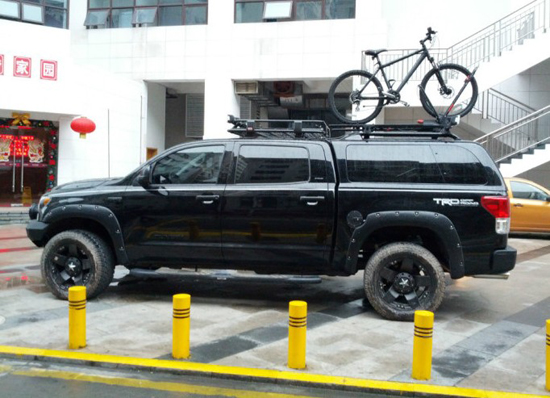
    Recently spotted in China – a black Toyota Tundra Crewmax complete with off-road modifications and a black bicycle. Yep,  no kidding!

    Chinese Toyota Tundra

    This Black Toyota Tundra was spotted in China. Yep, China!

    Someone in the city of Shenzhen in Guangdong province of China was able to get this black, crewmax Toyota Tundra imported according to story in CarNewsChina.com. It also looks like they got a lot of customization done on it as well with blacked out windows, an after-market grille/bumper, roof rack and custom wheels. It is also apparent that they like black – a lot!

    Chinese Toyota Tundra - Front View

    We have to wonder if the truck has any problems driving down the Chinese streets that were built for smaller vehicles.

    For some time now, Chinese citizens have been circumventing their own government by either building their own versions of luxury cars or importing them through a gray market. It seems that the Toyota Tundra is now part of this gray market.

    The “gray market” exists when a Chinese dealer will order the vehicle from a West Coast U.S. dealer and have it shipped to China. While the Chinese Government officially doesn’t allow this type of import, they have been looking the “other way” in regards to these imports. The reason? The new wealthy citiznes that the economy in China has been creating are demanding more of these American trucks. The Chinese Government isn’t really interested in cracking down on the wealthy (as opposed to the poor) which might stifle their growing (shaky) economy. So, this means that many wealthy Chinese can import these vehicles will little concern for how the Government will react.

    Chinese Toyota Tundra- Street

    The truck is definitely turning heads in China.

    One thing is for sure, the truck definitely stands out on the streets of China in comparison to their smaller vehicles. I wonder how many “near” accidents it has caused due to gawking drivers.

    Related Posts:

    Search terms people used to find this page:

    • 2014 toyota tundra spy
    • 2014 tundra spy
    • 2014 tundra
    • 2014 toyota tundra
    • 2014 toyota tundra spy photos
    • 2014 toyota tundra spy pics
    • new tundra in 2014
    • 2014 tundra spy shots
    • 2014 tundra images
    • toyota tundra 2014

    The post Chinese Toyota Tundra – No Kidding! appeared first on Tundra Headquarters Blog.

  • Opportunities and Obstacles in Large-Scale Biomass Utilization: The Role of the Chemical Sciences and Engineering Communities: A Workshop Summary

    Cover imageBased on a one-day public workshop held in Washington, DC, Opportunities and Obstacles in Large-Scale Biomass Utilization: The Role of the Chemical Sciences and Engineering Communities: A Workshop Summary explores the current state of biomass utilization for bulk-production of sustainable fuels and chemicals. The discussion focused on the chemistry and chemical engineering opportunities to meet the aforementioned objectives. Both formal presentations and breakout working groups were components of the workshop in an effort to stimulate engaging discussion among participants from widely varying fields.

  • Acute Exposure Guideline Levels for Selected Airborne Chemicals: Volume 13

    Cover imageAt the request of the Department of Defense and the Environmental Protection Agency, the National Research Council has reviewed the relevant scientific literature compiled by an expert panel and established Acute Exposure Guideline Levels (AEGLs) for several chemicals. AEGLs represent exposure levels below which adverse health effects are not likely to occur and are useful in responding to emergencies, such as accidental or intentional chemical releases in community, workplace, transportation, and military settings, and for the remediation of contaminated sites.

    Three AEGLs are approved for each chemical, representing exposure levels that result in: 1) notable but reversible discomfort; 2) long-lasting health effects; and 3) life-threatening health impacts. Acute Exposure Guideline Levels for Selected Airborne Chemicals: Volume 13 includes AEGLs for boron trifluoride, bromoacetone, chloroacetone, hexafluoroacetone, perchloryl fluoride, piperidine, propargyl alcohol, trimethoxysilane and tetramethoxysilane, and trimethylbenzenes.

  • New From NAP 2013-01-04 09:45:11

    Final Book Now Available

    At the request of the Department of Defense and the Environmental Protection Agency, the National Research Council has reviewed the relevant scientific literature compiled by an expert panel and established Acute Exposure Guideline Levels (AEGLs) for several chemicals. AEGLs represent exposure levels below which adverse health effects are not likely to occur and are useful in responding to emergencies, such as accidental or intentional chemical releases in community, workplace, transportation, and military settings, and for the remediation of contaminated sites.

    Three AEGLs are approved for each chemical, representing exposure levels that result in: 1) notable but reversible discomfort; 2) long-lasting health effects; and 3) life-threatening health impacts. Acute Exposure Guideline Levels for Selected Airborne Chemicals: Volume 13 includes AEGLs for boron trifluoride, bromoacetone, chloroacetone, hexafluoroacetone, perchloryl fluoride, piperidine, propargyl alcohol, trimethoxysilane and tetramethoxysilane, and trimethylbenzenes.

    [Read the full report]

    Topics: Environment and Environmental Studies

  • New From NAP 2013-01-04 09:45:01

    Final Book Now Available

    Based on a one-day public workshop held in Washington, DC, Opportunities and Obstacles in Large-Scale Biomass Utilization: The Role of the Chemical Sciences and Engineering Communities: A Workshop Summary explores the current state of biomass utilization for bulk-production of sustainable fuels and chemicals. The discussion focused on the chemistry and chemical engineering opportunities to meet the aforementioned objectives. Both formal presentations and breakout working groups were components of the workshop in an effort to stimulate engaging discussion among participants from widely varying fields.

    [Read the full report]

    Topics: Math, Chemistry and Physics

  • New From NAP 2013-01-04 00:00:00

    Final Book Now Available

    Twelve years into the Comprehensive Everglades Restoration Project, little progress has been made in restoring the core of the remaining Everglades ecosystem; instead, most project construction so far has occurred along its periphery. To reverse ongoing ecosystem declines, it will be necessary to expedite restoration projects that target the central Everglades, and to improve both the quality and quantity of the water in the ecosystem.

    The new Central Everglades Planning Project offers an innovative approach to this challenge, although additional analyses are needed at the interface of water quality and water quantity to maximize restoration benefits within existing legal constraints. Progress Toward Restoring the Everglades: The Fourth Biennial Review, 2012 explains the innovative approach to expedite restoration progress and additional rigorous analyses at the interface of water quality and quantity will be essential to maximize restoration benefits.

    [Read the full report]

    Topics: Environment and Environmental Studies | Earth Sciences

  • Colloquy on Minority Males in Science, Technology, Engineering, and Mathematics

    Cover imageOn August 8-12, 2010 the National Academy of Engineering (NAE), with funding from the National Science Foundation (NSF), convened the Colloquy on Minority Males in Science, Technology, Engineering, and Mathematics (STEM), following the release of several reports highlighting the educational challenges facing minority males. The NSF recognized the need to gather input from research communities that focus on minority males about how to frame investigations of gender-based factors that impact learning and choice in STEM education (both at the precollege and higher education levels) and the workforce for minority males. There was particular interest in framing a research agenda to study how interactions between minority males and societal and educational systems (both formal and informal) encourage or discourage the young men’s interest and persistence in STEM. In addition, NSF hoped to gain community input to inform the parameters of a future NSF research program that could effectively address minority male participation in STEM. The Colloquy was held at the Mt. Washington Conference Center in Baltimore, Maryland, with approximately 40 participants, most of them researchers in education, psychology, sociology, mathematics, and physics.

    Colloquy on Minority Males in Science, Technology, Engineering, and Mathematics presents a summary of the Colloquy’s breakout and plenary discussions, which addressed (a) research questions articulated in the breakout groups together with theories and methodologies to begin to address these questions; and (b) considerations for a potential research solicitation for the NSF, with major areas of inquiry concerning access, participation, and success for minority males in STEM.

    This report reflects the views of the individuals who participated in the plenary and breakout groups. It has been reviewed in draft form by persons chosen for their diverse perspectives and expertise in accordance with procedures approved by the National Academies’ Report Review Committee. The purpose of this independent review is to provide candid and critical comments that will assist the institution in making its published report as sound as possible and to ensure that the report meets institutional standards for quality and objectivity.

  • Pesticides and Parkinson’s: UCLA researchers uncover further proof of a link

    For several years, neurologists at UCLA have been building a case that a link exists between pesticides and Parkinson’s disease. To date, paraquat, maneb and ziram — common chemicals sprayed in California’s Central Valley and elsewhere — have been tied to increases in the disease, not only among farmworkers but in individuals who simply lived or worked near fields and likely inhaled drifting particles.
     
    Now, UCLA researchers have discovered a link between Parkinson’s and another pesticide, benomyl, whose toxicological effects still linger some 10 years after the chemical was banned by the U.S. Environmental Protection Agency.
     
    Even more significantly, the research suggests that the damaging series of events set in motion by benomyl may also occur in people with Parkinson’s disease who were never exposed to the pesticide, according to Jeff Bronstein, senior author of the study and a professor of neurology at UCLA, and his colleagues.
     
    Benomyl exposure, they say, starts a cascade of cellular events that may lead to Parkinson’s. The pesticide prevents an enzyme called ALDH (aldehyde dehydrogenase) from keeping a lid on DOPAL, a toxin that naturally occurs in the brain. When left unchecked by ALDH, DOPAL accumulates, damages neurons and increases an individual’s risk of developing Parkinson’s.
     
    The investigators believe their findings concerning benomyl may be generalized to all Parkinson’s patients. Developing new drugs to protect ALDH activity, they say, may eventually help slow the progression of the disease, whether or not an individual has been exposed to pesticides.
     
    The research is published in the current online edition of Proceedings of the National Academy of Sciences.
     
    Parkinson’s disease is a debilitating neurodegenerative disorder that affects millions worldwide. Its symptoms — including tremor, rigidity, and slowed movements and speech — increase with the progressive degeneration of neurons, primarily in a part of the mid-brain called the substantia nigra. This area normally produces dopamine, a neurotransmitter that allows cells to communicate, and damage to the mid-brain has been linked to the disease. Usually, by the time Parkinson’s symptoms manifest themselves, more than half of these neurons, known as dopaminergic neurons, have already been lost.
     
    While researchers have identified certain genetic variations that cause an inherited form of Parkinson’s, only a small fraction of the disease can be blamed on genes, said the study’s first author, Arthur G. Fitzmaurice, a postdoctoral scholar in Bronstein’s laboratory.
     
    “As a result, environmental factors almost certainly play an important role in this disorder,” Fitzmaurice said. “Understanding the relevant mechanisms — particularly what causes the selective loss of dopaminergic neurons — may provide important clues to explain how the disease develops.”
     
    Benomyl was widely used in the U.S. for three decades until toxicological evidence revealed it could potentially lead to liver tumors, brain malformations, reproductive effects and carcinogenesis. It was banned in 2001.
     
    The researchers wanted to explore whether there was a relationship between benomyl and Parkinson’s, which would demonstrate the possibility of long-lasting toxicological effects from pesticide use, even a decade after chronic exposure. But because a direct causal relationship between the pesticide and Parkinson’s can’t be established by testing humans, the investigators sought to determine if exposure in experimental models could duplicate some of the pathologic features of the disease.
     
    They first tested the effects of benomyl in cell cultures and confirmed that the pesticide damaged or destroyed dopaminergic neurons.
     
    Next, they tested the pesticide in a zebrafish model of the disease. This freshwater fish is commonly used in research because it is easy to manipulate genetically, it develops rapidly and it is transparent, making the observation and measurement of biological processes much easier. By using a fluorescent dye and counting the neurons, the researchers discovered there was significant neuron loss in the fish — but only to the dopaminergic neurons. The other neurons were left unaffected.
     
    Until now, evidence had pointed to one particular culprit — a protein called α-synuclein — in the development of Parkinson’s. This protein, common to all Parkinson’s patients, is thought to create a pathway to the disease when it binds together in “clumps” and becomes toxic, killing the brain’s neurons. (See UCLA research using “molecular tweezers” to break up these toxic aggregations.)
     
    The identification of ALDH activity now gives researchers another target to focus on in trying to stop this disease.
     
    “We’ve known that in animal models and cell cultures, agricultural pesticides trigger a neurodegenerative process that leads to Parkinson’s,” said Bronstein, who directs the UCLA Movement Disorders Program. “And epidemiologic studies have consistently shown the disease occurs at high rates among farmers and in rural populations. Our work reinforces the hypothesis that pesticides may be partially responsible, and the discovery of this new pathway may be a new avenue for developing therapeutic drugs.”
     
    Other authors of the study included Lisa Barnhill, Hoa A. Lam, Aaron Lulla, Nigel T. Maidment, Niall P. Murphy, Kelley C. O’Donnell, Shannon L. Rhodes, Beate Ritz, Alvaro Sagastig and Mark C. Stahl, all of UCLA; John E. Casida of UC Berkeley; and Myles Cockburn of the University of Southern California. The authors declare no conflict of interest.
     
    This work was funded in part by National Institute of Environmental Health Sciences grants P01ES016732, R01ES010544, 5R21ES16446-2 and U54ES012078; National Institute of Neurological Disorders and Stroke grant NS038367; the Veterans Affairs Healthcare System (Southwest Parkinson’s Disease Research, Education, and Clinical Center); the Michael J. Fox Foundation; the Levine Foundation; and the Parkinson Alliance.
     
    The UCLA Department of Neurology, with over 100 faculty members, encompasses more than 20 disease-related research programs, along with large clinical and teaching programs. These programs cover brain mapping and neuroimaging, movement disorders, Alzheimer’s disease, multiple sclerosis, neurogenetics, nerve and muscle disorders, epilepsy, neuro-oncology, neurotology, neuropsychology, headaches and migraines, neurorehabilitation, and neurovascular disorders. The department ranks in the top two among its peers nationwide in National Institutes of Health funding.
     
    For more news, visit the UCLA Newsroom and follow us on Twitter.

  • Ghanaians vote for a better education

    “We happy and we thank you Nana, We are happy and we thank you Nana, We are happy and we thank you Nana. Free senior high school, quality education and teachers. Mothers and fathers, aunties and uncles, grandmas and grandpas, help the children of Ghana – by voting for Nana.”

    This was the jingle sang by children blasting out on radios around Ghana in the run-up to the election earlier this month.

    Education was really at the forefront of the election campaign and remains so in this transition period – before the President John Mahama is inaugurated on January 7th. What was positive was that although both main parties were united in singing out education as a priority, they had different policies to address the issue – the New Patriotic Party was promising free senior high school while the National Democratic Congress campaigned for “quality basic education.”

    With one of the fastest growing economies in the world (around 8% last year), it is no wonder that politicians are addressing ordinary Ghanaians’ concerns as they are looking for education as the means to ensure that growth benefits all.

    Education was a top priority during the elections. Picture: Nicole Goldstein

    Earlier this month, as Ghanaians went out to vote (see my colleague, Henry Donati’s blog posts), I spoke to men and women at polling stations in the Greater Accra area. In the Selim Crèche School, a taxi driver called Kwame said: “I want my children to have a bright future and education will help them. The current education system is lacking – teachers don’t turn up for work and school buildings are in disrepair. We need to make sure that our children have a decent education that helps them get jobs.”

    Indeed, surveys point out that on any given day, around 27% of teachers are absent. Reasons for teacher absenteeism are most commonly associated with illness, collection of pay, attending funerals and prayers, farming or taking on other jobs simultaneously. One of the 35,000 electoral commission officers echoed similar views: “The government that comes in must sort out the education system – and get teachers to turn up for what they are paid for and make sure our children are learning.”

    Ghanaians cast their votes in a campaign in which education has dominated. Picture: Nicole Goldstein/DFID Ghana

    The incumbent party, the National Democratic Congress, won 50.7% of the vote in the presidential election. They are spot on in their electoral pledge that quality education for all is a right – not a promise. And they have a hard job now ahead of them to live up to their pledge. Indeed over the past decade the government has done a good job at widening access, primary enrolment has almost doubled from 2.6m in 2001-02 to 4.5m in 2011-12. Over the past 5 years, DFID too has been supporting the government in this effort, and by 2015, we will have provided access to primary and lower secondary education to 140,000 children. However, there are still around 650,000 out-of-school children who are not getting an education.

    Since 2008, DFID has been supporting a local NGO, School for Life to deliver a second-chance education numeracy and literacy programme for these out-of-school children. On completion, these children enrol in primary school (see my colleague, Henry Donati’s blog post). From 2013, we will be scaling-up this support to reach 120,000 out-of-school children, and helping the government to partner with NGOs, who are delivering these “second-chance” programmes.

    Ghanaians line up and place their finger tip over the biometric voting machine. Picture: Nicole Goldstein/DFID Ghana

    Despite these improvements in access, the poor, and most of all girls, have far less chance of making it to school. In 2010, almost all children from rich households had been to school in Greater Accra. But in the Northern region, 53% of poor girls and 41% of poor boys had never been to school. In my post in October, I discussed DFID’s Girls PASS programme through which we will give 70,000 of the poorest girls, scholarships to attend and complete school.But going to school is only part of the battle, as over half of women and over one-third of men aged 15 to 29 who had completed six years of school could not read a single sentence. Improving the quality of education offers a unique opportunity to bring in new ways of supporting teachers to improve the quality of their teaching. In Ghana, there is an often-used expression to describe the rote-learning, teacher-led classroom experience – “Chew, Pour, Pass and Forget!” Over the next couple of years, DFID will be supporting 9,000 teachers to use more interactive ways of teaching and harnessing Open Source Learning materials.

    Our DFID Ghana team with Professor Kwame Akyeampong, co-author of the Global Monitoring Report

    This story for Ghana is told quite clearly in UNESCO’s Global Monitoring Report, “Youth and Skills: Putting Education to Work.” Recently, the well-known Ghanaian academic, Kwame Akyeampong  who founded the Institute of Education at Ghana’s eminent university, Cape Coast – and now co-author of this report, returned home to launch the report. He underlined the fact that “there’s something wrong (with the Ghanaian education system) if we can’t teach our young people to read and write”. Ato Ulzen-Apppiah, a Ghanaian youth leader, who used to work at Google Ghana and has now set up his own organization Ghana Think Foundation, agrees that “this report’s focus on Ghana comes at a really interesting time. There’s a lot of debate around education and what the government can do over the next electoral cycle.”

    The politicians are taking note: President John Mahama, in a policy speech asserted, “Ghana cannot eradicate poverty if over 33% of our populace cannot read and write”. He also used the opportunity to say emphatically to civil servants that, “the public does not believe that it is receiving value for the money it uses to remunerate us.”

    Just before the election, I met with the President’s Chief of Staff, Roger Angsomwine, who, (like the President) is a Northerner from Ghana’s poorest region, and understands the value that a good education can have in changing ordinary people’s lives. I am looking forward to finding out which parts of the government’s education manifesto will be implemented first.

  • White Most Popular Vehicle/Truck Color Again

    In a world full of color, it seems consumers want a white/pearl truck. Is white/pearl really that awesome or a pain to keep clean?

    White Most Popular Truck Color Again

    White trucks are the most popular according to a paint survey. Sexy or a pain to clean?

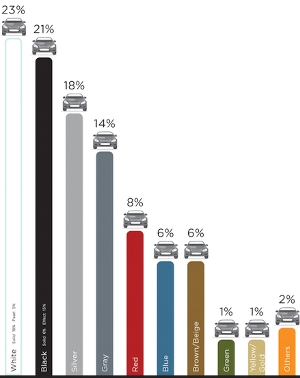
    For the past 60 years, DuPont has released their Automotive Color Popularity Report. This year, they found that globally 23% of all vehicles are white. White was also the top color in 2011. Apparently, this is the only report that looks at all global automotive color popularity and regional trends.

    An article on Aftermarketnews.com says that while white/pearl has held steady over the past decade and is popular among most car segment. Historically though, it has been most popular in the truck segment.

    Apparently, what has finally pushed it over the top if the pearl color which is gaining popularity in luxury cars.

    White Most Popular Vehicle Color-Chart

    White reigns supreme again as the most popular vehicle color in the world.

    “Today, white tri-coats are more readily applicable to the global manufacturing base and evoke quality and value among a variety of vehicle segments,” according to Nancy Lockhart, DuPont color marketing manager. “Solid whites have been seen in vanilla shades, stone shades and the current preference of bright whites.”

    Black though is still a top choice and is widely popular in China. Silver wasn’t that far behind.

    “Silver peaked during the start of the digital age between 2000 and 2006,” said Lockhart. “We’re seeing more luxury vehicle purchases now that the economy has started to stabilize, and vehicles painted black/black effect are seen as luxury status symbols in several key global markets.”

    While this report is proof that white is a popular choice, we think Tundra pickups look great in all colors. How about you? What color is your truck?

    Related Posts:

    Search terms people used to find this page:

    • white pearl trucks
    • toyota tundra white purl
    • tacoma 2014
    • awesome white truck
    • toyota tacoma 2014
    • paint colors for trucks
    • most popular truck colors
    • 2014 tundra
    • 2013 Automotive Color Chart
    • toyoato truck 2014

    The post White Most Popular Vehicle/Truck Color Again appeared first on Tundra Headquarters Blog.

  • UCLA Urology receives $4.6 million gift to fund education, research and clinical services

    The UCLA Department of Urology has received a $4.6 million gift from the estate of Frank and Dorothy H. Clark, longtime benefactors who helped to create leading-edge pediatric and adult urology centers in Westwood and Santa Monica.
     
    The gift, from the Clarks’ testamentary trust, will help endow the Clark Urology Centers at UCLA’s Westwood and Santa Monica campuses, said Dr. Mark Litwin, chair of the urology department.
     
    “Frank was a tireless supporter of our faculty and programs in urology, and I am honored to have witnessed the relationship he forged with us,” Litwin said. “This generous and unconditional gift, the first installment of Frank’s bequest to the Clark Urology Centers, will support the department’s ongoing research, educational and clinical endeavors and is sure to inspire new innovations leading to improved treatments and, ultimately, cures for various urologic conditions.”
     
    In addition to supporting the Clark Urology Centers for adults in Santa Monica and Westwood, Clark played a critical role in the creation, in 1993, of the Clark Morrison Pediatric Urology Center, which enables UCLA to provide a comprehensive approach to the care of children with congenital conditions. The center’s goal is to minimize a child’s discomfort and stress while streamlining the diagnostic and treatment process.
     
    “These are shining examples of how, throughout his life, Frank remained an invaluable advocate and adviser to our department, as well as a consummate supporter of the university,” Litwin said.
     
    A UCLA alumnus, Frank Clark attended Hastings College of the Law but was called to active military duty in 1941, after Pearl Harbor was attacked. He served five years in the Office of Naval Intelligence and returned to Hastings after his discharge, graduating in 1946 as valedictorian. He served as executive vice president and general counsel to the May Department Store Co. for more than 25 years.
     
    In 1980, Gov. Jerry Brown appointed Clark to the University of California Board of Regents, on which he served for more than 20 years, including a stint as its chair. In 2004, he received the UCLA Medal, the university’s highest honor awarded to an individual.
     
    When Clark died in 2008 at the age 90, his planned gift was set into motion. Dorothy Clark was well taken care of, but when she died in 2011, the majority of his remaining estate was bequeathed to the urology department.
     
    A gift of similar size will be made to the department next year, Litwin said.
     
    UCLA Urology consistently ranks among the top five in the nation the annual survey published by U.S. News & World Report. The department also has ranked first in competitive research funding from the National Institutes of Health for the last two years. The department focuses on translational research — bringing the best basic science from the laboratory bench to the bedside to the community.
     
    For more news, visit the UCLA Newsroom and follow us on Twitter.