Category: News

  • New From NAP 2013-01-14 00:00:00

    Final Book Now Available

    Climate change can reasonably be expected to increase the frequency and intensity of a variety of potentially disruptive environmental events–slowly at first, but then more quickly. It is prudent to expect to be surprised by the way in which these events may cascade, or have far-reaching effects. During the coming decade, certain climate-related events will produce consequences that exceed the capacity of the affected societies or global systems to manage; these may have global security implications. Although focused on events outside the United States, Climate and Social Stress: Implications for Security Analysis recommends a range of research and policy actions to create a whole-of-government approach to increasing understanding of complex and contingent connections between climate and security, and to inform choices about adapting to and reducing vulnerability to climate change.

    [Read the full report]

    Topics: Environment and Environmental Studies | Behavioral and Social Sciences | Conflict and Security Issues | Earth Sciences

  • Weekly Address: Ending the War in Afghanistan and Rebuilding America

    President Obama discusses how we will end the war in Afghanistan and how our goal of ensuring that al Qaeda never again uses Afghanistan to launch attacks against America is within reach.

    Transcript | Download mp4 | Download mp3

  • President Obama Hosts President Karzai

    President Barack Obama and President Hamid Karzai of Afghanistan participate in a joint press conference (January 11, 2013)

    President Barack Obama and President Hamid Karzai of Afghanistan participate in a joint press conference in the East Room of the White House, Jan. 11, 2013. (Official White House Photo by Lawrence Jackson)

    President Obama hosted Afghan President Hamid Karzai today at the White House for talks on the partnership between our two nations and the role of U.S. troops in that country.

    And coming out of those talks, President Obama was able to discuss a milestone we'll reach this year when Afghan forces take full responsibility for their nation's security and the war draws to a close.

    "This progress is only possible because of the incredible sacrifices of our troops and our diplomats, the forces of our many coalition partners, and the Afghan people who’ve endured extraordinary hardship," he said. "In this war, more than 2,000 of America’s sons and daughters have given their lives. These are patriots that we honor today, tomorrow, and forever."

    In his statement, President Karzai echoed that message.

    "During our conversations…I thanked the President for the help that the United States has given to the Afghan people," he said, "for all that we have gained in the past 10 years, and that those gains will be kept by any standard while we are working for peace and stability in Afghanistan, including the respect for Afghan constitution."

    read more

  • BlackBerry 10 will get a fair shake with commitment from Big 4 carriers

    For the first time in what seems like ages, the BlackBerry is garnering positive press. Ever since its ill-fated attempt to produce an iPhone competitor with the BlackBerry Storm, the BlackBerry brand has been on the decline. It started slowly, but in 2010 it hastened to a free fall.

    The BlackBerry 7 line of smartphones might have helped in 2009 or early 2010, but a 2011 release just wouldn’t cut it. Yet all might not be lost for the former titan of the industry. Its much-hyped BlackBerry 10 phones will get their day at the market, as all four carriers have committed to the platform, with three of them jumping on board at launch.

    At CES this week all of the Big 4 — Verizon. AT&T, Sprint, and T-Mobile — stated their support for the platform. That will give BlackBerry every opportunity to show consumers that they are not all talk. For the past year they’ve touted the potential of BlackBerry 10, but haven’t gotten devices into consumers hands. In fact, early in 2012 they delayed the target launch date of BlackBerry 10 from October, 2012, to Q1, 2013. Now they have to prove to people that the device is worth the wait.

    Via PC World

    Via PC World

    Some carriers were a bit more optimistic than others. T-Mobile seemed the most enthusiastic, perhaps because they have the most to gain from a successful BlackBerry 10 launch. They lag far behind No. 3 Sprint, and will remain there even if their proposed merger with MetroPCs goes seamlessly. AT&T sounded a bit more pragmatic, recognizing its large population of BlackBerry business users will want to remain on the platform. Of the Big 4, only Sprint didn’t commit to carrying the devices when they launch, but they will eventually be in the fold.

    Getting picked up by the four major carriers was pretty much the only way BlackBerry 10 stood a chance in the marketplace. The iPhone has a cult following that will continue for as long as Apple makes products. There are others, too, who simply prefer the simple interface and syncing capabilities of iOS, pairing the iPhone with Apple desktops, laptops, iPods, and the iPad. Android has caught on in a major way, with Samsung making a huge dent in the market. Other manufacturers, such as HTC and LG, are creating strong offerings as well, while other players, such as ZTE, have spread the market from the high end to the low.

    In addition, Windows Phone got a considerable head start on BlackBerry. The seamless integration between Windows Phone and Windows 8 for desktops and laptops can give the Microsoft phones a considerable advantage in the business marketplace, which is BlackBerry’s bread and butter. That means Research In Motion has an upward hill to climb in terms of convincing North America to adopt its new platform.

    We’ll all get a closer look at BlackBerry 10 later this month. RIM has an announcement set for January 30th, with the phones launching shortly afterward.

    VIa FierceWireless.

    The post BlackBerry 10 will get a fair shake with commitment from Big 4 carriers appeared first on MobileMoo.

  • Tweets, mobiles and technology at the bottom of the pyramid

    Hello and thanks for reading my very first blog. Not long ago I also wrote my first ever tweet at the Open Up! conference on the 13th November which promoted open governance using technology in London’s tech city – let’s hope this blog goes down as more of a success than my tweeting prowess. Following my inaugural tweet to my 6 devoted followers, I was overshadowed by the success of a fellow Twitter newby on the same day; DFID’s Secretary of State @JustineGreening followed my lead with booming success – having almost 1,000 followers after her very first tweet.

    Since joining DFID in September this year as part of the shiny new Graduate Development Scheme I have learnt an incredible amount and been introduced to a host of new experiences – joining twitter being one of the least impressive. Having previously worked elsewhere in the civil service I have found moving from being a statistician working on databases and programming in the Ministry of Justice to working on policy and managing events (working with written information!) in DFID was a shock to the system to say the least!

    From my very first task looking into the use of technology in development, cowering in the safety of statistics, I was struck by the evidence in front of me. The initial statistic that really got me thinking was that:

    Throughout the developing world there are 300 million fewer female mobile phone subscribers than male (GSMA, 2010).


    Women have far less access than men to new technologies throughout the developing world. (Photo/Panos)


    This means that in the developing world a woman is 21% less likely to own a mobile phone than a man. The reasons for this I found were numerous and woven throughout are the existing barriers for women and girls which permeate the developing world but also to some extent the developed. Having previously studied violence against women in the UK I found this finding particularly poignant:

    74% of married women at the bottom of the pyramid (BoP) – those living on less than US$75 a month – surveyed by GSMA’s mWomen (2012) did not want a mobile phone as their husbands would not allow it.

    I will be writing about issues as I discover them, from the perspective of someone who is not an expert but believes that they are important and that the discussion is worth having. I will be writing largely about the use of technology in development, the impact that it can have to empower citizens, to improve service delivery, to assist in free and fair elections … the list will go on… but also learning from the failures of the use of technology in development. I will write a special post on the Open Up! conference discussing using digital tools including mobile and open source technology to empower citizens and encourage open governance. I will write about gender and technology as I discover more – I can think of numerous positive examples of programmes both within DFID and outside that have empowered women using digital tools and look forward to starting a conversation in a later post!

  • West Wing Week: 01/11/13 or “The Interests of Our Country”

    Welcome to the West Wing Week, your guide to everything that's happening at 1600 Pennsylvania Ave. This week, the President nominated a bipartisan slate of leaders to key administration jobs and the Vice President met with a wide array of organizations to talk about efforts to reduce gun violence. 

    read more

  • Review of the Federal Ocean Acidification Research and Monitoring Plan

    Cover imageThe world’s ocean has already experienced a 30% rise in acidity since the industrial revolution, with acidity expected to rise 100 to 150% over preindustrial levels by the end of this century. Potential consequences to marine life and also to economic activities that depend on a healthy marine ecosystem are difficult to assess and predict, but potentially devastating. To address this knowledge gap, Congress passed the Federal Ocean Acidification Research and Monitoring (FOARAM) Act in 2009, which, among other things, required that an interagency working group create a “Strategic Plan for Federal Research and Monitoring of Ocean Acidification.”

    Review of the Federal Ocean Acidification Research and Monitoring Plan reviews the strategic plan on the basis of how well it fulfills program elements laid out in the FOARAM Act and follows the advice provided to the working group in the NRC’s 2010 report, Ocean Acidification: A National Strategy to Meet the Challenges of a Changing Ocean. This report concludes that, overall, the plan is strong and provides a comprehensive framework for improving our understanding of ocean acidification. Potential improvements include a better defined strategy for implementing program goals, stronger integration of the seven broad scientific themes laid out in the FOARAM Act, and better mechanisms for coordination among federal agencies and with other U.S. and international efforts to address ocean acidification.

  • The Effects of Solar Variability on Earth’s Climate: A Workshop Report

    Cover imageOn September 8-9, 2011, experts in solar physics, climate models, paleoclimatology, and atmospheric science assembled at the National Center for Atmospheric Research (NCAR) in Boulder, Colorado for a workshop to consider the Sun’s variability over time and potential Sun-climate connections.

    While it does not provide findings, recommendations, or consensus on the current state of the science, The Effects of Solar Variability on Earth’s Climate: A Workshop Report briefly introduces the primary topics discussed by presenters at the event. As context for these topics, the summary includes background information on the potential Sun-climate connection, the measurement record from space, and potential perturbations of climate due to long-term solar variability. This workshop report also summarizes some of the science questions explored by the participants as potential future research endeavors.

  • The Mathematical Sciences in 2025

    Cover imageThe mathematical sciences are part of nearly all aspects of everyday life—the discipline has underpinned such beneficial modern capabilities as Internet search, medical imaging, computer animation, numerical weather predictions, and all types of digital communications. The Mathematical Sciences in 2025 examines the current state of the mathematical sciences and explores the changes needed for the discipline to be in a strong position and able to maximize its contribution to the nation in 2025. It finds the vitality of the discipline excellent and that it contributes in expanding ways to most areas of science and engineering, as well as to the nation as a whole, and recommends that training for future generations of mathematical scientists should be re-assessed in light of the increasingly cross-disciplinary nature of the mathematical sciences. In addition, because of the valuable interplay between ideas and people from all parts of the mathematical sciences, the report emphasizes that universities and the government need to continue to invest in the full spectrum of the mathematical sciences in order for the whole enterprise to continue to flourish long-term.

  • President Obama Nominates Jacob Lew as Treasury Secretary

    President Barack Obama announces Chief of Staff Jack Lew is his nominee for Treasury Secretary (January 10, 2013)

    President Barack Obama announces Chief of Staff Jack Lew is his nominee for Treasury Secretary to replace Timothy Geithner, right, in the East Room of the White House, Jan. 10, 2013. (Official White House Photo by Chuck Kennedy)

    Today, in an event President Obama nominated Jacob Lew — the current White House chief of staff — to serve as the next Treasury Secretary.

    "Over the past year, I’ve sought Jack’s advice on virtually every decision that I’ve made, from economic policy to foreign policy," the President said.

    Jack Lew has decades of experience tackling some of the nation's toughest economic challenges. As director of the Office of Management and Budget under President Clinton, Lew helped to negotiate the deal that balanced the federal budget — and led to a budget surplus. In the Obama Administration, even before becoming chief of staff, he has helped to manage the day-to-day operations at the State Department and shepherd through the Budget Control Act to reduce federal spending in a second stint at OMB.

    "One reason Jack has been so effective in this town is because he is a low-key guy who prefers to surround himself with policy experts rather than television cameras," said President Obama. "And over the years, he’s built a reputation as a master of policy who can work with members of both parties and forge principled compromises."

    The President also offered his gratitude to his current Treasury Secretary, Timothy Geithner — who helped to guide the country through the financial crisis and get the economy growing again.

    "When the history books are written," he said, "Tim Geithner is going to go down as one of our finest Secretaries of the Treasury." 

    Read the full remarks here, or watch the video of the event

  • Assuring Consumers Have Access to Mortgages They Can Trust

    Editor's note: This post was originally published on the official blog of the Consumer Financial Protection Bureau

    Today, we’re issuing one of our most important rules to date, the Ability-to-Repay rule. It’s designed to assure the reliability of mortgages – making sure that lenders offer mortgages that consumers can actually afford to pay back. This is a simple, obvious principle that needs to be cemented in the housing market.

    In the run-up to the financial crisis, we had a housing market that was reckless about lending money. Lenders thought they could make money on a loan even if the consumer could not pay back that loan, either by banking on rising housing prices or by off-loading the mortgage into the secondary market. This encouraged broad indifference to the ability of many consumers to repay loans, which dramatically increased mortgage delinquencies and rates of foreclosures.

    Earlier this year, we heard from a California man named Henry, who was in the process of foreclosure. He was desperate. During the overheated years, a lender sold him a mortgage valued at more than half a million dollars. This was far more than he could afford on his annual salary of less than $50,000. He said he’d assumed that the lender knew what it was doing when he qualified for such a large loan. He’s now worried not only about losing his home, but about losing his family’s entire future.

    Henry is not alone. Unaffordable loans helped cause the worst financial crisis since the Great Depression. People across the country were sold unsustainable mortgages. Some may have entered with their eyes open, seeking to ride the wave of rising housing prices, but many were led astray. For many borrowers, it appears that lenders ignored the numbers to get the loan approved. This kind of reckless lending was an endemic problem.

    To put it simply: lenders should not set up consumers to fail.

    read more

  • New From NAP 2013-01-10 10:45:02

    Prepublication Now Available

    The world’s ocean has already experienced a 30% rise in acidity since the industrial revolution, with acidity expected to rise 100 to 150% over preindustrial levels by the end of this century. Potential consequences to marine life and also to economic activities that depend on a healthy marine ecosystem are difficult to assess and predict, but potentially devastating. To address this knowledge gap, Congress passed the Federal Ocean Acidification Research and Monitoring (FOARAM) Act in 2009, which, among other things, required that an interagency working group create a “Strategic Plan for Federal Research and Monitoring of Ocean Acidification.”

    Review of the Federal Ocean Acidification Research and Monitoring Plan reviews the strategic plan on the basis of how well it fulfills program elements laid out in the FOARAM Act and follows the advice provided to the working group in the NRC’s 2010 report, Ocean Acidification: A National Strategy to Meet the Challenges of a Changing Ocean. This report concludes that, overall, the plan is strong and provides a comprehensive framework for improving our understanding of ocean acidification. Potential improvements include a better defined strategy for implementing program goals, stronger integration of the seven broad scientific themes laid out in the FOARAM Act, and better mechanisms for coordination among federal agencies and with other U.S. and international efforts to address ocean acidification.

    [Read the full report]

    Topics: Earth Sciences

  • A transparent New Year’s resolution for 2013

    Happy New Year to all my DFID friends and blog readers!

    Traditionally, the new year is a time for making new resolutions. Go on that new diet, start that exercise regime, enrol in that evening class you’ve been eyeing for a few months now. We’ve all been here before and January always starts with the best of intentions.

    My main New Year’s resolution is to get my finances in order – economists are notoriously bad at looking after their own money and I’m no exception! Apparently, trying to lose weight is the most popular New Year’s resolution amongst Americans. Similar surveys may find the same in other countries.

    But New Year is not just a time for individuals to put their best foot forward. It’s also a time for countries and organisations to shape up. While weight loss might be popular for individuals, for countries and organisations working in development, one of the most popular 2013 resolutions is likely to be to increase transparency.

    Is your organisation ready to open up and become more transparent in 2013? Picture: Yemi Adamolekun speaking about 'Enough is Enough Nigeria' at Upen Up! Russell Watkins/DFID

    Is your organisation ready to open up and become more transparent in 2013? Picture: Yemi Adamolekun speaking about ‘Enough is Enough Nigeria’ at Open Up! Russell Watkins/DFID

    The sad thing is that quite often, January best intentions end up fizzling out by May. There’s a risk that, just like many of our individual resolutions, pledges on transparency could slip.

    There are a few great articles with tips for keeping New Year’s resolutions alive. Like this one from the Cabinet Office Behavioural Insights Team with 5 tips, or this from the Huffington Post with 10 tips. I won’t go through all of them, but I did see some really useful parallels for countries or organisations interested in transparency.

    Take Tips 3-6 from the HuffPo article. These were especially relevant for countries or organisations taking first steps towards transparency. They were about visualising goals, formalising and declaring them – ideally in public – and breaking them down into quantitative sub-goals and a plan, then tracking progress against that plan. Economist Dean Karlan calls this creating a “commitment contract”, and cites several examples about how it can be used in development. It’s exactly what the common transparency standard has been created to help organisations do. Countries or organisations from all over the world – be that UK, Brazil or Ghana – can focus on achieving the standard, create their own specific timetable for how they will get there, and publish it so that they can track their own progress and everyone can hold them to their own goals.

    There were also tips relevant to countries and organisations already doing pretty well on transparency, such as DFID. Doing well is dangerous, as it’s easy to become complacent. If one individual in DFID or another organisation is not transparent it may not matter too much, yet many individuals being opaque can add up to significant failure. How to avoid this? It’s hard to coerce staff or punish them for not keeping up. So the best alternative is to keep reminding staff of their goals, focus on the great things that will happen when these goals are achieved, find ways to actively lock-in gains, and celebrate success. These are all crucial to avoid sliding back. 

    We will need to do this in DFID. For example, in 2012, we were at the top of the Publish What You Fund Aid Transparency Index. This year, another organisation might get there. Whatever happens, the competition will provide a good incentive to DFID to keep progressing. Hence, we are planning to do more work to code aid data geographically so that people can see and show data that’s relevant to a location anywhere in the world, and publish the data based on developing countries’ budget definitions rather than what’s relevant in the UK. Success in these will mean people in developing countries can better understand and illustrate through tools like infographics what UK aid is doing and have greater say over it. Success under the Aid Transparency Challenge which we launched at the end of 2012 will mean people can add up and understand how much UK aid, different non-governmental organisations or other organisations are administering. The Center for Global Development think-tank called this work a “game-changer”.

    New Year’s resolutions are never easy to maintain, and I doubt that 2013 will be any easier. But the good news is that whether we’re new starters or we’ve already been making progress, there are some simple tips we can use to maintain our best intentions. Let’s use them all, for transparency’s sake!

  • New From NAP 2013-01-10 08:45:01

    Prepublication Now Available

    The mathematical sciences are part of nearly all aspects of everyday life—the discipline has underpinned such beneficial modern capabilities as Internet search, medical imaging, computer animation, numerical weather predictions, and all types of digital communications. The Mathematical Sciences in 2025 examines the current state of the mathematical sciences and explores the changes needed for the discipline to be in a strong position and able to maximize its contribution to the nation in 2025. It finds the vitality of the discipline excellent and that it contributes in expanding ways to most areas of science and engineering, as well as to the nation as a whole, and recommends that training for future generations of mathematical scientists should be re-assessed in light of the increasingly cross-disciplinary nature of the mathematical sciences. In addition, because of the valuable interplay between ideas and people from all parts of the mathematical sciences, the report emphasizes that universities and the government need to continue to invest in the full spectrum of the mathematical sciences in order for the whole enterprise to continue to flourish long-term.

    [Read the full report]

    Topics: Math, Chemistry and Physics

  • New From NAP 2013-01-10 00:00:00

    Final Book Now Available

    The United States has seen major advances in medical care during the past decades, but access to care at an affordable cost is not universal. Many Americans lack health care insurance of any kind, and many others with insurance are nonetheless exposed to financial risk because of high premiums, deductibles, co-pays, limits on insurance payments, and uncovered services. One might expect that the U.S. poverty measure would capture these financial effects and trends in them over time. Yet the current official poverty measure developed in the early 1960s does not take into account significant increases and variations in medical care costs, insurance coverage, out-of-pocket spending, and the financial burden imposed on families and individuals. Although medical costs consume a growing share of family and national income and studies regularly document high rates of medical financial stress and debt, the current poverty measure does not capture the consequences for families’ economic security or their income available for other basic needs.

    In 1995, a panel of the National Research Council (NRC) recommended a new poverty measure, which compares families’ disposable income to poverty thresholds based on current spending for food, clothing, shelter, utilities, and a little more. The panel’s recommendations stimulated extensive collaborative research involving several government agencies on experimental poverty measures that led to a new research Supplemental Poverty Measure (SPM), which the U.S. Census Bureau first published in November 2011 and will update annually. Analyses of the effects of including and excluding certain factors from the new SPM showed that, were it not for the cost that families incurred for premiums and other medical expenses not covered by health insurance, 10 million fewer people would have been poor according to the SPM.

    The implementation of the patient Protection and Affordable Care Act (ACA) provides a strong impetus to think rigorously about ways to measure medical care economic burden and risk, which is the basis for Medical Care Economic Risk. As new policies – whether part of the ACA or other policies – are implemented that seek to expand and improve health insurance coverage and to protect against the high costs of medical care relative to income, such measures will be important to assess the effects of policy changes in both the short and long term on the extent of financial burden and risk for the population, which are explained in this report.

    [Read the full report]

    Topics: | |

  • U.S. Health in International Perspective: Shorter Lives, Poorer Health

    Cover imageThe United States is among the wealthiest nations in the world, but it is far from the healthiest. Although life expectancy and survival rates in the United States have improved dramatically over the past century, Americans live shorter lives and experience more injuries and illnesses than people in other high-income countries. The U.S. health disadvantage cannot be attributed solely to the adverse health status of racial or ethnic minorities or poor people: even highly advantaged Americans are in worse health than their counterparts in other, “peer” countries.

    In light of the new and growing evidence about the U.S. health disadvantage, the National Institutes of Health asked the National Research Council (NRC) and the Institute of Medicine (IOM) to convene a panel of experts to study the issue. The Panel on Understanding Cross-National Health Differences Among High-Income Countries examined whether the U.S. health disadvantage exists across the life span, considered potential explanations, and assessed the larger implications of the findings.

    U.S. Health in International Perspective presents detailed evidence on the issue, explores the possible explanations for the shorter and less healthy lives of Americans than those of people in comparable countries, and recommends actions by both government and nongovernment agencies and organizations to address the U.S. health disadvantage.

  • Chevy Towing Fail

    Driving a truck up on a flatbed trailer to tow isn’t that hard is it? Apparently it is. Especially if they towing truck isn’t in PARK. Get your popcorn ready for this redneck comedy!

    Click here to view the embedded video.

    Really, you need to put the Dodge in Park prior to driving the Chevy up on it. No, get out of here!

    Now we could make all sorts of domestic redneck truck owner jokes, but we think the video does that already. Next time you need some proof about the overwhelming lack of common sense in this country, go ahead and send around this video.

    Special thanks to BangShift for putting this video up.

    Search terms people used to find this page:

    • 2014 toyota tundra spy
    • 2014 tundra spy
    • 2014 toyota tundra spy photos
    • 2014 toyota tundra
    • toyota tundra 2014
    • 2014 tundra
    • 2014 toyota tundra spy shots
    • 2014 toyota tundra spy pics
    • 2014 tundra spy shots
    • 2014 toyota tundra spy photo

    The post Chevy Towing Fail appeared first on Tundra Headquarters Blog.

  • New From NAP 2013-01-09 11:45:01

    Prepublication Now Available

    The United States is among the wealthiest nations in the world, but it is far from the healthiest. Although life expectancy and survival rates in the United States have improved dramatically over the past century, Americans live shorter lives and experience more injuries and illnesses than people in other high-income countries. The U.S. health disadvantage cannot be attributed solely to the adverse health status of racial or ethnic minorities or poor people: even highly advantaged Americans are in worse health than their counterparts in other, “peer” countries.

    In light of the new and growing evidence about the U.S. health disadvantage, the National Institutes of Health asked the National Research Council (NRC) and the Institute of Medicine (IOM) to convene a panel of experts to study the issue. The Panel on Understanding Cross-National Health Differences Among High-Income Countries examined whether the U.S. health disadvantage exists across the life span, considered potential explanations, and assessed the larger implications of the findings.

    U.S. Health in International Perspective presents detailed evidence on the issue, explores the possible explanations for the shorter and less healthy lives of Americans than those of people in comparable countries, and recommends actions by both government and nongovernment agencies and organizations to address the U.S. health disadvantage.

    [Read the full report]

    Topics: Behavioral and Social Sciences | Health and Medicine

  • 8 Tips for DIY Suspension Projects

    For many people, the chance to work on their own truck is a thrill. Unfortunately, few of us come out of the gate knowing all of the ins and outs of these projects, and that can be inefficient at best and dangerous at worst. Plus, most of us don’t have a hydraulic lift and armory of air-tools at our disposal, which can make suspension work quite a brutal endeavor.
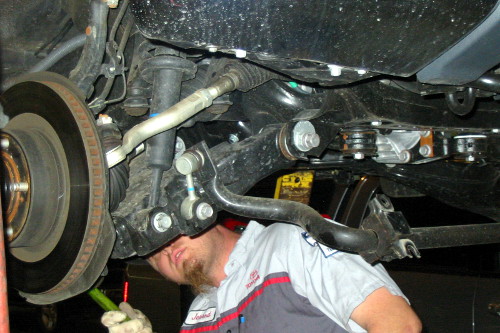
    DIY Lift Kit Install Tips

    While working on your vehicle’s suspension system isn’t exactly complicated, it’s almost always inconvenient. Here are some tips that will save you time and heartache.


    Here are several tips that you may find useful when you are working on your truck’s suspension.

    Tool Lending Programs

    Suspension work often requires specialized tools: tie rod splitters, spring compressors, ball joint presses, and the like. Why buy these when you can borrow them from your local AutoZone or Advance Auto Parts? Both of these chains, and others as well, have “loan-a-tool” programs for seldom-used tools like these. Typically you’ll need to put down a deposit that’s roughly equivalent to the tool’s retail price, and you get your money back when you return it. You can typically keep the tool for days on end, if necessary, since you’ve effectively paid for it already. It’s the next best thing to having a friend with a commercial garage.

    Investing in a 3/4″ Ball Joint Separator

    If you’re working on your truck’s front suspension, chances are you’re going to need to disconnect tie rods and/or ball joints from their spindles. Most auto parts stores can lend you a pickle fork, but one of these can destroy the rubber boots that protect these components from road grime – bad news if you want to reuse the parts. You’ll have a much easier time with a pivoting ball joint separator that accepts a 3/4″ socket or wrench. Not only will it save your boots, it will keep you from having to wail away on a pickle fork for half an afternoon. Honestly it’s one of the best tool investments I’ve made. Harbor Freight sells these for about $20 (part number 99849).

    Securing Your Undercarriage

    How many times have you had a part fall and smack you in the head? Stop rubbing your noggin. Instead of wedging parts into a seemingly secure nook, tie them in place with bungee cords or a zip tie. It’s tough to continue any project with blood in your eye – trust me I know ;)

    Choosing Eye and Mouth Protection

    Eye protection should be a no-brainer, of course. There is all kinds of oil, grime, and nastiness under your truck that you don’t want dripping in your eyes, not to mention falling bolts, nuts, and other parts. In recent years I’ve begun wearing a surgical mask as well. This came after a couple close run-ins with brake dust. Have you ever seen what brake fluid does to a coat of paint? Imagine what that stuff could do to your lungs! A mask can be hot in the summer, and it might not look very cool, but your health comes first.

    The Right Type of Gloves

    You might think grease underneath your nails is a badge of honor, but your significant other probably doesn’t agree. Gloves are your best bet. Those blue rubber ones they sell at the auto parts store might be fine for changing your oil, but they won’t last long when working underneath your truck. You’ll shred a pair of them every few minutes, and they offer no protection against busted knuckles. Instead, I advise a pair of high-quality gloves from Mechanix or Snap-on. They cost more upfront, but they’re actually cheaper than running through a full box of latex gloves every time you tackle a project.

    Breaking Bolts

    Where is a large part of your time spend on any suspension project? Breaking rusted nuts loose! The quick and easy solution is to spray them with PB Blaster or some other penetrating lubricant a day ahead of time. Once you have them off, you may be tempted to apply anti-sieze to these nuts and bolts. Be sure to consult your service manual first. In some cases, anti-sieze is not recommended, especially when dealing with suspension components where a loosened bolt could be catastrophic.

    Stable Ground to Work on

    If you have to work on gravel or dirt, your jacks and stands may be a bit unstable. A handy piece of wood or metal will help. Since neither is going to be available on a reliable basis, you need to provide them yourself. Buy an eight foot 2×12 and cut it to fit your tools. Keep the pieces with your onboard tool kit.

    Multiple Levels of Protection

    Lastly, always use jack stands! Never rely on your jack alone. Each year, more than 15,000 people are injured in accidents involving hoists, lifts, jacks, or jack stands. If you’ve got the wheels off, lay them on their sides underneath the frame rails. This will give you an extra layer of protection if anything fails. After all, your tires are probably wider than your head :)

    Hopefully, these tips will help you with your next project. If you have any other tips, feel free to leave us a comment.

    Author Taylor Brown is the founder of AutoFoundry.com, a fast-growing automotive community, and he maintains the blog at Keystone Auto Loans, a leading provider of auto financing services. He drives a ’98 4Runner 4×4, and his latest project is restoring an ’85 BMW 325e from junker to daily-driver.

    Search terms people used to find this page:

    • tundra lift kit
    • tundra lift kits
    • 2013 toyota tundra lifted
    • toyota tundra lifted
    • tundra lifted
    • lifted toyota tundra
    • lifted tundra crewmax
    • lifted tundra
    • tundra 3 inch leveling kit 1 inch body lift
    • 2013 tundra with 3 inch lift

    The post 8 Tips for DIY Suspension Projects appeared first on Tundra Headquarters Blog.

  • UW, PNNL tackle big data with joint computing institute

    The deluge of data coming from today’s countless electronic devices will be harnessed to take on the most pressing problems facing science and society at a new computational institute in Seattle.

    The Northwest Institute for Advanced Computing is being formed by the University of Washington and the Department of Energy’s Pacific Northwest National Laboratory in Richland, Wash. Researchers associated with the institute will work to ensure the next generation of computers and the methods used to run them can address challenges ranging from climate change to energy management.

    “Computing has transformed science, engineering and society in remarkable ways,” said Doug Ray, associate director of PNNL’s Fundamental & Computational Sciences Directorate. “But as huge amounts of new data are generated daily by scientific instruments and household electronics, new technologies and approaches are needed to give that information more meaning. Researchers at the Northwest Institute for Advanced Computing will tackle ‘big data’ and help improve the quality of life for many U.S. citizens.”

    Located on UW’s campus, the institute will be a center of collaboration where UW and PNNL researchers jointly explore advanced computer system designs, accelerate data-driven scientific discovery and improve computational modeling and simulation. Scientists and engineers at the institute will also train future researchers in modern computational approaches.

    The institute’s research will aim to help solve a wide variety of the world’s growing problems. For example, improved computational techniques can help design a smart electric grid that reliably delivers energy to keep homes warm and lit. Better analysis of biological data can help determine the causes of disease and how to treat health ailments.

    Computer modeling can help explain how climate change impacts natural resources such as snow packs and the formation of greenhouse gas-capturing molecules in the atmosphere. And smartphone data can be used to improve urban life, such as decreasing idle traffic while also reducing carbon emissions from cars.

    “The expanded partnership between UW and PNNL will create tremendous new opportunities for both organizations,” said Ed Lazowska, UW’s Bill & Melinda Gates Chair in Computer Science & Engineering and director of the UW eScience Institute. “‘Big data’ is transforming the process of discovery in all fields. UW and PNNL have significant and complementary strengths; together we’ll be able to do amazing things.”

    UW and PNNL also hope to strengthen the Northwest’s economy. The institute will build on UW’s and PNNL’s existing and already-strong relationships with the region’s private technology industry. The institute will also help grow the region’s skilled workforce for UW, PNNL, the Northwest technology sector and beyond.

    Two co-directors will lead the institute: UW electrical engineering chair and Applied Computational Engineering Lab Director Vikram Jandhyala and PNNL Fellow Moe Khaleel, who directs PNNL’s Computational Science and Mathematics research division. PNNL is funding the time spent by both Jandhyala and Khaleel leading the institute. Institute members from UW and PNNL will jointly submit proposals to various funding agencies for new research projects.

    “This collaboration will open up new avenues for research at the interface of computational advances and applications, and is a great synergy for UW and PNNL,” Jandhyala said.

    “This will be an interdisciplinary place for UW faculty in computer science, electrical engineering and applied math to work with PNNL colleagues on areas such as computational physics, big data, cyber security and computing for the smart grid,” Khaleel said.

    The institute’s headquarters are inside UW’s Sieg Hall, but the institute will be broader than that specific location. Its research members will hail from many of UW’s numerous schools and colleges. And PNNL scientists and engineers will work from both Seattle and the national laboratory’s main campus in Richland.

    PNNL currently has two scientists who conduct DOE-funded research related to big data and nuclear physics from UW’s Seattle campus. About eight more PNNL researchers are expected to join them in Seattle by the end of 2013. All Seattle-based PNNL researchers involved in advanced computing will be associated with the institute. And initially more than a dozen of UW’s faculty members are expected to join the institute.

    Institute members will use computational resources already in place at their home institutions. In Seattle, that includes the Hyak supercomputer developed by UW’s eScience Institute and UW-IT. Richland resources include components of the PNNL Institutional Computing program, which features the Olympus supercomputer. Cloud resources will also be used extensively.

    Both UW and PNNL are well known for their contributions to advanced computing. UW is known for its computer science and engineering, electrical engineering and applied mathematics programs. UW’s eScience Institute has advanced data-driven discovery, and the university’s computational programs in physics, chemistry and astronomy are highly regarded.

    And PNNL is known for designing and programming high-performance computers and evaluating their performance. PNNL leads research in computational molecular science, multi-scale mathematics, regional climate modeling and the modeling of underground fluids such as water.

    More information on the institute from UW is online at http://www.washington.edu/news/2013/01/09/uw-pacific-nw-national-lab-join-forces-on-computing-research/.