Blog

  • Another watchphone, this time with GPS

    Oh rapture! GPS 800G watch phone is here and it’s ready to rumble! This phone has GPRS tracking, an SOS button, and can record how fast you’re moving, allowing alerts to be sent to scared and frightened parents. But don’t take my word on it:

    1.SMS & GPRS Tracking: Capable of text message (SMS) tracking & internet (GPRS) tracking 2. A SOS button for emergency help. 3. Have Timing & Positioning function , it can search the signal of GPS automatically ,then set the time according the time of satellites to choose the different time of every country . 4. It can store three alarm phone number . you can press any one alarm number button to get help actively…

    Get help actively! Satellites! What a treat!

    Product Page via RedFerret


  • Lunar boulder hits a hole in one! | Bad Astronomy

    Y’know, I see a gazillion pictures of astronomical objects all the time, and I never get tired of them. But every now and again a picture comes along that’s so wonderful I just have to share it.

    This is one such piece of wonderfulness: a lunar hole in one!

    lro_holeinone

    And you thought the windmill at the end of putt putt golf was hard.

    This picture — click to enlunanate — is from the Lunar Reconnaissance Orbiter, and shows a region of the Moon inside the crater Henry Frères. Taken on March 7, 2010, the image shows an area just 500 meters (550 yards) across — if it were Earth, you could easily walk across it in less than ten minutes — and shows objects down to less than a meter in size.

    lro_holeinone_zoomAnd it’s just so cool! Look at the dashed trail going from left to right. See how it ends at the little crater, and even — if you look closely — can be seen to turn downwards? It suspiciously points right to the 10-meter (30+ foot) boulder sitting just inside the crater wall.

    Suspicious indeed. In fact, what you’re seeing is the trail left by that boulder as it rolled and bounced downhill and stopped inside the crater! Look at the big picture. From the debris (small rocks) running up and down, you can tell that the terrain on the left side of the picture slopes down to the middle (in other words, if you started on the left side and walked to the center of the picture you’d be going downhill). The middle of the picture is relatively level ground.

    In my mind’s eye, what happened here is clear. The boulder starts off at the left, and something — perhaps a minor moonquake, or a nearby impact — shakes the ground. The house-sized rock gets dislodged, and in the gentle gravity begins to roll downhill. It hits something and bounces, coming back down, skidding and rolling, only to be launched into the sky again and again. It slows a bit each time — the ruts it digs get shorter as it moves left-to-right — and by the time it gets to the end of the track it’s barely moving, just enough to feel the change of slope due to the crater wall. It even rolled past the crater a bit (you can see the last groove is actually along the path a little beyond the crater), and almost slows to a stop… but then slowwwwwwly teeters backwards, back along the path it came. Just as it’s about to come to a rest, it goes over the lip of the crater, slides into it, and lumbers to a halt halfway down the 60-meter (200 foot) crater’s wall.

    I would give a lot to be able to see video of something like this happening on the Moon in real time. Wow!

    And that boulder’s flight is just one of many scenes depicted here, which you can see if you let yourself explore. Just above the bouncing boulder’s path is a trail of what looks like a dustslide, a bit more brightly colored than the moonscape around it. It slid downhill to the right as well, and partially buried some of the bigger debris. Obviously, this happened after the bigger rocks already slid down, since it buried some of them. And above that in the picture you can see fainter trails from other rocks sliding down. Those trails are harder to see, meaning they’re older (millions of years of micrometeorite impacts and thermal flexing from the Moon’s day/night cycle gradually erase features like that), which again is consistent with the picture I’m painting here.

    sloped_plumeTake a look at the crater at the bottom left. It’s surrounded by a light-colored apron of ejected material. See how there’s more of that ejecta to the right than to the left? That’s what you’d expect if the slope goes downhill to the right; the material spreads out more as it falls downslope (the diagram here will help). And hmmm, there’s a small crater about 10 meters across just to the right and below the big crater with the boulder in it. That crater is fresher; it still has a light apron as well. But what’s that dark spot in the center? Beats me. Cool though, ain’t it?

    There’s so much to see and investigate, and this image is only about the size of a city block! It’s a slice of a much longer 2.5 x 15 km strip, which you can interactively browse, too. WARNING: be prepared to lose a lot of your day if you click that link, but it’s worth it, just like exploring the thousands of other pictures LRO has sent back is worth it as well.

    The LRO mission cost roughly $600 million. There are 300 million people living in the US right now… so play with those images for a few minutes, and then let me know if you got your two bucks’ worth out of this mission.

    Image credit: NASA/GSFC/Arizona State University


  • Chrysler anuncia 1.080 vagas para trabalharem na nova Grand Cherokee


    O presidente da Chrysler, Sergio Marchionne, anunciou a expansão da fábrica “Jefferson North”, situada em Detroit, Michigan e que é responsável pelas fabricações do Jeep Commander e do Jeep Grand Cherokee, este último com uma nova versão em andamento. Marchionne diz o seguinte:

    “O início da produção da Grand Cherokee 2011 marca o renascimento do Grupo Chrysler. A Grand Cherokee é a assinatura da Chrysler”.

    Marchionne se alegra ao informar a produção do novo Jeep, pois mostra que a Chrysler está se re-erguendo após um período de “quase falência”, abatidos pela crise econômica no setor automotivo. Como resultado de seu renascimento, 1.080 vagas foram anunciadas para a expansão da fábrica, que teve um investimento de US$ 686 milhões, entre a produção da nova Cherokee e a reforma da fábrica.

    Via | Left Lane


  • Elgato EyeTV HD DVR Leans On Macs (and Plays Nice With iPads) [DVR]

    The Elgato EyeTV HD DVR has one noble aim: making it as easy as possible to watch your HD cable or satellite TV content, including premium channels, on your MacBooks, iMacs, iPhones and iPads. But it’ll cost you a leash. More »


    ElgatoTelevisionArtsMacApple

  • Flash Beta is out …for Android / Froyo

    We’ve been waiting for Adobe’s Flash to come to webOS since February of last year, but it’s Google’s newest release of its Android operating system announced at the Google IO event in San Francisco, version 2.2 or "Froyo", that will be the first mobile OS to support the re-worked, GPU accelerated and touch optimized web technology that has been the topic of such hot debate in recent months.  As you’d expect, there wasn’t any news pertaining to webOS.

    When we’ll finally see the technology come the way of webOS is still a guessing game at this point. Adobe has continually pushed back any tentative launch dates over the past year – the company originally planned on a late-2009 release, and subsequently pushed that date back to vague "first half of 2010" back in November, and outside of the occasional demo of  Flash-based games and videos and the like on the platform, the company has remained quiet since.  

    Will we actually see Flash before the first half of 2010 closes in just over a month? The prospect is actually still looking good, as the groundwork for Flash has already been put into place and an upcoming update to webOS will expand the possibilities of what developers can do with the PDK. We know, we know, too often when we get our hopes up we find them dashed. Maybe, though, just maybe we’ll see it soon.

  • EPA gets the bathtub

    Eli Rabett has been posting the comment/response section of the EPA endangerment finding. For the most part the comments are a quagmire of tinfoil-hat pseudoscience; I’m astonished that the EPA could find some real scientists who could stomach wading through and debunking it all – an important but thankless job.

    Today’s installment tackles the atmospheric half life of CO2:

    A common analogy used for CO2 concentrations is water in a bathtub. If the drain and the spigot are both large and perfectly balanced, then the time than any individual water molecule spends in the bathtub is short. But if a cup of water is added to the bathtub, the change in volume in the bathtub will persist even when all the water molecules originally from that cup have flowed out the drain. This is not a perfect analogy: in the case of CO2, there are several linked bathtubs, and the increased pressure of water in one bathtub from an extra cup will actually lead to a small increase in flow through the drain, so eventually the cup of water will be spread throughout the bathtubs leading to a small increase in each, but the point remains that the “residence time” of a molecule of water will be very different from the “adjustment time” of the bathtub as a whole.

    Having tested a lot of low-order carbon cycle models, including I think all possible linear variants up to 3rd order, I agree with EPA – anyone who claims that the effective half life or time constant of CO2 uptake is 10 or 20 or even 50 years is bonkers.

  • Frutas Exóticas – Madressilvas

    Lonicera caerulea é uma espécie do gênero botânico Lonicera, da família das Caprifoliaceae, nativa da China e regiões temperadas do  Hemisfério Norte. O  nome latino é caprifolium e, em Inglês, diz-se honeysuckle. Dizem que o seu nome latino tem origem na agilidade das cabras, porque é capaz de trepar como elas. O seu nome inglês tem origem no seu coração de mel. Em Francês, diz-se chèvrefeuille. Na França, acreditam que se se construir uma casa no lugar onde nasceu uma madressilva a casa será robusta. Daí o seu significado francês esteja ligado à longevidade e às ligações fortes.[1]
    É um arbusto  que cresce de 1,5 a 2 m de altura. Suas folhas são opostas, ovais, de 3 a 8 cm de comprimento com 1 a 3 cm de largura, verdes, com uma textura cerosa. As flores são de coloração amarela esbranquiçadas, com cinco lóbulos iguais.  Segundo alguns autores existem nove variedades consideradas como subespécies.[2] São muito cultivadas por suas lindas e perfumadas flores

    O cultivo de madressilva na Rússia começou na primeira metade do século 18 como planta ornamental, e onde se cultivam muitas variedades.   Há plantações industriais na Sibéria Ocidental, em Altai, Ural, Médio Volga e no noroeste da Rússia. É amplamente distribuída na jardinagem amadora.
    A fruta é uma baga azul de aproximadamente 1 cm de diâmetro   contêm flavonóides, antioxidantes, açúcares,    pectina, vitaminas C, A, B 1, B 2, B e D. São usadas frescas para doces e compotas e também  para fins medicinais.  Os antigos a usavam para curar soluços.   A planta tem uma elevada qualidade decorativa. 
    Fontes: [1] http://amorizade.weblog.com.pt/arquivo/2005/01/madressilva.html; [2]wikipedia; [3]http://www.agroatlas.ru/cultural/Lonicera_K_en.htm


  • How to Watch Hulu In Android In 3 Easy Steps [UPDATED] [Hulu]

    Hulu isn’t supposed to play on cellphones—the service doesn’t have the licensing rights for mobile distribution. But about 5 seconds of settings tweaks in Android 2.2Froyo” (only on the Nexus One, for now) will enable Hulu streaming. More »


    HuluAndroidGoogleHandheldsNexus One

  • Twitter a terceros: que nadie manche nuestro timeline (y gane dinero con ello)

    TweetDeck

    Twitter vuelve a dar una vuelta de tuerca en lo que a su relación con los terceros que utilizan su API, anuncia que pasa a prohibir explícitamente que cualquier cliente introduzca publicidad en el timeline. Sólo podrán aparecer los twits promocionados que gestionará el propio Twitter y no se verá afectada aquella publicidad fuera del timeline, como la que aparece en algunos clientes móviles gratuitos.

    Aquí Twitter se ha cargado a más de una empresa que planteaba un sistema publicitario para clientes sin pasar por ellos. Curiosamente han vuelto a poner encima de la mesa el debate de la relación con su ecosistema, cuando ya habían provocado una crisis hace apenas un mes y podían haber aprovechado para liquidar el asunto en un paso. Se acerca la hora para Twitter de buscar la rentabilidad y están soltando amarras: van a perder la relación y la confianza de parte de su ecosistema (¿cuál será el próximo cambio de condiciones? ¿merece la pena invertir más en integrarse con Twitter?), van a ganar en control sobre la “monetización” (si me permitís la expresión). Un modelo de negocio más claro, pero perdiendo ese perfil de “protocolo neutral” que algunos hace tiempo que le atribuían.

  • Tension Rod Hanging Lamp

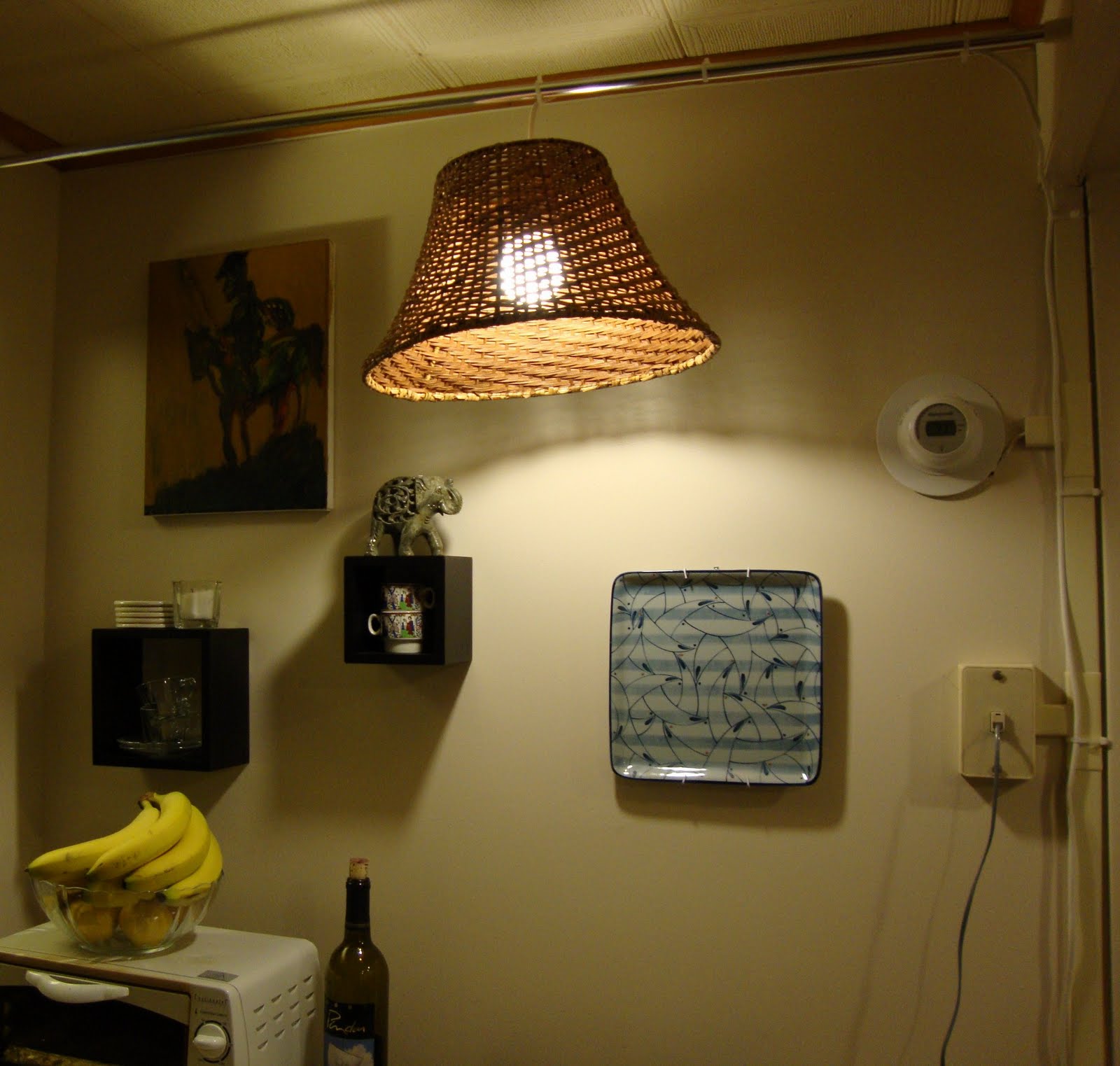
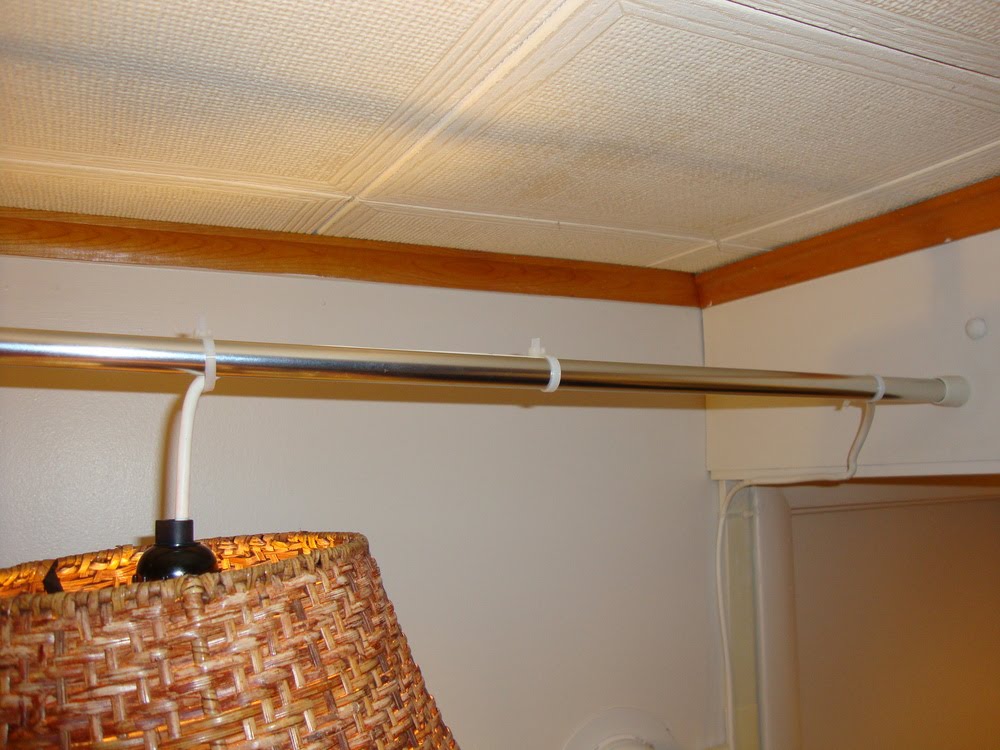
    Materials: Tension Rod, Ikea Hemma Lamp, Zip Ties, Light Bulb

    Description:
    1. Using zip ties, secure the wire from the Hemma Lamp to the Tension Rod.

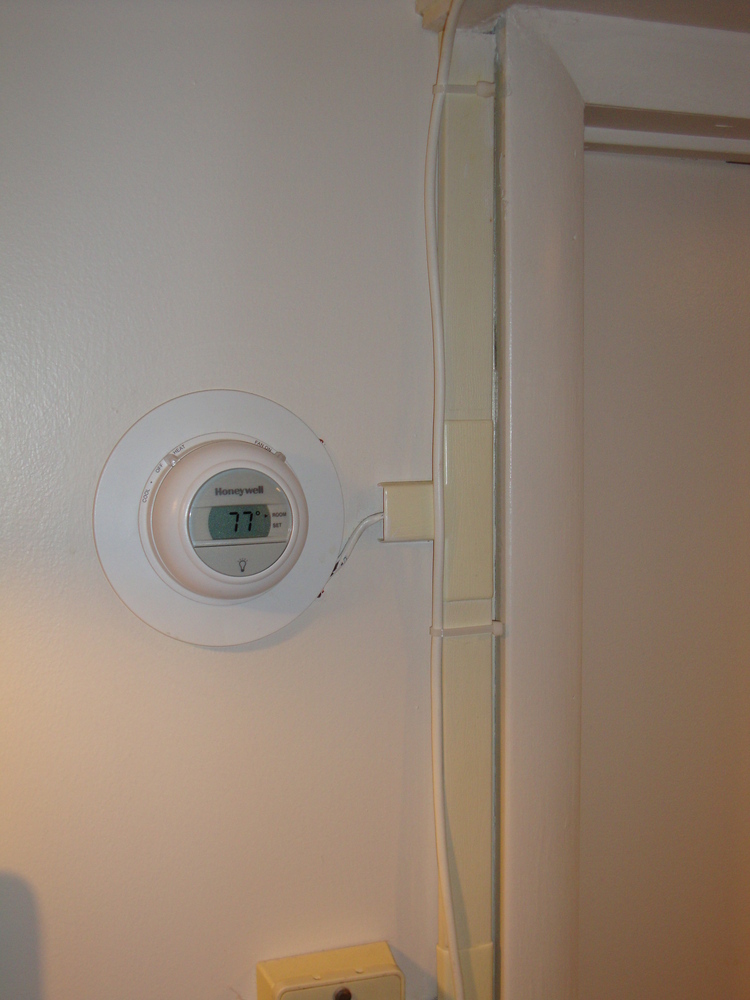
    2. Hang the tension rod in the desired area and zip tie to cord to the wall post or to brackets.

    3. Plug in and…let there be light!

    ~ Brianne, Great Neck, NY


  • Vincent Laforet’s Thoughts on House Finale (Shot on Canon 5D MKII)

    I previously blogged about Season 6 finale for House MD filmed using Canon 5D MKII, you can check out what Vincent Laforet’s thoughts about the House finale here and here.

    Filed under: Television, Video, YouTube

  • South Kensington Cash Collection

    We have a really exciting cash collection coming up on Friday at South Kensington Station.

    Cash collections are a really useful way to raise money as the collectors have a great time outside (certainly preferable to my desk- especially in this weather) and people donate their spare change into buckets. Another thing is you don’t have to do it all day; it can be a couple of hours here, or a lunch hour there. It’s totally flexible.

    So if anyone wants to get involved and do something really worth while with their spare time on Friday don’t hesitate to get in touch.


    Ali Jinnah

    0207 802 9980

    [email protected]

  • Online Store Loses $1.6 Million Due to Pricing Glitch

    A software error can end up costing a company quite a lot. While for Google, the toll is still unknown, for an online retailer of shoes, clothing and other similar items, 6pm.com, the number is easier to pinpoint. The company, affiliated with Zappos, lost $1.6 million by its own account, after the pricing engine capped plenty of the items on … (read more)

  • Samsung Galaxy S to also feature Atmel maXTouch sensors

    As we pointed out several months ago, not all touch screen sensors are created equal. Many first generation Android phones used the older Synaptics ClearPad 2000 sensor, but now handset makers are beginning to transition to the newer Atmel maXTouch.

    The Atmel maXTouch sensors (mxt224) offer superior performance and low power consumption. These new sensors recognize an unlimited number of touches, offer faster response times, and have an excellent signal-to-noise ratio.

    HTC was the first to implement the maXTouch sensors in their Incredible and EVO phones, but other handset makers are now following suit. Our friends over at Frandroid have confirmed that the Samsung Galaxy S will also feature a touch sensor from Atmel. Check out the video after the jump to see their multitouch demonstration.

    No U.S. release dates have been announced for the Samsung Galaxy S, but it is expected to launch on all four major carriers. T-Mobile could be first, but I would not be surprised if it appeared on another carrier earlier.

    Complete highlights of the Atmel maXTouch solution include:

    • Unlimited touches
    • Low power consumption
    • Fast response — completely redraws screen every 4/1000 of a second (4ms) to eliminate recalibration issues
    • Excellent signal-to-noise ratio for superior precision — 3x better than competitive products
    • Superior performance for first-touch response — 3x better than competitive products
    • Unambiguous, unlimited touch support
    • Responsive user interface: > 250 Hz report rate for a single touch
    • Extremely low current consumption: < 1.8 mW in “touch-ready” state
    • Two touch adjacency of less than 10 mm on a 4.3″ touchscreen
    • Small footprint with few external components
    • Supports stylus, fingernails, and gloves
    • Grip and face suppression functionality: avoids false touches
    • Size and angle of touch supported
    • Screen sizes up to 10.2″ are supported by a single chip
    • Proximity channel support

    Related Posts

  • Reblog: Kerry-Lieberman: Short on Innovation

    This post by Mark Muro, fellow and policy director, Metropolitan Policy Program at the Brookings Institution, was first published on the Brookings’s Up Front Blog.

    As the spin cycles speculate on whether the Kerry-Lieberman Senate climate bill has a chance to pass this year, I’ve been looking at its clean energy innovation provisions and am underwhelmed. I’ll defer to our colleagues at the National Commission on Energy Policy for a good side-by-side comparison of Kerry-Lieberman with the Waxman-Markey bill that passed the House last year. But suffice it to say Kerry-Lieberman looks surprisingly similar to the only so-so House bill on innovation matters.

    The Advanced Research Projects Agency-Energy (ARPA-E), which is beginning to support “disruptive” efforts to develop transformational clean energy breakthroughs, is slated to receive cap-trade allowances.

    Allowance sale revenue is also reserved for support of state-level renewable energy and efficiency programs to help accelerate market uptake and deployment of low-carbon products and services, like building retrofits and solar panel installations.

    And beyond that there’s the usual grab-bag of technology-specific and fragmented research and deployment efforts (with the feel of interest-group pandering) around nuclear power, clean coal, advanced batteries, natural gas vehicles, plug-in hybrids, the steel industry, and so on.

    The problem, though, is that while all of these items are well and good, nothing here answers to the urgency and scale of the nation’s energy innovation needs.

    All told, the Kerry-Lieberman outline would, like Waxman-Markey, apply about 2 percent (or $1 billion to 2 billion a year) of its allowance revenue to clean energy R&D in the bill’s early years, and about 5 to 7 percent ($3 billion to 7 billion) to clean-tech research and deployment in various sectors over time—a little less than the House bill did. (Check here for my Brookings colleague Ted Gayer’s helpful tabulation of the year-to-year allowance distributions in the bill). So that’s real money.

    However, while solid-sounding by itself, that’s paltry in the real scheme of things. All told, by our calculations, the U.S. needs to be spending $15 to $25 billion a year on federal clean energy R&D alone just to attain a research intensity on a par with other innovation driven sectors as health, or IT, or for that matter agriculture. Since that number is currently running to only $4 billion or 5 billion a year, the stark fact is that the nation needs to come up with another $10 or 20 billion in clean energy research investment each and every year for the foreseeable future—and starting now.

    From that perspective, that Kerry-Lieberman would only manage to reserve for energy R&D pursuits $1 billion to 2 billion a year—or maybe $4 to 8 billion to be generous—must be counted a major disappointment. Once again, it’s extremely disappointing to see that the basic congressional dynamic continues to require massive allowance giveaways that “give away the store” in order to obtain the political support of interest groups. And its disappointing to see once again the failure in this process to serve the nation’s clear interest.

    In the end, the American Power Act—like its House predecessor—underscores that Congress and the country are simply not yet serious about de-carbonizing the nation’s energy system, catalyzing a clean new economy, and limiting global warming to acceptable levels. Here’s hoping further negotiations will bear down more thoughtfully on those critical imperatives.

    Link to original post

  • Susan Docherty named GM VP, International Operational Sales, Marketing and Aftersales

    Susan E. Docherty – GM Vice President, International Operations Sales, Marketing and Aftersales

    Earlier this month, General Motors announced that Joel Ewanick will replace Susan Docherty as vice president, U.S. Marketing, effective today. Well, May 24 is here and Susan Docherty has been given new responsibilities at the Detroit automaker and has been appointed GM’s Vice President, International Operations Sales, Marketing and Aftersales.

    Starting June 1, Docherty will report to Tim Lee, president, GM International Operations (GMIO).

    “Growth in China and other emerging markets is important to the company’s future,” said GM Chairman and CEO, Ed Whitacre. “We are counting on Susan to make a significant contribution and I am glad to have her running this critical part of our business.”

    If you take a look at the statistics, the job is pretty demanding. GM sells almost 50 percent of all new vehicles within GMIO (General Motors International Operations), which is made up of more than 90 markets including Asia Pacific, Latin America, Africa, the Middle East, Russia and the Commonwealth of Independent States (CIS). Most of the GMIO countries are considered emerging markets and are an engine of GMIO growth over the next decade.

    Docherty will be responsible to coordinate sales, marketing and aftersales in GM’s Asia Pacific, Latin America, Africa, the Middle East, Russia and CIS operations. She will have responsibility for market performance, improving the opinion and consideration of Chevrolet, Buick, GMC, Holden and Cadillac brands to drive consumer demand for GM vehicles.

    Docherty will be replacing Don Johnson, whose new position will be announced soon.

    Keep the reshuffling going.

    – By: Omar Rana


  • Golfer Trades in Clubs for Rifle

    Trudging around in 100+ degree heat isn’t many people’s idea of fun.

    But Lt. Charles Murray doesn’t mind.  He says that his twice-daily foot patrols to local Afghan villages in Helmand Province remind him of his time at Arizona State University.  He transferred there from Oral Robert University where he was on the golf team.

    Murray traded in his golf clubs for a rifle to become a Marine platoon leader, taking his team to meet locals and trying to convince them that the Marine are here to help.

  • Serena Williams on Swimsuit Malfunction

    After being fined $82,500 for having a “major offense” at the US Open, Serena Williams had a swimsuit malfunction while swimming in the beach of Barbados.


    Williams was banned from the US Open for verbally assaulting a line judge over a foot fault. The two point  assault cost her a probation period at the four major tennis tournaments for the next two years. “If she can pass two years without another major offense, her suspension will be lifted,” according to Chicago Defender.

    Related posts:

    1. Venus Williams’ Disturbing Outfit at the French Open
    2. Henin, Nadal Back To Regain Lost Glory
    3. French Open 2010: Schedule and Live Stream

  • Europe’s Crisis Has Actually Been Awesome For The Average American

    European Vacation Chevy Chase

    The Federal Reserve propped up the housing market after the financial crisis by buying mortgage-backed securities in the market, in a bid to keep mortgage rates low for American homeowners.

    Yet when the $1.25 trillion buying program came to an end during the last week of March, many market observers worried that mortgage rates would rise, hurting the U.S. housing market.

    It turns out that mortgage rates are still extremely low despite the passing of the Fed’s buying program.

    Why? One unexpected reason is that Europe’s financial problems have sent droves of investors into U.S. treasuries, in a ‘flight to safety’. This has depressed U.S. treasury yields, through rallying treasuries, which has flowed through into lower mortgage rates for American homeowners.

    WSJ:

    Many in the industry now say rates could drift as low as 4.5% this summer from 4.86% now, instead of rising to 6% as some economists projected, making for significantly lower payments for Americans buying homes or refinancing their mortgages.

    Refinance business “exploded” last week, says Jeff Lazerson, chief executive of Mortgage Grader, a brokerage in Laguna Niguel, Calif. “It’s schizophrenic. We all had this expectation of higher interest rates and no more refinances.” He says he helped a borrower lock in a 30-year loan with a 4.25% fixed rate last week, the lowest in his 24 years in the business.

    Rates on 30-year mortgages averaged 4.84% last week, according to a survey by mortgage-insurance titan Freddie Mac. Rates were quoted late Friday at 4.86%, the lowest since December 2009, according to a survey by financial publisher HSH Associates, and down from a high of 5.27% for the week ended April 9. Rates on 15-year mortgages averaged 4.24% last week—the lowest since Freddie began its survey in 1991.

    Thus Europe’s pain has oddly created a broad-based form of economic stimulus for the U.S., since it saves families around the country money on their mortgage payments. It’s a great time to refinance.

    Join the conversation about this story »

  • HTC EVO 4G gets rooted before release

    The HTC EVO 4G has been one of the most highly anticipated Android devices since Sprint and HTC announced it back at CTIA this past March.  Two weeks ago at a launch party in New York, Sprint unveiled even more details about the phone including the official release date and pricing.  Just last week at Google I/O, Google gave all attendees EVO 4Gs as parting gifts.

    If you didn’t already know, Google I/O is a developers conference, so the majority of people attending are developers of Google services, including Android.  And what do developers like to do with their Android phones?  Well root them of course!  Only a few days after receiving their shiny new EVO 4Gs, a few developers did just that, and were eager to share their results with the user community.  Below you’ll see a video of one such developer walking us through the process.  Enjoy!

    {Widget type=”youtube” id=”ilSNtLGNw2U” }

    Anyone planning on rooting their EVO come June 4th?  Sound off in the comments!

    Via Engadget