Blog

  • Officially official: 2011 Ford Fiesta rated at 29 city, 40 highway MPG

    Ford has officially released the long awaited EPA ratings for the 2011 Fiesta which is set to go on sale in June. The class-leading Fiesta will offer 29 city, 40 highway MPG when equipped with the six-speed automatic PowerShift transmission – besting the next closest competitor – Toyota Yaris – by 4 MPG highway.

    Ford has trickled out bits and pieces about the highly-advertised Fiesta for over a year, but now this new premium subcompact has official EPA ratings, boasting class-leading 40 MPG highway with the dual-clutch automatic, and 28 city, 37 highway with the five-speed manual (standard).

    U.S. pricing for the Fiesta subcompact sedan will start at $13,320 for the base S trim level. Opting for the next trim level, SE, brings the total to $14,320. The hatchback is not available in S trim, but can be purchased starting in SE guise with a base price of $15,120. Ford says they decided to start the hatchback at the SE trim level in an effort to preserve the premium content and appeal of the European design.

    The range-topping SEL Sedan and SES Hatchback cost $16,320 and $17,120, respectively. Moving to an automatic transmission adds about $1,000 to the price. Destination is $675.

    “For North America, the global Fiesta was tweaked, not re-designed or re-developed,” said Steve Pintar, chief Fiesta engineer. “We built on the success of the European Fiesta and are really proud of how little has changed.”

    Ford says the U.S.-spec Fiesta boasts 15 class-exclusive features – such as keyless entry with push-button start, Sync, EasyFuel cap-less fueling and a driver’s knee airbag, as well as significantly improved interior quietness (compared to the European product) due to the addition of a laminated windshield and additional sound dampening materials.

    Fuel economy and power
    Ford’s latest four-cylinder offering will be mated to either a five-speed manual transmission – rated at 28 city, and 37 highway mpg – or the six-speed PowerShift dual-clutch automatic, which is officially rated for 29 city, 40 highway mpg.

    “To be the only vehicle in the segment to deliver 40 mpg is something we feel consumers will appreciate,” said Pintar.

    The 2011 Fiesta features a 1.6-liter DOHC 4-cylinder engine that is rated at 120 horsepower and 112 pound-feet of torque. This four-banger features Twin Independent Variable Camshaft Timing (Ti-VCT), which allows smaller displacement for increased fuel economy without compromising performance. Ford also makes use of an aggressive deceleration fuel shutoff, combined with an engine accessory drive system that was designed to improve efficiency by reducing the energy it takes to power the air conditioner and alternator. When coupled with electric power assist steering, the small gains translate to measurable gains in fuel economy.

    Vehicle driving dynamics
    To complement Ford’s available powertrains, Ford reports that the front anti-roll bar was increased from 19 mm to 22 mm, and the rear twistbeam saw a 28 percent increase in rigidity, when compared to the European Fiesta. Ford also added a push-button feature – Grade Assist – which essentially helps to maintain low gearing for more responsive throttle under acceleration, as well as reduced braking during grade descent.

    Customers will be able to choose from 15 or 16-inch wheels on most models, and an available 17-inch Ford Racing wheel as well.

    Safety
    To address traditional concerns of Americans regarding safety in a small vehicle, Ford has developed what it claims is the safest car in the segment. Ford boasts that the Fiesta features more Boron (strongest automotive-grade steel available) steel than any Ford product, with key placement of boron steel in the most vulnerable locations. In all, the Fiesta’s frame and sub-structure features over 55 percent high, or ultra-high strength steel.

    In addition to paying special attention to creating a rigid steel cage for the Fiesta’s occupants, Ford has also incorporated a class-exclusive driver’s knee airbag, as well as dual-stage front airbags, curtain airbags and side airbags for a total of seven airbags.

    Although the U.S. Fiesta has not yet been evaluated by NHTSA, Ford said it expects to receive top marks for the Fiesta in safety like its European counterpart.

    Content and features
    Highlights include Intelligent Access with push button start, electric power assist steering (EPAS), EasyFuel capless fuel filler, a noise-reducing laminate windshield, and Sync 3.0 with turn-by-turn navigation.

    The U.S. Fiesta also gains Sirius satellite radio and has a four-inch information display screen located in the center of the dash. Other optional features include remote start, optional power-operated moonroof, premium audio, and several custom exterior graphics choices.

    Availability
    Fiesta is due to arrive in U.S. dealers in June, with exact arrival dates varying by region.


    Source: Leftlane

  • Best Action Hero Hairstyles

    rambo3

    Despite a windfall of Macgruber-related posts last week, EgoTV didn’t credit their “Best Action Hero Hairstyles” list to the upcoming release.  While MacGyver, excuse me, Macgruber, didn’t get name-checked in the list, there were several other other notable references.   Swayze’s flocked mane, Arnold’s flattop, and whatever the hell died on Sylvester Stallone’s head during the later Rambo movies all were called out in the piece.

    Action hero hairstyles!!!! Catch the fever here!!!

    Related posts:

    1. 100 Modern Classics to See before You Die
    2. The 10 Best Guy Movies of the Decade
    3. iPad Etiquette – Get Ready to Be Annoyed

  • Shipping containers needed in Haiti for emergency housing facilities

    Shipping-containers-1.jpg
    The monsoons are fast around the corner, which means that the hurricanes will be here soon. And the people of Haiti are yet living in tents, without proper homes to keep them away from the ever-looming drastic weather conditions. After the recent earthquake, 2 million people are still displaced, without homes, living in makeshift tents. Green Container International Aid is working hard to provide emergency housing facilities for these citizens, and needs your help!

    The company hopes to convince shipping firms around to donate a few empty shipping containers, that otherwise remain idle in shipping yards, and send them to Haiti. Metabolic macrostructure steel frames will be built into which these containers will be inserted. Shipping containers were used for similar purposes earlier in Bosnia in 2001. So spread the awareness and word around, and do your bit to help the people of Haiti from the extremes of weather.

    Shipping-containers-2.jpg

    Shipping-containers-3.jpg

    Shipping-containers-4.jpg

    Shipping-containers-5.jpg

    [Designboom]

  • New pneumatic aseptic valves with integrated automation technology

    Automation inside is the guiding principle behind the development of the GEMÜ 651 stainless steel diaphragm valve for the pharmaceutical industry. The new valve is a compact unit comprising stainless steel diaphragm valve, pneumatic piston actuator, valve actuation, position indicator and field bus connection (e.g. AS interface). Integral automation, compact design, easier and faster installation / commissioning as well as the design recommendations of FDA and EHEDG in compliance with GMP are only some of the basic requirements this new product satisfies.

    In the past users needed three products to establish a functional unit. This comprised of a valve, solenoid and switchbox, which had to be assembled using valve-specific mounting kits. GEMÜ now provides a complete solution with the type 651. This requires very little mechanical installation and is ready for operation within just a few minutes thanks to the innovative SpeedAP function. An analogue travel sensor continuously detects the valve position. The data is evaluated via a microprocessor. This ensures simple, fast and automated commissioning of the valve, e.g. after changing the diaphragm.

    The GEMÜ 651 diaphragm valve is available as an “OPEN/CLOSE” valve or with integrated positioner as a control valve in the nominal sizes DN 4 – 25. The maximum permissible operating pressure is 10 bar with EPDM diaphragms and 6 bar with PTFE diaphragms. The maximum permissible operating temperature during sterilisation is 150°C. The valve is CIP/SIP capable. Its compact design makes it ideally suitable for use where space is at a premium, e.g. within valve batteries and as a component of valve blocks in multi-port design. The pneumatic actuator section of the housing is made from stainless steel, while the automation module located above is made from PP (polypropylene). The protection class is IP 65, electrical connection is established via a standard M12 circular connector. All versions such as 2/2-way valves, T valves, tank valves and multi-port valves are available as a valve body.

  • NBC Pulls Plug On Medical Dramas “Mercy” & “Trauma”

    Tough time to be an NBC medical drama: Mercy and Trauma have been taken off life support. Neither of NBC’s freshman hospital-themed series will be returning to the air next fall.

    Mercy, which starred Michelle Trachtenberg as a nurse and Dawson Creek’s James Van Der Beek as a womanizing MD, has been canned by NBC chiefs after just one season.

    Trauma has also been scrapped ahead of a second season. The show about a group of paramedics in San Francisco was actually booted earlier this season, but NBC decided to order additional episodes of the series when it became clear that The Jay Leno Show was destined to be a ratings disaster.

    Trauma’s last new episode brought in 4.3 million viewers, while Mercy has averaged around 6 million viewers — though ratings have been steadily declining for the struggling Wednesday night drama all season.

  • Ivy, the dreaded creepers protect your home from thermal heat and pollution

    Ivy.jpg
    Want a beautiful green home, so green that Tarzan wouldn’t mind living in it? Simply use nature’s thermal shield on the exterior walls of your home! And by that, we’re talking about ivy creepers! Now ivy growing on the walls of your home is bound to give you those chills and creeps you usually feel down your spine when you see a haunted house with some of these. Ivy has also been blamed, unnecessarily for causing structural damage. Well, the guys at Oxford University sure think otherwise, stating that these plants actually protect homes!

    Ivy acts as a natural thermal shield, keeping the heat out. It also keeps the brickwork away from moisture and extreme temperatures. Ivy growing on walls absorbs pollution too, making the air around and inside your home easier to breathe. However, damaged buildings should keep the ivy away, since these creepers tend to enter cracks and widen them up, causing structural harm. So if your home is intact, and the sun’s bothering you, just grow a wall full of ivy!

    Ivy2.jpg

    [Dailymail]

  • Next-generation Honda Civic delayed until 2011

    2010 Honda Civic

    We’re in dire need of a redesigned Civic; however, according to John Mendel, American Honda Motor Co.’s executive vice president, the redesigned Honda Civic won’t arrive until 2011. The schedule is well past the typical five-year product line for the compact car.

    Mendel said that changing market conditions and tougher fuel-economy regulations have affected the development of the next-generation Honda Civic, which was originally scheduled to arrive this fall.

    Mendel now says that the redesigned Civic will be unveiled sometime next-year, although he declined to give a specific timeline.

    Click here to get prices on the 2010 Honda Civic.

    “In general, we are not changing cycles,” he said. “We change vehicles as need be. The ability to do something based on more current information is better than waiting a full model cycle. Some of that is being able to have the opportunity to change [based on] what you see happening in the marketplace.”

    The Honda Civic sells about 1 million units a year globally, with the U.S. accounting for one-third of those sales.

    – By: Omar Rana

    Source: Automotive News (Subscription Required)


  • PJTV Live Coverage and Inteviews from the 4th International Conference on Climate Change – Day 1

    Article Tags: Harrison Schmitt, Joseph Bast, Lord Monckton, Steve McIntyre, Video Link

    article image

    Click source to see Video Link from PJTV from the 4th International Conference on Climate Change – Day 1.

    Note: You need to register at PJTV first

    Source: pjtv.com

    Read in full with comments »   


  • Five Ways Michigan Can Make its Mark in Life Sciences

    Ken Stuart wrote:

    When you hear “Michigan,” the automotive industry and Motown automatically come to mind, much as when someone says “Seattle,” one thinks of software, airplanes and coffee.

    That has changed over the years, and Seattle has increasingly gained recognition as a growing leader in the fields of life sciences and global health. And how we’ve done that offers good insight into what entrepreneurs and innovators in Michigan might do.

    Look to the future. Michigan obviously has a productive and creative workforce—just look at the history of its automotive industry. But what’s the next big thing? The future is biomedicine and how we improve the health of the world through research, development and manufacturing. The life sciences industry in Washington has provided islands of stability and growth during the recent economic downtown.

    Collaborate for success. One of the things that has led to the success of our global health sector in Seattle is collaborations. While many of us compete for funding, we’ve moved beyond the old scientific research model to realize that more progress can be made by working collaboratively and exploiting complementary capabilities.

    Form public-private partnerships. Over the past few years public/private partnerships have emerged as important alternatives to large single organization enterprises. Innovative ways of partnering can generate working relationships that can be both productive and efficient, providing a useful economic model and new way to get things done.

    Train the next generation. At Seattle BioMed, we start hands-on training with high school students in our BioQuest lab and continue through the post-doctoral level. This ensures a well-trained workforce for the future that will stay in our region to sustain the life sciences industry.

    Look beyond the obvious. To make progress, it often takes different skills and abilities—and sometimes going beyond the obvious skill set leads to innovation.

    [Editor’s note: To help launch Xconomy Detroit, we’ve queried our network of Xconomists and other innovation leaders around the country for their list of the most important things that entrepreneurs and innovators in Michigan can do to reinvigorate their regional economy.]

    UNDERWRITERS AND PARTNERS


  • Rise of Ignoramus Jihadist


    I had sensed that the contents of this item was essentially true, but lacked the detailed confirmation included here.  This is the bad news and is similar too what we faced with the Hitler Youth and the young Communists.  Before age and maturity tempered the school lessons, fanaticism was encouraged.  The result then was awful and today we have fanatical Islam.
    Islam accepts profound ignorance in their youth and obviously is not encouraging rational thought ways.  Perhaps a few break out of it but experience shows most will be trapped throughout their lives in some of these modes of thought.
    The West must object and confront and demand change.  We did just that with Nazism and only the final bankruptcy of Communism finally drove home change.
    Islam is soon to experience its greatest crisis.  The financial support of the West is soon to end.  Their internal economies are and will continue to be inefficient because of deliberate structural problems.  Half of their population (the women) is deliberately kept ignorant and economically suppressed.  When some liberalization takes place, it is only for the male half of the population.
    The oil crutch will disappear.  Most of the Islamic world will then be forced to rely on their exports.  Few exist and it will be impossible for them to transform their society fast enough.
    The problem is that the application of an Islamic education system ill prepares the students for proper integration which is its intent, but also leaves them unable to function properly in the Western milieu.   Some buy into fanaticism and become rabid.  They can fake a peaceful appearance yet still commit murder.
    The West will be left with little choice but to militarily confront and overrun the Islamic world in order to deIslamize the culture.  Perhaps the religion itself can be saved but I see few apologists who are even slightly convincing.
    A good start would be to stop accepting Muslims as immigrants unless educated to our standards.
    The Rise of the Ignoramus Jihadist
    Posted by Wm. B. Fankboner on May 14th, 2010 and filed under FrontPage
    It is still widely believed in leftist circles that the generic Islamic terrorist is the product of ignorance and poverty. This idea – that terrorists are a persecuted minority of the ignorant and downtrodden – dovetails neatly with another liberal tenet: that the problem of modern terrorism is amenable to a socioeconomic solution. Typical of this putative class of terrorist is “shoe bomber” Richard Reid. A petty criminal who was arrested in his teens for assaulting an elderly woman, and who was in and out of prison for most his adult life, Reid considered himself a victim of racism. He was thus promising material for conversion to Islam: the Jihadists love to glom onto disaffected and benighted losers to do their dirty work.
    But even liberals are coming around to the view that many acts of terror are being planned and carried out by “educated” members of the Islamic middle class, not a few of whom have come from affluent and privileged backgrounds. Marc Sageman, a forensic psychiatrist and former CIA case officer, states in his book Understanding Terror Networks that a high percentage of al-Qaeda operatives are college educated (34 percent) and come from skilled professions (45 percent). A governmental report prepared for the CIA in 1999 entitled “The Sociology and Psychology of Terrorism: Who Becomes a Terrorist and Why?” reached the same conclusion.
    However, some qualification of the word “educated” is in order. While secondary education in some Islamic countries like Malaysia is modeled on the Western system, in the Middle East it is largely the responsibility of the madrasahs(religious schools), which are dedicated almost exclusively to religious instruction and indoctrination. Though not all these institutions are stridently anti-Western, the fact that the curriculum is entirely religious-based, i.e., focused on the Quran and the hadith, means that the average madrasah graduate is blissfully unaware of the modern world and thus a receptive vessel for the anti-American narrative promoted by militant jihadists.
    For example, if you were to ask a madrasah graduate to explain what role the Christian democracies have played in world affairs in the twentieth century (the Anglo-American alliance that defeated German imperialism in 1918, the Nazi-Fascist Axis in 1945, and international Communism in 1989), they would have no idea what you were talking about. Indeed, so profound is their ignorance of current events and world history, few would even know there had been a Cold War.
    If the number of Nobel laureates is any measure—Islam, 20% of the world’s population, has produced 6, while the Jewish community, a tiny minority of 0.2%, has produced 165—intellectual curiosity is not a highly rated virtue in the Koran; “Islam” is a Syriac word meaning submission, which is the surrender of the mind to faith, i.e., the abdication of free conscience and independent thought to the teachings of the Prophet. Most so-called “educated” jihadists, those who see themselves as symbolic emissaries of Islam and are fully convinced of the rectitude of their cause, suffer from a cognitive disorder Thomas Aquinas called “invincible ignorance.” The best (or worst) you can say of graduates of themadrasahs is that their knowledge of history and world affairs is roughly equivalent to that of an average American fourth-grader. In no other culture, society, or religion is the pursuit of knowledge viewed with such virulent contempt and ignorance of the world considered evidence of virtue.
    So when we speak of “educated” jihadists we are referring to training and expertise in a specialized technical field or in one of the professions, like medicine. Practically all university-educated jihadists are engineers and technologists. In terms of general education, however, middle-class, university-educated jihadists like Mohammed Atta, Khalid Sheikh Mohammed, and Jordanian double agent Mulal al-Balawi aren’t much better off than ordinary graduates of the illiberal and benighted madrasah, i.e. they reason with the intellectual sophistication of superstitious children. Exposure to Western science and technology does not erase years of obscurantist religious indoctrination and conditioning. Like their fellow supplicants, they have been taught from early childhood to believe that the West, and Israel and America in particular, are their mortal enemies; and that Western Enlightenment values, and the temptations of Western popular culture, constitute a diabolical conspiracy to defile and undermine their religion.
    According to a Congressional Research Services report published in 2008, radicalized madrasahs in Afghanistan were incubators for the Taliban movement:
    In the 1980s, madrasas in Afghanistan and Pakistan were allegedly boosted by an increase in financial support from the United States, European governments, Saudi Arabia, and other Persian Gulf states all of whom reportedly viewed these schools as recruiting grounds for anti-Soviet mujahedin fighters. In the early 1990s, the Taliban movement was formed by Afghan Islamic clerics and students (talib means “student” in Arabic), many of whom were former mujahedin who had studied and trained in madrasas and who advocated a strict form of Islam similar to the Wahhabism practiced in Saudi Arabia and other Gulf countries.
    The Madrasahs are, in fact, indispensable to the perpetuation of Islam’s medieval worldview. Deprivation of information about life and the ways of the world is an essential tool for infantilizing generations of Muslim students: isolated from reality, these adolescent novitiates never encounter the world as it is and thus never achieve full adulthood. Their maturation into self-actualized individuals is defeated by a distortion field of fanatical dogma and a rancorous hatred of the infidel; while Islam’s demonstrable inferiority to the West fans a searing humiliation and inchoate resentment that cuts them off from every decent human instinct.
    Since these embryonic jihadists have no inclination or opportunity to discover their own humanity they will never sense any solidarity with the community of mankind. In the Muslim view the non-Islamic world constitutes “the other,” i.e., the enemy of Islam. In place of humanity Islam offers its young men the spiritual blessings of imams, mullahs, and ayatollahs, and the unsurpassed exhilaration and exaltation of martyrdom.
    But while the motivations of information-deprived terrorists are comprehensible, the complacence of Dar al-Islam is unfathomable. One can only gasp with disbelief on learning that in nuclear-armed Pakistan, an ally which the U.S. has bankrolled with over a billion dollars in aid yearly, 64 percent of the population views the U.S. as an enemy. What is to be said of a country where one in five trust Osama bin Laden more than Barack Obama, and of the population that clings to these beliefs after Taliban militias have penetrated to within sixty miles of Islamabad, and after Al Qaeda has, according to estimates of the World Health Organization, killed 150,000 Muslims in Iraq alone? The forces of paranoia, superstition, and ignorance will not be quelled by reason: the roots of anti-Western sentiment are deep, global, and generational in Islamic society. Indeed, how could it be otherwise in Middle Eastern states where outlawing political debate, saturating the media with anti-Western slogans, and propagating hate speech in mosques and in school textbooks, have become institutionalized strategies to maintain political power and prop up incompetent tyrants?
    I happened to be teaching at a government prep school in Malaysia, a country that practices a relatively benign version of Islam, during the siege and occupation of the U.S. embassy in Teheran by revolutionaries of the Ayatollah Khomeini, and I was surprised when a devout but gentle Muslim teacher approached me and half-apologetically explained his admiration for the revered Iranian religious leader who had lately occupied the world stage. I hadn’t expected him to repudiate the Ayatollah for fomenting revolution against the Shaw (self-determination is the right of every decent society) but I was disturbed to hear him countenance the storming, and the imprisonment the staff of, an American embassy that was under the protection of international law.
    So sacrosanct is the concept of diplomatic immunity that the Italian Minister Bettino Craxi allowed Mohammed Abbass, leader of the Achille Lauro hijacking, to leave Italy because he had a diplomatic passport issued by Iraq. In the history of revolution, some perpetrated by ruthless and vicious regimes, the taking of hostages of a foreign embassy was unheard of. Moreover, to countenance Ayatollah Khomeini was to countenance his barbaric fatwa against Salmon Rushdie, a criminal incitement to the assassination of a celebrated novelist and blatant attack on the very roots of Western civilization. What did such reckless and defiant acts portend for the future of Islam and the world? The lawless Ayatollah had passed the infallible litmus test for fascism that had been the mantra of every tyrant in history: What’s Mine is Mine and What’s Yours is Mine.
    The complacent attitude of my Islamic colleague whose faith in the Iranian Ayatollah was absolute and who believed the revered spiritual leader could do no wrong, was almost as disturbing as the event itself; for me and my generation, his viewpoint bore an eerie resemblance to the mindless adoration of the German people for Adolf Hitler and the Nazi Party. How a gang of inept sociopaths succeeded in taking over the country that gave the world Kant, Goethe and Beethoven is still something of a mystery. When asked about it, most Germans simply shrug and say they awoke one morning and found the Nazis in control. Something like the Nazis’ stealthy seizure of power seems to be taking hold in Islam: a cabal of sociopathic clerics masquerading as a holy religious cause appears to be co-opting Islam in an apocalyptic confrontation with the civilized world with the passive compliance of Islam itself.
    The 2005 Pew survey below would seem to indicate that the support of mainstream Islam for violence is diminishing. Such fluctuations in attitude are probably due to increased awareness of the self-liquidating nature of the jihadist philosophy and internal contradictions of Islamic fundamentalism. Such trends can be misleading because the primary cause for jihadist violence still exists, i.e. a culture that has no intellectual tradition, and that uses information deprivation to manipulate the faithful.
    As the examples of Nazi Germany, Imperial Japan, and the Khmer Rouge show, unanimity is not a prerequisite for the takeover of a society. With a misinformed, cowed, and submissive populace, a scant minority of determined fanatics can do the job. What Dar al-Islam does not fully understand or refuses to admit, even to itself, is that the rise of child-martyrs and ignoramus-jihadists in its midst holds more peril for Islam than it does for the West.
    Dealing with Islamic mentality for the first time can be a startling and eye-opening experience for a Westerner. Confronted with Islam’s negative view of the West, one is beset with an overwhelming sense of futility. The problem lies not in only correcting facts, or in supplanting illusion with objective information; this is a mentality so steeped in obscurantist tradition and ignorance that it has never developed any standard for truth; rather “truth” is something used to hoodwink an opponent. And this is an ignorance so absolute and on a scale so extensive that it is impossible to convey it to anyone who hasn’t experienced it. One quickly realizes that in an ignorance this total any fiction, no matter how outrageous, can not only survive but take permanent residence and flourish.
    This is a problem that can only be corrected by a major overhaul of the Islamic educational system. For where there is no concept of truth, there is no idea of free inquiry. Thus, it would appear that the tender-minded liberals had it right after all: this is a socioeconomic problem. The children of Islam are the disadvantaged educationally-deprived victims of deliberate parental abuse and theological violation, and nothing will change until this problem is remedied, either by Islam itself or by the political and cultural disaster that certainly awaits it over the horizon of history.
    Finally, for those who question the power of the Mosques and madrasahs to infantilize and dehumanize Muslim society, and to cocoon a population in near absolute ignorance, there was this AP filing on April 19, 2010:
    A senior Iranian cleric says women who wear immodest clothing and behave promiscuously are to blame for earthquakes. “Many women who do not dress modestly lead young men astray, corrupt their chastity and spread adultery in society, which increases earthquakes,” the cleric, Hojatoleslam Kazem Sedighi, was quoted as saying by Iranian media. Mr. Sedighi is Tehran’s acting Friday Prayer leader. Women in Iran, one of the world’s most earthquake-prone countries, are required by law to cover from head to toe but many, especially the young, ignore some of the stricter codes and wear tight coats and scarves pulled back that show much of the hair. “What can we do to avoid being buried under the rubble?” Mr. Sedighi asked during a prayer sermon on Friday. “There is no other solution but to take refuge in religion and to adapt our lives to Islam’s moral codes.”
    It would probably be disrespectful to suggest that Sedighi is himself getting off on those sexy Iranian bints in tight coats and exposed locks. Nonetheless the lip-smacking relish with which this revered Shiite cleric describes the cause and effect between male arousal and earthquakes is certainly suspicious. Surrealistic decrees from Iran’s delusional leadership have taught us not to be shocked by any communiqués originating in Teheran, but Westerners would probably be surprised to learn how many listeners in Sedighi’s audience actually agree with this childish nonsense. More to the point, the grim-mouthed cleric spouting this vile claptrap is the venerated prayer leader for a regime that is acquiring the capacity to build nuclear weapons and the rocket technology to deliver them.
    William Fankboner is the author of The Triumph of Political Correctness and A Hypertext Field Guide to Marshall McLuhan’s Understanding Media. He runs a web site at: http://home.roadrunner.com/~lifetime. His e-mail address is:
  • Green Masdar Headquarters green in design, featured at the 2010 National Design Triennial

    Green-Masdar-Headquarters-1.jpg
    Abu Dhabi’s green dream city, Masdar, is slowly, but sure, springing into existence. Designed by Adrian Smith + Gordon Gill Architecture, the Masdar Headquarters features on the 2010 National Design Triennial too! The Triennial, held from 14th May until 9th January 2011 with the Smithsonian Institution’s Cooper-Hewitt National Design Museum playing host, has the most innovative and sweet designs on display, of which the Masdar Headquarters is one.

    The Masdar Headquarters, the center of Masdar City, will be carbon neutral and evergreen. Cutting edge technology will be used, making this city self sufficient. The Masdar Headquarters will have the world’s largest solar panel array with eleven cone-like structures to give natural ventilation and daylight. Masdar is designed to set an example of how green a city can get in our world today.

    Green-Masdar-Headquarters-2.jpg

    [WorldArchitectureNews]

  • Obama’s Flailing Wars

    Via Prison Planet.com » Commentary

    Tom Engelhardt
    Campaign For Liberty
    May 17, 2010

    On stage, it would be farce. In Afghanistan and Pakistan, it’s bound to play out as tragedy.

    Less than two months ago, Barack Obamaflewinto Afghanistan for six hours — essentially to read the riot act to Afghan President Hamid Karzai, whom his ambassador had only months beforetermed “not an adequate strategic partner.” Chairman of the Joint Chiefs Admiral Mike Mullen followed within a day to deliver his own “stern message.”

    While still on Air Force One, National Security Adviser James Jones offered reporters a version of the tough talk Obama was bringing with him. Karzai would later see one of Jones’s comments and find itinsulting. Brought to his attention as well would be a newspaper article thatquotedan anonymous senior U.S. military official as saying of his half-brother, Ahmed Wali Karzai, a reputedly corrupt powerbroker in the southern city of Kandahar: “I’d like him out of there… But there’s nothing that we can do unless we can link him to the insurgency, then we can put him on the [target list] and capture and kill him.” This was tough talk indeed.

    At the time, the media repeatedly pointed out that President Obama, unlike his predecessor, had consciously developed a standoffish relationship with Karzai. Meanwhile, both named and anonymous officials regularly castigated the Afghan president in the press for stealing an election and running a hopelessly corrupt, inefficient government that had little power outside Kabul, the capital. A previously planned Karzai visit to Washington was soon put on hold to emphasize the toughness of the new approach.

    The administration was clearly intent on fighting a better version of the Afghan war with a new commander, a new plan of action, and a well-tamed Afghan president, a client head of state who would finally accept his lesser place in the greater scheme of things. A little blunt talk, some necessary threats, and the big stick of American power and money were sure to do the trick.

    Meanwhile, across the border in Pakistan, the administration was in an all-carrots mood when it came to the local military and civilian leadership — billions of dollars of carrots, in fact. Our top military and civilian officials had all but taken up residence in Islamabad. By March, for instance, Admiral Mullen had already visited the country 15 times and U.S. dollars (and promises of more) were flowing in. Meanwhile, U.S. Special Operations Forces were arriving in the country’s wild borderlands to train the Pakistani Frontier Corps and the skies were filling with CIA-directed unmanned aerial vehicles pounding those same borderlands, where the Pakistani Taliban, al-Qaeda, and other insurgent groups involved in the Afghan War were located.

    In Pakistan, it was said, a crucial “strategic relationship” was being carefully cultivated. As the New York Times reported, “In March, [the Obama administration] held a high-level strategic dialogue with Pakistan’s government, which officials said went a long way toward building up trust between the two sides.” Trust indeed.

    Skip ahead to mid-May and somehow, like so many stealthy insurgents, the carrots and sticks had crossed the poorly marked, porous border between Afghanistan and Pakistan heading in opposite directions. Last week, Karzai was in Washington being given “the red carpet treatment” as part of what was termed an Obama administration “charm offensive” and a “four-day love fest.”

    Obamas Flailing Wars 100210banner1

    The president set aside a rare stretch of hours to entertain Karzai and the planeload of ministers he brought with him. At a joint news conference, Obama insisted that “perceived tensions” between the two men had been “overstated.” Specific orders went out from the White House to curb public criticism of the Afghan president and give him “more public respect” as “the chief U.S. partner in the war effort.”

    Secretary of State Hillary Clinton assured Karzai of Washington’s long-term “commitment” to his country, as did Obama and Afghan War commander General Stanley McChrystal. Praise was the order of the day.

    John Kerry, chairman of the Senate Foreign Relations Committee, interrupted a financial reform debate to invite Karzai onto the Senate floor where he was mobbed by senators eager to shake his hand (an honor not bestowed on a head of state since 1967). He was once again our man in Kabul. It was a stunning turnaround: a president almost without power in his own country had somehow tamed the commander-in-chief of the globe’s lone superpower.

    Meanwhile, Clinton, who had shepherded the Afghan president on a walk through a “private enclave” in Georgetown and hosted a “glittering reception” for him, appeared on CBS’s “60 Minutes” to flay Pakistan. In the wake of an inept failed car bombing in Times Square, she had this stern message to send to the Pakistani leadership: “We want more, we expect more… We’ve made it very clear that if, heaven forbid, an attack like this that we can trace back to Pakistan were to have been successful, there would be very severe consequences.” Such consequences would evidently include a halt to the flow of U.S. aid to a country in economically disastrous shape. She also accused at least some Pakistani officials of “practically harboring” Osama bin Laden. So much for the carrots.

    According to the Washington Post, General McChrystal delivered a “similar message” to the chief of staff of the Pakistani Army. To back up Clinton’s public threats and McChrystal’s private ones, hordes of anonymous American military and civilian officials were ready to pepper reporters with leaks about the tough love that might now be in store for Pakistan. The same Post story, for instance, spoke of “some officials… weighing in favor of a far more muscular and unilateral U.S. policy. It would include a geographically expanded use of drone missile attacks in Pakistan and pressure for a stronger U.S. military presence there.”

    According to similar accounts, “more pointed” messages were heading for key Pakistanis and “new and stiff warnings” were being issued. Americans were said to be pushing for expanded Special Operations training programs in the Pakistani tribal areas and insisting that the Pakistani military launch a major campaign in North Waziristan, the heartland of various resistance groups including, possibly, al-Qaeda. “The element of threat” was now in the air, according to Tariq Fatemi, a former Pakistani ambassador, while in press reports you could hear rumblings about an “internal debate” in Washington that might result in more American “boots on the ground.”

    Helpless Escalation

    In other words, in the space of two months the Obama administration had flip-flopped when it came to who exactly was to be pressured and who reassured. A typically anonymous “former U.S. official who advises the administration on Afghan policy” caught the moment well in a comment to the Wall Street Journal. “This whole bending over backwards to show Karzai the red carpet,” he told journalist Peter Spiegel, “is a result of not having had a concerted strategy for how to grapple with him.”

    On a larger scale, the flip-flop seemed to reflect tactical and strategic incoherence — and not just in relation to Karzai. To all appearances, when it comes to the administration’s two South Asian wars, one open, one more hidden, Obama and his top officials are flailing around. They are evidently trying whatever comes to mind in much the manner of the oil company BP as it repeatedly fails to cap a demolished oil well 5,000 feet under the waves in the Gulf of Mexico. In a sense, when it comes to Washington’s ability to control the situation, Pakistan and Afghanistan might as well be 5,000 feet underwater. Like BP, Obama’s officials, military and civilian, seem to be operating in the dark, using unmanned robotic vehicles. And as in the Gulf, after each new failure, the destruction only spreads.

    For all the policy reviews and shuttling officials, the surging troops, extra private contractors, and new bases, Obama’s wars are worsening. Lacking is any coherent regional policy or semblance of real strategy — counterinsurgency being only a method of fighting and a set of tactics for doing so. In place of strategic coherence there is just one knee-jerk response: escalation. As unexpected events grip the Obama administration by the throat, its officials increasingly act as if further escalation were their only choice, their fated choice.

    This response is eerily familiar. It permeated Washington’s mentality in the Vietnam War years. In fact, one of the strangest aspects of that war was the way America’s leaders — including President Lyndon Johnson — felt increasingly helpless and hopeless even as they committed themselves to further steps up the ladder of escalation.

    We don’t know what the main actors in Obama’s war are feeling. We don’t have their private documents or their secret taped conversations. Nonetheless, it should ring a bell when, as wars devolve, the only response Washington can imagine is further escalation.

    Washington Boxed In

    By just about every recent account, including new reports from the independent Government Accountability Office and the Pentagon, the U.S. mission in Afghanistan is going dreadfully, even as the Taliban insurgency gains potency and expands. This spring, preparing for his first relatively minor U.S. offensive in Marja, a Taliban-controlled area of Helmand Province, General McChrystal confidently announced that, after the insurgents were dislodged, an Afghan “government in a box” would be rolled out. From a governing point of view, however, the offensive seems to have been a fiasco. The Taliban is now reportedly re-infiltrating the area, while the governmental apparatus in that nation-building “box” has proven next to nonexistent, corrupt, and thoroughly incompetent.

    Today, according to a report by the International Council on Security and Development (ICOS), the local population is far more hostile to the American effort. According to the ICOS, “61% of Afghans interviewed feel more negative about NATO forces after Operation Moshtarak than they did before the February military offensive in Marja.”

    As Alissa Rubin of the New York Times summed up the situation in Afghanistan more generally:

    “Even as American troops clear areas of militants, they find either no government to fill the vacuum, as in Marja, or entrenched power brokers, like President Karzai’s brother in Kandahar, who monopolize NATO contracts and other development projects and are resented by large portions of the population. In still other places, government officials rarely show up at work and do little to help local people, and in most places the Afghan police are incapable of providing security. Corruption, big and small, remains an overwhelming complaint.”

    In other words, the U.S. really doesn’t have an “adequate partner,” and this is all the more striking since the Taliban is by no stretch of the imagination a particularly popular movement of national resistance. As in Vietnam, a counterinsurgency war lacking a genuine governmental partner is an oxymoron, not to speak of a recipe for disaster.

    Not surprisingly, doubts about General McChrystal’s war plan are reportedly spreading inside the Pentagon and in Washington, even before it’s been fully launched. The major U.S. summer “operation” — it’s no longer being labeled an “offensive” — in the Kandahar region already shows signs of “faltering” and its unpopularity is rising among an increasingly resistant local population. In addition, civilian deaths from U.S. and NATO actions are distinctly on the rise and widely unsettling to Afghans. Meanwhile, military and police forces being trained in U.S./NATO mentoring programs considered crucial to Obama’s war plans are proving remarkably hapless.

    McClatchy News, for example, recently reported that the new Afghan National Civil Order Police (ANCOP), a specially trained elite force brought into the Marja area and “touted as the country’s best and brightest” is, according to “U.S. military strategists[,] plagued by the same problems as Afghanistan’s conventional police, who are widely considered corrupt, ineffective and inept.” Drug use and desertions in ANCOP have been rife.

    And yet, it seems as if all that American officials can come up with, in response to the failed Times Square car bombing and the “news” that the bomber was supposedly trained in Waziristan by the Pakistani Taliban, is the demand that Pakistan allow “more of a boots-on-the-ground strategy” and more American trainers into the country. Such additional U.S. forces would serve only “as advisers and trainers, not as combat forces.” So the mantra now goes reassuringly, but given the history of the Vietnam War, it’s a cringe-worthy demand.

    In the meantime, the Obama administration has officially widened its targeting in the CIA drone war in the Pakistani borderlands to include low-level, no-name militants. It is also ratcheting up such attacks, deeply unpopular in a country where 64% of the inhabitants, according to a recent poll, already view the United States as an “enemy” and only 9% as a “partner.”

    Since the Times Square incident, the CIA has specifically been striking North Waziristan, where the Pakistani army has as yet refrained from launching operations. The U.S., as the Nation’s Jeremy Scahill reports, has also increased its support for the Pakistani Air Force, which will only add to the wars in the skies of that country.

    All of this represents escalation of the “covert” U.S. war in Pakistan. None of it offers particular hope of success. All of it stokes enmity and undoubtedly encourages more “lone wolf” jihadis to lash out at the U.S. It’s a formula for blowback, but not for victory.

    BP-Style Pragmatism Goes to War

    One thing can be said about the Bush administration: it had a grand strategic vision to go with its wars. Its top officials were convinced that the American military, a force they saw as unparalleled on planet Earth, would be capable of unilaterally shock-and-awing America’s enemies in what they liked to call “the arc of instability” or “the Greater Middle East” (that is, the oil heartlands of the planet). Its two wars would bring not just Afghanistan and Iraq, but Iran and Syria to their knees, leaving Washington to impose a Pax Americana on the Middle East and Central Asia (in the process of which groups like Hamas and Hezbollah would be subdued and anti-American jihadism ended).

    They couldn’t, of course, have been more wrong, something quite apparent to the Obama team. Now, however, we have a crew in Washington who seem to have no vision, great or small, when it comes to American foreign or imperial policy, and who seem, in fact, to lack any sense of strategy at all. What they have is a set of increasingly discredited tactics and an approach that might pass for good old American see-what-works “pragmatism,” but these days might more aptly be labeled “BP-style pragmatism.”

    The vision may be long gone, but the wars live on with their own inexorable momentum. Add into the mix American domestic politics, which could discourage any president from changing course and de-escalating a war, and you have what looks like a fatal — and fatally expensive — brew.

    We’ve moved from Bush’s visionary disasters to Obama’s flailing wars, while the people of Afghanistan, Pakistan, and Iraq continue to pay the price. If only we could close the curtain on this strange mix of farce and tragedy, but evidently we’re still stuck in act four of a five-act nightmare.

    Even as our Afghan and Pakistani wars are being sucked dry of whatever meaning might remain, the momentum is in only one direction — toward escalation. A thousand repetitions of an al-Qaeda-must-be-destroyed mantra won’t change that one bit. More escalation, unfortunately, is yet to come.

    [Note on Sources: Let me offer one of my periodic appreciative bows to several websites I rely on for crucial information and interpretation when it comes to America’s wars: Juan Cole’s invaluable, often incandescent, Informed Comment blog, Antiwar.com (especially Jason Ditz’s remarkable daily war news summaries), the thoughtful framing and good eye of Paul Woodward at the War in Context website, and Katherine Tiedemann’s concise, useful daily briefs of the most interesting mainstream reportage on Afghanistan and Pakistan at the AfPak Channel website. A special bow to historian Marilyn Young, author of the classic book The Vietnam Wars, who keeps me abreast of the latest thinking on all sorts of war-related subjects via her own informal information service for friends and fellow historians.]

  • Typewriter Outfitted With Joystick Is The Only PC Gaming Accessory You Need [Gaming]

    This typewriter will look familiar to many of you—in fact, your parents might still have one tucked away, like mine do. I’m willing to bet your ‘rents didn’t have a giant red joystick sticking out of theirs, though. More »


    TypewriterPersonal computerGamesRecreationAntiques

  • Massive underwater oil cloud may destroy life in Gulf of Mexico

    Via Prison Planet.com » World News

    Mike Adams
    Natural News
    May 17, 2010

    Over a week ago, I published an article here on NaturalNews questioning the media spin on the massive oil spill in the Gulf. That story, entitled Is Gulf oil rig disaster far worse than we’re being told? (http://www.naturalnews.com/028749_G…), stated the following:

    “It’s hard to say exactly what’s going on in the Gulf right now, especially because there are so many conflicting reports and unanswered questions. But one thing’s for sure: if the situation is actually much worse than we’re being led to believe, there could be worldwide catastrophic consequences. If it’s true that millions upon millions of gallons of crude oil are flooding the Gulf with no end in sight, the massive oil slicks being created could make their way into the Gulf Stream currents, which would carry them not only up the East Coast but around the world where they could absolutely destroy the global fishing industries.”

    Now, barely one week later, it turns out that the oil slick is FAR worse than what we were being told.

    USA Today now reports:

    Researchers warned Sunday that miles-long underwater plumes of oil from the spill could poison and suffocate sea life across the food chain, with damage that could endure for a decade or more. (http://www.usatoday.com/news/nation…)

    That same article also explained:

    “Researchers have found more underwater plumes of oil than they can count from the blown-out well, said Samantha Joye, a professor of marine sciences at the University of Georgia. She said careful measurements taken of one plume showed it stretching for 10 miles, with a 3-mile width.”

    The Christian Science Monitor also reports now that as much as 3.4 million gallons of oil may be leaking into the Gulf every day!

    “The oil that can be seen from the surface is apparently just a fraction of the oil that has spilled into the Gulf of Mexico since April 20, according to an assessment the National Institute for Undersea Science and Technology. Significant amounts of oil are spreading at various levels throughout the water column… Scientists looking at video of the leak, suggest that as many as 3.4 million gallons of oil could be leaking into the Gulf every day – 16 times more than the current 210,000-gallon-a-day estimate, according to the Times.” (http://www.csmonitor.com/USA/2010/0…)

    Massive underwater oil cloud may destroy life in Gulf of Mexico 150410banner1

    The New York Times also chimed in on the topic over the weekend with some absolutely shocking (and disturbing) revelations:

    “Scientists are finding enormous oil plumes in the deep waters of the Gulf of Mexico, including one as large as 10 miles long, 3 miles wide and 300 feet thick in spots. The discovery is fresh evidence that the leak from the broken undersea well could be substantially worse than estimates that the government and BP have given. (http://www.nytimes.com/2010/05/16/u…)

    Scientists studying video of the gushing oil well have tentatively calculated that it could be flowing at a rate of 25,000 to 80,000 barrels of oil a day. The latter figure would be 3.4 million gallons a day. But the government, working from satellite images of the ocean surface, has calculated a flow rate of only 5,000 barrels a day.”

    In other words, while the government has been telling us the leak is only 5,000 barrels a day, the true volume could be more like 80,000 barrels a day.

    Wiping out the Gulf

    It hardly needs to be stated that 80,000 barrels of oil a day leaking into the Gulf of Mexico could destroy virtually all marine life in the region.

    Oxygen levels have already fallen by 30 percent in waters near the oil. When water loses its oxygen content, it quickly becomes a so-called “dead zone” because marine species simply can’t live there anymore. (Fish and other aquatic creatures need oxygen to live, obviously.)

    With this volcano of oil still erupting through the ocean floor, we could be witnessing the mass-murder of virtually all marine life in the Gulf of Mexico.

    And yet we’re faced with a virtual blackout of truly accurate news on the event. Both the oil industry and the Obama administration are desperately trying to limit the videos, photos and stories about the spill, spinning everything to make it seem like it’s not really much of a problem at all.

    It’s much like the media coverage of the War in Iraq, where all video footage had to be vetted by the Pentagon before being released to the public. Remember the uproar over the leaked photos of coffins draped in American flags? That’s what the Obama administration no doubt hopes to avoid by suppressing photos of dead dolphins and sea birds in the Gulf of Mexico.

    The truth, as usual, is being suppressed. It’s just too ugly for the public to see.

    Of course, the truth has always been suppressed in the oil industry. Even the inspections on this particular oil rig were, well, rigged. It turns out the rig wasn’t even inspected on schedule (http://news.yahoo.com/s/ap/20100516…).

    It also turns out that the Obama administration actually gave the Deepwater Horizon an award for its history of safety! That was before the whole thing literally blew up in their faces.

    Corruption in Washington leads to catastrophe

    The oil industry, you see, is just like every other industry that’s regulated by the federal government: It has a cozy relationship with regulators.

    It’s the same story with Big Pharma and the FDA, or the meat industry and the USDA. Wall Street and the SEC. Every industry that’s regulated eventually turns the tables on its regulators and ends up rewriting the rules for its own benefit.

    The oil industry has been able to get away with so many exemptions and loopholes that the regulatory environment is now lenient at best. The Deepwater Horizon, for example, was given all sorts of exemptions to engage in risky drilling operations without following proper safety procedures. And who granted it these exemptions? The U.S. federal government, of course!

    So now the U.S. government is just as guilty as the oil industry in this mass-murder of life in the Gulf of Mexico. It is the government that allowed the series of events that led to catastrophe in the first place. And now, this catastrophe could lead to a near-total wipeout of marine life throughout the Gulf (and possibly beyond).

    In a worst-case scenario, this could destroy some percentage of life in oceans all around the world. It could be the one final wound to Mother Earth who bleeds her black blood into the oceans for ten thousand years, destroying life as we know it on this planet.

    All for profit, of course. Let nothing stand in the way of another billion dollars in oil company profits! (Regulators? Bah!)

    Collusion between government and industry always leads to disaster

    I hope BP can find a way to suction some of that oil out of the ocean. If they can manage such a solution, they should then turn around and dump the entire slick across the landscape of Washington D.C. to coat all the bureaucrats in the black slimy shame they no doubt deserve. This isn’t about some random accident, you see: It’s about a failure of federal regulators to enforce safe drilling practices.

    The fishing industries in and around the Gulf of Mexico could be devastated for decades. The diversity of life in the marine ecosystems there may soon find itself on the verge of collapse. And still there is no real solution for stopping the volcano of oil that continues to gush out of this gaping wound in the Earth herself.

    I can only wonder what kind of hare-brained ideas these oil men are coming up with now to stop the flow. A nuke bomb expert has reportedly been sent to the area by the Obama administration as part of some sort of “dream team” of super smart people to find a solution.

    But it begs the question: If we were so smart, why are we still running the world on fossil fuels in the first place? There’s enough sunlight energy striking the deserts of Arizona to power the entire nation indefinitely! Free energy technology continues to be suppressed in large part by oil company interests (and the arrogant scientific community), and renewable energy technology has received virtually no government support whatsoever.

    If we were really smart, we wouldn’t be drilling holes in the ocean floor and hoping we can cope with whatever comes gushing out. We’d be installing Concentrated Solar Power (CSP) installations across the deserts of America or building more wind power generators. We’ve be investing in electric cars and alternative fuels rather than burning up our future with fossil fuels.

    The smartest thing we could do right now — after capping the volcano of oil, of course — would be to make a commitment to end our world’s dependence on fossils fuels forever. But that goes against the financial interests of the oil companies who all want to keep us trapped in their system of fossil fuel dependence no matter what the cost to the environment.

    And so we plug along, handcuffed to an outdated fuel source and still running our ridiculously historical internal combustion engines which should have been phased out decades ago and replaced with electric motors.

    Humans are slow learners, it turns out. Our modern civilization isn’t really that “modern,” and it only seems to learn from catastrophe rather than intelligent planning.

    The question remains: How much more damage can our planet handle from Man’s arrogant pollution? At what point does all the chemical contamination, fertilizer runoff, carbon emissions and runaway oil pollution of the ocean add up to a global extinction event?

    We’re playing a global game of Russian Roulette right now with the future of human civilization… and the oil companies just can’t stop pulling the trigger. There’s little question where we’re all going to end up if we don’t change our ways and find a cleaner way to power our infantile civilization.

  • Feds Single Out IRS Tax Critic for Harsh Treatment

    Via Prison Planet.com » Prison Planet

    Mark Anderson
    American Free Press
    Monday, May 17th, 2010

    Sherry Peel Jackson, the former IRS agent who ended up in federal prison in early 2008 over challenging the legitimacy of the federal income tax, is inching toward her scheduled official release date of Aug. 8, 2011. But it’s hard for her husband to shake the impression that prison authorities are making her suffer before she is released—even though it was a little less than a year ago that she became ill with a hyperactive thyroid, increased heart rate and chest pains.

    Colin Jackson told AMERICAN FREE PRESS in an exclusive interview that she has been in solitary confinement for over five months straight—an unheard-of amount of time when hardened criminals with serious offenses typically get no more than 90 days in solitary.

    But Mr. Jackson sees a ray of light in this troubling situation, even while he is disturbed that someone like Sherry—a certified public accountant and mother of two with no prior record, in prison over an alleged white-collar crime—would be given that much time in the bleak, claustrophobic confinements of such a cell.

    “She has been granted an evidentiary hearing that is going to be coming up next month,” Mr. Jackson said on May 8, during this writer’s weekly radio show on the Republic Broadcasting Network. He also spoke to AFP off the air.

    “From what I understand . . . evidentiary hearings are very rarely granted. Obviously the judge found that there is enough evidence . . . or points of interest, that Sherry needed to be heard again,” Mr. Jackson said.

    While he is not yet at liberty to get into details, the hearing will “[focus] on some of things that should have been presented and weren’t. If this evidentiary hearing goes in our favor she could be home as early as this summer.”

    Feds Single Out IRS Tax Critic for Harsh Treatment  140410banner4

    Thus, the evidentiary hearing would provide a way for presenting items that were never explored in court.

    On Feb. 14, 2008, Mrs. Jackson was imprisoned after being found guilty in the Atlanta, Ga. federal court of “willful failure to file” federal income taxes. Since it appears she was convicted and imprisoned for her beliefs (and acting on them), many supporters see her as a political prisoner—something that many Americans assume is impossible in America, except for enemy combatants in military custody.

    When AFP last spoke with Mr. Jackson in early January, he was shocked his wife had recently been placed in solitary. He can hardly believe she is still there after all this time.

    “The reason she is in solitary confinement is, what I believe, in retaliation for the media attention the prison system got and that the representative [local congressman] got when she was ill,” Mr. Jackson also said. The congressman is Rep. Hank Johnson (D-Ga.).

    “The prison system was operating much too slowly to give her medical attention, and she wrote a letter to Johnson letting him know that she was . . . severely ill and the prison system was not doing enough to help her physically,” Mr. Jackson said, adding that his wife sent a copy of the same letter to him, and he sent copies to several supporters and friends.

    “Well, it went viral and people literally from all over the world began to call, write—they tied up our congressman’s phone line for two or three days. So I imagine the same thing happened to the prison system.

    Shortly thereafter she was transferred to a solitary holding unit in Tallahassee, Fla. for what they say—and I have the letter from the prison system—for what they say is for her ‘protection.’ ”

    This writer speculated in conversations with Mr. Jackson that perhaps prison authorities, in some form of twisted logic, wanted to make it seem like a strong showing of support would only make things worse for Sherry; thus they moved her from the Coleman, Fla. federal prison to the Federal Correction Institution in Tallahassee, Fla. because the Coleman facility does not have a solitary confinement cell and the other prison does.

    “If these were her supporters writing and calling, what does she need to be protected from? The only people who have done her any harm in the past three years was our government,” said Mr. Jackson, who feels that an aide to Rep. Johnson “tried to placate the situation,” claiming the congressman’s office lacked the authority to do anything to help.

    Mr. Jackson’s understanding is that one letter the prison received stated something to the effect of “we’ll be watching you,” though not necessarily those exact words. The prison system was looking into the letter, but now the FBI is investigating it. Even so, the prison is still accepting mail, though it’s very closely screened. However, Sherry’s subscription to AFP was denied by the prison, so she no longer receives this newspaper, Mr. Jackson said.

    Those who want to write to the prison are asked to be brief, polite and to the point regarding Sherry’s treatment and to urge for her expedited release after the evidentiary hearing. The address is still: Sherry Peel Jackson, FCI Tallahassee [inmate number 59085-019], 501 Capitol Circle, Tallahassee, Fla. 32301. Those who prefer to contact Mr. Jackson to share thoughts or ask that their letter be forwarded to Tallahassee can write to him at this address: 1560 Fieldgreen Overlook, Stone Mountain, Ga. 30088.

    Another American in prison, mainly for acting on her beliefs about the income tax, Elaine Brown, is in Federal Medical Center/Carswell prison, located adjacent to a naval air base by that name, just outside Fort Worth,
    Texas. A persistent attempt by this writer to visit her in prison in early February was denied by the Bureau of Prisons office in D.C., which claimed AFP did not meet its “definition of news media.”

    Mrs. Brown is a former dentist who, with her husband Ed, was arrested for income tax and weapons charges. She was sentenced to a brutal 35 years in prison—a life sentence at her age of 68. The Browns were arrested in 2007 by U.S. marshals at their rural New Hampshire home after agents posing as allies infiltrated their residence.

    The Bureau of Prisons lists an “Ed Brown” in the Talladega, Ala. federal prison with a 2017 projected release. Rumors circulated that he was in the Marion, Ill. pen, but a Marion spokesman earlier this year told AFP no one by that name is there.

  • China and India Shrink Slums


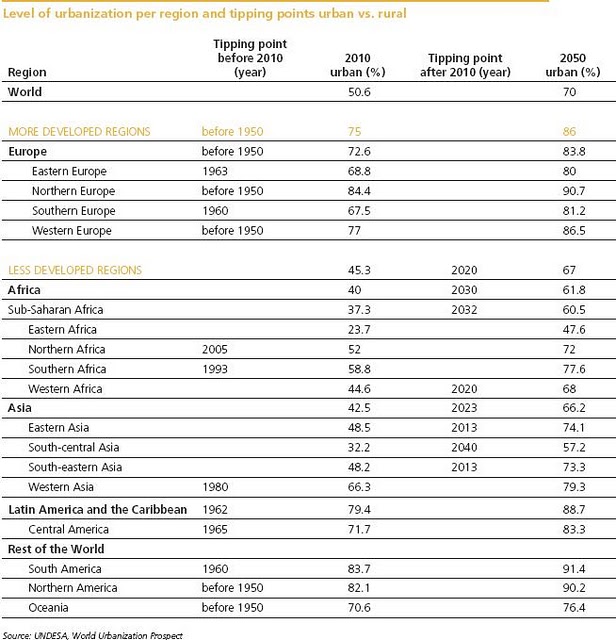
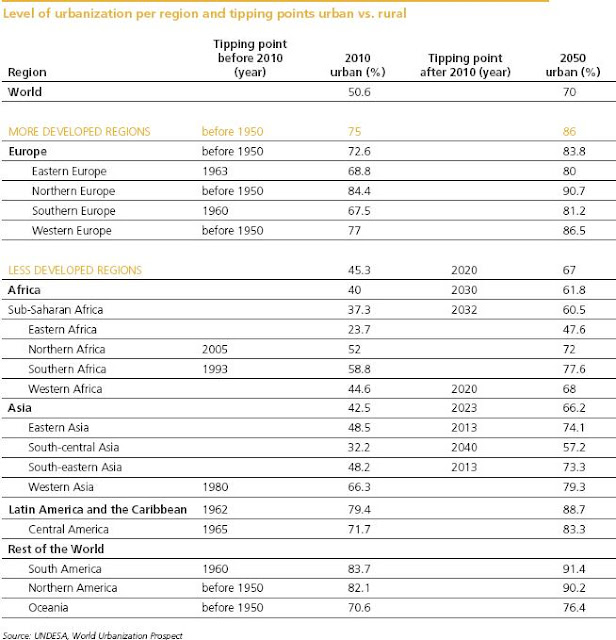
    This item includes a chart that helps with the fine detail of mapping the general global move up the economic S curve that has so rocked all the global economy.  The only countries not actively participating in a rush to build a healthy middle class economy are out two perennial communist regimes of Cuba and North Korea.  However, catch up in both will be extraordinarily fast once the system changes.  They both have a prepared population.
    Unprepared populations are still proceeding in a positive direction and the numbers are accelerating.  Even rejectionist societies such as those of Islam are finding sufficient active players to establish some growth.  Everywhere else, folks are discovering micro banking and similar ideas to build with.
    In a century, I suspect that we will largely see true poverty off, if not a great deal sooner.  But just seeing these trends to completion will do it all.
    Recall in these statistics that every twenty years brings a complete new generation far better prepared that the past generation.  That is the natural super juice in this picture.  A bright young boy discovers a way out of the slum and his whole family is uplifted.
    MAY 11, 2010

    China and India have lifted at least 125 million out of slums between 1990 and 2010.

    * China improved the daily conditions of 65.3 million urban residents who were deprived of shelter


    *
    China’s urban population living in slums fell from 37.3 percent in 2000 to some 28.2 percent in 2010, a relative decrease of 25 percent
    * 227 million people in the world have moved out of slum conditions since 2000 but at the same time 55 million new slum dwellers were added 

    * the number of people living in slums rose from 777 million in 2000 to 830 million in 2010. Unless urgent steps are taken, UN-HABITAT warned, that number could rise to 900 million in 2020 (Since there was net migration out the increase is from births inside slums)

    *
    India has lifted 59.7 million people out of slums conditions since 2000. Slum prevalence fell from 41.5 percent in 1990 to 28.1 percent in 2010.

    China‘s strategy of enabling slum dwellers to gain access to more than 20 million new and affordable housing units has been particularly successful. “The state did this by using equity grants as a mortgage to get leases on cheap housing built by developers and by giving developers special tax rates to encourage development of cheap homes

    State of the World’s Cities 2010/2011 – Cities for All: Bridging the Urban Divide (UN report)

    * the top 25 cities accounted for roughly 15% of the world’s GDP in 2005. This share increases to around one-quarter of the world’s GDP when the top 100 cities are included


    * In India and China, the five largest cities were about 15% of national GDP in 2004, which was roughly three times what could have been expected based solely on their relative shares of the population


  • 5 Things You Can Eat With Cherries

     
    Cherries_pile

    I walked into the market yesterday, and a huge smile came across my face as I saw a huge stand of cherries. Yay! Cherries are back, which for me officially marks the beginning of summer.

    I lived in Traverse City, Michigan for awhile when I was a kid when my Dad was stationed there, and to this day, one of my vivid memories of that time were all the cherries we would eat.

    I have very happy memories associated with cherries. So, with the help of some tasty food bloggers and their mouth watering photos, here are 5 things you can eat with cherries:

    • Simple breakfast: Oat Bran Cereal with Dried Cherries, Banana and Honey [Crumpets and Cakes]
    • Caramelized Nectarines and cherries…serve with a side of yogurt, cottage cheese, or breakfast Quinoa [Cook Sister]
    • Stuffed acorn squash with
      sausage and dried cherries…you can make this dish with vegetarian or meat sausage [Ask Georgie]

    If you have any yummy cherry dishes or ideas, please share!


  • Tiny Tim vs. Al Gore?

    Via Prison Planet.com » Sci Tech

    creativeminorityreport.com
    May 17, 2010 

    So Tiny Tim was the father of the global warming movement? Yeah, that fits. Make sure you at least make it to the chorus where he starts screaming “The Icecaps are meltin Oh-oh-oh-oh-OOOOOOOh!”

    But you’ve got to decide who’s crazier? Tiny Tim is the obvious kind of bonkers that you see on street corners and cross the street to avoid whereas Al Gore is the more dangerous kind of looney that isn’t immediately apparent and you don’t know he’s flipped until he’s sitting in your living room eating your Chinese food and lecturing you that your freezer’s running too high.

    So compare Gore’s performance with Tiny Tim’s and tell me who you think is crazier.

    Now, you tell me how Tiny Tim’s performance is any more embarassing or less looney than this:

    Two walk into the cage. Only one walks out. You decide. Who is crazier?

    Tiny Tim vs. Al Gore? 140410banner4

  • National Alliance Focuses on Turning Algal Biofuels Into Viable Industry

    algaeincubation_tanks
    Bruce V. Bigelow wrote:

    It was just over a year ago that some of San Diego’s biggest life sciences research institutions announced the formation of SD-CAB, the San Diego Center for Algae Biotechnology, amid some outsized calls to make San Diego the top of the mountain in biofuels development. Since then, we’ve continued to see occasional flurries of activity, including startup financings, industry partnerships, and development plans.

    At another level, though, a lot of hard work remains to make algal biofuels a reality. An all-day symposium held last month at the Salk Institute highlighted some of the basic R&D that still needs to get done. A two-day Algae World Summit that begins today at the Del Mar Hilton is more of the same, with sessions on “real world” experiences in growing algae, “meeting the challenges” of growing algae in industrial quantities, and practical considerations in project development.

    Jose Olivares outlined some of these technical issues for me when he came through San Diego a few weeks ago. Olivares, who was a deputy biosciences leader at the Los Alamos National Laboratory, is now executive director of, the National Alliance for Advanced Biofuels and Bioproducts (NAABB), a consortium of industry, academic, and government researchers. Locally, the alliance includes UC San Diego, as wells as some scientists from HR BioPetroleum and Kai BioEnergy.

    Basically, what Olivares told me is that while it is scientifically possible to make gasoline, diesel, and jet fuel from algae, a host of complex engineering and production problems must be solved before algal biofuels production can become an economically viable industry.

    “Our mission is to cover innovative technologies that can be brought to bear on any and all parts of algal biofuels production,” Olivares said. Officially, the NAABB’s mission is to lay the technical foundations for a scalable, responsible, and affordable renewable biofuels industry. “We can bring basic scientific principles to prove that the technologies work, and if they don’t work, to establish under what conditions they don’t work,” Olivares said.

    As a national alliance, Olivares said the NAABB is focusing its …Next Page »


  • Philadelphia Coolest Block Contest Winners Announced !

    About a week ago I wrote about the cool roof project in Philadelphia [LINK].  The winning block was just announced … the 1200 Block of Wolf Street.

    RetroFit PHILLY - Coolest Block Contest

    The residents on this block showed tremendous enthusiasm and community spirit in their quest to become the ‘Coolest’. Plus, every roof on the block is suitable for a ‘cool roof’ coating! 

    "In the coming weeks, … this block … receive its prize-an energy audit and energy-efficient upgrades, such as insulation, air sealing and a ‘cool roof’! And we’ll celebrate with a block party in June!"

    " …  check out their winning essay!"

    "Cool roofs reflect the sun’s heat … are about 50-80 degrees cooler than typical asphalt roofs and come in a variety of colors.  White is the "coolest" because it most efficiently reflects the sun’s rays. "


    Via:  RetroFit Philly LINK