Blog
-
What Is The Biggest Hail Stone Ever?
The largest hailstone ever recorded fell on 22nd June 2003, and measured 7 inches in diameter (17.8 centimeters) and 18.75 inches (47.6 centimeters) in circumference, this is equivalent to almost the size of a football. The stone was from a severe storm that affected the area of south-central Nebraska, and was discovered in the town of Aurora. The stone was preserved by local residents and then transported to the National Center for Atmospheric Research in Boulder, Colorado, where it will be preserved indefinitely. Although this may be the largest hailstone, it is not officially the heaviest as approximately 40% of the stone was missing from an impact with a house gutter as it fell. The heaviest hailstones on record fell in Gopalganj, Bangladesh, on the 14 April 1986 and weighed over 1 kilogram, they are reported to have killed 92 people.
Hail causes nearly one billion dollars (U.S.) in damage to property and crops annually. The costliest United States hailstorm: Denver, Colorado, July 11, 1990. Total damage was 625 million dollars (U.S.).
-
Held up without a gun – Big oil rakes in the cash

I was out driving/just a taking it slow
Looked at my tank/ it was reading low
Pulled in a Exxon station/out on Highway One
Held up without a gun
Held up without a gunSpringsteen’s song could not be more true today. Big Oil is once again riding high oil prices to large profits (see below) while American consumers get stuck with a $2.7 billion gasoline bill in the first quarter of 2010 due to higher oil prices. But the problems with oil go beyond these companies’ profits. Rising oil prices also add more filthy lucre to the coffers of hostile regimes, including Iran. CAP’s Daniel J. Weiss and Susan Lyon have the story in this repost.
Meanwhile, the Gulf of Mexico is suffering a huge oil spill while taxpayers spend billions of dollars paying for tax loopholes for Big Oil. And Big Oil spends record amounts of money to pressure Congress to cement these loopholes in place and defeat clean energy legislation. Adding injury to insult, big oil opposes energy and global warming legislation that would reduce our reliance on oil.
Enough is enough. We need Congress to stand up to Big Oil and pass legislation that addresses the problems with oil profits and oil use. Sens. John Kerry (D-MA), Lindsey Graham (R-SC), and Joe Lieberman (I-CT) are working on legislation that would reduce oil dependence and put a declining limit and rising price on carbon. These measures would reduce our dependence on oil, increase national security, create jobs, and cut pollution.
Mo’ prices, mo’ problems
U.S. crude oil prices rose from $31.76 per barrel in January 2009 to $85.17 by April 29, 2010 after a price slump at the end of 2008. This is an increase of nearly 160 percent over a 15-month period. The Energy Information Administration recently predicted that oil prices will rise to above an average of $81 per barrel by this summer while average gasoline prices will likely exceed $3.00 per gallon this spring. Drivers will pay 17 percent more for gas compared to summer 2009—$174 million per day, or an average of $602 per household annually. Energy price volatility like this hurts consumer and business investments, causing families to delay buying a car and spend less on buying or upgrading their homes. Businesses also cut investments, while profits surge in the oil and gas industry.
While higher prices brought higher profits to Big Oil, they also brought higher gasoline prices that cost American consumers millions during the first quarter. A CAP analysis determined that higher oil and gasoline prices forced Americans to spend $2.7 billion more on gasoline during the first quarter compared to what they would have spent had prices remained steady after the first week.
Big Five: We’re in the money

Much of the U.S. economy is slowly recovering from a deep recession, but oil companies continue to prosper. The big five oil companies—BP, Chevron, ConocoPhillips, ExxonMobil, and Shell—announced huge first quarter profits—four of the five companies announced profits larger than analysts predicted. As the chart below shows, big oil saw profits in the first quarter of 2010 that far eclipse analysts’ projections and are significantly higher than 2009 profits as well.
Big five oil company profits for the first quarter of 2010 vs. first quarter 2009
Oil company Q1 2010 projected profits by Financial Times (in billions) Q1 2010, actual profits (net income) Q1 2009, actual profits Q1 2010 profits compared to Q1 2009 BP $4.8 $5.6 $2.4 +133% Chevron $3.7 $4.6 $1.8 +156% ConocoPhillips $2.0 $2.1 $0.8 +163% ExxonMobil $6.8 $6.3 $4.6 +38% Shell $4.0 $4.9 $3.3 +49% Total $21.3 $23.5 $12.9 82% BP’s 2010 first quarter profits were $5.6 billion, a 135 percent increase over the first quarter of 2009. This profit was 50 percent higher than predicted by The Financial Times. Shell announced that its profits had risen by 49 percent since the first quarter of 2009. Chevron’s profit was $4.6 billion, a 156 percent increase, while ConocoPhillips had $2.1 billion in profits. The world’s largest private oil company, ExxonMobil, had a first quarter profit of $6.8 billion, which was 38 percent more than 2009.
Iran: Thanks for high oil prices
Higher oil prices also benefit nations that are hostile to U.S. interests—even if we don’t purchase any oil from them—such as Iran. Every $1 increase in the price of oil provides an additional $1.5 billion to Iran annually.
Conversely, adoption of a shrinking limit on carbon pollution that reduces it by 80 percent by 2050 would reduce the use of oil and lower its price, costing Iran approximately $1.8 trillion in lost oil revenues over the next 40 years—over $100 million a day. These petrodollars fund and prop up unfriendly regimes, enabling them to support terrorists in other nations.
Sea of fire
Oil companies deserve to earn a profit since oil exploration and development can be financially and technically risky business. At the same time, though, they must produce this oil in a safe and environmentally sustainable manner. Yet despite rhetoric to the contrary about advances in environmental safeguards, the spill off the Louisiana coast shows that offshore oil development still poses a threat to its workers and risk to the ocean and coastal environment.
BP owns the oil rig that exploded and sunk in the Gulf of Mexico last week, causing what CNN reports officials say “could become one of worst spills in U.S. history.” Tragically, there are 11 missing rig employees who are presumed dead. The well continues to leak 210,000 gallons of oil per day into the Gulf of Mexico—five times the original estimate. This growing oil slick already covers an area larger than West Virginia and and oozed onto the Louisiana shore early this morning. A major portion of the oil slick looms only five miles offshore. This major oil spill could be the worst environmental disaster since the Exxon Valdez spill in 1989, and it is a tragic reminder that we must dramatically reduce our oil use.
The Exxon Valdez spill cost Alaska’s fishermen an estimated $800 million in damages to their livelihood. This oil spill could bring an economic Armageddon to the gulf coast seafood industry. Bloomberg reports:
Louisiana is the largest seafood producer in the lower 48 states, with annual retail sales of about $1.8 billion, according to state data. Recreational fishing generates about $1 billion in retail sales a year, according to the state.
BP should be required to place its first quarter profit of $5.6 billion in an escrow account to provide compensation to the fishermen whose livelihoods are threatened. These funds should also be used for cleaning up the soon to be blighted shores.
Oil tax loopholes: More money for the misbegotten
Despite high prices and profits, big oil companies still want taxpayer-funded loopholes even though some conservative oil men believe they are unnecessary. In 2005 former oil man and President George W. Bush noted that with higher oil prices big oil does not need tax breaks to explore and develop oil fields.
I will tell you with $55 oil we don’t need incentives to the oil and gas companies to explore. There are plenty of incentives. What we need is to put a strategy in place that will help this country over time become less dependent.
Yet even with today’s prices more than 50 percent higher than $55 per barrel, Big Oil companies want to maintain tax loopholes that siphon additional billions of dollars from U.S. taxpayers. Taxpayer money pays for the tax breaks claimed by Big Oil, but the industry claims that closing these loopholes is really a new energy tax on them. American Petroleum Institute President Jack Gerard stated:
With America still recovering from recession and one in ten Americans out of work, now is not the time to impose new taxes on the nation’s oil and natural gas industry. New taxes would mean fewer American jobs and less revenue at a time when we desperately need both. A robust U.S. oil and gas industry is essential to the recovery of the nation’s economy.
Contrary to this assertion, cutting the subsidies to Big Oil would help our economy while shrinking the federal budget deficit. In fact, a state-by-state analysis indicates that taxpayers would actually save money if the subsidies and tax breaks were lifted. A recent CAP analysis found that the effective federal income tax rate in the United States for major oil companies is lower than the effective tax rates they face abroad—sometimes close to 50 percent lower. The report also determined that subsidies to the oil industry will cost the U.S. government about $3 billion in lost revenues next year and nearly $20 billion over the next five years.
These estimates are only the initial assessment—they still vastly underestimate the help that the oil industry receives from the government via extensive hidden tax code benefits as well.
Big Oil squeezes the Capitol
Given the generous subsidies Big Oil receives, it should come as no surprise that this industry is fighting hard to keep their loopholes and block reform. There was record oil and gas industry lobbying in 2009. These companies spent at least $154 million on squeezing Congress that year—more than 16 percent higher than 2008. Big Oil’s lobbying and political arm—the American Petroleum Institute—alone spent at least $7.3 million on lobbying in 2009 and another $1.3 million more in 2010 to kill legislation. API has also spent millions of dollars running expensive print, TV, and radio ads to do the same. The American Petroleum Institute alone “doled out $75.2 million for public relations and advertising” in 2008.
Congress must act
In short, Big Oil’s profits climb higher and higher as American consumers feel more and more pain at the pump. This needs to stop.
Sens. John Kerry (D-MA), Lindsey Graham (R-SC), and Joe Lieberman (I-CT) are developing bipartisan comprehensive energy legislation that would reduce oil dependence and put a declining limit and rising price on carbon. These provisions would increase American energy independence (and our national security), create jobs, produce “Made in the USA” clean energy technologies, and cut pollution. The bill should also establish much stricter safeguards for existing offshore oil production.
Additionally, Congress should cut subsidies to big oil and level the playing field for safe, clean energy sources. Further, we need to curb the economic, social, and environmental damage that our consumption of dirty fuel causes. To achieve these many goals, Congress must act swiftly to pass bipartisan comprehensive energy and climate reform.
Methodology
We used the weekly price and quantity data supplied by the EIA’s U.S. prices and consumption database to calculate how much more Americans spent on gas in the first quarter of 2010 relative to what they would have spent had prices remained steady after the first week of January 2010. Using their data from the “Finished Motor gasoline product supplied” and “Conventional retail gas prices” sections, we multiplied the average weekly product supplied value times that week’s recorded price, doing this separately for each week of the first quarter. From here, the initial week’s value was subtracted from each other week’s to obtain how much more was spent each week relative to the first. Aggregating this column resulted in the final figure.
Daniel J. Weiss is a Senior Fellow and Susan Lyon is a Special Assistant for Energy Policy at American Progress.
See also:
- Big Oil Awash in Profits by Daniel J. Weiss and Susan Lyon
- Quenching Our Thirst for Oil by Susan Lyon, Rebecca Lefton, and Daniel J. Weiss
-
Nokia X2 announced, sports Series 40

Despite the worldwide smartphone craze, it’s nice to see Nokia catering to the basic phone crowd (because let’s be honest, not everyone needs a PDA). Sporting a 2.2-inch QVGA touchscreen and a 5.0-megapixel camera (which isn’t too bad for a low-end device), the recently announced Nokia X2 offers access to the Ovi Store, Facebook, FM radio, a microSD card slot (with support for up to 16 GB), music keys, and dual loudspeakers. The device will be available in June for €85 (about $113), which is a great deal, if you ask me. If anything, it’s a cheap replacement device and a good camera for everyday use.
Anyone planning to purchase one? Sound off in the comments!
Via Engadget Mobile
-
The Global Rise of the Smartphone

BlackBerry maker Research in Motion broke into the top five handset vendors during the first quarter of this year, according to numbers released by research firm IDC. It attributed the success of RIM’s smartphones in part to “text-crazy teens” and strong demand for the BlackBerry Curve 8520 and BlackBerry Bold 9700.Growth in the handsets many of us think of when it comes to smartphones — Apple’s iPhone and the HTC phones for Android, which are found in IDC’s chart under the “others” category and RIM’s devices — are growing faster than the handset market overall, the data shows. in other words, the global rise of the smartphone is upon us.

In the U.S. and in the tech community, we may take it for granted that the phone and the web should blaze along at 3G (and soon 4G speeds) with user-friendly interfaces, touchscreens and an app market, but the rest of the world — and even large portions of North America — has been moving at a slower pace. A whopping 83 percent of Americans have a feature phone while there are only 400 million smartphones in a world with 4.6 billion mobile subscribers. But the smartphones are coming, as IDC noted with regards to handset maker LG’s success:
The abundance of feature phones at varying price points kept the company in good stead with carriers and customers, particularly within emerging markets where LG reaped triple-digit growth. Still, the lack of a broad and deep smartphone portfolio made it vulnerable to competitor share gains, particularly within North America.
This matters because in the debate over Apple vs. Android, and whether or not HP can save Palm’s webOS, it appears that the battle lines are drawn and that the market dynamics are already set. But clearly the rest of the world, and the large portion of people toting feature phones, are not the dregs of the market but the massive middle, and the opportunity to reach them with compelling products that are differentiated — perhaps cheaper or tailored to their circumstances (text-crazy teens perhaps) — is still one worth chasing. Just ask Nokia. It’s moving slowly, but it isn’t ready to hang up on the opportunity.
Related GigaOM Pro Research (sub req’d):
The App Developer’s Guide to Choosing a Mobile Platform

-
GOP Rep. Vows Fight for ‘Proper Measures’ After Dotiki Tragedy
Rep. Ed Whitfield (R), who represents Webster County, Ky., where two miners were killed in a roof collapse Wednesday, has posted a statement reacting to the tragedy. Like a number of other coal-country lawmakers, the response is heavy on condolences and absent any indication that the industry isn’t doing enough to protect its workers.
As new details continue to emerge surrounding the tragedy at Dotiki Mine, I join my fellow Kentuckians in offering my most heartfelt condolences to the family members and friends of those lost. Right now, Kentuckians and Americans across the country are grieving this tragic loss. However, the western Kentucky community is a strong one and while this tragedy tests even the strongest of faiths, I pray that the community will be able to band together and, in time, heal from this tragedy.
In a break from some of his colleagues, however, Whitfield is vowing to “do all that I can” to prevent the next accident.
Mining is a critical part of the western Kentucky economy and way of life, and it is essential we ensure the safety of our miners above all else. I will do all that I can to make certain that proper measures are in place to protect our miners.
No word yet on what he means by that. Meantime, it’s worth noting that the Kentucky Republican has accepted more than $100,000 from the coal mining industry in his 16 years on Capitol Hill, according to the Center for Responsive Politics — eighth highest among active members of the chamber.
-
New Kate Gosselin Book “I Just Want You To Know” A Bomb
People (and by “people” I mean me!) are already sick of watching her on TV, and it now seems no one wants to waste valuable time reading what Kate Gosselin has to say either.

The reality Octomom’s latest book, I Just Want You to Know: Letters to My Kids on Love, Faith, and Family, is being branded a certified bomb after selling just over 10,000 copies since its release on April 13.
While that number would be nothing to wag a finger at if Kate were new to the literary world, Gosselin’s as seasoned at writing as she is packing lunches. Her first two books (Eight Little Faces & Multiple Blessings) were both New York Times Bestsellers.So what’s the problem with her latest tome? Too much Kate, not enough eight.
Perhaps iVillage summarized it best: “Solo Kate is a lot easier to pass over than those eight little smiles….”
-
Backers Of Statute Of Limitations Bill On Child Sex Abuse Are Ready To Acknowledge That The Measure Won’t Pass
Advocates of a bill to give victims of child sexual abuse more time to file civil lawsuits plan a press conference Friday at 12:45 in the state Capitol complex to acknowledge that their legislation will not go forward this year, a high-ranking Capitol source said.
As reported in Friday’s Courant, the bill to extend the statute of limitations on such crimes as in severe trouble Thursday night for lack of support in both the state House of Representatives and Senate — but its supporters were not yet ready to concede that it was dead.
However, that is expected to happen at the press conference at which three supporters of the bill are to appear: Rep. Beth Bye, D-West Hartford; Sen. Mary Ann Handley, D-Manchester; and Rep. Michael Lawlor, D-East Haven, co-chairman of the legislative judiciary committee.
For a more complete account of the bill’s problems in a Thursday-night Capitol Watch post, click here.
-
Feds Just Itching To Regulate The Internet
It looks like the folks in DC are looking for all sorts of ways to further regulate companies in Silicon Valley. Senator Chuck Schumer is pushing for the FTC to regulate how Facebook handles privacy issues, which has some legal experts scratching their heads noting that the FTC doesn’t have the authority to do so:
I have to say, in the words of my boyhood hero John McEnroe, “You cannot be serious.” Schumer is asking the FTC to do his job for him. Surely Schumer — who has been in Congress since 1991 and in the Senate since 1999 — knows that the FTC’s authority to regulate online privacy is on very shaky and politically charged ground. At a minimum, he knows that Congress has failed to act, despite calls for federal online privacy legislation for over a decade.
Except… well… that may be changing. A few folks have sent over noting that “a little-known provision” in the currently debated financial overhaul bill would suddenly grant the FTC more power to regulate the internet. This comes just a few months after someone in the Commerce Department suggested that it was time for the current administration to “rescind” its “leave the internet alone” regulatory stance — specifically including taking an active role when it comes to internet privacy (along with cybersecurity and copyright…).
If this is indeed happening, then it certainly shouldn’t be a part of the financial regulatory reform bill, but should stand to be debated alone, so that there’s an actual discussion of what’s happening and why, and people can weigh in. As a part of a larger bill, there will likely be little if any public debate on a potentially massive policy change. Right now, what’s being said is a bit scary. The article quotes FTC chair Jon Leibowitz saying:
“If we had a deterrent, a bigger stick to fine malefactors, that would be helpful.”
But there are pretty big questions about who should be considered malefactors and who should be allowed to fine them and for what. In the past, Leibowitz has sounded reasonable, but he’s also been a bit quick to ask for additional regulatory powers in the past as well. And, for those of you worried about the question of getting power to regulate the internet over copyright, it is worth mentioning that Liebowitz worked at the MPAA for four years.
No matter what, this would be a pretty massive change in policy, and as such, it deserves a full and open debate — something that seems increasingly rare when it comes to regulating the internet these days.
Permalink | Comments | Email This Story
-
Sony has a patent with a PS3 controller connected to a PSP
When playing on a PSP, I often find myself with a lot of difficulty managing with the controls, especially on games like Tekken 6. Sometimes, those buttons can be a little unwieldy. I’m sure a lot of
-
The World’s Largest Telescope Will Look for New Earths [Science]

The Europeans weren’t kidding when they named it the Extremely Large Telescope. It’s, indeed, extremely large, obliterating previous records. The adaptive optics mirror on the ELT is 138 feet in diameter, compared to the 98 feet of comparable space eyes. More »
-
Finding Reward and Joy in Fishing
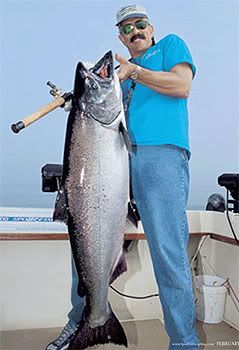
Finding something to do on past times it not something that is very tough, but finding something useful and rewarding is not that easy though. A lot of time we spend our time doing things that is wasting time and not rewarding. If one is thinking about doing thing that is rewarding, then one can really consider salmon fishing.
Salmon fishing or just normal fishing requires one to do a lot of homework before really getting the fishes. For example, choosing the most suitable location for salmon fishing is not that easy and if one is fishing at the wrong location, the chances of being rewarded is close to zero. One of the best places to go for salmon fishing is at the Vancouver Island. In fact, Vancouver Island is so beautiful that it is also a perfect place for one to spend the time with his or her family members.
If one is serious about this fishing sport, then he or she can consider joining some of the popular fishing sports websites or forums like the Fishing Vancouver Island where there are so many useful information on this rewarding activity like the Victoria fishing reports. Just imagine, one can spend the time fishing at a specific location and be rewarded with all kinds of fish like saanich inlet prawns and salmon.
Fishing is an activity that can train the patience of one, while for most of the time, we can hardly fish anything, but it is extremely joyful when we manage to bait even one fish.
Tags: Sport Fishing, Vancouver Island, Salmon, Halibut, Steelhead, Fishing Lodge, Fishing Forum, Fishing Vacation, Canada Fishing, sport fishing
-
Funkmaster Flex pimping 2011 Ford Fiesta
Filed under: Concept Cars, Budget, Sedan, Hatchback, Ford, Celebrities
 2011 Ford Fiesta – Click above for high-res image gallery
Funkmaster Flex has teamed up with Ford to pimp both a new 2011 Fiesta and his new show on MTV2. Viewers can tune in on May 2 to see Flex put his own personal taste into Ford’s new B-fighter, with touches like a new body kit, lowering springs, wheels and a reworked interior. We’ve even been promised a two-tone paint-scheme will be part of the recipe. At the end of the show, one viewer will have the chance to win the car featured in the debut episode of Funk Flex Full Throttle.
Supposedly the show isn’t anywhere close to Pimp My Ride, so there’s no worry of a 40-gallon fish tank cropping up in the back seat or a massage parlor popping out of the rear hatch. Instead, Flex promises a greater focus on lifestyle, with interviews with popular artists and plenty of good music, too. He’ll also show off some of his more recent automotive projects from time to time. Dare we say it, but it almost sounds watchable.
Check your local listings for full details and hit the jump for the press release.
Gallery: First Drive: 2011 Ford Fiesta


[Source: Ford]
Continue reading Funkmaster Flex pimping 2011 Ford Fiesta
Funkmaster Flex pimping 2011 Ford Fiesta originally appeared on Autoblog on Fri, 30 Apr 2010 10:33:00 EST. Please see our terms for use of feeds.
-
Who Owns BP?
The abbreviation BP most popularly refers to the British energy company which was originally British Petroleum. Donald Alexander Smith is the founding chairman of BP while the current CEO is John Browne of Madingley. The company’s CFO is Byron Grote.
The headquarters of BP is in London, United Kingdom. In the world, it is one of just six private sector vertically integrated petroleum, petroleum spirit and natural gas “supermajors”. It was in the year 2000 that the company was renamed BP and no meaning was given to the letters.
BP could also popularly refer to Bharat Petroleum Corporation Limited (BPCL), which is among the largest PSU companies in India. Ashok Sinha is the company’s current Chairman & MD. This company is basically concerned with the refining as well as retailing of petroleum products.
-
So Was Omar Khadr a Child When U.S. Forces Captured Him?
GUANTANAMO BAY — A question that intuitively speaks to the voluntariness of Omar Khadr’s statements to interrogators in Bagram (and later Guantanamo) in 2002 when U.S. forces captured him after a July firefight in Afghanistan’s Khost Province: Was Khadr a child back then?
FBI Special Agent Robert Fuller, who interrogated Khadr six times in Bagram in October 2002, testified earlier this week that he was “aware” of Khadr’s age when interrogating him, but that it didn’t change his interrogation plans in any way. Khadr was born on September 19, 1986. He was 15 years old when the U.S. captured him and had just turned 16 when Fuller interrogated him.
So, Kobie Flowers, Khadr’s attorney, wanted to know, was Khadr a child then? “I guess, depending on [when] you consider a person turning to an adult,” Fuller said. Come again? “I would not legally consider him an adult, but would consider him to be doing adult-like actions, [like] constructing IEDs.”
But that means he’s a kid, right? Flowers said. Particularly the way Khadr looks on the extremist video obtained shortly after his capture? “He looks young,” Fuller said, “younger than when we met him.”
Flowers appeared frustrated. “You’re not gonna give me that he’s a kid?” he asked.
“I’m not going to argue semantics with you,” Fuller replied.
Flower moved on, and recited how old he was when he met a variety of extremists. Khadr was 10 years old when he met someone named Abu Tariq; 10 or 11 when he met Abu Ibrahim and Abu Qatada and the slain al-Qaeda operative Abu Laith al-Libi; 13 years old when he met Ayman Zawahiri and 13 or 14 when he met the long-at-large al-Qaeda military committee member Saif al-Adel and the extremist strategist Abu Mus’ab al-Suri. He was 11 years old when he first met Obama bin Laden.
What about another aspect of the extremist video? Flowers asked. Did Fuller hear Khadr say someone looked “like a teddy bear” and if so, “Does that speak to a certain level of sophistication?” he wondered.
“I don’t know that was a particular nickname someone had,” Fuller said, conceding nothing.
-
Cleantech Becoming ‘Third Leg’ of VC Investing Stool—But Just How Big is That Leg?

Bruce V. Bigelow wrote:When Ira Ehrenpreis came through San Diego a couple of weeks ago, the cleantech investment partner at Palo Alto, CA-based Technology Partners said there was no such thing as a cleantech investment category when his firm began investing 25 years ago. At that time, Technology Partner’s investments in environmentally friendly technologies amounted to less than 1 percent of the firm’s portfolio.
In contrast, VCs invested $100 million in cleantech deals during the first week of 2010, according to Ehrenpreis. Even during the credit crisis and nationwide recession, cleantech has shown over the past two years that it’s an enduring sector. Ehrenpreis told the San Diego Venture Group that cleantech is emerging as “the third leg of a VC, along with IT and the life sciences”—which traditionally represent the two largest VC investment categories.
Other analysts emphatically agreed.
But it is difficult to quantify just how big cleantech has gotten, because it is measured by different investment monitoring organizations in fundamentally different ways.
For example, the National Venture Capital Association (NVCA) and PricewaterhouseCoopers count renewable energy and many energy deals as cleantech investments in their quarterly MoneyTree Report. Also included are VC investments in air filters, purification and monitoring equipment; water treatment and waste disposal systems, and a dozen other environmentally oriented categories. But Dow Jones VentureSource counts energy and utility deals separately from cleantech deals in its surveys—and uses its own list of nearly a dozen industries to define what cleantech is.
The San Francisco-based Cleantech Group says it coined the term “cleantech” when the firm was founded in 2002 and it began analyzing VC investments in energy efficiency, biofuels, transportation, and other clean and green technologies as a distinct sector. The group specializes in cleantech market research and business intelligence, and its cleantech data has been screened and honed to perfection. But you can’t compare it with the NVCA or Dow Jones data, because the group combines its cleantech investment data for the U.S. with the countries of Central America, Mexico, Canada as part of the North America Region.
In North America, cleantech startups raised $3.5 billion in 298 VC investments last year, a 42 percent decline from 2008, when there were 314 deals, according to the Cleantech Group.
The MoneyTree Report, which counts only …Next Page »
UNDERWRITERS AND PARTNERS
-
Halle Berry Gabriel Aubry Breakup
One of entertainment’s most beautiful couples is kaput, according to an explosive new report from RadarOnline.com. The unlucky-in-love Halle Berry and her Canadian model beau Gabriel Aubry have broken up, the site reported on Friday.

The couple –who are parents to 2-year-old daughter Nahla – have “spent months” working out the terms of their split– and according to Radar snitches, another woman may again be at the center of Halle’s heartbreak. The stunning starlet’s second hubby, singer Eric Benet, blamed sex addiction for the string of affairs that ruined his marriage to the Oscar winner
The tipster tattles: “Gabriel is a really nice, decent guy and he would never cheat on her, but I suspect that he had become attracted to someone and that he felt he needed to break it off with Halle before anything developed any further.”
Just last year, Halle, who was also previously married to former pro slugger David Justice, told Harper’s Bazaar that the couple’s matrimony-free relationship just “works.”
Gabriel is only asking for the home the two own in his native Canada.
-
Vodafone 845 May launch confirmed

The Vodafone 845, the first Vodafone-branded Android device, is now confirmed for a May launch. No specific date has been given, just May and "coming soon." There is an official video of the phone, and while I can’t confirm this, the video makes it look as if it has a resistive touch screen. The first thought behind that is "ouch," but it doesn’t look too bad in the video. It’s expected to be offered as a bargain phone, so we can’t really complain about the lack of fancy features. Video after the break. Thanks to Dave for sending this in. [Vodafone]
-
Gulf Oil Spill: Cost-cutting to Blame?
LONDON Critics of British Petroleum have told Fox News past cost-cutting by the London-based oil giant helped to contribute to the rig explosion and oil spill disaster now unfolding in the Gulf of Mexico.
Tom Bower, author of the 2009 book “The Squeeze, Oil, Money and Greed in the 21st Century,” told Fox, British Petroleum’s economizing led to a lack of engineers, an overdependence on out-sourcing, and even a lack of supervisors to keep an eye on the sub-contractors.
The explosion which led to the oil spill in Gulf while occurring on an oil rig operating for BP was run by another company, Transocean. BP has said while it assumes responsibility for the incident, it is still waiting for an investigation to show Transocean’s role .
Critics say if there was at least a supervisor on the rig, BP would already have a better understanding of the incident
It is also charged a voluntary remote control cut-off switch might have headed off the oil spill. When Fox put that to BP spokesman Robert Wine, he told us that was Transocean’s responsibility.
As to the broader charge that BP has stripped its engineering ranks, spokesman Wine told Fox News those numbers are being built back up and that subcontractors are actually bringing “expertise to the operation.”
BP’s Wine DID admit to Fox News, in the wake of a series of other safety-related incidents involving BP including the deadly fire at a Texas City refinery in 2005, the company is in the midst of a “renewal” of “procedures” aiming at improved safety and a reduction of oil spills.
While the exact dimensions of the spill are still being assessed, its already taking its financial toll on the BP oil giant.
Nick McGregor, oil analyst for London-based Red Mayne Bentley told Fox News that 20 billion dollars has been written off the market value of the company. He said thats four to five times the total cost of the devastating 1989 Exxon Valdez spill.
“People are uncertain how this is going to go,” McGregor told us, “they don’t know how bad it’s going to get.”
As to the charge that engineering cut-backs at BP might have contributed to the disaster, McGregor said that only during the “post-mortem” stage of the probe would it be clear where the exact fault lies.
He did acknowledge the broader difficulties of running such a large company in situations like this. Sometimes, McGregor noted “…the folks at the top don’t know everything that is going on throughout the firm.”
For British Petroleum, much of this analysis will have to wait. It is in full damage control…and prevention mode.
“It is not a question of whether we WILL stop the spill,” BP’s Robert Wine told us, “it’s a question of WHEN.” He went on to say, “The most important thing is, it doesn’t happen again.”
-
Cambodia genocide court denies bail for 3 former Khmer Rouge officials
[JURIST] The Pre-Trial Chamber of the Extraordinary Chambers in the Courts of Cambodia (ECCC) on Friday dismissed appeals by three former Khmer Rouge officials to block the extension of their provisional detention. The three prisoners, Ieng Thirith, Ieng Sary, and Khieu Samphan, were arrested in November 2007 and originally held in one-year provisional detention, which has been extended twice for all three of them. They face charges of genocide, war crimes, crimes against humanity, murder, torture, and religious persecution, but the cases are still under investigation. The Pre-Trial chamber found in each case that “there is sufficient additional evidence in the case file to demonstrate that the case has progressed expeditiously” and that further detention while the investigation continues is reasonable given the “gravity and nature of the crimes” charged.
Ieng Sary was foreign minister during the Khmer Rouge regime, while his wife Ieng Thirith served as social affairs minister. Khieu Samphan was the head of state. Others have been charged in connection to Khmer Rouge, including former deputy leader and chief ideologist Nuon Chea. In December, the ECCC heard final arguments in its first trial, that of Kaing Guek Eav, also known as “Duch.” Kaing was the first of eight ex-Khmer Rouge officials to be tried before the ECCC. The Khmer Rouge is generally held responsible for the genocide of an estimated 1.7 million Cambodians who died between 1975 and 1979.