Blog

  • The Huge Economic Policy Error Behind The Current Stock Market Rally

    bernanke bloomberg paulson schumer(This is a guest post from the author’s blog.)

    “The 20th century has been characterized by three developments of great political importance: The growth of democracy, the growth of corporate power, and the growth of corporate propaganda as a means of protecting corporate power against democracy.” Alex Carey

    The strategy of the Bernanke Federal Reserve and of the Obama Administration’s economic team is fairly clear: prevent the bank failures of the 1930’s by propping up the biggest banks with huge infusions of publicly subsidized capital, and hope that they start lending again as the economy recovers. It is a variation of the ‘trickle down’ theory of economics applied to the perceived policy errors of the first Great Depression.

    Bernanke is famously a student of that economic event, even as General Joffre, the architect of the Ligne Maginot, was a student of the first World War. And Larry Summers seems remarkably similar to Marshal Pétain. Timmy is a student of nothing, not even of the tax code he adminsters apparently, except perhaps the art of the useful manservant, a valet.

    Failure number one of course is that the banks that they chose to support are not responsible banks engaged primarily in lending to small business and localized activity. Those banks are the local and regional banks and they are failing in record numbers. The banks they chose to save are those who have heavily contributed to the campaign coffers and job prospects of Washington politicians. Goldman Sachs, for example, is a glorified hedge fund dedicated to speculation and enormous amounts of leverage. One only has to look at the source of their profits to understand what it is that they do.

    Bernanke has (so he thinks) cleverly tied up much of the liquidity with which he has infused the banks as reserves which are paying riskless returns thanks to his innovation in sustained a floor under the ZIRP. But if you look at what he is doing, all Bernanke has done, even in his buying a trillion dollars of bad mortgage debt, is rescue creditors who engaged in reckless speculation during a housing mania that the Greenspan Federal Reserve had fostered.

    The lack of productive investment and genuine stimulus for the real economy is appalling. Bernanke and his colleagues Larry Summers and Tim Geithner would have us believe that they had no choice. But informed and experienced commentators such as William K. Black have told us how they have misrepresented their choices. Their current path seems to lead to a ‘zombie economy’ at best, in which the Banks are doing well, but almost everyone else suffers, particularly the lower and middle classes who obtain their income from the real economy. At worst, the bubble bursts again, and there is another leg down, with greater damage done.

    So what would have worked? The Fed and Treasury could have backed the public instead of the banks. They could have temporarily increased and extended the FDIC coverage to much higher levels to guard against further bank runs, and then started dismantling the Wall Street banks through orderly liquidations. They needed no new laws or tools to do this. And financial reform and higher taxes on those who obtain outsized wealth without productive work would have curtailed a recurrence.

    So why did they do what they did? Are they in league with the banks? Was this some sort of conspiracy? No, I doubt this, although there are far too many secretive aspects to completely dismiss it.

    None of these men have ever held a real economy productive job in their entire lives. They were always the pampered products of the academy, Wall Street, and the government.

    So they took care of their own, because that is their world view. It has been said that the Federal Reserve is the worst place to locate certain aspects of banking regulation, because they have a complete aversion to ever allowing a bank to fail. It runs against their nature. And couple this with a career experience in which the world is viewed through the lens of cost plus management, and privileged power, and their inability to make the tough decisions seems more understandable.

    And the promise of future positions, and large amounts of lobbying money to their friends and mentors and sponsors, and the policy error that is ruining the country seems more understandable.

    So now we have another asset bubble in the making, a new Ponzi scheme in the US equity market fomented by the Wall Street Banks packed with public funds, seeking to drive prices higher, for the apparent reason of obtaining confidence from the public, but with the effect of selling assets at inflated prices to public institutions yet again, with the inevitable collapse to follow when the reality of their value is discovered.

    What a shame. What a disappointing performance for a reform government that promised change that the people could believe in.

    “…surveys show that the usual investors in major rallies – pension funds, hedge funds and retail investors – have not been net buyers of equities. And he says the most likely explanation for this anomaly in the biggest stock market rally since the 1930s is that major investment banks are the anxious buyers.

    “Their buying would appear to be for one of two reasons. Firstly because they think the authorities will prevail in their (so far unsuccessful) efforts to inflate their way out of debt liquidation; or secondly because they are too big to fail and so can afford to take a huge gamble that enough buying will convince others to rush in and buy their inventory of risk assets at even higher prices.”

    Financial Times, Equity Rally Not Driven by the Usual Investors, Financial Times, April 28

    And it should be noted that the Wall Street demimonde, the financial media, the financial commentators regulators and legislators, are widely supportive of this, because they draw they pay and employment prospects from an enlarged financial sector. So they are natural enthusiasts.

    And of course there is the mainstream media, which is generally silent, or simply pleads confusion and ignorance, when things financial are discussed out of deference to their corporate owners, and the difficulties of actually engaging in investigative journalism, rather than acting as a guest host to a competitive debate among lobbyists and ideologues. It is the path of least resistance, and greatest returns. And it leads to an economy that consists of little else besides usury, propaganda, and fraud.

    Why be negative? Better to be playing safe while the New Rome burns.

    Join the conversation about this story »
  • Hydrogen Safety Sensors Top Priority for NREL

    In April 2010, I talked about how the Society of Automotive Engineers (SAE) had developed a set of safety standards for hydrogen refueling stations. Way back in October 2006, I had talked about how commercial gas company Linde was adding an odor to their hydrogen gas at fueling stations (similar to natural gas) so that people would know if there was a leak.

    In January 2010, I talked about how government was struggling to catch up with emerging hydrogen technology as far as safety codes, standards and practices. Mike Strizki, who owns the first solar hydrogen home in New Jersey, found it maddening working with government regulators when he tried to go green with his house.

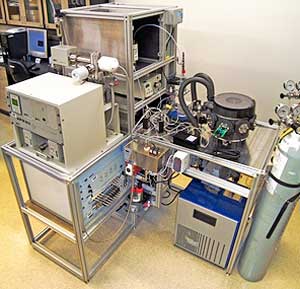
    Now, scientists and engineers at the National Renewable Energy Laboratory (NREL) have joined forces with Joint Research Centre (JRC) to analyze hydrogen sensor technology.

    Since hydrogen is colorless and odorless by nature, it has been challenging for researchers to come up with sensors that detect and warn of leaks. Linde decided to add odor to hydrogen, but injecting any impurities into hydrogen will also degrade fuel cells.

    So, NREL and JRC are independently testing commercial hydrogen sensors under predetermined protocols and then sharing the results with one another.

    According to William Buttner of NREL’s Hydrogen Technologies and Systems Center, “The first round of testing has been completed, and NREL and JRC have exchanged units for the second round of evaluations. By independently testing the same sensors, both labs gain insight into their respective systems, facilitating improved testing capabilities, protocols, and data analysis.”

    No matter whether it’s using hydrogen fuel inside of cars, at the pump or at the manufacturing plant, H2 sensors are a necessary component when it comes to safety of consumers and company employees. By testing hydrogen sensors using best practices, better safety protocols and requirements can be developed which will let both consumers and handlers breathe a little easier.

  • Sean Kingston Justin Bieber “Eenie Meenie” Music VIDEO

    It’s been nearly three years since Sean Kingston debuted on the music scene with his Summer 2007 smash hit, “Beautiful Girls.” Now the Jamaican-American reggae/hip hop singer is back — and working with cute-as-a-button Canadian heartthrob Justin Bieber. Sean and Justin are putting their voices together on “Eenie Meenie,” the first single off of Kingston’s upcoming third album. The track is also be featured on Justin’s Billboard No. 1 album, My World 2.0.


  • Louisiana shrimpers file lawsuit over U.S. oil spill

    by Agence France-Presse

    An oil spill or olive oil fate?Photo courtesy HeyRocker via FlickrNEW ORLEANS—Two Louisiana shrimpers have filed a lawsuit accusing the operators of the rig behind a Gulf of Mexico oil spill of negligence, seeking millions of dollars in damages.

    The lawsuit, filed in federal court late Wednesday, alleges that “the fire, explosion and resulting oil spill was caused by the joint negligence and fault” of the defendants, a copy of the document read.

    The shrimpers are seeking class-action status on behalf of “all Louisiana residents who live or work in, or derive income from,” the Louisiana coastal zone, and who have sustained damages as a result of the oil spill.

    Defendants in the suit include BP, Transocean, Cameron International, and Lloyds of London, Transocean’s insurers.

    Among other things the plaintiffs are seeking “economic and compensatory damages in amounts to be determined at trial, but not less than five million dollars,” the legal minimum, the document read.

    A BP executive on Thursday agreed with a U.S. government estimate that the oil leak in the Gulf of Mexico could be pumping up to 5,000 barrels a day of crude into the ocean, far more than previously thought.

    The Deepwater Horizon platform sank April 22, two days after a huge explosion that killed 11 workers, and a giant oil slick from the site threatens to pollute Louisiana’s fragile wetlands.

    Among other things, the lawsuit claims that the defendants failed to operate the oil rig properly; failed to properly inspect the rig “to assure that its equipment and personnel were fit for the intended purpose;” acted “in a careless and negligent manner without due regard for the safety of others;” failed to “react to danger signs;” and employed “untrained or poorly trained employees.”

    Furthermore, “the fire, explosion, sinking and resulting oil spill were caused by defective equipment,” and the defendants “knew or should have known of these defects and … are therefore liable for them.”

    Daniel Becnel, a Louisiana-based trial lawyer who filed the suit, saying that the plaintiffs “have a whistle blower on an adjoining rig saying 85 percent of the drilling pipe was not properly inspected” by the U.S. Minerals Management Service.

    “We knew that BP and Transocean, the owner of the Deepwater Horizon weren’t telling the truth,” said Becnel, a veteran industrial accident litigator.

    According to Becnel, the suit was filed “on behalf of all class members who have been adversely affected in Louisiana—fishers, shrimpers, oystermen, and others like … guides into the marshes.”

    Becnel also alleged that the oil slick could wreak havoc on U.S. shipping entering and leaving the Mississippi River.

    Coast Guard Rear Admiral Mary Landry, who is leading the government’s response to the disaster, warned that if the well is not secured the spill could end up being one of the worst in U.S. history.

    Related Links:

    The story of the Gulf of Mexico oil spill [SLIDESHOW]

    Gulf oil spill worse than expected, and getting worser

    The politics of the Gulf oil spill


  • Don’t Let Your Manicurist File Down Your Nerve Function

    Consumer Reports Health medical adviser Orly Avitzur, M.D. has both a medical practice and a lovely set of manicured nails. It’s this combination that gave her unique insight into the possible problems with manicures that are purportedly fancy “gel manicures,” but are actually something else more dangerous entirely.

    And there are plenty of other chemicals to be concerned about. A US Environmental Protection Agency guide, produced to warn nail salon workers, indicates twenty chemicals found in nail glue, polish, hardeners, additives, powders or removers. A medical literature search shows that, in general, several of them—ethyl cyanoacrylate, formalin, toluene, and MMA—have been shown to induce neuropathy and can cause one or more of the following: irritation of the eyes, skin, mucous membranes, respiratory tract, or damage the kidneys or liver.

    Ten warning signs to watch out for:

    • Your salon uses bottles in unmarked containers
    • The technician cannot tell you what’s in the products
    • The products smell unusually strong or have a strange odor
    • Your skin is being abraded or cut
    • The salon is not clean
    • The instruments are not sterilized
    • Licenses for the salon and individual operators are not visibly posted
    • Your skin or nails hurt
    • The gels do not soak off easily in solvents designed to remove acrylics
    • You see swelling, redness or other signs of infection

    Manicures: The price may be higher than it seems [Consumer Reports Health]

  • Terminator Cabaret [Art]

    The mic of Adam Gontier, lead singer of Three Days Grace. When the band inevitably splits for good, it will be destroyed in a molten pool of lava, thumbs up…or just auctioned on eBay for drugs. [Wired] More »


  • The Importance of Mobility: The Hips

    hipPeople are exceedingly mobile these days. We can jet halfway across the world at a moment’s notice, check email on our phones, hop in the car and be in another state in five hours, conduct business from anywhere, transfer schools, and shave while reading the paper on the morning commute. Social mobility, financial mobility, spatial mobility, information mobility. Mobile workforce, mobile phone, Google Mobile. Yeah, clearly, mobility is highly prized.

    What about joint mobility?

    Too many people discount, or even outright ignore, this crucial aspect of physical fitness. Raw strength, speed, and stamina are all important, especially to athletes or weekend warriors, but everyone of any age or fitness level needs the ability to move their limbs and joints through their full range of motion as ordained by nature. That goes for grandmothers, teens, and couch potatoes alike. Though not everyone will be picking up barbells or running sprints or long jumping, we all have to function in a three-dimensional world. We all have space and gravity with which to contend if we’re planning on enjoying and experiencing all life offers, and that’s accomplished by moving through spatiality and against gravity. To thrive in this environment, we require the full, unfettered use of our limbs, joints, and muscles. Losing the shoes is a big step; so is getting strong and fit. One of the biggest, in my opinion, is regaining and maintaining maximum joint mobility.

    “Regaining,” because we are born with joint mobility. Ever watch children play? They’re bendy, flexible little sprites with perfect squat and deadlift form. And they don’t need formal training to get there! Attainment of joint mobility, then, is regaining what was lost, not inventing something new.

    Regaining’s the easy part. You’ve got to maintain your mobility, too, or else you run the risk of misplacing it all over again. Once you learn the mobility exercises, it’s actually really pretty simple to maintain. People generally fail out of sheer forgetfulness or laziness. If you can incorporate mobility drills into your regular warm-ups or daily activities (or even institute them as standalone workouts), maintenance becomes second nature.

    Everyone has to pick up groceries, or walk up stairs, or perform any number of mundane tasks requiring the use of joints and limbs. If those joints and limbs are going to be useful, they have to be mobile. They need a full range of motion.

    And if you are an athlete, mobility is even more important. Strength without the ability to move your body and limbs fully and completely – without the ability to use your strength in the real world – is pointless. Strength development itself suffers without proper joint mobility. The strongest lifters are the ones who move weights (or just themselves) through the full range of motion using compound movements and utilizing healthy, active joints. If you have poor joint mobility, performing quality squats, deadlifts, presses – any compound movement that requires precision and communication between joints and limbs – it’s going to be that much harder, and the risk for injury that much higher.

    Power output and speed will be compromised with poor joint mobility. When you shoot a rubber band, the farther back you pull it, the more tension there is, and the farther it shoots. The greater your joint mobility, the greater your range of motion, and the more tension – and therefore power – you’ll be able to generate.

    Most importantly, maintaining adequate joint mobility keeps our joints healthy. Just as our bones and our muscle fibers require physical stimuli, like load-bearing activities, to maintain strength, density, and to initiate positive structural changes/adaptations, our joints require regular movement and usage to maintain health and mobility. Think of your joints as hinges to a door; if the door is never opened, never used, and subjected to steady environmental or elemental decay without reprieve, that hinge isn’t going to work well. It’s going to rust, and it’ll creak and groan if you’re even able to get it moving. Same thing goes for the sedentary office worker, the bodybuilder who only focuses on pecs and biceps, and the daytime TV watcher. Their joints aren’t being used to their full potential (if at all, in some cases), and their mobility will suffer. Like the Tinman in Oz, their joints will “rust” over and the simplest tasks will become difficult, almost Herculean in extreme cases (and in old age).

    Hip Mobility

    Our joints, limbs, and muscles represent a collective of individual pieces, all working together to move the body, manipulate objects, and propel us through three dimensional space. Mobility in all areas is crucial, but it helps to consider them in segments. After all, different people will have different levels of mobility in different areas of the body. Perhaps the most common mobility deficiency resides in the hips. In my own case, it was a lack of hip mobility that was the proximate cause of my downfall as a runner/triathlete. I basically “seized up” after fifteen years of overuse in a very limited plane of movement.

    People have forgotten (or don’t know) how to use their hips the way evolution designed them to be used. Instead of sitting back with their hips to pick something up, followed by a hip extension (thrust forward) to bring it up, they’ll bend at the waist and lift with the lower back. Picking up a potted plant? You can get away with poor hip mobility – for a while. Picking up a weighted barbell, a child or a bag of peat moss with poor hip mobility using your lower back? That’s an injury waiting to happen.

    We sit too much. I know I do, and it’s especially bad to do so right after working out (yet I still do it sometimes). Sitting impacts hip mobility in two major ways: it weakens the glutes and it shortens the hip flexors. Both your glutes and your hip flexors figure prominently in the activation of your hips, so when they’re weak and/or inactive, the lower back takes over. Now, the lower back, or the lumbar spine, isn’t designed for a ton of activity. It’s mainly there to provide support and stability. It’s the core, after all. But with poor hip mobility brought on by excessive sitting and a weak posterior chain, your hip extension is no longer sufficient, and in comes the lower back. That potted plant is beginning to look a little heavier, eh? And that’s not even mentioning the barbell.

    It’s a shame, because our hips are obviously designed to generate a ton of power. The ligaments, the tendons, the musculature, and the bones in that region are all dense, hardy, and robust – they’re made for activity and mobility – but too many people are selling their hips short. And when that happens, the other joints and muscles (like knees or lumbar spines) have to pick up the slack. It’s an adaptive mechanism that perhaps any multi-limbed animal possesses: the quick substitution for an injured limb/joint by an adjacent one. It’s not meant to be a lasting solution, though. We’re not meant to limp through life using one joint to do another’s prescribed task. It just doesn’t work, and it’s exactly why most people lift with their backs instead of their hips and then complain about back or knee pain.

    Restoring hip mobility will help in several areas. It should reduce or eliminate lower back and/or knee pain stemming from overcompensation. It should improve your power output by allowing you to fully engage your posterior chain in training exercises like squats, deadlifts, kettlebell swings, and any of the Olympic lifts, while making them safer. It should improve the strength and power of your hip extension, extremely vital for performance of the aforementioned lifts, but also for vertical leaps, sprinting, and any basic explosive movement. It will improve your rotational strength; instead of rotating with the lumbar spine (a huge no-no), you’ll generate power with the hips – perfect for throwing a good punch, swinging a golf club, or tossing a big rock at prey. It’ll improve speed, especially sprinting speed.

    Most of all, hip mobility will improve your relationship with the rest of your body. Because the hips are the most common sites of poor mobility, many people are walking around with dysfunctions borne of overcompensation. Fixing hip mobility won’t fix everything, but it will eliminate a major stressor on your system as a whole and allow you to focus on the smaller, but no less important, sites and joints.

    Tomorrow, I’ll discuss methods for regaining and maintaining hip mobility.

    Get Free Health Tips, Recipes and Workouts Delivered to Your Inbox

    Related posts:

    1. The Danger of Muscle Imbalances and the Importance of Symmetry
    2. The Importance of Cooking in the Evolution of the Human Brain
    3. The Importance of Blood Sugar Level

  • Iran Adds 3 Supertankers To Storage Fleet

    Iran Daily reports that the Iranians are increasing oil storage in super-tankers once again – Iran Adds 3 Supertankers To Storage Fleet.

    Iran, OPEC’s second-biggest oil producer, added three supertankers to its fleet of vessels storing crude, matching a similar program in 2008 that helped freight rates to triple, ship tracking data show.

    At least 15 such vessels are idling in the Persian Gulf, Gulf of Oman and Gulf of Suez, according to data from the ships collected by AISLive Ltd. The tankers can store a combined 30 million barrels of oil, more than a week of national output, Bloomberg reported.

    Two years ago, Iran used as many as 15 tankers for storage, constricting vessel supply and helping to more than triple freight rates in less than three months.

    Iran is likely storing oil because of weakening demand as refineries across Asia, accounting for almost two-thirds of global demand for supertankers, carry out maintenance. National Iranian Tanker Co., which operates the supertankers, also has a laden suezmax tanker idling off Iran, ship-tracking data show. A suezmax can hold about 1 million barrels of oil.

    “They don’t want to shut down their production,” said Ole-Rikard Hammer, an analyst at Pareto Securities ASA in Oslo who’s tracked tanker markets for more than two decades. “The refining clients are buying less because of maintenance and the Iranians seem to prefer to keep oil in floating storage.”

    The discount on Iran Heavy crude compared with Oman and Dubai petroleum is at its widest in more than a year, according to data compiled by Bloomberg. The discounts on Iran’s Forozan, Soroush and Norouz crudes have also widened.

    National Iranian Tanker has a fleet of 28 supertankers, according to Lloyd’s Register-Fairplay data on Bloomberg. The remaining 13 carriers are all either moving or have been at their present locations for less than two weeks, according to the tracking data.


  • App Deals: Get Select Glu Mobile Titles For a Steal

    Yes, folks, it’s that time again: time to get some great 3D gaming titles for a fraction of what they normally sell for.  This time around, Glu Mobile has put a few of its titles on sale:

    I don’t know about you all, but if these games keep going on sale like this, I’m going to quickly run out of storage space on my Pre! 

    Thanks to everyone that sent this in!

  • Chevrolet Sail hatchback

    Acaba de ser presentada en Pekín la versión hatchback del Chevrolet Sail. Esta versión ha sido diseñada por la división de Shangai de la propia Chevrolet.

    Sólo estará disponible con una motorización, un motor 4 cilindros 1.2i 16v S-Tec de 87 CV y 115 Nm de par máximo. El motor estará asociado a una caja de cambios manual de 5 velocidades. Toda la motorización está adapatada a la normativa Euro 4 de Europa.

    Este modelo tendrá un precio apróximado de 6.000€, precio que incluirá el equipamiento extra de seguridad (algo a tener muy encuenta).

    Related posts:

    1. Chevrolet Camaro Synergy Special Edition
    2. Chevrolet Agile en Latinoamérica
    3. Chevrolet Agile, vídeo promocional
  • Busy Hyundai reveals next Elantra at Busan show in Korea [w/video]

    Filed under: , , ,

    2011 Hyundai Elantra / Avante – Click above for high-res image gallery

    Hyundai has been very busy lately as it progresses through round two of its 24/7 product renewal program. Just days after unveiling the new Accent/Verna in Beijing, Hyundai has revealed its next generation Elantra/Avante at the Busan Motor Show in South Korea. Like the smaller Accent, the Elantra has picked up the “fluidic sculpture” styling cues of its big brother the Sonata. By virtue of its larger size, the Elantra retains more of the sleeker profile of the Sonata and doesn’t look as stubby as the Accent.

    Like the Sonata, the new Elantra gets a direct injected inline-four, in this case a 1.6-liter based on the Gamma engine family. For the Elantra the GDI 1.6 generates 138 horsepower and 123 pound-feet of torque. In combination with a new six-speed automatic transmission, the Elantra should get about 10 percent better fuel economy.

    The Avante will go on sale in South Korea in the second half of this year and we’d expect to see it state-side with Elantra badges early in 2011. No word yet on whether we will get a hybrid version of the new Elantra. High-res images below, official press release and video available after the jump. Thanks to everyone for the tips!

    [Source: Hyundai]

    Continue reading Busy Hyundai reveals next Elantra at Busan show in Korea [w/video]

    Busy Hyundai reveals next Elantra at Busan show in Korea [w/video] originally appeared on Autoblog on Thu, 29 Apr 2010 10:57:00 EST. Please see our terms for use of feeds.

    Permalink | Email this | Comments

  • How to Cook Steak in Your Beer Cooler | Discoblog

    After years of serving as your faithful companion to ball games and keeping the brewskies frosty at backyard barbecues, your trusty beer cooler now has a new assignment–cooking up a gourmet meal, sous-vide style. For those of you who don’t keep up with high-tech cookery, sous-vide is a method of cooking where food is heated for an extended period at relatively low temperatures. Unlike a slow cooker or Crock pot, the sous-vide process uses airtight plastic bags placed in hot water well below boiling point (usually around 140 Fahrenheit). The idea is to maintain the integrity and flavor of the food without overcooking it (but while still killing any bacteria that may be present). Normally, a sous-vide cooker like the Sous-Vide Supreme would set you back hundreds of dollars, but chef J. Kenzi Lopez-Alt shows us how to use a beer cooler to cook a perfect piece of meat. All you have to do is fill up your beer cooler with water a couple of degrees higher than the temperature you’d like to cook your food at (to account for temperature loss when you add cold food to it), seal your food in a simple plastic Ziplock bag, drop it in, and close …

  • Jennifer Lopez “On The Radio” AUDIO [Donna Summer Cover]

    Have you heard Jennifer Lopez’s newest track, “On The Radio?” Jenny From The Block and French super producer David Guetta give a modern day facelift to disco diva Donna Summer’s 1979 hit on the uptempo club hit.


    Rock It or Drop It?

    Earlier this year, Guetta released “Acapella,” a similarly-designed techno-dance-infused single for R&B golddigger Kelis. Although I’m not a huge fan of JLo’s singing voice (which I sometimes liken to a cluster of cats clawing at a chalkboard), I adore Donna Summer and I love dance anthems, so I’ll definitely be adding this one to my iPod.


  • Mitsubishi ASX, precios y equipamientos disponibles

    Finalmente se ha dado a conocer toda la información sobre el nuevo SUV de Mitsubishi para la puesta en venta del mismo en los concesionarios españoles. El Mitsubishi ASX tendrá dos niveles de equipamiento y la versión más básica tendrá un precio de 24.150€.

    Por otra parte, en España sólo estará disponible con una motorización, un motor diésel 200 DiD de 150 CV. Más adelante se espera la llegada de nuevas motorizaciones de gasolina para completar la gama.

    Los dos equipamientos disponibles serán los siguientes:

    • Motion: Esta compuesto por múltiples airbags, ABS, ESP, control de tracción, asistente a la frenada de emergencia, llantas de 17 pulgadas, faros xenon, equipo de sonido MP3 con USB, climatizador automático y sistema Start & Stop.
    • Kaiteki: Este equipamiento cuenta con todos los elementos del “Motion” más tapicería de cuero, asientos con ajuste eléctrico y sonido Rockford Fosgate.

    En último lugar, os dejo con la lista de precios del Mitsubishi ASX:

    • ASX 200 DiD 150 CV Motion 24.150€
    • ASX 200 DiD 150 CV Kaiteki 25.750€
    • ASX 200 DiD 150 CV Motion 4WD 27.450€
    • ASX 200 DiD 150 CV Kaiteki 4WD 29.500€

    Related posts:

    1. Mitsubishi ASX, disponible esta primavera
    2. Mitsubishi ASX, nueva información disponible
    3. Mitsubishi podría fabricar para Saturn
  • Motorola Sold 2.3 Million Smartphones In Q1


    Motorola CLIQ with MOTOBLUR

    Motorola (NYSE: MOT) sold slightly more smartphones in the first quarter, but it was the home division that helped Motorola to swing to a profit.

    Overall, the company reported a profit of $69 million, or 3 cents a share, on sales of $5 billion. Analysts polled by Thomson Reuters were expecting $5.1 billion in revenue. That compares to a loss of $291 million, or 13 cents a share on revenues of $5.37 billion.

    Release. Earnings Call.

    However, with Motorola’s planned spin-off aimed at being completed a year from now, it’s important to examine how the company’s two units performed separately. Sales of the mobile devices segment sales were $1.6 billion, down 9 percent compared with the year-ago quarter. The operating loss was $192 million, which marked a significant improvement compared to the operating loss of $545 million in the year-ago quarter. The home unit reported a profit of $20 million on sales of $838 million.

    Motorola introduced six new smartphones during the quarter, and shipped 8.5 million phones in the first quarter, of which 2.3 million were smartphones. (In the year-ago period, it shipped 14.7 million phones). In the previous quarter, Motorola shipped 12 million handsets, of which only two million were smartphones. Motorola is now the world’s eighth-largest maker of phones, down from fifth-largest in the fourth quarter.

    Sanjay Jha, Motorola co-chief executive officer and CEO of Mobile Devices and Home, said in a statement: “We are in a strong position to improve our share in the rapidly growing smartphone market, particularly in light of our competitive portfolio, strengthened brand and improved carrier relationships.”

    For the current quarter, Motorola said it expects to earn 7 cents to 9 cents per share, which beats analyst projections of 3 cents per share. In early afternoon trading, Motorola’s stock increased nearly 4 percent, or 28 cents, to about $7.20 a share.

    Related


  • Ponds, pastoralists, and unpredictability: A snapshot of life in Ethiopia

    For the pastoralists of Dambi in Ethopia, water and pasture for their animals is vital. Nick Martlew finds out how unpredictable weather is putting their work – and consequently their lives – at risk.

    Tadhicha Wargo, a pastoralist in a village about a mile from the pond at Dambi. "The pond is very important for all the communities in this area. We all depend on it." Photo: Nick Martlew/Oxfam

    Tadhicha Wargo, a pastoralist in a village about a mile from the pond at Dambi. "The pond is very important for all the communities in this area. We all depend on it." Photo: Nick Martlew/Oxfam

    It reminds me of a nature reserve back home, a bird-strewn lake crowned with rich green foliage. Back in Wakefield (UK), the reserve was made from a disused slag heap, reclaiming for nature what had been discarded from man’s coal thirst. Here in Borena, almost as far south as you can go in Ethiopia before you reach Kenya, this particular pond has more important business than attracting dog walkers and Sunday cyclists.

    For 25,000 pastoralists in this drought-prone region, this pond at Dambi, Moyale district, is the last line of defence against destitution – and worse. For people whose livelihoods depend on their herds, water and pasture for their animals is everything. If the animals don’t have enough fodder or water, they get weak. At best this means they don’t produce offspring so there’s no milk, vital to keep the children healthy. At worst the animals die, robbing families of their principle means of producing or buying food.

    In the words of Tadhicha Wargo, a pastoralist we met in a village about a mile from the pond, “the pond is very important for all the communities in this area. We all depend on it.” What’s special about this pond at Ketele is its reliability – an ever-more precious commodity. For the last five years there’s been drought in Borena. Failed rain after failed rain has seen herd-sizes slashed. But this pond was a lifeline. Situated to capture any rain that drops in a wide area, it never ran dry. Through Oxfam’s Drought Early Warning Surveillance (DEWS), the local community decided that the pond needed enlarging and reinforcing to retain more water so the supply lasts through the dry season. Oxfam put in the seed money – just $5,000 US dollars – but the villages around gathered together three times as much in cash as well as their labour. In addition Oxfam mobilised support from local government and other agencies.

    This shows the life-over-death value of getting ahead of drought: wait for it to hit and you have to bring in fodder, water and food at great expense. Pre-empt it, and you’ve got a ready-made water bank as a back-up for thousands of people.

    Devastating changes

    Water streams away from the pond after the second flood. Photo: Tita Mekonnen/Oxfam

    Water streams away from the pond after the second flood. Photo: Tita Mekonnen/Oxfam

    But in the last couple of weeks there has been a devastating shift in the weather. After five years of dry skies, the rain came in such exceptional volumes and violence that the pond filled dangerously quickly. The water overflowed, ripping through the banks. It still holds water – just. Shara Aden, a 22-year-old mother of two, told us: “One more heavy rain and it will break… If it breaks we might have to migrate. This pond is the only one we can reach.”

    And this points to a wider story: Climate change is leading to increasingly unpredictable weather patterns and this is the real killer. It’s no longer only drought that communities here have to worry about.

    As I left Borena, Oxfam’s team on the ground and our partners were looking at how we can work with the community to reinforce the dam and prevent a disaster. By reinforcing and enlarging the pond, the community around got ahead of the next drought. Now, we all need to get ahead of the next disaster.

    The first step is a bit of honesty. Disasters do happen, especially in a country as poor as Ethiopia. Their full scale has to be recognised, because things are only going to get tougher. The world needs to recognise that climate change will probably only make the weather more unpredictable. We all have a responsibility to tackle this head on, from the Ethiopian communities themselves, through their government, to rich countries’ governments and you and me. We burnt all that Wakefield coal. It looks like Shara and Tadhicha are living with the consequences. Tadhicha lugged soil and rock to reinforce that dam. He didn’t have any choice. If we take our responsibilities to those affected by climate change seriously, neither do we.

    Update: three days after I visited Dambi, another violent downpour burst the banks of the pond. As Tita Mekonnen, Oxfam’s man on the ground, watched, he said, “in the end, nothing could stop the water from leaving the Ketela pond.” Thoughts turn now to how to help the thousands who relied on this pond through the coming dry season.

    Where we work: Ethiopia

    Get involved: climate change

  • Senior military leaders announce support for climate bill – 33 generals, admirals: “Climate change is making the world a more dangerous place” and “threatening America’s security”

    Generals smallThe Pentagon affirmed earlier this year that “Climate change, energy security, and economic stability are inextricably linked.”

    Today an unprecedented 33 retired US military generals and admirals announced that they support comprehensive climate and energy legislation in a letter to Senators Reid and McConnell as well as a full page ad (click to enlarge).  The news release points out:

    It was the largest such announcement of support ever, reflecting the consensus of the national security community that climate change and oil dependence pose a threat American security.

    Here is the full text of the letters signed by these generals and admirals:

    Dear Senate Majority Leader Harry Reid and Senate Minority Leader Mitch McConnell,

    Climate change is threatening America’s security. The Pentagon and security leaders of both parties consider climate disruption to be a “threat multiplier” – it exacerbates existing problems by decreasing stability, increasing conflict, and incubating the socioeconomic conditions that foster terrorist recruitment. The State Department, the National Intelligence Council and the CIA all agree, and all are planning for future climate-based threats.

    America’s billion-dollar-a-day dependence on oil makes us vulnerable to unstable and unfriendly regimes. A substantial amount of that oil money ends up in the hands of terrorists. Consequently, our military is forced to operate in hostile territory, and our troops are attacked by terrorists funded by U. S. oil dollars, while rogue regimes profit off of our dependence. As long as the American public is beholden to global energy prices, we will be at the mercy of these rogue regimes. Taking control of our energy future means preventing future conflicts around the world and protecting Americas here at home.

    It is time to secure America with clean energy. We can create millions of jobs in a clean energy economy while mitigating the effects of climate change across the globe. We call on Congress and the administration to enact strong, comprehensive climate and energy legislation to reduce carbon pollution and lead the world in clean energy technology.

    The anti-science crowd is blind to the growing threat and forced to offer the most ridiculous explanations of why so many of the nation’s military leaders have come together to warn the public and call on Congress to act.  Senator Inhofe (R-OIL) actually trashed generals who advocate for bipartisan clean energy legislation, saying they crave “the limelight.”

    In fact, the national security threat posed by unrestricted greenhouse gas emissions is great (see “NYT: Climate Change Seen as Threat to U.S. Security” and “Veterans Day, 2029“).  The threat is so clear cut that even the Bush Administration’s top intelligence experts were raising the alarm (see “The moving Fingar writes“).

    The time to act was a long time ago, but now is better than later.

  • Skyfire 2.0 for Android launching today

    Back in February, Skyfire (makers of the popular, Flash-enabled smartphone browser of the same name) announced that they’d snatched up Kolbysoft, the company behind the well-established Steel browser for Android. Today, we’re seeing the first fruits of that purchase coming to the market: Skyfire for Android is here.

    Skyfire’s flagship feature is that it supports Flash video playback, so you’d expect their Android port to do the same, right? And it does! It just does it… a bit differently.

    In past versions of Skyfire, Flash videos were embedded and played back directly within the page, just like you might expect from a PC version of the page. With Skyfire 2.0, one more step is thrown into the mix: the “Skybar”. When they’re ready to play back a Flash video, users tap the menu key to bring up the Skybar, click the “Video” label, and then choose which Flash video they want to view. Skyfire converts the video from Flash to H.264 in the cloud on-the-fly, and the video plays back (in full screen) on the device.

    Why the change? A rep for Skyfire shared a few reasons with us:

    • In this release, they’re building on top of WebKit rather than building their own browsing core from the ground up. Unlike all other versions of Skyfire, the page itself doesn’t go through a proxy. Standard content goes straight from the web server to the handset — only things that need to be transcoded go through Skyfire’s proxy.
    • Business reasons. Skyfire’s looking at OEM partnerships, and not all OEMs want Flash video playback, as they “want to enhance what they have rather than compete with another browser”.
    • They say it helps them adhere to Apple’s guidelines, improving the odds that they’ll be approved when they go to submit the iPhone/iPad release.

    Besides being the window to video, the Skybar also packs a few other tricks. An “Explore” option digs through Youtube, Twitter, Digg, and other sites for relevant video/imagery on the same subject as the content you’re currently looking at. For example: Believe it or not, they have videos of cats doing hilarious things on the Internet now; if you’re watching one of these and tap Explore, it’ll dig through the aforementioned feeds for other, equally hilarious cat videos. The “Share” button will let you sling the page out to Twitter, Facebook, Gmail, SMS, or save it for offline viewing.

    Beyond the Skybar, Skyfire’s got a few other features that make it worth checking out: Pinch-to-zoom, tabbed browsing, on-the-fly user agent switching, and optional automatic history dumping (Porn mode!), to name a few.

    Check out the video demonstration below, and look for the download to go live here and on the Android Market at right around 9 a.m. PST.


  • Imhotep’s a little ticked | Bad Astronomy

    On April 22, 2010, a sandstorm swept across the western Sahara desert. NASA’s Aqua satellite captured this frightening event:

    aqua_sahara

    Yegads. Click to ensandinate. This is a closeup of a much larger panorama at the border of Namibia and Burkina Faso. The whole front of the storm was about 1000 km (600 miles) across!

    I looked at the zoomed image, but couldn’t find Rick O’Connell’s biplane. That’s probably all for the best.


  • VIOLET-RAY LAMP PROBES NOSE TO CURE HAY FEVER (Nov, 1931)

    VIOLET-RAY LAMP PROBES NOSE TO CURE HAY FEVER

    SUNBURNED backs, as all know, may now be had from a “health lamp”; but here we have a mercury-vapor lamp in a quartz rod, small enough to pass up the nose and sunburn its inside. Four out of five cases of “hay fever” are cured.