Blog

  • Obama, Michelle hiking in North Carolina

    obamas asheville.jpg
    (Official White House Photo by Pete Souza)

    President Obama and First Lady Michelle, according to the White House on Friday, “have a chance encounter with other hikers while walking along a trail off the Blue Ridge Parkway outside of Asheville, N.C.” Pete Souza, the White House chief photographer, only posted this photo at Whitehouse.gov and did not offer a wide shot that might have shown other people or security with the First Couple.

  • Spring Game Live Chat at Fox Sports Ohio

    Football has arrived again!!!!  YES!

    As the spring game gets ready to kick off, I’m perched in the press box at Ohio Stadium and I’m ready to discuss Ohio State football again with you….I’m hosting a live chat at Fox Sports Ohio today, and I’d love for you to come over and enjoy the conversation that we all are so used to online.

    So please, be my guest at Fox, and GO BUCKEYES!!!!!

  • Automatic app updates coming in Android 2.2?

    Android App updates

    One of the larger issues surrounding applications and the Android Market (OK, one of a number of larger issues) is the current inability to update more than one application at a time. The above screen shot, purportedly from Android 2.2 (which might or might not actually be Froyo; or might be Froyo and not Android 2.2) shows a checkbox for allowing automatic updating. We’ll have to think about whether we’d rather see that or just the ability to update all our apps in one fell swoop. But either way, some sort of fix will be a welcome addition. [4chan via Android Community]


  • Why Flash On Mac Is About To Get Much Less Terrible [Flash]

    Running Flash on Mac OS is, in a word, miserable. It’s slow, resource-sucking and crashy, compared to Windows. Which is why Apple’s new video acceleration API—which Adobe plans to use in upcoming versions of Flash—is great news. More »


  • Photo safari – Orangutans Part 1 | Not Exactly Rocket Science

    One of the bright sides of being stranded at Perth by a giant ash cloud was a visit to Perth Zoo and, particualrly, visiting their orangutan exhibit. I’ve been to quite a number of zoos in my time and that had to rank with the best enclosures I have ever seen. The zoo is part of an international conservation programme and its six or so orangutans have a sizeable area to roam around, complete with tall towers, ropes, ladders and more. The next couple of posts will showcase some of the photos I took of these animals, and will help to fill some bloggy time as I wind my weary way back to the UK.

    We start with the baby, who was undoubtedly the highlight of the day. Just try and look at these photos without grinning.

    Orangutan_baby_reaching

    Orangutan_baby_thinking

    Orangutan_baby_peering

    Orangutan_baby_knot

    After taking the shot below, I asked a keeper about whether the orangutans ever undid the fixtures in their enclosure. She grinned and told me about the story described in this news report. One of the females actually undid a rope and swung out into the visitors’ area, showing remarkable restraint in just ambling along the wall and in not making a Tarzan noise. Because, clearly, that’s what you or I would have done.

  • Can Networking Be Made Cool Again?

    Remember when networking was cool? When I started my career in 1997 as a wet-behind-the-ears intern in Yankee Group’s data communications practice, networking was the coolest thing around. Billions of dollars were flowing into the market to drive the emerging Gigabit Ethernet wave, build out the Internet core and jump-start the carriers (CAPs/IXCs/ CLEC/BLECs) that had been spawned by telecom deregulation the year before. Some, such as Juniper, Foundry, Extreme and F5, became well-known players in the space, while others, like Qtera, Xros and Sirocco, were gobbled up in billion-dollar-plus acquisitions, never to be heard from again. Far more were crushed in the collapse of the Internet and telecom bubble, leaving behind little more than memories of over-the-top launch parties.

    Source: Dow Jones VentureSource

    And as the chart above makes clear, networking and communications have fallen out of favor, with VC investment in the segment decreasing faster than VC investment in technology overall. While this data is admittedly a little coarse, and mixes telecom and data networking together, it nonetheless makes clear the direction such investments are taking. Indeed, as anyone investing in networking and communications will tell you, there just aren’t that many new ideas walking in the door. Many investors who made their living at layers 1-4 have moved onto cleantech, digital media and the online advertising economy. So can networking be made cool again?

    It can, and here’s why:

    M&A Landscape — Cisco catalyzed a significant change in the M&A landscape with the introduction of its Unified Communications System. By declaring open war on HP, IBM, and Dell, Cisco has made networking relevant again for the major OEMs who need a networking story — and subsequently turned them into potential startup acquirers. The market capitalizations of Juniper, F5 and Riverbed mean they could pay a price that would make the VC math work, and virtualization’s impact on networking puts VMware and Citrix into the mix as well. Three years ago, it was more or less Cisco or bust. Today there’s a long list of companies that could be home for VC-backed networking startups.

    One part data center + one part cloud + one part virtualization=hot startup — Yesterday’s networking gear isn’t well-suited to today’s application workloads, traffic patterns and multitenant business models. Legacy architectures evolved from the LAN and designed for email and enterprise client server applications won’t cut it when it comes to those based on Map Reduce, nor will they work for collaborative filtering, putting together a Facebook page or renting CPU cycles by the hour. The data center has/will emerge as a distinct category of networking products. Legacy constructs like VLANs and subnets are wrapping cloud providers up in webs of complexity and management headaches, causing them to leave money on the table as servers fail to be fully utilized. Customers want SLAs but deep visibility into network behavior and performance remains elusive. Solving these issues will require not just new routers, but new ways of thinking about building networks.

    Commoditizing forwarding — Much has already been written by James Hamilton of Amazon and others about the commoditization of networking and the router vs. mainframe comparison. Imminently, dense, non-oversubscribed 10GE switches will be available from ODMs for any OEM that wants to put a badge on them. Silicon and reference designs from Broadcom/Dune and Fulcrum will take new levels of price performance into the heart of the Cisco chassis switching lines. While they won’t have the full Cisco feature set, they won’t have the outrageous gross margins either. As this ecosystem emerges and technologies like OpenFlow and other efforts to bring the routing out of routers take hold, these advanced features may be provided by a community of third-party applications, decoupled from propriety chassis and operating systems.

    Capital efficiency –- Building a networking company no longer requires $50-$100 million of venture funding. The appliance model is well understood in networking. An Intel Nehalem server can forward a lot of packets (PDF)! Perhaps more interesting, the virtual appliance model has emerged, meaning firewalls, load balancers and WAN optimization products can now be downloaded and run on hosts.

    It’s ironic that as Sun Microsystems gets absorbed by Oracle, its long-held mantra — “the network is the computer” — has never been more true. For proof, look no further than social networking, search, SAAS and the cloud. And with them comes a host of interesting networking problems to solve. In other words, there hasn’t been a better time to start a networking company in recent memory. So what are you waiting for? Find some buddies and a whiteboard, and dream up something new.

    Alex Benik is a principal at Battery Ventures

    For more on cloud computing, virtualization and other related topics, join The GigaOM Network at its annual Structure conference June 23-24 in San Francisco.

  • Live Blogging from PrimalCon 2010 – Day 2

    PrimalCon day2

    Hello, everyone! This is the editor of Mark’s Daily Apple, Aaron Fox, reporting from the field. Check back throughout the day for text, photo and (maybe, fingers crossed) video updates.

    7:14 am: Recharging for the big day ahead of us

    Pic1 2

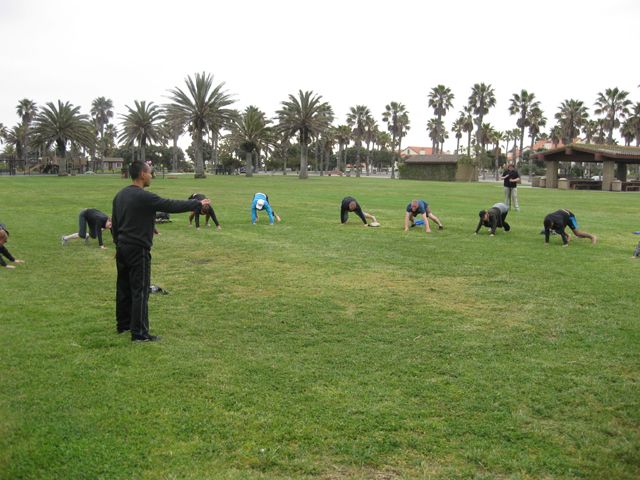
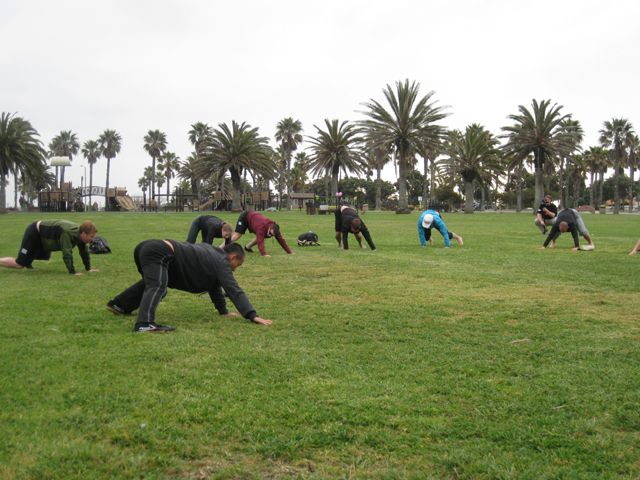
    7:50 am: Energizing gentle movement session with Angelo

    Pic4 2

    Pic5 2

    Pic3 2

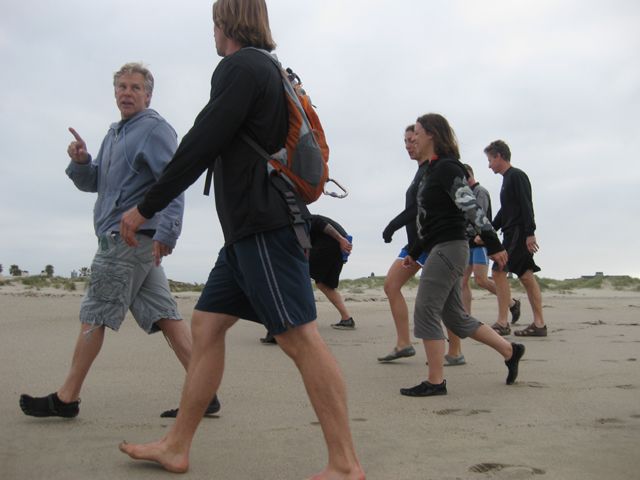
    8:04 am: Group beach hike

    Pic6 2

    Pic9 1

    Pic2 2

    Pic11 1

    Stay tuned for updates!

    Get Free Health Tips, Recipes and Workouts Delivered to Your Inbox

    Related posts:

    1. Live Blogging from PrimalCon 2010 – Day 1
    2. Barefoot Ted Speaking at PrimalCon 2010
    3. Announcement: PrimalCon 2010 and The Primal Blueprint Cookbook Offer

  • Verizon Won’t Install FiOS Until You Email The CEO

    This is actually a happy story, despite my inability to write cheerful-sounding headlines, so pay attention if you’ve ever been told that your whole apartment complex can get cable/FiOS/whatever, but you can’t because you are special and not allowed to be happy. You’d be surprised at how many letters we get from people who have this problem. One such person, Andrew, Consumerist Reader, decided to email the CEO.

    Here’s what happened:

    Thanks to Consumerist, I was able to get Verizon FiOS installed in my apartment. You may be asking yourself, how is that possible? Well here’s how it happened…

    I am moving apartments and currently have Verizon FiOS in my home. I love it and did not want to go back to Cablevision, so I went on Verizon.com to check if it was available and it was not (tear). After some research I found out that the my new apartment was the only apartment in the entire complex that Fios was not available for. I called Verizon and posed this question, and every service representative I spoke with said, “that is impossible, if your complex has Fios, you should have FiOS.” However, no one could figure out why my apartment did not have it. After countless calls and hours wasted, I finally got an answer saying the apartment “structure” was not conducive to FiOS and thus will not be able to get it.

    I literally could not believe the service rep said my particular apartment “Structure” was different that every other apartment. But alas, I just gave up and ordered Cablevision.

    Then yesterday (4/21), I was reading Consumerist and I opened an article about how a person contacted the CEO of Verizon to get his bill fixed. So I sat in my office thinking, maybe I should contact him; so I did. I did not think I would even get a response and if I did, it would be rather late.

    However, sometimes you underestimate large corporations. I sent an email to Ivan Seidenberg (CEO of Verizon) at 11:01 AM EST yesterday and got a response from the President of the Mid-Atlantic Region of Verizon (Thomas) at 12:30 PM EST. I was literally in a state of shock at how quick the Verizon CEO delegated this minuscule issue to his subordinates. I was not signing up an entire company for internet use, I was signing up 1 apartment for cable and internet. The fact that a president of a region of Verizon, (the 13th largest corporation in America) took the time to email back and forth and then follow-up with a personal call to me really speaks to their customer oriented business model.

    So after 1 email, Tom said we would be sending a manager to the apartment complex to check the apartment. He was not blowing smoke, within 1 hour Tom sent me an emails saying that FiOS manager went to the building and determined that Fios is available in my apartment, and that I will be able to sign up for Verizon and leave Cablevision (Thank GOD!). I signed up and got a window of installation from 12-5, however Verizon wanted to make sure I was happy and they said the technician will be at my apartment promptly at 12pm to install. Literally AMAZING!!

    Due to reading Consumerist, not only was I able to get FiOS installed in my apartment, but as cliché as this sounds, it makes me feel like I am not just a number or a wallet, but that my issues matter.

    I hope this makes it up on your website as I want your readers to know that Verizon is a corporation who cares about their customers and not only about the bottom line.

  • Schumacher reportedly getting new chassis for Spanish GP

    Filed under: , ,

    Critics have given Michael Schumacher a hard time all season so far over what can charitably be characterized as lackluster performance. Leading figures at the Mercedes-Benz GP team, however, have magnanimously attributed the problems to their car. But if his young teammate Nico Rosberg is currently second in the championship, having reached the podium twice so far this season (doubling his record from four seasons at Williams), then how can you blame the car?

    The answer may be coming as soon as May 9, when the circus heads to Barcelona for the Spanish Grand Prix. According to reports, Mercedes will give Schumacher a new chassis design to try out at the Catalunya circuit. If the new car suits Schumi better than the current one, they’ll presumably have him run it for the remainder of the season. But given Rosberg’s performance in the current chassis, the smart money would be on Nico continuing with the existing machinery, meaning that the team could – in a Formula One rarity – wind up running two different cars in a bid to defend the championships it won last year under the Brawn GP banner.

    [Source: Autocar]

    Schumacher reportedly getting new chassis for Spanish GP originally appeared on Autoblog on Sat, 24 Apr 2010 10:49:00 EST. Please see our terms for use of feeds.

    Read | Permalink | Email this | Comments

  • Advocacy groups to challenge Arizona immigration law as unconstitutional

    [JURIST] Two Latino advocacy groups say they plan to challenge the constitutionality of Arizona’s new immigration law, alleging it permits racial profiling. SB 1070, signed into law Friday by Governor Jan Brewer, permits police to question the immigration status of suspected illegal immigrants. Officials from the Mexican American Legal Defense and Education Fund (MALDEF) and the National Coalition of Latino Christian Clergy contend the law will let police single out minorities for immigration inspections. Under the law, it is designated a crime to be in the country illegally and immigrants unable to verify their legal status could be arrested and jailed for six months and fined $2,500. MALDEF said the law creates a separate state scheme to enforce immigration violations:One significant measure of SB 1070’s patent illegality is that it seeks to implement Arizona’s own scheme of immigration regulation – separate and in conflict with federal government policy – when our Constitution envisions a unified nation under one federal set of immigration regulations to be adopted by Congress and implemented by the President. By rejecting that constitutional plan, Arizona’s enactment of SB 1070 is tantamount to a declaration of secession. In response, the federal government must act to preserve our united nation by clearly stating that it will not cooperate in any way with the implementation of SB 1070 – that it will not adjust or alter its immigration enforcement priorities to the detriment of other states simply to accommodate Arizona’s most recent exercise in racial demagoguery.Brewer says she will instruct the state’s police departments to implement the law without violating civil rights.
    The Arizona law is one of the strictest illegal immigration regimes in the nation. Proponents of the bill claim the new law will decrease illegal immigration from Mexico. After the Arizona House approved the bill, US senators John McCain (R-AZ) and Jon Kyl (R-AZ) announced their support for the measure and outlined a proposal for additional federal controls on illegal immigration along the Arizona-Mexico border. In 2008, Arizona voters narrowly defeated a ballot measure that would have revoked the business licenses of employers who knowingly hire illegal immigrants.

  • Pamela Bach Sentenced To 90 Days In Jail For DUI

    The ex-wife of actor David Hasselhoff has been sentenced to three months in jail after pleading no contest to a drunk driving charge this week.

    On Thursday, a Los Angeles judge sentenced former singer Pamela Bach to 90 days behind bars for violating her probation for a November arrest for DUI. Arresting officers found she had a blood alcohol level of 0.14, well above the legal limit of 0.08. Bach will begin serving the sentence in May.

    Attorney Jon Artz says his attorney “wants to do the right thing” and move forward with her life.

    Bach was married to Hasselhoff for 16 years until the actor filed for divorce in 2006. She appeared as a cafe owner in several episodes of The Hoff’s ’90s hit Baywatch. The former couple are the parents of two teen daughters.


  • Filezilla

    fz Filezilla é um cliente FTP simplificado.  Além de estar disponível em português, o cliente é bem didático: possui alguns ícones que facilitam o manuseio e uma interface gráfica simples. Filezilla suporta os protocolos FTP, FTP sobre SSL/TLS (FTPS) e SSH (SFTP), roda em Windows, Mac e Linux, está disponível em 40 idiomas, incluindo o português do Brasil, suporta transferência e pausa para grandes transferências (acima de 4GB) e disponibiliza o sistema Drag-and-drop (arraste e solte). Clique na imagem ou aqui para baixar.

  • Amanda Seyfried On Lindsay Lohan: “I Believe She Can Bounce Back”

    Amanda Seyfried clearly did not have a bonding experience with her Mean Girls co-star Lindsay Lohan, nonetheless the bubbly blonde — who’s gone on to star in features like Mamma Mia! and Chloe — is hopeful LiLo can sort out her personal problems and resurrect her fleeting career.

    Seyfried made her movie debut when she starred as Lohan’s high school rival in the 2004 comedy and has since become a Hollywood leading lady with parts in the recent rom-com Dear John and HBO’s polygamy-themed drama Big Love. Lohan, on the other hand, who has endured a string of legal problems and stints in rehab, went on to appear in a string of critically-panned films, including 2007’s Georgia Rule and the chuckle-worthy thriller I Know Who Killed Me.

    Nevertheless, Seyfried is confident her former co-star will one day make a career comeback.

    “I think it’s just growth. People can fall out of line and fall back into it. I think it just takes some time. Clearly, people go through things and they deal with them differently. You’ve just got to be positive about it.”


  • Your Kids Really Suck At Not Choking To Death

    A new studyshows that choking deaths among children are really a more serious problem than was previously thought and that the death rate is quite high, even among kids who were considered “old enough” for more complicated toys.

    The data shows that 2.7 million kids, with an average age of 3.5, were admitted to hospitals with airway obstructions caused by an object. 42% of the foreign bodies were food items, the rest were “inorganic” objects such as toys. This is apparently “weird.”

    “Toys are affecting older kids, and that’s really weird to me,” Dr. Rahul Shah, a pediatric otolaryngologist at the Children’s National Medical Center and the study’s co-author, told AOL News.

    The death rate is apparently quite shocking, says Dr. Shah.

    “The death rate, to me, is unbelievable,” he told AOL News. “It just shows that choking is absolutely not a benign health issue, but an extremely serious one.”

    In case you’d like to take some steps to prevent your child from dying, the article recommends paying particular care to the now-controversial hot dog, which is responsible for 17% of all choking emergency room visits.

    If you were to take the best engineers in the world and try to design the perfect plug for a child’s airway, it would be a hot dog,” Gary Smith, director of the Center for Injury Research and Policy at Nationwide Children’s Hospital in Columbus, Ohio, wrote in a statement. “I’m a pediatric emergency doctor, and to try to get them out once they’re wedged in, it’s almost impossible.”

    Kid Chokings Still ‘Extremely Serious’ Problem [AOLNews via Consumer Reports]

  • Re-discredited climate denialists in denial – “The fact remains that the overwhelming body of evidence suggests that the alarmists’ fears are grounded in empirical reality.”

    “Climate Science In Denial,” reads a Wall Street Journal op-ed headline. “Global warming alarmists have been discredited, but you wouldn’t know it from the rhetoric this Earth Day.”

    Actually, the subhead should be revised: “Global warming denialists have been re-discredited, but you wouldn’t know it from the rhetoric in today’s Wall Street Journal.” Far be it from me, a non-scientist, to dispute the scientific expertise of an MIT professor of meteorology, Richard Lindzen, but then again, Lindzen’s selective recitation of the litany of arguments against global warming practically begs a rebuttal.

    The Atlantic hasn’t exactly been at the cutting edge of climate science (see “People Who Just Don’t Get Global Warming: Gregg Easterbrook and the Editors of the Atlantic).  So it was doubly nice to see this piece, “Climate Denialists in Denialst,” by Marc Ambinder, their politics editor (and chief political consultant to CBS News).

    Ambinder doesn’t know that Lindzen is one of the most debunked  climate scientists in the world (see Lindzen debunked again: New scientific study finds his paper downplaying dangers of human-caused warming is “seriously in error”:  Trenberth: The flaws in Lindzen-Choi paper “have all the appearance of the authors having contrived to get the answer they got”).

    But Ambinder still does a great job on Lindzen in this piece:

    First, he mentions “Climate Gate” — those e-mails from the Climate Research Unit from the University of East Anglia. He suggests that the e-mails show “unambiguous evidence of the unethical suppression of information and opposing viewpoints, and even data manipulation.”

    The e-mails were actually quite ambiguous and contained evidence of churlishness and defensiveness from scientists whose data had long been under attack from climate denialists.

    For some reason Lindzen presumes that “one might have thought the revelations would discredit the allegedly settled science underlying the currently proposed global warming policy,” without specifying what those “revelations” were.

    Two investigations, one conducted by the British government and one conducted by the university, as well as methodological reviews by the journals where some of the research mentioned in the e-mails, concluded that no data was manipulated and no legitimate (i.e., scientifically grounded) opposing views were supressed. So, of course, Lindzen finds the investigations “thoroughly lacking in depth” and “whitewashes.” You can read the government report here and make up your own mind.

    To go into detail on but one point: on the allegation that CRU scientists artifically adjusted (or corrected for) data from tree ring analysis that supposedly showed no warming after 1960, the review found that the corrective mechanisms were NOT, in fact, applied to the data published by CRU and were, instead, an appropriate possible way of dealing with methodological discrepancies that result from measuring tree ring data.

    A while later, Lindzen makes this curious claim about the International Panel on Climate Change’s conclusions: “For example, [their] observations are consistent with models only if emissions include arbitrary amounts of reflecting aerosols particles (arising, for example, from industrial sulfates) which are used to cancel much of the warming predicted by the models. The observations themselves, without such adjustments, are consistent with there being sufficiently little warming as to not constitute a problem worth worrying very much about.”

    First, the addition of aerosols to the models aren’t arbitrary. As Tim Flannery explains for a lay audience in “The Weather Makers,” from 1940 to 1970, aerosol particles in the atmosphere helped to counterbalance the effect of global warming. Once technology advanced to scrub aerosols from emitters, the cooling trend slowed. Numerous natural and man-made experiments have confirmed, and testable hypotheses have been successfully validated, to figure out exactly how aerosol emissions change temperature predictions.

    (Prediction: in the absence of jet contrails, daytime temperatures in developed areas will be higher because there will be less “stuff” in the atmosphere to reflect sunlight, thus cooling the earth. Result: check the daytime temperature figures for the days following 9/11 when airplanes were grounded.)

    Flannery notes that the two forces would seem to balance out — but they don’t, since we’re producing fewer aerosols and more CO2. That would seem to suggest that we should do more to reduce CO2 emissions, not less, if we’re worried about future warming….

    The discussion of aerosols and CO2 brings us to a larger question: temperature models vary considerably. Interesting how denialists often suggest that scientists rig these models to show warming and THEN use the same models to show how wide the variation in expected temperatures could be. If anything, what evidence there is of actual warming suggests that the less conservative modeling is more accurate.

    Then Lindzen writes about how some French academics have published books criticizing global warming advocates for being too alarmist in their predictions. Then he ends the op-ed by suggesting that the matter is settled. One can agree that global warming advocates can be alarmist, that they can hype the negative effects of the less conservative models, and that they can often present their conclusions with more certainty than is warranted.

    But the fact remains that the overwhelming body of evidence suggests that the alarmists’ fears are grounded in empirical reality.

    Precisely (see “Intro. to global warming impacts: Hell and High Water“)

    For a debunking of Lindzen’s one remaining big idea — that clouds are negative feedback — see Science: “Clouds Appear to Be Big, Bad Player in Global Warming,”an amplifying feedback (sorry Lindzen and fellow deniers).  And for more Lindzen debunking — see RealClimate here.

    Related Posts:

  • Russell Hantz, “Survivor: Heroes vs. Villains” Star, Arrested

    Survivors: Heroes vs. Villains star Russell Hantz was arrested in the early hours of the morning Friday after he allegedly shoved a woman to the ground during an altercation on the streets of Downtown Lafayette, Louisiana.

    Lafayette Police Department officials said that the reality show star was arrested at 2 AM after several witnesses flagged down passing officers and reported that there was a physical confrontation going on near Justin Street. Hantz was taken into custody, booked into a parish jail and released later in the day.

    The woman was not seriously hurt.

    Hantz, a runner-up on CBS’ Survivor: Samoa series, is currently featured on Survivor: Heroes vs. Villains.


  • Was band performance controversial?

    The tipoff is in the lede from Saturday’s edition of the Springfield State Journal-Register :

    Should the Springfield High School Marching Band have performed at Wednesday’s pro-tax increase rally at the Illinois Capitol?  Most aren’t making a big deal out of the band’s march at the event, which drew thousands of people from around Illinois.

    Based on that, you would expect that a story of such little import wouldn’t warrant much attention.  In fact, based on what the reporter wrote, one would question whether the story belongs in news section of the paper.  The editorial page would make some sense.

    Yet, there it is. At the top of Page One.

    Maybe that’s understandable.

    Maybe it was a slow news day and nothing else happened that could have been placed in the most prominent news position in the paper.

    Well, there is this on page 17:

    Actually, the headline is a little misleading.  Republican gubernatorial nominee Sen. Bill Brady didn’t pay federal taxes in 2008 or 2009.  He also paid no state income taxes in 2008.

    So, we have a government employee, paid with state tax dollars, making decisions about state tax policy, who wants to cut taxes and reduce funding for education and state services, who doesn’t pay taxes.

    No, I see nothing newsworthy about that.  Page 17 it is.

    By the way, since the paper edition was distributed, the online version of the Brady tax story has been retitled “Brady owed no federal taxes in 2008, 2009,”  a more positive spin on the same story.

    Interesting.

    Regarding the SHS band performance at the SOS rally day, a few things need to be said.

    In the interest of full disclosure, I called the Springfield school district, extended the invitation and helped coordinate the performance with the band teacher, Kelly Goldberg, who is one of our members.   The invitation included our offer to pay for any expenses incurred.  We will be writing a check for $300.

    The invitation came in spite of complaining from my daughter (flute) who thought it was a little hot for the uniforms she and her band mates were wearing that day.

    Springfield High School stands just a few blocks from the Statehouse.  The school’s band program is among the best to be found anywhere and the band is often called upon to perform at major events.

    For example, they performed at rally for Republican gubernatorial candidate Jim Ryan eight years ago, when President George W. Bush campaigned for him.

    I’m pretty sure that wasn’t front-page news.

    But let’s get to the main point, which was expressed very well “after the jump,” that is, inside the paper, well away from the front page.

    From my standpoint, I wouldn’t look at it as the band playing at a political rally,” said Laura Bartman, president of the Springfield High School Band Parents Association. “This was about education funding — and fine-arts programs would be the ones getting cut. But for me, this also is where we could showcase our band when there were 15,000 people and national coverage,”

    Indeed.

    Wednesday was a great day for those who believe that education quality is important and worth preserving.

    It was also a day when the arts and music were celebrated, as they should be, as being an important part of education.

    That’s a story you won’t find on Page 1.  But you should.

  • Listen Up: Mobile Retail Isn’t Just About Apps

    In the mobile industry, hype usually outpaces true performance by a substantial margin. But mobile commerce -– the business of conducting transactions on mobile phones –- is gaining real traction, much of it driven by the mobile web. So while downloadable smartphone applications are the hottest thing in mobile, retailers looking to hawk their stuff to on-the-go users need to make wireless websites their top priority.

    “Mobile commerce” is an overly broad term; it includes everything from buying and downloading apps and content (a wildly successful space thanks to the emergence of the iPhone) to the concept of using a phone as a kind of credit card at the retail counter (a segment that has yet to grow legs despite plenty of investment). But another segment is quietly generating money: selling physical goods to consumers over the mobile web. And it’s a potentially huge industry.

    eBay is gunning for a whopping $1.5 billion in mobile sales this year, and Amazon’s mobile site traffic is second only to eBay among vendors of real-world stuff, according to figures from Nielsen. An annual survey from Deloitte last year that found that one in five consumers planned to use their mobile phones to shop during the 2009 holiday season, 25 percent of whom said they intended to make purchases on their phones.

    Of course, many mobile purchases of real-world goods are being conducted through handset-specific apps that provide a highly optimized user experience. But building an iPhone application isn’t a surefire path to success. Some offerings are plagued with performance problems or inadequate functionality, and many simply aren’t much better than a mobile site. More importantly, mobile applications by definition can address only a small fraction of the potential market.

    The iPhone accounted for only 16.6 percent of worldwide smartphone shipments in the fourth quarter of 2009, according to ABI Research, and Strategy Analytics pegged the iPhone’s share of the overall handset market at a mere 3 percent. Meanwhile, it’s difficult –- if not impossible –- to find a mobile phone on retail shelves that doesn’t have at least a rudimentary browser.

    As I describe in my column at GigaOM Pro this week, there are a few approaches online retailers can take to maximize mobile sales regardless of which device users have in hand:

    • Develop clean, simple mobile pages that require minimal data transmissions.
    • Offer mobile storefronts with stripped-down but still innovative features targeting phone users.
    • Focus on simple, secure payment systems, whether you’re selling via apps or the mobile web.

    Make it easy for users to tune into the mobile web to comparison shop, get product information and close the deal. Vendors who do those things will watch their mobile sales ramp up dramatically. Read the full post here.

    Image courtesy of Flickr user 2 dogs

  • What Are These Camera-fied iPod Touch "Prototypes" Doing On eBay? [Rumor]

    Or, to precise, what were these apparent test devices doing on eBay, before they were unceremoniously yanked? And are they real? More »


  • Palm Developer Day Keynote Liveblog

    We are live at Palm’s developer days and the mood here is pretty much perfectly encapsulated by Jon Rubinstein’s surprise appearance and comment yesterday: "I’m still here." Indeed, the 150 or so developers who have come to this at-capacity event are excited by the possibilites of webOS and the technologies behind it (free-but-unactivated Verizon Palm Pre Plus phones for developers didn’t hurt, either). We’ll have a full roundup in the coming days.

    Right now, keep it locked on this post. At 9am Pacific / 12 Eastern Ben Galbraith and Dion Almaer will present the keynote for this mini-conference. We’re very much anticipating that we’re going to see clues about what’s coming in future versions of webOS. Since this is a presentation by and for developers, it’s probably too much to hope for a lot of flashy next generation features, but we’d be pretty happy to see some guidance on what Palm expects with the PDK and SDK (an especially urgent topic this week) and perhaps a few new APIs for developers to look forward to.

    Join us after the break as we liveblog!

    read more