Blog

  • Did Obama “Bungle” His Sudan Policy?

    by Julian Ku

    I am pretty supportive of Obama Administration’s general approach to Sudan, largely because it reflects a realistic sense of the limits of the U.S. government’s ability to influence matters there as well as the (relative) unimportance of Sudan to the U.S. and to the wider region. And so I think the hardline ICC-favored approach to Sudan (demand the arrest of Bashir as a primary condition of further participation in Sudan’s peace process) is both unrealistic and self-defeating in the short term.  Then again, I (and Obama) could be wrong, as John Norris at Foreign Policy, argues. Still, even Norris presumes that the administration will have to work with the existing regime and leadership:

    There’s no need to sacrifice U.S. policy goals to lofty truth-telling. In fact, there’s a case to be made that diplomatic goals are actually better achieved with frank honesty when elections don’t pass the smell test. For example, if the administration had taken a tougher line with Khartoum about creating the underlying conditions for a free and fair national election, the country would already be further down the road toward creating genuine power-sharing in Sudan. Such an arrangement would in turn incentivize Bashir not to engage in adventurism around the upcoming independence referendum, and it would be an important step toward preventing future conflicts in Northern Sudan — after the South heads for the exit. Would negotiating all this be difficult? Absolutely. Yet, grasping the nettle now seems far preferable to watching from the sidelines as Sudan descends into broader conflict — again.

    So if shouting about democracy from the rooftops à la George W. Bush was not effective, neither will be defending democracy in mumbled tones. One hopes that this administration has learned from its initial stumbles. Obama will have an important opportunity to get it right when he offers his first public comments on Sudan’s election in the days to come.

  • Rally Day Q’s and A’s

    A few questions have come our way.  Here are some answers:

    I attended the CARE Rally of 2007, when 8,000 people participated.  Can Wednesday’s Rally come close to that experience?

    We are cautiously optimistic that this will be the biggest rally Springfield has seen in decades, with more than 13,000 attendees.  The reason for this projected turnout is the IEA involvement with the Reasonable Budget Coalition (RBC), which includes all of the major unions in Illinois (including IFT, AFSCME, SEIU) as well as scores of agencies that provide human services support to children, the mentally ill and senior citizens.

    It’s going to be big.

    What’s the weather forecast for Wednesday?

    At this writing: sunny and 71 degrees.

    Since this is a rally, will I still get to see my legislator?

    If you have arranged in advance to meet with your senator and representative, there is a good chance you will have the face-to-face meeting.  However, the Statehouse has limited capacity.  If the turnout is as large as expected, at some point the State Fire Marshal might bar any new people entering the building until some have left.

    Regardless, participating in Wednesday’s rally sends a clear, powerful message to every office-holder in state government: YOU BROKE IT, NOW FIX IT!

    If I meet with my legislator, or if a reporter asks me a question, what should I say?

    It is important that you speak from the heart about what you see in your district/building/classroom/higher education institution.  Paint a picture about what failing to fund education means to you, your students and your community.

    Suggested talking points for Wednesday include:

    • We need a balanced approach to this crisis:  That means budget cuts AND increased revenue.
    • We support the one percent income tax increase for education but that is NOT an adequate solution.  We need comprehensive tax reform such as that found in HB 174.
    • HB 174 would eliminate the need for layoffs in education.  It would allow the state to reduce the budget deficit while preserving services for children, the mentally ill and the elderly. Pass HB 174!

    Why are we pushing for HB 174 and not focusing solely on the one percent increase for education?

    We have been down this road before.  Until the state addresses the needs of all citizens, education will be pitted against human services and employees of state government in a fight over an ever-shrinking fiscal pie.  We need a comprehensive solution such as that found in HB 174 or its equivalent.

    Is this going to make a difference?

    Yes.  The state cannot forever ignore the needs of the citizens.  The only question is when will we reach the point that the members of the General Assembly (particularly Speaker Michael Madigan (D-Chicago) and Minority Leader Tom Cross (R-Oswego) decide that it is worse for them to refuse to address the needs of the state than it is to raise taxes.

    It’s not a question of whether to meet the needs of Illinoisans.  It’s a question of when the will to do so will be found.

    On April 21st, thousands of IEA members, joined by many thousands of other concerned citizens, will deliver the message that Illinois needs responsible action from its elected officials.  This action is a step that is absolutely necessary in order for the policymakers to come to their senses.

    A big turnout Wednesday will help.

    Heavy lobbying (via phone or email) by IEA members and others who aren’t able to make the trip to Springfield on Wednesday will help.

    Every IEA member can participate.  If every member does, we will be successful.  It’s a matter of when.

    No question.

    Follow IEA on Twitter: http://twitter.com/ieanea/

    Follow me on Twitter: http://twitter.com/charliemcbarron/

  • Breaking: Medvedev threatens Russian withdrawal from Kyoto agreement

    Article Tags: Headline Story, Web Article

    Russian President Dmitry Medvedev said on Friday the country will pull out of the Kyoto environmental agreement if a compromise cannot be found concerning the reduction of carbon emissions.

    “All countries, including developed and developing economies, should reach an agreement, or, if we do not agree on this [the common terms of carbon emissions reduction], Russia will not prolong its participation in the Kyoto agreement – you cannot have it both ways,” the president said.

    The statement came after the BRIC summit in Brazil’s capital, Brasilia. The top-level talks, bringing together the leaders of Brazil, Russia, India, and China, were aimed at improving the current global economic situation and strengthen cooperation between the four countries.

    The Kyoto Protocol is a legally binding agreement restricting carbon emissions, some points of which expire in 2012. A new global climate deal is needed to continue efforts beyond 2012.

    The controversial UN climate summit, which took place in the Danish capital, Copenhagen, in December 2009, was originally expected to see the signing of a new agreement to replace the Kyoto Protocol, but countries only agreed to try to keep average increases in global temperatures below 2 degrees Celsius.

    Source: en.rian.ru

    Read in full with comments »   


  • Spy Shots: 2011 Dodge Charger caught testing… in Europe?

    Filed under: , , , ,

    One good way to hide the next Dodge Charger from spy photographers is to keep it out of the usual venues. Perhaps that’s why it’s been spotted again testing in Europe wearing heavy camouflage. We’ve seen this car (and its interior) in roughly the same state of dress before, but not in Europe.

    With Fiat’s heavy stake in Chrysler, it’s even a bit more logical to find a Dodge under development on The Continent. Head-scratching aside, what’s in store? Nothing radical, it would appear. The biggest changes are likely to be to the grille and lamp clusters, with the former growing in size, and the latter getting an infusion of LEDs. The basic shape under all that black cloth is the familiar LX-car form. Bodyside surface detailing is hidden, though there are rumors of some cues being exhumed from the 1960s Chargers. We’ll have to wait until the wraps come off before we confirm or deny the new retro themes.

    [Source: CarPix]

    Spy Shots: 2011 Dodge Charger caught testing… in Europe? originally appeared on Autoblog on Sat, 17 Apr 2010 12:33:00 EST. Please see our terms for use of feeds.

    Read | Permalink | Email this | Comments

  • Boxee Headed to Android

    In an interview with the LA Times, Boxee CEO Avner Ronen has announced that the service is looking to expand into the mobile market, which includes an app for Android. Ronen expressed an interest in breaking into both the mobile and upcoming Android-based tablets.

    Billed as a “social media centre”, Boxee is a flexible platform that allows users to organize content on their computer while watching video pulled from online sources. Users can attach different accounts (Facebook, Twitter and Tumblr) to their Boxee service, which allows for social posting across a variety of networks.

    Netflix users can also sync their accounts to view Watch Instantly video, as well as manage their queue. A mobile app would presumably allow for a smaller version of the Boxee experience, with less features.

    Ronen is looking to beat competitor Hulu to the punch, saying that Boxee is trying “to get something very basic very quickly out there.”

    Currently Android users can download the unofficial Boxee WiFi Remote in the Android Market but Ronen’s statements have us excited about a more full-featured Boxee experience.

    Related Posts

  • Millions Of Travelers Remain Inconvenienced By Volcanic Ash

    Put that passport back in your pocket, European traveler — just about all of Europe’s major airports are still closed as Iceland’s roving clouds of volcanic ash continue to blanket the continent, shutting down air space and forcing airports to cancels tens of thousands of flights over the last three days.

    The ash started affecting air travel Wednesday, when Icelandic volcano Eyjafjallajoekull volcano began erupting for the second time in a month. When lava hits ice, it essentially turns into tiny particles of glass, which are then carried into the ash plume. Planes don’t want that stuff in their engines.

    The ash would continue to ground planes into Sunday, European aviation agency Eurocontrol told BBC News.

    “Forecasts suggest that the cloud of volcanic ash will persist and that the impact will continue for at least the next 24 hours,” a statement from Eurocontrol said today, with around 16,000 of the normally scheduled 22,000 flights to be canceled across 38 countries on Saturday.

    Yesterday saw 18,000 out of 28,000 flights shut down, twice as many as on Thursday.

    And it doesn’t look like that ash is in a hurry to stop being a pain in the butt — a 5.3 mile-high plume was visible today in Iceland.

    “The column is pulsing in height, as fresh explosions occur in the active crater. One can see curtains of ash fallout below the plume from time to time,” said Dr. David Rothery, of the UK Open University’s earth sciences department, based on images sent from live webcams. That ash will most likely get sucked up in high altitude winds and spread south.

    On the bright side, guess this ash-domination is good news for car rental services and train lines, as passengers across Europe look for other options to get where they need to go.

    Volcanic ash: Europe flights grounded for third day/a> [BBC News]

  • Streetcars Are Making a Comeback, Thanks Largely to Obama

    Thanks to a small transformation in federal transportation policy since Obama took office, cities around the nation are looking at the real possibility of creating new streetcar lines within the next year or two.

    In a series of momentous moves, the Obama Administration has made it easier for cities to start or expand streetcar lines. The crux of the changes come from the understanding that streetcars are not just about saving people time, they are also highly useful in building an attractive urban landscape, stimulating and channeling investment and growth into the urban core and into other specifically targeted areas of the city, and attracting non-transit riders to efficient mass transit.

    (more…)

  • Buying Back Your Youth on the Internet [Ecommerce]

    Heartwarming: An elderly actor used the internet to recreate the Manhattan apartment he lived in as a youngster, item by item. Not so heartwarming: it was a stunt by the Swedish Postal Service to familiarize old people with e-commerce. More »


  • FIRST Robot Competition Finals Streaming Live RIGHT NOW [Robots]

    Though the championship match isn’t slated for a few more hours—we’ll be back with full coverage when it does—the division finals for the student-built robotics extravaganza are now streaming live from the Georgia Dome in Atlanta. These are the elimination matches, so there are sure to be some robot tears shed. Tune in to see America’s young engineers doing battle here. More »


  • 2011 Buick Excelle sedan spotted naked in China.

    2011 Buick Excelle

    Buick has been putting a lot of thought into their new market line in the hopes of attracting younger buyers to the brand. Models like the new 2011 Buick Regal and 2010 Lacrosse are steps in the right direction but in my opinion, they still have a ways to go before they rope in young American buyers. One new model that I think will help them move in the right direction is the new 2011 Buick Excelle compact sedan. These pics were taken in China and show the car without any manufacturer camouflage. For the most part the Excelle is just a Chevrolet Cruze that has played dress-up in Buick’s closet.

    2011 Buick Excelle

    Style wise, it’s really not a bad looking car, but it really doesn’t do anything to “wow” the senses either. The front end has Buick’s trademark slat grill that rolls downward to a nice sporty front end fascia. It’s nice looking, but a little heavy in spots. The rear has that same chunky feeling and only gets an “ok” rating as well. In fact if you look long enough at the rear it looks like the taillights have chrome eyebrows over them that makes the back look pissed off – not an overly attractive feature. Expect power to come from the Cruze’s 1.4-liter turbocharged 4-banger. The Excelle is making its debut at the Beijing Auto Show, but expect it in the U.S. sometime in 2011.

    Source: carscoop.blogspot.com


  • PhoneArena reviews the HTC HD Mini

    PhoneArena has looked at the HTC HD Mini and have published their usual thorough review.

    They score the device 8.5/10 and conclude:

    So is there a reason why you should get a Windows Mobile 6.5.3 handset with Windows Phone 7 coming at the end of the year? Since none of the apps for the current-gen Windows Mobile phones will not work on Windows Phone 7, we believe users should have no hesitations when getting a WM device now. Looking at the existing crop of smartphones running this platform, we have to say the HTC HD mini is a perfect choice, due to its ease of use and reliability. Right now, the HD2 is the undisputed king of Windows phones, but if you’re not really into such great sizes, the HD mini is just for you.

    Read their full review here.


  • Teaching Economics with Children’s Literature: Pigs Will Be Pigs

    9780689812194.gif

    Introduction and Summary:

    Pigs will be Pigs was written by Amy Axelrod and illustrated by Sharon McGinley-Nally.   This is a story of a family of pigs who become hungry and decide that it is time to eat.  The only problem is they haven’t any money.  They turn their house upside down on a quest for loose change and some bills to have enough to go and eat.  The story is very kid friendly and the pictures are wonderful in capturing the stereotypical evidence that pigs really are pigs.  In the back of the book, it summarizes how much money the pigs did collect and shows it in a simple set of columns that the children could add together.  The book also asks about how much did their visit to the restaurant cost which would encourage some basic arithmetic.  Finally for those kids up for the challenge are encouraged to determine how much money did they have left after their dining experience.

    Curriculum Connections:
    This book could be used for a couple of different concepts.  It could be used for a younger audience just learning about the concept money and how money is used to buy goods and services.  It can also teach economic choices for example (I want this, but I need that to survive) economic cost.  For older groups of children it can be used to help teach addition and subtraction skills as well as also incorporating the economic cost of choices made.  The book touches on both economics and mathematics at the same time.  (VA SOL 2.8).

    Additional Resources:

    This website titled Peanuts and Crackerjacks combines sports trivia with economics questions.  It is geared for older kids and is a lot of fun while discussing economics.

    This site includes a game called Dumptown which is all about recycling programs and managing expenses and revenue from recycling.  Teachers and parents can assist with this game until the students get the idea of it.

    This site provides information that can be used to create an activity involving supply and demand or can be turned into a lesson plan on this concept.  This would be ideal for 3rd graders in their understanding of economics.

    General Information:

     Book: Pigs will be Pigs
    Author: Amy Axelrod
    Illustrator: Sharon McGinley-Nally
    Publisher: Aladdin Paperbacks
    Publication Date: 1997
    Pages: 31
    Grade Range: 2nd – 4th grades
    ISBN: 0-329-12098-0

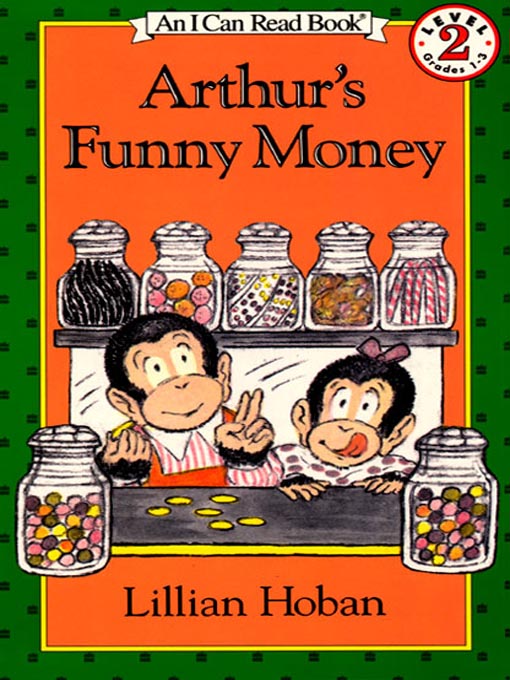
  • Teaching Economics with Children’s Literature: Arthur’s Funny Money

    60a8cf34-1428-46f4-9e0f-5f75506a8c5eimg100.jpg

    Arthur’s Funny Money, written and illustrated by Lillian Hoban, is a story about Arthur and his younger sister Violet. Violet is learning her numbers and asks Arthur for some help figuring out a problem.  He promises to help her but first needs her help to earn enough money to buy a shirt and cap for his Frisbee team.  Violet offers some suggestions to earn the money, like running errands or washing cars, but Arthur doesn’t like any of those ideas.   Arthur decides he’ll wash bikes to earn the rest of his money.  However, before he can start his bike washing business he needs to buy soap and a brush.  He uses the money he has to buy his supplies and then sets up his business. Some of his friends show up to get their bikes washed but some of them want deals and half prices washes because they brought their skateboard or they have a tricycle instead of a bicycle.  Arthur works out some deals and washes all their bikes and other wheeled things.  While he’s washing, Arthur has Violet keep track of the money he makes on a piece of paper.  After finishing all the bikes Arthur realizes he is out of soap so he and Violet go back to the story to buy more.  When they get to the store the soap is more expensive this afternoon then it was earlier in the morning.  Instead of buying it, they decide to go to another store and see if the soap might be cheaper there.   On their way, they pass the sports store where Arthur needs to go to buy his shirt and cap.  Violet thinks that Arthur might have enough money already to buy what he needs, so they go into the store to see.  The lady behind the counter tells Arthur he needs $4.25 to buy his shirt and cap.  He dumps out all his money and he and Violet check it against the list Violet recorded with all the money he made from washing bikes and he has $4.43!  He buys his shirt and cap and 5 licorice twists.  Violet reminds him she still needs help to solve her number problem.  So Arthur demonstrates the problem with licorice twists but is upset when he realizes that after helping her solve the problem he is left with only 1 licorice twist. But Violet shares the twists evenly with him and they both eat 2 and a half licorice twists for a job well done.

    Curriculum Connections
    Arthur’s Funny Money is suitable for grades K-3 and can be used to introduce and/or reinforce math or economic concepts. Arthur’s Funny Money can be used to explain how people need to work to earn money to buy the things that they want and how you have to make choices  about what you buy because you can not have everything you want(Va SOL K.6,7,1.8).  Opportunity cost can also be introduced with examples from the book(Va SOL 3.9).  Arthur’s Funny Money could also be used to help explain the difference between the use of barter and the exchange of money for goods and services(Va SOL 2.8).  In the area of math, Arthur’s Funny Money can be used as an introduction or as a reinforcement for the measurement of money(Va SOL K.7, 1.10a&b, 2.11a&b).

    Additional Resources

    • This website has several lesson plans for 2nd grade that introduce money.
    • This lesson plan can be used with 1st – 4th grade, and explains the different between goods and services.
    • This activity, which can be used at different levels, has students choosing items they can buy based on the amount of change they have.

    Book: Arthur’s Funny Money
    Author & Illustrator: Lillian Hoban
    Publisher: HarperCollins
    Publication Date: 1984
    Pages: 64 pages
    Grade Range: K-3
    ISBN-10: 0064440486

  • Microsoft Takes Back Its Naughty Ad For The Kin

    Perhaps in an effort to show that the iPhone isn’t the only super sexy young hip fun phone out there, Microsoft had a bit of a misstep recently with a commercial for the Kin that seemed to promote sexting, the act of sending graphic content via camera phones (aka the ultimate fear of teenagers’ parents everywhere).

    However after our eagle-eyed and infinitely more good-looking older sibs at ConsumerReports.com called Microsoft out on their blog on the dubious practice of using sex to sell their phones, they responded quickly.

    “Microsoft takes the issue of sexting very seriously and it was never our intent to promote it in any way,” said spokesman Patrick Neighorn.

    But Microsoft didn’t mean to suggest he was doing anything dirty that would inspire teens to do the same! Honest!

    A scene where a dude takes a picture under his shirt and sends it to a girl across the room at a party “did not come across in the spirit with which it was intended,” Microsoft says. “Upon further review, we have acknowledged that and since removed the clip.”

    Good thing you can still watch the video here.

    Microsoft Pulls Kin “sexting” video after Consumer Reports blog post/a> [Consumer Reports]

  • Bacon, Chicken and Avocado Salad

    ChickenBaconSaladLauren Seaver had us with the first three ingredients in her salad: bacon, chicken and avocado. What is there not to love? This combination is not new to most of you, in fact, you might even throw it into salads all the time. But if it’s been awhile, let us remind you how insanely delicious this simple combination is.

    Crispy, salty bacon is a perfect topping for cool, creamy avocado and the chicken thighs seared in bacon fat take on a deep, rich flavor that chicken doesn’t always have. It’s a comforting and satisfying combination, familiar ingredients that each take on a new dimension of flavor when paired with the others. You can toss this salad with any green you like, but there is something especially tasty about the combination of crisp romaine lettuce with bacon. While not a “dark, leafy” green, romaine still packs a nice nutritional punch and pretty much everyone loves the mild flavor, which makes it a good choice if you’re serving this salad to others (like picky family members).

    Lauren turns the flavor dial up a notch by garnishing with chopped walnuts, red onion and apple. Like any good garnish, this heightens the flavor in the salad and adds texture. You get a little sweetness, a little crunchiness and a nice bite from the red onion. All in all, this is exactly the type of salad that satisfies our hunger and provides the type of protein and good fat we all need to get through the day.

    For dressing, you can use any vinaigrette you like, or even just a drizzle of olive oil. If you want to try something new, however, Lauren has included her favorite Balsamic Apple Vinaigrette.

    Servings: Approx. 4

    Ingredients:

    saladingredients 2

    • 1/4 pound bacon, or 4-5 slices, cut into 1/2 inch bits
    • 8 boneless, skinless chicken thighs, chopped into 2 inch pieces, seasoned with salt and pepper
    • 1 avocado – peeled, pitted and cut into 1-inch chunks
    • 1 head romaine lettuce, chopped
    • 1/4 cup chopped red onion
    • 1/2 cup chopped walnut
    • 1 apple – cut into 1 inch chunks (optional)

    Instructions:

    In a pan over medium heat, cook the bacon “bits” until crisp.

    baconraw

    baconcooked

    Remove and set aside, but save the bacon grease in the pan. Next, add the chopped and seasoned chicken thighs to the pan and sauté in the bacon grease. Cook the chicken and turn so that every side is browned.

    chickencooked

    Allow it to simmer over low heat while you prepare the rest of the salad.

    Toss the chopped romaine, avocado, chicken and bacon together. Top with red onion, walnuts and apple. Dress with your favorite vinaigrette, or use Lauren’s:

    Balsamic Apple Vinaigrette

    dressingingredients 1

    • 1/4 cup balsamic vinegar
    • 2 tablespoon apple cider
    • 1 shallot, minced
    • 2 cloves garlic, minced
    • 1 teaspoon mustard
    • pinch salt
    • pinch black pepper
    • 1/3 cup extra virgin olive oil

    Mix all ingredients except olive oil (using a whisk, food processor, or blender). Slowly add in olive oil drop by drop to make an emulsion (like you would when making mayo) until it is all incorporated.

    ChickenBaconSalad

    Get Free Health Tips, Recipes and Workouts Delivered to Your Inbox

    Related posts:

    1. Chicken and Avocado Sandwich with Spinach Bread
    2. Curried Chicken Salad
    3. Coconut Encrusted Chicken Salad

  • Peter Gleick: Bottled and Sold — What’s Really in our Bottled Water

    My new book on bottled water is out, at last. “Bottled and Sold: The Story Behind Our Obsession with Bottled Water” (Island Press, Washington) has apparently (according to reports from my secret field agents) started appearing in book stores. You’ve been able to order it online for a while through Island Press, Amazon, Barnes and Nobles, and other places.

    There are some great stories in the book: here is a little one, about what’s sometimes found in our bottled water.

    ABOUT THE AUTHOR:
    Peter Gleick
    Dr. Peter Gleick is president of the Pacific Institute, an internationally recognized water expert and a MacArthur Fellow.

    You don’t find what you don’t look for. This maxim holds true for arms control, as Ronald Reagan noted. And it holds true for contaminants in bottled water. One would think and expect that bottled water would be cleaner than our tap water. But is it?

    The system for testing and monitoring the quality of bottled water is so flawed that we simply have no comprehensive assessment of actual bottled water quality. Don’t misunderstand me. The inadequacies of U.S. rules for testing bottled water do not mean that bottled-water quality is poor. If bottled water was monitored as consistently, frequently, and accurately as tap water, the evidence might show that it was just as good, or even better on average, than tap water. Given how much consumers pay for it, we certainly have the right to expect it to be better.

    But we’re just not looking carefully enough. And the bad news is that when we do actually look, we find evidence that there are potentially serious quality problems with bottled water, lurking just under the cap. Even worse, outside of the U.S. (where sometimes bottled water really needs to be better than tap water) there is growing evidence that bottled water quality can be terrible.

    Most of our tap water is completely safe; most of our bottled water is probably completely safe. But to know for sure, we must look carefully. And when we do actually look, we sometimes find more than we bargained for. The most famous example is when Perrier was discovered in 1991 to be contaminated with benzene. But this example is not the only one.

    Water Number: More than 100. After months of requests and two Freedom of Information Act requests to the US Food and Drug Administration (which regulates some bottled waters), I got a list of recalls of bottled waters in the U.S. Combined with other research, I ultimately compiled a list of more than 100 bottled water recalls, affecting millions of bottles of water.

    This list (which I will soon post online) includes a remarkable list of contaminants. In addition to the benzene found in Perrier, bottled water has been found to contain mold, sodium hydroxide, kerosene, styrene, algae, yeast, tetrahydrofuran, sand, fecal coliforms and other forms of bacteria, elevated chlorine, “filth,” glass particles, sanitizer, and in my very favorite example, crickets.

    Yes, crickets. In 1994, a bottler in Nacogdoches, Texas issued a recall for sparkling water found to be contaminated with crickets. The water was distributed in Alabama, Florida, and Georgia and the recall notice wasn’t issued until seven months after being bottled and distributed, making it unlikely that consumers were notified in time to avoid buying the contaminated bottles. Maybe they thought it was a bonus, like that worm in tequila, or the weird things sometimes found in flavored vodkas.
    However you feel about crickets, my guess is you don’t want them in your bottled water.

    In addition to bottled-water quality, the book talks about advertising and marketing, weird bottled waters claims, disappearing water fountains, conflicting and weak laws protecting consumers, and the growing revolt against bottled water. I’ll post a few more times in the coming months about some of these issues. But if you want the whole story, get the book!

    Peter Gleick
    (posted from England, where I’ve been grounded by the volcano)


    Dr. Gleick’s blog posts are provided in cooperation with the SFGate. Previous posts can be found here.

  • Toyota Recalls 600,000 Sienna Minivans

    Because 8 million recalled vehicles worldwide was apparently not enough for Toyota, the car giant has gone and recalled 600,000 of their Sienna minivans because of possible rust damage to the cable holding the spare tire.

    The recall covers two-wheel drive Siennas, model years 1998 to 2010, that were sold or are currently registered in 20 states and the District of Columbia.

    From a statement on the Toyota site:

    This condition may appear on certain 1998 through 2010 model year Siennas that have been operated in cold climate areas with high road salt use. Continued prolonged exposure to road salts may cause excessive corrosion of the carrier cable in some of these vehicles. In the worst case, the carrier cable may fail and the spare tire could become separated from the vehicle, a road hazard for following vehicles that increases the likelihood of a crash.

    Toyota is currently working to develop a remedy for this condition. Until this remedy is developed, customers will receive an interim notice instructing them to bring their vehicle to a dealership for a preliminary inspection.

    For now, the recall is limited to vehicles sold or currently registered in:
    Connecticut, Delaware, Illinois, Indiana, Kentucky, Massachusetts, Maryland, Maine, Michigan, Minnesota, New Hampshire, New Jersey, New York, Ohio, Pennsylvania, Rhode Island, Virginia, Vermont, Wisconsin, West Virginia and Washington, D.C.

    Toyota to Begin Voluntary Safety Recall on Certain 1998-2010 Model Year Siennas to Address Potential Corrosion on Spare Tire Cable [Toyota statement]

  • PalmCast Episode 103


    Derek, Keith, and (surprise!) Dieter discuss the buyout rumors, webOS development, and more.

    Thanks to everybody for writing and calling in!

    read more