
Blog
-
Microsoft’s ‘minimal participation’ in mobile market called increasingly ‘difficult to reverse’
-
Smile photographers: Pics.io delivers RAW photo edits in the browser
Does a browser replacement for Photoshop sound too good to be true? What if, to make it even better, it took advantage of Google Drive? Lets take it one step further and add image viewing and editing for RAW photography images, which are made from the native sensor data from a camera and are preferred by many photographers. By the end of this month, we could see all of that.
Pics.io is the service that says it can deliver all of this and it has several videos to show off the concept. For example, a browser can’t typically display a RAW image file because it essentially doesn’t know what to do with the sensor data that comprises the image. That’s why we collectively use different file formats, such as .JPG, .PNG, .TIFF and others on the web. This video shows that RAW images can be converted in the browser, viewed and even edited, although no heavy image manipulation is being done.
The support for RAW images is a big deal, but leveraging the cloud is another: The uncompressed and unprocessed data in a RAW image file causes the file sizes to be much larger than compressed versions. So if one had a high resolution Chromebook Pixel and say, a terabyte of Google Drive data to go with it — see where I’m going here? — Pics.io would be a hugely useful service. Here’s how the company describes it:
Imagine all your photos finally in one place. So you can enjoy them from any device – iPad, laptop, smartphone – without hardcore syncing and dealing with storage issues. Organized and searchable. Nope? Still not great? How about advanced post processing workflow (picture a combination of Lightroom and Photoshop)? And special algorithms to make photos of kittens even cuter. Well, maybe just the last is impossible.
There’s plenty more to see on the Pics.io site and I’m looking forward to seeing if it actually delivers. If so, I may dust off my old Canon DSLR and play with some RAW imagery in Chrome OS. Thanks much to Rick Huizinga for pointing out Pics.io. As he says, there’s one less potential barrier for people to use a web-based computer: “With a RAW photography tool, ChromeOS can now totally replace my need for a computer using a classic operating system.“

Related research and analysis from GigaOM Pro:
Subscriber content. Sign up for a free trial.- HTML5’s a Game-Changer for Web Apps
- What Does the Future Hold For Browsers?
- Podcast: Mobile winners and losers in 2012 and what to expect in 2013


-
Intel Continues to Rethink the Rack of the Future

Intel is continuing to advance its vision for new data center designs that rethink the traditional placement of components within the server and rack. After unveiling a prototype at the Open Compute Summit in January, Intel today offered details on a similar initiative by China’s largest Internet companies, and promised to release reference designs to help OEMs and end users deploy these designs.
Intel executive Diane Bryant today shared an overview of the company’s vision for “rack scale architecture” that would break apart elements of mass-market servers. Bryant, senior vice president and general manager of Intel’s Datacenter and Connected Systems Group, spoke at the Intel Developer Forum (IDF) in Beijng, China.
An early example of this vision is the Project Scorpio rack, which was jointly developed by Tencent, Baidu, Alibaba and China Telecom, who worked with technical advisors from Intel. In the Scorpio rack, the fans and power supplies are shifted from individual servers to rack-level “power zones.”
Not Unique, But A Step on the Journey
That in itself is not a unique concept, as there have been a number of designs that have shifted fans and power to the rack level, including various blade chassis, the CloudRack from SGI/Rackable and the Open Compute designs. But Intel sees Scorpio and similar efforts as the first step toward a larger rethinking of the server rack.
A prototype of the next phase was on display at the Open Compute Summit in the form of a photonic rack featuring technology from Intel, Corning, Quanta Computer and Facebook, which uses high-speed optical network connections to “disaggregate” the server, taking components that previously needed to be bound to the same motherboard and spreading them out within a rack.
The Intel/Quanta rack separates components into their own server trays – one tray for Xeon CPUs and another for its latest Atom CPUs, another for storage. When a new generation of CPUs is available, users can swap out a the CPU tray rather than waiting for an entire new server and motherboard design. The design is enabled by silicon photonics, which is at the heart of Intel’s interest in next-generation rack design.
Moving Beyond Proximity
Silicon photonics uses light (photons) to move huge amounts of data at very high speeds over a thin optical fiber rather than using electrical signals over a copper cable. Intel’s prototype can move data at up to 100 gigabits per second (Gbps), a speed that allows components to work together even when they’re not in close proximity to one another.
Intel’s strategy for evangelizing new rack designs involves participating in collaborative efforts like Open Compute and Scorpio, but also putting forward its own vision for how silicon photonics can revolutionize rack design (See Meet the Future of Data Center Rack Technologies by Intel’s Raejeanne Skillern, for more details). The next phase is a “modular refresh” of components, which is of particular interest to Facebook. When a new generation of CPUs is available, users can swap out a the CPU tray rather than waiting for an entire new server and motherboard design.
At IDF Beijing, Intel articulated this vision of how rack scale architecture will change how servers are built and refreshed. “Ultimately, the industry will move to subsystem disaggregation where processing, memory and I/O will be completely separated into modular subsystems, making it possible to easily upgrade these subsystems rather than doing a complete system upgrade.”
Separating the processor refresh cycle from other server components would create some interesting possibilities for Intel, which currently works closely with OEMs to coordinate the inclusion of new chips in new server releases. Facebook hardware guru Frank Frankovsky has said the ability to easily swap out processors could transform the way chips are procured at scale, perhaps shifting to a subscription model.
For now, Intel is developing a reference design that utilizes Intel technologies – including Xeon and Atom SoCs, Intel Ethernet switch technology and silicon photonics – that can be used by OEM providers to develop and deliver racks. The company has already developed a design guide for the Open Compute Project featuring intra-rack optical interconnect scheme that utilizes a New Photonic Connector (NPC).
Here’s a slide from Intel’s IDF Beijing presentation that outlines its vision for rack scale architecture (click for a larger image):

-
Watch Mad Men Season 6 Premiere On Android, iPhone, Kindle Fire
Mad Men returned to AMC on Sunday night after much anticipation from die hard fans of the popular series. For those who didn’t get to enjoy the show when it first premiered, AMC made it available to wach online for free.
AMC announced today that the episode is now available to watch on Android, iPhone, and Kindle Fire (for a limited time) via the AMC Mobile app. The episode is two hours long.
“The AMC app will also give you a sneak peek of next week’s episode, a behind-the-scenes video from every episode, and the current broadcast schedule for Mad Men,” the network notes in a blog post.
The next episode airs on Sunday at 10/9c. Here’s a preview:
I don’t think they’ll be giving us that one for free.
-
Roku Hits 5 Million Players Sold, 8 Billion Streams
Roku has just announced a pretty significant milestone: 5 million players sold.
Roku first launched in 2008, and the device was called “the Netflix player,” basically because its only function was streaming Netflix.
Over time, Roku broke out of the “Netflix box” moniker by adding plenty of other high-profile apps – Hulu Plus in 2010, HBO GO in 2011. Spotify and Time Warner Cable support more recently. As of now, Roku boasts around 750 channels. And with 5 million players sold, it’s clear that Roku holds a firm place in a market filled with streaming options. It’s about half of what Apple TV has sold (globally), for a competitive reference.
“What are people streaming on Roku? Tons of TV shows and movies. Netflix, Hulu Plus, Amazon Instant Video, Crackle, HBO GO and VUDU are all top favorites. Music is extremely popular, and consumers enjoy Pandora, VEVO and Spotify among other choices. News, sports, science and foreign languages from around the world are also big hits. Did I mention games? In 2011, we introduced casual games to the Roku platform with the debut of Angry Birds, which took the leap from mobile to TV for the first time. Angry Birds remains the most popular game on Roku today – by our count more than 3 billion bad piggies have been eliminated!” says Roku founder and CEO Anthony Wood.
Roku says that these 5 million boxes have streamed over 8 billion individual items of content of video and music, and that 25% of all Roku players stream over 35 hours per week.
Roku just launched their new device, the Roku 3 box, last month – and it’s been getting some good reviews. Are you a Roku user? What do you think the furutre holds for set-top boxes that pretty much exclusively stream online content to TVs?

-
The IRS Doesn’t Think The Fourth Amendment Applies To Your Email
The IRS runs a number of tax audits each year, and as such, has to obtain information on private citizens. If the information is in a physical format, the agency must obtain a warrant to access it. If it’s stored online via email or other electronic information, there is no such protection.
In a Freedom of Information Act request, the ACLU obtained a number of IRS documents that explain the agency’s rules in regards to obtaining digital information. Much like other law enforcement agencies, the IRS operates under the ECPA, a decades-old law that allows government agencies to obtain emails without a warrant if said email has been opened or is more than 180 days old.
So far, all of this is old news. What’s the IRS doing that’s so different from any other agency? In the official IRS search warrant handbook from 2009, the agency’s guideline explicitly states that the Fourth Amendment doesn’t apply to online communications. Here’s the relevant portion of the handbook:
“…the Fourth Amendment does not protect communications held in electronic storage, such as email messages stored on a server, because internet users do not have a reasonable expectation of privacy in such communications.”
To make matters worse, the IRS Office of Chief Counsel reiterated this line of thinking a year later when they said that the Fourth Amendment does not “protect emails stored on server.” The ACLU points to other documents that imply the IRS is obtaining emails left and right without a warrant all thanks to the ECPA’s outdated definitions.
It’s no surprise to see the IRS taking advantage of the Fourth Amendment loophole in the ECPA. The surprising part is just how frank the agency is about its data collecting methods. It’s also depressing to see that the agency feels that American citizens “do not have a reasonable expectation of privacy” on the Internet.
Of course, all of that should have changed in 2010 with the United States v. Warshak, a Sixth Circuit Appeals Court ruling that found law enforcement had violated a man’s Fourth Amendment rights when they obtained his emails without a search warrant. Unfortunately, the IRS feels that it would only need to consider obtaining a warrant when dealing with cases in the sixth circuit. It’s still open season for warrantless email collection everywhere else.
It’s a little distressing to find that the IRS holds Americans’ Fourth Amendment protections in such low regard, but it’s only foolish at this point to think any government agency actually cares about the Fourth Amendment in regards to online communications. We can only hope that Congress passes one of the many bills it’s proposing this year to reform the ECPA.
-
Tumblr Gets Rid Of Storyboard, Team
Tumblr announced that it is shutting down its Storyboard project. According to reports, the company has laid off the tour-person team behind it.
Storyboard launched last May. Here’s an overview:
Here’s what Tumblr had to say about its demise on its Staff blog:
A year ago, Tumblr did something unprecedented — we created an editorial team of experienced journalists and editors assigned to cover Tumblr as a living, breathing community. The team’s mandate was to tell the stories of Tumblr creators in a truly thoughtful way — focusing on the people, their work, and their stories. The result of this ambitious experiment was Storyboard.
After hundreds of stories and videos, features by publishers ranging from Time to MTV to WNYC — not to mention a nomination for a James Beard Award and entries into this year’s NY Press Club Awards — we couldn’t be happier with our team’s effort. And as Tumblr continues to evolve, we’ll always be experimenting with new ways to shine light on our creators.
What we’ve accomplished with Storyboard has run its course for now, and our editorial team will be closing up shop and moving on. I want to personally thank them for their great work. And please join us in wishing them well.
Tumblr itself topped 100 million blogs last month. A recent survey indicated that it tops Facebook in usage among teens.
-
LinkedIn updates its Recruiter page, showing where the company is putting its focus
LinkedIn gave its Recruiter page on update on Wednesday, overhauling the look and some of the features on the portal for companies looking to find employees on LinkedIn.
 The Recruiter page, which provides a tour of the new features on its homepage, will let recruiters manage notifications and messages, set to-do items, customize the feed and mark employees they’re interested in, get suggestions on people they might want to hire, track how many people are applying for listed positions, and save searches and history from the main search bar. The company explained the full set of new features and updates in a blog post Wednesday.
In February, LinkedIn posted exceptionally strong fourth quarter earnings, exceeding analyst expectations and reporting revenue that was 81 percent higher than that of the same quarter for 2011. And 53 percent of that fourth quarter revenue came from the “Talent Solutions” portion of the company, amounting to $161 million, or a 90 percent increase over Q4 2011.
LinkedIn has performed relatively well compared to its public social peers like Facebook, as companies are very willing to invest money in hiring, and LinkedIn is increasingly becoming the platform where people both list and apply for jobs. As others have noted, the company has built a strong business around gathering and distributing resumes and employment information to companies who want that data. The company just hit 200 million registered members in January.

Related research and analysis from GigaOM Pro:
Subscriber content. Sign up for a free trial.- Social 2013: The enterprise strikes back
- The quantified self: hacking the body for better health
- Social media in Q1: commerce and discovery dominated

-
Dropbox single sign-on means business
 Dropbox adds features gangbusters in an effort to compete with rivals like SkyDrive, which is now built into Office 2013 and will get deeper Windows integration when “Blue” is released. Now Dropbox for business has announced it will be adding single sign-on, or SSO, a feature the company claims is near the top of the request list from business users.
Dropbox’s Anand Subramani claims the company is working with Ping Identity, Okta, OneLogin, Centrify, and Symplified to make this new feature a reality. If a company has already built its own SAML-based federated authentication process then it will work with Dropbox also. Once logged in to your system, there’s no need to sign in to Dropbox separately. Subramani also promises that “using the industry-standard Security Assertion Markup Language (SAML), this implementation of single sign-on integrates easily with any large identity provider your company may use as long as it also supports SAML”.
The cloud storage company also boasts few numbers. For instance, Dropbox claims its service is now used by 95 percent of Fortune 500 companies and more than two million businesses overall. It also claims that those businesses move over 600 million files to Dropbox every week.
The new update is available now and Dropbox promises that it will continue to innovate with new features for corporate customers, though there were no hints given regarding what will be next.
Photo Credit: Fer Gregory/Shutterstock
-
Wrestlemania Burns: Dry Ice Was the Culprit, Says Triple H
Anyone who watched Wrestlemania 29 this past weekend may have wondered what exactly was stuck to Triple H’s torso during his appearance at the event. It turns out that the stuff was dry ice, which burned the wrestler during his ‘No Holds Barred’ match against Brock Lesnar.
According to a TMZ report, Triple H was hit with dry ice while making his entrance into the MetLife Stadium arena. The special effects that accompanied the wrestler’s bombastic entrance blasted the wrestler with the super-cold carbon dioxide, giving him second-degree burns.
Being a professional wrestler, however, Triple H worked through the pain. He endured a 24-minute match against Lesnar to, as the storyline held, save himself from forced retirement.
Triple H took to Twitter this week to show off the aftermath of the burn:
For those wondering… Stuff stuck to me at mania was dry ice. Gave me 2nd degree burns on torso & arms http://t.co/35Q4KUxcXo

Triple H also injured his left arm during the Wrestlemania match, leading to a series of X-rays and a bandaged wrist shortly after the fight:
Hand and arm not working, head to toe pain…… loved every minute!!!!! #WRESTLEMANIA29http://t.co/ky0D4BhS1P

-
Free Canadian Used Car Classified Ads on BlackBerry 10 with autoTRADER.ca
autoTrader is Canada’s leading automotive marketplace with a strong print and mobile presence. They’ve recently released a new BlackBerry 10 version of their app that helps people find used cars, trucks, motorcycles, RVs, boats, trailers, ATVs and snowmobiles.

Search by vehicle type and filter by year, price range and mileage. Compare vehicles, find dealers closest to you and when you’re ready to make a deal you can map out where the dealer is located.
Another advantag of getting the app is that you get to post a free classified ad directly from your BlackBerry.
Click here to download autoTRADER.ca Free for BlackBerry 10 and Legacy BlackBerry OSes.
-
Facebook Rolling Out Action-Based Status Option That Links to Pages
After testing the new feature back in January, Facebook has officially launched their new action-based statuses that let you share how you’re feeling or what you’re doing with a fun little emoticon.
And and automatic link to the relevant Facebook page, which is the key aspect of this new feature.
Starting today, Facebook is rolling out the new sharing option to U.S. users. The rollout will take a couple of weeks, according to the company. What you’ll find is the inline ability to share action verb statuses – “feeling,” “watching,” or “drinking,” for instance.
“Josh Wolford is watching Jurassic Park,” maybe. Alongside the statues will we a little icon specific to the action (for watching, a little movie cut scene board. The object of the action will also get its own link in your status – leading users to its Facebook page.

It will also be added to the appropriate box in your Timeline (Movies box, in this case).
As we touched on back in January when Facebook first began to test these action-based statuses, this is clearly not just Facebook bringing back emoticons for the hell of it.
At the time, Facebook said:
“It’s just a new way for people to visually represent what they’re doing and how they’re feeling through their Facebook posts. It will only be available to small set of people. This isn’t integrated into Graph Search. It’s just a small test to see if people are interested in sharing their actions in a more visual way.”
But you have to imagine that this sort of data could be integrated into Graph Search. Using an action status already automatically adds the direct object of the actions (whether it be a movie, food, book, musical artist, etc) to your Timeline.
“These updates, and the stories added to your timeline, respect the privacy settings you choose for your post,” says Facebook. So as long as you have your privacy settings tooled correctly, these action statuses shouldn’t open you up any more than a regular status update or “liking” the product in question would.
But this structured status update makes it much easier for Facebook to collect data on your activities, the same way they do with Open Graph actions. And more information means that Facebook knows which pages to suggest to you, and which ads to target you in both the news feed and otherwise. It’s also another format for Facebook to use in Sponsored Stories. If you post one of these action statuses that says you were drinking coffee at Starbucks, you know that at some point, your friends will be shown that status as a sponsored post in their news feed. It’s simply Facebook taking the page-tagging out of your hands, and doing it for you.
Is it a data grab? Sure. But as Facebook says, it’s also a fun new way to more visually express your activities. Use it or not, it’s up to you. Which is the great thing about all social media, really. You give up just as much data as you want to give up.
-
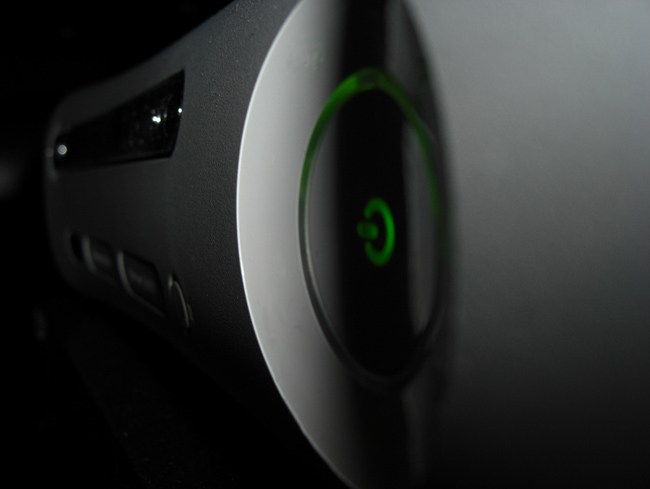
Next-generation Xbox will reportedly take over TVs with deep set-top box integration
-
Dell Create Cloud Service Aims at Media Crowd
The 2013 National Association of Broadcasters show in Las Vegas this week brought news from Dell, Avere and Arista Networks.
‘Dell Create’ Cloud Service Will Cater to Media & Entertainment Clients. Dell announced Dell Create, a multi-vendor cloud service for content creators, designed to help large broadcast companies, studios, creative shops and other media and entertainment customers dramatically improve their content workflows with a centralized IT environment. The process for Dell Create includes getting an understanding of the customer environment, recommending the best workflow, and then developing a recommendation for an up-to-date networked infrastructure based on customer direction. “Dell Create is based on direct customer feedback and the pain points those customers experience in the workflow process,” said Chad Andrews, Dell Media & Entertainment vertical strategist. “Dell Create offers customers a COMPASS (Collaborative Multi-vendor Platform-as-a-Service) computing model that enables customers to benefit from an ecosystem of best-of-breed vendors that share a pool of common technical resources, dramatically reducing costs and eliminating redundancy.” At NAB 2013, Dell is showcasing its portion of the StudioXperience Sponsored by Intel, where a number of media technology providers have embraced the Dell Create vision.
Avere unveils hybrid storage. Avere Systems unveiled its next generation FXT 3800 hybrid Edge filer, which contains both Flash/Solid State Drive (SSD) media and Serial Attached SCSI hard drives (SAS HDD) and delivers significant performance gains in benchmark testing. With this new hybrid technology, Avere can now automatically tier data across four media types: RAM, SSD, SAS and SATA HDDs, delivering maximum performance for the hottest files, while at the same time moving cold data out of the performance tier and onto SATA to minimize costs and shrink the data storage footprint. “With the new FXT 3800, Avere continues to be on the cutting edge of file system storage innovation and gives companies a new way to think about the way they purchase data storage,” said Benjamin Woo, analyst with Neuralytix. “Customers can now receive the greatest amount of flexibility and choice by leveraging all four media tiers of storage, while defining the performance and efficiency requirements based on the activity of the data.” The Avere FXT 3800 Edge filer contains 144GB of DRAM, 2GB NVRAM and 800GB of SSD to accelerate the read, write and metadata performance of most active data.
Arista selected by EditShare. Arista Networks announced that EditShare, Inc. will incorporate Arista 7050T-52, 10GBASE-T, low-latency switches for its networked shared storage architecture and collaborative editing solutions. “With 10GbE it’s like night and day – workstations connecting to EditShare architectures through the Arista 1G/10GBASE-T switches transfer files in a snap” said Andy Liebman, CEO and Founder of EditShare. The 7050T-52 Series switches provide 48 ports of 100/1000/10GBASE-T to server and storage nodes and will support existing connection to 1GbE workstations and to those who migrate to 10GbE.
-
Cyclists to raise funds for UCLA Blood and Platelet Center; young patient kicks off race
WHAT:
Some 1,000 cyclists will raise funds for the UCLA Blood and Platelet Center while enjoying a fresh-air tour of more than 65 scenic, cultural and historic landmarks in Los Angeles during the 16th annual Volkswagen City of Angels Fun Ride. Riders, who can choose from a 51-mile advanced race or a 31-mile recreational route, will be escorted by Los Angeles Police Department motorcycle officers, with rolling closures of city streets for traffic-free cycling.Proceeds support UCLA’s mobile blood-donation program, which collects 22,000 units of blood a year, supplying half the transfusions for patients at UCLA Health System hospitals. Last year’s event raised $73,500 for the center.A finish-line festival, featuring a free lunch catered by Sharky’s Woodfired Mexican Grill and the raffle of a VW Beach Cruiser bicycle, a carbon-fiber Super Bike and many more prizes, will conclude the event, which is sponsored by Volkswagen, KHS Bicycles, Pace Sportswear and the Los Angeles Police Revolver and Athletic Club.
WHO:
A young UCLA patient who benefited from blood donations will kick off the race by driving the pace car with her fiancé and parents:Jennifer GoldenGolden, 21, of Las Vegas, is a college student with cystic fibrosis who underwent a rare double-organ transplant to replace her infected lungs and deteriorating liver at Ronald Reagan UCLA Medical Center in 2011. Her life was sustained during her 13-hour surgery by lifesaving donations of 12 units of blood, 11 units of plasma and one unit of platelets from 24 anonymous donors.WHEN:
Sunday, April 146 a.m.: check-in7:25 a.m.: Jennifer Golden introduced to crowd before revving up pace car7:30 a.m.: advanced ride starts7:50 a.m.: recreational ride starts9:30 a.m.: UCLA blood drive*11 a.m.: lunch and finish-line festival* Those interested in donating blood at the blood drive should call 310-825-0888, Ext. 2, to reserve a slot.WHERE:
The start/finish line is at the Los Angeles Police Academy, 1880 Academy Dr., Elysian Park 90012 (map)MEDIA CONTACT:
Elaine Schmidt, UCLA Health Sciences Media Relations[email protected] | 310-794-2272 or 310-597-5767 (Sunday only)FUN RIDE CONTACT:
Peter Heumann, Heumann Powered Productions[email protected] | 818-825-7383 -
President’s 2014 USGS Budget Proposal Strengthens Science
President Obama’s fiscal year (FY) 2014 budget request for the U.S. Geological Survey is $1.167 billion, an increase of $98.8 million above the 2012 enacted level, reflecting the Administration’s commitment to scientific research and development as the foundation for innovation, socio-economic well-being, environmental sustainability, and sound decisionmaking. This includes science to support the safe and responsible development of domestic energy, protect critical water resources and ecosystems, respond to natural disasters, and advance our understanding and resilience to the effects of climate change.
The proposed 2014 USGS budget priorities include studying energy resources and environmental issues; advancing water monitoring and availability research; supporting the nationwide streamgage network; improving the capacity to quickly and effectively respond to natural hazards; providing information needed to protect priority ecosystems; and enhancing climate change research that is user-focused to address specific needs of natural resource managers across the landscape.
“The USGS prides itself in providing relevant and reliable Earth science, and our range of specialized expertise makes us a leader in supporting the President’s focus on research and development,” said acting USGS Director Suzette Kimball. “Starting with science is the foundation for making decisions that ensure the safety of our Nation and a robust and resilient economy. The proposed budget supports programs that are unique to the USGS, ultimately enhancing understanding of our land, its resources, and potential hazards that face us.”
Proposed USGS key increases are summarized below. For more detailed information on the President’s proposed 2014 budget, visit the USGS Budget, Planning, and Integration website.
New Energy Frontier
To ensure a robust and secure energy future for the Nation, President Obama emphasizes an “all-of-the-above” strategy, and the USGS has an important contribution in each component of that strategy. Proposed funding increases totaling $4.0 million will support the exploration of geothermal resources on Federal lands as well as research to support mitigation of the impacts of wind energy on wildlife. A total of $18.6 million, an increase of $13.0 million, will support interagency science collaboration between the USGS, the Department of Energy, and the Environmental Protection Agency to understand and minimize potential adverse environmental, health, and safety impacts of shale gas development through hydraulic fracturing.
Water
As competition for water resources grows, so does the need for better information about water quality and quantity. Funding in the 2014 proposed budget includes an increase of $7.2 million to fund more than 400 streamgages that would enhance the ability to monitor high priority sites sensitive to drought, flooding, and potential climate change effects. The budget also includes $22.5 million for WaterSMART, an initiative focused on a sustainable water strategy to address the Nation’s water challenges. WaterSMART includes the combined efforts of the USGS and the Bureau of Reclamation.
Natural Disasters
In the past year, the USGS responded to hurricanes Sandy and Isaac, wildfires ravaging the West, worldwide earthquakes, historical floods, and many other natural disasters. The budget proposes $2.5 million to improve rapid disaster response, allowing the USGS to better provide timely and effective science to minimize hazard risks to populations and infrastructure. Funding support includes improvements in early warning and scenario products for earthquakes, eruptions of volcanic ash, landslides and debris flows. In addition, an increase of $1.2 million is proposed to expand seismic networks along the Central and Eastern United States and improve the suite of USGS products that provide “situational awareness” for responders to gauge earthquake impacts and plan response activities.
Ecosystem Priorities
USGS scientists conduct research and monitoring to understand how ecosystems are structured and function, helping improve sustainable stewardship of the Nation’s natural resources. The 2014 budget request includes increases totaling $16.6 million for priority ecosystem science. This includes research to control and manage invasive species, such as Asian carp in the Great Lakes and the Burmese python in the Everglades. The proposed budget includes strong support for ecosystem restoration in the California Bay Delta, Chesapeake Bay, Columbia River, Everglades, Great Lakes, Klamath River, Puget Sound, and Upper Mississippi River as well as efforts to better understand and account for ecosystem services in decisionmaking.
Climate Change Science
The FY 2014 budget request includes a total of $67.8 million for the Science for Adapting to a Changing Climate initiative that advances understanding and enhances resilience in the face of changing conditions. Funding increases for the USGS National Climate Change and Wildlife Science Center (NCCWSC) and the eight DOI Climate Science Centers (CSCs) will provide applied science and tools to support adaptive and resilient management of natural resources on public and tribal lands, help facilitate coordination of climate change research across Federal agencies, and improve understanding of nationwide challenges such as sea-level rise and drought. Increases in the Climate Research and Development Program will improve understanding of current and future impacts change and needs specific to regional areas. Funding for the Biological Sequestration program in 2014 will advance methodologies and models needed to complete the national biological carbon sequestration assessment and provide science and tools for land and natural resource management.
Land Imaging Satellites
With Landsat 8 successfully launched in February, the USGS is preparing for the handover of operational responsibility from NASA and will continue to operate Landsat ground systems for receiving, processing, and disseminating the valuable imagery. The USGS will also be working with NASA to analyze user requirements and develop a successor mission to Landsat 8, with timing and configuration designed to minimize the risk of a gap in the unparalleled 41-year historical record of this data. Funding to begin work on the successor mission is provided in the 2014 budget for NASA, which will be responsible for the operation, building, and launching of Landsat-class land imaging satellites going forward, in partnership with the USGS.
Critical Minerals and Rare Earth Elements
Many existing and emerging technologies that are important to our economy and national security are generating unprecedented demand for critical minerals. Ensuring an adequate supply of critical minerals depends on learning how they form and where they are most likely to be found in the Earth’s crust. An increase of $1.0 million is proposed specifically for USGS research on rare earth elements, which are a type of critical mineral. An additional $1.1 million is proposed to expand research on other high priority minerals critical to American manufacturing.
Additional Science Priorities
The 2014 budget would expand USGS youth programs and partnerships with a proposed increase for the development of a 21st Century Conservation Service Corps, an element of the Youth Stewardship and America’s Great Outdoors Initiatives. The budget request would support studies that address environmental impacts of uranium mining as well as emerging contaminants and pathogens. The USGS component of the Big Earth Data Initiative will support standardizing and optimizing the management of data from Earth observations systems, such as water and wildlife monitoring networks, operated by the Department of the Interior to support decisionmaking, scientific discovery, and technological innovation. Increased funding will be provided to begin implementation of the 3D Elevation program, responding to a growing need for high-quality topographic data and a wide range of other three-dimensional representations of the Nation’s natural and constructed features to meet needs such as quantification of flood risk and coastal vulnerability to storms.
Budget Reductions
The proposed USGS budget for 2014 includes reductions based on careful and difficult consideration for balancing national Earth science and technology priorities and needs. Proposed reductions include mineral resources research, the Water Resource Research Institutes, the National Civil Application Program, North American Data Buy, and internal administrative costs.
-
Microsoft Office for Android and iOS might not launch until 2014

-
HTC releases the DROID DNA and One source codes

Sure HTC may be dealing with unprecedented shipping delays for its One smartphone, but that hasn’t stopped it from releasing the coveted source code for the anticipated device, as well as the DROID DNA smartphone to the general public. This means that all of you fiddlers and hooligans that like to “tweak” the device will finally have one of the major tools necessary to make the phone just a wee bit better. DROID DNA owners will no doubt be happy about this news, but here’s hoping that all One fans will be patient for just a little longer because hey— the wait will certainly be worth it.
source: HTC (Twitter)
Come comment on this article: HTC releases the DROID DNA and One source codes
Visit TalkAndroid for Android news, Android guides, and much more! -
Samsung further toots its Galaxy S 4′s innovative features by telling the masses we still don’t know how truly awesome the features are

We already know that Samsung’s Galaxy S 4 smartphone comes jam-packed with a ton of awesome new features, but what Samsung is out to show there is truly more to the device than anyone could have ever imagined. The world’s largest manufacturer believes that “true innovation involves giving more meaning and comfort to the lives of users through new technologies“. The effect is that the Galaxy S 4 features a combined nine sensors and tons of recognition technologies which aim to learn a user’s behavior, which pretty much aims to make one’s life as easy as possible because hey— we can all be thankful for the Galaxy S 4 having the ability to turn the screen off on its own in order to prevent unnecessary touch interaction while the user is on the phone, right?
You can check out all the interesting sensors and jazzy stuff at the link below.
source: Samsung Tomorrow
Come comment on this article: Samsung further toots its Galaxy S 4′s innovative features by telling the masses we still don’t know how truly awesome the features are
Visit TalkAndroid for Android news, Android guides, and much more! -
Ed tech startups compete for modest prizes from Gates Foundation, Facebook
Every time you unlock your phone, you likely type in the same, boring old code. But imagine if, each time you wanted to use it, your phone prompted you translate a Facebook friend’s status message into Spanish or French or another language of your choice. It might not make you fluent overnight, but it’s a clever way to get some educational value out of an otherwise mundane task.
That app, developed by a team from online learning company Quizlet, was one of three winners picked by the Bill & Melinda Gates Foundation and Facebook at their HackEd 2.0 challenge Tuesday night. The two organizations hosted 24 teams of developers, educators and others for a day-long event and hackathon at Facebook’s Menlo Park headquarters focused on all things ed tech.
“[We wanted] to provide students with tools that are useful and actionable … and to get the best talent pointed at these big important problems in education,” said Emily Dalton Smith, a program officer at the Gates Foundation. Given Facebook’s popularity among young people and the social media giant’s connection to a technical crowd, partnering with them was a natural choice, she said.
An earlier hackathon hosted by the two organizations in September was a closed, invitation-only affair. But this week’s hackathon started in March with an open call for developers, educators and others around the country to submit app ideas related to college readiness, social learning and out-of-school learning. About half of the teams that applied were invited to attend and, at the event this week, they were given six hours to turn their ideas into a working prototype. Later this month in London, the organizations will host a smaller ed tech hackathon.
Participants were selected from around the country, including teams from Stanford, Berkeley, the Worcester Polytechnic Institute and a couple of high schools, Dalton Smith said. In addition to Quizlet’s team, other winners included:
- Edumacation — Created by a team from Facebook, the app uses the social network’s open graph to help students create pathways to college and beyond by finding people with common characteristics or relevant experiences. For example, a high school student could use it to find graduates of her high school who are now enrolled at Harvard or a college student could use it to find a Facebook employee who went to her alma mater.
- Outspoken — Created by a team that includes one teacher, it helps students build Common Core reading and listening skills by exchanging video and written content with peers on Facebook.
For winning the hackathon, the teams received $5,000 each — not a big sum compared to the millions upon millions that the Gates Foundation gives to education initiatives in the U.S. But the point of the hackathon was to spark and reward innovation among new groups of talent and to make social media — which young people already use for learning and figuring out the college process — more useful.
“First-generation college-going kids are using Facebook in particular to seek out role models,” Dalton Smith said. “[We want] to help with what they’re doing.”

Related research and analysis from GigaOM Pro:
Subscriber content. Sign up for a free trial.- How consumer media will change in 2013
- Social 2013: The enterprise strikes back
- Examining the rise of crowd labor platforms in 2012


