Blog

  • Microsoft is nowhere near death’s door

    I am both a Microsoft fanboy and hater, depending on which day I read comments from our BetaNews faithful. The truth be known, I consider myself neither. I would say it this way: I am a fanboy of what works and is useful to me and hater of everything on the opposite side of that line. I use products from many manufacturers, but yes, Microsoft powers all of my home computers, save the server, which is FreeBSD. Google is also a big part of my daily life, as is Adobe and many lesser-knowns.

    For two days now, debate rages across the Internet about an analyst’s content that Microsoft could be irrelevant within four years. I could do nothing but laugh when I read this. This revelation derives from Gartner report that states: “While there will be some individuals who retain both a personal PC and a tablet, especially those who use either or both for work and play, most will be satisfied with the experience they get from a tablet as their main computing device”. Some individuals? By that, do you mean those who have jobs?

    Getting Down to Business

    Little more than a year ago, I worked in an IT department for a major U.S. bank. I will spare you the details of downsizing that led me here. What I can point out is that the company, with more than 5,000 employees, was not exactly heading into the tablet era. When I left, the financial institution was only just “testing” Windows 7 for an upcoming upgrade from the current XP workstations, which were upgraded from NT. Tablets were not on the horizon. For the record, Windows 8 was already available via Developer Preview at this point. Heck, we had only just moved from Internet Explorer 6 to IE 7 the previous year.

    My point: Business is going nowhere away from Microsoft any time soon, let alone within the next four years. No serious corporation is going to give its employees tablets to do a job in customer service or most any other position.

    For the record, this is strike one against Microsoft’s irrelevance.

    Going Home

    Tablets and smartphones are great devices to have. They are useful sitting on a nightstand or from the sofa while watching television. Let me know when you can use them for real word processing or for software like genealogy, photo and video editing, file conversion or any of those other processor-intensive apps many families use frequently.

    I doubt many homes plan to be without a computer anytime in the near future. Laptop or desktop, it has a place. My kids may want tablets, but they do not want them when they have a school paper to write or research to do.

    Strike two.

    Out in the Real World

    Perhaps the analysts forget how much of their “bubble” world is actually powered by the Redmond, Wash.-based company. Let me take this opportunity to remind them.

    I am sure several drive Ford cars, powered by Microsoft Sync. I am sure all use ATM machines powered by Windows embedded, as are the registers in the stores they shop at. In fact, Home Depot just recently announced it would be moving registers and other devices to Windows Embedded 8 —  a real shame since Microsoft is going away.

    Strike three.

    Rumors of Microsoft’s Demise Have Been Greatly Exagerated

    Microsoft may decline in the future, but lower PC sales simply indicate the robustness of today’s hardware. Tablets and smartphones have become the throw-away devices for which we frequently buy replacements. The PC is not going anywhere anytime soon and neither Apple operating systems nor Linux will power the device in the majority of homes.

    Microsoft is not perfect. Lord knows I have my share of problems with its products and the sometimes boneheaded decisions it makes. But folks, get real — ninety-percent market share does not vanish overnight, or even in four years. Forget the tablets and phones, computers simply are nowhere near death’s door, as some would have you believe. Nor is Microsoft.

  • TEDWeekends explores the truth about medical studies

    Photo: James Duncan Davidson

    Photo: James Duncan Davidson

    At TEDMED 2012, Ben Goldacre shared a startling reality: that doctors are not able to read all the studies conducted on a pharmaceutical before prescribing it to their patients. Ben Goldacre: What doctors don't know about the drugs they prescribeBen Goldacre: What doctors don't know about the drugs they prescribeThis is because of a bias in medical research toward positive results – while one study confirming a drug’s effectiveness may be published, the results of other studies may simply be unavailable. Goldacre warns that about half of all drug trial result are buried – and this is across all medical fields – and thus doctors are left hugely uninformed even as they reach for their prescription pads.

    This week’s TED Weekends on the Huffington Post explores Ben Goldacre’s talk on the truth about medical research. Below, find a selection of essays to pique your interest:

    Ben Goldacre: We Need to See Pharma’s Failures

    TED can sometimes portray science in triumphalist tones, with fabulous innovations that are changing the world forever. But the real action in science is often around dirty, messy, angry problems, and my TED Talk is about the dirtiest I’ve seen yet.

    Doctors need the results of clinical trials to make informed choices, with their patients, about which treatment to use. But the best currently available evidence estimates that half of all clinical trials, for the treatments we use today, have never been published. This problem is the same for industry-sponsored trials and independent academic studies, across all fields of medicine from surgery to oncology, and it represents an enormous hidden hole for everything we do. Doctors can’t make informed decisions, when half the evidence is missing. Read the full essay »

    Wray Herbert: Is the Placebo Effect Dangerous?

    Physician and medical gadfly Ben Goldacre is well known for his relentless crusade to keep medical researchers and drug makers honest — and improve healing in the process. His recent and popular TED Talk focuses on a particular form of research misconduct that strikes at the core of all evidence-based treatment — the failure to publish negative findings. This publication “bias” is not subtle or inadvertent in most cases; indeed the opposite. The deliberate non-reporting of results unfavorable to a drug’s reputation is often motivated by greed, and can be lethal to patients.

    As Goldacre and others have described elsewhere, other clinical research biases are less blatant and criminal, but they nevertheless undermine consumers’ trust in science and clinical evidence. I’d like to discuss one of those less obvious biases here today — this one from psychological science. It’s the result of a fundamental misunderstanding of placebo effects and control groups — a misunderstanding that, scientists are now arguing, invalidates any claims of effectiveness for almost all psychological interventions. Read the full essay »

    Toni Miller: Getting Past the Idea of Failure

    In his eye-opening talk, “What Doctors Don’t Know About the Drugs They Prescribe”, doctor and epidemiologist Ben Goldacre shows us the ways in which researchers can, and often do skew the data in studies, particularly those conducted in trials funded by the pharmaceutical industry, in order to influence the perception of their products. He points out that often times as much as half of the data is missing because the researchers typically do not publish the results of negative studies.

    In absence of the full picture, doctors and the public can easily fall prey to the idea that a particular drug or treatment is effective, when in fact, the data would say otherwise. This is a serious problem. It is not a matter of simply persuading people to buy a new wrinkle cream. In many cases, particularly in the case of heart medication or cancer treatments, it is the difference between life and death. Read the full essay »

  • Can big tech overcome its love-hate relationship and destroy patent trolls once and for all?

    There has been a lot of talk in the tech world lately about defensive patent licenses and eliminating patent trolls, but I wouldn’t break out the celebratory champagne just yet. As much as technology companies seem to love the idea of killing patent trolls where they sleep — in a comfy bed of intellectual property acquired with proactive litigation in mind — they don’t yet seem willing to take a real stand. And some actually seem content to keep feeding the trolls the IP morsels they need as sustenance to stick around.

    If tech companies were serious about getting rid of patent trolls and spurring innovation, their first steps might be building a unified front and applying their ideals uniformly across their IP efforts. On Friday, for example, Google teamed with BlackBerry, Red Hat and EarthLink to file comments with the Federal Trade Commission about the scourge that is patent-assertion entities — institutions that get the rights to IP from operational entities (i.e., companies that actually sell products versus just sue) and then file lawsuits on their behalf. It’s a meaningful action and it addresses a real problem — Red Hat and Rackspace just emerged victorious after a lawsuit with a patent-assertion entity, in fact — but the backstory is a bit more convoluted.

    For starters, a skeptic might argue, Google’s interest (and possibly BlackBerry’s, as well) is primarily about sticking it to Microsoft in mobile. After all, it wasn’t so long ago — May 2012 — that Google filed a complaint with the European Union accusing Microsoft and Nokia of engaging with a known patent-assertion entity, called Mosaid, in order to stifle the growth of the Android operating system in Europe. Before ultimately teaming up to acquire Kodak’s patents out of bankruptcy, Google accused Apple and Microsoft of teaming up to buy them and dump them into a patent-assertion entity.

    Ironically, though, the very same FTC to which Google is now petitioning recently said the search giant has been abusing its own standard essential patents in mobile by pursuing injunctions against competitors who sought to license them — namely Apple and Microsoft. And BlackBerry, under its former RIM moniker, was part of an Apple and Microsoft-led consortium that bought Nortel’s IP assets in 2011, much to Google’s chagrin. I suspect these apparent hypocrisies only scratch the surface of what’s going on in mobile and across the IT landscape.

    There are obviously some complex legal matters and business relationships at play here, but the solution to stopping patent trolling and other questionable practices is for a unified front. There’s plenty of blame to go around among Microsoft, Google and their peers, but placing blame is counterproductive.

    Large companies have a lot of money and can effect a lot of change if they use it to fight for things in which they actually believe. If innovation is such a noble cause and the billions in economic damage is really such a problem, then collective and strong action against patent trolls and patent-asserting entities is probably a better solution than talking out of both sides of your mouth about the issue. Maybe they could put those legal resources toward suing the pants off of patent trolls and trying to get their patents deemed invalid, or in defending smaller companies against the high-volume, low-profile IP extortion that keeps patent trolls’ pockets fat.

    If it works for Hadoop …

    One of the drawings from Google's first MapReduce patent.

    A drawing from a Google MapReduce patent.

    The types of patent activity we’re seeing shape up in the big data space — around Hadoop, in particular — help serve as an example of what’s possible but also highlight the shortcomings of half-hearted efforts. One piece of good news that got a lot of attention is that Google has pledged not to assert its patents against anyone using techniques covered by its MapReduce patents. This essentially covers anyone using Hadoop because Hadoop is, in part, an open-source implementation of MapReduce.

    Another piece of good news — possibly bigger than Google’s move — is that Rackspace, the latest target of patent troll Parallel Iron’s offensive against companies using the Hadoop Distributed File System, has decided to fight back. In an aggressive blog post on Thursday by SVP and General Counsel Alan Schoenbaum, the cloud-computing heavyweight explained its decision to sue Parallel Iron for breach of contract and to seek declaratory judgments that the patents in question do not relate to HDFS.

    This is such a big deal because if Rackspace wins, everyone else facing similar claims by Parallel Iron could win, too. In an emailed statement regarding this lawsuit, a Rackspace spokesperson wrote: “We are asking for a declaration of noninfringement because we just don’t see how the patents they have cited just could reasonably apply to HDFS. We believe that other companies will also be able to use similar arguments to fight this troll.” If a court finds Parallel Iron patents unrelated to HDFS, that could serve as strong evidence of noninfringement in the other cases or to preclude the infringement claims altogether.

    Further, every big victory against a patent troll means less money in their pockets, which is the only real way to stem the tide of lawsuits. As long as it’s still profitable, they’ll keep coming. Often, though, large companies opt to negotiate and settle with patent trolls rather than deal with the headache of litigation.

    Large companies can strike strong blows against the problem by fighting and winning, and by using their bully pulpits to add fuel to a growing fire around patent reform. As Schoenbaum wrote:

    Until Congress reforms the patent laws, companies of all sizes and industries could – and likely will – find themselves in the crosshairs of a greedy patent troll looking for a quick cash-grab. No company is immune, and, sadly, small companies can’t afford to fight. If they don’t succumb to the troll’s demands by settling, they face certain ruin.

    Our goal with this lawsuit is to highlight the tactics that IP Nav uses to divert hard-earned profits and precious capital from American businesses. This time, the patent troll should pay us.

    One has to wonder, however, if Google couldn’t help put an end to this whole question of HDFS patents by pledging non-assertion of its Google File System patents (HDFS is based on GFS) or trying to get Parallel Iron’s patents deemed invalid. Maybe the whole big data industry could be convinced to set competitive concerns aside and put resources behind that effort. (A Google spokesperson said the company is considering how and where to extend its non-assertion pledge but doesn’t have specific details to share right now.)

    Whatever they do, though, technology companies need to stop bemoaning patent trolls and promoting innovation on one hand and then suing each other with the other. When they do that, technology companies look as out of touch, or maybe just as full of it, as the media companies that keep crying wolf about piracy without ever taking the fundamental steps necessary to solve it.

    Feature image courtesy Shutterstock user Maksim Shmeljov.

    Related research and analysis from GigaOM Pro:
    Subscriber content. Sign up for a free trial.


  • Android this week: Facebook Home phones, software, privacy and fragmentation potential

    Another tech giant is building off of Google Android, using the platform to expand its potential influence. Facebook didn’t introduce its own phone, but instead debuted Facebook Home software and a partner handset with HTC. The HTC First has mediocre specifications and will cost $99 with contract on AT&T’s network when it launches on April 12. Facebook Home will appear in the Google Play store that same day, but only for five current Android phones initially.

    Will people install it? Out of 622 GigaOm readers that responded to our poll asking that question, 63.02 percent said no, although 21.54 percent said they will at least try it. I certainly will install it, but mainly for work and testing purposes.

    Facebook Home screenFacebook Home will appeal to those who spend more time in Facebook apps than in any others. The home screen shows updates from friends and can easily be liked with a double-tap. The new ChatHeads feature allows for Facebook messages to appear atop any other open app. And it’s easy to navigate to other Facebook apps.

    As a Facebook user, it sounds great except for one thing, at least to me: I want my home screen to have information relevant to me and my environment. Things like local weather, my scheduled events, breaking news and such.

    Jason Perlow wrote a thought-provoking piece on the potential fragmentation that Facebook Home could bring. I don’t see as huge an issue, however, as Facebook Home is, at least for now, just a launcher. There are numerous launchers and hundreds of launcher themes available on Google Play but they don’t introduce fragmentation. On your own Android phone, you can choose to install and use, install and disable, or simply not install Facebook Home. Even on the HTC First, you can disable the Facebook Home launcher and the phone will revert to the native Android Jelly Bean look and feel.

    HTC First phonePerlow notes that if Facebook adds deeper hooks into the Android system, APIs and its own app store, that could cause problems. I agree but think it’s unlikely to happen. The only companies that completely take over an Android phone are the ones that build their own hardware: HTC, Samsung, even Amazon. Even Amazon’s forked version of Android and app store isn’t creating much, if any, of a fragmentation issue for users or developers. We’ll have to see if Facebook Home works out any differently; it’s certainly a situation work watching.

    The more immediate issue is one of privacy. My colleague, Om Malik, wrote a fantastic post on greater mistrust of Facebook Home and use of data, so I won’t rehash the privacy concerns. I don’t really see Facebook Home having any greater (or lesser) impact on privacy, however.

    Why? Because Facebook already has deep hooks into user data on Android and other devices. Once I can install the Facebook Home software next week, I’ll be looking to see if the launcher has any additional data permissions even though Facebook has already said it won’t. I’ll then compare them to the current app permissions, which include these abilities and more:

    • Access to photos and videos
    • Both approximate and precise location from the phone’s GPS
    • Reading and modifying your contacts, including the ability to see who you contact the most
    • Your phone number as well as the recipient phone number when on a voice call; access to full call logs
    • Getting a list of all other app/data accounts on your phone

    I understand Om’s points on privacy in regards to Facebook. I still use the service, however, I think the bigger privacy issue should be focused on Facebook itself, not Facebook Home; unless I see something new in the permissions when Facebook home arrives.

    Related research and analysis from GigaOM Pro:
    Subscriber content. Sign up for a free trial.


  • Top 5 Data Center Stories, Week of April 6

    bluewaters-ecophlex

    The piping for the ECOPhlex cooling system for the Blue Waters supercomputer, which uses both water and refrigerants. (Photo: NCSA)

    For your weekend reading, here’s a recap of five noteworthy stories that appeared on Data Center Knowledge this past week. Enjoy!

    The World’s Highest Data Center – High atop the Chajnantor Plateau in the Chilean Andes, at more than 16,500 feet above sea level, a unique supercomputer brings the heavens into focus. Here, at the world’s highest data center, sits the ALMA Correlator, a powerful system that allows a system of high-altitude antennas separated by up to 16 kilometers to work together as a single giant telescope.

    Blue Waters Supercomputer Debuts At 11.6 Petaflops – Less than two years after a reboot to switch vendors, one of America’s most ambitious supercomputing projects has gone live. The $350 million Blue Waters supercomputer, which was dedicated last week at the University of Illinois’ National Center for Supercomputing Applications (NCSA), was envisioned as the new frontier in American supercomputing technology. Officials at the NCSA said the completed machine has delivered on that vision.

    Internap Leads Data Center Stocks in First Quarter – Internap was the best performing data center stock in the first three months of 2013. Shares of the the Atlanta-based colocation provider soared 34.9 percent on the quarter, as strong earnings made it the standout performer in a decidedly mixed quarter for the data center sector.

    EMS: Big Data Crunching in a Small Package – The Federal Aviation Administration (FAA) is using a mobile enclosure from Elliptical Mobile Solutions (EMS) for conducting sensitive research into the safety of space tourism.

    How Storage is Shaping The Cloud Data Center – Because of these new initiatives and new ways to deliver data, the data center has been forced to evolve to support more agile and scalable platforms. Part of the conversation revolves around unified computing systems, while the other part revolves around something even more specific: storage.

    Stay current on Data Center Knowledge’s data center news by subscribing to our RSS feed and daily e-mail updates, or by following us on Twitter or Facebook or join our LinkedIn Group – Data Center Knowledge.

  • Egyptology News from 23rd March to 6th April 2013

    I’ve been in Switzerland for my birthday, so apologies for the rather long post, taken from my Twitter account.


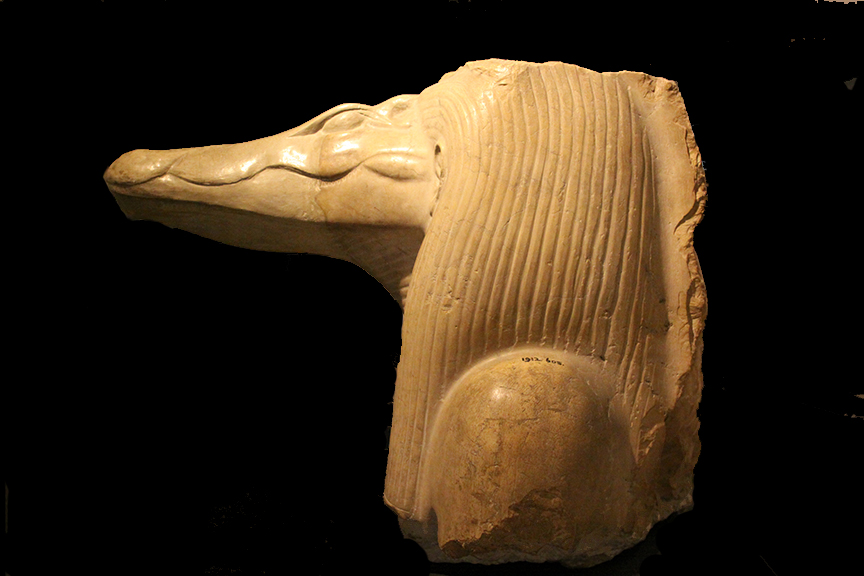
    Sobek, Ashmolean Museum

    Via Maria Nilsson ‏@DrMariaNilsson
    Using Inscriptions from the Antiquities Market: Polarized Positions and Pragmatic Proposals | http://asorblog.org/?p=4282

    Museums should engage tourists with content rather than brand for the sake of themselves and the sector. The Guardian http://bit.ly/Z6g9Qr

    In French: British Council seminar shows the role played by the Delta in Egypt at different times. Hebdo Ahram Online http://bit.ly/12twPoW

    New Book: Icons of Power – Revelations though ancient Egyptian art, Anthony Spalinger, Charles Univ. Scoop NZ http://bit.ly/ZDv9Fs

    Aidan Dodson, President of the EES: “L’Egypte risque de perdre une partie de son histoire” Hebdo Ahram Online http://bit.ly/YBSFHj

    A new interactive map of the ancient Mediterranean http://www.ancient.eu.com/map/

    Job: The EES is looking for a new Fieldwork & Engagement Manager to bethe Society’s main representative in Egypt.http://bit.ly/Xiv5yk

    Significant evidence of 17th Dynasty found by Djehuty Project in Luxor. EurekAlert http://bit.ly/XXhvSS  and PhysOrg http://bit.ly/Z6F4EC

    Rus Gant, Giza 3D and George Reisnser’s Legacy: An Em Hotep – Pyramidales Interview. http://bit.ly/Y0LfOH

    Museums Association survey of UK public attitude to museums suggests they are some of the most trusted organisations http://bit.ly/1016tdP

    New Book: “Jean-François Champollion. Notice descriptive des monuments égyptiens du musée Charles X.” Kheops http://bit.ly/Xttvfq

    Freemasons and Ancient Egypt at Kensal Green Cemetery, London. http://bit.ly/12p18xd

    Via Neal Spencer ‏@NealSpencer_BM 4 Apr
    A chronology (with posters) of every temporary exhibition @britishmuseum 1838-2012 http://www.britishmuseum.org/research/publications/research_publications_series/research_publications_online/chronology_of_exhibitions.aspx

    Free online: The failed reforms of Akhenaten and Muwatalli. Itamar Singer. BMSAES, 6 (2006), 37-58 @historyancient http://bit.ly/XRBy59

    Off-topic “The life of man: solitary, poore, nasty, brutish, and short”. Thomas Hobbes, born today 1588. History Today http://bit.ly/ZgIR8o

    Pre-healthcare modern Egypt. With help on hand from health barbers and folk healers, health aid was never far away http://bit.ly/10y4qh6

    Summary of Aidan Dodson’s lecture at the AUC on the royal family after the death of Ramses II. Daily News Egypt http://bit.ly/Zb8kZQ

    Exhibition: “Echoes of Egypt:Conjuring the Land of the Pharaohs” at Yale Peabody Museum. With photos. http://bit.ly/14SjvPg

    Farro or emmer wheat, once a staple in AE being cultivated once again. Offers an insight into its uses. Oxford Press http://bit.ly/XhcsLk

    Forthcoming: Foreigners and Egyptians in the Late Egyptian Stories, Camilla Di Biase-Dyson. Brill http://bit.ly/10BugA6

    New Book: The Life of J.D. Åkerblad, Egyptian Decipherment and Orientalism in Revolutionary Times, F.Thomasson. Brill http://bit.ly/WcRe0U

    In Spanish: Egypt to ask tourists to donate a dollar for each night spent in Egypt to fund Grand Museum. Vanguardia http://bit.ly/Zd5zhy

    Curse of Tutankhamun, 90 years on. Past Horizons http://bit.ly/ZbVdI3

    New project explores influence of Egyptian archaeological finds in sculpture 1907 to 1939 and Petrie’s responses. UCL http://bit.ly/10f0m5J

    Elimination of Mubarak’s police services left aan open invitation to trespass without fear of reprisal. USA Today http://usat.ly/10waUho

    Curator’s Choice: Amber Druce picks a tomb painting from Pharaoh Reborn. Culture24 http://bit.ly/14N3udt

    Archaeologists Uncover Rare Leather from Ancient Egyptian Chariot. AUC Egypt http://bit.ly/XyaQye

    Via Chris Naunton ‏@chrisnaunton 4 Apr
    New book L’Egypte Dessinee by B Cassiers on 18/19/20th cen artists who painted Eg monuments w new works by the author http://www.lycaons.eu/images.html

    Russian photographer apologizes for climbing Great Pyramid of Giza (with photos). NY Daily News http://nydn.us/YK9G4w

    China specialist Prof Anthony Barbieri-Low receives Mellon New Directions Fellowship to research Egypt. Noozhawk http://bit.ly/10ew9Up

    90th anniversary of the curse of Tutankhamen – how a modern myth was born. Univ Manchester http://bit.ly/YUtI9M

    Manchester Mus holds 2 important objects that provide evidence for use of masks in ancient Egypt. Manchester Museum http://bit.ly/10Gr0VR

    Reassembling of the Two Colossi of Amenhotep III at North Gate of his Funerary Temple, West Bank, Luxor.. Luxor Times http://bit.ly/12lPoLJ

    Site Management plan for the Colossi of Memnon and Amenhotep III mortuary temple project. Luxor Times http://bit.ly/10zeBBk

    Article re recent conference. Thonis-Heracleion, sunken gateway to Egypt in 1st mill.BC. With photos. Past Horizons http://bit.ly/X9qCjQ

    Update from the Tell Basta Project http://tellbasta.tumblr.com/post/46430050559/heart-of-glass

    Object biography #12: A wooden shabti of King Seti I (Acc.no.13906) by Campbell Price. Manchester Museum http://bit.ly/10gddTT

    New book on Cleopatra argues that the “Queen of Kings” did not take her own life. Smithsonian Mag http://bit.ly/173Rnbb

    Birds in ancient Egyptian society: some brief notes. Joyce Filer’s blog http://bit.ly/10n95BB

    Part 2 of Dean Kalimniou’s look at the Greek connection in Sudan, focusing on the survival of the Greek language http://bit.ly/14uivk0

    Part one of Dean Kalimniou’s look at the Greek connection in Sudan http://neoskosmos.com/news/en/greeks-in-sudan-part-one

    Progress by the EES Minufiyeh Survey team in the Delta http://minufiyeh.tumblr.com/post/46785854575/progress

    Interview re new book: The Archaeology of Race – The Eugenic Ideas of Francis Galton and Flinders Petrie. UCL http://bit.ly/13Ut7tj

    Ancient Kingdoms in the land of war – the archaeology of Sudan. New York Times http://nyti.ms/YV55Xg

    With security ebbing and prices rising, the sustained drop-off in Egypt tourism has hurt the impoverished. NY Times http://nyti.ms/Yw7paI

    Djehuty Project: Arqueólogos españoles descubren en Dra Abu el-Naga, Luxor, cuatro tumbas de la dinastía XVII. ABC.es http://bit.ly/Z7KmFG

    La campaña 2013 de excavaciones de la UJA, Asuán, constata la complejidad de la estructura de las tumbas. europapress http://bit.ly/ZaePfn

    Book review by Tim Reid: Mummies: Death and Life in Ancient Egypt, James Hamilton-Paterson and Carol Andrews, Penguin http://bit.ly/12iTrw5

    Egypt revolution brings golden age for tomb raiders. http://www.bbc.co.uk/news/world-africa-21960373

    EES Delta Survey dig diary is being started up again for the new season http://deltasurvey.tumblr.com/

    Priceless Egyptian treasures feared destroyed in Cuming Museum (South London) museum fire. http://bit.ly/YxutIj

    New York Prosecutors Seek to Forfeit Ancient Egyptian Artifacts. Cultural Heritage Lawyer http://bit.ly/104kqVA

    Site of Al Bordan site destroyed by illegal construction in spite of intervention by police and archaeologists. http://bit.ly/ZXQcoJ

    Travel. Siwa, the field of trees. With photos. Alrahalah http://www.alrahalah.com/2013/03/siwa-the-field-of-trees/ …

    It’s a boy: Albany museum’s mummy’s true identity revealed. http://bit.ly/14ijeF1

    Seizure of 5 Egyptian artifacts dating back to 2,000 B.C. on their way from Dubai to a Michigan antique dealer. http://www.courthousenews.com/2013/03/22/55962.htm

    2,400-Year-Old Myths of Mummy-Making Busted http://www.livescience.com/28097-herodotus-mummy-evisceration-wrong.html

  • Low Life VIP Tuning Culture – Japan oni camber

    Low Life VIP

    There is no question that the stance of a vehicle can make or break its appearance. A car sitting too high on its suspension can look like an elephant on stilts, where one that sits too low can be undriveable. Some folks love the lowered look so much that they’ve resigned themselves to the fact that when modified, they simply won’t be able to drive their cars to various destinations. Are cars like this for everyone? No… they’re not. That doesn’t mean however we can’t appreciate the way they look. Check out the video after the jump.

    Source: Youtube.com

  • Egyptology News for March 17th-22nd

    Copied from Twitter @EgyptologyNews

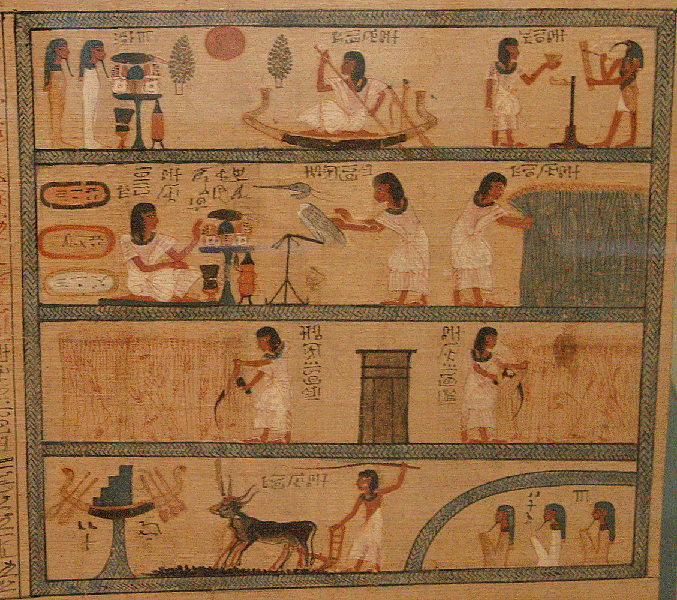
    Papyrus of Ani

    New items under scrutiny in Penn Museum’s lab: http://www.penn.museum/sites/artifactlab/ …

    Tales of the mummy’s curse. The legend of the mummy’s curse still continues to fascinate. Al Ahram Weekly http://bit.ly/ZFFCmZ

    Programme summary for 2-part Ancient Egypt: Life and Death in the Valley of the Kings starting on UK TV this evening http://bit.ly/ZSiEbv

    How Harvard Students Explore Ancient Egypt From Cambridge With New 3D Technology. Forbes http://onforb.es/13fhDjP

    Albany museum corrects gender of mummy after X-ray. Wall Street Journal http://on.wsj.com/11rxjiD

    The EES Minufiyeh (Delta) Survey is back at Quesna and in Shibin el-Kom. http://bit.ly/11kRZZw

    Conference “Tracing Networks.Communicating Knowledge in Antiquity and the Digital Age” Apr 23-24 2013 British Academy http://bit.ly/WJ6YK9

    Using modern fish to understand ancient ones from Old Kingdom Giza. AERA blog http://bit.ly/100Dcy9

    Article re chief research officer + archaeozoologist at Ancient Egypt Research Associates (AERA), Giza. Uni Michigan http://bit.ly/11gzIsC

    Cahiers de notes épigraphiques de Gaston Maspero 1881 – 1884. http://bit.ly/11fqe0W

    Maritime trade thrived in Egypt, even before Alexandria in 1st mill BC. Article about topic of recent conference. http://bit.ly/15QIoZv

    Via Neal Spencer ‏@NealSpencer_BM 19 Mar
    After 10 months away (Paris, Shetland), the Gayer-Anderson Cat is back on display in room 4 @britishmuseum http://via.me/-an0hwdi

    Article: The present state of the site of Behbeit el-Hagar. C.Favard-Meeks. BMSAES 3 Nov2002 (all BMSAES papers free) http://bit.ly/11fb3bN

    Via British Museum ‏@britishmuseum
    Sycamore fig wood, often used for ancient Egyptian coffins, does not come from a sycamore tree, but from a fig tree #SciWeek

    Via Jane Draycott ‏@JLDraycott
    ‘Cleopatra’s Daughter’ in April’s @HistoryToday tells the story of Cleopatra Selene, by way of Egypt, Rome, and Mauretania.

    More re 3,300-Year-Old Egyptian cemetery reveals commoners’ plight at Amarna. Live Science http://bit.ly/WRfeZH

    A Nubian Bishop and His Patron Saint: 10th-century fresco gives insight into the Christian history of Nubia. The Root http://wapo.st/16Gf7Cb

    Tutankhamun: How rival directors of two great American museums joined forces to create an epic event.Vanity Fair http://vnty.fr/14oMwNB

    An exploration of the Louvre’s collection of ancient civilizations of Egypt, Mesopotamia and Persia. Ahram Online http://bit.ly/XVmtkb

    Book Review. Gods, Men & Pharaohs: The Glory of Egyptian Art. I.Woldering. Harry N. Abrams, Inc. The Egyptians blog http://bit.ly/YRMMV0

    Some notes on health problems in ancient Egypt and Nubia. Part One: Problems with teeth. Joyce Filer http://bit.ly/10dfiSp

    Cairo landmark, the Villa Casdagli, badly damaged during the revolution, to be restored to former glory. Ahram Online http://bit.ly/YEbTYm

    New Book: The Valley of the Kings. A Site Management Handbook. Kent R. Weeks + Nigel J. Hetherington. AUC http://bit.ly/WzEEZz

    Via Chris Naunton ‏@chrisnaunton
    If Constable had visited Giza… ‘The Pyramids at Gizeh in Morning 1890 by Ernst Koerner’ http://fb.me/2RDLwNS8R

    Conference: Recent Archaeological Fieldwork In Sudan. 13 May 2013 at the British Museum, London. Details at http://bit.ly/ZVG3Zf

    Via Neal Spencer ‏@NealSpencer_BM
    July 11-12: @britishmuseum colloquium “Nubia in the New Kingdom: Lived experience, pharaonic control and local traditions” more details soon

    Not strictly Egypt but relevant: 3D Modeling Reveals Ancient Artifacts. Popular Mechanics http://bit.ly/XfEPq4

    Via Jan Picton. Preliminary report on activities of Polish Cliff Mission at Deir El-Bahari 10/02-13/03/13. Facebook http://on.fb.me/108HfL7

    From the Forests of Punt to the Deserts of Saqqara: Life and Death as a Sacred Monkey. Researchers in Museums http://bit.ly/YjFZUQ

    A properly protected German reserve provides stark contrast to Egypt’s toothless environmental policies. Egypt Today http://bit.ly/XTkmx6

    Tourism Ireland arranged for the Pyramids of Giza to be illuminated in green for St. Patrick’s Day. Al Arabiya http://bit.ly/1449j5W

    New: Bagnall, Davoli, Hope eds., The Oasis Papers 6: Procs of the 6th Internat. Conf. of the Dakhleh Oasis Project. http://bit.ly/142Zhl5

    El obelisco egipcio que pudo erigirse en Galicia (but is on London’s Embankment and ought to be in Egypt). Ushebtis http://bit.ly/16CIdCe

    Walking the city: an interview with Nabil Shawkat on the pleasures of exploring Cairo on foot. Cairobserver http://bit.ly/XiLwHS

    RT @historyancient Online article. The Sun Queen’s Trademark: A Study of the Tall Blue Crown of Queen Nefertiti. http://bit.ly/YI1yOj

    EES/SCA Delta Survey Workshop 2013, 22nd-23rd March 2013 in Cairo. Papers about fieldwork or research in the Delta. http://bit.ly/YAJJ08

    Not Egypt but important: Palmyra has been subjected to intermittent shelling by forces loyal to President.http://bit.ly/XhwPVq

    2nd International symposium on Coptic culture: Past, Present and Future 22-24 July 2013 Stevenage, UK. Details at: http://bit.ly/15djMru

  • Customize Windows 8 Right-Click Menu

    Although Microsoft strives to infuse increased usability in the new operating systems they launch, there is always room for improvements. In Windows 8 the context menu remains fairly the same, but third-party tools such as Right Click Enhancer can help you shape it for your own needs.



    The application is portable and free of charge, but the develo… (read more)

  • Weekly Address: The President’s Plan to Create Jobs and Cut the Deficit

    President Obama tell the American people about the budget he is sending to Congress, which makes the tough choices required to grow our economy and shrink our deficits

    Transcript | Download mp4 | Download mp3

  • Nokia’s Verizon-Bound Lumia 928 Spotted In Leaked Images Ahead Of Launch

    nokia-lumia-928

    It’s been a long time coming, but Verizon Wireless customers should soon have another high-end Windows Phone 8 device to lust after. After the handset was spotted both in both the FCC’s and Verizon’s systems, noted leaker @evleaks has come through yet again with a new image of the upcoming Nokia Lumia 928 (formerly known as the “Catwalk”).

    There’s not a whole lot to be gleaned from the image save for the fact that the device seems to have done away with the rounded sides and flat top and bottom edges of its immediate predecessor the Lumia 920. As it turns out, one of the neatest features of the initial Catwalk leak is nowhere to be found here — according to The Verge, the Lumia 928 will sport a more traditional polycarbonate body instead of the aluminum chassis that was originally slated for the device way back wehn. Most of the 928′s internals (think the 1.5GHz dual-core Qualcomm MSM8960 processor, 1GB of RAM, and 32GB of internal storage) are expected to remain the same as its cousin the 920, but Nokia may run with an OLED panel this time around rather than the IPS LCD as seen in the 920.

    In short, it’s hard not to think of the Lumia 928 as what the Lumia 920 should’ve been when it launched.

    According to recent figures from Kantar Worldpanel, Windows Phone has managed to pull away from BlackBerry in terms of mobile OS market share, and devices like the 928 should help Microsoft’s mobile efforts pick up a little more steam in the coming weeks. Meanwhile, Nokia has been working to make its Windows Phones the most feature-rich out there with exclusivity agreements with companies like Zinio, so it’s clear that some developers are starting to see the benefits of embracing the prospect of developing for the Windows Phone platform.

    That said, WP’s third place position isn’t completely safe at this point — BlackBerry posted some promising quarterly financials and if recent leaks are to be believed, a low-cost BlackBerry 10 device with a QWERTY keyboard could see the light very soon. Z10 shipments point to reasonably healthy demand, and an affordable device launched in key markets could be just what the doctor ordered for BlackBerry.

  • Indian black salve: The magical cancer cure

    What if we told you there exists a blend of herbs so powerful, effective, and safe for treating cancer that no other conventional treatment even comes close? And what if we told you this same herbal formula only targets malignant cells while leaving healthy cells and…
  • Colorado gun control lawmaker doesn’t realize magazines can be reloaded

    It is a concept that seems basic – almost rudimentary – even for a child, but apparently one leading left-wing gun-banning congresswomen didn’t seem to realize during recent televised proceedings that gun magazines can be reloaded. Democratic Rep. Diana DeGette of…
  • Prostate cancer treatments cause penis shrinkage

    Two of three prostate cancer treatment types were linked with complaints of penis shrinkage in a study conducted by researchers from Dana-Farber/Brigham and Women’s Cancer Center, University of California-Los Angeles, University of Connecticut, and University of Texas…
  • Mystery meat in ‘lamb’ curry may have been cat, dog: report

    If you thought the possibility of horse meat in your fast food hamburger was bad, then you will be utterly horrified at what was recently discovered as part of an in-depth BBC investigation into fast food. As reported by the U.K.’s Mirror recently, samples of “lamb”…
  • Black rice: Rare yet highly nutritious

    Although not very common, black rice is currently one of the healthiest food types that can be obtained today. Packed with a wide array of nutrients, black rice has a very rich and interesting history. As most people know, rice is a base food source in Asia. During the…
  • Just one dose of coconut oil can tremendously boost brain function and cognitive performance

    It’s amazing how coconut oil has recently been acknowledged for the healthy oil that it is after having been vilified for decades as a heart attack oil. Now it’s been discovered to boost even brain health. Defaming coconut oil saturated fat was part of the 1950s creation…
  • Poverty skyrockets across USA to highest levels since 1960s

    In the mid-1960s, President Lyndon B. Johnson, that era’s left-winger, was not content to merely fight a needless, pointless, misguided war in Vietnam. Ever the progressive, Johnson also wanted to fight a similar kind of aimless and unwinnable war in the United States…
  • It was nice knowing you, America

    There are now an astonishing 90 million people absent from the US labor force. NPR reports: “Every month, 14 million Americans get a disability check from the government.” ”In Hale County, Alabama, nearly 1 in 4 working-age adults is on disability.” As of December…
  • Fed up with corruption, thousands of armed vigilantes take over Mexican town and arrest the police

    The country of Mexico has been a de facto narco-state for years, as competing drug cartels bought off the police, judges, local officials and journalists they could, killed those they could not, and battled each other for turf. Throughout it all, the collateral damage…