Blog

  • Learn How To Use Google Drive’s New Features

    On Thursday, Google launched two new ways for web apps to interact with Google Drive. The first – app data folders – stores critical app data in its own private folder to avoid accidental movement or deletion from users. The second – custom properties – allows users to “create searchable fields that are private to your app or shared across apps.”

    To help developers fully grasp these new features, Google has thrown together a quick Google Developers Live session that addresses these features. Check it out:

  • Missing Family Found in Florida’s Everglades

    Covering thousands of square miles in Southern Florida with wetland sawgrass and trees, the Everglades are not a particularly welcoming environment to become lost in. One Ohio family found this out the hard way this week when they became lost while airboating.

    According to a report from CBS Miami, Scott Schreck and his family took a camouflaged airboat through the Everglades this week and went missing. The Schrecks, who are from Seville, Ohio, took a wrong turn on their journey and were unable to find their way back. The family of five ended up spending the night in the Everglades, with rain pouring down on them.

    The CBS report states the family were found by authorities who had mobilized a search for them that included airboats, airplanes, and helicopters. The Schrecks were located by helicopter after rescue workers heard them blowing an air horn.

    Despite their night in the wilderness, Florida Fish and Wildlife Conservation Commission Officer Jorge Pino told CBS that the family is “in good condition.”

  • The Future of Advertising

    In today’s media-saturated world, consumers are rejecting aggressive, interruptive advertising. In this environment, the keys to advertising are engaging consumers by focusing on where they are and connecting with them when they will be receptive.

    Drawing on a decade of working with advertising and marketing executives, Jeffrey Rayport argues that companies need a new way of thinking about advertising in the digital age.

    In this interactive webinar based on his new HBR article “The Future of Advertising,” Rayport shares a new framework for designing advertising strategy and execution. He shares his ideas on how marketers can craft and place their message to offer value in the proper context so consumers trust and welcome them.

  • In short: Dragonflies that amaze, the secret of your unique breathprint

    Some staff picks of smart, funny, bizarre and cool stuff on the interwebs this week:

    First: Dragonflies are beautiful, deadly and have weird sex. [NY Times] While you’re at it, check out our playlist Insects are awesome!, above.

    The clap-o-meter was yesterday’s Big Data. [The Atlantic]

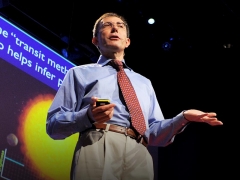
    Dimitar Sasselov: How we found hundreds of potential Earth-like planetsDimitar Sasselov: How we found hundreds of potential Earth-like planets Scientists now estimate the number of Earth-like, habitable planets in the Galaxy to be around 100 billion. [Sci tech daily] Watch Dimitar Sasselov’s talk from 2010 on his own work with Kepler to look for these kinds of planets.

    We all have unique fingerprints and genomes — and breathprints? [New Scientist]

    What does linguist Ben Zimmer read? A question you never thought you’d ask, yet you’re glad you found the answer. [The Atlantic]

    Weird but fascinating article on how breeding pigeons in New York City is becoming a representation of the American melting pot/tossed salad. [NY Times]

    Willard Wigan: Hold your breath for micro-sculptureWillard Wigan: Hold your breath for micro-sculpture
    Tiny, tiny, tiny gorgeous paintings of Istanbul by Hasan Kale. [Huffington Post] They remind me of Willard Wigan’s awesome micro sculptures.

    Neat. Fourteen words that are their own opposites. [Mental Floss]

    Whole Foods announces a new partnership with Gotham Greens, co-founded by TED Fellow Viraj Puri, to build a greenhouse on the roof of its forthcoming location in Gowanus, Brooklyn. [Grocery Headquarters]

  • Google rumored to announce Fiber expansion in Austin next week

    Google Fiber Austin Texas Event
    Google (GOOG) and the City of Austin, Texas on Friday sent out press invitations for a special announcement slated for next week. Unnamed sources have told Venture Beat that the event could involve Google Fiber and potential plans to bring its gigabit broadband Internet service to the city. It is also speculated, however, that the announcement could be for a new Austin-based Google campus or perhaps some other partnership between the two parties. Google Fiber is currently available in Kansas City and the company recently announced plans to expand its high-speed Internet service to residents in Olathe, Kansas later this year. Google’s event is scheduled to take place on April 9th at 11:00 a.m. CDT/12:00 p.m. EDT.

  • Weekly Wrap Up: “We Have Not Forgotten”

    Watch the West Wing Week here.

    Easter Egg Roll: On Monday, the First Family welcomed more than 30,000 guests to the South Lawn for the 135th annual White House Easter Egg Roll. The event was filled with activities ranging from the traditional Easter Egg Roll to readings from stars such as Danica Patrick, Adrian Peterson, and even Elmo.

    The theme of “Be Healthy, Be Active, Be You,” was inspired by the First Lady’s Let’s Move! initiative, which seeks to solve the problem of childhood obesity. You can find demonstrations of healthy recipes from top chefs here and learn more about the Let’s Move! initiative here.

    This year’s special guest was Robbie Novak — better known as Kid President. Be sure to also check out a special presidential video message from April 1.

    Guns: On Thursday, President Obama traveled to Colorado to urge the American people to push Congress to vote on a set of common-sense proposals to help reduce gun violence. The President wants to close loopholes in the background check system to keep guns out of the hands of criminals and others who shouldn’t have them — and prevent mass shootings like the one that killed 20 young children and six adults in Newtown, CT.

    “If you want to buy a gun, whether it's from a licensed dealer or a private seller, you should at least have to pass a background check to show you're not a criminal or someone legally prohibited from buying one,” said the President. “And that's just common sense.”

    read more

  • Taser Aims To Create Robocop With Google Glass

    Taser has been accepted into the Google Glass Explorer program, TheNextWeb reports, which could help it make devices for police officers that build on technology the company is already using.

    Check out this video for Taser’s AXON Flex:

    And this one from TheVerge:

    TheNextWeb spoke with Taser CEO Rick Smith:

    Talking to us earlier this week, Smith suggested that automated vehicle number plate recognition and driving license recognition were obvious quick wins, with face recognition of wanted criminals and missing persons a possibility further down the road. “We see this shifting to more real-time applications over the next decade,” he said, adding that Taser is working towards a future in which police records are gathered in real-time, using technology like voice-to-text conversion to capture statements and other spoken evidence. The company plans to roll such tech into Evidence.com.

    While using a third-party cloud solution may seem like an odd step for police forces to take with such sensitive data, Smith says that it allows the technology to be introduced much more easily, quickly and cheaply than if it had to be integrated on-site with existing IT systems at each force’s HQ. He says that 90-95% of the police forces using AXON Flex opt for using Evidence.com over integrating the cameras with their own systems. Data is protected with two-factor authentication logins (using Google Authenticator, SMS or email) and 256-bit SSL encryption.

    Google has been conjuring up images of Terminator ever since it introduced Glass, but Robocop capabilities are starting to sound a lot more plausible. Of course, they’re still talking about using living people at this point (rather than corpses, as in the movie), so that’s comforting.

    Robocop

    Maybe they should hold off on that Robocop remake a little longer, so it doesn’t seem dated immediately.

  • The Internet Of 1995 Wasn’t Just For Anti-Social Geeks, It Was For Getting Email From Steve Jobs

    The history of the Internet is an area of study that’s woefully ignored by the modern generation. I was part of the generation that grew up just as the Internet was just getting started, and the generation before me can even remember a time when the Internet wasn’t even a thing.

    Unfortunately, those who came after us take the Internet for granted. Their formative years were spent with broadband speeds and unlimited access. They didn’t have to live through an era of dial-up modems and AOL installation discs littering the computer desk. For that generation, here’s an episode of Computer Chronicles, a PBS-produced series on technology, that explores the Internet of yesteryear.

    Beyond giving the young ‘uns a history lesson, this particular episode is also incredibly prophetic in how it predicted the coming war between copyright and the Internet. It also predicted the rise of amateur musicians making it big thanks to the Internet through video uploads and music sharing through multiple avenues.

  • On the quest to data ownership, lots of questions lie ahead

    Companies are collecting ever more data on end users, through mobile devices, connected devices, sensors and other inputs. While some people appreciate what companies are doing with the data, end users don’t necessarily know what companies are collecting. In a discussion on data science in San Francisco on Thursday, some panelists thought out loud about what it might look like if more data were shared.

    “What does it mean to own data?” said Andreas Weigend, a lecturer at Stanford University and formerly chief scientist at Amazon.com. “… Does it mean I can do with it whatever I want to do with it?”

    Weigend went on to ask if people would be able to rent out their data and make some money off it. Weigend has been thinking a lot about the subject of data ownership and expects to address that topic and others in a forthcoming book, “Our Data.” Different industries have different standards, and those could shift, Weigend told me later.

    After the talk, I couldn’t help but wonder about what Weigend called “a cloud-like store of person-level data,” or what some people refer to as a data locker or simply a personal cloud. Here are some questions that came to mind:

    • Should companies go beyond the data they already share — purchases, bank transactions, phone calls and so on and disclose what it’s silently tracking? Weigend likens that sort of data to crude oil, which requires complex processing before consumers can use it to drive their cars, but some people might like to see what companies are collecting.
    • Should companies — take insurers, for example — have to tell customers what indicators they look for as they make decisions, so customers could learn how to change their behavior to get lower rates or prices? Or should this be proprietary?
    • If data is going to be made available, where should it be kept? Should governments have to make a certain amount of an online storage available for each person, or should private companies offer that service?
    • How quickly would data be updated in a personal locker or repository?
    • To take a step back, would enough consumers want this sort of information enough for businesses to feel compelled to spend time and money making it possible? If people don’t speak out about this, the window of opportunity for setting standards could close.

    It might not be the easiest thing in the world to get businesses into the habit of disclosing to customers the data they keep. But as the internet of things gets bigger, it’s a good time for the dialogue to get louder.

    Feature image courtesy of Flickr user aweigend.

    Related research and analysis from GigaOM Pro:
    Subscriber content. Sign up for a free trial.


  • EPA’s Tier 3 Will Increase Gasoline Prices and Reduce Fuel Economy

    The U.S. Environmental Protection Agency (EPA) has decided that the sulfur content of gasoline must be further reduced from 30 parts per million to 10 parts per million on an annual average basis by January 1, 2017.  This will …

  • A Trustworthy Spotlight Replacement

    There are numerous applications (some of which are included right into the operating system) created to ease the life of computer users when it comes to searching for files. However, there are some faster standalone programs, which provide additional features, and one of them is Found.


    Found is a lightweight utility available for free in the Ma… (read more)

  • Innovating over the Horizon: How to Survive Disruption and Thrive

    In the December 2012 Harvard Business Review, Clayton Christensen and Max Wessel shared new ideas about surviving disruption. This requires identifying which disruptions could affect your business, determining the disrupter’s advantage (their “extendable core”), identifying your own advantage, and figuring out how easily a disrupter might co-opt your advantage.

    Christensen and Wessel proposed a systematic way to chart the path and pace of disruption so organizations can fashion a complete strategic response. The key is developing a deep understanding of the “jobs” that customers want to get done, and what jobs disrupters could do better based on their extendable core.

    In this interactive HBR webinar, Christensen and Wessel will share the keys to identifying, readying for, and using a disruptive challenge to actually make your company more innovative — and more competitive.

  • No art, no life: Fellows Friday with Cyrus Kabiru

    CyrusKabiru_TEDFellow_Blog
    Cyrus Kabiru crafts striking, whimsical, colourful pieces — most famously his one-of-a-kind spectacles, C-STUNNERS — from recycled waste and objects he finds on the streets of Nairobi. In a candid conversation at TED2013, the Kenyan sculptor and painter told us about his journey to becoming an artist … and how he’s struggled to forge a life path uniquely his own.

    You’ve said that until recently, your family didn’t know about your art. What do they think you do?

    My grandmother is always trying to find me a job. When you visit her, the first thing she’ll tell you is, “If you have an extra job, if you can get a job for my boy here, he needs one.” She doesn’t understand the meaning of art and being an artist.

    My mother and father don’t know my art, but when I left Nairobi to come here to TED, they all wanted to know why. So they Googled me, saw my work, and said, “OK, so this is what he does.” In our family, they don’t bother with art, except for my brother. He encourages me.

    Wait – your family didn’t know that you were an artist until you came here to TED?

    They know that I’m an artist, but they never bothered about what kind of art I do. They didn’t know my artwork until this week. My sister has a Facebook page, but we’ve never been “friends.” Today she sent a friend request, and said, “Oh Cyrus, congrats. I saw your work. Keep it up.” So she discovered it today.

    C-STUNNERS: African mask

    C-STUNNERS: African mask

    I live very far, far away from my family. It takes two hours from my father’s place to mine, driving.My mom and dad, they live at the eastern edge of Nairobi, and I live at the northern edge. I used to visit them every weekend. But now I visit them every two months.

    Being an artist, for me, was that I was a rebel — I was a bit rude to everyone. I don’t care. I don’t follow what people want — I follow what I want. I don’t really like people. I want to go my own way. So I do everything the opposite to others, and they feel this guy is a bit of a rebel. When I was a little boy, grownups thought I was a bad example. They used to tell their kids, “Work hard. If you won’t work hard, you’ll be like Cyrus.” I was very different. I was always in my house, doing art, painting and making sculptures, and no one understood what I was doing. I didn’t study, I wore shaggy clothes. To them it was a bit weird. I didn’t know Sunday, I didn’t know Monday, I didn’t know.

    In Africa, we live in a package.

    What do you mean?

    Monday you need to go to work up to Friday. Saturday you need to wash your clothes, you need to prepare for Sunday and Saturday. Sunday you need to go to church. You need to walk around in town and see friends. But me, I don’t have Sunday or Monday or Saturday. So if it’s visiting people, I visit any day, any time. I didn’t do homework, I didn’t study, I didn’t do exams.

    But you didn’t fail at school?

    All my classmates used to be much more clever than me. So they used to do homework for me. I’d pay them with artwork. “You do the exam for me, I’ll pay you in a sketch, sculpture, glasses, anything you want.”

    You’ve been making glasses since you were a child?

    Yeah. My dad is the one who wanted me to make the glasses: he challenged me to make them. He used to have real glasses when he was young. And one day, he messed with them and crushed them by accident. He was beaten by my grandmother because of this. So he hid the glasses from that day. And I used to admire wearing glasses when I was young. He used to say, “Cyrus, if you want to wear the glasses, maybe make your own glasses.” And that’s how I started making my own glasses. I was about seven years old.

    So I think I did only one exam in my life. My dad used to be angry with me because of that. He knew. And I never performed well. After I finished high school, he said he wanted me to go to college to do electronic engineering. And I refused to join. I don’t like reading. Even after I finished high school, he used to say, “Cyrus, you know, I feel ashamed when I meet friends.” “Why?” “Because they keep asking the grades you got, your performance. And I feel ashamed to tell them.” And I was like, “Don’t listen to them. It’s my life.” And he said, “Okay.”

    But then he asked me what I wanted to do. I told him that “I want to do what I do: art.” And he told me to get into art school, and he’d pay for me.

    I told him, “No, I don’t want to study. I want to do what I’m doing. Because if I got to school I’ll follow teachers. But I have my own art. I have my own way. So if I follow a teacher, I’ll follow his way.” He said, “Cyrus, if you refuse even to go to art college, go and start your life in another place. Go do what you want.”

    C-STUNNERS: fingerprints

    C-STUNNERS: fingerprints

    He only wanted me to have a certificate. We believe much, in Africa, in a certificate. We believe that if you have one, that’s the life. As I told you, we live in a package. You study, you finish school, you go to college, you marry, you start your own life, you get kids — as many as you can — that’s the end of life. You go around like that. So if you miss one of those things, you look like you’re not normal. So when you miss a step — maybe you’re late getting married — you look abnormal.

    So my dad told me that if I wouldn’t go to college, to walk out of his house. And that’s what I did. I started my own life.

    How old were you?

    This was six years ago, I think. But he was right, because he never supported me. I think if I relied much on him, it was a bit impossible for me to reach where I am. I think he did the right thing — to show me that I need to be myself. And I remember, I moved from his house with around 3,000 shillings — that’s around $40 — with a mattress and a stove. But the lucky thing is that I have this thing of finding money anywhere, collecting money.

    You find money on the ground?

    Yeah.

    You’re just lucky that way?

    Yeah. That’s how I survived to reach where I am. My studio used to be nine kilometers from where I live. Sometimes I used to walk every day. I remember, one day I was supposed to pay rent, and I only had 20 shillings — less than one dollar. I was supposed to pay $40. I remember, I crossed the road and in the road, I found exactly the money I needed to pay it.And one day, I went with a matatu — a bus — without any money. The conductor came to get the money. I pretended I was looking for it in my empty wallet. But I couldn’t find it and turned to look for it, and I found 500 shillings in my seat.

    Has this always happened?

    Yeah, it’s always happened. Every week I find money. Even most of my friends don’t believe me. They they ask, “Cyrus, there is something that you are doing to get the money.” When I walk with my friends in a group, they joke, but when they walk with me they find it too. When they collect money they laugh: “Cyrus, this was your money, but it’s now mine.”

    Bird from the African nature sculpture series.

    Bird from the African nature sculpture series.

    Where did you practice art before you moved?

    I used to work at my dad’s home. And one of my grandmothers, who used to live in Nairobi, sometimes would go to rural areas and leave me her house, which I’d use as a studio. When I moved, I moved with my art and I rented a studio somewhere. It’s in the Yaya Centre. That’s how I started my life on my own, walking long distances to work, to the studio.

    Was it on your walks that you found the objects to make your art?

    Yes, when I walk, I get inspired by the things that I find in the street. So I’m just walking and collecting. I don’t have high-class friends. Because they know me: I’m the person who just collects everything on the street. People feel ashamed when they are with me. When you collect in the street, you look like a street boy or madman.

    You use so many materials in your art, it seems like you would spend a lot of time collecting it. You also find very beautiful things.

    Yeah. And even my studio now, the place I work, it’s like a museum. Everyone takes photos of the place because it’s half very beautiful junk, and I can’t work without it.

    Do you think much about the problem of waste and reuse? Or is it really simply free material for you?

    The place where I grew up faced the Nairobi dump site. All the trash, all the waste of Nairobi, used to be dumped in my neighborhood. So whenever I woke up, the first thing I saw was garbage. I used to tell my dad I would like to give trash a second chance. I would like to work with trash. And that’s why, up to now, that’s what I’ve done.

    I also make sculpture with rubbish. They’re fun too — and made of recycled bottle tops, wire, plastics. I have sculpture series of street musicians and wildlife.

    From the Street Musician sculpture series.

    From the Street Musician sculpture series.

    What else are you working on?

    Right now I have a project called Outreach. I travel in Kenya to different places, like rural areas, showing them how to work with the materials they have. Most recently I was in a deforested arid region, plagued by famine and drought. I targeted the older generation of a community known for their sculpture, because in Africa we believe much in older people. I know if I want to make an impact, the older generation will teach their youth. I went to show them how to work with alternative materials, such as plastic, wire. And I did a workshop there for two weeks, for 30 people. I showed them how to recycle Western materials as a resource for art.

    Do you sell your work in Kenya? Are you well known as an artist in Nairobi?

    I sell to the people who visit Kenya, mostly. Locally, people don’t understand my work.

    How do your clients find you?

    I’m doing well on the internet. Most of the people find me when they visit Kenya and just Google good places to visit. Sometimes they Google and get my name, and come visit my studio. The internet is helping me much. Galleries in Kenya don’t deal with anyone who isn’t from an established artist family. In my family, we’ve never had an artist, so I’m an unestablished artist to them. Two years ago, I put together an exhibition called Established Artists, whereby I gathered the artists who believe that they are unknown.

    But I think now things are changing. Because, as I told you, having grown up as a bad example, I’m changing, and I’m now a good example to the community.

    When I was growing up, I used to have a group of youths who used to follow my life, how I live. They used to admire me. If I had long hair or nails, all of the boys in the area did too. One day the parents told me, “Cyrus, cut your nails, because our children are now refusing to cut theirs.”And now I’m trying to help whoever follows me. One lady told me, “Cyrus, I think you changed my son’s life, because he used to follow your lifestyle. In our family we never studied, but you encouraged him to finish school and he is now finished.” Being a role model came with responsibility. For example, I don’t party. I used to fear partying because kids, they’d follow what I do. If I got drunk, they got drunk. If I smoked, they smoked. I couldn’t walk with ladies in public. That’s another reason I moved away.

    But I don’t encourage anyone to be an artist. I try to encourage them to follow their own dreams. Being an artist, for me, is a bit of a hard life, and I can’t encourage someone to be an artist, because he’ll suffer. I’ve suffered a lot. Growing up, we were six, plus my mom and my dad. We grew up in two small rooms for eight people. One room was my mom and my dad’s bedroom, and the remaining room was kitchen, dining room, and kids’ bedroom. So I used to admire living a good life.

    You think you have that now?

    Maybe, almost. I’m trying to live now the life I used to admire.

    But you’re going to keep doing what you’re doing, right?

    Yeah. I can’t live without doing what I am doing. No art, no life.

    Painting: "Rock 'n' roll"

    Painting: “Rock ‘n’ roll”

  • Microsoft accuses Facebook of copying Windows Phone with Home launch

    Microsoft Facebook Home
    Microsoft (MSFT) thinks that Facebook (FB) is imitating it but it doesn’t seem all that flattered so far. In a post on the company’s official TechNet blog, Microsoft VP of corporate communications Frank X. Shaw said that Facebook’s launch event for its new Home software “was remarkably similar to the launch event we did for Windows Phone two years ago.” Shaw’s criticisms of Facebook Home largely revolve around its supposedly novel conception as a “people-centric” overlay that places less emphasis on apps and more on your friends and family.

    Continue reading…

  • No Assembly Required: This “Smart Chair” Assembles Itself

    Over the years, furniture hasn’t really evolved The tools we use to make furniture have evolved, but the furniture itself has remained largely the same.

    Well, that’s not the case anymore as Belgian designer and engineer Carl de Smet has created a smart foam technology that can be packed down to a small size, and then expanded to a set shape when heated. It’s like a shrinky dink in reverse. Check it out:

    Interestingly enough, the foam would allow consumers to shape the furniture into whatever shape they would want. An example from the video above is a lounging chair that can be reshaped into a short stool.

    De Smet hopes to have his expanding foam furniture on the market by next year. It seems that he also wants to bring some competition to Ikea, the current champion of cheap, easy-to-assemble furniture. He may do just that if his full-sized foam furniture behaves like current, smaller prototypes.

    [BBC News via Engadget]

  • President Obama Marks the End of Easter Season at Prayer Breakfast

    Watch this video on YouTube

    Today, the President and Vice President marked the end of the Easter season with a prayer breakfast at the White House.

    President Obama said that this year was particularly special for him because he visited the Holy Land just before Easter, including the Church of Nativity in Bethlehem.  

    There, I had a chance to pray and reflect on Christ’s birth, and His life, His sacrifice, His Resurrection, the President said. “And I was reminded that while our time on Earth is fleeting, He is eternal. His life, His lessons live on in our hearts and, most importantly, in our actions.  When we tend to the sick, when we console those in pain, when we sacrifice for those in need, wherever and whenever we are there to give comfort and to guide and to love, then Christ is with us.

    So this morning, let us pray that we’re worthy of His many blessings, that this nation is worthy of His many blessings.  Let us promise to keep in our hearts, in our souls, in our minds, on this day and on every day, the life and lessons of Christ, our Lord.

    read more

  • Google Web Fonts Now Helps You Find Alternatives

    Google doesn’t pretend to have every font you might want available in Google Web Fonts. Now, they’re pointing you to alternative sources when they don’t have what you’re looking for.

    In a brief post the the Web Font Blog, Google software engineer writes:

    We know that finding the right font for your website or blog is a personal choice, and there are many great fonts available to choose from on the web. Now when you search for a font that isn’t available on Google Web Fonts, we show you additional fonts available from Monotype. Each result is shown in the actual font so you can easily preview your options. To get more information on a font, simply click the link under it’s name.

    Google Web Fonts

    Google says it is working to add results from more web font providers in the future.

  • Halle Berry Pregnant, According to Rumors

    The past few months have been big for celebrity pregnancies. Duchess of Cambridge Kate Middleton became the tabloids’ dream princess last December when it was revealed she is pregnant. Around the same time, reality TV actress and amateur porn star Kim Kardashian also announced she was pregnant with R&B star Kanye West’s child.

    Since the announcements, celebrity gawkers in the U.S. have kept a close eye on both women’s “baby bump.” Now, another celebrity will be added to the “baby bump” watch list.

    TMZ is reporting that actress Halle Berry is pregnant with her second child. The publication cites “sources connected with the actress” as stating Berry is around three months pregnant with a boy. The father is reportedly Berry’s fiance, actor Oliver Martinez.

    Berry and Martinez became engaged in 2012. The 46-year-old Berry has been married twice before, to Major League Baseball player David Justice and R&B singer Eric Benét. She has one daughter, named Nahla, with Canadian model Gabriel Aubry.

    Berry is currently set to reprise her role as Storm in the upcoming X-Men: Days of Future Past.

    (Image courtesy Tom Sorensen/Wikimedia Commons)

  • Galaxy Axiom on US Cellular receiving OTA Jelly Bean update

    nexusae0_galaxy-axiom

    The Galaxy Axiom, US Cellular’s branded version of the Galaxy S III Mini, is beginning to see an OTA update to Android 4.1, complete with Project Butter enhancements and Google Now. You’ll need to be connected to WiFi for the update, and then check for updates in your phone’s About Device settings menu.

    This is the second Jelly Bean update we’ve seen to Samsung devices today, so Samsung’s starting off April on a high note. Any Axiom owners that have gotten the update? Let us know in the comments.

    source: US Cellular

    Come comment on this article: Galaxy Axiom on US Cellular receiving OTA Jelly Bean update

  • Austrian Galaxy Tab 7.0 Plus beginning to receive Android 4.1.2 update

    GALAXY Tab 7.0 Plus Product Image (7)

    If you’re the owner of a Samsung Galaxy Tab 7.0 Plus in Austria, you should be receiving a notification shortly to update your tablet to Android 4.1.2. Hopefully that also means that the update is pretty close to being released in other countries, as well. The tablet has already been updated from Android 3.2 to 4.0, so this is definitely a good example of Samsung keeping their older devices relevant through software updates.

    source: SamMobile

    Come comment on this article: Austrian Galaxy Tab 7.0 Plus beginning to receive Android 4.1.2 update