Blog

  • When cancer stole Roger Ebert’s voice, Twitter gave him a new one

    After a long battle with cancer — which took away his vocal chords and eventually most of his lower jaw — veteran Chicago-based film critic Roger Ebert passed away on Thursday, leaving a host of passionate film buffs mourning his loss. Many of those fans likely formed an even closer connection to him after he could no longer speak without the aid of a computer, because of his enthusiastic use of Twitter and other social-media tools. He may have been just a movie reviewer to some, but mainstream journalists of all kinds could learn a lot from his example.

    Twitter didn’t turn Ebert into a star, of course — he was already well known as half of the Siskel and Ebert movie-reviewing team long before he moved online, and his TV presence in turn came about because he was a popular film columnist with the Chicago Sun-Times. But after he was diagnosed with thyroid cancer in 2002, and had to have a series of operations that eventually left him unable to speak without a computer voice simulator, he poured much of his enthusiasm for life and the movies into Twitter and other social-media tools, including his personal blog.

    In a piece he wrote in 2010 for his Chicago Sun-Times blog, Ebert celebrated the role that Twitter played in his life, something he said he never expected to say of the social network that he originally saw as an irrelevant distraction. As he put it:

    “I vowed I would never become a Twit. Now I have Tweeted nearly 10,000 Tweets. I said Twitter represented the end of civilization. It now represents a part of the civilization I live in. I said it was impossible to think of great writing in terms of 140 characters. I have been humbled by a mother of three in New Delhi. I said I feared I would become addicted. I was correct.”

    The part about being humbled by a mother of three in New Delhi says a lot about how Ebert used Twitter to connect with his readers — and critics. His passing was mourned by celebrities, but he was also more than willing to talk (and argue) with just about anyone who felt like engaging with him, and not just about movies but about plenty of other things as well. One follower who took part in a debate with him remembered how he and Ebert argued about the artistic value of video games.

    In a sense, Ebert’s adoption of Twitter was somewhat ironic, since social media has helped to rob traditional movie reviewers of much of their authority — to the point where many newspapers don’t even employ a dedicated reviewer any more. But for Ebert, it became a lifeline, and one that only enhanced his popularity. He also came up with his own rules for how to use Twitter, which are good advice not just for journalists but for anyone:

    “My rules for Twittering are few: I tweet in basic English. I avoid abbreviations and ChatSpell. I go for complete sentences. I try to make my links worth a click. I am not above snark, no matter what I may have written in the past. I tweet my interests, including science and politics, as well as the movies. I try to keep links to stuff on my own site down to around 5 or 10%. I try to think twice before posting.”

    His interest in new-media tools extended beyond Twitter too: While many media outlets like The Atlantic are experimenting with “native advertising” and Gawker is trying out affiliate links, Roger Ebert started playing around with those kinds of monetization methods over two years ago — making a few of his daily tweets recommendations, with an Amazon affiliate link included. Although he got some criticism for doing so, most of his fans were happy for him to have the extra revenue.

    But it was Twitter that captured Ebert’s heart the most, because it said it was like having a running conversation — something he could never again have in real life — with thousands of people from all around the world, with all of the ups and downs that any conversation brings:

    “When you think about it, Twitter is something like a casual conversation among friends over dinner: Jokes, gossip, idle chatter, despair, philosophy, snark, outrage, news bulletins, mourning the dead, passing the time, remembering favorite lines, revealing yourself.”

    Ebert certainly did reveal himself — as human, and vulnerable, and funny, and smart. That made his fans love him and look forward to his reviews all the more. And that is the power of social media in a nutshell.

    Post and thumbnail images courtesy of Shutterstock / FeatureFlash

    Related research and analysis from GigaOM Pro:
    Subscriber content. Sign up for a free trial.


  • Microsoft rumored to debut Google Glass competitor in 2014

    Google Glass Microsoft
    Google Glass is generating a considerable amount of buzz for a product that isn’t going to hit the market until later this year. The highly anticipated device has become so popular that other companies are already thinking about producing their own wearable technology. Brian White of Topeka Capital Markets revealed in a note to investors on Thursday that he believes Microsoft (MSFT) may be developing its own Internet-connected glasses that would come to market in 2014, AppleInsider reported. The analyst claims that Google Glass will be the beginning of a “major push” into wearable technology. Earlier reports have suggested that several big-name technology companies including Apple (AAPL), Samsung (005930), LG (066570)and Google (GOOG) are all working on the next-generation of wearable accessories.

  • Verizon CEO Reportedly Open To Eliminating Contracts

    Verizon

    With T-Mobile generating buzz after announcing its new Simple Choice Plans, it appears other wireless carriers are taking notes. During a company event Wednesday in New York City, Verizon CEO Lowell McAdam said he’s open to the idea of ditching contracts. McAdam has been monitoring what T-Mobile customers have been saying and even said that if Verizon customers started asking for no-contract plans, he’d consider getting rid of them. However, as the saying goes, “Actions speak louder than words”. While no-contract plans sound great, there is a potential downside. With T-Mobile’s new plans, removing contracts means customers have to pay anywhere from $5 to $20 per month per device over 24 months to make up for the lack of a contract.

    Source: PCMag

    Come comment on this article: Verizon CEO Reportedly Open To Eliminating Contracts

  • Android has begun to lose ground to Apple

    Android Apple U.S. Market Share
    The latest comScore numbers were published on Thursday and revealed that Android is starting to lose ground to Apple (AAPL) in the United States. In a three-month period ending in February, Google’s (GOOG) operating system share fell two percentage points to 51.7% while iOS gained 3.9 points for a 38.9% share. BlackBerry’s (BBRY) market share continues to fall and now accounts for 5.4% of the market, however it is expected to gain some ground now that the BlackBerry Z10 is available. Adoption of Microsoft’s (MSFT) Windows Phone platform remained flat, increasing a mere 0.2 points for a 3.2% share of the market.

    Continue reading…

  • Missed opportunity: Why Facebook should have built its own phone

    Facebook should have announced its own phone today; there, I said it. In my opinion, Facebook is ignoring a big opportunity at the very broad inexpensive base of the handset market. If it were to create a cheap feature phone optimized for its own services, it would not only become more dominant in mobile, but also would further solidify its role as the world’s social network of record.

    First, let me say I’m not one of those people who thinks that every brand or tech darling needs its own hardware. I think the idea of an Amazon smartphone is silly and a Twitter phone even sillier. I believe there’s limited appeal for specialty Xbox or Nintendo gaming handset. And I feel the short unhappy lives of virtual carriers ESPN Mobile and Disney Mobile show that the market has little use for devices built around a specific company’s content.

    Facebook Like signAll of these companies are better served by offering up their content and services through an open application environment. In his very astute analysis post on Wednesday, my colleague Kevin Tofel claims the same logic applies to Facebook: It can much more easily and much more efficiently extend its reach through software, rather hardware. I agree with Kevin, but only up to a point.

    I think Kevin is right that Facebook has no business creating its own smartphone. People buy smartphones for flexibility, and they’re paying for the privilege of not being tied down to a specific set of services or apps. A feature phone, however, is a much different animal. A feature phone is a much more rigid device, built over proprietary software and designed to do a few things — and only those few things.

    There are still billions of people around the world buying feature phones, and they’re not approaching those devices with any smartphone expectations. They essentially want a communication device, and Facebook is perfectly positioned to deliver that communication capability in spades.

    Facebook is already a communications company

    Unlike say an Amazon or a Disney, Facebook’s whole business model is built around the idea of social communication. With Facebook’s suite of apps services, you can IM; email; share photos, videos, links and updates; coordinate activities and even make phone calls. While most social networks or over-the-top communications apps are limited by the size of their networks, Facebook doesn’t have that limitation.

    Apart from the telephone grid and email, with 1.06 billion active daily users Facebook is probably the largest communications network in the world. And for many people Facebook has become their de facto communications network. I haven’t gotten an email form my younger sister in years. If she wants to contact me she pings me on Facebook. The point I’m trying to make is that many people have chosen to make Facebook the organ by which they communicate with the world. I’m not saying that’s a good thing, but it’s certainly something Facebook could capitalize on.

    Who would buy a Facebook phone?

    I would argue there’s already a substantial crossover between likely feature phone buyers and Facebook junkies — teenagers, for instance — but Facebook could further broaden that mutual appeal.

    There are still plenty of people in the U.S. who are uncomfortable with the idea of the mobile internet, but are perfectly comfortable using Facebook online. They would embrace a Facebook-centric phone as a way to ease into mobile data (think of it as a “gateway phone”). Parents giving their younger children their first internet-capable handset might be much more comfortable with a device that hosted a single social network, over which they could easily keep tabs on their activities.

    Facebook is growing like wildfire in developing markets where few people can afford a smartphone or have regular access to a PC. A cheap Facebook phone would be ideal for their needs. Many more people would simply be attracted to such a device’s cheapness. A free or sub-$50 device that comes with a cheap data plan and a core social networking service you’re already well familiar with — that’s tough to ignore.

    Facebook Mark ZuckerbergFacebook has already started pursuing a cautious form of this strategy. It’s working with mobile chipmaker Spreadtrum to pre-optimize its software for the cheapest Android handsets. If Facebook made its own inexpensive phone, though, it would exert considerable influence in the market. Carriers would be anxious to carry any Facebook-branded device, so Zuckerberg and team could negotiate specialty data plans for their members. Orange and Facebook are already experimenting with this concept in some European countries, exempting social network traffic from the usual data caps.

    The company could also optimize any Facebook device for its own advertising, kicking of its still-nascent mobile monetization strategy. If it made enough money through advertising it could even take a page from Amazon’s book, subsidizing the cost of the phone or the cost of the mobile service, thus making its phone even more accessible.

    Ultimately the Facebook phone and the Facebook network would begin reinforcing one another. After year or two of viewing the mobile internet through the Facebook lens, a user might graduate to a full-fledged smartphone, but they would more than likely bring their dependence on Facebook’s applications to the new device. Billions of people around the world will get their first exposure to the internet through a mobile phone. If it can produce a cheap, attractive device, Facebook can ensure that exposure is through its portal.

    Getting into the hardware business isn’t an easy thing to do, especially if you’re expertise is in software, but in Facebook’s case it might be worth it. The more vested Facebook is in mobile, the stronger its social network becomes.

    You can argue all you like about how worthless a Facebook phone would be to you are your friends, and I would agree with you. I wouldn’t buy a Facebook phone. As a GigaOM reader, I doubt you would either.

    But I guarantee there would be millions of people who would.

    Related research and analysis from GigaOM Pro:
    Subscriber content. Sign up for a free trial.


  • Windows 8 is no Vista, but still considered polarizing

    Windows 8 Vista Comparison
    We’ve long said that it’s unfair to slap Windows 8 with the dreaded Vista comparison and now we have some data to back it up. ZDNet’s Ed Bott this week took a look at Amazon (AMZN) customer ratings for several versions of Microsoft’s (MSFT) operating system and found that while Windows 8 has its share of haters, it also has even more people who enthusiastically support the platform. Overall, 50% of Windows 8 users gave the platform four or five-star reviews while 40% gave it a one or two-star rating. This contrasts very favorably with Vista, which received one and two-star ratings from 50% of users while receiving four and five-star ratings from just 37% of users. The ratings also show that dislike of Vista was remarkably intense, with 42% of users giving it a one-star rating that Bott describes as a “middle finger” to the platform.

    Continue reading…

  • It’s no Facebook Phone: Home looks nice but could have limited impact

    As Facebook delves deeper into our online lives and builds an advertising business around the information it collects, what better way to reach consumers than the most prominent screen on the phones in their pockets?

    Facebook Android Home CoverfeedFacebook’s Android announcements on Thursday, which essentially create Facebook-centric launchers for Android phones, further underscored that the future of the company is mobile. ”Facebook Home” makes some nice UI improvements around messaging, but considering the long-time buzz surrounding the potential for a “Facebook phone,” this particular announcement did not seem revolutionary.

    The biggest message from Facebook on Thursday in Menlo Park was was that the company wants to improve our ability to communicate with loved ones on mobile. That’s not exactly a new theme. Facebook’s Home basically presents a package of the company’s apps that users can download from the Google Play store that creates a dominant Facebook home screen of photos and an integrated launcher for apps and notifications on Android. The company also announced an HTC First phone with a deeply-integrated version of Facebook Home pre-installed.

    Mobile is where most of the world is headed, as we spend increasing amounts of time staring at our phones and tablets. A company like Facebook, as hungry for user data as any other online advertising business, likes a product like Home because it gives the company greater data about its users. Also, Wall Street has pretty much mandated that Facebook has to make more money through mobile advertising. While ads won’t roll out immediately to the rotating photos on the cover screen, the company didn’t rule it out, meaning it’s probably coming.

    But as Om so aptly noted earlier today, people already spend a good deal of time on Facebook on mobile — about 30 minutes per day. But the only people who will use Facebook Home are those who choose it, either by purchasing the HTC First phone through AT&T, or downloading Facebook Home through the Google Play store. It’s not a product that everyone will immediately have to or choose to use, the way the revamped News Feed will shortly roll out to everyone. And it’s certainly not something Apple iPhone users will likely see any time soon.

    My favorite aspect of the new features through Android revolved around messaging. Messaging and chat apps on mobile are huge, especially for users in Asia, and Facebook needed to make improvements there to push back the third-party apps encroaching on that space. There’s already a good deal banter on the internet making fun of the “Chat Heads,” which are bubble photos of your friends that live on the screen and show you activity and messages from each person. But as a frequent texter who carries on a variety of iMessage threads at any one time, I might appreciate the ability to conduct chats on top of other apps so you don’t have to stop what you’re doing.

    Mark Zuckerberg checks out one of the new phones with the Facebook Home at Menlo Park headquarters.

    Mark Zuckerberg checks out one of the new phones with the Facebook Home at Menlo Park headquarters.

    Facebook’s business both as a social network and an advertising network completely revolve around sharing, as Zuckerberg said Thursday when he emphasized the importance of a social, connected world. If users stop sharing data with Facebook it will have a problem, so it’s worth asking how Home might encourage people to share more. The revolving cover photos on the homescreen certainly bring photos to the forefront and encourage likes and commenting, which you can do from that screen, and Home’s emphasis on messaging could increase how often people use Facebook Messenger if it’s featured more prominently.

    Zuckerberg noted that people check their phone’s lock screens hundreds of times a day, but might only check the Facebook app 12 or 15 times, and Home aims to change that. So Home, if you choose to use it, would have you checking Facebook more often and consuming more visual content. But will it have you sharing substantially more? That doesn’t seem like a given.

    Fundamentally, keeping users inside Facebook is great for Facebook (and when the company eventually rolls out ads to the cover screen photos, it could be quite lucrative.) But for Android users who already have the Facebook app and can customize their launchers? There doesn’t seem to be a lot about this announcement that changes that experience.

    Related research and analysis from GigaOM Pro:
    Subscriber content. Sign up for a free trial.


  • White House Priorities: Wind Subsidies or Vaccines for Children?

    WASHINGTON D.C. – The Internal Revenue Service announced yesterday that the federal Production Tax Credit for wind will increase in 2013 at a cost of $545 million dollars to U.S. taxpayers. In recent days, the White House released details about

  • Facebook Home Will ‘Hopefully’ Get Graph Search, Says Zuckerberg

    It may be quite a while before we see it, but we can probably expect Facebook Home to get Graph Search built in sometime in the future.

    First, if you haven’t read about Facebook Home yet, go do that.

    Graph Search has not even been launched on mobile devices yet, and it remains to be seen how long that will take. You can rest assured, however, that it will come. Facebook said as much when that was introduced. Danny Sullivan at Search Engine Land quotes Zuckerberg today:

    “When that’s available, hopefully we’ll be able to make that available here [in Home]. But even Graph Search, Graph Search is not web search. People still need Google or Bing of whatever they use for web search.”

    Is Zuckerberg perhaps being cagey, holding back on a secret-uber plan to eventually have Graph Search take over on these devices. Perhaps. And I do think Graph Search is going to come. But really, the impression I got was that search has largely been overlooked with the launch of Home.

    In his article, which points out that Facebook Home makes it harder to search, Sullivan also shares a Vine showing that Facebook Home does not prevent the easy use of Google Now.

    Graph Search is not the only potential feature for Facebook Home that Zuckerberg hinted at today. He also said ads will come at some point.

  • Apple builds on its lead as top U.S. smartphone maker; HTC takes biggest dip [chart]

    Apple has padded its lead as the top U.S. smartphone manufacturer in the first quarter of this year, according to comScore data released today. Samsung, the world’s top smartphone manufacturer , also had slight growth in its share of U.S. smartphone subscribers from the final quarter of last year.

    All other major manufacturers lost share in a market that includes 133.7 million American smartphone owners. HTC, which today debuted HTC First, a phone that comes pre-installed with Facebook custom launcher Facebook Home, had the biggest decline, with its share of smartphone users dropping 1.7%. Apple, meanwhile, was up almost 3.9 percentage points.

    Top smartphone manufacturers, source comScore

    Related research and analysis from GigaOM Pro:
    Subscriber content. Sign up for a free trial.


  • MLK Jr. Death Anniversary Remembered

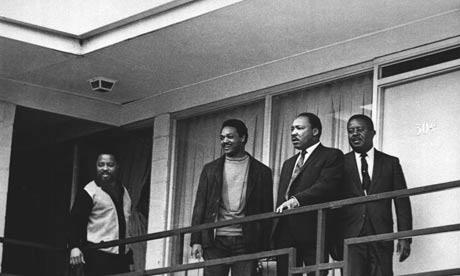
    Dr. Martin Luther King, Jr. was assassinated 45 years ago today at a motel in Memphis, Tennessee. The civil rights leader was in the southern city to support an ongoing strike by the city’s sanitation workers. King was only 39 years old when he died.

    King was born in Atlanta in 1929 and attended a seminary in Pennsylvania before becoming a pastor in Montgomery, Alabama at age 25. He went on to lead the 1955 Montgomery Bus Boycott and founded the Southern Christian Leadership Conference. Throughout his career he organized nonviolent protests throughout the south and helped to organize the 1963 March on Washington. King was awarded the Nobel Peace Prize in 1964.

    The day before his death, King delivered his “I’ve Been to the Mountaintop” speech, which contained references to the threats of violence that he routinely received.

    While mourning the news that beloved film critic Roger Ebert has died, Twitter users are also remembering the assassination of King and conveying which message of King’s meant the most to them:

    [Author’s Note: Cory Booker is the current mayor of Newark, New Jersey]

    [Author’s note: Nicolas Maduro is currently the interim president of Venezuela.]

  • HP’s Chairman Ray Lane to step down; HP loses two other board members

    HP Chairman Ray Lane will step down from his spot heading the computer maker’s board of directors, the company said Thursday. Director Ralph Whitworth will take his spot on an interim basis, while Lane remains on the board. The loss of its chairman is just part of what appears to be an overall cleanup of the troubled company’s board of directors, possibly in response to shareholder activists. Just a few weeks ago, the board fended off shareholder attempts to restructure it, but barely.

    HP logoNow, it’s clear some of those challenges resonated. Directors John H. Hammergren and G. Kennedy Thompson have decided to leave the board, leaving two slots open for HP to fill. Both directors will continue to serve until the May board meeting, according to the release. Many have blamed HP’s myriad troubles on its inept board, including the CtW Investment Group, an arm of labor federation Change to Win that filed a letter in February asking for Lane to be removed as chairman. The group blamed the retiring directors and Lane for the debacle that is the Autonomy purchase.

    Cleaning house might be the first step to getting the company back on track after what has been a tumultuous couple of years since the company deposed Mark Hurd as CEO and Chairman in 2010 after a sexual harassment scandal. Lane’s tenure has been rocky to say the least. He came on as chairman at the same time as former SAP CEO Leo Apotheker was named CEO and presided over the company’s problematic — and extremely expensive — acquisition of Autonomy for more than $13 billion.

    That acquisition — which was Apotheker’s baby but got board approval —  raised eyebrows even at the time it was announced with many observers calling Autonomy wildly over priced. That assessment turns out to have been true. HP subsequently wrote off  more than $8 billion of that purchase and pushed U.S. and U.K authorities to investigate alleged fraud on the part of former Autonomy management. The fact that the purchase passed muster in the first place though focused more eyes on HP’s board.

    In a release announcing his move on Thursday Lane said:

    “After reflecting on the stockholder vote last month, I’ve decided to step down as executive chairman to reduce any distraction from HP’s ongoing turnaround,” said Lane. “Since I joined HP’s board a little over two years ago, I’ve been committed to board evolution to ensure our turnaround and future success. I’m proud of the board we’ve built and the progress we’ve made to date in restoring the company. I will continue to serve HP as a director and help finish the job.”

    The one question some shareholders may have is why Lane, who is a partner emeritus at VC firm Kleiner Perkins Caufield & Buyers,  remains involved at HP at all.


    Related research and analysis from GigaOM Pro:
    Subscriber content. Sign up for a free trial.


  • What Airbnb learned from Jiro Dreams of Sushi

    Airbnb cofounder and Chief Product Officer Joe Gebbia is one of a new crop of designer founders who have successfully morphed their design careers into building and running breakout startups. And these new designers have been looking to some very non-traditional creators for inspiration. Gebbia told a group of designers at an AIGA event in San Francisco on Wednesday night that the movie Jiro Dreams of Sushi represents what they fundamentally believe at Airbnb.

    In case you haven’t seen the documentary, which came out in 2011, Jiro is an octogenarian sushi master who has perfected the art of making sushi at his Michelin three-star restaurant in the Ginza subway in Tokyo. He’s spent decades perfecting simple tasks like selecting, cutting, and preparing the best fish. “Jiro embodies craftsmanship and detail,” said Gebbia, explaining:

    One of the responsibilities of designers is to seek out and find the details. If we don’t who else will?

    Gebbia, who graduated from the Rhode Island School of Design, says he took his entire product team to Jiro Dreams of Sushi. “At Airbnb we’re joe-gebbia-headshot-highrestrying to build a culture that supports details, celebrates them, and gives our teams creative license to pursue them,” said Gebbia. I’m not interested in the debate about what comes first engineering or design, said Gebbia, “the important thing is designing the farm,” or the environment for these things to thrive.

    For example, Gebbia cited a small detail that Airbnb built into its host messaging system. When a host is replying to a guest, the email can be repopulated with a message that the host sent to a former guest, but with the name changed for the current guest. The idea is that a host will commonly be emailing the same things to multiple guests, and the auto population can save them significant time. One host was so happy with the time-saver that they sent a gushing email to the team.

    Airbnb might be a $2.5 billion-plus valued company now, but of course it wasn’t always so. Gebbia — who says his first entrepreneurial venture was selling drawings of Teenage Mutant Ninja Turtles to classmates in grade school — remembers the times of rejection quite clearly. Around 2008 we were “staring in the face of rejection,” after attempting to raise funding from venture capitalists in Silicon Valley. “We got 20 email intros to investors, 10 emailed us back, 5 took coffee meetings with us, and zero invested in us,” recalls Gebbia.

    Some of the best advice Gebbia says he got in 2009 from Paul Graham, the head of Y Combinator, who accepted the Airbnb founders into his accelerator. Graham gave the company permission to solve problems that wouldn’t scale, said Gebbia, explaining that Graham told his team to “go out and meet your customers.”

    Airbnb neighborhood feature screenshot

    The early team started staying in the Airbnb rooms in New York and realized the hosts needed much better photography to show off their housing assets. After spending a weekend renting a camera, photographing host accommodations and publishing them on the site, bookings started growing immediately. The team returned to the Bay Area and reported their findings back to Graham. Graham’s immediate response was: “what are you doing here? Get back to New York.”

    Sushi master Jiro is just one newer influence on the design of Airbnb. Gebbia, who studied industrial design at RISD, says his early influences also include Charles and Ray Eames, the furniture and product designer team who are widely cited as helping democratize design. In terms of company culture, the early Airbnb team visited Zappos a few years ago to learn about how to create and maintain a fun company.

    Gebbia spoke at our soldout RoadMap 2012 event, which focused on design in the age of connectivity. RoadMap 2013 will take place this coming November and tickets will go on sale shortly. To be the first to know when tickets will go on sale, sign up here.

    Related research and analysis from GigaOM Pro:
    Subscriber content. Sign up for a free trial.


  • Remember Roger Ebert with This Amazing TED Talk

    Today, legendary film critic and icon Roger Ebert died at the age of 70 after a long battle with cancer. On a personal level, this is deeply depressing. I may have read more total words written by Roger Ebert than any other writer in history. The man’s writings on movies, film theory, politics, religion, and more are some fo the most insightful and most beautifully articulated pieces I’ve ever read.

    And for the world of film, the loss needs no further explanation.

    Check out this TED talk from 2011, in which Ebert discusses the loss of his voice. It’s incredible stuff.

    Ebert’s last written words were these, published in an earlier essay about taking a “leave of presence” due to returning health problems.

    “So on this day of reflection I say again, thank you for going on this journey with me. I’ll see you at the movies.”

    Can’t do much better than that.

  • YouTube Launches Playbook Guides

    YouTube announced the launch of Playbook Guides today. These are described as a set of resources for content creators, and are available for the Sports, Music, Education, Media Companies, and Nonprofits categories.

    “The Creator Playbook is a great resource to learn about best practices on YouTube, but wouldn’t you like to get your hands on a Playbook with tailored tips and strategies specific to the type of content you create? After all, each one of you creates something completely unique,” writes YouTube’s Lauren Vilders in a blog post. “As a music creator, maybe you’re wondering how to successfully release an album or song on YouTube. Or, if you’re a sports creator, maybe you’re stumped on how to program your content during the off-season. Don’t worry – we’ve got you covered.”

    The guides come in a set of PDFs – one for each category. Inside, you’ll find category overviews, optimization priority lists, guidance for channel launching, branding tips, organizing/uploading instructions, etc.

    The guides are graphically rich with plenty of easy to read lists and charts.

    YouTube encourages their use alongside of the Creator Playbook.

  • Next-generation Xbox reportedly requires Internet connection just to play games

    Xbox 720 Internet Connectivity
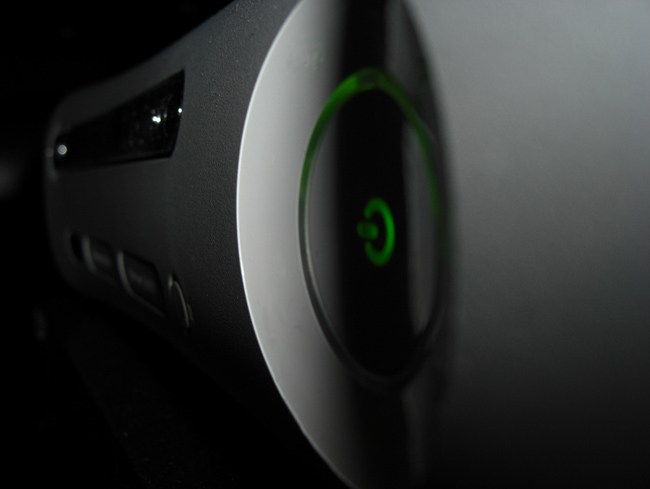
    Given Electronic Arts’ (EA) recent misadventures with requiring always-on Internet connectivity to play SimCity, you might think that Microsoft (MSFT) would be more cautious about implementing such a scheme for its next-generation Xbox. But unnamed sources have told Kotaku that Microsoft’s new Xbox “must have an active Internet connection to be used” and will only let users continue to play games on their consoles if their connection is disrupted for less than three minutes. To make matters worse, one source tells Kotaku that “no games or apps can be started” without an Internet connection, meaning that console will essentially be useless unless it’s hooked up to the web. We’d previously heard rumors that Microsoft would require an Internet connection when playing new games so that it could verify their activation codes and prevent users from playing used games, but this is the first time we’ve heard that the new Xbox will require an Internet connection just to function.

  • The Next Xbox Can Remain Offline For Only Three Minutes [Rumor]

    One of the more persistent rumors about the next Xbox is that it will require an always online Internet connection. New reports seem to suggest that this particular rumor may be fact.

    Sources speaking to Kotaku are saying that the next Xbox will require an Internet connection when launching games or apps on the console. It’s similar to systems in place on the PC where games that use Steam or Uplay require an Internet connection to launch.

    What’s more worrisome is that the next Xbox will reportedly require an always online Internet connection for the most part. It will be able to handle a dropped connection, but Kotaku’s sources are saying that the next Xbox can only handle a dropped connection for up to three minutes. A prolonged outage, which is a scenario any U.S. ISP subscriber is familiar with, will suspend the game and open a “network troubleshooter.”

    Going back to PC games, we’ve seen systems like this implemented in games like Diablo III and, more recently, SimCity. The latter was especially disastrous as the game’s always online requirement prevented many people from being able to play the game they just spent $60 on.

    If this is true, Microsoft is making a massive gamble on the next generation of game consoles. For one, the company is assuming that every consumer, or at least those interested in the next Xbox, has a broadband Internet connection. Secondly, it has convince consumers that its always online requirement won’t meet the same fate of its PC predecessors.

    Outside of those two areas, the always online requirement could also tie into previous rumors that the next Xbox would use online authentication to prevent used games from playing on a machine. It certainly wouldn’t be surprising if Microsoft took this path as publishers have been trying to eliminate the second-hand market for some time now.

    The most interesting part about all of this, however, is that Sony has already confirmed that the PlayStation 4 won’t require an Internet connection to play games. If Microsoft does go down this route, Sony has an opening to lambast Microsoft for being anti-consumer.

    It’s important to note that all of this is still merely rumor and speculation for now. Microsoft could reveal a console with no online requirements at the event that’s rumored to take place at the end of this month. That being said, the next generation of consoles is going to get really interesting if always online DRM and other methods of combating piracy becomes mainstream.

  • Roger Ebert, beloved film critic, dies

    Roger Ebert, the film critic who guided American movie selections for decades, has died, a family friend revealed to newspapers today. He was 70 years old. This sad news comes just days after Ebert wrote a column in the Chicago Sun-Times, celebrating the 46th anniversary of his column and announcing a “leave of presence.”

    “On April 3, 1967, I became the film critic for the Chicago Sun-Times. Some of you have read my reviews and columns and even written to me since that time. Others were introduced to my film criticism through the television show, my books, the website, the film festival, or the Ebert Club and newsletter. However you came to know me, I’m glad you did and thank you for being the best readers any film critic could ask for,” he wrote. “I must slow down now, which is why I’m taking what I like to call ‘a leave of presence.’ What in the world is a leave of presence? It means I am not going away. My intent is to continue to write selected reviews but to leave the rest to a talented team of writers handpicked and greatly admired by me.”

    The reason: he once again had cancer.

    “It really stinks that the cancer has returned and that I have spent too many days in the hospital,” he wrote in this post. “At this point in my life, in addition to writing about movies, I may write about what it’s like to cope with health challenges and the limitations they can force upon you.”

    Over the past decade, Ebert had battled both cancer of the thyroid and cancer of the salivary gland. In 2006, he had part of his jaw removed — which left him unable to talk or eat. He told the incredible story of learning to speak again at TED2011. Watch his beautiful talk, “Remaking my voice,” above.

    Ebert’s written reviews were syndicated in more than 200 newspapers nationally, and he appeared on television in the shows Sneak Preview, At the Movies with Gene Siskel and Roger Ebert, and Ebert & Roeper & the Movies. The first film critic to get his name on the Hollywood Walk of Fame, Ebert will be greatly missed.

    Below, some of our favorite photos of this tremendous writer and person.

    Ebert-3

    Photo: James Duncan Davidson

    Ebert-2

    Photo: James Duncan Davidson

    Ebert-4

    Photo: James Duncan Davidson

    Ebert-5

    Photo: James Duncan Davidson

    Ebert-1

    Photo: James Duncan Davidson


  • The Truth About Creative Teams

    An interview with Leigh Thompson, professor at Kellogg School of Management and author of Creative Conspiracy: The New Rules of Breakthrough Collaboration.


    Download this podcast

    A written transcript will be available by April 11.

  • Watch the Facebook Home announcement

    facebook_home_video_screen_cap

    Earlier today Facebook announced their new “Facebook Home” launcher app that will be available for most Android devices and the HTC First, a new smartphone that will be loaded with Facebook’s new launcher out of the box. If you were not able to watch the live announcement while it was streaming, it is now available for review. In addition to getting more insight from Zuckerberg on Facebook’s reasoning for pursuing this path, the video includes lots of screencasts of the new features and functions of the launcher. Along with Zuckerberg and other Facebookers, Ralph De La Vega, President of AT&T Mobility, and Peter Chou, CEO of HTC, also make appearances to showcase the new HTC First smartphone. If you want to see how the Coverfeed or Chat Heads will work, hit the break to view the whole 40 minute video of the event.


    Come comment on this article: Watch the Facebook Home announcement