Blog

  • LG Optimus G 2 shows up in GLBenchmark database

    LG_Optimus_G_2_GLBenchmark

    The GLBenchmark site is one of the best resources for finding out about phones in the pipeline. A new LG phone (D801) showed up in the database that is most likely the Optimus G 2. It’s powered by a 1.7GHz quad-core Qualcomm Snapdragon 800 MSM8974, an Adreno 330 GPU, an FHD display, and Android 4.2.2. It has been rumored that the Optimus G 2 would carry an Odin Octa-core CPU, but this news doesn’t mean that it won’t. Just like the Galaxy S 4, it’s very likely that LG will offer variants with different processors for different regions. I would expect to see this phone to get announced at IFA 2013 later in the year, so expect a lot of rumors and leaks in the meantime.

    source: GLBenchmark

    Come comment on this article: LG Optimus G 2 shows up in GLBenchmark database

  • News story: Prime Minister David Cameron congratulates Kenyan President Elect

    He stressed that this represented the end of a remarkable process, in which more Kenyans than ever before turned out to vote. The Prime Minister urged the Kenyan people to be proud of the strong signal they have sent to the world about their determination to exercise their democratic right peacefully. He encouraged all Kenyans to continue this spirit of peace and accept the decision of the Court as final.

    “The Prime Minister stated that the Kenyan people had made their sovereign choice, and resolved disputes through the rule of law and the strong institutions of the Supreme Court and due Constitutional process. He welcomed the President-elect’s commitment that his new Government will work with all Kenyans in a spirit of inclusivity and reconciliation, and that the Government of Kenya will continue to meet its international legal obligations.

    “The Prime Minister also underlined his strong commitment to the partnership that exists between Kenya and the UK. He described the relationship as deep and historic, with a substantial shared agenda of stability, security, development and prosperity that benefits both our countries. He looked forward to working with the President-elect’s new Government to build on this partnership, and to help realise the great potential of a united Kenya in line with Vision 2030.”

  • Where Have All The Physical QWERTYs Gone?

    bbq10-5

    It’s approaching three years since I emailed and got a reply from the late Steve Jobs. The topic of my caffeine-fueled missive that sunny day in June 2010 was the industry’s move towards touch-based interfaces and, specifically, Apple’s one-size-fits-all approach regarding the iPhone’s lack of a physical QWERTY keyboard.

    I have a disability that can make touch and other physically demanding interfaces more challenging, I explained to Jobs, and whereas the mouse-driven GUI that he helped usher in with the Macintosh had inadvertently put me on a level playing field, were touch to ever become the dominant mode of input, it had the potential to turn that world upside down.

    “That’s obviously a bit dramatic”, I wrote on TechCrunch at the time. “There will always be lots of different products on the market, but it’s a possibility nonetheless.” Fast forward to 2013 and what was only a possibility has all but become a reality. Survey the mobile landscape and it’s filled with people fondling their giant slabs of touch, happily typing away on glass.

    At this point I know I’ll likely get ripped apart in the comments. In the battle of the physical vs virtual QWERTY, the market has spoken, they’ll say, and those who don’t favour touch are squarely out of touch. And sadly, the evidence is heavily stacked on their side of the argument.

    Survey the mobile landscape and it’s filled with people fondling their giant slabs of touch, happily typing away on glass

    In the first few years of the iPhone’s existence, a ton of hybrid physical QWERTY/touch smartphones from competitors entered the market, ready to differentiate themselves from Apple by talking up their superior typing experience. But they failed to stop the Cupertino juggernaught. Typing on glass, while not ideal, was good enough. Arguably it wasn’t until Android OEMs ditched their, largely, clunky slide-out keyboards and wholesale copied and then supersized Apple’s all touch form-factor, did they begin to turn back the tide.

    Meanwhile, continues the argument, the likes of Nokia fell by the wayside, plagued by an antiquated user interface that, in a desperate and confused attempt to respond to the market, tried and failed to crowbar in touch before the company finally jumped onto Microsoft’s Windows Phone platform, sans physical QWERTY.

    Furthermore, BlackBerry, which seemingly built its whole business off the back of its physical QWERTY-touting credentials, chose to release its first comeback device as the BB10-powered Z10, another all touch grey slab, rather than the Q10, which combines touch with a physical QWERTY in the best BlackBerry candybar tradition. It’s also been suggested that the Canadian handset maker may even view the Q10’s hybrid approach as a way to wean its traditional customers off a physical keyboard entirely, a gateway device if you will.

    So yes, putting aside the fact that the market can only speak to what is put in front of it — I can’t recall a single candybar QWERTY powered by Android that was anything more than a mid-tier or low end device — it would seem that the market has indeed spoken.

    But it may not have had the final word yet.

    That’s if — and it’s a big if — the BlackBerry Q10, when it finally hits the market next month, surprises everybody and sells in sufficient numbers to smash through the totalitarian all touch screen. And just like the Mac had ensured before it, for this hack and others like me, 2013 won’t be like 1984 after all.


  • Weekly Address: President Obama Offers Easter and Passover Greetings

    President Obama uses his weekly address to mark a sacred time for the millions of Americans celebrating Easter and Passover, and he calls on everyone to use this time to reflect on the common values we share as a nation. The President says that this is a chance to embrace loved ones, give thanks for our blessings, and help those less fortunate as we celebrate our individual traditions as well as the thread of humanity that connects us all.

    Transcript | Download mp4 | Download mp3

  • Ocean Cleanup Array developed by 19-year-old could save millions each year, and impact human health

    Plans were unveiled by Boyan Slat, founder of The Ocean Cleanup Foundation, for an Ocean Cleanup Array, brought on after launching a school project that analyzed the amount and size of the plastic particles in the ocean’s garbage patches. The Ocean Cleanup Array project…
  • Wake up to insomnia (opinion)

    (NaturalNews)Right now, 25 percent of all Americans are regularly taking sleeping pills, with $18 million being spent on prescription drugs and an additional over $600 million spent on over-the-counter pills. Not only do these figures emphasize the seriousness of the insomnia problem…

  • Hormone imbalances and belly fat

    Increased belly fat, a carry over of the late 20th century, has become an ever present scourge of the average western waistline. Watching most infomercials or just walking the streets bears testament to this statement. Belly blasters, abdominal contraction gizmos and…
  • Hybrid grapefruits being developed for people on Big Pharma drugs

    A growing number of people are reportedly unable to eat grapefruits because the tangy citrus fruit contains natural compounds that interfere with the effectiveness of statins, antibiotics, and other pharmaceutical drugs. But rather than look for ways to help people get…
  • Suspicious motives: Is ‘Big Food’ behind Whole Foods’ GMO labeling decision?

    The recent decision by Whole Foods Market to label all genetically-modified organisms (GMOs) sold in its stores by 2018 has gotten mixed reactions — some say it is too little, too late, while others applaud the move as a progressive step towards full transparency in…
  • What are ‘food drugs’ and how much are you taking?

    If you took an antibiotic every day, your body would build up immunity to it, and the antibiotics would no longer work. Just the same, if you were to use drugs, like cocaine or heroine every day, your body would break down, leading your heart and cleansing organs to…
  • Is the modern western lifestyle responsible for the increase in autism?

    There have been literally hundreds of research projects looking into the possible causes of autism. Many have linked autism to vaccines, diet and chemicals in our environment. Others have linked autism to other, more bizarre causes such as jaundice and sociological issues…
  • Is your organic produce really pesticide-free?

    The incredible success and sustained growth of the organic movement over the past several decades has led to many positive changes for the general food supply, which include the increased availability of clean food. But there is a common misperception among many in the…
  • Imminent proliferation of drones in American skies requires widespread civilian debate

    The country is set to become a nation of drones in the coming years, as experts predict an explosion of unmanned aerial vehicles numbering in the tens of thousands that will literally turn the U.S. into the surveillance society futurists have warned about. What’s…
  • James Holmes, and how the CIA hid their MKULTRA mind-control program

    (NaturalNews)Back in the early 1990s, I interviewed John Marks, author of Search for the Manchurian Candidate. This was the book that exposed the existence of the infamous CIA MKULTRA program. I bring up this interview now, because James Holmes may well be on the receiving end…

  • Help another county’s residents say NO! to fluoridation

    The people in the towns and farmland of Sonoma County are facing a battle over fluoridating the currently un-fluoridated public water supply. Petitions are circulating to keep Sonoma County’s public water supply un-fluoridated, but the pro-fluoridation wing within the…
  • The Dash Car Dongle Wants To Make You A Better Driver By Syncing With Your iPhone

    dash-kickstarter

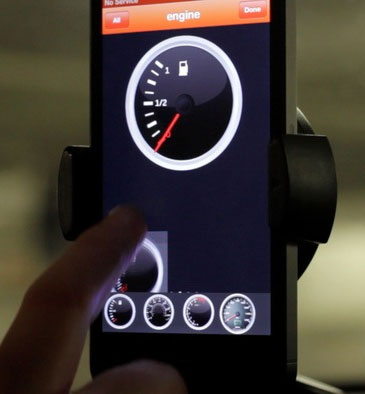
    I love my tiny little Mazda, but I’ll be honest — I still don’t completely understand how it works. That’s never really bothered me before (I’d much rather geek out over a phone or something) but a Kickstarter project from a small team in Boston has me itching to pay more attention to what’s really going on under the hood. Long story short, Dash combines a Bluetooth 4.0-enabled dongle that plugs into your car’s on-board diagnostics port with an iPhone app that gives you up-to-date information how on your car is holding up.

    Yes, I know that probably sounds very familiar.

    We’ve seen a few startups tapping into that particular port recently — Carvoyant inked deals with local auto dealers to more broadly distribute its always-on diagnostics and tracking gadget earlier this year, and Y Combinator-backed Automatic got plenty of attention for taking a similar concept and combining it with an awfully handsome iPhone app interface. Dash’s approach seems to resemble the latter slightly more than the former, but at their core they’re all trying to accomplish the same mission: to improve the driving experience by shining light on data that wasn’t always easily accessible.

    So should you consider Dash over something like the ultra-slick Automatic when both devices are both slated to cost around $69? That all comes down to how you feel about the little tricks that set Dash apart from the oft-hyped California startup’s service.

    In addition to tracking fuel usage, passing along notifications when your car’s components have gone awry and letting people locate their cars on a map, Dash users can use their smartphone as a secondary display of sorts for realtime information like current speed, engine RPM, and fuel economy. The big idea behind latter is that you’ll be able to find an environmentally-friendly sweet spot while cruising along, though chances are you’ve already got some sort of indicator telling you how fuel-efficient your driving is if you’re driving a more recent car. Still, since U.S. cars from as far back as 1996 have ODB ports there are plenty of drivers who could stand to benefit from this sort of info.

    Oh, and a side note: if Dash appeals to you because your car’s built-in speedometer and tachometer don’t work, you should really get that taken care of first.

    In case you were hoping to bring your social fixation into your car too, all that driving data can be automatically uploaded to an associated online Dash account. From there people can compare their own metrics to their fellow Dash users and pick up on best practices for squeezing optimal performance out of their rides (sadly, there doesn’t seem to be a way to mock them mercilessly for driving like your grandmother). What’s more, users can also record and share in-car video with speed and engine information overlaid on top of it, well, just because.

    Those of you looking to make your iPhone an extension of your car have to consider that the Dash still seems like a long way from fruition. At time of writing the team’s Kickstarter campaign has raised just over $15,000 from backers, and is ultimately shooting to top $750,000 before May 11. Should the Dash team meet that lofty goal though, they hope to get the first batch of dongles out sometime this June — just in time for summer roadtrip season. Sadly, just like with Automatic, Android users will have to wait until later in the year to get their mobile car diagnostics on.

  • Google’s augmented reality game inspires players to duel one other in ‘Braveheart paint’

    Google Ingress Cult Following
    Don’t get freaked out if you see people dressed up like William Wallace trying to zap each other with their Nexus 7 tablets — they’re just playing Ingress, Google’s (GOOG) experimental augmented reality game that first launched last November. AllThingsD reports that since its debut last fall, Ingress has developed a small but loyal cult following around the world that has helped players build bonds with one another as they travel to real-life landmarks and engage in virtual fights with rival factions. Ingress creator John Hanke tells AllThingsD that one recent outing involved roughly 100 Ingress players converging on the monument of William Wallace in Scotland with some showing up “in Braveheart paint with Nexus 7 tablets to play.”

    Continue reading…

  • Microsoft mulls using accelerated 3D graphics standard for next Internet Explorer

    Microsoft Internet Explorer 11
    It looks like Microsoft (MSFT) is considering following Google (GOOG) and Mozilla in supporting the WebGL standard for accelerated 3D graphics for the next version of its web browser. CNET has found that the leaked build of Windows Blue features an early build of Internet Explorer 11 that contains “some infrastructure in place to support WebGL” but that also “lacks actual support at this stage.” CNET also notes that supporting WebGL would represent an about-face for Microsoft, which had previously criticized the standard over alleged security risks. WebGL is one of the standards that Mozilla is using in its efforts to port Epic Games’ Unreal Engine 3 onto its Firefox browser.

  • News story: PM letter to President-elect Kenyatta

    Following the decision of the Kenyan Supreme Court to uphold Kenya’s recent election results, the Prime Minister has written to President-elect Kenyatta to congratulate him and all others elected.

    A Downing Street spokesperson said:

    The Prime Minister wrote to President-elect Uhuru Kenyatta today. He congratulated the President-elect and all others elected in Kenya’s elections, upheld today by the Kenyan Supreme Court. He stressed that this represented the end of a remarkable process, in which more Kenyans than ever before turned out to vote. The Prime Minister urged the Kenyan people to be proud of the strong signal they have sent to the world about their determination to exercise their democratic right peacefully. He encouraged all Kenyans to continue this spirit of peace and accept the decision of the Court as final.
     
    “The Prime Minister stated that the Kenyan people had made their sovereign choice, and resolved disputes through the rule of law and the strong institutions of the Supreme Court and due Constitutional process. He welcomed the President-elect’s commitment that his new Government will work with all Kenyans in a spirit of inclusivity and reconciliation, and that the Government of Kenya will continue to meet its international legal obligations.
     
    “The Prime Minister also underlined his strong commitment to the partnership that exists between Kenya and the UK. He described the relationship as deep and historic, with a substantial shared agenda of stability, security, development and prosperity that benefits both our countries. He looked forward to working with the President-elect’s new Government to build on this partnership, and to help realise the great potential of a united Kenya in line with Vision 2030.”

  • Survey: Samsung takes the lead from Nokia, BlackBerry in key emerging markets

    Samsung Emerging Market Share
    One of the big stories to follow in 2013 will be the intensifying competition among smartphone vendors for market share in important emerging markets such as China, Brazil and India. Forbes points us to a new survey from mobile marketing firm Upstream showing that Samsung (005930) is the most popular smartphone brand for prospective buyers in Brazil, Saudi Arabia and India, while Nokia (NOK) holds onto the top spot in Nigeria, where Samsung didn’t register on the survey. The survey also contained some potentially troubling news for BlackBerry (BBRY), which only registered double-digit interest from prospective buyers in Nigeria while falling below 10% in the other three countries. Upstream founder and CEO Marco Veremis tells Forbes that BlackBerry and Nokia tend to do well in African nations because they provide “easy access to social networks and the Web” and, especially in Nokia’s case, they offer superior battery life.