Blog

  • In short: An upworthy birthday, death in the 20th century

    Here, some staff picks of smart, funny, bizarre and cool stuff on the interwebs this week:

    Happy Birthday, Upworthy! Here are 11 lessons our friends at Upworthy learned in their first year on the Internet. [Unworthy]

    Jay Horwitz, media relations director for the Mets, is the Barry Bonds of butt dialing. He frequently booty calls everyone in the MBA but everyone’s cool with it. [WSJ.com]

    David McCandless: The beauty of data visualizationDavid McCandless: The beauty of data visualization How did we die in the 20th century? A data visualization of causes of death, beautiful as always, by David McCandless. [Guardian] In case you missed it, watch McCandless’ talk from 2010.

    Does robot uprising mean human downgrading? [Chronicle] Peep our playlist of robots at TED »

    New details about the origin and contents of the universe, revealed by the most detailed map ever made of the oldest light in the universe. [Sci Tech Daily]

    Are there too many cooks in the Cairo kitchen? [London Review of Books]

    A delightful personal essay by Edward Jay Epstein, on getting an A in Nabokov’s class at Cornell (informally known as Dirty Lit). [NY Review of Books]

    Keith Chen: Could your language affect your ability to save money?Keith Chen: Could your language affect your ability to save money? Ozgun Atasoy takes a look at the research Keith Chen presents in his TED Talk on how language correlates with your ability to save money. [Scientific American] Read more about Chen’s research »

    Developments in science means better science-as-fashion. Right? [PopSci]

    Digg, like so many of us, is bummed out that on July 1 Google is shutting down Google Reader. Help them build a new reader »

    What psychologically separates the world’s WEIRD (Western, Educated, Industrialized, Rich, Democratic) countries from the rest? [Pacific Standard]

    Susan Cain: The power of introvertsSusan Cain: The power of introverts Business Insider talks with Susan Cain about writing and giving her blockbuster TED Talk on the power of introverts. [Business Insider]

    Successful trials for gene therapy that eliminates leukaemia in eight days. [New Scientist]

    Everything is awesome starting now. Planking is dead. Long live hadoken-ing. [Imgur]

  • Accidental Empires, Part 16 — The Prophet (Chapter 10)

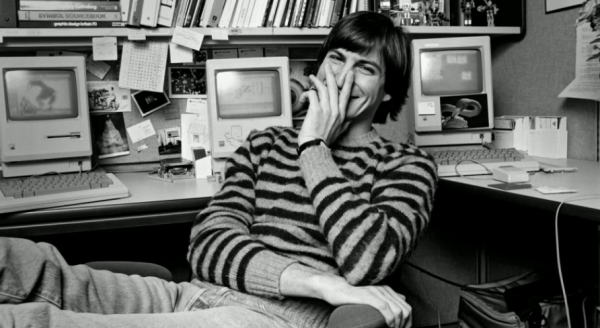
    Sixteenth in a series. Robert X. Cringely’s tome Accidental Empires takes on a startling prescient tone in this next installment. Remember as you read that the book published in 1991. Much he writes here about Apple cofounder Steve Jobs is remarkably insightful from the context of looking back. Some portions foreshadow the future — or one possible outcome — when looking at Apple following Jobs’ ouster in 1985 and the company now following his death.

    The most dangerous man in Silicon Valley sits alone on many weekday mornings, drinking coffee at II Fornaio, an Italian restaurant on Cowper Street in Palo Alto. He’s not the richest guy around or the smartest, but under a haircut that looks as if someone put a bowl on his head and trimmed around the edges, Steve Jobs holds an idea that keeps some grown men and women of the Valley awake at night. Unlike these insomniacs, Jobs isn’t in this business for the money, and that’s what makes him dangerous.

    I wish, sometimes, that I could say this personal computer stuff is just a matter of hard-headed business, but that would in no way account for the phenomenon of Steve Jobs. Co-founder of Apple Computer and founder of NeXT Inc., Jobs has literally forced the personal computer industry to follow his direction for fifteen years, a direction based not on business or intellectual principles but on a combination of technical vision and ego gratification in which both business and technical acumen played only small parts.

    Steve Jobs sees the personal computer as his tool for changing the world. I know that sounds a lot like Bill Gates, but it’s really very different. Gates sees the personal computer as a tool for transferring every stray dollar, deutsche mark, and kopeck in the world into his pocket. Gates doesn’t really give a damn how people interact with their computers as long as they pay up. Jobs gives a damn. He wants to tell the world how to compute, to set the style for computing.

    Bill Gates has no style; Steve Jobs has nothing but style.

    A friend once suggested that Gates switch to Armani suits from his regular plaid shirt and Levis Dockers look. “I can’t do that,” Bill replied. “Steve Jobs wears Armani suits.”

    Think of Bill Gates as the emir of Kuwait and Steve Jobs as Saddam Hussein.

    Like the emir, Gates wants to run his particular subculture with an iron hand, dispensing flawed justice as he sees fit and generally keeping the bucks flowing in, not out. Jobs wants to control the world. He doesn’t care about maintaining a strategic advantage; he wants to attack, to bring death to the infidels. We’re talking rivers of blood here. We’re talking martyrs. Jobs doesn’t care if there are a dozen companies or a hundred companies opposing him. He doesn’t care what the odds are against success. Like Saddam, he doesn’t even care how much his losses are. Nor does he even have to win, if, by losing the mother of all battles he can maintain his peculiar form of conviction, still stand before an adoring crowd of nerds, symbolically firing his 9 mm automatic into the air, telling the victors that they are still full of shit.

    You guessed it. By the usual standards of Silicon Valley CEOs, where job satisfaction is measured in dollars, and an opulent retirement by age 40 is the goal, Steve Jobs is crazy.

    Apple Computer was always different. The company tried hard from the beginning to shake the hobbyist image, replacing it with the idea that the Apple II was an appliance but not just any appliance; it was the next great appliance, a Cuisinart for the mind. Apple had the five-color logo and the first celebrity spokesperson: Dick Cavett, the thinking person’s talk show host.

    Alone among the microcomputer makers of the 1970s, the people of Apple saw themselves as not just making boxes or making money; they thought of themselves as changing the world.

    Atari wasn’t changing the world; it was in the entertainment business. Commodore wasn’t changing the world; it was just trying to escape from the falling profit margins of the calculator market while running a stock scam along the way. Radio Shack wasn’t changing the world; it was just trying to find a new consumer wave to ride, following the end of the CB radio boom. Even IBM, which already controlled the world, had no aspirations to change it, just to wrest some extra money from a small part of the world that it had previously ignored.

    In contrast to the hardscrabble start-ups that were trying to eke out a living selling to hobbyists and experimenters, Apple was appealing to doctors, lawyers, and middle managers in large corporations by advertising on radio and in full pages of Scientific American. Apple took a heroic approach to selling the personal computer and, by doing so, taught all the others how it should be done.

    They were heroes, those Apple folk, and saw themselves that way. They were more than a computer company. In fact, to figure out what was going on in the upper echelons in those Apple II days, think of it not as a computer company at all but as an episode of “Bonanza.”

    (Theme music, please.)

    Riding straight off the Ponderosa’s high country range every Sunday night at nine was Ben Cartwright, the wise and supportive father, who was willing to wield his immense power if needed. At Apple, the part of Ben was played by Mike Markkula.

    Adam Cartwright, the eldest and best-educated son, who was sophisticated, cynical, and bossy, was played by Mike Scott. Hoss Cartwright, a good-natured guy who was capable of amazing feats of strength but only when pushed along by the others, was played by Steve Wozniak. Finally, Little Joe Cartwright, the baby of the family who was quick with his mouth, quick with his gun, but was never taken as seriously as he wanted to be by the rest of the family, was played by young Steve Jobs.

    The series was stacked against Little Joe. Adam would always be older and more experienced. Hoss would always be stronger. Ben would always have the final word. Coming from this environment, it was hard for a Little Joe character to grow in his own right, short of waiting for the others to die. Steve Jobs didn’t like to wait.

    By the late 1970s, Apple was scattered across a dozen one- and two-story buildings just off the freeway in Cupertino, California. The company had grown to the point where, for the first time, employees didn’t all know each other on sight. Maybe that kid in the KOME T-shin who was poring over the main circuit board of Apple’s next computer was a new engineer, a manufacturing guy, a marketer, or maybe he wasn’t any of those things and had just wandered in for a look around. It had happened before. Worse, maybe he was a spy for the other guys, which at that time didn’t mean IBM or Compaq but more likely meant the start-up down the street that was furiously working on its own microcomputer, which its designers were sure would soon make the world forget that there ever was a company called Apple.

    Facing these realities of growth and competition, the grownups at Apple — Mike Markkula, chairman, and Mike Scott, president –decided that ID badges were in order. The badges included a name and an individual employee number, the latter based on the order in which workers joined the company. Steve Wozniak was declared employee number 1, Steve Jobs was number 2, and so on.

    Jobs didn’t want to be employee number 2. He didn’t want to be second in anything. Jobs argued that he, rather than Woz, should have the sacred number 1 since they were co-founders of the company and J came before W in the alphabet. It was a kid’s argument, but then Jobs, who was still in his early twenties, was a kid. When that plan was rejected, he argued that the number 0 was still unassigned, and since 0 came before 1, Jobs would be happy to take that number. He got it.

    Steve Wozniak deserved to be considered Apple’s number 1 employee. From a technical standpoint, Woz literally was Apple Computer. He designed the Apple II and wrote most of its system software and its first BASIC interpreter. With the exception of the computer’s switching power supply and molded plastic case, literally every other major component in the Apple II was a product of Wozniak’s mind and hand.

    And in many ways, Woz was even Apple’s conscience. When the company was up and running and it became evident that some early employees had been treated more fairly than others in the distribution of stock, it was Wozniak who played the peacemaker, selling cheaply 80,000 of his own Apple shares to employees who felt cheated and even to those who just wanted to make money at Woz’s expense.

    Steve Jobs’s roles in the development of the Apple II were those of purchasing agent, technical gadfly, and supersalesman. He nagged Woz into a brilliant design performance and then took Woz’s box to the world, where through sheer force of will, this kid with long hair and a scraggly beard imprinted his enthusiasm for the Apple II on thousands of would-be users met at computer shows. But for all Jobs did to sell the world on the idea of buying a microcomputer, the Apple II would always be Wozniak’s machine, a fact that might have galled employee number 0, had he allowed it to. But with the huckster’s eternal optimism, Jobs was always looking ahead to the next technical advance, the next computer, determined that that machine would be all his.

    Jobs finally got the chance to overtake his friend when Woz was hurt in the February 1981 crash of his Beechcraft Bonanza after an engine failure taking off from the Scotts Valley airport. With facial injuries and a case of temporary amnesia, Woz was away from Apple for more than two years, during which he returned to Berkeley to finish his undergraduate degree and produced two rock festivals that lost a combined total of nearly $25 million, proving that not everything Steve Wozniak touched turned to gold.

    Another break for Jobs came two months after Woz’s airplane crash, when Mike Scott was forced out as Apple president, a victim of his own ruthless drive that had built Apple into a $300 million company. Scott was dogmatic. He did stupid things like issuing edicts against holding conversations in aisles or while standing. Scott was brusque and demanding with employees (“Are you working your ass off?” he’d ask, glaring over an office cubicle partition). And when Apple had its first-ever round of layoffs, Scott handled them brutally, pushing so hard to keep momentum going that he denied the company a chance to mourn its loss of innocence.

    Scott was a kind of clumsy parent who tried hard, sometimes too hard, and often did the wrong things for the right reasons. He was not well suited to lead the $1 billion company that Apple would soon be.

    Scott had carefully thwarted the ambitions of Steve Jobs. Although Jobs owned 10 percent of Apple, outside of purchasing (where Scott still insisted on signing the purchase orders, even if Jobs negotiated the terms), he had little authority.

    Mike Markkula fired Scott, sending the ex-president into a months-long depression. And it was Markkula who took over as president when Scott left, while Jobs slid into Markkula’s old job as chairman. Markkula, who’d already retired once before, from Intel, didn’t really want the president’s job and in fact had been trying to remove himself from day-to-day management responsibility at Apple. As a president with retirement plans, Markkula was easier-going than Scott had been and looked much more kindly on Jobs, whom he viewed as a son.

    Every high-tech company needs a technical visionary, someone who has a clear idea about the future and is willing to do whatever it takes to push the rest of the operation in that direction. In the earliest days of Apple, Woz was the technical visionary along with doing nearly everything else. His job was to see the potential product that could be built from a pile of computer chips. But that was back when the world was simpler and the paradigm was to bring to the desktop something that emulated a mainframe computer terminal. After 1981, Woz was gone, and it was time for someone else to take the visionary role. The only people inside Apple who really wanted that role were Jef Raskin and Steve Jobs.

    Raskin was an iconoclastic engineer who first came to Apple to produce user manuals for the Apple II. His vision of the future was a very basic computer that would sell for around $600 — a computer so easy to use that it would require no written instructions, no user training, and no product support from Apple. The new machine would be as easy and intuitive to use as a toaster and would be sold at places like Sears and K-Mart. Raskin called his computer Macintosh.

    Jobs’s ambition was much grander. He wanted to lead the development of a radical and complex new computer system that featured a graphical user interface and mouse (Raskin preferred keyboards). Jobs’s vision was code-named Lisa.

    Depending on who was talking and who was listening, Lisa was either an acronym for “large integrated software architecture,” or for “local integrated software architecture” or the name of a daughter born to Steve Jobs and Nancy Rogers in May 1978. Jobs, the self-centered adoptee who couldn’t stand competition from a baby, at first denied that he was Lisa’s father, sending mother and baby for a time onto the Santa Clara County welfare rolls. But blood tests and years later, Jobs and Lisa, now a teenager, are often seen rollerblading on the streets of Palo Alto. Jobs and Rogers never married.

    Lisa, the computer, was born after Jobs toured Xerox PARC in December 1979, seeing for the first time what Bob Taylor’s crew at the Computer Science Lab had been able to do with bitmapped video displays, graphical user interfaces, and mice. “Why aren’t you marketing this stuff?” Jobs asked in wonderment as the Alto and other systems were put through their paces for him by a PARC scientist named Larry Tesler. Good question.

    Steve Jobs saw the future that day at PARC and decided that if Xerox wouldn’t make that future happen, then he would. Within days, Jobs presented to Markkula his vision of Lisa, which included a 16-bit microprocessor, a bit-mapped display, a mouse for controlling the on-screen cursor, and a keyboard that was separate from the main computer box. In other words, it was a Xerox Alto, minus the Alto’s built-in networking. “Why would anyone need an umbilical cord to his company?” Jobs asked.

    Lisa was a vision that made the as-yet-unconceived IBM PC look primitive in comparison. And though he didn’t know it at the time, it was also a development job far bigger than Steve Jobs could even imagine.

    One of the many things that Steve Jobs didn’t know in those days was Cringely’s Second Law, which I figured out one afternoon with the assistance of a calculator and a six-pack of Heineken. Cringely’s Second Law states that in computers, ease of use with equivalent performance varies with the square root of the cost of development. This means that to design a computer that’s ten times easier to use than the Apple II, as the Lisa was intended to be, would cost 100 times as much money. Since it cost around $500,000 to develop the Apple II, Cringely’s Second Law says the cost of building the Lisa should have been around $50 million. It was.

    Let’s pause the history for a moment and consider the implications of this law for the next generation of computers. There was no significant difference in ease of use between Lisa and its follow-on, the Macintosh. So if you’ve been sitting on your hands waiting to buy a computer that is ten times as easy to use as the Macintosh, remember that it’s going to cost around $5 billion (1982 dollars, too) to develop. Apple’s R&D budget is about $500 million, so don’t expect that computer to come from Cupertino. IBM’s R&D budget is about $3 billion, but that’s spread across many lines of computers, so don’t expect your ideal machine to come from Big Blue either. The only place such a computer is going to come from, in fact, is a collaboration of computer and semiconductor companies. That’s why the computer world is suddenly talking about Open Systems, because building hardware and software that plug and play across the product lines and R&D budgets of a hundred companies is the only way that future is going to be born. Such collaboration, starting now, will be the trend in the next century, so put your wallet away for now.

    Meanwhile, back in Cupertino, Mike Markkula knew from his days working in finance at Intel just how expensive a big project could become. That’s why he chose John Couch, a software professional with a track record at Hewlett-Packard, to head the super-secret Lisa project. Jobs was crushed by losing the chance to head the realization of his own dream.

    Couch was yet another Adam Cartwright, and Jobs hated him.

    The new ideas embodied in Lisa would have been Jobs’s way of breaking free from his type casting as Little Joe. He would become, instead, the prophet of a new kind of computing, taking his power from the ideas themselves and selling this new type of computing to Apple and to the rest of the world. And Apple accepted both his dream and the radical philosophy behind it, which said that technical leadership was as important as making money, but Markkula still wouldn’t let him lead the project.

    Vision, you’ll recall, is the ability to see potential in the work of others. The jump from having vision to being a visionary; though, is a big one. The visionary is a person who has both the vision and the willingness to put everything on the line, including his or her career, to further that vision. There aren’t many real visionaries in this business, but Steve Jobs is one. Jobs became the perfect visionary, buying so deeply into the vision that he became one with it. If you were loyal to Steve, you embraced his vision. If you did not embrace his vision, you were either an enemy or brain-dead.

    So Chairman Jobs assigned himself to Raskin’s Macintosh group, pushed the other man aside, and converted the Mac into what was really a smaller, cheaper Lisa. As the holder of the original Lisa vision, Jobs ignorantly criticized the big-buck approach being taken by Couch and Larry Tesler, who had by then joined Apple from Xerox PARC to head Lisa software development. Lisa was going to be too big, too slow, too expensive, Jobs argued. He bet Couch $5,000 that Macintosh would hit the market first. He lost.

    The early engineers were nearly all gone from Apple by the time Lisa development began. The days when the company ran strictly on adrenalin and good ideas were fading. No longer did the whole company meet to put computers in boxes so they could ship enough units by the end of the month. With the introduction of[ the Apple III in 1980, life had become much more businesslike at Apple, which suddenly had two product lines to sell.

    It was still the norm, though, for technical people to lead each product development effort, building products that they wanted to play with themselves rather than products that customers wanted to buy. For example, there was Mystery House, Apple’s own spreadsheet, intended to kill VisiCalc because everyone who worked on Apple II software decided en masse that they hated Terry Opdendyk, president of VisiCorp, and wanted to hurt him by destroying his most important product. There was no real business reason to do Mystery House, just spite. The spreadsheet was written by Woz and Randy Wigginton and never saw action under the Apple label because it was given up later as a bargaining chip in negotiations between Apple and Microsoft. Some Mystery House code lives on today in a Macintosh spreadsheet from Ashton-Tate called Full Impact.

    But John Couch and his Lisa team were harbingers of a new professionalism at Apple. Apple had in Lisa a combination of the old spirit of Apple — anarchy, change, new stuff, engineers working through the night coming up with great ideas — and the introduction of the first nontechnical marketers, marketers with business degrees — the “suits.” These nontechnical marketers were, for the first time at Apple, the project coordinators, while the technical people were just members of the team. And rather than the traditional bunch of hackers from Homestead High, Lisa hardware was developed by a core of engineers hired away from Hewlett-Packard and DEC, while the software was developed mainly by ex-Xerox programmers, who were finally getting a chance to bring to market a version of what they’d worked on at Xerox PARC for most of the preceding ten years. Lisa was the most professional operation ever mounted at Apple — far more professional than anything that has followed.

    Lisa was ahead of its time. When most microcomputers came with a maximum of 64,000 characters of memory, the Lisa had 1 million characters. When most personal computers were capable of doing only one task at a time, Lisa could do several. The computer was so easy to use that customers were able to begin working within thirty minutes of opening the box. Setting up the system was so simple that early drafts of the directions used only pictures, no words. With its mouse, graphical user interface, and bit-mapped screen, Lisa was the realization of nearly every design feature invented at Xerox PARC except networking.

    Lisa was professional all the way. Painstaking research went into every detail of the user interface, with arguments ranging up and down the division about what icons should look like, whether on-screen windows should just appear and disappear or whether they should zoom in and out. Unlike nearly every other computer in the world, Lisa had no special function keys to perform complex commands in a single keystroke, and offered no obscure ways to hold down three keys simultaneously and, by so doing, turn the whole document into Cyrillic, or check its spelling, or some other such nonsense.

    To make it easy to use, Lisa followed PARC philosophy, which meant that no matter what program you were using, hitting the E key just put an E on-screen rather than sending the program into edit mode, or expert mode, or erase mode. Modes were evil. At PARC, you were either modeless or impure, and this attitude carried over to Lisa, where Larry Tesler’s license plate read no modes. Instead of modes, Lisa had a very simple keyboard that was used in conjunction with the mouse and onscreen menus to manipulate text and graphics without arcane commands.

    Couch left nothing to chance. Even the problem of finding a compelling application for Lisa was covered; instead of waiting for a Dan Bricklin or a Mitch Kapor to introduce the application that would make corporate America line up to buy Lisas, Apple wrote its own software — seven applications covering everything that users of microcomputers were then doing with their machines, including a powerful spreadsheet.

    Still, when Lisa hit the market in 1983, it failed. The problem was its $10,000 price, which meant that Lisa wasn’t really a personal computer at all but the first real workstation. Workstations can cost more than PCs because they are sold to companies rather than to individuals, but they have to be designed with companies in mind, and Lisa wasn’t. Apple had left out that umbilical cord to the company that Steve Jobs had thought unnecessary. At $10,000, Lisa was being sold into the world of corporate mainframes, and the Apple’s inability to communicate with those mainframes doomed it to failure.

    Despite the fact that Lisa had been his own dream and Apple was his company, Steve Jobs was thrilled with Lisa’s failure, since it would make the inevitable success of Macintosh all the more impressive.

    Back in the Apple II and Apple III divisions, life still ran at a frenetic pace. Individual contributors made major decisions and worked on major programs alone or with a very few other people. There was little, if any, management, and Apple spent so much money, it was unbelievable. With Raskin out of the way, that’s how Steve Jobs ran the Macintosh group too. The Macintosh was developed beneath a pirate flag. The lobby of the Macintosh building was lined with Ansel Adams prints, and Steve Jobs’s BMW motorcycle was parked in a corner, an ever-present reminder of who was boss. It was a renegade operation and proud of it.

    When Lisa was taken from him, Jobs went through a paradigm shift that combined his dreams for the Lisa with Raskin’s idea of appliancelike simplicity and low cost. Jobs decided that the problem with Lisa was not that it lacked networking capability but that its high price doomed it to selling in a market that demanded networking. There’d be no such problem with Macintosh, which would do all that Lisa did but at a vastly lower price. Never mind that it was technically impossible.

    Lisa was a big project, while Macintosh was much smaller because Jobs insisted on an organization small enough that he could dominate every member, bending each to his will. He built the Macintosh on the backs of Andy Hertzfeld, who wrote the system software, and Burrell Smith, who designed the hardware. All three men left their idiosyncratic fingerprints all over the machine. Hertzfeld gave the Macintosh an elegant user interface and terrific look and feel, mainly copied from Lisa. He also made Macintosh very, very difficult to write programs for. Smith was Jobs’s ideal engineer because he’d come up from the Apple II service department (“I made him,” Jobs would say). Smith built a clever little box that was incredibly sophisticated and nearly impossible to manufacture.

    Jobs’s vision imposed so many restraints on the Macintosh that it’s a wonder it worked at all. In contrast to Lisa, with its million characters of memory, Raskin wanted Macintosh to have only 64,000 characters — a target that Jobs continued to aim for until long past the time when it became clear to everyone else that the machine needed more memory. Eventually, he “allowed” the machine to grow to 128,000 characters, though even with that amount of memory, the original 128K Macintosh still came to fit people’s expectations that mechanical things don’t work. Apple engineers, knowing that funher memory expansion was inevitable, built in the capability to expand the 128K machine to 512K, though they couldn’t tell Jobs what they had done because he would have made them change it back.

    Markkula gave up the presidency of Apple at about the time Lisa was introduced. As chairman, Jobs went looking for a new president, and his first choice was Don Estridge of IBM, who turned the job down. Jobs’s second choice was John Sculley, who came over from PepsiCo for the same package that Estridge had rejected. Sculley was going to be as much Jobs’s creation as Burrell Smith had been. It was clear to the Apple technical staff that Sculley knew nothing at all about computers or the computer business. They dismissed him, and nobody even noticed when Sculley was practically invisible during his first months at Apple. They thought of him as Jobs’s lapdog, and that’s what he was.

    With Mike Markkula again in semiretirement, concentrating on his family and his jet charter business, there was no adult supervision in place at Apple, and Jobs ran amok. With total power, the willful kid who’d always resented the fact that he had been adopted, created at Apple a metafamily in which he played the domineering, disrespectful, demanding type of father that he imagined must have abandoned him those many years ago.

    Here’s how Steve-As-Dad interpreted Management By Walking Around. Coming up to an Apple employee, he’d say, “I think Jim (another employee] is shit. What do you think?”

    If the employee agrees that Jim is shit, Jobs went to the next person and said, “Bob and I think Jim is shit. What do you think?”

    If the first employee disagreed and said that Jim is not shit, Jobs would move on to the next person, saying, “Bob and I think Jim is great. What do you think?”

    Public degradation played an important role too. When Jobs finally succeeded in destroying the Lisa division, he spoke to the assembled workers who were about to be reassigned or laid off. “I see only B and C players here,” he told the stunned assemblage. “All the A players work for me in the Macintosh division. I might be interested in hiring two or three of you [out of 300]. Don’t you wish you knew which ones I’ll choose?”

    Jobs was so full of himself that he began to believe his own PR, repeating as gospel stories about him that had been invented to help sell computers. At one point a marketer named Dan’l Lewin stood up to him, saying, “Steve, we wrote this stuff about you. We made it up.”

    Somehow, for all the abuse he handed out, nobody attacked Jobs in the corridor with a fire axe. I would have. Hardly anyone stood up to him. Hardly anyone quit. Like the Bhagwan, driving around Rancho Rajneesh each day in another Rolls-Royce, Jobs kept his troops fascinated and productive. The joke going around said that Jobs had a “reality distortion field” surrounding him. He’d say something, and the kids in the Macintosh division would find themselves replying, “Drink poison Kool-Aid? Yeah, that makes sense.”

    Steve Jobs gave impossible tasks, never acknowledging that they were impossible. And, as often happens with totalitarian rulers, most of his impossible demands were somehow accomplished, though at a terrible cost in ruined careers and failed marriages.

    Beyond pure narcissism, which was there in abundance, Jobs used these techniques to make sure he was surrounding himself with absolutely the best technical people. The best, nothing but the best, was all he would tolerate, which meant that there were crowds of less-than-godlike people who went continually up and down in Jobs’s estimation, depending on how much he needed them at that particular moment. It was crazy-making.

    Here’s a secret to getting along with Steve Jobs: when he screams at you, scream back. Take no guff from him, and if he’s the one who is full of shit, tell him, preferably in front of a large group of amazed underlings. This technique works because it gets Jobs’s attention and fits in with his underlying belief that he probably is wrong but that the world just hasn’t figured that out yet. Make it clear to him that you, at least, know the truth.

    Jobs had all kinds of ideas he kept throwing out. Projects would stop. Projects would start. Projects would get so far and then be abandoned. Projects would go on in secret, because the budget was so large that engineers could hide things they wanted to do, even though that project had been canceled or never approved. For example, Jobs thought at one point that he had killed the Apple III, but it went on anyhow.

    Steve Jobs created chaos because he would get an idea, start a project, then change his mind two or three times, until people were doing a kind of random walk, continually scrapping and starting over. Apple was confusing suppliers and wasting huge amounts of money doing initial manufacturing steps on products that never appeared.

    Despite the fact that Macintosh was developed with a much smaller team than Lisa and it took advantage of Lisa technology, the little computer that was supposed to have sold at K-Mart for $600 ended up costing just as much to bring to market as Lisa had. From $600, the price needed to make a MacProfit doubled and tripled until the Macintosh could no longer be imagined as a home computer. Two months before its introduction, Jobs declared the Mac to be a business computer, which justified the higher price.

    Apple clearly wasn’t very disciplined. Jobs created some of that, and a lot of it was created by the fact that it didn’t matter to him whether things were organized. Apple people were rewarded for having great ideas and for making great technical contributions but not for saving money. Policies that looked as if they were aimed at saving money actually had other justifications. Apple people still share hotel rooms at trade shows and company meetings, for example, but that’s strictly intended to limit bed hopping, not to save money. Apple is a very sexy company, and Jobs wanted his people to lavish that libido on the products rather than on each other.

    Oh, and Apple people were also rewarded for great graphics; brochures, ads, everything that represented Apple to its customers and dealers, had to be absolutely top quality. In addition, the people who developed Apple’s system of dealers were rewarded because the company realized early on that this was its major strength against IBM.

    A very dangerous thing happened with the introduction of the Macintosh. Jobs drove his development team into the ground, so when the Mac was introduced in 1984, there was no energy left, and the team coasted for six months and then fell apart. And during those six months, John Sculley was being told that there were development projects going on in the Macintosh group that weren’t happening. The Macintosh people were just burned out, the Lisa Division was destroyed and its people were not fully integrated into the Macintosh group, so there was no new blood.

    It was a time when technical people should have been fixing the many problems that come with the first version of any complex high-tech product. But nobody moved quickly to fix the problems. They were just too tired.

    The people who made the Macintosh produced a miracle, but that didn’t mean their code was wonderful. The software development tools to build applications like spreadsheets and word processors were not available for at least two years. Early Macintosh programs had to be written first on a Lisa and then recompiled to run on the Mac. None of this mattered to Jobs, who was in heaven, running Apple as his own private psychology experiment, using up people and throwing them away. Attrition, strangled marriages, and destroyed careers were, unimportant, given the broader context of his vision.

    The idea was to have a large company that somehow maintained a start-up philosophy, and Jobs thrived on it. He planned to develop a new generation of products every eighteen months, each one as radically different from the one before as the Macintosh had been from the Apple II. By 1990, nobody would even remember the Macintosh, with Apple four generations down the road. Nothing was sacred except the vision, and it became clear to him that the vision could best be served by having the people of Apple live and work in the same place. Jobs had Apple buy hundreds of acres in the Coyote Valley, south of San Jose, where he planned to be both employer and landlord for his workers, so they’d never ever have a reason to leave work.

    Unchecked, Jobs was throwing hundreds of millions of dollars at his dream, and eventually the drain became so bad that Mike Markkula revived his Ben Cartwright role in June 1985. By this point Sculley had learned a thing or two in his lapdog role and felt ready to challenge Jobs. Again, Markkula decided against Jobs, this time backing Sculley in a boardroom battle that led to Jobs’s being banished to what he called “Siberia”— Bandley 6, an Apple building with only one office. It was an office for Steve Jobs, who no longer had any official duties at the company he had founded in his parents’ garage. Jobs left the company soon after.

    Here’s what was happening at Apple in the early 1980s that Wall Street analysts didn’t know. For its first five years in business, Apple did not have a budget. Nobody really knew how much money was coming in or going out or what the company was buying. In the earliest days, this wasn’t a problem because a company that was being run by characters who not long before had made $3 per hour dressing up as figures from Alice in Wonderland at a local shopping mall just wasn’t inclined toward extravagance. Later, it seemed that the money was coming in so fast that there was no way it could all be spent. In fact, when the first company budget happened in 1982, the explanation was that Apple finally had enough people and projects where they could actually spend all the money they made if they didn’t watch it. But even when they got a budget, Apple’s budgeting process was still a joke. All budgets were done at the same time, so rather than having product plans from which support plans and service plans would flow — a logical plan based on products that were coming out — everybody all at once just said what they wanted. Nothing was coordinated.

    It really wasn’t until 1985 that there was any logical way of making the budget, where the product people would say what products would come out that year, and then the marketing people would say what they were going to do to market these products, and the support people would say how much it was going to cost to support the products.

    It took Sculley at least six months, maybe a year, from the time he deposed Jobs to understand how out of control things were. It was total anarchy. Sculley’s major budget gains in the second half of 1985 came from laying off 20 percent of the work force — 1,200 people — and forcing managers to make sense of the number of suppliers they had and the spare parts they had on hand. Apple had millions of dollars of spare parts that were never going to be used, and many of these were sold as surplus. Sculley instituted some very minor changes in 1986 — reducing the number of suppliers and beginning to simplify the peripherals line so that Macintosh printers, for example, would also work with the Apple II, Apple III, and Lisa.

    The large profits that Sculley was able to generate during this period came entirely from improved budgeting and from simply cancelling all the whacko projects started by Steve Jobs. Sculley was no miracle worker.

    Who was this guy Sculley? Raised in Bermuda, scion of an old-line, old-money family, he trained as an architect, then worked in marketing at PepsiCo for his entire career before joining Apple. A loner, his specialty at the soft drink maker seemed to be corporate infighting, a habit he brought with him to Apple.

    Sculley is not an easy man to be with. He is uneasy in public and doesn’t fit well with the casual hacker class that typified the Apple of Woz and Jobs. Spend any time with Sculley and you’ll notice his eyes, which are dark, deep-set, and hawklike, with white visible on both sides of the iris and above it when you look at him straight on. In traditional Japanese medicine, where facial features are used for diagnosis, Sculley’s eyes are called sanpaku and are attributed to an excess of yang. It’s a condition that Japanese doctors associate with people who are prone to violence.

    With Jobs gone, Apple needed a new technical visionary. Sculley tried out for the role, and supported people like Bill Atkinson, Larry Tesler, and Jean-Louis Gassee as visionaries, too. He tried to send a message to the troops that everything would be okay, and that wonderful new products would continue to come out, except in many ways they didn’t.

    Sculley and the others were surrogate visionaries compared to Jobs. Sculley’s particular surrogate vision was called Knowledge Navigator, mapped out in an expensive video and in his book, Odyssey. It was a goal, but not a product, deliberately set in the far future. Jobs would have set out a vision that he intended his group actually to accomplish. Sculley didn’t do that because he had no real goal.

    By rejecting Steve Jobs’s concept of continuous revolution but not offering a specific alternative program in its place, Sculley was left with only the status quo. He saw his job as milking as much money as possible out of the current Macintosh technology and allowing the future to take care of itself. He couldn’t envision later generations of products, and so there would be none. Today the Macintosh is a much more powerful machine, but it still has an operating system that does only one thing at a time. It’s the same old stuff, only faster.

    And along the way, Apple abandoned the $1-billion-per-year Apple II business. Steve Jobs had wanted the Apple II to die because it wasn’t his vision. Then Jean-Louis Gassee came in from Apple France and used his background in minicomputers to claim that there really wasn’t a home market for personal computers. Earth to Jean-Louis! Earth to Jean-Louis! So Apple ignored the Macintosh home market to develop the Macintosh business market, and all the while, the company’s market share continued to drop.

    Sculley didn’t have a clue about which way to go. And like Markkula, he faded in and out of the business, residing in his distant tower for months at a time while the latest group of subordinates would take their shot at running the company. Sculley is a smart guy but an incredibly bad judge of people, and this failing came to permeate Apple under his leadership.

    Sculley falls in love with people and gives them more power than they can handle. He chose Gassee to run Apple USA and the phony-baloney Frenchman caused terrific damage during his tenure. Gassee correctly perceived that engineers like to work on hot products, but he made the mistake of defining “hot” as “high end,” dooming Apple’s efforts in the home and small business markets.

    Gassee’s organization was filled with meek sycophants. In his staff meetings, Jean-Louis talked, and everyone else listened. There was no healthy discussion, no wild and crazy brainstorming that Apple had been known for and that had produced the company’s most innovative programs. It was like Stalin’s staff meeting.

    Another early Sculley favorite was Allen Loren, who came to Apple as head of management information systems — the chief administrative computer guy — and then suddenly found himself in charge of sales and marketing simply because Sculley liked him. Loren was a good MIS guy but a bad marketing and sales guy.

    Loren presided over Apple’s single greatest disaster, the price increase of 1988. In an industry built around the concept of prices’ continually dropping, Loren decided to raise prices on October 1,1988, in an effort to raise Apple’s sinking profit margins. By raising prices Loren was fighting a force of nature, like asking the earth to reverse its direction of rotation, the tides to stop, mothers everywhere to stop telling their sons to get haircuts. Ignorantly, he asked the impossible, and the bottom dropped out of Apple’s market. Sales tumbled, market share tumbled. Any momentum that Apple had was lost, maybe for years, and Sculley allowed that to happen.

    Loren was followed as vice-president of marketing by David Hancock, who was known throughout Apple as a blowhard. When Apple marketing should have been trying to recover from Loren’s pricing mistake, the department did little under Hancock. The marketing department was instead distracted by nine reorganizations in less than two years. People were so busy covering their asses that they weren’t working, so Apple’s business in 1989 and 1990 showed what happens when there is no marketing at all.

    The whole marketing operation at Apple is now run by former salespeople, a dangerous trend. Marketing is the creation of long-term demand, while sales is execution of marketing strategies. Marketing is buying the land, choosing what crop to grow, planting the crop, fertilizing it, and then deciding when to harvest. Sales is harvesting the crop. Salespeople in general don’t think strategically about the business, and it’s this short-term focus that’s prevalent right now at Apple.

    When Apple introduced its family of lower-cost Macintoshes in the fall of 1990, marketing was totally unprepared for their popularity. The computer press had been calling for lower-priced Macs, but nobody inside Apple expected to sell a lot of the boxes. Blame this on the lack of marketing, and also blame it on the demise, two years before, of Apple’s entire market research department, which fell in another political game. When the Macintosh Classic, LC, and Ilsi appeared, their overwhelming popularity surprised, pleased, but then dismayed Apple, which was still staffing up as a company that sold expensive computers. Profit margins dropped despite an 85 percent increase in sales, and Sculley found himself having to lay off 15 percent of Apple’s work force, because of unexpected success that should have been, could have been, planned for.

    Sculley’s current favorite is Fred Forsythe, formerly head of manufacturing but now head of engineering, with major responsibility for research and development. Like Loren, Forsythe was good at the job he was originally hired to do, but that does not at all mean he’s the right man for the R&D job. Nor is Sculley, who has taken to calling himself Apple’s Chief Technical Officer– an insult to the company’s real engineers.

    So why does Sculley make these terrible personnel moves? Maybe he wants to make sure that people in positions of power are loyal to him, as all these characters are. And by putting them in jobs they are not really up to doing, they are kept so busy that there is no time or opportunity to plot against Sculley. It’s a stupid reason, I know, and one that has cost Apple billions of dollars, but it’s the only one that makes any sense.

    With all the ebb and flow of people into and out of top management positions at Apple, it reached the point where it was hard to get qualified people even to accept top positions, since they knew they were likely to be fired. That’s when Sculley started offering signing bonuses. Joe Graziano, who’d left Apple to be the chief financial officer at Sun Microsystems, was lured back with a $1.5 million bonus in 1990. Shareholders and Apple employees who weren’t raking in such big rewards complained about the bonuses, but the truth is that it was the only way Sculley could get good people to work for him. (Other large sums are often counted in “Graz” units. A million and a half dollars is now known as “1 Graz”—a large unit of currency in Applespeak.)

    The rest of the company was as confused as its leadership. Somehow, early on, reorganizations — ”reorgs” — became part of the Apple culture. They happen every three to six months and come from Apple’s basic lack of understanding that people need stability in order to be able to work together.

    Reorganizations have become so much of a staple at Apple that employees categorize them into two types. There’s the “Flint Center reorganization,” which is so comprehensive that Apple calls its Cupertino workers into the Flint Center auditorium at DeAnza College to hear the top executives explain it. And there’s the smaller “lunchroom reorganization,” where Apple managers call a few departments into a company cafeteria to hear the news.

    The problem with reorgs is that they seem to happen overnight, and many times they are handled by groups being demolished and people being told to go to Human Resources and find a new job at Apple. And so the sense is at Apple that if you don’t like where you are, don’t worry, because three to six months from now everything is going to be different. At the same time, though, the continual reorganizations mean that nobody has long-term responsibility for anything. Make a bad decision? Who cares! By the time the bad news arrives, you’ll be gone and someone else will have to handle the problems.

    If you do like your job at Apple, watch it, because unless you are in some backwater that no one cares about and is severely understaffed, your job may be gone in a second, and you may be “on the street,” with one or two months to find a job at Apple.

    Today, the sense of anomie — alienation, disconnectedness –at Apple is major. The difference between the old Apple, which was crazy, and the new Apple is anomie. People are alienated. Apple still gets the bright young people. They come into Apple, and instead of getting all fired up about something, they go through one or two reorgs and get disoriented. I don’t hear people who are really happy to be at Apple anymore. They wonder why they are there, because they’ve had two bosses in six months, and their job has changed twice. It’s easy to mix up groups and end up not knowing anyone. That’s a real problem.

    “I don’t know what will happen with Apple in the long term,” said Larry Tesler. “It all depends on what they do.”

    They? Don’t you mean we, Larry? Has it reached the point where an Apple vice-president no longer feels connected to his own company?

    With the company in a constant state of reorganization, there is little sense of an enduring commitment to strategy at Apple. It’s just not in the culture. Surprisingly, the company has a commitment to doing good products; it’s the follow-through that suffers. Apple specializes in flashy product introductions but then finds itself wandering away in a few weeks or months toward yet another pivotal strategy and then another.

    Compare this with Microsoft, which is just the opposite, doing terrific implementation of mediocre products. For example, in the area of multimedia computing — the hot new product classification that integrates computer text, graphics, sound, and full-motion video — Microsoft’s Multimedia Windows product is ho-hum technology acquired from a variety of sources and not very well integrated, but the company has implemented it very well. Microsoft does a good roll-out, offers good developer support, and has the same people leading the operation for years and years. They follow the philosophy that as long as you are the market leader and are still throwing technology out there, you won’t be dislodged.

    Microsoft is taking the Japanese approach of not caring how long or how much money it takes to get multimedia right. They’ve been at it for six years so far, and if it takes another six years, so be it. That’s what makes me believe Microsoft will continue to be a factor in multimedia, no matter how bad its products are.

    In contrast to Microsoft, Apple has a very elegant multimedia architecture called QuickTime, which does for time-based media what Apple’s QuickDraw did for graphics. QuickTime has tools for integrating video, animation, and sound into Macintosh programs. It automatically synchronizes sound and images and provides controls for playing, stopping, and editing video sequences. QuickTime includes technology for compressing images so they require far less memory for storage. In short, QuickTime beats the shit out of Microsoft’s Multimedia Extensions for Windows, but Apple is also taking a typical short-term view. Apple produced a flashy intro, but has no sense of enduring commitment to its own strategy.

    The good and the bad that was Apple all came from Steve Jobs, who in 1985 was once again an orphan and went off to found another company –NeXT Inc. — and take another crack at playing the father role. Steve sold his Apple stock in a huff (and at a stupidly low price), determined to do it all over again — to build another major computer company — and to do it his way.

    “Steve never knew his parents,” recalled Trip Hawkins, who went to Apple as manager of market planning in 1979. “He makes so much noise in life, he cries so loud about everything, that I keep thinking he feels that if he just cries loud enough, his real parents will hear and know that they made a mistake giving him up.”

  • Apple said to be ‘pushing hard’ for ‘iRadio’ launch this summer

    Apple iRadio Launch
    Apple’s (AAPL) long-rumored music-streaming service doesn’t have quite the mythic status as its “iTV,” but it’s certainly a product that we’ve been hearing rumors about for a long time without getting any confirmation of its existence. An unnamed music industry insider tells The Verge that we may not have to wait much longer, however, because Apple is “pushing hard” for an “iRadio” launch sometime this summer. When last we heard about Apple’s would-be Pandora killer, Apple was supposedly bargaining hard with record labels and insisting that it pay half the royalties that Spotify currently pays for the rights to stream music to its listeners.

  • Weekly Wrap Up: ‘The Promise of America”

    Watch the West Wing Week here.

    Middle East Trip: Last Friday, President Obama wrapped up his visit to the Middle East. The President paid respects with a visit to Mount Herzl where he honored two Jewish heroes, Theodor Herzl and former Israeli Prime Minister Yitzhak Rabin. Then President Obama took a tour of Yad Vashem Holocaust Memorial Complex.

    Later, President Obama joined Palestinian Authority President Mahmoud Abbas at the Church of the Nativity in Bethlehem, the West Bank where they toured the crypt containing the birthplace of Jesus.

    The President then traveled to Jordan, the final stop of his trip, where he was greeted at Al-Hummar Palace in Amman by King Abdullah II and his son, Crown Prince Hussein bin Abdullah. The President participated in an official welcoming ceremony followed by a series of events in Jordan.

    Check out our Middle East trip gallery and visit our Middle East page for more information.

    Remembering Sandy Hook: On Thursday, President Obama promised Americans he had not forgotten about the Sandy Hook Elementary tragedy. Standing with parents and teachers of gun violence victims, the President pressed Congress to pass legislation to protect our children and our communities.

    And I want to make sure every American is listening today. Less than 100 days ago that happened, and the entire country was shocked. And the entire country pledged we would do something about it and that this time would be different. Shame on us if we've forgotten. I haven't forgotten those kids. Shame on us if we've forgotten.

    In January, the President put out a series of common-sense proposals to reduce gun violence. Download the plan here.

    read more

  • Bryan Stevenson to appear on “Moyers & Company”

    Bryan Stevenson, who gave the powerhouse talk “We need to talk about an injustice” at TED2012, will appear on Moyers & Company this weekend. Bryan Stevenson: We need to talk about an injusticeBryan Stevenson: We need to talk about an injustice In the episode, titled “And Justice For Some,” Moyers will take a hard look at systematic biases in the American legal system. The occasion for this episode — the 50th anniversary of the Supreme Court’s decision in the case Gideon v. Wainwright, which established the right to legal representation for defendants unable to pay for it. The decision highlighted the ideal that the judicial system should function the same regardless of the defendant’s bank account.

    Bryan Stevenson, a public-interest lawyer who represents the young, poor and incarcerated, knows that this sadly just isn’t the case. As he says in the preview above, “We still have a system that treats you better if you’re rich and guilty than if you’re poor and innocent.”

    Check BillMoyers.com for when this episode will air in your area »

  • The Kickstarter Principle: Crowdfunding doesn’t work without transparency and trust

    Every now and then, there’s a truly heart-warming story about crowdfunding, like the case of the school-bus monitor who was tormented by kids on her bus and wound up with a windfall of $700,000. This week there was another story that seemed just as inspirational, when a mother set up a campaign so her 9-year-old daughter could go to computer camp and design a video game to prove to her brothers that she was smart — a plea that has so far raised more than $20,000. After some evidence appeared that showed the woman to be wealthy, however, the attitude towards her project quickly changed.

    The original story, as told in first person on the Kickstarter page, is a great feel-good tale: Mackenzie Wilson talks about how she boasted to her older brothers that she could design a video game, and they didn’t believe her. So she asked her mother Susan if she could go to a STEM camp (which stands for science, technology, engineering and mathematics) at a local university, where she would be able to study computer games and eventually design one of her own. The original goal for the campaign was just $829.

    An inspiring story that turned sour

    After the campaign got picked up on Twitter and elsewhere, Mackenzie and her mother raised more than $10,000 in less than 24 hours, and that figure quickly grew to more than $22,000. As with the bus-monitor story, many people seemed inspired to donate far more than was required because they wanted to support the girl and her desire to do something positive. But what happened next shows just how quickly the attitude towards such crowdfunding efforts can reverse itself.

    Screen Shot 2013-03-29 at 5.15.00 PM

    As reported by the Daily Dot, a member of Reddit raised red flags about the campaign with a post about Mackenzie’s mother — including the fact that she was a self-declared multimillionaire entrepreneur who sold a company she co-founded to Kinkos for $100 million, was an entrepreneur-in-residence at Georgetown University, and ran several different businesses, including one that helps banks get money back from customers who default on their loan payments.

    The post also included screenshots of a series of identical tweets asking celebrities such as Lady Gaga to promote her daughter’s campaign, something that is against Kickstarter rules.

    Wilson told the Huffington Post that she didn’t expect this kind of reaction, and that she never claimed the family couldn’t afford to send her daughter to computer camp — she said that she viewed it as a way of encouraging Mackenzie to stand up for herself and raise her own money for things, like a lemonade stand might have in the past. She also pointed out that there is nothing in the Kickstarter rules that says it is only for people who can’t afford the thing they are raising money for, saying: “I don’t think it’s a need-based system.”

    As the Reddit campaign against her picked up speed, Wilson said she was the target of death threats and offensive comments, and that she was afraid to let her daughter find out about how much anger her campaign had caused. In the comments on the Kickstarter page, she said: “I wish I could find a way to make this stop. I’m tired of fighting.”

    Screen Shot 2013-03-29 at 5.16.55 PM

    Crowdfunding campaigns rely on trust

    What’s fascinating to look at is how the tone of the comments on the Kickstarter campaign changes over time: at first, they are resoundingly positive, cheering for Mackenzie and her mother for encouraging her to do this. Then after the information about Wilson’s background gets posted, they turn more negative — but there are still lots of people telling she is doing the right thing. Over time, however, the number of negative responses increases, and some commenters start to question whether it was even Mackenzie’s idea, and criticize Wilson for saying she plans to identify her attackers.

    For me at least, this episode feels a lot like what happened to musician Amanda Palmer when she raised more than $1 million from her fans in less than two weeks for a new album and tour. Even though she detailed exactly how she would be using the money, there were still questions raised when she started to invite musicians to play with her for free as part of the tour, and she eventually had to respond to those criticisms publicly and repeatedly, and pay the musicians the standard rate.

    The lesson from both of these incidents is the same, I think. If you are going to appeal to the crowd for support, then you are essentially striking a bargain with them: they provide money, but you have to do more than just provide whatever the end product is — you have to be as open and transparent as possible, and do whatever you can to maintain the trust of those supporters, and that changes the dynamics of the situation completely. And once that trust is lost, the game is effectively over.

    Post and thumbnail image courtesy of Flickr user Christian Scholz

    Related research and analysis from GigaOM Pro:
    Subscriber content. Sign up for a free trial.

  • Digital Inclusion Events in Minneapolis April 11

    I know it’s not in everyone’s backyard, but I thought folks might have an interest in the following. In my experience the NTEN events are very good. I’m hoping to attend the happy hour myself…

    By special arrangement, here are two April 11 events that are free and open to all interested in working to improve digital literacy, engagement, and access to technology and the Internet. We hope some Technology Literacy Collaborative members and friends will take advantage of this unique opportunity to network with people from across the country and from across organization types, while the national, NTEN Nonprofit Technology  Conference (NTC) is in Minneapolis. RSVPs are requested, but conference registration is not required for these events! Free and open to all!

    Building Bridges that Span the Digital Divide NTEN CommTech Gathering Thursday, April 11, 2013, 4-6pm (Central Time) Hilton Minneapolis, The Gallery

    1001 Marquette Ave S, www.hilton.com/Minneapolis

    Tens of thousands of nonprofit and library professionals work each day to bridge the digital divide, but where are the bridges between the professionals? We’re all so busy that it can be a challenge to step back and see what other people are doing that may be beneficial to our efforts to bring technology training and access to our communities. Join us during NTC where computer trainers, library staff, volunteers and program managers will share successes and challenges related to their work with digital inclusion, BTOP, and digital literacy training. Hear about national efforts to develop a resource portal that will help us all improve our programs.

    By special arrangement with NTEN, this program event is free and open to locals and anyone interested, even if you’re not attending the NTEN conference!

    RSVP requested for planning purposes, not required. Walk-ins welcome.

    To RSVP: http://tlc-mn.org/sites/tlc-mn.org/modules/civicrm/extern/url.php?u=1971&qid=29478

    Co-Convenors: Kami Griffiths, Community Technology Network (San Francisco), and Mary Ann Van Cura, Minnesota State Library Services and Technology Literacy Collaborative (MN)

    Get Inclusive Happy Hour

    Thursday, April 11, 2013, 5:30-8:00 pm (with lingering…) (Central Time)

    Devil’s Advocate Bar (half block from Downtown Hilton Minneapolis)

    Join national and local supporters of inclusive digital engagement along side the national Nonprofit Technology  Conference in Minneapolis at this unofficial rogue networking event. This is a great opportunity for local community members and conference attendees interested in digital inclusion, online community engagement, online neighbor connecting and immigrant integration with local social media to mix it up.

    Click here to find out more and to RSVP, http://tlc-mn.org/sites/tlc-mn.org/modules/civicrm/extern/url.php?u=1972&qid=29478.

    Host: Steven Clift, e-democracy.org

  • Room 237 Director Loses His Voice On Opening Weekend

    The much talked about Room 237 opens this weekend, and Rodney Ascher, who directed the documentary about Stanley Kubrick’s The Shining and the theories about hidden contexts within, has lost his voice. How’s that for timing?

    Ascher tweeted this afternoon:

    Reviews of the film have been quite positive for the most part .There has been some criticism (including from Kubrick’s assistant) about some of the themes discussed in the film, but people seem to find them quite interesting anyway. Here’s a snippet from a New York Times review:

    That makes the theories fair game for a sober assessment. And who better to provide one than Leon Vitali, who is listed in the closing credits of “The Shining” as personal assistant to the director? Mr. Vitali had an acting role in Kubrick’s 1975 movie “Barry Lyndon,” went to work for him soon after and remained on his payroll for decades. Mr. Vitali’s first task as an assistant was to fly to the United States to cast the role of Danny, the child of Jack (Jack Nicholson) and Wendy Torrance (Shelley Duvall). He was present during the 13-month filming at sound stages near London, and throughout postproduction.

    Mr. Vitali, 64, is a Briton who now lives in Los Angeles, where he works on his own and other film projects. He was recently sent an advance copy of “Room 237,” and not surprisingly it elicited a strong response.

    “I was falling about laughing most of the time,” he said by telephone. “There are ideas espoused in the movie that I know to be total balderdash.”

    The film currently has a 95% on Rotten Tomatoes. The Shining itself only has a 90%.

  • Best Windows 8 apps this week (Easter Edition)

    Twenty-second in a series. It has been a busy week filled with announcements and updates regarding Windows Store. The core applications Windows 8 Mail, Calendar and People got updated. Calendar users were in for a surprise if they used to sync their data with Google Calendar, as that does not work anymore after the update. The Mail app received significant improvements, including the ability to create, rename and delete folders inside the application and options to flag emails as important.

    The People app got a new feature that lets you post messages to the Facebook Wall of friends, and the Calendar app received an interface makeover. Microsoft updated Xbox Music, too — a new volume control option now acts independently from system volume and there are several other features, including the ability to make songs added to Xbox Music available on all compatible devices.

    The app of the popular password manager Last Pass received an updated as well, adding form filling and identity support to it. Barnes & Nobles, last but not least, is currently running a promotion in the Nook app for Windows 8 that gives users options to download five ebooks free of charge.

    The overall application growth this week is nearly as strong as last week’s — 1,484 new apps were added to the U.S. store, the bulk of them , 1,320, free to download and use. The overall app count in the US Windows 8 Store is 35,631.

    App of the Week

    Doom and Destiny

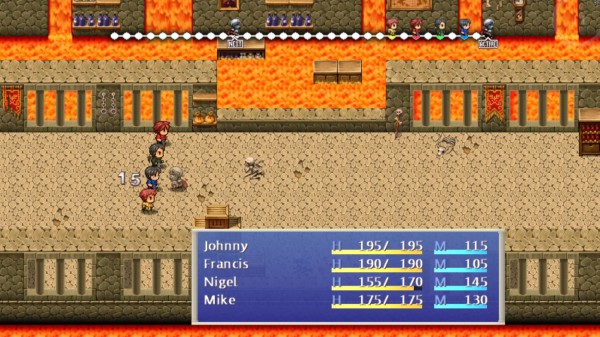
    Doom and Destiny reminds me a lot of classic role playing games of the 16-bit era. Your adventure starts in the real world but you quickly find out that the next D&D (Dungeons and Dragons) session turns into a real adventure quickly. You move around with the cursor keys and interact with items using the Z-key on the keyboard. The game runs in realtime, while you move around on the map and will switch to a turn-based combat system when you encounter foes.

    Here you have options to select one action per character, for instance to attack one of the foes, cast a spell or use an item. Foes come in different sizes and shapes, some are magic users, others undead that will attack you until they are lying on the ground or your party is. You earn experience and gain levels eventually that make your party more powerful. You can add power points to attributes which not only improves your chance of success, but also may be the prerequisite for using certain skills in the game.

    The game itself merges the real world with the fantasy world. You notice that for instance when you find pizza or beer instead of health and mana potions. The humor is special and adolescent at times. Doom and Destiny offers more than 25 hours of game play in its single player campaign that you will certainly enjoy if you like turn based roleplaying games.

    Other Apps

    Etsy8 ($1.49)

    You can browse items posted on the e-commerce website Etsy with the help of this application. Etsy is probably best know for handmade items that designers and creators from all over the world sell on the site. The application displays a selection of items on its start page. Each item is displayed with a thumbnail photo, its name and price. You can use the category listing on the left to explore a particular item group like Children, Candles or Geekery, or use the built-in search to find specific items of interest. Items open up in the application at first. Here you find additional photos, the item description and options to add the item to your cart. If you have an Etsy account, you can use it to sign in and make purchases right from within the app.

    Instagram Explorer

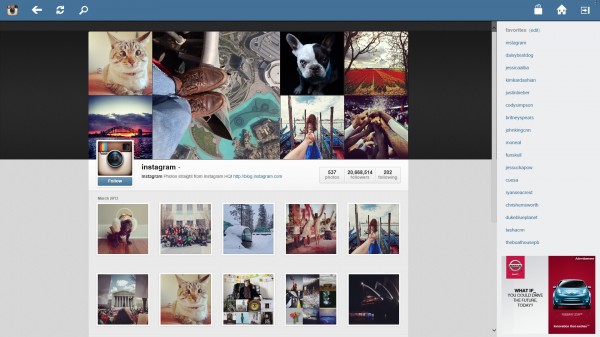
    Get Instagram profiles at your fingertip. You can sign in to your Instagram account or use the apps’ browsing and search options to view profiles and photos posted on them. If you sign in, commenting on and liking photos becomes available to you. Users who do not sign in can browse all photos and comments posted on Instagram profiles but can’t interact with the service in any other way. The app uses Windows 8’s search and share capabilities to find and display user profiles of interest, and share your findings with your friends or contacts.

    Kickstarter Tracker

    If you are a regular on the crowd-funding platform Kickstarter, or just interested in some of the projects that are posted on it, you can use the Kickstarter Tracker application to monitor those projects. You can add as many projects as you like to the application. Doing so is not that comfortable as you have to paste the project URL into the application, and the only way of doing so is to visit Kickstarter in your web browser of choice to locate and copy the URL.

    A search would make the application more comfortable. Each project is listed with its name and funding goal, the amount pledged, the days left to reach that goal, and the backers. Projects can be pinned to the start screen so that you can monitor them from there directly without having to open the app first.

    Bubble Shooter Evolution

    This is a Windows 8 remake of the classic Puzzle Booble or Bust-a-Move game created by Taito Corporation. Your task in this game is to clear the level of all bubbles. At the start of each round, a prearranged pattern of bubbles emerges on the screen. The player controls a bubble cannon that shoots colored bubbles up the screen. The bubble travels in a straight line, bouncing of the sides, and stops when it touches any bubble on the screen. If three or more bubbles of the same color are next to each other, they pop and get removed from the screen.

    All bubbles hanging from them get removed as well provided that they are linked to a wall or the ceiling of the level. The ceiling moves downwards in intervals so that you need to be fast to avoid the game over sign on the screen.

    Photos+

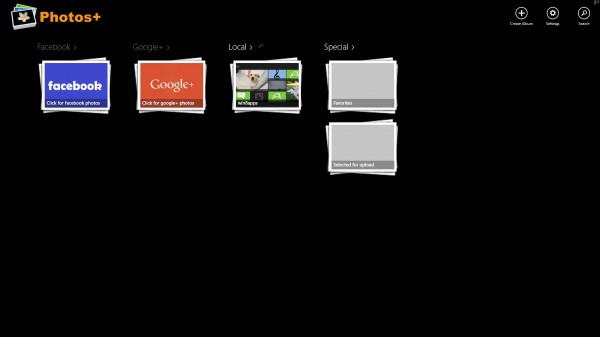
    Photos+ connects to your Facebook or Google+ account to make the photos that you have uploaded to those services available in its interface. You can furthermore use it to browse local folders with pictures, and to upload local photos to Facebook or Google+. To start, add one or multiple local folders to the application. You will notice that the folders become available as albums in the apps’ main interface. You can browse the pictures using the application, or use the upload functionality to share it on the two social networking sites you can connect the app to.

    Talk.to

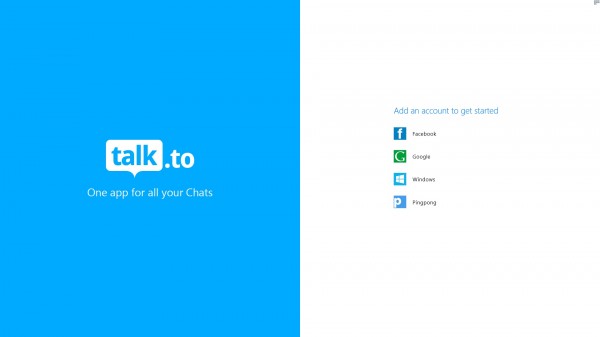
    The Talk.to app provides you with access to the chat platforms Google Talk, Facebook Chat, Windows Live (MSN) and Pingpong so that you can chat with your friends and contacts right from the application interface. The first thing you need to do is authorize the app to connect to one of the accounts. Once done, you are taken to the chat interface to start chatting with your contacts right away.

  • Robert Zildjian Dies; Cymbal Manufacturer Was 89

    Robert Zildjian, the founder of Sabian Cymbals, has died. He was 89.

    According to an Associated Press report, Zildjian died at his home in Brunswick, Main on Thursday. Zildjian had reportedly been battling cancer.

    Zildjian was born in to a family of Armenian cymbal makers who had passed their cymbal-making secrets down through the generations. In 1979, Zildjian’s father died and left the controlling share of the Avedis Zildjian Company to Zildjian’s brother, Armand. Robert and Armand did not get along, and after a contentious court battle Robert founded Sabian Cymbals in 1981.

    Sabian has released a statement regarding Zildjian’s death via its website. The statement, in full:

    It is with deep, deep sorrow that we announce the passing of Robert “RZ” Zildjian, our beloved founder and leader. A tireless and dynamic force within the drum industry, he inspired each one of us in the Sabian family to work harder, to reach farther, to make a difference – and he led us by example.

    His professional story is well known. Having been dealt a major career setback at an age where most men would have opted for retirement, RZ instead chose to re-invent the cymbal business with his own hand-crafted brand, a brand that would forever change the face and sound of popular music. With his bare hands he shaped the Sabian cymbal brand into his life’s story – and by extension we became his family.

    We mourn his passing, and he will be forever in our hearts. But we are better people for having known RZ, and we are richer for having worked alongside him. We draw comfort from the knowledge that his spirit will live on in the music made by drummers the world over.

    Rest in peace, RZ.

    (Image courtesy Sabian)

  • Authors Guild Calls Amazon/Goodreads Deal a ‘Devastating Act of Vertical Integration’

    On Thursday Amazon announced its acquisition of Goodreads, the world’s largest site for readers and book recommendations.

    At its core, Goodreads functioned as a social network for ardent readers. With this acquisition, Amazon has snatched up an independent network that has the ability to shape reader perceptions on hundreds of millions of books – and was, in essence, their largest competitor when it comes to book reviews. Reports indicate that Amazon paid about $150 million for Goodreads.

    The Authors Guild isn’t too happy about the move, calling it a “devastating act of vertical integration.”

    One example should make it clear how formidable this combination is. For “Animals Make Us Human” by Temple Grandin and Catherine Johnson, Amazon has 123 customer reviews, and B&N has about 40 (they report 150, but that figure includes ratings as well as reviews). Goodreads swamps these figures, with 469 reviews and 2,266 ratings for the book.

    As an independent platform, Goodreads, with its 16 million members, posed a serious competitive threat to Amazon. No more.

    “Amazon’s acquisition of Goodreads is a textbook example of how modern Internet monopolies can be built,” said Scott Turow, Authors Guild president. “The key is to eliminate or absorb competitors before they pose a serious threat. With its 16 million subscribers, Goodreads could easily have become a competing on-line bookseller, or played a role in directing buyers to a site other than Amazon. Instead, Amazon has scuttled that potential and also squelched what was fast becoming the go-to venue for on-line reviews, attracting far more attention than Amazon for those seeking independent assessment and discussion of books. As those in advertising have long known, the key to driving sales is controlling information.”

    Goodreads launched in 2007 and since then has built up a user base of 16 million members, who have added 525 million books and 23 million reviews. The Authors Guild warns that with this acquisition, Amazon’s garden walls are about to grow much higher.

    [via PaidContent]

  • Free Encryption for Text and Files

    As the name clearly suggests, VSEncryptor is an encryption application. Its purpose is to help you protect files and text strings from prying eyes by scrambling the content up and making it available in its original form only if the right password is provided.

    The program is free of charge and the version we review is the portable one, which spares you of going t… (read more)

  • How to make your mark in professional basketball at 5′ 9″

    Growing up in India, Vasu Kulkarni was the self-proclaimed “biggest basketball fan in the world.” He watched a lot and he played a lot. He dreamed, like so many kids around the world, of playing professional basketball.

    When he headed off to college at the University of Pennsylvania, Kulkarni tried out for the team. He was 5-feet, 9-inches and weighed 130 pounds. He didn’t make it.

    But Kulkarni would find another path to basketball success. He never got to don a Dallas Mavericks or Houston Rockets hat on draft day, but he did get a shot to hobnob — and impress — Mavericks owner Mark Cuban and Rockets General Manager Daryl Morey at this year’s MIT Sloan Sports Analytics Conference.

    Kulkarni technically studied computer engineering and entrepreneurship but, he joked when I asked the question, “I like to say basketball.” Even though it doesn’t appear on his transcripts, there’s no denying he did his hardcourt homework.

    No budget, no problem

    Although he didn’t make the varsity basketball team, Kulkarni did play junior varisty ball at Penn — and in doing so spotted a golden opportunity. Penn is the ninth-winningest college basketball program of all time, but it’s no longer a powerhouse and, Kulkarni noted, Ivy League schools simply do not fund athletic programs like some other Division I universities do. There wasn’t a whole video department dedicated solely to processing and analyzing game film. Kulkarni watched the head coach prep for games largely by himself, poring over film to find a few shining examples of good or bad plays that could serve as teaching points.

    And then a lightbulb went off for Kulkarni: There must be a whole lot of small colleges and high schools suffering from the same problem. So, in 2008, he launched Krossover.

    The company’s flagship service is pretty self-explanatory. Coaches upload their game film after each game. Krossover’s team of hundreds of college students gets to work breaking it down. When the coach wakes up, the last night’s game is online and he can examine just about anything he wants — statistics, individuals plays, where on the field or court most of the action took place. It quite literally analyzes everything that’s quantifiable, and in some cases visualizable, by studying game film. (You can experiment with it yourself here.)

    Krossover's shot chart.

    Krossover’s shot chart.

    That’s really cool if you’re a high-school or lower-level college coach — and Kulkarni said more than 1,000 of them currently use Krossover — but it’s probably not going to impress too many professional or big-time college coaches. It’s certainly not going to impress the sports-stats superstars that flock to the MIT conference every year. To reach this audience, Krossover needed something new.

    Are you smarter than Kevin Durant? (Hint: No)

    Hence the startup’s latest idea, an iOS app for testing people’s on-the-court sports knowledge, called sIQ (or sports IQ). Kulkarni said the inspiration for sIQ came while watching Krossover board member and then-head of analytics for the Oklahoma City Thunder NBA franchise Ben Alamar talk about the differences in brain activity between weekend warriors and professional athletes. The biggest is that while wannabe pros make conscious decisions about what to do next, professional athletes just react — they see and they do without hesitation.

    Can Kevin Durant do this? Source: Krossover

    Can Kevin Durant do this? Source: Krossover

    When you’re measuring someone’s sports IQ, the faster and more-accurately they react, the smarter — in theory — they are. Kulkarni’s first question to Alamar upon hearing this: “Can I take this test and if I do better than Kevin Durant can I get a 10-day contract?”

    Funny, yes, but also telling about the mentality of guys who watch a lot of sports — and, like Kulkarni, might still play a lot — and hold out hope in the back of their minds they’re in some way on par with professional athletes. Kulkarni had a hunch the app would go over well at the MIT Sloan event, which is full of, as he described them (and, by proxy, himself and me) “a bunch of sports nerds who probably can’t play worth a damn but know everything about sports.” They could settle a lot of bets over who’s a smarter athlete by watching plays unfold on an iPhone, then when video pauses, predicting the outcome.

    So, he told one his developers to take two weeks earlier this year and get something ready for the conference, which took place the first week of March. While there, the Krossover team met Daryl Morey, a former Wall Street quant turned Houston Rockets general manager — an extreme version of Moneyball inspiration Billy Beane in that Morey has no basketball experience and relies almost solely on numbers to make his decisions. He loved the app and quickly dragged over Dallas Mavericks owner (and entrepreneur and investor and blogger) Mark Cuban to play with it. At NBA All-Star Weekend in February, ESPN basketball columnist Bill Simmons played sIQ. Poorly.

    By contrast, when Kulkarni gave sIQ to a 15-year-old basketball phenom at the gym where they both play, the kid got the highest scores Kulkarni had ever seen. And not only did he answer correctly, his average response time was about 1 second — about 4 times faster than the guys at Sloan were able to respond.

    The fact that it works, as evidenced by the teenage natural’s performance, has some NBA and NFL executives already spotting an opportunity in sIQ. Professional teams — including Alamar’s new employer, the Cleveland Cavaliers — are testing it out as a method to gauge college players’ sports IQs as part of the draft preparation and to train players to react better by using with the app as a way to predict what will happen next in any given situation.

    Maybe, Kulkarni suggested, sIQ could become part of the highly publicized NFL Combine and replace the controversial Wonderlick test for gauging draft prospects’ intelligence. It should almost certainly provide a more-compelling platform for high-school coaches trying to get their athletes to study game film.

    The positive feedback has Krossover building sIQ as a platform rather than as a just an app. Yes, sports fans will be able to download it and test their IQs, but the company also hopes to build versions specifically for applications like testing and training real athletes. It will start off in basketball, but sports like football, volleyball, soccer, wrestling, boxing and maybe even mixed martial arts are on the horizon.

    Taking analytics from the front office to the field

    And whether or not sIQ turns out to be the game-changer Krossover hopes it will be, the company seems to be on the right path. Sports analytics is becoming a huge business, but primarily in the front office where executives are trying to figure out who they want on their teams and how much they’re willing to pay. Handicapping the annual NCAA March Madness basketball tournament is a popular pastime, too. (As evidence of how hot the space is right now, Kulkarni said Krossover has raised $4.5 million primarily through angel investors — including some professional athletes — who want to get in on what they see as a sexy business.)

    Statwing breaks down the NFL.

    Statwing breaks down the NFL.

    However, as I noted when profiling Statwing recently (its full-time-statistician and part-time-sports-geek founders recently uploaded a trove of NFL data for people to play around with), the analytic mindset has yet to trickle down to the coach’s office in most situations and affect decisions such as what type of play to call in what situations. Aside from golf, perhaps, it certainly hasn’t made its way onto the field of play to actually improve players’ performance.

    And that was Kulkarni’s major takeaway from the MIT Sloan conference this year: while teams and companies like his are collecting “an obscene amount” of data on every single aspect of nearly every single sport, they’re struggling to find ways to make sense of it.

    “The thing everyone’s trying to figure out is: Is there a way for you to find the two or three or four things that will guarantee you a win or at least tip the scale in your favor at any given time,” he said.  “I don’t think anyone has cracked the code.”

    Related research and analysis from GigaOM Pro:
    Subscriber content. Sign up for a free trial.

  • Playing with sound in silence: Fellows Friday with Christine Sun Kim

    ChristineSunKim_TEDFellow_Blog

    Through visual art, composition and performance, deaf artist Christine Sun Kim explores ways of transmuting sound and silence to come to terms with her relationship with it. In the process, she challenges the ways in which the hearing take sound for granted. Here, she talks about her work and career path.

    Did you always know you wanted to become an artist?

    No, I just had a lot of small experiences. I remember my mother always took me to the laundromat with her. To keep me busy, she’d draw pumpkins on napkins. It was around Halloween time, and I would draw in all the different faces. Little things like that. I always liked church because at Sunday school, the Bible was taught using pictures. All these different experiences and exposures slowly added up to my life as an artist.

    So I knew it was in me, but I was uncertain for a long time. When I first went to grad school — I went to the School of Visual Arts — I had a hard time expressing myself and I never really enjoyed painting, so I had to find a balance. And that was a struggle. Finding your path as an artist is difficult. So I feel really lucky that I’ve now found my way.

    You talked about sound etiquette in your TED2013 Fellows talk. You were told as a child to not make noise. How can you have known how not to make noise if you couldn’t hear it? That must have been very confusing.

    It’s based on my intuition. I could sense people’s reactions. For example, in school, if I dragged my feet on the ground, people would say, “Shhhh.” My family’s Korean, so they’re somewhat somber and still. I tend to be loud with my expressions, and my family would tell me to tone it down. I knew I was very animated, but that was my language. People always say, “It’s like you’re performing,” and I respond, “That’s my language.” It’s funny. But yeah, I just had to follow social cues.

    All the customs and social norms, all the rules were in my face every day. I’d go into a theater and I knew that I’d have to sit, be quiet and walk slowly. It was learned behavior from people’s reactions around me: it depended on how and if people looked at me. If everyone’s eyes were on me, I knew I was being loud or doing something “wrong.”

    Even now, I always like to stay in control of my sound. I have my phone off. I often don’t have it on vibrate. My TV has the sound off. This allows me to have control, so I know it’s not making noise. I was dating a hearing guy. He would come stay at my house a lot and would turn everything on. I kept telling him I wanted it off. He would reply, “Well I’m hearing.” But that was strange because it was my relationship with sound. I wanted to be in control, so I wanted everything off. I didn’t like the extra noise floating around me because I wouldn’t know what it was.

    "as forte as possible", black ink on paper. Photo: Christine Sun Kim

    “as forte as possible”, black ink on paper. Photo: Christine Sun Kim

    So you are very aware of this thing called “sound,” even though you’ve never experienced it…

    Right.

    …because it’s mirrored back by the people around you.

    As a society, the majority of people hear. And I mirror them. I have to follow what they’re doing. It was not like society gave me a clear, safe place to do whatever I wanted. I had to learn how to integrate to their ways. And the more aware I become of the noises and the norms, the more I play around with that in my artwork. The more experience I had trying to become accustomed to the norms, the more I tried to use that as material for my artwork. And oddly, that made my voice clearer.

    You translate sound into other forms as an investigation and performance. Is this investigation primarily for yourself, or is it for others? To what degree do you keep your audience in mind when you’re playing?

    It’s mostly about myself and my journey as an artist. Its about my relationship to and my perspective of sound as it keeps changing. It’s everlasting, it’s nonstop.

    In my past work, I was doing a one-to-one translation like sound to vibration, working with sound to create painterly imprints. I don’t know if that really translates. It’s very limited and deals with low frequencies only, and that’s just one aspect of sound. That’s why I let go of the idea of translating it. Now I’m trying to develop my own information system and new theories of what sound should or could be, using new forms.

    Most people who write music have this idea of silence, but they can hear and they use that to define or shape silence, or vice versa. So how can I learn the idea of sound and silence from their perspective? I can’t relate to that. So I’m starting over from scratch with everything. I’m redefining things. It’s not scientific evidence. People always ask me if I use sound waves in my art, but I’m not really interested in that.

    Can you tell me about the various ways that you experience sound without hearing it? I’m curious how this ties into your artwork and the various ways you explore. For example, I’d love to hear a bit more about Feedback Aftermath.

    I played with feedback for hours one night and then went home. At home I didn’t feel good and felt anxious. I couldn’t sleep well that night and I didn’t want to go back to the studio for one week. That was disconcerting. And then when I watched the video of myself — because I videotape myself sometimes — I felt sort of stressed out and uneasy. Later I realized that it had an impact on me, an extreme impact, like post-traumatic stress. Most hearing people don’t experience that. You have warning signals. If your ears hurt, you leave the room, you stop, you step away. I don’t have those signals, so I went past all warnings and experienced feedback to the full degree.

    So how does the feedback enter your body, if not through sound?

    There’s different ways sound has an impact on the body. Sound doesn’t enter only through the ears. It can go through the full body and also your psyche. More and more, people are starting to develop sonic warfare to use as a tool, as a weapon.

    I have a story about this: To get into my apartment you have to go through one building, then walk through a courtyard and then enter a second building. Once a friend of mine, who is a real estate agent, came over and once inside my apartment said, “Oh, it’s so quiet in here. It shouldn’t be wasted on you” — because New York is so noisy, so loud. But I realized I need that too. I used to live in a really crowded area, and I never felt fully rested. But in my home now, I can pass out and sleep for hours; I feel really rested. Noise truly does have an impact on my body.

    Untitled Speaker Drawings, Haverford College, PA, 2012. Photo: Lisa Boughter

    You talk a lot in your work about the idea of sound as a currency. What do you mean by this?

    For hearing people, information is captured via the ear, through sound. But you can look elsewhere and you are still getting information. With sign language, you have to be focused on what you’re seeing. Many things are dependent on sound, like Siri on the phone, voice commands. Sometimes I struggle with that, getting people to look at me or write back and forth, but they’re constantly looking away. Eye contact is lost, as is communication.

    And the music world is huge. Music and sound are culturally dominant. Everyone lives in the music world and I’m constantly amazed with the way they remember lyrics. For example: if they hear a few words, then they instantly know the song — that’s a very strong cultural aspect of the hearing world. And even artists depend on that. Online videos are cultural connections, but most of them aren’t captioned. Visual sentences and visual language occupy a limited space in comparison to sound. So that’s why I’m trying to play around with this idea of voice. In fact, I just did my first vinyl record with a collaborator.

    What’s on it?

    It incorporates a lot of different concepts I play around with. My voice is on the record, experimenting with sound. (I don’t use my voice often.) There are two records, one for the left side and one for the right side, and it comes with a list of instructions on how to listen to both of them. You are to follow these rules. You put the records on two turntables, the left on your left, the right on your right, and play them simultaneously. The right record has been designed to play loops at normal volume, the left plays continuously at low volume.

    This is a reflection of growing up with hearing aids. I’m completely deaf, but I can hear a tiny bit on the right, with the help of aids. (I can’t actually recognize or identify what the sound is; it’s just noise.) The right record reflects this imbalance: it is a little bit louder, a little bit clearer. The left side plays seamlessly, while on the right side the different loops actually stop, it gets stuck. To continue playing the record, you have to go over and physically move the needle. It’ll play for a little longer and then you’ll have to move it again. So it becomes laborious — it becomes more work for the right side. This tangible interaction echoes my experience of hearing aids.

    "Seeing Voice, The Seven-Tone Color Spectrum" in collaboration with Center for Experimental Lectures and Recess Activities, NYC, 2013. Photo: Eugene Gladun

    “Seeing Voice, The Seven-Tone Color Spectrum” in collaboration with Center for Experimental Lectures and Recess Activities, NYC, 2013. Photo: Eugene Gladun

    What is deaf culture? Is there such a thing?

    Oh, yeah. Disability has its own culture too. But deaf culture revolves around language (technically, we’re a linguistic minority), and it’s a collective culture. People are very supportive of each other. It has its ways like any other culture. For example, one behavior that’s culturally deaf is that, if you grew up with a strong deaf identity, then when you’re sitting at a table and you’re signing, if somebody joins the conversation, people don’t look up. They know you’re there, they continue talking, but they automatically move over to allow somebody else in. There’s no interruption in the conversation. They have very simple rules and ways like that, and it adds up to cultural norms.

    So it’s kind of got an etiquette of its own.

    For sure. It’s very physical and visual. Deaf people are also extremely straightforward. I love that. When I went to Germany, talking to deaf Germans was very easy. It was a different sign language, but the second you meet each other you are instantly friends. Different languages have different sign languages, but the expressions, ideas and concepts are similar. I think it’s easier for deaf people to communicate amongst their different languages than hearing people.

    You’ve been talking about the difference between American Sign Language and English as though they’re different — for example, with the translation of this interview (which was conducted live, with a translator). So how are they different, and how do you navigate the difference when you’re writing versus signing? Do you think differently?

    It’s sort of like writing from Chinese to Spanish or Spanish to French.

    That different?

    Yeah. Really. Very different. That’s why I think ASL is an unique language. ASL is derived from French Sign Language mixed with home sign language. It’s influenced by those, but has its own formalized grammar. The tone is conveyed through body movement and facial expressions.

    I like using the piano as a metaphor. Playing the piano is similar to ASL. When you put your pinky finger down that’s one note. Each finger has its separate notes, and all together you have 10 notes. So if you put them down at the same time, they become a chord. That’s like ASL. It’s not the same as English. It’s spatial, not linear. If you think of a facial expression as one note, then body movement as another note, then speed as another note, hand shape, placement, and so on — all these parts add up to convey the message. When you do it all simultaneously, it becomes a chord.

    What about bypassing language altogether? What did you think of Mary Lou Jepsen’s talk about the brain-to-digital interface?

    The idea is really creepy, but amazing. It’s a way of communicating without needing language. I do, however, question the politics of it. The people who are developing the program — are they the ones deciding what it would look like? I’m a little fuzzy on the details of it, on what it would look like if executed. Did you see Neil Harbisson’s talk about synesthesia?

    Yes. He was amazing.

    I was amazed, but it also became political because he picked the colors. There is line that is crossed. What if I wanted to decide for myself? The same parallel exists with the Cochlear implant. It’s limited to only a few channels of sound. The human ear has tons of channels, where the Cochlear implant has a very limited number. So the doctors or manufacturers are the ones deciding what hearing-impaired people will benefit from the most. I have a problem with the politics. That’s my question about this technology. I think it’s a great idea to remove language and to have a different way of communicating, but I’m curious how much control I would have.

    What has the TED Fellowship experience been like for you so far?

    Mindblowing, maddening, and exhilarating on every level. Initially, I wasn’t sure what to expect, but during the conference, I felt I could completely be myself and there was almost no attitude or ego; everyone was genuinely curious about everyone else. Being exposed to ideas outside of the arts was definitely an eye opener, as I often feel a bit too contained in the art and deaf communities. The TED staff and attendees were extremely supportive of the Fellows program, which made me refreshingly hopeful of my career as an artist. I’m definitely looking forward to potential collaborations with a number of TED folks.

    Above: watch “Face Opera,” in which performers took turns conducting and shared-conducting four separate scores on an iPad developed from the different parameters of the language. Roughly 30-40% of American Sign Language is the manual production of the language, while the rest is expressed on the face and through body movement. This is a commentary on how society places value on vocal and spoken languages, leaving little room for visual languages.

  • $99 Ouya game console set for June 4th release

    Ouya Release Date
    While Sony (SNE) and Microsoft (MSFT) prepare to roll out their next-generation gaming consoles, gamers will also soon have the option of paying just $99 for the Android-powered Ouya console that’s set to launch in retail outlets on June 4th. Engadget reports that the low-cost console, which began as a Kickstarter project, will ship to its financial backers this week before becoming available to the general public this summer. The Ouya console features a 1.7GHz quad-core Tegra 3 processor, 8GB of internal storage, 1GB of RAM, a USB port and microUSB port, a wireless controller, and Android 4.1 Jelly Bean. Ouya has signed up several big-name retailers to sell the console, including GameStop (GME), Best Buy (BBY), Amazon (AMZN), and Target (TGT).

  • Batman And Superman Will Face Off In The Injustice Battle Arena Finale

    Batman and Superman – the two characters that pretty much define the DC Universe. The two have come to blows in the past, and they will again in the Injustice: Gods Among Us Battle Arena finale.

    Before we get to that, however, Batman and Superman had to emerge victorious over their opponents in the semi-finals. First up, Batman squared off against The Flash where Batman easily took the win. Of course, some YouTube commenters are not exactly pleased with the outcome – rightly pointing out that The Flash could handily beat Batman in a matter of seconds if the outcome was decided by anything other than voting.

    The other matchup saw Superman taking on Green Lantern. Once again, votes decide the ultimate victor, but this fight is at least a little more balanced. Green Lantern can easily put up a decent fight against Superman, but the combined powers of Superman and Killer Croc were just too much to bear.

    The final fight between Superman and Batman will air two weeks from now. Both characters are incredibly popular so it will be interesting to see which hero gets the most votes.

    Injustice: Gods Among Us launches across the Xbox 360, PS3 and Wii U on April 16.

  • Want To Make Successful Android Games? Watch This Video

    There’s money to be made in Android game development, but you have to be smart about it. There’s a lot of things to consider when developing a successful Android game. To help developers just starting out or those who have yet to find success, Google has put together a short video that describes “crucial elements to developing successful games on the Android platform.”

    Go here for more on Android development.

  • ‘Lady At The O.K. Corral’ Author Ann Kirschner Speaks At Google

    Ann Kirschner, author of the Josephine Marcus Earp biography, “The Lady at the O.K. Corral,” recently spoke at one of Google’s “Authors At Google” . Google has now made video available for all to enjoy.

    Here’s how the book is described on they YouTube video page:

    Josephine Sarah Marcus Earp (1861-1944) was an American part time actress and dancer who was best known as the wife of famed Old West lawman and gambler, Wyatt Earp. Known as “Sadie” to the public in 1881, she met Wyatt in the frontier boom town Tombstone, Arizona Territory when she was living with Cochise County Sheriff Johnny Behan. She became Earp’s common-law wife for forty-eight years. Yet, while Wyatt Earp is a popular culture hero, the details of Josephine’s life are still remarkably shrouded in mystery. Now, for the first time, Ann Kirschner sets out to answer some questions, such as: What inspired five decades of adventure-seeking that took Earp from the Arizona Territory to California, Nevada, Alaska, and then, finally, to Hollywood? And what sustained her lifelong partnership with a man of uncommon charisma and complex heroism? Curiosity became obsession and Kirschner wound up falling in love with Josephine, the restless romantic with a persistent New York accent that she took with her from coast to coast and even to the northernmost corners of Alaska. Woman of the West brings Josephine Earp to the forefront of her own story, and along the way, sheds a new light on a very exciting time in American history.

    More recent At Google Talks here.

  • Facebook Tests Quick Status-Posting Button in Blue Bar

    Facebook wants you to post more statuses and more photos/videos. Earlier this month, we told you about a test the company was running that pushed a notification to mobile devices asking users to “tell friends what’s on your mind” by posting an update.

    Now, it looks like Facebook is looking for more ways to make sure people are still creating content on the site.

    Facebook is testing a new button in its top blue bar that allows users to post a status or a photo/video quickly, from any page on the site.

    Here are some screenshots of the test courtesy of Mashable, who first spotted it.

    When you click it, a familiar lightbox pops up:

    It’s important to note that the user who saw the test obviously doesn’t have Facebook Graph Search or the new look news feed – two new products that Facebook is rolling out very slowly. Has anyone who has Graph Search or the new news feed seen this test?

  • In Miami, President Obama Talks About his Plan to Put People to Work Rebuilding America

    President Barack Obama delivers remarks on infrastructure, at the Port of Miami Tunnel

    President Barack Obama delivers remarks on infrastructure, at the Port of Miami Tunnel project in Miami, Fla., March 29, 2013.

    (Official White House Photo by Chuck Kennedy)

    President Obama was in Florida today, where he got a chance to see the Port Miami tunnel project on Dodge Island. The project, which is the result of three years of work by over 500 employees and more than 6,000 sub-contractors and vendors, will create connect the port to the interstate highway system more quickly and safely and will take over 1.5 million trucks out of the downtown area per year.

    It is projects like this one, the President said in remarks following his tour, that will help reignite the true engine of our economic growth — a rising, thriving middle class. "Projects like this create a lot of other good jobs, too," President Obama explained. "You ask any CEO where we they rather locate their business and hire new workers. Are you going to set up shop in a country that's got raggedy roads, runways that are pot-holed, and backed-up supply chains?  Or are you going to seek out high-speed rail, Internet, high-tech schools, new state-of-the-art power grids, new bridges, new tunnels, new ports that help you ship products made in America to the rest of the world as fast as possible? That's what people are looking for. That's what CEOs are looking for."  

    read more