
Blog
-
AT&T issues one-word response to T-Mobile attacks: ‘Whatever’
-
GDC 2013: See Through The Eyes Of The City In Watch Dogs
Up until now, trailers for Watch Dogs have focused on Aiden Pearce and his ability to hack into the city of Chicago to control its surveillance, gather intel on its citizens, and more or less become a high-tech anti-hero. What about those who run the city though? What are they doing while Pearce hacks them blind? The latest trailer for Watch Dogs seeks to answer some of those questions.
It will be interesting to see how the asymmetrical gameplay of Watch Dogs works with the introduction of this new element. The game promises to give control of rival hackers to other players as they try to take down (or perhaps help) Pearce. This latest trailer makes it appear that some players may also be put into the role of those running the city as they try to make sense of those who are hacking into its system. Either way, the game shows a lot of promise for something that we still know next to nothing about.
Watch Dogs is slated to launch later this year for all current and next-gen consoles, and PC.
-
Wal-Mart to try out locker system to let customers buy online, pick up offline
Wal-Mart Stores Inc. executives know that more people want to buy stuff outside of stores. As part of its multi-pronged Wal-Mart eCommerce strategy, the retailer with 4,000 stores in the United States and 10,000 worldwide has been taking orders online and letting customers pick up their purchases in store for the past few years. Now it’s adding another option that other large online retailers have been working on, too: pick it up from a locker at the store, with no Wal-Mart employee to go through.
The locker method will debut this summer at fewer than a dozen stores, probably in one geographic region in the United States. “Really, it’s to test and learn,” said Jeff McAllister, senior vice president of Wal-Mart U.S. Innovations, during a media day at the company’s Wal-Mart eCommerce facility in San Bruno, Calif., on Tuesday. It’s also a way that retailer can match its online rival, Amazon.com. Amazon has been offering customers lockers in several cities, to serve customers who order goods but might not have doormen or a front porch where they can receive packages.
With this program, Wal-Mart will box up the items a customer purchases and squeeze the box into a locker that fits just right, McAllister said. Then Wal-Mart will send the customer a message with a code that will allow the customer to open the locker. The customer will initially have a couple of weeks to pick up the purchased items.
This is clearly a bid to burnish its online experience, because most people are close enough to visit a physical Wal-Mart store if they wanted to. Two thirds of people in the United States are within five miles of a Wal-Mart store.
Like other Wal-Mart eCommerce initiatives, if it works, it will expand. If it doesn’t, it won’t. Like similar locker experiments from Amazon, Overstock and others, it’s worth watching as a shot at making retail fit the digital age.

Related research and analysis from GigaOM Pro:
Subscriber content. Sign up for a free trial.- A near-term outlook for big data
- The evolution of consumer-media cloud storage
- Deploying big data: 2012 strategies for IT departments


-
Google Analytics Gets New Social Reports
Google announced today that it has redesigned Google Analytics social reports, adding two new ones for Data Hub Activity and Trackbacks. Activity in social reports comes from Google’s Social Data Hub partners.
“The activity stream was previously available via drill down from the Network Referrals or Landing Pages reports,” says Google Analytics product manager Linus Chou. “We have now made it a standalone report. By navigating to the Data Hub Activity report you’ll see a timeline of the number of activities that have occurred in the Social Data Hub and the raw activities in a list below. You can also filter this list by any specific networks you choose.”
“We’re also excited to announce that Trackbacks are now available in a standalone report,” adds Chou. “Trackbacks are all of your inbound links across the web, so you’ll be informed if anyone from a small to blog to the New York Times posts a link to your site. Additionally, we are providing context for the significance of each of these trackbacks by displaying the number of visits that were driven by each endorsing URL during the reporting period. You’ll see this number presented alongside the trackback.”

Social Data Hub partners include: Allvoices, Badoo, Blogger, Delicious, Digg, Diigo, Disqus, Echo, Gigya, Google+, Google Groups, Hatena, Livefyre, Meetup, Read it Later, Reddit, Screen Rant, SodaHead, TypePad, VKontakte, and Yaplog.
More on Social Data Hub here.
-
As Cloud Wars Heat Up, Server OEMs Bet on OpenStack

The largest server vendors are now embracing a movement that at one time represented a threat: cloud computing. In doing so, these OEMs (original equipment manufacturers) are getting into the same business as some of their largest customers, which can be a risky proposition in the IT world. But in recent years, large cloud players have used their leverage to squeeze margins, threatening to commoditize servers. As margins have narrowed, cloud has altered the economics of the server world, and leading marquee server brands have been emboldened to launch their own cloud offerings.
HP, Dell and IBM have all turned to public clouds based on OpenStack to remain relevant and position themselves to capitalize on enterprise hybrid strategies. The move by the “Big Three” also is certain to add momentum for OpenStack, the open source cloud computing infrastructure project which grew out of a collaboration of Rackspace and NASA, and has quickly built a stable of support that includes Red Hat, Intel, Dell, Cisco, AT&T, Canonical, and SUSE.
The server vendors are seeking to build offerings that differentiate them from the public clouds offered by market leader Amazon Web Services (AWS) and Internet titans Google (AppEngine) and Microsoft (Windows Azure). In rolling out their own offerings, Dell, HP, and IBM are setting up a play for a hybrid sale in which they sell gear and run an open cloud. They’ve followed slightly different paths:
- Dell has been part of the OpenStack community since its creation, and has worked closely with a number of key OpenStack partners, including Rackspace, Citrix, Opscode, Canonical, Intel, and others. Dell is also one of the industry’s most experienced partners to top global cloud services providers, including Facebook and Microsoft Windows Azure. It has also built out a global network of data centers to support its public cloud infrastructure.
- HP announced its plans to support Open Stack in 2011. sees this “converged cloud” project as an opportunity to enable customers, partners and developers with unique infrastructure and development solutions across public, private and hybrid cloud environments.
- IBM developed SmartCloud before OpenStack was founded two and a half years ago. A year after joining the OpenStack community, IBM made a splash, announcing it had moved into open cloud architecture, which included a new cloud offering based on OpenStack. The company sees open standards as an opportunity for businesses to take full advantage of the opportunities associated with interconnected data, such as mobile computing and big data.
“History has shown that standards and open source are hugely beneficial to end customers and are a major catalyst for innovation,” said Robert LeBlanc, IBM senior vice president of software. “Just as standards and open source revolutionized the Web and Linux, they will also have a tremendous impact on cloud computing. IBM has been at the forefront of championing standards and open source for years, and we are doing it again for cloud computing. The winner here will be customers, who will not find themselves locked into any one vendor — but be free to choose the best platform based on the best set of capabilities that meet their needs.”
Competing with AWS
The three server vendors are fighting incumbent cloud player Amazon Web Services with standards. They all see hybrid cloud as the endgame and want to retain their position in the enterprise as this evolution occurs. While it might seem that OpenStack has the lead in the cloud world based on the headlines, the fact of the matter is that AWS owns the lion’s share of the cloud market, more than two-thirds by most accounts.
AWS had a head start in cloud computing and is aggressively pursuing the enterprise As AWS continues to add enterprise-friendly features, it’s a very real threat to these OEMs. Features like Availability Zones and Autoscale Groups make AWS very compelling to enterprises. The previous response by the server vendors was to simply attack cloud as not enterprise-ready, but now there’s a realization that cloud, in some use, is inevitable. OpenStack is a way for OEMs to partner against AWS dominance.
Chris Kemp, CEO of Nebula and former NASA CTO, would disagree that OpenStack is competing with Amazon Web Services, mentioning in a keynote during an OpenStack event that both have completely different use cases in the industry. However, having a public cloud offering to complement private cloud is a necessity – and while the use cases might be different now, AWS is going after all cloud business.
-
ORIX Ventures Commits $10 Mln to Serena & Lily
ORIX Ventures said Tuesday that it closed a $10 million commitment to Serena & Lily. Sausalito, Calif.-based Serena & Lily offers textiles, furnitures and other home decor products.
PRESS RELEASE
ORIX Ventures announces the closing of a $10 million commitment to Serena & Lily. The funding will provide additional capital to support the continued expansion of the Serena & Lily brand.Located in Sausalito, California and founded in 2003, Serena & Lily is an aspirational lifestyle brand offering exclusive textiles, furniture and other home décor products for every room in the house. The funding of Serena & Lily underscores ORIX Ventures’ ability to focus on growth fundamentals and provide flexible capital to a wide variety of businesses.
“We are happy to be working with ORIX Ventures on this debt facility,” said Phil Neri, CFO at Serena & Lily. “Their team understands and supports the Serena & Lily vision as well as the unique needs of a growing lifestyle brand. This investment will help us make progress towards our goals for continued growth and expansion.”
Michael David, managing director at ORIX Ventures, commented, “Serena & Lily has created a unique brand identity that resonates with discerning customers seeking inspirational designs. We are delighted to be working with such a talented team.”
About ORIX Ventures
ORIX Ventures provides customized financial solutions to mid- and late-stage growth companies with established customers and run-rate revenues of $10 million or greater. ORIX Ventures is capable of leading debt or private equity transactions with total commitments as high as $50 million. Since its inception in 2001, ORIX Ventures has invested more than $1 billion across 100 growth companies throughout the U.S. and Canada. For more information on ORIX Ventures, visit us at www.orixventures.com. ORIX Ventures is a subsidiary of ORIX USA, a Dallas-based financial conglomerate with more than 1,400 employees and primary offices in Dallas, New York, Los Angeles, Columbus and Minneapolis. ORIX USA holds approximately $6 billion of assets and manages an additional $25 billion. ORIX USA is a wholly owned subsidiary of ORIX Corporation, a Tokyo-based, publicly owned international financial services company with operations in 28 countries worldwide. ORIX Corporation is listed on the Tokyo (8591) and New York Stock Exchanges (IX). For more information on ORIX USA, please visit www.orix.com.Please contact any of our ORIX Ventures’ offices (http://orixventures.com/contact/) to discuss your company’s vision.
Follow us on Twitter: @orixventures
About Serena & Lily
Serena & Lily is an aspirational lifestyle brand that offers unique home décor and inspiration for every room in the house. Based in Sausalito, Calif., the company originated in October 2003 when Serena Dugan and Lily Kanter met and shared a desire for sophisticated options in nursery design. Eight months later, they released their first collection of nursery bedding with Serena’s original textile designs, offering consumers fresh and unexpected looks for the nursery. The company has since evolved into a leading lifestyle brand, offering its unique California-fresh style in many different categories, including bedding, furniture, rugs, windows, lighting, décor, gifts, bath, outdoor, paint, and fabric by the yard. In 2012, the company introduced its online Art Collection with original artwork from near and far. Launched in 2013, the KIDSHOP catalog is for infants and bigger kids alike, and features all the pattern, color and signature style that the Serena & Lily brand is known for. To shop the site, or for more information, please visit www.serenaandlily.com.The post ORIX Ventures Commits $10 Mln to Serena & Lily appeared first on peHUB.
-
What’s next in digital publishing: New platforms and payment models
Over 20 percent of Americans ages 16 and up read an ebook in the past 12 months, according to December data from Pew, and big U.S. publishers are now seeing over 20 percent of their revenues come from ebook sales. In other words, ebooks are no longer new: They’re a reality in the publishing industry now, which presents publishers with both challenges and opportunities.
At paidContent Live on April 17 in New York City, we’ll be exploring how book publishers are adapting their business models for a digital age and rolling out new products designed to take advantage of e-readers, tablets and smartphones. I’ll be interviewing executives from three publishers handling the transition in particularly interesting ways: Dominique Raccah, the publisher and CEO of Sourcebooks; Rachel Chou, the chief marketing officer at Open Road Media; and Evan Ratliff, founder and CEO of Atavist. Here’s a peek at some of the issues we’ll be discussing.
- New payment models: Last spring, Sourcebooks rolled out a romance ebook club, Discover a New Love, that gives members DRM-free ebooks, discounts and access to special events for $9.99 every six months. And Atavist is now offering in-app subscriptions to its e-singles. I’ll be asking Raccah and Ratliff what they’ve learned about their readers and pricing and tips on how other publishers can enact subscription models.
- The enhanced ebook now: Enhanced ebooks got a bad rap a few years ago, when it was uncertain whether readers would pay more for an ebook that included a few videos and photos. But with the increased adoption of tablets and cheaper technology, publishers are finding new ways to integrate digital media into their books. I’ll be asking our panelists about their best practices in this area: How do they decide which bells and whistles to add and which to avoid, and when’s it best to just go with straight text?
- New frontiers of marketing: “Discoverability” is the buzzword on lots of publishers’ lips, but how does it translate into practice — and is it actually a problem for readers? Raccah, Ratliff and Chou will speak about the ways that they are marketing their books online and how they’re working with retailers to promote their titles.
Let me know what else you want to talk about! Sign up to attend the paidContent Live conference on April 17 in NYC here, and in the comments of this post, I’d love to hear your burning digital book publishing questions.

Related research and analysis from GigaOM Pro:
Subscriber content. Sign up for a free trial.- Who and what to watch in the new era of the living room
- How consumer media will change in 2013
- How to deliver the next-generation web experience

-
Let’s Be Honest About Les Miserables [VIDEO]
“Universal Pictures proudly presents the film you realized had absolutely no dialogue whatsoever only after you bought your ticket.”
Yeah, that sums up my experience rather perfectly. Please don’t tell my wife, but this honest trailer for Les Miserables is the best version of Les Miserables that I’ve ever seen. Check it out:
-
GDC 2013: Facebook Unveils Games Developer Center
Facebook games are currently in the middle of a transition from Web to mobile. Both are still very viable markets, however, and Facebook wants to make sure game developers have all the tools they need to succeed on both platforms.
At the annual Games Developer Conference, Facebook announced the launch of the Games Developer Center. Much like its regular Facebook Developers portal, the Games Developer Center collects all the information and tools developers need to create games for Facebook.com, or games that use the Facebook SDK for iOS and Android.
Facebook also announced today that it’s adding a games section to the new timeline that will “give people a way to express their favorite games on their timeline and About page.” Facebook also suspects that the new games section will “serve as another reengagement and discovery channel for game developers.”
Of course, it wouldn’t be a Facebook announcement without some stats and the games team didn’t disappoint:
- More than 250 million people are playing games on Facebook.com each month
- As of February, 55% of top 400 iOS apps are integrated with Facebook
- Last month, Facebook drove 263 million clicks to the Apple App Store and Google Play, from mobile News Feed
- 20% of daily Facebook web users play games on Facebook.com
- Game installs (on Facebook.com) are up 75% since this time last year (when compared to March 2012)
- There are about 200 games on Facebook.com with more than 1 million monthly active users each
- More than 100 developers generated more than $1M on Facebook last year
- Year-over-year growth of the total number of payers on Facebook has increased 24% since this time last year (when compared to March 2012)
- More than $2 billion was paid out to game developers in 2012. Most of our top developers generated record payments revenues on Facebook last year.
Last year, Facebook uploaded all of its GDC talks for developers for those who weren’t able to make it out to the show. If you weren’t able to make it to the show again this year, Facebook should have those talks up within the week.
-
Cruise Ship Death: FBI Now Investigating
Though it seems an unthinkable tragedy, the high number of people who take cruises every year means that some deaths are likely to occur. This week, the FBI has begun investigating one such death that happened aboard a Royal Caribbean cruise ship this past weekend.
According to an Associated Press report, a 62-year-old woman was found dead in her cabin on the cruise ship Enchantment of the Seas on Sunday, March 24.
The woman has not been identified, except to the extent that she is an American citizen. Royal Caribbean Cruises told the AP that her husband was the person who found her.
The ship was scheduled to dock in Baltimore on Monday, and the company reportedly called both the FBI and Baltimore Police, as policy dictates. The ship docked on time and FBI agents boarded the ship to investigate.
Cruise ship mishaps have been gaining more attention in the news lately, due to an incident in which the Carnival cruise ship Carnival Triumph became disabled at sea, leaving passengers with limited water, food, and working sewage facilities for days.
-
Why Nokia still has one last shot to make waves in China with its new ultra-cheap Lumia

-
How researchers are fighting lung cancer using PageRank
Google’s PageRank algorithm has forever changed the way we access information by putting the best stuff first, and now researchers are using the same mathematical models that Google uses to fight the spread of lung cancer within the human body. While there’s no “best” when it comes cancer cells, the aim is to identify tumors more likely to metastasize and then hit them with targeted treatment before the cells have a chance to spread.
The researchers — who come from the University of Southern California, Scripps Clinic, the Scripps Research Institute, the University of California, San Diego Moores Cancer Center and Memorial Sloan-Kettering — combined autopsy data from 163 cancer cases (all from before the advent of radiation therapy in order to analyze the natural spread) with applied mathematics in order to carry out their study. What they found, according to a press release about the research is that
metastatic lung cancer does not progress in a single direction from primary tumor site to distant locations, which has been the traditional medical view. Instead … cancer cell movement around the body likely occurs in more than one direction at a time.

How cancer cells spread. Source: PLOS One
Moreover, they found certain organs tend to spread cancer cells more aggressively, while others tend to act as sponges for cancer cells. These sponge organs might still grow tumors, they just don’t disperse the cells.
The PageRank analogy
The mathematics involved here — called Markov chain models — are similar to what Google uses to determine what web pages are the highest-quality for any given search query. Only whereas Google uses the number and quality of links to determine the probability of a web surfer landing on any given page, these researchers are trying to predict the PageRank of tumors, if you will. So, generally speaking, a kidney would likely have a higher PageRank than a liver because the kidney is more likely to spread cancer cells throughout the body (or, in web-search terms, generate a lot of links to itself).

The network path of cancer cells from lung to liver. Source: PLOS One
As data volumes proliferate and relationships between data points become more complex, Markov models are actually becoming pretty popular. Netflix uses them in order to predict the movies users will want to watch next.
The weighted connections between various states or web pages or whatever someone is ranking are often expressed as the nodes and edges of a graph. Graphs, of course, have become part of the everyday web lexicon thanks to the various social graphs and interest graphs that analyze who we’re connected to (and how) and the types of topics we browse online.
The web as a data science proving ground
So in the end, perhaps, the most-important contribution of the worldwide web won’t be the revolution in terms of how we access information, but the web’s function as a proving ground for advanced statistical methods starring very large and complex data sets like those found in the medical world. Already, for example, another group of medical researchers has used a Markov variant in order to create a model they think can prescribe better treatment plans because it analyzes the costs and patient outcomes usually associated with a given treatment for a given symptom.

Tracking a cholera outbreak across a river network. Source: Physical Review Letters
Last year, a group of Swiss researchers developed an algorithm that, having access to a relatively small amount of data, can track anything from Twitter rumors to disease outbreaks back to their source. A company called Syapse uses the graph structure to chart the relationships among words across different medical specialties.
One would also be remiss in ignoring the computing and data-storage innovation spurred by the web that has improved our ability to handle massive amounts of genetic and other data. As the lung cancer researchers explain in their paper:
One of the strengths of such a statistical approach is that we need not offer specific biomechanical, genetic, or biochemical reasons for the spread from one site to another, those reasons presumably will become available through more research on the interactions between CTCs and their microenvironment. We [have created] a quantitative and computational framework for the seed-and-soil hypothesis as an ensemble based first step, [that] then can be further refined primarily by using larger, better, and more targeted databases such as ones that focus on specific genotypes or phenotypes, or by more refined modeling of the correlations between the trapping of a CTC at a specific site, and the probability of secondary tumor growth at that location.
The long story short is that the more data we have and the easier we can analyze and map it, the better we can treat — and perhaps even cure — cancer and other complicated diseases.
Feature image is a network map of how lung cancer spreads between organs, where each numbered node correlates with a specific organ.

Related research and analysis from GigaOM Pro:
Subscriber content. Sign up for a free trial.- A near-term outlook for big data
- Connected world: the consumer technology revolution
- The importance of putting the U and I in visualization

-
BlackBerry 10 Global Availability Tracker

BlackBerry COO, Kristian Tear speaks at the BlackBerry 10 launch in Mexico
Since January 30th we’ve launched BlackBerry 10 in a number of regions all around the world. One of the top questions I’m getting online is “When can I get my hands on a shiny new BlackBerry 10 device?” Well – if you haven’t already, your first step should be to register here for the latest updates in your region. Your next step is to keep reading!
To help keep you looped in, I’ve decided to compile a list of where and when you can purchase your very own BlackBerry 10 smartphone. With more and more markets launching each week, I’ll be sure to update you with new information, as it becomes available. As soon as we confirm dates with our carriers and are ready to announce them you’ll be able to find them here. We can’t wait to welcome new BlackBerry 10 owners from around the world.
BlackBerry 10 is available for purchase in the following countries:
As of March 26, 2013 the complete list now includes:
- Australia
- Bahrain
- Canada
- Dominican Republic
- France
- Germany
- India
- Indonesia
- Iraq
- Ireland
- Italy
- Jordan
- Kuwait
- Lebanon
- Malaysia
- Mexico
- Nigeria
- Oman
- Pakistan
- Philippines
- Poland
- Puerto Rico
- Qatar
- Saudi Arabia (KSA)
- Singapore
- South Africa
- Spain
- Switzerland
- Turkey
- UK
- United Arab Emirates (UAE)
- United States
The rollout is continuing with a number of other countries planning to release the BlackBerry Z10 in the near future. Stay tuned for future launch dates in regions around the world.
Have you picked up your BlackBerry 10 smartphone? Share your favorite features with us in the comments below.

-
Samsung’s New S Voice Available To Download

Samsung’s S Voice feature received an upgrade for the Galaxy S 4 and thanks to a special someone, the new S Voice APK is now available for Android users to download. According to SamMobile, the APK works perfectly on devices running Samsung firmware as one would expect. However, if you’re running an AOSP-based ROM, you may run into some issues. Similar to Google Now, with S Voice you can update social networks, set alarms, create events, open apps, search the web, make a phone call or send a text message, and much more. Galaxy S 4 wallpapers were also released today in crystal clear 1920 x 1080 resolution.


Source: SamMobile
Come comment on this article: Samsung’s New S Voice Available To Download
Visit TalkAndroid for Android news, Android guides, and much more! -
Facebook Brings Real-Time, Cookie-Based FBX Ads to Your News Feed
Facebook is bringing its relatively new Exchange ads to your desktop news feed in an alpha test that will expand the scope of the re-targeted ads that Facebook launched out of beta last September.
Facebook Exchange, or FBX, lets advertisers target ads to users with a cookie-based real-time bidding platform. Before today, those ads only appeared on the right-hand side of you desktop news feed (and they’ve been doing pretty well).
“We wanted to give advertisers and agencies the opportunity to deliver highly relevant ads in News Feed, the most engaging place on the web. Previously, advertisers could run standard ads on the right hand side of Facebook on the desktop. Starting today, advertisers can run Page post link ads on the right-hand side of Facebook and in News Feed on desktop. As they do today, these ads will point back to specific landing pages to help direct-response advertisers drive conversions,” said Facebook in a Studio blog post.
Note: these ads won’t appear in your mobile news feed.
It’s also important to note that this is not going to drastically increase the amount of ads you’ll see in the news feed, so you’re not going to get inundated with ads at a higher frequency – it’s just that some of these page post ads will be much better targeted based on your other activities.

Facebook says that it’s all about providing users with more relevant ads, which is synonymous with better ads:
“Allowing advertisers to reach people in News Feed is important because people spend more time in News Feed than any other part of Facebook. We also believe that ads delivered through FBX will create more relevant ads for people.”
-
Windows Blue brings better SkyDrive integration

Over weekend Microsoft’s next version of Windows, known by code name “Blue” leaked out to the world via BiTorrent. Over the past two days we dissected the operating system in every way possible from first look to screenshot images to ways to install the still buggy operating system.
Now that the initial euphoria has passed, we can settle down and get a good look at what exactly will change in the operating system later this year when Windows Blue is rumored to be released.
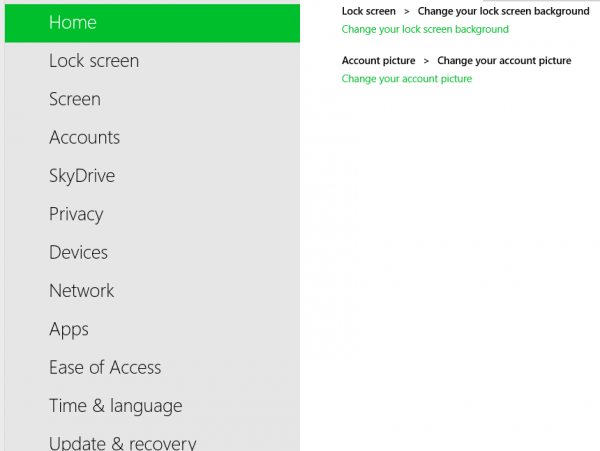
One of the big changes is SkyDrive integration. Yes, the cloud app was part of Windows 8 from the release back in October of 2012, but Blue brings even tighter combination between the cloud and desktop by adding the app to the Modern UI version of the Control Panel, which is actually the “Personalize” feature of the Windows 8 Start screen. Yes, Microsoft, this is confusing.
At any rate, confusion aside, the new SkyDrive feature makes things a bit simpler for customers. It is accessed from the Charms menu, which you can get to by clicking the Windows-C buttons or moving your finger or mouse pointer to the top or bottom right of the screen. To get to the Metro-style Control Panel, click Settings and then “Change PC Settings”.
There are three simple options in the left column — Storage Use, Device Backups and Files. Like all things in Windows Blue, do not get your hopes up just yet. The “B” is not just for Blue, but also for Buggy. Storage use has not worked for me, despite numerous tries.
Device Backup is not much better — it only provides a message that states “Sorry, we couldn\x2019t connect to SkyDrive. Please try again later or try visiting SkyDrive on the internet”. For the record, the link provided also does not work.
Files are better — it provides options for automatic photo and video uploads and the options seem to work well. I tested it with a picture and everything went as it should. You can change the settings based on image quality as well.
Windows Blue is a leaked build and clearly not ready for public consumption, but it is fun to play around with in a virtual environment and it gives a sense of where the operating system is headed, both later this year, and into the future with Windows 9.
Photo Credit: T. L. Furrer/Shutterstock
-
Mike Klayko, Former CEO of Brocade, Joins Egnyte’s Board
Egnyte, a Mountain View, Calif.-based company focused on enterprise file sharing and synchronization, has appointed Mike Klayko to its board of directors. Klayko is an enterprise storage veteran and a former CEO of Brocade.
PRESS RELEASE:
Egnyte (www.egnyte.com), the leader in enterprise file sharing and synchronization, today announced that Mike Klayko, enterprise storage veteran and former CEO of Brocade, has joined the Egnyte Board of Directors and Tom Reilly, former CEO of ArcSight and board member of Eloqua, has joined as a Board Advisor. Additionally joining the Egnyte leadership team are Barry Phillips, chief marketing officer, and Steve Sutter, chief financial officer.
“The file sharing and synchronization market is rapidly evolving from line of business deployments using cloud-only solutions to mainstream enterprise IT deployments requiring a combination of on-premise and cloud storage,” said Vineet Jain, CEO, Egnyte. “That shift has fueled our explosive growth and Mike, Tom, Barry and Steve bring critical enterprise experience and savvy to help take Egnyte to the next level and retain our leadership position in the market.”
The expansion of the executive team comes on the heels of Egnyte’s most successful year to date. In 2012, Egnyte’s customer base grew 200% and saw 300% growth in revenue, year over year. With no freemium product and only paying accounts, Egnyte’s 30,000 business customers represent more than one million paid seats. Enterprise companies are a significant part of Egnyte’s recent growth, including the company’s first 35,000-seat deal for a corporate-wide deployment.
Each of Egnyte’s new leaders will play a key part in the company’s growth.
Michael Klayko As the newest member of the Egnyte Board of Directors, Michael Klayko brings 35 years of experience in the storage, computer, and telecommunications industry. Previously he was CEO of Brocade Communications Systems, Inc., a comprehensive network solutions provider. Additionally, Mr. Klayko has held executive positions at Rhapsody Networks, McDATA, EMC, HP and IBM. He is currently Chief Executive Officer of MKA Capital, an investment company focusing on technology investments.
Tom Reilly Tom Reilly adds deep enterprise software experience to the Egnyte team. He was previously the CEO of ArcSight and became the head of the security information software group for Hewlett Packard, after HP’s $1.5 Billion acquisition of ArcSight. Tom also recently served on the Board of Directors of Eloqua through that company’s successful IPO and recent acquisition by Oracle. Prior to that he was Vice President of Business Information Services of IBM after its acquisition of Trigo Technologies, where he served as CEO. He holds a B.S. in mechanical engineering from the University of California, Berkeley and is currently Chairman, of Ombud, a social research platform of B2B technology.
Barry Phillips Egnyte’s new CMO Barry Phillips joins from Wanova, where he was CMO in charge of marketing, sales, and business development until VMware acquired the company in 2012. Prior to Wanova, Mr. Phillips was with Citrix Systems, where he was the Group Vice President and GM of the Delivery Center Product Group. He has held executive roles at Net6, Nortel Networks, Everypath, and Cranite Systems.
Steve Sutter Egnyte CFO Steve Sutter has extensive financial management and operational experience, most recently he was CFO of Eye-Fi. Mr. Sutter has held senior financial management roles at Elance, Identity Engines, Valdero and Netfish Technologies, where he successfully led the sale of the company to Iona Technologies for $270M.
About Egnyte
Over 1 billion files are shared daily by businesses using Egnyte’s unique technology, which provides the speed and security of local storage with the accessibility of the cloud. Users can easily store, share, access and backup files, while IT has the centralized administration and control to enforce business policies. Founded in 2007, Egnyte is based in Mountain View, California and is a privately held company backed by venture capital firms Google Ventures, Kleiner Perkins Caufield & Byers, Floodgate Fund, and Polaris Venture Partners. For more information, please visit http://www.egnyte.com or call 1-877-7EGNYTE.
The post Mike Klayko, Former CEO of Brocade, Joins Egnyte’s Board appeared first on peHUB.
-
JMP Group Adds Jeffrey Porphy to Investment Banking Division
JMP Group, a San Francisco-based investment bank and asset management firm, has appointed Jeffrey Porphy as a managing director. Porphy, who will focus on M&A and serve as head of financial sponsors coverage, comes to JMP from Cowen & Co., where he held the same role.
PRESS RELEASE:
JMP Group Inc. JMP +0.87% , an investment banking and alternative asset management firm, announced today that Jeffrey R. Porphy has joined JMP Securities as a managing director in its investment banking division. Based in the firm’s New York office, Mr. Porphy will focus on mergers and acquisitions and will serve as head of financial sponsors coverage.
“We’re very happy to welcome Jeff to JMP,” said Kent Ledbetter, JMP Securities’ director of investment banking. “Jeff has decades of experience as an M&A banker at top-tier investment banks. His experience and relationships will further enhance our strategic advisory practice and will expand our reach within the private equity and venture capital communities.”
Prior to joining JMP Securities, Mr. Porphy was a managing director serving as head of mergers and acquisitions and head of financial sponsors coverage at Cowen & Co. He was previously a managing director at Barclays Capital, where he served as head of corporate advisory mergers and acquisitions and financial sponsor idea generation. Additionally, Mr. Porphy spent 14 years in various capacities at Credit Suisse, most recently as a managing director and co-head of middle-market mergers and acquisitions as well as head of financial sponsors mergers and acquisitions. During his tenure there, he also served as chief operating officer of the global mergers and acquisitions group and the global industrial and services group, the investment banking department’s largest industry group, and as chief operating officer of the European mergers and acquisitions group. Mr. Porphy began his Wall Street career at Lazard Freres & Co.
About JMP Group
JMP Group Inc. is a full-service investment banking and asset management firm that provides investment banking, sales and trading, and equity research services to corporate and institutional clients as well as alternative asset management products to institutional and high-net-worth investors. JMP Group operates through three subsidiaries: JMP Securities, Harvest Capital Strategies and JMP Credit Advisors. For more information, visit www.jmpg.com.
The post JMP Group Adds Jeffrey Porphy to Investment Banking Division appeared first on peHUB.
-
How to install Windows Blue on VMware Player and Workstation

New versions of Windows do not come out often, so when Windows Blue leaked onto the Interwebs during the weekend — as an early preview build — it grabbed our immediate attention. There are new and updated apps, new features and a slightly tweaked user interface among the most noticeable changes, some of which my colleague Alan Buckingham has already gone through. But how can you taste the goodies by yourself?
Surely, looking at a slideshow is simply not good enough. As a result, you have two options. First, you can dual-boot Windows Blue alongside your operating system of choice (or install it as the sole option). Second, you can spare yourself any potential issues and headaches in dealing with an early preview build and install Windows Blue on VMware Player or VMware Workstation — two of the most popular software virtualization products.
But which one should you choose? VMware Player is free and features a straighfoward wizard that makes it easy to use, while VMware Workstation is designed for more advanced and demanding users that wish to have more control over the virtualization environment. Unlike VMware Player, VMware Workstation is not free and requires users to pay for a license after the 30-day trial runs out.
There are two prerequisites to install Windows Blue using either product:
- VMware Player or VMware Workstation, that can be downloaded from FileForum
- Windows Blue ISO, that can be downloaded from BitTorrent
Please be aware that if you plan on downloading the leaked Windows Blue ISO file from BitTorrent you do so at your own risk, so choose wisely.
Before diving into the actual process, you must have VMware Player or VMware Workstation downloaded and installed on your computer and the Windows Blue ISO downloaded and, ideally, stored in an easily-accessible location.
Both VMware Player and VMware Workstation will suggest installing VMware Tools, which brings extra features and performance, so press “Install Tools” after the Windows Blue setup is complete and run the setup.
VMware Player Instructions
Let’s kick off with VMware Player first. Follow the next steps to install Windows Blue:
- Open VMware Player and select “Create a New Virtual Machine”.
- Select “Installer disc image file (iso)” and click “Browse” then navigate to the location where the Windows Blue ISO file is located, select it and click “Open”.
- Click Next, select Microsoft Windows under “Guest operating system” and Windows 8 under “Version” for the 32-bit variant. If the 64-bit Windows Blue will be available and wish to use it instead select Windows 8 x64. Then click “Next”.
- Type a new name for “Virtual machine name” — preferably Windows Blue.
- Select the location of the virtual machine and make sure you have at least 16GB for the 32-bit Windows Blue and 20GB for the 64-bit Windows Blue (again, if it will be available) free space in the selected location — 30GB is better to avoid running out of free space.
- Select “Store virtual disk as a single file” to keep the virtual HDD in a single file and optimize performance, then click “Next”.
- At the next screen click on “Customize Hardware…”, go to “Memory” and select a minimum of 1GB for 32-bit Windows Blue and 2GB for 64-bit Windows Blue. But, you should double the amount for better results.
- At the “Processors” dialog box select the “Number of processor cores” available for your CPU. For a single core CPU it is one, for a dual-core CPU it is two, for a quad-core CPU it is four and so on — this is to ensure the virtual machine is running at optimum parameters.
- Click “Close” then “Finish” to complete the virtual machine creation process and press “Play virtual machine” to install Windows Blue.
VMware Workstation Instructions
What about VMware Workstation? It provides two wizard options — “Typical (recommended)” and “Custom (advanced)”. The former is simpler to use while the latter provides more control but is a bit too complex for inexperienced users. Using “Typical (recommended) in VMware Workstation is identical to using the wizard provided by VMware Player (which I detailed above), so I will explain how to install Windows Blue with the “Custom (advanced)” option.
To install Windows Blue in VMware Workstation by using “Custom (advanced)” follow the next steps:
- Open VMware Workstation and select “Create a New Virtual Machine” — or press CTRL + N in VMware Workstation.
- Select “Custom (advanced)” and click “Next”.
- Click “Next”, select “Installer disc image (iso)” and click “Browse” then navigate to the location where the Windows Blue ISO file is located, select it and click “Open”.
- Click Next, select Microsoft Windows under “Guest operating system” and Windows 8 under “Version” for the 32-bit variant. If the 64-bit Windows Blue will be available and prefer it instead select Windows 8 x64. Then click “Next”.
- Type a new name for “Virtual machine name” — preferably Windows Blue.
- Select the location of the virtual machine and make sure you have at least 16GB for the 32-bit Windows Blue and 20GB for the 64-bit Windows Blue (again, if it will be available) free space in the selected location — 30GB is better to avoid running out of free space. Then click “Next”.
- You have to select “Number of processors” to match the ones installed (typical for a desktop computer to have just one) and “Number of cores per processor” — for a single core CPU it is one, for a dual-core CPU it is two, for a quad-core CPU it is four and so on. This is to ensure the virtual machine is operating at optimum parameters.
- Click “Next” and select the RAM memory size that you want to allocate to the virtual machine — select a minimum of 1GB for 32-bit Windows Blue and 2GB for 64-bit Windows Blue, but you should double the amount for a smoother operation. Then click “Next”.
- Click “Next”, “Next” and then select “Create a new virtual disk” to set up from scratch — the other two options should be left alone for inexperienced users.
- Click “Next”, “Next” and allocate at least the minimum recommended space from step No. 6 under Maximum disk size, then select “Store virtual disk as a single file” for optimum performance.
- Click “Next” and type a name for the disk file — preferably “Windows Blue.vmdk”.
- Click “Next” then “Finish” and click on “Power on this virtual machine” for the Windows Blue install process to start.
If you fancy Oracle’s VirtualBox, my colleague Wayne Williams already wrote a how-to guide highlighting the necessary steps, from loading the leaked ISO file to running Windows Blue for the first time in safe, and virtualized, environment.
Photo Credit: Liv friis-larsen/Shutterstock
-
ZeaKal, a Plant Science Company, Raises $3.8 Million
ZeaKal, a San Diego-based plant science company spun out of Kapyon Ventures, has raised $3.8 million led by Finistere Ventures, Two Oceans and the Missouri Soybean Merchandising Council.
PRESS RELEASE:
eaKal, a plant science company incubated from the pipeline of Kapyon Ventures, LLC, is pleased to announce it has completed a $3.8M Series A raise to develop its HME technology platform across major crops. The investment, led by Finistere Ventures, Two Oceans and the Missouri Soybean Merchandising Council (MSMC), and supported by ZeaKal’s Executive Chairman, Dr. Jerry Caulder, provides ZeaKal the means to focus on specific crop targets including soybeans and rice. ZeaKal’s HME technology has shown crop yield and oil content increases of up to 50% and 34%, respectively.
“We now have both a strong financial syndicate led by Finistere Ventures and through the MSMC, a powerful development partner with an established distribution and customer base to accelerate our program faster than we had hoped with just the capital alone.”
“ZeaKal is very fortunate to have the backing of such a solid investment consortium,” says Han Chen, CEO of ZeaKal. “We now have both a strong financial syndicate led by Finistere Ventures and through the MSMC, a powerful development partner with an established distribution and customer base to accelerate our program faster than we had hoped with just the capital alone.”“The ZeaKal technology has proven to be extremely effective in increasing yields in other crops,” says Dale Ludwig, CEO, MSMC, “Their technology can revolutionize the future of soybean yields and deserves the support of the investment community and industry.”
ZeaKal will be conducting the development in partnership with the University of Missouri at the laboratories of Dr. Henry Nguyen and Dr. Zhanyuan Zhang.
ZeaKal (www.zeakal.com):
ZeaKal is a plant science company developed from the incubation pipeline of Kapyon Ventures. The company’s HME technology has been shown to vastly increase the yield and oil content of multiple crops – meaningfully impacting the demand for biomass across food, feed and fuels.
Finistere Ventures (www.finistere.com):
Finistere Ventures is a leading Life Sciences Venture Fund based in San Diego.
Two Oceans:
Two Oceans is a Family Office based in Sydney, Australia.
MSMC (www.mosoy.org):
The Missouri Soybean Merchandising Council (MSMC) is a farmer-run organization dedicated to improving the profitability of the Missouri soybean farmer through a combination of marketing, research and commercialization programs.
Kapyon Ventures (www.kapyon.com):
Kapyon Ventures, LLC is a San Diego based incubation firm focused on the development of technology startups from global research institutes. Kapyon’s areas of focus include agricultural biotechnology, industrial biotechnology and cleantech. It works closely with U.S. and international research partners as managers for an investment portfolio of several biotechnology joint ventures.
Contacts
for ZeaKal
Lauren Lehman, 858-437-1107
[email protected]The post ZeaKal, a Plant Science Company, Raises $3.8 Million appeared first on peHUB.


