Blog

  • Tales from a Google Reader refugee — waiting in line to be fed

    I will spare you all of the crying and griping about the whole Google Reader thing — you have heard it all by now. Suffice it to say that I no longer plan to trust Google with much of what I do. Other companies axe products, as I learned when Microsoft killed my beloved Live Mesh last year, but Google is more regular and ruthless executioner, but I digress — I promised no rant here.

    My colleagues and I are discussing where we will all go after being chucked from Google lands into the jungle. There are a number of options, and Feedly is among the popular destinations. But I was not impressed in my, admittedly very short, look at the service. I also fired up Opera and imported my OPML file into its built-in RSS reader, but it’s not cloud-based, and I was left with more than 10,000 “unread” stories. Granted it can be fixed, but do I want to?

    In the end I settled on a very simple web-based solution called The Old Reader. I would love to tell you how much I like service, how I recommend you move there immediately, but I fear I will not have those answers for days at this point. The road this refugee treads is a long one, and there are many more homeless in front of me anxious to be fed.

    My initial attempt to import my OPML file from Google Takeout resulted in a message that told me, rather matter-of-factly, that “There are 46,908 users in the import queue ahead of you”. That number was as of 9:41 AM ET this morning. As of this writing — more than six hours later — I have moved up quite a ways. The site now tells me that “There are 35,296 users in the import queue ahead of you”. I figure I should be in sometime around the end of this week, perhaps sooner if I get lucky.

    Its not the fault of the service. I am pretty sure that Google warned no partners ahead of its Spring Cleaning announcement that suddenly sent a tsunami of traffic the way of these third-party services. All of them scramble for bandwidth and more servers. I suppose it’s a good problem for a business to have, although most would have been well-served with a warning about the mass of refugees coming their way.

    Thankfully we all have until July 1 to get this sorted out. There is time to try multiple services and pick a favorite and there is time for the app makers to get up to speed with their new-found popularity. It just begs the question, once again, what Google’s powers-that-be are thinking in making this move. There is obviously a business here, and the biggest Internet company in the world failed to find a way to capitalize on it.

    Photo Credit:  Scott Maxwell / LuMaxArt/Shutterstock

  • iPhone Still Ranks Far Above Samsung Galaxy Line In Mobile Ads, Says Velti

    Screen Shot 2013-03-18 at 4.23.55 PM

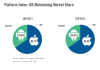
    A lot of headlines have focused on the new Galaxy S4 as a potential iPhone challenger in terms of hype and mindshare, but mobile ad firm Velti offers a different perspective in its February summary of global exchange data from its network. The company still sees iOS and iPhone dominating among mobile advertisers, despite the rising tide of Android devices.

    Velti saw that 8 of 10 devices on its global ad exchange were iOS-based, including the iPhone 5, iPhone 4S and iPhone 4. Samsung managed to take two of the top 10 spots, but placed relatively low on the list with the Galaxy SII and Galaxy SIII at 7 and 10 respectively. The Galaxy SII is the only one to crack the top five in any region, coming in fifth overall in Europe, and while in general older phones ruled (there’s generally bound to more of them active out there), the iPhone managed to already crack the top 3 in Asia. That’s good news for Apple, which is focusing more attention on that region with recent launches.

    Apple’s iPhone and iPod devices ruled overall with a 38.1 percent share of Velti ad impressions, with the various iPad models making up 17.2 percent. By comparison, all Galaxy devices together only managed less than 5 percent of ad traffic in February. iOS ads were also better performing in terms of effective cost per thousand (ePCM), garnering 20 percent more than their Android counterparts. That’s in spite of a higher click through rate on Android: ads on Google’s mobile platform earned around 50 percent more clicks than those on Apple’s.

    Taking tablets on their own, there isn’t even remotely any competition for iOS. Android tablets as a whole account for only 0.7 percent, according to Velti, with the iPad making up 97.5 percent, with its share mostly shifting from standard iPads to iPad minis between January and February of 2013.

    Overall, the picture on the advertiser side doesn’t look to be changing very much at all, despite Android growth in worldwide sales. iOS actually gained share between January and February according to Velti, though only a very small 0.3 percent, but the firm said that iOS has earned more than 60 percent of advertiser demand for the past six months running.

    Samsung’s Galaxy S4 will be watched for a number of reasons, but it may be most interesting to see if it can help sway the needle with mobile advertisers. He who controls the spice controls the universe, after all, which in this case means that Apple’s domination of the mobile ad world definitely give it a leg up among developers and media content providers.

  • Photoshop CS6′s Creation Was Powered By 601 Cases Of Beer

    Have you ever wondered what went into building a piece of proprietary software like Photoshop? I promise you it’s not black magic, but a lot of beer went into building everybody’s favorite photo editing software.

    To celebrate Photoshop reaching 5 million Facebook fans, Adobe has put together a short video that compiles all the work that went into making Photoshop CS6. Some of the stats – like Photoshop’s 4.5 million lines of code – are rather impressive. Other stats – like the number of beer cases consumed during production – show that Adobe must be a fun to place to work at.

    Looking beyond the numbers, the video gives a small glimpse at how software like Photoshop is made. It’s not open source so its users can’t directly influence its development, but the team does take ideas and suggestions from users to make Photoshop the best it can be.

    If the above video has coerced you into wanting to enshrine a physical copy of Photoshop CS6 in your closet; you have until April 30 to do so. After that, the software will leave for the Cloud and digital orders only. You could set up a computer running Photoshop CS6 in your makeshift closet shrine, but it just wouldn’t have the same effect.

  • Change.org: It’s Not Just Bloggers And Techies Who Will Miss Google Reader

    It didn’t take long after Google announced that it is killing off Google Reader to realize how much the product will be missed by quite a few people. Even the alternatives are having trouble keeping up with the demand from users.

    Various petitions were immediately started, including some at Change.org. One of them is already nearing 130,000 supporters. There seems to be a common misconception that only journalists, bloggers, and techies are really using RSS anyway, but as signatures on the petitions indicate, that’s not necessarily the case.

    “Looks like there’s a dark side to the Google Reader story,” a spokesperson from Change.org tells WebProNews. “People living under repressive regimes use the service to access information untouched by government censors. If Google Reader goes, they say, so will uncensored news and views from around the world.”

    We saw some reports to this effect last week, specifically about Iran, but, Change.org is sharing some interesting stats about its signatures. For example, 75% of Google Reader petition signatures on Change.org came from outside the U.S. 12% of signatures came from people living within countries that Reporters Without Borders and/or the OpenNet Initiative report have active internet censorship by government forces, the spokesperson says.

    “At least 2% of signatures came from people living in countries that Reporters Without Borders calls ‘Enemies of the Internet’ – a moniker earned ‘not just for their capacity to censor news and information online but also for their almost systematic repression of Internet users.’” she says.

    Here are a few sample comments from the biggest petition:

    “Google Reader is important as dinner to me. Since Great Fire Wall blocks infomations between China and others, Reader is the best way to get uncensored news.” – petition signer in China

    “I can’t read some livejournal without googlereader, because it’s forbbiden in my country.” – petition signer in Kazakhstan

    “Thats all I have in web world. through that I can use a lot of internet, I can have a little free internet, our government has banned a lot of sites, reader is our last chance…” – petition signer in Iran

    “I’m a chinese, I can get news which is not censored without google reader .So please don’t close it!” – petition signer in China

    “That’s the only possible way to read posts from blocked sites” – petition signer in Kazakhstan

    “Google reader is my only Internet, guys.” – petition signer in Belarus

    “Google Reader is essential for many Chinese Web users like me to circumvent Internet censorship here. Love the product. Please don’t let it go.” – petition signer in China

    “There was a time that reader was my only way to keep my self update with the censored internet of Iran.” – petition signer in Iran

    Feedly revealed on Friday that it had already signed up over 500,000 Google Reader users since Google made the announcement. And that was three days ago.

  • Sales numbers show Galaxy devices are slowly catching up with the iPhone

    Galaxy, iPhone Sales Estimate
    The iPhone is still the king of the smartphone world, but there’s a reason that Apple (AAPL) has started taking Samsung (005930) much more seriously over the past year. Barron’s points us to new sales estimates from Raymond James analyst Tavis McCourt showing that Samsung’s Galaxy series — which includes both traditional smartphones such as the Galaxy S 4 and larger “phablets” such as the Galaxy Note II — has been generating remarkable momentum for the past 12 months. Overall McCourt found that Galaxy sales surged from just 9 million in the first quarter of 2012 to 19 million in Q2 to 28 million in Q3 to a whopping 38 million in Q4. While these aren’t iPhone numbers, they’re certainly very impressive, especially considering that Galaxy sales actually topped iPhone sales in Q3 when consumers were waiting for Apple to release the iPhone 5.

  • 2014 Mazda6 i Grand Touring: RideLust Review

    2014 Mazda6 i

    Thumbs Up: Perhaps the best-looking midsize sedan, premium feel

    Thumbs Down: Could use more power, transmission not particularly sporty

    Buy This Car If: You’re shopping for a midsize sedan with good looks and an upscale feel

    While this may not come as a surprise to many readers, Mazda doesn’t sell nearly as many Mazda6 sedans as Honda sells Accords or Toyota sells Camrys. That’s not to say the previous Mazda6 was a bad car, but it was easily lost in the crowd, especially when competitors spend serious money on television and print advertising.

    2014 Mazda6 i

    The definition of insanity is doing the same thing over and over again, while expecting a different outcome, so Mazda knew it needed to change things a bit with the launch of the all-new 2013 Mazda6 sedan. Rather than building another car to target mainstream sedan shoppers, Mazda made an effort to give the new Mazda6 a premium feel, and it will soon launch a turbodiesel engine option for its newest sedan. Both are strong arguments for shopping the Mazda6, and both show that Mazda is thinking outside the box.

    2014 Mazda6 i

    Mazda’s attention to detail is evident in the car’s styling, which reflects the Kodo (soul of motion) design language pioneered on the Mazda CX-5. Some may find its exterior details to be a bit busy, but we’re not in that camp. In fact, we’d call the new Mazda6 perhaps the best-looking midsize sedan on the market today.

    2014 Mazda6 i

    We love the muscular sweep of the front fenders, as well as the deep character lines that run upward from the front wheels. Tasteful chrome is used to trim the daylight opening, and the C-pillar trim is dimensional, a detail we haven’t seen on many contemporary automobiles. Even the long roofline and short rear deck add to the car’s sporty nature, giving it a coupe-like stance with sedan practicality.

    2014 Mazda6 i

    Distinctive best sums up the Mazda6’s front styling, which is dominated by a sculpted hood and a wide, shield-shaped grille. The front air dam is pronounced, too, and we suspect its a functional piece designed to further reduce drag and improve fuel economy. There’s some brightwork to accent the front end, but it’s not used with the same reckless abandon seen on the new Honda Accord.

    2014 Mazda6 i

    Out back, Mazda has done a good job of minimizing the Mazda6’s taillights and incorporating them into the trunk lid. There’s one thick strip of chrome across the trunk we’re not particularly fond of, but otherwise the rear of the Mazda6 is a clean design that we think is destined to age well.

    2014 Mazda6 i

    Inside, the dash design and layout delivers a near-luxury feel that ties nicely to the brand’s premium goal. There’s (thankfully) not a trace of fake wood or simulated leather to be seen on the dash, which is adorned with glossy, graphite-colored trim and metallic accents. Even the steering wheel seems to have some thought behind it, as it’s wrapped in leather and shaped for optimal hand placement at the 9:00 and 3:00 positions. If we were the nitpicking type, we’d point out that the infotainment system is small by contemporary standards, but the console-mounted controller makes using it a breeze.

    2014 Mazda6 i

    Instruments also convey an upscale feel, with metallic trim rings used for contrast on the tachometer, speedometer and driver information display. It’s an eye-catching design, complete with bright, high-contrast readouts for the gear indicator, odometer, outside temperature, fuel gauge and information screen. Some critics have panned it for being “too plain,” but we much prefer function to flash in our daily drivers.

    2014 Mazda6 i

    Our Mazda6 in Grand Touring trim came equipped with leather-clad sport seats up front, and we’d give them two thumbs up. The leather is perforated for improved year-round comfort, and Mazda uses red stitching around the seat’s perimeter to add a bit of style. There’s plenty of side bolstering to hold driver and front-seat passenger in place, and those in the front row get heated seats for cold-weather comfort. There’s even a two-position driver’s seat memory, further proof that Mazda is paying attention to others in the segment.

    2014 Mazda6 i

    Those occupying the second row will also have few complaints. Both head room and leg room are surprising, meaning that even those taller than six feet in height will be comfortable in back. We’d like a bit more bolstering on the outboard rear seats, but we suppose that would turn a five-seater into more of a 2+2, and that’s not what Mazda is going for here. It’s also a bit odd that the red contrast stitching is used on the front seats only, especially since the Grand Touring trim includes leather seating surfaces in the rear as well as the front.

    2014 Mazda6 i

    For now, the sole choice of engine is a gasoline-fueled, normally-aspirated 2.5-liter four cylinder, producing 184 horsepower and 185 pound feet of torque. That’s enough for reasonable acceleration under normal circumstances, but we’ll admit to being a bit let down by the six-speed automatic transmission’s shift logic. Even the paddle shifters don’t deliver particularly crisp shifts, which begs the question of why Mazda even included paddles aside from the fact that other sport-themed sedans have them.

    In any case, you can expect a 0-60 mph time of around 7.5 seconds, but the Mazda6 does deliver better than average fuel economy. The EPA says to expect 30 mpg combined (26 mpg city and 38 mpg highway), and we saw an indicated 30.3 mpg in mostly-city driving.

    2014 Mazda6 i

    Like all Mazdas, the 2013 Mazda6 delivers an above-average driving experience. The steering has great feel and is nicely weighted, helping derive the most from the car’s 225/45-19 Dunlop tires. There’s very little body roll in corners, which is all the more surprising given the car’s compliant ride. While we’d stop short of calling the Mazda6 a sport sedan, when you take horsepower out of the equation it will likely out-corner most front-drive midsize sedans. Brake feel is quite good, too, though to be fair we didn’t have a chance to test the Mazda6 on anything but public roads.

    2014 Mazda6 i

    If safety is a concern, the Mazda6 will likely impress you with its available features, too. Our Mazda-supplied press fleet car had adaptive cruise control, smart city brake support, cross-path detection, forward obstacle warning, a blind spot monitoring system, a rearview camera and a full complement of airbags. While the car has not yet been crash tested by the NHTSA, it has earned the coveted “Top Safety Pick +” designation from the IIHS, so we expect it to score equally well in NHTSA testing.

    2014 Mazda6 i

    Our 2014 Mazda6 i Grand Touring carried a base price of $30,290, including a destination charge of $795. Options on our press fleet tester included the $300 Soul Red Paint, and the $900 Mazda Radar Cruise Control and Forward Obstruction Warning Package, for a total sticker price of $31,490.

    For comparison, a similarly-equipped Toyota Camry XLE would price at 30,229, while a comparable Honda Accord EX-L with Navigation would sticker for $30,785.

  • Paragon Backup & Recovery 2013 Free is now Windows 8 compatible

    Paragon Software has revealed the latest edition of its excellent imaging tool, Backup & Recovery 2013 Free.

    The most important addition this time around is the program’s new “Windows 8 Compatible” stamp. If you’re upgrading soon, or have done so already, then Paragon Backup & Recovery 2013 Free should work just as it always has.

    And as a part of this, Paragon Backup & Recovery 2013 Free now also supports Windows 8 Storage Spaces. (Paragon first made this technology available back in December 2012 in an update for their Hard Disk Manager Suite and Professional packages, but it’s finally filtering through to the free products.)

    Storage Spaces is an interesting Windows 8 feature which allows users to combine the space in multiple existing hard drives, then reallocate it to virtual volumes in whatever configuration they need.

    And Paragon Backup & Recovery 2013 Free now recognizes Storage Spaces volumes and treats them like any other, which means you can freely back up, partition or delete them, without worrying about the underlying technology.

    That’s all we’ve noticed with regard to new features. There’s not even an interface revamp, the usual trick companies employ when an upgrade isn’t looking too exciting. (Although that’s probably a good thing, especially if you’re an existing user: at least you can download and use the new version immediately, without having to find your way around rearranged dialogs and menus.)

    Then again, when you consider how much Paragon Backup & Recovery 2013 Free offers — wide hardware support, full and differential backups, file exclusions, partitioning tools, a bootable recovery disc and more — it’s hard to see what else the company might reasonably have added. If you need an imaging backup tool, take a look, it’s still one of the best options around.

    Photo Credit: Raimundas/Shutterstock

  • EA Offers A Free Game To Those Troubled By SimCity’s Launch Woes

    There’s no denying it – SimCity‘s launch was a massive failure. EA didn’t anticipate the demand, and its always-online DRM scheme failed to compensate for the massive load on the servers. It prevented thousands of players who legitimately purchased the game from playing it. Now EA is trying to make it right… kind of.

    While EA won’t offer an offline mode for the game, the publisher is extending an olive branch to SimCity players in the form of a free game. Those who purchased Simcity around launch will be able to redeem one of the following games for free from EA’s Origin store through March 30:

  • Battlefield 3 (Standard Edition)
  • Bejeweled 3
  • Dead Space 3 (Standard Edition)
  • Mass Effect 3 (Standard Edition)
  • Medal of Honor Warfighter (Standard Edition)
  • Need For Speed Most Wanted (Standard Edition)
  • Plants vs. Zombies
  • SimCity 4 Deluxe Edition
  • It’s kind of ironic of EA to offer a previous incarnation of the SimCity franchise to those affected by the latest game’s launch. Well, at least those who pick SimCity 4 will be able to play a SimCity game without needing to be constantly online.

    It seems that this is as good as its going to get for SimCity players who simply want an offline only experience for the latest game in the franchise. After Maxis pretty much confirmed that an offline mode was possible, it just stings all the more that EA still won’t offer what players want. Despite all of that, SimCity seems to be up and running without any problems at the moment.

    It’s going to be interesting to see how the entire SimCity debacle will affect EA’s running in The Consumerist’s Worst Company In America award. It won the “prestigious” award last year, and this latest event might just help the company retain its Golden Poo award.

  • Scale Mt. Everest without leaving your seat

    You have no doubt heard the term “Monday Morning Quarterback”, which refers to the person who always has the plan that would have won the game the day before. Now you can be an armchair mountaineer thanks to Google’s latest update to its Maps program, that brings some of the biggest and baddest climbs to your computer screen.

    The Maps teams has gone to a number of extremes and this time they are scaling the heights of some of the most feared peaks on the planet. The team visited Nepal, commonly thought of as the gateway to the Himalaya’s, and captured images that must be seen to truly be appreciated.

    According to Google’s Dan Fredinburg: “This awesome trek began at Everest Base Camp where the crew rolled out over 70 miles through the mountains and through the towns — through lovely days and real powerful color splashes alike”. The team ventured as far up as an altitude of 18,192 feet. Along the way panoramic images were capture and are subsequently made available for viewing on your PC or mobile device.

    In what seems somewhat of a surprise, Google has also made a number of the panoramic images available within Microsoft’s Photosynth app — “if you’re using a Windows Phone or iOS device, you’ll want to have a peek at Photosynth“, Fredinburg states.

    This latest release adds to the existing World’s Highest Peaks that is already part of the Google Maps collection — a set that includes several Andean peaks and also the famed Kilimanjaro in Africa.

  • Facebook for iOS Update Lets Users Edit Cover Photos, Makes Messaging Easier

    Today, Facebook has released version 5.6 of its iOS app. The update brings the ability to change cover photos, as well as some improvements to messaging.

    First up, the new Facebook for iOS finally allows users to change their cover photos inside the app. This functionality has been available on Android for a few weeks, and now iOS users can quickly take a new photo or upload one from their camera roll. Note that this is an iPhone only (sorry, iPad users) feature.

    Next, Facebook has announced two new updates to messaging. There are now “fewer taps to start a group message” and it should be “easier to name and find group conversations.”

    Back in September of 2012, Facebook announced that they would be updating their mobile apps every 4-8 weeks. According to the company, this was based on a shift from “feature-driven” release process to a “date-driven” one. This basically means that instead of working on a bundle of new features and waiting until they were all perfect before releasing the update, Facebook i now pushing updates in a timely manner on a set schedule.

    Facebook last pushed and update to their iOS app just under a month ago. It added free calling within the app, a feature that first appeared on the Facebook Messenger app. The update also made the like, comment, and share buttons bigger and better-looking.

    You can grab today’s Facebook for iOS update over on iTunes.

  • Motorola ‘Ghost’ heading to all four major U.S. carriers, ‘Yeti’ and ‘Sasquatch’ to AT&T

    Motorola_Logo_From_DROID_RAZR_MAXX_HD_TA

    Last week we got word of a new Motorola device with the model number XT912A. We have heard that the Motorola “X” phone refers to more than one phone, so this could be just one variant. It showed up in the GLBenchmark database with the codename “Ghost”, and it will be a mid-range device with a 720p display and a 1.7GHz quad-core Qualcomm Snapdragon S4 Pro. This one is rumored to be headed to all four major U.S. carriers, Verizon Wireless, AT&T, T-Mobile, and Sprint. It could wind up in the Google Play Store as well, but that’s just a hunch. Yes, this one is mid-range, but more than enough for the average consumer. If they can price this one right as in $199 to $249 off contract, it could be a hit.

    There are two more handsets that popped as well and they are called the “Yeti” and the “Sasquatch.” The latter was spotted in the 0xbenchmark database on March 13th and is running Android 4.2.2. The former is just a name floating around, but supposedly it’s also running Android 4.2.2. Although AT&T is mentioned specifically, it doesn’t rule out the possibility they could be headed to all four major U.S. carriers just like the “Ghost”. Who knows, one of them could even be the higher-end Motorola “X” phone we have been hearing about, but we will have to wait until more information is uncovered.

    Sources:  GLBenchmark0xbenchmark
    Via: Droid-Life

    Come comment on this article: Motorola ‘Ghost’ heading to all four major U.S. carriers, ‘Yeti’ and ‘Sasquatch’ to AT&T

    Visit TalkAndroid for Android news, Android guides, and much more!

  • Software update enables LTE support on T-Mobile’s Galaxy Note 2. Nexus 4 next?

    When T-Mobile officially lights up its nationwide LTE network later this month, it won’t just be new phones that can use it. Samsung’s Galaxy Note 2, which T-Mobile started selling to customers back in October, will boast fast LTE mobile broadband speeds too. How can that be? Early looks at the phone showed inactive LTE radio hardware inside and now T-Mobile is flipping the switch with a software update.

    On Monday, the network operator published a support document stating that it is now pushing the update over the air to Galaxy Note 2 handsets. If a customer prefers, they can get the update with a PC by using the Samsung Kies program. The new software brings the 5.5-inch smartphone up to Android 4.1.2 and also enables support for the carrier’s LTE network.

    T-Mobile is currently in the midst of an aggressive LTE rollout. While rivals Verizon and AT&T started LTE network upgrades over the past few years, T-Mobile instead built up its HSPA+ capabilities. While that sounds like a poor strategy, it may yet pay off. In areas without T-Mobile LTE coverage, most devices would then fall back to HSPA+ 42 service, which can be nearly as fast as LTE, depending on location.

    Google Nexus 4Regardless, T-Mobile is moving quickly to enable LTE service now, having started the effort within the past year. The company expects that its LTE infrastructure will provide service “in the vast majority of the top 50 markets and 20 MHz service in 75 percent of the top 25 markets.” New York City is surely among the first of the new LTE markets — joining Las Vegas and Kansas City — given that an eagle-eyed GigaOm reader accessed T-Mobile’s LTE network this past weekend there.

    Maybe there’s LTE hope for the Nexus 4 after all? That device also supports LTE on the 1700 MHz band, which just happens to be what T-Mobile is using for fast mobile broadband as it moves HSPA+ service to a different frequency.

    Related research and analysis from GigaOM Pro:
    Subscriber content. Sign up for a free trial.

  • And Here Are Etsy’s Stats For February

    On Friday, Etsy released its “weather report” for January, showing that it had 1.67 billion page views on its site in January, compared to 1.53 billion page views in December. The site also saw $97.6 million worth of goods sold (after refunds and cancellations) during the month, which was 17.1% lower than December’s $117.8 million.

    Other stats included: 4,482,545 items sold in January, 2,699,648 new items listed (14.2% higher than December’s 2,363,780), and 1,128,036 new members (21.8% lower than December’s 1,441,833).

    Today, Etsy has released its report for February. Here are the stats for the month (which was three days shorter than January and a day shorter than February 2012, as the company points out):

  • $94.7 million of goods (after refunds and cancellations) were sold by our community in February, 3% lower than January’s $97.6 million
  • 4,215,169 items sold for the month, 6% lower than January’s 4,482,545
  • 1,988,713 new items were listed in February, 26.3% lower than January’s 2,699,648
  • 1,025,124 new members joined the Etsy community, 9.1% lower than January’s 1,128,036
  • 1.49 billion page views were recorded on the site
  • Goods sold were up 62.4% year-over-year.

  • Blake Shelton Rumors Denied on Twitter

    This week, Life & Style Weekly published a cover story about rumors that Miranda Lambert had confronted the other woman that her husband, Blake Shelton, “got close” with. The rumors began to swirl through the celebrity press, and the country music stars soon found themselves at the center of a full-blown celebrity cheating scandal.

    Not that they care.

    Lambert and Shelton, who have been married since 2011, took to Twitter to dispel the rumors of their rocky marriage. The two engaged in some playful banter over tweets, effectively dismissing the tabloid rumors:

    Shelton has been topping country music charts since 2001, but is perhaps now best known as a “coach” on the NBC show The Voice. Shelton was awarded the Entertainer of the Year and Male Vocalist of the Year awards at the 2012 CMA awards, while Lambert took the award for Female Vocalist of the Year. The couple also won the 2012 CMA Song of the Year award for “Over You.”

  • Apple expected to double dividend to $16 billion, among highest in U.S. history

    Apple Quarterly Dividend
    Apple (AAPL) shares are down more than 35% over the past six months, but Apple may be set to provide investors with one of the highest dividend yields in U.S. technology company history. According to Bloomberg, analysts polled by the news organization expect Apple to increase its dividend by 56% to $4.14 per share, higher than 86% of S&P 500 companies that currently pay dividends. This would raise Apple’s annual payout to nearly $16 billion. “The accumulation of cash has become excessive,” Topeka Capital Markets analyst Brian White told Bloomberg. “It doesn’t matter which bearish scenario you forecast, they’re never going to need this much cash.”

  • Google Enhanced Campaigns Get New ValueTrack Parameters

    Google announced today that it will be launching new ValueTrack features for advertisers using keyword level URLs, in the coming weeks. The company says these will help advertisers achieve specific conversion and ROI goals, and help ease the transition to Enhanced Campaigns.

    They will do so, Google says, by directing users to device-specific landing pages at the keyword level and enabling measurement of the effectiveness of campaigns by device.

    Specifically, Google has added the {ifnotmobile:[value]} parameter, which lets you replace [value] with the text that will show up in your URL when the user clicks the ad from a computer or tablet. They’re changing the parameter {ifmobile:[value]}, which will now insert the specified value into the URL only when the user clicks from a mobile device.

    Google shares some examples for using these parameters in a blog post here.

    “Advertisers are upgrading to enhanced campaigns and seeing strong results,” says AdWords senior product manager Karen Yao. “VivaStreet in France, the 4th largest free classified website in the world, upgraded all of their campaigns within the two weeks after launch. When they upgraded, they increased their mobile bid adjustment to 125% and saw overall conversions increase by 34%. After seeing the positive results, VivaStreet went on to increase their mobile bid adjustment to 140%. By using ValueTrack parameters, you can also direct users to device-specific content and measure the effect it has on conversions.”

    Google posted an Enhanced Campaigns webinar today, discussing extensions and sitelinks:

    Another webinar in this series is scheduled for March 21.

  • Next-gen biofuels making slow, slow, slow progress in 2013

    In the time it takes to scale up the production of advanced biofuels — which use plant waste, not corn, for fuel — numerous web startups could launch, scale and exit. But for those biofuel companies that are still out there, toiling away at the difficult goal of producing next-gen biofuels that are competitive with gasoline at commercial scale, 2013 is proving to be a year of pivotal steps.

    On Monday, KiOR, which was largely funded by Khosla Ventures before it went public, announced in its fourth quarter and annual year 2012 earnings that it has now shipped its first cellulosic diesel product from its factory in Columbus, Mississippi. The factory, which could make some 3 to 5 million gallons this year, converts wood chips into a diesel fuel that the company says can be used in current fossil fuel infrastructure.

    Last week startup ZeaChem said that it started production of cellulosic chemicals and ethanol at a demonstration factory in Boardman, Oregon, which can produce about 250,000 gallons per year. Late last year, ag giant DuPont started construction on a cellulosic ethanol factory in Nevada, Iowa, which when completed in 2014 could produce 30 million gallons of fuel from corn stalks and leaves. For comparison sake, these are very small volumes in the grand scheme of the fossil fuel industry — the U.S. consumes some hundreds of billions of gallons of gas per year.

    Regardless, these are signs of progress for an industry that has perpetually missed milestones and overestimated the amount of time it would take to move into commercial production. But these milestones are still steps on the way to a company producing these advanced biofuels at a scale and cost that is competitive with gasoline.

    According to Bloomberg’s energy research arm New Energy Finance, ethanol made from plant waste could cost the same to produce as corn-based ethanol by 2016. Currently cellulosic ethanol costs 94 cents a liter to produce, or about 40 percent more than ethanol made from corn, says Bloomberg.

    Despite these milestones, there are many more steps ahead. KiOR was expecting to ship its first cellulosic diesel late last year, and in the company’s earnings call CEO Fred Cannon apologized to investors for missing that target due to “unexpected startup issues.” KiOR also now needs to operate that factory at a steady state for another 9 months, and also buildout another factory in Natchez, Mississippi, which is supposed to produce three times what its Columbus facility will produce.

    KiOR needs to finance the Natchez facility, and on that note, said on Monday that Khosla Ventures is willing to offer it another $50 million commitment and amend its previous loan agreement. ZeaChem is also looking to buildout a 25 million gallon factory per year next to its demonstration factory. DuPont is one of the company’s with the deepest pockets that is moving ahead and has been working on next-gen biofuels for a decade. Still, the process has taken DuPont longer than it had expected, the CEO told me recently.

    But not everyone thinks building large biofuel factories is a smart move. Late last year oil giant BP cancelled its plans to build a next-gen biofuel factory in the U.S.

    Related research and analysis from GigaOM Pro:
    Subscriber content. Sign up for a free trial.

  • AppNeta lands $16M as networking and application monitoring heats up

    AppNeta, whose monitoring services let devops teams track the performance of a website, the networks it uses and the external applications it depends on, announced on Monday a $16 million Series C round of venture funding, demonstrating that investors still like the area despite a crowded market.

    Bain Capital Ventures, Business Development Bank of Canada, Egan-Managed Capital and JMI Equity led the round, which brings the total AppNeta has raised to $47.8 million.

    AppNeta, which has offices in Boston and Vancouver, B.C., offers Software as a Service (SaaS) that gauges the performance of the components of a customer’s site and lag times attributable to web servers, the network and an end user’s browser. Those services are known as application-performance management (APM). The SaaS also breaks out performance of the networks underlying the apps and data the site depends on to run on end users’ devices — what’s called network-performance management (NPM). The data from AppNeta can quickly show devops employees when and how performance is not meeting service-level agreements (SLAs) and take action accordingly.

    The APM market looks a bit like a venture capital and product-feature arms race. Last week New Relic, fresh off an $80 million round of funding, announced the ability to monitor end users’ mobile experiences. After recently picking up $50 million, AppDynamics moved more toward IT automation in a new product release last week, and it appears poised to add mobile-app support in the near future.

    The NPM market lacks the current momentum of APM, although there is competition from SevOne, which got $150 million in January; Riverbed and other vendors.

    Related research and analysis from GigaOM Pro:
    Subscriber content. Sign up for a free trial.

  • Samsung Orb Photo Feature Could Debut In Galaxy S 4 With Android 5.0 Update

    Samsung Orb

    Samsung Orb will allow users to take 360 degree panorama photos, and is rumored to be introduced on the Galaxy S 4 when Android 5.0 is released.  According to an insider, the decision to delay Orb until the Android 5.0 update isn’t finalized yet, but is expected to be. Orb is very similar to Photo Sphere which is part of the Nexus 4 experience. This will be a nice value add for photo taking S 4 owners, however, Android 5.0 won’t make its way to select Galaxy devices until after Google I/O in June when a Key Lime Pie announcement is anticipated.

    Source: SamMobile

    Come comment on this article: Samsung Orb Photo Feature Could Debut In Galaxy S 4 With Android 5.0 Update

    Visit TalkAndroid for Android news, Android guides, and much more!

  • Washington Post announces a (very leaky) paywall

    The Washington Post will charge for access to its website beginning this summer. The move, which the company announced on Monday, confirms recent rumors and ends the Post’s role as the last major newspaper holding out against paywalls.

    The Post’s paywall will be a leaky one, allowing readers to view 20 free articles a month with no limit for its home page, section front pages or classifieds. Students and teachers will have unlimited access at school, while civil servants and military personnel will have unlimited access at work. Home delivery subscribers will get a free digital subscription. The paper will also not count visits that come by way of Google or social media against a reader’s monthly quota. The Post has not yet announced how much a digital subscription will cost.

    This type of porous paywall, which aspire to nudge readers to subscribe without driving them away, is now commonplace. The New York Times, a pioneer of paywall strategies, made its paid website easily accessible at first but has since reduced the number of free articles and cut off popular workarounds.

    As Forbes notes, the imposition of a paywall (however leaky) appears to be a victory for investor Warren Buffett, an advocate of paid content, over the Graham family, which controls the paper and has historically been opposed to charging for the website.

    The Post is also experimenting with other models to raise revenue, including sponsored stories. Come hear more about how content owners are finding new ways to make money from media at paidContent Live on April 17.

    Related research and analysis from GigaOM Pro:
    Subscriber content. Sign up for a free trial.