Blog

  • To Mark Nowruz, President Obama Speaks to the People and Leaders of Iran

    As families and friends gather around the Sofreh-e Haft Sin to celebrate Nowruz, President Obama extends his best wishes for the new spring and new year.

    In his message, the President speaks directly to the people and leaders of Iran about the opportunity to begin a new relationship between our two countries. In expressing his hope that Americans and Iranians will one day work together, build together, and innovate together, the President says “As a new spring begins, I remain hopeful that our two countries can move beyond tension. And I will continue to work toward a new day between our nations that bears the fruit of friendship and peace.”

    Eid-e Shoma Mobarak.

    Watch the video here | Read the transcript of President Obama's message in EnglishRead the transcript of President Obama's message in PersianRead the transcript of President Obama's message in ArabicDownload MP4 |

  • Microsoft pushes out Windows 7 SP1 on March 19

    For those people who haven’t moved on to Windows 8, don’t worry — you will still get something new. Microsoft has announced that Service Pack 1 for Windows 7 will automatically push through the Windows Update tomorrow.

    This is not entirely new, though. In fact, Service Pack 1 released way back on Feb. 9, 2011, but has remained optional. Users could previously install SP1 from Windows Update, but the task required manually adding it to the installation list. The difference now is that Microsoft will no longer give users a choice in this matter. That is not a bad thing, because SP1 rolls together a number of security updates for your computer.

    According to Microsoft’s Brandon LeBlanc, “Starting tomorrow, the installation will be fully automatic with no user action required for those who already have Automatic Update enabled. SP1 will be released gradually over the coming weeks to all customers on the RTM version of Windows 7. The service pack will take slightly longer to install compared to other updates”.

    The update will only happen on consumer computers, so IT has nothing to fear from this sudden change. The update only applies PCs that are not managed by any Microsoft management tool such as Systems Center Configuration Manager (SCCM) or WSUS Server. Businesses will need to roll out this update on their own.

    Customers should make the move as soon as possible because Windows 7 without SP1 will become unsupported on April 9. In other words, this is not really an option for you or IT. The good news is that, after two years in the market, most users likely already have the updated version of the operating system. This is simply a last ditch effort to get the stragglers on board and perhaps make things just a bit more secure.

    Photo Credit: Adriano Castelli/Shutterstock.com

  • Apple revival said to start with ‘killer feature’ planned for iPhone 5S

    Apple iPhone 5S Rumor
    Apple’s (AAPL) shares have been tanking over the past several months, but at least one analyst thinks that the company is poised for a major revival by the end of the year. Per Barron’s, Morgan Stanley analyst Katy Huberty said during a CNBC interview on Monday that Apple’s shares are approaching bottom and will likely rebound later this year with the launch of the iPhone 5S. Huberty, who recently met personally with Apple CFO Peter Oppenheimer, said that “Apple will surprise this year” with “a killer feature that drives consumers increasingly to the platform” that will debut on the iPhone 5S. Huberty gave no hint about what this “killer feature” might entail but did add that it would increase “the value of those 500 million [Apple] accounts.”

  • Getting that First Promotion

    If you’ve been at your company for a few years and hope to move up to the next level, you may feel like you’re standing at an airport looking up to see one plane after another stacked up in a holding pattern. That’s because promotion rates in most industries have slowed dramatically since the recession, creating a backlog of talented employees intent on moving ahead.

    Fortunately, at least in the United States, that logjam is beginning to break up, as the economy strengthens. So that leaves you with the question: What steps can I take to break out of this unusually large pack?

    The first thing you must understand is that producing strong results in your current job won’t be enough. That’s just table stakes, the minimum needed to get you into consideration for a promotion. But finding out what else is required is tricky. Few companies spell out the criteria they use to make promotions to the first rung of management. Companies like GE and McKinsey are rigorous about promotion standards, but they are the exceptions.

    So, what are some rules of thumb to keep in mind?

    In making promotional decisions to the management level, companies typically look for people who take initiative — and know how to do it the right way. That means going beyond the narrow confines of your current job and finding new ways to add value and improve the performance of your group. In doing so, it’s important to be not only a problem finder but a solution seeker. Some people will identify a problem or barrier to performance and neatly drop it at their boss’s doorstep, naively expecting to be rewarded. In reality you’ve just added to your already-harried boss’s job jar. No kudos for that.

    Solution finders work with others to devise ways to fix the problem and gain support for the proposed approach within the company. They anticipate how the recommended solution will affect other parts of the organization and take steps to build support within those departments. In the process, they display a sense of professional maturity that starts with an understanding of which battles deserve to be fought and which can be won. Virtually all organizations are inefficient in certain areas, but that doesn’t mean every inefficiency is worth tackling. You won’t set yourself apart from the pack by solving a problem that won’t move the performance needle in terms of increased customer satisfaction, revenue, or productivity. A smart solution finder also attempts to fully understand the boss’s and senior management’s performance goals, relationship concerns and career ambitions to ensure they will be prepared to deploy some of their scarce political capital on the proposed initiative.

    In addition to initiative and professional maturity, you also need to find ways to demonstrate that you have the interpersonal skills required to manage a variety of potential direct reports — to set objectives for them, guide their work, provide performance feedback, and address the performance problems that inevitably occur in any group. Demonstrating people management skills also involves recognizing that different people are motivated by different things and showing that you are flexible enough in your motivational style to get the best out of each staff member. Admittedly, this can be hard to do if you aren’t already responsible for managing people. However, how you interact with others on group projects can be an important “preview of coming attractions” in terms of showcasing your interpersonal and people management skills to your company’s management

    And finally, as you work with others to develop your proposed initiative to improve performance, look for opportunities to display your ability to anticipate and marshal the resources that will be required for successful implementation, another important skill at the managerial level.

    If you think all this sounds like extra work, you’re absolutely right. In any environment, but especially in this post-recession one, those who emerge from the pack will be the ones willing to go the extra mile to distinguish themselves from other talented people. But if you are successful, beyond moving up to the level you want, you’ll have a head start in gaining critical skills that can continue to propel your career upward: the ability to get things done with and through others; to influence and persuade peers over whom you have not formal authority; and to delegate work so you are freed to think about the future and identify potential innovations than can create a quantum leap in performance.

  • Neuroscientists present new guidelines for sports concussions

     
    (Editors: Video interview of co-lead author Dr. Christopher Giza available upon request.)
     
    More than 1 million young and adult athletes in the U.S. suffer concussions each year. Until now, no consistent standards existed to guide coaches and physicians in evaluating and treating sports-related brain injuries.
     
    Today, the American Academy of Neurology released its first updated guidelines since 1997 for managing athletes with head injuries. Developed by researchers from UCLA and University of Michigan, the new recommendations are entirely science-based, resulting from four years of meticulous analysis of previous studies of sports-concussion patients.
     
    Published March 18 in the online edition of Neurology, the medical journal for the American Academy of Neurology, the new evidence-based guidelines have been endorsed by the National Football League Players Association, the Child Neurology Society, the National Association of Emergency Medical Service Physicians, the National Association of School Psychologists, the National Athletic Trainers Association and the Neurocritical Care Society.
     
    “Our top piece of advice is that one size does not fit all,” said co-lead author Dr. Christopher Giza, an associate professor of neurosurgery and pediatric neurology at the David Geffen School of Medicine at UCLA and Mattel Children’s Hospital UCLA. “Proper concussion management requires individualized assessment and treatment before making the decision to return an athlete to the game. There is no routine timeline for a safe return to play.”
     
    In the past, concussion evaluation relied on generic grading systems that featured set timelines for returning an athlete to the game. The new protocol recommends immediately removing players with suspected concussions from the game for evaluation by a licensed health care provider trained in concussion diagnosis. Athletes should only return to play after they are medication-free and have recovered from all acute symptoms, such as headache, nausea, vertigo and disorientation.
     
    Athletes of high school age and younger should be managed more conservatively, as evidence shows that they take longer to recover than college athletes.
     
    “Kids aren’t just little adults,” Giza stressed. “Evidence suggests that young brains may be more vulnerable to trauma and take longer to recover from concussions.”
     
    Giza and co-author Dr. Jeffrey Kutcher, an associate professor of neurology at the University of Michigan Medical School, spent thousands of hours tracking down and reviewing all available concussion research published through June 2012. They excluded studies that did not offer enough objective evidence on which to base recommendations, such as reports about individual patients or those grounded in expert opinion. Collaborating with experts in a broad range of specialties, the authors anonymously analyzed and graded the merit of each study’s findings before developing their recommendations.
     
    According to the newly issued guidelines:
    • Suffering one or more concussions increases an athlete’s risk for being diagnosed with another concussion.
    • Athletes are at the greatest risk of being diagnosed with another concussion in the first 10 days after a brain injury.
    • Of the sports evaluated in the studies, the risk of male concussion is greatest in football and rugby, followed by hockey and soccer. The risk of concussion for young women and girls is greatest in soccer and basketball.
    • No clear evidence suggests that one type of football helmet offers the best protection against concussion. Helmets should fit properly and be well maintained.
    • Licensed health professionals trained in treating concussions should examine the athlete for ongoing symptoms (especially headache and fogginess), a history of concussions and younger age. Each factor has been linked to a longer recovery time.
    • Risk factors associated with chronic neurobehavioral impairment in professional athletes include prior concussion, longer exposure to the sport and carrying the ApoE4 gene.
    • Concussion is a clinical diagnosis. Symptom checklists, the Standardized Assessment of Concussion, neuropsychological testing (paper-and-pencil and computerized) and the Balance Error Scoring System may be helpful in diagnosing and managing concussions but should not be used alone for making a diagnosis.
    Signs and symptoms of a concussion include:
    • Headache and sensitivity to light and sound.
    • Changes in reaction time, balance and coordination.
    • Changes in memory, judgment, speech and sleep.
    • Loss of consciousness or a “blackout” (happens in less than 10 percent of cases).
    “When in doubt, sit it out,” Kutcher said. “Evaluation by a trained professional is extremely important after a concussion. If headaches or other symptoms return with exercise, immediately stop the activity and consult a doctor. You only get one brain; treat it well.”
     
    For more news, visit the UCLA Newsroom and follow us on Twitter.

  • Transitions to Alternative Vehicles and Fuels

    Final Book Now Available

    For a century, almost all light-duty vehicles (LDVs) have been powered by internal combustion engines (ICEs) operating on petroleum fuels. Energy security concerns over petroleum imports and the effect of greenhouse-gas (GHG) emissions on global climate are driving interest in alternatives. This report assesses the potential for reducing petroleum consumption and GHG emissions by 80% across the U.S. LDV fleet by 2050, relative to 2005. It examines the current capability and estimated future performance and costs for each vehicle type and non-petroleum-based fuel technology as options that could significantly contribute to these goals. By analyzing scenarios that combine various fuel and vehicle pathways, the report also identifies barriers to implementation of these technologies and suggests policies to achieve the desired reductions. Several scenarios are promising, but strong, effective, and sustained but adaptive policies such as research and development (R&D), subsidies, energy taxes, or regulations will be necessary to overcome barriers such as cost and consumer choice.

    [Read the full report]

    Topics: Energy and Energy Conservation | Engineering and Technology

  • Google Flight Search Heads To More Countries

    Google announced today that its Flight Search tool is launching in a handful of new countries, including: the UK, France, Italy, Spain and the Netherlands.

    It was about a year ago when Flight Search first went international, adding flights from the U.S. to destinations around the world. The feature itself launched in Canada last summer, and now the expansion appears to be picking up.

    “Starting today, you can use Flight Search to quickly find, compare and book flights originating from each of these countries to any airport in the world,” says Google product manager Noam Ben Haim. “You’ll also be able to search for flights from airports in these countries and see prices in your local currency. Additionally, you can conduct searches in 8 languages: English, French, Italian, Spanish, Basque, Catalan, Galician and Dutch — and see prices in your local currency.”

    Flight Search in Europe

    “Let’s say you’ve decided the Greek Isles are your vacation destination of choice, but you’re not sure which airport offers the most affordable fares. By typing ‘Greece’ as your destination, you’ll be able to quickly compare the cost of the different options, viewing live prices on the map,” he adds. “Likewise, if you’re looking to take the family to New York City but are unsure of the best time to go, you can click on our ‘Lowest fares’ icon to see which dates will get you the lowest fare.”

    Google recently updated the Flight Search tool to let users search for regions – places in addition to airports.

  • State of the media: The cracks are still widening, but some light is also getting in

    If you’ve been following the media industry over the past year, you probably don’t need anyone to tell you the waves of disruption continue to increase in both height and frequency — so the news that widespread cutbacks have caused dissatisfied readers to flee won’t come as much of a surprise. But while those waves have swamped some traditional players, other parts of the industry have been able to ride the tide, and non-traditional sources continue to play a growing role in how people get their news — although whether that is good or bad is still open for debate.

    All of that and more is contained in the latest State of the Media report from the Pew Research Center’s Project for Excellence in Journalism, which was released on Monday morning (Note: We will be discussing many of these issues and more at our paidContent conference in New York on April 17). There’s a lot to take in, but here are what I believe to be some of the key takeaways:

    The Bad News:

    • Cutbacks continue, and consumers are leaving: Close to one-third of U.S. adults say they have stopped using a news outlet because of dissatisfaction over the content — in other words, because they weren’t getting the news they wanted, or the news they expected to get. Survey respondents mentioned both fewer stories in general and less complete reporting, and while it’s impossible to know whether this phenomenon is related to the repeated rounds of cutbacks and job losses, it seems likely.
    • Pew state of the media - news

    • No one cares about the industry’s financial problems: One interesting aspect of Pew’s research is that only a small number of respondents were even aware of the financial woes of the media industry — and even worse, those who were the most aware of the situation were also the most likely to have stopped using a traditional news outlet. Are some readers choosing to desert what they see as a sinking journalistic ship? It certainly looks that way.
    • The disruption of advertising is accelerating: Although digital advertising rose by 17 percent last year, that was not nearly enough to make up for the ongoing decline of print advertising, Pew said. In 2012, approximately $16 in print revenue was lost for every $1 in digital revenue — an even worse ratio than the already dismal 10-to-1 relationship that existed in 2011. And much of the growth in digital is benefiting Google and Facebook.
    • It’s not just newspapers any more: The Pew research shows that local television is also being decimated by the disruption in both viewership and advertising revenue — to the point where viewers have started to notice the difference. Whether because of cutbacks or a desire to appeal to more viewers, Pew says that local TV news is also focusing more on sports and entertainment, and less time on crime and political coverage.

    Pew state of the media - TV

    The Good News:

    • Demand for news is growing, not shrinking: Although it may be coming at the expense of some traditional players, there is clearly a large and growing appetite for news, since the top news sites saw traffic increase by 7 percent in 2012, according to Pew. And the impact of social media seems to be clearly positive, in the sense that those who have heard about news from friends and family through such channels show a stronger interest in finding out more.
    • Some outlets are having success with subscriptions: In the wake of the success of the New York Times paywall, many newspapers have erected their own subscription walls, and this is generating some reader-provided revenue that has helped to stanch the bleeding for some publishers (although even for the NYT and the Financial Times, this has not filled the gap entirely).
    • The sources are going direct: This is probably one of the most contentious aspects of the disruption in media — namely, the fact that social tools such as blogs, Facebook, Twitter and other platforms produce a “democratization of distribution” that allows everyone from celebrities to politicians, and even brands and companies themselves, to reach an audience directly. Is that good or bad for journalism? The debate on that question continues to rage.
    • New forms of advertising are emerging: This is another contentious topic in media — that is, the rise of what some choose to call “native advertising,” or sponsored content, and in some cases “brand journalism.” To detractors such as political blogger Andrew Sullivan it is ethically dubious, and to many traditional journalists such as former NYT executive editor Bill Keller it is a “slippery slope,” but new media entities like BuzzFeed and even The Atlantic are using it to some success.

    Is the glass half full or half empty?

    As with any overview of the media business, there will be those who see this picture as a glass half-empty, and those who see it as a glass half-full — and perhaps a growing number who have completely lost interest in the glass because they are already getting their water elsewhere. As Emily Bell of Columbia and her fellow authors Clay Shirky and Chris Anderson pointed out in their recent report on “Post-Industrial Journalism” and author Clay Christensen noted in a recent interview at Harvard, upheaval is the order of the day in the media business and will likely be so for some time.

    Shirky said in an essay in 2011 that we as a society actually need the media business to be chaotic, as unpleasant as that may be, because we literally don’t have any idea what the future of the industry will look like. Even now there are new entities being born, and new models being applied — like the Forbes “BrandVoice” model, or Sullivan’s direct-to-readers model — that could either be the savior of the industry or a dangerous distraction. If you like bumpy rides with an uncertain ending, the media industry is definitely the place for you.

    Post and thumbnail image courtesy of Shutterstock / Scorpp

    Related research and analysis from GigaOM Pro:
    Subscriber content. Sign up for a free trial.

  • Even the professors behind massive online classes aren’t sure they should count for credit

    Are massive open online classes (MOOCs) from the likes of Coursera, Udacity and edX living up to the hype?

    Even though many in academia have expressed skepticism, a survey from the Chronicle of Higher Education finds that the professors behind the MOOCs have many positive things to say about the new classes. But, interestingly, these most enthusiastic academics say that while they’re embracing MOOCs, they don’t necessarily believe they should be worth credit from their institutions.

    According to the Chronicle, while 79 percent of respondents said they believed that MOOCs are “worth the hype,”  just 28 percent believed that students who succeeded in their MOOC deserve formal credit from their home institution. The survey, which attempted to reach every professor who has ever taught a MOOC, ultimately included responses from 103 professors (out of 184).

    The generally positive response to the Chronicle’s survey contrasts with a 2012 survey from the Babson Survey Research Group, which found that just about 30 percent of university chief academic officers believe their faculty accept the value of online learning. The Chronicle acknowledged that the survey isn’t scientific and that the most pro-MOOC academics may have been the ones to reply. But it still provides an interesting window into the developing and nuanced attitudes of the first professors willing to try their hand at the emerging medium of instruction.

    Another interesting finding was that while 86 percent of professors believed that MOOCs could eventually reduce the cost of attaining a college degree in general (45 percent said it would significantly reduce the cost; 41 percent said it would marginally reduce the cost), just 64 percent MOOCs believed they would reduce the cost of a degree at their own institution. That response likely reflects the caliber of the schools the professors represent (the big MOOC providers have made a point of partnering with Ivy League and other top tier schools) and I wonder if it indicates a belief among these professors that MOOC credits will count the most at lower-tier schools.

    You can check out all of the results on the Chronicle’s website but a few other findings of note include:

    • 66 percent of surveyed professors don’t believe their home institution will eventually grant formal credit to students who succeed in their MOOCs
    • 15 percent of respondents said they taught a MOOC at the request of a superior (meaning that these were eager and willing participants)
    • 73 percent said they hoped MOOCs could increase their visibility among colleagues, media and general public

    Related research and analysis from GigaOM Pro:
    Subscriber content. Sign up for a free trial.

  • T-Mobile LTE update for Samsung Galaxy Note II pushing out

    T-Mobile_logo_100

    Owner’s of a Samsung Galaxy Note II on the T-Mobile network may notice an update is available for their device. The update is probably one you will want to grab as it enables a connection to T-Mobile’s new 4G LTE service. T-Mobile indicates the service should be available in Las Vegas and Kansas City by the end of this month. At some point this summer the new service should be lit up in enough areas to reach 100 million people and by the end of the year it should reach 200 million people. For comparison, the Verizon 4G LTE network reaches 275 million people.

    In some testing that was conducted using a Galaxy Note II, speeds were found to be in the 59 Mbps down, 25 Mbps up range.  Granted, there were probably no other users accessing the signal. As fast as the 4G LTE connection is, T-Mobile customers will also benefit from HSPA+ 4G when they find themselves in an area with no 4G LTE coverage.

    source: PhoneArena

    Come comment on this article: T-Mobile LTE update for Samsung Galaxy Note II pushing out

  • eBay Deal of the Week: 1930 Ford Model A Street-Rod

    1930FordModelA_1

    This is the 1930 Ford Model A hot-rod known as Kryptonite. Built by the folks at Smokehouse Rods & Cycles in Fredericksburg, TX, Kryptonite pays homage to those amazing customs from the 1940′s and 50′s. A 401 Buick “Nail-head” V-8 with drag star long intake, Stromberg carburetors, and Sanderson lake headers reside up front, while the original all steel body keeps passengers safe and sound. The car also features a GM Turbo-400 automatic transmission and a 10 bolt posi rear-end. Now while this kryptonite green sled may not be for everyone, there is no denying that the amount of work that’s gone into this build is nothing short of staggering. Check out more pics after the jump or click on the ebay link below to go directly to the ad.

    Source: eBayMotors.com

    1930 Ford Model A

    1930FordModelA_5

    1930FordModelA_4

    1930FordModelA_3

    1930FordModelA_2

  • How Samsung’s Galaxy S4 Should Have Launched

    Success begets not only further success but also harder-to-meet market expectations. That message was clearly evident after Samsung’s unveiling of its latest flagship smartphone, the Galaxy S4.

    Despite a Broadway-styled launch held in Radio City Music Hall, the new product received somewhat mixed reviews. In fact, in its IT-crazed home country of South Korea, the critics came out in full force and Samsung’s stock price dropped nearly 3%. Some business media attributed the fall to disappointment among analysts over the lack of significant differentiation of the S4 features over its previous generations of smartphones or to existing competitors.

    If all of this sounds familiar, then it should because not too long ago Apple faced a similar situation after its launch of the iPhone 5. Apple’s stock has taken a battering since then and in an ironic twist, its shares rose slightly on the day of Samsung’s Galaxy S4 intro — perhaps a reflection that Apple’s worst fears of an arch nemesis’ killer product were not realized.

    Samsung’s predicament is a classic example of the new-product juggling act that every company has to perform: While trying to keep its rivals at bay, it must at the same time compete with its own existing products.

    Samsung is now the undisputed leading vendor of mobile handsets and smartphones. In terms of sales volume, product line diversity, operating system flexibility, R&D spending, and even customer loyalty, Samsung has emerged as a fierce competitor that has bested former industry champions like Nokia and Apple. But, Samsung may now be asking itself “is that still enough?”

    The tougher competitor for Samsung than Apple could be Samsung itself, or at least the Samsung that many tech savvy consumers now desire to see. This is especially true for the updated flagship product that needs to be accepted as being vastly different from existing lines — in Samsung’s case, the wildly popular Galaxy S3. While Samsung gets high marks for added software, an improved display, and fun-related new camera features, the consensus appears to be that there is no major hardware upgrade between the Galaxy S3 and S4 versions.

    How then can a new front-runner better manage market expectations and also strive to be more innovative? Samsung could have used the following advice:

    Lower the hype. The problem with self-generated hype around product launches is that you have to be able to back it up. The show-business debut, as well as the social media and teaser campaign leading up to the event were collectively seen as being “overhyped, under-delivered.” Publicity is a necessary part of new product introductions. But when new products are over-publicized you are setting the bar of expectations unnecessarily high. In Samsung’s case, the disappointed and boisterous reviewers of the Galaxy S4 may have drowned out the more positive (but quieter) reactions to the product.

    Brand confidently. The market must clearly understand how this product is different. Many experts see the Galaxy S4 as a new strategic thrust by Samsung to “De-Google” its phone. In short, it is an Android phone that wants to stand out more as a Samsung made and operated phone. Despite this grand vision, Samsung is hedging its bets just in case the breaking away move does not pan out by keeping its key branding elements (especially the design and naming) more or less intact. That kind of straddling, however, may create confusion among consumers who judge products by their exterior. If the overall brand narrative is that it is a new kind of Samsung phone, then each important branding element must communicate a clear separation from existing phones.

    Think the same, but different. Cultivate what I call a “doppelgänger mindset.” Traditionally a doppelgänger is a person’s sinister look-alike or alter ego. But the meaning here is that a company needs to think of itself also in a radically different and liberated way, without losing its core identity. For example, the top-dog protagonist in the movie Black Swan finds her creative expression only after such a figure enters her life. Similarly with Samsung, the pressure of maintaining the number one status seems to have inhibited their freethinking. Your Doppelgänger may allow you to revitalize that “I-got-nothing-to-lose” instinct that is often vital for real IT innovation.

    Samsung is now entering uncharted territory as a bona fide leader in many fields. To maintain that mantle, however, it may have to start changing its “business-as-usual” approach.

  • J. K. Rowling’s Pottermore to launch on PlayStation Home

    J. K. Rowling’s virtual Harry Potter community Pottermore is launching on Sony’s PlayStation Home, the company’s free social gaming platform. Users of Pottermore’s website will be able to link their Pottermore.com accounts to their PlayStation Network IDs.

    Pottermore at Playstation Home will be available in April. According to an announcement on Pottermore’s blog, “you’ll be able to actually step inside Diagon Alley™ and board the Hogwarts™ Express as an Avatar, and once inside these 3D environments, experience the mayhem of book herding, test your knowledge with a Pottermore quiz, share and collect Trading Cards, and take part in an illicit Wizard’s Duel.”

    “Pottermore reaches across multiple digital platforms, and our ongoing partnership with Sony has allowed us to forge this exciting connection with Playstation Home,” Pottermore CEO Charlie Redmayne said in a statement, “creating the most immersive experience possible within that space and giving users wonderful new ways to explore locations from the Harry Potter stories.”

    Sony is a Pottermore partner, and last November the companies launched a Harry Potter-themed PS3 game, “Wonderbook: Book of Spells.”

    Pottermore launched as a digital bookstore in March 2012 and opened up its interactive features the following month. The most recent available user stats are from October 12, when Redmayne said at the Publishers Launch Conference in Frankfurt that the site had 36 million unique users.

    Related research and analysis from GigaOM Pro:
    Subscriber content. Sign up for a free trial.

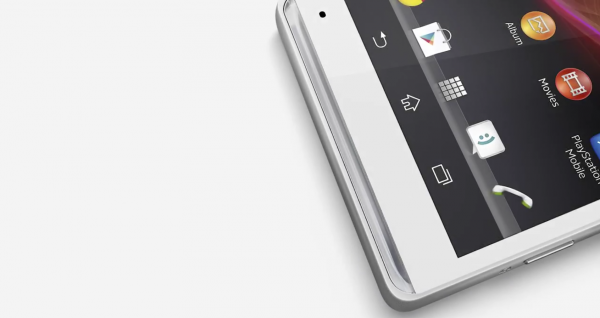
  • Sony unveils Xperia SP and L

    On Monday, Japanese smartphone manufacturer Sony announced two new handsets, the Xperia L and Xperia SP, aimed at the low-end and mid-range smartphone markets, respectively.

    The Xperia L smartphone is Sony’s new low-end offering. The device comes with a 4.3-inch display with an effective resolution of 854 x 480 and is powered by a dual-core 1 GHz Qualcomm Snapdragon S4 Plus (MSM8230) processor, 1GB of RAM and a 1,700 mAh battery. Other specs include: 8-megapixel back-facing camera with 720p video recording; 0.3MP front-facing camera; 8GB of internal storage; microSD card slot; HSPA+ connectivity: NFC (Near Field Communication); as well as the usual array of sensors.

    The Xperia L ships with Android 4.1 Jelly Bean alongside Sony’s branded app suite. The device comes in at 128.7 x 65 x 9.7 mm and 137 grams and will be available in Black, Red and White from Q2 2013.

    Sony pits the Xperia SP at the mid-range smartphone market, delivering decent specs in the process. The handset features a 4.6-inch display with a resolution of 1280 by 720. Power comes from a 1.7 GHz dual-core Qualcomm Snapdragon S4 Pro (MSM8960Pro) processor, Adreno 320 graphics card, 1GB of RAM and 2,300 mAh battery.

    The smartphone also features an 8MP back-facing camera and a 0.3MP front-facing shooter; 8GB of internal storage; microSD card slot; HSPA+ or 4G LTE connectivity; NFC as well as the usual array of sensors including magnetometer and gyroscope.

    As with the Xperia L, the Xperia SP ships with Android 4.1 Jelly Bean out-of-the-box backed by Sony’s branded app suite. The Xperia SP comes in at 130.6 x 67.1 x 9.98 mm and 155 grams and will be available in Q2 2013 in Black, Red and White Silver.

    Sony has yet to reveal the price for the Xperia L or Xperia SP.

  • Google Keep note-taking service leaks ahead of debut

    Google Keep Note-Taking
    A recent leak suggests Google (GOOG) is working on a new note-taking application within its Drive cloud-storage suite. The service, known as Google Keep, allows users to create color-coded notes, add pictures and make checklists, according to Android Police. Google briefly activated the service over the weekend, however it has since been removed. Interestingly enough, a post from Google’s official Google+ page revealed the service in a screenshot last July. An image of a website thumbnail included the text “save to Google Keep,” suggesting the Evernote-like service has been in the works for quite some time. There has been no indication as to when Google will announce its new Keep service, which is also slated to be available as a standalone Android application.

  • President Obama Nominates Thomas Perez for Secretary of Labor

    President Obama today announced that he has chosen Thomas Perez, the head of the U.S. Justice Department’s Civil Rights Division, to be the next Secretary of Labor. Speaking in the East Room of the White House, the President introduced Perez, the son of Dominican immigrants and a lawyer who helped pay his way through college by working as a garbage collector, to the American people.

    "His story reminds us of this country’s promise, that if you’re willing to work hard, it doesn’t matter who you are, where you come from, what your last name is — you can make it if you try," President Obama said. "And Tom has made protecting that promise — for everybody  — the cause of his life."

    The President reminded those gathered for the announcement of the three questions he believes all officials should ask themselves every day — How do we make sure America is a magnet for good jobs?  How do we equip people with the skills they need to get those jobs? And how do we make sure that hard work actually pays off in a decent living? — and said that Perez has already shown his commitment to answering those questions in his work at the Justice Department, where he fought to open pathways into the workforce for everyone willing to contribute and helped settle some of the largest cases ever on behalf of families targeted by unfair mortgage lending.

    read more

  • An accelerator emerges as one of the most active cleantech VCs

    Following a down year for cleantech venture capital investing, an accelerator is emerging as one of the more aggressive venture capital firms in cleantech. Greenstart, based in San Francisco, has decided to drop its accelerator program and has decided to act as a venture capital firm focused on early stage startups that work on cleanweb technologies, which are IT-based cleantech, like energy software, or web-based ride-sharing services.

    Greenstart Managing Partner Mitch Lowe told me in a phone interview last week that Greenstart hopes to make 10 to 12 investments in early stage cleanweb companies in 2013, which he said in terms of the number of investments “sadly makes us one of the most active cleantech investors out there.” Greenstart has a small $7 million fund, half of which has been invested into 15 companies. Lowe says Greenstart will likely raise more money early next year for another fund.

    Greenstart launched in the Spring of 2011, and since then has shifted its strategy a couple times. First, it dropped its focus on strictly cleantech startups — it’s original batch of startups included a biofuel company and a window efficiency coating company — and decided to only back cleanweb companies. Cleanweb is a term coined by investor Sunil Paul, to explain digital technologies that deal with managing resource constraints from energy to food to water.

    Now Greenstart has dropped its accelerator model completely because the partners say the 3-month program wasn’t delivering the startups enough time, and it was too “one size fits all,” explained Lowe. Instead, Greenstart will work with the companies throughout their lifetime.

    In addition, Greenstart is offering its companies in-house design services, and the fund now has 10 designers that will help startups build products, and design the user experience of their services. Increasingly venture firms have been launching design focuses and studios, as a way to work with designer founders, and to provides services to startups beyond just money.

    Designer David Merkoski, who was formerly the Executive Creative Director at frog design in San Francisco, is leading Greenstart’s design studio. Merkoski tells me that Greenstart won’t just be helping startups with marketing and branding, but that they’ll be taking an IDEO-style approach to help startups think about their products and the experience of their users. IDEO is a two-decade-old design and consulting firm that pioneered “design thinking” as a method for product creation.

    One thing that Greenstart won’t change is its focus on cleanweb companies, Lowe tells me, in response to my question of whether the theme of the fund could change down the road. Cleantech isn’t a hot area of investments in 2013, and in 2012 cleantech VC investments dropped by a third. But cleanweb investments are increasingly making up many of the cleantech investing happening these days, because the capital requirements are lower and the timelines to maturity are shorter (more like web and mobile companies).

    But the firms that are still investing in cleantech hardware — like solar technologies, batteries and biofuels — see cleanweb as a move away from cleantech. Firms like Khosla Ventures, Lux Capital and Braemar Energy, which are some of the few still doing new early stage cleantech investing, aren’t being aggressive on cleanweb companies.

    Whatever the definitions, expect to see cleantech and cleanweb investing continue to morph and evolve until the investors find something that works for them and the entrepreneurs that they back.

    Related research and analysis from GigaOM Pro:
    Subscriber content. Sign up for a free trial.

  • Pinterest’s new look emphasizes photos with larger pins

    You might notice a different design if you log into Pinterest soon, as the social photo and content-sharing site begins rolling out a new look that makes pins larger and the activity feed smaller, cleaning up the design much as Facebook did earlier this month.

    Pinterest announced the redesign back in January, but only tested it out with a small number of users. The company is now rolling it out more broadly. In the new design the photos pinned to the site appear larger, and the activity feed is smaller, which makes sense given its focus on displaying attractive images. It seems like the biggest complaint from users so far is the removal of the thread of re-pins under each photo (similar to reblogs on Tumblr) that showed who shared each photo and in what order. However, you can still see who has re-pinned or liked individual photos when clicking on them.

    At GigaOM’s Roadmap conference in November, CEO Ben Silbermann said they’re constantly pushing the Pinterest team to come up with new ways to engage people’s attention on the site:

    “Every one of your experiences has to feel good,” he said at the time. “Every month, it has to be more than a passing novelty. If they don’t feel like it gives anything to them, they’ll crowd it out.”

    The company recently released a web analytics tool for brands who have a Pinterest account, which arrived after a new $200 million funding round.

    pinterest new look screenshot

    Related research and analysis from GigaOM Pro:
    Subscriber content. Sign up for a free trial.

  • For a Career that Lasts, Build Real Relationships

    I’d just hung up the phone, dismayed. After spending the better part of an hour on the phone with an entrepreneur a friend of mine had asked me to advise, there was no talk of how he could return the favor — he barely coughed up a thank you.

    There’s an economic case to be made for his behavior. Why bother seeing if he could reciprocate when he had nothing tangible to gain — he’d already gotten as much as he was going to get from me. Trying to be helpful to me in return would have been the nice thing to do, but to what advantage?

    An increasingly modular work world has been a boon to businesses and individuals alike: more flexibility, more freedom, more autonomy. But the underbelly of this level of mobility is the assumption we can port people like we do phone numbers. Even if we work in a more traditional environment, we might wonder why bother cultivating a relationship with our co-workers, when if the numbers are right about Gen Y, they’ll have left this job in eighteen months anyway?

    I’d like to think that I truly connect with everyone I do business with. But as much as I intend to, I don’t always. Who of us hasn’t said (or heard), “Hey babe, there are so many beautiful things we could do together…” But once we snag the [client, the information needed, or the funding], we wonder “Why buy the cow, when I just got the milk for free?” “It’s all about the relationship” we whisper softly… right until we get what we want.

    In the piece Fifty Shades of Thrivability, Michelle Holiday writes, “Far too often today’s standards of success [involve] running a company that makes money in a transactional fashion…which is the equivalent of anonymous transactional sex. There’s a momentary satisfaction (landing a client, beating the competition, or selling the company), but a deeper craving remains. You get to the end goal, but you may not feel emotionally enriched. The other people are likely to be left feeling used. You then have to start from scratch in search of a new conquest each time, with both employees and customers.”

    We can get away with the hook-up mentality in the short-term because the value destruction won’t be immediately apparent. Long-term, this model is unsustainable. Starting at zero (or negative) every time, whether acquiring a new customer, supplier, or trading partner will drive operating costs ever higher. When we use people, or companies, with no thought for tomorrow, the transaction may be two-way from a functional perspective, but it’s a one-way ticket to a financial and emotional island. Even as we focus on sustainability and ecological balance, it’s ironic that people and relationships are becoming disposable.

    Compare this love-me, then leave-me approach to the research model of the Myelin Repair Foundation dedicated to the treatment of multiple sclerosis. By breaking down barriers between academic research and commercial drug development — in other words, by increasing reciprocity — they are shortening the time it takes to develop a drug by 50 percent. “As we reciprocate, we build trust and relationships, flooding our brain with oxytocin that is essential not only to collaboration, but to innovation,” says fellow HBR blogger Judith E. Glaser, and the author of Creating We.

    Each of us will, no doubt, experience the discomfort of feeling “used,” as with the above-mentioned entrepreneur, at some point in our careers. The trick is, of course, to keep ourselves open to connection, despite the risk of giving more than we’re getting.

    But what I am learning over and again, and most recently here at HBR as I co-author pieces (thanks to Juan-Carlos Mendez, Tara Mohr, Bob Moesta and Whitney Hess) is that collaboration not only punches up the innovation quotient, there is a biological imperative at work. As we connect and collaborate, give and take, we are evolving, emerging stronger and more capable. Yes, there is a certain kind of high, albeit fleeting, to a “hook-up.” But as we invest in connecting, and our brain rewards us chemically with a wash of feel-good oxytocin, we’ll be reminded that people are not only a precious commodity, they are a renewable resource.


  • How HTC Can Get Its Groove Back

    HTC

    Around the summer of 2010, my contract was coming to an end and the HTC EVO 4G on Sprint was very appealing. Touted as “America’s first 4G phone”, it featured a large display and great specs at the time. I desperately wanted this phone and every Sprint store, Radioshack, or online store, was out of stock for four to six weeks. With my contract ending in just a couple weeks, the options were simple: Either buy the EVO 4G for full price and then some due to demand, or just grab a Blackberry. Unfortunately, an outdated BlackBerry Curve it was.

    In the Spring of 2011, I finally got my hands on a slightly used EVO 4G. It was a great investment and I was even using it up until the fall of last year before I was due for an upgrade, going with the Samsung Galaxy S III. Fast forward to now and HTC has taken quite a hit because it doesn’t have quite the zing or product support as we’d seen in the past. In fact, over the last several years, declining profits and market share have pushed the Taiwanese company further down the list. Earlier this year, CEO Peter Chou blamed poor marketing as the reason for their decline. However, he said the same thing last year and nothing really changed.

    Samsung has quickly grown to be the world’s number one Android manufacturer, capturing a massive 40% of all Android smartphones and tablets. They capitalized on HTC’s poor marketing and lack of clear vision with a product line. In 2012 alone, Samsung spent $401 million advertising its mobile devices in the US. In today’s marketplace, great devices do not sell themselves: great marketing does. By comparison, HTC cut its advertising budget by 45%. It’s pretty clear that Samsung’s advertising push is paying off, then again, they’re selling devices like hotcakes which makes it much easier to invest so much money. What makes Samsung’s latest flagship device particularly appealing isn’t the specs but the software features.

    At Unpacked 2013, the South Korean giant really pushed its new software features from Smart Scroll eye-tracking technology to new sensors that work with S Health to help users stay more active. When you break it down, the Galaxy S 4 and HTC One have very similar specs: 1080p HD display, quad-core processor, 2GB RAM, up to 64GB of storage, and so on. In all reality, trying to sell the One based on specs and quality isn’t going to cut it. HTC announced a slew of new features as well and they need to utilize those as selling points. I personally think the One is a higher quality phone as opposed to the Galaxy S 4, but consumer’s are going to buy the phone that gives them the most features. Samsung clearly wins in that category, and is something HTC needs to change in the near future.

    The One seems to recapture the special feeling the EVO 4G had and with its interesting features such as Zoe and Boom Sound and that’s what mainstream consumers really care about. This is where their focus needs to be instead of bashing Samsung in some desperate attempt to grab attention. At this stage of the game, HTC simply can’t revert to their old ways of talking and not doing. With the One hitting US carriers towards the end of March and the Galaxy S 4 not launching until the end of April, they do stand a chance of selling a good amount before the inevitable rush of Samsung fans upgrade. However, HTC might not have enough new features to attract enough consumers.

    Can HTC recapture the consumer’s attention? It’s anyone’s guess at this point. Maybe Peter Chou is serious this time. While highlighting the One’s features are important, one can’t forget that it all comes down to marketing. Sure, HTC isn’t profiting hand over fist, but they’ll have to reach deep into their pockets to make it happen, and I hope they do.

    Come comment on this article: How HTC Can Get Its Groove Back