Blog

  • Cash For Clunkers 2.0?

    Depending on who you ask, Cash for Clunkers was either a spectacular success, or a spectacular failure.

    These are the facts though. Cash for Clunkers helped sell 690,000 car sales in 30 days, at the cost $3 billion to taxpayers. While overall auto sales are down in 2009 compared to 2008, December was a strong finish for almost every brand. In the four months since the program, car sales have also been up as a whole. Chrysler and General Motors are out of bankruptcy. 2010 is looking like a much better year for car buyers.

    Still, the question lingers. Are we going to get a second round of Cash for Clunkers?

    Read more of this story »


  • New Verizon FiOS Bundles Offer More HD and 35Mbps Speeds [Verizon]

    Now we know why Verizon decided to double our FiOS cancellation fees. They have unveiled new bundle options that deliver up to 35Mbps upstream and downstream and 90 or more HD channels.

    New Bundles Packed With Speed and HD

    New double-, triple- and quad-play bundles are available with a 24-month service agreement that guarantees the customer’s rate will not change for two years. FiOS bundles are also available in month-to-month plans that do not require a minimum term agreement. To explore Verizon’s many bundle options and order service, visit www.verizon.com/bundles or call Verizon at 1-888-GET-FIOS.

    New triple-play bundle options with a service agreement are:

    •Ultimate: FiOS TV Ultimate HD includes 90 or more HD channels; premium content from EPIX, Showtime, TMC, Flix and the NFL RedZone; FiOS Internet service with an ultra-fast, symmetrical connection speed of up to 35/35 Mbps; and FiOS voice service – all available for $139.99 a month. In the New York City area this bundle also includes HBO/Cinemax and other premium channels, for a total of 125 or more HD channels, and is available for $149.99 a month.

    •Extreme: FiOS TV Extreme HD includes 65 or more HD channels; FiOS Internet service with an ultra-fast, symmetrical connection speed of up to 25/25 Mbps; and FiOS voice service – available for $124.99 a month. In the New York City area this bundle also includes Showtime, TMC and Flix, for a total of 80 or more HD channels, and is available for $119.99 a month.

    •Prime: FiOS TV Prime HD includes 40 or more HD channels; FiOS Internet service with a connection speed of up to 15/5 Mbps; and FiOS voice service – available for $109.99 a month. In the New York City area this bundle includes all of the TV content offered with FiOS TV Extreme HD, for a total of more than 65 HD channels.

    The Ultimate and Extreme triple-play bundles – as well as the Prime triple-play bundle in the New York City market area – include free access to thousands of Wi-Fi hot spots across the U.S. Customers also have access to Verizon’s leading FiOS TV video-on-demand service, with more than 18,000 monthly titles – including 2,800 in HD – and FiOS TV’s advanced interactive media guide, with access to social-networking, news and entertainment widgets and more.

    Verizon is also offering a limited time promotion that gives you 12-months of Prime, Extreme and Ultimate for $90, $115 and $130 respectively ($90, $100 and $130 in the NYC area). Of course, with cancellations fees that high, you had better think long and hard about it. [PR Newswire]


  • Retired Secret Service agent tells of race relations at their best, worst

    Retiree saw race relations at their best — and their worst — in the 1960s

    Like many African-Americans of his generation, Abraham Bolden used to have a large portrait of the Rev. Martin Luther King Jr., President John F. Kennedy and Sen. Robert Kennedy displayed prominently, reverently in his living room.

    But unlike many blacks of his generation, Bolden, who is 74 and has lived in the same Auburn-Gresham bungalow for 47 years, had a special relationship with each of the men. How he met the Kennedy brothers and wound up writing a letter to King is a remarkable story that begins this way:

    In April 1961, Bolden was working as a Secret Service agent based in Chicago when President Kennedy arrived for a political event at McCormick Place. Bolden was assigned to guard a restroom that had been cordoned off exclusively for the president.

    “My colleagues kidded me about having bathroom detail,” Bolden said. “Most agents liked to be shoulder to shoulder with the president. But as fate would have it, when the president arrived that morning, he had to use the washroom.”

    Bolden said the president stopped at the door of the restroom to ask Bolden if he was a Secret Service agent or a Chicago policeman. Bolden told him that he was an agent.

    “The president said, ‘Mr. Bolden has there ever been a Negro Secret Service agent on White House detail in Washington, D.C.?’ ” Bolden said. “I told him, ‘Not to my knowledge, Mr. President.’ And he asked me if I would like to be the first, and I told him, ‘Yes, sir, Mr. President.’ ”

    Two months later, Bolden, who was 26 at the time and married, was in Washington for the Secret Service’s customary 30-day stint. It would become — as the president alluded one day while Bolden was guarding the Oval Office — his Jackie Robinson moment.

    “Being the first at that time, I ran into some harsh racism,” Bolden said. “The country was a hotbed of racism, and resentment against men like Kennedy and Dr. King had infiltrated itself among the agents.”

    Bolden said he was shocked by how lax Kennedy’s security was in D.C. and the Kennedy compound in Hyannis Port, Mass., where he met Robert Kennedy. Bolden said many agents got drunk on duty, womanized and spoke openly of their disdain for the president.

    He said he complained to superiors, and that is when he became a target.

    “I told the chief of the United States Secret Service that if an assassination attempt was ever made on Kennedy, it would be successful because either the agents wouldn’t respond or would be slow to respond,” Bolden said. “The chief told me he would look into it.

    “But time passed and after the president was assassinated (on Nov. 22, 1963), I kept ringing the bell.” His criticisms made headlines.

    Bolden went to D.C. for a special training session in May 1964. While there, he said he’d planned to try to talk to someone on the Warren Commission investigating the assassination.

    But the Secret Service suddenly escorted him back to Chicago, where he was charged with soliciting a $50,000 bribe from the boss of a ring of counterfeiters. Bolden said he believes he was set up by racist agents who wanted to silence his criticisms. His trial began July 6, 1964, before U.S. District Judge Joseph Sam Perry.

    According to court transcripts, when the jury was deadlocked 11-1 in favor of conviction, Perry amazingly told the jury that in his opinion, Bolden was guilty. Still, the lone holdout didn’t change her vote, and that trial ended in a mistrial.

    Bolden was convicted after a second trial with the help of testimony from a counterfeiter who would later admit to having perjured himself. Bolden was sentenced to six years in a federal prison.

    “Shortly after my conviction, I wrote a letter to Dr. King saying that if this miscarriage of justice could happen to me, it could happen to him or anyone else,” said Bolden, who’s unsure if his letter ever reached King.

    Bolden was in prison when King was assassinated. The entire prison was on lockdown. A year later, he left prison, returning to his wife and three children. Two times he asked President Richard Nixon for a pardon, and both times he was denied. He worked as an automotive quality control supervisor before retiring in 2001.

    These days Bolden travels the country, dressed in his trademark bow ties and fez hats, telling his story and promoting his memoir, “The Echo From Dealey Plaza” (where Kennedy was assassinated in Dallas).

    “There were people who wanted to change the country through great force rather than the constitutional process,” Bolden said. The Kennedys and King “were revered by many Americans, not just blacks, because they stood for a hope and justice that sometimes still feels hard to come by.”

    Dawn Turner Trice
    [email protected]

    Read the original article from Tribune News Services.


  • AT&T Pre and Pixi Spotted in Server Logs Running webOS 1.3.8

    At CES, Palm decided to stay mum on the question of webOS devices hitting AT&T, but AT&T did cop to two devices arriving in the ‘first half’ of the year. Not convinced? We have received some server logs showing some visits from both the Palm Pre and Palm Pixi running on AT&T IP addresses sporting – get this – webOS version 1.3.8.  Naturally, we headed over to the logs at DSL Reports (note: link dynamically changes, you’ll need to page through to see it for yourself) and sure enough, you can see both the Pre and Pixi running on AT&T and sporting webOS 1.3.8.

    We’re guessing that’s just an interim, internal version and that when webOS devices do land on AT&T, they’ll have the 1.4 update we’re all expecting in February. Meanwhile, we’re wondering just how long Verizon will have the webOS spotlight – no offense to The Network, but we’re hoping it’s not too long.

    Thanks, Anonymous!

  • Mise au point

    Je voulais informer les forumeurs que contrairement à ce que Cyril a insinué dans les threads Miss Belgique 2010 et Michel Daerden qu’il a fermés, je n’ai jamais été banni du forum belge. D’ailleurs la preuve, j’ai posté aujourd’hui un message dans le forum belge : http://www.skyscrapercity.com/showth…1#post50327091

    Je ne peux que m’étonner qu’un modérateur pratique une telle désinformation à l’encontre d’un forumeur.

  • How Smallness Is Changing Hardware

    Sling Media’s Sling Touch Control 100

    In the past decade, few design trends for electronic devices have had such a seismic impact as the revolution of smallness. It’s not just that the sizes of devices have shrunk; the mindsets of designers and the whole culture of design have shifted toward all things Lilliputian.

    I’ve been an industrial designer for many years, and recently, while I was attending a medical device conference, I began to think about downsized designs and the effect that they’ve had on designers and device users. While medical device developers, as well as some others, have largely continued to observe the “form-follows-function” mantra of yesterday, I am spending most of my time focused on the mantra of smallness. Many of us designers are now dealing with problems that scale down to one-tenth of a millimeter, and our clients are, too.

    Great skill at design and development of diminutive things is seen as a novelty by some, but is in fact rare — and in high demand. The types of decision-making and talents required to do effective design of small things differ quite widely from norms in the overall design field. Increasingly, these talents are differentiating the design leaders from the losers.

    To get a sense of how companies and designers alike are affected by this trend, consider, for example, a design problem involving integrating electronics, batteries, an antenna and other components into the slimmest possible product possible. Is this just an engineering task? No, it’s a company-wide problem to solve, affecting product branding and more. Designers must develop the best possible relationships with clients and employers to solve such problems in a holistic way.

    Here are some bottom-up ideas for designers and those who work with them to consider, especially when optimizing work done at the small scale:

    • Management of vendors and manufacturers that you work with is critical. These are collaborative relationships where it may be very important for, say, a part provider to actually deliver products at below tenth-of-a-millimeter accuracy. Accuracy and skill at these kinds of tasks are rare. These days, a supplier who delivers “OK” quality can actually be a strategic impediment to an entire organization.
    • Off-the-shelf part selection is essentially over. If you’re in need of a strategic part, you’d better secure a good source for it and work collaboratively with that source. Customization is in high demand. Components in devices now need to be nested optimally alongside others, which almost always rules out the use of off-the-shelf parts.
    • Establishing a collaborative product design process means new kinds of interdependencies within organizations. No longer is it fine to just say, “First, let’s define the core of our technology, then let’s productize it with some secondary technology and then we’ll package it and ship it.” Customizing and optimizing parts and designs that are tiny and perfect requires that core technology and design teams work effectively with marketing, sales, and operations teams on branding and many more issues.
    • Management has to adjust to new design paradigms that go on at the small scale. Executives overseeing the production of devices and components implemented at the small scale can’t get by with half-hearted, uninvolved managerial gestures. They may need to know exactly how a piece of detail done at the sub-millimeter level affects an overall product, or know when an engineering team has reached physical limits.

    These days, device designers are used to hearing the annoying refrain that “This device is going to be bigger than the iPhone.” More likely than not, if a product really is going to be that big, it’s because shrewd people were thinking about small things.

    Gadi Amit is president of NewDealDesign.

    In-post image courtesy of Sling Media, thumbnail of Glide TV.

  • Ask Umbra on perfume bottles, wax paper, and alternative beverage bottles

    by Umbra Fisk

    Send your question to Umbra!

    Q. Dear Umbra,

    I am a
    child of the consumer age, but I try to live by “reuse, recycle.” I have a lot
    of fancy perfume bottles that are now empty. They are very heavy glass, and it
    seems I read that the return on the energy spent to melt them down is not worth
    recycling them. Can you solve this conundrum?

    Patricia M.
    Seattle, Wash.

    A. Dearest
    Patricia,

    How
    fancy are we talking? Antiques Road Show fancy?
    How I would delight in watching one of my readers discover that her glass
    bottle was in fact a René Lalique bouchons
    mures bottle circa 1923. Assuming my PBS fantasy is just that (sigh), I’ll guess that your bottles are
    more contemporary.

    First
    things first: It’s definitely worth it to recycle glass. As we’ve discussed, recycling always
    wins
    . Glass doesn’t biodegrade, so we don’t want it in our landfills. And
    glass recycling actually saves energy compared with using new materials:
    crushed glass (known as cullet) melts at a lower temperature than virgin
    ingredients like sand. Perhaps
    it’ll also ease your mind to know that glass containers produced today are 40
    percent lighter than they were 20 years ago, making recycling even less
    energy-intensive. Your heaviest perfume bottle is probably still lighter than
    your mother’s were.

    However,
    there’s a pesky catch here: the pumps. I did a little hands-on research at a
    fragrance counter (perhaps to the chagrin of the salespeople and my sinuses),
    and sniffed out several different set-ups. Some of the pumps are screw-on,
    which means you could easily detach the top and refill or recycle the bottle
    (per my usual advice, check with your local authorities as to whether they’ll
    accept it). Some without pumps have those dainty little stoppers that pop right
    out, making for an easy refill or recycle. And then there are the pumps that
    neither screw off or pop out; after trying it myself, I cannot endorse attempts
    to pry the pumps off, for fear of ending up with your blood on my hands (a
    damned spot that even the best NPE-free detergent can’t oust). Instead, perhaps try channeling Martha
    Stewart by arranging those fancy glass bottles together on a windowsill or
    bathroom counter for some cheap and easy recycled décor.

    Also,
    while the nearest locale for you, Patricia, is in Portland,
    all spritzing readers should know: New
      York perfumer Bond No. 9 and Saks Fifth Avenue
    have a take-back program that accepts all perfume bottles for refurbishing and refilling or recycling.

    In the
    future, you might avoid perfume purchases altogether if you truly want to avoid
    the bottle conundrum (and the toxic risks hidden in so many
    of our cosmetics
    ). I think you smell just fine from
    here.

    Sniffily,
    Umbra

    Q. Dear Umbra,

    After
    reading your article about ways to store food without using
    plastic
    , I started to wonder if wax paper is recyclable. I know that you
    can’t recycle things with food waste on them, but what about a gently used
    piece of wax paper?

    Crinkle-y,
    Ariel
    Boston, Mass.

    A. Dearest Ariel,

    Thanks for the lovely little stroll
    down Ask Umbra archive lane.

    While I generally avoid the “Can I
    recycle this specific item?” dilemma—only your local recycling program can
    tell you for sure—I can say that, food stains or not, wax paper contains a
    generally unrecyclable culprit: wax, which is made from oil. Recovered
    fiber from regular paper is shredded and mixed with water to make pulp. But in
    the case of wax paper, oil and water mix about as well as, um, oil and water.

    That said, how gently has the wax
    paper been used? If it’s just looking a little crumb-ridden, by all means, wipe
    it down and reuse away. Or there
    could be some DIY-ing in your used wax paper’s future: perhaps a pressed-leaves
    placemat
    , book
    binding repair
    , or a stained
    glass butterfly
    .

    Craftily,
    Umbra

    Q. Hi Umbra,

    I just
    read your response
    on water bottles
    and liked the part at the end where you asked the reader
    if he really needs to buy a water bottle at all. If he does need to tote
    liquids around (I do), what do you think of this solution environmentally: I
    tote my water around in the glass jars that pasta sauce, peanut butter, jelly,
    or olives came in. After using up the product, I just wash them out, and they
    are a sparkling new water bottle. Most cafes will even fill them up if you stop
    for a smoothie. My boyfriend even uses these jars for buying hot coffee from
    cafés. I think this is a little hot to handle, but he swears it’s fine.

    Erin
    Sacramento, Calif.

    A. Dearest Erin,

    I like the cut of your jib. And props to your
    boyfriend for braving the potential for blisters in the name of reuse. Any
    other ideas for alternative beverage containers out there? Let me know in the
    comments section.

    Hydratedly,
    Umbra

    Related Links:

    India, Italy, Brazil can fill America’s blanks

    Ask Umbra on water bottles, gas dryers, and tea lights

    Ask Umbra on judging greenness


  • AARP’s ‘Create The Good’ Promotes Service on MLK Birthday

    AARP Highlights Service on Dr. Martin Luther King, Jr. Day of Service at Frontiers International MLK Breakfast

    While the nation celebrates Dr. Martin Luther King’s birthday, AARP honors his legacy by shining the light on service through Create The Good – a national initiative that aims to connect individuals with volunteer opportunities in their local communities.

    “AARP is proud to honor Dr. King’s legacy through our Dr. King Day of Service,” said Merri Dee, AARP Illinois State President. “There is a new spirit of service sweeping our country. AARP is a part of that spirit and our members are looking to make a difference in their communities today and throughout the year.”

    AARP launched Create The Good to help all Americans make a difference in their own communities, in their own time, and on their own terms.  With a lifetime of skills, experience and wisdom, older Americans have much to contribute in the arena of service.

    Today, Create The Good sponsored the Frontiers International 35th Annual Dr. Martin Luther King, Jr. Breakfast in Springfield. AARP looks forward to utilizing Create The Good to help build stronger communities throughout Illinois.

    More than 9 million people engage in AARP’s work as volunteers, donors, and activists.  Our volunteer programs provide more than $187 million in economic impact.

    Last year, over 32,000 volunteers with the AARP Foundation Tax-Aide program helped nearly 3 million people across the country file their taxes.

    “As our nation faces growing challenges, people of all ages are coming together to improve our communities,” added Dee.

    “Our communities need us now and AARP stands ready to answer the call to service.”

    Founded with the motto, “To serve, not to be served,” AARP aims to make service a part of everyday life.  A 2008 AARP study found that 4 in ten older adults plan to increase the amount of time they spend volunteering in the next five years.

    For more information about Create The Good or to find volunteer opportunities in your local community, please visit createthegood.org.


  • Venezuelan president: PlayStation is Poison

    While US president Barrack Obama has been heard many times (qjnet/xbox-360/obama-spend-more-time-studying-not-on-that-xbox.html) telling people to cut down on the games for more productive activity, another commander-in-chief takes a different angle at gaming. Much different. According to Venezuelan president

  • 30 Photographers Make a High Speed Getaway [Shooting Challenge]

    Some people really hate being photographed, so much, in fact, that they’ll run, jump, tight rope walk or even teleport away. Seriously! Here are 30 such getaway shots from this week’s Shooting Challenge, including the winners:

    Second Runner Up: ‘Don’t Fall!’

    Technique: Pre-Step 1: Walk to beach. Step 1: Set camera on railing Step 2: Set 2 second timer to take 2 pictures Step 3: Press shutter Step 4: DON’T FALL! Equipment: Nikon D5000 with a 35mm f1.8 lens. Picture Details: 1/250 sec. at f/8. Nerd Details: Camera set to program auto (lazymode), ISO 200, custom picture style, auto white balance, no flash. Confession 1: Picture was actually taken 4 seconds after the shutter was pressed because the timer was set to take 2 pictures, each after 2 seconds. 2 seconds was nowhere near enough time to get into the frame, so the second picture was chosen. I’m not a tightrope walker, I can’t move THAT fast on that rail! Picture was taken in Emerald Isle NC. And yeah, it really was foggy. Like could not see more than 100 yards foggy. Like everything was moist foggy. Oh and sorry if you don’t like the word moist.
    -Cory Efland

    Runner Up – ‘Tight Rope Walker’

    I shot this image tonight on a roof top in Chicago. I setup a single strobe (Calumet 7B) synced to my 5D Mark II on a tripod, set the timer and leaped from one roof top to the other! 5D Mark II with a Canon 17-40 f/4; Exposed for 8 seconds at f/5.6; Strobe at half-power; ISO 200; Mirror locked up. It was a fun shoot, little did I know, the rooftop that I was jumping onto was someone’s apartment. After about 5 test jumps I heard some screaming and ignored it, after getting this final image the neighbors were throwing eggs up on to the roof at me.
    -Josh Billions

    Winner – ‘Teleport’

    For this shot, I used my Canon XSi on the 2sec timer with a Canon 50mm at f/1.4, ISO 100, and 15sec. I set the camera to shutter speed priority at 15s. I then ran from my camera holding a flashlight for about 10 seconds, then light painted my body for the rest of the exposure.
    -Kinta Maeda

    I absolutely love that we started with such a simple idea—running from your camera—and ended up with so many entries I could have never anticipated. Even more worthwhile shots in the full gallery:

    Thanks again for your participation!


  • Twitter Updates for 2010-01-18

  • Slam! Bang! Whack! Fitness Companies May Be More Rewarding Than You Thought

    In these months of winter, after the gourmandising of the holiday season, the mind occasionally turns to fitness and recreation.  The smallcap market offers a variety of opportunities in the area, and the sporting-goods industry has been on an upswing recently as well.  According to Yahoo! Finance, this group of companies was among the biggest gainers as the market swooned late last week: http://biz.yahoo.com/ic/316.html.

    NLS Elliptical Trainer — full-body aerobic workouts

    One of the strongest gainers was Vancouver WA-based Nautilus Group (NYSE: NLS: http://www.nautilus.com/), which has just completed the sale of certain of its assets related to health-club equipment to a Chinese buyer.  NLS will concentrate its efforts on retail and direct-to-consumer channels of its well-known Nautilus, StairMaster, Bowflex and Schwinn brands.  The fitness industry has been through well-publicized ups and downs, but the goodwill of brands such as those that NLS holds continue to be attractive to investors.  NLS enters 2010 with a  balance sheet clean of longterm debt, and an announced expectation of a $12 million income-tax refund this month.  Sales are down, as one might expect, from 2008 (the latest numbers are for the September quarter and nine months), but NLS remains profitable, and it has those golden names, some of which are almost as generic as Kleenex and Xerox.  The stock closed Friday at $2.54, a bit off its 52-week high of $2.96, but up more than 20% on the day, with volume of well over 400,000 shares.  NLS market cap is about $80 million; with revenues at about $135 million for the 9 months, the ratio of sales to market cap may be attractive, especially considering the stronger balance sheet and continuing profitability.

    Please keep in mind that we do not recommend stocks or investments; we only write about companies that we find interesting or neglected.  Do your own diligence.

    PingPong is the brand; table tennis is the Olympic sport name

    NLS is not the only one with big names that have become standard vocabulary for most of us.  Consider Evansville IN-based Escalade Inc (Nasdaq: ESCA; http://www.escaladeinc.com/), which owns the brand that opened China to the west: PingPong (I grew up thinking that was the name of the game, which is more properly called table tennis).  But PingPong is not the only asset of this diversified smallcap, which also makes products for basketball and archery, among other Olympic sports.  And to counter any cyclicality, ESCA also has an office products division making hole-punches, paper-folders & shredders and other everyday desktop appliances, sold under established brand names like Mead Hatcher and Martin Yale.  ESCA shares also closed at $2.54 on Friday, but they were off a bit (3%) on the day, and down from a 52-week high of $3.44.  ESCA results for the 9 months showed a bounceback to profitability, an acceptable current ratio, and negligible debt.  With revenues that look to end the year at well over $100 million, ESCA’s market cap is about $32 million, and its daily volume is paltry (under 10,000 average).  But neglected companies like ESCA may provide some buoyancy in suitable portfolios.

    Big Bertha: One of the best-known names in golf

    From relatively unknown ESCA, we turn to one of the best-known sporting-goods companies: Carlsbad CA-based Callaway Golf (NYSE: ELY: http://www.callawaygolf.com/), which burst upon the golf scene with one of the biggest names to hit the sport: Big Bertha.  Today’s Callaway tends to group its clubs under names like Diablo and Odyssey, but Big Bertha is still an anchor product.  ELY closed Friday up a tad at $8.39 vs a year-high of $9.40, and on volume of well over 1 million shares.  Analyst Scott Swanson from Crowell Weedon expects ELY to perform well in 2010, in spite of a downer 2009: http://finance.yahoo.com/news/Senior-Analyst-Picks-Callaway-twst-242778719.html?x=0&.v=1.  The market cap is about $540 million, and not missing a trick, Callaway is expanding into India: http://online.wsj.com/article/SB10001424052748704586504574653832561623744.html?ru=yahoo&mod=yahoo_hs.

    Poway CA-based Aldila Inc (Nasdaq: ALDA; http://www.aldila.com/) is also a golf play, although primarily known for club shafts made from space-age carbon fibers, resins and such.  Its latest new brand is Voodoo, definitely something that some golfers would engage in if that’s what it took to shave a few points off the old score.  Although it is an old and well-established name (founded in 1972), ALDA shares closed Friday slightly up at $3.98, vs a year-high of $5.95.  That reflects a yet-to-turn-around P&L that looks from the 9-month results to show revenue in the $45 million range or so for the year, with a fairly modest loss, although its latest balance sheet shows a strong current ratio, which may mean staying power.  Expense-cutting seems to be taking effect.  Market cap is about $21 million (a little less than half annual revenues), and daily trading volume is low.

    Humminbird fishfinder from Johnson Outdoors

    Finally, we might look at Racine WI-based Johnson Outdoors (Nasdaq: JOUT; http://www.johnsonoutdoors.com/), which is primarily a camping/fishing/snorkeling type of company, but with some fairly high-tech approaches (GPS for fish-finding — yeay).  JOUT is on a non-calendar year, and announced sales of  $356 million for 2009 in November, with a loss that is about 1/7th of what it was the year before.   Current ratio is better than 2:1, and JOUT says it has restructured its borrowings to significantly decrease interest costs in 2010.  The shares closed Friday at $10.69, nearly flat on the day, vs a year-high of $11.47, and a market cap of a little over $100 million, less than a third of sales.  Volume is very low, under 4,000 shares per day.

  • Sleeping With Tiger Woods Can Turn You Into A Celebrity Socialite

    Sleeping with Tiger Woods can turn you into a “celebrity socialite.” At least that’s the moniker Tiger Mistress Rachel Uchitel has adopted for a flyer promoting her birthday bash in West Palm Beach later this month.


  • Dear Mark: Trans Fat

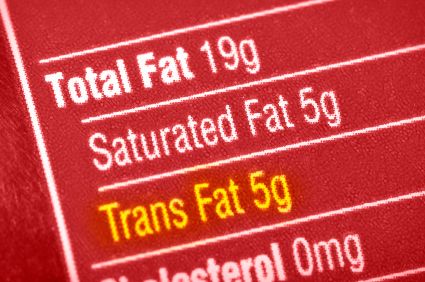
    transfat Dear Mark: Trans FatThe message has been circulating for a few years now: trans fats = bad. It’s one of the rare times I find myself in alignment with conventional nutritional guidelines. (Of course, it’s not so simple, but I’ll unpack that one in a moment.) The fact is, manufacturers have done a better job sending the anti-trans fat message than public health agencies. Everywhere you turn in the grocery store the “No Trans Fat!” tag leaps out at you, complete with manic font and exclamation point, from hundreds of boxes, bags, and packages. (“Well, it must be healthy then!”) Unfortunately, the marketing push has crowded out the real science when it comes to the public’s engagement with the real issue. As you can guess, there’s more to the trans fat picture than the self-congratulatory manufacturer claims.

    Dear Mark,

    I know trans fats are unhealthy and I avoid them like the plague. But like so many things sometimes I need a little reminder why. (I regularly brush up my knowledge by visiting your site so that when a friend asks why I avoid grains I don’t say something like “Grains are bad because… something about lectins and phytates – can’t remember why… but they’re bad.”) Could you write up an easy to remember primer on what trans fats are and why are they unhealthy?

    Thanks to Monica for this week’s question. Order up.

    First, a brief update on the subject. Since 2006, when the FDA required food manufacturers to include trans fat content on nutritional labels, the prevalence of these partially hydrogenated oils has indeed changed. Shifted, really. Actually, these seedy little grease balls, devious criminals that they are, have gone undergone a strategic makeover and/or simply gone underground. They’re still operating among us, trust me – business as usual. But let’s break it down first.

    What Are They?

    “Shape shifters” is incidentally an apt way to describe trans fats. That’s exactly what the hydrogenation process involves. From a chemical standpoint, you take a decent enough unsaturated oil and add some hydrogen atoms. The process undoes the existing double carbon bonds of the unsaturated oil. By “saturating” the bonds with additional hydrogen, you saturate the oil. The result is a solid (at room temperature) but meltable, more stable fat.

    As reader Sam adds (in the comment board): “Trans fats by definition are not fully saturated. They contain at least one double bond in the trans configuration. Unsaturated fats with cis double bond configurations have lower melting points than comparable saturated and trans fatty acids because the cis double bond causes a bend in the molecule, limiting intermolecular attractive forces. This bend is not present in saturated fats or unsaturated fats with only trans double bonds”

    What Do They Do?

    Seems simple enough, but all of a sudden the body doesn’t know what to make of the end product. The trans fats go on to incite havoc in cell metabolism. Research indicates trans fats cause comparatively more weight gain than the same diet with monounsaturated fats and a redistribution of body fat tissue to the abdominal area, the riskiest place to carry extra padding. Additionally, they’re associated with inflammation and atherosclerosis.

    What Are They In?

    Generally speaking, all the garbage a good Primal diet avoids: margarine, shortening, pastries, donuts, muffins, biscuits, cookies, cakes, frostings, pies, crackers, chips, bread, instant flavored coffee drinks, microwave popcorn, and the usual fast food suspects like fried chicken, chicken patty sandwiches, French fries, etc. Consider anything fried suspect.

    How Are They Still Around?

    The concern has even spurred local and state governments to regulate public consumption. New York City was the first in July of 2008, when the law that banned trans fats in city restaurants took effect. With the recent flip of the calendar, the State of California added itself to that list of regulators.

    Although many restaurants and food manufacturers scrambled to create new formulations following the 2006 labeling rule, trans fats have all but disappeared. Some food producers, counting on consumers’ penchant for their products as-is, said label be damned and kept their formulation the same. (A quick rundown of fast food nutritional info or any frosting canister shows as much.) Other companies took advantage of the labeling loophole that allowed any content under .5 grams to be listed as zero. Considering that the American Heart Association suggests a 2 gram/day ceiling on trans fat intake (based on a 2000 calorie/day diet), it seems pretty likely that processed food consumers still have a solid chance of meeting that limit and then some. Ignorance may be bliss to these folks, but it’s not well-being.

    Finally, trans fat content in many cases has simply morphed into what’s known as interesterified fats. Consider them trans fats’ partners in crime – a real Bonnie and Clyde duo. Essentially, interesterified fats provided manufacturers the same crispy, flaky, shelf stable benefits they were accustomed to while offering a convenient way to circumvent the new laws and labels. Interesterified fat combines unsaturated and the saturated fat stearic acid in a process that includes the same hydrogenation and a reshuffling of fatty acids. The result, like artificial trans fat, is a product that doesn’t exist in nature. Research shows their impact to be even more insidious than trans fat. Think both insulin resistance and a negative shift in LDL/HDL ratio.

    How Can You Avoid Them?

    The best way is, of course, to avoid processed foods themselves. As far as labels go, check the trans fat content but also the ingredient list for words like partially hydrogenated, hydrogenated (which usually means “partially”), and high stearate, and stearic rich.

    What’s Behind the Natural versus Industrial Trans Fats Comparison?

    Perhaps you’ve heard that meat and dairy products contain trans fats as well. Technically, this is true, but the industrially produced trans fats aren’t to be conflated with the natural kind, called vaccenic acid. The digestion process, particularly the stomach bacteria, in ruminant animals naturally adds hydrogen. The result is a small amount of natural trans fat in the animals’ meat and milk that offers a number of benefits, including antiatherogenic effects. Conjugated linoleic acid (CLA), part of the family of naturally occurring trans fats, is a health powerhouse.

    Unfortunately, about 80% of Americans’ trans fat intake is the artificial class. As is so often the case, there’s a tendency to throw the baby out with the bath water when it comes to nutritional guidelines. The rule here holds as it always does: the natural, Primal stuff nourishes the body, the artificial stuff undermines it. ‘Nuff said?

    Be sure to weigh in with your thoughts. In the meantime, thanks for all the great questions and comments. Keep ‘em coming!

    Get Free Health Tips, Recipes and Workouts Delivered to Your Inbox

    Related posts:

    1. Dear Mark: PUFAs
    2. Dear Mark: Arachidonic Acid
    3. Dear Mark: Fiber, Fat and Fasting

  • Not exactly Mother Teresa by Paul Driessen

    Article Tags: Paul Driessen

    Greenpeace constantly harasses companies that it deems insufficiently virtuous in advertising their products, protecting the environment and promoting their public image. But the Rainbow Warriors’ own actions would frequently merit fines or even jail time if committed by profit-making businesses.

    The Warriors justify their actions as necessary to advancing their legal, legislative and regulatory agenda – and getting people and foundations to write a check or click their website’s “donate now” button. Almost anything goes.

    Thank you for publishing this article – and making people more aware of the harm that this organization inflicts, especially on Earth’s poorest people.

    Best regards

    Paul Driessen

    Read in full with comments »   


  • Report: Energy Department to Impose New Rules for Geothermal

    The U.S. Department of Energy is taking steps to prevent earthquakes caused by drilling for geothermal projects, according to a report in The New York Times.

    The move comes weeks after AltaRock Energy abandoned its Geysers project near San Francisco because of concerns that the company played down earthquake risks – a claim AltaRock has denied.The new measures would require companies to keep an eye on ground-motion sensors and have a plan to shut down if the drilling causes significant earthquakes. Companies would also have to provide expectations of earthquake activity and submit to outside review of the process.

    Geothermal energy has come under increased scrutiny as regulators and the public worry about the risks associated with drilling into the earth’s core.

    Geothermal companies seek to drill holes deep into the earth to access hot bedrocks, then pump water into the holes to create steam, which drives turbine to create electricity. The technology has been proven for small-scale application but developers have not been able successful in utility-scale projects.

  • Se exhibe relación entre humanos y el clima

    MONTEVIDEO, EFE
    Más de 10 artistas de todo el planeta dan su visión del enfrentamiento entre el hombre y el clima en ‘Inclemencias del tiempo’, una muestra que estos días alberga el Centro Municipal de Exposiciones de Montevideo.

    Una fuerte tormenta que azota las costas de La Haya, en Holanda, la expedición del barco alemán ‘Polarstern’ a la Antártida y el sonido de un glaciar derritiéndose en algún lugar de los Alpes austríacos son algunas de las propuestas que plasman el tiempo y la “amenaza física y simbólica” que implica para el hombre.

    Así lo explicó la directora artística del centro, Ana Knobel, quien apuntó que cada una de las piezas, en su mayoría grandes proyecciones de imágenes en movimiento, representan “distintas aproximaciones” a la “problemática” del clima, en visiones que van desde “la más romántica a la estrictamente documental”.

    Exposiciones
    La muestra, que procede de la Bienal Internacional del Fin del Mundo que tuvo lugar en Ushuaia (Argentina) en 2007, tiene como comisario general al director del Goethe-Institut de Río de Janeiro, Alfons Hug, y recala en Montevideo después de haber pasado por varios países como Ecuador y Perú, y antes de partir para Buenos Aires.

    Con el tiempo, en cualquiera de sus acepciones como punto de partida, las piezas desembocan en temas como las consecuencias de una catástrofe ambiental, el cambio climático y lo fascinante de los fenómenos de la naturaleza.

    Cada artista presente “entiende y expresa el tiempo” de manera distinta, aseguró Knobel, puesto que su comisario “planteó un tema y dejó la puerta abierta”.

    Ejemplos
    La denuncia medioambiental está presente en trabajos como ‘Calling the Glacer’ del alemán Kalle Laar, en la que un número de teléfono bajo la frase ‘Call me!’ (¡Llámame!) invita al espectador a telefonear para escuchar, al otro lado de aparato, cómo se derrite un glaciar en cuyo seno el artista colocó un micrófono.

    Mucho más dramática es la imagen que propone el coreano Shin Kiwon, en cuya obra, titulada ‘Alarm Clock’, un reloj marca las horas mientras es aplastado inevitablemente por una demoledora.

    Fuente Bibliográfica

  • Affordable Family Highrise Units In Your City

    I was just wondering if any other city is going through the pains of a booming highrise which lack affordable family units. When i say "affordable family units" i mean units that are over 3+ bedrooms and under $500k CAD.

    In Toronto, there is a huge issue about the lack of these units and they are extremely rare. If you do find them they cost upwards of $900k, but most are over $1million. Local politicians have been trying to get the fight rolling for more family units. They reason for this is to make the newer areas available for everyone at all income levels and all ages, not just yuppies or empty-nesters.

    When i look at units in Dubai, regardless of how expensive even the smaller units are, they seem to have a good ratio or balance between single, double and triple units in their development.

    Is there a local by-law in your town which requires developers to keep such a ratio? Is your city going through the same strain as Toronto is?

    What’s your take?

  • Florida Guard establishes flight operations center for Haiti

    The Florida Air National Guard’s 101st Air and Space Operations Group (AOG) is
    paving the way for air operations in the emergency response to
    Haiti…