Blog

  • PBWorks Offers Templates – A Great Way To Get Started In Enterprise Collaboration

    Thumbnail image for official-pbworks-logo-cropped.pngA distinguishing aspect to PBWorks is its industry-specific approach. The enterprise collaboration service has made a name for itself by focusing on the particular requirements of the education and legal markets.

    Now PBWorks is taking a smart approach by extending its position in vertical markets and offering a template store that people may download and use in a variety of business- and industry-specific ways.

    Sponsor

    The template store is opening with 25 applications, both officially approved and those developed by the community at large. PBWorks screens the templates that users provide.

    templatestore1.png

    The enterprise collaboration space is still in its early days. People understand the importance of collaboration but often they do not know where to start. The PBWorks templates provide some framework for how to start using wikis and other forms of collaboration. The templates can include embedded media, files and documents as well as folders.

    PBWorks is making a smart move by offering templates. It follows a long standing tradition of providing a structure for people who are just starting to use new software or who want to improve what they are already offering. Microsoft has been doing this for years. The practice seems well suited to the increasing complex world of enterprise collaboration.

    Discuss


  • Honda Debuts Production Version of 2011 CR-Z Sport Hybrid [Video + Gallery]

    Honda has taken the wraps off the final production version of the 2011 CR-Z hybrid sports car that will start hitting U.S. dealer showrooms in late summer of this year. The car has held on to many of the styling aspects that gave the concept versions a sleek modern look while clearly harkening back to the beloved original Honda CR-X.

    Read more of this story »


  • MUST SEE: IEA CLIMATE CHANGE DEBATE: Fred Singer

    Article Tags: Fred Singer, YouTube

    Two part YouTube

    Professor S. Fred Singer speaking at the Institute of Economic Affairs Debate on Climate Change on 23 November 2009. Do science and economics support government action on climate change? Fred Singer

    Source: youtube.com

    Read in full with comments »   


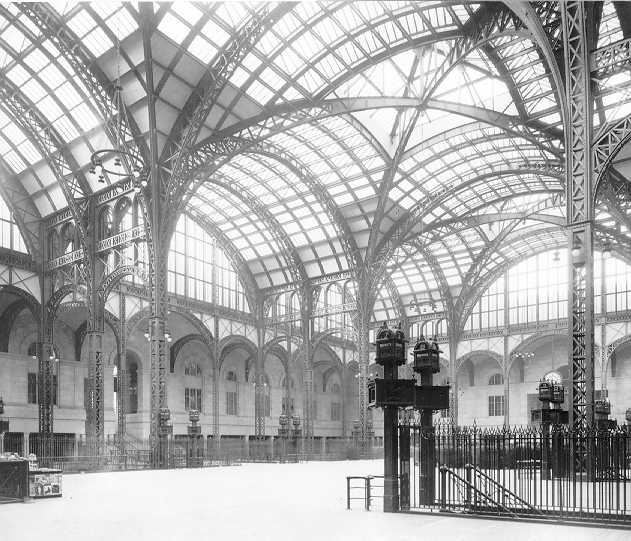
  • Beautiful Stations That Were Demolished

    Are there any stations in your country that were architectural masterpieces that fell to the wrecking ball?

    America is no stranger to these travesties. By far, the biggest loss was Penn Station in NYC, a modern realization of the Baths at Caracalla. The Infrastructurist had a post last year lamenting the loss of truly wonderful stations that were demolished in America: http://www.infrastructurist.com/2009…wrecking-ball/

    Some pictures of Penn Station:

  • Rumormill: 2011 Infiniti G25 coming with turbocharged 2.5-liter V6

    Filed under: , ,

    2010 Infiniti G – Click above for high-res image gallery

    According the slinky sleuths at InsideLine, the 2011 Infiniti G series will be available with a turbocharged 2.5-liter V6 from the JDM-only Skyline 250GT (known as the Infiniti G in the States).

    Infiniti has informed IL that the small V6 will be sold beneath the G37 as an entry-level alternative (think BMW 328i versus 335i), putting out approximately 210 horsepower and 195 pound-feet of torque. The 2011 Infiniti G25 will also only be available as a sedan, so if you have dreams of a budget coupe or convertible, well, get comfortable with the ideas of four doors.

    [Source: InsideLine]

    Rumormill: 2011 Infiniti G25 coming with turbocharged 2.5-liter V6 originally appeared on Autoblog on Tue, 12 Jan 2010 14:29:00 EST. Please see our terms for use of feeds.

    Read | Permalink | Email this | Comments

  • Tour de França com neve

    Annecy


    Brest


    Chambéry

    Clermont-Ferrand


    Grenoble


    Le Mans


    Limoges


    Lyon

    Marseille

    Nantes

    Rennes


    Rouen


    Toulouse

    Fotos by Flickr

    :cheers::cheers::cheers::cheers:

  • Battlefield: Bad Company 2 PS3 beta changelist

    Battlefield 2: Bad Company developer DICE has released a lengthy list of changes made to the game following player feedback from the PS3 beta. There are more than 130 items in the list, so let’s keep this

  • Radboudveste, Utrecht

    Gegevens
    Naam: Radboudveste
    Hoogte: 70 meter
    Plaats: Utrecht
    Oplevering: 1976
    Functie: Woningen
    Architect: Bart van Kasteel
    ________________________________________________


    Joris Talens


    Wikipedia

  • Nelsinho Piquet anuncia su marcha a la NASCAR

    Ha sido confirmado por el propio piloto. Nelsinho Piquet acaba de confirmar su marcha de la Fórmula 1 para irse a competir a la NASCAR de USA. Esta decisión ha sido tomada tras no encontrar ningún coche que pilotar, seguro que el Crashgate sigue muy vivo en la mayoría de escuderías.

    Nelson Piquet Jr

    Recordemos que durante el pasado mes de Octubre, Piquet probó un truck de Red Horse Racing. Tras esto, en este año contará con un programa en la NASCAR Camping World Truck Series al que también se le podría unir otro programa en la Sprint Cup o en la Nationwide.

    Además, el propio Nelsinho ha afirmado que también intentará participar y ganar las próximas 24 horas de Le Mans. Desde VelocidadLímite le deseamos toda la suerte en sus futuras competiciones.

    Related posts:

    1. Nelson Piquet Jr. se encuentra negociando con Force India
    2. Renault F1 denuncia por vía penal a Nelson Piquet padre e hijo
    3. Pat Symonds culpa a Piquet sobre el accidente en el GP de Singapur 2008
  • Apple Remote Desktop 3.3.2 update now available

    Filed under: ,

    For management of large Mac deployments, one of the more venerable tools for administrators is Apple Remote Desktop. The application not only provides information on the status of every Mac on a network, but allows admins to push software loads, remotely control machines, and do detailed asset management.

    Yesterday, Apple updated Apple Remote Desktop to version 3.3.2. The new update provides better performance in terms of the remote management tools, as well as better overall stability. There’s an update (4.21 MB) to the client software (which is part of the OS and enabled in System Preferences), as well as a much larger update to the administrative software (51.41 MB). The updates require Mac OS X 10.6 or later, Mac OS X 10.5.7 or later, or Mac OS X 10.4.11, or the equivalent Mac OS X Server version. The update requires at least Apple Remote Desktop 3.0 to be installed, although there is some limited compatibility with 2.x client software.

    So, what’s fixed in 3.3.2? Setup is improved, with additional support for clients using Network Address Translation (NAT) and better reliability when new client computers are being authenticated to the admin software. Previous versions had issues with reporting failed software installations, issues with reporting of MacBook Air MAC addresses, and some problems with reliability of reporting systems configured with AirPort. Those issues have been addressed in 3.3.2.

    The fix also provides improvements with the remote assistance features, particularly with systems with dual graphics processors or two displays. Mouse cursor tracking while controlling remote systems has been improved, and there’s more reliable drag-and-drop file copy to remote Macs. You can download the update at Apple’s Support Downloads page, and it is also being delivered via Software Update.

    [via Macworld]

    TUAWApple Remote Desktop 3.3.2 update now available originally appeared on The Unofficial Apple Weblog (TUAW) on Tue, 12 Jan 2010 13:30:00 EST. Please see our terms for use of feeds.

    Read | Permalink | Email this | Comments

    Buy This Item: [Click here to buy this item]

    Read Original Article

  • TSA Friendly Carry-on Bags that will Help Avoid Delta Baggage Fees

    sorting baggage 300x223 TSA Friendly Carry on Bags that will Help Avoid Delta Baggage FeesCES may be over but the sting in my wallet still lingers and not from the casino tables, but from Delta airlines! As we all know traveling is getting more and more expensive as well as time consuming. Delta has announced that they are raising their pricing for checking bags in to $23 for the first checked bag and $32 for the second checked bag.

    However you don’t have to be a sucker and these three bags will not only fit into the overhead compartment to avoid luggage fees, they’re also TSA approved and they are pretty stylish too. Now I only wish that the TSA knew themselves what bags they really approved of.

    burton 150x150 TSA Friendly Carry on Bags that will Help Avoid Delta Baggage FeesBurton Wheelie Flight – A great sized bag that holds your laptop, gear and plenty of underwear because of its volume-enhancing CRAM™ stretch zipper zones.

    MESFOBP Beauty1 150x150 TSA Friendly Carry on Bags that will Help Avoid Delta Baggage FeesMobile Edge TSA ScanFast Onyx Checkpoint Friendly Backpack – Just because we are done with school that doesn’t mean you can’t still backpack it and look professional. Mobile Edge has a wide range of TSA friendly bags meant to get you in and out security fast and be big enough to cram all your junk into it.

    27786 full 150x150 TSA Friendly Carry on Bags that will Help Avoid Delta Baggage FeesAftPack Backpack – We may have reviewed this bag but until you use it, do you really appreciate how much this thing holds.  You can store a change of clothes, your laptop, cameras, and a few chargers and still carry it on board. Your shoulders may break but not your wallet.

     TSA Friendly Carry on Bags that will Help Avoid Delta Baggage Fees


  • Open Source: Facebook Is Now an Apache Software Foundation Gold Sponsor

    apache_logo_feather_jan09.pngFacebook just announced that it has become a Gold sponsor of the Apache Software Foundation. According to Facebook’s David Recordon, the company wants to give back to the open source community that allowed Facebook to develop and contribute to projects like the Thrift framework, Hive, memcached and Cassandra. Apache Gold members donate $40,000 per year to the project. It’s worth noting that this is not Apache’s highest sponsorship level. Google, Yahoo and Microsoft are platinum sponsors and give $100,000 per year.

    Sponsor

    In total, Facebook has developed or contributes to over 20 open source projects. Facebook also released the real-time web framework Tornado, one of FriendFeed’s core technologies, as an open source project shortly after it acquired FriendFeed in August 2009.

    As Recordon notes in today’s announcement, technologies like Hive and Cassandra that were first developed in-house by Facebook are now being used and sponsored by a diverse group of companies ranging from CBS and Rackspace to Digg, last.fm and Twitter.

    There can be little doubt, however, that open source is, as Apache Foundation chairman Jim Jagielski puts it, “in Facebook’s DNA.” We can’t help but wonder, though, why Facebook didn’t decide to go all the way and buy the Platinum sponsorship package.

    Discuss


    Buy This Item: [Click here to buy this item]

    Read Original Article

  • Facebook Blocked at Work? Use Your Email Instead

    facebook_tc50.jpgIn our continuing obsession with all things Facebook, we’re looking at a new feature that was just announced by the social networking behemoth that will further enmesh the site into our every waking breath: replying to comments through email.

    Unless you have changed your settings to stop email notifications, it’s likely that you receive an email every time someone comments on your status updates, photos, videos and Wall posts. Before now, the email contained a link that you had to follow, which logged you into Facebook where you could reply. You’ll now notice that the email contains a line reading “New Feature: Reply to this email to comment on this link.”

    Sponsor

    Now, the site has made it possible for you to respond to these comments directly, by hitting the reply button. All you have to do is enter your response and hit send, and Facebook will add your comment to the site.

    fb_email_reply.jpg

    This is big news for all those Facebook junkies out there who can’t get their daytime fix while at work because of a company firewall, not to mention all the students who can’t check their Facebook for several hours every day. We’ll see where productivity levels go after this.

    Discuss


    Buy This Item: [Click here to buy this item]

    Read Original Article

  • Google Docs to Allow Storage of Any File Type

    Google is opening up its Docs hosted office productivity suite so that users can store any type of file in it, giving the popular software-as-a-service product an important online storage component.

    The functionality will be rolled out over the coming weeks to all Docs users, both the ones who use the stand-alone suite as well as those who use it as part of the broader communication and collaboration Apps suite for organizations.

    Now, Docs users will be able to store all their important files in a single place online, where they can access them from anywhere and share them with other people, according to Google.

    “This is a natural extension and progression of what we’ve been doing with Google Docs,” said Vijay Bangaru, Google Docs product manager.

    One thing it’s not, according to Bangaru, is the G-drive, the often-rumored cloud storage service from Google that has yet to see the light of day. “On the consumer side, this isn’t a virtual drive. There isn’t a client that’s going to help you sync terabytes to the cloud,” he said.

    Google did work with some partners that built applications that take advantage of this new functionality via a Docs API (application programming interface). Those external applications were built specifically for users of the Premier version of Apps, which is the most sophisticated and the only one that is fee-based, priced at US$50 per user, per year. Companies that use Apps Premier will also be able to build their own applications in-house using the API.

    Just because users will be able to store any type of file on Google Docs doesn’t mean, however, that they will necessarily be able to work on those files on the Docs cloud, as is possible in the suite today with Adobe PDF files, Microsoft Office files and, of course, the native Docs file formats.

    “Unfortunately, it’s not possible to write Web editors for every file content out there,” he said. In those cases, users will be able to access the files online and share them with others, but in order to work on them, they’ll have to download them to their PCs and fire up the necessary application.

    Along with the new capabilities, Google is lifting the ceiling on file sizes to 250MB. Users of the stand-alone Docs suite will have 1GB of free storage for files stored in their native formats, as opposed to converted to a native Docs format. They’ll be able to buy additional storage for $0.25 per gigabyte per year. Google Apps users will also get 1GB of storage, and will have the ability to buy additional storage for $3.50 per gigabyte per year.

    While Docs currently doesn’t have one-click buttons to post or publish files to third-party sites and services like Facebook, Google isn’t closing the door on adding that functionality and more.

    “The idea behind this feature is that it’s really an opportunity for Google to invest in cloud storage and provide value added services to its users around sharing files, uploading files and being able to collaborate and search on all of that content,” said Anil Sabharwal, Google Docs product manager. “There’s a great opportunity for us to provide value-added services on top of any of those file types.”

    Courtesy of PC World

  • Harry Reid’s perceived racial remarks

    Comments taken out of context

    Editor, The Times:

    Sen. Harry Reid’s statement reflects the mindset of most Americans — including African Americans [“GOP says Reid should quit over Obama,” News, Jan. 11]. He should not be censored for being truthful based on the reality that America is not a colorblind society and has not reached the level that Dr. Martin Luther King Jr. spoke of: That men and women “should not be judged by the color of their skin but by the content of their character.”

    What has happened is that many propagandists have taken Reid’s statement out of context to create conflict and promote their agenda. This strategy was used years ago in the print media and is called “yellow journalism.” Today, it is used by the television news-pundits to reinforce specific beliefs, in this case, the superiority of light-skinned African Americans over their darker sisters and brothers and to lessen the unity within a political party.

    Stereotypes have been around for a long time and many white Americans, African Americans and biracial groups still embrace them. To those Americans who do believe in fairness and understanding, one should always listen or read with their spiritual ears and eyes and pay particular attention to the context of the statement and the time period as well.

    I applaud President Obama for not hesitating to accept Reid’s apology. It shows his wisdom, understanding and gratitude for a senator who has not failed to support the Obama administration’s goals and objectives.

    — Phyllis I. Beaumonte, former president of the Black Heritage Society, Seattle

    Same standards should not apply to both parties

    The recent controversy over comments made by Sen. Harry Reid regarding the electability of President Obama deserves a more considered examination if we are to accept — as GOP Chairman Michael Steele suggests — that Reid’s comments are the equivalent of those made by former Sen. Trent Lott in 2002 and — like Lott — Reid should resign for having made them. The same standards should be applied to both parties, but in this instance there is no comparison.

    Reid was giving his analysis about how candidate Obama would fare in the 2008 election. Lott, on the other hand, was giving remarks at the late Sen. Strom Thurmond’s 100th birthday party, in which he praised Thurmond’s presidential candidacy, speculating that had Thurmond won, the nation, “wouldn’t have had all of these problems for all of these years.” Thurmond openly ran as a segregationist in 1948. Which “problems” are we supposed to think Lott was talking about?

    The worst that can be said of Reid is that, while he thought the election of a black president possible in 2008, he was nevertheless suggesting that America was still too racist to do so unless the candidate spoke like a white candidate and had fair skin. The best that can be said of Sen. Lott is that he was trying to say kind words about an old racist senator in the waning days of Thurmond’s career and life and instead clumsily appeared to endorse segregation.

    Reid’s sin was suggesting that racism still exists. Lott’s sin was humoring it.

    — Stephen Crotts, Edmonds

  • ‘Water’ author Stephen Solomon talks resource intelligence

    by Jonathan Hiskes

    Author Stephen Solomon recently suggested we need an “Al Gore of water”—a public champion to raise the profile of water scarcity threats and opportunities, as Gore has done for climate change. Solomon, an economics journalist, makes a bid for that role himself with his new book Water: The Epic Struggle for Wealth, Power, and Civilization. It’s one of the first Big Important Books of 2010, a 496-page survey of water’s role in shaping civilizations throughout history, from Roman aqueducts to the oceanic “moat” that protected a young United States.

    Solomon argues that water is poised to resume its place as the world’s most important natural resource, a position only briefly (in the long view) held by oil. He says the world’s booming population will bring water back to the forefront, while an increasingly unpredictable climate will make freshwater all the more difficult to manage. Here’s an edited version of our recent conversation.

    Q. We’ve just finished the exhausting Copenhagen process, the economy’s still tanked, and it’s the middle of winter. How dare you raise another sucky global problem?

    A. Yes, of course.

    Q. Let’s talk about how freshwater scarcity and climate change relate and build off each other.

    A. They’re totally inseparable. Climate change turns what are water crises into catastrophes. Climate expresses itself through extreme precipitation events—extreme droughts and flooding. Storms that are more intense but also more unpredictable and out of season.

    One thing that leads to is national security and failed state issues. I’ll give you one example: Pakistan, where the U.S. has invested enormous resources, is a nuclear-armed state with a rift with the Taliban, and it’s already a bit of a failing state. Soon it’s going to have one third of its water from in the Indus River—its main water lifeline—dry up from the lost glacier melt. At the same time, its population is increasing by 30 percent. So in the next 15 years, we can imagine a country that’s already on the brink, dealing with a loss of 30 percent of its water while the population increases by 30 percent.

    The United States understands the problem because it agreed in December to pump in $7.5 billion to Pakistan. Half of that is going to water-related projects—storage, irrigation, and hydropower.

    Q. You describe water scarcity as a justice issue, between haves and have-nots. With climate change, too, the most harmful effects happen in the countries that did the least to cause them. Is this a helpful way to look at these issues?

    A. Economic justice isn’t the only way to look at these issues, but I think it’s a valid way. It’s often the poor within a country who are most remote from water resources. In a city like Delhi, for example, there are subsidies for piped drinking water, but the poor don’t get the advantage of it because they don’t have pipes. So the rich get subsidized by the poor. Plus the poor have to figure out how to forage each day for water, which is a timely and costly enterprise.

    In our country, we subsidize irrigated agriculture, especially from the big dams in the West. Those agribusinesses pay virtually nothing for their water, in many cases, while the people in cities and other industries are paying 10 or 15 times the amount.

    Water has to reflect its true value, because if it doesn’t have an economic value that reflects its scarcity, it’s going to be misallocated. Free market economies are very efficient in certain things, such as wealth creation. They are also notably not so good at distribution. And water is a form of wealth.

    Q. So the solution you’re led towards is pricing water for its full cost, its true cost, and then letting the market figure out who wants to pay for it?

    A. You have to do two things at the same time. I put this in free market terms: Task one is to deregulate the subsidies that are out there. The privileged sectors, the invested interests—mainly agribusinesses. Then water can reflect its true value and there can be fair competition between users so it gets allocated for sensible things. And even when the farmers use it, they use it not to grow water-thirsty crops in the desert because they’ve got too much water, but to grow value-added crops. That’s fine.

    Second, we need a golden rule: You return the water to the ecosystem in the same condition that you got it. So if the next guy down the stream gets it on the same terms you did more or less. And that of course means pollution laws have to be enforced comprehensively.

    Solomon.Courtesy HarperCollins/Claudine MacéQ. You also write about the economic opportunities that come with smarter water usage.

    A. If we would be a little more intelligent in agricultural water use, the United States could unleash an incredible amount of water for many uses that are now constrained. The same thing has begun happening around the world for all sorts of reasons. The benefits and the incentives are different for a water-scarce country like Australia, which is really up against a wall. They’ve used tradable water rights and they’ve managed to get through a terrible drought as a result. It’s a matter of survival. The same thing is true in Israel.

    For the U.S., it’s a matter of deciding to slim down. We have a lot of water in this country, even in the West where there are limitations, but we also have the opportunity to become a mini Saudi Arabia of water. We have five times more water per capita than China, for example. Six times more than India. The Middle East is bone dry. These countries have to import food. So if we really took our water productivity seriously, we could use that for growth. You talked about the problem of no growth in the economy; we’re sitting on an engine that we’re not using. A productive engine.

    Q. You’re not talking about exporting water?

    A. No.  Let’s take California for example. It’s a state that agriculture produces a very small fraction of the wealth, but it uses about 80 percent of the water. For other industries, whether they are services where people live or they are in Silicon Valley, we really would like to tell those guys, “We’ve got plenty of water for you so you can continue to grow and produce your high value returns to the state. Create jobs and wealth.”

    But now you have to say, “I’m sorry guys, we don’t have enough water so you guys can’t really locate here.” If you increase the effectiveness of where water is going to the most efficient uses, you increase overall wealth, jobs, and prosperity. And because we are a water-rich country, we would produce a tool that the United States can use not just to grow our own economy but to help strategically to feed the world and make our industries more competitive

    Q. And what about individual water users? What can Johnny Q. Flusher do? (Sorry.)

    A. Well, first, people should be angry about what’s happened with drinking water. Something like 40 percent of our groundwater is now contaminated because of a lack of EPA enforcement of the Clean Water Act and the Safe Drinking Water Act over the past ten years. It was one of the great policy successes in the last 40 years, and we’ve been backsliding. Twenty million people get sick as a result. Cancers of breast and prostate have risen, which have been tied to water problems. It was a decision made somewhere in the Bush administration not to enforce regulations that were on the books. We should be mad about that, and we should also be mad that in the meantime we haven’t updated the Clean Water Act for new chemicals that are being dumped into our water system.

    You can deal with your town and city councils, but in the meantime, you should also test your own water supply. And not just by the tests that meet EPA standards because we know the EPA standards have not been updated. It’s crazy to get bottled water in this world for many reasons as we know, but if we could trust the drinking water, you wouldn’t need it. So that’s one thing.

    The other big thing is toilets. They use something like half the water in your house usually, even with more efficient models. Some of the systems in Europe have a two-tiered system. They have low-flow flush for wet waste and … lawn watering is another big issue.

    Q. What part of reporting the book left the biggest mark on you?

    A. I spent time in Kenya with my wife and daughters, who were in high school at the time, going on to college. You need about $200 dollars to go to high school in Kenya, although the university was free. I met a young man whose family could not afford that $200. So he was studying at night, with no electricity, on the remote chance that he was going to get a scholarship to go to the university in Nairobi. I realized this guy was smart, he was energetic, he was a lovely guy, he had every right to have as much chance as my own kids did, to have that opportunity. It was certainly in the interest of his country to have people like him becoming educated so they could increase their human capital.

    He was stuck in this village and I realized that that if there was reliable water when he was younger, they could have used it for small irrigation projects. They could have raised crops and sold enough and this guy probably could have gotten his $200 and probably could have gone on to get his opportunity. A little thing like water means so much. It means women and children don’t have to walk four or five hours a day. It means you might get an extra $200 dollars of income so you can go to university. Talk about inequity. That was a striking feeling—to wonder why this guy, because he’s born in Kenya in a southeast rural village, should be denied what my kids are not and what I’m not. And I realized that we are water. We are 70 percent water. We need it.


    Here’s Solomon’s Jan. 5 appearance on “Morning Joe”:

    Related Links:

    Raj Patel on Colbert

    Win a signed copy of Antarctica 2041!

    From dominant Monsanto to ‘innovative Med-American,’ tasty morsels from around the web


  • Detroit 2010: Volvo C30 EV silently motors into the Motor City

    Filed under: , , , ,

    Volvo C30 EV Concept – Click above for high-res image gallery

    As expected, Volvo brought along an all-electric C30 hatchback concept to the 2010 Detroit Auto Show. While this isn’t a production vehicle at this point, Volvo says the car is a fully drivable prototype with a complete interior, full instrumentation, and enhanced battery packaging.

    We made our way down to Volvo’s area here at Cobo in Detroit to check the battery-electric C30 out for ourselves, and honestly we came away impressed. As Volvo says, the C30 EV is a complete package with little evidence that it’s not a production model. See for yourself in our high-res gallery of live images below.

    Detroit 2010: Volvo C30 EV silently motors into the Motor City originally appeared on Autoblog on Tue, 12 Jan 2010 14:00:00 EST. Please see our terms for use of feeds.

    Permalink | Email this | Comments


    Buy This Item: [Click here to buy this item]

    Read Original Article

  • Detroit 2010: A closer look at the Mustang’s 5.0L V8

    Filed under: , , , ,

    Ford’s 5.0L V8 – Click above for high-res image gallery

    While Ford might not be pulling out all the stops here in Detroit to promote its updated Mustang like it did for the 2010 model year, the 2011 model’s improvements are just as significant, if not more. The new 305 horsepower, 30 mile per gallon V6 debuted at Los Angeles back in December, and the long-awaited 5.0L V8 made its official debut here at the NAIAS. Fortunately, there’s plenty more to the legendary 5.0 badge than an increase in displacement, and a cutaway motor on the show floor gave us a closer look at all the details.

    For starters, the new V8 uses a different bore and stroke to give it an even five liters of displacement, last employed in the Mustang GT in 1995. A larger, single-blade throttle body that replaces the dual unit now works in conjunction with a composite intake manifold runner to provide for better breathing, as do the all-new aluminum cylinder heads that include an extra exhaust valve for a total of four valves per cylinder.

    Additional upgraded components include a forged steel crankshaft, stronger forged powder metal connecting rods, high compression pistons, and a fantastic set of tubular stainless steel exhaust headers on each side. Perhaps most importantly, the 5.0-liter V8 receives Twin Independent Variable Camshaft Timing (Ti-VCT), a technology that allows for optimal power or fuel economy depending on throttle input. You can read our in-depth article for even more details on the Mustang’s new 5.0-liter V8, or you can see our live photos of the car and the cutaway engine in the galleries below.

    Photos by Drew Phillips / Copyright (C)2010 Weblogs, Inc.

    Detroit 2010: A closer look at the Mustang’s 5.0L V8 originally appeared on Autoblog on Tue, 12 Jan 2010 13:29:00 EST. Please see our terms for use of feeds.

    Permalink | Email this | Comments


    Buy This Item: [Click here to buy this item]

    Read Original Article

  • Supply Siderism Just Won’t Die

    I wish the Wall Street Journal wouldn’t publish things like a column arguing that the late 1990s surpluses stemmed from the capital gains tax cuts.  It’s just not true, for reasons that Bruce Bartlett ably outlines:  the increased revenues from the capital gains tax just aren’t great enough to account for the majority of the boost.  You might posit some sort of supply-side effect, but it would have to be implausibly large to generate the lion’s share of the surplus, plus some of the increase in capital gains revenue–perhaps all of it–was due not to cutting the tax rate, but to secular changes in the the equity markets.

    I think that in a country with a low savings rate and a stiff corporate
    income tax, a low capital gains rate is a good idea.  But this is a
    position that can easily be supported with facts; it does not need a
    lot of rubbish lies about raising tax revenues by lowering the tax
    rate.  There are at best very few tax rates in the United States high
    enough to generate the kind of deadweight loss (and widespread evasion)
    that would allow us to generate higher revenues with lower rates; and
    none of those arguable cases are significant sources of federal
    revenue.  If Republicans want to be taken seriously when they complain
    about the ridiculous things Democrats say in support of their policies,
    they need to stop generating ridiculously lies of their own about the
    benefits of tax cuts . . . which may be legion, but do not include
    greater tax revenue for the government in any measurable time frame.


    Email this Article
    Add to digg
    Add to Reddit
    Add to Twitter
    Add to del.icio.us
    Add to StumbleUpon
    Add to Facebook