Blog

  • “Ferris Bueller” Remake Gets Matthew Broderick’s Blessing

    Matthew Broderick has given Hollywood producers the green light to remake his ’80s teen comedy,Ferris Bueller’s Day Off, but he doesn’t want any involvement in the new feature.

    The Gossip Wire has been heating up for months suggesting studio chiefs are nursing plans to bring the cult 1980s comedy back to the big screen in either a sequel or a remake. The Producers star has now commented on the reports, insisting he would be “happy” with any proposed plans to bring the 1986 cult classic back to the big screen — as long as the project features a new cast.

    “(A remake) would be fine. I would be perfectly happy for somebody to do that. I probably wouldn’t enjoy (having a role in the film). I would rather leave what we did as our thing,” he tells Cinematical.com.


  • Palm-Backer Elevation Partners Nabs Former Apple Software Chief Avie Tevanian


    Avie Tevanian; Elevation Partners

    Apple vet Avie Tevanian has defected to what Apple fans might consider the dark side: He’s joining Elevation Partners, the PE firm that counts Palm (NSDQ: PALM) as one of its biggest portfolio companies.

    Tevanian will serve as a managing director, per DigitalDaily, and he’ll be surrounded by a number of fellow Apple (NSDQ: AAPL) alums, including Palm CEO Jon Rubinstein and board member Fred Anderson. Tevanian spent nearly 10 years with Apple, first serving as SVP of software engineering, and then as the chief software technology officer from 2003 to 2006.

    Related


  • Harvard on foursquare

    Harvard is the first university to use foursquare to help students explore their campus and surrounding places of interest.

    Harvard University today (Jan. 12) announced its presence on foursquare, a new location-based, mobile social networking application. The service, which is accessible from smartphones and other mobile devices, enables students and visitors to explore the campus and surrounding neighborhoods while sharing information about their favorite places.

    In addition to creating an up-to-date online rating guide of stores, restaurants, businesses, and other venues throughout Harvard Square, foursquare users can also employ the application as a game, in which they earn points, and ultimately acquire coveted foursquare “badges.” Harvard is the first university to use foursquare to help students explore their campus and surrounding places of interest. Users who have visited a predetermined number of sites on the campus will be awarded the Harvard Yard badge on their foursquare profiles.

    The application turns social networking into a running competition by creating incentives for users to explore neighborhoods, discover new venues, and make recommendations to the entire foursquare network. Individuals who download the free app can “check in” using their phones from different venues to earn badges and points. Updates and posted tips and suggestions can be shared across other social networking and microblogging sites, such as Facebook and Twitter.

    One popular element of foursquare is its competition to become “mayor” of various locations and venues. If you check in more frequently than anyone else, you claim bragging rights as the “mayor” of that venue. You can also earn extra points by being the first to post a visit to a new location, by making frequent visits, or by sharing new information about locations or activities.

    “Harvard is more than classrooms and buildings. It is an interconnected community of people, ideas, and experiences, and we are actively pursuing ways to enhance those connections,” said Perry Hewitt, director of digital communications and communications services for Harvard Public Affairs and Communications. “We believe that Harvard’s participation will allow our community to engage with friends, professors, and colleagues in new ways. We also hope visitors and neighbors will benefit from the platform as it grows through use.”

    “Universities are places of such incredible talent and energy,” said Dennis Crowley, foursquare’s co-founder. “And that is why we’re excited about Harvard’s participation and the potential for foursquare to bring people together.”

    See more information on foursquare or Harvard’s page on foursquare.

  • Azul começa a voar para Caldas Novas e Goiânia

    A Azul já começa operar em Goiânia com 4 vôos diários partindo de Campinas para Goiânia e 3 no sentido inverso. Com esses três vôos diários será possível decolar de Goiânia e fazer conexão em Campinas para mais de 10 cidades.

    Confira os vôos:
    Goiânia – Campinas 07:15 – 08:45
    Goiânia – Campinas 11:40 – 13:05
    Goiânia – Campinas 19:55 – 21:15

    Campinas – Goiânia 09:40 – 11:10
    Campinas – Goiânia 18:06 – 19:25
    Campinas – Goiânia 21:45 – 23:15

    As passagens devem começar ser vendidas já nas próximas duas semanas.

    —————-

    Os vôos para Calda Novas começarão no dia 14 de fevereiro e serão realizados apenas aos domingos, sendo um vôo Campinas – Caldas Novas e outro vôo no sentido contrário.

    Apenas um vôo por semana é muito pouco mas certamente com a consolidação desse vôo a frequencia será aumentada.

    Fonte: http://www.melhoresdestinos.com.br/

  • The future of journalism

    Journalists have abused unique position of power

    The Journalism That Matters conference is not just a waste of time and money, it is likely to do more harm than good [“Journalism’s future is in your hands,” Opinion, Jan. 4]. This is because op-ed contributor John Hamer, the attendees and the sponsors will likely leave the conference more clueless about the problems of media, journalism and information than they were before the conference.

    Print and broadcast media held exclusive power for decades, which they promptly abused, abandoning objectivity in favor of representing special interests — including their own. Ultimately, they were reduced to servants of those interests (government, business, advertisers, popular opinion, etc.).

    Today, if any powerful interest wants to drag us to war, cover up the illegality or cost of that war and disdain efforts to end that war, the journalistic media readily comply. If any powerful interests want to deregulate in order to fleece consumers — maybe even wreck the entire economy — the media readily comply. Public opinion enjoys media trials, character assassinations and scary stories about the evils of some unpopular religion. This is no problem for the journalistic media.

    Now if The Times is going to get serious about real news, news that is the “lifeblood of democracy,” then it should start to do things right. Start using the Internet to your benefit. Instead of carping about reliability, take advantage of the wealth of information it provides to structure informative articles on critical events of the time. Do enough analysis to fairly represent the issues. Don’t just copy wire service reports. Because you have not done this, because you have caved to the powerful, you have become irrelevant. If you must have a conference, have it about this.

    — Malcolm D. McPhee, Sequim

    Why journalists are needed

    There is little doubt that today’s newspapers — and print media in general — need to adapt to survive in this digitized world. I think there is a broad consensus that long-term survival for our local newspaper, The Times, hinges on how it adapts to confront this survival challenge.

    The answer to this question is self-evident. Simply rephrase the question “What can ‘writers’ do” for a newspaper that “computer thinking” and “generic reporting” seldom does — or cannot do? Writers can create, laugh, teach and relate to local readers.

    — Ted Nelson, Seattle

  • Egg Energy Takes Netflix-Style Approach To Supplying Power In The Developing World [Batteries]

    Created by a team from MIT and Harvard, Egg Energy is taking the Netflix style subscription model and applying it to a very unique for-profit business: supplying energy for populations in developing countries.

    I’m not sure about the value of a dollar in Tanzania, but the Egg Energy’s service seems like a decent deal. For a $27 first-year subscription, customers will get their home wired for electricity and receive a fully-charged, relatively compact battery that can be swapped out for a fresh one at a cost of 40 cents. As Earth2Tech notes:

    The company explains in its executive summary that its target customer spends $5 per month on kerosene and $3 per month on AA batteries, with an average total of $96 per year for lighting and the use of a radio. But with eight swaps per month, the annual cost of the service in total is $65. “Switching to EGG-energy therefore saves a typical household $30.60 a year on its lighting and radio needs,” says the company.

    The first Egg Energy distribution center is already up and running on a well-trafficked route in rural Tanzania. They have acquired 60 customers since November and plan a rapid expansion in the coming year. [Egg Energy on Facebook via Eart2Tech via @Timoreilly via @TomRaferty]


  • Mossberg Interviews Google’s Andy Rubin About Android

    Here’s highlights from Walt Mossberg’s interview of Google’s Andy Rubin at CES in Las Vegas, just days after the company hosted an event at its Mountain View, Calif. headquarters to release the Nexus One, the first Android device Google (NSDQ: GOOG) will sell direct to consumers.

    Related


  • Sony Ericsson Faith – because miracles can happen

    sony-ericsson-faith-06 

    If we had to make a list of things to expect this year, another Windows Mobile handset from Sony Ericsson would be pretty low on the list.

    It seems however we would be wrong once again, if the DailyiPhoneblog can be believed.  They have exclusive pictures of a Windows Mobile  6.5.3 handset from the company, featuring a QWERTY keyboard and touch screen.

    The handset features:

    • Multi-tasking with delight
    • Panels for 24 hours life
    • Sleek design with beautiful ergonomic
    • Qwerty keypad with good usability
    • AGPS
    • 2.4” QVGA touch screen
    • Micro Sd Card slot
    • Windows Mobile 6.5
    • Green heart

    Colors: Silver & Black

    Wireless: HSDPA, WLAN, GSM Quadband (850/ 900/ 1800/1900), UMTS Dualband (900/ 2100), EDGE.

    The handset is called the Sony Ericsson Faith, which probably is more likely to indicate the influence of TechFaith Wireless than any religious commitment.

    See another picture below, and the full set at the DailyiPhoneblog.com.

    sony-ericsson-faith-03

    Via Engadget.com

    Share/Bookmark

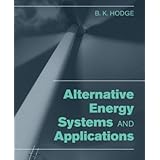
  • Alternative Energy Systems (Paperback) newly tagged “renewable energy”

    Alternative Energy Systems

    Alternative Energy Systems (Paperback)
    By B. K. Hodge

    Buy new: $110.47
    20 used and new from $96.09

    First tagged “renewable energy” by Susanne E. Vandenbosch
    Customer tags: renewable energy, alternative energy, radioactive waste disposal


  • Microsoft calls Android ‘free like a puppy,’ we can’t decide if that’s a bad thing or not

    In a new brand of competition dissing, James DeBragga, General Manager of Windows Consumer Product Marketing, says Android “is free like a puppy.” The comment came in the context of the CEO of Entourage praising Android for the fact that’s it’s versatile and free — major motivating factors behind his use of the OS on his Edge e-reader device. James says that Android (like a puppy) is great in theory, but a hassle once you get it home. Unfortunately for him, his metaphor neglects the love and kisses and companionship many humans also associate with puppies. Perhaps James is a cat man? Still, we see his side to some extent: Windows is certainly more mature, supported and capable for powering a tablet device, especially if that tablet needs to perform serious computer-style tasks. Unfortunately, we’re not sure if Android, Windows or anything else is really ready to make tablet converts out of us. Now if you’ll excuse us, we need to go feed our free iguana, Ricardo.

    Microsoft calls Android ‘free like a puppy,’ we can’t decide if that’s a bad thing or not originally appeared on Engadget on Tue, 12 Jan 2010 13:46:00 EST. Please see our terms for use of feeds.

    Permalink   |  sourceLaptop  | Email this | Comments

    Buy This Item: [Click here to buy this item]

    Article

  • MagicJack femtocell sure to face legal battle royale

    Despite MagicJack’s official announcement last week of an in-home femtocell for connecting carriers’ phones directly to its service, tons of questions remain — including most of the questions we had when we first heard of the idea. Let’s recap those questions and where we stand with each of them, shall we?

    • Are these guys licensing spectrum from the gub’mint, sublicensing it from carriers, or just going rogue? Going rogue. Historically, this usually ends in an FCC-mandated shutdown — and since both carriers and the CTIA will undoubtedly be throwing a fit that some company is stealing pricey spectrum for its own purposes, we’re sure the pressure on the government to act will be quite high.
    • Are any carriers in on this, and if so, why? Nope, none. The company says that “if they were smart they would take [it] on as a partner, because all [it] could do is enhance the value they create for their customer,” but presently, MagicJack’s all alone.
    • If carriers aren’t involved, why would they establish roaming deals that would allow carrier-branded phones and SIMs to roam on MagicJack’s rogue airwaves? As far as we can tell, they aren’t on any roaming deals.
    • If they’re not working on roaming deals, the femtocells will need to spoof a carrier ID. Furthermore, TDMA femtocells are virtually impossible to design and install for technical reasons, which means these would have to be 3G. So MagicJack’s going to offer a UMTS femtocell? It appears to be a plain-Jane GSM femtocell, which is technically interesting considering what we’ve heard in the past about effectively making a TDMA unit that plays nice with the surrounding network. Considering everything else we know, though, it probably doesn’t play nice — and without a roaming deal in place, they’ll need to spoof. That’s going to rile up both carriers and the GSMA.
    • Do you get to keep your phone number when you roam on the MagicFemtocell, and if so, how? For incoming calls, probably not, unless you forward to the MagicJack number.

    Needless to say, both the carriers and the feds are going to have a lot to say about this product — particularly considering that it hasn’t even received FCC approval yet. If it keeps marching toward retail, we could be gearing up for one of the most entertaining legal battles of the year.

    MagicJack femtocell sure to face legal battle royale originally appeared on Engadget on Tue, 12 Jan 2010 13:23:00 EST. Please see our terms for use of feeds.

    Permalink   |  sourcePC World  | Email this | Comments

    Buy This Item: [Click here to buy this item]

    Article

  • Why Google will win the smartphone race: Products in the pipeline

    scaled.500px-android-logosvg

    In the end, Google and Android will own the smartphone market. It won’t happen this year and it may not even happen in 2012 but the day is coming when Android becomes the de facto standard for smartphones.

    This we know: Multiple manufacturers have reported that Android phones are on the way including up to five from Motorola this quarter and a number from Samsung this year. Google also has a number of handsets in for testing and should be rolling them out after the Nexus One.

    While product in pipeline is also nice, I think the real value is in the software. At CES we saw Dell and Lenovo releasing Android phones running Android but without – and this is important – major Google branding or applications. This is, in the end, why Android will soon rule the roost: carriers can remove functions as it sees fit, thereby creating entirely new versions of the OS and UI for their own purposes.

    The only problem? Google’s control of the OS pipeline. Various sources have complained that Google controls which OS version various manufacturers are allowed to use and the result is a segmented market with potentially fractured OS trees. However, in the end, the carriers and the manufacturers have control over the OS.

    What’s going to happen to also-rans like Windows Mobile? I suspect manufacturers will roll mobile features into future desktop/laptop OSes, leading to a convergence of functionality for mobile Windows devices into Windows 7. Why have a dumbed down Windows Mobile when most devices are powerful enough to run a version of Windows 7? Microsoft is not out of the game, but as a mobile OS provider their days are numbered.

    Crunch Network: CrunchBase the free database of technology companies, people, and investors


  • Releasing petition-signers’ names

    Doesn’t support R-71, but keep names private

    I take exception to the editorial opinion supporting the public disclosure of petition-signers’ names [“Pass bill to make names of petition signers public,” Opinion, Jan. 10]. The editorial reminds us that voters have historically insisted that government documents are public unless specifically exempted — a concept that I heartily endorse. However, I believe a compelling case can be made to exempt ballot petitions.

    The recent case that brought the debate to the forefront — the call for public disclosure of R-71 signers — supports my opinion. The movement to make the petition-signers’ names public was clearly motivated by a desire to harass and shame the signers. Just imagine the ways that harassment might take place.

    While I personally disagree with the intent of that particular referendum, I believe that the inevitable rise in the instances of negative consequences when someone expresses his or her opinion on a public petition will significantly diminish the quality of the right to initiative currently enjoyed by the voter.

    Though it may not achieve the level of the sanctity of the private ballot, the freedom — without harassment — to express your opinion on laws that govern you, ought to be on par. Both the right to disagree and the concept of civil discourse will be reaffirmed and enhanced by the Legislature shelving Rep. Reuven Carlyle’s bill. Instead, clear legislation protecting the right to a private opinion should be enacted.

    — Bruce Northey, Bellevue

    Supports R-71, and still keeping names private

    In response to Sunday’s editorial urging passage of a bill to make initiative petition-signers’ names public, I believe you missed the most salient issue and landed on the wrong side.

    Even as a proponent of the domestic-partnership movement that sparked this bill, I think this is less an issue of government transparency than of the secret ballot, which is an integral part of the petition.

    I have been a victim of reprisals from an electoral process that did not protect my secret ballot and it is really easy for me to see how this principle became part of the democratic process. We tend to let human rights slide when they conflict with our personal goals and we usually live to regret when we feel the bites on our backside.

    — Harold Pettus, Everett

  • Private park ‘n’ ride a no-no

    Decision makes no sense

    In his column, Danny Westneat hit the nail on the head [“City won’t let you park to ride” NWSunday, Jan. 10]. I find it incredible that while we taxpayers are paying to have so many park-and- ride lots built along the freeways to encourage people to use mass transit, the city of Seattle won’t allow private citizens to do the same thing along the new light-rail line.

    Like so many other decisions made with regard to transportation in Seattle, it makes no sense. My office is in Renton and late last year I — along with most of my office — had to attend a function downtown. We carpooled over to the light-rail station in Tukwila and took light rail to downtown and back. I was pleasantly surprised and noticed, as did Westneat, that the parking lot was practically full.

    If people are going to use light rail, they have to have a way to get to the station. If bus service isn’t practical, then they need to be able to drive their car to the station. Only in Seattle is this an issue.

    By the way, I’d love to hear what our new mayor has to say on this issue.

    — Frank Lippman, Seattle

    Let the private industry work

    It never ceases to amaze me how ignorant government at all levels can be. I don’t think they realize that they are not a business. They are supposed to facilitate good governance, not run every facet of our lives.

    Why not let Safeway and others rent out unused parking spaces for light-rail commuters? There would be fewer vehicles clogging the streets, more taxable revenue from Safeway and Diamond Parking and easy access to well-lit parking for users, making light rail attractive — for a change.

    But, no, “big government” and Seattle wants to use taxpayer money to build park-and-ride lots — hence all citizens’ money is used to support the needs of the few — all at a cost greater than what the private sector could achieve. As usual, unbelievable government stupidity.

    It’s simple: Let the private industry work. There will be no cost to government and increases in tax revenue.

    OK, Mayor [Mike] McGinn, let’s see what you can do about government stupidity and saving our taxpayer dollars.

    — Pauline Cornelius, Olalla

  • Well Respected VC Firm Comes Out In Favor Of Independent Invention Defense Against Patent Infringement Lawsuits

    Seeing as we were just talking about claims from a patent attorney that no legitimate VCs can be against software patents, it’s good to see that one of the most respected VC firms in internet-related issues, Union Square Ventures has come out strongly in favor of an independent invention defense against patent infringement. This is great. I have no idea if I helped to make this come about, but a year ago, Union Square partner Fred Wilson had spoken out about how patents were harming his portfolio, and suggested some ways to fix the system (not including an independent invention defense). I responded with a post suggesting he consider an independent invention defense beyond his proposals, as it would really solve a lot of the problems. So it’s really fantastic to see the firm take a stand on such an important issue — proving once again what a lie it is to claim that VCs require patents. From Union Square partner Brad Burnham’s post:


    Almost a third of our portfolio is under attack by patent trolls. Is it possible that one third of the engineering teams in our portfolio unethically misappropriated technology from someone else and then made that the basis of their web services? No! That’s not what is happening. Our companies are driven by imaginative and innovative engineering teams that are focused on creating social value by bringing innovative new services to market.

    Our companies are being attacked by companies that were not even in the same market, very often by companies they did not even know existed….

    I know of no case where the engineers in one of our companies were aware of the patents that are now being used to attack them. The moral rightness of this screams at me. If, as an engineer focused on solving a problem, I happened to come up with an idea that is in some way similar to yours, then that in itself should suggest that it was obvious and not patentable. Unfortunately, that does not really help. There, the burden of proof is still on the startup and it is still smarter to settle than to burn precious capital on a defense.

    If, on the other hand, the troll was required to show the startup had some prior knowledge of their technology, the burden would be shifted to the attacker, and this blatant abuse would come to a grinding halt. If you believe as I do that innovation is key to social progress, please support patent reform. It is a complicated issue, but an independent invention defense is an obvious place to start.

    It’s really difficult to see how anyone can be intellectually honest with themselves and not be in favor of an independent invention defense. It’s difficult to see how anyone could justify the idea that even if someone comes up with something totally independently, they can’t use their own inventions.

    Permalink | Comments | Email This Story


  • Hojel City Center, Utrecht

    Gegevens
    Naam: Hojel City Center
    Hoogte: 72 meter
    Plaats: Utrecht
    Oplevering: 1994
    Functie: Kantoren
    Architect: Architectenbureau Van den Broek en Bakema
    ______________________________________________________


    Joris Talens


    Joris Talens


    Panoramio – Carl030nl


    Emporis – Michiel van Dijk

  • POPULAR MECHANICS: China’s Wide-Eyed Dream of Building U.S. Electric Vehicles


    The Chinese BYD E6 electric car is displayed during the the second press preview day at the 2010 North American International


    A China invasion of the U.S. auto industry has been anticipated with fear and loathing for a decade. If companies enter the U.S. with impossibly cheap cars, the worries go, they could grab the attention and imagination of car buyers, especially the next generation of car buyer who have a more global view of culture and brands than their parents and grandparents. Havoc would then be wreaked upon Detroit and the established Japanese imports.


    Of course, it is clear that the U.S. auto industry did not need Chinese imports to run it off the road. The casino environment of Wall Street, an over-fed housing market, a collapse in the credit markets and management inertia in Detroit took care of that. And as the industry picks itself off the pavement in 2010, the Chinese will be here, though not in the way we have been led to believe.

    As the North American International Auto Show is in full-swing, Chinese automaker Geely is in the midst of closing its deal to acquire Volvo from Ford Motor Co. In the wake of this acquisition, every Volvo owner and buyer dropping off their XC90 or S80 at the dealer for service will soon be doing business with the Chinese in the U.S., even if China-built Volvos are still years off. And Hummer owners will henceforth be doing business with Sichuan Tengzhong Heavy Industrial Machinery Co., which is the new owner of the former GM SUV brand.

    A year ago at the NAIAS, management at Chinese automakers BYD and Brilliance both declared their starts in the U.S. market would be made on clean sheets of paper: no entry by acquisition despite the availability at that time of Saturn and Saab. And they have stayed true to their words, though they also seem no closer to selling cars in the U.S.—now beaten to the punch by Geely and Sichuan—in reaching U.S. consumers.

    Still, it is BYD that continues to raise the most interest and is the only Chinese automaker with a press briefing at the auto show this week. The intrigue with BYD has been stirred by a $230 million investment in 2008 from Warren Buffet’s Berkshire Hathaway, giving the Chinese battery-maker-turned-car-company an aura of credibility most other Chinese automakers lack.

    BYD says it will be ready to launch electric vehicles in the U.S. by the end of 2010, albeit in small numbers, and likely through a pilot leasing plan in California. The company, though, may have created more skepticism than anticipation at the NAIAS when its executives said they had no dealers signed up yet, and they had only just begun the process of getting safety and engineering clearances from the Department of Transportation for its cars. “We are preparing our applications and are confident of getting approvals,” says Henry Li, general manager of BYD’s export division. “We recently completed all approvals from the Chinese government, and our design and engineering was done with the U.S. market very much in mind.”

    If BYD’s plans don’t yet throw fear into the hearts of Ford, GM and Toyota, it is because there seems to be an almost willful and collective lack of understanding by Chinese management about the complexity of selling vehicles in the U.S. “The two hardest things for a new car company to get right are meeting all the Federal safety and emissions regulations, and putting together a credible and quality distribution network, and the Chinese managements don’t seem prepared to tackle either one properly on their own,” says industry consultant Jim Hall of 2953 Analytics, Birmingham, MI.

    Though BYD’s aspirations revolve around electric and hybrid vehicles for North America, in China, selling gas-powered vehicles is currently the main driver for growth. BYD’s F3 compact car was the best-selling model in China in August, outpacing perennial leaders like the Hyundai Elantra and the Buick Excelle. Of the 450,000 cars BYD sold in 2009, only a few hundred were electrics. The top seller is the F3, priced at $9,500—about the price of an early 1990’s-era Toyota Corolla.

    At last year’s Shanghai auto show, BYD showed the e6, a multi-purpose vehicle capable of seating five which purports to go 205 miles on a single charge. It also promises to have a top speed of 100 mph and accelerate from 0-60 in eight seconds. BYD sold a few hundred to Chinese institutions in late 2009 after government certification was granted. It is important to remember, though, that China’s safety and emissions standards are nothing compared with the U.S.’s standards.

    Indeed, one of the reasons Geely is acquiring Volvo is that it has a mostly exclusive dealer network in the U.S. and Europe, as well as an impeccable safety engineering track record that Geely is hoping to leverage to make its own China-built vehicles competitive worldwide. Eventually, the company will likely move to build Volvos in China or the U.S., or both, because Volvo sales are perennially disadvantaged in the U.S. when the dollar is weak.

    Expectations around BYD still remain higher than around Geely and Tengzhong because of its rapid growth and technological prowess. The company’s shares gained 700 percent in the past year based in part on the company’s growth as a potential battery supplier to other automakers as well as its supply of batteries to mobile phone makers like Nokia and Motorola.

    Founded in 1995 by Wang Chuanfu as a pure battery company, BYD acquired a tiny, bankrupt carmaker in North Central China to wade into the auto industry and eventually become a vertically integrated maker of electric and hybrid vehicles. Chuanfu’s business model is Honda, which started out as and remains a world-class engine company that eventually developed its own products—cars, motorcycle, scooters and agricultural equipment that run off the company’s engines. BYD exports its vehicles to Africa, South America and the Middle East where engineering standards are as non-existent as they are in China.

    The engine power control unit of the new BYD E6 electric vehicle on display at the 2010 Detroit International Auto Show. (Photograph by Bill Pugliano/Getty Images)

    Industry and marketing consultants caution BYD and other Chinese automakers about being too secretive, or, conversely, promising too much to soon. “There is a huge cultural divide between Chinese companies and the U.S. marketplace,” says independent marketing consultant Dennis Keene who has worked with Chinese companies on export strategies. “In the auto sector, we have seen several companies enter into dubious contracts with fringe distribution operators, and the results have been litigation, loss of credibility and lack of any progress,” says Keene. Chery Automobile had some kind of agreement with Yugo America founder Malcolm Bricklin that broke down and is in litigation. And Nanjing Automotive started building MG sports cars in England, and had plans to build them in the U.S. as well. “I keep waiting for these companies to make serious business moves with serious people and serious products instead of playing games,” says Keene.

    Chinese car companies stand largely where they were last year when they were predicting U.S. entry. Their gas powered vehicles aren’t competitive yet with even entry-level vehicles from Detroit, Japan and Korea. And so far its electric technology faces the same affordability issue as every other company (BYD’s all-electric e6 multi-activity vehicle costs about $40,000, while Chevy plans to sell the Volt for less than that.) For the forseeable future, parking home-grown Chinese vehicles in U.S. garages in any numbers that would concern Detroit remains as likely as affordable fuel-cell vehicles.


    Share Investor Links

    Share Investor Blog – Stockmarket & Business commentary

    Share Investor New Zealand Business News– Get more business news

    Discuss this topic @ Share Investor ForumRegister free

    Share Investor’s Daily Forex Updates

    Recommended Amazon Reading

    The Snowball: Warren Buffett and the Business of Life The Snowball: Warren Buffett and the Business of Life by Alice Schroeder

    Buy new: $13.60 / Used from: $11.94

    Usually ships in 24 hours
    The Essays of Warren Buffett: Lessons for Corporate America, Second Edition The Essays of Warren Buffett: Lessons for Corporate America, Second Edition by Warren E. Buffett

    Buy new: $26.01 / Used from: $29.93

    Usually ships in 24 hours


    Bookmark and Share


  • Report: Asset Managers Do Not Consider Climate Change in Investment Strategies

    Asset managers for large investment funds are not taking climate risks into account in their investment strategies, according to a new report from Ceres.

    The failure of the managers to factor climate trends into their decisions exposes their multitrillion dollar portfolios to “hidden risks.”

    The survey was sent to the world’s 500 largest asset managers and 84 managers, with $8.6 trillion under management, responded. Nearly half said they did not consider climate risks at all.

    Mindy S. Lubber, president of Ceres and director of the Investor Network on Climate Risk, said.

    Despite the growing recognition of the far-reaching impacts climate change will have on the global economy, only a handful of asset managers are integrating climate risks and opportunities throughout their investment practices.

    The report recommends that institutional investors push asset managers to pay more attention to climate-issues.

  • Dead Rising Hitting Games on Demand on January 26

    With Dead Rising 2 out in April, late Xbox 360 adopters may want to consider checking out the original. Luckily, that will soon be quite easy, as Major Nelson has announced that Dead Rising will be available on Games on Demand in two weeks.

    The original Dead Rising takes after George Romero’s Dawn of the Dead in many ways, pitting photographer Frank West against a horde of the undead. The sequel is set a few years after this game, so it’s not a bad way to brush up on the origins of the apocalypse.

    In the meantime, Tom Clancy’s Ghost Recon Advanced Warfighter 2 is out on Games on Demand today, and Serious Sam: The First Encounter HD will be out on XBLA tomorrow. Start saving up those points.


    Buy This Item: [Click here to buy this item]

    Read Original Article

  • Viaduct: tunnel is not the solution

    It is not an eyesore

    I am suggesting that one of the reasons for removing the Seattle viaduct and putting the traffic underground into a tunnel is erroneous [“Let’s move forward on 520, viaduct jobs,” Opinion, Dec. 29]. That reason is the visual eyesore that the viaduct presents.

    I maintain that more people are able to witness the beauty of the Seattle area with the viaduct intact than by diverting traffic underground. I maintain that the sheer volume of people who drive on the viaduct everyday are able to witness such beauty from that unique vantage point, far outweighs the number of people who could see that same beauty from a promenade along the Seattle waterfront. This even takes into the account the number of people in the condos who could enjoy an unobstructed view without the viaduct being in their line of sight.

    I think we are being duped by the wealthy — and therefore influential people — into believing that by removing a viaduct along our waterfront, more people will enjoy the beauty that Seattle has to offer. This reasoning just doesn’t seem to take into account the sheer volume and number of people who are seeing our beautiful Seattle area from the vantage point of an elevated viaduct. What a wonderful treat for the common masses.

    Let’s rebuild the viaduct. The proposed tunnel is going to benefit a select few and add difficulty for the rest of us who want to commute through the city.

    — Timothy Wilde, Seattle

    Light rail cheaper than tunnel

    There is a serious funding hypocrisy in this town when it comes to transportation. After votes in which Seattle residents rejected both bridge and tunnel replacements of the Alaskan Way Viaduct — and new numbers showing that people in the Puget Sound region are driving less — our politicians still reject the surface-transit options to replace the viaduct.

    The $4 billion that is going to be spent on the tunnel, which does not even meet Washington state road-safety standards and has no exits downtown, is twice as much as was spent on the entire light-rail line in Southeast Seattle — a line with the capacity of a 12-lane I-5.

    It is also enough money to do all the rail upgrades on the tracks between Seattle and Portland to accommodate 13 trains running each direction taking two and a half hours between the two cities.

    It’s time we understand that road infrastructure requires far more operating subsidies than public transit. In a time when people in our region are driving less, we need to stop spending ridiculous amounts of money on wasteful projects like the tunnel.

    — Chetan Chandrashekhar, Seattle