Blog

  • Samsung Ramped Up Advertising In 2012, Outspent Apple By $68 Million

    Samsung

    Samsung is the top manufacturer of Android devices and to maintain its dominance in the marketplace, outspent Apple by $68 million in 2012. According to ad research and consulting firm Kantar Media, Samsung spent $401 million advertising its devices in the U.S. last year while Apple spent $333 million. Prior to that, Apple spent three times more on advertising in 2011 than Samsung. The increase in advertising is definitely noticed with the South Korean company investing millions in Super Bowl Ads, having a big presence at Mobile World Congress, and even consuming commercial time during the Oscars.

    Wireless carrier executives claim that Samsung also spends a sizeable chunk on advertising off the screen with in-store advertising, promotions, and training for sales representatives who help get devices into the hands of consumers. Better yet, that advertising backs quality products. Patrick Remy, VP of Devices at Orange in the UK, says customers rarely ever return Samsung devices.

    Source: The Wall Street Journal

    Come comment on this article: Samsung Ramped Up Advertising In 2012, Outspent Apple By $68 Million

  • Kindle Fire HD 8.9″ Gets A Permanent Price Cut, Launches In Europe And Japan

    The Kindle Fire HD 8.9″ launched late last year for a rather affordable $300. To perhaps undercut the competition even more, Amazon has decided to make its flagship tablet even cheaper.

    Amazon announced today that the 16GB Kindle Fire HD 8.9″ now retails for $269. The 32GB model now retails for $300. The Kindle Fire HD 8.9″ 4G LTE also got a price cut as the 16GB model now retails for $400, while the 64GB model retails for $500.

    The price cut coincides with the tablet’s launch across select European countries and Japan. The Kindle Fire HD 8.9″ will set UK consumers back £229 ($341 USD) for the 16GB model or £259 ($386 USD) for the 32GB model.

    “We’re thrilled with customer reaction to Kindle Fire HD 8.9”. Customers tell us they love our large-screen version of Kindle Fire HD for web browsing, email, gaming, watching TV shows, reading magazines, and more,” said Dave Limp, Vice President, Amazon Kindle. “As we expand Kindle Fire HD 8.9” to Europe and Japan, we’ve been able to increase our production volumes and decrease our costs. Across our business at Amazon, whenever we are able to create cost efficiencies like this, we want to pass the savings along to our customers.”

    With the price cut, the Kindle Fire HD 8.9″ is now the most affordable tablet of its size. Apple and Google best be taking notes on how to subsidize costs through content sales because Amazon has proven that it’s still king of this rather risky, but so far profitable, venture.

  • Google CEO Larry Page’s memo about Android leadership changes

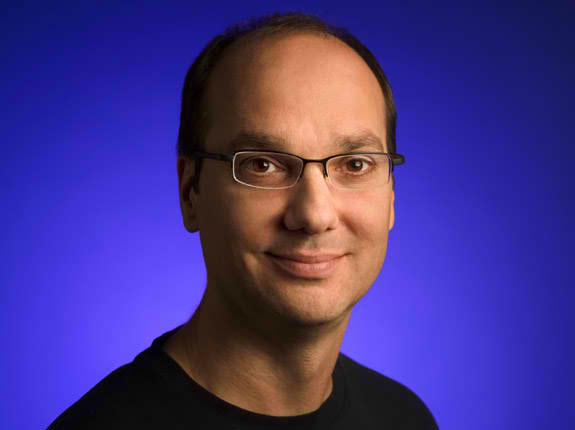
    This afternoon, in a rather shocking and unexpected move, father of Android Andy Rubin stepped down — or was forced to — in a leadership change sure to shift the direction of Google platform development. Sundar Pichai, senior vice president for Chrome and Apps, assumes responsibilities for Android.

    Larry Page broke the news, offering praise alongside Google cofounder Sergey Brin for Rubin’s enormous contribution. The follow memo follows.

    Sergey and I first heard about Android back in 2004, when Andy Rubin came to visit us at Google. He believed that aligning standards around an open-source operating system would drive innovation across the mobile industry. Most people thought he was nuts. But his insight immediately struck a chord because at the time it was extremely painful developing services for mobile devices. We had a closet full of more than 100 phones and were building our software pretty much device by device. It was nearly impossible for us to make truly great mobile experiences.

    Fast forward to today. The pace of innovation has never been greater, and Android is the most used mobile operating system in the world: we have a global partnership of over 60 manufacturers; more than 750 million devices have been activated globally; and 25 billion apps have now been downloaded from Google Play. Pretty extraordinary progress for a decade’s work. Having exceeded even the crazy ambitious goals we dreamed of for Android—and with a really strong leadership team in place — Andy’s decided it’s time to hand over the reins and start a new chapter at Google. Andy, more moonshots please!

    Going forward, Sundar Pichai will lead Android, in addition to his existing work with Chrome and Apps. Sundar has a talent for creating products that are technically excellent yet easy to use — and he loves a big bet. Take Chrome, for example. In 2008, people asked whether the world really needed another browser. Today Chrome has hundreds of millions of happy users and is growing fast thanks to its speed, simplicity and security. So while Andy’s a really hard act to follow, I know Sundar will do a tremendous job doubling down on Android as we work to push the ecosystem forward.

    Today we’re living in a new computing environment. People are really excited about technology and spending a lot of money on devices. This is driving faster adoption than we have ever seen before. The Nexus program—developed in conjunction with our partners Asus, HTC, LG and Samsung—has become a beacon of innovation for the industry, and services such as Google Now have the potential to really improve your life. We’re getting closer to a world where technology takes care of the hard work — discovery, organization, communication — so that you can get on with what makes you happiest, living and loving. It’s an exciting time to be at Google.

    Photo Credit: Joe Wilcox

  • BlackBerry Partner Purchases One Million BlackBerry 10 Smartphones

    There’s no doubt that excitement about BlackBerry 10 has been mounting. Those who already have a BlackBerry Z10 in their hands have given us hugely positive feedback. Well, our partners are hearing this loud and clear, and I’m happy to let you know that we recently received our largest ever single purchase order in BlackBerry’s history.

    “An order for one million devices is a tremendous vote of confidence in BlackBerry 10,” said Rick Costanzo, EVP Global Sales, BlackBerry. “Consumers are ready for a new user experience, and BlackBerry 10 delivers. With strong partner support, coupled with this truly re-invented new platform, we have a powerful recipe for success.”

    BlackBerry unveiled the new BlackBerry Z10 and BlackBerry Q10 smartphones on January 30th. BlackBerry Z10 is now available for purchase in a number of markets around the world and will be available in the United States starting this month.

  • Android’s steady march to 1 billion activations gets visualized

    Android Activation Growth Analysis
    In addition to announcing that Andy Rubin would be leaving his role as Android boss today, Google (GOOG) CEO Larry Page also announced that his company had now activated more than 750 million Android devices, the first update on Android activations we’ve heard since September when the company announced 500 million activations. The updated numbers inspired Benedict Evans, a strategy consultant for Enders Analysis, to post a fresh graph charting Android’s progress over the years on his Twitter account.

    Continue reading…

  • Robert Rodriguez Represents BlackBerry at SXSW

    SXSW is becoming increasingly star-studded as companies hope to draw attention to their wares. In the mobile space this year, Samsung is sponsoring a Prince concert while BlackBerry is staying true to their productive roots by getting Robert Rodriguez to host a talk on filmmaking followed by a sweet backyard BBQ.

    Robert Rodriguez is officially launching his section of the BlackBerry Keep Moving project the following Monday but has already begun the collaborative filmmaking effort a bit early by speaking with film students at SXSW.

    Rodriguez’ talk will be from 2-3pm on Friday March 15th (Backyard BBQ from 5-6pm) at the BlackBerry house. You might need to use a bit of charm secure an invite so drop by the BlackBerry house located at 78, 80 and 82 Rainey Street (just half a mile from the Austin Convention Center) before March 14th.

  • Twitter to Launch Standalone Music Discovery App Born Out of Recent Acquisition [REPORT]

    Twitter is working on a standalone music app that could be released on iOS as early as the end of March, according to a report from CNET.

    The app will reportedly be called “Twitter Music” and will be built upon technology from music discovery service We Are Hunted, which was purchased by Twitter within the past six months.

    The barebones function of Twitter Music will be discovery. Apparently, the app will recommend music based on signals such as who the user follows on Twitter. The music will be powered by SoundCloud, and if that’s not available the app directs users to an iTunes preview. As of right now, no full streaming services like Spotify are a part of Twitter Music.

    Digging deeper, the app consists of a few other tabs. Alongside the suggested music that pulls personalized recommendations based on a user’s Twitter activity, there is also a #NowPlaying tab that will show you tweets from people you follow who tweet using the #NowPlaying hashtag (this is a fun little way to incorporate an old and popular hashtag). We can see this in action, thanks to a tweet from We Are Hunted co-founder Stephen Phillips:

    Other tabs include “Popular” and “Emerging” which will give users access to trending and up-and-coming artists and songs, respectively.

    According to the report, Twitter suggests that you sign in via Twitter when you open the standalone Twitter Music app, but it’s not required. Of course, personalized recommendations won’t work unless you’re signed in to the Twitter graph.

    Back in January, Twitter launched Vine, a six-second video app born out of another acquisition. Although Vine is Twitter’s app and works seamlessly with Twitter, Vine isn’t actually branded with the Twitter name and logo. According to the report, Twitter Music will be a Twitter app through and through.

  • Oracle Buys Nimbula as Tech Giants Wake to Cloud Potential

    ellison-cropped

    Last fall Oracle CEO Larry Ellison announced a new an Infrastructure as a Service cloud computing offering. Today Oracle said that it has bought Nimbula,which makes private cloud technology. (Photo: John Rath)

    Larry Ellison might love the cloud after all. Oracle has acquired open cloud player Nimbula, a provider of private cloud infrastructure management software.  Nimbula’s product is complementary to Oracle’s growing cloud play, with Nimbula expected to be integrated with Oracle’s cloud offerings. The transaction is expected to close in the first half of 2013.

    Nimbula’s flagship product is Nimbula Director, which allows enterprises and service providers to build large-scale, fully functional infrastructure services from bare metal in a matter of hours. Nimbula Director differentiates by its high level of self-service, automation, application orchestration features, and ease of use. Providing a one-stop virtual data center management solution, Nimbula Director isolates customers from the operational and hardware complexities associated with deploying a private, hybrid or public cloud. Nimbula joined the Open Stack movement last October.

    Oracle most likely was attracted to Nimbula because it addresses a private cloud management need, as well as adding some heavy cloud talent in the form of the company’s founders. So we have one of the most promising early entrants in the cloud landscape joining with one of the most misunderstood (in terms of cloud) tech giants. The details of the acquisition are sparse, but the deal indicates that Oracle is continuing to get serious about its cloud play.

    Nimbula, which emerged from stealth mode in June 2010, was founded by former Amazon executives Chris Pinkham and Willem van Biljon, who led the development of the Amazon EC2 public cloud service. It was an early player on the scene, and one that was surrounded by a lot of hype thanks to its founders. The company never quite seemed to live up to its promise, mainly because its promise was astronomical and market confusion around cloud has been pervasive.

    Oracle’s Misunderstood Cloud Ambitions

    Also misunderstood has been Oracle’s cloud strategy. By many accounts, Oracle and CEO Larry Ellison used to be a bit disdainful about the cloud. This perception was built on a few comments by Ellison rather than the actual business, as Oracle has a growing play across all parts of the cloud stack (Infrastructure as a service, Platform as a Service, and Software as a Service). However, perception is a driving force in the market.

    Oracle has been forward-thinking in terms of cloud in some regards; it has several SaaS-based enterprise applications and has pushed to bring social capabilities across the portfolio. Ellison founded NetSuite, one of the earliest SaaS players. Most of the disdain Oracle and Ellison have displayed in the past appears to be for “cloud washing,” an industry-wide rebranding of everything and anything as “cloud.” However, Google “Ellison Cloud” and you’ll see quite the controversial history.

    There are several promising cloud players out there that offer a piece of the larger puzzle, but the overall picture remains fragmented. However deals such as this one are occurring more frequently as traditional technology giants are finally moving away from legacy practices ( namely, license and maintenance fees) as the driving force behind revenue.

    Cloud flips long-established business models on their heads, which is why there’s been some hesitancy on the part of the largest technology companies. These tech giants, particularly the public ones, are under pressure from investors to maintain license and maintenance revenue, and cloud/recurring revenue services has historically been seen as a cannibalization of these revenues. However, both investors and enterprise tech giants are realizing that cloud is the way of the future, so there’s been, and will continue to be, consolidation occurring in the market. Companies like Oracle will continue to pick up important cloud pieces out there to build out full cloud plays.

  • WhatsApp Now Available on BlackBerry 10

    Yes, Team BlackBerry, WhatsApp Messenger has arrived in the BlackBerry World storefront for BlackBerry 10 devices, and we couldn’t be more excited! WhatsApp Messenger is a cross-platform mobile messaging app which allows you to exchange messages without having to pay for SMS. WhatsApp Messenger uses the same internet data plan that you use for email and web browsing, so there is no additional cost to message and stay in touch with your friends as long as you stay within your data limits!

    WhatsApp provides a fantastic experience that leverages the true multi-tasking capabilities of BlackBerry 10. WhatsApp Messenger for BlackBerry 10 gives you an awesome messaging experience, and it looks and feels stunning. Here’s what you can expect from the app:

    • Instant push notifications to alert you when you receive messages- even when the screen is locked.
    • Full integration into BlackBerry Contacts, with automatic contact scanning to help you build out your contact list and get started right away.

    When we launched BlackBerry 10 on January 30th, Martyn Mallick, VP Global Alliances and Business Development at BlackBerry confirmed onstage that WhatsApp was committed to the platform. Here’s what he had to say about the official launch of WhatsApp for BlackBerry 10

    “BlackBerry has always been about bringing people together in a way that is fast, reliable and impactful. WhatsApp is a highly anticipated mobile messaging app that connects users to their contacts on several platforms, and we are pleased to work with WhatsApp to bring their service to our customers.”

    WhatsApp co-founder Brian Acton also had this to say about building for BlackBerry 10 and bringing WhatsApp into BlackBerry World today.

    “BlackBerry has been a great platform for WhatsApp for many years. Delivering WhatsApp on BlackBerry 10 devices is in line with our goals of ensuring that our customers around the world can continue to communicate with the most important people in their lives.”

    You can download WhatsApp Messenger in BlackBerry World starting today!

    Have you been using WhatsApp for years, or are you a new customer? Either way try out the app and let us know your favorite features in the comments below.

    WhatsApp Messenger is available for download in BlackBerry World — please note that it may take up to 24 hoursto appear in the BlackBerry World storefront.

  • Andy Rubin No Longer Head Of Android, Starting “New Chapter” At Google

    Andy Rubin, co-founder of Android, has been in charge of the Android team at Google since his company was bought by the search giant in 2005. Since then, Android has matured into the most used mobile operating system on the planet. Now Rubin is preparing to take on a new challenge.

    Google CEO Larry Page announced today that Rubin would be stepping away from the Android team. As for his next move, Page says that Rubin will be starting a “new chapter” at Google. He doesn’t go into details on where Rubin is moving, but I wouldn’t be surprised if we see Rubin pop up at Google X Lab.

    As for his replacement, Page says that Sundar Pichai will be taking charge of the Android team. You may know Pichai as senior vice president of Chrome and apps. Pichai will still manage Chrome while taking on his new duties as Android lead.

    It’s going to be interesting to see what Pichai does with Android. Some of his work on Chrome might make its way into Android and vice versa. Both have a lot to gain from each other so it will be exciting to see what the future holds for both Android and Chrome.

    Here’s the full statement from Larry Page:

    Sergey and I first heard about Android back in 2004, when Andy Rubin came to visit us at Google. He believed that aligning standards around an open-source operating system would drive innovation across the mobile industry. Most people thought he was nuts. But his insight immediately struck a chord because at the time it was extremely painful developing services for mobile devices. We had a closet full of more than 100 phones and were building our software pretty much device by device. It was nearly impossible for us to make truly great mobile experiences.

    Fast forward to today. The pace of innovation has never been greater, and Android is the most used mobile operating system in the world: we have a global partnership of over 60 manufacturers; more than 750 million devices have been activated globally; and 25 billion apps have now been downloaded from Google Play. Pretty extraordinary progress for a decade’s work. Having exceeded even the crazy ambitious goals we dreamed of for Android—and with a really strong leadership team in place—Andy’s decided it’s time to hand over the reins and start a new chapter at Google. Andy, more moonshots please!

    Going forward, Sundar Pichai will lead Android, in addition to his existing work with Chrome and Apps. Sundar has a talent for creating products that are technically excellent yet easy to use—and he loves a big bet. Take Chrome, for example. In 2008, people asked whether the world really needed another browser. Today Chrome has hundreds of millions of happy users and is growing fast thanks to its speed, simplicity and security. So while Andy’s a really hard act to follow, I know Sundar will do a tremendous job doubling down on Android as we work to push the ecosystem forward.

    Today we’re living in a new computing environment. People are really excited about technology and spending a lot of money on devices. This is driving faster adoption than we have ever seen before. The Nexus program—developed in conjunction with our partners Asus, HTC, LG and Samsung—has become a beacon of innovation for the industry, and services such as Google Now have the potential to really improve your life. We’re getting closer to a world where technology takes care of the hard work—discovery, organization, communication—so that you can get on with what makes you happiest… living and loving. It’s an exciting time to be at Google.

  • Meet Neurotrack, the winning health startup at SXSW

    Neurotrack, the startup that took the health prize at this week’s SXSW startup accelerator in Austin, isn’t just a few months or a few years in the making. Elli Kaplan, the company’s CEO, said it’s built on research started 25 years ago.

    That’s when neuroscientists at UC San Diego started the research that would lead to discoveries about how the brain is impacted by Alzheimer’s and possible methods of early detection.  Over the years, that research led to multi-million-dollar grants and longitudinal studies and, ultimately, the recognition that it could become much more.

    “They realized the impact outside the ivory tower and they brought me in,” Kaplan said.  Last spring, the company incorporated and, after a summer at health tech accelerator Rock Health’s Boston program, it launched in October.

    Building on work from neuroscientists Stuart Zola, Elizabeth Buffalo, Eugene Agichtein and Cecelia Manzanares (now at Emory University) and  theories regarding short-term memory and recognition memory, Neurotrack says it can identify patients at risk for developing Alzheimer’s potentially 6 years before the onset of the condition.

    According to the Alzheimer’s Association, about 5.4 million Americans have Alzheimer’s – and that number is expected to rise to 16 million by 2050. But, Kaplan said, most are diagnosed at a late stage.

    “It’s the same thing as what happened with breast cancer before they had the mammogram,” she said. “They’re diagnosing at the equivalent of stage 4, when there’s already irreparable damage.”

    Through a computer-based program connected to an eye-tracking device, patients are monitored as they view pairs of images, some of which are novel and some of which are familiar.  The program evaluates patients’ eye movement and the time spent looking at the familiar and novel images and then generates a score.  Kaplan said that of those who have scored below 50 percent on the test, 100 percent have gone on to receive an Alzheimer’s diagnosis within six years, while none of those scoring above 67 have converted Alzheimer’s.

    Down the line, the company could sell to physicians (after receiving FDA approval), but Kaplan said the immediate plan is to sell to pharmaceutical companies, who can use the test to identify people for clinical trials and develop more effective treatment.

    “One of the biggest issues with Alzheimer’s is that pharmaceutical companies haven’t been able to develop drugs because they can’t diagnose the condition early enough,” she said.

    The company, which is based in Atlanta, has not yet raised funding from venture capitalists but is currently raising an insitutional round. Other interesting health startups that competed in the SXSW accelerator include Docphin, a Rock Health and Startup Health-backed site for healthcare professionals to access and share medical research, TechStars-backed Careport Health, which helps hospitals find appropriate after-care for patients and Care at Hand, another Rock Health company, a mobile system that helps non-clinical home care workers monitor and communicate the health of elderly patients.

    Related research and analysis from GigaOM Pro:
    Subscriber content. Sign up for a free trial.

  • Sponsored post: Using Splunk for machine-generated big data

    When is big data useful? How can we find relevant big data? Certainly not by having to ask someone else to answer questions but by allowing as many people as possible to explore it for themselves.

    The problem with most discussions of big data is that the emphasis is on one or two steps in the entire value chain.

    Big data cannot be boiled down into a one-off project or a quarterly task. It is a new capability to be mastered and incorporated in ways that make sense.

    Business intelligence (BI) solutions don’t live up to their potential when you can only answer questions planned months in advance. Asking new questions requires changes to the data model and system changes by experts who become a bottleneck. Emerging technologies such as Hadoop are, well, still emerging.

    Splunk supports a new approach to big data: interactive exploration (as well supporting every other phase of the big data life cycle).

    Splunk customers use our software every day to gain insights across their big data deployments. Splunk offers:

    • A simple and easy-to-use search language
    • A powerful search language that supports a complicated data processing pipeline
    • Support for batch and real-time processing
    • A mature environment for application development

    Splunk can support an entire end-to-end big data program and get many people involved so that you can get results quickly. That’s why you should be using Splunk for your big data.

    Advertisement

  • Google’s X factor: “Captain of Moonshots” describes secret lab

    History shows that scientific breakthroughs often occur during wartime when countries approach hard problems with a rare mix of urgency and unfettered creativity. War, for instance, has often led to rapid advances in cartography, cryptography and physics. But is it possible to replicate this type of wartime-style problem solving in times of peace?

    Google thinks so and claims that its hush-hush ideas lab known as Google X is designed to do just this. Speaking at Austin’s SXSW festival Tuesday, Google’s Astro Teller, the man who holds the title “Captain of Moonshots” shared some details about how the lab thinks and works.

    According to Teller, who is the grandson of H-bomb inventor Edward Teller, Google X believes that the process for solving huge and difficult problems is unlike that for solving incremental ones. “Moonshot thinking,” he said, requires overcoming society’s prescriptions for caution and embracing both audacious ideas and failures.

    “You have to have a group of people dedicated to throwing almost everything away,” Teller said.

    To this end, Google X generates hundreds of ideas a year and even develops many of them into prototypes or white papers. Ultimately, though, the lab selects only one or a two a year to turn into a reality — Google’s driverless cars and computer glasses are among those that have been selected. Another recent product is the blue dot on Google Maps that reveals where you are inside a building.

    Google X’s culture of creativity is about exploring any ideas but also getting the successful ideas out of the lab before they’re done. Teller said this ensures that commercialization doesn’t undercut the “Peter Panishness” of the place.

    So what’s next from Google X? Teller said the lab expected to announce another discovery in the coming month but refuted reports that Google is building some type of space elevator.

    Overall, Teller’s talk was an inspiring testament to the power of thinking big and what can happen when people explore without fear of failure. But it also had some of the drive-by ephemera of a TED talk — profound for a second and then forgotten the next day.

    Related research and analysis from GigaOM Pro:
    Subscriber content. Sign up for a free trial.

  • A Chinese solar company’s fall from grace

    Suntech Power, once the world’s largest solar panel maker, is in need of a rescue. The company sought to change the reputation of Chinese solar manufacturers, which are often seen as uninnovative, and was one of the rare firms that opened up a U.S. factory when many of its peers were waiting and watching to see how the market for solar panels would unfold.

    Now the company seems to be on its way to becoming the biggest casualty yet of a shakeup of the global solar industry and its own financial oversight problems. Suntech reportedly is running out of cash and could be taken over by the government of the city in which it’s headquartered, said the New York Times on Wednesday. The takeover possibility was reported by the China Business Journal earlier this week. The company has declined to comment.

    Suntech at Bird's Nest

    What’s next?

    The fact that Suntech is teetering financially has been well documented in recent months. The big question is what will become of a company and the impacts of its decline? In the near term, the support from the Wuxi government will keep Suntech afloat and at least part of its large workforce employed. Long term, the chances of the company’s survival are low if it remains under government control. A sale of Suntech’s intellectual property and manufacturing assets is likely.

    Suntech can’t afford to take a long pause to right itself when its competitors are fighting more fiercely than ever to keep their footing in a market that has seen an oversupply of solar panels and plummeting prices for them for over two years. That has led to dozens of solar manufacturers worldwide — from stalwarts such as Q-Cells in Germany to American startups such as Solyndra and Abound Solar, to file for bankruptcy. The large Chinese solar manufacturers, who rose to prominence over the past five years thanks largely to strong support from state-owned banks, have been posting losses for many quarters.

    But the fact that Suntech’s woes partly come from a financial scandal means it could be less likely to get a greater government bailout. The Chinese national government has been working on building a domestic market for its solar equipment makers while figuring out which companies to support and which companies should consolidate because there are just too many players. In fact, the government said publicly last year that it was promoting mergers and acquisitions of solar companies and planning to prohibit local governments from helping struggling solar companies.

    It's an American right to have solar

    Suntech solar panels in the U.S.

    Suntech got in trouble with a fund it controlled that financed solar power plant development in Europe. The company announced last summer that an internal investigation revealed that the Global Solar Fund used faked German bonds to guarantee the funding that Suntech secured for GSF. The fund also came under legal scrutiny in Italy when a criminal investigation alleged that the fund built projects illegally to take advantage of lucrative government subsidies for solar electricity generation.

    Those fake bonds have made it difficult for Suntech to pay over $541 million to holders of its convertible bonds. Last week announced a settlement with Global Solar Fund and its top executive. Earlier this week, The company said it managed to get most of its note holders to agree to give the company more time. The company replaced its founder, Zhengrong Shi, as CEO last year and recently forced him out as chairman. Shi is fighting with Suntech over his ouster.

    Implications in the U.S.

    The drama presents an ugly turn for a company that was solid and took technology and market risks to grow. Suntech invested heavily on research and development of new technology and received glowing media coverage for its effort, including recognition in the Technology Review. Chinese companies in general had been known more as mass producers rather than innovators.

    Suntech's new tech

    Suntech’s new solar panel

    Suntech’s decline also leaves a depressing note in the efforts by the federal and local governments to expand solar manufacturing in the U.S.

    Suntech opened a factory in Arizona in 2010 to assemble the cells from its factories in China into panels. The factory opened to much fanfare because optimism ran high then about rebuilding a solar manufacturing sector in the U.S. With the stimulus package, the federal government was approving billions of dollars in loans and guarantees to help U.S. solar manufactures to build factories domestically.

    That effort hasn’t been successful so far, however, in light of the bankruptcy of Solyndra in 2011 and Abound Solar in 2012. It’s achieved better results promoting the installation of solar power plants and rooftop systems at homes and businesses.

    Suntech scaled back its production at the Arizona factory and yesterday announced its plan to shutter it on April 3. Its demise will not make the U.S. a more attractive place to set up production. That’s a sentiment that will be hard to change.

    Related research and analysis from GigaOM Pro:
    Subscriber content. Sign up for a free trial.

  • Andy Rubin steps down as Google Android chief

    “Holy crap!” That was my response to colleague Alan Buckingham, when he informed me that Andy Rubin would no longer lead Android development. He’s the father of Android! But green robot parent no more. The news is simply shocking and hints of some back-room drama and possible disagreement about future Google platform development. I say that because Sundar Pichai, the man behind Chrome OS, adds Android to his responsibilities.

    For some time, Android and Chrome OS users — me among them — have posed quandary: “Why support two operating systems?” Google should bring together Android and Chrome OS. I wouldn’t be surprised if that is the go-forward edict from Google on High, perhaps something Rubin wouldn’t support. Yes, I speculate, but the man is passionate about his child, which Google acquired in 2005.

    CEO Larry Page breaks the news shocking Google developers today. He starts by discussing meeting Rubin in 2004 and the progress of Android today. “We have a global partnership of over 60 manufacturers; more than 750 million devices have been activated globally; and 25 billion apps have now been downloaded from Google Play”. By the way, that’s 250 million more devices than iOS, for anyone keeping count (and developers should).

    “Having exceeded even the crazy ambitious goals we dreamed of for Android — and with a really strong leadership team in place — Andy’s decided it’s time to hand over the reins and start a new chapter at Google”, Page says. “Going forward, Sundar Pichai will lead Android, in addition to his existing work with Chrome and Apps”.

    Hint of change already is in the wind, as Google prepares to bring Google Now and Notifications from Android to Chrome and to Chrome OS.

    Posting to Google+ Marco Bottaro observes: “Scott Forstall out of iOS, Steven Sinofsky out of Windows…and now Andy Rubin is out of Android. We live in interesting times”. I’ll say.

    He continues: “My take — as much as I hate to admit: the smartphone product definition ‘problem’ has been solved. We’ve moved from revolution to evolution and new types of people are needed there. From leaders to managers”.

    Jeremiah N shares some of my sentiment — that it’s “likely that Google wants to merge Android and Chrome OS. The best way to do that is to put the guy who runs Chrome OS in charge of both”.

    “Finally time for Chrome OS and Android to meet in the middle?” Sean Riley asks.

    But the change is more than about Android and Chrome OS merging. There is something bigger at work here. If you read the tea leaves, and I do, Google’s platform of choice increasingly is Chrome. The browser, as development platform, can co-opt operating systems like iOS, OS X or Windows, while also fronting Chrome OS. The browser is more natural fit for Google services and anchors them anywhere.

    By contrast, Android, while hugely popular, is constrained by OEM partners like Samsung. Google delivers fresh features to Chrome and Chrome OS users about every six weeks. Android updates are less frequent and carriers and device manufacturers logjam dispatch. For example, Jelly Bean, which released in July 2012, makes up just 25.5 percent of the devices accessing Google Play in the 14 days before March 5.

    Pichai is the man leading Chrome and apps development for the browser. See where this leadership change is headed?

  • Lamar and Khloe: Puppy Added to the Family

    Khloe Kardashian‘s marriage seems to be strong and happy. This is in contrast to her sister, who is in the midst of a contentious divorce from her legal husband, Kris Humphries, while currently pregnant with R&B singer Kanye West’s child.

    This week, Khloe announced a new member of the Kardashian family. She is now the proud owner of a boxer puppy. The announcement was made via the reality star’s Twitter account:

    “Lammy” presumably refers to Khloe’s husband, sleepy Los Angeles Clippers player Lamar Odom. The couple wed in 2009, with the wedding featured on the reality TV series Keeping Up With the Kardashians.

    There is no word yet on what the couple will name the puppy, but updates on the pup are sure to follow, and then take over Khloe’s various social media feeds in the weeks to come.

  • Samsung said to have no ‘interest in seeing the Windows Phone platform succeed’

    Samsung Windows Phone
    If it looks as though Samsung (005930) isn’t putting that much effort into selling Windows-based devices, that might be because it isn’t. Per Barron’s, a new research note from Detwiler Fenton analyst Jeff Johnston contends that “there is no evidence that Samsung has any interest in seeing the Windows Phone platform succeed,” and that the company is simply biding its time until it can release its own Tizen platform to act as an insurance policy for Android.

    Continue reading…

  • VMware to virtualize networks with software incorporating Nicira’s capabilities

    On the same day VMware said it would roll out its public cloud, the company also announced plans to release software that virtualizes networks with help from Nicira’s Network Virtualization Platform product, in another example of the company’s shift beyond server hypervisors as its chief innovation.

    It also marks VMware’s commitment to working with other players in the industry regardless of the underlying hypervisor and even networking protocols they might be using, as it seeks to move up the software stack in the data center.

    VMware’s NSX software, which draws from the company’s existing vCloud Networking and Security software in addition to the Nicira offering, will let customers spin up virtual switches, firewalls, routers and other network elements in conjunction with hypervisors, regardless of whether they come from VMware. The NSX controller cluster will expand or contract customers’ virtual networks in harmony with changes in computing power that are reported by way of northbound API requests, according to a VMware blog post describing the many abilities of the new software.

    NSX will ship in the second half of 2013, about a year after VMware said it would buy Nicira for $1.26 billion. Nicira has not named more than a handful of customers, large though they may be, and now its software-defined networking innovations could enter many more data centers.

    Gains for VMware with NSX could negatively impact Cisco, F5, Riverbed and other vendors of network appliances that take time to deploy and can’t scale as quickly as modern storage and compute resources. It also puts VMware in competition with the ecosystem that Big Switch is trying to build around OpenFlow and its own controller software called Floodlight.

    Big Switch open sourced Floodlight in January, and several startups and a few large companies are building products using that software. So while VMware is opening up to other hypervisors and promising customers that it will support a variety of protocols including OpenFlow, it is building its software-defined data centers play around a closed system.

    That’s not a bad thing, and VMware’s ability to offer tested integration and the possibility of a more controlled experience will undoubtedly win over some customers, especially those already using VMware’s software. Meanwhile the more open approach from Big Switch will win its own adherents. With a $35 billion market cap, VMware has to not only keep innovating beyond its core business, but it also needs to protect its IP and margins while selling more software. The NSX product and strategy offers a way to do this. Now we just need to wait and see if customers bite.

    vmware nsx 2

    Stacey Higginbotham contributed to this report.

    Related research and analysis from GigaOM Pro:
    Subscriber content. Sign up for a free trial.

  • Data Center Links: Elastichosts Expands With Equinix

    Here’s our review of some of this week’s noteworthy links for the data center industry:

    Equinix selected by Elastichosts.  Equinix (EQIX) announced that Elastichosts, a global Cloud Server provider, has deployed in Equinix’s International Business Exchange (IBX) data center in Hong Kong. Elastihosts chose Equinix for its rich cloud ecosystem, to grow its business in Hong Kong, as well as in neighboring countries such as Taiwan, China, Singapore, and the rest of ASEAN (Association of South East Asian Nations). The broad reach of ecosystems available with Platform Equinix gives Elastichosts access to a large marketplace of potential customers for revenue generating opportunities. “Deploying with Equinix in Hong Kong brings us immediate benefits as we enter the Asia-Pacific market,” said Richard Dvies, CEO of Elastihosts. “We are in close proximity to hundreds of networks and through these networks, closer to our customers. Its rich ecosystem gives us the confidence that we can gain access to a broad pool of potential customers and partners to grow our revenue, while its global footprint ensures we can achieve rapid deployment and scalability as we expand our presence across Asia-Pacific.”

    CentriLogic to acquire Capris Group.  Canadian data center operator CentriLogic announced an agreement to acquire the Capris Group, an Ontario-based IT services provider. “This is the first step in our expansion plans across Canada,” said chief executive officer Robert Offley. “The acquisition of Capris rounds out our capabilities in Ontario and the [Greater Toronto Area] and we’ll now look to other provinces.” In addition to western Canada, CentriLogic is also scouring for potential acquisitions in Quebec.  Internationally, it plans to acquire one data centre in the United States, where it currently operates two facilities. It will also add a second facility in the United Kingdom.

  • TED wins Digiday Award

    Lilian-at-DigidayThe Digiday Publishing Awards are kind of like the Oscars for online publishers, content providers and advertisers. And last night, at the event, we got to hear the words, “And the award goes to … TED Conferences.”

    TED was honored with the award “Best Use of a iPad/Tablet by a Publisher,” thanks to our amazing app. TED was also a finalist in the category “Best Use of Video by a Publisher.”

    Our own Lilian Chen, pictured above, accepted the award — and says that it is deceptively heavy. It now sits proudly in our New York office.

    See all the winners and finalists »