Blog

  • Facebook Launches One-Column Timeline with More Focus on Interests

    It looks like the news feed isn’t the only Facebook product getting a major refresh.

    For the past few months, Facebook has been testing a one-column Timeline layout that puts all your posts in one, larger column and everything else like music, photos, recent activity, and other Open Graph actions on the other side.

    Today, Facebook is beginning to roll this new Timeline out to all users.

    The new layout puts all of your post on the right-hand side in a single, streamlined column. Everything else, like friends, photos, and more now rest in the smaller, left-hand column:

    Your About page is also getting a facelift, with more focus given to your interest (music, movies, books, TV, etc.) and the apps that deal with them. Each interest gets its own section, for instance “Movies” allows you to easily add films you’ve watched, films you “want to watch” and films you “like.”

    You can either manually add movies to this list or you can let apps like Netflix (which just opened up Facebook integration today) or Flixster do the legwork.

    You can also add custom apps to your Timeline to express what you’re most interested in, for example Instagram.

    “To simplify how apps are displayed on timeline, we’re replacing aggregations with app sections. Previously, only top-ranked Open Graph stories and aggregations would appear on timeline. Now, when someone adds an app section, it will appear in the same place until they edit the order or visibility,” says Facebook.

    If you want to add a specific app to your Timeline, all you have to do is click the “add to profile” button on you app section page.

    Facebook says that they will roll out these changes over the coming weeks, so be patient.

  • Tech21 Impact Snap Case for the BlackBerry Z10 Offers High Tech Impact Protection

    Introducing the Tech21 Impact Snap Case for the BlackBerry Z10. The Tech21 case is a premium offering that features d3o technology to minimize drop damage. d3o is an advanced material that stiffens apon impact, taking the punch out a hard drop.

    The Tech21 case with it’s advanced materials protects against a variety of drops. How many cases can make the claim that they utilize non-Newtonian liquids as part of their drop protection design?

    The way armor works from football pads to samurai armor is to spead out the shock using a stiff surface and to dissipate it with something soft underneath. The Tech21 cases’ use of the advanced d3o material for the soft part means they can achieve a high amount of shock protection without having to add a bulky soft material inside the case.

    Click here to buy the Tech21 case for the BlackBerry Z10 for $37.99.

  • Stratasys Built A 3D Printer Exclusively For Dental Labs

    We’ve already seen how 3D printers are revolutionizing dentistry, but the technology is still out of reach for many smaller clinics. Stratasys is hoping to remedy that with a new 3D printer built just for orthodontic labs.

    Say hell to the Stratasys Objet30 OrthoDesk, a 3D printer that combines “a small desktop footprint that’s easy to use and maintain with the accuracy and versatility of a high-end rapid prototyping machine.”

    So why is Stratasys getting into dentistry such a big deal? It’s not so much the dentistry, but the fact that the company was able to shrink a high-end 3D printer into a desktop size without sacrificing its accuracy. Hopefully this means Stratasys will make a high accuracy desktop 3D printer available to other industries soon.

  • HTC One Making Its Way To Verizon

    HTC One_Silver_3V

    The HTC One will be available for Verizon customers after all. All Things D, citing an unnamed source, is reporting Verizon will carry the One about a month or so after it launches on the other three major US carriers. We had originally reported a March launch for AT&T, T-Mobile and Sprint but had not heard a word about Verizon.

    Fans of Beats Audio and Sense (there are some Sense fans, right?) on Verizon are not the only winners here. Finally getting the same flagship phone on all the big carriers is a huge win for struggling HTC. This will allow HTC to focus its ad campaign on a single device and maybe start taking some mind share back from Samsung.

    Source: All Things D

    Come comment on this article: HTC One Making Its Way To Verizon

  • Peter Banks Dies; Yes Guitarist was 65

    Peter Banks, the original guitarist for the rock band Yes, has died at the age of 65. According to a BBC report, the English guitarist was found in his home on March 8, apparently dead from heart failure.

    Banks, along with Jon Anderson, Chris Squire, Tony Kaye, and Bill Bruford founded the progressive rock act Yes. The band is often cited as one of the bands at the forefront of the prog-rock scene in the 70s, along with bands such as Genesis and King Crimson.

    Banks left the band in 1970, the first of over a dozen musicians to play with Yes and then depart. After leaving Yes, Banks went on to have a solo career and play as a session artist with bands such as Roger Ruskin Spear. In addition to his solo work, he cut albums with the bands Flash and Empire

    Banks released his first solo album, Two Sides of Peter Banks, in 1973 and did not release another solo album until 1994′s Instinct. His latest release was 1999′s Can I Play You Something? (The Pre-Yes Years Recordings From 1964-1968).

  • Finally, Netflix U.S. gets social with Facebook sharing

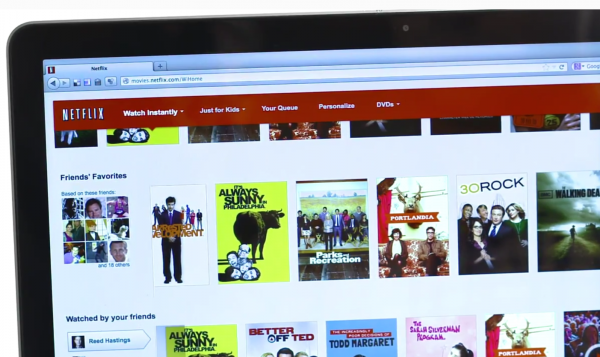
    Netflix, the popular DVD-by-mail and internet streaming service, today announced that it is bringing social sharing to your video experience with new Facebook integration — a feature previously available elsewhere, but prevented here by U.S. law. Now you can no longer pretend to your friends that you really didn’t watch that sappy love story last night.

    Netflix’s Cameron Johnson, director of product innovation, states that “Netflix members in the U.S. can share their favorite shows and movies on Netflix with friends by connecting to Facebook and agreeing to share”.

    The integration will add a new row to your Netflix titled “Watched by your friends” and customers will also be able to see what movies and TV shows were rated four or five stars in the new “Friends’ Favorites” row. As for that potentially embarrassing movie I mentioned at the beginning, you do not really need to worry about that. The new service will allow you to choose not to share a specific title by clicking the “Don’t Share This” button in the player. The company also promises easy control over all of this — “You can also visit your ‘Social Settings’ in ‘Your Account’ on Netflix.com to turn on additional sharing to Facebook or stop sharing altogether”, Johnson explains.

    While Netflix has expanded its reach to other markets and integrated this feature for them, this took a long time to become available for U.S. customers. The company had to wait for Congress to update a video-sharing law, which it did in December 2012, that previously prevented the sharing of video rental history for privacy reasons. The law was a relic from the Robert Bork Supreme Court nomination era, when his rental records leaked to the public.

    Netflix is rolling this feature out now and promises that all customers will have access to it by the end of this week.

  • mWeather for BlackBerry Puts the Forecast on Your Wallpaper and App Icon

    mWeather is a great BlackBerry weather app for BlackBerry OS 5, 6 and 7. The app has the ability to take over your wallpaper and dynamically changes it’s app icon to the current weather conditions.

    mWeather by the mobindustry is great legacy BlackBerry forecast app that makes checking the weather as easy as checking the time. With the ability to set your wallpaper or the app icon to the current weather, you’ll rarely need to click into the app unless you want a more detailed forecast.

    Click here to download mWeather free from BlackBerry World.

  • How Google Glass could look more fashionable

    Google Glass Redesign
    Google’s (GOOG) Project Glass is one of the more intriguing gadget concepts that we’ve seen in recent years, but it does come with a fairly big catch — that is, wearing Google Glass makes you look pretty dorkyResearcher Nickolay Lamm, best known for his pre-release renders of the iPad mini and his futuristic iPhone design concepts, has tried his hand at making Glass look more fashionable by designing it more like a pair of neckband headphones that wrap around the back of your head. In this way, Lamm’s design puts most of Glass’s computing power out of sight and only leaves the tiny display lens and camera at the front of your head. 

    Continue reading…

  • Amazon cuts Kindle Fire HD prices by as much as $100

    For tablets, 2013 is the year of small form factors — and, presumably, lower prices. Amazon isn’t waiting to see, and that’s a good strategy considering Kindle HD might not be the device Goldilocks is searching for. Unlike the fairy tale where one is too big or two small, Amazon’s tablet may not be just right. Proactive price reduction could change that.

    Here’s the problem: Several analyst firms now predict that slates with 7-7.9-inch screens will command the market, which puts 8.9-inch Kindle Fire HD a wee bit on the plump side. “One in every two tablets shipped this quarter was below 8 inches in screen size”, Jitesh Ubrani, IDC research analyst, says. “In terms of shipments, we expect smaller tablets to continue growing in 2013 and beyond”.

    Amazon’s new pricing certainly is compelling, bringing the entry 4G LTE model to $399 from $499 and top-of-the-liner to $499 from $599. No other cellular contract-free tablet with LTE competes on price. Apple’s iPad mini is closest, starting at $459.

    But there’s a gotcha. The biggest discounts demand users to accept advertising, or what Amazon calls “with special offers”. Those tablets “without special offers” cost more: $414 and $515 for the two 4G models. Prices on WiFi models: $269 or $284 for 16GB and $299 or $314 for 32GB.

    Kindle Fire HD 8.9″ specs: 8.9-inch display (1920 x 1200 display, 254 ppi); 1.5GHz OMAP4470 dual-core processor; 1GB RAM; 16GB, 32GB or 64GB storage (depending on model); front-facing camera; Bluetooth; WiFi A/N; accelerometer; gyroscope; microphone; and Android. Measures 240 x 164 x 8.8mm and weighs 575 grams.

    Prices (with special offers):

    • Kindle Fire HD 16GB: $199
    • Kindle Fire HD 32GB: $249
    • Kindle Fire HD 8.9″ 16GB: $269
    • Kindle Fire HD 8.9″ 32GB: $299
    • Kindle Fire HD 8.9″ 4G LTE 32GB: $399
    • Kindle Fire HD 8.9″ 4G LTE 64GB: $499

    How that compares with iPad mini:

    iPad mini specs: 7.9-inch back-lit IPS display (1024 x 768 resolution, 163 ppi); A5 dual-core processor; 1GB RAM; 16GB, 32GB or 64GB storage; 5-megapixel rear-facing and 1.2MP front-facing cameras; Bluetooth; WiFi A/N; HSPA+/LTE (on three models); accelerometer; GPS; gyroscope; microphone; battery unknown; and iOS 6. Measures 200 x 134.7 x .28mm and weighs 308 grams.

    • iPad mini 16GB WiFi: $329
    • iPad mini 32GB WiFi: $429
    • iPad mini 16GB WiFi/LTE: $459
    • iPad mini 64GB WiFi: $529
    • iPad mini 32GB WiFi/LTE: $559
    • iPad mini 64GB WiFi/LTE: $659

    Amazon announced the price cuts concurrent with the tablet’s launch in Europe and Japan, with typical vacant fanfare and perhaps a little proactive disinformation (considering IDC’s data). Dave Limp, Amazon vice president, says that the company is “thrilled with customer reaction to Kindle Fire HD 8.9”, but as is typical doesn’t quantify sales. “Customers tell us they love our large-screen version of Kindle Fire HD for web browsing, email, gaming, watching TV shows, reading magazines, and more”. But data from NPD DisplaySearch and IDC shows stronger demand for smaller slates.

    Limp says that expansion to Europe and Japan allowed Amazon “to increase our production volumes and decrease our costs. Across our business at Amazon, whenever we are able to create cost efficiencies like this, we want to pass the savings along to our customers”.

  • With Sundar Pichai in charge, Google signals Android apps on Chrome OS

    Andy Rubin, the driving force behind Google’s Android mobile software, is moving on to new projects. Despite having risen to become the world’s leading mobile operating system since its 2008 debut, the move signals that Android is nearing an evolutionary peak. Now that Sundar Pichai is taking over Android efforts at Google, we might see what I had expected last year: A merger of sorts between Android apps and Google’s Chrome OS.

    It makes more sense now

    It’s really not a leap to make this early conclusion as Pichai has led or been heavily involved with the product management for Google Drive, the Chrome browser and of course, Google’s Chrome OS used on the company’s Chromebooks. His Google+ profile says he’s currently the Senior Vice President, Chrome and Apps.

    That’s part of the puzzle, but one only needs to look at the touchscreen on Google’s new Chromebook Pixel with high-definition display to start putting the pieces together.

    I barely use the touchscreen on the Pixel for web surfing but I would use it for touch-optimized applications. Here’s what I said when the Pixel was launched:

    “What would be an added benefit is taking advantage of that touchscreen with applications. If Google were to add support for the Dalvik VM where Android apps run, the Pixel makes a little more sense to me as a product. Frankly, we don’t need touch on the web for a laptop form factor when multi-gesture trackpads replicate the experience more ergonomically. But if the touchscreen were leveraged for more use cases, that could add value.”

    Support for Android apps on a touchscreen Chromebook would immediately squelch one of the biggest complaints about Chrome OS devices. Criticism such as “it’s just a browser,” is a common theme from Chrome OS detractors. Adding support for hundreds of thousands of Android apps removes that complaint.

    A new way to expand the Android ecosystem

    I still believe that if Android support in Chrome OS pans out that Google will still push both web apps and more touch features for the web. This isn’t an either/or strategy for Google; it’s a way to expand internet use in as many ways as possible, which has the potential to generate more impressions and clicks on the ads that pay Google’s bills.

    Transformer Prime: the hottest Android tablet yet? thumbnailA unification of Chrome and Android isn’t going to be a quick slam-dunk for Google even with Pichai leading the effort. Android is clearly meant for touch screens and there are relatively few laptops with this functionality, although there are a growing number of choices. Any use of Android apps with a mouse will lessen the experience and if this does happen, Android detractors will have something else to point out.

    What are the challenges?

    Technically, however, I can’t see it too difficult to make the two platforms work together; particularly on Chrome OS devices. These actually already run on a Linux kernel with the browser atop that. Adding a virtual machine or other method to run Android apps on Chrome OS devices should be relatively easy as a result.

    As far as Android in the Chrome browser on other platforms? That’s more challenging, but I’m not sold on Google even doing that; I’d expect Chrome OS to be the main focus of any Android unification, which would provide Chromebooks with a feature that no other devices have.

    The bigger challenge may in regards to branding. Android apps are typically relegated to smartphones and tablets while Chrome OS is a desktop software solution. Sure, Google has the Chrome browser for Android and iOS, but there seems to be little confusion there. Android apps on a Chromebook though? Do we call them DroidBooks at that point? I suspect we’ll find out in mid-May at Google’s I/O developer event.

    Related research and analysis from GigaOM Pro:
    Subscriber content. Sign up for a free trial.

  • Wunderlist tiptoes further onto Evernote’s turf by adding web clippings browser extension

    Berlin-based 6Wunderkinder has added a major feature to its Wunderlist task-management service — a browser extension called Add to Wunderlist that lets you save and share web clippings and even emails from the web app versions of Gmail, Outlook and Yahoo Mail.

    The extension is available today for Chrome, Firefox and Safari users. It allows the saving of any URL to the service, but also more specific content from sites such as Amazon, eBay, YouTube, Hacker News, IMdB and Twitter – on Amazon, for example, an “Add to Wunderlist” button will show up next to the “Add to wishlist” button if you have the extension installed.

    Wunderlist Amazon6Wunderkinder was able to add its button to these sites through the use of their APIs, and it has also released the code to help other sites also allow the button’s addition. The content that the service saves differs from site to site (it may include URLs, prices or ratings, for example), but the user can always just highlight any text and hit the button up in the toolbar to save it.

    Why is this important? For a start, it makes Wunderlist a much stickier service. It also makes it much clearer how the consumer and pro versions of Wunderlist are beginning to diverge: Wunderlist Pro, the details of which were accidentally leaked earlier this week, is shaping up to be a replacement for the axed Wunderkit team productivity service, while the normal Wunderlist is, well, it’s starting to look a bit more like Evernote, right?

    “We definitely have the same kind of strategy,” 6Wunderkinder CEO Christian Reber admitted today. “When we build the product, we definitely say all the time that we want to own every single task … we want to integrate it in every part of your lives, on every device you have.

    “We share the same space as Evernote somehow, but Evernote is the main tool for notes and we are the main tool for tasks. We will probably conflict in the future in some places, but the two products can definitely coexist. Personally I use Evernote and Wunderlist. We will see in the future how it will work out — we don’t focus on following what our competitors do.”

    Related research and analysis from GigaOM Pro:
    Subscriber content. Sign up for a free trial.

  • Offshore Centers Can Offer More than Low Costs

    Captive offshore operations centers — company-owned delivery units located in low-cost countries such as India and the Philippines — have come a long way. Originally designed to provide labor cost arbitrage, they are now on the brink of being a source for strategic advantage.

    Since 2008, we’ve benchmarked the performance of nearly 250 operations centers working on both core operations (e.g., bank account opening, claims) and support functions (e.g., accounting, payroll) on dimensions such as cost, productivity, customer experience and ability to increase revenues, using our proprietary methodology, P360.

    We found what everyone would expect — that these centers are pushing the boundaries of efficiencies. But we also found that they’re helping to deliver superior customer experience, by providing consumer insights and decision support to product managers, and are orienting operations to grow revenue. But that’s not by accident. Making this happen is challenging, and it requires a disciplined set of practices and a new mindset in how to deploy these critical capabilities.

    As part of the benchmarking effort, we surveyed more than 1,200 onshore business stakeholders in the past 12 months, who are either part of the business leadership or are involved in day-to-day process management. When asked how satisfied they were with the overall performance of their offshore operations, 83% of them said that they were either satisfied or highly satisfied. Nearly 65% of them indicated their intent to increase the scale of their offshore operations by 15% in the next two to three years. Perhaps more important, almost 70% of respondents said that they were likely to increase the skill complexity of the work done offshore.

    While that all sounds promising, our research also indicated that there are three counter-forces at play that have the potential to affect the performance trajectory of these offshore centers. First, business stakeholders had conflicting agendas for their offshore operations. On the one hand, they were asking the centers to continue to reduce cost and improve productivity. On the other, they wanted their at-scale offshore operations to own and drive business outcomes like revenue and customer experience. Second, their operations networks have grown more complex. Four years ago, 70% of offshore delivery centers were located in one or two cities per country. Now, nearly half of them have three or more locations in multiple low-cost countries. In terms of ownership, there is a clear intent by more than 40% of the respondents to use a mix of captive and outsourced models. Lastly, we mapped more than 3,000 offshore processes (e.g., account opening, customer servicing, receivables management) end-to-end and observed high levels of fragmentation and multiple cross-border hand-offs. Driving meaningful performance shifts in such a set-up will be challenging.

    Captive offshore centers must rethink their core value proposition. Our research estimates that the centers can deliver an additional 4-6x value above labor arbitrage by capturing the opportunity on four dimensions: 1) rapidly scaling up and establishing business decision support capabilities (e.g., pricing, consumer analytics); 2) realigning operating priorities to own and manage end-to-end processes in order to deliver superior end-customer experience; 3) identifying opportunities in the operations that impact top-line growth by extending services to new segments or building new services for the enterprise; and 4) continuing to push the envelope on cost efficiencies and productivity.

    This is too big an opportunity to miss and calls for concerted efforts from leaders both on the enterprise side and in the offshore operations centers. Leading enterprises and centers are already making shifts in terms of governance by elevating the organizational reporting of the offshore delivery centers, enhancing leadership skills and redefining the performance contracts of the leadership teams to drive greater business value. Given the scale, mix of operations and quality of the talent pool in the offshore locations, it is now incumbent upon the enterprises and leadership teams in the offshore centers to evolve to be strategic assets as opposed to cost centers. This may not be a choice anymore, as failing to capture this opportunity may well be a question of survival.

    The authors would like to thank the following McKinsey colleagues who contributed to this report: Puneet Chandok, Hiren Chheda, Shailesh Kekre and Jonathan Silver.

  • Andy Rubin, SVP Of Mobile And Digital Content At Google, Leaves Android Team

    Andy Rubin

    Andy Rubin has been instrumental in getting Android to where it is today and is leaving the Android team. In an official blog post from Google CEO Larry Page, Andy is handing over the position to Sundar Pichai to “start a new chapter at Google”. Sundar has worked on Chrome, Google Apps, and Android since 2004. From the blog post:

    “Sundar has a talent for creating products that are technically excellent yet easy to use—and he loves a big bet. Take Chrome, for example. In 2008, people asked whether the world really needed another browser. Today Chrome has hundreds of millions of happy users and is growing fast thanks to its speed, simplicity and security. So while Andy’s a really hard act to follow, I know Sundar will do a tremendous job doubling down on Android as we work to push the ecosystem forward.”

    Larry also talked about the growth of Android with partnerships of over 60 manufacturers, 750 million devices activated globally, and 25 billion apps downloaded from Google Play.

    Source: Official Google Blog

    Come comment on this article: Andy Rubin, SVP Of Mobile And Digital Content At Google, Leaves Android Team

  • New VoLTE tests show improved battery life for second generation

    volte_logo

    As we watch newer, faster smartphones come to market, many of us may gloss over one of the original uses of the devices – phone calls. Manufacturers and carriers have not forgotten though and as they have been working to rollout 4G LTE services, they have realized they could shift voice traffic over to the LTE network, but not without some challenges. To address the situation, some carriers have been looking at moving voice traffic onto the LTE network using technology referred to as VoLTE, Voice over LTE. The problem is that LTE was designed to move data not voice. In addition, LTE currently does not carry SMS traffic which accounts for a large portion of the revenue stream. To make voice calls over LTE means the use of some type of VOIP technology to convert the voice call into data, which means more computing overhead and thus, more demands on a smartphone’s battery. This concept was found to be true in testing in late 2012. MetroPCS and LG have been working to improve this situation as revealed in the results of recent tests.

    Spirent, a network testing firm, recently conducted comparative tests on the MetroPCS network with LG Spirit devices. They found the second generation devices’ power consumption showed a 35 percent improvement compared to the first generation when utilizing VoLTE. With the addition of higher capacity batteries, overall battery life improved by 122 percent, which puts the technology on par with current CDMA technology. Spirent also tested VOIP calls using Skype and found this used about one-third less power than regular voice calls.

    The trend is certainly in the right direction for VoLTE implementation. Both Verizon and MetroPCS have announced plans to implement VoLTE in late 2013 or early 2014. Hopefully improvements will continue throughout the year so the new technology can hit the market with at least the same battery life expectations that we have all become accustomed to.

    source: Spirent
    via: PhoneArena.com

    Come comment on this article: New VoLTE tests show improved battery life for second generation

  • Judge rules Apple CEO Tim Cook must testify in ebook antitrust case

    Apple CEO Tim Cook will have to testify in the the Department of Justice’s ebook antitrust case, federal judge Denise Cote ruled Wednesday, according to a report in Reuters.

    Apple hadn’t wanted Cook to testify, writing in a letter to the court on Monday (PDF) that the government’s original complaint didn’t mention him (it only refers to former CEO Steve Jobs) and that Cook — who was previously the company’s chief operating officer — doesn’t possess any “unique knowledge about Apple’s decision to enter the ebooks market and recalls no relevant ‘private conversations’ with Mr. Jobs.”

    However, according to Reuters, Judge Cote said in a teleconference Wednesday that because of Jobs’ death, “I think the government is entitled to take testimony from high-level executives within Apple about topics relevant to the government case.” Court documents supporting her decision have not yet been posted to PACER.

    The DOJ sued Apple and five book publishers last April for allegedly conspiring to set ebook prices. All five publishers in the case have settled.

    Related research and analysis from GigaOM Pro:
    Subscriber content. Sign up for a free trial.

  • Run Modern Apps in Their Own Windows

    Lately, Stardock came up with applications that swing away from the “bells and whistles” label and near the “improved functionality” tag.

    With ModernMix, their latest release, things are not at all about making the computer look cool but more about offering a more comfortable way of using modern UI apps in Windows 8.

    Microsoft d… (read more)

  • Facebook updates Timeline design with cleaner layout, focus on content

    Less than a week after rolling out a brand new news feed design that emphasizes recommended content and a cleaner layout, Facebook announced similar tweaks to its Timeline product on Wednesday, involving a simplified layout and sections for users to note their favorites books and movies.

    Facebook timeline layoutThe updated Timeline, originally launched in September 2011, will allow users to designate their favorite books, movies, and music, which makes sense as the updated news feed has specific tabs where users can view recommendations and news related to categories like music (Om wrote last week that he thought adding an emphasis on music was a smart element to the re-design). Clearly, Facebook needs more users thinking of the site as a place to talk about music, and emphasizing this on Timeline could help.

    If users see a book or movie that a friend has marked as a favorite, Facebook will make it easier for the user to mark it as their favorite as well.

    When asked about the influence of the news feed changes on the Timeline updates, a Facebook spokesperson replied that The new News Feed and timeline work together to now show a more visual experience. Both make you and your friends’ activity and app stories more prominent,” and it’s hard not to draw a link between the timing and similarities between the two changes.

    Users will also have a dedicated space on the Timeline to show their activity in other apps, and Facebook used Instagram as an example in announcing the Timeline tweaks. While CEO Mark Zuckerberg said last week that Instagram wouldn’t receive preferential treatment on the Facebook platform, it’s clear that the new Timeline is a way for users to incorporate their photos on the site, a feature that didn’t get much mention last week. And it could encourage other third-party developers to integrate more heavily with Facebook’s platform.

    The Timeline is also getting an updated design that’s more in line with the new news feed, with a cleaner look and simpler layout. The company said it would be rolling out the changes over the next few weeks.

    Related research and analysis from GigaOM Pro:
    Subscriber content. Sign up for a free trial.

  • Twitter music app ready to launch on iOS soon?

    Twitter is set to launch a standalone music app on iOS before the end of this month, according to CNET. The app, which is going to be called “Twitter Music,” has been built by the team behind the music discovery site We Are Hunted, which Twitter reportedly acquired late last year.

    We Are Hunted started out as a discovery service for music popular on P2P networks and music blogs, and has since branched out to provide music listening through its own apps on Android and Spotify. The team also previously built a number of iOS music apps, including one called Pocket Hipster.

    The new Twitter app will curate music based on the people you follow on Twitter, and then stream tracks from Soundcloud, according to CNET writer Casey Newton, who went on to explain:

    “Twitter Music uses four main tabs. ‘Suggested’ recommends songs and artists based on a user’s follower graph — artists they are following, and artists that other people they follow are following. #NowPlaying brings in links to songs tweeted by people you follow who tweet using that hashtag.”

    Twitter has been putting a growing emphasis on media in recent months. The company gave photos, audio and video a bigger space in its feed with the launch of Twitter cards last summer, and more recently launched its first video sharing app Vine. However, the apps reported reliance on Soundcloud as a music hosting provider shows that Twitter may still shy away from striking its own deals with major media companies.

    Related research and analysis from GigaOM Pro:
    Subscriber content. Sign up for a free trial.

  • 2013: The year mobile data revenue will eclipse voice in the US

    For all of their emphasis on smartphones and data plans, carriers are still mainly in the business of talk. Ever since the first analog brick phone, operators have made their money and built their profits on voice and later SMS. This year, however, the balance will shift.

    According to a new report from Chetan Sharma Consulting, data accounted for 44 percent of all U.S. operators’ service revenue in the 4th quarter, and the rapid transition from dumb phones to smartphones is driving that number upwards. Meanwhile, unlimited talk plans are proliferating even as voice plan pricing is falling. That’s causing average voice revenue per subscriber to drop.

    Sharma Q4 2012 data revenues

    Eventually the rising data line and falling voice line will intersect on the industry’s revenue graph. Sharma plots that meeting point in the 4th quarter of 2013, at which point operators will start to look more like ISPs than phone companies.

    Sharma Q4 2012 ARPU

    I wouldn’t expect an overnight transformation once they pass that halfway mark, but it’s fair to say carriers will start behaving differently as the economics of the mobile market shift. Operators will most likely attempt to accelerate their gains in data, while de-emphasizing voice even more.

    Voice revenues are actually declining faster than data revenues are growing. For every 48 cents in new data revenue operators raked in the fourth quarter, they lost 64 cents in voice revenue, Sharma found. To make up for those losses, they will try to upsell their customers on data plan tiers and — in the case of AT&T and Verizon at least — try to force more of their customers off grandfathered unlimited data plans. They will also try to swing more of their customers toward smartphones and tablets and migrate more subscribers to new LTE networks — both of which will drive more data use.

    Carriers won’t have to prod their customers too much. While the 4G-connected tablet market is still slow, smartphones accounted for 84 percent of fourth quarter handset sales in the U.S. In just two years, Verizon has moved 21.6 million subscribers over to its LTE network. Simultaneously the typical consumer’s hunger for mobile data is only increasing.

    “The smartphone data consumption at some operators is averaging close to 1 GB/mo,” Sharma wrote in the report. “Some devices are averaging close to 2 GB/mo. As we move into 1GB range along with the family data plans kicking in, you can expect the data tiers to get bigger both in GBs and dollar amount.”

    Buffet unlimitedThe swift decline in average voice revenue per subscriber will matter less and less to operators as data takes over, as voice will account for far less of their overall revenue. In fact, you’ll probably see a complete shift in the way operators treat voice and data in their pricing plans from what we saw five years ago. When voice and SMS were king and queen, operators had variety and sophistication in their pricing tiers, while data plans were a commodity — for an additional $15 to $30 a month you got as much as you wanted.

    Now voice and SMS have become the commodity, increasingly available only in unlimited packages, while data plans have become more and more granular. Verizon and AT&T have taken the ultimate step toward commoditizing voice and SMS, making them unlimited-use features standard in their family plans, just like voicemail. I suspect that this trend will not only continue, but voice prices will drop further as carriers put all of their chips into selling data.

    We won’t just see more and increasingly larger data tiers, but operators will begin creating specialty plans to differentiate between different types of data, just as they created nights-and-weekends and friends-and-family plans in the boomtown days of voice. Customers will be able to buy plans that give them unlimited access to IP communications services or social networking. They could choose to pay extra fees each month to access faster speeds than their neighbors.

    If there is a way to slice and dice data into an appealing tiered plan, operators will figure out how to do it. Once they pass that halfway mark, there’s no looking back. They will become mobile ISPs with voice businesses on the side.

    Eclipse photo courtesy of Shutterstock user Igor Kovalchuk; Buffet image courtesy of Flickr user Wesley Fryer

    Related research and analysis from GigaOM Pro:
    Subscriber content. Sign up for a free trial.

  • Ascent Goes Downtown With New Chicago Data Center

    The Ascent CH2 data center in suburban Chicago. (Credit: Tara Wujcik).

    The Ascent CH2 data center in suburban Chicago. (Credit: Tara Wujcik).

    Ascent, which has built several large data centers in the suburban Chicago market, is going downtown. The developer confirmed this week that it will team with Sterling Bay Cos. to renovate a property on South Desplaines Street as its CH3 data center.

    Ascent has built two data centers on property it owns in Northlake. The first was leased and eventually sold to Microsoft, which used the building as a “container colo” site for its modular design. The second, CH2, is a 250,000 square foot multi-tenant facility whose tenants include Comcast Corp. and a national retail chain.

    The Desplaines site was purchased by Sterling Bay in December. An existing building on the property will be partially demolished. Ascent will retrofit the remaining structure for data center use, and build an addition from the ground up.

    Focus on Flexible Design

    The project will feature Ascent’s build-to-suit “Dynamic Data Center Suites,” which offer infrastructure that can be customized for customer requirements. Each customer in the multi-tenant facility can have its own entrance, security access and shipping and receiving area, as well as dedicated mechanical and power infrastructure. The approach provides Ascent with the flexibility to offer different suite designs within the same property. The site will support high-density installations and low-latency connectivity, a key requirement given Chicago’s concentration of financial trading operations.

    “CH3 is incredibly flexible, unlike the standard multi-story data centers in Chicago, making it adaptable to new technology and server rack designs that some of the older constructions are unable to accommodate,” said Phil Horstmann, CEO of Ascent. “Downtown Chicago is an attractive location for data center space, but previously didn’t offer the options the market is now demanding. We’re talking with companies about their current data center needs and developing CH3 to meet those market demands.”

    The project is the latest in a series of data center developments in downtown Chicago, where data center space has historically been in limited supply. Last year Server Farm Realty opened a data center building on S. Canal Street, and earlier this year Digital Realty Trust deployed new space at its facilities on South Federal Street. There are also reports that Equinix may participate in a proposed project at 111 Cermak Road,

    Ascent says the CH3 project has full capital backing from its current equity partners, enabling fast-tracked development of the space.