
Blog
-
Wireless carriers stand to make a killing by tracking your every move
-
Amazon slashes price of 4G Kindle Fire HD by $100, expands tablet to Europe & Japan
Amazon announced Wednesday that it’s dropping the price of the 8.9-inch Kindle Fire HD in the United States, and is also rolling out the tablet in Europe and Japan.
The biggest price cut is for the 4G LTE Kindle Fire HD. The 32 GB version, which had been $499, gets a price drop to $399. The Wi-Fi-only version of the same tablet gets a price cut of $30 — to $269 for the 16 GB version and $299 for the 32 GB version.
Amazon is also launching the 8.9-inch Kindle Fire HD, with Wi-Fi only, in the U.K., Germany, France, Italy, Spain and Japan. It will start at £229.00 (USD $341) in the U.K., €269 (USD $348) in Europe and ¥24,800 (USD $258) in Japan. (Amazon told me that the varying prices are due to different operating costs in the countries.)
The 8.9-inch Kindle Fire HD, which launched last September, is Amazon’s answer to the iPad. Amazon also launched a 7-inch Wi-Fi Kindle Fire HD, which starts at $199, last fall; that tablet, which is already available in Europe and Japan, is not getting a price cut.
Dave Limp, VP of Kindle, claimed in a statement that “As we expand Kindle Fire HD 8.9” to Europe and Japan, we’ve been able to increase our production volumes and decrease our costs. Across our business at Amazon, whenever we are able to create cost efficiencies like this, we want to pass the savings along to our customers.” But the move may also be intended to help the Kindle Fire compete with the iPad Mini, which has a 7.9-inch screen and starts at $329.
A previous version of this story stated that the 8.9-inch Kindle Fire HD would cost ¥15,800 (USD $164) in Japan. That is the price of the 7-inch Kindle Fire HD in the country.

Related research and analysis from GigaOM Pro:
Subscriber content. Sign up for a free trial.- Tablets wars: Apple is from Venus, Amazon is from Mars
- What Amazon’s new Kindle line means for Apple, Netflix and online media
- The connected planet: Smartphones aren’t the only player


-
Let’s Be Realistic About Measuring Impact
“Measure impact” has become a mantra for creating social change. Claims about making a difference are no longer sufficient; evidence of how much difference you’re making is now required. We should applaud this trend, because results are sometimes ambiguous and claims often go unsubstantiated. But does it really make sense for all mission-driven organizations to measure their long-term impact on society?
Rather than engage in a debate about what one should measure, let’s take a look at what thoughtful organizations actually are measuring. I studied three organizations at the vanguard of performance measurement: Acumen Fund, Robin Hood Foundation, and Millennium Challenge Corporation (MCC). All three provide capital to organizations on the front lines of social change, either as investors or grant makers.
What do these organizations seek to measure? It turns out that they assess different things: Acumen measures immediate outputs, such as mosquito nets made and distributed, Robin Hood focuses on long-term outcomes in the lives of individuals such as gains in future income, and MCC aims for both individual outcomes and broader impacts on society such as reduction in poverty rates.
Let’s start with Acumen Fund, a venture philanthropy firm with a portfolio of over 75 investments in social enterprises in Africa and Asia. Its primary social metric is the number of lives reached in base-of-pyramid markets. This means that for a company that manufactures anti-malarial bed nets, Acumen will count the number of nets manufactured and distributed. For an enterprise that builds toilet and shower facilities in urban slums and business districts, it will tally up the number of times the toilets and showers are used.
But why stop at these output measures? Why not go all the way and measure outcomes like reduction in malaria or improvements in health and environment? Brian Trelstad, Acumen’s former CIO, is blunt about why not: it’s complicated, expensive, and often impractical for early-stage enterprises. Instead, Acumen’s strategy is to review the literature and consult experts to establish a link between a specific output and impact (for instance, how bed net distribution leads to malaria reduction) and to then count the outputs.
Robin Hood, on the other hand, is a grant-making foundation created by hedge fund managers with a penchant for hard numbers. With a mission to fight poverty in New York City, the foundation puts each of its 200-plus grants through a cost-benefit analysis every year. One of its primary metrics is the expected increase in lifetime earnings of its clients. For grants focused on education, for example, its staff first identifies a set of results that can be immediately observed — such as school attendance, standardized test scores, and high school graduation. Then, they search for studies that link those measures to expected lifetime earnings or quality of life. For instance, some longitudinal research suggests that a 10% increase in test scores is correlated with a 4% increase in high school graduation rates, which in turn is associated with $6,500 in increased income per year. Robin Hood uses these figures with caution, employing them as placeholders for estimating benefits until better research comes along.
The MCC’s approach is even more complex as it operates on a 20-year time horizon. The U.S. government agency makes grants to emerging market countries to reduce poverty through economic growth. Its extensive due diligence process — often two years long — first analyzes the barriers to economic growth in the country, and then identifies the sectors where the grants would most likely reduce poverty. For example, the MCC awarded $547 million to the Government of Ghana to build roads and ferries to get farm goods to market. To start, it estimated the number of farmers likely to benefit, and what those benefits would be: reduced cost and time of getting goods to market, access to new markets, and opportunities for wage employment. These data were used to anticipate an economic rate of return, with the primary outcome metric being increases in farmer incomes, along with impact metrics such as a reduction in regional poverty rates.
Once a contract is signed, a monitoring and evaluation process kicks in to allow for mid-course correction. Benefits are expected to begin accruing only after five years, once the infrastructure is built and operating. The MCC plans to eventually conduct long-term evaluations, but has not yet done so.
Notice that none of these three organizations typically measures impact directly. They hypothesize what the outcomes and impacts might be but only in some instances are they able to follow through by commissioning their own research or multi-year evaluations. And these are sophisticated funders and investors who are much better positioned to measure long-term results than the front line organizations that contend with funding shortages and operational challenges every day.
So what does their experience mean for other organizations trying to prove their mettle through measurement? Surely measuring impact matters but we need to be realistic about the constraints. It requires a level of research expertise, commitment to longitudinal study, and allocation of resources that are typically beyond the capabilities of implementing organizations. It is crucial to identify when it makes sense to measure impacts and when it might be best to stick with outputs — especially when an organization’s control over results is limited, and causality remains poorly understood.
Overcoming these obstacles will require investors and front line organizations to make a long-term commitment to research and collaboration. Simply repeating the mantra of measuring impact won’t get us there.
Scaling Social Impact
Insights from HBR and The Bridgespan Group
-
VW Golf MK1 736 hp 2.0L Turbo… YIKES!

I can pretty much guarantee that the engineers at Volkswagen never thought of putting a 736 hp engine under the bonnet of the original Golf MK1. In 1974 the little MK1 cranked out a mere 59 hp from its inline-4, however the one you’re about to see makes more than 12-times that. As you can see, the exterior sheet metal remains stock, however that’s where it ends. Power is put down through the front wheels by way of a six-speed manual transmission, while a massive Garrett turbo running 50 psi of boost helps the little 2-liter crank out big power. The insanity starts after the jump.
Source: Youtube.com
-
Acer Unveiling First Ever Phablet In June

Acer hinted at developing its first ever phablet during Mobile World Congress, and it now appears the phablet will be unveiled in June at Computex, the world’s second largest computer trade show that takes place June 4-8 in Taipei, Taiwan. Acer Corporate President Jim Wong shared the news with Focus Taiwan and said it will have special features, including another phablet with “big upgrades” that will launch either at the end of this year or early next year. Details are still scarce and Jim hinted at a competitive price point which is on par with the Samsung Galaxy Note II.
Source: Focus Taiwan
Come comment on this article: Acer Unveiling First Ever Phablet In June
Visit TalkAndroid for Android news, Android guides, and much more! -
Fisker founder Henrik Fisker resigns over disagreements
The founder of electric car startup Fisker Automotive has resigned, citing “major disagreements” with upper management reports Reuters. The news comes at a time when the company has been weighing investment and acquisition offers from Chinese auto tech companies.
Last month Bloomberg reported that Chinese state-owned car maker Dongfeng Motor Corp had a $350 million offer to buy 85 percent of Fisker, while Reuters reported that China’s Zhejiang Geely Holding Group (which owns Volvo) had another offer for a majority stake with a deal between $200 million and $300 million. As 2012 wrapped up, it was clear that Fisker needed a lifeline in the form of partnerships, investments or an acquisition in order to keep operating.

But those offers would represent a major discount from Fisker’s original valuation. The company raised a billion dollars in funding, and at one point back in 2011 had raised money at a reported valuation of $2.2 billion. Fisker appears to be readying itself for a sale, and recently dismissed a lawsuit it had against an insurance company for denying its claim for hundreds of cars that were destroyed by superstorm Sandy. This week Fisker also said that its bankrupt battery supplier A123 Systems owes it considerably more money than the battery company has declared.
Henrik Fisker is a car designer celebrity, who was responsible for designs at BMW like the Aston Martin DB9, Aston Martin V8 Vantage and BMW Z8 Roadster. He co-founded Fisker with Bernard Koehler in 2007 and acted as the CEO for several years. But he hasn’t proven to be all that adept at running a business.

In early 2012, Henrik Fisker stepped down as CEO and and former Chrysler Chief Executive Tom Lasorda took the helm. Back then Henrik Fisker said he would move into the role of executive chairman and would continue to work on the designs of the cars, marketing and outreach. Then just six months later, Lasorda stepped aside and the company brought in another CEO, former Volt executive Tony Posawatz.
Now as the company figures out what will happen to it, the high-profile founder has jumped ship. The story is not all that uncommon. Another electric vehicle company Better Place, saw its founder, Shai Agassi, recently depart, too, following slow sales of its cars.

Related research and analysis from GigaOM Pro:
Subscriber content. Sign up for a free trial.
-
Amazon Drops Kindle Fire HD 8.9″ Price From $299 To $269, Releases It In Europe And Japan
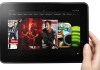
Amazon just announced that it would be dropping the price of the 8.9-inch version of its Kindle Fire HD. The tablet will now cost $269 for the Wi-Fi only version and $399 for the Wi-Fi and LTE version. The Kindle Fire HD 8.9″ is now available in the UK, Germany, France, Italy, Spain and Japan as well.
Developing…
-
EyeTechCare Raises $13M From Chauvin, Omnes, SHAM
French company EyeTechCare SA said it raised a $13 million third round of funding from private investor Bernard Chauvin as well as existing investors Omnes Capital (formerly Credit Agricole Private Equity) and the Lyon-based insurer SHAM. The company is developing medical devices for the ophthalmology market.
PRESS RELEASE
EyeTechCare raises EUR ten million in a third round of funding
The funding will be used to complete the EyeTechCare EyeMUST 2 international clinical trial and to start the FDA registration process
Rillieux-la-Pape, France, March 12, 2013 – French company EyeTechCare SA, which develops non-invasive therapeutic medical devices for the ophthalmology market based on the use of ultrasound, today announces that it has secured a third round of funding amounting to EUR ten million. Bernard Chauvin, a private investor, has taken an equity stake in the company alongside two of the existing investors who also contributed to this round of funding: the capital investment company Omnes Capital (formerly Credit Agricole Private Equity) and the Lyon-based insurer SHAM.
Since its last round of funding in 2010, EyeTechCare has completed the EyeMUST 1 trial, which tested the EyeOP1 device on around sixty glaucoma patients in nine centers in France. In May 2011, EyeTechCare obtained the CE mark, allowing the company to start the marketing, sales and distribution activities required to bring EyeOP1 to market. The device has been introduced gradually to the European market since the end of 2012 and a number of European distribution agreements have been signed. The focus of EyeTechCare’s clinical activity is the EyeMUST 2 trial, which was launched in the second quarter of 2012 and involves ten international centers and 120 patients.
EyeTechCare plans to use the funds raised to complete its EyeMUST 2 international trial, with results due to be published in 2014. The company will also be able to fund the initial steps required by the FDA registration process. It plans to notify the FDA before the end of 2013 of its intention to bring the device to market.
“The simplicity of EyeOP1 comes from an uncomplicated yet brilliant idea: the use of ultrasound to treat glaucoma. Beyond the complex technical constraints, which have been incredibly well managed, there is a team with the desire to achieve their goal of helping patients,” said Bernard Chauvin, MD, private investor. “Quite simply, the results are there. I am proud to be associated with what is real therapeutic progress, particularly as it fits so well with my vocation as a doctor and an entrepreneur.”
“We’ve been excited by EyeTechCare’s market positioning right from the start. The arrival of this new investor will support the growth of the business,” said Alexia Perouse, co-head of venture capital activity at Omnes Capital. “The company’s prospects for development are very encouraging and the team in place has always been able to meet its self-imposed deadlines.”
“We’re truly honored to have the support of Bernard Chauvin, a renowned authority in the field of ophthalmology,” said Fabrice Romano, CEO of EyeTechCare. “It’s a real acknowledgement for EyeTechCare and our EyeOP1 product. This funding means that we can consolidate our presence on the European market and prepare for entry into the US market.”
EyeTechCare’s second round of funding in 2010 raised EUR 7.5 million from SHAM and Omnes Capital. In 2008, shortly after it was founded, EyeTechCare secured a first round funding of EUR 1.2 million from CEA-Investissement and Omnes Capital. This initial funding enabled the company to undertake the preclinical trials of its EyeOP1 device for the treatment of glaucoma.
Glaucoma is the second biggest cause of blindness worldwide. It is characterized by an increase in intraocular pressure. There is still no fully effective cure. Around 60 million people worldwide suffer from glaucoma. It is estimated that 8.4 million people are blind as a result. These figures are steadily increasing as the population ages. The forecast is that by 2020, 80 million people will be suffering from glaucoma and 11.2 million people will have lost their sight as a result of this disease. (Source: Canadian Ophthalmology Society)
Bernard Chauvin will sit on the company’s board of directors.
About EyeTechCare
EyeTechCare SA is developing non-invasive therapeutic medical devices for the ophthalmology market based on High-Intensity Focused Ultrasound (HIFU). HIFU technology allows ambulatory and rapid treatment to be performed, thereby limiting the cost and the risk to the patient.
The company’s first device, EyeOP1(R), is for the treatment of glaucoma, a disease that affects about two per cent of the world population and can lead to blindness. None of the therapies currently on the market provide a satisfactory cure for glaucoma. The treatments offered up to now have been constructed around eye drops, lasers and surgery, but they have limitations (low compliance, dependence on the operator, patient relapse, technical difficulties and so on).
EyeOP1(R) has been undergoing clinical trials in France and Europe and was launched onto the market at the end of 2012. The device utilizes the UC3 (ultrasound circular cyclo-coagulation) procedure, which makes it possible to reduce intraocular pressure by partially and accurately destroying the ciliary bodies that produce aqueous humor. The device obtained the CE mark in May 2011.
Based in Rillieux-la-Pape, near Lyon, France, EyeTechCare was founded in 2008 by three experienced managers with complementary expertise in the medical, industrial and regulatory fields. Today it employs close to 25 employees. The company has submitted eight patent applications in conjunction with the Lyon-based laboratory (Unit 1032) of Inserm, the French National Institute of Health and Medical Research. Since 2008, the company has secured nearly EUR 1.2 million in aid and subsidies from OSEO (the French innovation promotion agency), as well as official recognition from a number of state technology authorities. The company has raised a total of EUR 18.7 million since inception.
For more information, go to http://www.eyetechcare.com<http://www.eyetechcare.com>Bernard Chauvin – Independent investor
Bernard Chauvin is a physician specializing in ophthalmology. He headed the Laboratoires Chauvin for 17 years (until its acquisition by Bausch and Lomb), prior to joining Neurotech, a French biotechnology company where he served as chief executive officer until 2004. Since then, he has taken an active role as a director in the development of a number of pharmaceutical and biotechnology companies.About Omnes Capital (formerly Credit Agricole Private Equity)
Omnes Capital is a major player in private equity, with a commitment to financing SMEs. With EUR 1.9 billion in assets under management, Omnes Capital provides companies with the capital needed to finance their growth and with key expertise in a number of areas: LBO and expansion capital, venture capital in technology and life sciences, renewable energy, mezzanine, secondary funds of funds, co-investment. Omnes Capital, formerly Credit Agricole Private Equity, was a subsidiary of Credit Agricole until March 2012 when the company gained its independence. Omnes Capital is a signatory to the United Nations Principles for Responsible Investment (PRI).http://www.omnescapital.comAbout Sham
Created in 1927, Sham is a mutual insurance company specialising in risk management for players in the healthcare and socio-medical sectors. Sham is the number one medical civil liability insurer in France. It has 7,509 members – individual and corporate – and manages EUR 1.5 billion in assets invested in a range of media. Through its global approach to risk management, Sham offers its members a range of insurance and services that are fully tailored to their specific requirements. Sham employs 300 people and achieved a turnover of EUR 296.9M in 2011.
Contact: Romain Durand, http://www.sham.frThe post EyeTechCare Raises $13M From Chauvin, Omnes, SHAM appeared first on peHUB.
-
Ouya announces launch event for March 28th

Ouya has announced a thank you party for backers of their Kickstarter project that will take place on March 28th in San Francisco. It is also expected that Ouya will distribute the first generation of its consoles at the same event to backers of the project. Those who haven’t backed the project, but want to get their hands on the console, will have to wait until June when it becomes available to the public and sold at select retail stores for $99.99. It’s been less than a year since Ouya went live with its Kickstarter campaign, and with over $8 million collected, it’s safe to say they have seen tremendous success so far.
Come comment on this article: Ouya announces launch event for March 28th
Visit TalkAndroid for Android news, Android guides, and much more! -
Stay informed with Desktop BBC News

Monitoring the latest BBC news from your Windows desktop used to be very easy: just install the official News Desktop Alert and Ticker and it would keep you up-to-date. The move to smartphones and tablets meant the service was closed a couple of years ago, though, which left your desktop options a little limited.
Unless, that is, you install the (strictly unofficial) Desktop BBC News.
The program launches with a small window listing the current UK news headlines. You can change this to display the BBC’s world news, though, or stories from various parts of the site: “Health”, “Politics”, “Science” and so on.
Click any headline of interest and a very brief summary (maybe 25 words) pops up. And if you click the “Read more” link in that window then the relevant BBC news page opens in the program’s internal browser.
Any headlines you click are then greyed out, which makes it easy to spot the stories you haven’t read. And Desktop BBC News refreshes its headlines every five minutes, to keep you up-to-date.
This is all useful enough, but what really makes the program interesting is its extreme configurability. There’s just so much that can be changed: the window position (always on top, pinned, normal), transparency level , headings, colors, the browser to use, the refresh time, how to display stories you’ve read, and more.
Desktop BBC News does also have some annoyances. Launch it, for instance, and you’ll see a message asking if it can connect to BBC.co.uk and download the latest headlines. At first we were impressed by its politeness, but when we realised this message would be displayed every time it launched – and there was no “don’t display again” checkbox – it became a little more annoying.
And for some reason the developer has apparently decided that the program doesn’t need a minimise button. Yes, we know it’s meant to be displayed on the desktop, most of the time, but it would still be useful to move it to the system tray, just occasionally.
These issues aside, though, Desktop BBC News is a compact, capable and configurable tool, and an easy way to keep yourself up-to-date with the latest news.
Photo Credit: Sergey Nivens/Shutterstock
-
Larry Page Says There Have Now Been 750M Android Activations

In Larry Page’s note moments ago about Andy Rubin stepping down as head of Android to be replaced by Sundar Pichai, he also provided an update on Android device activations: there are now 750 million of them, across smartphones and tablets from 60 hardware makers. This an update on the 500 million figure noted in September 2012.
From Page’s note:
Fast forward to today. The pace of innovation has never been greater, and Android is the most used mobile operating system in the world: we have a global partnership of over 60 manufacturers; more than 750 million devices have been activated globally; and 25 billion apps have now been downloaded from Google Play. Pretty extraordinary progress for a decade’s work.
And here’s a visualization of how Android has grown, courtesy of Benedict Evans.
By many estimates from analysts, Google’s Android is currently the world’s biggest smartphone platform. The most recent figures from Gartner, for example, put it at 70% of the market in terms of recent devices sold. Activations are a slightly more nebulous stat, however, because, as Evans points out, they don’t include, for example, Android devices sold in countries where Google services might get used, such as China. And they don’t count secondary-owners of devices, as you may sometimes get in developing markets.
750 million Android activations implies an active base of somewhere around 675 million, Evans says. “Plus China, of course.” As a point of comparison, iOS is at about 400 million.
Analyst Horace Dediu, based on today’s 750-million figure and historical growth, predicts that Android will reach 1 billion activations by mid-August 2013.
Last week, Google provided an update on how ebooks and music have been progressing on the platform: there are now over 5 million ebooks and 18 million songs available on Google Play, one year on after it got rebranded from its previous name of Android Market.
-
Andy Rubin steps down from role as Android boss at Google

-
6 Reasons To Grab The Galaxy Note 8.0 Over The iPad Mini

Apple was late to launch a smaller version of its iPad and with a price tag much higher than more powerful Android equivalents, it’s lead many to question the value. Of course that all depends on your preference of mobile ecosystem. SamMobile has laid out six reasons why you should buy the Galaxy Note 8.0 instead which includes a full comparison chart.

The Galaxy Note 8.0 has a Multi Window feature which allows you to use multiple apps at once. For example, this can be useful for pulling up a document while talking to someone. Multi Window support is not a deal breaker by any means, but it is pretty nifty.

Reading Mode optimizes the display to make it easier on your eyes. Easy access to digital books on Amazon, Barnes & Noble, and other destinations, has helped turn tablets into our everyday reading companion.

S Pen turns the Galaxy Note 8.0 into a digital canvas of sorts, allowing you to draw, paint, or just write things down in a more natural way. Sure, you can use a stylus with the iPad Mini, but chances are it’s not going to be as smooth since S Pen is integrated with the tablet.

While the iPad Mini has the same resolution as the original iPad released back in 2010, the Galaxy Note 8.0 has a 1280×800 display with 26 more pixels per inch.

With a 1GHz dual-core processor and 512MB RAM in the Mini, the Note 8.0 significantly outperforms with a 1.6GHz quad-core processor and 2GB RAM. The iPad Mini has up to 64GB of storage which is very pricey at $529 for the WiFi-only version, but the Note 8.0 has a microSD card slot.

Samsung has yet to share pricing and availability and with the Unpacked event gearing up, we’re likely to hear more very soon.
Source: SamMobile
Come comment on this article: 6 Reasons To Grab The Galaxy Note 8.0 Over The iPad Mini
Visit TalkAndroid for Android news, Android guides, and much more! -
Andy Rubin out as head of Android, Sundar Pichai to take over
Google has announced that Andy Rubin, who has headed up Android for the company ever since Google bought his startup in 2005, is leaving his post. Replacing him will be Sundar Pichai, the company said Wednesday in a blog post.

Structure 2012: Sundar Pichai – SVP, Chrome and Apps, Google, Om Malik – Founder and Senior Writer, GigaOM
Pichai will continue in his role overseeing Chrome and Google Apps. It’s not clear what role Rubin will take on next for Google.
In a blog post signed by CEO Larry Page, he wrote of the transition:
Having exceeded even the crazy ambitious goals we dreamed of for Android—and with a really strong leadership team in place—Andy’s decided it’s time to hand over the reins and start a new chapter at Google. Andy, more moonshots please!
Rubin leaves Android with the world’s largest share of mobile operating systems, said to be 75 percent by IDC as of the end of September 2012. Google also announced that same month it had a total of 500 million activations of Android-powered devices, and Page announced in the blog post announcing the shakeup that 750 million Android devices have been activated.

Related research and analysis from GigaOM Pro:
Subscriber content. Sign up for a free trial.- Life After Chrome: What’s Next for Android
- Analyzing the wearable computing market
- Carrier IQ and the continued erosion of operator trust

-
Verizon said to launch HTC One later this year

-
Rep. Lamborn cites IER’s recent study
Rep. Lamborn cited IER’s Beyond the CBO study in a recent subcommittee hearing on our vast energy resources.
http://www.instituteforenergyresearch.org/beyond-the-congressional-budget-office…
-
How to use your smartphone to get a better seat during a baseball game
You can already use your smartphone as a ticket to get into a baseball game. And now with an update to Major League Baseball’s At the Ballpark app for iOS and Android, the app will now let those who aren’t satisfied with their seats to get better ones right from their phone, even after the game has already started.

The app was built with the help of a company called Experience, and it uses fans’ personal preferences to offer them seats they might like better based on the real-time inventory of tickets available. For MLB, the effort is designed as another way to let fans “personalize their ballpark experiences.”
With the new “upgrade seat” button in the app, teams can offer better or simply different seats based on a particular fan’s preferences. Those preferences are culled from information the fan has already shared with MLB — either through ticket purchases, check-ins at the game within the app, etc. So if, for example, you bought four tickets in the outfield, the app can offer you four tickets closer to home plate. Teams might also use the seat-upgrade function to entice fans to special seating sections — areas with access to specific food options or more exclusive sponsored areas. The pricing is determined by the team, and they can choose to offer the upgrades for discounts during the game.
The first teams to offer this service at their stadiums will be the Arizona Diamondbacks, Atlanta Braves, Minnesota Twins and the Oakland A’s. The service will go live in April.
The At the Ballpark app debuted before the 2012 season as a way for fans to check in to stadiums to receive offers like discounted food and drinks and team apparel, as well as buy tickets, order food and share on social media. The ticket upgrade feature is just one of the ways MLB is using mobile tech to reach fans. The 2013 season, which begins March 31, will also see 13 MLB teams using Apple’s Passbook feature for iPhone as a way to accept mobile tickets on game days.

Related research and analysis from GigaOM Pro:
Subscriber content. Sign up for a free trial.- Analyzing the wearable computing market
- Carrier IQ and the continued erosion of operator trust
- The future of mobile: a segment analysis by GigaOM Pro

-
Everything you need to know about TEDxDeExtinction
Stewart Brand begins today’s TED Talk with an elegy for Martha of Cincinnati, who died in 1914. No, Martha is not a person. She was the very last passenger pigeon.
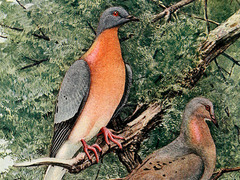 Stewart Brand: The dawn of de-extinction. Are you ready? “Extinction is a different kind of death — it’s bigger,” says Brand in this talk, given at TED2013. “This had been the most abundant bird in the world. They lived in North America for 6 million years — suddenly it wasn’t here at all.”
But, Brand shares, the passenger pigeon could now be brought back to life. He calls it: de-extinction.
Stewart Brand, one of the founders of the environmental movement in the 1960s, is known for thinking of history differently. At TED2004, he shared his vision for the Clock of the Long Now, which keeps time for 10,000 years.
 Stewart Brand on the Long NowAt TED@State, he shared 4 environmental ‘heresies,’ coming out in favor of nuclear power and genetically engineered crops. But in this talk, Stewart lays the groundwork for his boldest idea yet: bringing back species like the Carolina parakeet (extinct 1916), the Heath hen (extinct 1932), the Tasmanian tiger (extinct 1936) … even the Woolly Mammoth (extinct about 4,000 years ago).
Brand says this is an extension of current work being done to save endangered species.
 Stewart Brand: 4 environmental 'heresies'“Humans have made a huge hole in nature in the last 10,000 years. We have the ability now and, maybe the moral obligation, to repair some of the damage,” says Brand. “We interfered in a big way by making them these animals extinct. Many of them were keystone species and we changed the whole ecosystem they were in.”
To hear how “ancient DNA” from museum specimens and fossils could be used to bring back some of these species, watch this bold talk. It, of course, will bring to mind many visceral questions. For example: Can we really bring extinct species back to life? Should we? Can these animals be reintroduced into the wild? How would we do that ethically? And are we playing God by even thinking about it? (See the video above for thoughts on that one.)
For the past two years, Brand — along with his wife, biotech expert Ryan Phelan, and genetic engineer George Church — has held private workshops to explore whether de-extinction was possible, and whether biologists were interested in the idea. This is just the beginning of a long conversation — one Brand now wants to take public. To further dive into all the myriad questions involved in de-extinction, he is holding TEDxDeExtinction this coming Friday in Washington, DC. A joint effort between Brand’s non-profit Revive & Restore, TED and National Geographic — TEDxDeExtinction will be the first public exploration of this fascinating topic.
The event will be divided into the sessions “Who,” “How,” “Why and Why Not,” and “Wild Again.” It will feature greetings from TED’s own Chris Anderson and National Geographic Society chairman John Fahey, as well as talks from Michael Archer on “A second chance for Tasmanian Tigers and Fantastic Frogs,” Robert Lanza on “The Use of Cloning and Stem Cells to Resurrect Life” and Beth Shapiro, who sequenced the genome of passenger pigeon, on “Ancient DNA.” See the full program here »
But perhaps the most exciting part of the TEDxDeExtinction website is the Frequently Asked Questions page. Below, just a sampling:
Why do it? Why revive extinct species?
For the same reasons we protect endangered species. To preserve biodiveristy and genetic diversity. To undo harm that humans have caused in the past. To restore diminished ecosystems. To advance the science of preventing extinctions.
How soon will some extinct creature live again?
Signs are there will be some impressive milestones in this decade. Technically one extinction has already been partially reversed. The last Pyrenean ibex (also called a bucardo) died in 2000. A Spanish team used frozen tissue to clone a living twin in 2003, birthed by a goat. The baby ibex died of respiratory failure after 10 minutes (a common problem in early cloning efforts). Funding dried up, so no further work has been done on this species as yet. As George Church reminds people, the first airplane flight in 1903 lasted 12 seconds.
How many techniques are there, and how do they work?
There are at least three semi-successful techniques for de-extinction so far. 1) Selective back-breeding of existing descendents to recreate a primordial ancestor is being used for the revival of the European Aurochs, among others. 2) Cloning with cells from cryopreserved tissue of a recently extinct animal can generate viable eggs. If the eggs are implanted in a closely related surrogate mother, some pregnancies produce living offspring of the extinct species. 3) Allele replacement for precisely hybridizing a living species with an extinct species is the new genome-editing technique developed by George Church. If the technique proves successful (such as with the passenger pigeon), it might be applied to the many other extinct species that have left their “ancient DNA” in museum specimens and fossils up to 200,000 years old.
It all sounds like Jurassic Park. How is this different?
It was a wonderful movie, which introduced the world to the idea of de-extinction back in 1993. Its science fiction is quite different from current reality, though. First, no dinosaurs—sorry! No recoverable DNA has been found in dinosaur fossils (nor in amber-encased mosquitoes). Robert Lanza observes, “You can’t clone from stone.”
Second, the plot of the movie is driven by protecting the commercial secrecy of an island theme park. Real-world de-extinction is being conducted with total transparency. Eventual rewilding of revived species can be no more commercial than the current worldwide protection of endangered species and wildlands.
See lots more FAQs and a suggested reading list »
Watch the free livestream of TEDxDeExtinction on March 15 starting at 8:30 am (EST) »

-
I’m shocked! Shocked! More teens have cell phones and use the Internet
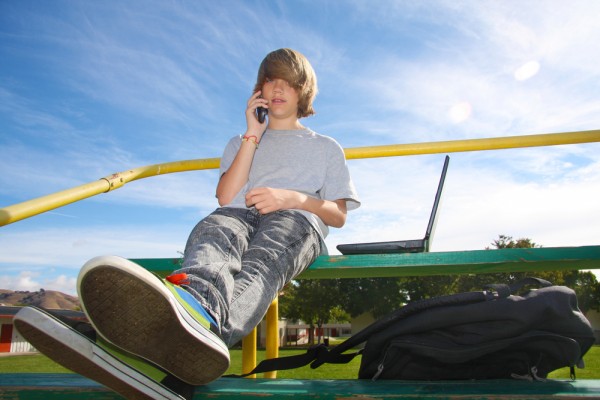
As the parent of two teenagers I am always interested in studies about their digital lifestyle. Pew Research Center has a new report that claims that “smartphone adoption among American teens has increased substantially and mobile access to the internet is pervasive”. You don’t say? I believe I could have told you that simply by visiting my local mall. So much for the “tell us something we don’t know” moment.
Still, the research firm did its homework and published some interesting numbers. Pew studied a group of 802 teens between the ages of 12 and 17 to reach its results. For instance, 78 percent of all teens have cell phones and almost half of those, 47 percent, are smartphones. For the record, in our household it is an even 50 percent — the 16 year old has a smartphone, the 13 year old does not yet have his first phone, though it is a subject that seems to come up daily.
The study also announces that 23 percent of teens have a tablet, 95 percent use the Internet and 93 percent have a computer at home. Again, all rather unsurprising numbers based on my own experiences, but I question the demographics that are not mentioned anywhere in the study.
“The nature of teens’ Internet use has transformed dramatically — from stationary connections tied to shared desktops in the home to always-on connections that move with them throughout the day,” says Mary Madden, Senior Researcher for the Pew Research Center’s Internet Project and co-author of the report.
To sum up, as I point out, none of this qualifies as shocking and it meshes with my personal experiences, however I question how much these percentages really mean, given that they would certainly drop off dramatically with income level. In other words, I am not convinced they represent everyone across the board, but that is not mentioned here, so I am only musing and not stating.
Photo Credit: J. McPhail/Shutterstock
-
FTC Gets Specific on Guidelines for Third-Party Twitter Ads
The Federal Trade Commission has just released some revisions of its decade-old online advertising guidelines, alliteratively titled “Dotcom Disclosures.” In it, the FTC lays out more specific rules for “space-constrained” ads, which you and me would probably just call Twitter ads.
The new regulations add bits and pieces about all types of online ads – especially ads viewed from mobile devices. But it’s the new guidelines on “space-constrained” ads (most applicable form being ads inside tweets) that are really interesting.
Of course, the FTC reminds us that all of the ad guidelines for all types of media apply to social media ads. Advertisers can’t hide the small print, and they can’t make it seem like the ad is not really an ad. But there are some specific guidelines for shorter ads, like the ones that appear on Twitter, that social media marketers need to know about.
First off, the FTC says that you can link to all the fine print instead of having to say it all inside the 140-character limit. But if you do, the click-through page must contain all applicable information and it must get to the point pretty quickly:
“When a space-constrained ad requires a disclosure, incorporate the disclosure into the ad whenever possible. However, when it is not possible to make a disclosure in a space-constrained ad, it may, under some circumstances, be acceptable to make the disclosure clearly and conspicuously on the page to which the ad links,” says the FTC.
But about that link: the FTC warns that shortened links like “bit.ly/f56” or even shortened links with the world “disclose” in them like “bit.ly/f56/disclose[6]” could confuse consumers. Simply put, the link may direct the consumer to the product’s website, but they wouldn’t know exactly why. Plus, it may be hard to find the disclosure.
Additionally, “space-constrained” advertisers run into another problem if their product is available to be purchased offline:
“If a product promoted in a space-constrained ad can be bought in a brick and mortar store, consumers who do not click through to a linked website would miss any disclosure that was not in the space-constrained ad itself. If the disclosure needs to be in the ad itself but it does not fit, the ad should be modified so it does not require such a disclosure or, if that is not possible, that space-constrained ad should not be used.”
Basically, the FTC is saying that if you can’t provide the fine print in your Twitter ad, and there’s a chance that a customer could buy your product offline without having seen the fine print, it’s best to simply forgo the Twitter ad altogether.
Even if the ad tweet is able to achieve this, the advertiser still has to adequately disclose that the viewer is in fact looking at an ad. The FTC suggests that adding “Ad:” to the beginning of the message or “Sponsored” somewhere inside would be sufficient. But one popular Twitter trick, adding “#spon” to ad tweets, could not be enough according to the FTC.
They say that it “might confuse consumers and make it less likely that they would understand that it is a disclosure.”
Of course, we’re not talking about Twitter’s official ad product here. Sponsored tweets are clearly marked as ads by Twitter themselves. What we’re talking about are unofficial “third-party” ads that users are paid to post. Twitter already requires that these third-party ads properly disclose that they are ads. But the FTC has clearly decided that there needs to be some hyper-specific rules for these new space-constrained ads, which we’ll only see more and more of in the coming years.


