Blog

  • 2011 Michelin Design Competition Theme Announced

    A new design challenge is revving up, Michelin announced today at NAIAS. The 2011 Michelin Challenge Design (MCD) theme has been revealed, giving entrants a chance to share their transportation concepts for ten years ahead in the year 2021 with the challenge dubbed ‘PLUS 10. The Best is Yet to Come!’.

    Designers are being asked to render unique vehicle concepts that address the lifestyle preferences and transportation needs of a specific country or region for review by a jury of l… (read more)

  • Detroit 2010: Ford sweeps North American Car and Truck of the Year awards for 2010

    Filed under: , , , , ,

    Mark Fields, Ford’s President of the Americas, accepts the hardware from Tony Swan of Car and Driver

    For just the third time in the 17-year history of the North American Car and Truck of the Year, one manufacturer has taken home both pieces of etched glass. Ford’s 2010 Fusion Hybrid and Transit Connect have yielded the hardware for the Dearborn automaker here at the Detroit Auto Show, with the Fusion emerging victorious over the shortlisted Buick LaCrosse and Volkswagen Golf, and the Transit Connect besting the Chevrolet Equinox and Subaru Outback.

    The last time a single manufacturer won both the Car and Truck of the Year awards was back in 2006, when Honda did double duty with its Civic compact and Ridgeline pickup. In total, a U.S. automaker has won the car award nine times, and the truck award, 11 times. Official press release after the jump.

    [Source: Ford]

    Continue reading Detroit 2010: Ford sweeps North American Car and Truck of the Year awards for 2010

    Detroit 2010: Ford sweeps North American Car and Truck of the Year awards for 2010 originally appeared on Autoblog on Mon, 11 Jan 2010 08:57:00 EST. Please see our terms for use of feeds.

    Permalink | Email this | Comments


    Buy This Item: [Click here to buy this item]

    Read Original Article

  • Detroit 2010: Chrysler Lancia might be a look into the future

    Filed under: , , , , , , ,

    Chrysler Lancia – Click above for high-res image gallery

    You are looking at… well, no one at the Chrysler booth seemed to know exactly what this is. They didn’t even have a proper name for it. But that tiny little fact will not be stopping us. You are looking at what they call a Chrysler Lancia, or more correctly, a Chrysler-badged Lanica. Specifically, a Lancia Delta with Pentastar badges. All of which begs the question: what makes a Lancia Delta?

    Ah, well, we are happy you asked. On the surface it’s a small crossover/tall wagon-type people mover/MPV with some fancy electronic driving aids. But that sells the Delta short, as Lancia’s website is loaded with the sort of florid PR language that will warm the cockles of the most jaded car-hack’s heart.

    Here’s a sample, “Luxury that is never flaunted: an originality that avoids useless overstatements, that always preserves elegance.” Sounds keen, huh? But wait, there’s more, “A concentrate of evolution, a hyperbolic expression of technology.” Ooh! Good stuff. Is this car for real? Will there actually be a Chrysler-badged Lancia? Probably, but we just don’t know. However, we are certain that Chrysler could really use, “A concentrate of evolution.”

    Gallery: Chrysler Lancia

    Detroit 2010: Chrysler Lancia might be a look into the future originally appeared on Autoblog on Mon, 11 Jan 2010 08:30:00 EST. Please see our terms for use of feeds.

    Permalink | Email this | Comments


    Buy This Item: [Click here to buy this item]

    Read Original Article

  • Detroit 2010: Mercedes-Benz sculpture is the future of the CLS, Terminator 2 style

    Filed under: , , , , ,

    Mercedes-Benz Sculpture – Click above for high-res image gallery

    The first concept to be officially unveiled at the Detroit Auto Show is this, a sculpture by Mercedes-Benz that foretells the future of its vehicles – and specifically the CLS.

    From the SLS AMG-inspired fascia to the overly blistered fenders clearly inspired by the recent E-Class coupe, the T2-style sculpture features two signature lines that are set to infect the rest of the Mercedes line-up in the near future.

    According to officials, this stylistic exercise represents M-B’s transition from its traditional wedge shape to a new, edgy art-deco design inspired by the ’30s. Aesthetic fripperies aside, this is the future of the CLS, which we expect to see in full concept form later this year.

    Detroit 2010: Mercedes-Benz sculpture is the future of the CLS, Terminator 2 style originally appeared on Autoblog on Mon, 11 Jan 2010 08:28:00 EST. Please see our terms for use of feeds.

    Permalink | Email this | Comments


    Buy This Item: [Click here to buy this item]

    Read Original Article

  • Detroit 2010: DADA president Bill Perkins feeling confident about the big show

    Filed under: ,

    Over the past 18 months, auto shows around the world have taken a huge hit as the economic melt-down has caused a collapse in sales and automakers have tried slashing spending. Many of us in the business of writing about cars have wondered if the age of the big auto show is drawing to a close. One person who doesn’t agree with that projection is Bill Perkins, president of the Detroit Auto Dealers Association and member of the Organizing committee for the North American International Auto Show that opens its doors to the press today.

    The Detroit show was particularly hard hit in 2009 as several manufacturers including Nissan, Mitsubishi and Porsche pulled the plug on participating. Meanwhile, Chrysler and General Motors scaled back their efforts as they veered toward bankruptcy. Perkins spoke with Autoblog last week and was feeling outwardly confident. While last month’s LA Auto Show was looking a bit sparse, Detroit this year seems to have stabilized and even recovered a bit.

    Read more after the jump.

    Continue reading Detroit 2010: DADA president Bill Perkins feeling confident about the big show

    Detroit 2010: DADA president Bill Perkins feeling confident about the big show originally appeared on Autoblog on Mon, 11 Jan 2010 08:24:00 EST. Please see our terms for use of feeds.

    Permalink | Email this | Comments


    Buy This Item: [Click here to buy this item]

    Read Original Article

  • Volkswagen Compact Coupe “concept” blends sport and hybrid

    Filed under: , , , ,

    New Compact Coupe concept – Click above for high-res image gallery

    The Volkswagen Touareg hybrid is now just a few months away from production, but the crew in Wolfsburg are staying busy by cranking out small concept vehicles with hybrid powertrains. The latest that debuts here at the Detroit Auto Show this morning is called the New Compact Coupe (NCC), a handsome hybrid coupe that looks remarkably production-ready. Designed to slot globally between the not-for-North-America Scirocco and the rakish CC, we could see a serial version of the NCC competing well here in the States with coupes like the Honda Accord and Nissan Altima.

    In showcar guise, the NCC features Volkswagen’s 1.4-liter TSI inline-four with 148 horsepower and 177 pound-feet of torque. The hybrid system uses the same basic architecture (if not dimensions) as the recent L1 and Up-Lite concepts from Frankfurt and Los Angeles. In this case, a 20-kilowatt electric motor is sandwiched between the engine and the seven-speed DSG dual clutch gearbox. A 1.1 kilowatt-hour lithium ion battery in the back of the car provides electrical energy storage for electric drive, electric boost and regenerative braking. The system also allows for the complete decoupling of the transmission for enhanced coasting even at highway speeds, although it isn’t immediately clear from the press release if the electric motor will push the NCC along for extended periods as it does with Volkswagen Audi Group’s Porsche Cayenne Hybrid system. Either way, VW is estimating the NCC’s mileage at 45 miles per gallon based on EPA test procedures with the EU numbers coming in at 56 mpg (U.S.) and 98 g/km of CO2. Acceleration to 60 mph is ballparked at 8.1 seconds and top speed is pegged at 141 mph.

    The car itself is virtually the same size as the current Jetta except for wheelbase length and overall height (the concept has three more inches between the axles and the roof is two inches lower), and it may well be a preview of what to expect from the next-generation Jetta. Recently there have been rumors circulating that VW plans to revive the Jetta coupe, a model that hasn’t been in the lineup since the late ’80s. A production version of this poor-man’s Audi A5 could well be that car, although VW officials aren’t talking. Similarly, the forthcoming Tennessee-built New Medium Sedan is expected with both diesel and hybrid powertrains and the same could be the case for the next Jetta. While you wait, you can check out our high-res gallery below and VW’s official press verbiage available after the jump.

    [Source: Volkswagen via World Car Fans]

    Continue reading Volkswagen Compact Coupe “concept” blends sport and hybrid

    Volkswagen Compact Coupe “concept” blends sport and hybrid originally appeared on Autoblog on Mon, 11 Jan 2010 07:42:00 EST. Please see our terms for use of feeds.

    Permalink | Email this | Comments


    Buy This Item: [Click here to buy this item]

    Read Original Article

  • Progress Software Buys Savvion

    Wade Roush wrote:

    Progress Software (NASDAQ: PRGS), the Bedford, MA-based maker of systems for integrating enterprise software applications, said this morning that it has acquired Santa Clara, CA-based Savvion for $49 million, net of Savvion’s cash. Savvion makes business process management software, and Progress president and CEO Richard Reidy said the acquisition “enhances our goal to provide unprecedented business visibility, responsiveness and business process improvement, coupled with the highest degree of data integrity and integration.” Progress hasn’t said how many of Savvion’s roughly 200 employees it expects to retain in the merger.


  • Ricardo Unveils New PEP Charging Station at NAIAS

    As you know by now, the 2010 North American International Auto Show (NAIAS) features its own, dedicated electric avenue, with manufacturers of both cars and EV technologies being able to display at the Cobo Center their creations and solutions.

    Among them, Ricardo and PEP Stations, who together unveiled the new electric vehicle charging station on which they have worked in the past year. Much like a regular gas station, the PEP station will allow drivers of electric vehicles to a… (read more)

  • Hate Exercise? Your Gym Teacher Might Be To Blame

    Filed under: ,

    Having trouble getting motivated to exercise? Blame your old gym teacher. Having a bad experience in phys ed during your school years can lead to a lifetime of inactivity, recent studies show. And while it’s generally accepted that many gym teachers … Read more


    Permalink | Email this | Linking Blogs | Comments

  • Bernanke, Taylor Rules and the Fed Funds Rate

    Thanks to Fed Chairman Ben Bernanke, economists are abuzz these days about the Taylor Rule, a simple formula that uses measures of inflation and economic slack to show where the fed funds rate should be.

    Reuters

    Mr. Bernanke spoke at length about the Taylor Rule last week in comments at the American Economic Association. Critics have used the Taylor Rule to show that monetary policy was too easy last decade. Mr. Bernanke set out to knock that idea down. In doing so, he laid out his own preferences for how the Taylor Rule should be used.

    Let’s set aside for a moment whether Bernanke’s defense of monetary policy in the 2000s stands up to scrutiny. Lots of people don’t think it did, but that’s a subject for another day.

    At issue today: Did Mr. Bernanke’s speech last week send a subtly hawkish signal to the markets? His charts for how the Taylor Rule should be used showed the fed funds rate being slightly positive. Macroeconomic Advisers Vice Chairman Laurence Meyer, in a note to clients this past weekend, said that hint of hawkishness has caused a mess for markets.

    Our own take: Mr. Bernanke made clear that he’s wary of putting too much weight on the rule, which is very sensitive to the numbers you punch in and the assumptions you make. If anything, it probably showed policy is in the right neighborhood right now.

    To understand the hubbub, you need to understand how the Taylor Rule works. The rule holds that if inflation moves below the Fed’s target, or if the economy’s actual output moves below its long-run potential output, then the Fed should reduce the interest rate by some prescribed amount. If inflation goes above the target, or actual output goes above potential output, then the Fed should raise the fed funds rate.

    (Bernanke gives a very lucid explanation of how it works in his speech, which is worth reading if you want to learn more about the mechanics of the rule.)

    There are several problems with the Taylor Rule, which Bernanke lays out to show why it wasn’t a good guidepost last decade.

    One problem is that it is very sensitive to the numbers that you plug in for inflation and for the deviation of output from its potential (which is known as the output gap.) Mr. Bernanke prefers to use forecasts for inflation. Mr. Taylor uses actual inflation measures. You can get much different results depending on which numbers you use. (Right now, using forecasts rather than real-time data yields a slightly higher fed funds rate because the output gap is projected to narrow in the months ahead as economic growth resumes.)

    The formula is also especially sensitive to how much weight you give the output gap and inflation. If you give extra weight to the output gap, something Mr. Meyer and others prefer to do, you can get a much lower fed funds rate.

    The charts in Mr. Bernanke’s speech (table 4) showed his preferred Taylor rule spitting out a slightly positive fed funds rate. You might infer some hawkishness in that. But in fact the fed funds rate is slightly positive right now, with the Fed’s target for the rate between zero and .25 percent.

    We plugged in our own numbers to a spreadsheet using a an average of the Federal Open Market Committee’s own forecast for inflation (1.45% for 2010), the Congressional Budget Office’s forecast for the output gap (a 5.5% shortfall of output from the economy’s potential) and Mr. Taylor’s original 0.5 weightings for inflation and the output gap in his formula. That spits out a 0.55% fed funds rate. Tweak the weightings a little bit, and the fed funds rate quickly goes negative. The sensitivity shows why Fed officials are wary of relying too much on the rule.

    As an aside, what we found most striking about this exercise was the grim outlook for the output gap. If the CBO is right about the outlook for economic growth and for the economy’s potential output, then the economy is going to be operating below its potential for most of the rest of the decade. That’s bad news for unemployment and for the budget outlook.


  • Paris…pelo olhar de um paraense.

    Bom…essa é a primeira vez que posto fotos minhas de Paris nesse forum…ja estive nessa cidade quatro vezes..e a ultima foi recente…fiquei 10 dias de ferias na cidade…passei natal e reveillon la…foi demais!…espero que vcs gostem!

    (1)Vista do meu quarto…no apartamento da minha familia…que fica na Place D’Italie.

    (2)Multidao de turistas embaixo da Tour Eiffel…

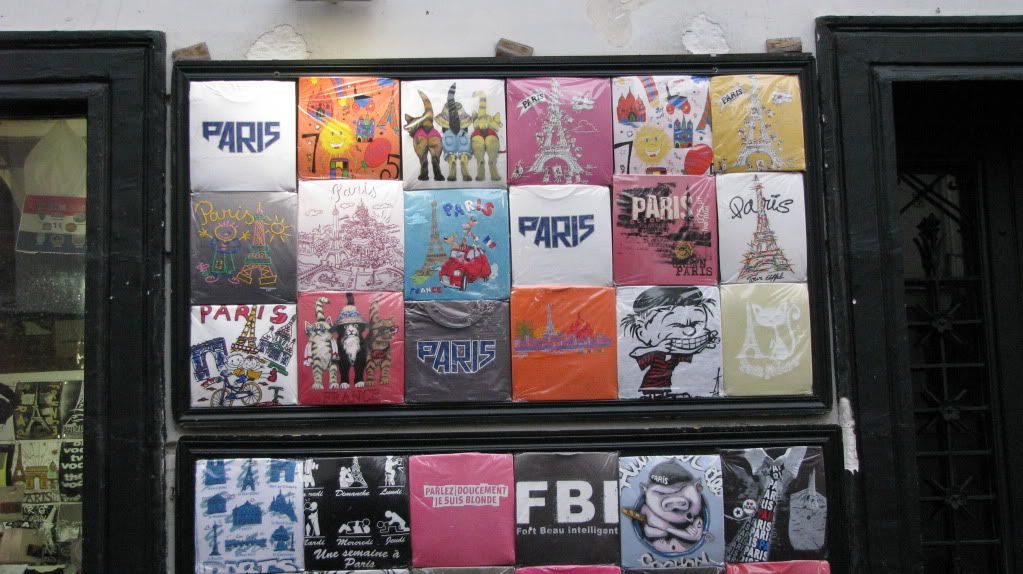
    (3)Souvenir mais comum encontrado em qualquer esquina de Paris

    (4)Marché de Noel em frente ao Trocadero…guloseimas tentadoras!

    (5)Fondue de Chocolate…delicia!

    (6)

    (7)Invalides

    (8)Ponte Alexandre III

    (9)

    (10) um detalhe indecente!…hehehehe…

    (11)

    (12)

    (13)

    (14)Petit Palais

    (15)Champs Elisée

    (16)Calçadao da Champs Elisée

    (17)Loja da Citroen em destaque na Champs Elisée

    (18)

    (19)Essa ficou tortinha, mas o que importa é o detalhe…

    (20)…e o detalhe é esse…pra minha surpresa!

    (21)

    (22)

    (23)

    (24)

    (25)

    (26)

    (27)

    (28)Realidade impressionante!!!

    (29)

    (30)

    (31)

    (32)

    (33)

    (34)

    (35)

    (36)

    (37)

    (38)Opa!

    (39)

    (40)..em frente a Catedral de Notre Dame

    (41)

    (42)

    (43)Detalhe..

    (44)Carrossel em frente ao Hotel de Ville..

    (45)Hotel de Ville

    (46)Modernidades!!!

    (47)Centre George Pompidou…marco da arquitetura contemporanea..

    (48)

    (49)

    (50)

    (51)

    (52)…interessante…hehehe…

    (53)

    (54)

    (55)Sacre-Coeur…em Montmartre.

    (56)artista de rua..

    (57)

    (58)

    (59)

    (60)

    (61)Loja de camisetas e souvenirs…

    (62)Cachorrinho de madame com carinha de antipatico…

    (63)Artistas de rua de Montmartre..

    (64)

    (65)Gostei muito do trabalho desse.

    (66)

    (67)

    (68)

    (69)nas proximidades do Moulin Rouge

    (70)Moulin Rouge

    (71)Opera Garnier

    (72)detalhe

    (73)Teto da Galerie Lafaiette

    (74)

    (75)e por ultimo uma foto de mim junto com minha prima…

    Espero que tenham gostado!

  • La Secretaria de Estado de Turismo irá a Feria de Madrid para promover RD

    SD. Con un stand promocional de 271 metros cuadrados en el que se exhibirán las novedades turísticas que posee el país, la República Dominicana participará en la Feria Internacional de Turismo (FITUR-2010), en Madrid, España, del 20 al 24 de este mes.

    El secretario de Turismo, Francisco Javier García, quien encabezará la delegación oficial, informó que en la Feria participarán más de 12 mil expositores internacionales de 170 países, más de 136 mil visitantes profesionales y más de ocho mil periodistas.

    Con la participación del país en FITUR, se inicia un ciclo de promoción del destino dominicano que involucra acciones puntuales en 43 ferias internacionales y cientos de road shows en Europa, Norteamérica, América Latina y Asia.

    En cuanto a los vídeos, es probable que muchos los hayan visto antes, pero los publique para traer a colación un detalle que refleja el esfuerzo de las autoridades por expandir el turismo dominicano y dar a conocer a la isla, y es que como la esencia del articulo tiene que ver con aspectos promocionales, cito esto para mencionar una anécdota, ya que en una ocasión el esposo de la hermana de mi madre (de origen suizo) visito la isla en Enero del año pasado y el mismo día que llego me dijo que quería visitar la zona de Sosua ya que quería aprender wind surfing y le dije que estaba bien, que tan pronto me organizara, coordinaría con un amigo para llevarlo, y en el desarrollo de la conversación le pregunte que como sabia que en esa localidad del país hacían eso, "por el momento suponía que su respuesta seria en base a que algún amigo le comento o que lo leyó en algún site de la Internet, pero no fue así, me dijo que un día estaba viendo un canal de TV (Suizo) que estaba transmitiendo un partido de fútbol y que al medio tiempo cuando realizan la pausa comercial (cuya publicidad es carisma, sobre todo en un partido de fútbol con alto rating y en prime time) transmitieron un anuncio de estos en su país, en ese momento le dije que si vio bien o no se habrá confundido (yo y mi negatividad en aquel entonces hacia las cosas de aquí), ya que la secretaria no dispone de suficientes recursos para hacer eso, y luego él me lo reafirmo, en el momento eso me lleno de orgullo, y posteriormente estuve investigando en otros sites, y constante que son varios los países en los cuales se emiten spots publicitarios de R.D. y de la misma forma hay zonas en distintos países en donde se exhiben vallas alusivas a las zonas turísticas del país.

    Y al rectificar todo esto, también recordé que no solo es en la parte del turismo, sino que también cuando hay campañas políticas dichos representantes de la parte publicitaria se las arreglan para colocar afiches promocionales en otros países, tales como en el caso de EE.UU. (New York, Boston y Miami principalmente, y España) y de la misma forma empresas como la Cervecería Nacional Dominicana y su producto Cerveza Presidente, así como también el Banco BHD colocan anuncio en el esquema virtual detrás del plato en los partidos de playoff de las grandes ligas y la serie mundial de Béisbol, bueno, y para no abundar mas, estos aspectos me llenan mucho de orgullo ya que no son todos los países que pueden hacer esto, de hecho me atrevería a decir que en América Latina se pueden contar con las manos los países que llevan a cabo estas cosas.

  • Michigan Man Pleads Guilty in Ohio to Coercion and Enticement of Minor

    Ann Arbor, Michigan Man Pleads Guilty to Coercion and Enticement of Minor

    David Jeremy Zobel, 32, of Ann Arbor, Michigan pleaded guilty in United States District Court here today to one count of coercion of a minor for driving two minor females from Xenia to Toledo and engaging in sexual activity with both of them.

    Carter M. Stewart, United States Attorney for the Southern District of Ohio; Keith L. Bennett, Special Agent in Charge of the Cincinnati Division of the Federal Bureau of Investigation (FBI); Andrew G. Arena, SAC, of the Detroit Division of the FBI; and Xenia Police Chief Randy Person, announced the plea entered today before U.S. District Judge Walter Rice.

    Zobel faces a mandatory minimum sentence of 10 years and up to 15 years in prison. Judge Rice will set a date for sentencing.

    According to a statement of facts filed with Zobel’s guilty plea, he began a series of sexually explicit online chats with numerous minor females from around the country, including a 13-year-old from Xenia, in approximately December 2008.

    Over the next six months, Zobel used online chats and text messaging to persuade her to participate in sexual activities.

    On June 2, 2009, Zobel exchanged a series of text messages from Michigan with the girl asking if she and one of her friends, who was 12, would “do ANYTHING [he] want[ed]?” if he helped them runaway from Ohio. Zobel drove to Xenia, picked up the two minor girls and drove them to a parking garage in Toledo. He had each girl perform oral sex on him, took photographs of the girls posing either in their bras or with their bare breasts exposed. Mr. Zobel then left the girls in the parking garage, giving them each $20.

    FBI agents arrested Zobel in Ann Arbor on June 12, 2009. He has been in custody since his arrest.

    Stewart commended the cooperative investigation by FBI agents and Xenia police officers, and Assistant U.S. Attorney Brent Tabacchi, who is prosecuting the case.


  • Defining themselves

    Two daguerreotypes, acquired by the Harvard Art Museum’s Department of Photographs in 2008 from a local dealer, offer viewers a glimpse at the world’s earliest form of photography, while delivering an important social statement about race in America.

    Nestled in a small space reserved for new acquisitions and light-sensitive objects on the fourth floor of the Arthur M. Sackler Museum, the three-quarter-length images are portraits of an African-American man and a woman. The unidentified subjects, captured by an unknown artist, are middle-aged and dressed in formal, 19th century attire.

    The daguerreotypes, measuring roughly 4 by 5 inches, were likely taken in the 1840s or ’50s in an urban setting such as New York, Philadelphia, or Boston, their accompanying text says.

    The distinguished appearance of the man and woman sets them apart from some other daguerreotypes of black subjects of the period, in particular part of a collection housed at Harvard’s Peabody Museum of Archaeology and Ethnology. Looking back into the camera, the two sitters reflect a sense of strength, social standing, and, perhaps most significantly, independence.

    Harvard’s extensive collection of more than 3,500 daguerreotypes is located in museums, libraries, and archives across the University. Developed in France in the 1830s, the daguerreotype was the first photographic process, and resulted in a unique image on a silver-covered copper plate.

    The works include portraits of many famous men and women. A well-known selection of daguerreotypes at Harvard’s Peabody Museum, compiled by scientist and nature historian Louis Agassiz, shows a number of South Carolina slaves.

    “We wanted to have some representations of African Americans from that time period that could serve as a counter to the J.T. Zealy daguerreotypes at the Peabody, which are images of slaves commissioned by Louis Agassiz in the mid-19th century,” said Michelle Lamunière, John R. and Barbara Robinson Family Assistant Curator of Photography, Harvard Art Museum/Fogg Museum.

    “These two daguerreotypes are commissioned portraits by the sitters, as opposed to works commissioned by a scientist who was attempting to prove theories of polygenesis, which is what the Zealy daguerreotypes were.” Polygenesis is the since-discredited notion that racial differences were the result of humans descending from different ancestors.

    What is important about the two new images, added Lamunière, is the way in which they are used for self-representation. During that era, she noted, African Americans often used photographs as a tool to counter racist stereotypes that were proliferating in print formats, such as sheet music illustrations and Currier and Ives lithographs. “Daguerreotypes,” she said, “offered the sitters a chance to negotiate between how society defined them and how they wanted to be defined themselves.”

    The works will be on display through at least mid-February. For more information, visit http://www.harvardartmuseum.org/calendar.

  • Blogging by the seat of our pants: Part Two

    Gas station in Pie-Town, New Mexico, October 1940. Photo: Russell Lee via Library of Congress. Wikimedia Commons

    In honor of the guerrilla tactics of people climbing onto MAX trains without wearing pants, we’ll pretend we have an important news angle and tell this tale:

    My brother* showed up at my house wearing pajama pants.

    We hugged. He hauled his suitcase into the guest room.  He was casual for a while and then felt compelled to come clean. He looked away, paused a long time, then said, “Ummm … … … I hate to tell you this …”

    Slowly, he started to tell how a short way into his long drive he had stopped to fill the gas tank. He was in a certain state to the north of Oregon** where people have to fill their own tanks. He didn’t want to get his hands dirty and smell like gasoline for the whole trip so he used a paper napkin to grip the pump.

    The gas tank filled. As he removed the pump the napkin started blowing around so he grabbed it, accidentally engaged the pump and spilled gas all over his pickup truck and pants.

    Scrunched in the cab, he opened his suitcase and got out his pajama bottoms.

    Wikimedia CommonsAs he was taking off his pants they started to vibrate. His phone was ringing.*** It was his daughter.

    “Where are you, Dad?”

    “I’m, uh, at a gas station.”

    Of course, he was neglecting to provide a key piece of information. One tiny prepositional phrase would have made that statement completely truthful. So let’s try it again. What he really should have said was:

    “I’m, uh, at a gas station … IN MY UNDERWEAR!”

    He finished the call and changed his pants. He stuffed the gas-soaked pants into a large, black plastic garbage bag.

    He continued on his way. The cab smelled like gas. He pulled over.

    He put the black plastic bag in the back of the pickup.

    He continued on his way. The black plastic bag started blowing around. He pulled over.

    To anchor the black plastic bag, he wedged (wedgied?) it in the side of the tailgate and shut it. He complained how putting up the tailgate produced extra drag and lowered his gas mileage. (Did he miss the irony of producing extra drag?)

    Then he came to why he was telling me all this (as if he could keep quiet and not give me blackmail fodder for the rest of his life): “I’m not sure what to do with my pants.”

    I stopped laughing long enough (not really) and went to the Google and typed in “How to get gas out of pants.”****

    Of course I was being goofy, and was slightly disappointed Large Smelly Boys didn’t pop up on top, but the first item was titled, no kidding, “How to get gas out of pants.”*****

    Tip No. 1 suggested laying the pants out in the sun. Like that’s going to happen in January in Oregon.******

    We looked out the window at the rain. We considered how attractive a pair of smelly jeans would look splayed out on the front porch. We decided to hang them in the garage.

    After a brief discussion about spontaneous combustion, I got the key, opened the industrial-strength lock on the garage and my brother hung the pants over a handcart.

    Afterward, he settled in at the dining table with his pajama pants and a warm drink. Like he really needed to say it, but he did anyway, thankfully giving me a great quote: “You know the whole irony of it? I was trying to keep my hands clean.”

    Epilogue: He left yesterday. As he was packing up, he asked — you can’t make this stuff up — “Do you have the key to my pants?”*******

    ***************

    * Yes, Art Scatter regulars will know him as the same brother who has sprayed cold water on me with a garden hose while I was in a second-story shower and cleaned puked pasta out of my sink.
    ** Geography points if you can name the state above Oregon.
    *** Imagine the headline: “Cell Phone Ignites Pants.”
    **** For journalistic integrity, I really typed in “How to get gasoline out of pants,” but who cares?
    ***** For journalistic integrity, it was really titled “How to get gasoline out of clothing,” but who cares?
    ****** Geography points if you can name why it’s nearly impossible to lay out gasoline-soaked pants in the sun in January in Oregon.
    ******* Extra credit if anyone has the key to his pants.

    ***************

    My brother was worried about telling me all this because he didn’t want a big public ordeal. I promised I would only tell his story, show his picture, and give his name, phone number and e-mail.

    I was kidding him, but here’s a picture of him anyway:

    Laura was the adoring kid sister even back then.

    I was kidding him, but here are his initials anyway (props to the Large Smelly Boys and Mr. Scatter):

    Tough Rat Gonads
    Two Rowdy Gerbils
    Twin Reproductive Glands
    Terminate Religious Guppies
    Tranquilizer Reaches Gut
    Testosterone Rattles Girlfriend
    Totally Real Gore
    Teacher’s Really Gruesome
    Toss Rocks at Goliath
    Teeth Get Rotten
    Totally Rad, Girl
    The Robust Girls
    That Rascally Gal
    Tch! Really Guys?
    Timberwolves Rally Gazillions
    Tiny Rectal Glitch
    Tonic Rattles Gizzards

    – Laura Grimes

    ***************

    PHOTOS, from top:

    • This is not the station where Laura’s brother stopped to gas up. Nor is this his pickup, although he might prefer it. And the men hanging around did not help him change pants. But the photo was taken in Pie Town, New Mexico, in 1940, and we don’t get many chances to type “Pie Town.” Photo: Russell Lee via Library of Commerce. Wikimedia Commons.
    • These are not the pants that got soaked with gasoline when Laura’s brother was trying to be all Felix Unger. But we think it’s nice that the parts are labeled. Wikimedia Commons.
    • Laura and her brother. She was the adoring kid sister even back then.


  • Another dose of Martian awesome | Bad Astronomy

    If someone woke me out of a sound sleep and forced me at gunpoint to say which is my favorite camera in the solar system, they’d probably have to shoot me. But I think that HiRISE onboard the Mars Reconnaissance Orbiter would be in the top three. And it’s pictures like this one that put it there:

    hirise_avalanche_big

    [Click to get to greatly embiggened pictures.]

    That is not a closeup of my chin before I shave. It’s Mars, a dune field in the far north; at latitude 83.5° to be precise, less than 400 km (240 miles) from the north pole. The eternal Martian wind blows the heavy sand into dunes, and you can see the hummocks and ripples from this across the image. The sand on Mars is from basalt, which is a darkish gray color. The red comes from much smaller dust particles which settle everywhere.

    But what are those weird tendril thingies?

    In the Martian winter, carbon dioxide freezes out of the air (and you thought it was cold where you are). In the summer, that CO2 sublimates; that is, turns directly from a solid to a gas. When that happens the sand gets disturbed, and falls down the slopes in little channels, which spreads out when it hits the bottom. But this disturbs the red dust, too, which flows with the sand. When it’s all done, you get those feathery tendrils. Note that at the tendril tips, you see blotches of red; that’s probably from the lighter dust billowing a bit before settling down.

    hirise_avalancheNow, you might think I’m making this all up. How do we know this stuff is flowing downhill like that? Ah, because in this picture we’ve caught it in the act! In this image, a closeup of a region just to the left of center of the big image, you can actually see the cloud of dust from an avalanche as it occurs.

    Oh, baby. The cloud is only a few dozen meters across, and can’t be more than a few seconds old.

    I love stuff like this. I tend to think of Mars as a stiff, still, unchanging place, but then HiRISE goes and slaps me in the face with something like this. Mind you, this is an avalanche. On another planet. Caught as it happened.

    Awe. Some.

    We’ve seen this before on Mars, but it’s still shocking and amazing. I can imagine some future settlers on the Red Planet, dealing with the lack of air, bitter cold, dust in all the machinery, radiation hazards from the Sun. And, apparently, they’ll have to dodge landslides too. It’ll be a tough life for sure… but then, I look at pictures like this and think it would be worth it, just to stand on the surface of another world and be able to simply look around.

    If we can see this kind of thing from space, with robotic probes, what will humans see when they go there and can kick over some rocks?


  • Mixing Open Source and Proprietary Software Strategies

    Q&A with: Gaston Llanes
    Published: January 11, 2010
    Author: Julia Hanna

    Adopting a new business model can be a strategic, game-changing play in any industry. But knowing when and how to try something new can be tricky, particularly in the constantly evolving software industry.

    The open source (OS) movement is one model—it’s going strong after nearly 30 years and still has its die-hard supporters. Meanwhile, other firms try to maximize profits by keeping a tight, proprietary hold on all intellectual property. Increasingly, however, software companies are taking a “best of both worlds” approach by creating products that use a combination of OS and proprietary software code.

    In their working paper “Mixed Source,” HBS associate professor Ramon Casadesus-Masanell and postdoctoral fellow Gaston Llanes consider scenarios in which theoretical software firms compete through different business models under a variety of conditions.

    Their findings highlight the complexities managers face in navigating an increasingly competitive industry. But if there’s no easy recipe for software firms, even in the seemingly ideal balance of mixed source, these results indicate recurring patterns and strategies that managers can take into consideration when setting the course for their own firms. A Q&A with Llanes follows.

    Julia Hanna: How did you come to be interested in this particular area of research?

    Gaston Llanes: We started to look at this topic because so many commercial firms were devoting resources to developing open source products. That sort of behavior is initially puzzling to economists because the firm is participating in the development of something that is going to be given away for free. Once you begin studying these organizations, however, you notice that one way they do profit is by selling complementary goods and services. For example, IBM sells consulting services and proprietary software that are complementary to the OS software it develops, and Sun sells complementary hardware such as servers.

    Another combination that interested us is mixed source software, where firms develop OS software while selling some part that is closed, or proprietary. That model sounds like it should work well for all companies, since it seems to represent the best of both worlds—innovation and value capture—but it’s more nuanced than that, as our paper shows. We wanted to get a clearer sense of when a profit-maximizing firm should adopt a mixed source business model and what that model might look like under different circumstances.

    Q: Can you first explain the technical details behind mixed software?

    A: Sure. In industry speak, software is composed of two modules—the core, or base, and the extensions. There’s an asymmetry between these two because the base can be used without the extensions, but to use the extensions you need the base. So, there are a few overall business models that currently exist in the software industry: proprietary, OS, or a mixed model, opening either the extensions or the base. In the software industry, the open extensions model is sometimes referred to as “open edge.”

    Q: Walk us through one of the market scenarios in your paper.

    A: In the first case, we examine a monopoly-type situation, where the firm is the only one with a product in that market segment. We find that when the value of the complementary good and user innovation is low (meaning that the technical possibilities for users to improve the software are limited), the firm will choose a mixed source model. In this instance the firm doesn’t open its core, because it has something to lose by creating a direct OS competitor. So the firm opens the extensions, because it can benefit from user innovation, but customers can’t use the OS software without purchasing the core product. It’s a relatively inexpensive way to become open—you don’t lose much. Stata, a software product used in econometrics, is a good example of this.

    In cases where values are intermediate, we find that the firm prefers to open the core product only. And when the value of the complementary good and user innovation are high in a monopoly situation, the firm will open both modules and use a pure OS model, because the quality improvement that occurs when modules are opened outweighs any potential competition.

    Q: But it’s not always a good idea to adopt an OS model.

    A: Right, it really depends on your product and the competitive landscape.
    For example, if you have an OS competitor like Apache or the Free Software Foundation, you may not want to be so open. This is an interesting point to make, because usually people think if you face competition from OS you are going to respond by becoming more open, always. But that’s not the case.

    In fact, one of the examples in our paper shows that a firm is more likely to use a proprietary business model when it faces competition from an outside OS project, particularly when the outside OS project has a base module. In that case, a combination of the outside base module and the proprietary firm’s open extensions could result in a stronger free competitor. So the firm is more likely to open substitute modules, rather than complementary ones, to the outside OS project. We do find that the firm will prefer to adopt the modules developed externally when they’re of higher value than the firm’s own modules. In that case, increased openness obviously results in greater value creation and value capture.

    Q: It seems that open source software, particularly when it’s part of the “mixed” model, is becoming more prevalent.

    A: Yes, even Microsoft has jumped on the bandwagon to some extent. It’s partnered with Novell to put some of Microsoft’s technologies on Linux and other open platforms. The Mono project consists of porting the .NET framework onto Linux, and the Moonlight project is about providing an offer of Silverlight, a Web-based digital video technology, for Linux. And in July 2009, Microsoft agreed to contribute some of its technology to Linux under a licensing agreement that allows developers outside Microsoft to modify the code. They are being very strategic, approaching it product by product.

    Q: Your paper also considers several different scenarios between two competitive, for-profit firms. Can you talk about those findings?

    A: The method we use is a two-period game where in the first period (the strategy period) business models are chosen, and in the second period (the tactics period) firms interact by making tactical pricing choices as allowed by their models. Many different things can happen in this instance, so it’s much more complex.

    We study two firms, H and L, where we assume that firm H has modules of higher quality than firm L. We find that when the external quality difference between two firms is low, one firm competes through a proprietary business model and the other opens one module, generally the extensions. As the quality difference grows, cannibalization concerns lessen, and both competitors elect to compete through the same mixed source business model.

    We also find that both firms may prefer to compete through the proprietary business model when H is the first mover, although that never happens when L is the leader—a low quality firm is more interested in competing through a mixed source business model than a high quality firm. But when the low quality firm is first to act in the market, and the higher quality firm reacts, the lower quality firm may “leapfrog” the higher quality firm. It’s a good recommendation for the low quality firms and a cautionary note for high quality firms. If a low quality firm is quick enough to act in the market, it may surpass its higher quality competitors.

    Another interesting outcome is that when user innovation between the two products is low—regardless of which firm moves first—one firm decides to use a mixed source model, while the other is proprietary. So a firm differentiates itself instead through its business model. But when the innovation and quality differential are higher in both firms, the firms tend to look more alike, choosing the same business model.

    Q: Can you give an example of a firm adapting its business model?

    A: Yes, this case actually motivated me to start working in this area. IBM was facing competition from JBoss, a growing new firm with an open source business model. In response, IBM in 2005 bought a small firm called Gluecode that sold products in the same market segment as JBoss. IBM then opened the Gluecode product and adopted a mixed source strategy as a response to the competition it faced from JBoss. It’s a good example that shows firms can adapt their business models in response to competition from other firms.

    Q: What factors should managers take into account when it comes to using, or not using, a mixed source business model?

    A: They should take into account who their competitors are and what the nature of the competition is. They should also weigh the importance of user innovation for their market and the value of their complementary good. In the case of some software products, the complementary product is very important. For instance, a server operating system is very complex and will probably require support, or at least training, if you run into problems. But if you are talking about a desktop operating system that is easier to use, the complementary good is not as valuable—it’s more difficult to use an open source model in that case because then you don’t have much to sell in the way of services.

    If anything, our research plainly shows that value creation doesn’t necessarily lead to value capture. Instead, for-profit firms should choose a business model to capture as much value as possible, taking into account the likely strategic and tactical reactions of other firms. It’s impossible to give a unique recipe for all software firms—it really depends on the industry’s configuration and the placement of your product with respect to competitors.

    Q: Your paper concludes by citing other industries where new technologies, regulatory changes, and customer demands have driven the innovation of new business models. Can you talk about that a bit?

    A: Yes, even if your company is operating in an established market, some organizations have shown that it’s possible to open up space in a crowded industry by thinking of a new way of doing business. Ryanair, IKEA, Cirque du Soleil, and Betfair (online betting) have all grown quickly through innovation in their business models.

    Q: So are mixed source business models seen as the next big innovation strategy in the software industry?

    A: This is being discussed quite a lot right now. In the past, a pure OS model was the big thing, but there were many firms that then found they had a hard time being profitable. For example, some observers say that Sun Microsystems ended up being acquired by Oracle because it was too open.

    There is definitely a lot of thinking out there about what is the right degree of openness. The conflict between more “fundamentalist” developers who believe all code should be open and those who don’t see it that way still exists. In the long run, however, it goes without saying that you can only subsist if you have enough revenue to sustain the development of the product.

    About the author

    Julia Hanna is associate editor of the HBS Alumni Bulletin.

  • Apple Eases Controls on iPhone App Development: One Local Developer’s Experiences

    The Apple iPhone 3G
    Wade Roush wrote:

    Downloading free or paid third-party applications has become such a key part of the Apple iPhone experience—with more than 100,000 apps now available through the iTunes App Store—that it’s easy to forget that outside apps weren’t even allowed on the device until summer 2008. But while Apple’s strategy has revolutionized consumers’ expectations about smartphones, and while mobile software developers have jumped onto the iTunes/iPhone bandwagon in full force, the transformation hasn’t been painless.

    To be specific, Apple has maintained strict control over which apps can be distributed through the App Store, and it developed a reputation very early on for taking weeks (sometimes even months) to make up its mind on specific apps. Worse, it has often rejected apps for seemingly arbitrary or trivial reasons—and then forced their developers to the back of the line when they submitted fixes.

    It’s an issue that has had many developers tearing their hair out, given that software development these days is all about rapid iteration (build, test, repeat). More than one company I’ve spoken with has said Apple’s unpredictability has undercut the iPhone as a platform for innovation, forcing mobile developers to turn to other operating systems such as Google’s Android, where it’s much faster and easier to iterate.

    But all that may be changing now. Developer blogs and the Twittersphere started to buzz last week with some remarkable news: some new iPhone apps were getting approved much faster, sometimes within a single day. And not only that, but it seems that Apple is now giving a pass to certain features that had been automatic cause for rejection in the past. (One is the use of so-called “private APIs” or application programming interfaces, those not officially approved by Apple.)

    Apple hasn’t said anything publicly about the changes, but it appears that the company is making a conscious effort to simplify and speed up the app approval process. For more about the recent changes, I contacted Greg Raiz, the founder of Raizlabs, a Brookline, MA-based software development house that specializes in iPhone applications. (The company has built such apps as GPS Twit, VideoUp for Facebook, Clock Radio, and Whiteboard Pro. It also created the initial versions of FitnessKeeper’s award-winning RunKeeper app.) He calls the reduction in app approval time drastic—and very welcome.

    Xconomy: What changes are you actually seeing in regard to the time it takes to get iPhone apps approved, or the number of hoops Apple is asking developers to jump through? How do the new approval wait times compare to the old ones?

    Greg Raiz: When the App store first opened we saw approval times of several weeks. Typical times over the past year and a half would vary, but we would typically see things reviewed in two to three weeks. For some of our products we saw much longer review times—sometimes as more than a month. In one case an application was rejected because Apple didn’t like an icon we used. It took us 30 minutes to resubmit the application with a new icon but we still had to wait another two weeks for the application to be reviewed.

    Over the last few days we’ve started seeming much faster approval times: between 1-2 days for an approval. This marks a critical change in how apps are reviewed. We’re happy that Apple is listening and improving what has been a particular pain point in developing iPhone apps.

    X: Speaking of pain points, Apple had also developed a reputation for being arbitrary, even capricious about which apps it rejected and why. Is that changing too?

    GR: It’s still too early to see what other changes are present in this review process. We have seen a possible relaxation on automatic rejections for the use of private API’s. I don’t think the rejections are totally arbitrary, it’s just the result of …Next Page »


  • US F1 Gets 2 Extra Testing Days Prior to 2010 Season

    We’ve already reported to you that US F1 team has received dispensation from the International Automobile Federation (FIA) to debut their 2010 challenger in the United States. Due to geographic reasons – the Charlotte-based team is the only one located outside Europe from all current F1 outfits – Peter Windsor’s and Ken Anderson’s organization was granted permission to conduct testing on their car on home soil.

    However, at the time, it wasn’t clear enough whether the team will als… (read more)