Francesca Gino, author of the HBR Press book Sidetracked, explains how managers can work around input bias to get a real picture of performance in their companies.
Blog
-
Your Galaxy S IV Will Probably Be Plastic, And That’s For The Best, Says Samsung VP
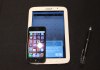
We’re just over a week away from the Galaxy S IV’s official unveiling in New York City, and the pieces are starting to fall into place. Sure, we still don’t know what the thing is going to look like, but persistent rumors have pegged the device as sporting the same sort of plastic body that Samsung has been (in?)famous for.
While she wouldn’t weigh in on the Galaxy S IV specifically, Y.H. Lee, executive VP of Samsung’s mobile unit, told CNET’s Roger Cheng that the love-it-or-hate-it plastic chassis endemic to the company’s gadgets aren’t going anywhere just yet.
According to Lee, it’s just as much about practicality as it is about style: In order to churn out (and sell) as many devices as Samsung does, the company has to pay plenty of attention to how efficiently they can be made. Naturally, Samsung can’t just pump out loads of shoddy devices and call it a day, so durability weighs heavily on the company’s mind when it comes time to picking out materials for a final design.
Meanwhile, would-be rivals like HTC have embraced metal with open arms in its latest flagship device designs. The benefits are as plentiful as they are subjective — the adjective that seems to be bandied about most often is “premium,” since these metal-clad devices tend to feel more weighty and substantial when compared to the sorts of flimsy plastic bodies that many Android-friendly OEMs still cling to. I’ll be the first to admit that I prefer handsets that feel like they could withstand some abuse, though in fairness I’ve found that devices like the Galaxy S III and the Galaxy Note II can handle their fair share of turmoil despite having light, plastic bodies.
Granted, I can see how the choice of materials could prove to be occasionally problematic for the companies involved here. Crafting a device like the HTC One or an iPhone 5 out of aluminum can be more exacting (and therefore more time-consuming), not to mention more expensive than sticking with a less ornate body.
But here’s the thing — Samsung doesn’t need to play by those same rules. It’s an undeniable juggernaut in the smartphone space, and has proven ably over the past months and years that yes, people will often buy their smartphones even when faced with alternatives that arguably feel more premium. That’s not to say that Samsung will never rethink its position on the materials it uses. Lee concedes that the company “listen[s] to the market” and tries to accommodate it, so that sentiment could soon change if the masses demand it.
-
Alzheimer’s risk gene discovered using imaging method that screens brain’s connections
Scientists at UCLA have discovered a new genetic risk factor for Alzheimer’s disease by screening people’s DNA and then using an advanced type of scan to visualize their brains’ connections.Alzheimer’s disease, the most common cause of dementia in the elderly, erodes these connections, which we rely on to support thinking, emotion and memory. With no known cure for the disease, the 20 million Alzheimer’s sufferers worldwide lack an effective treatment. And we are all at risk: Our chance of developing Alzheimer’s doubles every five years after age 65.The UCLA researchers discovered a common abnormality in our genetic code that increases the risk of Alzheimer’s. To find the gene, they used a new imaging method that screens the brain’s connections — the wiring, or circuitry, that communicates information. Switching off such Alzheimer’s risk genes (nine of them have been implicated over the last 20 years) could stop the disorder in its tracks or delay its onset by many years.The research is published in the March 4 online edition of the journal Proceedings of the National Academy of Sciences.“We found a change in our genetic code that boosts our risk for Alzheimer’s disease,” said the study’s senior author, Paul Thompson, a UCLA professor of neurology and a member of the UCLA Laboratory of Neuro Imaging. “If you have this variant in your DNA, your brain connections are weaker. As you get older, faulty brain connections increase your risk of dementia.”The researchers, Thompson said, screened more than a thousand people’s DNA to find the common “spelling errors” in the genetic code that might heighten their risk for the disease later in life. The new study was the first of its kind to also give each person a “connectome scan,” a special type of scan that measures water diffusion in the brain, allowing scientists to map the strength of the brain’s connections.The new scan reveals the brain’s circuitry and how information is routed around the brain, in order to discover risk factors for disease. The researchers then combined these connectivity scans with the extensive genomic screening to pinpoint what causes faulty wiring in the brain.Hundreds of computers, calculating for months, sifted through more than 4,000 brain connections and the entire genetic code, comparing connection patterns in people with different genetic variations. In people whose genetic code differed in one specific gene called SPON1, weaker connections were found between brain centers controlling reasoning and emotion. The rogue gene also affects how senile plaques build up in the brain — one of the hallmarks of Alzheimer’s disease.“Much of your risk for disease is written in your DNA, so the genome is a good place to look for new drug targets,” said Thompson, who in 2009 founded a research network known as Project ENIGMA to pool brain scans and DNA from 26,000 people worldwide. “If we scan your brain and DNA today, we can discover dangerous genes that will undermine your ability to think and plan and will make you ill in the future. If we find these genes now, there is a better chance of new drugs that can switch them off before you or your family get ill.”Developing new therapeutics for Alzheimer’s is a hot area for pharmaceutical research, Thompson said.It has also been found that the SPON1 gene can be manipulated to develop new treatments for the devastating disease, Thompson noted. When the rogue gene was altered in mice, it led to cognitive improvements and fewer plaques building up in the brain. Alzheimer’s patients show an accumulation of these senile plaques, which are made of a sticky substance called amyloid and are thought to kill brain cells, causing irreversible memory loss and personality changes.Screening genomes has led to many new drug targets in the treatment of cancer, heart disease, arthritis and brain disorders such as epilepsy. But the UCLA team’s approach — screening genomes and performing brain scans of the same people — promises a faster and more efficient search.“With a brain scan that takes half an hour and a DNA scan from a saliva sample, we can search your genes for factors that help or harm your brain’s connections,” Thompson said. “This opens up a new landscape of discovery in medical science.”Other UCLA authors on the paper included Neda Jahanshad, Priya Rajagopalan, Xue Hua, Derrek P. Hibar, Talia M. Nir and Arthur W. Toga.The project had multiple funding sources, including the National Institutes of Health (grant R01 HD050735). Please see the paper for other authors and additional funding.The Laboratory of Neuro Imaging at UCLA, which seeks to improve understanding of the brain in health and disease, is a leader in the development of advanced computational algorithms and scientific approaches for the comprehensive and quantitative mapping of brain structure and function. It is part of the UCLA Department of Neurology, which encompasses more than a dozen research, clinical and teaching programs. The department ranks in the top two among its peers nationwide in National Institutes of Health funding.For more news, visit the UCLA Newsroom and follow us on Twitter. -
New Facebook Lawsuit, Same Old Facebook IPO Gripe
A new lawsuit filed by a Facebook shareholder claims that the company knew about downward trends in revenue tied to increased user defection to mobile from desktop use.
Gaye Jones says that such information was shared with key investors.
“The defendants were unjustly enriched because they realized enormous profits and financial benefits from the IPO, despite knowing that reduced revenue and earnings forecasts for the company had not been publicly disclosed to investors,” says the lawsuit.
This is definitely not the first time that a lawsuit has been filed with a nearly identical claim.
Soon after Facebook’s stock price began to plummet, a flood of lawsuits poured in accusing Facebook of concealing severe reductions in revenue growth due to the increase in mobile users and Facebook’s perceived inability to monetize mobile.
So, new lawsuit, similar complaint.
Jones’ new lawsuit is a derivative suit, which means that the investor “seeks to step into the shoes of the company and any money recovered from Zuckerberg and others would be paid to Facebook, not shareholders.”
Four previous derivative suits have been dismissed after a U.S. District Judge ruled that the shareholders did not own stock when Facebook allegedly deceived them before the IPO. Plus, he said that Facebook indeed “repeatedly made express and extensive warnings” about the trend toward mobile. In this case, Jones did in fact own Facebook stock since February 2012, months before the IPO filing in May.
Back in January, Facebook stock rode an upward trend and topped $30 for the first time in nearly six months. As of right now, the price sits at just over $27.50.
[Reuters]
-
Feeling Old And Depressed? Video Games Might Help
All we ever hear anymore is how video games are corrupting our youth, and must be burned. That’s why it’s nice then to see some real science looking into the benefits that playing video games provides to not only young people, but our elderly citizens as well.
A new study from North Carolina State University looked into how gaming affects the well-being and positive outlook of the elderly. The results, which were published in this week’s Computers in Human Behavior, found that gaming may actually help the elderly stay positive.
The study, which consisted of 140 participants aged 63 or older, focused on three groups of people – regular gamers, occasional gamers and non-gamers. The interesting part is that 61 percent of the participants said that they played games occasionally, while 35 percent said that they played at least once a week. Grandma is definitely getting in her weekly Wii Bowling, or whatever the ol’ gals at the nursing home are into these days.
After it was all said and done, those who regularly or occasionally played games “reported higher levels of well-being.” Those who did not play games “reported more negative emotions and a tendency towards higher levels of depression.”
Dr. Jason Allaire, lead author of the study, had this to say on it:
“The research published here suggests that there a link between gaming and better well-being and emotional functioning. We are currently planning studies to determine whether playing digital games actually improves mental health in older adults. ”
The study isn’t saying that people, including the elderly, need video games in their lives to remain happy. There are plenty of other ways to lead a fulfilling life. Games are just one of many options we have in today’s modern world to make us happy.
[h/t: CNET]
-
Google reveals how often the Feds ask for your personal info
 Google is characterized in some many different ways. While some of us look to the Mountain View, Calif.-based company as our savior, others refer to it in terms like “Skynet” — the computer and artificial intelligence system that runs the world in the Terminator movie series. That latter reputation is one Google tries hard to change; Transparency Reports are example.
Today, Google’s Legal Director, Richard Salgado, announced that the company will be adding National Security Letters to its report. “When conducting national security investigations, the U.S. Federal Bureau of Investigation can issue a National Security Letter (NSL) to obtain identifying information about a subscriber from telephone and Internet companies”, stated Salgado.
The Federal Bureau of Investigation (FBI) actually prohibits companies from making this information public, but Google worked with officials to allow its customers to learn more of what is going on behind-the-scenes. According to Salgado: “When conducting national security investigations, the U.S. Federal Bureau of Investigation can issue a National Security Letter (NSL) to obtain identifying information about a subscriber from telephone and Internet companies”.
Google has won this battle and gained the right to begin including data about NSLs in its Transparency Report. The data is now displayed on a new page dedicated to these inquiries. Exact numbers are not given, but the data is displayed in ranges, such as between 0 and 999 NSL’s were received in 2012 — not a big help, but better than no data at all. Salgado explains: “You’ll notice that we’re reporting numerical ranges rather than exact numbers. This is to address concerns raised by the FBI, Justice Department and other agencies that releasing exact numbers might reveal information about investigations”.
Google attempts to walk a thin line here between easing the potential fear from privacy-minded users and following what the government allows them to reveal. This is one small step in the right direction.
Photo Credit: Brian A Jackson/Shutterstock
-
Google seen soaring as shares continue to rise

-
Facebook may charge users to remove ads, patent application reveals
Don’t like those contextual ads displayed next to your Facebook profile? Would you pay Facebook a monthly fee to get rid of them?
A patent application that Facebook filed in mid-2011 and that finally got published at the end of January suggests that the company may be willing to give up on ad space and offer users more flexibility with regards to the look of their profiles in exchange for cash.
Patent application 20130030987 is tellingly titled “Paid Profile Personalization,” and its description doesn’t exactly beat around the bush either:
“The user may select one or more social networking objects to replace advertisements or other elements that are normally displayed to visitors of the user’s profile page that are otherwise controlled by the social networking system. In particular embodiments, the user may edit elements on their profile page that are otherwise automatically generated and controlled in design and content by the social networking system. In particular embodiments, the user is billed on a recurring basis for profile personalization.”

This is how the patent application depicts a profile with ads (click to enlarge)…
The patent application lists CEO Mark Zuckerberg himself as well as Facebook Ads Product Director Gokul Rajaram and former Facebook Product Management Director Prashant Fuloria as inventors.
It doesn’t actually mention Facebook by name, and instead just refers to general social networking functionality — but both the language of the application and the accompanying drawings make it clear that this could one day very much become a Facebook monetization strategy.
Facebook, one has to remember, was seen as the anti-Myspace when it launched in 2004. Myspace gave users so many options to customize almost everything on their profiles to the point where many profiles made your eyes hurt. Facebook, on the other hand, tightly controlled the look of its profile pages with a unified layout across the entire site.

… and this is how it would look like for users who paid to remove their ads (click to enlarge).
Now it may be willing to give up some of that control. One example specifically mentioned in the patent application is about those contextual ads on the right side of your timeline. Users could replace them with pictures of their car or other “favorite memories.”
Another example would allow users to get rid of the small about section that Facebook currently places under a user’s profile picture. Users would be offered the option to replace information like their hometown, gender and relationship status with a personalized status message.
From the patent application:
“For example, after receiving a large number of comments or “likes” on a particular status message, the user may receive a dialog box prompting the user with the text: “Would you like to personalize your profile with this status message for 10 credits a month?””
Even the list of people displayed as your friends may be up for grabs:
“For example, the user may select his closest friends for display, or his most attractive female friends as a method of self-promotion.”

Personalized profiles could be an interesting revenue opportunity for Facebook.
To be fair, the existence of a patent application alone doesn’t necessarily mean that Facebook will actually follow through on these plans. However, Facebook has been under significant pressure by Wall Street to increase monetization – and efforts to do this through ads and sponsored messages have led to some backlash.
Earlier this week, New York Times blogger Nick Bilton suggested that the social network was displaying fewer of his posts to his followers in an effort to make paid posts more appealing. Facebook strongly rejected this suggestion – but it still goes to show how suspicious many Facebook users are of ads and promoted posts on the site. Giving these users a way to opt out of some of the advertising could be a smart move – and at the same time open up new revenue streams to Facebook.
The patent application for paid profile personalization suggests as much, stating:
“Permitting such functionality improves the overall user experience while maximizing revenue to the social networking system.”
Facebook didn’t immediately respond to a request for comment for this post.

Related research and analysis from GigaOM Pro:
Subscriber content. Sign up for a free trial.- Facebook’s IPO filing: ideas and implications
- Social 2013: The enterprise strikes back
- Examining the rise of crowd labor platforms in 2012


-
Tweets = public opinion? New data suggests we should think twice on this
Are the number of tweets per television show the new Nielsen ratings? Or are tweets on election day the same as exit polls? Twitter might be moving in that direction, but new data from the Pew Center should have you think twice before trusting Twitter as a barometer of public opinion.
It’s not all that surprising that tweets aren’t a perfect indicator of public opinion, considering that only 13 percent of Americans are currently using the service. But the discrepancy is worth noting as Twitter continues its push for journalists and the public to consider its data a legitimate source of news and an accurate indicator of the national discussion.
Pew explained why evaluating tweets can be useful, but not necessarily definitive:
“Overall, the reaction to political events on Twitter reflects a combination of the unique profile of active Twitter users and the extent to which events engage different communities and draw the comments of active users. While this provides an interesting look into how communities of interest respond to different circumstances, it does not reliably correlate with the overall reaction of adults nationwide.”
The Pew data, released Monday, found that during the 2012 presidential election (when Twitter was quick to note the 31 million tweets on the big night), Twitter user reactions to President Obama and Mitt Romney weren’t exactly representative of American opinion at large. Twitter users were much more critical of Romney in the first debate and more positive about Obama’s electoral victory than the public as a whole. And while both candidates faced high levels of criticism on the site, Romney faced more than Obama did through the fall campaign.
However, Twitter doesn’t just lean left. Reaction to Obama’s inaugural and State of the Union addresses on Twitter were more critical than overal reactions.
As my colleague Derrick Harris has written before, there’s huge value in using tweets as part of a larger set of data to evaluate situations, but there are plenty of statistical reasons why measuring tweets is challenging. While Twitter is already having a significant impact on how we consume news and information and is relatively mainstream at this point, it’s important to remember that people who voice their opinion on the service are still just a tiny percentage, and who might have different reasons for wanting to share.

Related research and analysis from GigaOM Pro:
Subscriber content. Sign up for a free trial.- The state of cross-platform media measurement
- The 2013 task management tools market
- How consumer media will change in 2013

-
Kissinger Hospitalized After Fall at Home
The Associated Press is reporting that former U.S. Secretary of State Henry Kissinger has been hospitalized after suffering a fall at his home in New York.
The New York-Presbyterian/Weill Cornell Medical Center has stated that Kissinger is expected to be released from care later today. No other details have been released about his condition. Kissinger is 89 years old.
Kissinger served as the secretary of state under Presidents Richard Nixon and Gerald Ford from 1973 to 1977. He played a crucial role in the waning years of the Vietnam War and was sometimes consulted on foreign policy even after he left government work. In 1973 Kissinger was awarded the Nobel Peace Prize related to the withdrawal of U.S. troops from Vietnam. In subsequent years, calls have been made to hold Kissinger accountable for U.S. policy in countries such as Chile and East Timor during his tenure as secretary of state.
Kissinger and his wife, Nancy Maginnes, now live in New York City and Kent, Connecticut.
-
China is Worried Over Google’s Control in Smartphone Industry

“China”, just hearing the word projects images of grandeur and power. So what, you might ask, would make such a powerful country worry outside of the next world war? In a word, GOOGLE! The search engine, tablet, smartphone, and mobile operating system powerhouse is really drawing a lot of attention from the big dogs overseas.
When Google does things, they do it big, no matter what the venture might be…and the world is taking notice. China is said to be worried that Google may be a little too big for their britches. China’s Technology Ministry has stated that Google has too much control over their smartphone industry via their Android operating system and that they discriminate against China’s local firms.
A white paper authored by the research arm of China’s Ministry and Information Technology also claims that China has the ability to “create its own mobile operating system” and at this time China “…is too dependent on Android.” The paper goes on to accuse Google of discrimination by developing “…agreements to restrain the business development of mobile devices of…companies it added”. Google’s spokesperson in China declined to comment on the matter.
The white paper suggests that regulations against Android might be on the horizon, but doesn’t mention anything specifically addressing the issue. To make matters worse, back in September 2012 the Taiwanese based, Alibaba Group, accused Google of “putting pressure on them” during a planned collaborative smartphone venture with US based, Acer. Acer and Google declined to comment on these accusations.
Google has had a history of problems stemming from China, to include an alleged hacking back in 2010, to which Google reacted by conducting a partial pullout of their search market share from the country. This move cost Google a 15 percent loss in search market share in China by the end of 2012. Since then, Android has been Google’s only major player in China. By the end of Q3 2012, Android accounted for a staggering 90 percent of all mobile operating systems in China, dominating Apple Inc’s IOS by over 85 percent.
Who knows what the future holds for Google in China, but recent rumors would lead us to believe that the future of Android is bleak at best.
Source: Business Insider
Come comment on this article: China is Worried Over Google’s Control in Smartphone Industry
Visit TalkAndroid for Android news, Android guides, and much more! -
Jelly Bean, ICS Combine Their Powers To Take Down Gingerbread In February
Last month’s Android distribution numbers showed that Gingerbread was on the way out. Ice Cream Sandwich and Jelly Bean still had a bit to go, however, before they were finally able to eclipse the outdated mobile OS. Turns out the Android 4.0 and up club only needed one more month to do so.
In the latest Android distribution numbers, Gingerbread is shown to be at an all time low of 44.2 percent. It’s still higher than the separate distribution percentages of both Ice Cream Sandwhich (28.6 percent) and Jelly Bean (16.5 percent), but they barely best Gingerbread when combined (45.1 percent).

Aside from Gingerbread’s dominance being semi-officially over, it should be noted that this is the second month in a row where Jelly Bean saw the only growth. Ice Cream Sandwich is beginning to decline as more Android 4.0 devices are upgraded to Android 4.1. Android 4.2 also saw a slight bump.
Google is expected to show off the next version of Android at this year’s Google I/O in May. It will be interesting to see what Android distribution looks like before then. Getting more people on Jelly Bean, or at the very least Ice Cream Sandwich, should be a priority for Google before then. Supporting Gingerbread is good for consumers, but it’s not good for the developers straining themselves to support multiple versions of Android.
-
ZTE Smartphones Will Run Next-Gen Intel Atom Z2580 Processors

ZTE announced a new partnership with Intel today, revealing that its future smartphones will run the upcoming Atom Z2580 processor. The Atom Z2580 debuted at Mobile World Congress and is a dual-core chip that can run up to 2.0GHz with Hyper-Threading support for better multi-tasking. This isn’t the first time that ZTE will use Intel Atom processors. The ZTE Grand X IN was released in September of 2012 and featured a single-core, 1.6GHz Intel Atom Z2460.
Performance of the Atom Z2580 is greatly improved over its predecessor, boasting double the performance and three times more graphics output. Battery life is also said to be improved and on the same level as comparable processors. ZTE still has yet to announce availability of phones running the Intel Atom Z2580.
Source: Business Wire
Come comment on this article: ZTE Smartphones Will Run Next-Gen Intel Atom Z2580 Processors
Visit TalkAndroid for Android news, Android guides, and much more! -
The Time Has Come to Fill Important Judicial Vacancies
Tomorrow, the Senate will again consider the nomination of Caitlin Halligan to serve on the U.S. Court of Appeals for the District of Columbia Circuit, a court which is in critical need of additional judges. President Obama first nominated Ms. Halligan to that important court in September 2010, but two and a half years later, Republicans in the Senate have yet to allow an up-or-down vote on her nomination.
Caitlin Halligan is exactly the kind of person who should be a judge: she is smart, fair, thoughtful and deeply committed to the Constitution and the rule of law. Consideration of her nomination should not be about politics. It should be about ensuring that highly qualified individuals who are willing to commit themselves to a lifetime of public service are treated fairly by the Senate, judged on their merits, and allowed a vote.
Ms. Halligan’s credentials are impeccable. She was an honor student at both Princeton University and the Georgetown University Law Center, where she served as managing editor of the Georgetown Law Journal. She clerked for former D.C. Circuit Chief Judge Patricia Wald and Supreme Court Justice Stephen Breyer, and she has served as counsel of record in more than 50 Supreme Court cases. She has personally argued five cases before the Supreme Court. She received the highest possible rating – unanimous well-qualified – from the non-partisan American Bar Association Standing Committee on the Federal Judiciary.
Inspired by her parents, who were both teachers, Ms. Halligan has devoted her professional career primarily to public service. Prior to law school, Ms. Halligan worked as a legislative aide for Representative William Alexander, Jr., focusing on health care and education for families in the Arkansas Delta region. She also worked at Georgians for Children, an organization dedicated to helping impoverished children and families. As a lawyer, her pro bono work has included serving as counsel to the Board of Directors of the Lower Manhattan Development Corporation, which was tasked with overseeing the revitalization of lower Manhattan after the September 11, 2001, terrorist attacks. She also represented victims of Hurricanes Katrina and Rita.
-
Samsung executive defends sticking with plastic for its smartphone casings [updated]

UPDATE: A Samsung representative chimes in to say that it’s incorrect to infer from the CNET story — which contains the headline “Why the Galaxy S4 won’t be shedding its plastic roots” and includes a line about “Samsung’s plastic GS4” — that the Galaxy S IV will have plastic casing because the Samsung executive in the interview never specifically mentions the Galaxy S IV and only talks about Samsung’s general design philosophy and its reasons for its continued use of plastic for its major devices. The representative also claims that it’s incorrect to refer to an unannounced Samsung device as the “Galaxy S IV” because that device may or may not exist, the person can or cannot confirm. We’ll know for sure if the device-that-shouldn’t-be-referred-to-as-the-Galaxy-S-IV has plastic casing in less than two weeks when Samsung may or may not unveil it in New York.
-
Carly Rae Jepsen Boy Scouts Appearance Cancelled Over Gay Rights
Singer Carly Rae Jepsen, known for her 2012 hit song “Call Me Maybe,” has announced that she is canceling her appearance at the national Boy Scouts of America (BSA) jamboree over the organizations exclusion of openly gay members.
The national Scout jamboree is held around once every four years and brings tens of thousands of Boy Scouts together for camping and events. Jepsen was scheduled to perform at this year’s jamboree, which is being held at a National Scout Reserve in West Virginia.
The singer announced her decision via her Twitter accout, where she stated that she “believes in equality for all people” and “will continue to support the LGBT community on a global level.”
As an artist who believes in equality for all people, I will not be participating in the Boy Scouts of America Jamboree this summer…
I always have and will continue to support the LGBT community on a global level …
and stay informed on the ever changing landscape in the ongoing battle for gay rights in this country and across the globe.
The band Train has cancelled its appearance at the jamboree as well, saying that it “strongly opposes any kind of policy that questions the equality of any American citizen.”
The National Executive Board of the Boy Scouts of America last month considered a change to its current policy, which bans openly gay scouts. The new policy would have allowed local scout troops to set their own policies (discriminatory or not) with regards to gay members. The board did not take up the policy, and instead delayed the decision until its annual meeting in May. Many of the Boy Scouts’ troops are sponsored by religious organizations, such as the Mormon Church, that openly oppose gay rights.
“No fair-minded media outlet, corporation or celebrity will want to partner with the BSA as long as the organization puts discrimination and anti-gay bias before the needs of young people,” said Rich Ferraro, VP of Communications GLAAD (Gay & Lesbian Alliance Against Defamation). “GLAAD will continue to call for partners of the BSA to speak out against the anti-gay ban until the BSA puts Scouting first and adopts a national non-discrimination policy. Carly Rae Jepsen and Train’s decisions not only send the right message to the BSA, but remind LGBT young people that they are supported and accepted.”
-
Google Now Includes National Security Requests in Its Transparency Report, But It’s Really Unspecific
Google has added another metric to its Transparency Report so users can identify one more manner in which the government is requesting their information.
Starting today, Google is now including data about National Security Letters on its U.S. Transparency Report.
National Security Letters (NSL) are a form of a demand letter that are used by the U.S. Government (mostly the FBI) to extract information from an organization in the name of national security. The kind of info requested in NSLs includes stuff like transactions, phone numbers, and email addresses.
In the period following 9/11, the FBI’s use of National Security Letters dramatically increased with the implementation of the Patriot Act.
The thing about NSLs is that they also come complete with a gag order (most of the time), so the companies who received the letter can’t discuss it with the users whose information has been requested. For the Transparency Report, Google has worked with the FBI to loosen this secrecy – ever so slightly.

The first thing that you’ll notice when looking at the new NSL stats is that they are unspecific – to a ridiculous degree. For instance, Google is only reporting the number of NSLs received in batches of 1,000. That means that every year on record (2009-present) has logged between 0 and 999 NSLs.
“You’ll notice that we’re reporting numerical ranges rather than exact numbers. This is to address concerns raised by the FBI, Justice Department and other agencies that releasing exact numbers might reveal information about investigations. We plan to update these figures annually,” says Google.
I guess something is better than nothing. Still, it’s a good step forward for the Google Transparency Report.
-
HTC Sense 5 wallpapers now available to download

Sense 5 will bring a lot of new features like BlinkFeed and Zoe, but what about wallpapers? HTC usually has some pretty cool ones, and I did have my eye on a few at the event. If you’re looking for a change in background on your current phone, HTC or otherwise, you might want to check out these new Sense 5 wallpapers. There are eighteen in all, and we have them all for your downloading pleasure. Whether you want to grab just one or all of them, hit the the break to get started.
Just tap on the image to get the full size, right click, and select “save image as” to save it to your PC. If you’re on your phone, you can still tap on each image to get the full size, and after that, just long press on the image and select, “save image.” Enjoy!!


source: HTC HD Blog
Come comment on this article: HTC Sense 5 wallpapers now available to download
Visit TalkAndroid for Android news, Android guides, and much more! -
Smartphone Unlocking Bill To Be Introduced In The Senate
In a statement released yesterday, The White House said that it sides with the 100,000 plus people who signed a petition asking that they able to unlock their smartphones. Having the support of The White House is great, but not we need some legislation to back it up.
Sen. Klobuchar announced today that she is currently drafting a bill in the senate that would carve out an exemption in the DMCA to allow smartphone unlocking. In her statement, she echoes the White House’s sentiment that the ability to unlock smartphones is integral to consumer choice:
“Consumers should be free to choose the phone and service that best fits their needs and their budgets. I will continue to work to advance commonsense measures to protect consumers and promote competition.”
It sounds like Klobuchar’s bill will only exempt smartphones, but we won’t know for sure until the bill’s text is released. It would be unfortunate if the bill only covered smartphones, however, as there are other electronic devices that would greatly benefit from unlocking exemptions.
Regardless, a targeted bill that exempts smartphones under the DMCA is a great first step for consumer choice. Hopefully the results of unlocking smartphones will speak for itself if the bill passes. Lawmakers may then be more comfortable presenting other exemptions that create a pro-consumer environment while protecting the rights of content holders and manufacturers.
[h/t: PC Magazine]
-
Ten ways to extend your BlackBerry Z10 battery life
How much battery life you consume may vary, depending on how you use your BlackBerry Z10 smartphone. To help your battery last longer, try any of the following tips:
Check for BlackBerry 10 OS Updates
Whenever a new BlackBerry 10 OS update is released, make sure to install it on your smartphone so that you can take advantage of any available optimizations which can help improve your battery life. Typically, you’ll receive a notification of a new update, but to check for updates manually, open Settings, tap Software Updates followed by Check for Updates.
Tip: To access your BlackBerry Z10 Settings, swipe down from top of the screen while viewing your Home screen and tap Settings.
Connections
The radios on your smartphone are designed with efficiency in mind, so turning off Wi-Fi, Bluetooth or NFC as well as changing your cellular connection to use a different network technology may not improve battery life. We recommend using Wi-Fi whenever possible because it offers substantial power savings, so make sure you are actively adding Wi-Fi networks and hotspots to your smartphone as you come across them.
Read more at the Inside BlackBerry Help Blog »


