Blog

  • Give This Nine Inch Nails/Call Me Maybe Mashup a Chance. No, I’m Serious.

    Peanut butter & jelly, on a burger. Calling your ex-girlfriend at 3am “just to talk.” Mashing up Nine Inch Nails’ “Head Like a Hole” and Carly Rae Jespen’s “Call Me Maybe.”

    One of these three things is a bad idea, and the other two are great ideas. One of the ones that is a great idea actually sounds like a terrible idea. That’s the one that you’re about to experience and most likely love. Or at least tolerate it – which is a miracle in its own way.

    Seriously, I’m not kidding. It’s pretty good.

    [pomDeter via Gawker]

  • YouTube music streaming service will reportedly launch this year

    YouTube Music Streaming
    Recent reports have suggested that Google (GOOG) is interested in launching a music streaming service to compete with Pandora (P) and Spotify. According to Fortune, the company is looking to launch the service through its YouTube brand later this year. The service also is expected to have some overlap with new features that are rumored to arrive in the Google Play Store. Both services are said to incorporate subscription fees that will unlock additional features, such as ad-free YouTube streaming. A Google spokesperson confirmed that “there are some content creators that think they would benefit from a subscription revenue stream in addition to ads, so we’re looking at that.” Earlier reports claimed that paid subscription options for individual YouTube channels are scheduled to roll out this spring.

  • 1,000 Flights Canceled as Snow Blankets Chicago

    The Chicago Tribune is reporting that over 1,000 Chicago-area flights have been cancelled. More than 850 flights out of Chicago O’Hare International have been cancelled and Midway Airport has cancelled at least 230 flights.

    The cancellations come as a winter storm is beginning to drop snow on the city. The U.S. National Weather Service (NWS) is predicting up to 12 inches of snow could fall the Chicago area today.

    The NWS has also issued a winter storm warning and a hazardous weather outlook for the greater Chicago area that lasts until midnight. From the NWS warning:

    A WINTER STORM WARNING FOR HEAVY SNOW MEANS SEVERE WINTER WEATHER CONDITIONS ARE EXPECTED. SIGNIFICANT AMOUNTS OF SNOW ARE FORECAST THAT WILL MAKE TRAVEL DANGEROUS. CONSIDER ONLY TRAVELING IF IN AN EMERGENCY. IF YOU MUST TRAVEL…KEEP AN EXTRA FLASHLIGHT… FOOD…AND WATER IN YOUR VEHICLE IN CASE OF AN EMERGENCY.

    Schools throughout Chicago were closed or closed early today. The Tribune report states that the Chicago Department of Streets and Sanitation has been salting the roads in and around the city since early this morning, and the Illinois Tollway has snowplows standing by.

  • The future of the internet is avatars and connected services (video)

    There is no single internet of things, just a series of connected services and avatars, the physical hardware that connect to those services. This is what Mike Kuniavsky, a principal in the Innovation Services Group at PARC, explained as his vision for the internet of things in a talk last week at the GigaOM internet of things meetup.

    The audio in this video is fuzzy, but Kuniavsky is worth listening to, from his definition of the internet of things to his vision for how we are going to have to change our thinking about software development in order to program it. At 19 minutes the video is the perfect length for watching during a lunch break. Check it out.

    If you missed it, here is yesterday’s video from the same event: Video: Why you shouldn’t care about securing the Internet of things just yet

    Related research and analysis from GigaOM Pro:
    Subscriber content. Sign up for a free trial.

  • Scroogled isn’t dead, it’s just beginning

    Contrary to rumors yesterday, Microsoft has not abandoned its “Scroogled” marketing campaign, despite sharp criticisms. My colleague Wayne Williams calls the attacks against Google a “sad and frankly pathetic strategy“.

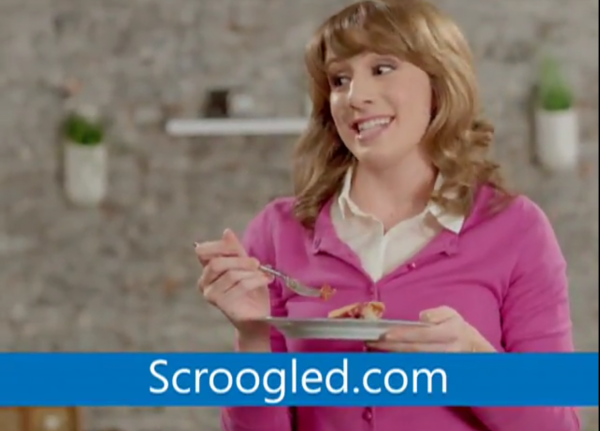
    If the statement a Microsoft spokesperson has given to BetaNews is any indication, the campaign will get more aggressive than it is today: “Scroogled will go on as long as Google keeps Scroogling people. We know Google doesn’t like it when the facts come out. Chapter two of the consumer education campaign has shown people care about their privacy. More than 3.5 million people visited scroogled.com, and nearly 115,000 people signed a petition asking Google to stop going through their Gmail. Stay tuned for the next chapter”.

    Scroogled can be summed up in two words: Google lies. Microsoft launched the campaign in late November, accusing Google Shopping of misleading searchers. A month ago, Microsoft followed up with an attack on Gmail, and since started airing TV commericals.

    Microsoft boldly claims that Google reads Gmail users’ messages. But Scroogled is nothing more than a marketing ploy to get people to switch from Google services.

    What Microsoft seems to fail to acknowledge is that being a Gmail or Google search user is both a choice and a necessity. Like Windows.

    In my case I use various other Google services connected to my Gmail account, and I’m quite sure millions of other people are in a similar position. If I were to, hypothetically, switch to Outlook.com I’d still have to use my Gmail account to log into Google+ and check for notification emails, for instance. At the same time, using Gmail with all the targeted ads is a personal choice, one that I favor over Outlook.com when it comes to features and adjacent functionality.

    I can also chat with my Google+ friends straight from Gmail, whereas I’d be stuck with Facebook Messenger on Outlook.com. By implication I’d be an even more active Facebook user and we all know how much Zuckerberg’s social network values our privacy. To me that’s a huge no-go.

    Many other people might be fooled into thinking Google is evil, or Scroogled would play into their existing suspicions that Google’s claims “you can make money without doing evil” is just a ruse. In one TV commercial for Outlook.com, a couple discusses financial services ads appearing in Gmail. The man says, “So I get Scroogled. Why do you think we’re having financial troubles”. The insinuation is that somehow it’s Google’s fault.

    In the early 2000s, Microsoft put Linux in its sights, with the “Get the Facts” campaign, which used similar tactics to create fear, uncertainty and doubt about the open-source OS.

    My colleague Wayne believes that “whoever came up with the Scroogled campaign, is doing its best to turn the Redmond, Wash.-based technology giant into a petty, whining child, complaining about a rival rather than championing its own products”. If I read the Microsoft spokesperson’s statement right, there is much more whining to come.

  • Why the Washington Post is smart to try sponsored content, and why others should too

    Like virtually every other traditional media outlet, the Washington Post has been squeezed hard by the decline in print advertising revenue and the inability of digital ad revenue to fill that gap. Unlike almost every other outlet, however, the Post has resisted putting up a paywall (for now at least) and instead has been experimenting with other methods of monetization. Its latest venture is sponsored content — something that is controversial, but deserves to be tried by anyone interested in figuring out how digital content works now.

    As noted by my paidContent colleague Laura Owen and by Digiday, the Post has launched a program called BrandConnect, which gives advertisers the ability to create content — either by themselves or by working with the paper’s staff — that is then highlighted in a special section of the newspaper’s online front page. The content states pretty clearly that it is sponsored (although that doesn’t seem to have mollified some of the company’s critics so far).

    In all of the important ways, this doesn’t seem all that different from what newspapers have traditionally done with what they refer to as “advertorial” — that is, special sections or articles that are written like newspaper stories but paid for by brands. According to Digiday, no editorial staff are involved in creating the content, and the sponsored headlines appear in a small box that looks different from the rest of the page, much like Techmeme’s sponsored posts.

    WaPobrandconnect

    Critics like Andrew Sullivan — who recently left the Daily Beast to start a reader-funded site — argue that sponsored content is ethically dubious, and have raised concerns about the way that BuzzFeed handles such content. As Laura notes, The Atlantic has also come under fire for the way it has done some sponsored features, including one about Scientology (we’ll be talking about this more with Sullivan and BuzzFeed’s Jon Steinberg at paidContent Live on April 17).

    While there are debates around how and when to publish sponsored content, and what kinds of content are appropriate for which media outlets, there are some good reasons why other newspapers and traditional media players might want to experiment with this new format as well:

    • It’s an additional source of revenue: At this point in their evolution, newspapers and other traditional outlets can’t really afford to turn a blind eye to any potential addition to their revenue base, however distasteful it might appear at first glance.
    • It’s something advertisers seem interested in: Rates for traditional display advertising are dropping because advertisers simply don’t see them as valuable enough any more — and arguably neither do readers.
    • It doesn’t have to be ethically compromised: Like any kind of advertising or commercial relationship, sponsored content or “native advertising” can be handled well or it can be handled badly. That doesn’t mean it can’t be done in an ethically responsible way.
    • It can be a valuable service for readers: If advertiser-created content provides something useful that readers are interested in, it’s a win-win for the editorial outlet, since they get paid and readers are satisfied.

    Readers should be the judge of what is useful

    The last point in this list might be the most important one of all: if it is handled properly, sponsored content can serve much the same purpose as unsponsored content — in other words, it can be informative and useful for readers. Isn’t that the ultimate purpose of much of what we call journalism? Media insiders might flinch at the phrase “brand journalism” or “native advertising,” but if content produced by an advertiser is helpful to a reader, is that such a bad thing?

    In an interview with Beet.tv, MIT Technology Review editor Jason Pontin points out that while many journalists may not like it, users often find advertising-related content almost as useful and memorable as traditional editorial content. This was the breakthrough that Google has taken advantage of to build a multimillion-dollar business via AdWords: to many users, those ads aren’t just clutter, but are actually useful content worth clicking on.

    The approach taken by some publications such as Forbes — which has a BrandVoice platform that is similar to what the Washington Post is launching — is that marketing or advertising-driven content from brands is given more or less equal prominence to that created by editorial staff, with the appropriate disclaimers. Corporate bloggers at Forbes have the exact same platform that a staff blogger does, with all the same tools.

    In that environment, it is up to the reader to decide whether something is useful or not useful, interesting or not interesting, valuable or not valuable. Whether it is “advertising” is largely irrelevant. In a sense, it has always been this way — perhaps it is just becoming more obvious now.

    Images courtesy of Shutterstock / Eldorado3D and Poynter

    Related research and analysis from GigaOM Pro:
    Subscriber content. Sign up for a free trial.

  • Can limitations make you more creative? A Q&A with artist Phil Hansen

    Phil-Hansen-at-TED2013Phil Hansen has tattooed bananas, drawn a portrait on stacked Starbucks cups and created a Jimi Hendrix portrait out of matches, which he then burned. In other words, he isn’t the kind of artist who feels bound to paint on canvas.

    So how did Hansen happen upon such fascinating methods? By embracing a major limitation — a hand tremor that made it impossible for him to do the pointillist drawings he loved.

    The theme of transcending constraints and roadblocks was a major theme at TED2013. While Hansen said in his talk, “Embracing the limitation can actually drive creativity … We need to first be limited in order to become limitless,” filmmaker Martin Villeneuve echoed the sentiment in his talk about making a sci-fi movie for $2 million. He said, “If you treat the problems as possibilities, life will start to dance with you in the most amazing ways.” And TED’s own Lisa Bu shared how she found her true calling when her dream of being an opera singer died. In a powerful moment of her talk, she said, “‘Coming true’ is not the only purpose of a dream. Its most important purpose is to get us in touch with where dreams come from, where passion comes from, where happiness comes from. Even a shattered dream can do that for you.”

    Fascinated by this message, I asked Hansen a few questions at TED2013.

    The power of limitations has been a real theme so far this conference. Why do you think this hasn’t traditionally been a part of the conversation about creativity?

    I think due to the economy, we’ve been running into a spike of constraints while at the same time being more culturally fascinated with creativity than ever. One of the speakers, Danny Hillis, said “It’s hard to get people to focus on plan B when plan A is working so well.” Now we are in a place where lots of “plans As” are no longer working. Being forced to reevaluate is allowing us to see this connection between limitations and creativity that has always been right in front of us. Within this process, we are bringing curiosity back — curiosity about new possibilities that we hadn’t explored when plan A was working so well. And we are discovering better alternatives, as I’ve witnessed here from a lot of speakers so far at TED.

    I’m curious — have you had any ideas for works since being at TED?

    There’s really not an off button — I’m always running ideas in my head. A lot of ideas have surfaced in conversations with other attendees about possible collaborations that I’m really excited about.

    I’ve been contemplating a text art project where I ask people to share their stories about limitations with me. I’ve had so many people come up to me and share their stories that I feel inspired to take this project on a bigger scale. I want everyone who looks at this piece to be able to find a story that they can relate to in looking at their own limitations.

    So let’s say you’re a writer/artist/musician and you’re feeling a bit blocked. What are some things you can do to get the juice flowing again?

    Creativity is simply connecting information, so we have to be in a relaxed mental state that is open to seeing these connections, but aware enough to capture them. Getting to this mental state is different for everyone, so I always suggest people experiment and find what works for them. Whenever I feel creatively stumped, my first instinct is to do something to get myself relaxed. I usually go on a long walk, like two hours long, because it takes at least 45 minutes for me to get out of my head and into the ether.

    In order to be in the creative flow, it’s really important to be process driven and hold the results loosely. Sometimes it’s better to keep pushing through it. If you’re a writer, keep writing — even if it’s gibberish — and eventually it will flow again. Sometimes it’s better to destroy and start over. Or, if what you’re working on is too broad, impose a limitation to spark your creativity.

  • Instagram rumored to arrive on Windows Phone 8 as a Nokia exclusive

    Instagram Windows Phone 8
    Instagram may finally arrive on Windows Phone devices, but there is a catch. A report from Chinese website WPDang suggests that the popular photo-sharing app will only be available as a Nokia (NOK) exclusive for its Windows Phone 8 smartphones. The report comes shortly after promotional material for the Nokia Lumia 610 that included an Instagram icon was spotted. The company is reportedly planning to offer Windows Phone users an extra filter to compensate them for the delayed release, and the app is expected to be “landing shortly” in the Windows Phone Marketplace.

  • Opera For Android Upgrades To WebKit Browser Engine, Download The Beta Now

    Opera_Browser_Webkit

    Opera has released a new beta version of its Android app which brings many improvements, including the switch from the Presto browser engine to WebKit. WebKit is used in Chrome as well as the AOSP browser. Here is the full list of changes and improvements:

    • New look: Opera for Android sports a completely new user interface that is more elegant and built to the native specifications of the Android platform.
    • Discover feature: This provides a new way of discovering content on the web. From the Discover panel of the startup screen, you can read a selection of popular articles and dig deeper into your interests, such as sports, technology, lifestyle or news. Opera has selected relevant global and regional sources, so let Opera do the surfing for you.
    • New, revamped Speed Dial: Opera’s engineers discovered that users like to have links readily available in the Speed Dial, yet also wanted the flexibility of a bookmark folder. With the new Speed Dial, the bookmarks are fused together with the Speed Dial entries to provide a new experience. It’s easier to group, organize and rename Speed Dial entries or gather them in folders — all with the touch of your thumb.
    • Off-Road mode: Opera for Android integrates the compression technology from Opera Mini, for faster browsing when conditions are rough. Bad network or costly roaming while traveling? Just switch to Off-Road mode and keep on surfing.
    • Combined search and address bar: Opera has combined the search and URL field for a more elegant UI and more intuitive input.
    • Tabbed browsing: The elegant tabbed browsing makes it easier than ever to browse, open and sort all your open browser windows on your phone. It even offers private browsing, just like the Opera desktop browser.
    • History: With the easily accessible history mode, return to that page you saw earlier today fast — just swipe your finger to the right to access the content on the left on your home screen.
    • Save for later: This feature lets the user download a complete webpage and read it later while offline. It’s perfect for reading long articles on flights without Wi-Fi or just when you don’t want to connect to the internet.

    Opera also released a video showing off the new Android browser. Hit the break to check it out.

    Click here to view the embedded video.

    The new Opera for Android is available for download now from the Play Store and keep in mind it is in beta.

    QR Code generator
    Play Store Download Link

    Come comment on this article: Opera For Android Upgrades To WebKit Browser Engine, Download The Beta Now

  • China says Google controls too much of its smartphone market

    Android China Smartphone Market
    As Google’s (GOOG) volume lead in the global smartphone market continues to grow, rivals keep looking for ways to slow the proliferation of its Android platform. But rival mobile companies aren’t the only entities with cause for concern, it seems, as China’s Ministry of Industry and Information Technology recently issued a report stating that Google has too much control over its smartphone sector.

    Continue reading…

  • Twitter is a liberal echo chamber

    I certainly cannot speak for everyone, but for me, Twitter is the go-to news source. Yes, the service does get pwned sometimes, but more often than not, what is reported there is real and ahead of services like CNN. I also use the social network for weather updates and sports news from the beat reporters who cover my favorite NFL team. Twitter is great for this type of information.

    However, according to a new report just out from Pew Research, when it comes to public opinion, Twitter leans decidedly to the left. BetaNews is not the place for politics, and I will not opine on what I think of that leaning — only that the study makes a clear case.

    None of this should come as much of a surprise. After all, while those on both sides of the political fence attempt to utilize the service, including politicians themselves who are looking to further their agendas, the majority of average users, according to the poll, are “considerably younger than the general public and more likely to be Democrats or lean toward the Democratic Party. In the 2012 news consumption survey, half (50 percent) of adults who said they posted news on Twitter were younger than 30, compared with 23 percent of all adults. And 57 percent of those who posted news on Twitter were either Democrats or leaned Democratic, compared with 46 percent of the general public”.

    Numbers Don’t Lie

    Examples of liberalism litter the study — 77 percent of Twitter users were “happy” about Barrack Obama’s re-election while public opinion was at a more stable 52 percent. California same-sex marriage was approved by 46 percent of the Twitterati, but only 33 percent of the public at large. The examples go on.

    Throughout most of the study, the results are almost entirely consistent, though the percentages vary on a case-by-case basis. According to Pew “this tilt to the Twitter conversation was evident throughout the fall campaign. In nearly every week from early September through the first week of November, the Twitter conversation about Romney was substantially more negative than the conversation about Obama”.

    Breaking the Norm

    Just when you thought you had this figured out, Twitter throws a wrench into the works. The study cites several political events that were viewed more favorably by the average citizen than by those who took to Twitter to post their opinions. Among those events — Obama’s second inaugural speech and the 2012 State of the Union address.

    There were also a couple of anomalies — both Mitt Romney’s choice of Paul Ryan for a running mate and the June 2012 Supreme Court ruling on health care were met largely with mirrored reactions from both Twitter and the general public.

    What does it Mean?

    There really is not much to argue with here. I honestly doubt that any of this comes as a great surprise — those in the tech world tend towards more liberal views in many cases, though certainly not all. The more tech-savvy also tend to be younger and more likely to use services like Twitter — again, in most cases.

    And Pew covered its backside nicely by doing an exhaustive study to ensure the results were accurate. The research firm called this “the conclusion of a year-long Pew Research Center study that compared the results of national polls to the tone of tweets in response to eight major news events, including the outcome of the presidential election, the first presidential debate and major speeches by Barack Obama”.

    In the end, Pew could only conclude that Twitter reactions to political events result from the unique profile of active Twitter users and the extent to which those events engage different communities.

    Photo Credit: lev radin/Shutterstock

  • Verizon’s Fran Shammo says subsidized pricing to drop within 2-3 years

    verizon-wireless

    In a recent interview, Verizon Communications CFO Fran Shammo said that due to competition from other carriers, Verizon’s subsidized prices are expected to drop within the next 2-3 years. Shammo said, “I’m a believer that over the next two to three years subsidies will start to decrease just because of the ecosystem.” Value-priced smartphones are becoming more prevalent in the competition, which is why it makes sense for Verizon’s move to lower subsidy costs. Shammo also mentioned that Verizon will start producing devices without CDMA radios built into them as voice technology moves towards LTE radios (VoLTE), thus averting more subsidy costs.

    T-Mobile has said they plan to move exclusively to Value-Plans which has caused competitors like AT&T and Sprint to keep their eyes on the progress T-Mobile makes using these plans. It’s no surprise that Verizon plans to do the same. Carriers usually see a decrease in profit when they sell in higher volumes because of the subsidy costs. By cutting these costs, Verizon and the consumer both benefit; the consumer will have more affordable devices at their disposal while Verizon eliminates losses and generates more revenue.

    Source: FierceWireless

    Come comment on this article: Verizon’s Fran Shammo says subsidized pricing to drop within 2-3 years

  • Samsung Galaxy S III With T-Mobile LTE Support Passes Through FCC

    Samsung_Galaxy-S-III_120

    T-Mobile launched the Samsung Galaxy S III around the same time as other carriers, but due to its 4G LTE network not being deployed until this year, there was no LTE support. That’s about to change now after the Galaxy S III was spotted passing through the FCC with T-Mobile LTE support. Known as the Samsung SGH-T999L, consumers can anticipate its arrival on March 27th. The phone will also have support for HSPA+ over the 850, 1700, and 1900MHz bands, including LTE Band 17 which is utilized on AT&T smartphones. In other words, T-Mobile customers who unlock this upcoming version of the Samsung Galaxy S III, could use it on AT&T’s network.

    Source: FCC
    Via: Engadget

    Come comment on this article: Samsung Galaxy S III With T-Mobile LTE Support Passes Through FCC

  • Press+: Publishers are charging more for digital content and offering less free

    RR Donnelley’s Press+, which helps more than 400 publishers offer metered paywalls and manage digital subscriptions, says its clients are charging more for monthly subscriptions while offering fewer articles for free.

    “What we’re seeing is a tide sweeping through the industry of publishers lowering their meters and moving to prices that reflect the true value of their content,” Press+ cofounder Gordon Crovitz said in a statement.

    Data from the company’s publishers shows that the average price of a monthly subscription was $9.26 in January 2013 — up five percent from July 2012 and 40 percent from July 2011:

    press+ 1

    In addition, Press+ says its clients are lowering their meters. On average, they offer 10 free articles per month, down from 11 last September and 13 at the beginning of 2012.

    It’s worth noting that Press+ works with a lot of large newspapers. Pricing is likely to vary at smaller organizations and on blogs like Andrew Sullivan’s Dish (which runs its metered paywall through TinyPass), but it will be interesting to watch whether the trend of upward pricing and fewer free articles occurs across sites.

    Photo courtesy of Shutterstock / Voronin76 

    Related research and analysis from GigaOM Pro:
    Subscriber content. Sign up for a free trial.

    • Facebook Suggests Gifts for Your Baby-Having Friends, Even Inside Statuses That Aren’t Baby-Related

      We’re learning more and more about how Facebook plans to promote their new Gifts program. Last week, we saw that Facebook was beginning to suggest that you give gifts when friends post celebratory statuses.

      Facebook has been suggesting that you give gifts to your friends on their birthdays and when they get engaged or married for some time. That’s not what we’re talking about here. Facebook has just begun to add a “give gift” button inside statuses that feature some sort of keyword trigger. For instance, we’ve spotted the new feature inside statuses about new babies, new jobs, and more.

      Now, it looks like Facebook is really hammering the gift idea home by suggesting you give gifts to your friends that are simply in the middle of a big life event, even inside statuses that have nothing to do with said life event.

      Let me explain:

      My friend just had a baby. Yesterday (congrats!). As expected with Facebook’s new feature, a “give a gift” button appeared on one of her statuses last night. It said something about the baby and quoted his measurements. It’s clear that those keywords tipped Facebook to suggest that I give them a gift in celebration.

      But today, I noticed that another one of her statuses had the “give a gift” prompt inside of it. This status has absolutely nothing to do with the baby or any other big life event, for that matter. See?

      So, it appears that Facebook is giving people who announce big life events some sort of blanket congratulatory period. And inside that period, even statuses that don’t actually reference the life event will still come equipped with the suggestion that their pals give them a gift.

      Clever move, Facebook.

    • Better Balance Equals Better BYOD Living

      BlackBerry Balance and BYOD

      Does your company allow you to use your personal smartphone for work? If so, that’s great! A good Bring Your Own Device, or BYOD, program can be your best friend. It allows you to carry a single mobile device for all your company and personal messaging. Plus, since this is your personal smartphone, you can keep your social media apps, photos, videos, and more in the palm of your hand. My buddy Luke writes about BYOD programs and our tool called BlackBerry Balance on the Inside BlackBerry for Business Blog, and I’d like to talk about how companies and employees can get the most out of this type of program. Check out the video below for how it works.

      [ YouTube link for mobile viewing ]

      As employees, we reap the benefits of a BYOD program, but don’t often see the potential shortcomings. For instance, what happens to your personal data when you leave your job? Obviously the “work data” on the device is what’s important to your company, but for the sake of security, your company may wipe the entire device upon your departure.

      This is where BlackBerry Balance really shines. Your work data and personal data are kept separate, right down to the DNA of the BlackBerry 10 device. If you move on in your career or lose your device, BlackBerry Balance allows you to wipe or erase one set of data without affecting the other set. Your sales charts and cat memes stay in separate buckets, just like nature intended. How’s that for work/life balance?

      How will you use this technology? Shout out in the comments below!

    • The Best Advertising is Sincere

      In the throes of apprehending the future of advertising, much has been, and will be, said about new channels, emergent technologies, innovative measurement protocols, morphing agency roles and the like; much less, probably, about how we actually create marketing that works, that’s worth consuming, and that’s worth running in any channel. Under the klieg lights of The New, we risk losing sight of what makes all of it possible — an old-fashioned virtue that’s equally at home in social, mobile, and digital, and also in ad agency conference rooms everywhere, despite what the stereotypes might suggest. I’m talking about sincerity.

      Each June, the agency where I’ve worked for almost a decade, Ogilvy & Mather, hosts a visiting professor for a kind of reverse internship, throwing a seasoned academic into the mix of our NYC flagship office, teeming with 1400+ bloodthirsty marketers. Or at least I think that’s what the professors expect, because when the two-week “internship” is over, they often say to me something like: “I always thought advertisers were master manipulators / slick bamboozlers / out-and-out liars, but what struck me most in my time here was how earnestly everyone was trying to understand and help consumers.” They’re nice about it, but that’s the idea.

      And they’ve captured a classic outsider’s truth about advertising, something that we rarely appreciate about our business because it is so deeply part of the background: that most of it is conducted with utter sincerity.

      Really, you say? What about the cheeky work for Axe, or Summer’s Eve’s “Cat on a Mission” blog, or any recent Superbowl spot? Yes, of course, but let’s be clear: I make no claims about the tone or the ‘irony index’ of the work produced; I’m talking about the people and the process that produce it. After all, the earnest pursuit of consumer insights can lead you to shoot a snarky YouTube video if that happens to suit the entertainment profile of the target you want to reach, but you will have got there honestly.

      Given that sincerity itself isn’t usually very funny, dramatic, innovative, saucy, scene-stealing, or luxurious, it is rarely chosen as the animating spirit of our end-product. But it is totally embedded — indeed, institutionalized — in the process of making advertising. And there’s a very good reason for that: without a sincere curiosity about and empathy for the people we hope to reach, we stand no chance of developing a compelling conversation with them. Indeed I would argue that sincerity drives the success of the best and most successful marketing, no matter what the execution may turn out to be.

      Let me share a few examples. As Ogilvy’s lead for ethnographic research, I head a small team that makes documentary videos about the lives, habits, values and affinities of various groups that our clients hope to reach. In this role I have the rare opportunity to parachute into an incredible range of micro-worlds, both within the US and globally. They are invariably FASCINATING, and so we take bets on when this seemingly endless stream of human interest will run dry — anticipating a day that must come, when one of these projects turns out to be boring. Not too long ago we thought we’d finally arrived: an ethnography of suburban lawn-care. Had to be deadly, right?

      Nope. First, lawn-care is generally provided by small-business owners, who are, as a rule, not like anyone else (or one another). Second, it involves a range of chemistry products, from fertilizers to weed control, that purveyors and their residential customers are BOTH afraid of. The staking of the lawn sign is a moment of truth as potent as any in retail: what have you put on my lawn and why can’t my kids play on it? And for the purveyor: Do I really want to store this stuff in my garage? The capper for us was the trade concept of “junkie lawns” — owned by people so bent on a well-manicured look that they require steroid-like fertilizers followed by slash-and-burn herbicides. And naturally these are the same customers who ask about “greener” solutions when the lawn signs go up…What’s a poor business owner to do? These are the existential questions.

      Or take the neighborhood UPS Store in NJ that routinely ships custom fresh sandwiches across the country in time for lunch, with fees approaching $80 (for shipping alone; sandwiches are billed separately). Who ships a sandwich from a different time-zone? How are the sandwiches? While we never quite got to the bottom of that first question, we did (1) confirm that the sandwiches are excellent, and (2) get to observe the complex web of mutual accommodation — including custom packaging, billing, systems integration, and tracking — that had developed like a vast and ornate coral reef between the sandwich shop and the shipping store, giving new meaning to the word Logistics.

      Or the exploration of evolving consumer attitudes toward all things Green that we filmed recently. Alongside the well-documented gap between people’s green values and their actual behavior, we began to see a shadow-gap along gender lines — an apparent discomfort among men, even those who, by temperament, age, or social context, were best positioned to embrace green. And then it hit us, as we watched a young man in SF rifle diffidently through his cloth shopping bags: the iconic symbol of green — the canvas tote — is essentially a purse. How many men will want to advertise greenness if it means carrying a purse? In this respect, Green is in danger of becoming the new pink, and we owe it to the planet and to green brands everywhere to give the movement an equal opportunity badge.

      I share these stories for two reasons. First, because you can’t make this stuff up, thus demonstrating how much more fun it is to discover truths (sincerely) than to invent them (however cunningly). And second, because the trumpeting of all that’s new and shiny in our business mustn’t drown out the fundamentals guiding the best work in any medium: what we might call experience-near insights, gathered by market researchers in earnest pursuit of the truth about what people are feeling, experiencing, and creating out in the world today.

      If we get that right, we’ve got the best — maybe the only — shot at developing communications that will actually matter to client brands and the people who love them.

    • Apple could ditch the home button for pressure-sensitive casing in future iPhones

      iPhone Pressure Sensitive Patent
      The U.S. Patent and Trademark Office on Tuesday granted Apple (AAPL) a patent for a new way to control an iPhone by squeezing it. The patent describes a system that could measure and react to different amounts of pressure applied to a device’s external casing. The invention can be utilized by a large range of electronic devices, such as smartphones, laptops and perhaps even Apple’s rumored iWatch. Apple has relied heavily on its physical home button in its iPhone, iPad and iPod touch devices in the past, but a pressure-sensitive casing could give the company more freedom when designing its next-generation products.

    • iPhone 5S Launches In August, New iPads Due Next Month [Rumor]

      Following yesterday’s rumor of an August 2013 release for the iPhone 5S, iMore reports that another source has confirmed the information. That’s now two reports saying that we should expect the iPhone in August. All of this could turn out false, but two reports confirming the same month seems pretty legitimate.

      Aside from launch date rumors, the iPhone 5S’ general design is also touched upon. It’s reported that the 5S will have the same basic design of the current iPhone 5, but feature a spec bump comparable to the bump seen between the iPhone 4 and 4S. It’s specifically mentioned that the iPhone 5S will be getting a better camera, and hopefully one that doesn’t suffer from purple tint.

      Interestingly enough, iMore is reporting that Apple may be revealing its next iPad in April. We’ve already heard that the next iPad would be a marked improvement over last year’s surprising, but underwhelming, fourth generation iPad.

      It’s also rumored that the company will announce a new iPad Mini next month as well, but it’s unknown if it will feature a retina display.

      I don’t know if we should expect a new iPad this early in the year, but Apple has generally announced at least one major product during the first few months of the past few years. Last year’s announcement was for the expansion of iBooks into educational materials, and a similar announcement, alongside new iPads to compliment the feature, would make sense for this year.

    • Bret Michaels Meltdown Follows Apprentice Firing

      The first episode of reality TV show All-Star Celebrity Apprentice premiered this past Sunday, bringing back popular celebrities from past Celebrity Apprentice seasons. Celebrities such as Marilu Henner, Penn Jillette, and Dennis Rodman are now competing against one another for the affection of Donald Trump.

      As is custom for an Apprentice show, one of the celebrities was unceremoniously dismissed by Trump at the end of the episode. Surprisingly, the first celebrity to go was none other than rocker Bret Michaels. Though Michaels had won the third season of Celebrity Apprentice, and was the only contestant to have won a past Apprentice season, Trump fired the star for a poor fundraising showing. Both Brande Roderick and La Toya Jackson were able to escape the boardroom at Michaels’ expense.

      Before his appearance on the show, Michaels stated that some people though he was “crazy” to go back on the show after already winning. It’s a sentiment that even Trump expressed during the boardroom portion of the episode.

      Radar Online is now reporting that Michaels took the firing extra hard. The report cites an unnamed “show insider” as saying that Michaels “was crying and totally distraught.”