If you’re a minor and your mother tells you to stop playing video games and head off to bed, it’s probably a smart idea to just do as you’re told. Otherwise, she might call the cops on
Blog
-
Eco Rides: Roadrunner electric-assist trike has enough space for your luggage

Eco Factor: Concept zero-emission electric-assist trike.
The Roadrunner Trike is the work of industrial designer Cikaric Dragan, who knows that one major hurdle that bikes face is the unavailability of adequate space to carry belongings. The trike features a carbon-fiber body that keeps its weight down to just 26kgs.
-
iPhone App Helps You Choose Sustainable Seafood

The seafood industry is plagued by environmental and social consequences. From questions of sustainability to slavery, eating ethical seafood can be a challenge. The Monterey Bay Aquarium’s Seafood Watch Guide is now available for your iPhone, including a sushi guide.Our new iPhone application brings the latest Seafood Watch recommendations directly to your iPhone or iPod touch. Now you can make sustainable seafood choices quickly and easily–whether you’re eating at your favorite restaurant or shopping for dinner. And at a time when the world’s oceans are severely overfished, your seafood choices make a big difference.
Seventy percent of the world’s fisheries are either in decline or are already fished at their capacity. Fortunately, there are many types of tasty fish that are plentiful and are readily available. Through your iPhone, iPod Touch or mobile device with internet connection, you can search by fish and a color-coded grid identifies fish by: Best Choice, Good Alternative and Avoid.
This iPhone application is free!
-
Eco Tech: Scotland’s new wave energy plant to power 13,000 households

Eco Factor: Wave energy power plant capable of generating 200MW of power.
Scottish energy developer Pelamis has teamed up with European energy giant Vattenfall to develop a $100 million wave energy project off Scotland’s Shetland Islands. The new project, dubbed Aegir, will be able to generate 200MW of power, enough to provide renewable electricity to about 13,000 households per year.
-
Australia and CDC Disagree on H1N1 Shot
Did you get your children the H1N1 vaccine earlier or even later this year? Chances are if you did they may need to go back and get a second dose, otherwise they may still be able to come down with that troublemaking Swine Flu.

IMG: Sxc.hu
Australian researchers report that a 15-microgram dose of H1N1 vaccine — double the dose approved for U.S. kids under age 3 but the same dose given to older kids — raised anti-H1N1 antibodies to protective levels in more than 90% of children ages 6 months to 9 years.
But the CDC warns parents not to act on this information, noting that that in other studies, kids needed two doses of the H1N1 swine flu vaccine for protection.
Currently Australia and the CDC are in disagreement on this and are trying to prove one another wrong. Who do you agree with?
Post from: Blisstree
-
Eco Fashion: Diffus’ LED Climate Dress responds to CO2 concentration in the atmosphere

Eco Factor: Hi-tech dress monitors the concentration of greenhouse gases in the atmosphere.
Danish design company Diffus has come up with an LED-equipped Climate Dress that responds to the concentration of greenhouse gases in the atmosphere by glowing accordingly. The dress is powered by an Arduino Lilypad microprocessor and a carbon dioxide detector.
-
Crop rotation for small gardens
Crop rotation has been used forever by large farms but for small gardens you may think it seems like too big a deal. However it’s still a useful practice to get into if you have a small garden and not that complicated, especially if you like making lists.

Basics of crop rotation: Crop rotation is pretty much a self explanatory term. You rotate crops on an annual basis. Most commercial growers use a four year rotation which you can also use at home. However some books and experts recommend a three year rotation plan for smaller gardens. When I started my first solo garden in my early 20s, I didn’t know about crop rotation, thus didn’t do it at first and when I finally read about it, I only heard about the four-year plan so I don’t know for sure if a three year plan would work better for you. One suggestion is to ask another local gardener with a similar plot what they do.
Why bother?: Crop rotation can help eliminate organism build-up. For example, if you plant broccoli year after year in the same spot, disease organisms related to broccoli may build up and thus affect your soil and plants. Rotation also helps prevent nutrient depletion in your soil, can help control buggies that attack specific veggies and aids in weed control.
General crop rotation plans: Make a list of all the veggies you normally plant. Divide them by type (i.e. botanical family [pdf]). Then mark off garden plots for each. Try to mark off same sized plots to make it easier on you when you rotate. If you need help check out the Yankee Gardener’s Garden Data” – Crop Rotation Chart – you don’t have to do it exactly like this chart, but it’ll give you a good idea about how to plan for a proper crop rotation. Another great plant rotation chart can be found at Danny Lipford’s site.
Some general tips for better crop rotation:
- The above mentioned site, Danny Lipford notes that you should, “Try to dedicate at least one section each year to a “green manure” cover crop—such as alfalfa or clover—that you can till into the soil, or mix in plenty of organic matter and allow the soil to rest” which is a good plan that makes sense, if you have the space. However, most home gardeners don’t have the luxury of so much extra space, so I wouldn’t feel too guilty if you can’t plan for a cover crop in your rotation.
- Besides family groups you can also group according to which diseases specific plants are susceptible to.
- Keep good records of your annual crop rotations. You may think you can remember it in your head, but it’s easy to forget what you did last year.
- If you don’t grow many veggies or grow enough of a specific crop you may have empty space in your plots. You can fill these in by combining crop groups with compatible needs or fill in with beneficial companion flowers. Another idea is to fill in the areas with disease resistant trouble free veggies like lettuce, cucumbers, and squash but it can make for a more confusing plan than simply rotating everything.
- Potatoes and tomatoes both belong to the same family, but planting them one after the other may create problems.
[image via stock.xchng]
Post from: Blisstree
-
Detroit Preview: Cadillac to unveil new concept, production CTS-V Coupe
Filed under: Concept Cars, Detroit Auto Show, Coupe, Sedan, Performance, Cadillac
 Detroit-bound Cadillac Concept Teaser – Click above to enlarge
Under the typically dark veil of show-car secrecy, Cadillac has released a teaser image of a new concept that will be unveiled next month at the Detroit Auto Show. As you’d expect, details are slim, but we’ve been assured that this is an entirely new concept and something we’ve not yet seen, which rules out the Voltec-powered Converj as well as the 3 Series-fighting ATS.
Dissecting the teaser a bit, we’re pretty sure we see four doors, and we’ll take Caddy’s word that its “latest concept advances the brand’s Art & Science philosophy.” Other than that, we’re in the dark, but wouldn’t be terribly surprised if it were either a hint at something high-performance, environmentally responsibility or both. It could also be a preview of a new range-topping model from GM’s luxury division.
In addition to the unknown concept car, Cadillac also plans to introduce Detroit show-goers to the production version of its 2011 CTS-V Coupe. Expect that model to add the normal V-spec performance accouterments to the drop-dead stunning CTS Coupe shape that was just shown off in LA. That means 556 horsepower and 551 lb-feet of torque from a 6.2-liter supercharged V8 engine, a choice of automatic and manual six-speed transmissions, a sport suspension with Magnetic Ride Control and standard 19-inch alloy wheels. Production of the superfast two-door is slated for the summer of 2010.
There’s not much more to say, but feel free to hit the jump for the official press release and be sure to gander at the concept’s teaser image in high-res.
[Source: Cadillac]
Continue reading Detroit Preview: Cadillac to unveil new concept, production CTS-V Coupe
Detroit Preview: Cadillac to unveil new concept, production CTS-V Coupe originally appeared on Autoblog on Tue, 22 Dec 2009 00:01:00 EST. Please see our terms for use of feeds.
-
Protecting and Restoring Ecosystems
Over the past century, misguided land and water management policies, combined with population growth and counterproductive subsidies, have resulted in large-scale damage to some of our nation’s most important ecosystems.
Today, hundreds of species are in danger of extinction, and cities and towns are at risk from the extremes of flood and drought. The changes brought by global warming will only exacerbate these problems.
To ensure our environmental future, we need to protect land and freshwater ecosystems on a scale never before attempted. This can be done only by creating the right economic incentives to reward preservation, restoration, efficiency and pollution reduction.
To accomplish this goal, Environmental Defense Fund is working hand-in-hand with the landowners whose livelihoods are inextricably tied to healthy ecosystems.
Opportunity: Protecting Hawaii’s unique biodiversity
Hawaii is like nowhere else on earth. Thousands of unique plants, animal and ecosystems are found only on these remote islands, where, far from the mainland, flora and fauna evolved in isolation. Preserving and protecting this natural wealth poses a unique conservation challenge since many of the state’s 329 endangered species reside primarily on private lands.
As the pioneer of incentive-based conservation programs for private landowners, EDF worked with key government agencies as well as farmers and ranchers to secure $67 million in state and federal funding to create the Hawaii Conservation Reserve Enhancement Program (CREP).
The new program will enroll up to 15,000 acres of private land for the restoration of habitat for endangered species like the nene and the creation of riparian forest buffers to reduce the impact of farm runoff on Hawaii’s limited freshwater systems and the ocean. Farmers and ranchers who agree to place some of their land in this new program will receive financial and technical assistance and assurances that they will not face onerous regulations on the rest of their property.
Success Story: Celebrating a Celebrated Frog
Mark Twain would be overjoyed. EDF worked with East Bay Municipal Utility District to protect an endangered species habitat on 28,000 acres in central California. The California red-legged frog, made famous by Mark Twain in “The Celebrated Jumping Frog of Calaveras County,” and myriad other rare species will benefit as part of the largest single Safe Harbor agreement ever in California. EDF devised Safe Harbor agreements, which allow private landowners to voluntarily conserve endangered species without fear of new federal restrictions.
Today, more than 4 million acres nationwide are under Safe Harbor agreements, protecting species like the northern aplomado falcon, San Joaquin kit fox and northern spotted owl.
Goals for 2010
Keeping flocks and herds moving. Elk, caribou, pronghorn antelope, grizzly bears, migratory birds and other iconic American species rely upon ancient migratory patterns to move from safe winter lands to summer breeding territory. Unfortunately, climate change, development and habitat loss are fracturing these routes faster than animals can adapt — putting some of our nation’s most imperiled species at greater risk of extinction.
EDF will work with private landowners in Western states to create five new protected habitat “corridors” that will link public and private lands. These corridors will allow migratory species to safely reach feeding and breeding grounds while sheltering them from encroaching human development, fences and other movement barriers.
Balancing clean energy and wildlife. Energy choices can have a big impact on wildlife, especially endangered species. Over the next year, we will study how tomorrow’s energy sources will impact our nation’s biodiversity — before large-scale production begins. Our efforts will allow us to help energy companies and government agencies anticipate and mitigate the impact of energy development on habitat and wildlife so we do not have to choose between fighting global warming and fighting for the protection of species.
Restoring the abundance of the Mississippi River. The Mississippi and its tributaries dominate our nation’s landscape, draining 41 percent of the continental United States and defining the agricultural and industrial heartland’s connection to nature. Vast majorities of the nation’s migratory birds and Gulf of Mexico fisheries are dependent upon it. However, the Mississippi River and Tributaries watershed suffers from severe habitat loss and degraded water quality.
EDF will work to recover this natural and economic treasure through the:
- modernization of laws and regulations to improve pollution controls and reward conservation,
- restoration of important habitats by reconnecting the river to its floodplain and wetlands and
- reductions in nitrogen pollution from farm runoff.
-
Recovering Our Fragile Oceans
Overfishing is emptying our oceans of seafood and damaging fragile ocean habitats that are home to countless marine species. Conventional fisheries management has failed — resulting in plummeting fish stocks and struggling coastal communities.
But there is a solution: catch shares. This innovative tool combines accountability and market incentives and has been proven to:
- reverse declines in fish populations;
- increase per-boat revenues;
- dramatically reduce bycatch (non-targeted species thrown overboard dying); and
- reward the use of environmentally better fishing practices.
Catch shares include scientifically established limits, and they can work together with other important tools like marine reserves to build healthy oceans.
The National Oceanic and Atmospheric Administration (NOAA) now strongly supports catch shares as a highly effective fisheries management tool, giving us even greater momentum to reform fisheries here in the U.S. and in neighboring countries.
Breakthrough: Saving unique underwater habitat
Thanks to the decade-long efforts of EDF, the South Atlantic Fishery Management Council voted to protect a vast expanse of deepwater coral — a reef covering 25,000 square miles along the coasts of North Carolina, South Carolina, Georgia and Florida. Situated 1,000 feet below the ocean’s surface, the reef is thought to be the world’s oldest and largest deepwater coral ecosystem.
Home to countless marine species, many yet undiscovered, this veritable wonderland holds vast potential to enhance our understanding of oceans and sea life. The new management plan strikes an innovative balance — protecting critical habitat while allowing fishermen to maintain traditional fishing grounds through “allowable gear zones.” These designated areas have been carefully mapped to provide golden crab and royal red shrimp fisherman access while protecting the reef’s majestic mountains and pinnacles from harm.
Success story: New hope for New England fisheries
New England fish stocks were once so abundant, colonial fisherman bragged that fish could be pulled from the water by the basketful. Today, cod populations and other important fish are a fraction of their historic levels. Frustrated by the failure of conventional management practices to revive their iconic 400-year-old fishery, the New England Fisheries Council looked for new solutions.
After two years of planning and negotiations, the fisheries council voted unanimously to adopt a sector catch shares system. So many fishermen opted in that 90 percent of the available fish will be under catch shares in the next year. The approved plan allows fisherman to create cooperatives that are allotted an annual fishing quota.
With a long-term financial interest in a percentage of the catch, co-ops have strong incentives to ensure the health and viability of fish stocks. Catch shares also give fishermen the flexibility to determine when to fish, allowing them to avoid dangerous weather and other unfavorable conditions.
Goals for 2010
Expanding catch shares in the U.S. Working with fishermen, fishery managers and stakeholders on catch share options will remain a top priority in 2010, with a goal of expanding catch shares to more than 100 species of fish.
Recreational fishing is in trouble too — in many places the management doesn’t work well for fishermen or for the oceans. EDF will expand our outreach to recreational fisheries to find solutions to the problems that tour boats and private anglers face.
As the nation’s leading advocate for catch shares, EDF will help ensure that NOAA has the necessary resources — $50 million in federal funding — to help fishermen and managers design and implement catch shares.
Taking catch shares international. EDF has pioneered how to design catch shares that work for the unique challenges of reviving many U.S. fisheries, but since many of the most severe cases of overfishing occur outside of U.S. waters, international engagement is essential to solving the problem.
EDF is reaching out to fishery regulators and fishermen in Mexico, Belize and Cuba to extend the success of catch shares to neighboring nations whose coastal communities have been hard hit by overfishing. Working in cooperation with fishermen, each nation’s local organizations and government regulators, we will work to establish new catch shares that help revitalize the fisheries that are important to people and ecosystems along the Mesoamerican Reef and in the Gulf of California.
Protecting coral reefs. Coral reefs are rich ecosystems that countless species of fish rely on to protect and feed their young. EDF’s work to restore fishing stocks cannot succeed without the protection of precious coral habitat. The health of many reefs is already in jeopardy becaues of rising sea temperatures and ocean pollution. But also trade in ornamental coral species is rapidly accelerating their decline.
EDF’s scientists and researchers will work to document and raise awareness of this widespread problem and pressure lawmakers and the international community to end unsustainable trade in coral species.
-
Stabilizing the Earth’s Climate to Preserve Life
Global warming is the most profound environmental challenge of our time — and the impacts are accelerating at an alarming rate. The Greenland Ice Sheet is melting faster than predicted and could begin to raise sea levels significantly. Rising waters threaten to submerge 52 low-lying island states by mid-century.
Avoiding irreparable harm to our planet requires a global strategy. As a critical first step, the United States must cap its emissions of heat-trapping pollution. EDF is working to pass strong national legislation that will foster the transition to a low-carbon economy that creates millions of jobs.
On the global stage, our team of experts will continue to press for an international pact in 2010 that includes the participation of the United States, other major emitters and developing countries in a transparently managed international carbon market.
Breakthrough: Hope for saving rainforests
In December, the 193 nations taking part in the U.N. climate talks in Copenhagen agreed in principle to conserve rainforests. The burning of forests accounts for more than one-sixth of global warming pollution worldwide.
Although the world’s leaders failed to produce a legally binding treaty for ratification, a coalition of environmental groups, business interests and developing countries began hammering out a framework to pay developing countries for not cutting trees. This is an idea EDF has long championed and developed with our Brazilian partners.
Called REDD (Reducing Emissions from Deforestation and Forest Degradation), the plan makes rainforests worth more alive than dead, by awarding countries that reduce deforestation with credits to be sold on the international carbon market. Norway and other countries have pledged billions in financing.
A successful international treaty must include a strong, verifiable system for monitoring emissions. EDF played a central role in spurring progress towards enforceable monitoring standards in Copenhagen. Anticipating the importance of this issue, we showed how reduced deforestation can be verified accurately using satellite-based radar sensors.
Success story: House of Representatives passes historic climate legislation
Two decades after EDF first sounded the alarm on global warming, we won a huge victory in June 2009, when 219 House members voted to cap global warming pollution, passing the American Clean Energy and Security bill. EDF was instrumental to the victory, the result of the largest advocacy campaign in our history.
We contributed scientific and economic research, expert testimony in Congress and nonstop efforts to persuade undecided House members in 40 key districts to vote yes.
EDF helped build momentum for national action by winning key state-level victories and defending them in court. We also co-founded the U.S. Climate Action Partnership, an influential business-environmental alliance that provided a blueprint for legislation in the House and Senate.
With jobs at the center of the debate, we mapped businesses in major manufacturing states whose employees are part of the new green economy. This helped convince legislators of the significant economic opportunities that will be unleashed by enacting a declining cap on carbon.
Goals for 2010
Passing a strong climate bill in the Senate. Building on our efforts in the House, EDF’s climate team, more than 50 strong, now has its sights on the Senate, where we must overcome an expected filibuster. To meet this formidable task, EDF co-founded a nonpartisan coalition of more than 70 environmental, civil rights, faith, labor and veterans groups.
Staff at the war-room-like headquarters in Washington, D.C. call supporters, enlist new allies and conduct opposition research. Our efforts range from buttonholing senators one by one to delivering 400,000 messages from our members urging legislators to pass a climate bill. “This is the defining environmental issue of our time,” says our legislative director Elizabeth Thompson. “We must act now, for our climate, our economy and our children.”
Engaging China and India on climate. No international climate agreement can be successful without concrete commitments from China and India, Asia’s economic tigers. The U.N. climate talks in Copenhagen moved China, the world’s largest greenhouse gas polluter, one notch closer to setting firm targets for emissions reductions.
EDF has worked in China since 1991, helping to create a national market to cut sulfur dioxide pollution. Now we’re helping China tackle greenhouse gases in the same way.
Working with us, the China Beijing Equity Exchange established an environmental commodities exchange and completed its first trade in 2009, with emission credits generated by Green Commuting, a program EDF first developed for the Beijing Olympics that has expanded to more than 20 cities. The stage is now set for China’s eventual engagement in a global carbon market.
For India, a decentralized nation of 1.2 billion people, action to control rapidly rising global warming pollution must begin at the local level. To reach the country’s 700 million people under the age of 35, we helped launch the Indian Youth Climate Network, now 300,000 strong, that advocates climate action.
We also helped produce a popular film called A New Beginning, dramatizing the link between global warming and rural poverty. EDF will continue to engage China and India to meet the global warming challenge.
“India’s going to be a central climate player, so we’re positioning EDF as an honest broker for change,” says Richie Ahuja, the Delhi-based director of our India program.
Revolutionizing the electric grid. Imagine if America’s aging electric grid were interactive, like the Internet. When the supply of electricity runs short, an intelligent grid could signal unneeded appliances to operate later. When solar or wind generation peaked, the grid could route excess power to the batteries of plug-in hybrid cars. Consumers could even sell their stored power to their utility.
That’s the vision of the Pecan Street Project, an initiative developed by the City of Austin in collaboration with EDF, Austin Energy and the University of Texas. Our team’s goal is to reinvent the way electricity is generated and used. More than a dozen leading companies, including Dell, GE and IBM, have partnered with us this year to make that vision a reality.
Pecan Street puts Austin at the forefront of a movement to deliver electricity in ways that reward conservation and integrate clean energy sources, while creating jobs around the country. With its partners, EDF is preparing recommendations for smart-grid innovations like cooperative solar farms that can be replicated by cities nationwide.
-
Dec 09’s Starcraft 2 beta emails are fake!
Yesterday’s “Starcraft 2 Closed Beta testing begins!” news ain’t true after-all
Xordiah, One of Blizzard’s community manager, responds :
This is not correct. We have not sent out beta invitations yet and there is no download availible. If you do get a mail claiming you made it into the beta now, be very careful […]No related posts.
-
Nikitta’s Italian Bread( Bread – Loaf )
Daily Random Recipe
INGREDIENTS:
- 8 dl / 2 1/2 cups water
- 4-5 t salt
- 1 t cardamon
- 1 1/2 T dry yeast (or two packets)
- 100 g / 1 cup / 3.5 oz seeds & grain mix
- 250 g / 1 1/2 cups / 9 oz durum flour (semolina)
- 250 g / 1 1/2 cups / 9 oz pizza flour (all purpose is what I used)
- 500 g / 2 1/2 cups / 1 lb bread flour (you may need a bit more flour to get a good consistency on the dough – depends on how it feels)
Mix the ingredients above – in the order they’re listed – adding the flour bit by bit at last, while mixing with a fork. Set aside to raise for 3 hours.Take out on a table and knead. Form to two loaves and let it raise for 1 hour. Bake at 425F/220C – 450F/230C for 30 minutes.
-
The Akasaka Love Hotel
Tokyo, Japan | Commercial Curiosities
In Japan ‘Love Hotels’ are a lot like roadside motels, designed with the express purpose of facilitating ‘relations’ between Japanese couples who still live at home, and have no access to a bedroom away from their parents. They are often cheap, and come in a variety of wacky ‘flavors’, decorated in garish hues, with flashing lights, hot tubs, and handy vending machines stocking contraceptives and other toys. You can take a ‘REST’ at a love hotel — one hour, a cheap rate — or enjoy a full STAY which is up to eight hours and more expensive.
The Akasaka Love Hotel Haikyo (Haikyo is a Japanese term that means ‘ruin’) in Tokyo reminds us of the importance of that old adage: ‘location location location.’ Situated at the far end of a strip of Love Hotels on the Lake Tama ring road, it’s clear this place suffered for lack of passing traffic.
Now its forecourt and parking lot are bouldered with rotten 80’s styled furniture, burnt-out cars, and avalanches of mounded pillows. Inside, its gaudy rooms still sing of forbidden pleasures, the walls plastered with bright helios, lurking cheetahs, and naked Bathsheba’s. It looks unlikely that any lusty couples have joined in their bawdy chorus for quite some time.
Written by Japanese Haikyo expert and explorer Michael John Grist. More about this place and other Haikyo can be found on his site here.

-
YouTube Gets Short(er) Links, Too
 Almost in the immediate wake of Google’s announcing short URLs (goo.gl) and Facebook experimenting with fb.me links, YouTube has made a gesture toward shorter web addresses, as well.
Today, the video site announced it’s launching youtu.be links. They’re not as short as the super-brief URLs users might see from bit.ly or is.gd because each one contains a unique ID for the video it links to. But this extra bit of information makes the URLs more useful for developers, too.
Sponsor
While the resulting URLs aren’t significantly shorter than a regular YouTube link, users will have the added benefit of knowing exactly what kind of content they’re being redirected to, which isn’t always the case with many shortened URLs.
Also, with the video ID as part of the short URL, writes YouTube Engineering Manager Vijay Karunamurthy, “developers can do interesting things like show you thumbnails, embed the video directly or track how a video is spreading in real time.”
End users can shorten links manually simply by putting the video ID (the part of the YouTube URL that comes after the equals sign and before the ampersand, if there is one) after http://youtu.be/. For example, “http://www.youtube.com/watch?v=1acVM7_rWw4” is the regular URL of an interview we did over the summer with a great startup advisor in Boulder, CO. The short version of that link would be “http://youtu.be/1acVM7_rWw4“.
Or, for those copy-and-paste-averse folks among us, links will be automatically shortened when broadcast thought the site’s sharing mechanisms.
-
Do Robots Need A Section 230-Style Safe Harbor?
Forget Asimov’s three laws of robotics. These days, there are questions about what human laws robots may need to follow. Michael Scott points us to an interesting, if highly speculative, article questioning legal issues related to robots, questioning whether or not a new arena of law will need to be developed to handle liability when it comes to actions done by robots. There are certain questions concerning who would be liable? Those who built the robot? Those who programed it? Those who operated it? Others? The robot itself? While the article seems to go a little overboard at times (claiming that there’s a problem if teens program a robot to do something bad since teens are “judgment proof” due to a lack of money — which hardly stops liability on teens in other suits) it does make some important points.
Key among those is the point that if liability is too high for the companies doing the innovating in the US, it could lead to the industry developing elsewhere. As a parallel, the article brings up the Section 230 safe harbors of the CDA, which famously protect service providers from liability for actions by users — noting that this is part of why so many more internet businesses have been built in the US than elsewhere (there are other issues too, but such liability protections certainly help). So, what would a “section 230”-like liability safe harbor look like for robots?
Permalink | Comments | Email This Story
-
Pachauri slams charges about conflict of interest, Economic Times
Article Tags: Christopher Booker
NEW DELHI: In grave charges against one of the world’s most visible climate warriors, Rajendra K Pachauri, chairman of UN’s Nobel-winning Intergovernmental Panel on Climate Change, has been accused in a British newspaper report of misusing his position to amass a “fortune” through his links with “carbon trading” companies. Pachauri dismissed the charges as “a pack of lies”.
The ‘expose’ in The Telegraph of London claims that Pachauri has established an ‘‘astounding worldwide portfolio of business interests with bodies which have been investing billions of dollars in organizations dependent on the IPCC’s policy recommendations’’.
One of the report’s authors, Christopher Booker, is a well-known climate change sceptic.
A report in a British newspaper has accused IPCC chief Rajendra K Pachauri of making a fortune from his links with “carbon trading” companies.
Source: economictimes.indiatimes.com
-
PhoneFavs Mobile Portal Now Optimized for Smartphones
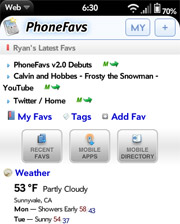
PhoneFavs has been recently optimized for next generation smartphones and mobile devices. The mobile web portal, bookmarking service and mobile site directory combines a plethora of mobile tools and services to enhance mobile surfing sessions.PhoneFavs has been refreshed with improved touchscreen support and larger smartphone displays in mind. Users can find many bookmarking improvements such as the ability to display more links per page, search within and easily share and shorten links in a mobile friendly format. The site also continues to add new mobile services such as the new automatic mobile weather feature, which can display up to the minute weather data worldwide without having to manually enter a location.
-
LG claims world’s thinnest LCD TV crown with 2.6mm thin 42-inch panel

LG has just fired off another salvo in the ongoing battle between Japanese and Korean LCD manufacturers to claim the title of world’s thinnest LCD TV panel. The Korean company has managed to break the 3mm barrier to produce an LCD TV panel measuring just 2.6mm (0.1-inch) thin. The 42-inch panel weighs less than 4kg (8.8lb), boasts a 120Hz refresh rate and full HD 1920 x 1080 resolution. ..
Tags: HD,
LCD,
LED,
LG,
Slim,
TVRelated Articles:
- Sharp releases “industry’s thinnest” solar panel for mobile devices
- Sony OLED XEL-1 television hits the U.S. market
- Samsung develops World’s Slimmest Mobile LCD Screen
- Panasonic’s gargantuan 150-inch plasma display
- Samsung announces 57-inch LCD Panel
- LG HD 3D monitor with twice the brightness of existing 3D LCD panels
-
Star Ocean: The Last Hope International English trailer
Finally, an English trailer for Square Enix’ Star Ocean: The Last Hope International. We’ve already previously seen the Japanese trailer, so let’s check out this version out.

