With 350 million users worldwide, an estimated $500 million in revenue this year and positive cash flow, Facebook is looking pretty good at this point to any investor. The company though isn’t really looking for new capital and an IPO is still quite a way off. For a determined investor though, these problems can be overcome, and Russian investment company Digital Sky Technologies seems to be one. It bought a small stake in Facebook last summer, 1.96 percent, and then continued to acquire common stock from employees or other shareholders to the point that DST is now said to own more than 5 percent in the social network.
Russian business newspaper Kommersant cites [translated] an unnamed inside source which claims that, not only DST now has a more than 5 percent stake, it is looking to increase it further with additional purchases. This means that DST’s stake is now three times larger than Microsoft’s, which owns just 1.6 percent purchased at a whooping $15 billion valuation.
DST paid $200 million for its initial stake in a deal which valued Facebook at $10 billion. At the time, it had the option to purchase an additional $100 million-worth of common stock at a lower $6.5 billion valuation, coming in at $14.77 per share. It quickly gobbled up the new shares, which meant it owned a further 1.53 percent in Face… (read more)
In ancient times there was a prevalent belief that birthdays were a time of potential danger. This originated within Greek culture, where both birth and birthdays were regarded as a time when the Gods may take your soul.
Consequently, when a Greek child had a birthday, s/he was given a little cake with a candle. The gods were asked for protection and the candle was then blown out. The Greeks believed that the smoke from the candle would carry the message to the gods and the child would be spared to continue living.
This tradition has survived to present day culture, where candles are still placed on a birthday cake.
Not all cultures embrace this tradition and some religious people feel that the act of ‘making a wish’ before the candles are blown out, is in fact an act of sacrilege and so they do not participate in this aspect of birthdays.
The decade is littered with huge deals that could have changed the business world, but for whatever reason, never materialized.
Consider…
What would have happened if Google bought Friendster?
…if Verizon hadn't shunned Apple for the first iPhone?
…if Comcast bought Disney for $54 billion instead of later buying NBC?
Of course, the king of all could've, should've during the decade was Yahoo.
Yahoo almost bought Google and Facebook. Then it spent all of 2008 rejecting an acquisition offer from Microsoft.
After Yahoo, the decade's next biggest waffler was Viacom.
Viacom flirted with Facebook and MySpace, hoping either would recharge its flagging MTV brand on the web. It didn't happen. MySpace was bought by News Corp. who may have killed it by forcing the social network to focus on revenue not user experience.
Jobless claims jumped 7,000 to 480,000, coming in a bit worse than expected.
This number isn’t wildly telling one way or another, except that we’re still clearly lacking signs of solid, continued improvement.
It doesn’t seem to be affecting the market much. The market is tanking, but the surging dollar and the weak Citi offerings are likely the main culprits.
Researchers at the University of California have found that the carry-trade, whereby money is borrowed in low-yielding currencies in order to buy high-yielding ones, has actually been a pretty effective source of stable returns for those willing to do it.
Which is peculiar given that, if it’s such a good deal, one would expect the market to arbitrage away these returns as more and more investors piled in.
Yet beyond these researchers’ conclusion that the carry trade has been relatively successful, they also took their analysis a step further. They claim to have a model whereby the carry trade yields even more stable returns over time — by simply avoiding the large losses that can happen from time to time.
Even if you aren’t convinced that this research could play out as well in the real world, which is usually the case, such thinking shows how the carry trade won’t go away any time soon. So don’t fight it, ride it.
The Economist: The authors first examine returns to a simple carry trade for a set of ten rich-country currencies between 1986 and 2008. Buying the highest yielder of any currency pair produced an average return of 26 basis points (hundredths of a percentage point) per month. That would be fine, except that the standard deviation of returns, a gauge of how variable profits are, was almost 300 basis points. The monthly Sharpe ratio that measures returns against risk was a “truly awful” 0.1 (the higher the ratio, the better the risk-adjusted performance). Worse still, the distribution of monthly profits was negatively skewed: big losses were more likely to occur than windfall gains.
No sane trader would follow a rule with such poor results. So the authors put together a far richer model to help decide which side of a currency trade to be on. It included things that are most likely to influence short-term movements in currencies, such as the change in the exchange rate over the previous month, as well as the size of the interest-rate and inflation gap between each currency. They found that all three factors mattered. Currencies that rose in one month tended to rise in the next month. Those with the highest interest rates went up most, as did currencies with high inflation (which drives expectations of further rate rises).
These impulses can drive exchange rates a long way from their fair or “equilibrium” values. That creates the risk of a sudden reversion that could wipe out earlier profits. To guard against this, the authors added to their model a measure of how far the exchange rate has shifted from its fair value. They found that this alarm bell can sometimes turn a “buy” signal into a “sell”.
While Fordsold most of its controlling stake in Mazda last November, the two automakers will remain close partners as the companies work together to develop new automotive systems and technologies — refuting previous reports that the two companies may be drifting apart. The announcement comes from top executives at both Ford and Mazda, which have been meeting recently to discuss further collaborations within the industry.
A strong relationship benefits both automakers. Ford needs Mazda for its insight into manufacturing, product development and its window into the Japanese auto industry. Mazda still relies on Ford for its powertrains (which Ford will continue to provide). The recently launched Ford Fiesta and Mazda2, built on a shared platform, are another example of how the two automakers can work together. The cars were originally engineered for other markets and not intended for sale in the States. When Ford’s product strategy changed while they were under development, the two companies met and solved the critical design elements together, making each viable for the domestic market. Problems solved, the Fiesta and Mazda2 debuted at the LA Auto Show earlier this month and are going on sale next year.
Ben Bernanke has been named Time’s “Person of the Year,” for his aggressive actions to stem the global financial crisis.
“His creative leadership helped ensure that 2009 was a period of weak recovery rather than catastrophic depression, and he still wields unrivaled power over our money, our jobs, our savings and our national future,” Time’s Michael Grunwald writes. “The decisions he has made, and those he has yet to make, will shape the path of our prosperity, the direction of our politics and our relationship to the world. “
Bernanke was clearly at center of the government’s response to the financial crisis and remains “the most important player guiding the world’s most important economy,” as Grunwald writes. By his own admission, the chairman didn’t see the credit crisis of 2008 coming and was too slow to react. Still, all but his most strident critics agree Bernanke helped prevent an even worse outcome, possibly a second Great Depression.
But does Bernanke deserve to be “Person of the Year”?
“Absolutely not,” says Christopher Whalen, managing director of Institutional Risk Analytics. “On a personal level I have great sympathy for Chairman Bernanke but he’s made such a pig’s breakfast of this whole situation.”
Unlike those who praise Bernanke for bringing the economy back from the brink of the abyss, Whalen says all he’s done is “saved the dealer community” from themselves by overseeing a massive taxpayer-funded bailout of the financial community.
Bernanke “hasn’t done anything for the real economy,” the analyst says. “The only thing I see is inflation. For the average American the message they should take away from this year is this: Bernanke’s policy has insured we’ll see the purchasing power of Americans’ savings dwindle.”
A former staffer at the New York Fed, Whalen also says Bernanke “failed miserably” in maintaining the Fed’s independence from both the banks and from politics.
Rather than merely lending money to the Treasury, Bernanke put the Fed directly in the middle of the 2008 bailouts – most notably of AIG, Whalen recalls.
“By taking the lead [Bernanke] undermined the Fed’s independence,” he says. “He really intervened not so much in the financial markets but in American politics. He gave Bush and Paulson a pass — they didn’t have to take responsibility for the crisis and they hand[ed] the ball to Barack Obama.”
It is for these reasons, Whalen says, that Bernanke’s reconfirmation by Congress is not assured, and politicians on both sides of the isle are looking to reign in the Fed’s power. It’s ironic Bernanke is being lauded in the mainstream press at a time when he — and the institution he leads — are under so much pressure in Washington.
In addition to Citi’s woes, we have Meredith Whitney whacking estimates on Goldman Sachs (GS) and Morgan Stanley (MS).
Bloomberg: The analyst, who runs Meredith Whitney Advisory Group, now projects Goldman Sachs will earn $19.57 a share in 2009, $19.65 in 2010 and $20.60 in 2011. Those were reduced from $19.95, $21.73 and $24.04, respectively.
Morgan Stanley’s projection for 2010 was cut to $2.60 a share from $2.63, while the 2011 forecast was reduced to $2.75 from $3.28.
Content: Army of TWO: The 40th Day Demo Price: Free Availability: All Xbox LIVE regions except Asia and Germany Dash Text: Army of TWO™: The 40th Day has been built from the ground up as an incredible cooperative experience. The result is a bigger, better, more organic and immersive co-op experience that lets you put your best two-man tactics to use whenever and wherever you want. This demo allows you to play part of the first level in split-screen or online COOP.
CellaTemp PQ Pyrometer now available with fibre optics
This pyrometer has the electronics housed separately from the optical sensor head. A fibre optic cable transmits infrared radiation a distance of up to 30 m. The CellaTemp PQ is available with one of two different sensor heads measuring Ø16 mm and Ø 30 mm. Due to their compact size, these sensor heads can be installed in cramped, hard-to-access locations and can withstand ambient temperatures of up to 250 °C without cooling. The fibre optic cable can be unscrewed on both sides for easy detachment. An assortment of broadband, optically corrected precision lenses is available to achieve target spots as small as Ø 1.8 mm. Because the optics are focusable, the sensor heads can be adjusted for the specific measuring distance which the application requires.
The CellaTemp PQ’s most striking feature is its new LED display. The bright 8 mm high digits offer superb readability, allowing the operator to monitor temperatures at a distance of several meters. Whether during initial setup or running operations, the display makes it easy for personnel to verify on-site that all equipment is functioning properly.
Due to the high-resolution digital signal processing and the latest amplification technology, this new pyrometer provides both wide measuring ranges as well as outstanding precision and accuracy.
For the pyrometer to accommodate the specific radiation characteristics of the target material, the emissivity value can be set directly at the connection cable or remotely by means of a control system. On-site adjustment has the advantage that the emissivity setting is specifically assigned to the measuring location. The possibility of an incorrect adjustment during initial installation or after recalibration can thus be ruled out.
The scaling of the analogue output can be adjusted by means of a USB interface. Other parameters such as emissivity, smoothing function, peak picker or diagnosis function can be PC-configured. The integrated communications software is a standard feature of the pyrometer. All that you will require to enable remote configuration is a Windows HyperTerminal and a PC without any additional software.
Furthermore, KELLER HCW offers the CellaMevis software. In addition to setting instrument parameters, with CellaMevis the recorded temperature data can be displayed online as a curve chart or graph. The data can be saved in a CSV file, enabling further analysis using Excel or any similar spreadsheet program.
CellaTemp PQ’s enclosure was designed to be identical to that of its forerunner series, thereby permitting the use of all existing accessories.
With its various measuring ranges between 300 – 2500 °C, the pyrometers of the CellaTemp PQ Series are suitable for a wide variety of industrial measurement tasks within kilns, furnaces and heating equipment. These applications include glass making, steel processing, cement production and the ceramic industry.
The fine threads of the needle valve permit excellent adjustment for precise control of flow. The flow is restricted in both directions and is adjustable from 0 to the equivalent flow of a 0.025″ diameter orifice. The 7-turn adjustment needle valves are available in two models, the standard model and the fine adjustment model. The standard adjustment model has a pin angle of 6 degrees with 10-64 threads; the fine adjustment model has a pin angle of 4 degrees with 10-80 threads.
The valve body is Phosphor Bronze and can be supplied with straight ports for 1/16″ ID tubing or with barbs for 1/16¨, 1/8¨, or 3/16¨ I.D. tubing. The pin is Beryllium Copper and can be supplied with a Buna-N, EPDM, or Viton o-ring. All pins have a nylon vibration insert. Valves for inline or panel-mounted applications are available; the panel-mounted needle valves are supplied with two self-tapping screws.
With fiberview eks Engel presents a new monitoring system for converters of the d-light series
Monitoring specified system budgets of fiber links is still a poor relation within fiber optic networks. A certain link attenuation, however, is normal and the result of the fibers’ characteristics, the number of splices and the connectors used. Also environmental influences such as temperature range and the cable laying play an important role. If a predefined limit is gone below, this is a sign of an increased attenuation and can have various reasons.
If a recommended bending radius is not kept to, this may lead to link attenuation and losses. Others reasons could be fiber breaks, incorrect installation and dirty or damaged connectors.
Better planning
Monitoring system budgets does not only minimize the risk of incorrect installation, but it also guarantees the proper operation of networks through an effective organization of service.
fiberview works similarly to a traffic light. LEDs show whether the budget for the fiber link is perfect, still tole-rable or insufficient. Without any room for interpretation, the optical signals “red”, “yellow” and “green” display the status of every optical channel. If the “traffic light” is green, everything is fine. If the yellow light is flashing, the budget is still tolerable, but already below a certain system reserve. Additionally to the LED, this pre-warning level is also signaled by a potential-free contact. If the “traffic light” turns red, however, there is a serious error such as a fiber break or the like.
Status at first sight
Thus fiberview ensures the proper installation of fiber optic networks since the LEDs directly show if the as-signed bandwidth is reached. This is also a great benefit during service, because the current status of the prede-fined system budgets is visible at first sight. The single signals green, yellow and red relate to clear statements. Room for interpretation has been avoided on purpose.
Time and cost savings through pre-warning level
A major advantage of the monitoring technology fiber-view is the pre-warning level which is signaled by the yellow LED. Thus, on-site service can be planned and carried out more efficiently before any errors occur. This results in considerable cost-savings, because the yellow signal does not have to entail a direct reaction, as it has to in case of the red one.
After a few years experimenting with 800cc engines in MotoGP, the Grand Prix Commission has just announced a switch back to 1000cc powerplants with the added caveat that they must have bore centers of 81 millimeters. These new regulations are set to go into effect for the 2012 racing season, and at least one small player is happy about the change. On the official MotoCzyst blog, Michael Czysz wrote:
The 2012 season is a great opportunity! MotoCzysz now has the base motorcycle, enough time and rules actually leaning a little in our favor – we could not ask for a better opportunity. Let’s hope others feel the way I do. There is heavy lifting to be done but great things can be accomplished with many hands and the assistance of a few true believers.
It would seem that Czysz would have a leg up on the competition in getting a MotoGP platform ready for 2012 since the company’s four-cylinder C1 was initially designed to compete in the 1000cc class. It’s unclear at this point if MotoCzysz will continue developing its electric E1 platform or if it will focus all of its efforts on getting a bike on the MotoGP grid for 2012. Or, ya know, neither of the above.
Very clever use of the Stolmen poles to create a room divider. Kudos, Andrew!
“An Ikea hack I just completed in order to create a partition in my studio apartment in Greenwich Village.
I used two Stolmen posts as the spine for this partition composed of 8 bowed spars I designed and built across which will be stretched over by a large canvas drop-cloth. The aim was to create a partition for the studio to preserve a separate sleeping area without leaving any trace on the walls, ceiling or floor.
It’s actually quite sturdy and we will eventually hang a painting on it.”
I’ve just realised (quite recently, duh!) that embedded videos, don’t turn up on some feeds. So just for you guys reading this post on a reader, click here to view the video.
It’s nearly school vacation time—and you’re probably making plans (or will, once your shopping is finished) for things that will keep the kids busy during their time off. Museums, concerts, playdates—whatever fills the days in a useful, educational way. Because you can’t leave the days blank, right?
Actually, you can. And sometimes leaving them blank is exactly what children (and families) need.
Don’t get me wrong: if there’s some really cool exhibit you’ve been waiting to see (my family wants to see the Harry Potter exhibit at the Museum of Science), or Christmas wouldn’t be the same without a trip to The Nutcracker, go for it. And if that one kid your daughter has been dying to play with is finally free over vacation, by all means set up a playdate.
But sometimes it’s important to remember the real meaning of vacation, which comes from the Latin vacare: to be empty, free. Children need this, especially these days when being scheduled (sometimes highly scheduled) is the norm. They are so scheduled that in 2006 the American Academy of Pediatrics (AAP) issued a report entitled “The Importance of Play in Promoting Healthy Child Development and Maintaining Strong Parent-Child Bonds.” It’s sad when the AAP has to remind parents to let their kids play.
The thing is, unstructured play is important. It’s particularly important for child development, because it’s through imaginary play that children explore the world, practice decision-making skills, learn to work in groups and learn to share. It’s also how they learn how to entertain themselves without the aid of an electronic device, and how they practice self-control. Unstructured time is important for mental health, because it gives kids a chance to decompress and relax; without this, there’s a higher risk of stress and depression. And it can be good for physical health, especially when that unstructured time involves physical activity.
Families need downtime, too. With everybody running every which way, we miss chances for connecting with and enjoying each other. Not to mention the stress on the parents who do all the scheduling—and the drop-offs and pickups and snack- and gym bag-packing.
So how about using vacation as a relaxation and reconnection time? Here are some suggestions:
Turn off the alarm clocks and get some sleep.
Turn off the TV and computer screens. You may face some resistance on this, as screens are often what kids want to use to fill blank days. But turning off screens turns on all sorts of creative possibilities.
Offer your kids materials to make stuff—like clay, blocks, paint and paper. Cut out pictures from magazines and make collages. Build a city. Leave it up all week and add to it.
Make a fort out of sheets and chairs. Bring pillows inside. Have a picnic there. Use flashlights.
Go outside a lot. Go for walks or to the park. Build snowmen if there is snow.
Play music. Dance.
Get out the board games. Have a marathon Monopoly game in your pajamas.
Take part. This is really important. Don’t just set the kids up with something and pull out your laptop or get on the phone—play with them. Your kids will love it, and I bet you will too.
If you approach the vacation this way, you just may find that when it’s over, everyone will be not just rested but happier. You might even find yourselves wanting to spend more time this way. Which would be really wonderful—for everyone.
Built any good forts lately? Ever made origami animals out of used holiday wrapping paper? What does your family like to do together during vacation time?
The device of the day is the HP Glisten, and PhoneArena has just weighed in with their review of the device. Unlike others they seem pretty positive, concluding:
Being away from the US mobile market for some time, HP definitely has one good looking Windows Mobile smartphone that gives other similar handsets a run for their money – like the Palm Treo Pro, Samsung Intrepid and HTC Snap. Throw in features like an AMOLED touchscreen, Wi-Fi, global capabilities, and a nice portrait style QWERTY and the Glisten will surely appeal to the business user. We would’ve liked to see HP work on offering a personalized look and pales in comparison to the offerings we tend to see with other manufacturers. Nonetheless, the HP iPAQ Glisten makes for a wonderful attraction to the Windows Mobile front.
DynaInk is a simple but revolutionary new drawing application which simulates real drawing experience on a touch screen Windows Mobile phone device. DynaInk thanks to its patent pending technology can react your drawing dynamism and can change the line width and line color according to it. The result is a rich and eye candy picture. Thanks to this technology it is very easy to get nice painting for beginners but professionals can also use DynaInk to get serious artworks.Click here to chec
David Rosenberg has put out a somewhat humble special report about the difficulty of forecasting, and what he sees everyone else forecasting for the coming year. It’s titled, provocatively, “Year Ahead, Can You Handle The Truth?”
Here’s a chunk of it:
Perhaps inflation is a consensus forecast but deflation is the present day reality and often lingers for years following a busted asset and credit bubble of the magnitude we have endured over the past two years. The fact that China’s voracious appetite for basic materials will continue to exert upward pressure on commodity prices does not detract from this view, especially given the widespread excess capacity in the manufacturing sector and the new frugality that has gripped, and in many cases, been embraced by the retail sector. Higher raw material prices, owing to developments in Asia as opposed to demand pressures here at home, will prove to be a sustained source of profit margin compression for many sectors and companies linked to finished consumer goods and sevices.
So, much of what I have read in various Year-Ahead Reports predict corporate earnings, GDP growth here and abroad, interest rates and relative values of currencies. As I mentioned earlier, the error term is bound to be very wide in this new paradigm (since WWII) of a secular credit collapse. GDP growth in 1934 was 10%, but the Depression wasn’t over until 1940.
Since 1989, the Japanese stock market has had no fewer than four 50%-plus rallies and there still has been no period of growth that can be called a sustained expansion. Today, we have our own special set of conditions and it is bound to be tricky as is typical during a post-bubble credit collapse, no matter how intense the government reaction. Prematurely committing to the ‘risk’ trade is probably going to be the most lamentable action over the next few years. Suffice it to say, we believe that the dominant focus will be on capital preservation and income orientation, whether that be in bonds, hybrids, hedge fund strategies, and a consistent focus on reliable dividend growth and dividend yield would seem to be in order. To reiterate, I see the range of outcomes in the financial markets and the economy to be extremely wide at the current time. But one conclusion I think we can agree on is the need to maintain defensive strategies and minimize volatility and downside risks as well as to focus on where the secular fundamentals are positive such, as in fixed-income and in equity sectors that lever off the commodity sector.
This, in turn, underscores my primary focus of favouring Canadian dollar based investments over the U.S. because at no time in my professional life have the downside risks — economic, fiscal, financial and political — been so low on a relative basis and the upside potential so high as is the case today. The near-2,000 basis point gap this year between the TSX and the S&P 500 — the former leading — should be taken in the context of being just past the halfway point of a secular (ie, 16-18 year) period of outperformance. Northern exposure never felt this hot.
Winner of Le Prix Goncourt 2008, considered France’s highest literary honor, this disturbingly powerful slim volume gives voice to the too-many silenced women living “[s]omewhere in Afghanistan or elsewhere.” Written almost like a dramatic play script complete with what read like stage directions – not surprising since Atiq Rahimi also happens to be an award-winning filmmaker – The Patience Stone would surely make for a powerful production. For now, you’ll have to settle for the haunting 142 pages, but mark my words … it’s coming to a stage or screen near you.
“Outside of a few urban pockets,” writes Khaled Hosseini of now legendary Kite Runner-fame in the book’s introduction, “the ironclad rule of patriarchal, tribal law has long denied women their right to work, education, adequate health care, and personal independence – all of this made infinitely worse by three decades of war, displacement, and anarchy … For far too long, Afghan women have been faceless and voiceless. Until now. With The Patience Stone, Atiq Rahimi gives face and voice to one unforgettable woman – and, one could argue, offer her as a proxy for the grievances of millions.”
In a small, bare – “[s]tifling, despite the paleness of the turquoise walls – room, a man lies on the floor on a red mattress, facing a photo of a much younger version of himself on the wall. Comatose with a bullet lodged in his throat but miraculously still alive, he is diligently attended to by his wife who feeds and cleans him, regularly administering drops into his unseeing eyes. Outside are reminders of war … gunshots, yelling, constant danger.
Frustrated and alone, the woman starts revealing long-held secrets to her silent husband … for the first time, she is the one able to speak freely. Remembering a story her beloved father-in-law told her, the woman refers to her unmoving husband as her “sang-e-saboor,” a magic stone that “you put in front of you … tell all your problems to, all your struggles, all your pain, all your woes … to which you confess everything in your heart, everything you don’t dare tell anyone.”
To her captive audience, she confesses her hatred of the endless, worthless war, her admiration for her patient storytelling father-in-law, her frustration over her abusive marriage, her disappointment with her oppressed sexuality, and so much more. When nameless soldiers appear at the door, she saves herself by announcing that she is a whore, knowing that the devoutly religious men (at least outwardly) will leave her untouched because she is considered dirty … until one of them returns with a nervous request of “How … m-m-much?”
 With 350 million users worldwide, an estimated $500 million in revenue this year and positive cash flow, Facebook is looking pretty good at this point to any investor. The company though isn’t really looking for new capital and an IPO is still quite a way off. For a determined investor though, these problems can be overcome, and Russian investment company Digital Sky Technologies seems to be one. It bought a small stake in Facebook last summer, 1.96 percent, and then continued to acquire common stock from employees or other shareholders to the point that DST is now said to own more than 5 percent in the social network.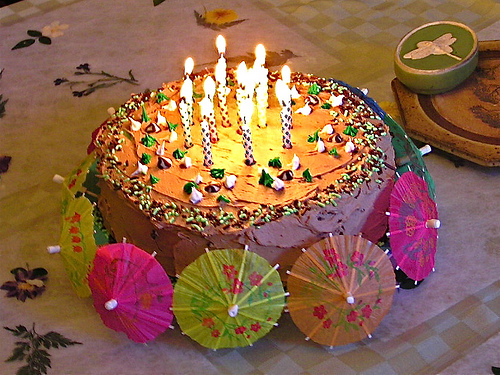


 It’s nearly school vacation time—and you’re probably making plans (or will, once your shopping is finished) for things that will keep the kids busy during their time off. Museums, concerts, playdates—whatever fills the days in a useful, educational way. Because you can’t leave the days blank, right?
 themselves without the aid of an electronic device, and how they practice self-control. Unstructured time is important for mental health, because it gives kids a chance to decompress and relax; without this, there’s a higher risk of stress and depression. And it can be good for physical health, especially when that unstructured time involves physical activity.


