Blog

  • Nikon acquires Harvard STORM technology

    Harvard University has signed a licensing agreement with Nikon Corporation covering the use of Stochastic Optical Reconstruction Microscopy (STORM) technology developed in the lab of Xiaowei Zhuang, PhD, a Howard Hughes Medical Institute investigator. Under terms of the agreement, Nikon will manufacture STORM-enabled microscopy systems and market them with the N-STORM name. Optical microscopy is one of the most widely used imaging methods in biomedical research. However, the spatial resolution of optical microscopy — classically limited by the diffraction of light to several hundred nanometers — is substantially larger than typical molecular length scales in cells, leaving many biological investigations beyond the reach of light microscopy.

    The STORM technology overcomes these limitations, allowing life science researchers to observe tissues and cells more clearly. STORM uses photo-switchable fluorescent probes to temporally separate the otherwise spatially overlapping images of individual molecules, allowing the construction of two- and three-dimensional, multicolor fluorescence images of molecular complexes, cells, and tissues. The STORM fluorescence microscopy allows molecular interactions in cells and cell-cell interactions in tissues to be imaged at the nanometer scale. The N-STORM Super Resolution microscope system will be available for delivery in May 2010.

    Source: Nanowerk


  • Rockefeller U, Sanofi-aventis ink licensing agreement for Alzheimer’s therapy

    The Rockefeller University in New York City has signed an exclusive global licensing agreement with pharmaceutical giant Sanofi-aventis to develop, manufacture, and commercialize a novel monoclonal antibody that targets certain forms of the amyloid beta (a-beta) parenchymal plaque for the treatment of Alzheimer’s disease (AD). Additional terms of the license were not disclosed. The anti-a-beta antibody therapy offers a promising approach to prevent and reverse the formation of amyloid plaques between nerve cells in the brain, potentially leading to cognitive improvement in patients with AD. The technology was developed in the lab of Jeffrey V. Ravetch, MD, PhD, Theresa and Eugene M. Lang professor in Rockefeller’s Leonard Wagner laboratory of molecular genetics and immunology. Ravetch discovered the original murine monoclonal antibody targeting the a-beta peptide — a target that may have a significant impact in managing patients with AD, according to Marc Cluzel, executive vice president of R&D at Sanofi-aventis. The antibody will enter development at the end of 2009.

    Source: PipelineReview.com

  • January tech transfer audioconferences address outsourcing, de-risking technologies

    Our distance learning division is kicking off the new year with two outstanding, practical audioconferences. On January 6, Successful Outsourcing for Tech Transfer Organizations will focus on how to implement an effective outsourcing strategy to reduce your backlog of invention files, get more deals done, and boost faculty relations. A detailed case study of Texas Tech University’s outsourcing experience will provide valuable takeaways and lessons learned. CLICK HERE for full details.

    On January 27, serial inventor and innovation expert Nicholas Webb will headline “Shrink Wrap” Your University’s Technologies for Industry: Packaging Your Innovations to Minimize Corporate Risk and Extract Optimum Licensing Value. He’ll show participants how to present IP with a solid, in-depth market analysis and adopt proven analytical methods used by corporations to identify and plug any holes that could affect valuation. Attendees will gain unique insights into how to meet and exceed corporate expectations, and de-risk IP for a faster, smoother and more lucrative deal. CLICK HERE for full details.

    And don’t miss next Wednesday’s distance learning session: Post-License Monitoring and Support: Performance and Revenue Enhancement Strategies (and when all else fails, how to pull the plug and take back your IP!)

  • Tel Aviv U researcher packs dissolving dressing with infection-fighting antibiotics

    Seventy percent of individuals with severe burns die from related infections, but a wound-dressing technology from Israel’s Tel Aviv University could cut that figure dramatically. Meital Zilberman, a professor in TAU’s department of biomedical engineering, has developed soluble fibers that can be used to deliver infection-fighting antibiotics and dissolve when the job is done. Now in clinical trials on animal models, Zilberman’s material may eliminate the constant wound cleaning and redressing that leads to infection, allowing the human body to complete the work on its own. The gentamicin-eluting bioresorbable structures are composed of a polyglyconate core and a porous poly(DL-lactic-co-glycolic acid) (PDLGA) shell loaded with the antibiotic agent gentamicin, prepared using freeze drying of inverted emulsions. The fibers are designed to be used as basic elements of bioresorbable burn and ulcer dressings.

    A study published in the Journal of Biomedical Materials Research – Applied Biomaterials demonstrates that, after only two days, this dressing can eradicate infection-causing bacteria. “We’ve developed the first wound dressing that both releases antibiotic drugs and biodegrades in a controlled manner,” Zilberman says. “It solves current mechanical and physical limitations in wound-dressing techniques and gives physicians a new and more effective platform for treating burns and bedsores.” Zilberman is seeking a strategic partner to co-develop the research and take it to the commercial stage.

    Source: Biomed Middle East and EurekAlert!


  • U-Minn, Celladon invention to speed development of heart failure drugs

    University of Minnesota scientists in collaboration with Celladon Corporation of La Jolla, CA, have developed technology to rapidly identify compounds for the treatment of heart failure. The technology allows for increased screening efficiency of compounds capable of disrupting the interactions of proteins implicated in the development of heart failure. Fluorescence resonance energy transfer (FRET) is used to measure disruption of the calcium regulatory system, which has long been implicated in cardiovascular disease. Because compounds that decrease FRET are good candidates for further development, researchers now will have key information early in the screening process about the likelihood that a particular drug will succeed. The high-throughput assay developed by the university research team is based on a reconstituted membrane system composed of purified lipid and protein components. The technique is important because the interactions of integral membrane proteins are more complex than soluble proteins, making it difficult to produce a synthetic system that recapitulates the cellular interactions in a large-scale and reproducible manner. U-Minn granted Celladon an exclusive license to use the technology to develop molecular therapies for cardiovascular diseases. Celladon also provided funding for the research that allowed researchers to further refine the assay.

    Source: Science Daily


  • Barnes and Noble nook vs. Amazon Kindle: Size comparison shots

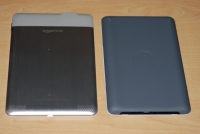
    B&N nook next to Amazon Kindle

    Hot on the heels of our Barnes & Noble nook unboxing gallery, we got a ton of requests from you guys asking us to compare the nook directly against the 2. So we put the nook right up against Amazon’s Kindle 2, and shot some photos. In a nutshell, the nook is smaller in length and width, but is a little but thicker than the Kindle 2. I personally don’t think one has an advantage over the other in terms of size, but hey, check out the nook vs Kindle size comparison gallery, and judge for yourself, mmkay?


    Gallery: Barnes and Noble nook vs. Amazon Kindle: Size comparison shots

    Tags:
    ,
    ,
    ,
    ,
    ,
    ,
    ,
    ,
    ,
    ,
    ,
    ,
    ,
    ,

    Barnes and Noble nook vs. Amazon Kindle: Size comparison shots originally appeared on Gear Live on Wed, December 09, 2009 – 11:59:49


  • Nesson Asking For Retrial In Tenenbaum Case, Claims It Was The Judge Who Screwed Up, Not Him

    Dear Joel Tenenbaum: please find new legal representation. And do so quickly. Following Judge Gertner’s trashing of Nesson, the Harvard law professor still doesn’t seem to think he did anything wrong. Instead, he’s blaming Judge Gertner. Seriously. In an interview with Computerworld, he said he’s planning to ask for a retrial due to Gertner’s errors in the case:


    Nesson, however, brushed aside the judge’s criticism and maintained that it was she who had gotten it wrong. “I was sorry she did not respond to our fair use defense. She had a considerable amount of trouble rejecting it,” he said.

    From the rest of the article, it sounds like he wants a do over. He says that he wants to have a new trial where he’ll make a brand new argument: that Tenenbaum’s use was fair use because when he did the file sharing, there was no legal way to purchase that music digitally. As far as I can tell, that’s a misreading of what Gertner said might possibly work as a limited fair use claim, but there’s no indication that this is actually true in Tenenbaum’s case, and none of that addresses the basic procedural mistakes that Nesson made. It’s a shame that Nesson still can’t admit that he screwed this up entirely — despite being told that by plenty of folks who are very sympathetic to his position. At some point, one hopes that Tenenbaum himself will realize this and drop Nesson and find someone who can actually represent his interests.

    Permalink | Comments | Email This Story


  • Bertone Mantide goes from blush to pale, looks better for it

    Filed under: , , , ,

    Bertone Mantide – Click above for high-res image gallery

    Love it or loathe it, the Bertone Mantide is one of the most striking automotive designs of the decade, and coupled with the Corvette ZR1‘s performance, Jason Castriota has created one of the most exclusive supercars in recent memory.

    The second of ten Mantides has been delivered to its new owner before its official unveiling at the Dubai Auto Show next month, and — to our eyes — its all-white paint scheme looks even better than the original red example that debuted earlier this year.

    Castriota has since left StileBertone and moved back to New York to pursue other endeavors. In addition to tackling the fashion and industrial design world, he’s working on a new line of footwear that’s expected to be revealed sometime in 2010. While a new set of kicks would be the perfect compliment to the machined aluminum throttle on the angular, LS9-powered coupe, we wouldn’t be surprised to see Castriota tackling another automotive project in the future given his penchant for both style and speed.

    Bertone Mantide goes from blush to pale, looks better for it originally appeared on Autoblog on Wed, 09 Dec 2009 14:58:00 EST. Please see our terms for use of feeds.

    Permalink | Email this | Comments

  • Dead Cat Bounce: Detroit Home Prices Surge 14%

    housingmap

    According to research firm Clear Capital (via HousingWire), the Midwest is seeing a home price surge, with Detroit (of all cities) leading the way.

    We’ll add the caveat that there are a lot of small firms out there trying to tackle this question — and they all tend to come up with different answers — to be careful.

    —–

    TRUCKEE, Calif. – Dec. 9, 2009 – Clear Capital (www.clearcapital.com), a premium provider of data and solu-tions for real estate asset valuation, investment and risk assessment, today released its Home Data Index™ (HDI) Market Report. Patent pending rolling quarter technology significantly reduces the multi-month lag time associated with other indices to help investors, loan servicers and individual buyers and sellers make more informed, timely and profitable decisions. This month’s report features data compiled through Nov. 27, 2009.

    Report highlights include:

    • National / Four Region Overview: National quarterly price gains are narrowed to a modest 1.4 percent; with the Midwest (2.3%), West (1.5%), South (1.0%) and Northeast (0.9%) all posting modest gains.
    • Metropolitan Statistical Area (MSA) drilldown: The highest performing major markets continued to experience quarterly home price gains, further minimizing yearly losses. Lake Erie cities of Detroit, Mich. (14.1%), and Cleveland, Ohio (12.8%), top this month’s highest performing major markets. Softening seasonal home prices have returned most of the lowest performing major markets to negative quarterly results.
    • Micro Market Analysis: Home price gains of 13.4 percent over the last two rolling quarters indicate prices in the Atlanta, Ga. MSA may have bottomed out and are beginning to recover.

    The Clear Capital HDI Market Report offers the industry, investors and lenders a near real-time look at pricing conditions not only at the national and metropolitan level, but within local markets. Clear Capital data is built on the most recent data available from recorder/assessor offices, and then further enhanced by adding the Company’s proprietary market data for the most comprehensive geographic coverage available.

    Join the conversation about this story »

    See Also:

  • Statement from University of Tennessee Regarding NCAA Review

    KNOXVILLE — The University of Tennessee confirms that there is an NCAA review under way. University Administration and Athletics are cooperating fully.

    We are concerned about the alleged activities of some members of the Orange Pride. Both university and NCAA guidelines are a part of the Orange Pride’s orientation and training. If those guidelines were violated, we will take appropriate action. Because of federal student privacy regulations, we can’t comment further.

    Orange Pride is one of three student admissions groups that serve as ambassadors for the University of Tennessee, Knoxville. Orange Pride’s responsibilities include staffing university-wide admissions programs, providing campus tours, and hosting prospective student athletes and their families. There are 75 students, both men and women, in the group. These ambassadors interact with hundreds of students across the campus.

    C O N T A C T :

    Karen Collins (865-974-5186, [email protected])

  • Open Text delays DAM v7 (again)

    I was first given a preview of Open Text’s new Flash-based DAM user interface over a year ago, in the fall of 2008. The release, at the time, was "imminent"; I even put a preview screen shot of the new version in the 2009 edition of our Digital & Media Asset Management research. Fourteen months later, customers of the product formerly known as Artesia are still waiting for v7.0.

    It’s been a rather long and intense tease, with the interface showcased at conferences and sales pitches throughout 2009, yet Open Text remains indecisive as to when they’ll roll out the goods. Earlier this autumn, sitting with one of my consulting clients who’s in the process of selecting a DAM, I watched an Open Text sales pitch showcasing all the slick features of 7.0. But when it came to the down-and-dirty demo of full features, the sales people retreated back to version 6.8. "7.0 will roll out before the end of this year," they promised. Just a few weeks later, Open Text announced the release will be delayed until Q1 of 2010.

    Much of the growth of Artesia (which will be called Open Text Media Management in its next life) has been spurred by the intense audio and video management demands of the BBC, a banner client, and it’s in the media giant’s London offices that a beta version of 7.0 is currently being tested. But really: what’s taking so long?

    As we mentioned earlier this year, many DAM vendors have completely overhauled their interfaces to be Flash or Flex-based during 2009; Artesia is moving from a rather staid but utilitarian HTML UI to a slick Flash-based one. They’re adding support of more file formats, debuting a SharePoint connector, and piling on enhanced workflow and bulk-processing features. It’s more than a new interface, and clearly it’s taking longer to pull the pieces together than they would have liked.

    Be cautious if you’re shown a preview of any version that’s up-and-coming. The reality is, you’re likely seeing a smoke-and-mirrors demo, and the real shipping software may not see the light of day for months, or even years. I’ve even seen vendors respond to requirements in an RFP based on a product roadmap or a planned feature, rather than what’s actually part of the current version. Unfortunately, buyers often don’t always have the detailed knowledge necessary to see when that’s the case.

    I’ve often told my female friends you should never marry a guy thinking you’ll be able to change him; the same is true of your vendor. Never buy based on what a vendor promises will be "better" or "fixed" in the next version. Always select tools based on the current release, and be sure to specify to vendors in your RFP that they can’t say they meet a requirement based on future plans. Artesia customers will be the first to tell you, you may be working with the current release a lot longer than you think. 

  • Yucca Mountain Repository

    Nevada, US | Subterranean Sites

    Yucca Mountain in southern Nevada is more a ridge than a mountain. Created by an extinct supervolcano, it slowly rises from a height of four thousand feet to six thousand feet along its’ length of six miles.

    To enter it, one rides an open train into one of the biggest holes in the world, bored straight into the face of Yucca Mountain, into a five-mile long U shaped tunnel which curves through the huge ridge.

    In 1997 a 25-foot diameter borer machine emerged from the face of the mountain to open the other end of the tunnel three miles south of the north portal. For most of its length the tunnel is about a thousand feet beneath the summit of the mountain and even more important a thousand feet above the water table. That’s important because, of course, this tunnel in Yucca Mountain is where the United States government is intending to store the nation’s high level nuclear waste for the next ten thousand years and beyond.

    Yucca was chosen as the site for storing the high level nuclear waste after being chosen as one among three — the others in Texas and Washington — capable of the task of storing the material for 10,000 years. Partially, Yucca was chosen arbitrarily after Congress balked at spending the money to test the other sites, much to the frustrations of Nevada citizens who opposed the project.

    The more than five miles of tunnels, cross drifts and alcoves that have been drilled so far are really part of what is called the Exploratory Studies Facility. It is a research program, costing $8 billion so far, intended to prove the absolute safety of the repository for ten thousand years. If it morphs into the actual nuclear waste site then they will bore another sixty miles of tunnels branching off the main one where they will actually store the hot waste.

    Deep in the tunnel tests are conducted to find out the effects of the enormous amount of heat that the sealed in nuclear waste will produce. In sealed of tunnels row of huge heaters are lined up to raise the temperature to several hundred degrees. The waste itself will be stored in something called Alloy 22, a metal which will survive the oxidization over the long time spans involved in the plan. The design of the Yucca Mountain Repository is capable of holding up to 125,000 metric tonnes of heavy metal.

    Currently, the country’s 104 nuclear plants and the nuclear weapons program have produced over 40, 000 metric tonnes of spend fuel, and will have produced an estimated 63,000 MT by 2014. In 2035 it will be two times that. Most of that waste is currently stored in 33 states at a few Dept. of Energy sites, and at the sites of 72 nuclear power plants in what are euphemistically called “swimming pools.” These were designed as temporary storage sites where the risks of dangerous failures are increasing over time.

    Today the future of Yucca Mountain is still very much in flux. On February 14, 2002 Secretary of Energy Spencer Abrams recommended the approval of Yucca Mt to President Bush who acted the next day to notify the Congress of his intention to move ahead with the project. However, in 2009 Obama reversed this position and as along with Energy Secretary Steven Chu said that “the Yucca Mountain site no longer was viewed as an option for storing reactor waste.” While this may be the case, and the project has no official opening date, it continues to move forward. With a 2008 budget of $390 million, the lowest since 2002, the project is underfunded but the DoE has managed to reroute funds and is still being perusing the project.

    In 2006 a committee of 96 doctoral degree-granting institutions and 11 associate member universities was put together to review the project for safety and viability. A previous review from the U.S. Senate Committee on Environment and Public Work was favorable towards the site.

    Whether Yucca mountain ends up being used as a storage facility, or another, better option for the waste comes along such as re-using it as nuclear fuel, the question of nuclear waste storage and disposal is a continually mounting one, one which must be answered within a few decades and be the correct, or at least viable, for the next 10,000 decades.

    In conjunction with the Long Now Foundation. Modified from original text by Peter Schwartz at the Long Now Blog.


  • Vegans Face Unique Problems Especially When Selecting an Organic Sleep System


    Living a vegan lifestyle can present unique challenges. Consider for a moment living a lifestyle that seeks to exclude the use of animals for food, clothing or any other purpose. Dining away from home, shopping for shoes, clothes, body-care products and even a mattress can present unique difficulties. These issues become even more compounded and complicated for the eco-minded vegan. Repeatedly, the folks in the organic, natural bedding and mattresses business have heard praises about their products from people across the country, however, the vegan community felt left out; until now, most natural mattresses contained wool. Though most of the wool that is used by the better organic mattress companies is obtained from animal-friendly farms that provide loving care for the animals, this still provides a conflict for the true vegan. CozyPure® understands and respects their vegan customers, so after nearly a year of research and development, they are proud to introduce their new line of Eco-Vegan mattresses. The new vegan natural latex mattress collection features quality organic components and no animal byproducts. Using colorgrown-sage 100% GOTS certified organic cotton damask fabric quilted to their vegan batting, the new mattress has blended beauty, comfort and elegance into a sleep system that is both earth and animal friendly; a perfect harmony for those of us that care about this planet and all the creatures that inhabit it. Now, side-by-side with the Pure Elegance Collection, the CozyPure® Eco-Vegan line shows the true commitment of Organic Comfort Zone to it’s customers lifestyle choices and their need for safe, healthy sleep. To view all of the CozyPure® products, stop by Tomorrow’s World / Organic Comfort Zone at 201 W. Ocean View Avenue in Norfolk, Virginia or visit them online at www. CozyPure. com .

    For great info on vegan vitamins, vegetarian supplements and nutrition, visit www.vegetarianvitaminsguide.com today!

    EARTH “TRIBECA” shoes 9.5 BLK FREE SHIP W/BIN VEGAN

    US $30.99 (2 Bids)
    End Date: Thursday Dec-10-2009 16:05:05 PST
    Buy It Now for only: US $69.99
    Bid now | Buy it now | Add to watch list

    Vegans Face Unique Problems Especially When Selecting an Organic Sleep System is a post from the Vegetarian Vitamins Guide blog where you can find suggestions and advice from vegetarians and vegans on vegetarian diets, supplements, vitamins and overall nutrition.

    Related Vegetarian Vitamins Posts:

    1. How To Buy An Organic Mattress Most people spend eight hours in bed everyday. With this…
    2. Memory Foam Mattresses Help Back Pain If you’re someone who has to deal with chronic back…
    3. Is A Vegan Diet Really Natural For Humans? I can understand humans not eating meat, everything that is…
    4. Beauty Products-Why Use Organic Skincare Products & Go Vegan Even if you are not a vegan, you should…
    5. Could Vegan Skin Care Products Be Just What You Are Looking For? One of the main reasons that many people make…
  • Novitec Rosso offers up tuning package for Ferrari California

    Filed under: , , ,


    Novitec Rosso Ferrari California – Click above for high-res image gallery

    It’s been a little over a year since Ferrari released the California. It was Maranello’s first front-engined V8, bearing its first dual-clutch transmission, its first folding hard-top, and its first standard fitment of carbon-ceramic brakes. Unfortunately Ferrari found public reception to the convertible’s styling rather cold, and although we found it looked much better drenched in soft Sicilian sunlight than it does it photos, not everyone’s a fan.

    Fortunately there’s an elite cadre of Ferrari tuners eager to spruce up Maranello’s finest – as well as their more controversial designs. Hamann‘s one, and they’ve taken their shot at the California already. So has Edo Competition. Now it’s Novitec Rosso’s turn.

    The Dutch tuning garage has just released a full array of modifications for the 2+ cabrio, starting with a revised ECU for a modest 40 horsepower bump to 500 even. A sport suspension drops the ride height by 35 millimeters, but it can be raised up front by as much as 40 mm to clear curbs and speed bumps. Outside, Novitec’s fitted a carbon fiber aero kit with front lip spoiler, side skirts, revised diffuser and a little rear wing, along with modular rims measuring 21 inches up front and 22 in the rear, shod with Pirelli rubber.

    While opinions remain divided as to the sacriligiosity of tuning a Ferrari, in the California’s case it could be – to some eyes anyway – just what the doctor ordered. Details in the press release after the jump and photos in the high-res gallery below.

    [Source: Novitec Rosso]

    Continue reading Novitec Rosso offers up tuning package for Ferrari California

    Novitec Rosso offers up tuning package for Ferrari California originally appeared on Autoblog on Wed, 09 Dec 2009 14:31:00 EST. Please see our terms for use of feeds.

    Permalink | Email this | Comments

  • Peter Thiel: Gold Is The “Anti-Investment”

    petethiel.jpg

    Peter Thiel commented on Paulson’s obsession with gold today in an interview with Big Think.

    Thiel says, “think of gold as not a protection against inflation, but as an anti-investment. You invest in gold when there’s nothing good to invest in.”

    The Pay-Pal co-founder is now manager of the Clarium Capital Management hedge fund, which is is down 16.4% so far this year.

    His November 13-F filing shows that he has a small stake in SPDR gold trust. He is more heavily invested in Nike, Toyota, and other commodities.

    “If you believe in inflation,” he says, “you should probably be investing in land in India, or some sort of inflationary asset that does really well if you have crazy runaway inflation.

    “But if you believe that it’s going to be very hard to make good returns on investments, and that could [either] be an inflationary environment or it can be a deflationary environment, then gold becomes relatively attractive.”

    See the full What Went Wrong series on Big Think.

    Join the conversation about this story »

    See Also:

  • 2009 Holiday Gift Guide: iLuv iMM153 alarm clock with bed shaker

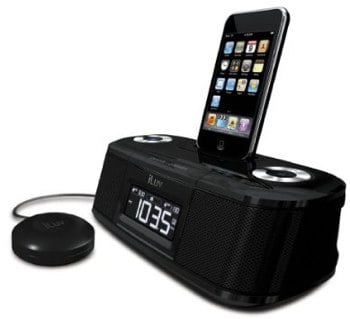
    iLuv iMM153So peep this – the iMM153 alarm clock from iLuv features a bed shaker alarm that works in conjunction with an iPod, FM radio, or generic buzzer. It pretty much guarantees that the owner, no matter how deep they are into their slumber, will be woken up by the noise and vibration combo. The iLuv iMM153 is available in black, white, pink, and blue, and is compatible with iPod classic, mini, nano, and touch. The things retail for $59, but Amazon has them for $46.


    Tags:
    ,
    ,
    ,
    ,
    ,
    ,
    ,
    ,
    ,
    ,

    2009 Holiday Gift Guide: iLuv iMM153 alarm clock with bed shaker originally appeared on Gear Live Holiday Gift Guide on Wed, December 09, 2009 – 11:30:45


  • Summary of IP Spoofing

    If you are using any sort of IP based filtering within your application, then you need to evaluate how IP spoofing attacks affect your security controls. In order to make a fair evaluation you will need a basic understanding of IP spoofing attacks.


    Let’s look at two different scenarios.

    Scenario #1 Attacker wants to spoof an arbitrary IP address and the attacker is not on the same subnet (broadcast domain) as the targeted IP address. Example: attacker is 1.2.3.4 and wishing to spoof 4.5.6.7

    Scenario #2 Attacker wants to spoof an IP address of someone on his own subnet (broadcast domain). Example: attacker is 192.168.1.55 and wishing to spoof 192.168.1.58 (assuming subnet of 255.255.255.0)

    Scenario #1

    The attacker can create forged TCP packets and modifies the source IP address to be any value. One tool that can do this is HPING2.

    What can you do:

    • Send an initial TCP packet with any source IP address
    • Send a series of UDP packets with any source IP address
    • Send a series of unrelated TCP packets from the same or varying IP addresses

    What can’t you do:

    • Receive any responses to your forged messages. The responses, if sent, would go to the forged IP address.
    • Send a string of related TCP packets (e.g. reconstruct an actual TCP exchange). This is because you can’t complete the handshake or guess the necessary information to continue the TCP connection.

    Scenario #2

    The attacker can perform a variety of attacks to forge or take-over the IP address on the same subnet.

    Attack Options:

    • Simplest – Statically define your IP address to the target IP address
    • Switch your MAC address to the MAC address of the current NIC for the target IP address and attempt to assume control of IP
    • Execute man in the middle attack via arp spoofing (see tool Cain & Abel) and then gain control of user’s unencrypted transmissions. You could likely modify or redirect traffic to accomplish your original spoofing goal.

    What can you do:

    • Assume control of the IP address. Note: This means you can send/receive valid data using the targeted IP address as your own. It does not grant you access to existing sessions that the user had with any websites (because you don’t have the user’s session cookies).

    What can’t you do:

    • Intercept encrypted (e.g. SSL/TLS) communication destined for the target IP address without alerting the targeted user in some way (browser warning message for MitM invalid certificate).

    Hope this is helpful. This is by no means an exhaustive list of attack techniques, but something to consider if your are using IP related controls within an application.

    This is a guest post by Michael Coates, a senior application security consultant with extensive experience in application security, security code review and penetration assessments. He has conducted numerous security assessments for financial, enterprise and cellular customers world-wide.
    The original text is published on …Application Security…

    Talkback and comments are most welcome

    Related posts
    DHCP Security – The most overlooked service on the network
    Example – Bypassing WiFi MAC Address Restriction
    Obtaining a valid MAC address to bypass WiFi MAC Restriction

  • Skyfire updated to version 1.5, brings the pretty

    Skyfire has always been a browser with outstanding functionality, but when it came to appearance it always lagged browsers like Opera Mobile.

    No more however, as version 1.5 brings a more attractive, finger-friendly browser that makes better use of our VGA and WVGA screens.

    The latest version features:

    • Full VGA Support. Skyfire now provides native support for the VGA and wVGA resolutions as seen on many recent Windows Mobile phones.
    • Smooth Scrolling. Kinetic scrolling has been added to Skyfire. Flick and you will see that scrolling has become very smooth.
    • Finger friendly UI. There are many UI updates to enable finger friendliness, increase the ease of use and add a bit of fun to the Skyfire experience. We updated as well the start page to be simpler-to-use with high-resolution devices
    • Full screen mode. For touch screens we have a mode that will completely remove all UI elements from the screen to provide maximum visibility onto the page. Tap the bottom right corner to bring back the toolbar.
    • Auto-Move text entry. This keeps any text entry box visible when the virtual keyboard is used. This convenient feature assures that web site forms are easy to use, in case the SIP (i.e., virtual keyboard) covers it.
    • Latest versions of Flash 10 and Silverlight. 1.5 has been updated to the newest and most stable versions of both rich-media formats.
    • Performance enhancements. Both Skyfire’s client and servers have been upgraded for faster, more responsive browsing.

    The updated version can be downloaded at  get.skyfire.com here.

    Via WMExperts.com

    Share/Bookmark

  • Capcom: No Rival Schools on PSN now or ever

    Hey, Rival Schools fans. If you still have your old Rival Schools PSone disc, hang on to it. Love it. Treasure it. According to Capcom’s Chris Svensson, we won’t be seeing that game as a PSOne Classic

  • on-demand web seminar:Simulating and Optimizing Flow Fields

    60-minute web seminar, where the presenter will discuss analyzing the inside of an oven, making sure the heat flow inside is even and what this means for the overall design of the finished product.