President Kabila, with UNSG Ban Ki Moon looking on. Photo: AP
Leaders from 11 countries met yesterday (Sunday 23rd Feb) in Addis Ababa and signed a Peace, Security and Cooperation Framework agreement intended to bring peace to the eastern provinces of the Democratic Republic of Congo. After nearly a year of renewed fighting in eastern DRC between rebel groups and the Congolese Army, the number of internally displaced people increased by one million to 2.7 million. This comes after months of negotiations and was welcomed by the UK Government in a statement by the Foreign Office Minister, Mark Simmonds.Meanwhile, last week another peace agreement was signed, at a much more local level, reminding us that conflict in the DRC is not just about the east of the country. Last Monday, following a two year peace process, members of four communities met in Equateur province to sign non-agression accords.
The inyelle rebellion

Peace Rally in Gemena, DRC
In 2009, long-standing socio-economic and political tensions between two tribal groups, exacerbated by local tensions over access to fishing ponds, exploded into a conflict that caused 200,000 people to flee their homes. The initial burst of conflict rapidly drew in local politicians and businessmen and the dispute was rapidly transformed into an armed rebellion that became a platform for others to vent political grievances, including troops loyal to Mobutu living in neighbouring Republic of Congo. The rebellion and the impact on thousands of families demonstrates how fragile peace in the DRC really is and how important it is for us to understand the local political economy and conflict drivers. More than that, it illustrates the potential for instability way beyond the headlines of eastern DRC. A local peace accord

25 car convey into town
Last week, I accompanied the UN Secretary General’s Deputy Special Representative, the national Minister of Interior and the diplomatic corps to Gemena in northern Equateur to witness the signing of the peace accords between these communities. After two years of reconciliation work and repatriation efforts, the ceremony brought together the four communities. Despite my heart dropping as I was bundled into one of a 25 car convoy from the aiport to the ceremony (maybe I should just get over my dislike of the idea of these jamborees), it was a fascinating day and in fact an interesting example of senior political engagement in a province that is often ignored by national and international press.

Male community leaders smoke together
The ceremony itself – arranged by the UN peacekeeping force, MONUSCO and the national government, was an interesting insight into local conflict resolution. It was also surreal at times, particularly the smoking ceremony, where the men from each of the four communities – having handed over their weapons to the interior minister – chain-smoked together as a sign of their new-found solidarity and brotherhood. More disturbingly, this was followed by a ceremony designed to demonstrate the invincibility of the tribes represented, that included young men from the four communities jostling in line to be whipped.This local peace process was a practical illustration of the importance of action on local conflict in the DRC, the subject of Séverine Autesserre‘s book “The Trouble with the Congo”.
It struck me, watching the violent display of strength and personal resilience in Equateur last week, how different this ceremony would have been from the pomp and ceremony of the events in Ethiopia, but also how important it is that we focus on the local causes of conflict and ensure that our diplomatic and development interventions go beyond the east.
 If the latest Java security scares have persuaded you to ditch the technology forever, then removing it from your PC is normally straightforward. Java’s regular uninstaller should do the job in just a few seconds.
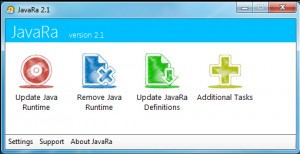 For all this, JavaRA didn’t always quite work as we’d like.


 Call me crazy, but I love Mondays. Why? Because there is a new AOKP build coming just in time to kick off my week. The team behind the popular custom distribution Android Open Kang Project did not disappoint this time around either. Jelly Bean MR1 Build 4 made its way onto our

 Samsung might have received a
  If you’re confident enough with hard drives to have tried editing them before at the sector level, then you’ll know that most disk editing software is, well, less than helpful. Open a drive and you’ll generally be presented with a basic hex view of your data, then left on your own to figure out what it all means. And okay, it’s true, sector editors are only for the most knowledgeable of PC users, but even experts could benefit from a little help, occasionally.
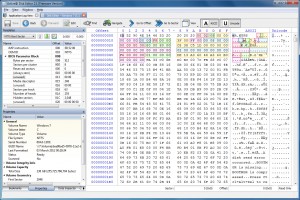 If you’re looking for particular data but aren’t sure where it is (the contents of a lost file, for instance), then a Find option will help you locate them. You can search for a specific ANSI, hex or Unicode sequence, and there are even options to use regular expressions or wildcards.

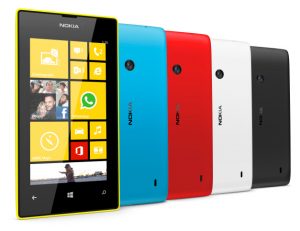 The Lumia 520 boasts a 4-inch display, at a resolution of 800 by 480, and is powered by a 1GHz dual-core Snapdragon processor. It comes with 512MB of RAM and 8GB of internal storage. A Micro SD card slot will allow owners to boost this by a further 64GB, plus users get the standard 7GB of free online SkyDrive storage. The 520 also sports a 5-megapixel rear camera capable of recording 720p HD video. The device comes in the usual range of bright colors – yellow, cyan, red, white and black.
 The mid-range Lumia 720 has a 4.3-inch display at 800 by 480 with a ClearBlack filter offering better outdoors viewing. It has a dual-core 1GHz Snapdragon CPU, 512MB of RAM, 8GB of internal storage and a microSD card slot. The biggest difference between this model and the 520 is in the photography department. The rear 6.7-megapixel camera has a f1.9 Carl Zeiss lens designed to let in more light, while the front-facing camera has a 1.3-megapixel HD wide angle lens which will allow self-shooters to pack more friends into the shot.