Blog

  • Google Gives Users a Way to Lock SafeSearch

    Google has launched a new way to lock SafeSearch. What this accomplishes is, users will have to enter their password to change the setting, and Google Search results will be visibly different than when SafeSearch is not locked.

    Google demonstrates how to to lock SafeSearch with the following short clip:

    When SafeSearch is locked, there is a big image in the top right-hand corner of Google that shows colored balls. This makes it easy to tell whether or not SafeSearch is locked. "Even from across the room, the colored balls give parents and teachers a clear visual cue that SafeSearch is still locked," Google says. "And if you don’t see them, it’s quick and easy to verify and re-lock SafeSearch."
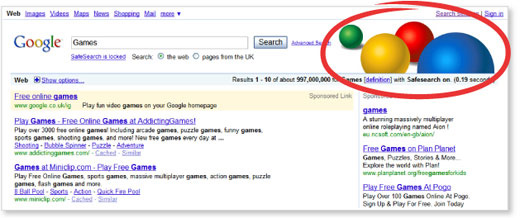
    Google - lock safesearch

    You can lock SafeSearch by simply going to Search Settings from the Google home page. There is a "SafeSearch filtering" section there, where you can adjust the settings and lock them if you choose. When you lock SafeSearch, you are automatically choosing the "strict" setting (as opposed to moderate).

    Can Certain Words Get My Content Blocked?

    People have often wondered if their content is being blocked in SafeSearch if they have certain words on an otherwise family-friendly site. In fact, Google’s Matt Cutts recently addressed such concerns in a video at Google’s Webmaster Central YouTube channel.

    "We try to write our algorithm such that just having a single word mentioned here or there really won’t have that much of an impact," says Cutts. "Now, of course some words are worse than others. If you’ve got some slang or something that’s misspelled and really is not a word that you can repeat in polite company, that makes it more likely that that page will get flagged. But in most cases you should be in relatively good shape as long as most of your content or most of the words on your page are family-friendly."

    It stands to reason that if you are producing content that you are hoping that families and children will view, it’s in your best interest to keep your language family-friendly. That’s pretty much common sense, but Google has put it into a search engine visibility light as well.

    Related Articles:

    > Google’s Safe Search Filters

    > Google Won’t Remove Pages About You

  • Sparkz iPhone dock projector: Expensive and small

    Have you ever wanted to share everything with everyone? Maybe you’ve always wanted to project your home movies on your seatmate’s tray table. Or maybe you want to surprise the kids with some video of you back during your frat days. What better way to do it than with a $495 mini-projector for iPhones, iPods Touch, and Video iPods.

    It blows out video at 640×480 pixels at 60 inches and it includes speakers and a tripod. The video, above, proves the majesty of its resolution and the usefulness of its usefulcality.

    via Eng


  • Man Sues Bon Jovi, MLB, Others For $400 Billion Over Song He Claims Was Copied

    We see stories all the time of people who write a story or a script and then when they see someone else has success with a similar idea, they assume that it was “stolen” and they’re owed millions. Or, as the case may be, billions. A Red Sox fan named Samuel Bartley Steele, who apparently wrote a song called “(Man I Really) Love this Team,” in 2004 got upset when he saw singer Bon Jovi release a song “I Love This Town” which was then used by Major League Baseball to promote the playoffs in 2007. He claims that he gave copies of the song to Red Sox execs, Red Sox players and MLB execs — and thus Bon Jovi’s song must have stolen from Steele’s song. Of course, the two songs are apparently entirely different — and even Steele’s own musicologist testified that the songs were different. The district court tossed out the case, noting that no reasonable jury would find a similarity, but the guy has appealed and is asking for $400 billion, yes, with a b. If he won that much, perhaps he could donate some to the team to pick up a free agent outfielder or two this off-season, but I imagine that this case won’t last very long.

    Permalink | Comments | Email This Story


  • 10 Reasons Social Media isn’t Replacing Email

    Update: VerticalResponse CEO Janine Popick has written a separate piece adding 10 more reasons.

    Original Article: The Wall Street Journal just ran a piece about the evolution of communication technology, chronicling the rise and alleged fall of email to social media. "Email no longer rules," the title reads.

    Do you agree that email no longer rules? Tell us why or why not.

    "We all still use email, of course," says Jessica E. Vascellaro, the author of the piece. "But email was better suited to the way we used to use the Internet—logging off and on, checking our messages in bursts. Now, we are always connected, whether we are sitting at a desk or on a mobile phone. The always-on connection, in turn, has created a host of new ways to communicate that are much faster than email, and more fun."

    Correct me if I’m wrong, but don’t all social networks also require logging on to use? Sure, you can set them up to remember your info so you don’t have to log-in every time, but the same could be said for most email services. That’s beside the point though.

    It’s fun to look at how communication has evolved, and it’s easy to declare the old medium dead (although to be fair, Vascellaro didn’t exactly go that far). It’s just not the case.

    WebProNews recently ran an article about how social media will not replace search, despite plenty of mutterings to the contrary. I will go ahead and declare the same thing about email. Social media will not replace email. Just as it did with search, it may replace it in some (even many) instances, but there is room for both forms of communication. In fact, they do a pretty good job of complimenting each other (for better or for worse).

    Facebook Wants Your Email Address Too

    Reasons Email Isn’t Going Away Anytime Soon

    1. People still send hand-written letters via snail mail, even though they could instead make a phone call, send an email, text message, or status update.

    2. Nearly all sites on the web that require registration require an email address. Some are starting to integrate social media into this process (through things like Facebook Connect), but that is still a very small fraction, and they typically still allow for email information as well.

    3. Email notifies you of updates from all social networks you are a part of (provided your settings are set up that way).

    4. We haven’t seen any evidence yet that Google Wave really is the next big thing and will catch on on a large scale.

    Email Button on Keypad 5. Email is universal, and social networks are not. Nearly everybody on the web (while there are no doubt some exceptions) has an email address. Many places of employment give employees email addresses when they begin working there. Meanwhile, a great deal of them are banning workers from even accessing social networks.

    6. There are plenty of people who have no interest in joining social networks. Frequent news stories about security, privacy, and reputation issues do not help convince them.

    7. Email is still improving. It hasn’t screeched to a halt with the rise of social media. There is still innovation going on, and integration with social media. Look at how Google is constantly adding new features to Gmail. Look at the new Yahoo Mail.

    8. Even social networks themselves recognize the importance of email. Never mind that they update users about community-driven happenings via email. MySpace (still one of the biggest social networks) even launched its own email service recently.

    9. More social media use means more email use. Look at these recent findings from Nielsen. The people consuming the largest amount of social media are also the people consuming the largest amount of email.

    10. As far as marketing is concerned, email is doing pretty well, as many companies continue to struggle to find the right social media strategy to suit their needs.

    Email Marketing

    Let’s expand on that last one a bit. There have been a significant number of studies released in recent memory, indicating that email marketing is doing quite well. Epsilon shared some findings about how email marketing is driving offline purchases. The same firm also found that email open rates increased for the fourth quarter in a row (up 18% YoY according to the most recent study). Forrester Consulting and ExactTarget found that email marketing is the most popular channel for consumers. Earlier this year, Forrester Research reported that email marketing in the U.S. alone was expected to reach $2 billion by 2014.

    Is the email landscape changing? Yes, without a doubt. Social media has become a very large part of the online lives for many Internet users. Earlier this year, social sites were even said to have surpassed email in usage. That said, Facebook has come significantly close to matching Google in terms of unique visitors, but that doesn’t make Google any less important does it? The two can co-exist, and so can email and social media. They are co-existing.

    Email marketers are facing new challenges with an increasingly social and mobile web. For tips on embracing this, check out our coverage of a related session from the recent Shop.org summit.

    Related Articles:

    People 18-24 Would Rather Give Up Social Networks Than Email

    Social Networks Blamed For $2.25B In Lost Productivity

    Some Brands Have Good Ideas For Social Media. Do You?

    Making Money With Social Media Marketing

    Report: Online Video the Top Priority in Marketing

    Do you think social networks will replace email? Share your thoughts here.

  • Live-streaming Event: Video Rights Roundtable

    Today, at the GigaOM HQ here in San Francisco, key players of the web video industry will gather to talk about the approaches they’re taking when it comes to monitoring, regulating, spreading and monetizing content online — and what form they expect such activities to take over the long term. We will be live streaming the event, starting at 9:30 am PT, for two hours. We hope you can join us — please leave your thoughts as to what’s being discussed in the comments section. And for those who want to talk about it online, the Twitter hash tag is #NTVL.


    To follow along via liveblog and get access to post-game analysis and video interviews with attendees, head over to GigaOM Pro. Sign up today with the discount code “BUNKERNTVL″ to get an additional $20 off our $79 annual subscription price.

  • Wait, Microsoft’s Project Natal will be $80? That can’t be right

    natalThere is a rumor swirling around the tubes this morning that Microsoft’s motion controller Project Natal will be $80 when it comes out next November. First off, there is no way that the Wii-killer be $80 based on precedents set by the current crop of Xbox add-ons. But more importantly, if the controller system is only $80, it will suck.

    Project Natal won E3 this past year. It came out of nowhere and surprised everyone. What was most shocking is how far along the system was developed. It looked almost ready for prime time, but yet the release date is seemingly far away. That’s fine but as time passes, the Wii gets a bit more stale and expectations rise.

    The system has so much potential. Think about how it could change sports games, FPS, and general puzzle games. Suddenly you’re actually in the game as never before. It’s almost like Nintendo opened the door for next-gen gaming, but Microsoft could bust down the damn wall with Natal.

    But not if the system is only between $50-$80 and 14 games are included like the rumor states. That’s right at the impulse buy price point – which is what MS is reportedly targeting – but also where all the novelty add-ons live. That price range shows that Microsoft wants to sell a crapton of Natals to the Wii crowd, but also doesn’t view the controller as a game changer.

    It might have some sweet games that will give the Wii a run for it’s money, but unless Microsoft is taking a huge loss on each Natal sold, it’s probably nothing special. I’m not saying that an item has to expensive to be successful, but an $80 price tag on a controller that supposed to “next-gen” doesn’t exactly scream a premium product.

    At $80, I expect Project Natal to be like the PowerPad: a fine accessory with a few good games, but not a must-have add-on. Now if the system were, say, $150 or more, I would have more faith in the system. The higher price shows that Microsoft stands behind the years of research and development and believes that the system is a worthy add-on to the Xbox 360.

    At that price point Microsoft would have no chance in hell selling it unless there was at least one killer, mainstream game. The add-on would need the support of 3rd party companies and developers to get going, which would result in a wider variety of games. If the rumor is right, and the system is bundled with games, you can bet that, they are simple Wii Sport-ish games, which were cool about 3 years ago.

    Let’s hope that Microsoft believes enough in the system to price it above the impulse buy price point. Let’s hope that the system lives up to its potential and not forced into parlor tricks but rather utilized for serious gaming too.

    Also, don’t forget the prices of the Xbox 360’s current accessories. It costs $100 for a wireless adapter, $50 for a wireless controller, and $160 for a 120GB hard drive. I’m just saying, $80 doesn’t fit the pattern.


  • HTC HD2 hands on

    HTC-HD2-1

    HTC was nice enough to hook us up with an HD2 unit a couple of days ago, and we just have to get this out of the way… Wow. This is really Windows Mobile? From the gorgeous 4.3″ capacitive touch display to HTC’s Sense UI, it’s really an amazing handset. The display and HTC’s UI compliment Windows Mobile 6.5’s icon set and honestly, it’s almost usable. Almost. The only thing off the bat we’re not feeling is the viciously sharp bezel around the camera lens. It scratched our desk. We’ll report back with a detailed overview in a bit, but in the meantime, check out some photos after the break!

    HTC-HD2-2

    HTC-HD2-3

    HTC-HD2-4

    HTC-HD2-5

    HTC-HD2-7

    HTC-HD2-8

  • Look! A Modern Warfare 2 aimbot and wall hack


    So sad. Hours after Modern Warfare 2 was released, an aimbot and wall hack surface. Feel free to vent about Infinity Ward in comments below. I won’t stop you.


  • Apple’s Atomic War

    intel_atom

    With the release of 10.6.2, Apple killed unsupported support for the Atom processor — the processor used in low-cost netbooks. Certain models of netbooks could run OS X quite easily, and people used them to make the Little Netbook Apple Refuses to Make. While it’s a stretch to say Apple has killed the hackintosh market, it’s certainly proving it isn’t going to sit around and ignore it.

    The reaction has been interesting and varies from casual indifference, to the defense of Apple’s action, to thinking Apple cancelled Christmas. While I’ve been a vocal supporter of Apple’s right to continue to club Palm over the Pre syncing fiasco, I imagine it’ll sound hypocritical when I say I’m disappointed in Apple over this move.

    Up until now, Apple’s stance with the hackintosh community has largely been don’t ask, don’t tell. The people who bought a netbook and, hopefully, bought a copy of OS X to install it, were aware of the risks of doing so. Getting it to run might involve waving a dead chicken at the screen, or it could be completely painless. However, the person undertaking this task knew of the risks. So, there was little harm done.

    I’d like to take a look at some of the armchair theories I’ve seen, and offer my own armchair analysis of them.

    Apple wasn’t happy with the (alleged) piracy

    The piracy angle has two fronts: your interpretation of the EULA, and how many copies of OS X running on hackintoshes were purchased.

    In terms of the EULA, while I know Apple strongly disagrees with this, my personal take is as long as I’ve bought a legal license of OS X (and if it’s an upgrade license like Snow Leopard, I have the requisite Leopard copy), if I want to install it on a piece of non-Apple gear as long as I don’t waste Apple’s or mine time with supporting it, I’m in the clear. Now, this is not legal advice in any way, and all the usual disclaimers. It may be a tenuous stretch, but in this case I don’t consider a person creating such a hackintosh a “pirate.”

    The second front, though, has no defense. If you’re creating a hackintosh and download a torrent or borrow a buddy’s disc, and don’t own a corresponding license, you’re a pirate. Where things get gray is if you’re downloading a hacked OS X distro, but have a legal license, are you a pirate? I have no data on how many hackintoshes were running pirated OS X installs, and I don’t have any corresponding data on how many Snow Leopard installs are legal. That said, since Apple offers no copy protection, I’m going to say that piracy wasn’t a motivator.

    Apple didn’t like seeing netbooks with Apple stickers on them

    In the somewhat wonky world of Apple’s Land of Preventing User Confusion, I can actually see this one being a reason for doing this. Now, I go to a fairly technical university and the overall number of netbooks I’ve seen is small, and zero of them have been running OS X (unscientific poll taken while trying to find tables at the canteen and library). I’ve never actually seen a hackbook, much less one with an Apple sticker slapped on it. But there are enough pictures on Flickr of people doing this, so I can see Apple getting irate and going, “OK, enough already.” Who knows, maybe people were walking into Apple stores looking for “that cute little Apple laptop I saw the nice guy at the airport using.”

    Apple doesn’t have products running the Atom chipset

    I’ll buy this one. While having support for the chipset doesn’t hurt anything, it’s unnecessary code. Maybe Apple was thinking of using the chipset and decided against it. Maybe knowing support for that chipset was keeping Jobs up at night. If Apple does end up using the chipset, it’s easy enough to re-enable the code in the future. Which is about as close as I’ll get to mentioning the oft-rumored, never-promised Tablaslabawhatevah. Some have opined that by doing this code cleanup Apple didn’t know it was breaking Atom support. I don’t agree. While it’s possible there’s nothing evil about its intent, I think it was intentional.

    The Psystar lawsuit forced its hands

    Now we’re getting somewhere. Up until recently, creating a hackintosh was very much a do-it-yourself affair. You had to get the hardware and do the grunt work to get the OS on it. Granted, while it’s gotten a lot easier over the years and many sites have complete walkthroughs, it’s still an undertaking. Psystar, though, upped the ante. It recently released the Rebel EFI tool which, allegedly, will allow you to install OS X on darn near anything. It’s not a stretch to assume it’s going to sell a netbook running OS X. Given the lawsuit, I believe Apple did this to both be able to demonstrate to a court it has taken measures to prevent OS X from running on un-supported hardware, as well as eliminate a future product line from Psystar.

    Like I said, I’m a little disappointed in Apple. But I can understand why it would cut the code for an unused chip. I’ve given some thought to getting a netbook and hackintoshing it, but after I got my new MacBook Pro a month or so ago, that desire faded away. I’m much happier using Apple-built hardware. I have a Dell Ultraportable laptop for work, and the small trackpad on that drives me nuts…I don’t want to think of one smaller.

    What about you? What do you think of Apple’s decision?

  • Google CEO Schmidt: Why We Bought AdMob

    Google earlier this week said it was buying AdMob, a mobile advertising network, for $750 million in stock — clearly an attempt to get a running start in the mobile advertising business. Together, according to some estimates, the two companies control 30-40 percent of the mobile ad market.

    What wasn’t said was that without AdMob, it would take a long time for Google to get thousands of apps to use its ad service as that would involve re-tweaking thousands of iPhone apps that were using AdMob’s network. Google didn’t have time for that, as CEO Eric Schmidt explained in an interview with Bloomberg:

    “AdMob is clearly the best of its ilk for applications monetization…We think that’s as strategic as search monetization, which, of course, we’re very good at…One the key success points for the iPhone was this enormous development of apps, and particularly free apps, which are advertising supported…Now that we have our Android platform coming out, and really with some serious partners behind it, it will also be important to have that be true for Android as well as the others.”

    Ian Schafer, CEO of Deep Focus, a marketing agency, puts it all in context:

    With the acquisition of AdMob, Google now has access to usage data of many of the most popular mobile apps–especially the apps in the iTunes App Store. For iPhones. If Google is taking on Apple for mobile OS market share, they just scored a huge competitive advantage. Google will know more details than ever about how people are using iPhone apps, how they are engaging with advertising within those apps, and users’ loyalty to those apps. Dashboards like the above only provide a window into the beginning of the mining that Google is likely about to do on their mobile handset competition.

    Get the complete lowdown on mobile app stores, including details on who is doing what, in this special report, which is included in the annual subscription of GigaOM Pro. Subscribe to GigaOM Pro for $79 a year, get this report.

    Google has been worried sick about the rise of the app economy because it undermines its ad-based search paradigm. As Andy Abramson explained:

    If your business is built on things like web based technology (search), cloud based technology (Apps) and advertising from traffic that goes to and through your search engine or when people are looking at their content in the apps, the concept of many app stores has to be very, very scary for a few reasons.

    Well nothing like a bit of fear to loosen the purse strings. AdMob is Google’s second-largest advertising-related acquisition to date, behind DoubleClick, for which it paid $3.2 billion. The company also paid $1.6 billion for YouTube. Notably, Schmidt said he doesn’t view AdMob-sized deals as the norm for future deals.

    Photo courtesy of Charles Haynes via Flickr.

  • Has YouTube Found the Right Ad Solution?

    YouTube has begun testing a new kind of ad format on some of its videos – skippable pre-rolls. These ads let users choose whether or not they want to watch the ad as it appears at the beginning of a video.

    YouTube says that when it first began testing in-stream ads a couple years ago, abandonment rates on videos were as high as 70%. They found that users were much more likely to view and engage with overlay ads.

    "But over time we found that different kinds of content provide different experiences for viewers, and that in-stream ads work pretty well on certain videos, like clips from TV shows or full-length movies," says YouTube. "We first launched in-stream ads last year, and we’ve continued to innovate and test different in-stream formats on YouTube (like user-choice pre-rolls)."

    Users may find the skippable pre-rolls slightly annoying but tolerable, since they are still in control of whether they have to watch it or not. They may come off as a bit intrusive, similar to pop-up ads, but if they are easy to skip, people will probably be willing to continue on with the video.

    YouTube skippable ad

    Chances are, they will see enough of the ad to begin with to at least gain some kind of brand awareness. That’s really going to be all up to the ad though. Advertisers looking at this kind of spot may want to strongly consider getting the meat of the message in as early as possible.

    "We know what you’re thinking: who would choose to watch an ad when they can skip it?" says YouTube. "Well, that’s what we’re trying to find out. In our previous research, we’ve actually seen that lots of users will watch pre-rolls. Abandonment rates are affected by several factors, notably length and creative. When a pre-roll is only 15 seconds, we see completion rates as high as 85%. Also, creative matters a lot: the quality and relevance of the ad itself seems to have 3x the influence on abandonment online as it does on TV. Viewers online tend to be much more active in making choices about what they watch."

    Remember that these new ads are only being tested at this point, but YouTube seems quite optimistic that it may have found its best advertising solution yet. We’ll see if the tests confirm this, and if this becomes a normal ad-type for the world’s most popular video site (and 2nd largest search engine).

    Related Articles:

    > Watch: Will Ferrell and Adam McKay Talk YouTube

    > 35 Ways to Improve Your Online Video Performance

    > YouTube Videos in AdSense Could Drive Clicks

  • Sanyo rolls out “eneloop Stick Booster” for charging mobile devices

    sanyo091111_stickbooster_02_b

    I know this thing looks like a …curling iron, but it’s not. The so-called Stick Booster [press release in English] is Sanyo’s newest addition to it’s ever-growing series of green, “eneloop”-branded products. You can use it to battery-charge your mobile devices.

    The stick can house two AA-sized batteries and is being marketed as a “handy power source” for gaming handhelds, portable media players and cell phones in particular. It has a USB port, a charge output time of 90 minutes and can also be used for the iPhone as Sanyo itself emphasizes. Sized at 18 (diameter) x 148 (length) mm and sporting an aluminum body, the stick weigs 76g (including the batteries).

    sanyo091111_stickbooster_01_b

    The batteries (that come packaged with the stick) can be recharged about 1,500 times. The device will hit Japanese stores at the beginning of next month and hasn’t been announced for international markets yet, but you can already pre-order it over Geek Stuff 4 U for $34.72 plus shipping.


  • Videos on how to do stuff to your BlackBerry

    In thinking of an idea for a how-to article for this week, I went to the BBGeeks YouTube page to see what we’ve already covered. I realized that we need more videos up there. Over the next few weeks and months, expect a lot more in the way of video content. It might be stuff you already know, but a little video tutorial never hurt anyone. So, because I was already on YouTube, I went through and picked out some pretty good BlackBerry how-to videos. Hopefully you find something worth your while herein.

    (more…)

  • Apple Surpasses Nokia as Most Profitable Cell Phone Maker

    iPhone3GS-2Despite controlling a much smaller share of the market, Apple is now much more profitable than Nokia, overtaking the handset maker as the most lucrative company in the business of selling cell phones. Apple also overtook Samsung during the last financial quarter, so it actually jumped from third to first place overall among global cell phone companies.

    Research firm Strategy Analytics (via Reuters) points out that while Apple is now the most profitable company in the cell phone industry, both Nokia and Samsung both still beat the Cupertino company in terms of sheer size. That’s especially good news for Apple, which makes much more on a per-unit basis than any other mobile phone maker. It makes approximately $320 pure profit on each iPhone sold, according to Strategy Analytics.

    Estimated profits for Apple during the third financial quarter of this year are around $1.6 billion, compared with $1.1 billion for Nokia during the same period. It’s a commanding lead, and one that will likely only grow as Apple continues to end exclusivity deals around the world, opening up iPhone sales to more and more potential subscribers.

    Of course, there isn’t a direct relationship between Apple’s gain and the slides Nokia and Samsung are experiencing. Other factors are at work, including the growing popularity of Google’s Android platform, which is being adopted by more cell phone makers and network providers. The arrival of the Palm Pre probably also had a negative impact on the handset sales of the two industry leaders.

    Nokia is in the midst of a legal battle with Apple over what it sees as blatant copyright violation. Charles recently wrote about the conflict over intellectual property between the two firms. Nokia alleges that the iPhone infringes on not one, not two, but 10 patents it holds regarding wireless tech and standards. The timing of the suit, which comes shortly following a significant drop in market share for Symbian OS, seems quite suspect.

    The future for Apple looks bright indeed, so long as it can continue taking in the same incredibly high profit margins on the iPhone. Part of its continued ability to do so is probably due to the fact that the 3GS iPhone revision actually seemed to require very little change on the production side, which would go a long way to keeping manufacturing costs down. A significant update will require more time to become profitable, but Apple’s continued success with the device means that the turnaround time required for that to happen will be remarkably short.

  • If Mobile Carriers Don’t Address Demand for Wi-Fi, Ad-Supported Services Will

    Mobile network operators must find better — and cheaper — ways of incorporating Wi-Fi access into their data plans, according to a new study conducted by two companies with skin in the game. The study from mobile broadband gateway provider Stoke and international Wi-Fi access provider Trustive found that more than 64 percent of the 300 business users polled said they use Wi-Fi for data roaming — apparently favoring the technology over cellular access — and 42 percent of respondents said they plan their Wi-Fi usage in advance of traveling so they know where and how they can access the Internet.

    And price is largely driving their decisions about how they access the web. An overwhelming 86 percent of the 300 business users polled said price was the most important factor in selecting a Wi-Fi access provider, and 72 percent of respondents paid for their own Wi-Fi access.

    Meanwhile, the survey also found nearly two-thirds of users relied on being connected, with 65 percent of respondents accessing the network when they need to download materials rather than carry their information with them. That demand — coupled with the rise in Wi-Fi usage due to the traction of WiFi-enabled phones — indicates a need for mobile operators to embrace the technology more effectively in their data plans, said Barry Hill, vice president of sales and marketing for Stoke.

    “The survey demonstrates widespread dissatisfaction with mobile operators,” Hill said in a prepared statement. “On the plus side, it indicates that due to high and unpredictable data roaming charges, Wi-Fi is the wireless broadband preference for workers when traveling. Users expect operators to bundle affordable worldwide Wi-Fi access together with cellular data plans. Increasingly, they will select operators based on the mixed wireless access experience.”

    But the figures also highlight the opportunities that exist in using free Wi-Fi as a marketing tool, as Stacey and Om pointed out yesterday. Business users feel they must be connected as often as possible wherever they travel, but are footing the bills themselves. If carriers can’t find ways to deliver data plans that incorporate Wi-Fi for road warriors, many ad-supported services such as those funded by sponsors like Google, Microsoft and Yahoo will try to meet that demand.

  • Verizon Saygus V1 VPhone Hands-on Videos

    At a pre-CES show in Manhattan last night, handset manufacturer unveiled their first Android handset, the Saygus VPhone. The handset will be available to Verizon Wireless customers but being an Open Development Initiative handset, the device wont be supported by Verizon. Instead, handset support will be supplied by Saygus themselves.

    vphone android

    According to Saygus executives, the handset will ship with Android 1.6 but will be updated to Android 2.0 at some point in the near future.

    As previously mentioned in our earlier post, the VPhone will feature a slide-out QWERTY keyboard, 3.5-inch (800 x 480px) high resolution capacitive touch display, 5 mega-pixel camera (with flash), and support for supports EVDO Rev. A, Wi-Fi, GPS, and Bluetooth 2.0+EDR connectivity.

    The handset also includes an accelerometer, digital compass and microSD card support up to 32GB.

    The Saygus VPhone is expected to launch late 2009/early 2010.

    [via phonescoop.com]

    If you’re looking for more info on the new Verizon Android phones, then be sure to check out Droid Forums & Droid Eris Forums

    Verizon Saygus V1 VPhone Hands-on Videos

  • Target Black Friday ad

    target

    Well, well, well. If it isn’t Target’s Black Friday ad? Let’s see what’s inside, shall we? Oh my, hello there 32-inch HDTV for $246. How do you do?

    Stores open at 5AM on Black Friday. Doorbusters are marked with an asterisk and are good “while supplies last,” according to the circular.

    Digital Cameras

    Kodak ZD15 Digital Camera – $129.00

    Nikon CoolPix S203 Digital Camera – $88.00

    Polaroid V130 2″ Color LCD Camcorder – $39.00

    Digital Media Cards

    Lexar Media 4GB microSDHC Card With 50 Free Song Downloads – $10.00 *

    Lexar Media 4GB SDHC Card With 50 Free Song Downloads – $10.00 *

    DVD Players

    Memorex Compact DVD Player With Progressive Scan – $19.99

    RCA 7 Inch Dual Screen Portable DVD Player With Car Adapter – $88.00

    RCA 7 Inch Portable DVD Player – $47.00

    Sony Blu-Ray Player With Free $20 Gift Card – $149.99

    Electronics

    Casio Keyboard With Stand And Song Book – $49.99

    Digital Decor Color LCD Key Chain Holds 48 Pictures – $10.00 *

    First Act Electronic Drum Set – $35.00

    GE 6 Foot HDMI Cable – $9.99 *

    Memorex Home Audio System For iPod – $49.99

    GPS Systems

    Garmin Nuvi 1350T GPS System – $179.00

    TomTom XL340S GPS With Case – $97.00

    Hard Drives

    Western Digital Elements 1TB Desktop Hard Drive – $59.98

    Western Digital Elements 500GB Portable Hard Drive – $59.98

    Miscellaneous

    $10 Gift Card With Any $100 In Store Purchase – $0.00 *

    3-Slot Charging Station – $14.99

    MP3 Players

    $15 Gift Card With Any Apple 8GB iPod Nano Purchase – $0.00

    $30 Gift Card With Any Apple 32GB iPod Touch Purchase – $0.00

    Apple 32GB iPod Touch With Free $30 Gift Card – $295.00

    Apple 8GB iPod Nano With Free $15 Gift Card – $145.00

    Photos

    Digital Decor 7 Inch Digital Photo Frame – $29.00

    Portable USB Storage

    Lexar Media 4GB Twist And Turn USB Drive With 50 Free Song Downloads – $10.00 *

    Televisions

    Apex 40″ Full HD LCD TV – $449.00 *

    Haier 7 Inch Portable Digital TV – $79.99

    Westinghouse 32″ LCD HDTV – $246.00

    Video Games

    $10 Gift Card With Select Video Game Purchases – $0.00

    $20 Gift Card With Any DSi System Purchase – $0.00 *

    $50 Gift Card With Any Call Of Duty Super Elite XBOX 360 System Bundle – $0.00

    $50 Gift Card With Any XBOX 360 120GB Elite Game System Bundle Purchase – $0.00

    Animal Crossing Wii Video Game – $27.00

    Assassins Creed II PS3 Video Game With $10 Gift Card – $59.99

    Assassins Creed II XBOX 360 Video Game With $10 Gift Card – $59.99

    Batman PS3 Video Game – $37.00

    Batman XBOX 360 Video Game – $37.00

    Call Of Duty Modern Warfare PS3 Video Game With $10 Gift Card – $59.99

    Call Of Duty Modern Warfare XBOX 360 Video Game With $10 Gift Card – $59.99

    Call Of Duty Super Elite XBOX 360 System Bundle With $50 Gift Card – $399.99

    Call Of Duty Wii Video Game – $27.00

    Cooking Mama DSi Video Game – $17.00

    DSi Game System With Free $20 Gift Card – $169.99 *

    Guitar Hero 5 Wii Video Game – $37.00

    Halo 3 ODST XBOX 360 Video Game – $37.00

    Hannah Montana DSi Video Game – $17.00

    iCarly DSi Video Game – $17.00

    Littlest Pet Shop DSi Video Game – $17.00

    Need For Speed Nitro Wii Video Game – $27.00

    Personal Trainer Cooking Game For DSi Video Game – $7.00

    PS3 Black DualShock Controller – $39.00 *

    Rock Band PS3 Video Game – $7.00

    Shaun White PS3 Video Game – $7.00

    Shaun White XBOX 360 Video Game – $7.00

    Shift PS3 Video Game – $37.00

    Shift XBOX 360 Video Game – $37.00

    Sim Animals Wii Video Game – $27.00

    Star Wars Clone Wars PS3 Video Game – $37.00

    Star Wars Clone Wars XBOX 360 Video Game – $37.00

    Super Squad DSi Video Game – $17.00

    Teenage Mutant Ninja Turtles Wii Video Game – $27.00

    Ultimate Alliance 2 PS3 Video Game – $37.00

    Ultimate Alliance 2 Wii Video Game – $37.00

    Ultimate Alliance 2 XBOX 360 Video Game – $37.00

    Video Rocker Extreme 2 Chair – $29.98

    Wii Mario And Sonic Olympics Video Game With $10 Gift Card – $59.99

    Wii Music Wii Video Game – $27.00

    Wii Nerf Video Game With $10 Gift Card – $59.99

    Wii Play Remote Bundle – $39.00 *

    Wii Sports Resort Video Game With $10 Gift Card – $59.99

    XBOX 360 120GB Elite Game System Bundle With $50 Gift Card – $299.99

    XBOX 360 Black Controller – $39.00 *

    Target Black Friday Ad [BlackFriday.info]

    More Black Friday deals…


  • rally fighter sighted


    saw the rally fighter in the flesh in pasadena, pretty crazy considering it was just a sketch a little under a year and a half ago.

  • Convicted German Murderer Wants His Conviction Erased From Wikipedia

    EFF has the bizarre story of a convicted murderer in Germany who is demanding that Wikipedia censor all mentions of the guy’s name. Apparently, he (and his lawyers) are using a part of German law that allows for the protection of “names and likenesses of private persons from unwanted publicity.” However, as the EFF points out, he’s not a private person. He became a very public person when he was tried and convicted (along with his half-brother) for killing Bavarian actor Walter Sedlmayr. Apparently, his lawyers are going after multiple service providers, trying to get the guy’s name taken off the internet. The EFF points out that the press has published the two convicted murderers’ names for Sedlmayr’s death: Wolfgang Werle and his half-brother Manfred Lauber, and that this appears to be nothing more than an attempt to censor history across multiple borders.

    Permalink | Comments | Email This Story


  • Tentative Agreement Reached With Oklahoma Lawmaker Stalling Veterans’ Health Bill

    Congressional Quarterly: “Senate Democratic leaders reached a tentative agreement with Tom Coburn, R-Okla., on Tuesday night that averted the necessity of filing cloture on a veterans’ health care omnibus measure and could lead to passage of the bill early next week. … On Monday, Coburn said he objected to the bill because its five-year, $3.7 billion cost was not offset” (Oliveri, 11/10).

    CQ Politics: “The wide-ranging Senate bill focuses on caregivers of veterans injured in the Iraq and Afghanistan wars. It would provide caregivers with health care, counseling, support and a stipend. The legislation would also expand services in rural areas and ensure that veterans who are catastrophically disabled or who need emergency care in the community are not charged for those services” (11/10).

    Politico: reports that Senate Majority Leader Harry Reid called Coburn “illogical” for blocking the veterans’ legislation, “criticizing the Oklahoma Republican for supporting war funding while blocking health care funding for veterans. … [Coburn] sent a letter to Senate Minority Leader Mitch McConnell (R-Ky.), saying that the Caregiver and Veterans Services Act of 2009 needs to be fully debated”  because of its five-year price tag (Sherman, 11/10).

    FOXNews reports on Coburn’s reluctance, noting: “A GOP senator under fire for blocking a veterans’ health care bill that aims to expand mental care and offer home assistance to wounded veterans had a message for his critics: ‘Show me the money.’” Meanwhile, “Sen. Dick Durbin, D-Ill., said the bill is a ‘lifeline’ for many veterans. … [Coburn] is the only senator objecting,’ Durbin added” (11/10).

    Capitol News Connection/WAMU reports that, in the House, the chairman of the House Veterans Affairs Committee, Rep. Bob Filner, D-Calif., said “We’ve raised the health care budget by more than 60% for example, which is unprecedented.’ … Filner’s fellow committee member Rep. Doug Lamborn (R-CO) also says Congress has generally done right by veterans when it comes to making money available. … ‘I think the key right now is to make sure that the implementation is going properly,’ says Lamborn.”  (Wynne Johnson, 11/11).

    Meanwhile, The New York Times reports on the new mission of Secretary of Veterans Affairs Eric Shinseki as he tries to deal with issues such as how to provide for veterans’ need such as care giving for the injured. “For months, Mr. Shinseki has been crisscrossing the country as President Obama’s pinstriped evangelist for veterans’ care, raising concerns about a coming tide of post-traumatic stress cases, traumatic brain injuries and other physical and psychological scars of battle. .. In nine months, he has pushed the department to make it easier for veterans to receive compensation for post-traumatic stress disorder.” He has also promised to attend to the disability compensation system. “Perhaps most ambitious is his goal of getting 131,000 homeless veterans off the street in six years” (Dao and Shanker, 11/10).